UnifiedLink installs wireless alarm systems for Georgina cottages, year-round homes and commercial properties. We assess the building, identify practical sensor locations and configure remote access around the way the property is used. Each project receives a written scope, on-site setup and a handover using the customer’s own credentials.
Wireless Alarm Planning for Georgina Properties
A wireless alarm should be planned around the property rather than assembled from a generic device list. In Georgina, that means considering seasonal occupancy, detached garages, multiple entrances and buildings that may sit empty during part of the winter. During a site assessment, we review doors, accessible windows, interior movement paths, communication options and locations suitable for the main equipment. The resulting design can combine intrusion detection, environmental sensors, audible notification and remote monitoring without placing unnecessary devices in areas that do not present a practical risk.
Lake Simcoe cottages and year-round houses present different operating conditions. A cottage may need dependable status reporting while nobody is present, whereas a busy family home may require simple arming routines that do not create repeated false alarms. Cold entryways, sunrooms and unheated additions can also affect device choice. We examine the intended temperature range, mounting surface and distance from the alarm hub before specifying hardware. Wireless reduces disruptive cable work, but reliable installation still depends on signal testing, secure mounting, suitable batteries and a stable connection for remote notifications.
Before pricing, UnifiedLink completes a site assessment and prepares a written scope. It identifies equipment, proposed device placement, any required cable routes, exclusions, equipment ownership and warranty terms. This process gives Georgina owners a clear basis for reviewing the work, including areas where wireless coverage may require a repeater or where a wired connection is more appropriate. It also prevents uncertainty about monitoring services, internet requirements and optional devices. One accountable contractor handles installation, configuration, testing and handover rather than dividing responsibility among unrelated equipment and network providers.
- Door, window and motion sensor planning
- Wireless signal testing at proposed locations
- Seasonal occupancy and remote access review
- Written equipment and installation scope
- Monitoring and internet requirements identified
Alarm Equipment for Georgina Winters
Winter conditions affect more than outdoor alarm equipment. In Georgina, freeze-thaw cycles, condensation and large temperature changes can influence contacts installed near exterior doors, devices in enclosed porches and sensors placed inside unheated garages. Hardware must be selected for the environment where it will operate, not simply the temperature of the main living space. We review whether each area is heated, insulated and regularly occupied. Outdoor-rated components are used where exposure requires them, while protected indoor locations are preferred whenever they provide the same detection coverage with fewer environmental risks.
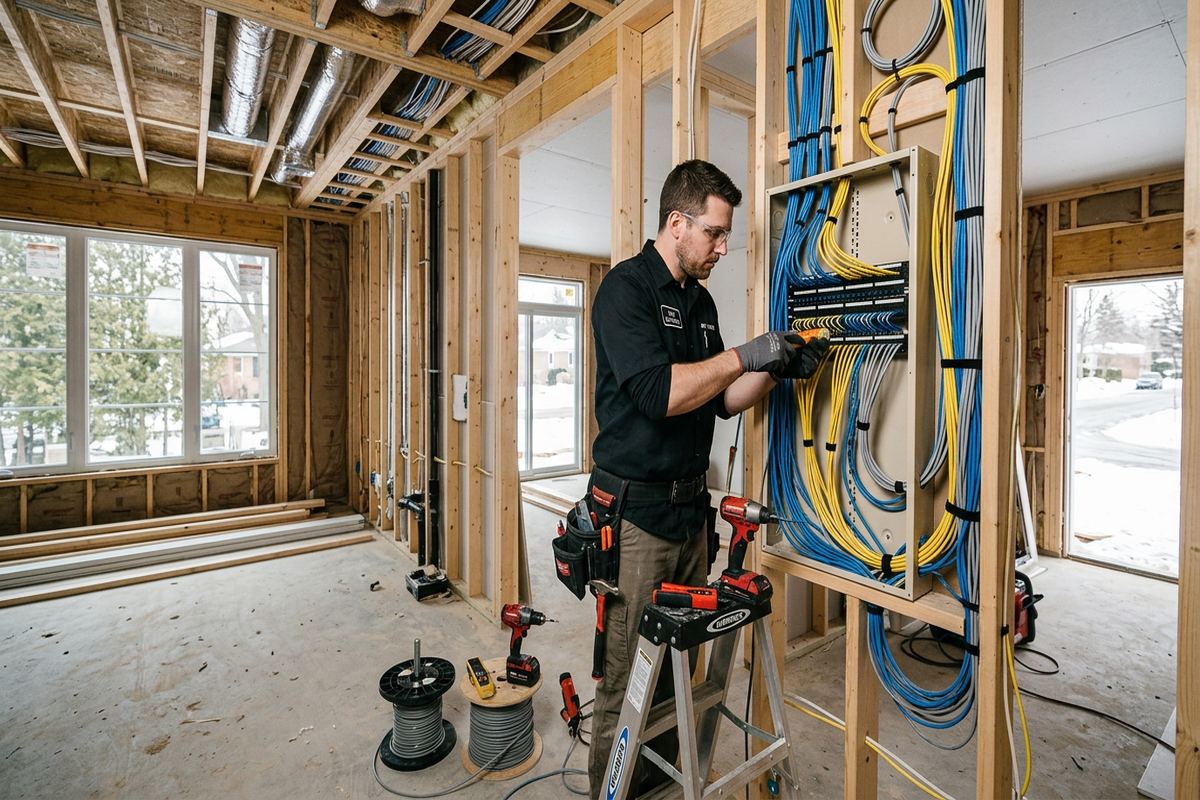
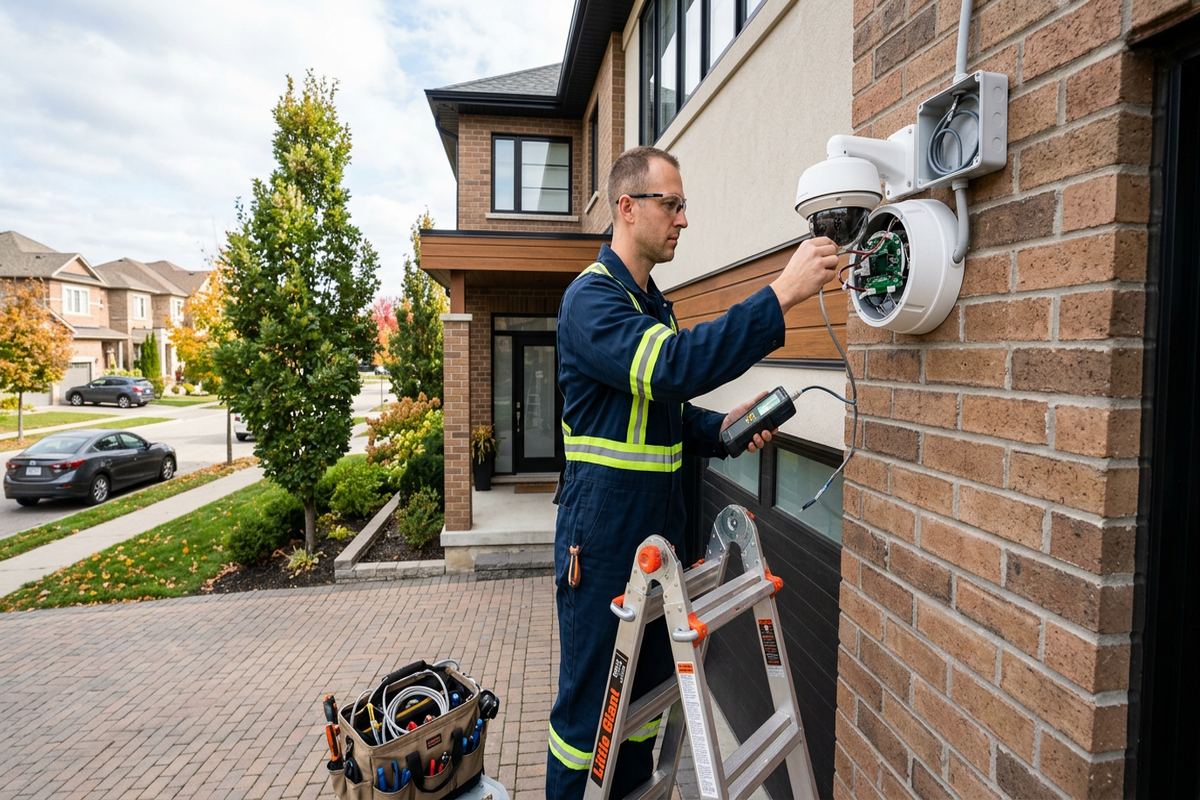
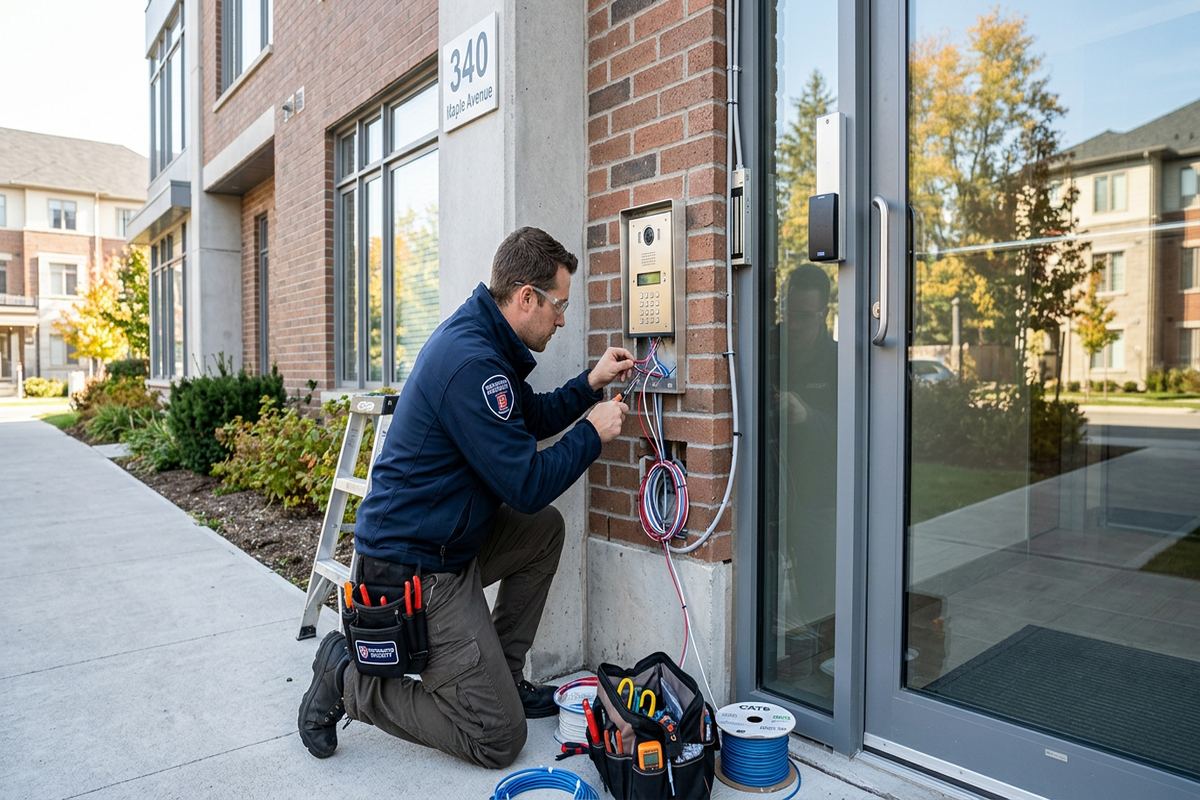
Exterior mounting requires careful attention to water entry and movement between materials. Fasteners, penetrations and seals must suit the cladding or substrate, whether the building uses brick, concrete, siding or wood framing. A device mounted directly into unsuitable material can loosen as temperatures change or allow moisture behind the exterior finish. Our scope identifies expected mounting methods and visible penetrations. Where a cable is needed for power, communication or a siren, we plan the route and use continuous labelled runs rather than hidden splices that complicate later testing or service.
Battery performance and communication paths also matter during extended cold periods. Wireless sensors still need routine battery replacement, and remote features depend on the selected system’s internet or cellular connection. A power failure may interrupt routers and other network equipment unless suitable backup arrangements are included. We discuss these dependencies without treating wireless as meaning completely infrastructure-free. During commissioning, devices are enrolled, named and tested from their final positions. The customer then receives practical instructions for checking system status, responding to low-battery notices and confirming that notifications remain active during seasonal absences.
- Hardware selected for operating temperature
- Weather-resistant exterior mounting where required
- Penetrations sealed for the mounting surface
- Backup power dependencies reviewed
- Low-battery reporting configured and tested
Cottages and Remote Monitoring
For a cottage near Lake Simcoe, the main concern is often knowing what happened while the property was unoccupied. Remote monitoring can show armed status, alarm events and selected environmental alerts, depending on the equipment and service chosen. It does not replace winterization, property checks or maintenance, but it can provide earlier awareness of entry, low temperature or water-related conditions. We help owners choose notifications that are useful rather than overwhelming, then verify app access and account recovery details before handover. Monitoring arrangements and any continuing service requirements are documented in the written scope.
Seasonal routines should be reflected in alarm programming. A cottage owner may want perimeter protection active while someone sleeps inside, a full away mode after closing the property, and separate control for a shed or detached garage. In communities such as Jackson’s Point and Virginia, layouts can include additions built at different times, with varied insulation and construction materials. Those differences affect radio paths and sensor placement. We test devices in their intended locations and adjust the design where walls, metal surfaces or distance interfere with dependable communication to the main alarm panel.
Remote access must remain under the customer’s control. UnifiedLink configures the system on site using credentials owned by the customer, rather than retaining a shared installer login as the normal means of access. We review user permissions, notification recipients and basic account security during handover. Owners also receive an as-built record identifying installed devices and their locations. If a property manager, family member or caretaker requires access, separate users can be planned where the platform supports them. This makes later changes easier and avoids unnecessary sharing of a single password among several people.
- Away, stay and seasonal modes configured
- Low-temperature and water sensors available
- Detached building coverage assessed
- Customer-controlled app credentials
- Device locations recorded at handover
Georgina, Ontario
Wireless alarm installation in Georgina, scoped in writing first
Book a site assessment and get equipment, routes, exclusions, and warranty on paper before anything is installed.
Wireless Sensors for Georgina Homes
Homes in Keswick, Sutton and Pefferlaw range from older cottages and renovated frame houses to newer year-round residences. Construction age alone does not determine the alarm design, but additions, replaced windows and altered entryways often create uneven mounting conditions. A narrow modern window frame may not accept the same contact used on an older wood opening. We inspect clearances, trim, door movement and likely sources of vibration before selecting devices. The goal is consistent detection without obstructing normal use, damaging finishes unnecessarily or placing components where they are easily knocked out of alignment.
Masonry and frame construction affect both fastening and wireless communication. Brick walls, concrete foundations, metal ductwork and foil-backed insulation can reduce radio performance or change the practical route between a sensor and hub. Wood-framed interior partitions usually present fewer obstacles, although building size and equipment placement still matter. Rather than assuming a device will communicate because it is within a stated distance, we test it at the actual mounting point. Repeaters or alternative panel locations may be proposed where necessary, and any powered equipment or cable route is identified before installation begins.
Sensor selection should match how occupants move through the building. Door and window contacts protect openings, while motion detectors cover interior paths after entry. Glass-break devices, panic controls and audible sirens serve different purposes and are not automatic substitutes for perimeter protection. Pets, ceiling height, fireplaces, direct sunlight and heating vents can influence motion sensor performance. We discuss these factors with the owner and configure practical arming modes. After installation, each zone receives a clear name so an alert identifies a useful location instead of displaying an unexplained device number.
- Contacts fitted to actual door clearances
- Motion coverage planned around normal use
- Radio performance tested through building materials
- Zones labelled by practical location
- Pet activity considered during sensor selection
Approvals for Rentals and Condos
Wireless installation can reduce visible cabling, but it does not remove the need for property approval. Georgina tenants should obtain their landlord’s consent before devices are fastened to doors, windows, walls or exterior surfaces. Condominium owners may also need approval for work affecting common elements, exterior doors, shared corridors or building communication services. UnifiedLink can define the proposed mounting and any penetrations in the written scope so the owner has useful information for an approval request. We do not assume that a wireless device is exempt from lease terms or condominium rules.
Rental properties need a clear decision about who owns the equipment and controls the account. The landlord may provide a base system, while a tenant uses assigned credentials, or the tenant may supply removable devices with written permission. Each approach affects notifications, user removal and handover at the end of occupancy. Our scope records equipment ownership and exclusions so those responsibilities are not left unclear. We also avoid creating shared credentials where separate user access is available. Any monitoring agreement remains subject to the selected provider’s terms and should identify who is responsible for maintaining the service.
Shared buildings require attention to nuisance alarms and common access. A sensor inside a private unit should not be positioned where activity in a corridor, vestibule or neighbouring area repeatedly triggers it. Likewise, siren placement must consider the unit layout and applicable building rules. We test operation from inside the protected premises and explain how to isolate permitted zones when occupants are present. If the requested work depends on common wiring, centrally managed internet or modifications outside the unit, that dependency is identified before pricing rather than discovered after devices have already been installed.
- Mounting details documented for approvals
- Equipment ownership stated in writing
- Individual users configured where supported
- Common-element dependencies identified
- Tenant and landlord responsibilities clarified
Georgina Business Alarm Installation
Commercial strips and stand-alone businesses in Georgina often need alarms that reflect opening, closing and staff access routines. A storefront may require door contacts, motion coverage and separate permissions for managers, while an office may need protection for a rear entrance or equipment area. We review public entrances, delivery doors, interior circulation and spaces that should remain protected after hours. Device names and user permissions are configured to support practical operation. The system design can also account for cleaning staff or scheduled access without giving every user the same administrative control.
Industrial units and workshops introduce different conditions from finished retail spaces. Metal walls, high ceilings, loading doors, machinery and changing storage layouts can affect wireless range and motion detection. Unheated sections may require hardware suited to lower temperatures, while a busy loading area can be unsuitable for a device chosen for a stable office environment. We assess final mounting positions and test communication through the occupied unit. If a critical device would be more dependable with a cable, the written scope can identify a continuous labelled run instead of forcing a wireless approach where it is unsuitable.
Alarm installation should also coordinate with the property’s other systems. Internet equipment, access control, cameras and building power may share locations or operational dependencies without performing the same function. An alarm can report an intrusion event, but it does not provide recorded video or manage door credentials unless those systems are separately included and integrated. UnifiedLink keeps responsibilities clear in the scope and provides one accountable contractor for the approved work. At handover, designated business users receive their own credentials, operating guidance and an as-built record showing the installed alarm devices.
- Opening and closing routines reviewed
- Manager and staff permissions separated
- Loading and rear doors assessed
- Industrial wireless conditions tested
- Alarm dependencies documented clearly
Installation and System Handover
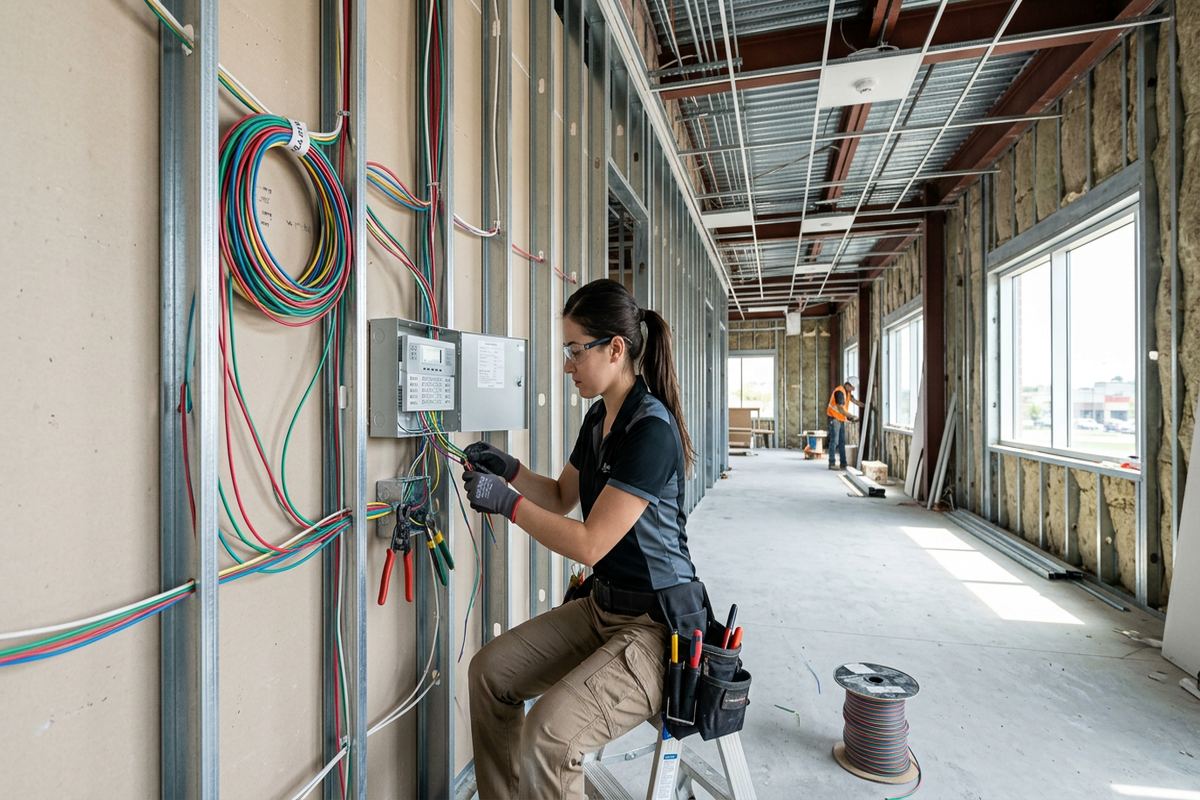
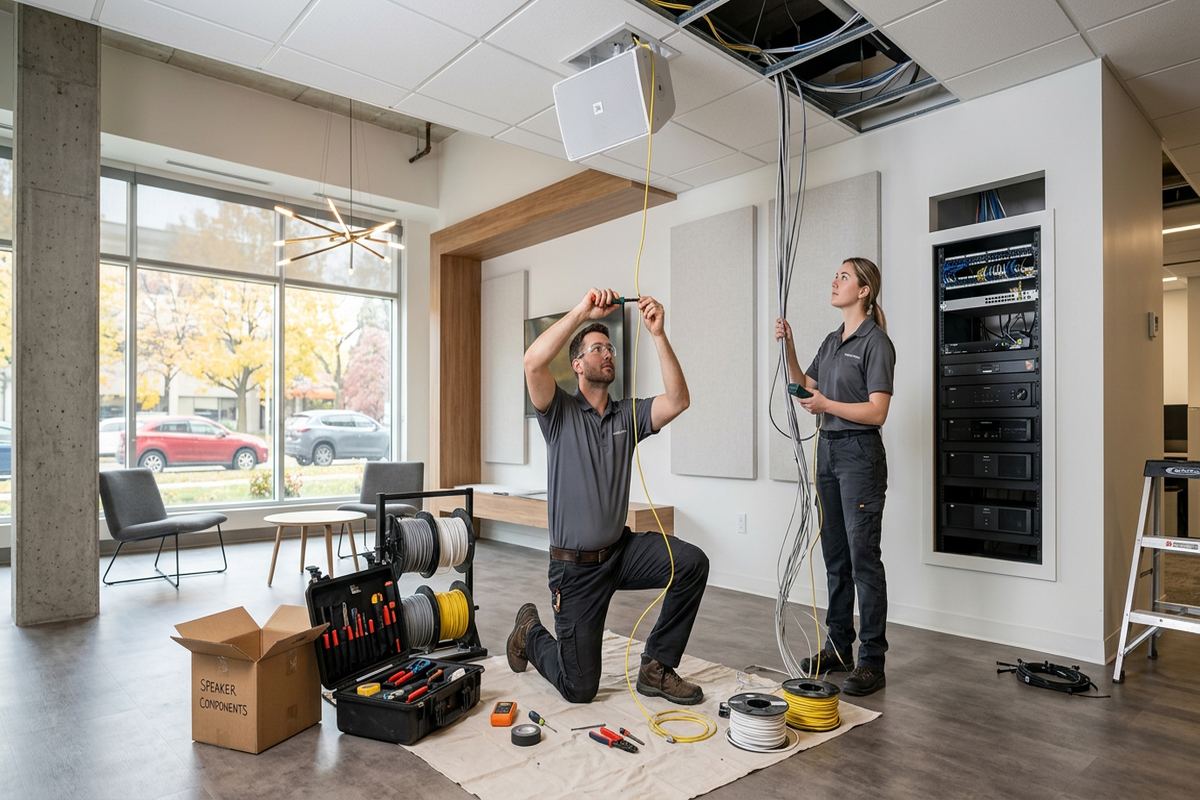
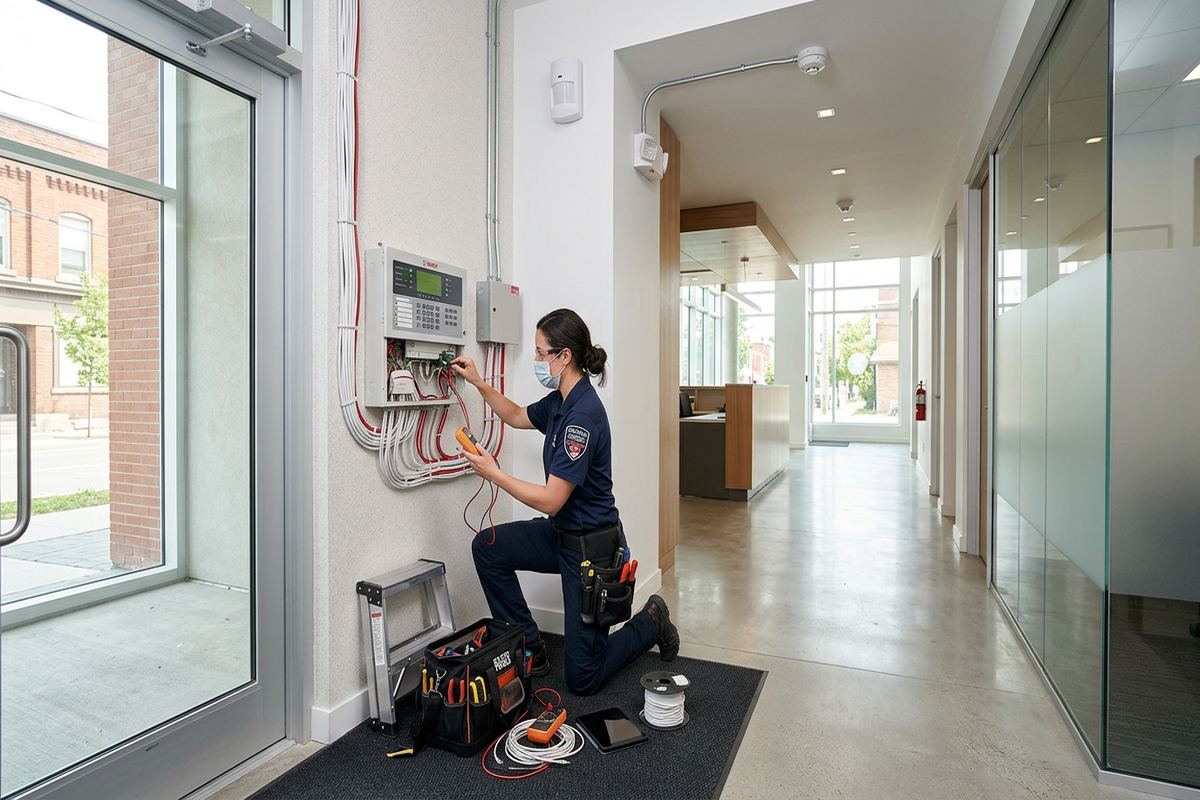
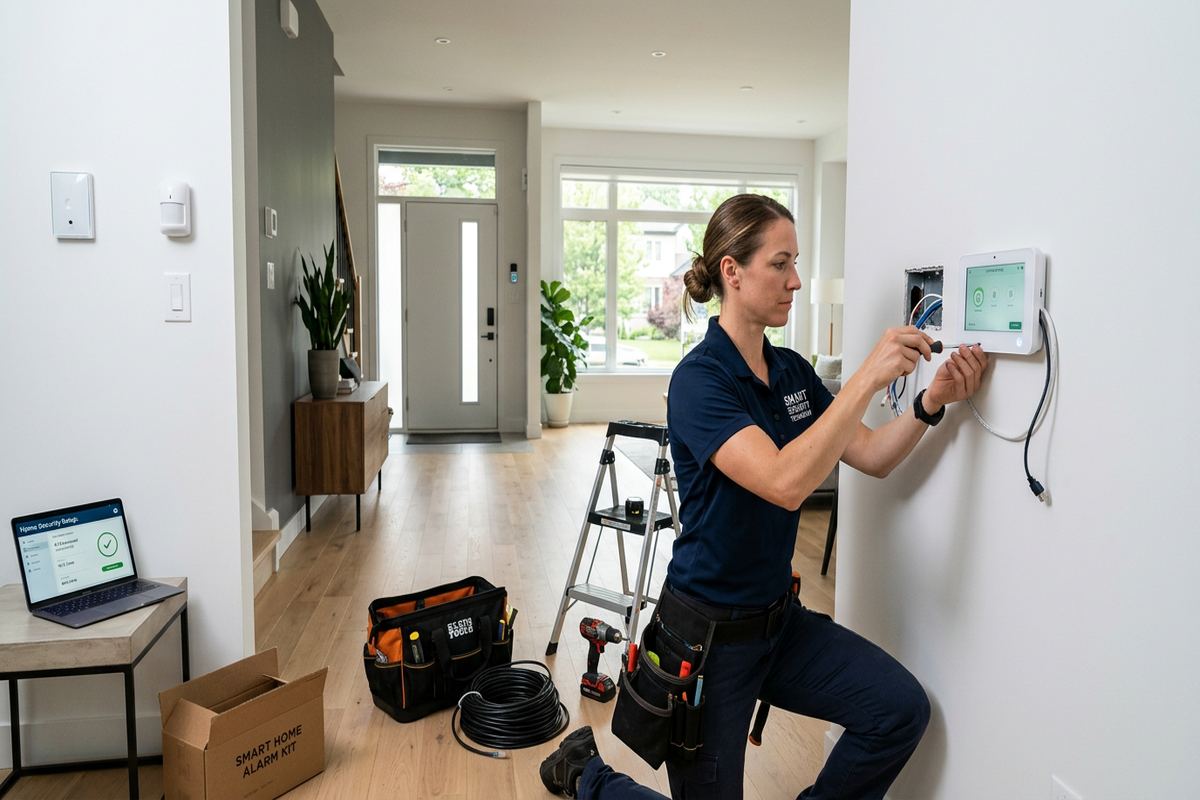
Once the scope is approved, installation begins with confirming device locations against the site conditions observed during assessment. Changes in furniture, renovations or access may require discussion before mounting. Sensors are fixed using methods appropriate for the surface, and any required cable is installed as a continuous labelled run. The alarm panel, hub, communicator and powered accessories are positioned with service access in mind. We then enrol each device, apply clear zone names and verify communication from its final location rather than relying only on a bench test beside the main equipment.
Testing covers normal and abnormal operating conditions that can be reproduced safely. Doors and windows are opened to confirm contacts, motion areas are walked, audible devices are checked and notifications are reviewed with the customer. We also verify selected arming modes, entry delays and user permissions. For Georgina properties intended to sit vacant, the owner should understand how internet loss, power failure or exhausted sensor batteries may affect remote visibility. Any monitoring connection is tested according to the selected arrangement, and unresolved limitations are documented instead of being hidden behind a successful basic arming test.
Handover is completed using credentials that belong to the customer. We explain routine arming, disarming, alert review, user changes and battery notices, with detail appropriate to the installed platform. The as-built record identifies device locations and relevant cable routes, making future maintenance or renovation planning more straightforward. Equipment ownership, warranty information and exclusions remain available in the written scope. UnifiedLink does not retain control of the customer’s normal account. Where additional administrators are needed, they can be created during commissioning if the system supports distinct user roles and the customer authorizes them.
- Final device positions confirmed before mounting
- Every sensor tested after installation
- Zones named in plain language
- Customer-owned credentials used
- As-built record supplied at handover
Booking Wireless Alarm Service in Georgina
The first step is a discussion about the property, occupancy pattern and reasons for adding or replacing an alarm. Useful details include the number of buildings, whether spaces are heated through winter, current internet availability and any existing alarm equipment. For properties in Udora, Pefferlaw or other outlying parts of Georgina, travel distance and site layout can affect assessment scheduling. Requests sent during business hours are answered the same day, while after-hours requests are answered the next business day. Site assessment timing depends on the service and travel distance.
During the assessment, we inspect likely entry points, suitable hub locations, wireless conditions and surfaces that may require specialized fastening or sealing. We also ask who needs system access and whether monitoring, environmental detection or detached structures are part of the request. Condo rules, landlord consent and commercial lease restrictions should be raised at this stage. No final pricing is provided before the assessment. Instead, observations are converted into a written scope so the customer can review what is included, what is excluded and which assumptions affect the proposed installation.
A well-defined alarm project leaves fewer unanswered questions after devices are mounted. Georgina customers receive a scope covering equipment, cable routes where applicable, device placement, exclusions, equipment ownership and warranty. Installation includes on-site configuration and a practical handover with customer-owned credentials and an as-built record. If site conditions show that a wireless device is not appropriate for a particular opening or building area, we explain the alternative rather than concealing the limitation. This approach supports cottages, permanent homes, rentals, shops and industrial units with requirements based on their actual use.
- Same-day reply during business hours
- Next-business-day reply after hours
- Assessment completed before pricing
- Written scope provided for review
- One contractor accountable for approved work
Georgina neighbourhoods we cover
- Keswick
- Sutton
- Jackson's Point
- Pefferlaw
- Udora
- Virginia
Wireless alarm installation in Georgina — common questions
Will a wireless alarm work through a Georgina winter?
It can, provided the hardware is selected for the temperature and exposure at each location. Heated rooms, unheated garages and exterior positions have different requirements. Georgina freeze-thaw conditions also make fastening and sealing important. We assess the environment, test wireless communication after mounting and explain battery, power and network dependencies before handover.
Can I monitor my Lake Simcoe cottage remotely?
Remote monitoring can provide alarm status, event notifications and selected environmental alerts, depending on the system and service chosen. It is useful for Georgina cottages that are vacant for extended periods, but it does not replace winterization or property checks. We configure access with your own credentials and document internet, cellular and power requirements.
Do wireless alarms need any cabling?
Wireless sensors communicate by radio, but the hub, communicator, siren, network equipment or other components may still require power or data cabling. Existing construction and system design determine what is needed. Where cable is included at a Georgina property, UnifiedLink installs continuous labelled runs and records relevant routes in the as-built documentation.
Do I need landlord or condo approval?
You may need written approval before fastening devices, drilling surfaces, changing exterior doors or affecting common elements. Requirements depend on your lease, condominium rules and the proposed work. For Georgina rentals and condo units, our written scope can identify mounting locations, penetrations, equipment ownership and building dependencies for review by the appropriate owner or board.
Can the alarm cover a detached garage or shed?
Possibly, but distance, construction, temperature, power availability and obstacles all affect the design. Metal siding and an unheated interior can limit suitable equipment or wireless performance. At a Georgina site assessment, we test practical communication paths and determine whether a repeater, separate equipment or another approach is more appropriate.
What happens after I request an assessment?
Requests received during business hours are answered the same day, and after-hours requests are answered the next business day. Assessment timing depends on the service and travel distance within Georgina. After inspecting the property, we provide a written scope covering equipment, placement, cable routes, exclusions, ownership and warranty before pricing the installation.
Coverage in Georgina is confirmed against the address before we quote. See everything we install in Georgina or the province-wide wireless alarm installation page.