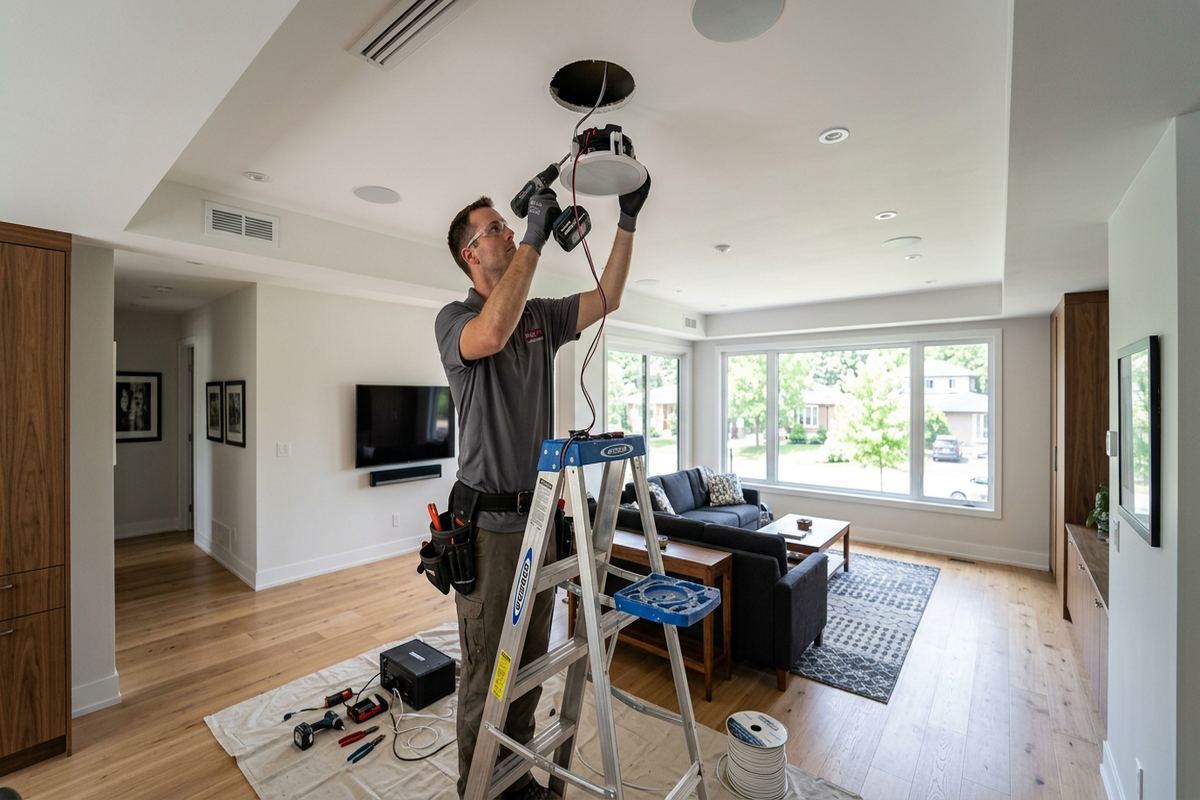
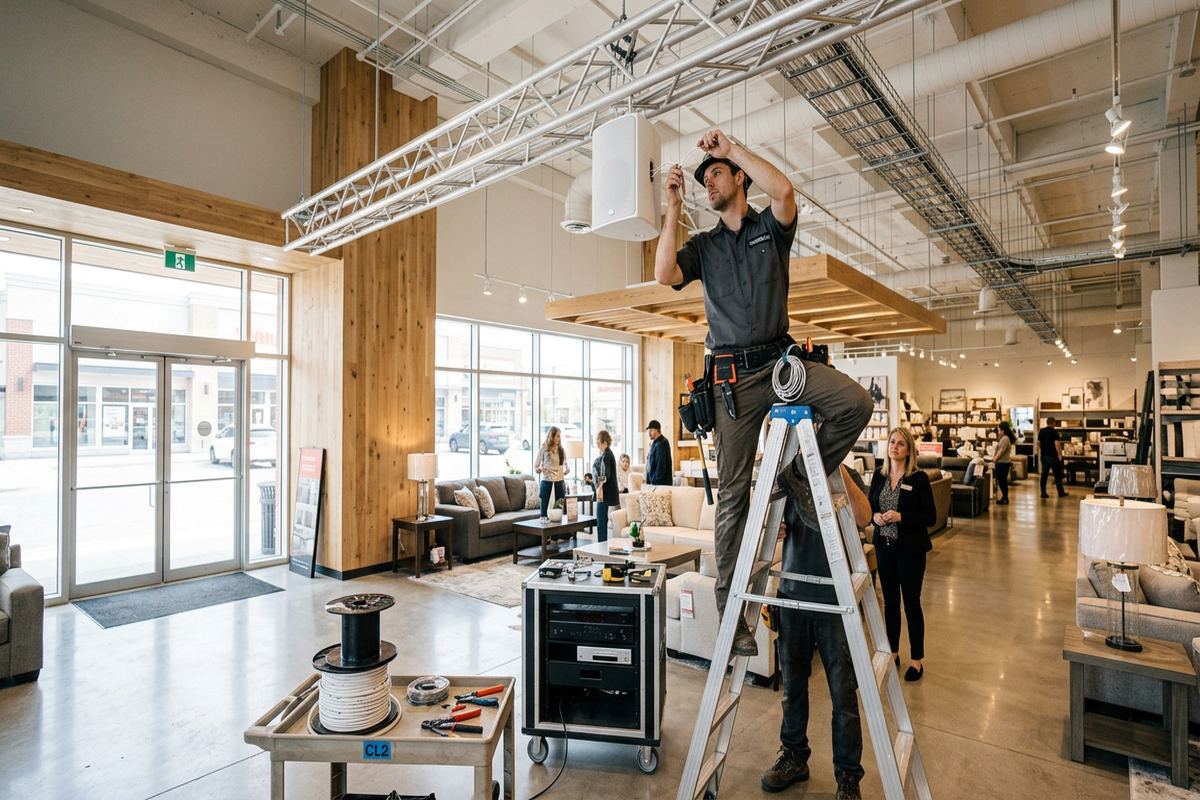
UnifiedLink installs outdoor speaker systems for Fort Erie homes, seasonal properties and businesses. We plan coverage, select weather-rated equipment, route and label cabling, mount speakers securely and configure the system on site. Every project starts with an assessment so placement, control options, exterior construction and exposure to Niagara Region weather can be addressed before pricing.
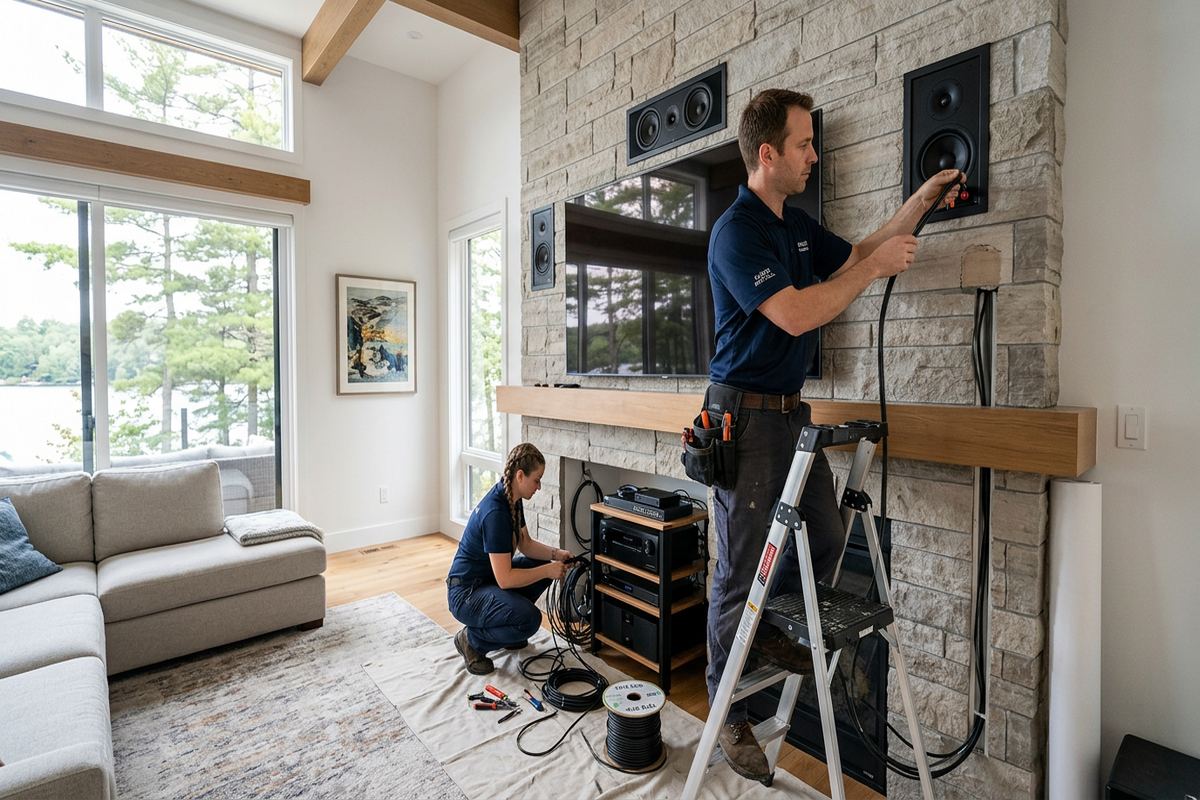
Outdoor Speaker Systems for Fort Erie Properties
Outdoor audio should provide even, intelligible sound without forcing one or two speakers to operate at excessive volume. For a Fort Erie home, that may mean covering a deck, pool area, garden or detached structure while limiting sound directed toward neighbouring properties. Commercial applications may include patios, entrances, customer waiting areas or exterior workspaces. We assess listening zones, expected use, nearby buildings and available mounting surfaces before selecting speaker types. The resulting plan accounts for coverage, practical volume control, cable access and equipment locations rather than treating the exterior as an extension of an indoor room.
Border-adjacent businesses and lakefront and seasonal homes make weather-rated exterior equipment a standard requirement in Fort Erie. Moisture, wind-driven rain, winter cold, sunlight and repeated freeze-thaw cycles can shorten the life of unsuitable speakers, brackets and connections. Equipment selection therefore considers the enclosure rating, grille and bracket materials, connection protection and the degree of exposure at each location. A speaker under a deep soffit faces different conditions than one mounted near an open shoreline, pool or uncovered patio, so a single product choice is not automatically appropriate for every position.
Each installation begins with a site assessment before pricing. We review the areas to be covered, existing audio equipment, electrical and network availability, wall construction, possible cable routes and access for installation. The written scope identifies equipment, cable routes, device placement, exclusions, equipment ownership and warranty. This gives the property owner a clear basis for approving the work and helps prevent assumptions about patching, electrical work, network changes or integration with existing components. Site assessment timing depends on the service requirements and travel distance within or around Niagara Region.
- Deck, patio, pool and garden listening zones
- Weather-rated speakers, brackets and connection protection
- Assessment of existing amplifiers and audio sources
- Written scope before installation begins
- Residential and commercial exterior audio planning
Planning Coverage Across Fort Erie Outdoor Areas
Good coverage comes from speaker position, aiming and quantity rather than maximum output. During planning, we consider where people normally sit, walk or work and identify surfaces that may reflect or block sound. Long narrow decks, wide yards and divided restaurant patios often need multiple controlled speakers instead of a single loud source. For Fort Erie properties near neighbours, roads or shared boundaries, careful aiming can improve listening levels within the intended area while reducing spill. The plan also addresses whether every area should play together or operate as separate zones with independent source and volume control.
Lakefront lots and open areas around Crystal Beach can expose sound systems to wind, which changes perceived volume and intelligibility. Speakers mounted too far from listeners may need to be driven harder whenever conditions change. Locating several speakers closer to occupied areas usually creates more consistent coverage at lower levels. We also consider seasonal furniture layouts, awnings, pergolas and vegetation that can alter a listening zone. Where a property is closed for part of the year, controls and equipment locations should remain protected, accessible for shutdown and straightforward to restore when the home reopens.
Commercial coverage requires a different discussion from backyard entertainment. A Bridgeburg storefront, Ridgeway patio or border-adjacent business may need background music, announcements or sound near an entrance without disturbing offices, residences or adjacent tenants. We establish the intended function before choosing the system layout. Speaker zoning can separate a public patio from a staff area, while suitable controls can restrict routine users from changing technical settings. If music licensing, operating hours or local noise obligations apply, the owner remains responsible for confirming those requirements and operating the installed system accordingly.
- Coverage mapped around occupied outdoor areas
- Separate zones where independent control is useful
- Speaker aiming that limits unnecessary sound spill
- Layouts for changing furniture and seasonal use
- Commercial background audio and announcement options
Weather-Rated Equipment for Niagara Conditions
Exterior-rated does not mean every product can be installed in every exposed position. Fort Erie winters bring cold, moisture and freeze-thaw conditions that affect enclosures, seals, mounting hardware and cable entry points. We select speakers intended for their planned environment and install them according to manufacturer requirements. Protected soffit locations may suit one type of cabinet, while open posts or shoreline-facing walls may require greater resistance to direct weather. Brackets must also support the speaker securely through seasonal movement and wind exposure, without relying on weak trim or deteriorated exterior finishes.
Connections are frequent failure points in outdoor audio systems. Cable entries, junction locations and terminations need protection from water while avoiding assemblies that trap condensation. UnifiedLink plans continuous labelled cable runs where practical, reducing hidden joins inside walls, soffits or inaccessible exterior spaces. Outdoor transitions are sealed with methods compatible with the surface and cable involved. Drip loops, suitable glands and protected connection points may be used where the equipment design permits. Sealants are selected and applied as part of the mounting detail, not as a substitute for proper flashing, fastening or enclosure selection.
Sunlight and temperature swings also influence equipment placement. Dark speaker cabinets in direct afternoon sun can experience substantial surface heating, while shaded northern walls may remain damp longer after rain or snow. Around Fort Erie pools and lakeside properties, airborne moisture and chemicals may create additional exposure for grilles and hardware. We discuss finishes, placement and routine inspection with the owner before installation. No outdoor system is maintenance-free, so brackets, seals, grilles and nearby building surfaces should be checked periodically, particularly after severe weather or visible movement in the mounting area.
- Equipment matched to each exposure level
- Protected cable entries and exterior transitions
- Corrosion-conscious brackets and mounting hardware
- Continuous cable runs with fewer concealed joints
- Placement considering sun, moisture and prevailing weather
Fort Erie, Ontario
Outdoor speaker installation in Fort Erie, scoped in writing first
Book a site assessment and get equipment, routes, exclusions, and warranty on paper before anything is installed.
Exterior Mounting on Fort Erie Buildings
Building construction determines how speakers can be fastened and how cables can reach them. Fort Erie includes older masonry buildings, conventional frame homes, renovated seasonal cottages and newer exterior assemblies. Brick, concrete block, siding, stucco and soffits each require different anchors, penetrations and sealing details. We inspect the mounting surface rather than assuming the visible finish provides structural support. Speaker brackets are fastened to suitable backing or substrate where accessible, with cable holes positioned to reduce water entry and avoid unnecessary damage to brick faces, mortar joints, cladding or finished interior spaces.
Older properties in Stevensville, Bridgeburg and other established areas may contain additions completed at different times. Wall cavities can be interrupted by masonry, blocking, insulation, fire stops or previous renovations, making a concealed route less direct than expected. An assessment helps identify whether cable can pass through an attic, basement, utility area or accessible interior wall. When concealment is impractical, a neat surface route using appropriate raceway or conduit may be preferable to extensive opening and repair. The agreed route and any expected visible sections are documented in the written scope.
Mounting on detached garages, pergolas, fences or freestanding posts requires additional review. These structures can move independently during wind, frost or seasonal ground changes, and not every decorative component is suitable for a speaker load. We examine attachment points, cable protection and the path between buildings. Underground or exposed inter-building routes may require conduit and coordination with other trades, depending on site conditions. UnifiedLink does not treat landscaping or structural modification as incidental work; exclusions and responsibilities are identified before installation so the owner understands what must be prepared or completed separately.
- Mounting plans for masonry and frame construction
- Anchors selected for the actual supporting substrate
- Sealed penetrations through exterior assemblies
- Visible routes documented before work starts
- Detached-building and post mounting assessment
Cabling and Audio Equipment Integration
An outdoor speaker is only one part of the audio path. The amplifier must suit the number and type of speakers, expected listening level, cable distance and zoning arrangement. We review existing receivers, commercial amplifiers, streaming devices and control systems to determine whether they can support the proposed installation. Impedance, channel loading and manufacturer limits are checked before speakers are connected. For larger distributed systems, a constant-voltage design may be appropriate, while smaller residential areas may use conventional low-impedance speakers. The choice is based on system requirements rather than a single standard layout.
Cable routes are planned to protect signal performance and support future service. We install continuous labelled runs between accessible termination points, using cable suitable for the location and installation method. Routes avoid unnecessary proximity to electrical conductors and sources of heat or physical damage. Where cable enters an equipment room, rack, cabinet or receiver location, labels identify the corresponding outdoor zone. In Fort Erie seasonal homes, clear labelling makes shutdown, troubleshooting and reopening easier for owners or property managers who may not be present throughout the year.
Source and control options can include a dedicated streamer, an existing receiver, a commercial media source or an approved control platform. Reliable operation depends on the local network when an app or cloud-connected device is involved. We verify connectivity at the equipment location and configure supported components on site, but outdoor audio should not depend on weak Wi-Fi reaching every speaker unless the design specifically uses networked devices. At handover, the customer receives access through their own credentials, along with an as-built record showing installed devices, cable identification and relevant system information.
- Amplifier loading checked before connection
- Speaker cable selected for route and environment
- Every run labelled by outdoor zone
- Existing source equipment assessed for compatibility
- Customer-owned credentials used at handover
Outdoor Audio for Fort Erie Homes and Cottages
Residential systems should be simple enough for regular use without exposing technical controls to weather or casual adjustment. A typical Fort Erie project may connect a covered deck and pool area to equipment located inside the home, with separate volume control where the spaces serve different activities. We discuss who will use the system, preferred music sources and whether indoor and outdoor areas need synchronized playback. Equipment is positioned where it remains ventilated, serviceable and protected, rather than inside a damp exterior cabinet or an inaccessible corner chosen only to shorten cable distance.
Seasonal homes in Crystal Beach and along the lake require practical shutdown and restart procedures. Owners may want indoor amplification disconnected during extended absences while permanently installed speakers remain outside. The design should make this process clear without requiring cables to be traced each season. We label zones and document connections so the system can be checked after winter. If internet service is suspended seasonally, streaming controls may not operate until the network returns, so available local inputs and recovery steps should be considered when selecting the source equipment.
Renovations and shared properties introduce approval requirements that must be handled before drilling or cable installation. Condo corporations may regulate visible equipment, common walls, balcony surfaces and exterior penetrations. Landlords may require written permission for brackets, cable routes or equipment attached to the building. UnifiedLink can provide a proposed scope and placement information for review, but the customer is responsible for securing approvals. Work proceeds only within the approved areas. Heritage concerns, shared utility spaces or restricted access may also change the route or require coordination with building management.
- Simple controls for household and guest use
- Separate deck, pool and garden zones
- Documented seasonal shutdown and restart
- Indoor equipment kept protected and serviceable
- Scope details available for approval requests
Commercial Outdoor Speakers in Fort Erie
Commercial exterior audio must fit business operations, staff responsibilities and the physical property. Along Fort Erie commercial strips, outdoor speakers may support patio music, queue areas, entrances or staff spaces. Industrial units may use audio for general background playback or specific operational communication, subject to workplace requirements and equipment suitability. We identify the intended audience, operating schedule and control location before designing the system. Public-facing controls can be limited to routine functions, while amplifier settings and wiring remain in a secure, accessible equipment area for authorized staff and future service.
Tenanted units often involve several parties. A business owner may control the audio system but need landlord approval for exterior mounting, roof or wall penetrations, conduit and access to shared communication rooms. In multi-unit properties, cable routes must not pass through another tenant's space without authorization. We document proposed device positions and routes for the customer to submit where required. Any electrical supply, structural work, lift access or restoration outside the low-voltage scope is identified as an exclusion or coordination item rather than assumed to be included.
For restaurants, hospitality sites and border-adjacent businesses, operating conditions can change throughout the day. Zoning allows staff to lower an entrance area while maintaining appropriate patio coverage, or shut down one exterior section when it is not occupied. The system can be configured on site with agreed limits and source behaviour, but management remains responsible for content, volume and operating policies. We provide a practical handover for designated users and an as-built record, helping one accountable contractor support the installed cabling, speakers and configured audio components within the documented scope.
- Patio, entrance and exterior staff-area audio
- Secure equipment and practical staff controls
- Routes planned for multi-tenant properties
- Landlord coordination requirements documented
- On-site configuration for agreed operating zones
From Fort Erie Assessment to Handover
A defined process keeps exterior audio work understandable from the first visit through final testing. During the Fort Erie assessment, we confirm coverage areas, mounting surfaces, cable access, equipment locations, network needs and any owner-supplied components. We then prepare a written scope covering equipment, cable routes, device placement, exclusions, equipment ownership and warranty. Pricing follows the assessment rather than relying on assumptions about concealed construction or exterior access. If conditions change after walls, soffits or equipment spaces are opened, the effect on the route or scope is discussed before related work continues.
Installation includes mounting the approved speakers, pulling and labelling cable, completing terminations and configuring supported equipment on site. We test each zone for operation, check speaker orientation and confirm that controls perform as intended. Final listening levels are adjusted with the customer where practical, recognizing that the owner controls routine volume after handover. Exterior penetrations completed within our scope are sealed using methods suited to the identified surface. Work areas are reviewed at completion, and any outstanding coordination items or limitations are recorded rather than left as undocumented assumptions.
Handover gives the customer control of the installed system. Accounts and compatible applications are set up with the customer's own credentials, not credentials retained by the installer. The as-built record identifies speakers, zones, cable labels and installed equipment relevant to future operation or service. Requests sent during business hours are answered the same day, while after-hours requests are answered the next business day. Site assessment timing depends on the service and travel distance. UnifiedLink remains one accountable contractor for the outdoor speaker installation described in the approved scope.
- Site assessment completed before pricing
- Written equipment, route and placement scope
- On-site testing and zone configuration
- As-built record provided at handover
- One accountable contractor for scoped work
Fort Erie neighbourhoods we cover
- Bridgeburg
- Crystal Beach
- Ridgeway
- Stevensville
- Douglastown
Outdoor speaker installation in Fort Erie — common questions
What outdoor speakers suit Fort Erie weather?
The right model depends on direct rain, sun, wind, lake exposure and the amount of shelter at each location. Fort Erie installations generally require weather-rated speakers, brackets and connection methods. We assess each mounting position rather than relying only on a product label, because an open post, protected soffit and shoreline-facing wall experience different conditions.
Can speakers stay outside through a Fort Erie winter?
Speakers designed and installed for permanent outdoor use can normally remain mounted through winter, subject to the manufacturer's requirements. Fort Erie freeze-thaw cycles make correct fastening, sealing and connection protection important. Seasonal owners should shut down indoor source equipment as appropriate and inspect exterior brackets, grilles, seals and building surfaces when reopening the property.
Can you install speakers on brick or siding?
Yes, provided the underlying structure offers a suitable attachment point. Brick, block, siding, stucco and soffits require different anchors and sealing details. On older Fort Erie buildings, we inspect the substrate and possible cable route before confirming placement. The visible exterior finish alone may not provide adequate support for a speaker bracket.
Will outdoor speakers disturb nearby neighbours?
Any outdoor audio can carry beyond a property, but thoughtful placement helps. In Fort Erie, we plan speaker quantity, position and aiming around occupied areas and nearby boundaries. Multiple speakers operating closer to listeners can often provide more even coverage at lower levels than one loud unit. The property owner remains responsible for routine volume and applicable noise obligations.
Do I need condo or landlord approval?
Approval may be required when speakers, brackets, conduit or cable penetrations affect a rented building, condominium exterior or common element. UnifiedLink can provide the proposed placement and route information for your application. The customer must obtain permission before work begins. Fort Erie multi-unit and commercial properties may also require coordination for shared rooms or restricted access.
Can you connect speakers to my existing receiver?
Possibly. We assess the receiver's available channels, impedance limits, power capability, zone functions and compatibility with the proposed speakers. Some Fort Erie projects can reuse existing equipment, while others need different amplification or source control. Compatibility is confirmed before connection, and the written scope identifies whether components are customer-owned or supplied as part of the installation.
Coverage in Fort Erie is confirmed against the address before we quote. See everything we install in Fort Erie or the province-wide outdoor speaker installation page.