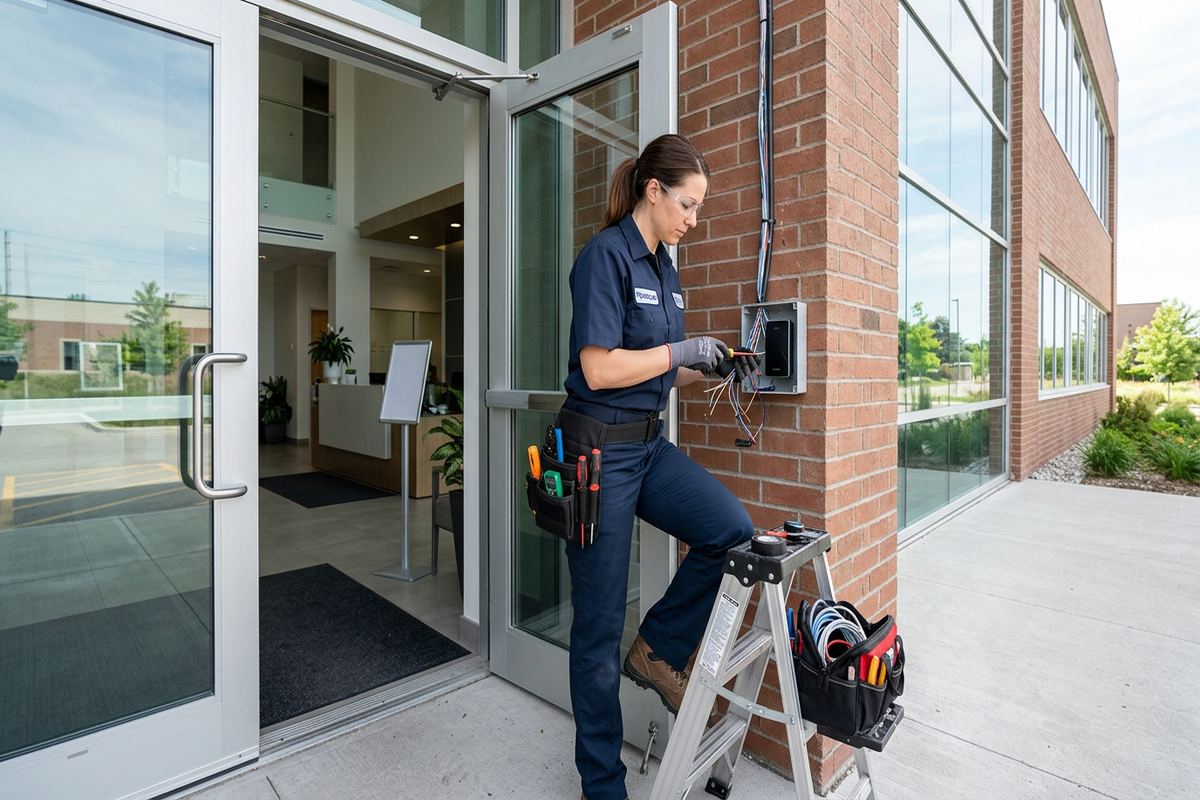
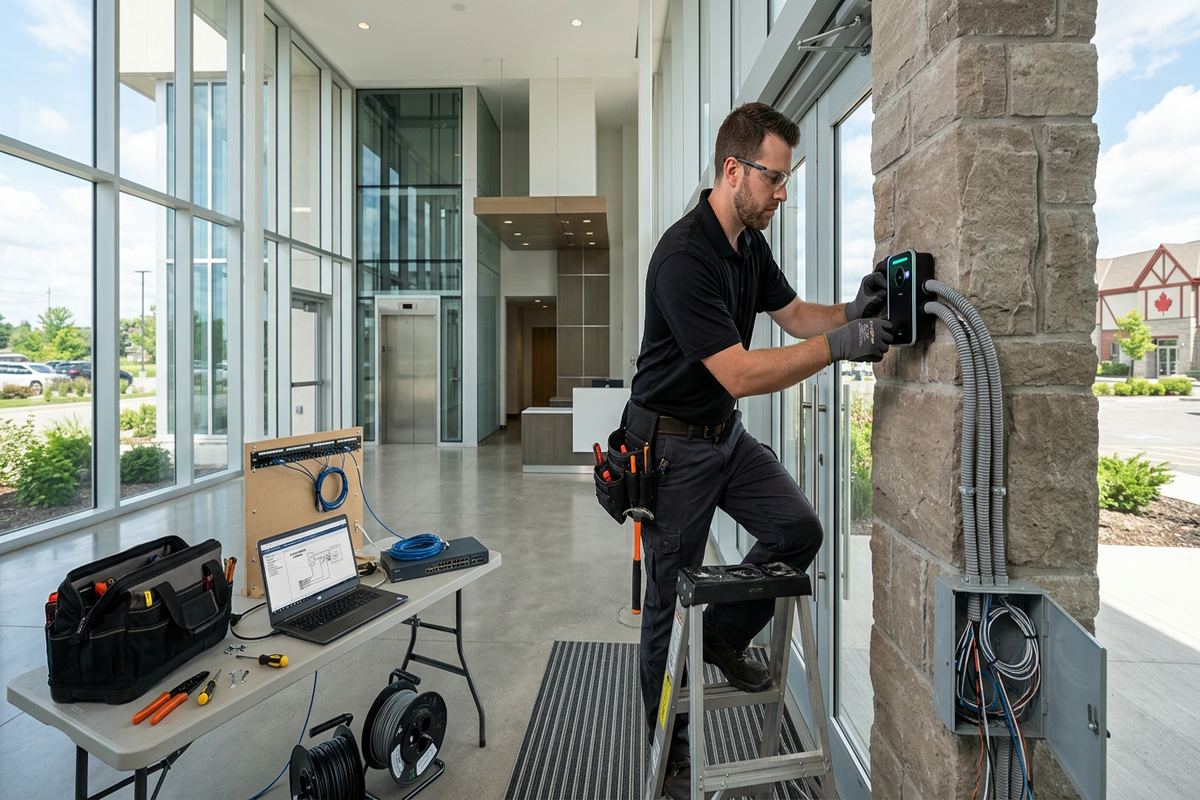
UnifiedLink installs office access control systems in Fort Erie and nearby Niagara Region communities. We plan readers, credentials, controllers, locks, exit devices and network connections around the way your staff and visitors use the building. Every project begins with a site assessment and proceeds from a written scope, documented cable routes and defined door functions.
Office Access Control Planning in Fort Erie
Access control starts with the door, not the reader. During a Fort Erie site assessment, we review each opening, its existing lockset, frame, hinges, door closer, exit hardware and normal traffic pattern. We also identify which doors are designated exits and how occupants must leave during an emergency. This prevents a credential system from being specified without considering the mechanical hardware that actually secures the opening. The resulting plan separates doors requiring controlled entry from those that need monitoring only, scheduled unlocking or connection to another building system.
Office workflows determine how credentials and permissions should be organized. A small professional office may need simple staff access and an administrator credential, while a multi-tenant property may require separate groups for tenants, cleaners, contractors and building management. We discuss working hours, visitor handling, delivery access, temporary permissions and what should happen when internet service is unavailable. These details inform controller capacity, credential type and management software. They also help avoid giving every user unrestricted access merely because a clear permission structure was not established before installation.
Before pricing, UnifiedLink provides a site assessment appropriate to the service and travel distance. The written scope identifies equipment, cable routes, device placement, exclusions, equipment ownership and warranty. It also records assumptions involving locksmith work, fire alarm interfaces, network ports, electrical supply, door replacement or landlord approvals. This gives the customer and any other trades a shared reference before work begins. Requests sent during business hours are answered the same day; after-hours requests are answered the next business day. Assessment timing depends on the project requirements and travel distance.
- Door and frame condition review
- Credential and permission planning
- Exit and life-safety considerations
- Written scope before installation
Door Hardware and Building Conditions
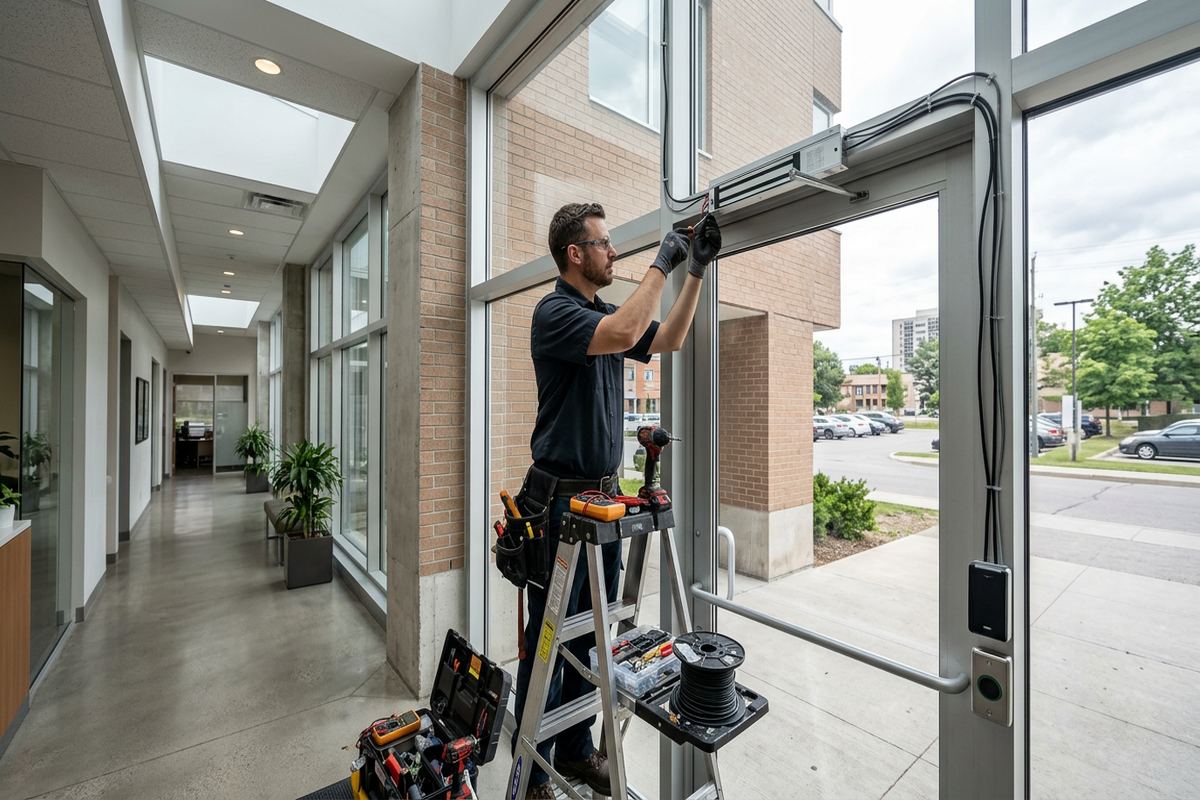
Fort Erie offices occupy varied buildings, including older commercial storefronts, converted residential properties, newer plazas and industrial units. Their doors may be wood, hollow metal, aluminum storefront or insulated exterior assemblies, and each requires a compatible locking method. An electric strike may suit one frame but be inappropriate where alignment, latch geometry or exit hardware creates a conflict. Magnetic locks introduce different release and code considerations. We document existing conditions and coordinate required specialty work instead of treating every opening as if it accepts the same standard hardware package.
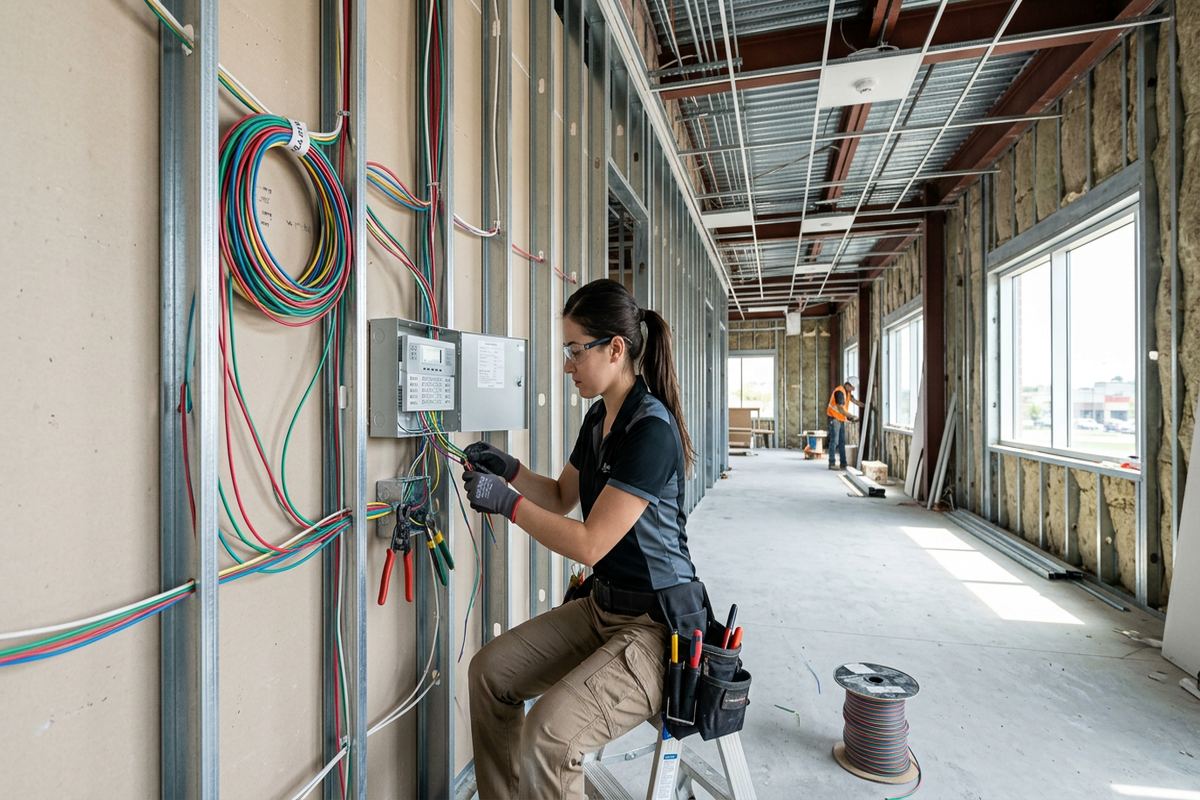
Masonry and frame construction affect both device mounting and cable access. Solid brick, concrete block and finished masonry walls may require surface raceway, carefully selected penetrations or routes through accessible ceiling space. Frame buildings can offer easier pathways, but concealed insulation, vapour barriers and previous renovations still require investigation. In either case, reader height, door swing, accessibility and protection from physical damage matter. Cable routes are planned to remain serviceable without unnecessary disruption to reception areas, private offices or tenant finishes, and visible pathways are discussed before the scope is approved.
Existing door condition can limit access control performance. A sagging door, loose hinge, weak closer or damaged weather seal may prevent the latch from consistently engaging, even when the electronic components operate correctly. Freeze-thaw cycles can further change alignment at exterior openings. We test the mechanical action and identify repairs that should happen before or alongside installation. Where locksmith, door contractor or electrician involvement is needed, responsibilities are stated in the scope. Access control should operate a sound opening; it should not be used to conceal unresolved mechanical problems.
- Electric strike compatibility checks
- Door alignment and closer review
- Routes for masonry or frame walls
- Coordination with required trades
Weather-Rated Access Control for Fort Erie
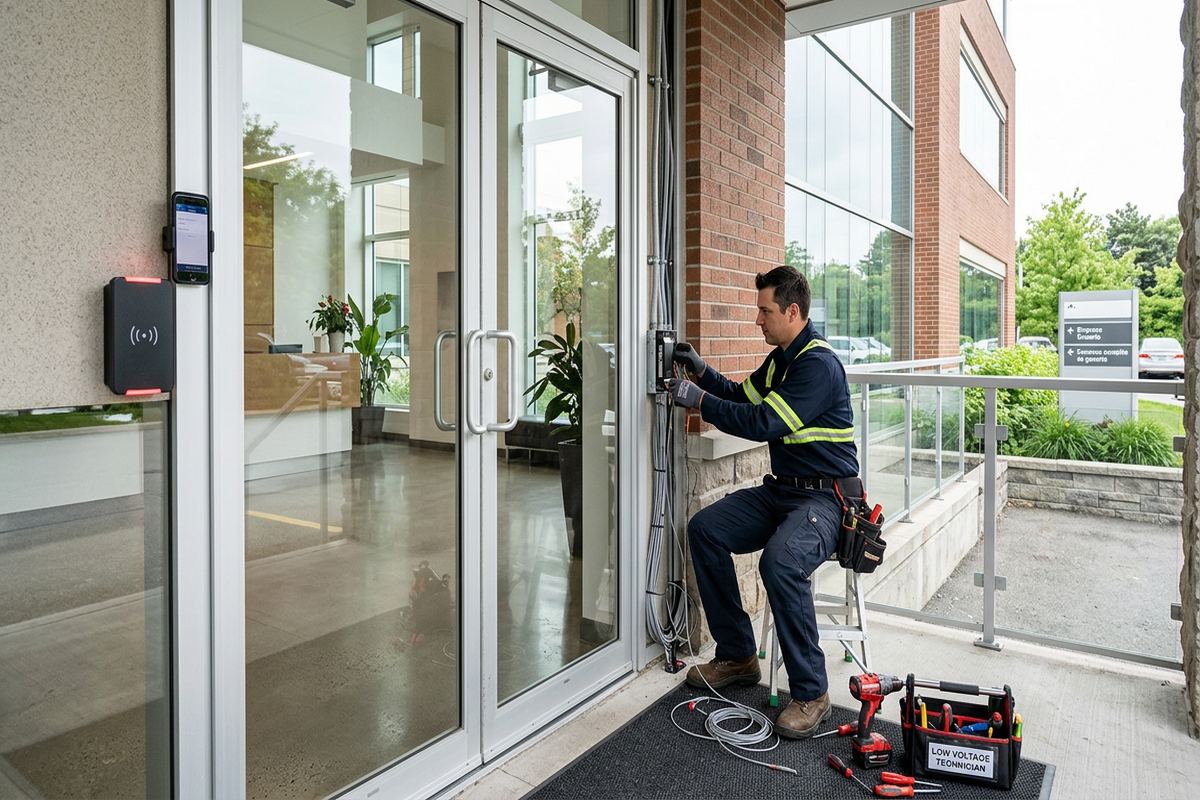
Border-adjacent businesses and lakefront and seasonal homes influence equipment choices across Fort Erie, making weather-rated exterior gear standard for exposed access points. Readers, request-to-exit devices, door contacts, enclosures and associated fittings must suit their mounting location rather than relying on an indoor rating beneath a shallow overhang. Wind-driven precipitation can reach protected-looking entrances, while condensation may develop where warm indoor air meets cold assemblies. We select placement and installation methods that reduce exposure, protect connections and preserve practical credential use during winter clothing, snow accumulation and wet conditions.
Exterior penetrations require deliberate sealing. Fasteners, reader cables and conduits passing through brick, siding, metal panels or door frames can create water paths when improperly positioned. We use suitable fittings and seal around penetrations while respecting drainage paths within storefront and door systems. Drip loops, enclosure orientation and cable entry direction are considered where applicable. Sealant alone is not a substitute for sound mounting. The assembly must also tolerate movement caused by temperature changes and freeze-thaw conditions common in Niagara Region without pulling on conductors or trapping water behind equipment.
Cold weather can expose weaknesses that are less noticeable in summer. Stiff door seals, ice near thresholds and changing frame alignment may cause intermittent latching or forced-door events. Exterior systems therefore need correct contact placement, stable hardware and realistic unlock schedules rather than excessive adjustment of electronic settings. For seasonal properties or offices with irregular occupancy, remote event visibility may be useful, but it does not replace physical inspection after severe weather. We explain which events indicate credential activity, a held door, a forced opening or a possible mechanical issue requiring attention.
- Weather-rated exterior readers
- Sealed wall and frame penetrations
- Freeze-thaw alignment considerations
- Protected cable and conduit entries
Fort Erie, Ontario
Office access control installation in Fort Erie, scoped in writing first
Book a site assessment and get equipment, routes, exclusions, and warranty on paper before anything is installed.
Credentials, Permissions and Audit Events
Credential selection should match the office’s operating needs and administrative capacity. Card and fob systems provide familiar physical credentials, while supported mobile credentials may suit organizations already managing staff devices. Keypads can serve specific low-volume applications but require disciplined code management. We review how credentials will be issued, replaced and revoked, including temporary access for cleaners or contractors. The objective is a manageable process that avoids shared credentials where individual accountability is required. Product capabilities, licensing conditions and ongoing administrative requirements are identified before the customer chooses a platform.
Permissions are built around roles, doors and schedules. Reception staff may enter a main office during regular hours, managers may require broader access, and a maintenance provider may need a narrow evening window. In Fort Erie workplaces with seasonal staffing, expiry dates can reduce the chance of credentials remaining active after an assignment ends. Holiday schedules and automatic unlock periods also need careful review so doors do not open on closed days. We configure the agreed rules on site and show the designated administrator how to add, suspend and remove users using their own credentials.
Access events provide operational records, but their meaning depends on system design. A valid credential event confirms that a credential was accepted; it does not necessarily prove who passed through or whether another person followed. Door contacts and properly adjusted timing can add held-open and forced-open information. We discuss retention settings available within the selected system, who may review records and how administrative access should be controlled. Customers remain responsible for internal privacy policies and appropriate notice. The handover identifies administrator accounts so control does not depend on an installer-owned login.
- Cards, fobs or supported mobile credentials
- Role-based door permissions
- Temporary and expiring access
- Customer-controlled administrator accounts
Cabling and Network Integration in Fort Erie
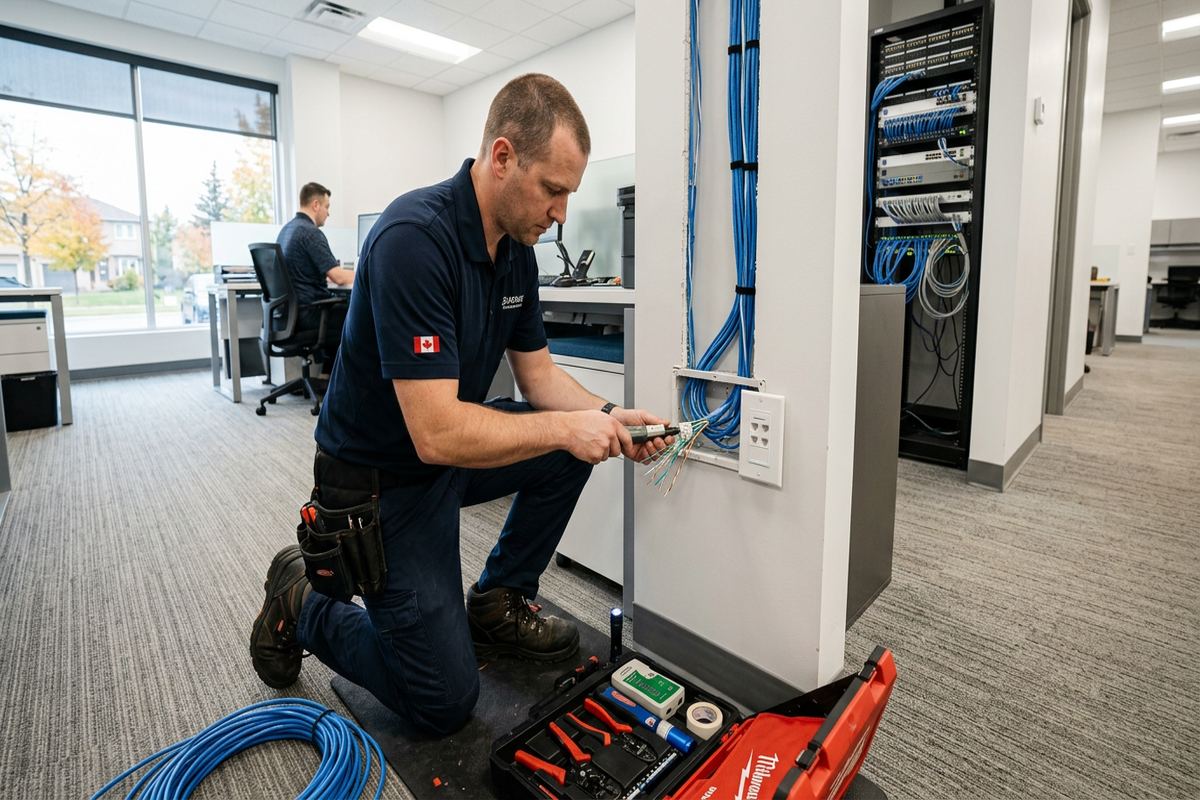
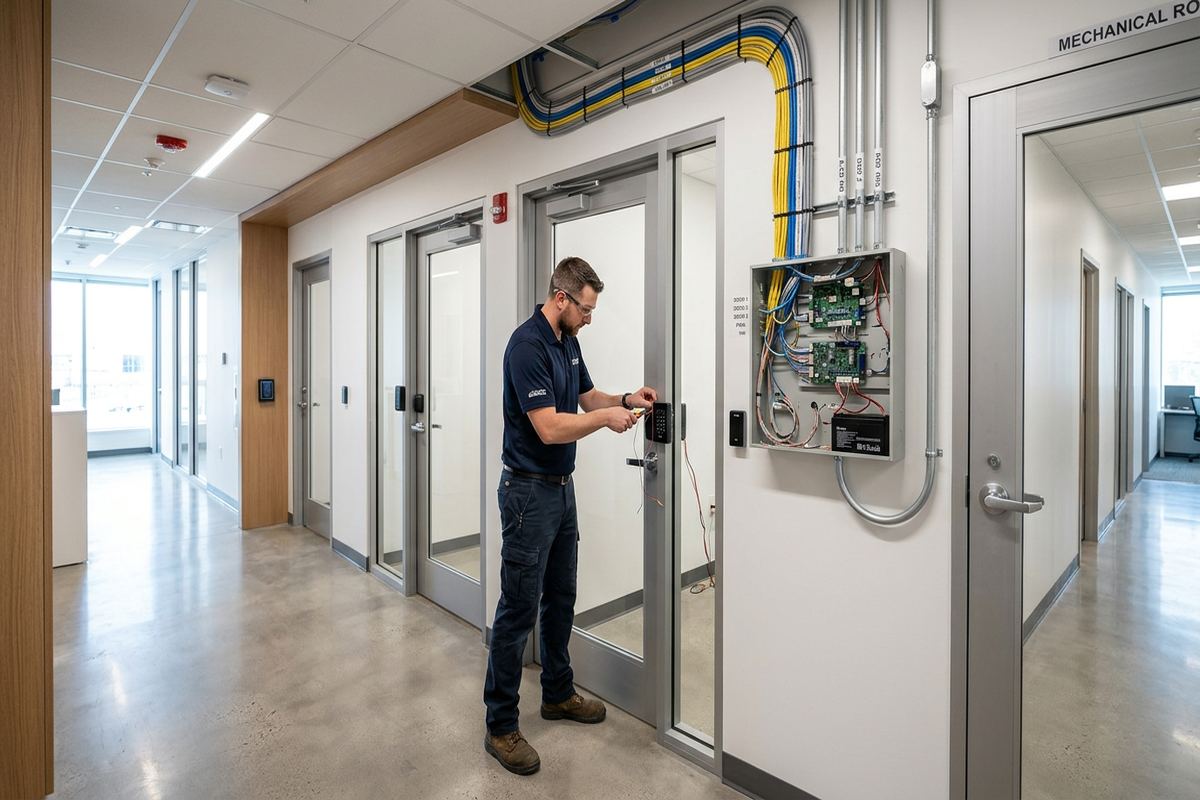
Reliable access control depends on the wiring behind the visible devices. UnifiedLink installs continuous labelled cable runs between readers, door contacts, request-to-exit devices, locking hardware and control equipment where the design calls for them. Cable type and pathway are matched to device requirements, distance and environmental conditions. Splices and undocumented transitions can complicate future troubleshooting, so routes and terminations are planned as a system. In finished Fort Erie offices, we look for practical ceiling, riser and service-room pathways while discussing any unavoidable surface raceway before installation begins.
Controllers and management appliances need suitable locations with controlled access, adequate space and the required electrical and network services. They should not be placed where routine public traffic, moisture, stored materials or accidental disconnection creates avoidable risk. We identify customer-provided network ports, addressing details and remote-access requirements in the scope. Access control can often continue making local door decisions during a network interruption, depending on the selected equipment and configuration, but remote administration or notifications may be affected. Those operating limits are explained during system selection and testing.
Integration should be specific rather than assumed. An office may want access control linked with an intrusion alarm, intercom, video system, elevator control or automatic door operator, yet compatibility and responsibilities vary. Fire alarm release requirements and powered locking arrangements may require coordination with qualified parties and the authority having jurisdiction. We document the intended interface, available outputs, input behaviour and work excluded from our scope. Clear boundaries are particularly important in multi-tenant commercial strips or industrial units where base-building systems may be controlled by a landlord or separate contractor.
- Continuous labelled cable runs
- Secure controller placement
- Defined network requirements
- Documented third-party interfaces
Installation Across Fort Erie Communities
Building context changes across Bridgeburg, Crystal Beach, Ridgeway, Stevensville and Douglastown. A Bridgeburg commercial space may involve older masonry and limited concealed pathways, while a Crystal Beach office serving seasonal activity may place greater emphasis on temporary credentials and exposed exterior entrances. Ridgeway storefronts can combine public reception traffic with restricted staff areas. Rather than assigning equipment based only on the neighbourhood, we assess construction, occupancy and door use at the specific property. Local context guides questions, but observed site conditions determine the proposed installation.
Commercial strips often involve shared walls, common service corridors and landlord-controlled exterior doors. An office tenant may have authority to modify an interior suite door but not the main entrance, storefront frame or shared electrical room. Condo corporations can impose similar approval and documentation requirements. Before drilling, cabling or changing hardware, the customer should confirm applicable permissions. We can provide device locations and proposed routes for review, and the written scope can identify approval-dependent work. This reduces the risk of installing equipment that conflicts with lease terms, common-element rules or building standards.
Industrial units around Fort Erie may combine office doors, warehouse entrances, loading areas and fenced access points. These openings experience different traffic, impact and weather exposure, so they should not be treated as a single door type. Stevensville or Douglastown properties may also have longer internal pathways or detached areas requiring closer review of cable distance and connectivity. We prioritize controlled staff entrances and sensitive rooms, then determine whether secondary openings need credential access, monitoring or conventional hardware. The design remains proportional to actual operations instead of adding electronics to every available door.
- Bridgeburg masonry pathway planning
- Seasonal access considerations in Crystal Beach
- Landlord and condo approval support
- Office and industrial door assessment
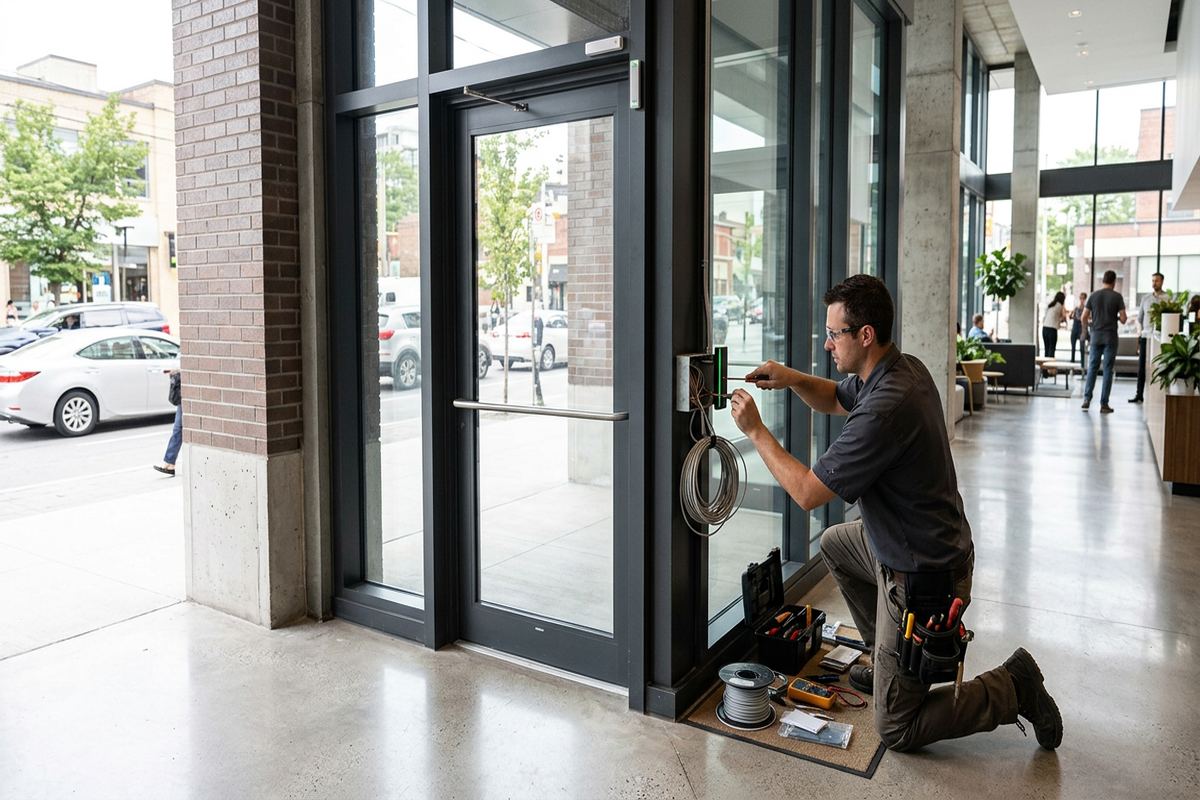
Testing, Handover and Administration
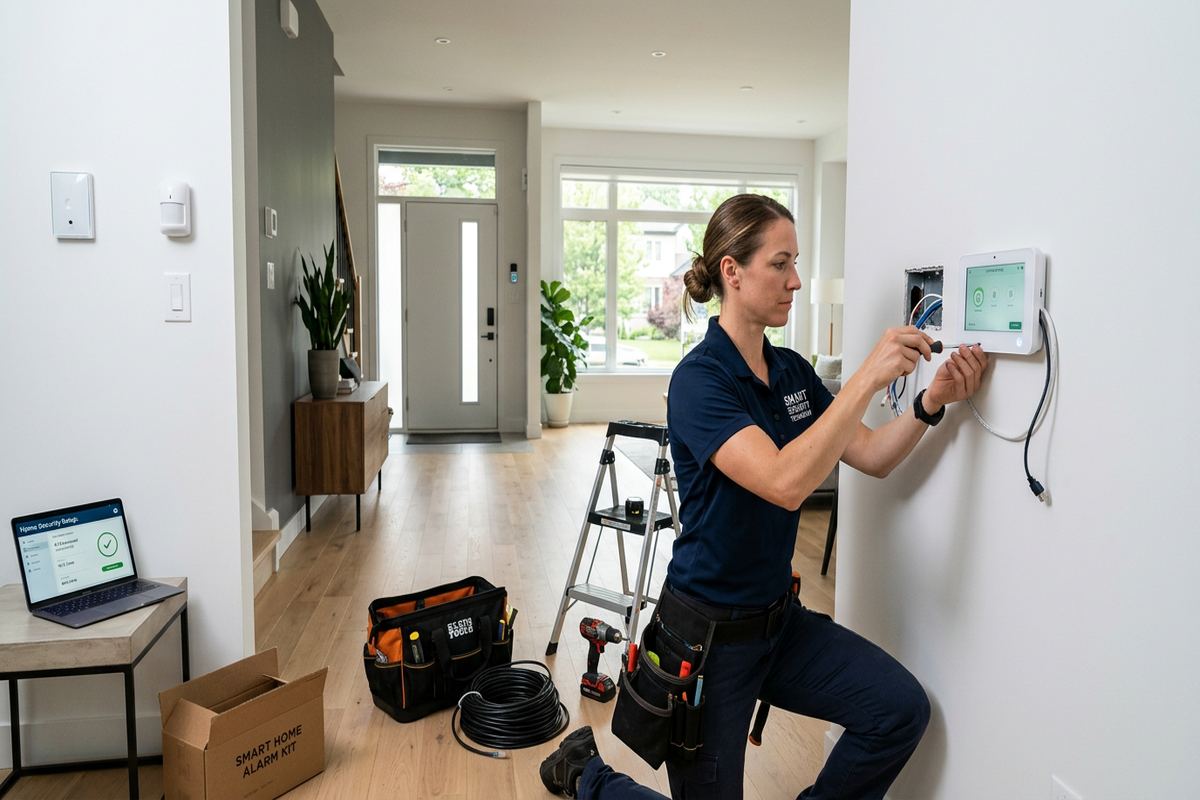
Commissioning verifies more than whether a reader beeps. Each controlled opening is tested for valid and invalid credentials, scheduled access, lock response, door contact status and request-to-exit operation where included. We check that the door closes and latches repeatedly under normal use and confirm event descriptions in the management interface. Power interruption and network behaviour are reviewed according to the system design. Any integration included in the scope is tested with the responsible party where coordination is required. Results are addressed before the system is handed over for routine use.
On-site configuration uses the customer’s agreed door names, schedules and permission groups rather than generic labels that become confusing later. At handover, the customer receives control through their own credentials, along with an as-built record showing installed devices and cable information. We explain everyday tasks such as issuing a credential, suspending a user, checking door status and reviewing relevant events. Equipment ownership and warranty are stated in the written scope. This documentation gives the office a practical baseline for future changes, troubleshooting or expansion without relying on memory.
Administrative discipline keeps the system useful after installation. A designated office administrator should review active users, remove departed staff promptly and avoid sharing management accounts. Temporary permissions should have expiry dates where the platform supports them, and schedules should be checked before holidays or seasonal closures. Physical keys still need a policy because many controlled doors retain mechanical override cylinders. We also recommend recording who can authorize permission changes. UnifiedLink remains one accountable contractor for the installed access control scope, reducing uncertainty over cabling, device configuration and documented system operation.
- Door-by-door functional testing
- Customer-specific names and schedules
- As-built installation record
- Administrator task walkthrough
Expanding Office Access Control in Fort Erie
A well-planned Fort Erie access control system can support later changes without oversizing the initial project unnecessarily. During design, we ask whether the office expects additional suites, controlled storage, a server room or another staff entrance. Controller capacity, enclosure space, software limits and available pathways can then be considered honestly. Expansion is not automatic merely because a platform is described as scalable; each added opening still needs compatible hardware, power, cabling and licensing where applicable. The written scope distinguishes installed capacity from possible future capacity so expectations remain clear.
Existing systems can sometimes be extended, but compatibility must be confirmed. Reader technologies, credential formats, controller generations, software versions and licence arrangements can limit reuse. A site assessment examines available documentation, panel condition, wiring labels and administrator access. Where reliable components can remain, the scope identifies them and clarifies warranty boundaries. Where inherited wiring or unsupported equipment creates uncertainty, replacement may be more practical than building around it. Fort Erie property owners should also confirm that credentials and administrative accounts transfer properly when changing tenants, managers or service providers.
The next step is a discussion of doors, users, schedules and building conditions, followed by a site assessment before pricing. Photographs and floor plans can help establish the initial context, but exterior exposure, frame condition and cable routes generally need direct review. For offices in Ridgeway, Bridgeburg, Crystal Beach or elsewhere in Fort Erie, assessment timing depends on the service and travel distance. After review, UnifiedLink prepares a written scope covering equipment, routes, placement, exclusions, ownership and warranty, giving all parties a defined basis for approval and installation.
- Planning for additional controlled doors
- Compatibility review for existing systems
- Clear reuse and warranty boundaries
- Site assessment before pricing
Fort Erie neighbourhoods we cover
- Bridgeburg
- Crystal Beach
- Ridgeway
- Stevensville
- Douglastown
Office access control installation in Fort Erie — common questions
Can you add access control to an older Fort Erie office?
Yes, provided the doors, frames and available pathways are assessed first. Older Fort Erie properties may have masonry walls, layered renovations, non-standard hardware or limited ceiling access. We inspect each opening and identify whether door repair, locksmith work, surface raceway or another trade is required. The written scope records what will be reused, replaced and excluded before installation proceeds.
What happens to the doors during a power outage?
Operation depends on the lock type, life-safety requirements, controller design and any backup power included in the system. Some locks release without power, while others remain secured but still permit free exit through mechanical hardware. We review the intended behaviour for each Fort Erie office door, document it in the design and test the applicable power-loss response during commissioning.
Do exterior readers need special protection in Fort Erie?
Yes. Fort Erie’s winters, freeze-thaw cycles and exposure near the lake make weather-rated exterior equipment standard for exposed entrances. Reader placement, cable entry, fasteners, enclosure orientation and sealing all matter. We also inspect door alignment and weather seals because a correctly functioning reader cannot compensate for a latch that binds, freezes or fails to engage consistently.
Can tenants install access control without landlord approval?
That depends on the lease and the part of the building being modified. Exterior storefront frames, shared entrances, common corridors and electrical rooms are often landlord-controlled. Condo properties may also require corporation approval. For Fort Erie tenant projects, we can document proposed equipment and routes, but the customer should obtain necessary permissions before drilling, cabling or changing door hardware.
Can staff use phones instead of cards or fobs?
Mobile credentials may be available when the selected access control platform, reader hardware and staff devices support them. They can reduce physical credential handling, but may introduce account, licensing and device-management requirements. We compare those requirements with cards and fobs so a Fort Erie office can choose a method its administrator can manage consistently, including replacement and revocation procedures.
Will we control the system after handover?
Yes. UnifiedLink completes on-site configuration and hands the system over using the customer’s own credentials rather than retaining control through an installer-owned administrator account. The designated administrator is shown how to manage users, schedules and events. You also receive an as-built record of the Fort Erie installation, with equipment ownership and warranty terms defined in the written scope.
Coverage in Fort Erie is confirmed against the address before we quote. See everything we install in Fort Erie or the province-wide office access control installation page.