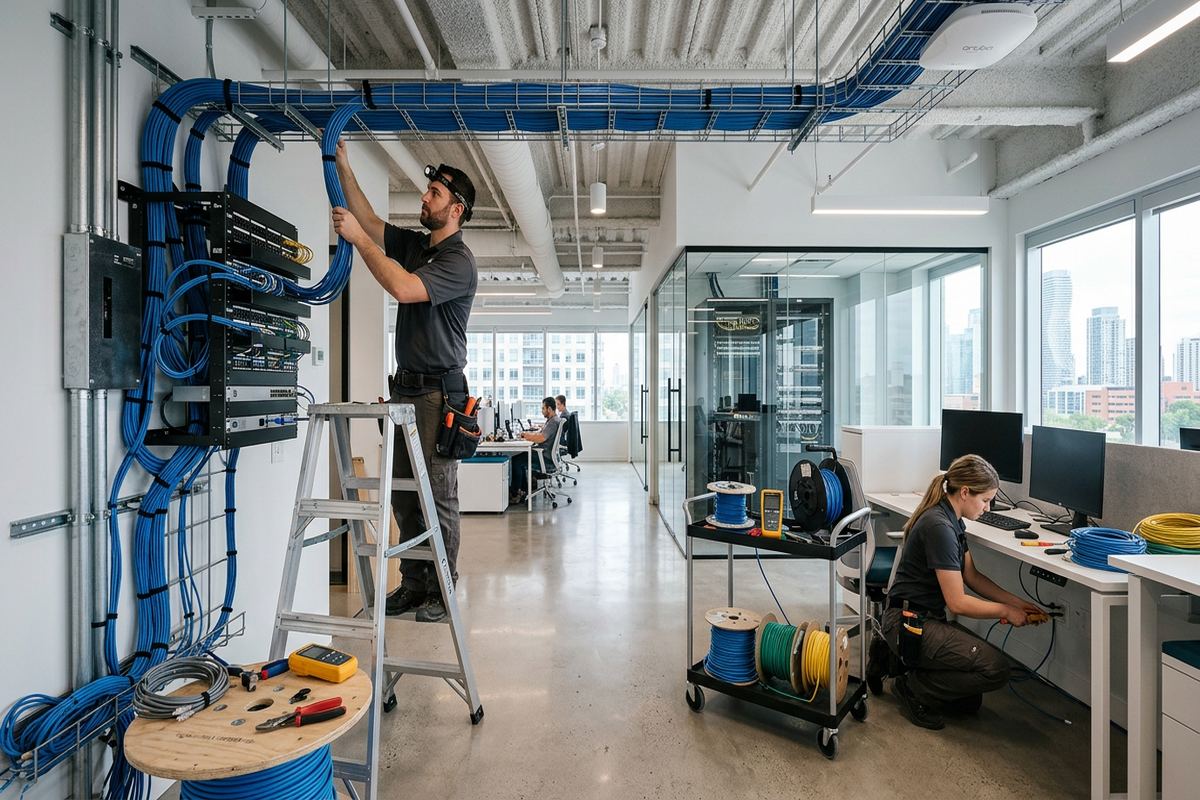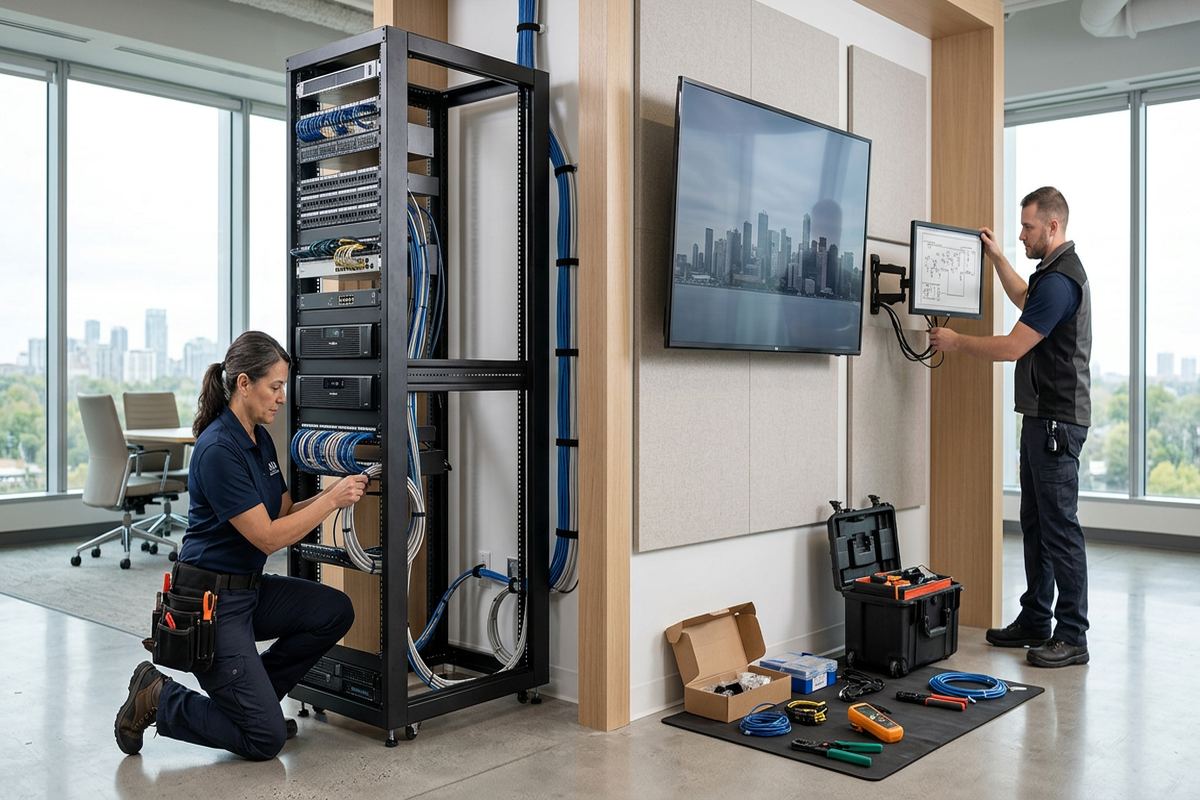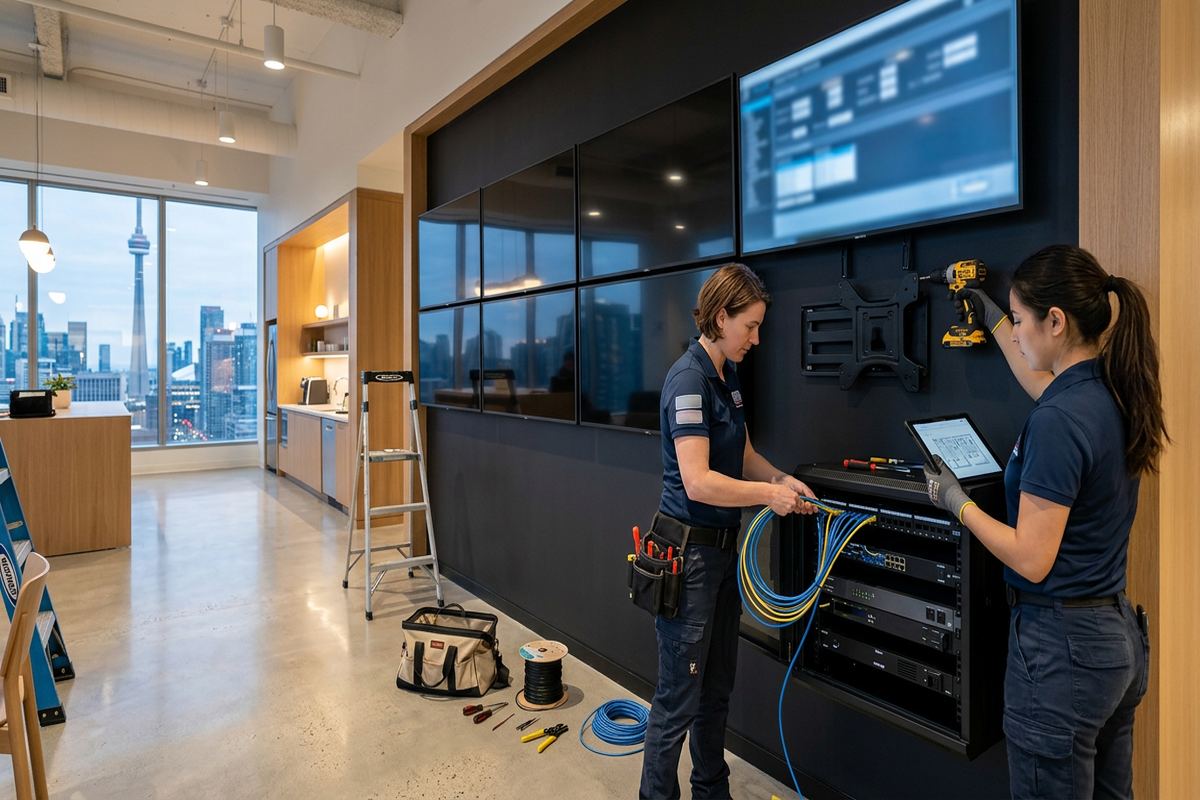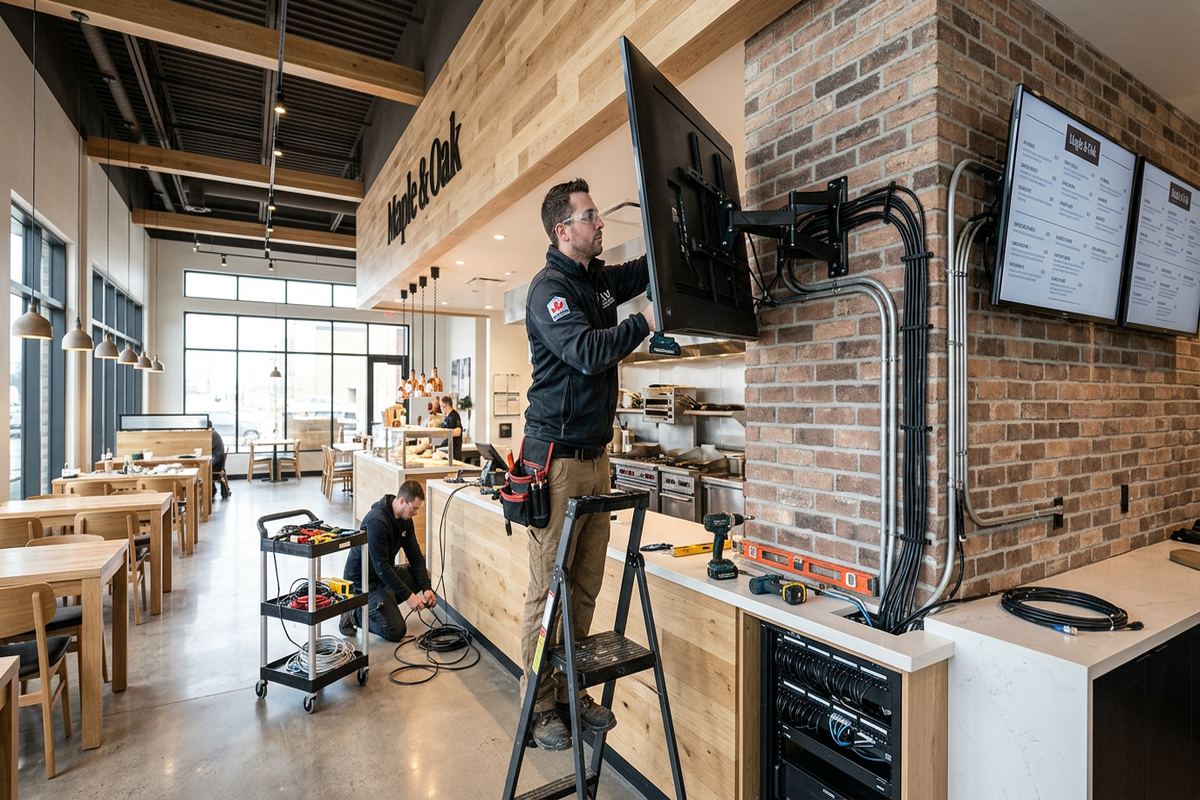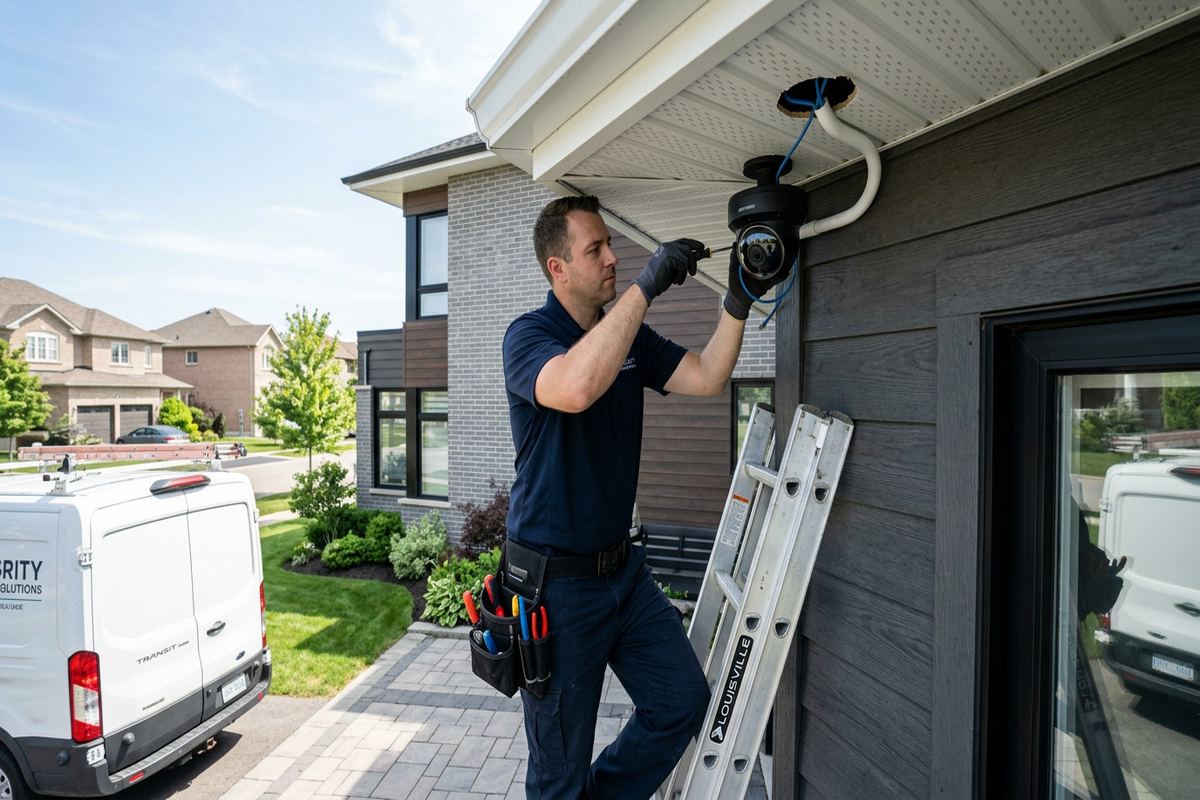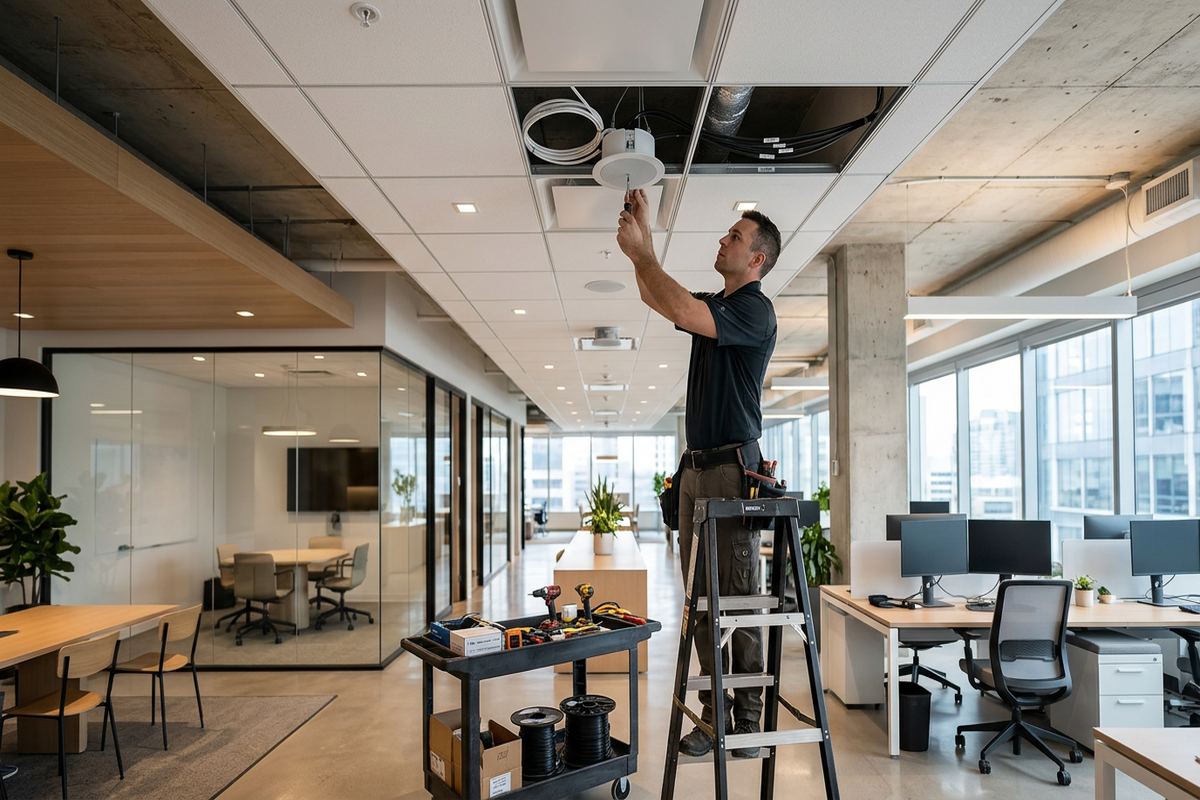
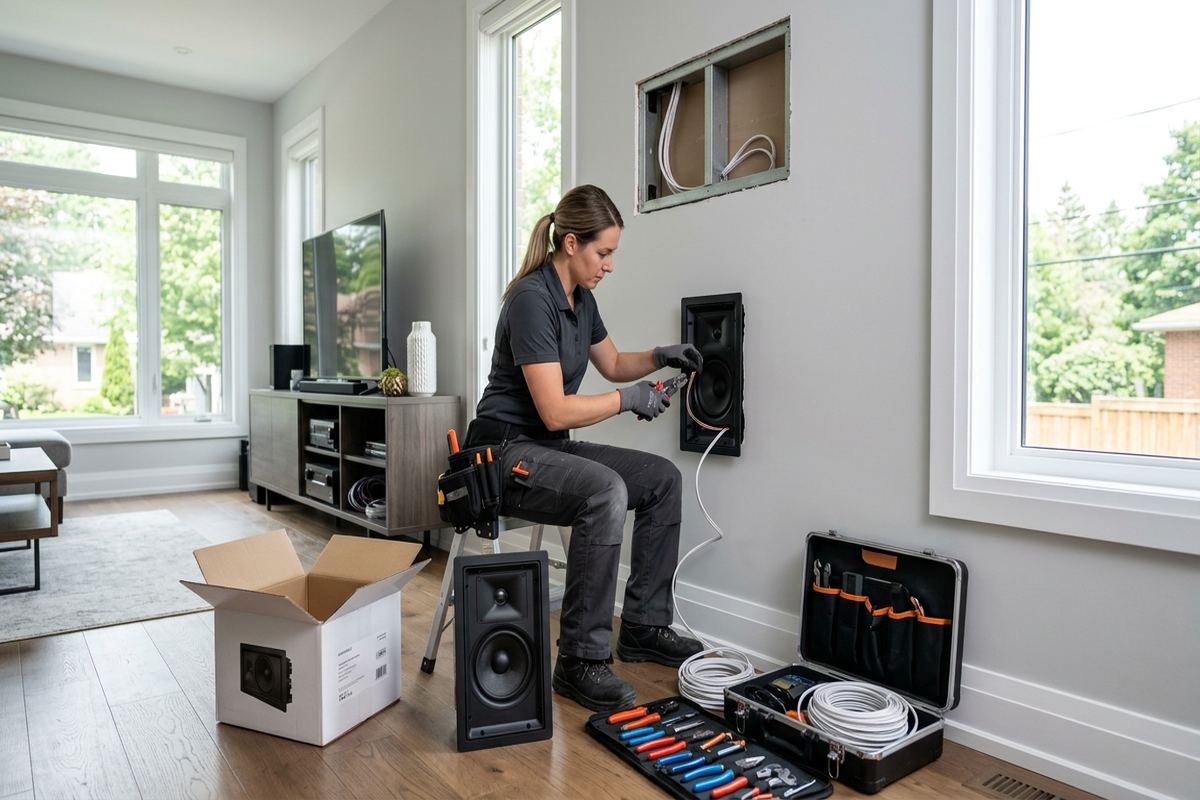
UnifiedLink installs in-ceiling speakers for homes, offices, shops, restaurants and other properties across Fort Erie. We plan speaker locations, cable routes, listening zones and equipment connections before cutting the ceiling. Each installation includes labelled wiring, on-site configuration and a practical handover using the customer’s own credentials.
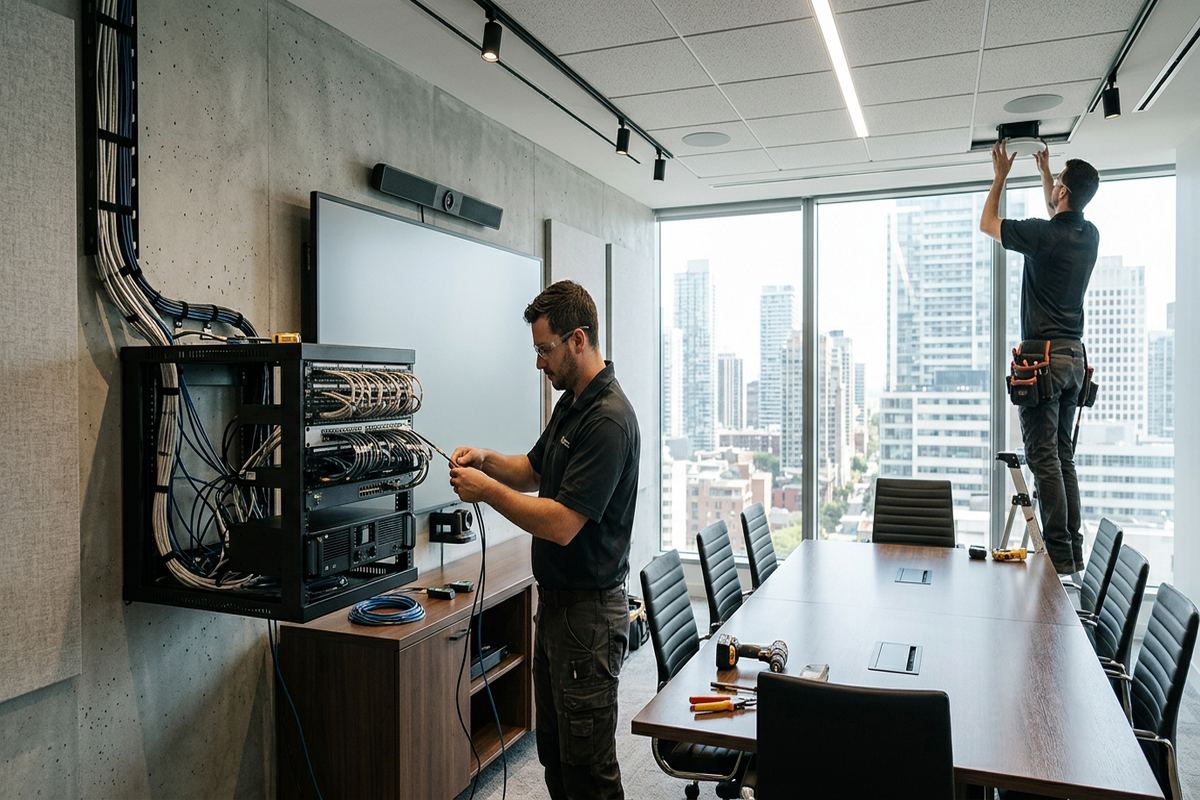
Planned In-Ceiling Speaker Installation in Fort Erie
A useful in-ceiling audio system starts with room layout rather than a speaker count. During a site assessment, UnifiedLink reviews ceiling height, seating positions, room shape, reflective surfaces and the way each space will be used. A television room needs different coverage from a kitchen, office, waiting area or restaurant dining room. We also identify where amplifiers, receivers, network equipment and source devices can be placed. This planning helps create even sound, sensible volume control and accessible equipment without filling the ceiling with devices that do not serve a clear purpose.
Before ceiling openings are made, we inspect the likely cable path and available mounting depth. Joists, ductwork, plumbing, electrical wiring, insulation and recessed lighting can all limit placement. Finished basements and renovated homes may also contain hidden bulkheads or layered ceiling materials. Where access is uncertain, the written scope identifies assumptions and exclusions before work proceeds. Speaker locations can then be adjusted while maintaining balanced coverage. This approach reduces unnecessary cutting and helps ensure that each installed speaker has proper clearance, support and separation from electrical sources that could introduce unwanted noise.
Fort Erie properties range from older masonry buildings to newer frame construction, seasonal cottages, commercial strips and industrial units. Those differences affect how audio cable reaches the ceiling and where central equipment can be housed. A frame house may allow routing through joist spaces, while a masonry storefront may require surface pathways or carefully selected transitions. We provide a written scope covering equipment, cable routes, device placement, exclusions, equipment ownership and warranty. The result is a defined installation plan rather than an open-ended collection of speakers, controls and concealed wiring.
- Room-by-room speaker placement planning
- Ceiling cavity and cable-path review
- Amplifier and source location selection
- Written equipment and installation scope
- Ownership and warranty details documented
Speaker Layouts for Homes and Seasonal Properties
Whole-home audio works best when each area is treated as a separate listening environment. Open kitchens and living rooms may need broad, balanced coverage, while bedrooms and studies usually benefit from independent volume control. In Bridgeburg and Ridgeway, older layouts can include additions, enclosed porches and ceilings built at different times. We account for those transitions when selecting speaker sizes and cable routes. The system can be organized into practical zones so occupants can play the same source throughout the property or control selected rooms without running every speaker at one volume.
Lakefront and seasonal homes introduce additional planning questions. Equipment may sit unused for extended periods, internet service may be suspended, and humidity or temperature changes can affect unsuitable components. Interior in-ceiling speakers still need appropriate placement away from known moisture sources, while covered patios and exposed areas require equipment specifically rated for those conditions. Fort Erie’s border-adjacent businesses and lakefront and seasonal homes make weather-rated exterior gear standard whenever speakers, grilles, brackets or connections are located outside. Interior products are not substituted simply because an exterior location is sheltered by an overhang.
Audio renovations can be coordinated with other ceiling work, including lighting changes, drywall replacement or room remodelling. If the ceiling is already open, we can establish continuous cable runs before insulation and finishing are completed. In occupied homes, routes are selected to limit disruption while retaining future access to central equipment. Crystal Beach cottages and compact seasonal properties may have shallow cavities, low rooflines or previous alterations that restrict standard speaker back depth. A site assessment confirms what fits before equipment is selected, helping avoid speaker locations that conflict with framing or cannot be properly secured.
- Independent room and zone control
- Layouts for open and divided spaces
- Options for shallow ceiling cavities
- Seasonal-property equipment planning
- Weather-rated speakers for exterior areas
Ceiling Construction and Cable Routing
Ceiling material determines both the cutting method and the type of support required. Standard drywall is usually straightforward once the cavity has been checked, but plaster, wood panelling, acoustic tile and suspended ceilings need different treatment. Older Fort Erie properties may have brittle finishes or multiple ceiling layers that demand careful opening and edge protection. Commercial suspended ceilings may require independent support rather than relying on the tile itself. We verify speaker dimensions, grille clearance and mounting requirements before cutting, then keep each opening consistent with the approved layout and the manufacturer’s installation method.
Audio cable is routed as a continuous labelled run wherever the pathway permits, avoiding hidden joins that complicate troubleshooting later. Cable type is selected for the installation environment, pathway and equipment requirements. Runs near electrical circuits, motors or fluorescent lighting are planned to reduce interference, and penetrations are handled according to the construction conditions encountered. In finished spaces, cable may travel through attics, basements, service rooms, accessible ceiling areas or discreet surface pathways. The written scope records intended routes so the customer understands where concealed and visible portions of the installation will be located.
Masonry and frame buildings present distinct routing choices. Wood framing often provides cavities that can be accessed from above or below, although blocking and insulation may interrupt a direct path. Masonry walls generally do not offer the same concealed routes, particularly in older commercial spaces or converted buildings. In those cases, a surface raceway, service chase or alternate equipment location may be more practical than extensive wall disturbance. Fort Erie commercial strips and mixed-use properties can also contain work completed by several previous occupants, making inspection important before any existing wire or pathway is reused.
- Drywall, plaster and tile assessment
- Continuous labelled speaker cabling
- Separation from likely interference sources
- Support appropriate to ceiling construction
- Documented concealed and surface routes
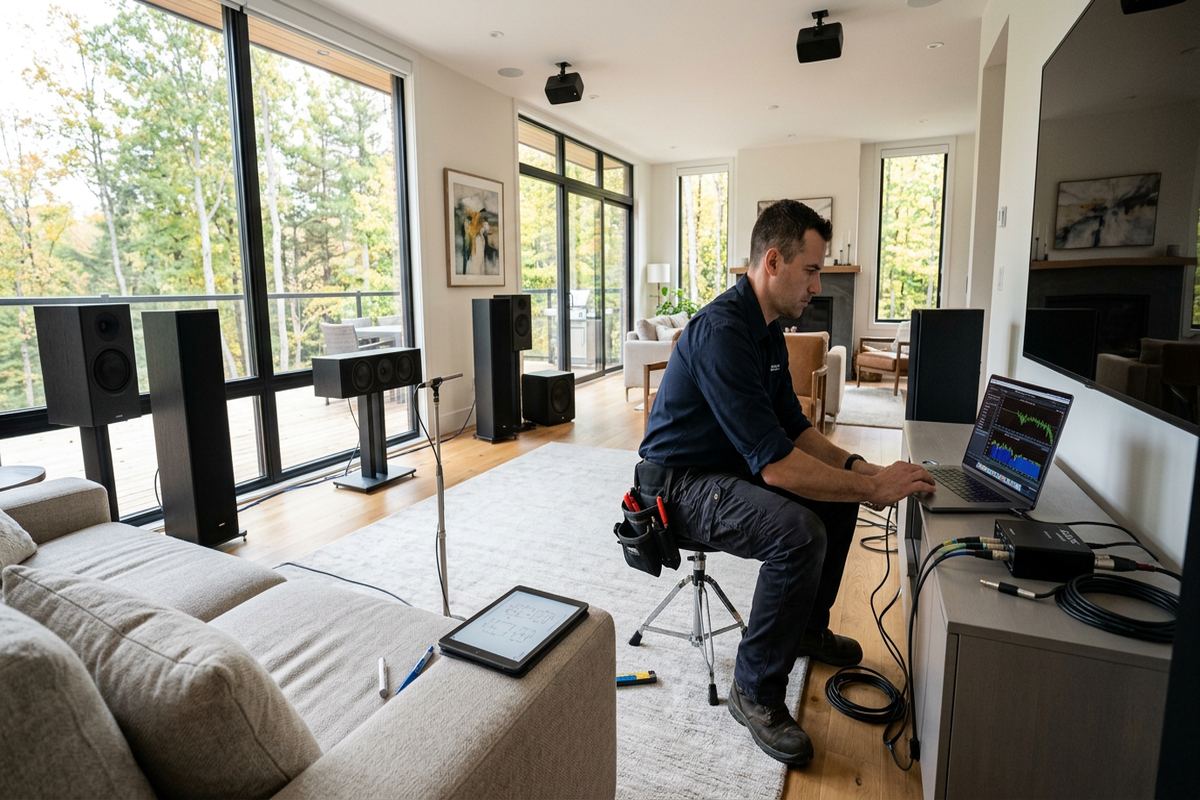
Fort Erie, Ontario
In-ceiling speaker installation in Fort Erie, scoped in writing first
Book a site assessment and get equipment, routes, exclusions, and warranty on paper before anything is installed.
Fort Erie Audio Zones and Equipment Integration
Speakers are only one part of an in-ceiling audio system. The amplifier must support the number of speakers, expected listening levels and desired control zones. Residential systems may connect to a television, streaming device or network audio platform, while a business may need background music, paging integration or scheduled operation. UnifiedLink reviews compatible inputs, outputs and control methods as part of the assessment. Equipment is located where it has ventilation, power, network access and reasonable service access, rather than being hidden in a closed cabinet that creates heat or makes routine troubleshooting difficult.
For multi-room installations, zoning determines which spaces operate together and how users control them. A kitchen and dining area might share a source but retain separate volume adjustment, while an office, showroom and staff room may need completely independent operation. Control can be provided through suitable wall controls, an equipment interface or an application, depending on the selected platform. We configure the system on site and test each zone from its normal control point. The customer receives access using their own credentials instead of an installer-owned account that could restrict future administration.
Existing receivers, televisions or network equipment can sometimes remain in service if they are compatible with the proposed design. Compatibility depends on speaker load, available outputs, control features and the condition of the existing equipment and wiring. We do not assume that an installed cable is suitable simply because it reaches the right room. Each reusable component is identified in the scope, along with any limitations. For Fort Erie homes and businesses, this creates a clear boundary between newly supplied work and customer-owned equipment, making future maintenance and changes easier to understand.
- Amplifier and speaker-load matching
- Multi-zone source and volume control
- Television and streaming-source integration
- On-site programming and functional testing
- Customer-controlled system credentials
Commercial In-Ceiling Audio in Fort Erie
Retail units, offices, clinics, restaurants and service counters use ceiling audio differently from homes. The goal is often consistent background sound at moderate levels rather than concentrated listening near one seating position. Speaker spacing must account for ceiling height, fixtures, shelving, partitions and areas where staff or customers spend time. In Fort Erie commercial strips, tenancy changes can leave behind undocumented cabling or equipment that no longer matches the floor plan. We inspect those existing conditions before deciding whether any part of the previous system should be retained, removed or isolated.
Industrial units and larger commercial spaces may include offices beside workshops, loading areas or high-bay sections. These environments cannot be treated as one uniform zone. Ceiling height, ambient machinery noise and daily operating patterns affect both speaker selection and placement. Standard in-ceiling speakers may suit enclosed offices but not an active production or storage area. Where another speaker type is more appropriate, that distinction is included in the scope. Cable routes also need to respect building services, fire separations, accessible service pathways and the practical location of the central audio equipment.
Tenants should confirm landlord approval before openings, pathways or equipment mounting are finalized. Condo owners may likewise need approval for work involving common elements, shared ceiling spaces or exterior areas. UnifiedLink can document intended device positions and cable routes so the customer has useful information for that process, but approval remains the customer’s responsibility unless otherwise stated. In Fort Erie businesses near the border, operating hours and customer flow may affect when disruptive ceiling work can occur. Those access limits are reviewed during scoping instead of being assumed after installation has begun.
- Even coverage for customer-facing areas
- Separate staff and public audio zones
- Assessment of abandoned or existing cabling
- Planning around fixtures and building services
- Documentation for landlord approval
Exterior Audio for Lakefront Conditions
An in-ceiling project often extends to covered decks, porches, soffits or outdoor customer areas, but exterior locations require different products and installation details. Weather-rated speakers, suitable cable and protected connections are standard for exposed work in Fort Erie. A roof overhang does not make an indoor speaker appropriate outdoors because wind-driven moisture, condensation and temperature changes can still reach the device. We review the actual exposure of each location, including the direction of prevailing weather, nearby drainage and whether seasonal furniture or screens could affect coverage.
Freeze-thaw cycles can expose weak exterior penetrations and poorly protected cable entries. Mounting surfaces are checked for stable attachment, and exterior openings are sealed using methods suitable for the surface and location. Cable paths should avoid creating routes that direct water into a soffit, wall cavity or equipment enclosure. Masonry requires different anchors and sealing details than wood framing, vinyl cladding or finished soffit panels. In Crystal Beach and other lakefront settings, corrosion resistance and connection protection are considered alongside sound coverage because exterior components must tolerate conditions that interior equipment never encounters.
Outdoor audio should be arranged to cover the intended seating or work area without pushing unnecessary volume toward neighbouring properties. Speaker direction, mounting height and zone control are therefore part of the plan. Seasonal homes may also benefit from separating exterior speakers from interior zones so outdoor equipment can remain off when the property is closed. Any local rules, property boundaries or condo restrictions remain relevant to the customer’s use of the system. Our role is to establish controlled coverage and appropriate equipment, not to compensate for poor placement by increasing volume.
- Weather-rated exterior speakers and cable
- Protected outdoor cable connections
- Surface-appropriate anchors and sealing
- Separate indoor and outdoor zones
- Coverage aimed at intended listening areas
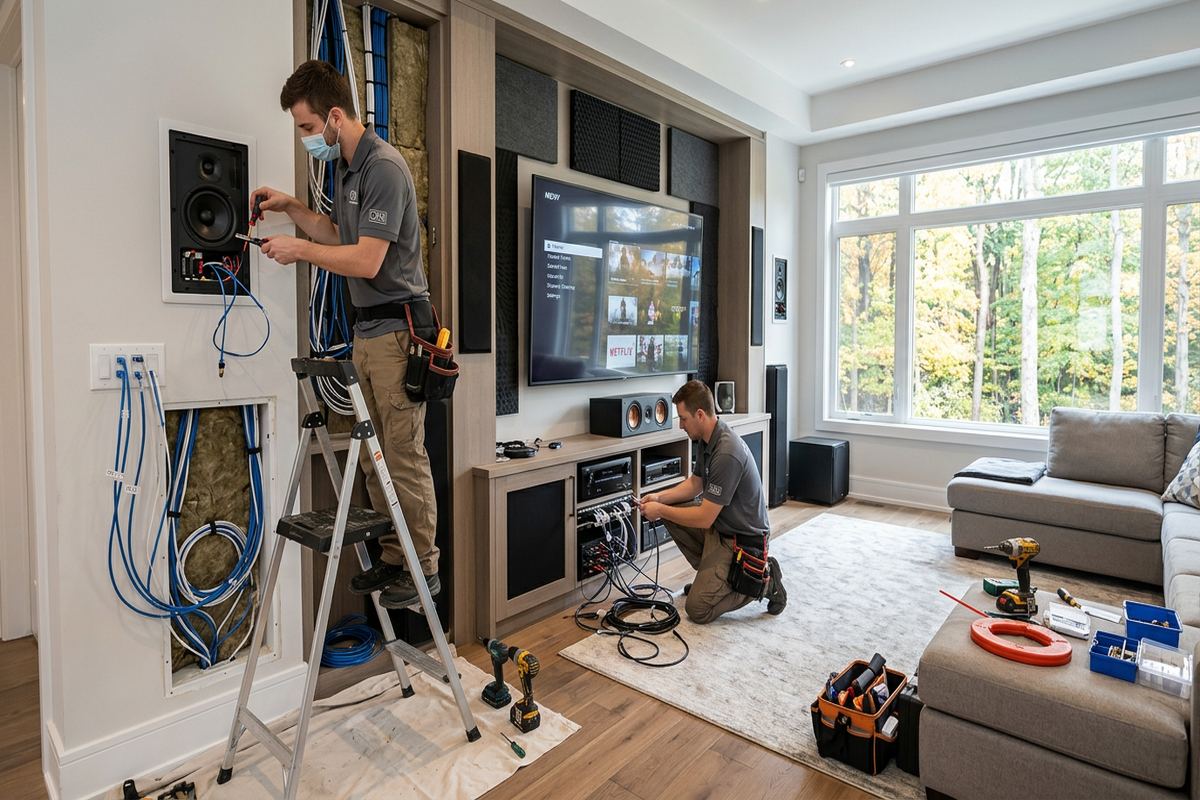
Installation, Testing and Handover in Fort Erie
Once the scope is approved and site conditions are confirmed, installation follows the documented speaker locations and cable routes. Ceiling openings are measured against known framing and obstructions before final cutting. Each cable is pulled as a continuous run, labelled at both ends and terminated for the selected equipment. Speakers are mounted securely and grilles are aligned consistently within the room. Where site conditions differ from what could reasonably be observed during assessment, we pause to review the effect on placement or routing rather than making an undocumented change behind the finished ceiling.
Testing covers more than whether sound comes from each speaker. We verify zone assignment, left and right channels where applicable, volume operation, source selection and basic network control. Listening checks help identify reversed connections, uneven coverage or vibration from nearby ceiling components. Amplifier settings are configured for the connected system and normal operating needs. For Fort Erie businesses, controls can be reviewed with the staff members who will use them. Residential customers are shown how to select rooms, change sources and operate the system without relying on an installer-controlled login.
At handover, the customer receives an as-built record identifying installed devices, cable destinations and relevant equipment locations. Access is transferred using the customer’s own credentials, and equipment ownership is confirmed as described in the written scope. This information is useful when rooms are renovated, a receiver is replaced or another contractor needs to identify a cable later. UnifiedLink remains one accountable contractor for the audio installation rather than dividing responsibility among separate cabling, speaker and configuration providers. Any warranty terms and exclusions are documented so responsibilities are clear after completion.
- Measured and aligned ceiling openings
- Labels at both cable ends
- Zone, source and volume testing
- Customer credential handover
- As-built installation record
- One accountable installation contractor
Arranging a Fort Erie Site Assessment
A site assessment is completed before pricing because ceiling access, construction and system expectations directly affect the required work. Customers can prepare by identifying the rooms to be covered, preferred audio sources, likely equipment location and any future zones under consideration. Plans, renovation drawings or information about previous wiring can also help, although visible conditions still need verification. In Stevensville, Douglastown and other Fort Erie communities, travel distance and the specific service requirements influence assessment timing. No installation schedule should be assumed until access, scope and equipment needs have been reviewed.
For an occupied home, access may be needed to the attic, basement, utility room, equipment cabinet and each proposed speaker area. Furniture or stored items may need to be moved before work begins. Commercial customers should identify ceiling access restrictions, alarm procedures, loading arrangements and hours when drilling or ladder work is permitted. Landlords or condo boards may request drawings, insurance information or a description of penetrations. These requirements should be identified early so approvals do not interrupt the project after equipment and cable routes have already been selected.
Requests sent during business hours are answered the same day, while after-hours requests are answered the next business day. Site assessment timing depends on the service and travel distance. Following the assessment, the written scope defines equipment, cable routes, device placement, exclusions, equipment ownership and warranty. That document provides the basis for the proposed installation and highlights any customer responsibilities, such as approvals, network availability or clear access. For Fort Erie projects, it also identifies exterior weather-rated components and sealing requirements wherever the audio system extends beyond conditioned interior space.
- Assessment completed before pricing
- Residential and commercial access review
- Renovation plans considered when available
- Approval requirements identified early
- Written scope before installation
Fort Erie neighbourhoods we cover
- Bridgeburg
- Crystal Beach
- Ridgeway
- Stevensville
- Douglastown
In-ceiling speaker installation in Fort Erie — common questions
Can you install speakers in an existing finished ceiling?
Yes, where a workable cable route and enough mounting depth are available. Fort Erie homes can contain joist blocking, insulation, ductwork, plumbing or previous renovations that restrict access. A site assessment is used to inspect likely pathways and confirm speaker placement before openings are made. Some finished spaces may require a discreet surface pathway or an adjusted equipment location.
What speakers are suitable for a lakefront home?
Interior rooms generally use speakers selected for ceiling depth, room coverage and the intended listening level. Covered decks, soffits and outdoor areas need weather-rated equipment, protected connections and suitable exterior cable. In Fort Erie lakefront conditions, shelter from a roof is not enough to justify indoor-only equipment because moisture, condensation, wind and freeze-thaw cycles remain relevant.
Can my existing receiver power new ceiling speakers?
Possibly, but compatibility must be checked. The receiver needs suitable outputs, supported speaker loading and enough control for the proposed number of rooms or zones. UnifiedLink can review customer-owned equipment during the Fort Erie site assessment. Reused components and any known limitations are identified in the written scope so responsibility for new and existing equipment remains clear.
Do I need landlord or condo approval?
Approval may be required when work affects a rented unit, common element, shared ceiling space, exterior surface or building pathway. Fort Erie tenants and condo owners should confirm their specific rules before installation. We can document proposed speaker locations and cable routes for the approval process, but the customer remains responsible for obtaining authorization unless the written scope states otherwise.
Can indoor and outdoor speakers use separate controls?
Yes. Interior rooms and exterior listening areas can be arranged as separate zones when the selected amplifier and control platform support that design. This is useful for Fort Erie seasonal and lakefront homes because outdoor speakers can remain off while interior audio operates. Separate zoning also allows volume to be managed for the intended outdoor area rather than raising the entire system.
What do I receive after installation?
Handover includes on-site operating guidance, customer-controlled credentials and an as-built record identifying installed devices, cable destinations and equipment locations. The system is tested for zone assignment, source selection and volume operation. Fort Erie customers also receive the written ownership, warranty and exclusion details established in the scope, making future service, renovation or equipment replacement easier to plan.
Coverage in Fort Erie is confirmed against the address before we quote. See everything we install in Fort Erie or the province-wide in-ceiling speaker installation page.