UnifiedLink installs home alarm systems across Fort Erie and nearby communities. Each system is planned around the property, occupancy, entry points and notification needs. We assess the site before pricing, document the scope, install and configure the equipment, then hand over the system using credentials controlled by the customer.
Planning a Fort Erie Home Alarm System
A home alarm should be planned around how the property is used, not selected from a generic package. In Fort Erie, year-round houses, seasonal cottages, rental properties and mixed-use buildings need different combinations of door contacts, motion detection, glass-break coverage, sirens and remote notifications. We begin with a site assessment before pricing, reviewing entry points, occupancy patterns, pets, outbuildings, internet service and electrical access. The result is a practical design that identifies what will be detected, how alerts are delivered and which areas remain outside the agreed scope of work.
Older houses and renovated properties often contain several construction methods within one structure. An original masonry section may connect to a newer frame addition, enclosed porch or converted garage. Those differences affect drilling, cable routing, wireless signal strength and sensor mounting. We inspect accessible spaces before proposing routes or equipment. Where concealed wiring is practical, we plan continuous labelled cable runs rather than unnecessary joins. Where opening finished walls would create disproportionate damage, wireless or hybrid devices may provide a cleaner approach, provided their placement and communication paths are suitable for dependable operation.
The written scope turns the assessment into a clear installation plan. It covers equipment, cable routes, device placement, exclusions, equipment ownership and warranty. It can also identify work that another trade or the property owner must complete, such as providing power, repairing damaged doors or approving access to common areas. This documentation is particularly useful for landlords, condominium owners and seasonal-property owners who may not be present throughout the installation. Pricing follows the assessment because device quantities, construction conditions and requested functions must be established before a reliable scope can be prepared.
- Entry-point and occupancy review
- Wired, wireless or hybrid design
- Pet and outbuilding considerations
- Written equipment and placement scope
- Assessment completed before pricing
Alarm Sensors for Fort Erie Properties
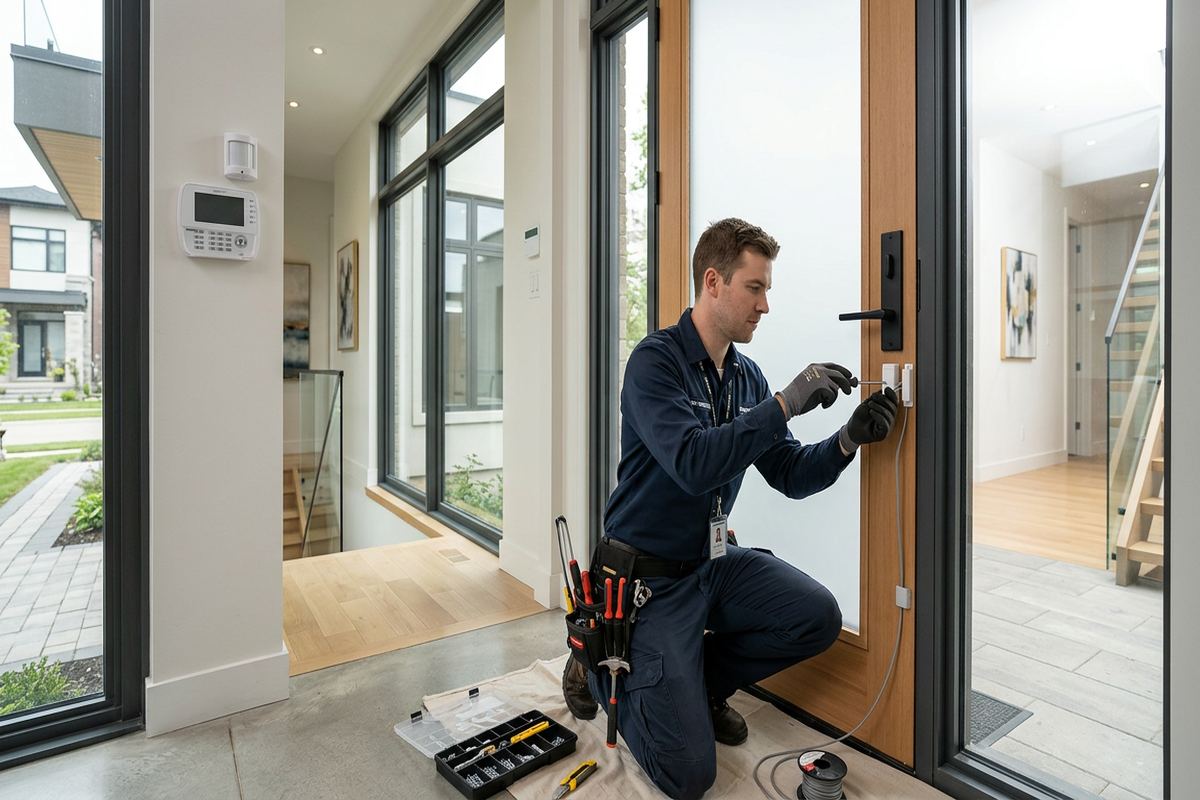
Effective detection normally uses more than one sensor type. Door and window contacts report openings, motion detectors cover selected interior paths, glass-break detectors listen for relevant acoustic patterns and environmental sensors can report conditions such as water presence or abnormal temperature. We select locations according to room layout, likely movement and the way doors or windows operate. In Fort Erie homes with detached garages, enclosed porches or rear additions, those secondary areas need separate consideration. A sensor should support a defined purpose instead of being installed merely because an equipment package includes it.
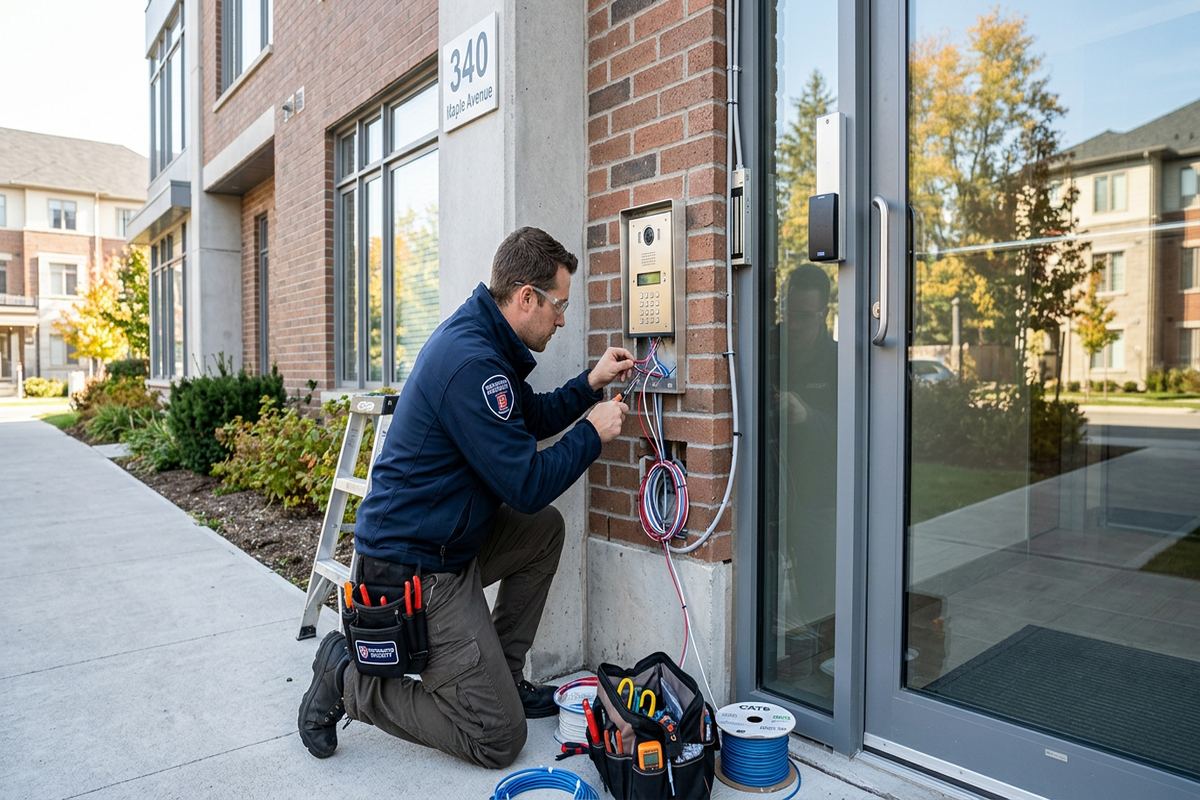
Weather exposure changes how exterior devices must be specified and mounted. Border-adjacent businesses, lakefront properties and seasonal homes make weather-rated exterior gear standard for suitable outdoor applications in Fort Erie. Exterior sirens, contacts and related devices may face wind-driven moisture, snow, temperature changes and repeated freeze-thaw cycles. Mounting surfaces, fasteners, cable entries and seals therefore matter as much as the device rating. We avoid relying on interior equipment outdoors and plan drip paths, penetrations and service access carefully. Sealing must protect the opening without trapping water where it can damage the cable or building surface.
Interior device placement also requires restraint. A motion detector facing a sunny window, heating vent or moving curtain can produce avoidable alarms. Pets, stairways and open-concept rooms may further change the detection pattern. Contacts require aligned mounting and enough clearance for normal door or window movement. We test each programmed zone after installation rather than assuming that a device is working because it appears online. The zone name should describe the actual location clearly, allowing the owner to understand an alert without decoding generic labels such as “Zone 04” during an alarm event.
- Door and window contacts
- Interior motion detection
- Glass-break detection where appropriate
- Water and temperature sensing options
- Weather-rated exterior devices
- Clear room-based zone names
Wired, Wireless and Hybrid Alarm Options
Construction type usually determines whether wired, wireless or hybrid equipment is most sensible. Accessible basements, unfinished utility rooms and attics may allow concealed cable routes with limited disruption. Finished masonry walls, slab construction or recently renovated interiors can make new wiring more invasive. Wireless sensors reduce cabling but still require suitable radio paths, battery access and planned maintenance. Hybrid systems can preserve usable existing alarm cable while adding wireless devices in difficult areas. The decision is made after inspection, not from the age or appearance of the building alone, because previous renovations often hide unexpected conditions.
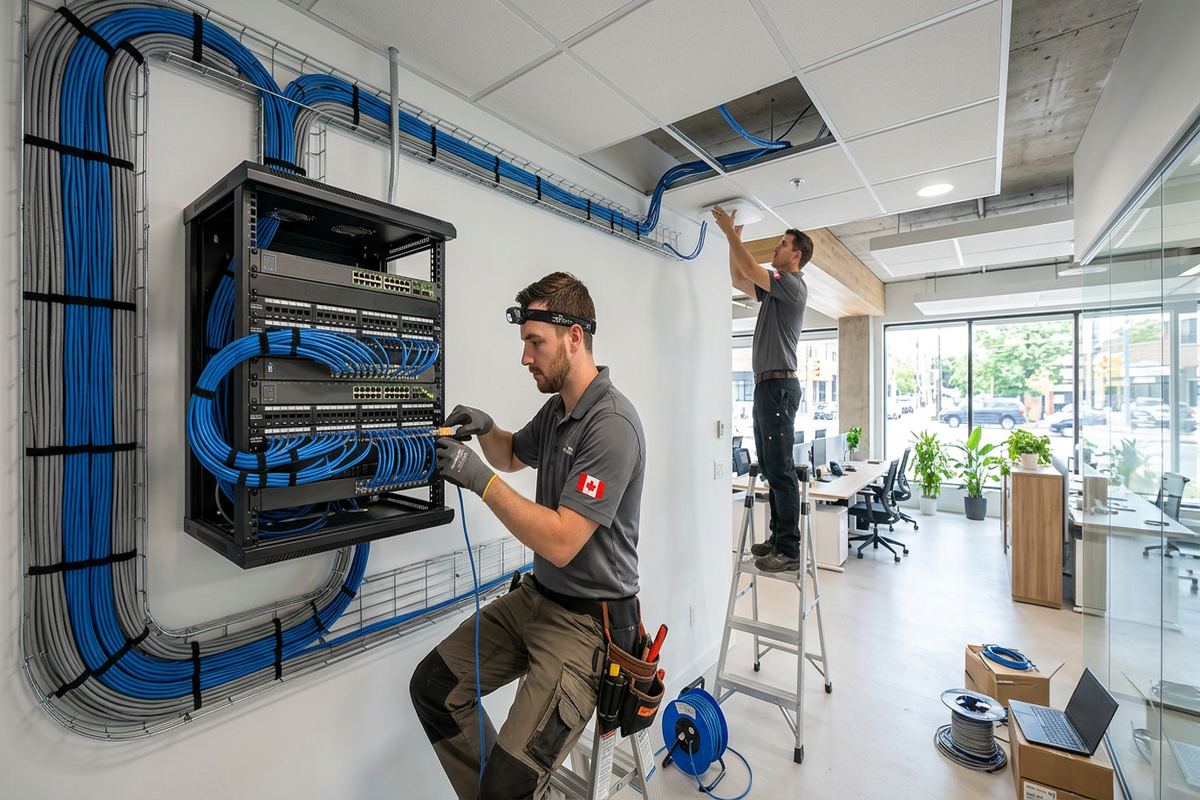
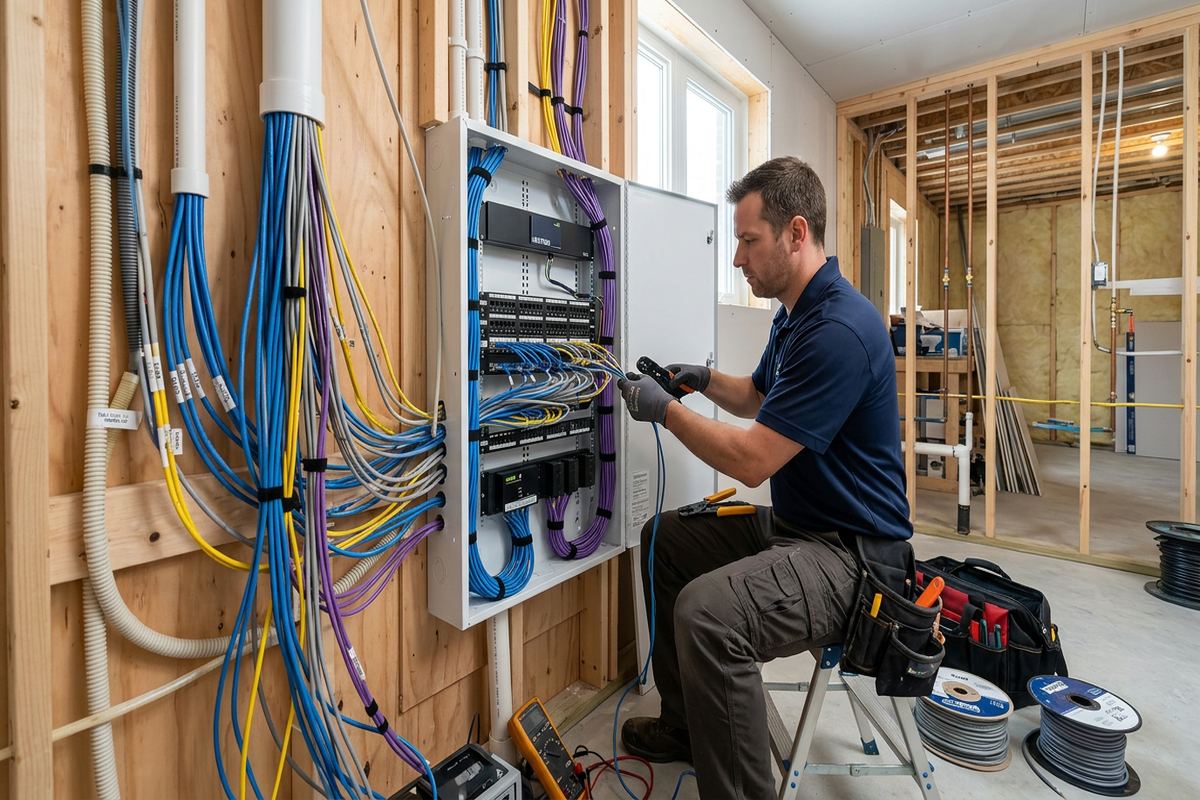
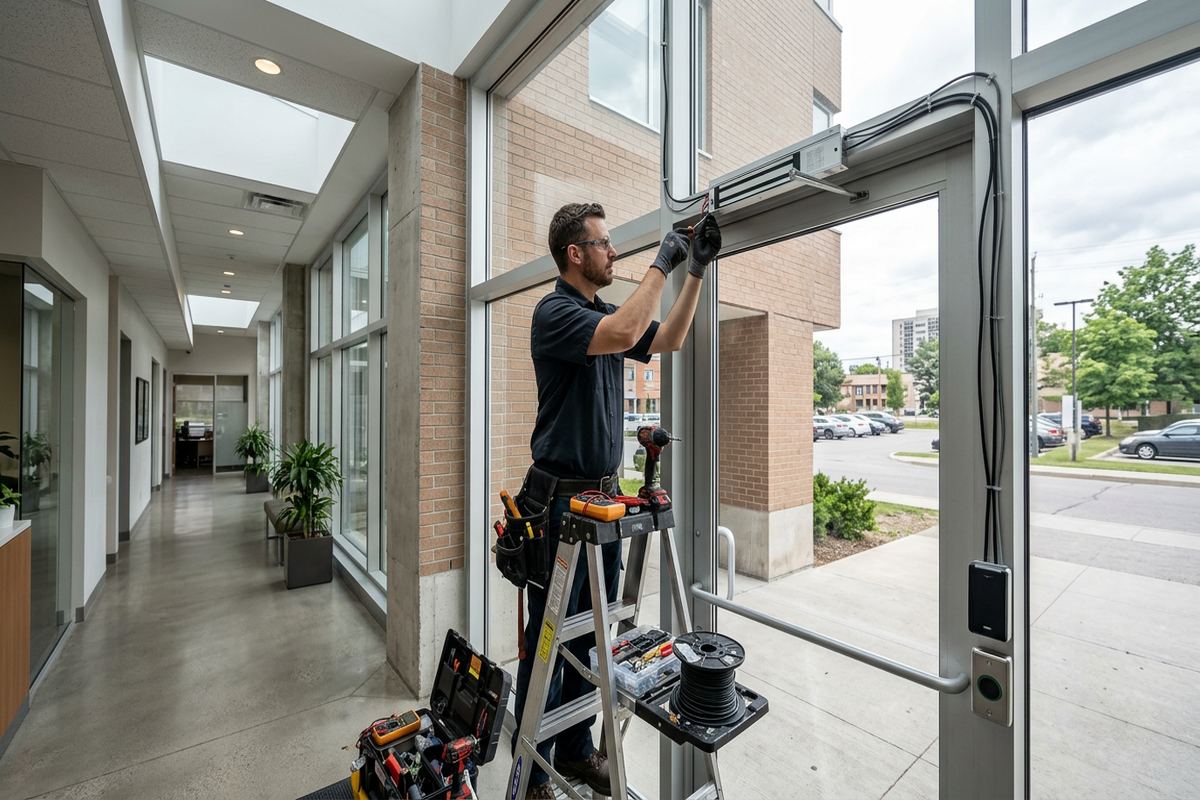
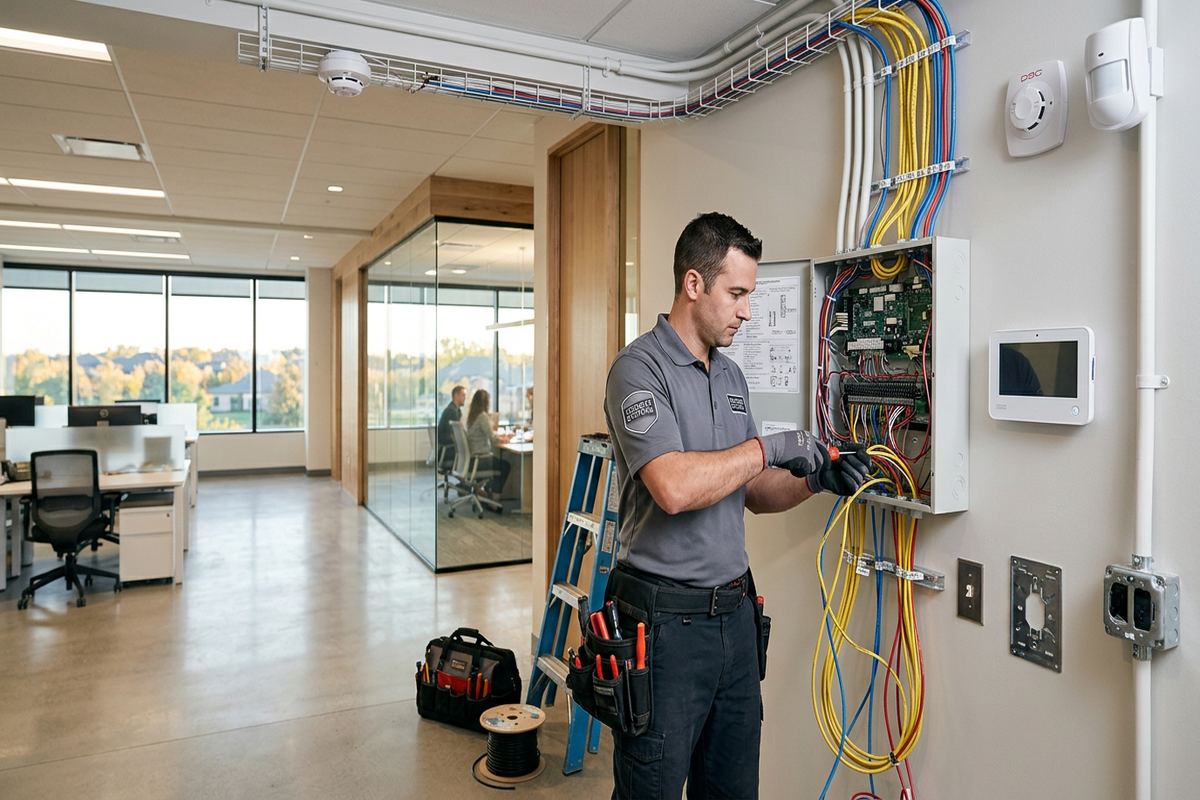
For wired devices, UnifiedLink installs continuous labelled cable runs within the agreed scope. Labels at the control equipment and relevant termination points make later testing and service more direct. Routes are selected to reduce exposure to physical damage, moisture and electrical interference while respecting finished areas. Penetrations through exterior walls or between conditioned and unconditioned spaces require suitable sealing. In frame construction, cable can sometimes follow joist or stud spaces. Masonry buildings may require surface raceway, basement routing or another documented approach where concealed installation would damage finishes or compromise the building envelope.
Wireless performance depends on more than distance. Masonry, metal siding, mechanical equipment, large appliances and neighbouring radio systems can affect communication between sensors and the alarm panel. During a Fort Erie assessment, we consider panel position and the barriers between it and each proposed device. Seasonal homes also need batteries and communication paths that remain manageable when the owner is away. Wireless equipment can be appropriate, but it should not be treated as placement-free. Devices must remain reachable for battery replacement, testing and eventual service without requiring unnecessary disturbance to finishes.
- Concealed wiring where practical
- Continuous labelled cable runs
- Wireless signal-path assessment
- Existing cable evaluated before reuse
- Hybrid expansion for difficult areas
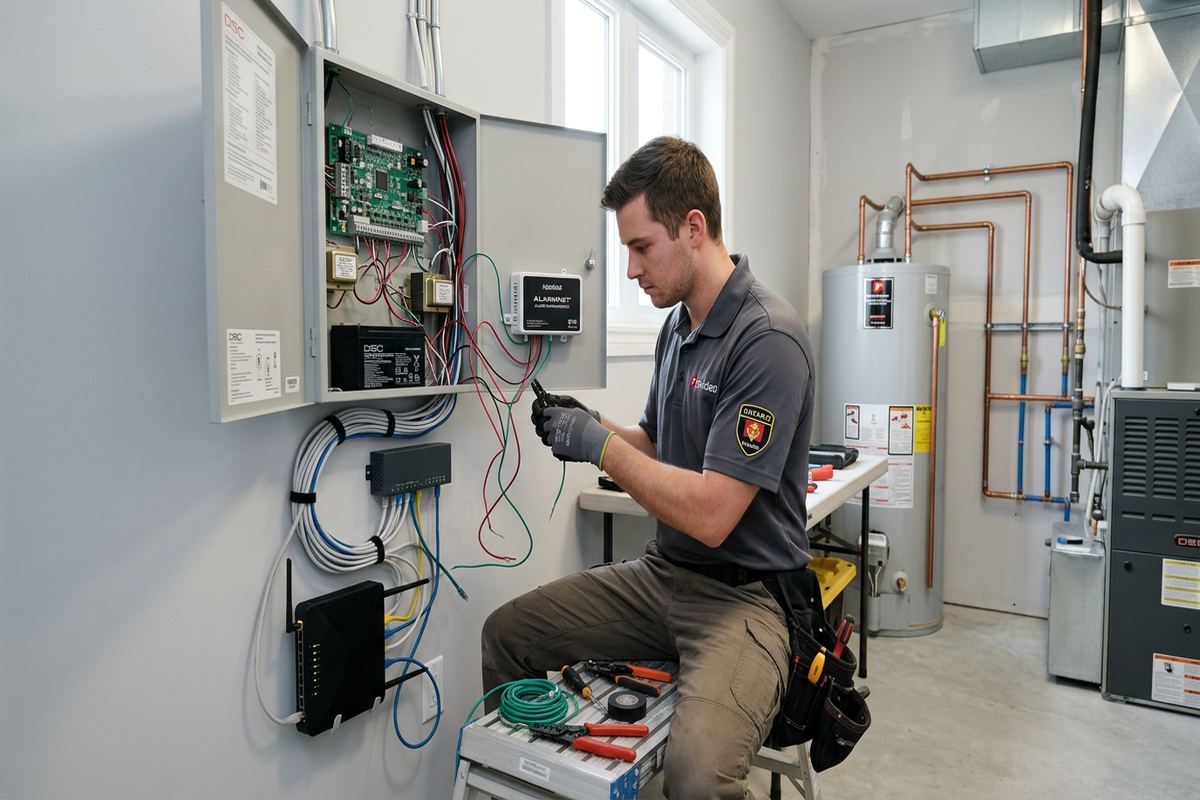
Fort Erie, Ontario
Home alarm system installation in Fort Erie, scoped in writing first
Book a site assessment and get equipment, routes, exclusions, and warranty on paper before anything is installed.
Installation in Fort Erie Neighbourhoods
Property conditions vary across Bridgeburg, Crystal Beach, Ridgeway, Stevensville and Douglastown. A compact older house may have solid masonry, narrow service spaces and several generations of renovations. A lakefront or seasonal property may have additions, detached structures and exterior doors exposed to severe weather. Newer frame construction can offer easier cable pathways, although finished basements and insulated garages still create access limits. We adapt the alarm design to the actual structure rather than assuming every property in one community shares the same construction, exposure or occupancy pattern.
Crystal Beach and other lake-influenced locations require particular attention to exterior mounting. Wind-driven rain, snow accumulation and freeze-thaw movement can challenge poorly sealed penetrations or unsuitable housings. We choose weather-rated equipment for exterior applications and review whether the mounting surface is wood, masonry, siding or another finish. Fasteners and cable entries must suit that surface. Inside seasonal homes, low-temperature monitoring and water detection may complement intrusion coverage, depending on the owner’s needs. These functions are documented separately so the customer understands what each sensor reports and what action remains their responsibility.
Bridgeburg properties can include homes near commercial strips or buildings with residential and business uses. Ridgeway and Stevensville also contain varied layouts, from established houses to properties with workshops, garages or secondary units. These settings may need separate arming areas so occupants can use one part of the property while another remains protected. Access schedules, shared entrances and staff or tenant codes should be planned carefully. If a building includes commercial or industrial space, equipment placement must account for loading doors, vibration, dust, operating hours and the distinction between business and residential responsibilities.
- Bridgeburg mixed-use property planning
- Crystal Beach weather exposure review
- Ridgeway garage and workshop coverage
- Stevensville secondary-unit considerations
- Douglastown construction-specific routing
Remote Alerts and Alarm Communications
Remote access can allow an owner to arm or disarm the system, review zone status and receive supported notifications. The exact functions depend on the selected alarm platform, communication method and any associated service arrangement. We configure agreed features on site and show the customer how to use them. For a Fort Erie seasonal home, remote status can be useful, but it does not replace physical inspection, property maintenance or an appropriate response plan. Notifications only help when contact details are current and someone understands what to do after receiving them.
An alarm panel may communicate through internet, cellular service or a supported combination, depending on the chosen equipment and available services. Internet-based functions rely on the property network and power remaining available. Cellular operation depends on compatible hardware, service arrangements and usable signal at the site. We review these dependencies during planning rather than describing any connection as failure-proof. If the alarm shares network equipment with cameras, Wi-Fi or other systems, the written scope identifies relevant connections and exclusions. Backup power capacity and expected behaviour during outages are also explained at handover.
User management deserves the same attention as sensor installation. Each regular user should have an individual code where the platform supports it, rather than sharing a single code among family members, tenants, cleaners or contractors. Temporary access can then be changed without affecting everyone else. UnifiedLink completes handover with the customer’s own credentials, avoiding installer-controlled accounts as the normal operating arrangement. We also review basic arming procedures, bypass functions, notification settings and code administration. The owner remains responsible for removing obsolete users and keeping account recovery information secure and current.
- Supported mobile alert configuration
- Internet and cellular pathway review
- Individual user-code setup
- Outage behaviour explained
- Customer-controlled account credentials
Alarm Installation for Rentals and Condos
Rental properties require clear authority before drilling, cabling or mounting equipment. A tenant may be able to request portable devices, but permanent installation normally calls for the owner’s approval and agreement about equipment ownership. We document who owns the panel, sensors and cabling, who can authorize changes and what happens when an occupant moves. In Fort Erie seasonal rentals, user turnover may also require a practical code-management process. Shared codes should not remain active indefinitely, and alert recipients should be reviewed whenever management responsibility or occupancy changes.
Condominium work can involve boundaries between the unit and common property. Doors, exterior walls, corridors, shared utility spaces and communication pathways may fall under condominium rules even when the device serves one unit. Owners should obtain required approvals before installation. UnifiedLink can prepare a proposed scope and device locations for review, but approval remains with the relevant owner, landlord, condominium corporation or property manager. We do not assume that an accessible ceiling or wall belongs exclusively to the customer. Confirming these limits before installation helps prevent relocation, finish repairs and disputes over responsibility.
Small residential buildings with several units need careful separation between private and shared spaces. A common entrance should not automatically report to every tenant’s alarm account, and one occupant should not control another unit’s devices. Depending on the property, separate systems or properly partitioned areas may be appropriate. Fire alarm and life-safety requirements are distinct from a household intrusion alarm and must not be confused with it. The written scope identifies the intrusion and environmental functions being installed, along with exclusions, so owners and occupants know which events the system is designed to report.
- Landlord approval confirmed before work
- Equipment ownership documented
- Condo boundaries reviewed
- Separate user and tenant codes
- Shared areas defined in scope
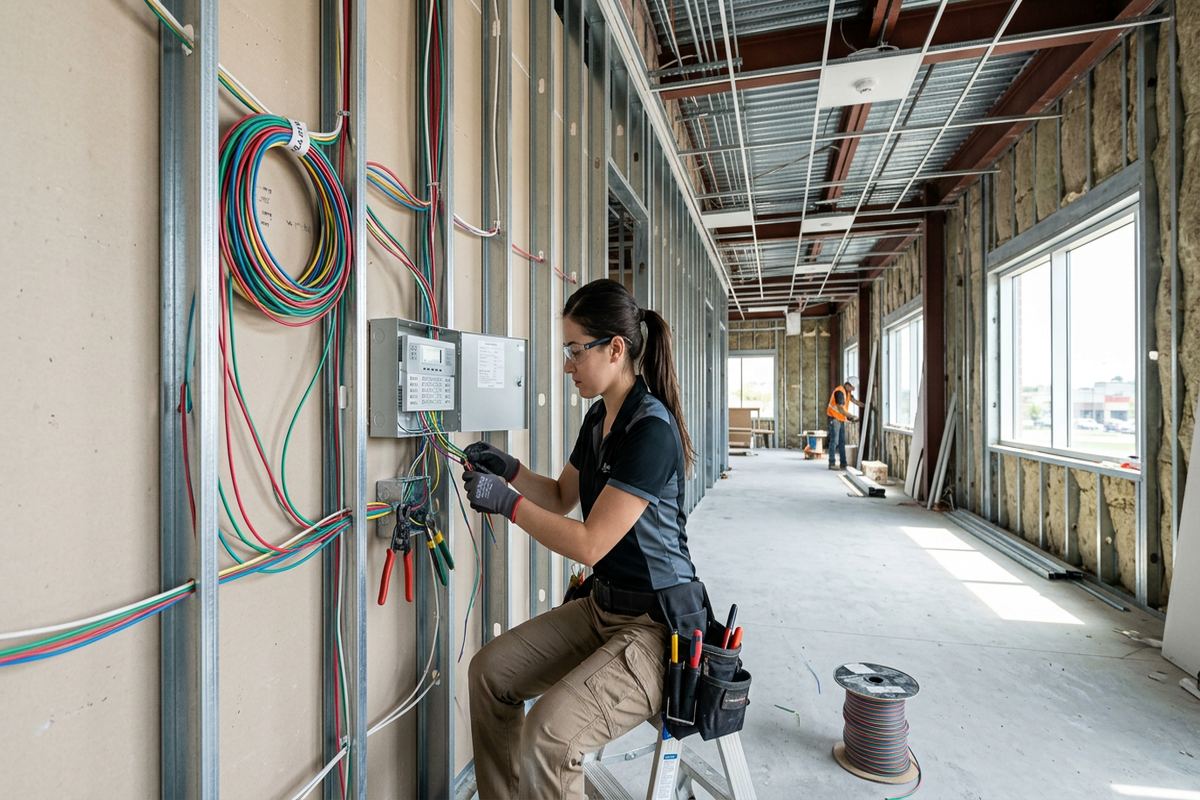
On-Site Configuration and Handover
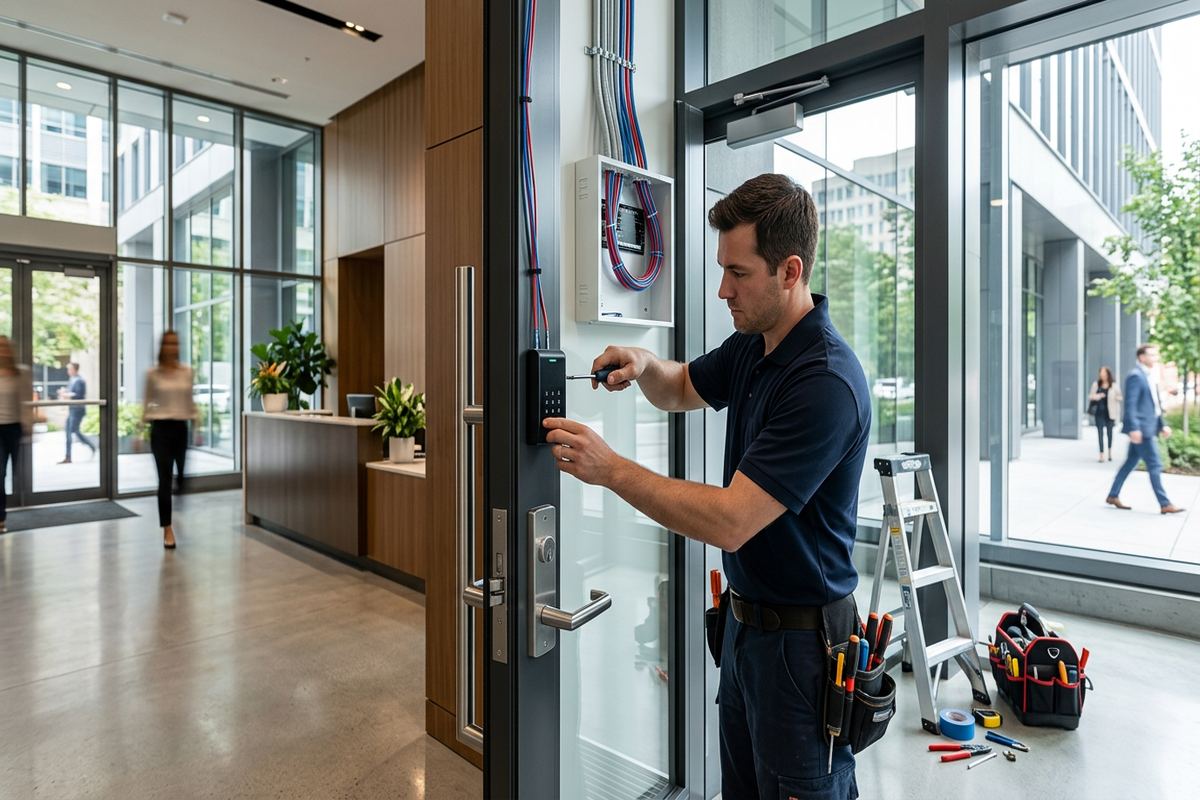
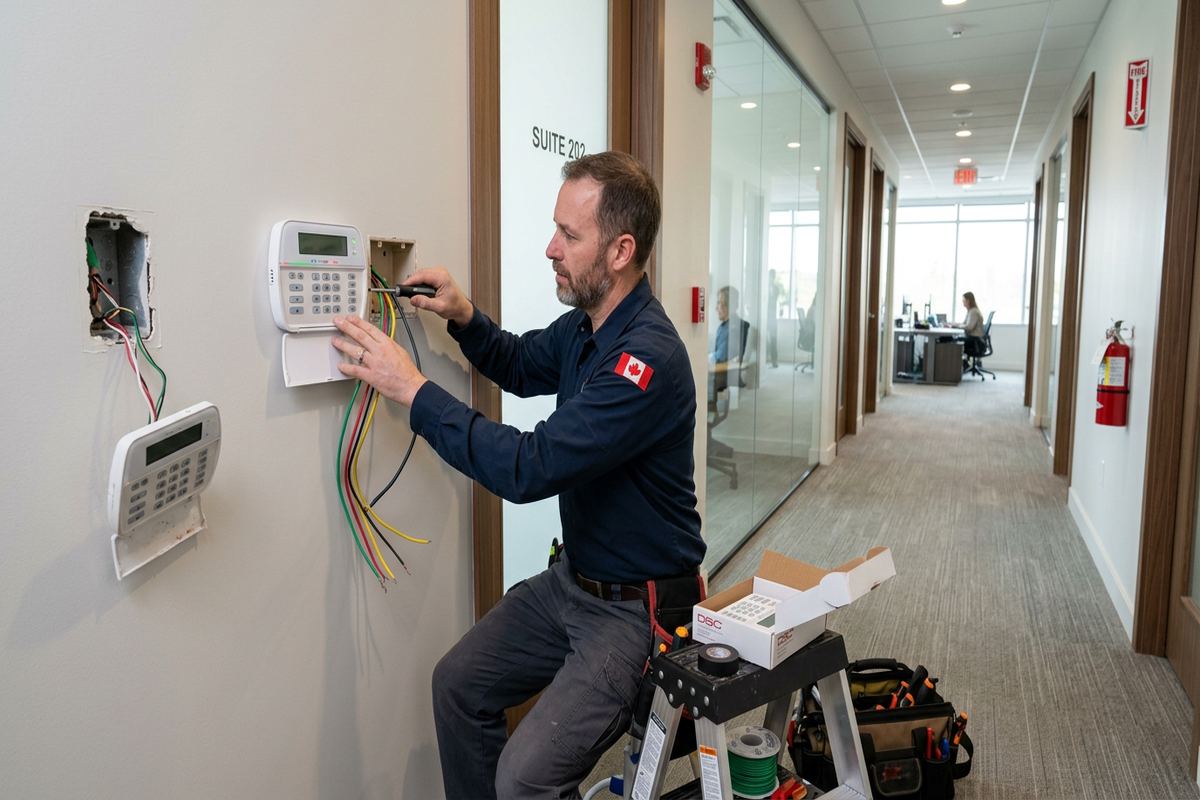
Installation is not complete when the devices are attached. Each zone must be enrolled or connected, named, tested and associated with the intended arming mode. Entry and exit delays should reflect the agreed route without leaving unnecessary time on less-used doors. Sirens, keypads, communication paths and supported notifications are checked on site. Where an environmental sensor is included, its reporting behaviour is reviewed separately from intrusion detection. We record relevant device locations and cable information so the final system corresponds with the written scope rather than an undocumented collection of components.
Handover includes the customer’s own administrative credentials and an as-built record. The record reflects installed device placement, panel location, relevant cable routes or labels and material changes from the original plan. We explain normal arming, disarming, bypassing and user-code management, along with basic testing and battery responsibilities. For Fort Erie owners who are frequently away, we identify which tasks can be completed remotely and which require someone at the property. Passwords and recovery details should be retained securely by the customer instead of depending on a contractor’s personal account.
False-alarm reduction begins with correct use and realistic expectations. Doors must close consistently, users need enough time to follow the entry route and motion areas should remain free from avoidable movement sources. After installation, occupants should understand the difference between stay and away modes, how to cancel an accidental activation and whom their notification or monitoring arrangement contacts. Local registration, response or permit requirements, if applicable to the property and service selected, remain subject to current authority rules. Owners should verify those obligations rather than relying on assumptions from another municipality.
- Every programmed zone tested
- Entry and exit delays reviewed
- Customer credentials supplied
- As-built installation record
- Operating guidance at handover
Service, Changes and Fort Erie Alarm Upgrades
Alarm needs can change when a property is renovated, rented, expanded or used differently. A new patio door, finished basement, detached garage or home office may create entry points and movement patterns that the original design did not cover. Before adding devices, we review panel capacity, communication compatibility, available cable and current zone programming. Existing equipment is not automatically reusable merely because it powers on. Sensors, keypads and communication modules must be assessed for condition, support and compatibility before they are included in a revised Fort Erie alarm scope.
Maintenance responsibilities differ between wired and wireless components. Wireless sensors require battery replacement and should remain accessible. Wired contacts avoid device batteries in many applications, but doors can shift and cables or terminations can still be damaged. Freeze-thaw movement, moisture and exterior finish work may affect exposed or exterior-mounted devices around Fort Erie properties. Periodic functional testing helps identify changes before an event occurs. Testing should include opening protected doors and windows, walking motion areas where appropriate, confirming zone names and checking supported notifications under controlled conditions.
UnifiedLink provides one accountable contractor for the agreed assessment, installation, configuration and handover work. Requests sent during business hours are answered the same day, while after-hours requests are answered the next business day. Site assessment timing depends on the service and travel distance. Before work proceeds, customers receive a written scope covering equipment, routes, placement, exclusions, ownership and warranty. This process helps keep future additions or service work grounded in the installed record. It also gives homeowners, landlords and property managers a clear reference when occupancy, access needs or building conditions change.
- Existing equipment compatibility review
- Renovation-related zone changes
- Battery and device-access planning
- Exterior device condition checks
- Documented additions and programming changes
Fort Erie neighbourhoods we cover
- Bridgeburg
- Crystal Beach
- Ridgeway
- Stevensville
- Douglastown
Home alarm system installation in Fort Erie — common questions
Can you install an alarm in an older Fort Erie home?
Yes. Older Fort Erie homes may combine masonry walls, frame additions, finished basements and limited cable pathways. We assess the building before pricing and determine whether wired, wireless or hybrid equipment is appropriate. The written scope records proposed cable routes, sensor locations and any areas where concealed installation is not practical without opening finished surfaces.
What alarm sensors suit a seasonal or lakefront home?
A seasonal or lakefront Fort Erie property may benefit from intrusion contacts, interior motion detection and selected water or low-temperature sensors. Exterior devices must be weather-rated where used outdoors, with suitable mounting and sealing for moisture, snow and freeze-thaw conditions. The specific design depends on occupancy, utilities, outbuildings, communication availability and who can respond when the owner is away.
Do I need landlord or condo approval?
Approval may be required before permanent alarm equipment, cable or raceway is attached. Fort Erie tenants should confirm authority with the property owner, while condominium owners should check rules affecting doors, exterior walls, corridors and other common elements. Our scope can document the proposed equipment and placement for review, but the customer is responsible for obtaining the necessary permissions.
Can an existing alarm system be reused?
Possibly. We inspect accessible cabling, contacts, keypads, the control panel and communication equipment before deciding what can remain. Existing components must be in suitable condition and compatible with the proposed platform. Powering on is not enough to establish reliability. Any retained equipment, exclusions and ownership details are identified in the written scope before Fort Erie installation work begins.
Will I control the alarm from my phone?
Supported alarm platforms can provide remote arming, disarming, zone status and notifications through an application. Available functions depend on the equipment, internet or cellular pathway and associated service arrangements. We configure agreed features on site and hand over the account with the customer’s own credentials. Remote access does not replace property maintenance or an appropriate local response plan.
How quickly can you assess my Fort Erie property?
Requests sent during business hours are answered the same day, and after-hours requests are answered the next business day. The timing of a Fort Erie site assessment depends on the requested service and travel distance. Assessment occurs before pricing so we can review construction, entry points, cable routes, device placement, communication options and any landlord or condominium approval requirements.
Coverage in Fort Erie is confirmed against the address before we quote. See everything we install in Fort Erie or the province-wide home alarm system installation page.