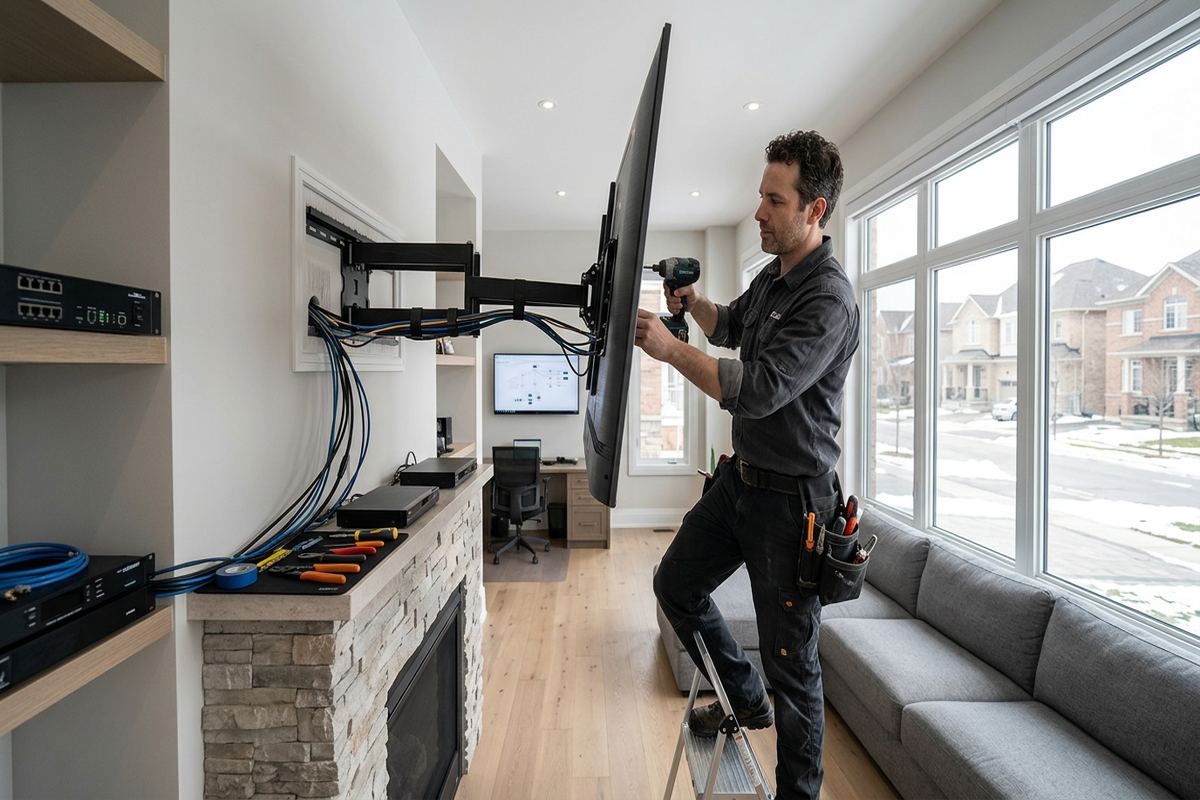
UnifiedLink installs televisions above and near fireplaces in Fort Erie homes and businesses. Each project starts with an assessment of heat exposure, wall construction, mounting height, cable routing and equipment access. The written scope identifies the proposed mount, device placement, cable paths, exclusions, equipment ownership and warranty before installation proceeds.
Fireplace TV Mounting for Fort Erie Properties
Mounting a television over a fireplace requires more planning than attaching a bracket to an ordinary wall. Heat, rising air, viewing height, wall structure and cable access all affect whether the position is practical. In Fort Erie, fireplaces may be built into older masonry walls, newer framed feature walls or renovated lakefront properties with limited service cavities. UnifiedLink assesses the room before pricing, identifies the likely fastening points and checks how the screen, mount and connected equipment can be installed without relying on assumptions hidden behind finished surfaces.
A site assessment begins with the fireplace type, television dimensions, proposed viewing position and available wall area. Manufacturer instructions for the television, fireplace and mounting hardware remain central because required clearances and temperature limits vary. We also examine mantle depth, vents, trim, chimney construction and nearby receptacles. If safe placement cannot be confirmed, the scope may recommend a different wall or a position beside the fireplace. The goal is a stable installation that preserves equipment access and does not conceal unresolved heat, structural or electrical concerns.
Before work starts, customers receive a written scope covering equipment, device placement, anticipated cable routes, exclusions, equipment ownership and warranty. This is particularly useful when several trades are involved. UnifiedLink handles the display, low-voltage cabling and on-site configuration, while any new line-voltage receptacle or electrical modification must be completed by the appropriate electrical contractor. One accountable low-voltage contractor coordinates the mounting and signal work, reducing confusion about bracket selection, cable destinations, source devices and the information provided at handover.
- Fireplace and television requirements reviewed
- Mounting surface and fastening points assessed
- Cable routes documented before installation
- Electrical work identified separately
Heat, Clearances and Viewing Height in Fort Erie
Heat management determines whether an above-fireplace position is suitable. A mantle may deflect some rising heat, but its presence does not automatically make every television safe. During the Fort Erie assessment, the installer considers the fireplace outlet, vent arrangement, mantle projection, screen location and manufacturer guidance. Surface temperatures can also vary with operating conditions, so customers should explain how frequently and intensely the fireplace is used. Where exposure appears unsuitable or cannot be verified, the practical recommendation is relocation rather than treating a mounting bracket as protection from heat.
Viewing comfort matters alongside clearance. Fireplaces often push a television higher than the seated sightline, especially when a tall mantle or decorative surround occupies the centre of the wall. We review seating distance, normal viewing positions and screen size before confirming bracket height. A fixed mount may suit a moderate position, while a tilting or purpose-designed pull-down mount can sometimes improve the angle. Mount movement, handle clearance and return position still need to fit the fireplace design, and no movable mount eliminates the need to respect equipment heat limits.
Room layout can change the appropriate recommendation. A compact room in Bridgeburg may have close seating and an older masonry fireplace, while a seasonal home near Crystal Beach may use a larger open living area with a modern insert. Glare from windows, traffic paths and furniture placement influence the final height and angle in both settings. The assessment records these practical constraints instead of applying one standard measurement. Customers can then compare an above-fireplace location with nearby alternatives before committing to drilling, cable work or modifications to a finished feature wall.
- Mantle depth and vent locations checked
- Screen height reviewed from normal seating
- Fixed, tilt and pull-down options considered
- Unsafe heat exposure leads to relocation advice
Masonry and Frame Wall Mounting
Fort Erie properties include masonry construction, framed walls and renovations that combine both. Brick facing may cover a structural masonry chimney, a framed chase or a thin decorative veneer, and each condition requires a different fastening approach. Drywall alone is not treated as adequate support for a large display without an appropriate structural system. The assessment looks for framing, solid masonry, backing or other suitable attachment points. Where the wall assembly cannot be confirmed non-destructively, the written scope identifies the uncertainty and any additional investigation needed before the television is lifted into place.
Drilling masonry calls for control over hole position, anchor selection and cable planning. Mortar joints, brick condition, embedded flues and concealed utilities must be considered before drilling begins. Older fireplaces may have uneven surfaces or previous holes that affect bracket alignment. On framed feature walls, stud spacing and blocking determine whether a standard bracket can be centred as requested. If the ideal screen position falls between usable fastening points, a mounting plate, added backing or a revised location may be necessary rather than placing fasteners where support has not been established.
Renovated homes in Ridgeway and Stevensville sometimes contain multiple finish layers, such as drywall over plaster, wood panelling over framing or stone veneer around a prefabricated fireplace. These layers can obscure the true supporting assembly and make generic fastener recommendations unreliable. UnifiedLink selects the mounting method after evaluating the actual wall as far as access permits. The scope also addresses bracket stand-off, trim interference and ventilation space behind the screen. Any opening or finish repair outside the agreed installation work is listed clearly as an exclusion before the project proceeds.
- Solid support identified before fastening
- Masonry condition affects anchor selection
- Decorative veneer is not assumed structural
- Finish repair exclusions stated in writing
Fort Erie, Ontario
Fireplace TV mounting in Fort Erie, scoped in writing first
Book a site assessment and get equipment, routes, exclusions, and warranty on paper before anything is installed.
Concealed Cabling Around Fort Erie Fireplaces
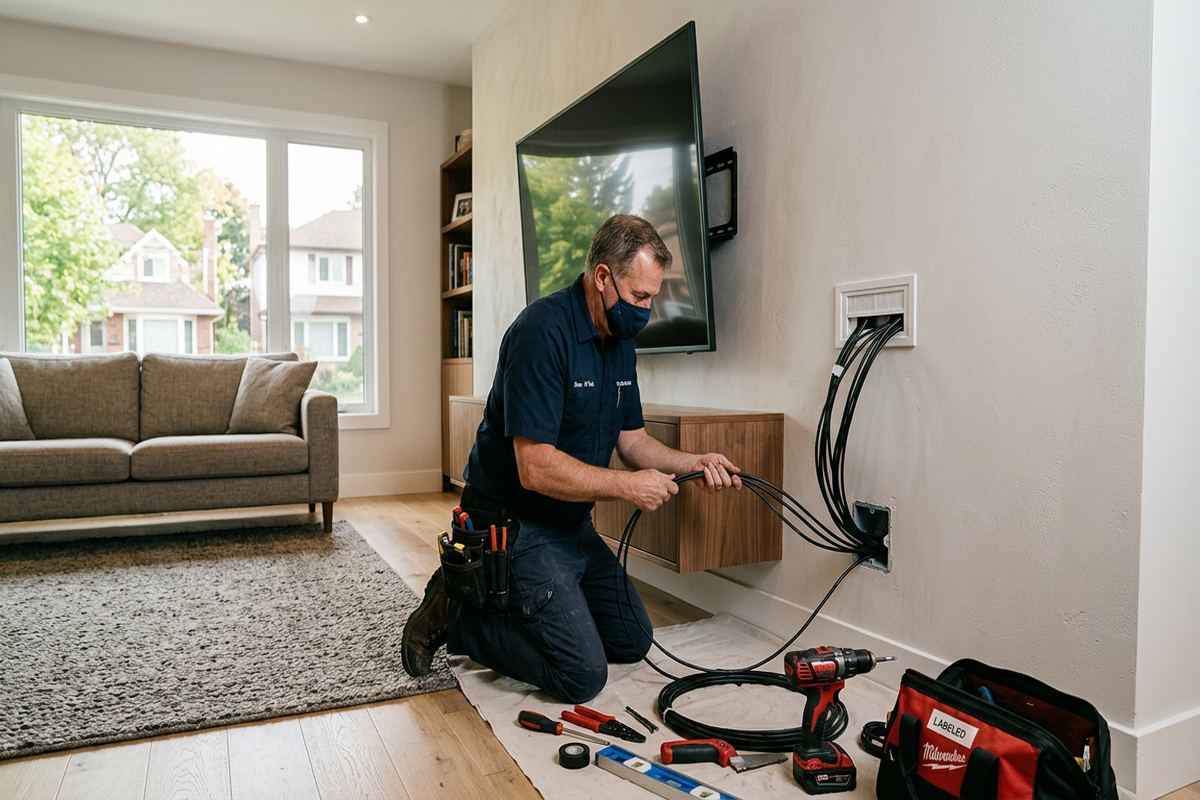
A clean fireplace installation depends on a realistic cable route, not simply hiding loose cords behind the television. HDMI, network, control and audio cables may need to travel around masonry, through a framed chase, into cabinetry or to equipment elsewhere in the room. UnifiedLink plans continuous labelled low-voltage cable runs where the construction permits. Cables are selected and routed for their intended signal and installation environment. Power cords and low-voltage signal cables are handled according to their different requirements; an extension cord is not concealed inside a wall as a substitute for a proper receptacle.
Existing fireplace cavities are not automatically usable as pathways. Chimney spaces, hot zones, vents and manufacturer-required air gaps must remain clear, and inaccessible cavities can make future cable replacement difficult. Where an in-wall route is unsuitable, surface raceway, adjacent cabinetry or another controlled path may provide a serviceable result. The assessment identifies entry and exit points, expected openings and access limitations. If a new receptacle is needed behind the display, its location should be coordinated with the bracket and completed by the appropriate electrical contractor before final mounting.
Connected equipment also needs a planned home. Streaming devices, cable receivers, media players, audio components and network adapters should remain ventilated, reachable and compatible with the chosen cable length. Placing every device behind the television can create crowding or interfere with a low-profile bracket. In Fort Erie installations, we may route signals to nearby cabinetry or a structured media location instead. At handover, cable destinations are labelled and included in an as-built record, helping the customer understand what runs through the wall and where each connection terminates.
- Continuous labelled low-voltage cable runs
- No concealed extension-cord shortcuts
- Serviceable routes preferred around hot zones
- Cable destinations included in as-built record
Lakefront, Seasonal and Exterior Display Planning
Lakefront and seasonal homes around Fort Erie introduce moisture, wind-driven weather, temperature swings and periods when the building may be unoccupied. Even for an indoor fireplace television, exterior walls can contain insulation, vapour control layers and colder cavities that require careful cable entry planning. Freeze-thaw conditions may affect exterior masonry and previous penetrations. Installers avoid unnecessary openings and identify where sealing or repair falls within the scope. Equipment location should also account for condensation risk when a seasonal property is heated or cooled after sitting at a different temperature.
Border-adjacent businesses and lakefront and seasonal homes make weather-rated exterior gear standard when a display, enclosure, cable or related component is installed outdoors. An indoor television should not be treated as an exterior display merely because it sits beneath a covered patio or near an outdoor fireplace. The complete assembly must suit the exposure, including the display, mount, enclosure where applicable, connectors and cable pathway. Penetrations require suitable sealing and drip management. The assessment distinguishes sheltered appearance from actual environmental protection before equipment is specified or customer-supplied hardware is accepted.
Outdoor fireplace mounting also demands attention to structure and seasonal movement. Masonry exposed to Fort Erie winters may show cracking, spalling or deteriorated joints, and those conditions can rule out a planned anchor location until repairs are completed. Wind loading, direct sun, glare and water paths affect bracket and display placement. UnifiedLink documents visible concerns and defines the installation boundary, but does not represent a visual review as an engineering or masonry inspection. Where structural condition is uncertain, the project may require assessment or remediation by the appropriate specialist first.
- Weather-rated exterior components specified
- Exterior penetrations planned for sealing
- Freeze-thaw masonry damage reviewed visually
- Indoor televisions kept out of outdoor exposure
Approvals for Condos, Rentals and Businesses
Condominium rules, rental agreements and commercial leases can limit drilling, cable routes, working hours or changes to fireplace surrounds. Property owners and tenants in Fort Erie should obtain required approvals before installation day, particularly where walls, common elements or fire-rated assemblies may be involved. UnifiedLink can provide the proposed equipment placement and cable pathway for an approval request, but the customer remains responsible for authorization from the condominium corporation, landlord or property manager. Work does not proceed on the assumption that an interior wall is automatically available for alteration.
Commercial strips, border-adjacent businesses and industrial units may use displays above decorative fireplaces in reception areas, waiting rooms, hospitality spaces or staff rooms. These projects often involve different operating hours, wall assemblies and source requirements than a residential installation. Screen visibility, tamper resistance, control access and reliable content connections can matter more than a very low-profile appearance. The assessment reviews who operates the display, where source equipment will live and whether the mount must allow maintenance access without disrupting surrounding fixtures or customer-facing areas.
Fire-rated walls and tenant separations require particular care because an ordinary cable opening can affect an assembly’s intended performance. The wall type, penetration method and restoration responsibility should be established before cabling starts. In Douglastown or other Fort Erie commercial and multi-unit settings, ceiling spaces and service rooms may also be controlled by the property manager. UnifiedLink records known constraints in the written scope and identifies third-party approvals or specialist work as exclusions. This gives owners, tenants and managers a common reference for the agreed low-voltage work.
- Approval documents supported with proposed scope
- Landlord and condo authorization required
- Commercial controls and service access planned
- Fire-rated assembly concerns identified early
Mount Selection and Equipment Configuration
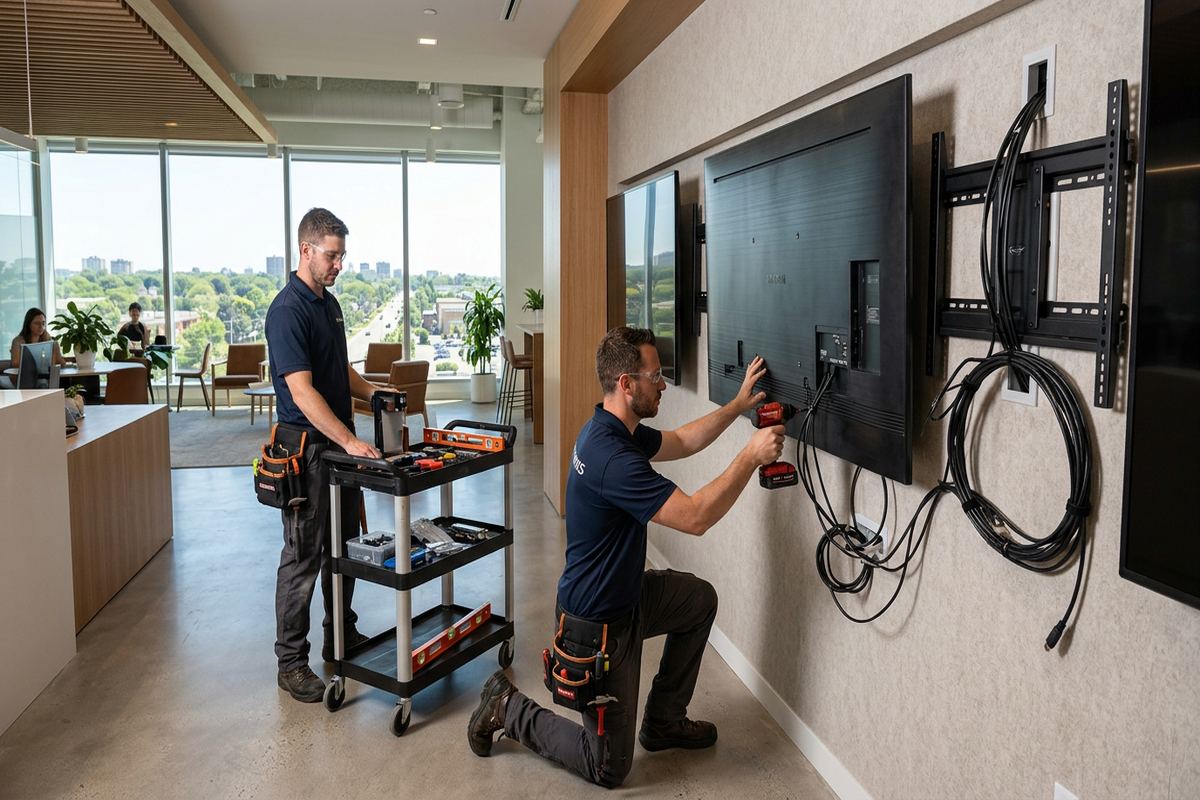
The mount must match the television’s size, weight, mounting pattern and intended movement. It must also suit the wall construction and leave enough clearance for plugs, cable bends and ventilation. UnifiedLink reviews customer-supplied mounts before relying on them; incompatible, damaged or incomplete hardware is not installed. Fixed brackets provide a close position when connections fit, tilting models can improve a higher viewing angle, and articulated mounts add movement but impose different forces on the attachment points. Pull-down fireplace mounts require suitable wall area and a clear movement path.
Installation includes on-site configuration of the connected display equipment within the agreed scope. This may involve input selection, network connection, streaming-device placement, basic picture settings, audio routing and confirmation that supplied sources reach the television. Customers use their own accounts and credentials rather than installer-owned logins. Passwords do not need to be retained by UnifiedLink after configuration. If Wi-Fi coverage at the fireplace is weak, the result is documented and a wired connection or separate network improvement can be considered instead of assuming the television itself is faulty.
Audio planning should happen before the screen position is finalized. A soundbar may mount beneath the television, attach to a compatible bracket or sit on the mantle, but each option changes clearance, cable routing and the overall moving weight. Existing receivers and speakers may require HDMI return-channel support or an optical connection. In Fort Erie living rooms with stone surrounds or limited cabinetry, equipment space can be constrained. The written scope identifies included audio connections and excludes unrelated system repairs, subscription setup or equipment replacement unless those items are specifically added.
- Mount compatibility checked before use
- Cable bends and plug clearance preserved
- Customer credentials used during setup
- Audio placement coordinated with screen height
Fireplace TV Installation and Handover in Fort Erie
On installation day, the agreed location and scope are reviewed before drilling. The work area is prepared, accessible finishes are checked and the bracket position is marked against the television dimensions. Mounting, low-voltage cabling and equipment placement then follow the documented plan, subject to concealed conditions. If opening the wall reveals unexpected blocking, utilities, masonry or heat-related restrictions, work pauses so the route can be revised with the customer. A concealed condition is not covered over merely to preserve the original layout when it changes the safety or serviceability of the installation.
After the television is secured, UnifiedLink checks bracket engagement, screen alignment, cable clearance and intended mount movement. Connected sources are tested within the agreed scope, and the customer is shown how to select inputs, operate the mount and reach service connections. The handover uses the customer’s own credentials and includes an as-built record of installed low-voltage cable routes and terminations. Equipment ownership and applicable warranty responsibilities follow the written scope, so customer-supplied products and installer-supplied products are distinguishable if support or replacement is needed later.
Fort Erie customers can send a request with the address, fireplace type, television model or size, wall photos and a description of connected equipment. Requests received during business hours are answered the same day; after-hours requests are answered the next business day. Site assessment timing depends on the service and travel distance. Providing photographs helps with initial discussion, but pricing follows the site assessment because heat conditions, structural support and viable cable routes cannot always be confirmed remotely. The resulting scope gives the customer a practical basis for approval and scheduling.
- Final position confirmed before drilling
- Unexpected concealed conditions reviewed openly
- Connected sources tested on site
- Handover includes labels and as-built details
Fort Erie neighbourhoods we cover
- Bridgeburg
- Crystal Beach
- Ridgeway
- Stevensville
- Douglastown
Fireplace TV mounting in Fort Erie — common questions
Can any TV go above a fireplace?
No. Suitability depends on the television and fireplace manufacturer instructions, heat exposure, clearances, mantle design, wall structure and mounting height. In Fort Erie, UnifiedLink assesses these conditions before pricing. If temperature limits or structural support cannot be confirmed, the recommended location may be beside the fireplace or on another wall rather than directly above it.
Can you hide the cables behind my fireplace wall?
Often, but not through chimney spaces, hot zones, vents or required air gaps. Fort Erie homes may have solid masonry, framed chases or decorative veneer, so the available route differs by property. UnifiedLink plans continuous labelled low-voltage runs and may recommend cabinetry or surface raceway when an in-wall path is unsafe, inaccessible or difficult to service.
Do I need an electrician for the installation?
An electrician is needed when the project requires a new receptacle, relocation of line-voltage wiring or another electrical modification. UnifiedLink handles the display mount, low-voltage cabling and configuration within the written scope. Coordinating the receptacle position with the selected bracket is important because plugs, adapters and cable bends need enough room behind the television.
Will a pull-down mount solve a high viewing position?
A pull-down mount can improve the viewing angle in some Fort Erie rooms, but it is not suitable for every wall or fireplace. The wall needs adequate structural support and clear space for the full movement path. The television must also remain within applicable fireplace clearances and temperature limits. UnifiedLink checks these points before recommending a movable mount.
Can you mount a TV near an outdoor fireplace?
Yes, when the display, mount, cabling, connectors and any enclosure are rated for the actual exposure. Fort Erie’s lakefront conditions, winter freeze-thaw cycles and wind-driven weather make weather-rated exterior gear standard. Covered placement alone does not turn indoor equipment into outdoor equipment. Masonry condition, sealing, drainage paths, glare and direct sunlight are reviewed during the assessment.
Do I need approval in a condo or rental?
Possibly. Fort Erie condominium corporations, landlords and property managers may restrict drilling, cable penetrations, work hours or alterations to fireplace surrounds and common walls. The customer must obtain required authorization before work begins. UnifiedLink can provide the proposed equipment locations, mounting approach and cable routes for review, with approval requirements and excluded third-party work recorded in the written scope.
Coverage in Fort Erie is confirmed against the address before we quote. See everything we install in Fort Erie or the province-wide fireplace tv mounting page.