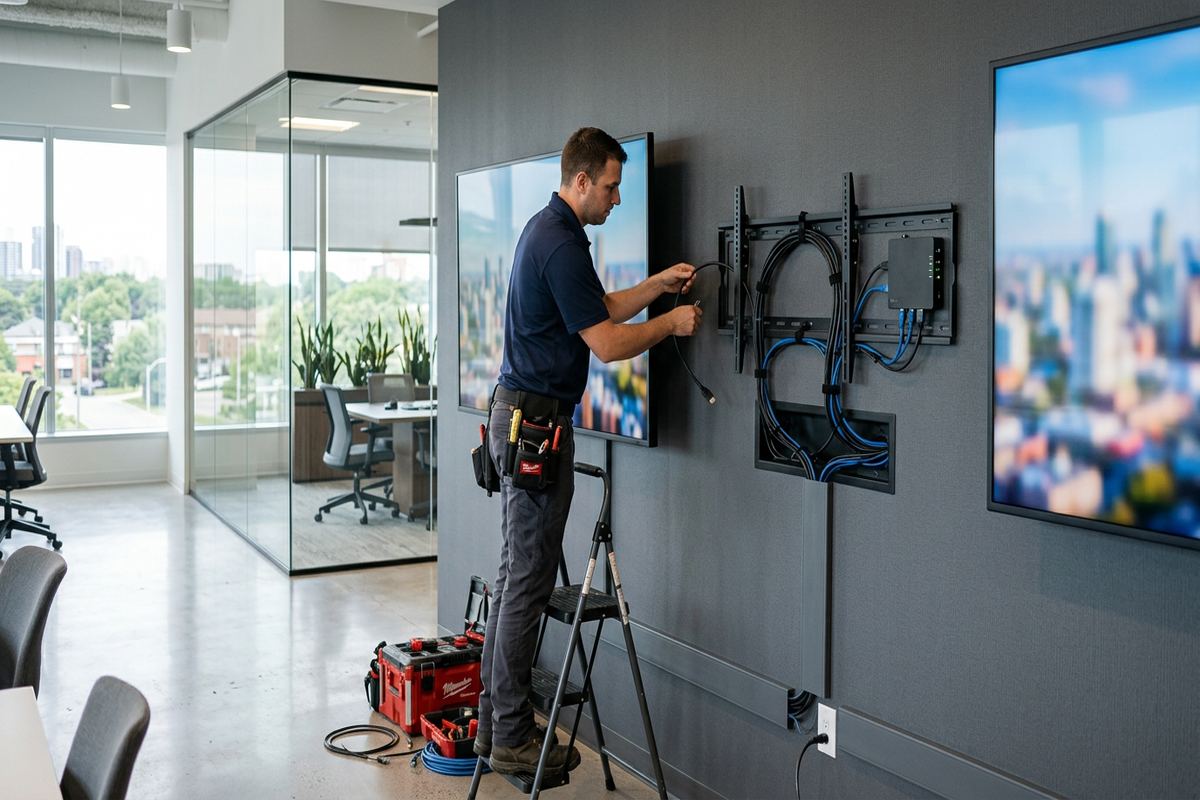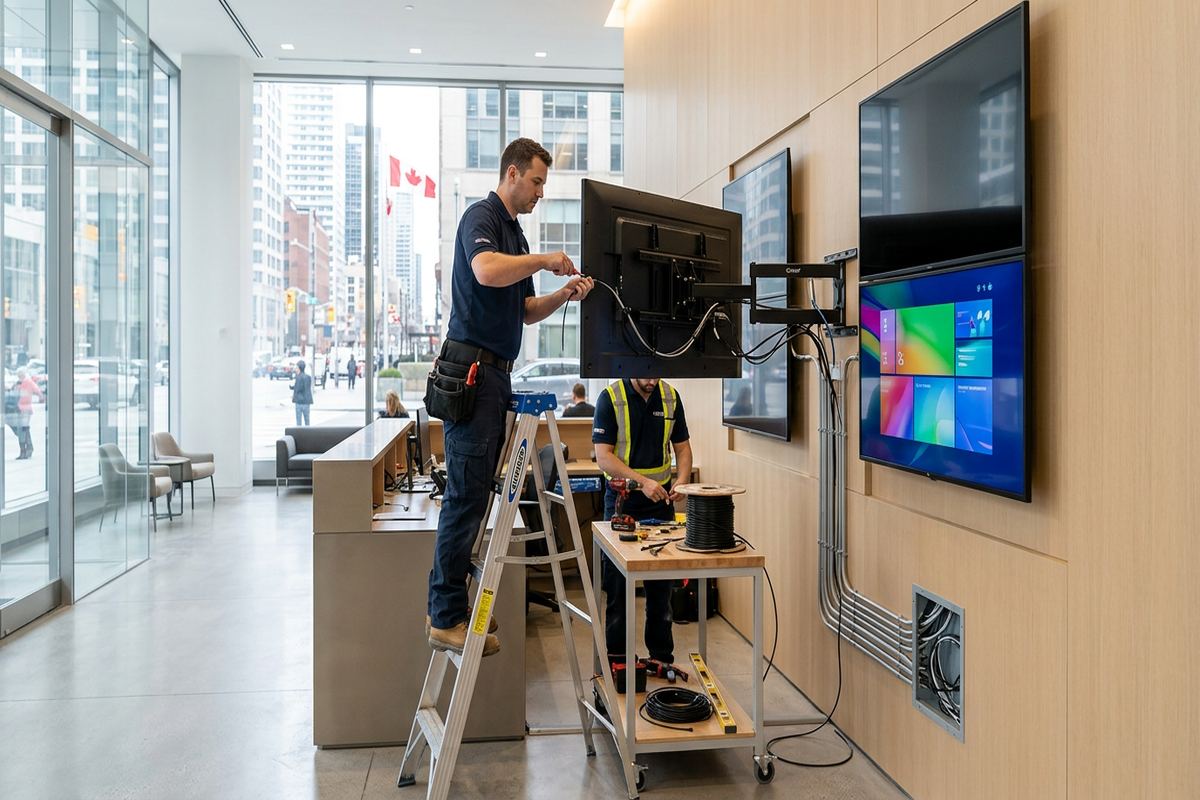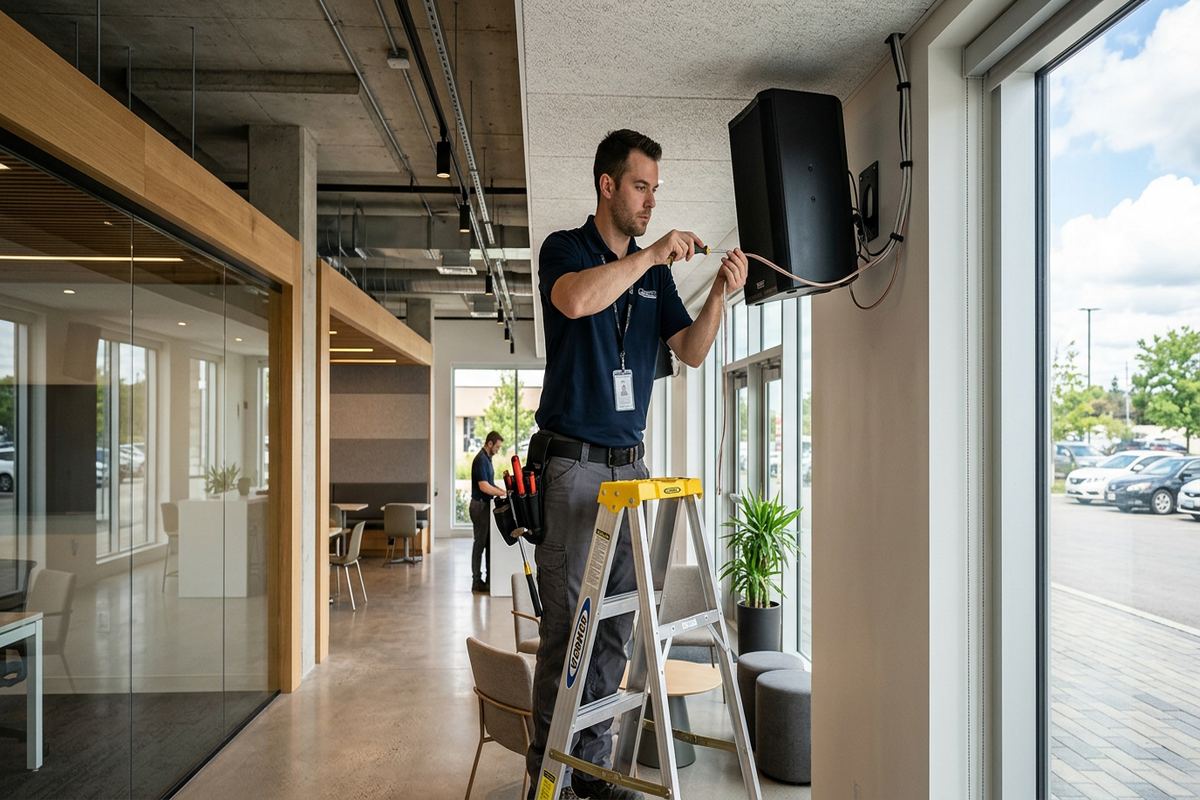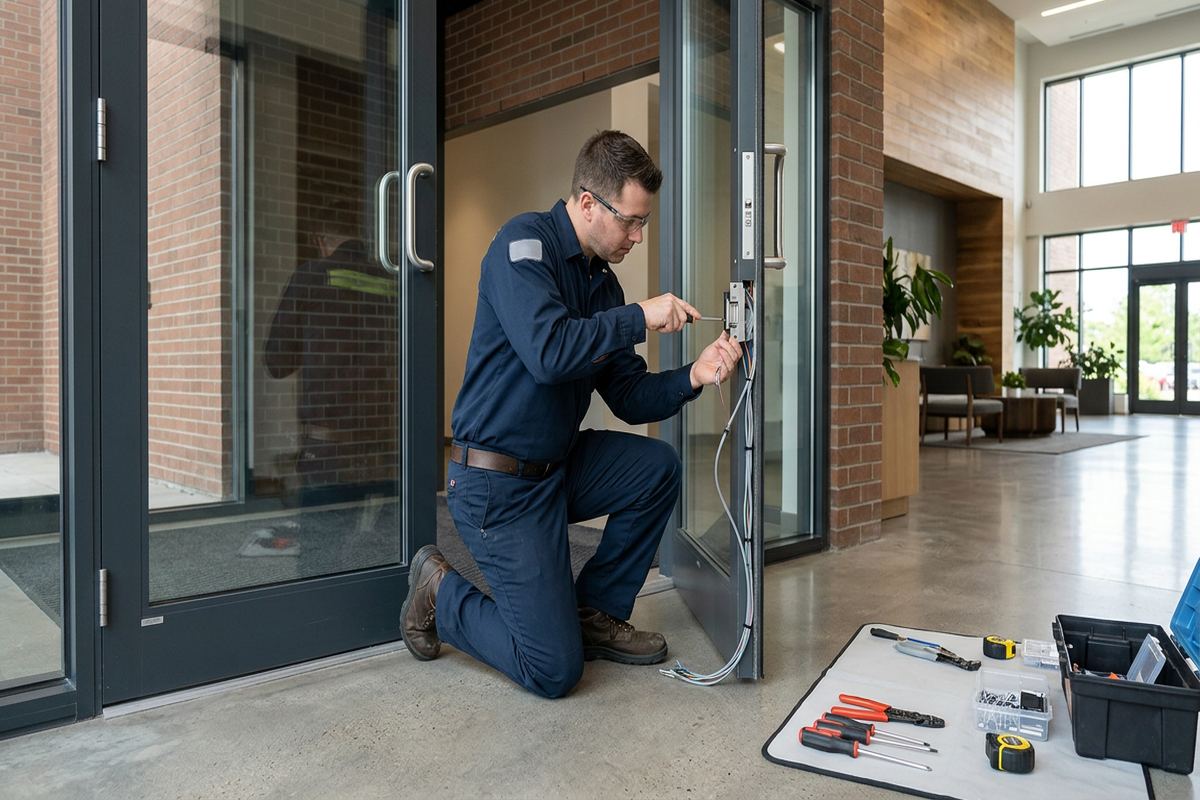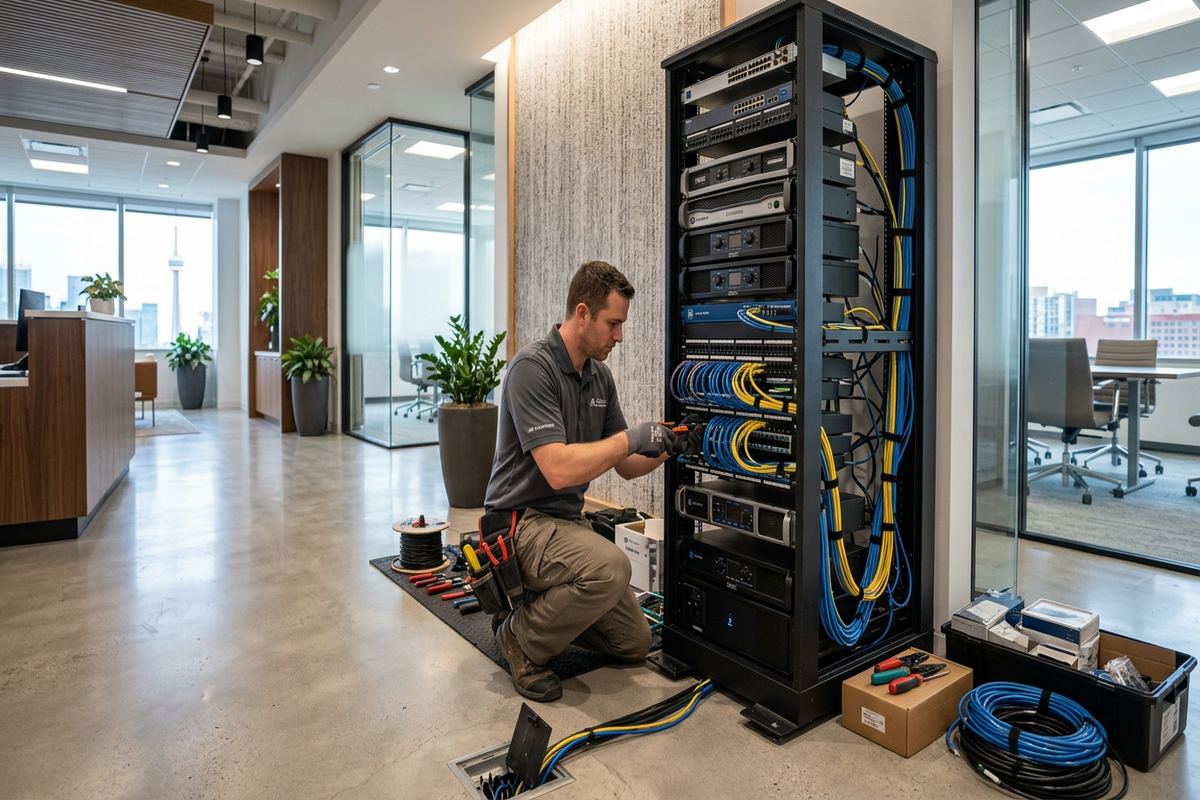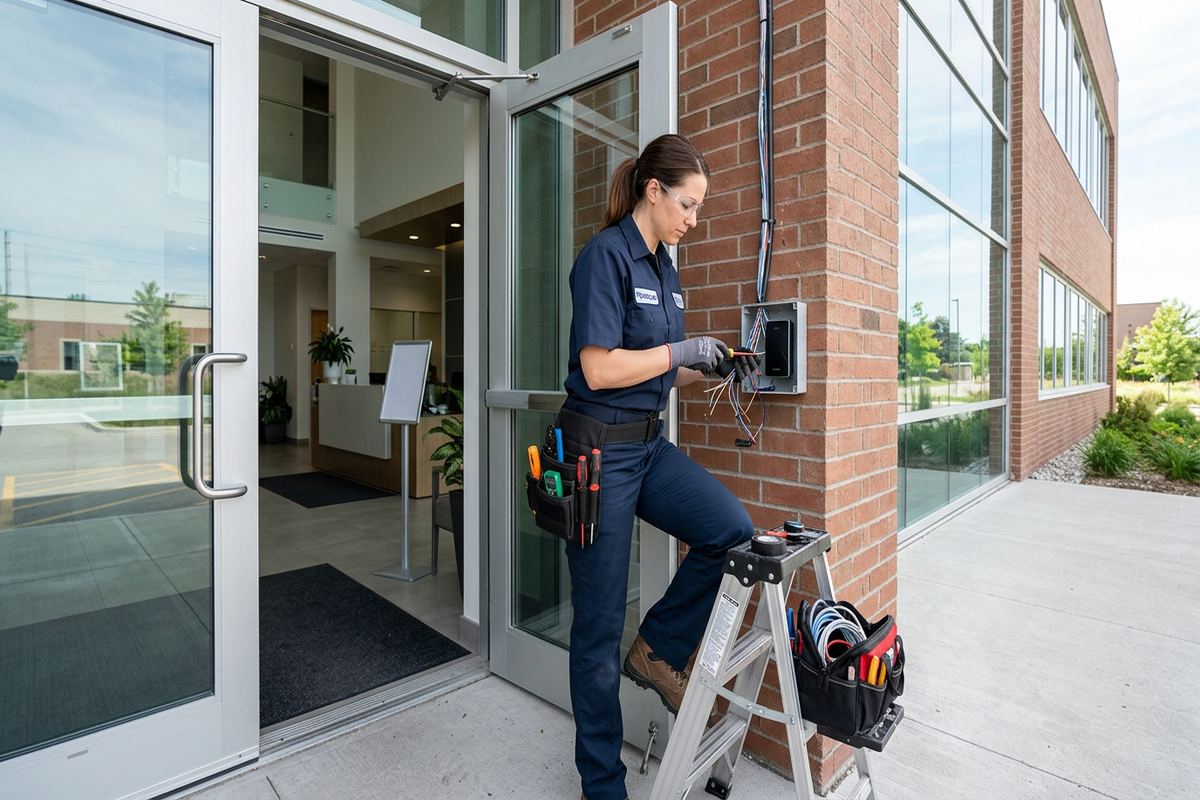
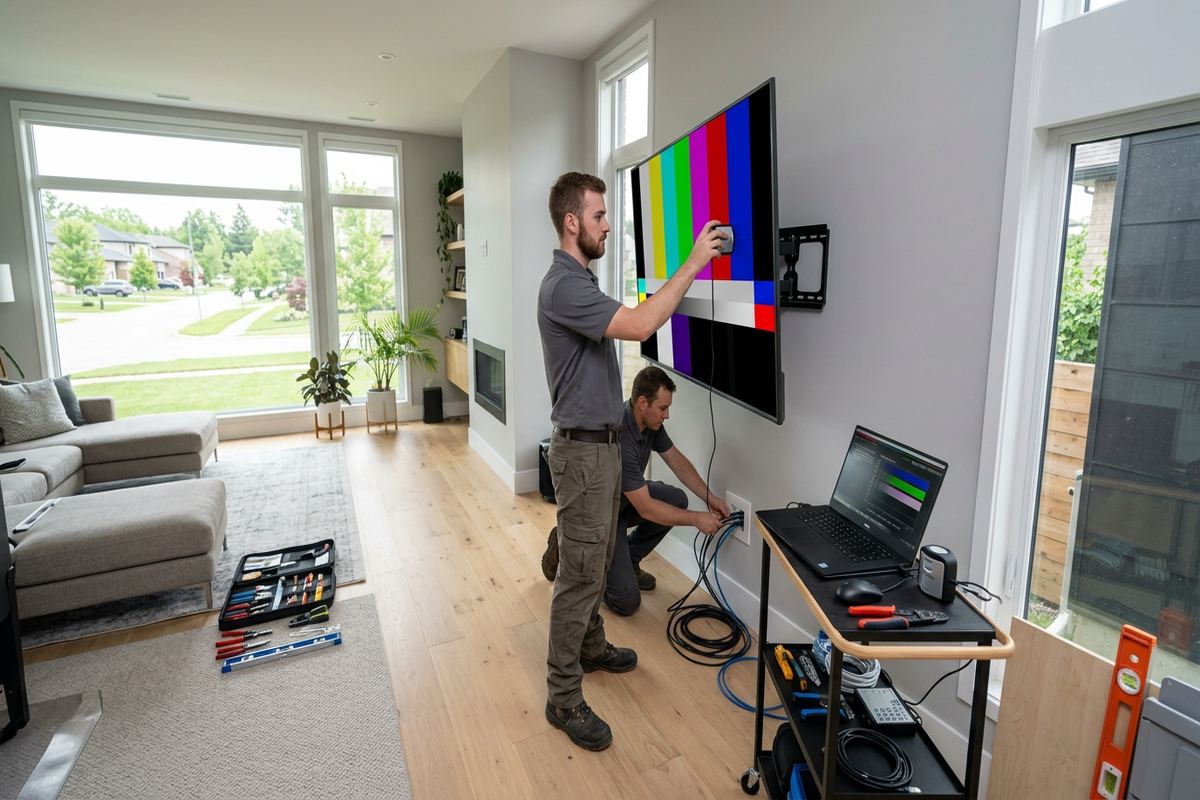
UnifiedLink installs outdoor televisions for homes and businesses in Cornwall, Ontario. We assess the wall, viewing area, power, signal path and exposure before recommending equipment or mounting methods. Each installation includes a written scope, protected cable routing, on-site configuration and a practical handover using your own credentials.
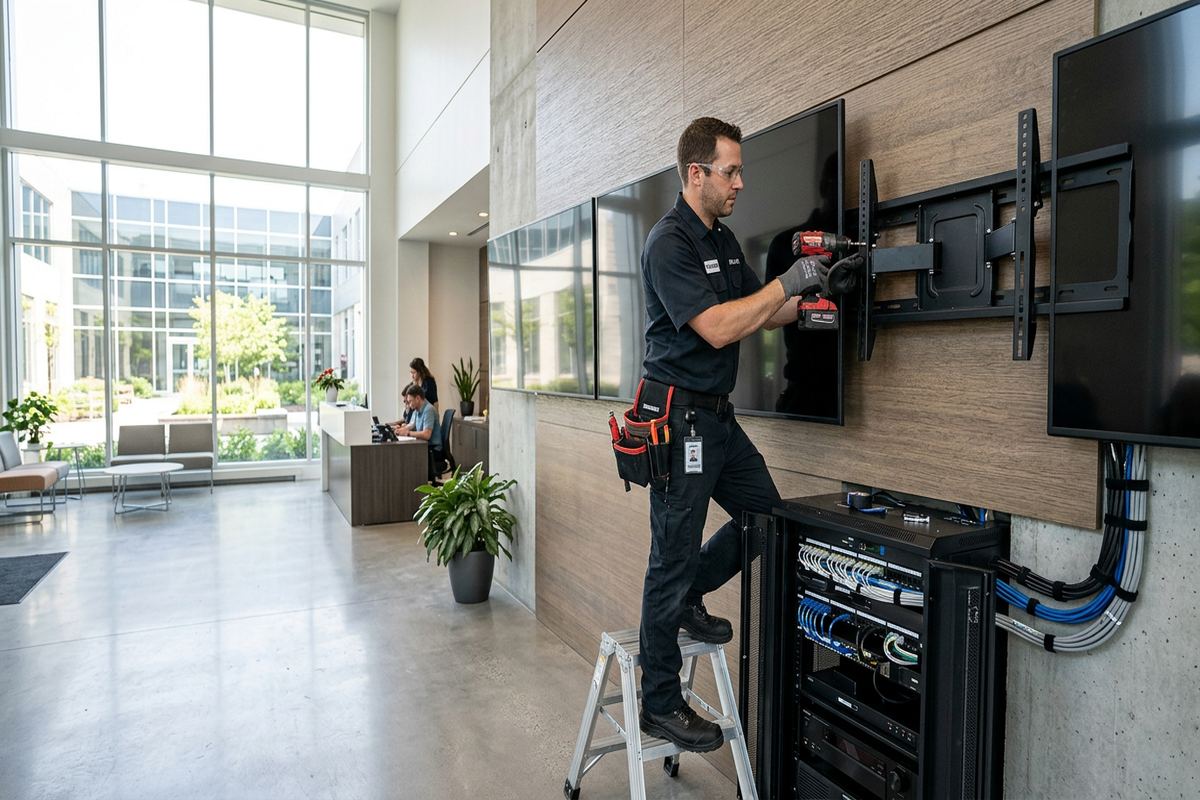
Outdoor TV Installation for Cornwall Properties
An outdoor television needs more planning than an indoor display moved onto a patio. Cornwall properties experience snow, wind-driven rain, summer heat and repeated freeze-thaw cycles that affect brackets, fasteners, cable entries and exterior seals. We begin by reviewing the proposed viewing position, wall construction, weather exposure and nearby power and network connections. The assessment also considers glare, viewing distance, seating layout and whether the screen will sit under a roof, inside a partial enclosure or on a fully exposed exterior wall.
Riverfront homes can present strong wind, moisture and glare from open water, while older housing stock may have layered siding, brick veneer or previous exterior renovations hiding the structural fastening points. A mount must transfer the television load into suitable framing or sound masonry rather than cladding alone. We inspect accessible surfaces and discuss limitations before defining the work. Where concealed conditions remain uncertain, the written scope identifies assumptions, possible route changes and exclusions so that the installation plan is understandable before equipment is ordered or openings are made.
Commercial outdoor displays require a different review. Restaurants, offices, logistics warehouses and industrial units may need screens for staff areas, sheltered loading zones, customer patios or operational information. In Cornwall’s Business Park and commercial strips, mounting surfaces can include concrete block, metal cladding, structural steel or framed partitions. We coordinate device placement with normal site activity and identify access requirements, cable protection and equipment ownership. One accountable contractor handles the display mounting, low-voltage pathway, network connection, configuration and documented handover within the agreed scope.
- Wall and mounting-surface assessment
- Sun, wind and moisture review
- Viewing-angle and screen-height planning
- Residential and commercial installation scopes
Weather Exposure and Equipment Selection in Cornwall
Outdoor-rated televisions are built for environmental exposure that ordinary indoor models are not designed to handle. The correct rating depends on whether the screen is fully exposed, partially protected or installed in a dry enclosure. We review the manufacturer’s placement requirements, operating temperature range, ventilation clearances and mounting instructions for the selected model. This is especially important during Cornwall winters, when low temperatures, snow accumulation and rapid temperature changes can affect displays, connectors and accessories that were intended only for controlled indoor rooms.
A weather-resistant enclosure may be appropriate in some locations, but it is not automatically interchangeable with a purpose-built outdoor display. Enclosures add depth, weight and possible reflections, and they require suitable ventilation and access for maintenance. The supporting wall and mount must accommodate the full assembled load. We compare the practical installation requirements without presenting unsuitable indoor equipment as weatherproof. Any customer-supplied television, enclosure or bracket is reviewed for compatibility, condition and manufacturer restrictions before it is included in the written installation scope.
Sunlight has a direct effect on image visibility and equipment temperature. A shaded porch near Riverdale may need a different brightness level than an open riverfront deck facing afternoon sun. We consider seasonal sun angles, nearby reflections and whether adjustable positioning would improve viewing without placing the television in an unsafe location. The assessment also addresses airflow and clearances, since enclosing a display too tightly can retain heat. Final equipment selection remains tied to the actual mounting area, manufacturer requirements and the customer’s preferred sources and viewing habits.
- Exposure category confirmed on site
- Outdoor display requirements reviewed
- Enclosure weight and ventilation considered
- Glare and seasonal sunlight assessed
Mounting on Masonry and Frame Walls
Cornwall’s mix of older houses and newer additions means exterior walls cannot be treated as identical. Brick veneer, solid masonry, concrete block, wood framing and modern cladding systems each require different fastening methods. The visible finish does not always reveal the supporting structure behind it. Before mounting, we evaluate accessible construction details, bracket geometry and the expected load. Fasteners are selected for the confirmed substrate, and penetrations are positioned to avoid relying on vinyl siding, thin sheathing or decorative masonry as the primary structural support.
Older homes in Le Village and Cornwall Centre may contain irregular framing, repaired brickwork or multiple layers from past renovations. These conditions can limit concealed cable routes or require a change in bracket position. We do not assume that an indoor stud layout continues predictably around exterior openings. Where access allows, the route and attachment area are checked before work proceeds. If concealed conditions differ from the initial assessment, the installation is paused and the available options are explained rather than forcing hardware into an unsuitable section of wall.
Mount style affects both usability and structural loading. A fixed bracket keeps the screen close to the wall and generally limits movement, while a tilting or articulating mount can improve sightlines and service access. Extended arms create greater leverage and need a suitable supporting surface. We account for screen dimensions, manufacturer mounting patterns, connector clearance and the movement needed to reach controls. Placement also avoids doors, windows, heaters, cooking equipment and circulation paths where practical, producing a stable installation that remains accessible for normal service.
- Fastening matched to confirmed substrate
- Bracket load and leverage considered
- Fixed, tilting or articulating options
- Clearance maintained for cables and service
Cornwall, Ontario
Outdoor TV installation in Cornwall, scoped in writing first
Book a site assessment and get equipment, routes, exclusions, and warranty on paper before anything is installed.
Exterior Cabling and Sealing in Cornwall
Cable routing determines how reliable and serviceable an outdoor TV installation will be. UnifiedLink plans continuous labelled low-voltage cable runs from the source or network point to the display area, avoiding unnecessary couplers hidden inside walls or exterior cavities. Routes may pass through basements, utility spaces, attics or surface-mounted pathways depending on the property. In older Cornwall homes, finished areas, dense masonry and previous renovations can restrict access, so the assessment identifies practical alternatives and explains where visible conduit or raceway may be preferable to disruptive interior work.
Every exterior penetration needs careful placement and sealing. Openings should shed water rather than direct it into the wall assembly, and cables require protection from sharp edges, movement and prolonged exposure. We use components appropriate for the route and seal around completed entries while preserving required drainage and ventilation functions. Cornwall’s freeze-thaw conditions make rushed sealing especially problematic because trapped moisture can expand, loosen materials or expose gaps over time. Cable loops, entry direction and attachment spacing are planned to reduce water tracking toward the building.
Signal wiring and electrical power are separate parts of the project. We identify the intended power location and note when a licensed electrical contractor is required for receptacle work, circuit changes or other line-voltage tasks outside our low-voltage scope. Extension cords are not treated as permanent wiring. The television may also need Ethernet, HDMI, audio or control cabling, depending on the source equipment. Each required connection is listed in the written scope, along with cable routes, exclusions and responsibility for any related electrical preparation.
- Continuous labelled low-voltage runs
- Exterior penetrations properly sealed
- Conduit or raceway where appropriate
- Electrical requirements identified before installation
Network, Streaming and Signal Planning
A mounted television is only useful when its content sources connect consistently. Outdoor areas often sit beyond the strongest indoor Wi-Fi coverage, particularly behind masonry walls, foil-backed insulation or low-emissivity glazing. We test or review connectivity at the planned Cornwall viewing area and discuss wired Ethernet where practical. A direct cable can reduce dependence on a weak exterior wireless signal, although the television’s applications and service providers still influence performance. Network planning is included before finalizing the route so cabling does not become an afterthought.
Streaming devices, cable receivers and media players need a protected location, adequate ventilation and a workable control path. Some devices can mount behind the screen, while others belong indoors and connect through a suitable cable. The best arrangement depends on equipment dimensions, operating limits, remote-control technology and service access. We confirm how the customer expects to watch content and whether audio will come from the television, an outdoor sound system or another device. Required interconnects are then identified instead of assuming every source can operate wirelessly.
On-site configuration covers the connections and settings included in the agreed scope. We can connect the display to the selected network, verify attached sources, adjust basic picture orientation and confirm audio output. Customers enter or retain their own account credentials, avoiding a handover tied to an installer-controlled email address or password. App subscriptions, broadcaster availability and internet service remain with the customer. At completion, we provide an as-built record showing the installed devices and cable routes, together with relevant ownership and warranty information.
- Outdoor Wi-Fi conditions reviewed
- Wired Ethernet planned where practical
- Source devices placed for service access
- Setup completed with customer credentials
Outdoor Displays for Cornwall Businesses
Business installations need to fit the property’s operations as well as the viewing requirement. A screen in a customer patio, employee break area or sheltered dispatch zone may face impact risks, cleaning activity, changing light and restricted mounting access. In Cornwall’s logistics warehouses and Business Park, long cable distances and high walls can also affect pathway design. We review the intended content, viewing audience, operating environment and maintenance access before proposing device placement. The scope identifies any lift access, shutdown coordination or site preparation expected from the customer.
Commercial construction commonly combines concrete block, steel framing, insulated panels and metal exterior cladding. Each assembly has limits on where brackets and cable supports can be attached. Mounting through cladding may require approved structural backing and careful treatment of the building envelope. We avoid assuming that a convenient visible panel is load-bearing. For leased industrial units or commercial strips, written landlord approval may be needed before drilling, routing conduit or changing an exterior surface. The customer remains responsible for obtaining approvals unless the written scope assigns a specific coordination task.
Outdoor televisions used for entertainment are different from purpose-built digital signage displays and should be selected according to the intended duty. Daily operating hours, orientation, brightness, control and content input can influence the suitable product. We document whether equipment is supplied by UnifiedLink or the customer, who owns each component and what warranty applies. Where several trades are involved, interface points are recorded so responsibilities remain clear. UnifiedLink serves as one accountable contractor for the low-voltage display work included in the final scope.
- Warehouse and patio display planning
- Long cable pathways reviewed
- Landlord approval requirements identified
- Equipment ownership documented in writing
Approvals and Placement Constraints
Condo owners should confirm exterior alteration rules before authorizing an outdoor television installation. Balcony walls, railings, soffits and shared cladding may form part of the condominium’s common elements even when they adjoin a private unit. Approval may cover bracket type, cable visibility, penetration locations, screen dimensions and permitted operating hours. We can provide a proposed device position and cable route for the owner’s submission, but approval authority remains with the corporation. Work proceeds only when required permissions and suitable access have been arranged.
Tenants in Cornwall also need landlord consent for permanent mounting, wall penetrations or exterior conduit. This applies to residential rentals, storefronts and industrial units. A removable stand may appear simpler, but it still needs a stable, suitable location and protection against weather or tipping. We discuss the intended method and document installation boundaries. If the property owner restricts drilling or visible pathways, those limits may change the available screen position or prevent a concealed route. Alternatives are assessed without representing them as equivalent when exposure or stability differs.
Placement must account for people using the area, not only the preferred view. Screens and brackets should not obstruct walking routes, doors, maintenance access or emergency equipment. In the Guindon Park area and riverfront settings, open yards and decks can experience stronger wind exposure than sheltered urban patios. We consider the mounting surface, bracket movement and manufacturer instructions rather than relying on a generic outdoor layout. Local noise expectations, neighbouring sightlines and lighting spill may also be relevant for homeowners, landlords or commercial property managers.
- Condo approvals confirmed before work
- Landlord consent documented where required
- Walking and service routes kept clear
- Wind exposure considered during placement
Cornwall Assessment, Installation and Handover
Every project begins with a site assessment before pricing. The visit reviews the proposed display location, wall construction, exposure, cable pathway, network availability, source equipment and access conditions. Assessment timing depends on the service and travel distance. Requests sent during business hours are answered the same day, while after-hours requests are answered the next business day. For Cornwall projects, photos and equipment details can support initial planning, but they do not replace an on-site review when fastening conditions, cable routes or exterior penetrations must be confirmed.
After the assessment, the customer receives a written scope covering equipment, cable routes, device placement, exclusions, equipment ownership and warranty. The document also identifies customer-supplied items and any electrical, carpentry, roofing or building-envelope work assigned to others. This step is important because outdoor installations can involve conditions hidden behind siding, masonry or finished walls. A clear scope makes assumptions visible and provides a reference if the customer changes the television, mount, source location or preferred pathway before installation begins.
Installation includes the approved mounting work, continuous labelled low-voltage runs, exterior sealing and on-site configuration described in the scope. We verify physical stability, connected sources and basic operation before handover. The customer receives control using their own credentials, not an account retained by the installer. An as-built record documents device placement and cable routes for later service or renovation work. If site conditions prevent the agreed method, we explain the issue and revise the scope before carrying out materially different work.
- Site assessment completed before pricing
- Written scope defines work and exclusions
- On-site setup and operational check
- As-built record supplied at handover
Cornwall neighbourhoods we cover
- Le Village
- Riverdale
- Cornwall Centre
- Guindon Park area
- Business Park
Outdoor TV installation in Cornwall — common questions
Can I use a regular indoor TV outside in Cornwall?
An indoor television is generally not designed for Cornwall’s moisture, temperature changes, condensation or direct sunlight. A covered location reduces exposure but does not automatically create an indoor environment. We assess the placement and review manufacturer requirements before recommending an outdoor-rated display or compatible enclosure. Using indoor equipment outside may affect performance, safety, service life and warranty coverage.
Will you install an outdoor TV on brick?
Yes, when the brick or underlying masonry is suitable for the proposed load and bracket. Cornwall’s older housing stock can include brick veneer, repaired mortar or irregular construction, so the fastening method cannot be chosen from appearance alone. We assess the wall, bracket geometry and cable route first. Decorative brick or cladding is not assumed to provide structural support.
How do you protect cables from Cornwall winters?
We plan exterior-rated or otherwise suitable pathways, secure cables against movement and seal completed wall entries. Routes are arranged to reduce water tracking toward the building, with conduit or raceway used where appropriate. Cornwall’s freeze-thaw cycles make penetration placement and sealing important. The written scope identifies the cable type, route and any exposed sections before installation begins.
Do I need condo or landlord approval?
Approval is often required when an installation affects exterior walls, balconies, common elements or a leased property. Cornwall condo corporations and landlords may regulate drilling, visible conduit, screen placement and operating conditions. Customers should obtain written permission before work begins. UnifiedLink can document the proposed device location and cable route to support an approval request, but cannot grant property authorization.
Can you improve Wi-Fi for the outdoor television?
We can assess the signal at the planned Cornwall viewing area and recommend a suitable low-voltage connection. Options may include a continuous Ethernet run, revised access-point coverage or another network arrangement, depending on the property. Masonry, exterior insulation and modern coated windows can weaken indoor Wi-Fi outdoors. Internet service quality, streaming subscriptions and third-party application performance remain outside the installation guarantee.
What is included in the handover?
The handover includes an operational check of connections covered by the scope, basic on-site configuration and control using the customer’s own credentials. We also provide an as-built record showing installed device locations and cable routes, along with documented equipment ownership and applicable warranty information. Any customer-supplied equipment limitations or excluded subscription services are identified in the written scope.
Coverage in Cornwall is confirmed against the address before we quote. See everything we install in Cornwall or the province-wide outdoor tv installation page.