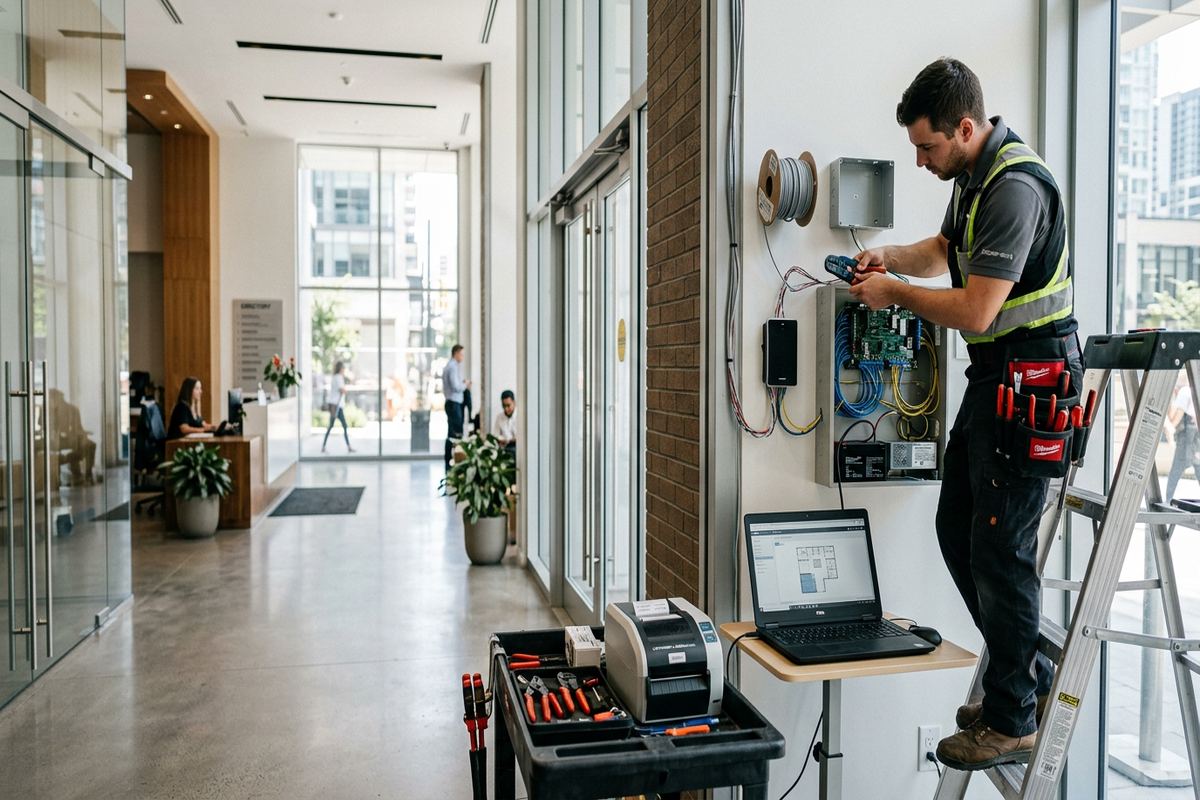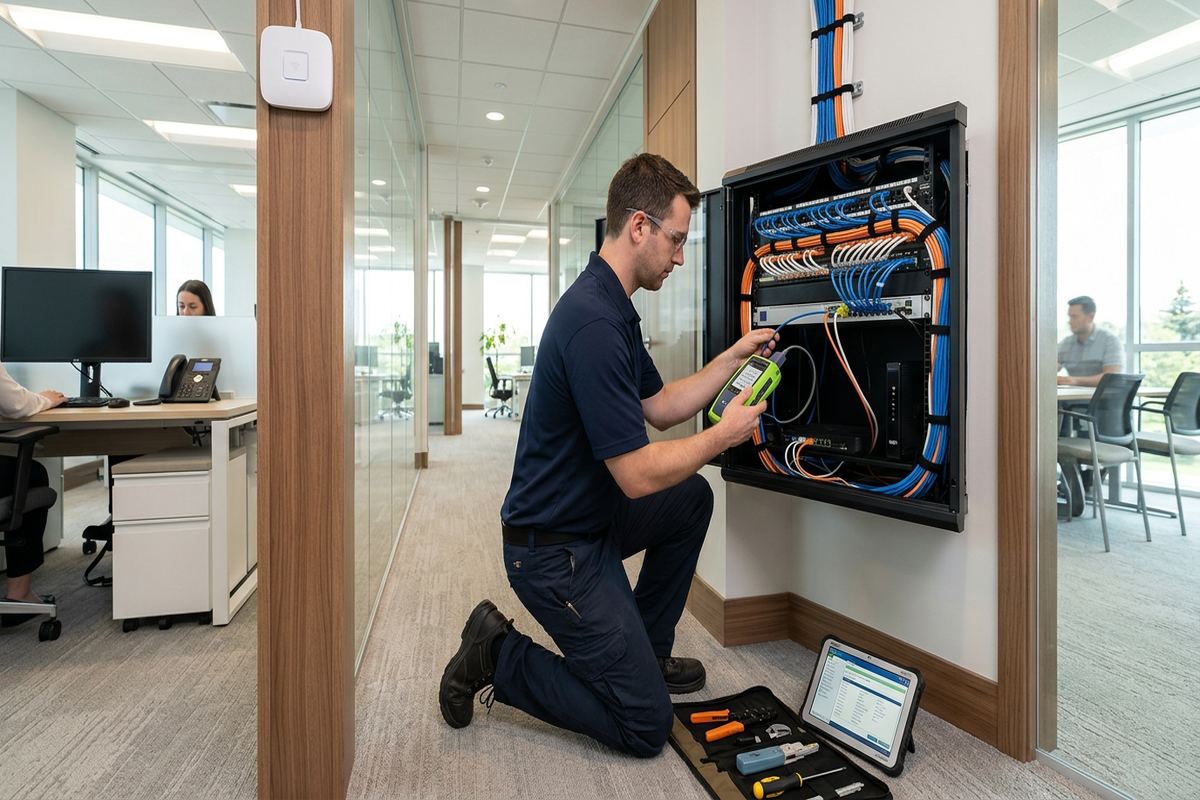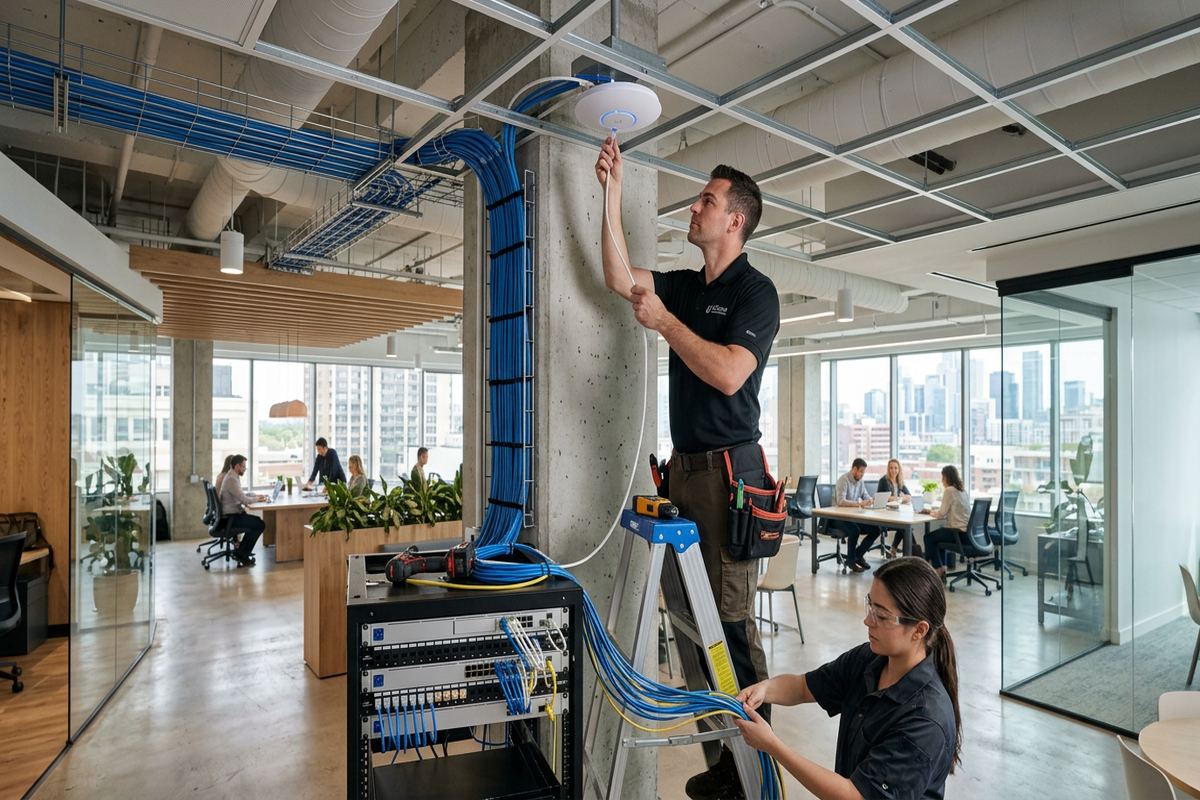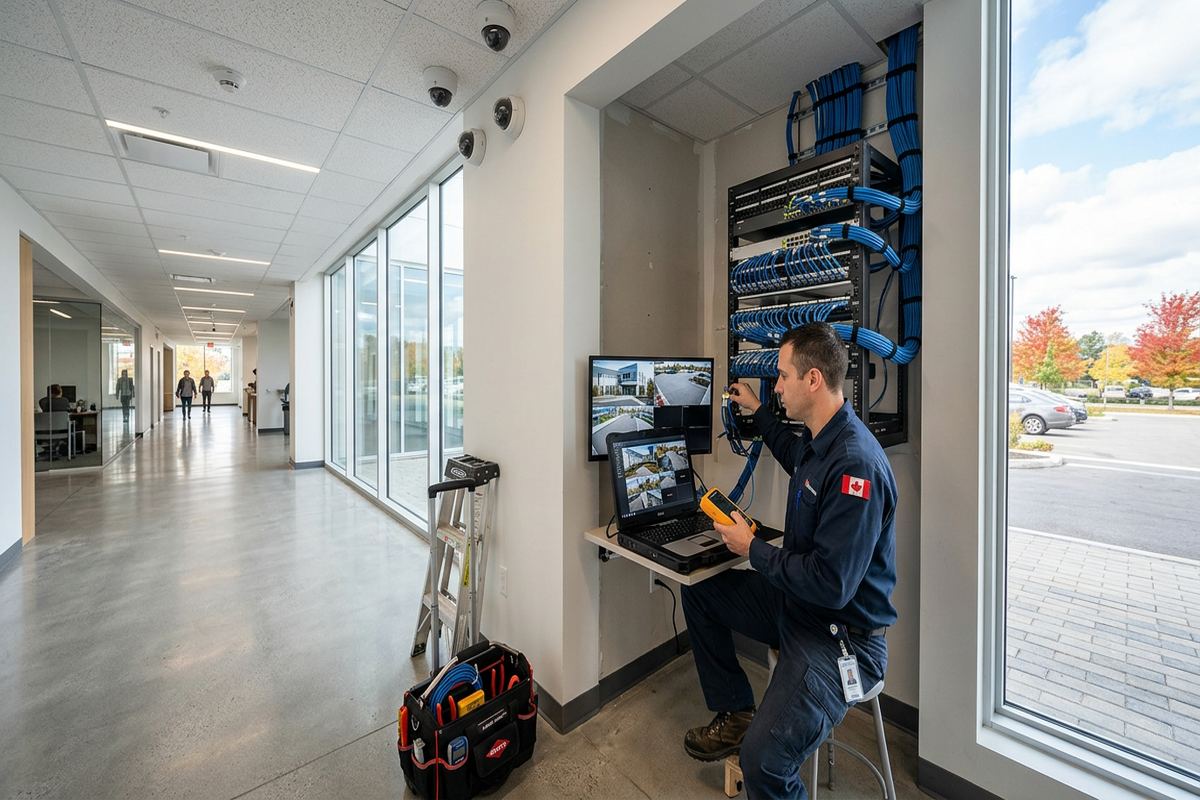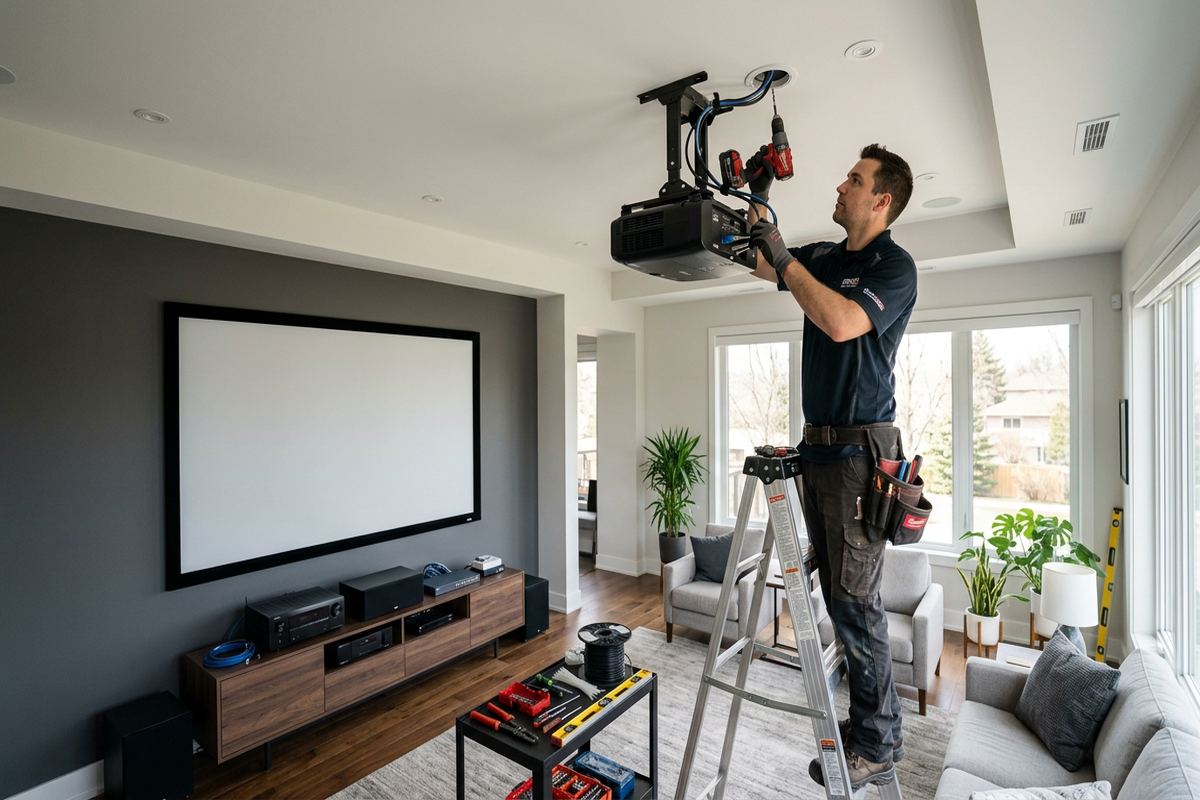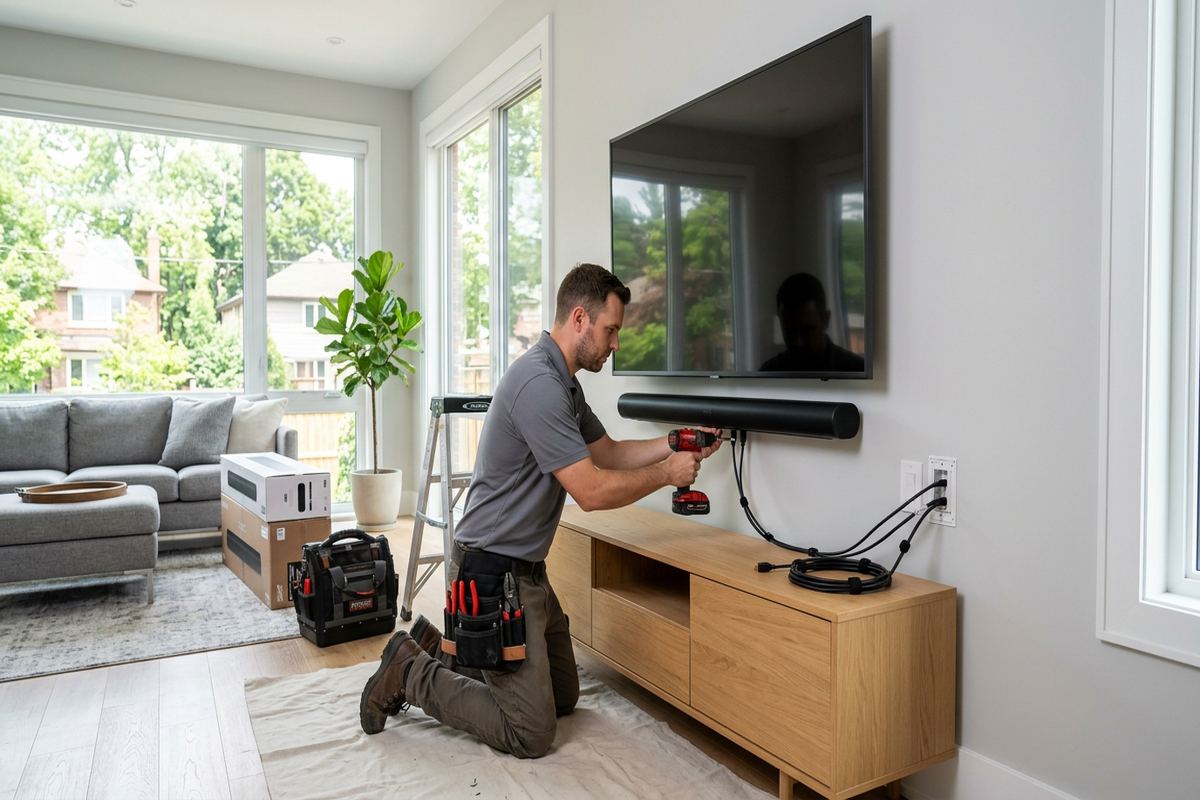
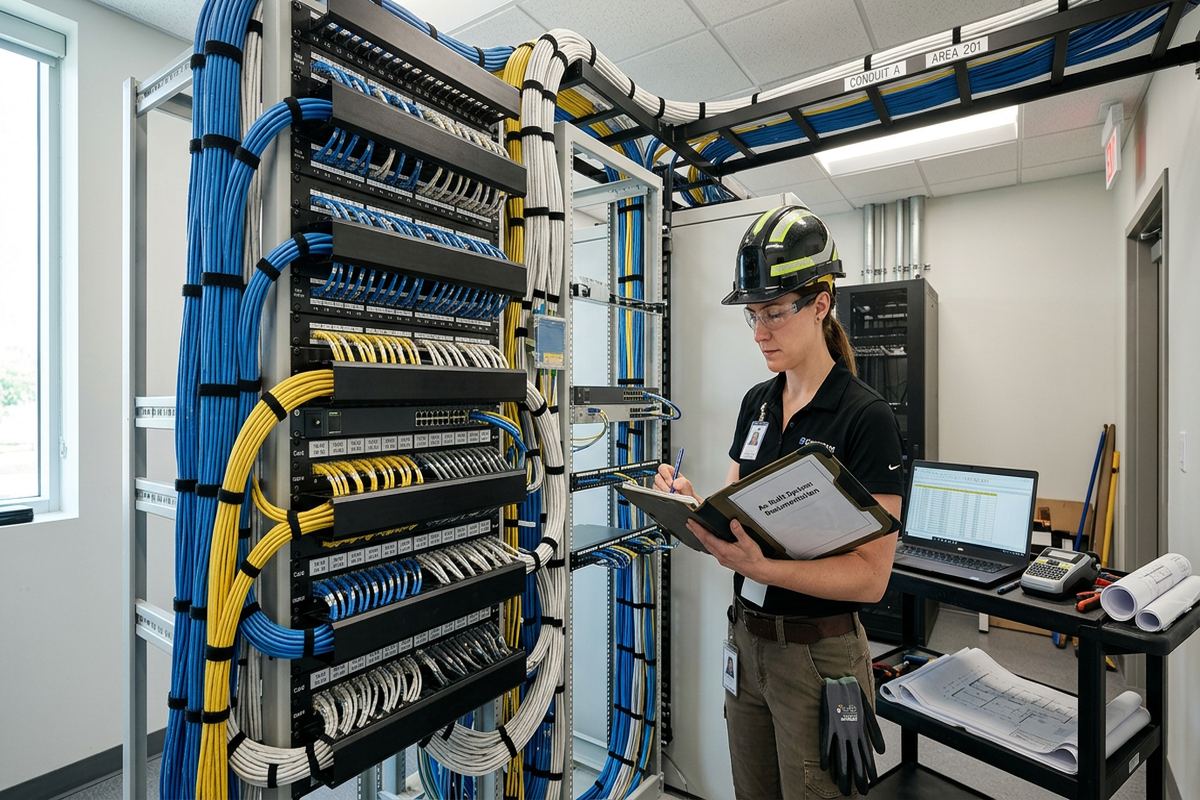
UnifiedLink installs low-voltage cabling for Cornwall homes, commercial properties, warehouses and industrial units. We plan and run cable for networks, cameras, access control, alarms, Wi-Fi, audio and displays. Every project starts with a site assessment, followed by a written scope that defines routes, device locations, exclusions, ownership and warranty terms.
Low-Voltage Cabling for Cornwall Properties
Low-voltage cabling provides the physical connection between network equipment, cameras, access readers, alarm devices, wireless access points, speakers and displays. In Cornwall, these systems often need to cross finished living areas, older basements, warehouse ceilings or mixed commercial spaces. UnifiedLink assesses the building before recommending routes or preparing pricing. The assessment identifies construction materials, accessible pathways, device positions, service locations and likely obstacles. This process helps establish a practical installation plan rather than relying on assumptions about what may be concealed behind walls, ceilings or exterior finishes.
Cornwall projects vary considerably by property type. Riverfront homes may require careful exterior entry planning and attention to damp locations, while logistics warehouses commonly need long, protected routes across open structure. Older housing stock can include renovations completed at different times, leaving limited pathways or abandoned wiring. Commercial strips and industrial units may combine offices, storage areas and loading zones in one system. We select pathways, supports and cable types according to the actual environment, expected use and equipment requirements instead of applying one standard layout to every building.
A written scope is prepared after the site conditions and system requirements are understood. It covers the proposed equipment, cable routes, device placement, exclusions, equipment ownership and applicable warranty information. This gives Cornwall homeowners, landlords and business operators a clear basis for reviewing the work before installation starts. Where access depends on a condominium corporation, property manager, tenant or landlord, approvals should be confirmed before drilling or entering common areas. Clearly assigned responsibilities reduce delays and prevent uncertainty about patching, electrical work, internet service or other work outside the low-voltage scope.
- Network and data cabling
- Camera and alarm wiring
- Access control cable routes
- Wi-Fi access point connections
- Audio and display cabling
Planning Cable Routes in Cornwall
Good route planning balances performance, accessibility and the appearance of the finished installation. We review where cables can travel continuously without unnecessary joints, sharp bends or exposure to likely damage. In finished Cornwall homes, that may involve basements, utility rooms, closets, attics or carefully selected exterior paths. In warehouses and industrial units, routes may use approved supports above work areas while avoiding doors, lights and mechanical equipment. Each route is considered alongside cable distance limits, separation from electrical wiring, future service access and the location of network or control equipment.
Construction methods influence how a route can be installed. Frame walls may permit concealed drops where cavities remain open and unobstructed, although insulation, blocking and previous renovations can limit access. Masonry walls usually require surface pathways, drilled penetrations or routes through adjacent framing. Around Le Village and Cornwall Centre, older buildings may contain several wall assemblies within one property. A site assessment helps distinguish workable pathways from locations that would create excessive disturbance. We also discuss visible conduit, raceway and device placement before work begins so the expected finish is understood.
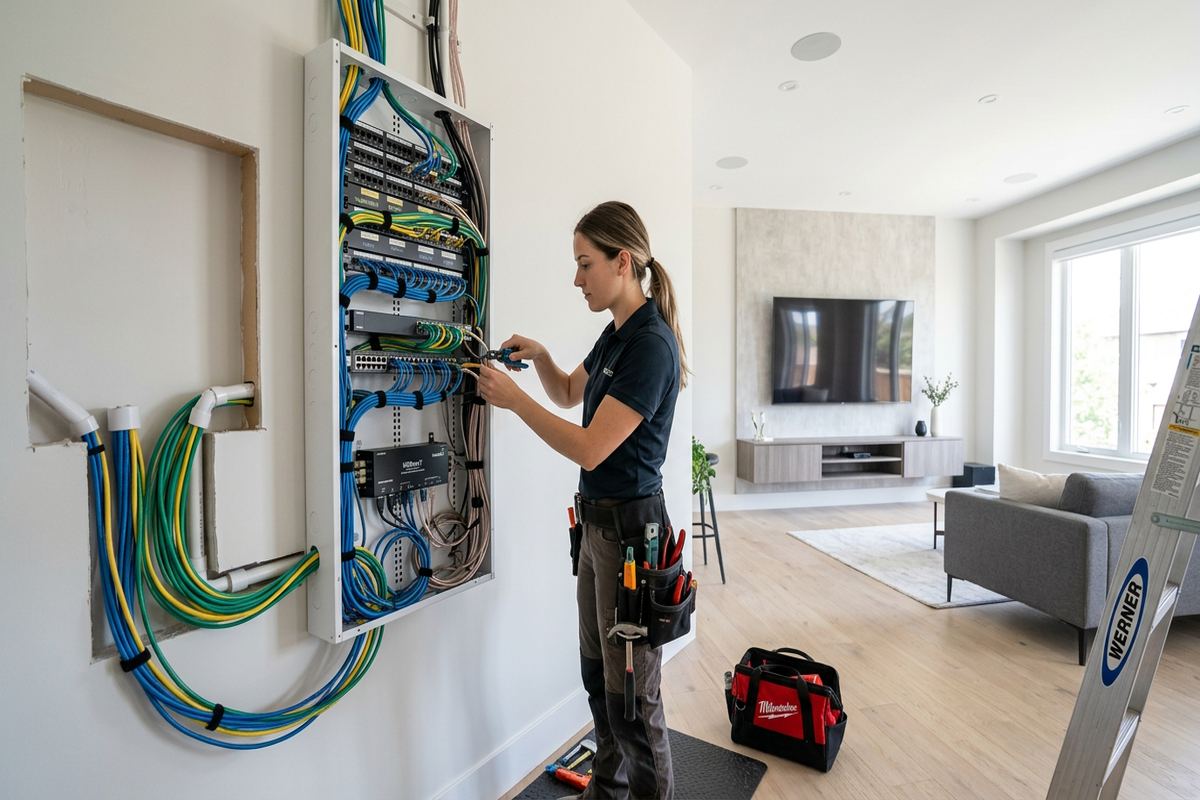
Cable routes should support both current devices and reasonable future maintenance. A rack, cabinet or structured wiring location needs suitable space, ventilation, power access and clearance for patching. In a small home, a compact utility area may be appropriate; in a Business Park warehouse, a dedicated communications location may better serve office and operational zones. We document planned origins, destinations and identifiers so individual runs can be traced. When expansion is foreseeable, spare pathway capacity or additional cable can be discussed in the written scope rather than improvised after ceilings and walls are closed.
- Route and pathway review
- Electrical separation considered
- Concealed or surface options
- Central equipment location planning
- Expansion needs discussed early
Cabling Older Cornwall Homes
Older Cornwall housing often requires more investigation than newer construction because wall cavities may be interrupted, additions may use different materials, and previous wiring may not follow a consistent route. Before drilling, we inspect accessible areas and compare proposed outlets with basement, attic and utility-space conditions. Existing telephone, coaxial or alarm cable is not automatically suitable for a new network or powered device. Its type, condition, routing and termination all matter. Where reuse is impractical, a new continuous cable run provides a more predictable connection and a clearer record for future troubleshooting.
Homes in Riverdale, Le Village and established streets near Cornwall Centre can include finished basements, narrow service spaces, plaster finishes or masonry foundations. These features do not prevent low-voltage installation, but they affect route choices and the amount of visible work. We explain where access openings, surface raceway or exterior transitions may be necessary. If patching or finish restoration falls outside the cabling scope, that exclusion is recorded in writing. Device positions are also reviewed against furniture, televisions, workspaces and Wi-Fi coverage needs rather than chosen only for convenient drilling.
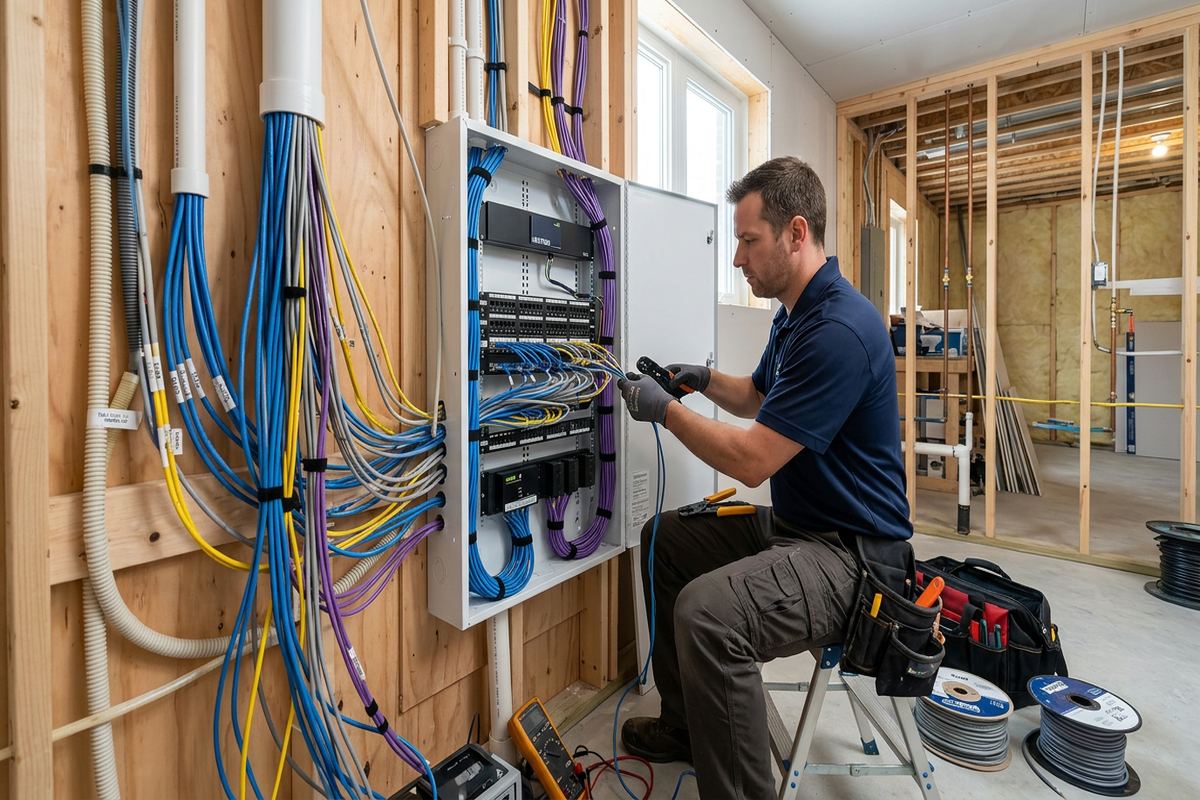
Renovations provide an opportunity to install cabling before insulation and wall finishes restrict access. Homeowners should identify intended locations for desks, televisions, cameras, wireless access points and control equipment while framing remains visible. We coordinate the low-voltage layout with the agreed construction sequence and keep runs supported away from likely fastener zones. For occupied homes, the approach may be more selective, focusing on essential connections and low-impact routes. In either situation, cables are labelled at both ends and tested so the handover record reflects the connections actually installed throughout the Cornwall property.
- Plaster and framing assessed
- Existing wires checked before reuse
- Finished areas protected during work
- Renovation-stage cabling available
- Every run labelled and tested
Cornwall, Ontario
Low-voltage cabling installation in Cornwall, scoped in writing first
Book a site assessment and get equipment, routes, exclusions, and warranty on paper before anything is installed.
Warehouse and Commercial Cabling in Cornwall
Cornwall logistics warehouses, commercial strips and industrial units often require cabling across areas with different operating conditions. Office networks may share a property with loading zones, storage racks, workshops or public counters. The installation plan must account for ceiling height, equipment movement, dust, temperature variation and restricted work areas. We establish device locations and cable pathways with the site contact before installation. Where lifts, shutdowns or access outside normal operating areas are relevant, those requirements are identified during assessment and reflected in the scope instead of being discovered after work has started.
In the Business Park, a typical project may involve network outlets, cameras, wireless access points or access-controlled doors distributed between offices and warehouse space. Cable needs suitable support throughout the route and should not be laid loosely across ceilings or attached to unrelated services. We maintain continuous labelled runs between the central equipment location and each endpoint. Penetrations, transitions and exposed sections are planned for the building environment. The result is an organized physical layer that can be followed during configuration, device replacement or later expansion without tracing unidentified cable through a busy facility.
Commercial cabling also requires coordination with ownership and occupancy arrangements. A tenant may control interior device placement but still need landlord approval for exterior cameras, roof access, common corridors or penetrations through base-building elements. Condominium commercial units can have similar restrictions. UnifiedLink records known approvals and exclusions in the written scope, while the customer remains responsible for securing required property permissions unless otherwise agreed. For multi-phase work, naming conventions and as-built records should remain consistent, allowing new connections to be integrated with earlier runs rather than creating a separate, undocumented cabling layer.
- Office and warehouse connections
- Supported overhead pathways
- Loading-area route planning
- Tenant and landlord coordination
- Consistent labels across phases
Exterior Cabling Through Cornwall Seasons
Exterior low-voltage work in Cornwall must account for winter temperatures, moisture and repeated freeze-thaw cycles. Cable type, mounting hardware, enclosures and entry methods are selected for the exposure rather than treated like indoor components. A cable entering a building needs a planned path that limits water tracking toward the penetration. Exterior loops, transitions and mounting points should also avoid locations where snow, ice or routine maintenance can damage them. During assessment, we examine the wall material, proposed device position and accessible interior route as one connected installation detail.
Riverfront homes and properties around the Guindon Park area may have open exposure, detached structures or device locations facing wind-driven precipitation. These conditions make sealing and mechanical protection especially important. Exterior-rated cable does not remove the need for correct support, drip management and suitable penetrations. Masonry requires different anchors and drilling methods than wood-frame or sided construction, while finished façades may limit acceptable routes. We review visible cable, conduit and enclosure positions with the owner before proceeding, particularly where appearance or future maintenance access could affect the preferred mounting location.
Seasonal movement can weaken poorly planned exterior work. Sealants and fittings must suit the surfaces involved, and cable should not be pulled tightly across materials that expand or shift differently. Where a route travels near grade, loading areas or walkways, added protection or relocation may be required. We also consider whether a camera, wireless bridge or other device can be serviced safely after installation. The written scope identifies exterior routes and relevant exclusions, helping the Cornwall property owner understand what is included and whether separate building-envelope or restoration work is needed.
- Outdoor-rated materials where required
- Penetrations planned to shed water
- Freeze-thaw exposure considered
- Masonry-specific fastening methods
- Service access reviewed
Installation, Termination and Testing
Installation begins from the approved scope and confirmed device locations. Cable is placed on appropriate supports, kept within specified bend and pulling limits, and routed separately from electrical conductors where required. Runs are continuous between intended termination points unless the system design calls for an approved connection method. Each end receives a unique label that corresponds with the panel, outlet or device record. These practices matter in both small Cornwall homes and large warehouse layouts because orderly physical installation makes faults, moves and later additions easier to identify without opening finished areas unnecessarily.
Termination depends on the system and equipment being connected. Data cable may end at patch panels, jacks or compatible device plugs, while cameras, access control, alarms, audio and display systems have their own conductor and connector requirements. We verify pinouts, polarity and endpoint identification as applicable before configuration. Testing is matched to the installed cable and intended service; it is not presented as a substitute for correct design or compatible equipment. Any inaccessible endpoint, customer-supplied component or pre-existing cable limitation is documented rather than concealed within a general statement that the system is complete.
On-site configuration connects the physical cabling to the intended equipment and customer environment. This can include patching network ports, adopting wireless access points, checking camera links or confirming communication with access and alarm components within the contracted scope. Internet service, electrical supply and third-party subscriptions must be available where they are needed for final verification. If another provider controls part of the system, responsibilities are established in advance. Cornwall customers receive their own credentials at handover, avoiding an arrangement where routine access depends on installer-held accounts or undocumented passwords.
- Continuous cable runs
- Unique labels at both ends
- System-appropriate termination
- Connection testing before handover
- Configuration using customer accounts
Documentation and Handover in Cornwall
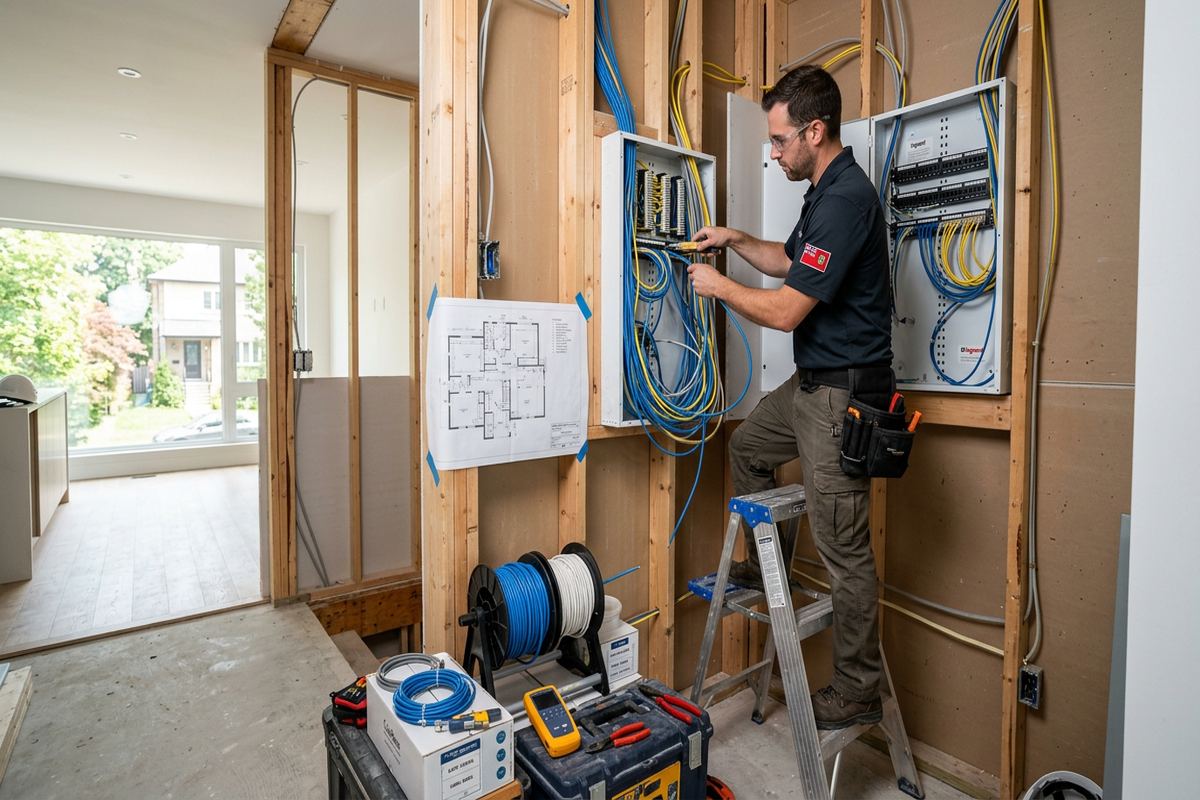
A completed cabling project should leave the owner with more than connected devices. UnifiedLink provides an as-built record showing the installed runs and identifiers within the agreed project scope. The level of detail reflects the property and system, but the record is intended to help locate endpoints, understand central terminations and distinguish installed cabling from older wiring. In a Cornwall warehouse, this may support maintenance across operational zones; in a home, it can clarify which wall outlet or camera route returns to the structured wiring location.
Handover includes the customer’s own credentials for configured systems and a review of relevant equipment access. Ownership matters when devices use cloud portals, mobile applications or local administrator accounts. Accounts should be assigned to the customer rather than retained as installer-only access. We also review labels, central equipment and any operating points included in the scope. If customer staff or household members need different permissions, those requirements should be identified before handover. Third-party account restrictions, subscriptions or provider-controlled settings are documented where they affect the customer’s ability to administer the system.
Changes made during installation are reflected in the final record when field conditions require an approved route or device adjustment. This is particularly useful in older Cornwall properties, where concealed obstacles can make the original path impractical. Unrecorded changes create confusion later, especially when another contractor opens a ceiling or replaces network equipment. We keep one accountable contractor responsible for the agreed low-voltage work, from assessment through configuration and handover. Separate trades or service providers may still be required, but their responsibilities and exclusions are identified rather than blended into an unclear final deliverable.
- As-built cable record
- Customer-owned credentials
- Final labels reviewed
- Field changes documented
- Clear third-party exclusions
Arranging a Cornwall Site Assessment
A site assessment is required before pricing because route access, construction and system objectives affect the amount and type of work. To prepare, identify the devices or services you want connected, the preferred endpoint locations and any deadlines tied to renovations, tenant occupancy or operational changes. Available drawings, photographs and existing cabling records can provide useful context, but they do not replace an on-site review when concealed routes or exterior penetrations are involved. For Cornwall properties, assessment timing depends on the requested service and travel distance.
During the visit, we review central equipment locations, proposed endpoints, accessible pathways and relevant building restrictions. Homeowners can point out finished areas that should not be disturbed, while business operators can identify production zones, loading schedules or rooms with controlled access. Landlords and condominium owners should disclose approval requirements for common elements, exterior surfaces and shared service spaces. If the project involves other trades, we clarify sequencing and boundaries. The goal is to gather enough information for a written scope that can be reviewed without relying on undefined allowances or verbal assumptions.
Requests sent during business hours are answered the same day, while after-hours requests are answered the next business day. That response confirms the enquiry and starts the assessment process; it is not a guaranteed arrival time. Once the Cornwall site has been reviewed, UnifiedLink prepares a scope covering equipment, cable routes, device placement, exclusions, equipment ownership and warranty. Customers can then evaluate the proposed work as a defined installation. This approach supports homes, riverfront properties, commercial units and logistics facilities without suggesting that one route or schedule fits every local building.
- Assessment completed before pricing
- Property constraints reviewed on site
- Written equipment and route scope
- Ownership and warranty documented
- Scheduling based on service and travel
Cornwall neighbourhoods we cover
- Le Village
- Riverdale
- Cornwall Centre
- Guindon Park area
- Business Park
Low-voltage cabling installation in Cornwall — common questions
Can you run cable through an older Cornwall home?
Yes, subject to accessible and practical routes. Older Cornwall homes may have plaster, masonry foundations, finished basements, insulation or additions built with different framing. We inspect the property before pricing and explain whether concealed drops, surface raceway, exterior transitions or access openings are likely. Any patching or finish restoration outside our work is identified as an exclusion in the written scope.
What types of low-voltage cable do you install?
We install cabling for networks, security cameras, alarms, access control, Wi-Fi access points, audio systems and displays. The specific cable depends on the equipment, distance, environment and applicable pathway. Cornwall warehouse runs, exterior camera routes and residential data outlets can require different materials. Cable selection and termination details are established after the site assessment rather than assumed from the device category alone.
Can exterior cable remain outside through Cornwall winters?
Exterior installations can be designed for Cornwall winters when appropriate outdoor-rated materials, supports, enclosures and sealing methods are used. We consider freeze-thaw cycles, moisture, wind exposure, snow and the wall construction at each entry point. Cable should not simply be extended outdoors because it fits a connector. The complete route, penetration, mounting surface and future service access all need review.
Do I need landlord or condominium approval?
Approval may be required if cabling crosses common areas, penetrates exterior walls, uses shared service rooms or attaches devices to building elements you do not own. Cornwall tenants and condominium owners should confirm applicable rules before installation. We can document proposed routes and device positions for review, but the customer is responsible for obtaining property permissions unless responsibility for that task is specifically included in the written scope.
Will the cables be labelled and documented?
Yes. New runs are labelled at both ends using identifiers that correspond with the relevant outlet, device or central termination. At handover, Cornwall customers receive an as-built record for the cabling installed within the project scope. This documentation helps with troubleshooting, equipment replacement and future expansion. Field-approved route changes are reflected so the final record represents the completed installation rather than only the original plan.
How quickly can I arrange a site assessment?
Requests sent during business hours are answered the same day, and after-hours requests are answered the next business day. Site assessment timing in Cornwall depends on the service and travel distance. When enquiring, provide the property type, approximate number of endpoints, intended systems and any renovation or operational schedule. That information helps determine what should be reviewed during the visit, but pricing follows the assessment.
Coverage in Cornwall is confirmed against the address before we quote. See everything we install in Cornwall or the province-wide low-voltage cabling installation page.