UnifiedLink installs condo access control systems in Cornwall for common entrances, parking areas, amenity rooms and restricted service spaces. We assess the property before pricing, document door conditions and cable routes, then configure the system on site. Each project includes a written scope, customer-controlled credentials, labelled cable runs and an as-built record for ongoing management.
Planning Condo Access Control in Cornwall
Every condominium has a different mix of residents, doors and management responsibilities. Before recommending equipment in Cornwall, UnifiedLink assesses entrance use, existing locks, door frames, available pathways, electrical service and network access. We also identify who manages credentials, receives alerts and approves changes. This prevents a simple reader replacement from overlooking worn closers, unsuitable strike preparation or inaccessible cabling. The resulting design connects daily operating needs with practical installation conditions, whether the property is a small converted building, a riverfront residence or a larger multi-entrance condominium with parking and shared facilities.
Cornwall’s older housing stock can make access control planning less predictable than drawings suggest. Renovated masonry buildings may contain concealed alterations, mixed wiring and narrow service spaces, while newer frame construction usually offers different cable-routing options. A site visit allows us to inspect these conditions rather than assume that every opening can accept the same hardware. We document possible routes, mounting surfaces and areas requiring coordination with a locksmith, electrician, fire alarm provider or building representative. Condo or landlord approval should be confirmed before drilling, changing common-element hardware or opening finished walls in any occupied property.
The written scope defines the proposed equipment, reader and controller locations, cable routes, door hardware interfaces, exclusions, equipment ownership and warranty. It also records assumptions that could affect installation, such as after-hours access, elevator booking, ceiling access or the availability of network connections. This gives the board, property manager or owner a practical document for reviewing the project before work starts. Pricing follows the site assessment because door preparation, pathway difficulty and integration requirements cannot be established responsibly from a device count alone. Site assessment timing depends on the service requirements and travel distance.
- Entrance and opening survey
- Door hardware compatibility review
- Condo approval requirements identified
- Documented cable routes and exclusions
- Site assessment before pricing
Choosing Credentials and Entry Methods in Cornwall
Residents and staff need credentials that fit the way the building operates. Cards and fobs remain practical for many Cornwall condominiums because management can issue, deactivate and replace them without changing a physical lock. Mobile credentials may suit buildings with reliable resident smartphones and an appropriate management process, while keypads can support selected staff or service access. The choice should consider recurring administration, privacy, connectivity and what happens during an outage. UnifiedLink explains these operational differences and configures approved credential types on site instead of treating every entrance as an identical reader installation.
A lost credential should be removable without disrupting every resident, but that depends on accurate records and clear permissions. We help establish naming conventions, access groups and schedules for residents, property staff, cleaners, contractors and other approved users. Access can be limited by door and time where the selected platform supports those functions. Management should also decide who may add users, review events and change schedules. At handover, administrator access is provided using the customer’s own credentials, avoiding an arrangement where routine building changes depend on an installer-controlled account or an undocumented shared password.
For properties near Cornwall Centre or Le Village, visitor and delivery activity may place different demands on the main entrance than on residential-only side doors. A reader controls credential holders, but it does not automatically provide visitor verification or parcel management. Depending on the approved scope, access control may work alongside an intercom, door release station or existing entry system. We define where systems interface and where they remain separate. That distinction helps boards avoid assuming that one product will solve resident access, visitor communication, deliveries and emergency procedures without additional equipment or management policies.
- Cards, fobs, mobile or keypad options
- Separate resident and staff permissions
- Scheduled contractor access
- Lost credentials individually deactivated
- Customer-controlled administration
Door Hardware and Life-Safety Coordination
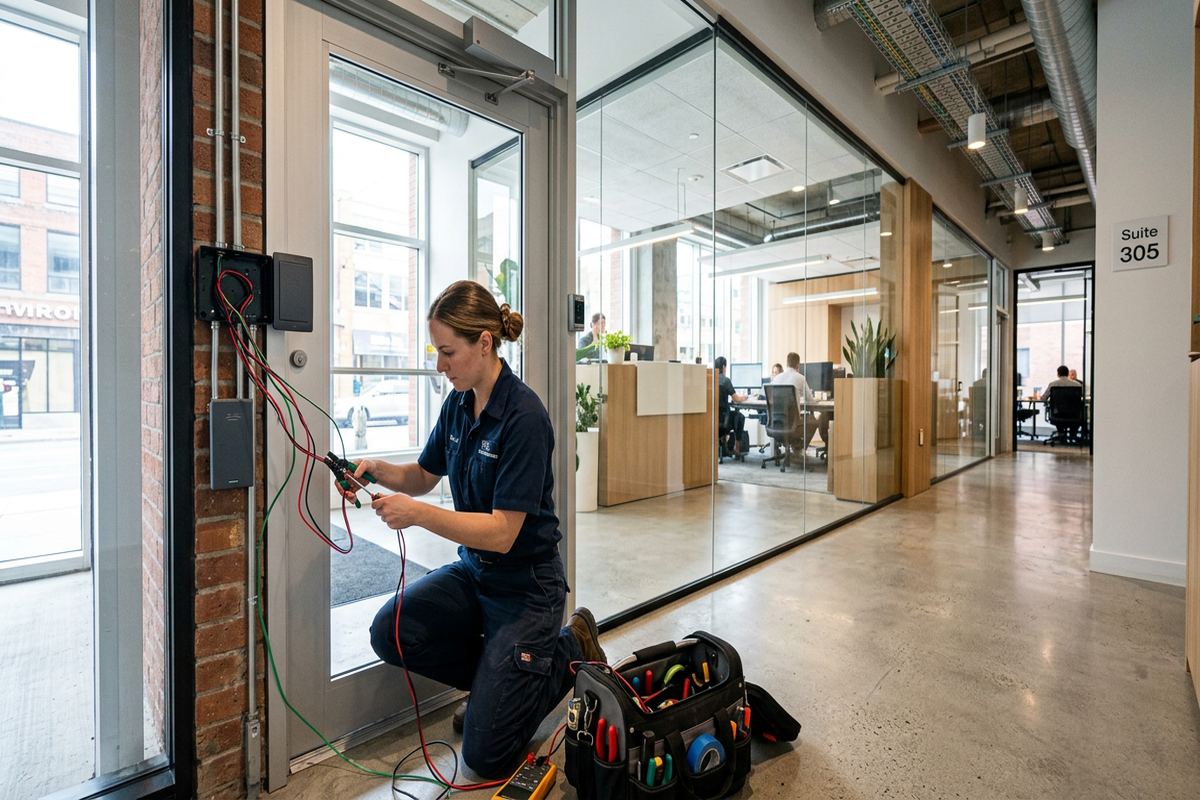
Access control only works properly when the physical opening closes, latches and releases as intended. During assessment, we examine the lock type, frame, door swing, closer action, latch alignment and available space for hardware. Heavy common-area doors may have worn hinges or closers that prevent reliable latching, particularly in older Cornwall properties. Adding a reader does not correct those mechanical issues. Where specialist work is required, the scope identifies coordination with the appropriate door, locksmith or electrical trade. This keeps responsibilities clear and avoids concealing a mechanical problem behind new electronic equipment.
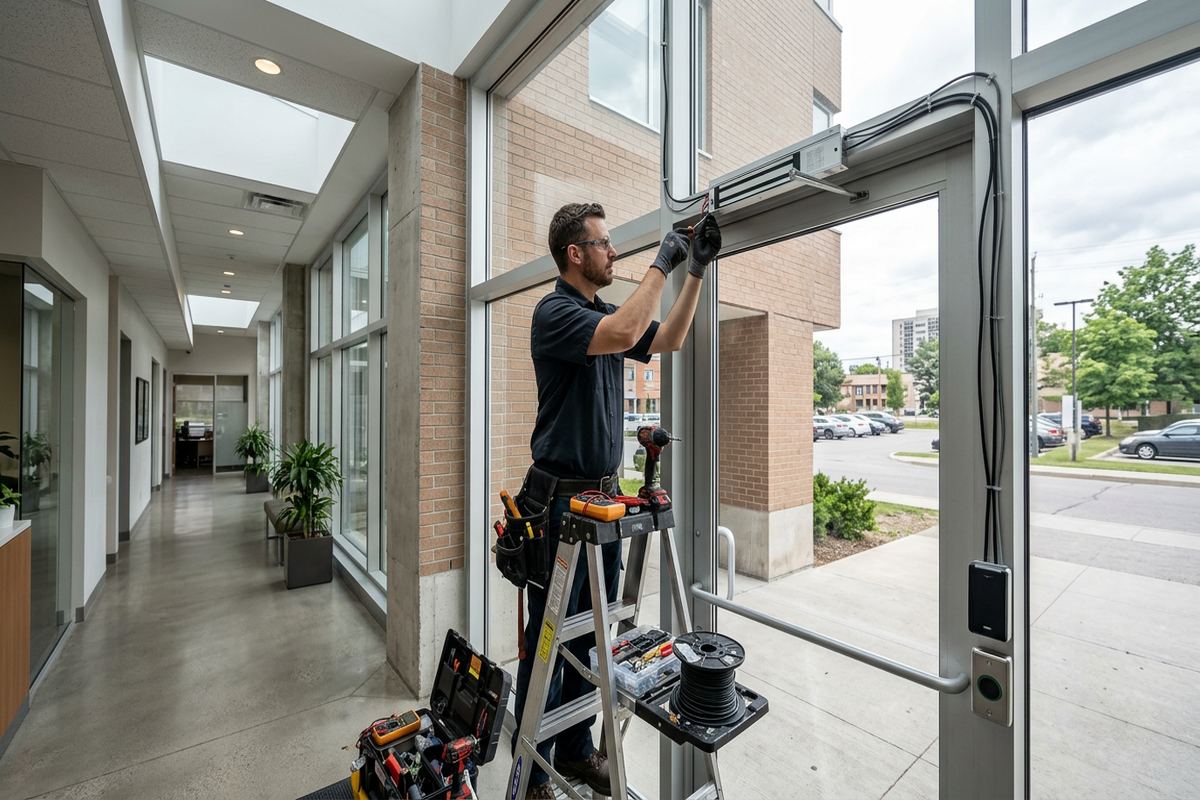
Controlled doors must continue to support safe egress and applicable building requirements. Hardware selection and release behaviour depend on the opening, occupancy and existing life-safety systems, not simply on whether management prefers a magnetic lock or electric strike. We review the intended operation and identify interfaces that require coordination with fire alarm or other qualified providers. Emergency release devices, request-to-exit functions and power-loss behaviour must be planned for each opening. Final arrangements remain subject to the property’s approvals and applicable authority requirements, especially where work changes a shared entrance or designated exit route.
Parking vestibules, amenity rooms, bicycle storage and service areas often need different hardware from a main lobby. A sheltered interior opening may accept equipment that would be unsuitable for an exposed exterior gate or river-facing entrance. We match components to the environment, traffic level and door construction while documenting exclusions for existing deficiencies. In Riverdale condominiums and other residential areas, quiet operation may also matter near occupied units. Careful placement of power supplies and controllers can reduce unnecessary disturbance while preserving service access for future inspection, adjustment or replacement.
- Lock and frame condition checked
- Closer and latch operation reviewed
- Egress behaviour planned by opening
- Life-safety interfaces clearly scoped
- Specialist trade coordination identified
Cornwall, Ontario
Condo access control systems in Cornwall, scoped in writing first
Book a site assessment and get equipment, routes, exclusions, and warranty on paper before anything is installed.
Cornwall Winters, Exterior Readers and Sealing
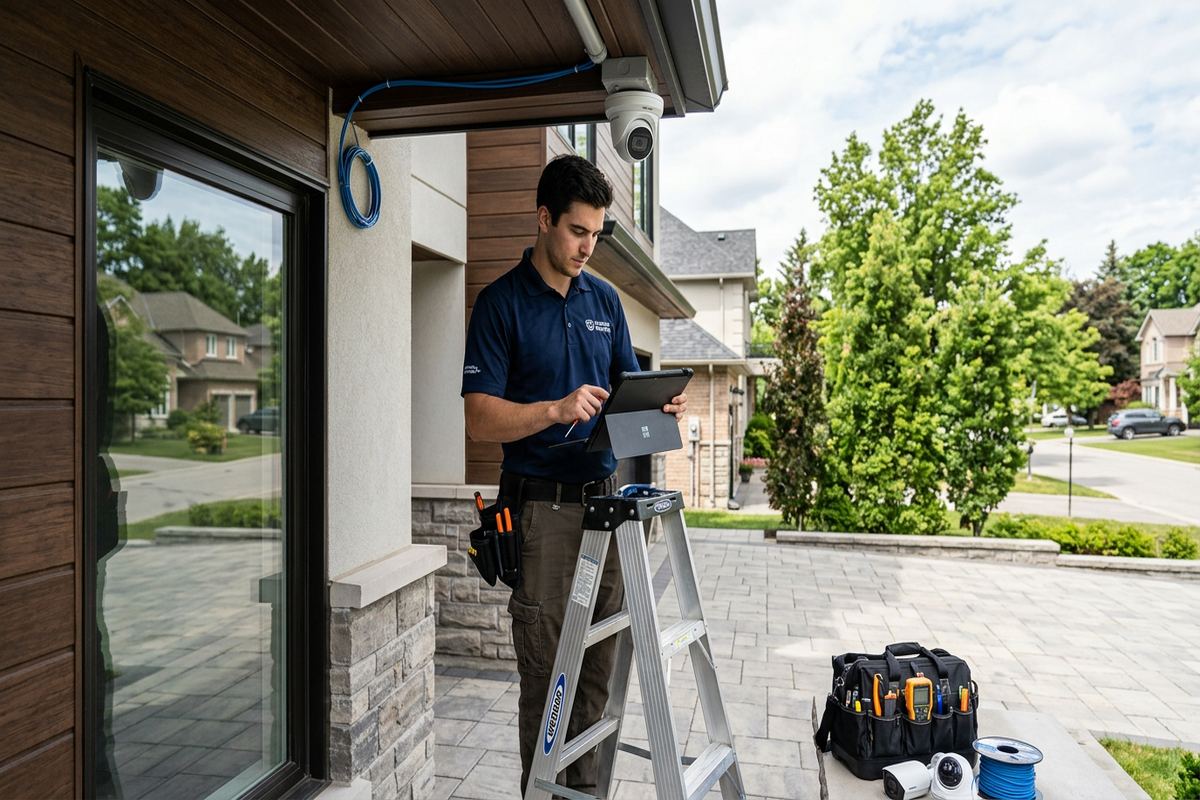
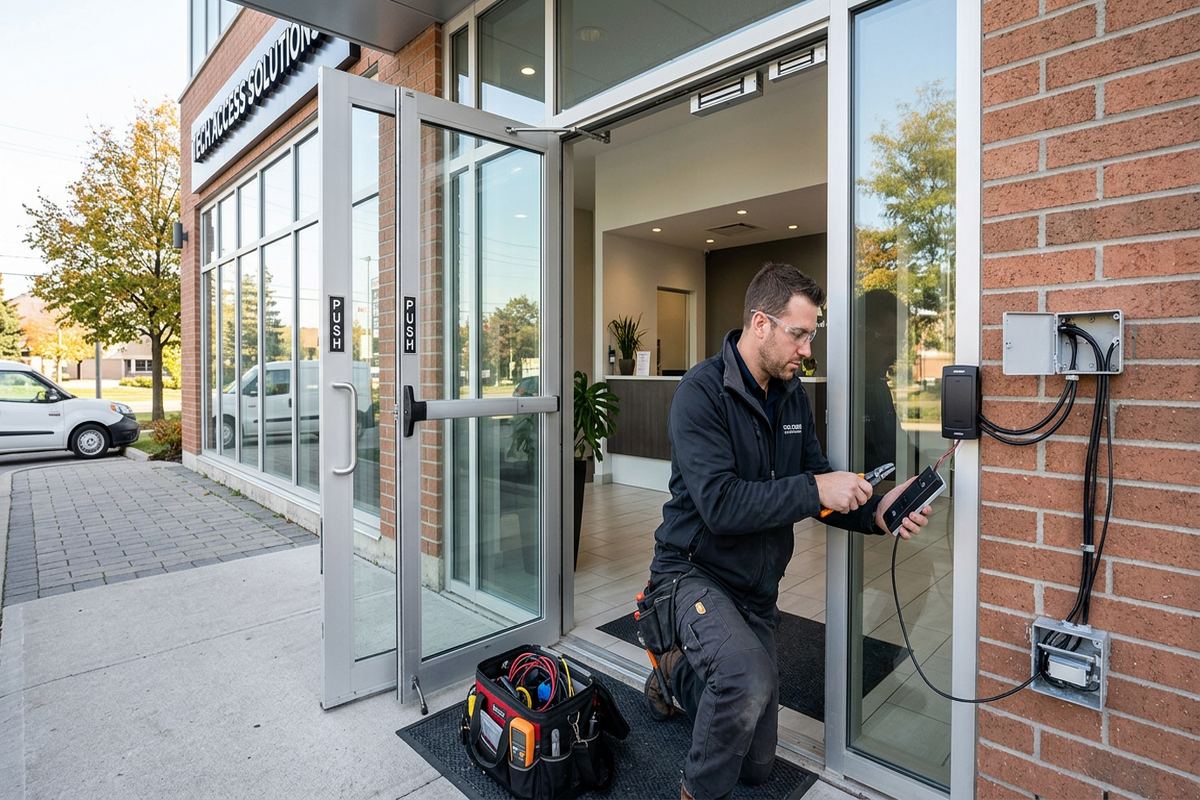
Freeze-thaw cycles can expose weaknesses in exterior mounting, cable entries and door alignment. For Cornwall installations, reader locations are assessed for rain, drifting snow, ice, direct exposure and the movement of exterior materials across seasons. Suitable devices still need careful installation: penetrations should be sealed, cables protected and mounting surfaces prepared so water is not directed into the wall assembly. We avoid relying on surface caulking as a substitute for a properly planned entry point. Existing openings are also inspected for corrosion, loose trim or deteriorated masonry that could undermine a secure installation.
Masonry and frame construction call for different fastening and routing methods. Older brick or block walls may require surface pathways or carefully selected penetrations, while frame walls can contain insulation, vapour barriers and hidden services that should not be disturbed casually. Riverfront homes and condominiums may face stronger moisture exposure at certain elevations, making reader position and enclosure selection especially important. The site assessment records the visible construction and proposes a practical route. If concealed conditions differ once approved work begins, management is informed before the scope is changed or additional openings are made.
Cold weather also affects the door itself. A reader can accept a valid credential while a shifted latch, iced threshold or weak closer prevents entry or secure relocking. For that reason, seasonal mechanical performance should be considered separately from electronic access events. Management needs a process for snow clearing, door inspection and reporting intermittent faults. We configure and test the access-control functions on site, but existing envelope and hardware maintenance remains important. Clear event descriptions and documented device names help staff distinguish a denied credential from a door that unlocked electronically but could not move correctly.
- Weather-appropriate reader placement
- Sealed exterior cable penetrations
- Masonry-specific fastening approach
- Protected surface pathways where needed
- Cold-weather door operation reviewed
Cabling and Controllers for Cornwall Condos
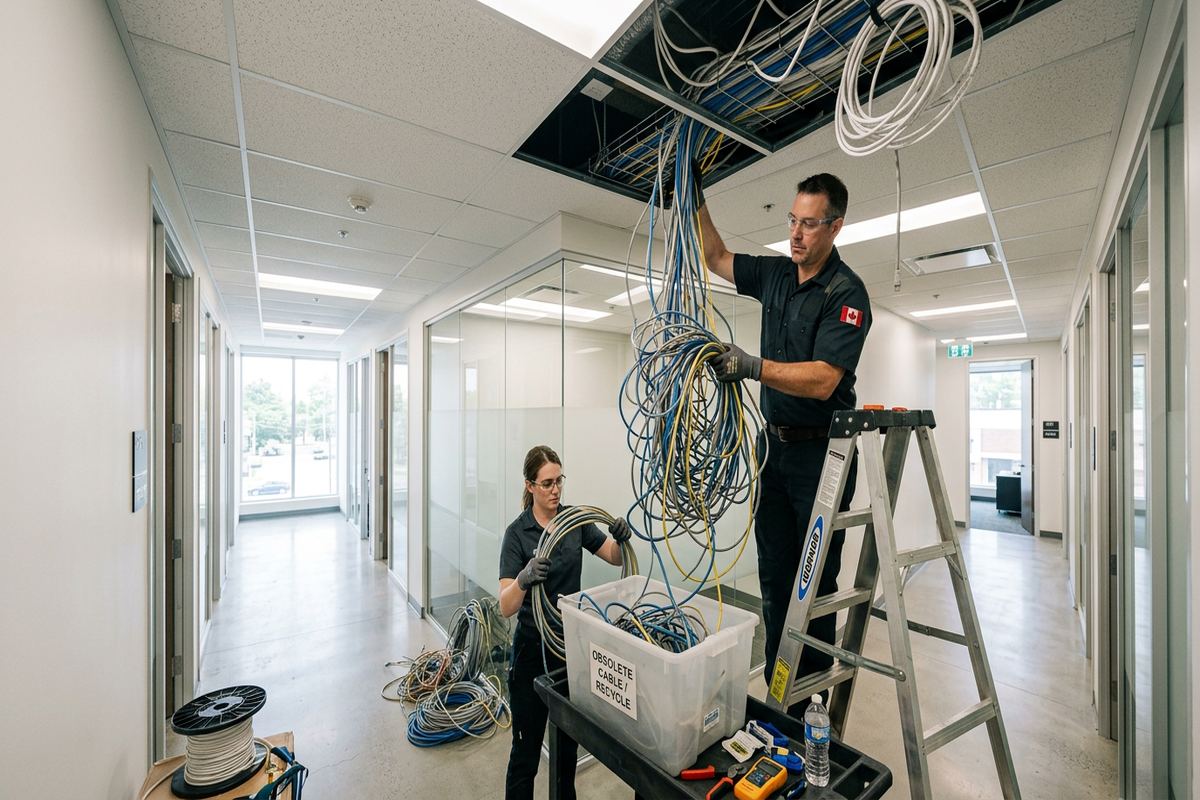
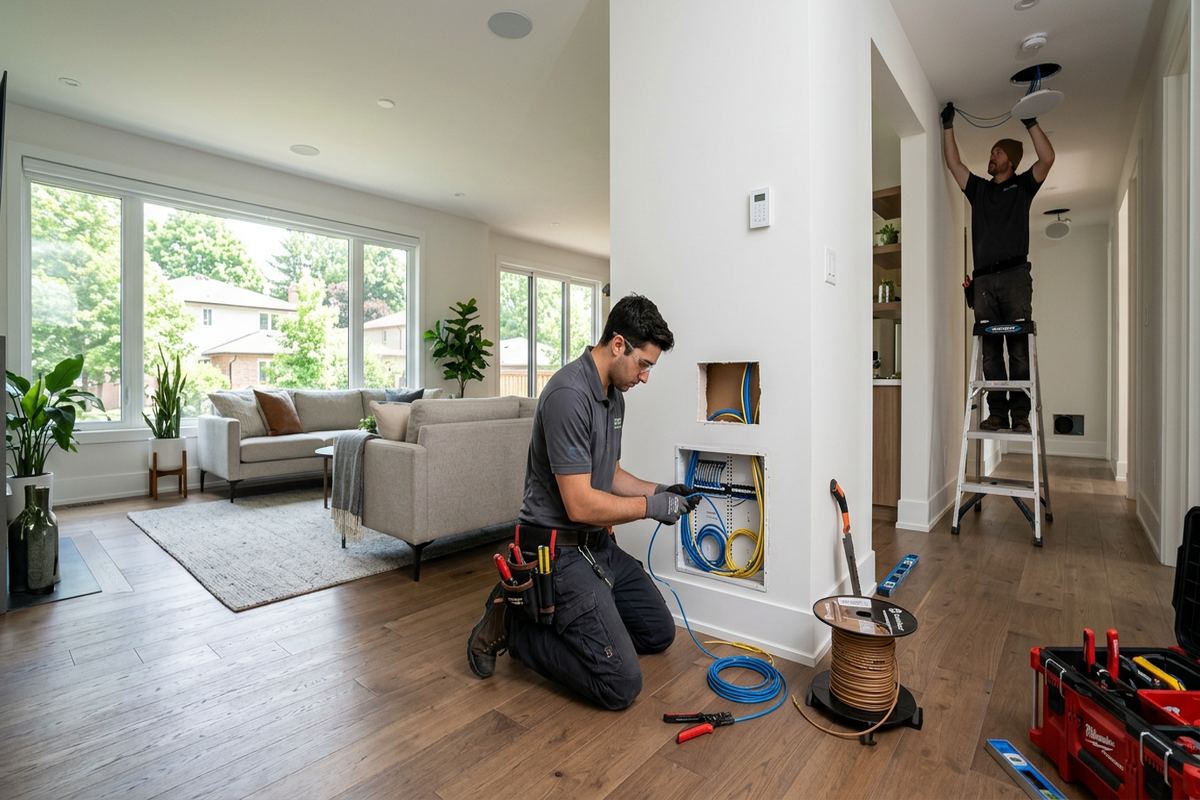
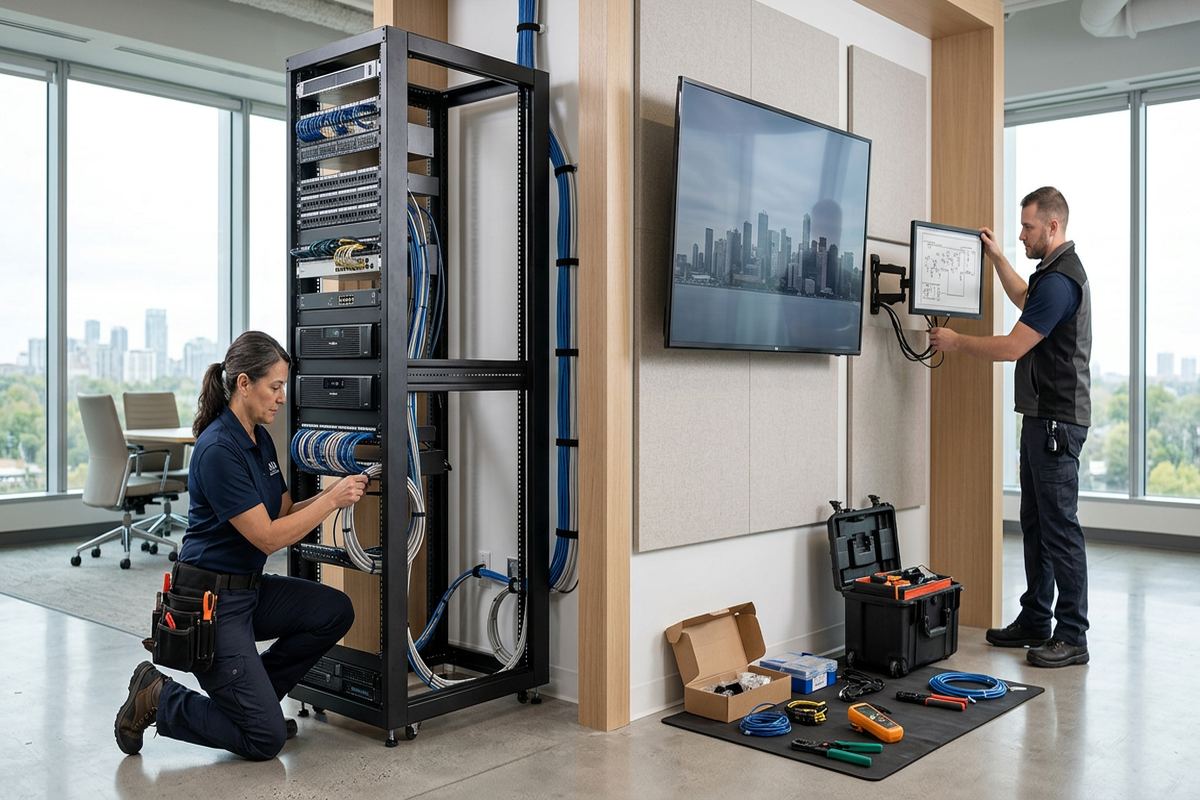
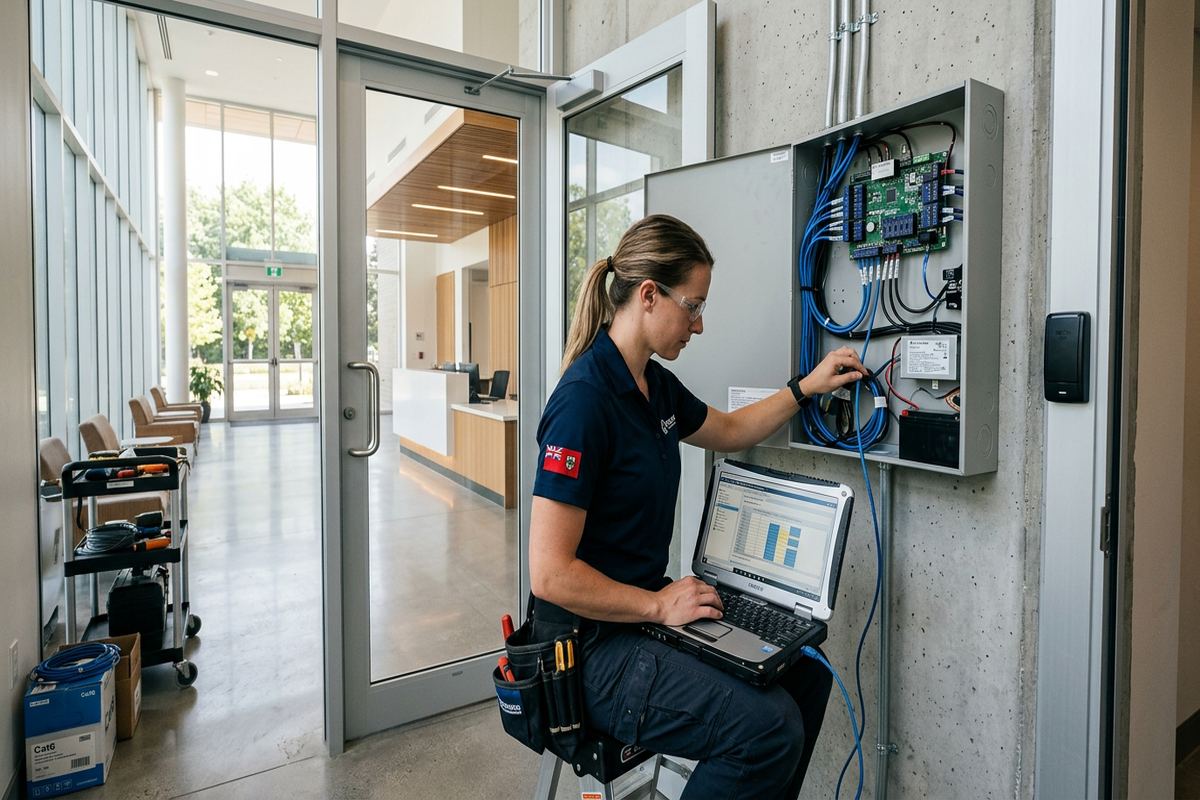
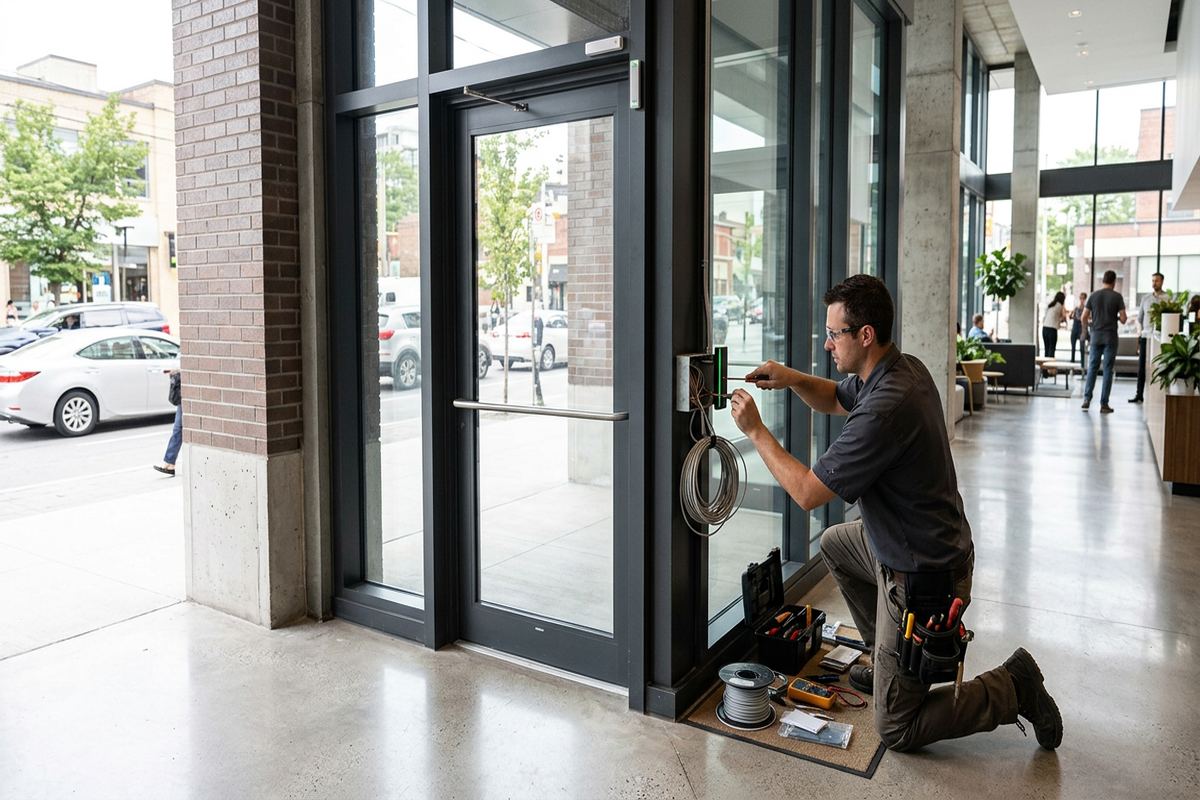
Reliable access control depends on cabling that can be traced, tested and serviced. UnifiedLink installs continuous labelled cable runs between approved field devices and control equipment, avoiding unnecessary hidden joins. Routes are selected after inspecting ceilings, risers, utility rooms and finished common areas. In an older Cornwall condominium, the neatest visible route may not be physically available behind the wall, so alternatives are discussed before installation. Labels correspond with the drawings and controller records, allowing future technicians or building staff to identify each reader, lock interface, door contact and request-to-exit connection without guesswork.
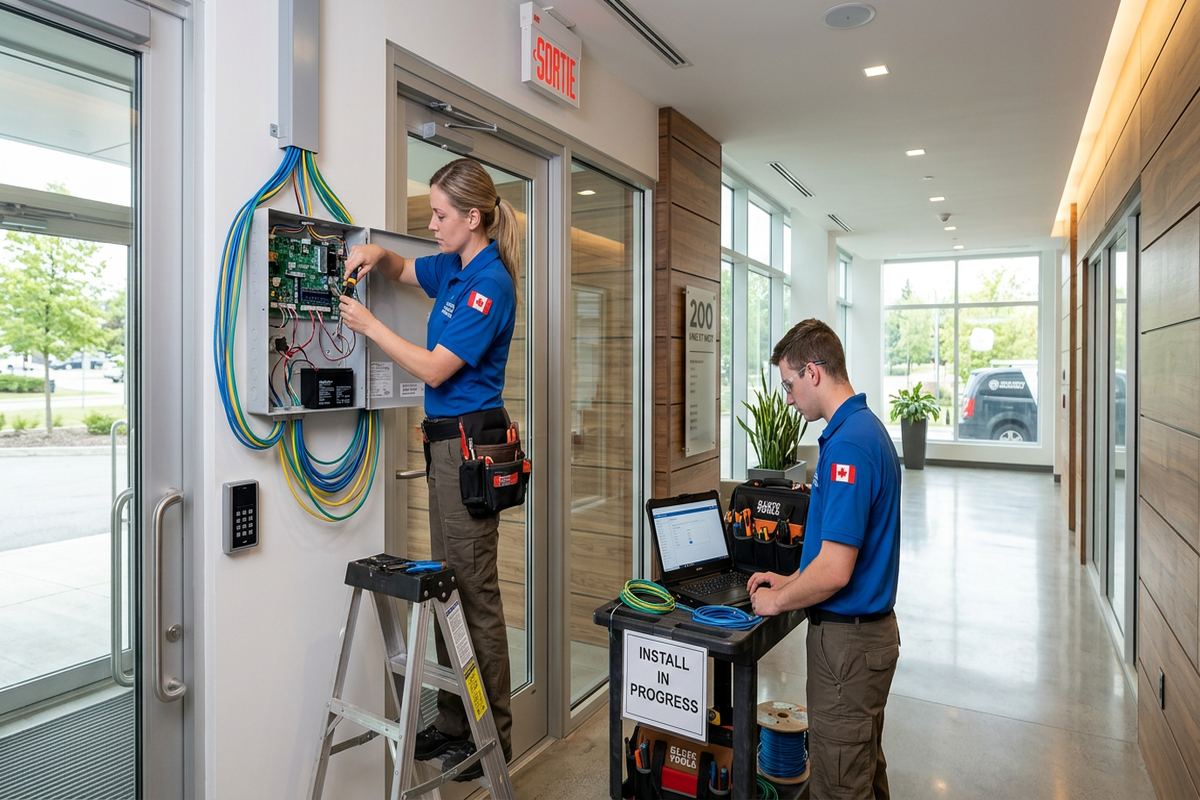
Controller and power-supply locations need suitable space, access and environmental conditions. Placing equipment in a resident-accessible closet, damp room or congested ceiling can create security and maintenance problems. We look for an approved service area with power, network availability where required and room for labelled terminations. Any electrical work outside the low-voltage scope is identified for coordination. Battery-backed operation, where included, is selected and documented according to the system design; it should not be described as indefinite backup. Management receives practical information about what continues operating during a local power or network interruption.
Network-connected platforms require decisions about addressing, remote access, software administration and responsibility for updates. The condominium’s IT provider or designated representative may need to supply network details, firewall changes or an approved connection. We do not assume permission to place access equipment on an existing resident or business network. For mixed-use properties near Cornwall Centre or commercial strips, separation between condominium, tenant and landlord systems may be especially important. The scope records these boundaries, along with any dependencies on internet service or hosted functions, so ownership and support responsibilities remain understandable after installation.
- Continuous labelled low-voltage runs
- Traceable device and controller records
- Approved secure controller location
- Network responsibilities documented
- Power dependencies explained
Managing Shared Areas and User Permissions
A useful permission structure reflects how people move through the property. Residents may need the main entrance, their parking level and selected amenities, while cleaners or maintenance contractors may need limited doors during defined hours. Rather than issuing broad access by default, we build approved groups around actual responsibilities. This approach can reduce unnecessary access without making routine administration difficult. Guindon Park area properties with storage, recreation spaces or detached common facilities may require additional scheduling and connectivity planning. Management reviews the proposed groups before enrolment, because technology should implement an approved policy rather than create one informally.
Event records can help management investigate reported access attempts, but they need correct time settings, consistent door names and controlled administrator permissions. We configure these details on site and demonstrate the normal workflow for searching events, adding a credential and removing a user. Records should be handled according to the condominium’s privacy and retention obligations. An access log shows what the system recorded; it does not by itself prove who physically used a shared credential or explain activity beyond the controlled opening. Clear expectations prevent event history from being treated as a substitute for broader incident procedures.
Common amenities require practical rules as well as electronic restrictions. A scheduled credential can limit normal entry to a room, yet residents may still hold a door open or admit another person. Door contacts and configured alerts can provide useful information where included, but staff must decide who receives notifications and what action follows. In Cornwall buildings with part-time management, excessive alerts may be ignored if thresholds are poorly planned. We therefore review desired events and schedules during configuration, focusing on information the designated administrator can realistically monitor and use.
- Role-based door permissions
- Time-limited service access
- Consistent door and user naming
- Event search workflow demonstrated
- Practical alert settings
Upgrades for Existing Cornwall Entry Systems
Replacing an ageing entry system starts with determining what can be retained safely and supportably. Existing readers, locks, cabling, power supplies and door contacts may use different standards or have undocumented modifications. We test accessible components and identify compatibility limits before proposing reuse. In Cornwall’s older condominium stock, abandoned wires and mixed generations of equipment are common possibilities, but appearance alone does not confirm function. The written scope states which components remain, which are replaced and which could not be verified. This prevents a partial upgrade from being presented as an entirely new system.
A staged upgrade may be appropriate when management needs to address priority entrances before secondary rooms. Phasing must still account for controller capacity, credential compatibility, network architecture and how old and new systems operate during transition. We document temporary dependencies and avoid assuming that every legacy card or fob can be transferred. For mixed-use properties near the Business Park or industrial units, landlord and tenant responsibilities should be settled before shared doors are changed. A clear boundary is particularly important where loading, office and residential users follow different schedules or rely on separate management contacts.
Migration planning includes the human side of the change. Boards or managers need a method to verify residents, issue new credentials, collect obsolete ones where appropriate and communicate the activation date. We can configure the approved database and demonstrate administration, but the property remains responsible for authorizing users. Testing covers each included opening, credential group and configured schedule. Any retained mechanical key override should also be managed by the property. A documented cutover reduces confusion at entrances and gives staff a reference when a resident reports that a credential was not issued or assigned correctly.
- Legacy equipment compatibility review
- Retained components listed clearly
- Phased migration options
- Credential cutover planning
- Mixed-use responsibilities documented
Installation, Testing and Handover in Cornwall
Once the scope and property approvals are in place, installation is coordinated around occupied common areas and approved working access. Residents may need advance notice for temporary door restrictions, noise or service interruptions. UnifiedLink follows the documented routes, installs continuous labelled cable runs and configures included equipment on site. Where an unexpected concealed condition affects the approved plan, we raise it with the designated contact rather than improvising an undocumented route. Cornwall condo boards and managers receive one accountable contractor for the included low-voltage work, while separately required trades remain clearly identified in the scope.
Testing is performed at the opening, not only at the controller. We confirm reader response, credential permissions, door release, relocking, contact status, request-to-exit operation and configured schedules for included devices. Exterior doors are checked for normal closure, although existing mechanical or seasonal deficiencies may require separate correction. Approved integrations are tested with the responsible provider where coordination forms part of the scope. Results are recorded against understandable door names, helping management connect an event or fault with its physical location. Deficiencies outside the contracted work are reported rather than hidden through software adjustments.
Handover provides the condominium with its own administrator credentials and an as-built record showing installed device locations and relevant cable information. We review routine tasks such as adding and disabling users, changing approved schedules and locating event records. Equipment ownership, warranty details and exclusions follow the written scope, giving future board members or property managers a usable reference. Requests sent during business hours are answered the same day, while after-hours requests are answered the next business day. Site assessment timing depends on the service and travel distance, including travel to the Cornwall property.
- Occupied-building work coordination
- On-site functional testing
- Customer-owned administrator credentials
- As-built system record
- Equipment ownership and warranty documented
Cornwall neighbourhoods we cover
- Le Village
- Riverdale
- Cornwall Centre
- Guindon Park area
- Business Park
Condo access control systems in Cornwall — common questions
Can you replace our condo’s existing fob system?
Yes, after assessing the existing readers, controllers, locks, cabling and credential format. Cornwall properties may contain several generations of equipment or undocumented changes, so compatibility cannot be assumed. The written scope identifies what can remain, what must be replaced and how residents will move to the new system. Pricing is provided after the site assessment.
Do we need condo board approval?
Work on common entrances, shared wiring pathways and condominium-owned hardware normally requires authorization from the appropriate board or property representative. UnifiedLink documents proposed device locations, cable routes and exclusions so the decision-makers can review them. In Cornwall, additional coordination may be needed for older masonry, finished common areas, tenant spaces or any opening connected with a life-safety system.
Will exterior readers work through Cornwall winters?
Equipment must be selected and installed for its location, but the reader is only one part of winter reliability. We assess exposure, mounting, sealed penetrations, cable protection and door condition. Cornwall freeze-thaw cycles can affect alignment, closers and thresholds, so mechanical maintenance remains necessary even when the electronic system is operating correctly.
Can residents use phones instead of fobs?
Mobile credentials may be available depending on the selected platform, building connectivity and management requirements. They can suit some Cornwall condominiums, but boards should consider resident support, phone compatibility, privacy, recurring administration and outage behaviour. We compare practical credential options during planning and configure the approved method using customer-controlled administrator access.
Can access be limited by door and time?
Yes, supported systems can assign approved users to specific doors and schedules. A cleaner might receive weekday service access, while residents receive entrances and selected amenities. We help Cornwall property managers establish clear groups and naming conventions. The property remains responsible for deciding who is authorized and for maintaining user records after handover.
What do we receive after installation?
The Cornwall property receives on-site configuration, testing of included openings, customer-owned administrator credentials and an as-built record. We also review routine user administration and document equipment ownership, warranty information and exclusions according to the written scope. Continuous labelled cable runs and understandable device names make later troubleshooting, additions and management changes more practical.
Coverage in Cornwall is confirmed against the address before we quote. See everything we install in Cornwall or the province-wide condo access control systems page.