UnifiedLink installs whole-home audio systems for houses, chalets, condos, short-term rentals and resort properties in Collingwood. We plan speaker locations, controls, equipment placement, cable routes and network requirements before installation. Each system is configured on site and handed over using the customer’s own accounts and credentials.
Whole-Home Audio Planning in Collingwood
A practical whole-home audio system starts with how each room is used, not with a speaker count. During a site assessment, UnifiedLink reviews listening areas, preferred sources, control methods, available wiring paths and locations for amplifiers or network equipment. In a Collingwood house, the plan may cover a kitchen, great room, bedrooms, deck and garage while keeping each area independently controlled. We also identify rooms where television sound should share speakers with music, because that requirement affects equipment selection, wiring and the placement of local controls.
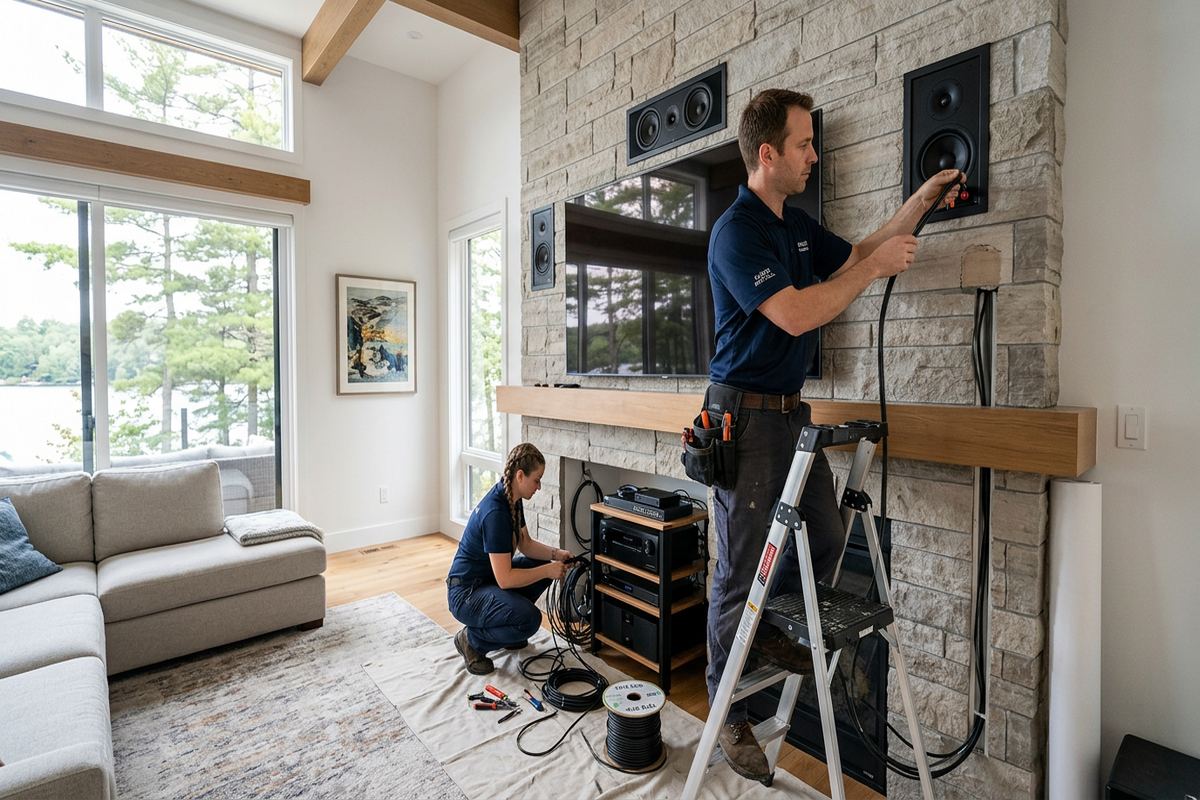
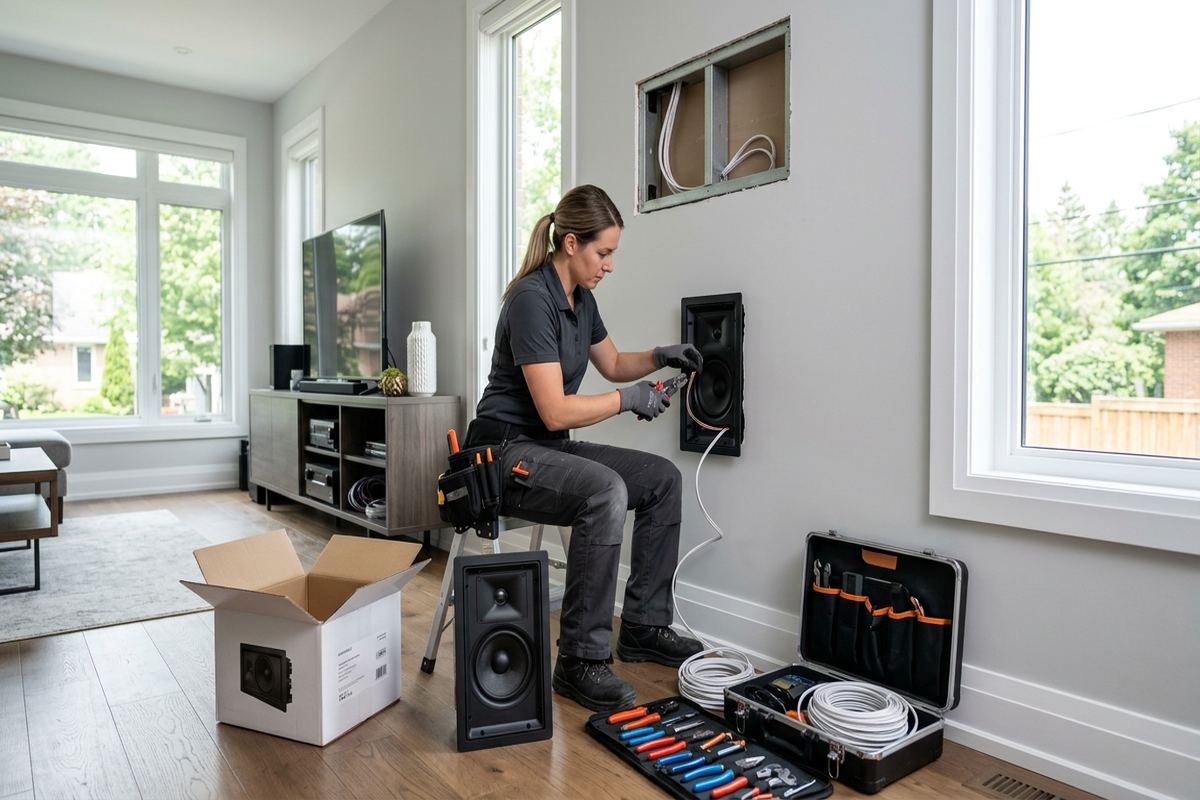
Speaker placement has to account for ceiling height, room shape, furniture, glazing and reflective finishes. Open-concept homes and chalets can produce uneven volume when speakers are positioned only for visual symmetry. Vaulted ceilings may require angled architectural speakers, surface-mounted models or carefully placed wall speakers. Before cutting finished surfaces, we check framing, mechanical services and suitable cable paths where accessible. The written scope records proposed device locations, equipment, routes, exclusions, ownership and warranty information so the installation can be reviewed before work begins.
Different users often need different ways to operate the same system. Permanent residents may prefer wall controls and mobile applications, while short-term rental operators usually need a simpler interface that guests cannot easily misconfigure. Resort properties may also require remote access for checking equipment status or helping an occupant select the correct source. We define who will administer the system, which streaming accounts will be used and whether guest access is appropriate. Final pricing follows the site assessment because construction, cable access and the number of independent zones materially affect the work.
- Room use and listening-area review
- Proposed speaker and control locations
- Amplifier and equipment-space planning
- Written scope before installation
- Customer and guest access requirements
Speaker Zones for Collingwood Homes and Chalets
Zoning allows occupants to play different material at suitable levels in separate areas. A kitchen and dining space can operate together, while bedrooms, a home office and outdoor areas remain independent. For Collingwood chalets near the Blue Mountain area, a common arrangement connects the great room and kitchen while retaining separate control for sleeping areas and a patio. The correct design depends on daily routines, expected occupancy and whether several people will stream at once. We size the distribution equipment around those requirements rather than adding zones that provide little practical value.
Architectural speakers keep floors and furniture clear, but they are not automatically suitable for every surface. Older houses near Downtown Collingwood may contain plaster, masonry, renovations from different periods or concealed obstructions that complicate in-ceiling installation. Newer frame construction in Georgian Meadows can offer more predictable cavities, although insulation, engineered joists and vapour barriers still require careful handling. Where recessed speakers are impractical, surface-mounted speakers or freestanding equipment may provide a cleaner installation than extensive opening and repair of finished walls or ceilings.
Audio zones also need sensible volume limits and control permissions. A child’s bedroom, rental suite or shared outdoor area may require different restrictions from the main living space. We can configure zone names, source availability and normal operating levels during on-site setup, subject to the capabilities of the selected platform. For short-term rentals, controls should be understandable without exposing the property owner’s administrator account. The handover uses the customer’s own credentials, and the as-built record identifies speaker locations, cable destinations, equipment connections and relevant network details for future service.
- Independent room and area control
- Practical zone names and permissions
- Options for vaulted or finished ceilings
- Rental-friendly operating controls
- Documented speaker and cable locations
Wired Audio Cabling and Equipment Locations
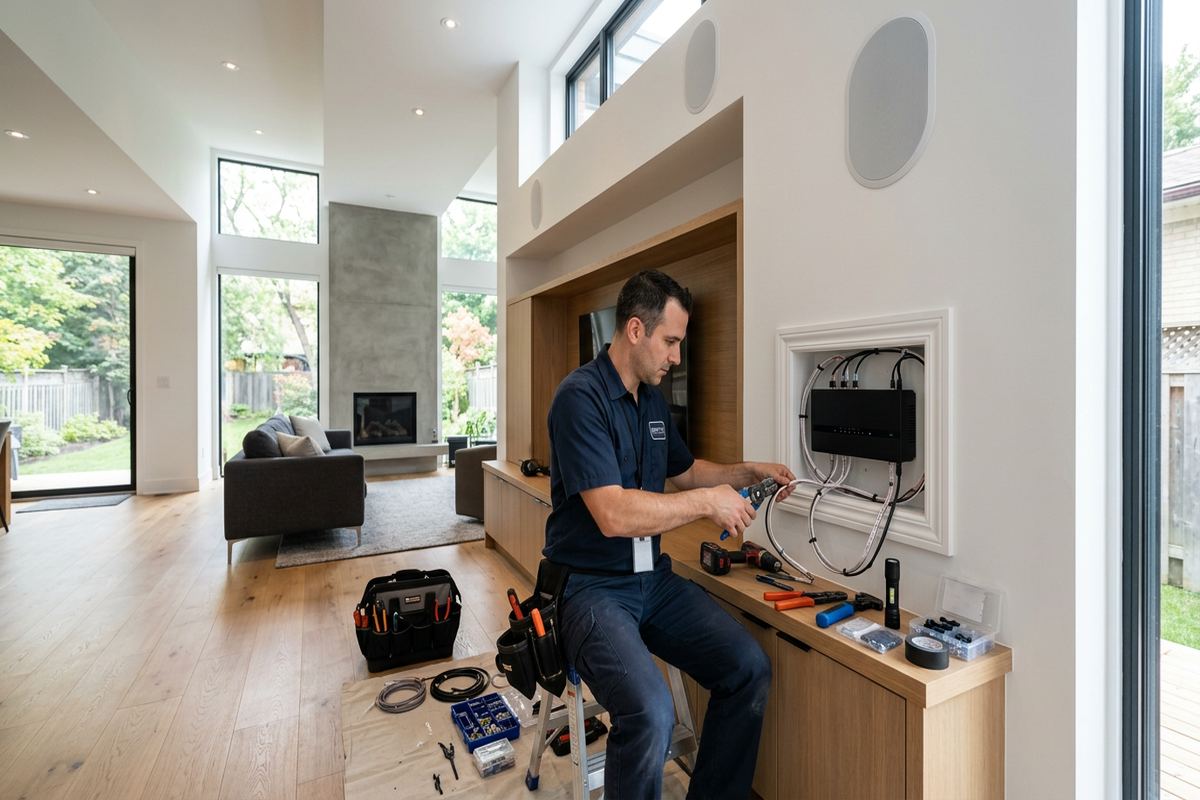
Reliable distributed audio depends on cabling that matches the speaker load, route length and installation environment. UnifiedLink installs continuous labelled cable runs rather than relying on undocumented joints hidden in walls. Each run is identified at the speaker and equipment ends, then recorded for handover. Centralized wiring can simplify maintenance because amplifiers, source devices and network connections remain together. In larger Collingwood properties, a local equipment point may be more practical for a distant wing, detached garage or lower level, provided ventilation, power, access and environmental conditions are suitable.
Cable routes differ considerably between masonry and frame buildings. Wood-frame walls often permit concealed routing through basements, attics or service spaces, although fire blocking and finished ceilings can limit access. Masonry construction may require surface raceway, strategic drilling or routes through adjacent framed sections. Exterior walls need particular care so the work does not compromise insulation, air barriers or water management. We discuss visible sections and required access before installation. Any openings are planned around the approved route rather than improvised after equipment has arrived at the property.
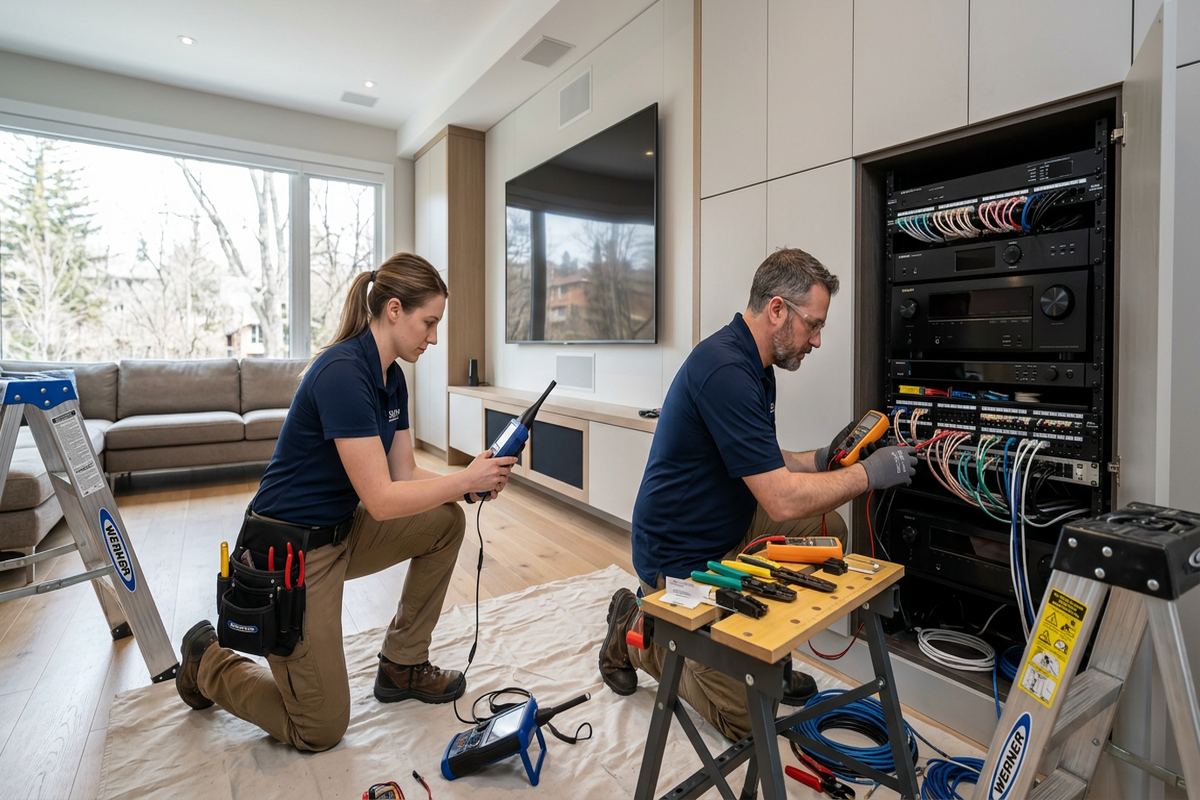
The main audio equipment should not be placed in a damp mechanical corner, an unconditioned attic or a cabinet without airflow. Amplifiers create heat, network devices require service access, and streaming equipment needs dependable connectivity. We review electrical receptacles, ventilation, shelf or rack space and the distance to the network core. In chalets and seasonal Collingwood homes, the location should remain within the equipment’s operating conditions when the property is vacant. The scope also distinguishes customer-owned source equipment from newly supplied components, reducing uncertainty during installation and later troubleshooting.
- Continuous home-run cable where specified
- Labels at both cable ends
- Central or distributed equipment layouts
- Route planning for masonry and framing
- Ventilation and service-access checks
Collingwood, Ontario
Whole-home audio installation in Collingwood, scoped in writing first
Book a site assessment and get equipment, routes, exclusions, and warranty on paper before anything is installed.
Wi-Fi and Streaming Audio in Collingwood
Streaming audio is only as dependable as the network carrying its control and media traffic. Large homes, chalets and resort properties can have weak areas caused by multiple floors, stone fireplaces, foil-backed insulation or long distances between rooms. A phone may show a Wi-Fi connection while still responding slowly when changing tracks or grouping zones. We review access-point coverage, equipment connections and network layout as part of planning. Fixed audio components are wired where practical, leaving wireless capacity available for phones, tablets and devices that genuinely need mobility.
Remote access matters in Collingwood short-term rentals and seasonal properties, but it must be configured deliberately. Owners may want to confirm that audio equipment is online, support guests or restart a managed device without visiting the property. That does not mean every guest should receive administrator access. We separate owner credentials from normal user controls where the platform permits and document the intended access method. Remote functions still depend on internet service, cloud-platform availability and properly operating local network equipment, so those dependencies are explained rather than treated as guaranteed.
A network review can also identify whether audio should share existing infrastructure or be supported by additional switching, cabling or access points. Lighthouse Point condos and other managed developments may have construction and network constraints that differ from detached homes. Building-provided internet, shared telecommunications spaces or restrictions on new cabling can shape the design. UnifiedLink coordinates the audio installation within the accessible private unit and identifies matters requiring condominium approval. We do not assume that a wireless speaker in every room will resolve coverage problems created by the building itself.
- Wi-Fi coverage review for audio controls
- Wired connections for fixed components
- Separate owner and guest access
- Remote-management planning
- Network dependencies documented
Outdoor Audio for Collingwood Conditions
Outdoor audio requires equipment and installation methods suited to exposure, rather than indoor speakers placed beneath an overhang. Collingwood winters bring freezing conditions, snow and repeated freeze-thaw cycles that can stress mounts, cable entries and poorly sealed penetrations. Speaker position should reduce direct exposure while directing sound toward the intended seating area. We select mounting locations based on structure, drainage, service access and neighbouring properties. Exterior equipment ratings, mounting hardware and cable types are reviewed for the specific location before they are included in the written scope.
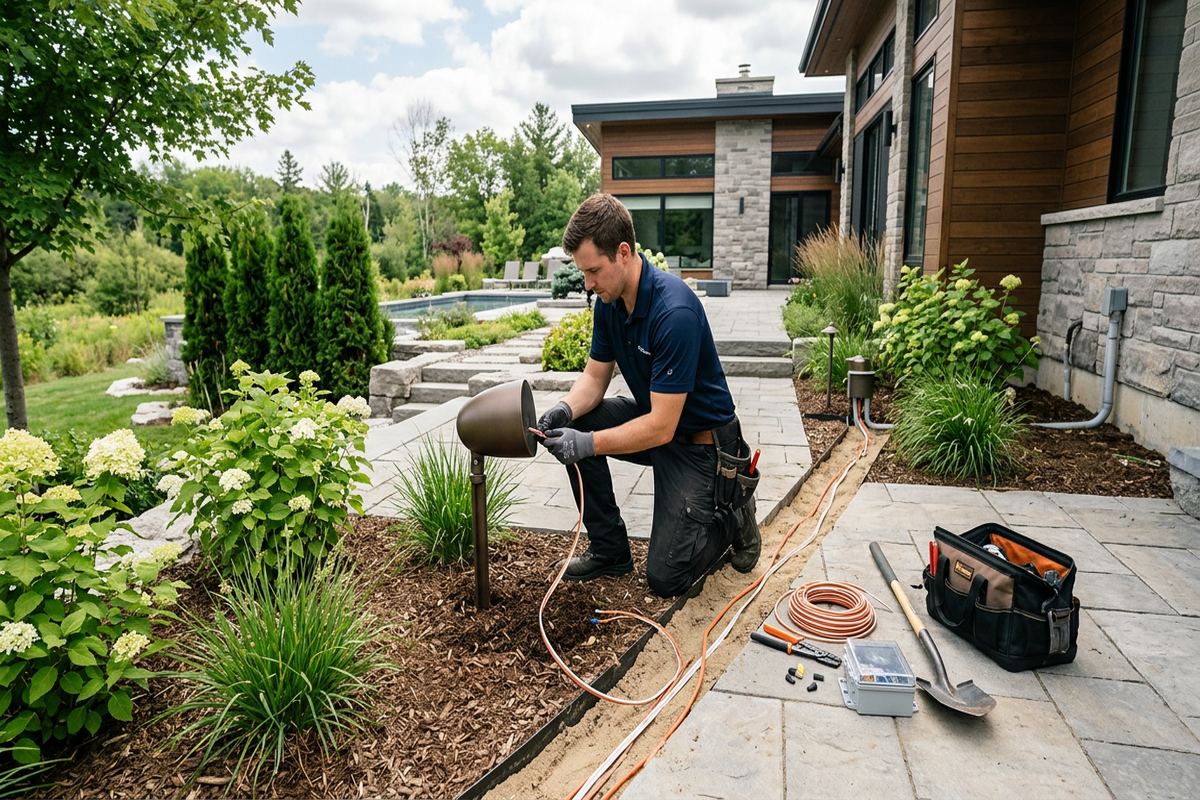
Penetrations through exterior walls must be drilled and sealed with the wall assembly in mind. A cable passing through wood siding, masonry, stucco or another cladding system needs a route that sheds water and avoids creating an entry point behind the finish. Masonry anchors must suit the substrate rather than the appearance of the surface alone. Cables are supported and protected from abrasion, snow-clearing activity and accessible damage. Where a concealed route would interfere with waterproofing or finished construction, we explain a visible raceway or alternative speaker position before proceeding.
Decks, patios and hot-tub areas benefit from multiple speakers operating at moderate volume instead of a small number playing loudly across the property. This improves coverage and can reduce sound spilling toward adjacent homes or shared resort spaces. Creekside and Blue Mountain area properties may have close neighbours, rental occupants or irregular outdoor layouts that make direction especially important. Outdoor zones should also have convenient shutoff and volume control. The final configuration identifies the zone clearly, tests normal operation and explains seasonal care for exposed speakers and connections.
- Weather-suitable speakers and hardware
- Sealed exterior cable penetrations
- Mounting planned for freeze-thaw cycles
- Even coverage at moderate volume
- Separate outdoor zone control
Audio for Condos, Rentals and Resort Properties
Condominiums require a different planning process from detached houses because ceilings, exterior walls and common systems may fall under building rules. Before work in a Collingwood condo, the owner should confirm alteration requirements, permitted working hours and any restrictions on drilling or cable routing. Properties at Lighthouse Point or other resort developments may also have concrete construction that limits concealed speaker placement. We can prepare a defined scope and proposed locations for review, but authorization remains the owner’s responsibility. Surface-mounted or furniture-based solutions can reduce invasive work when approvals are limited.
Landlords and short-term rental operators need an audio system that is durable, understandable and recoverable after guest use. Shared tablets can disappear, personal accounts can remain signed in, and unrestricted settings can lead to support calls. A better design establishes owner-controlled administration, straightforward guest playback and clear zone labels. Reliable Wi-Fi coverage remains essential because guests will arrive with different phones and applications. During handover, the customer receives the system under their own credentials, along with operating guidance and an as-built record that helps a property manager identify installed components.
Resort and seasonal properties may sit unoccupied for extended periods, so unnecessary complexity should be avoided. Equipment that depends on several consumer remotes, temporary wireless links or one person’s private account becomes difficult to support. We plan consistent controls and accessible equipment locations, then test grouping, source selection and volume operation on site. If remote access is included, its limits and account requirements are documented. Audio equipment cannot compensate for an offline modem or interrupted internet service, but a clear network layout makes it easier to identify where a problem begins.
- Condo approval requirements identified
- Low-impact installation options
- Owner-controlled rental administration
- Simple guest playback methods
- As-built information for property managers
Commercial Audio Installation in Collingwood
Whole-space audio is also useful in Collingwood shops, offices, clinics, hospitality spaces and customer-facing businesses. Commercial strips often combine finished retail areas with back rooms, suspended ceilings and neighbouring tenancies, creating different routing and volume requirements from a house. We identify public zones, staff-only controls, equipment security and expected sources before selecting a layout. Background music should remain even enough that staff do not raise one speaker to cover a distant area. The scope can also separate waiting, retail, office and patio areas where independent operation is appropriate.
Industrial units may provide open cable routes, but high ceilings, machinery, dust and large reflective surfaces affect speaker choice and intelligibility. A speaker intended for a quiet living room may not provide useful coverage in a workshop or warehouse bay. We review mounting height, ambient noise, protected equipment locations and routes that avoid operational hazards. Where audio is secondary to paging or life-safety systems, those functions must remain clearly separated unless specifically designed as an integrated compliant system. Existing landlord infrastructure is not altered without the required authorization.
Tenant improvements need coordination with lease conditions, property management and other trades. Ceiling work may interact with lighting, sprinklers, heating equipment and demising walls, while core drilling or exterior mounting can require landlord approval. UnifiedLink provides one accountable contractor for the defined low-voltage audio scope and records exclusions where another trade is responsible. Requests sent during business hours are answered the same day; after-hours requests are answered the next business day. Site assessment timing depends on the service requirements and travel distance to the Collingwood property.
- Retail and office audio zoning
- Coverage planning for high ceilings
- Secure staff-only equipment locations
- Coordination with landlords and trades
- Clear separation from life-safety systems
Collingwood Installation, Configuration and Handover
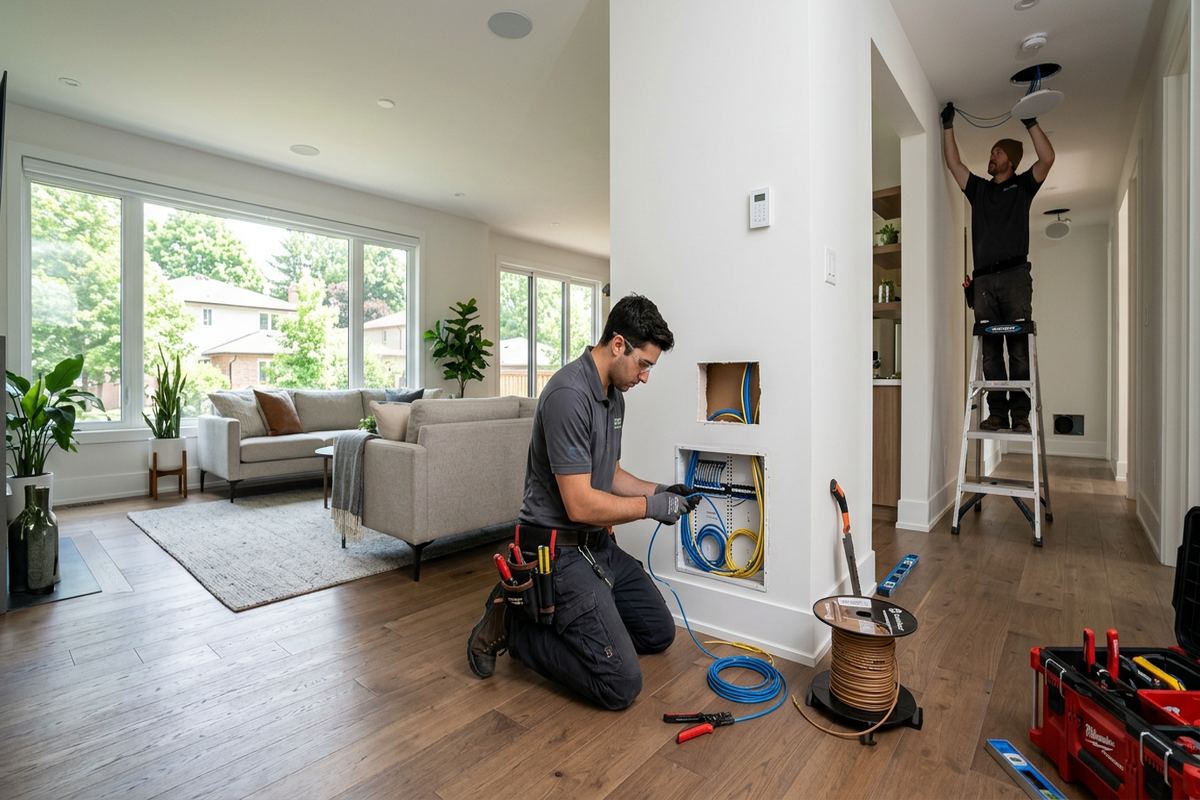
Once the scope is approved, installation follows the documented speaker positions, cable routes and equipment locations. Site conditions can reveal concealed framing, blocked cavities or previous renovations that were not visible during assessment. If a material change is needed, we review the alternative rather than moving devices without discussion. Cables are installed as continuous labelled runs where specified, speakers are secured to suitable structure, and equipment is arranged for ventilation and service. Finished areas are treated differently from open renovations, with access expectations and exclusions stated in the scope.
Configuration takes place on site using the customer’s network and accounts. We name zones clearly, connect approved sources, set available controls and test normal playback in each area. Where television audio is included, we verify the selected connection method and explain how the television, audio platform and source remotes interact. Network quality, streaming subscriptions and third-party cloud services remain external dependencies. The objective is a system the owner can operate without relying on installer-owned credentials, undocumented settings or a personal account belonging to a tenant, guest or previous contractor.
Handover completes the Collingwood installation with practical records and operating guidance. The customer receives an as-built record showing installed device locations, cable destinations and relevant equipment connections, together with the written ownership and warranty information from the scope. We demonstrate everyday functions such as choosing a room, grouping zones, changing sources and adjusting outdoor volume. Any known limitations are recorded. This process gives homeowners, business operators and property managers a usable reference when internet service changes, rooms are renovated or another authorized person needs to understand the system.
- Installation against an approved scope
- On-site system and zone configuration
- Testing with customer-owned accounts
- Operating demonstration at handover
- As-built cable and device record
Collingwood neighbourhoods we cover
- Downtown Collingwood
- Blue Mountain area
- Georgian Meadows
- Creekside
- Lighthouse Point
Whole-home audio installation in Collingwood — common questions
Can you install audio in an existing Collingwood home?
Yes. Existing homes can often support concealed or partly concealed wiring, but access depends on framing, finished ceilings, insulation and previous renovations. Older Downtown Collingwood properties may require surface-mounted speakers or discreet raceway where plaster or masonry prevents practical cable fishing. A site assessment is completed before pricing so proposed routes, access requirements and visible sections can be documented.
Will whole-home audio work with my current Wi-Fi?
It may, but coverage should be checked rather than assumed. Collingwood chalets and resort properties often have multiple levels, stone features and distant outdoor areas that weaken wireless performance. UnifiedLink reviews the network layout and wires fixed audio components where practical. If access-point or cabling changes are needed, they are included in the written scope before installation.
Do I need condo or landlord approval?
Approval may be required when work affects ceilings, concrete, exterior walls, common elements or building systems. Collingwood condo owners and commercial tenants should confirm alteration rules, working hours and documentation requirements with the condominium corporation or landlord. UnifiedLink can provide proposed device locations and a defined low-voltage scope, but the property owner or tenant remains responsible for obtaining authorization.
Can guests use the audio without my administrator account?
Usually, provided the selected audio platform supports suitable guest or household controls. For Collingwood short-term rentals, we plan straightforward playback without sharing the owner’s main administrator credentials. Exact options vary by manufacturer, streaming service and network design. The intended access method is configured on site, documented at handover and tested using the customer’s own accounts.
Can outdoor speakers remain installed through winter?
Outdoor-rated speakers can remain installed when the equipment, hardware, cable and connections are suitable for the location. Collingwood freeze-thaw cycles make mounting and sealing especially important. We assess exposure, drainage, wall construction and snow-related risks before selecting positions. Exterior penetrations are sealed for the relevant assembly, and seasonal care requirements are reviewed during handover.
What happens before you provide pricing?
UnifiedLink completes a site assessment before pricing. We review rooms, speaker positions, control needs, cable access, equipment space, Wi-Fi conditions and construction constraints. The resulting written scope covers equipment, cable routes, device placement, exclusions, equipment ownership and warranty. Assessment timing for a Collingwood property depends on the service requirements and travel distance.
Coverage in Collingwood is confirmed against the address before we quote. See everything we install in Collingwood or the province-wide whole-home audio installation page.