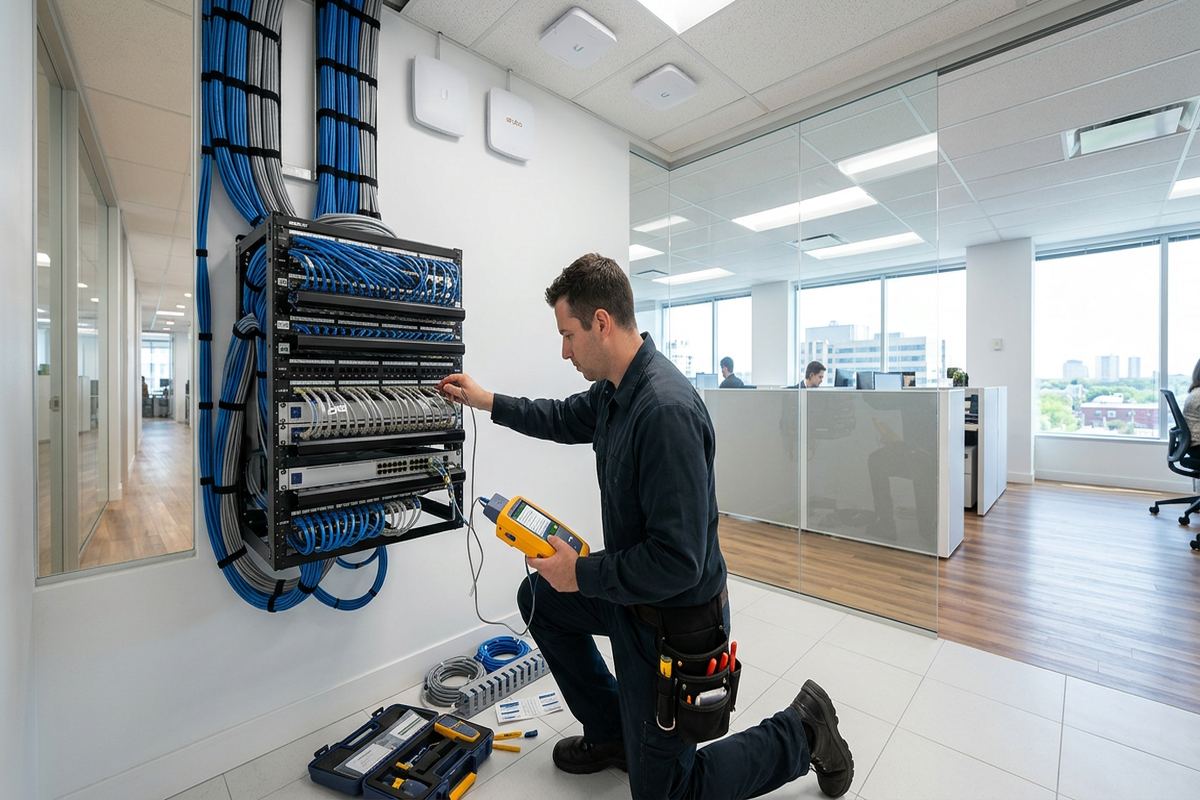
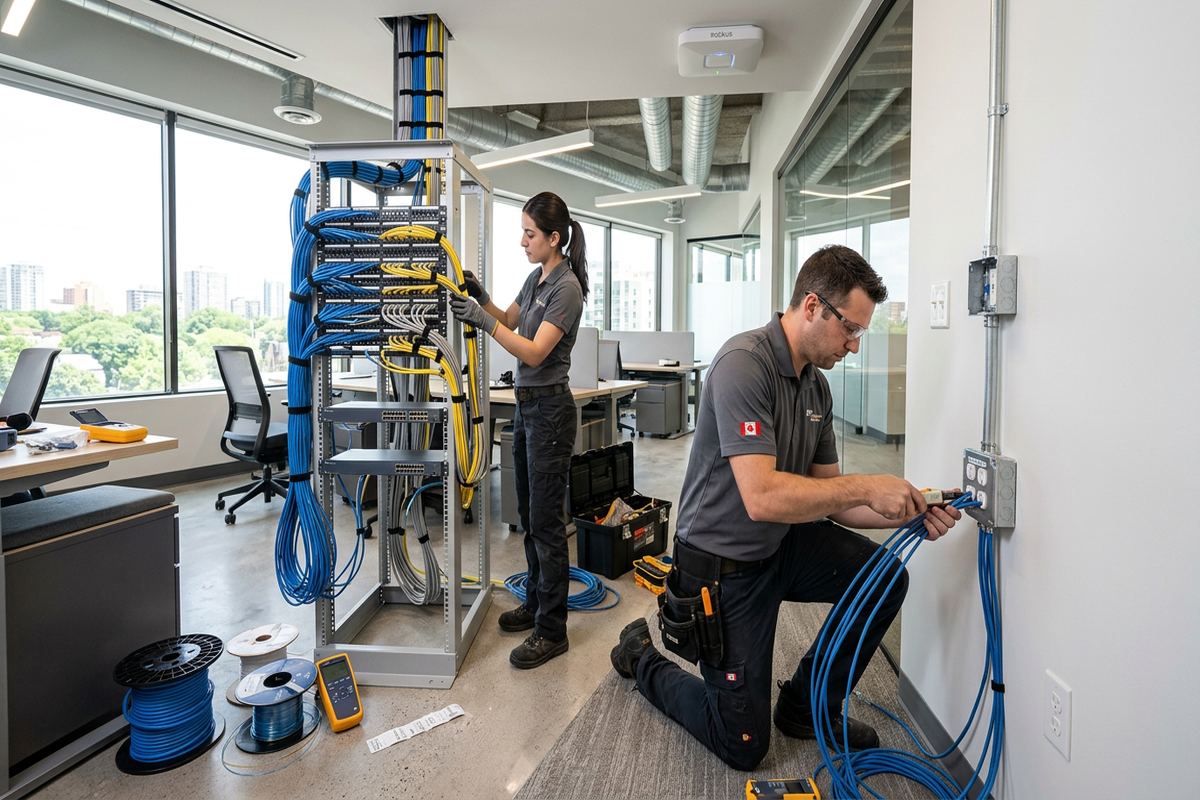
UnifiedLink installs structured cabling for homes, chalets, short-term rentals, resort properties and commercial spaces in Collingwood. We plan and install Ethernet, fibre, coaxial and low-voltage cabling for reliable internet, Wi-Fi, cameras, access control and connected equipment. Each project starts with a site assessment and finishes with labelled runs, testing and clear documentation.
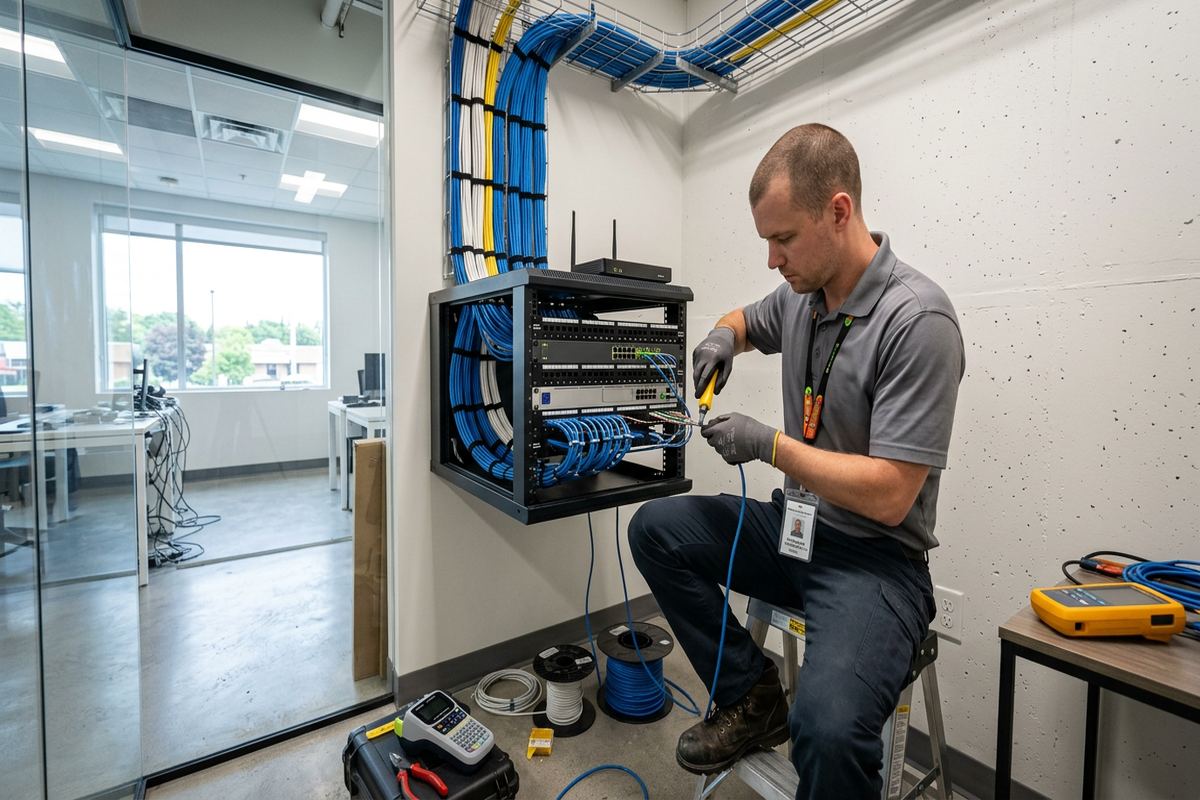
Structured Cabling for Collingwood Properties
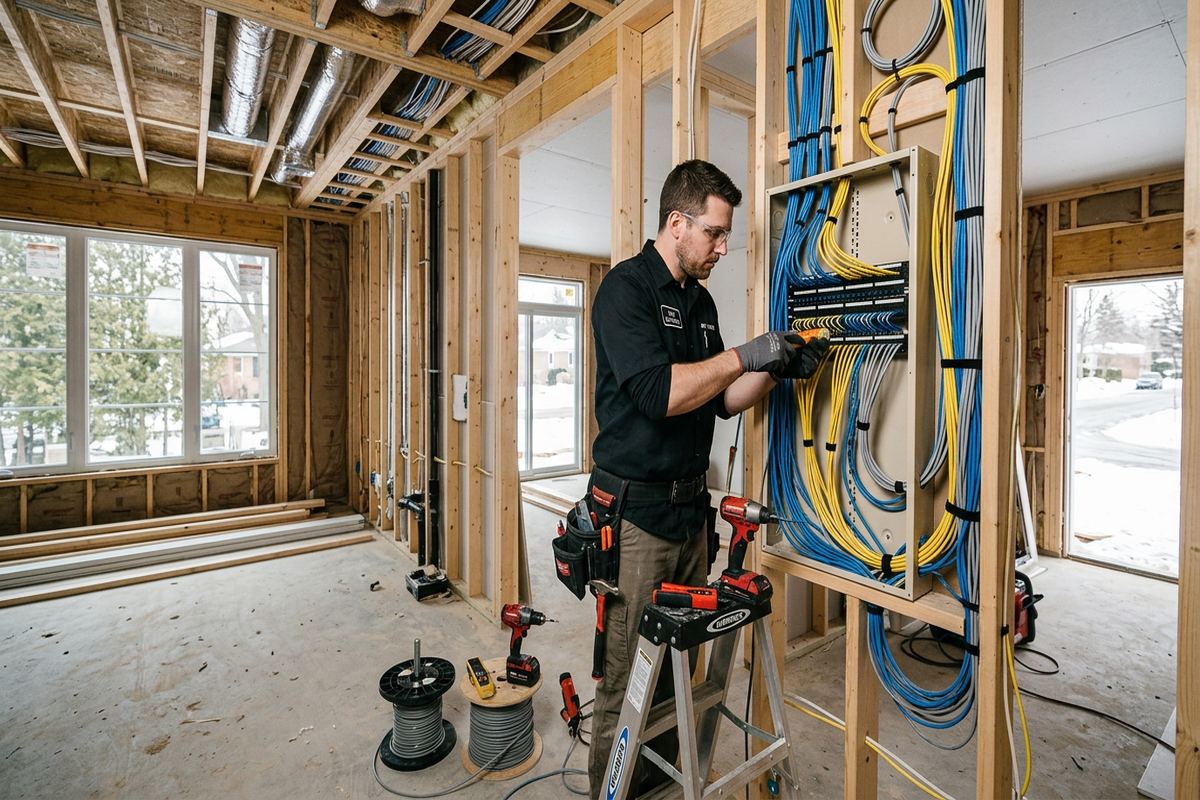
A structured cabling system gives every connected device a planned route back to a central panel, rack or communications room. In Collingwood, that may include Ethernet runs for wireless access points, workstations, televisions, cameras, alarm equipment and building controls. Instead of relying on improvised extensions or several unrelated installers, the property receives one organized low-voltage infrastructure. We assess device locations, available pathways, expected bandwidth and future expansion before defining the cable type, outlet count and termination method for the written scope.
Property types across Collingwood call for different installation methods. Older buildings near Downtown Collingwood may have finished plaster, masonry sections, limited service cavities or previous wiring that is difficult to identify. Newer frame construction in Georgian Meadows or Creekside often provides more predictable routes, although finished basements and insulated exterior walls still require careful planning. Chalets, short-term rentals and resort properties may need cabling distributed across several floors so remote access systems and wireless access points remain dependable when owners or managers are away.
The installation plan considers how the network will actually be used rather than treating every outlet the same. A desk connection, ceiling-mounted access point, exterior camera and smart television can require different positioning, pathway protection or cable ratings. Continuous labelled runs reduce hidden joins and simplify later troubleshooting. Where a route crosses an unconditioned area, exterior wall or detached structure, we select an appropriate pathway and address moisture, temperature change and physical protection. Every proposed route remains subject to site conditions and any required property approval.
- Ethernet outlets for desks, televisions and equipment
- Ceiling cabling for wireless access points
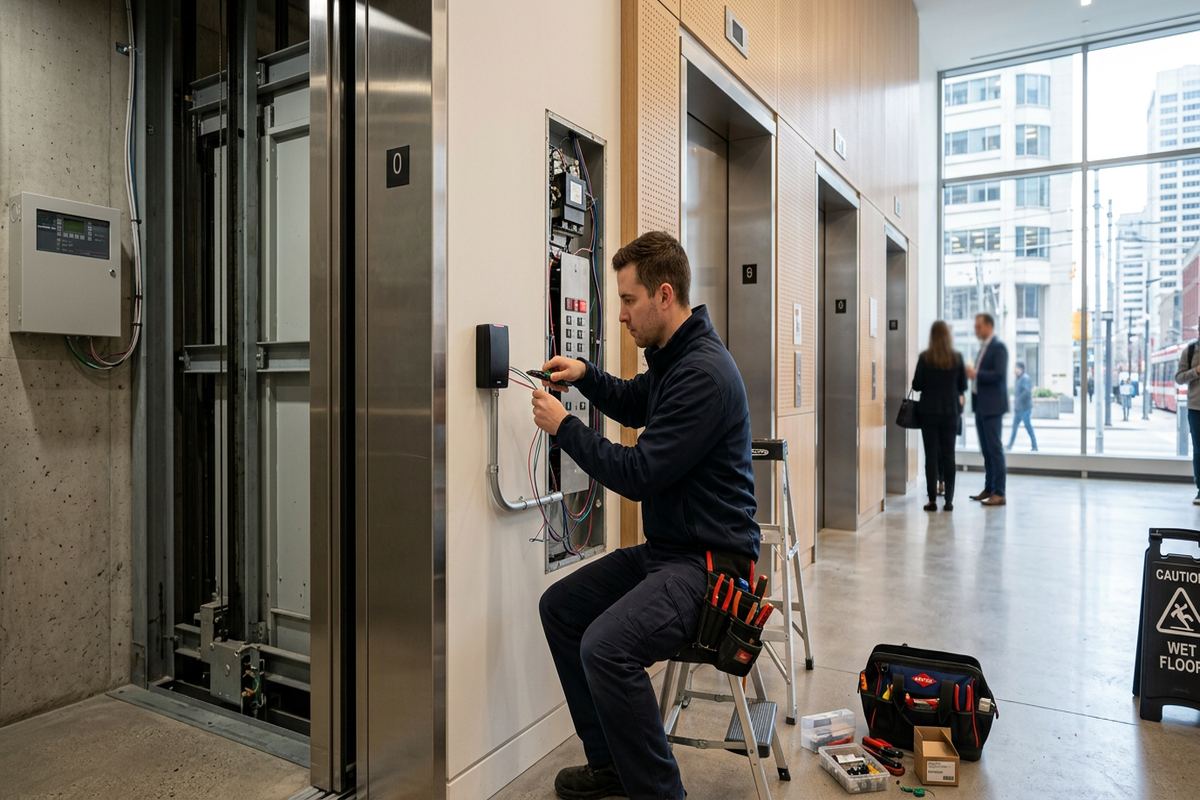
- Network runs for cameras and access control
- Central racks, cabinets and patch panels
- Coaxial and fibre pathways where required
Planning Cabling Routes in Collingwood
Good cable routing begins with a physical review of the building. During a Collingwood site assessment, we inspect accessible ceiling spaces, basements, utility rooms, risers and existing conduits. We also identify electrical panels, heating equipment, plumbing, fire separations and other obstacles that affect low-voltage pathways. The objective is not simply to find the shortest route. Cable separation, bend radius, support, serviceability and the appearance of finished areas all influence the final plan. Assessment timing depends on the requested service and travel distance.
Once the routes are understood, UnifiedLink prepares a written scope covering equipment, cable routes, device placement, exclusions, equipment ownership and warranty. This helps an owner, contractor or property manager see exactly what is included before installation starts. If opening finished surfaces might be necessary, that condition is identified rather than assumed. The scope can also distinguish active network equipment from passive cabling, since switches and access points may be customer-supplied, newly specified or retained from an existing system depending on the project.
Condominiums and managed properties require another layer of coordination. At Lighthouse Point or other multi-unit developments, cabling outside the unit may pass through common elements, shared ceiling spaces or building telecommunications rooms. Condo board or property-management approval may therefore be needed before drilling or routing begins. Rental owners should also confirm landlord permission and responsibility for repairs to finished surfaces. UnifiedLink can provide route and equipment details for review, but the customer remains responsible for securing access and approvals before work proceeds.
- Assessment of accessible cable pathways
- Written scope before installation pricing
- Coordination with renovation or construction plans
- Identification of customer approval requirements
- Clear exclusions for concealed site conditions
Cable Types, Terminations and Network Capacity
Cable selection should match the application, pathway and expected network life. Category-rated copper cabling is commonly used for computers, wireless access points, cameras, phones and other Ethernet devices. Fibre may be appropriate between buildings, across longer pathways or where electrical isolation and higher capacity are important. Coaxial cable can still support television distribution or specified communications equipment. We do not substitute one medium merely because it is easier to install; the written design identifies the intended use and suitable termination at each end.
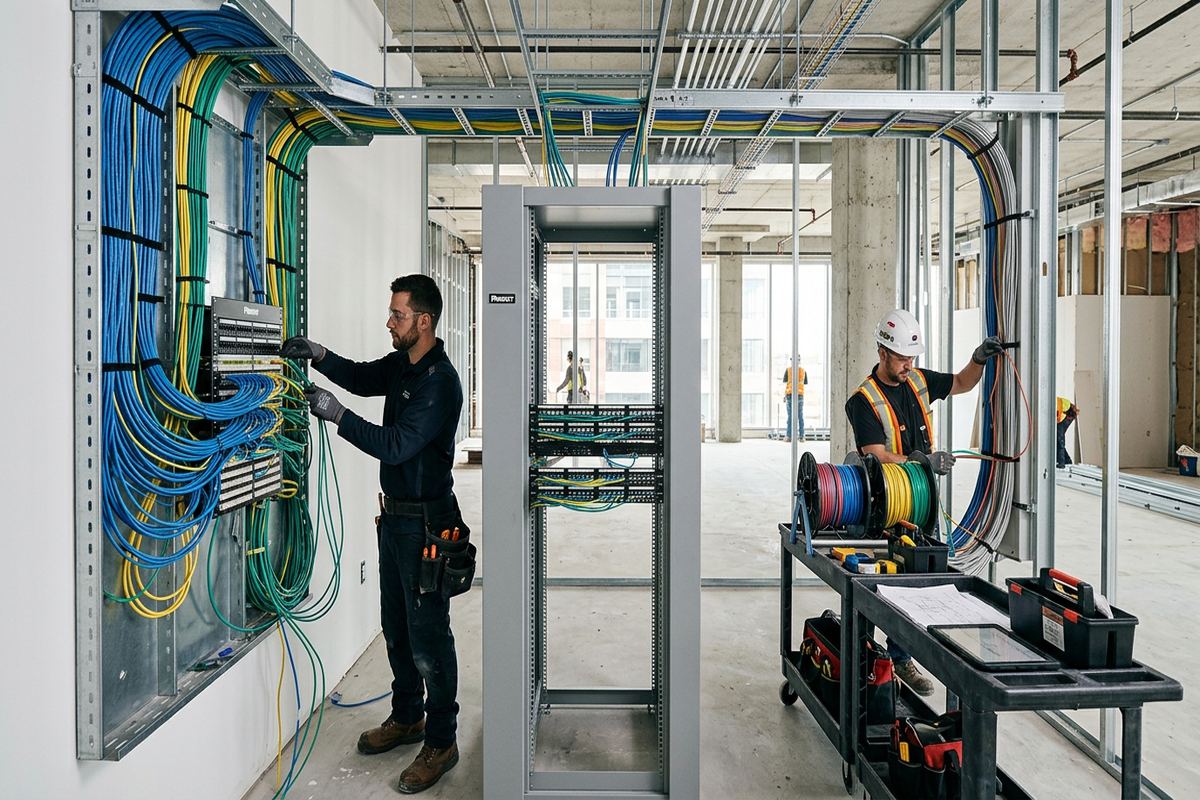
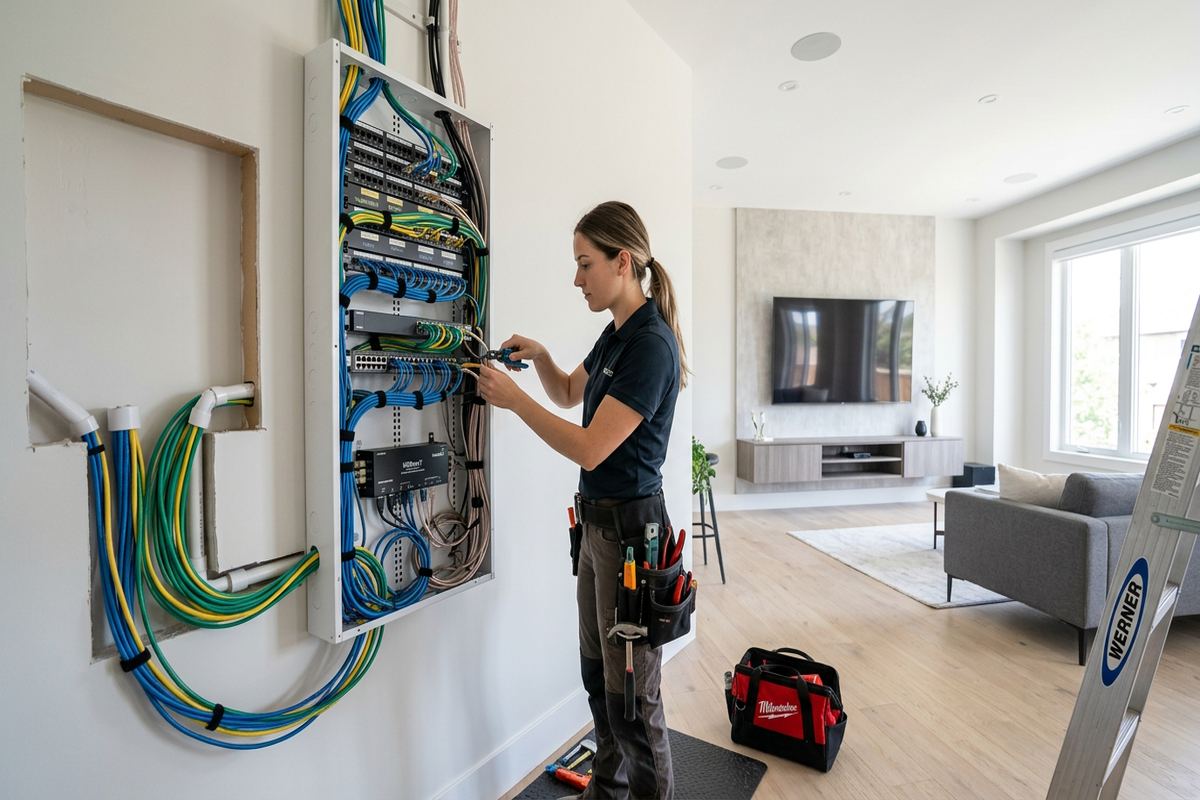
Termination quality has a direct effect on network stability. Each copper run is kept continuous between its outlet and patch panel or approved endpoint, without concealed couplers used as shortcuts. Cables are supported, dressed and labelled so they can be traced without pulling bundles apart. Jacks, patch panels and plugs are selected for the cable and application. At the central location, adequate space, ventilation, electrical service and working clearance should be considered for switches, routers, battery backup equipment and future additions.
Capacity planning is especially useful in Collingwood properties with changing occupancy. A short-term rental may support streaming televisions, guest devices, locks, cameras and remote environmental monitoring at the same time. Resort properties can also have detached spaces or large layouts that make a single wireless router inadequate. Structured cabling provides wired backhaul for properly placed access points, reducing dependence on wireless repeaters. Spare ports or planned pathways can be included where later expansion is likely, without installing active equipment that the owner does not presently need.
- Category-rated copper data cabling
- Fibre links for suitable longer pathways
- Coaxial runs for specified equipment
- Compatible jacks and patch panels
- Capacity planning for future connections
Collingwood, Ontario
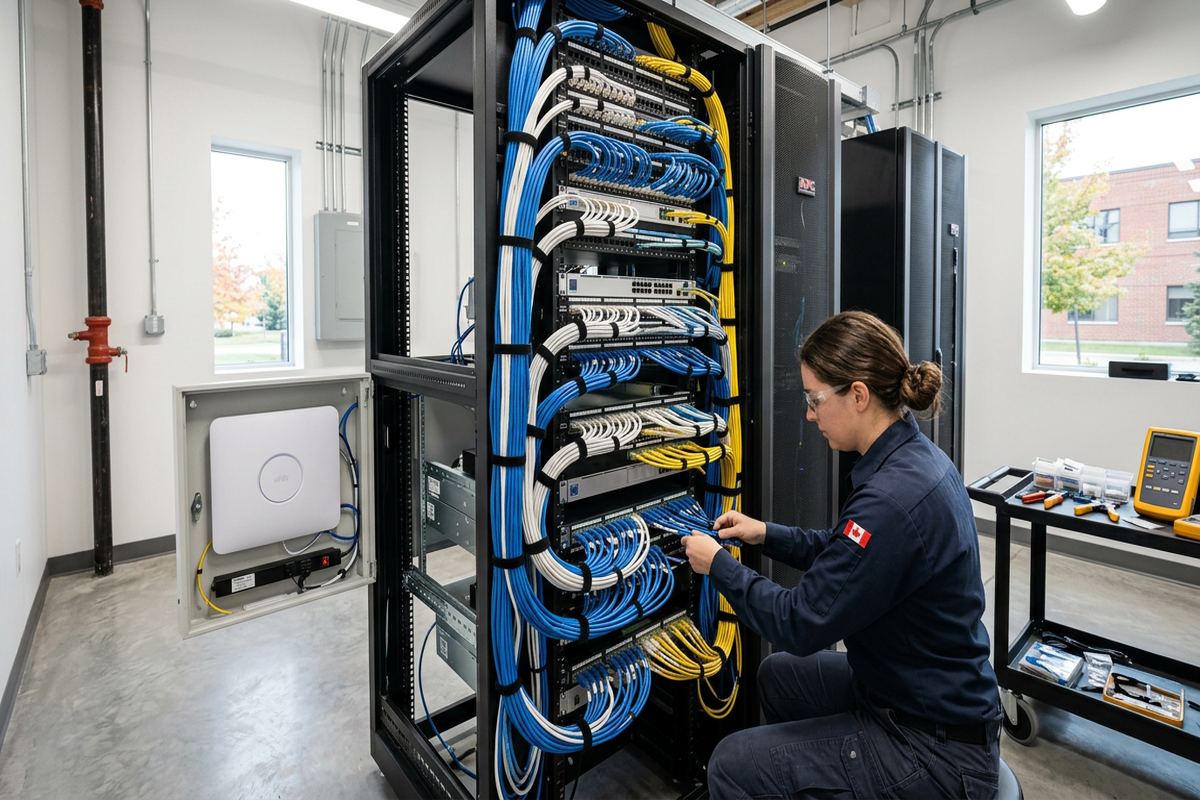
Structured cabling installation in Collingwood, scoped in writing first
Book a site assessment and get equipment, routes, exclusions, and warranty on paper before anything is installed.
Reliable Wi-Fi Cabling for Collingwood Chalets and Rentals
Reliable Wi-Fi depends on more than the internet package entering the property. Walls, floors, mechanical equipment and building shape can weaken coverage before a signal reaches bedrooms, decks or lower levels. Chalets around the Blue Mountain area often have multiple storeys, open ceilings and additions that complicate access-point placement. Running Ethernet to planned ceiling or wall locations gives each access point a wired connection to the network. This supports consistent coverage without asking one router to serve the entire building from a utility room or corner.
Remote management is a practical requirement for many Collingwood short-term rentals and resort properties. Owners may need dependable connections for door controllers, cameras, thermostats, leak sensors or other authorized systems while the building is occupied or vacant. Cabling cannot correct every internet-provider issue, but it removes avoidable dependence on weak wireless links inside the property. Network equipment can be centralized in a secure, ventilated location rather than left where guests can disconnect it. Customer-owned credentials are used for configuration and returned during handover.
Coverage planning should account for seasonal use and the number of connected areas, not just the floor plan. A chalet that performs adequately with two people may behave differently when every bedroom is occupied and several devices are streaming. Wired outlets can serve fixed televisions, work areas and entertainment equipment, leaving wireless capacity for mobile devices. Where outdoor coverage is requested, cable routes, access-point ratings and mounting locations must address snow, water and temperature exposure. Exterior work is reviewed individually before it is included in the scope.
- Wired backhaul for multiple access points
- Connections for locks and remote monitoring
- Dedicated outlets for televisions and workspaces
- Secure central location for network equipment
- Outdoor access-point pathways where suitable
Exterior Runs and Collingwood Winter Conditions
Winter conditions influence how exterior low-voltage work is planned in Collingwood. Repeated freeze-thaw cycles can stress poorly sealed penetrations, loose surface cabling and fittings that trap water. Snow accumulation and roof drainage also affect device and junction locations. When a cable must reach an exterior camera, access point or detached area, we review the wall assembly and exposure before choosing the entry point. Penetrations are finished with suitable bushings, drip management and sealant methods intended for the surrounding material and location.
Masonry and frame walls require different approaches. Drilling through brick, block or stone demands attention to joints, cavities and the possibility of hidden services, while frame walls require careful handling of cladding, membranes, insulation and vapour-control layers. A route that works on one Downtown Collingwood storefront may be unsuitable for a chalet or newer home. Surface pathways can sometimes avoid unnecessary interior disruption, but they must be mechanically secure, appropriately rated and positioned where snow removal, ladders or routine building work will not damage them.
Detached buildings introduce additional design questions. Copper cabling between structures may not be appropriate in every situation because distance, grounding conditions and electrical exposure must be considered. Fibre or a properly designed wireless bridge may offer a more suitable link, depending on sightlines, pathway availability and required capacity. Any underground route needs an approved conduit strategy, depth coordination and protection from water entry. Excavation, trenching or restoration is included only when expressly stated in the written scope, with responsibilities assigned before the work begins.
- Weather-aware exterior cable routing
- Sealed wall penetrations and drip management
- Methods suited to masonry or frame walls
- Protected pathways for exposed locations
- Fibre assessment for detached structures
Commercial and Industrial Cabling in Collingwood
Commercial strips, offices, shops and industrial units in Collingwood often inherit cabling from previous occupants. Unlabelled drops may end above ceilings, cross between tenant areas or connect to obsolete equipment. Before reusing existing runs, we identify accessible endpoints and assess whether their condition and category suit the new requirement. New cabling can then be organized around the current floor plan, point-of-sale stations, phones, printers, displays, wireless access points and security equipment rather than extending an undocumented network.
Work in an occupied business requires sequencing. Cable routes may need to avoid customer areas, production activity or times when ceilings and communications rooms are in use. We define access requirements and coordinate practical installation stages with the customer. In multi-tenant properties, landlord approval may be required for penetrations, common pathways, rooftop access or modifications outside the leased unit. Fire separations and existing building systems cannot be treated as ordinary walls; penetrations and pathway work must follow the requirements applicable to the site and approved scope.
A properly arranged communications area makes changes easier after staff move or equipment is replaced. Patch panels keep permanent building cable separate from short equipment cords, while labels connect each port to a room or device location. Rack layout also needs to leave reasonable access to switches, internet-provider hardware and power. For Collingwood businesses combining data, cameras, access control and displays, one accountable contractor can coordinate the low-voltage routes and reduce conflicts between systems. Each service is still documented according to its own endpoints and equipment.
- Office and retail data outlets
- Cabling for point-of-sale locations
- Industrial unit network distribution
- Rack and patch-panel organization
- Routes for displays and security systems
Installation, Testing and Handover
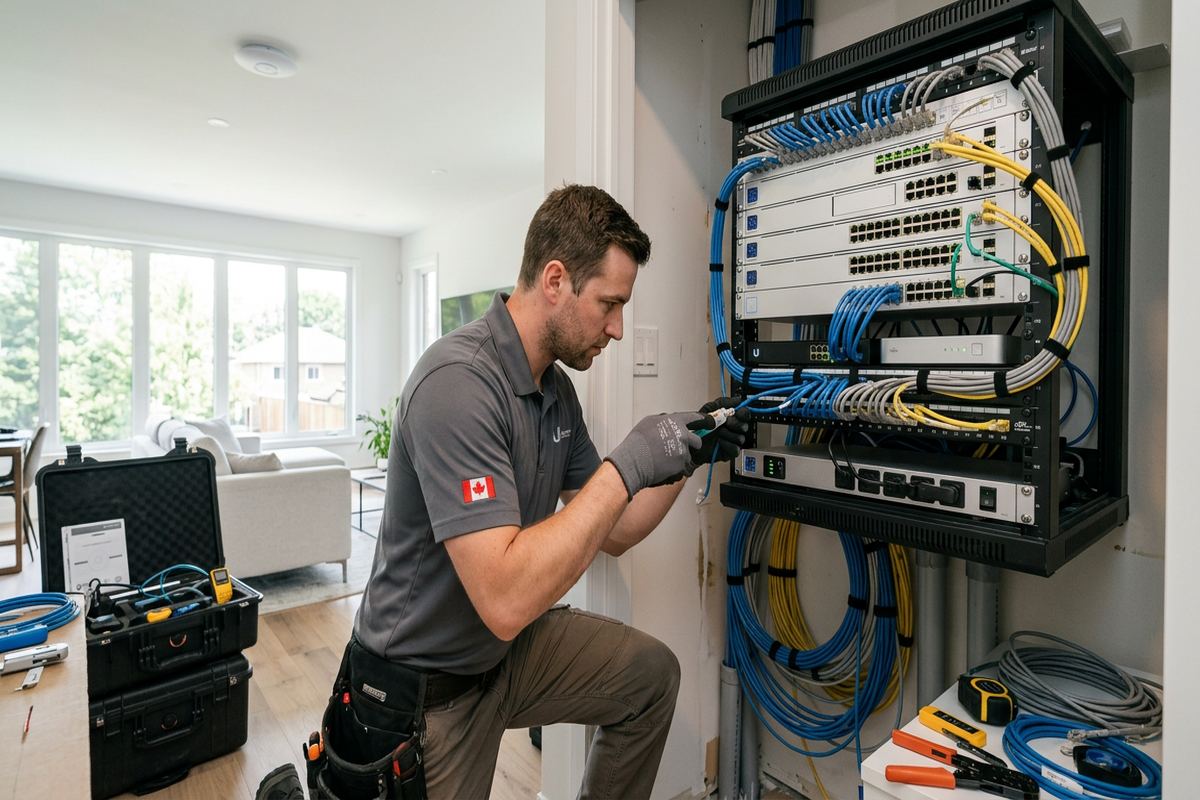
Installation follows the agreed routes and device locations, with changes discussed when concealed conditions prevent the planned approach. Cables are supported independently using suitable low-voltage hardware rather than laid loosely across accessible ceilings or attached to unrelated services. Bundles are dressed without excessive tension, and required separation from power is maintained. At outlets and the central panel, labels use a consistent naming method. If renovation work is underway, coordination with electricians, drywall installers, cabinetmakers and other trades helps protect the cable before walls and ceilings are closed.
Every completed data run is checked after termination. Testing confirms basic wire mapping and connection integrity appropriate to the stated scope, while more specialized certification is included only when specified. Failed or inconsistent results are investigated before handover. On-site configuration can include supported switches, wireless access points or related network equipment identified in the scope. Internet-provider performance and third-party cloud services remain outside the installer’s control, so testing distinguishes the installed local connection from services supplied by other organizations.
Handover gives the customer practical control of the system. UnifiedLink provides an as-built record showing installed outlet identities, central terminations and material route information available from the completed work. Customer-owned credentials are used for configured equipment instead of leaving the property dependent on an installer-only account. Equipment ownership and warranty terms are stated in the written scope. For Collingwood rentals or managed sites, records can also help an authorized local contact identify a port or device without guessing which cable serves it.
- Supported and labelled continuous runs
- Consistent outlet and patch-panel identification
- Connection testing after termination
- On-site configuration within scope
- Customer credentials and as-built record
Getting a Structured Cabling Quote in Collingwood
A useful quotation starts with information about the property and the intended devices. Tell us whether the Collingwood location is a home, chalet, rental, condominium, shop, office or industrial unit, and note any known construction or access restrictions. Floor plans, renovation drawings and photographs can help with early discussion, but they do not replace a site assessment when concealed routes or finished areas are involved. Requests sent during business hours are answered the same day; after-hours requests are answered the next business day.
At the assessment, we review outlet counts, device positions, central equipment space and route options. We also discuss whether the network must support remote access, guest Wi-Fi, cameras, access control, audio, displays or future additions. Existing cabling is not assumed to be reusable until accessible portions and endpoints are examined. Following the assessment, pricing is based on a written scope covering equipment, cable routes, device placement, exclusions, equipment ownership and warranty. There are no verbal assumptions about hidden access or restoration responsibilities.
Before approving the work, customers should verify any condo, landlord or property-management requirements and identify who can provide access to locked rooms or shared spaces. In areas such as Lighthouse Point, Downtown Collingwood or the Blue Mountain area, building type and governance can affect routing as much as distance does. Site assessment timing depends on the service and travel distance. Once the scope is accepted and scheduling is confirmed, UnifiedLink remains the accountable contractor for the included structured cabling work through installation, testing and documented handover.
- Same-day reply during business hours
- Site assessment before pricing
- Detailed written installation scope
- Approval and access requirements identified
- One accountable low-voltage contractor
Collingwood neighbourhoods we cover
- Downtown Collingwood
- Blue Mountain area
- Georgian Meadows
- Creekside
- Lighthouse Point
Structured cabling installation in Collingwood — common questions
Do you assess the property before quoting?
Yes. Structured cabling pricing follows a site assessment because Collingwood properties vary in construction, access and finished condition. We inspect practical pathways, outlet locations and the proposed central equipment area. The resulting written scope covers equipment, cable routes, device placement, exclusions, equipment ownership and warranty. Assessment timing depends on the requested service and travel distance.
Can you improve Wi-Fi in a Collingwood chalet?
We can install structured cabling for properly positioned wireless access points throughout a chalet. Wired backhaul is often more dependable than wireless repeaters across several floors or through dense building materials. After reviewing the Blue Mountain area property, its occupancy and remote-management needs, we can define access-point cable locations and include supported equipment configuration where requested.
Can existing network cabling be reused?
Possibly, but existing cable should be inspected rather than assumed usable. In older Downtown Collingwood buildings and previously occupied commercial units, runs may be unlabelled, damaged, joined or unsuitable for the required connection. We identify accessible endpoints, review cable markings and test relevant runs. Any reuse, replacement or limitation is then recorded in the project scope.
Do I need condo or landlord approval?
Approval may be required when cabling passes through common elements, shared ceilings, exterior walls or areas outside your unit or lease. This can apply at Lighthouse Point and other managed Collingwood properties. Customers are responsible for securing the necessary condo, landlord or property-management permission. We can provide proposed route and equipment details to support the approval process.
Can cabling run to an exterior device?
Yes, where the site supports a suitable route. Collingwood snow, moisture and freeze-thaw conditions affect cable selection, mounting and penetration sealing. We assess the wall material, exposure and risk of physical damage before specifying the pathway. Masonry and frame construction require different methods, and underground or detached-building work must be expressly included in the written scope.
What do I receive when installation is complete?
Completed runs are terminated, labelled and tested according to the agreed scope. UnifiedLink can configure supported equipment on site and hands it over using the customer’s own credentials. You also receive an as-built record identifying outlets, central terminations and relevant route information. Equipment ownership and warranty details are stated in writing before the Collingwood installation begins.
Coverage in Collingwood is confirmed against the address before we quote. See everything we install in Collingwood or the province-wide structured cabling installation page.