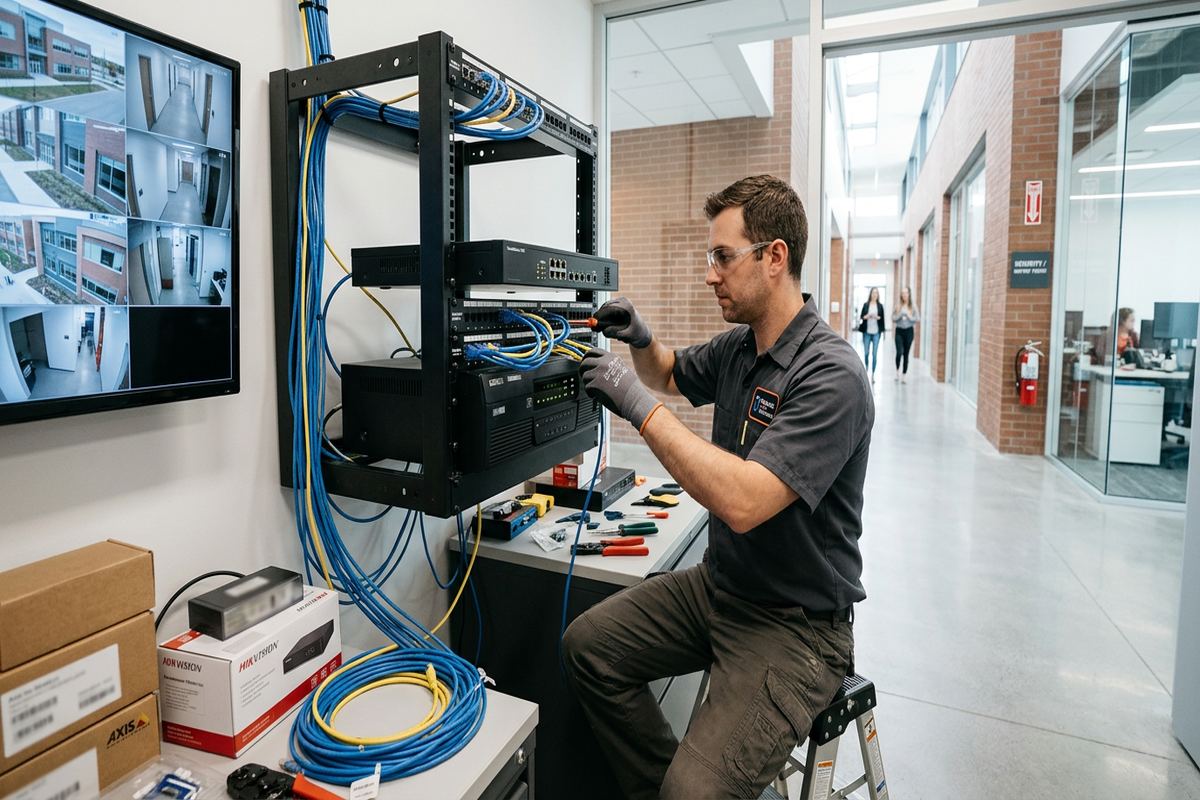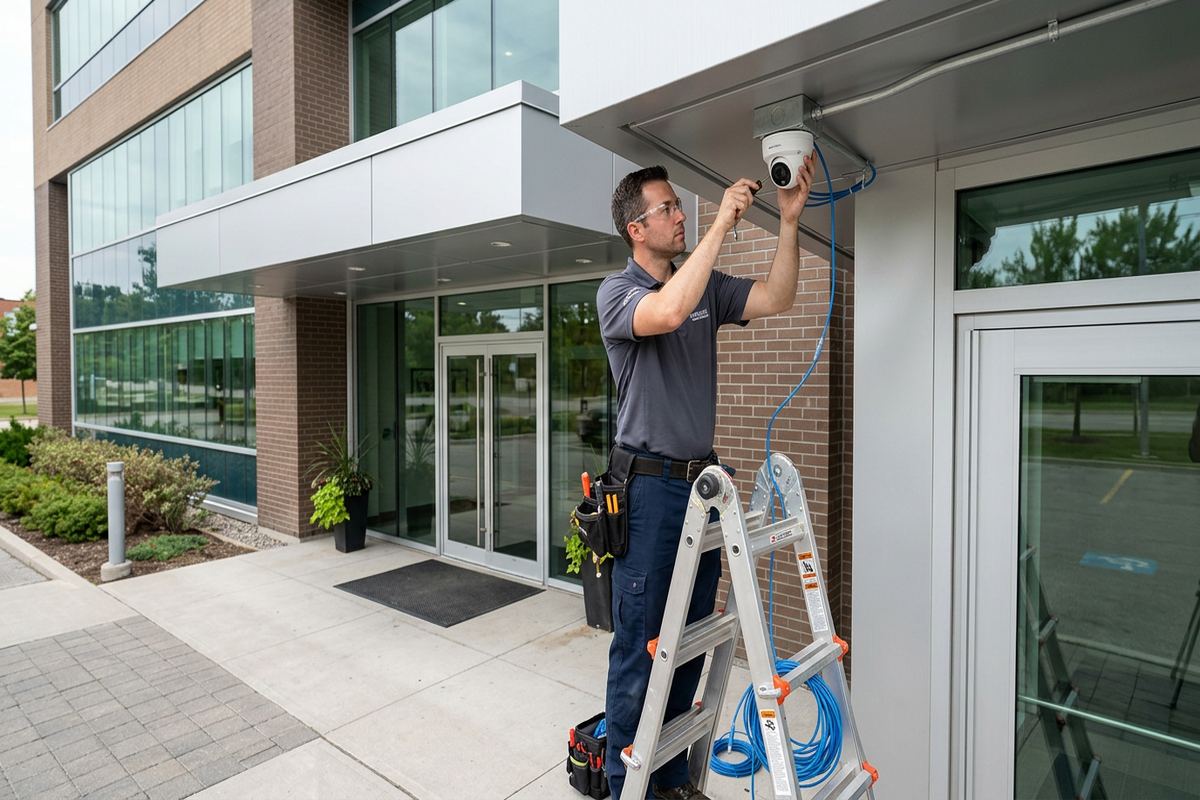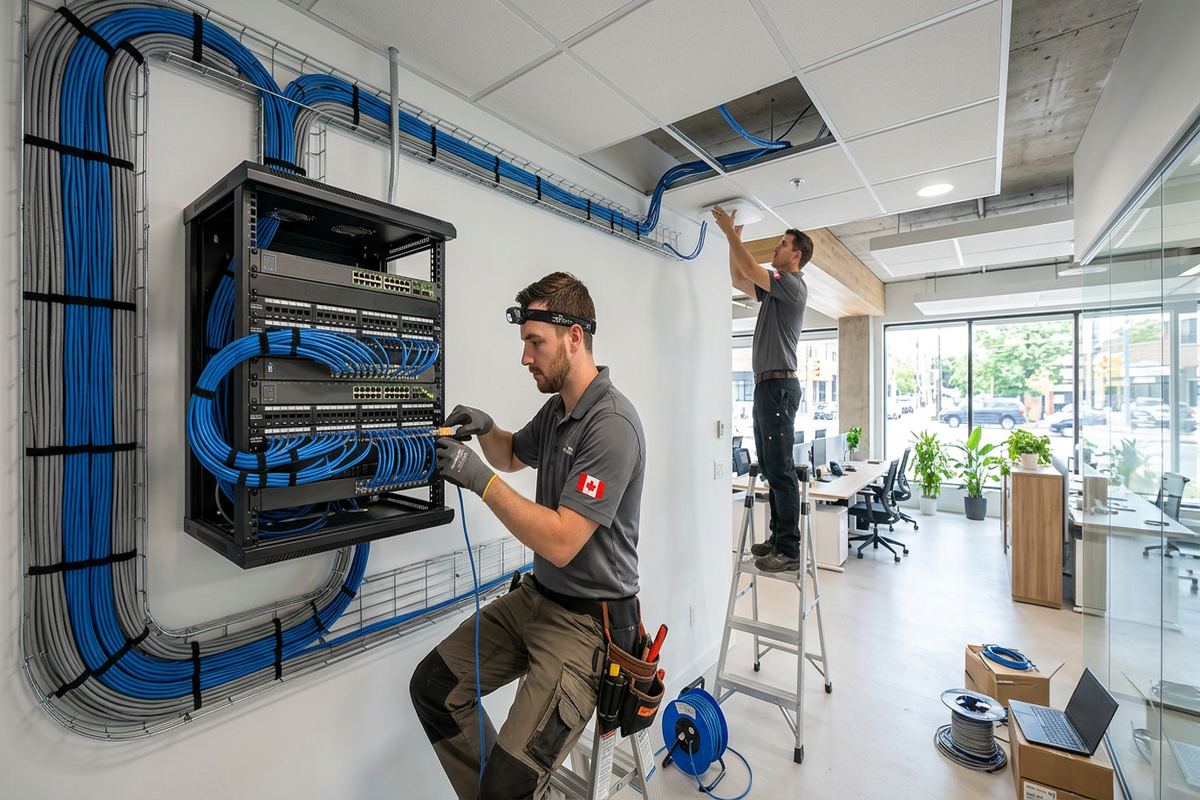
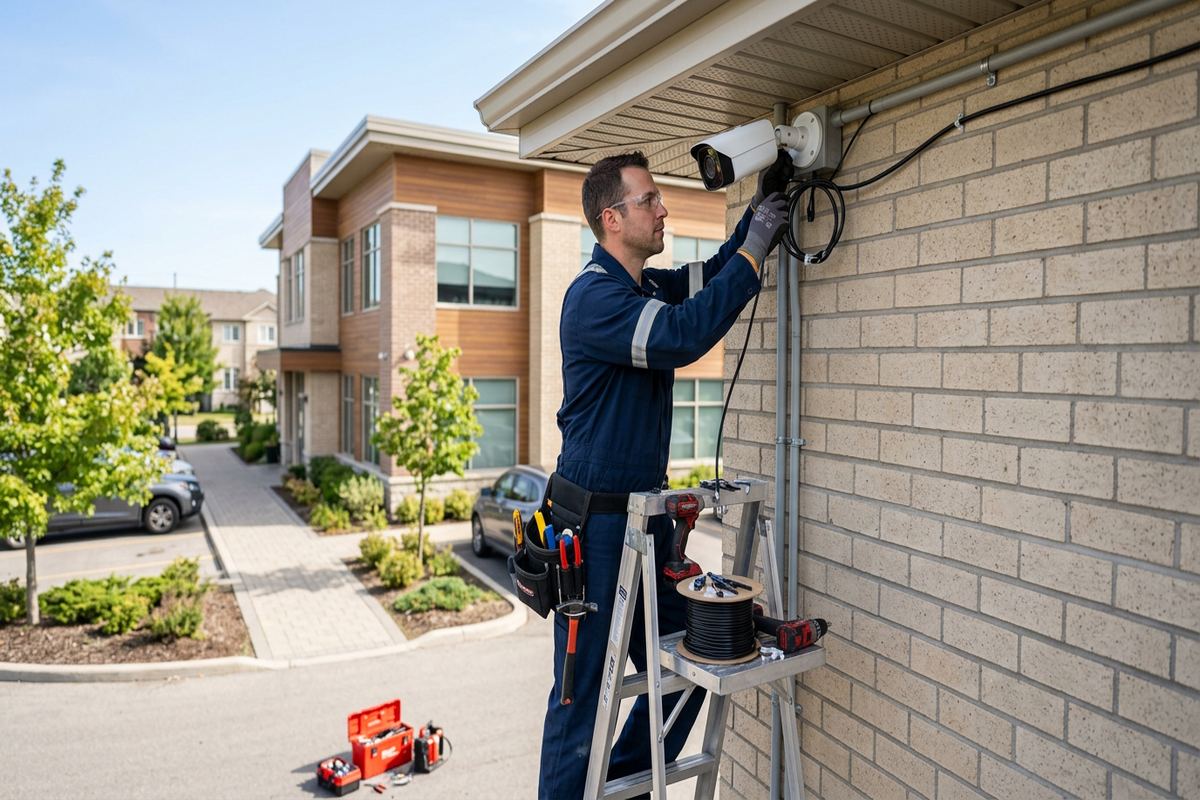
UnifiedLink installs outdoor security cameras for homes, chalets, short-term rentals, resort properties and businesses in Collingwood. We plan views, cable routes, mounting points, recording and remote access before installation. Each system is configured on site and handed over using the customer’s own credentials, with labelled cabling and an as-built record.
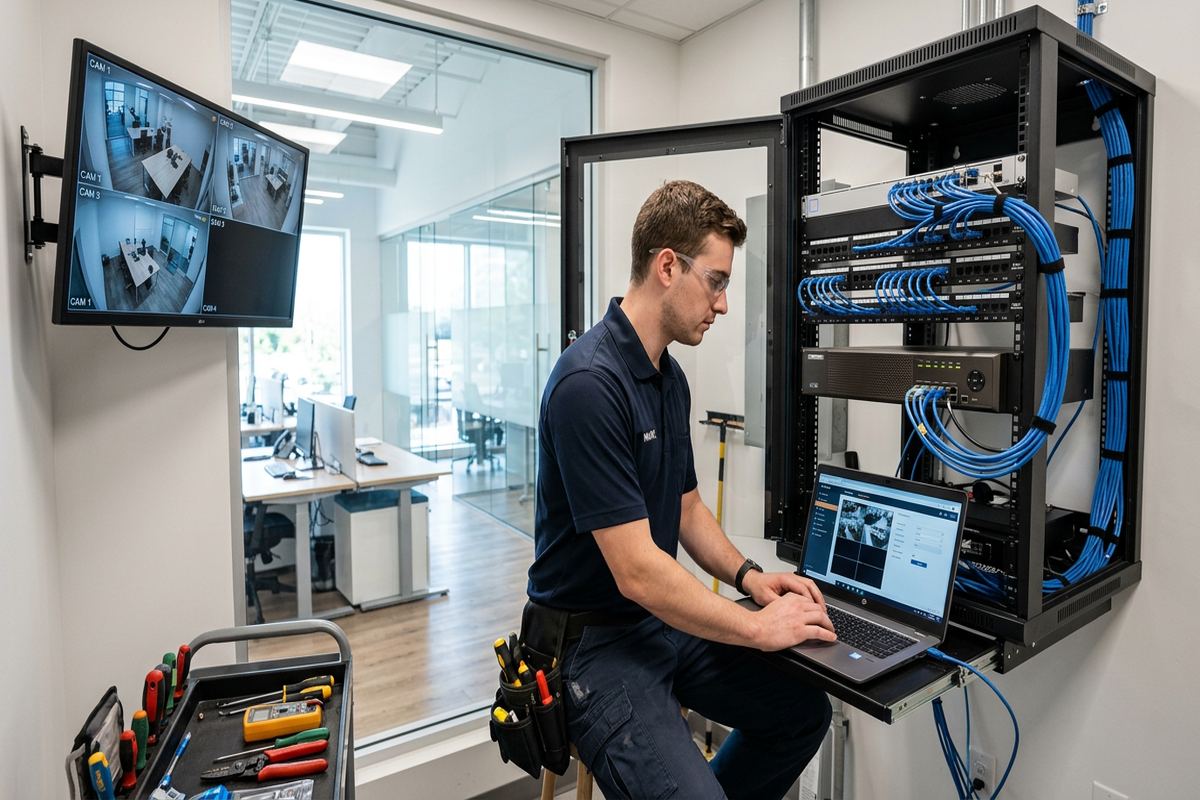
Outdoor Camera Planning for Collingwood Properties
A useful outdoor camera system starts with the property, not a camera count. During a site assessment, we review entrances, driveways, parking areas, walkways, loading points and accessible sides of the building. Camera positions are selected for identification and activity coverage rather than broad views with little detail. In Collingwood, the plan may also account for snow storage, seasonal furniture, landscaping and exterior lighting. The resulting written scope identifies equipment, proposed cable routes, device placement, exclusions, equipment ownership and warranty before pricing is finalized.
Different Collingwood properties require different coverage strategies. A detached frame house may need focused views of doors, a driveway and a side gate, while a chalet or resort property may have several exterior approaches and detached structures. Commercial premises can require coverage of public entrances, service doors, delivery areas and employee parking without unnecessarily recording neighbouring space. We also consider mounting height, likely tampering, reflected infrared light and the distance needed for recognizable images. These details help determine camera type, lens, resolution, recording capacity and network requirements.
Placement decisions should reflect how the site is actually used through the year. Short-term rentals may need remote awareness of arrivals and exterior activity, but cameras must remain outside and avoid private areas. At a business, an overview camera may document movement while a second, tighter view captures faces or vehicle details at a controlled point. We explain what each proposed view is expected to show during daytime and darkness. This keeps the installation practical and reduces assumptions about details that cameras cannot reliably capture from excessive distance or poor angles.
- Entrances, driveways and service areas assessed
- Views planned for identification and useful context
- Lighting, snow and landscaping considered
- Written scope completed before pricing
Weather-Resistant Mounting and Sealing in Collingwood
Collingwood winters place real demands on exterior equipment and cable entries. Freeze-thaw cycles can open poorly sealed penetrations, shift loose mounting surfaces and expose connectors to moisture. We select exterior-rated cameras and suitable mounting hardware, then protect cable transitions within appropriate boxes or camera bases. Penetrations are positioned and sealed to direct water away from the building envelope. Drip loops, protected connections and sensible mounting surfaces matter as much as the camera specification, especially where wind-driven snow, roof runoff or repeated icing can reach the installation.
Exterior mounting methods vary with construction. On frame buildings, the mounting point must reach stable material rather than relying only on siding, trim or a thin exterior finish. Masonry walls require suitable anchors and careful drilling that avoids unnecessary damage to brick, block or mortar. Older building stock around Downtown Collingwood may present finished ceilings, additions, concealed cavities or previous renovations that complicate cable routing. Newer homes in Georgian Meadows or Creekside can offer more predictable framing, but insulation, vapour barriers and finished basements still require a planned route.
Camera height is balanced against reach, weather exposure and image angle. Installing excessively high may reduce facial detail and make future cleaning difficult, while mounting too low can invite tampering. Eaves can provide shelter, but deep soffits sometimes reflect infrared light or obstruct the intended view. We check the live image before final positioning and confirm that siding, downspouts, exterior lights and seasonal decorations do not dominate the frame. Where a camera cannot be mounted securely without affecting the envelope, we discuss an alternate position rather than forcing an unsuitable installation.
- Exterior-rated cameras and mounting hardware
- Protected connectors and cable transitions
- Penetrations sealed against water entry
- Live views checked before final fastening
Camera Coverage for Chalets, Rentals and Resorts
Chalets, short-term rentals and resort properties often need dependable remote access because the owner or manager is not always on site. Outdoor cameras can show arrival areas, parking, exterior doors and common approaches, but remote viewing depends on the local network as well as the cameras. We assess whether Wi-Fi or wired network coverage reaches required equipment locations and whether the internet connection supports the intended access method. Where practical, wired cameras provide a stable data and power path that avoids relying on weak exterior wireless signals or frequently replaced batteries.
Properties near the Blue Mountain area can have multiple buildings, broad lots, covered decks or parking separated from the main network equipment. A camera plan may therefore require network extensions, exterior-rated pathways or point-to-point connectivity rather than a simple connection to the nearest Wi-Fi signal. We identify these dependencies in the scope, including any work that belongs to another trade or service provider. Remote access is configured on site using the customer’s own credentials, so ownership does not depend on an installer-controlled email address, shared password or undocumented account.
Privacy and management rules are important for rentals and shared resort settings. Cameras should not monitor interiors, private-use areas or neighbouring windows, and guests should receive any disclosure required by the owner’s rental platform, insurer or legal adviser. For condominiums, common elements may include exterior walls, soffits, hallways and shared parking, even when they appear adjacent to a private unit. Written approval from the condominium corporation, property manager or landlord may be needed before drilling, cabling or recording shared areas. UnifiedLink can document proposed locations for the approval process.
- Remote access set up on owner credentials
- Network coverage checked at camera locations
- Rental privacy boundaries considered
- Proposed locations documented for approvals
Collingwood, Ontario
Outdoor camera installation in Collingwood, scoped in writing first
Book a site assessment and get equipment, routes, exclusions, and warranty on paper before anything is installed.
Wired Outdoor Cameras and Reliable Recording
For permanent installations, wired cameras usually provide the clearest route to consistent power, recording and remote access. A single network cable can carry data and power from a suitable switch or recorder, reducing reliance on outdoor receptacles and wireless conditions. UnifiedLink installs continuous labelled cable runs rather than joining short sections inside walls or inaccessible cavities. Cable type and pathway are selected for the environment, including exposure to sunlight, moisture or unconditioned spaces. Each run is terminated, tested and identified so future service does not begin with tracing unmarked cables.
Recording can be local, cloud-based or a combination, depending on the selected equipment and operational needs. A local network video recorder keeps footage on site and can continue recording during an internet interruption, although remote viewing will normally depend on connectivity. Cloud services may involve subscriptions, retention limits and manufacturer-specific terms. We discuss those dependencies without assuming one model suits every Collingwood property. Storage planning considers camera count, image settings, motion activity and desired retention, but actual results can vary as scenes and recording configurations change over time.
Network security is part of commissioning. Default credentials are changed where the equipment permits, firmware is reviewed, time settings are corrected and authorized users are configured. The customer supplies or creates the account used for remote access, and we demonstrate how to view live video, search recordings and export a relevant clip. If cameras share an existing business or household network, we identify required connections and discuss segmentation options where appropriate. The handover includes an as-built record showing camera names, cable destinations and installed equipment, without placing customer passwords in unsecured documentation.
- Continuous labelled cable runs
- Local and cloud recording options explained
- Customer-controlled accounts and user access
- As-built camera and cabling record
Outdoor Cameras for Collingwood Businesses
Commercial camera systems should match business operations rather than apply residential placement to a larger building. Along Collingwood commercial strips, useful views may include customer entrances, point-of-entry approaches, rear service doors, exterior stock areas and parking transitions. Industrial units may need cameras at loading doors, fenced areas and vehicle gates, with mounting positions that avoid interference from trailers or raised doors. We review when activity occurs, where people pause and which routes are controlled, then select overview or identification views according to the purpose of each camera.
Existing commercial buildings can contain several generations of cabling, undocumented renovations and mixed network equipment. Before reusing a pathway or cable, we check whether it is appropriate for the proposed camera system. Surface raceway, conduit or accessible ceiling routes may be more practical than opening finished walls, especially in leased units. Penetrations through fire separations or exterior assemblies require suitable treatment and may involve other trades. The written scope states included pathways, exclusions and responsibilities clearly, helping landlords, tenants and property managers understand what will be installed and what approvals remain outstanding.
Businesses also need a practical process for footage access. Managers may require live viewing while only designated staff can export recordings or change settings. We configure available user roles, camera names and notifications according to the agreed operating plan. Alerts must be tuned carefully because traffic, snow, shadows, deliveries and exterior lighting can create unnecessary events. No analytic feature should be treated as infallible. During handover, we show authorized users how to find an incident, save a clip and confirm system status, while leaving account control and equipment ownership with the customer.
- Entrances, loading areas and parking planned
- Leased-unit pathways documented before work
- User roles configured for authorized staff
- Event notifications adjusted on site
Upgrading Existing Cameras in Collingwood
An existing camera system does not always require complete replacement. We first identify what is installed, which cables remain serviceable, how recording is handled and whether account access is available. Older analogue cabling may support certain upgrade paths, while network cameras require suitable data cabling, power and switching. Reusing infrastructure can reduce disruption, but only when it supports the selected equipment and expected performance. Unknown cable joints, water-damaged connectors or proprietary components can limit that approach. Findings are documented so the upgrade scope separates reusable items from components requiring replacement.
Poor night images are commonly blamed on camera resolution, although placement and lighting are often responsible. Infrared light can reflect from soffits, walls, spider webs, snow or nearby surfaces, leaving the important area dark. Headlights and bright fixtures can also overwhelm a view. At Collingwood properties, seasonal snow cover can change reflected light substantially compared with summer conditions. We examine recorded examples where available, adjust angles and settings, clean or reposition equipment, and recommend added lighting when it provides a more dependable result than simply installing a higher-specification camera.
Remote viewing problems may originate outside the camera itself. Changed routers, weak Wi-Fi, expired cloud services, lost administrator accounts or altered network settings can interrupt access while recording continues locally. We verify the connection path and determine whether the issue belongs to the camera system, internal network or internet service. If ownership credentials cannot be recovered, replacement or manufacturer support may be necessary. A completed upgrade is handed over with current camera names, tested viewing access, labelled runs and an updated as-built record, reducing dependence on assumptions left by a previous installer.
- Existing cameras and cabling assessed
- Night-image problems investigated at source
- Remote access path tested end to end
- Reusable and replacement components documented
Approvals, Privacy and Responsible Placement
Outdoor cameras should cover the customer’s property and operational concerns without collecting more neighbouring activity than necessary. Lens direction, field of view and privacy masking can reduce views of adjacent windows, yards or unrelated public areas. Audio recording requires separate consideration because microphones may capture conversations beyond the intended scene. We explain available camera controls, but property owners remain responsible for determining applicable privacy, employment, condominium and rental obligations. For workplaces or managed properties, written policies and notices may be appropriate, based on advice from the owner’s legal or human-resources professionals.
Approval requirements can affect both placement and cable routing. At Lighthouse Point and other condominium settings, exterior cladding, balconies, soffits and shared grounds may be common elements controlled by the corporation. A unit owner should confirm written permission before equipment is attached or cable passes through regulated areas. Tenants should similarly obtain landlord approval for drilling or permanent modifications. We can provide a proposed device list, photographs or marked locations to support review. Installation proceeds only within the approved scope, avoiding undocumented changes that could create building-envelope or ownership disputes later.
Camera placement around rentals deserves particular care. An exterior device intended to verify arrivals should not capture through windows, monitor hot tubs or overlook spaces where occupants reasonably expect privacy. Owners also need to follow current platform disclosure requirements and any rules applying to their property. In Collingwood, a chalet may shift between personal use, rental use and vacant periods, so user access should be reviewed whenever management changes. Removing former managers, cleaners or contractors from the account is an important operational step that technology cannot perform automatically.
- Views limited to relevant property areas
- Privacy masking used where supported
- Condo and landlord approvals confirmed
- Audio recording treated as a separate decision
Collingwood Installation Process and Handover
The process begins with a discussion of the property, current concerns and intended users. A site assessment then confirms exterior views, mounting surfaces, cable routes, recorder location, network connections and electrical dependencies. Assessment timing depends on the service and travel distance. After the visit, UnifiedLink provides a written scope covering equipment, cable routes, device placement, exclusions, equipment ownership and warranty. This gives the owner a defined basis for approval and pricing, while identifying condominium permission, landlord consent, internet changes or third-party work that must be completed before installation.
During installation, cable runs are kept continuous and labelled, mounting surfaces are prepared, exterior entries are sealed and camera views are checked on site. Equipment is connected to the agreed recording and network components, then configured for time, image, detection and authorized access. Work areas are kept orderly, and any necessary change from the documented route is discussed before proceeding. Because actual framing, masonry cavities or concealed services can differ from visible conditions, the installer may recommend an alternate pathway that protects the building and remains serviceable rather than following a risky route.
Handover is completed with the customer present or with an authorized representative. We confirm live and recorded views, demonstrate searching and exporting footage, and set up remote access using the customer’s own credentials. The customer receives an as-built record identifying cameras, equipment and cable destinations, along with the applicable ownership and warranty information. UnifiedLink remains one accountable contractor for the included low-voltage scope. Requests sent during business hours are answered the same day; after-hours requests are answered the next business day, without implying that every issue can be resolved remotely.
- Site assessment completed before pricing
- Written scope defines work and exclusions
- On-site configuration and customer demonstration
- Credentials and as-built record handed over
Collingwood neighbourhoods we cover
- Downtown Collingwood
- Blue Mountain area
- Georgian Meadows
- Creekside
- Lighthouse Point
Outdoor camera installation in Collingwood — common questions
Where should outdoor cameras be mounted on my Collingwood home?
Placement depends on the doors, driveway, side access, landscaping, lighting and construction of the home. We generally prioritize controlled approaches where a person or vehicle passes within a useful identification range. Mounting must also avoid snow storage, roof runoff and infrared reflection. A site assessment confirms suitable positions and cable routes before equipment and pricing are finalized.
Will outdoor cameras work through a Collingwood winter?
Exterior-rated equipment can operate in winter when it is properly selected, mounted and connected. The installation must protect cable transitions and connectors from moisture, snow and repeated freeze-thaw conditions. Camera views may still be affected by snow accumulation, ice, condensation or dirty lenses, so accessible mounting and periodic inspection matter. We also avoid positions directly exposed to roof runoff where practical.
Can I view cameras remotely at a chalet or rental?
Yes, provided the camera system and internet connection support remote access. Chalets, short-term rentals and resort properties around Collingwood may also need stronger Wi-Fi coverage or a wired network extension. UnifiedLink configures access on the customer’s own account and demonstrates live viewing and playback. Owners remain responsible for rental disclosures, privacy obligations and removing users who no longer require access.
Do I need approval for cameras at my condo?
Possibly. Exterior walls, soffits, balconies and shared parking areas can be common elements, including at Collingwood condominium properties such as Lighthouse Point. Obtain written approval from the condominium corporation or property manager before drilling, cabling or mounting equipment. Tenants should obtain landlord permission. We can document proposed camera positions and pathways to support an approval request, but the property authority determines what is permitted.
Are wired cameras better than Wi-Fi cameras?
Wired cameras are often preferable for permanent Collingwood installations because one cable can provide stable data and power without depending on an exterior wireless signal or battery. Wi-Fi cameras may suit limited situations where cabling is impractical, but signal strength, interference and power still require assessment. We review the building, pathway and network before recommending either approach rather than assuming one technology fits every property.
What will I receive when installation is complete?
UnifiedLink configures the system on site, confirms live and recorded views, and demonstrates remote access, playback and footage export. Accounts are handed over using your own credentials rather than an installer-controlled login. You also receive an as-built record identifying cameras, installed equipment and cable destinations, along with the applicable equipment ownership and warranty details defined in the written scope.
Coverage in Collingwood is confirmed against the address before we quote. See everything we install in Collingwood or the province-wide outdoor camera installation page.