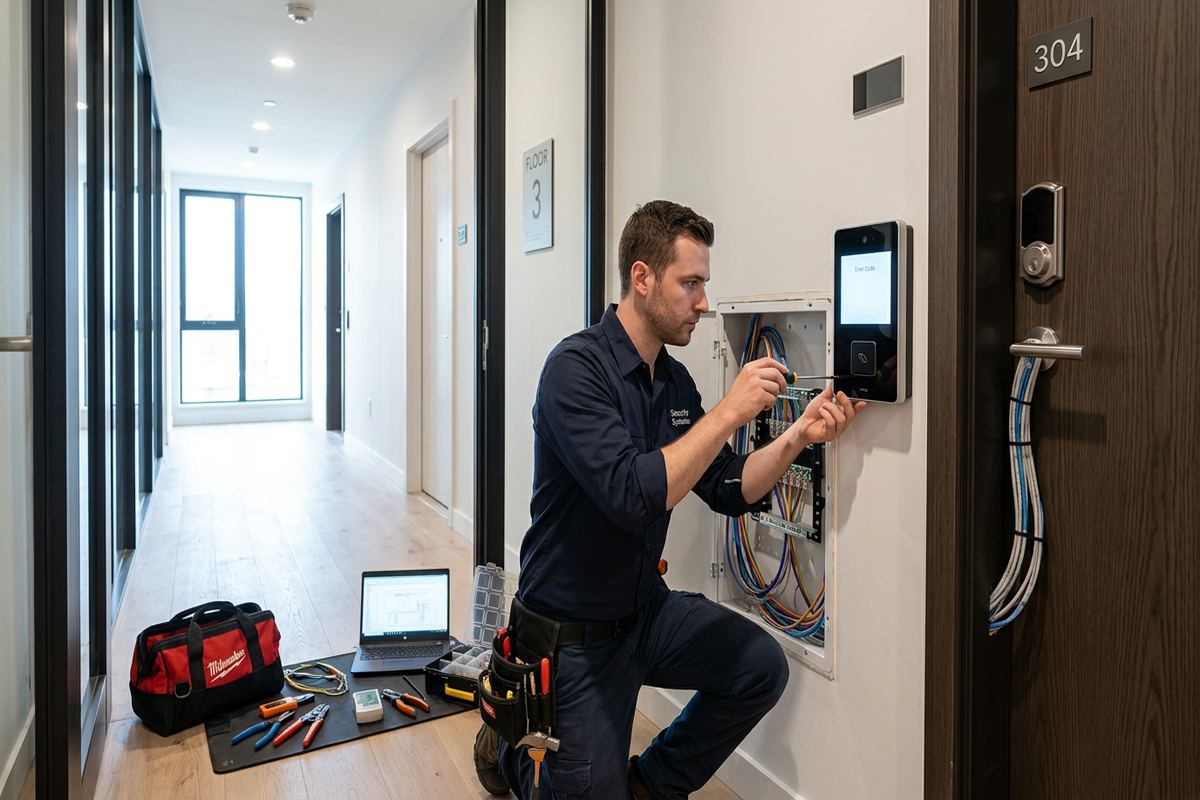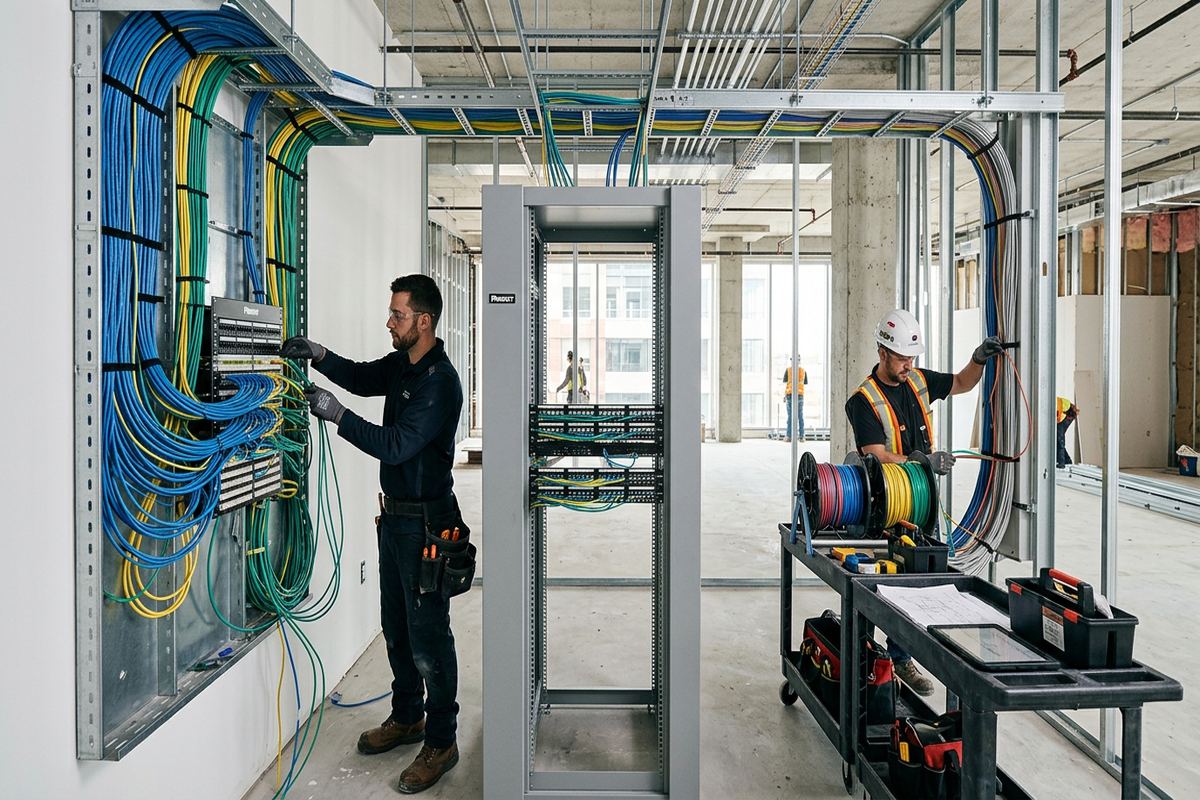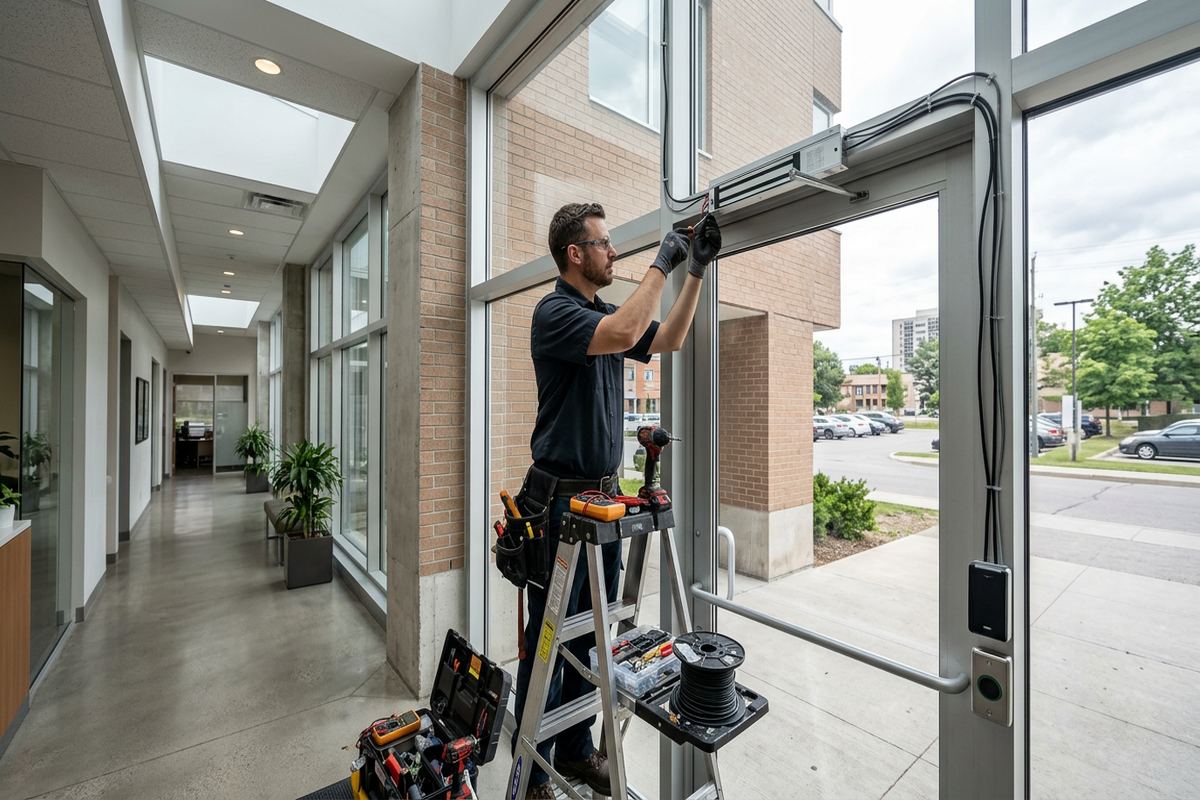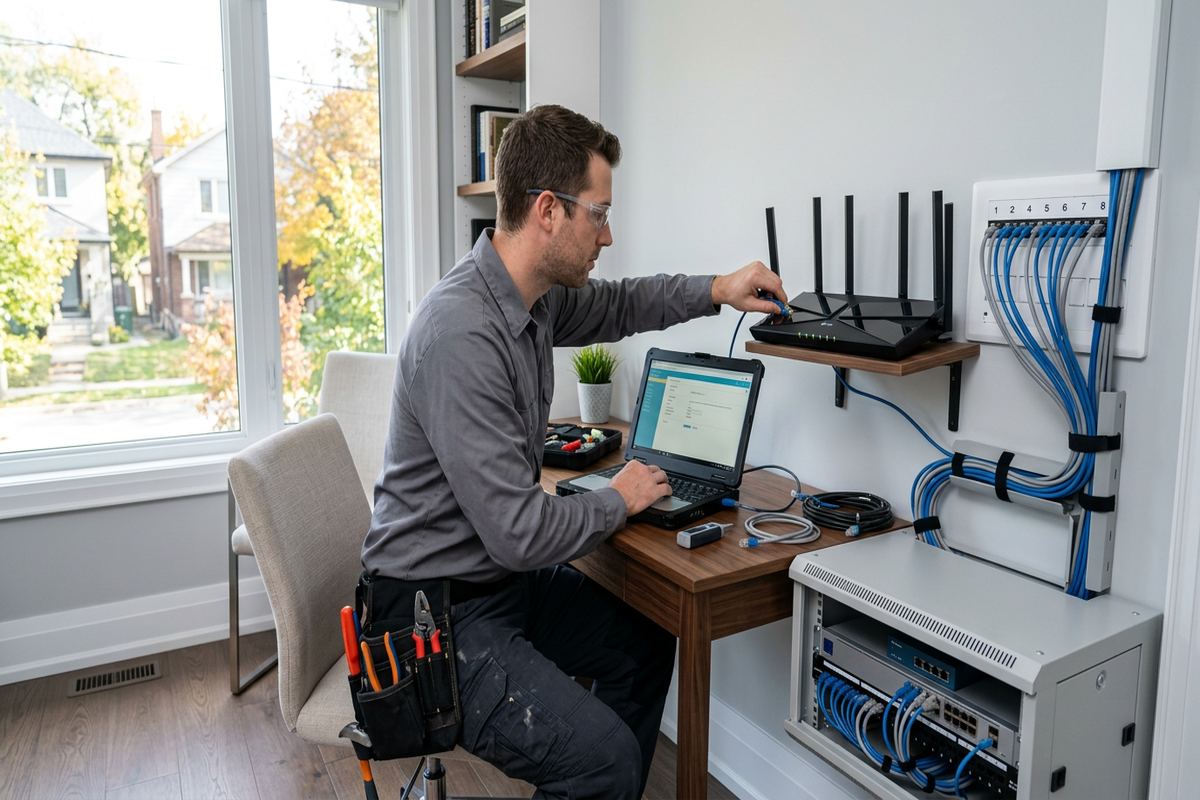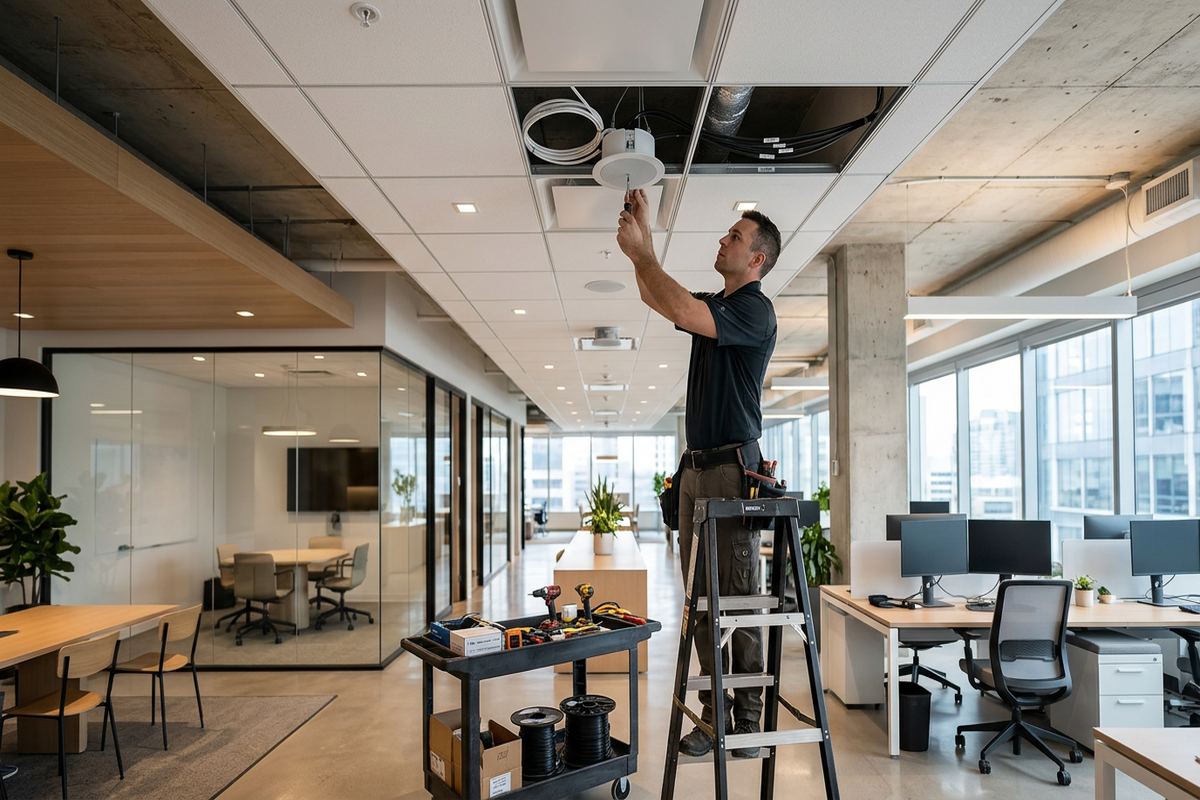
UnifiedLink installs office access control systems in Collingwood, from single-door keyless entry to networked systems covering multiple entrances and restricted rooms. We assess the property, door hardware, cable routes, network and operating requirements before pricing. Each installation includes on-site configuration, customer-controlled credentials and clear documentation for ongoing administration.
Planning Office Access Control in Collingwood
An effective access control system begins with the doors, not the software. During a Collingwood site assessment, UnifiedLink reviews each opening, existing lockset, frame, door closer, exit hardware and available cable path. We also discuss who needs access, when access should be permitted and how staff changes will be managed. This establishes whether a door needs an electric strike, magnetic lock, electrified hardware or another arrangement. The written scope then records device placement, equipment, routes, exclusions, ownership and warranty information before installation work begins.
Office layouts vary considerably across Downtown Collingwood storefronts, converted buildings, professional suites and newer commercial units. A framed interior office door presents different requirements from a masonry exterior entrance or shared condominium vestibule. Older construction can hide inaccessible cavities, previous wiring and uneven frames, while newer spaces may have suspended ceilings and practical pathways. We inspect these conditions rather than assuming a standard installation. Where landlord, condominium or property-management approval applies, the required drilling, common-area work and connection points should be confirmed before cables or door hardware are installed.
Access decisions should reflect ordinary office operations as well as unusual events. We map employee entrances, visitor arrival, deliveries, cleaning access, server rooms, stock areas and management offices. The design must preserve safe egress while giving administrators useful control over credentials and schedules. It should also define what occurs during a power interruption, network outage or door fault. For Collingwood offices serving seasonal activity around the Blue Mountain area, separate schedules can help manage changing staff, contractors and operating hours without circulating physical keys among multiple people.
- Door and frame assessment before equipment selection
- Review of staff, visitor and contractor workflows
- Power, network and outage planning
- Written scope before pricing
- Approval requirements identified before drilling
Choosing Readers, Credentials and Door Hardware
Card, fob and mobile credentials each offer different administrative and practical benefits. Cards and fobs are straightforward to issue, while supported mobile credentials may reduce the need for a separate item. The important feature is controlled enrolment and prompt removal when access changes. UnifiedLink configures permissions using the customer’s own administrative credentials, rather than retaining control of the system. We also identify whether reception needs a release button, whether managers require event review and whether individual doors need time schedules, door-held alerts or remote unlocking from an authorized device.
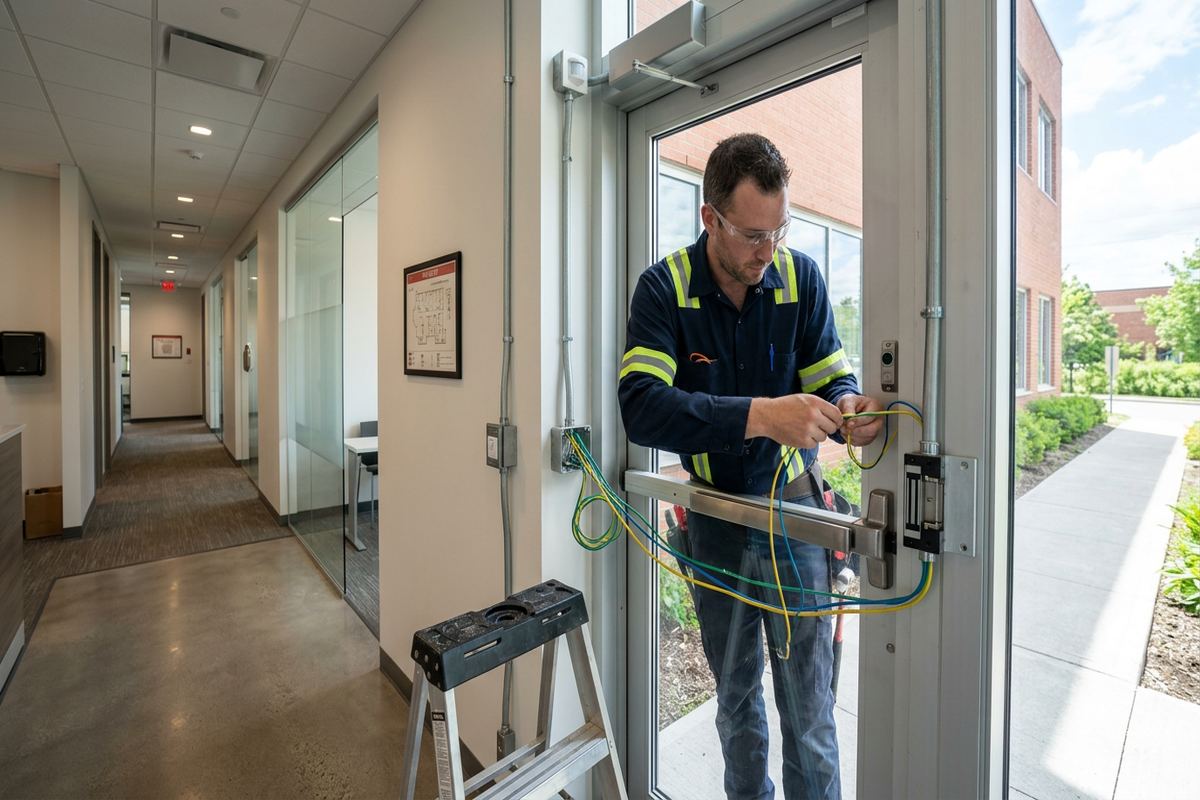
Door hardware has to match the opening and its daily use. An electric strike may suit some latch arrangements, but it is not automatically correct for every frame. Magnetic locks require careful consideration of life-safety release methods and applicable door operation, while electrified panic hardware can be appropriate on certain commercial exits. Glass entrances, narrow frames, paired doors and automatic operators introduce additional interfaces. We document the proposed locking method and supporting components so the customer can understand how entry, free egress, fire-alarm interaction where required, and mechanical key override will work.
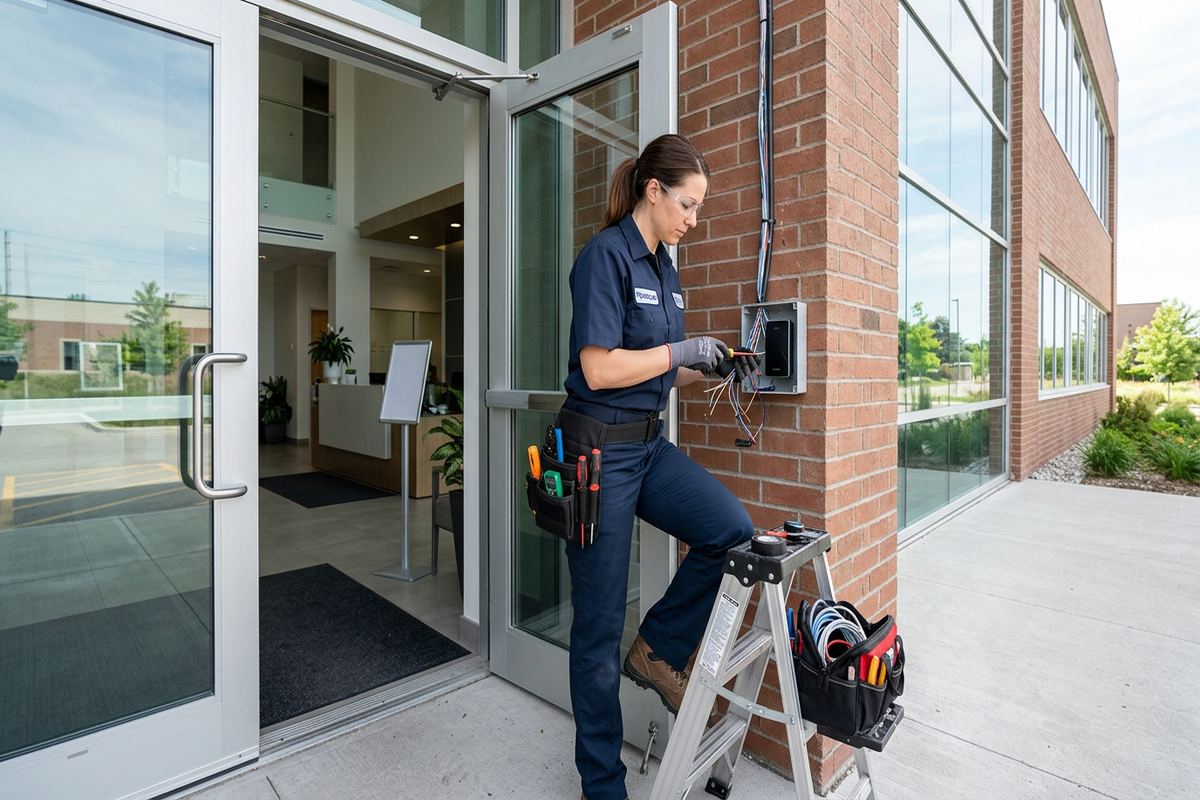
Exterior readers in Collingwood face snow, moisture, road salt and repeated freeze-thaw conditions. Mounting details therefore matter as much as product selection. Cable penetrations should be positioned and sealed to limit water entry, exposed fasteners should suit the location, and devices should not create paths into a wall assembly. Masonry construction may require surface raceway or carefully planned drilling, whereas frame construction can offer concealed routes if cavities remain accessible. We avoid unsupported exterior connections and place controllers and power equipment in suitable protected indoor locations whenever the design permits.
- Card, fob or supported mobile credentials
- Electric locking matched to each door
- Free-egress requirements included in planning
- Weather-conscious reader mounting and sealing
- Protected controller and power-supply locations
Cabling Access Control Systems in Collingwood Offices
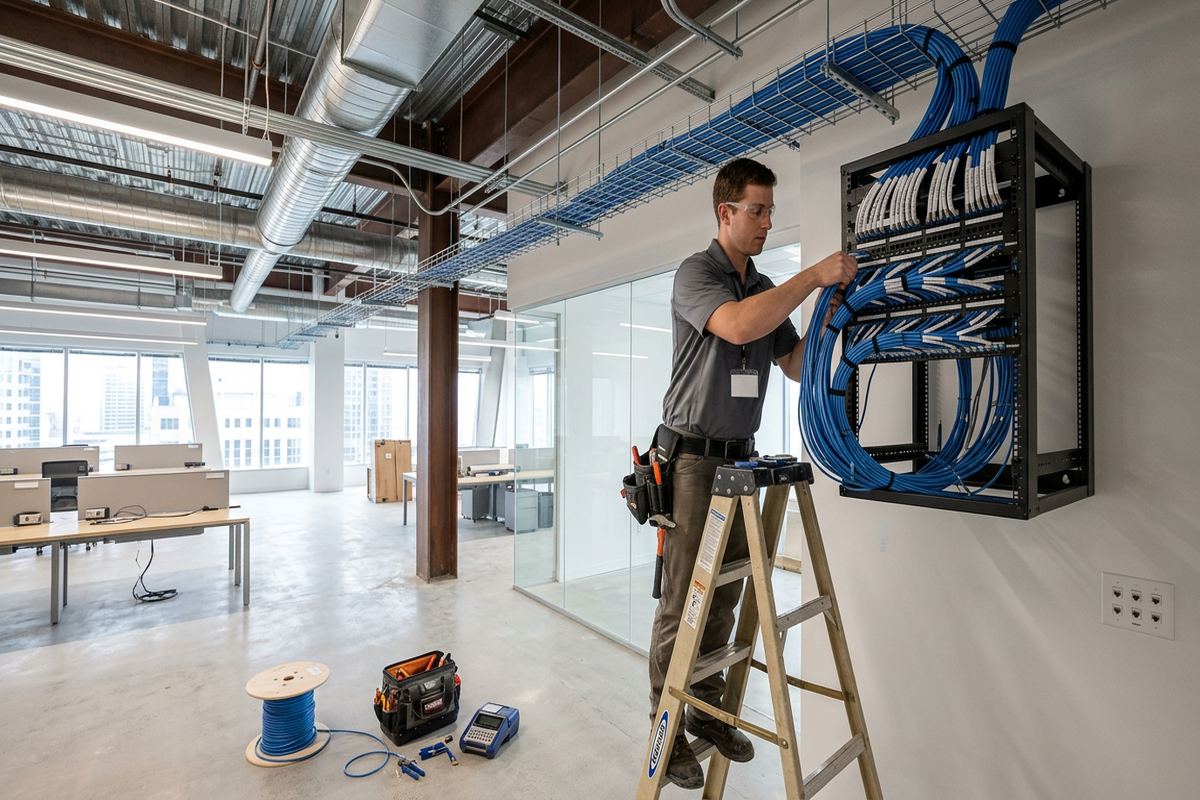
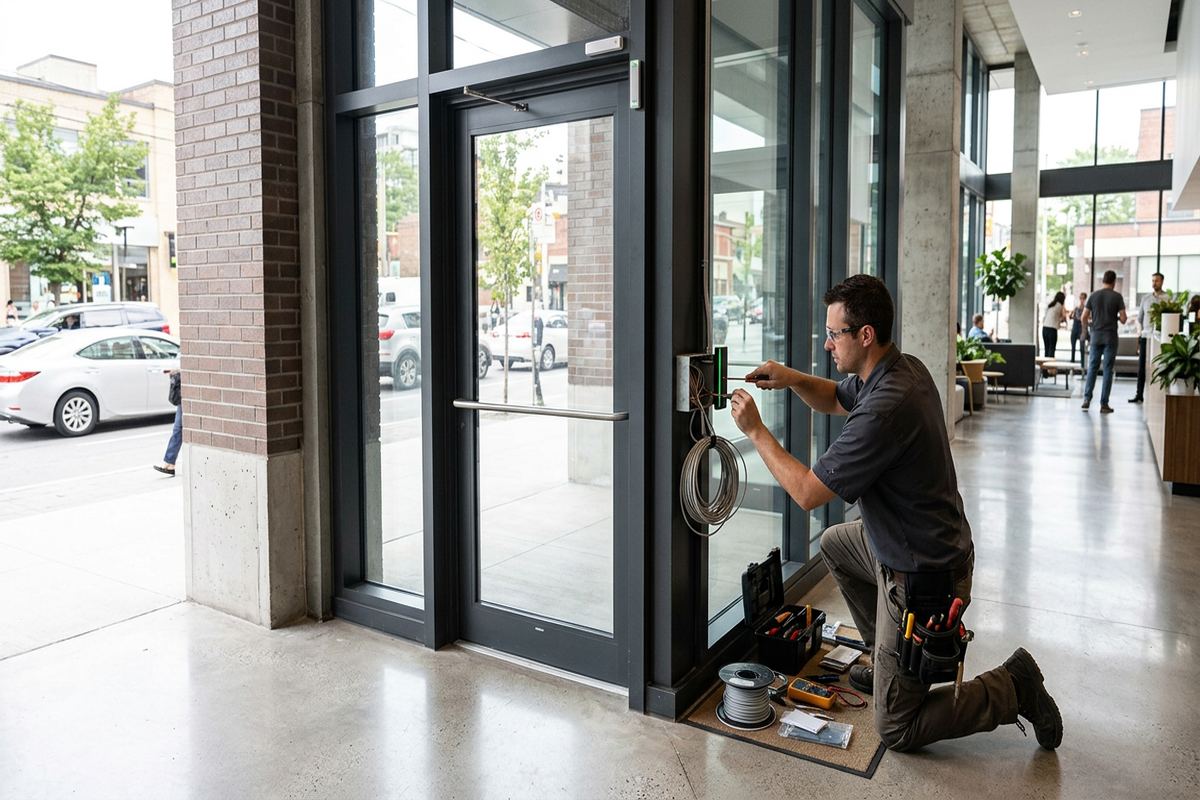
Access control depends on several low-voltage connections working together. A typical controlled opening may require wiring for the reader, lock, door-position contact and request-to-exit device, with additional conductors for specialized hardware. UnifiedLink installs continuous labelled cable runs between devices and the designated control location, avoiding undocumented joins hidden above ceilings or inside walls. Cable type, conductor count and routing are selected around the proposed equipment and distance. At completion, labels and the as-built record help identify each run, which makes future testing or expansion more direct.
Existing Collingwood offices often require routes through a mixture of finished ceilings, service rooms, masonry demising walls and wood- or steel-frame partitions. Downtown properties may offer limited ceiling access, while commercial strips and industrial units can have longer open routes or exposed structure. We look for practical pathways that protect the cable without creating unnecessary visible raceway. Fire separations, shared building spaces and landlord conditions must be respected. Any exclusions, inaccessible areas or restoration responsibilities are recorded in the scope so responsibilities remain clear before installation starts.
Network planning is also part of the assessment when controllers, management software or remote functions depend on connectivity. The access control system should not be placed on an office network without agreement on addressing, switching, firewall requirements and administrative ownership. Where power over Ethernet applies to specific equipment, available switch capacity and backup expectations need review. Reliable Wi-Fi may support authorized mobile administration, but critical door operation should follow the selected system architecture rather than rely casually on wireless coverage. Credentials and event records must remain accessible only to authorized customer personnel.
- Continuous labelled low-voltage cable runs
- Reader, lock and door-monitor connections
- Routes planned for masonry and framed walls
- Network requirements reviewed with customer IT
- As-built cable and device records
Collingwood, Ontario
Office access control installation in Collingwood, scoped in writing first
Book a site assessment and get equipment, routes, exclusions, and warranty on paper before anything is installed.
Access Management for Collingwood Workplaces
Replacing shared keys with individual credentials gives an office a clearer method for handling personnel changes. Administrators can assign permissions by door, person and schedule, then disable a lost credential without changing every mechanical cylinder. This is useful for offices with full-time employees, temporary staff, cleaners and contractors who should not all receive identical access. In Collingwood, businesses with seasonal staffing can prepare limited permission groups before busy periods, then remove or suspend access when assignments end. Mechanical key control can still remain part of the operating plan where appropriate.
Event history can support routine administration, but it should not be treated as a substitute for workplace policy or video verification. The system records events available from the installed equipment, such as accepted credentials, rejected attempts or monitored door conditions. We help identify which alerts are operationally useful and who should receive them. Too many notifications are commonly ignored, so a practical configuration focuses on conditions requiring action. Customer administrators should also establish how long records are retained, who may review them and how privacy obligations apply within their organization.
Remote access requires both secure configuration and dependable connectivity. This is particularly relevant for resort properties, chalets and short-term rentals around Collingwood and the Blue Mountain area, where an authorized manager may not remain on site. Reliable Wi-Fi coverage may be needed for mobile administration or connected devices, depending on the platform, while wired controllers still require stable network service. We review the intended workflow rather than promising that every function can operate remotely. The final scope identifies dependencies so owners understand what happens when internet, local network or electrical service is unavailable.
- Individual permissions instead of shared keys
- Scheduled access for staff and contractors
- Lost credentials disabled without rekeying
- Useful door events and alerts configured
- Remote functions reviewed for network dependency
Retrofits, Renovations and Tenant Approvals
A retrofit should preserve usable door hardware where it is compatible, but existing components must be inspected rather than assumed suitable. Worn closers, misaligned latches and loose hinges can prevent a controlled door from closing reliably even when the electronics work correctly. Freeze-thaw movement at exterior Collingwood entrances can make alignment problems more noticeable through winter. We identify visible mechanical concerns during assessment and state whether correction falls within the proposed work or requires a locksmith, door contractor or other trade. This prevents an electrical solution from being applied to a mechanical problem.
Renovation projects offer an opportunity to coordinate cable pathways before walls and ceilings close. Access control rough-in should be aligned with door schedules, millwork, electrical service, network locations and final hardware selections. If a reader position changes after finishing, the result may involve exposed raceway or additional restoration. UnifiedLink can provide the low-voltage scope needed for coordination and then verify openings before final device installation. Cable remains labelled at both ends, and controller locations are kept accessible for service rather than concealed behind fixed construction or stored materials.
Tenants in Georgian Meadows, Creekside, Lighthouse Point or other managed properties may need written permission before changing an exterior door, common vestibule or shared wall. Condominium rules, lease conditions and property standards can affect reader placement, cable routes and visible equipment. Approval should also establish who owns installed hardware when a tenancy ends. We document equipment ownership in the written scope and identify approval-dependent work. The customer remains responsible for obtaining required property authorization unless another arrangement is expressly included, reducing the chance of disputed drilling or unauthorized changes.
- Existing hardware inspected for compatibility
- Mechanical door issues separated from electronics
- Rough-in coordinated before finishes close
- Landlord or condominium approval considered
- Equipment ownership stated in writing
Installation and Configuration in Collingwood
Once the scope is approved, installation follows the documented door list and cable plan. Technicians mount readers, contacts, exit devices, control equipment and specified locking interfaces, then terminate and label each run. Exterior penetrations are sealed for the mounting condition, with particular attention to moisture exposure and winter weather in Collingwood. Device placement must remain practical for users without interfering with trim, accessibility hardware or normal door movement. If concealed conditions differ materially from the assessment, the change is discussed rather than covered by an undocumented field decision.
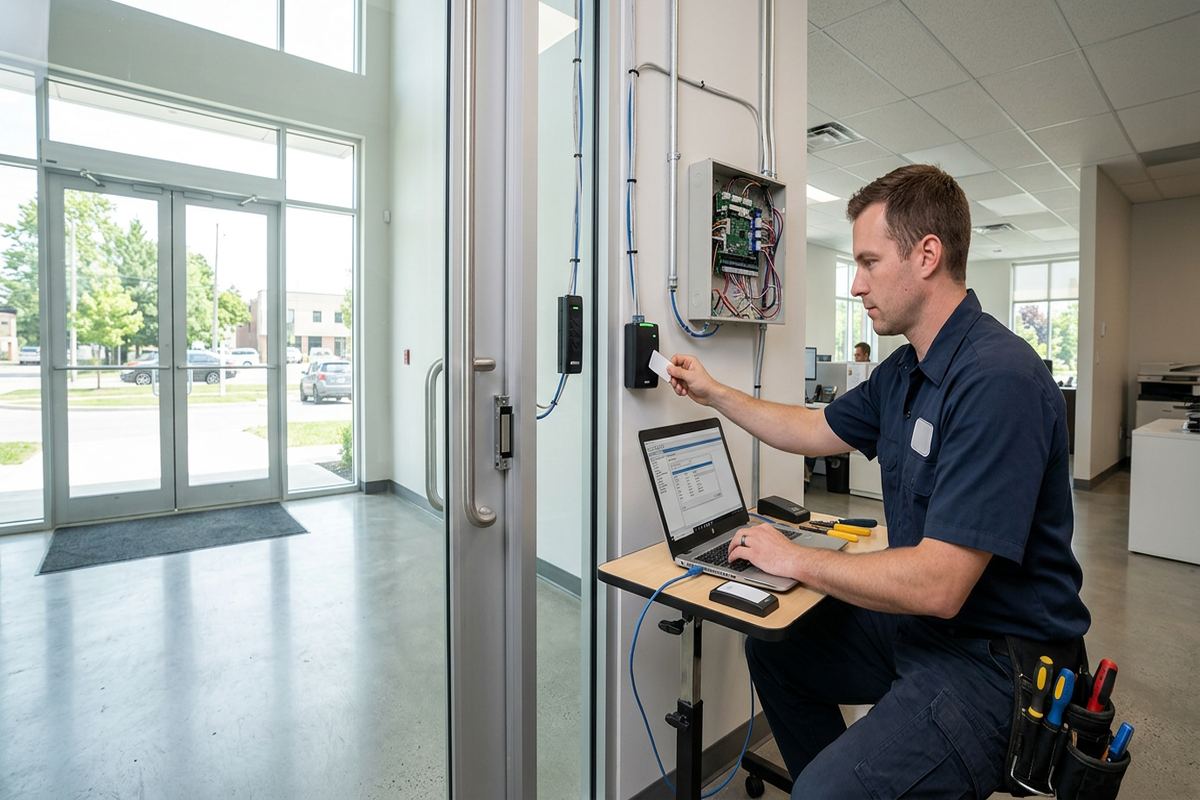
On-site configuration turns installed components into an operating system. We create the agreed doors, schedules, permission groups and initial authorized administrators using credentials owned by the customer. Door status, reader response, locking action and request-to-exit operation are checked at each controlled opening. Where an approved interface with another system is included, its expected response is also tested. Testing includes ordinary entry and exit as well as selected fault or outage conditions supported by the design. Results that depend on third-party services or customer networks are identified during commissioning.
Handover gives the customer practical control after the installers leave. UnifiedLink provides the customer’s own administrative credentials, explains routine user enrolment and removal, and supplies an as-built record showing installed devices and relevant cable information. The handover also identifies equipment ownership, warranty details and exclusions stated in the scope. Office managers should nominate more than one authorized administrator internally and store recovery information securely. We do not recommend sharing a generic password among staff, because that weakens accountability and makes personnel changes harder to manage safely.
- Installation follows the approved door schedule
- Every continuous cable run is labelled
- Readers and locks tested at each opening
- Customer receives its own administrator credentials
- As-built information included at handover
Integrating Access Control with Office Systems
Access control can operate as a focused door-management system or form part of a broader low-voltage plan. Offices may want nearby security cameras to provide visual context for entrances, intercoms to support visitor screening, or alarm contacts to report selected door conditions. These functions require compatible equipment and a defined integration method; devices should not be described as integrated merely because separate applications are installed. During assessment, UnifiedLink identifies the desired outcome, available interfaces and responsibility for each system before including integration work in the written scope.
Visitor entry deserves separate planning from employee access. A reception desk may release a door after speaking with a visitor, while an unattended entrance may use an intercom or other approved workflow. Delivery access should not automatically provide entry to private offices, storage rooms or network spaces. For Downtown Collingwood businesses near busy pedestrian areas, a controlled public entrance can help staff manage arrival without giving every visitor unrestricted movement. The selected method should remain simple enough that employees use it consistently rather than propping doors open during operating hours.
Expansion is easier when the initial design considers likely future doors, even if they are not installed immediately. Controller capacity, enclosure space, power requirements, network ports and cable pathways can all influence the cost and disruption of later additions. We distinguish between installed capacity and merely proposed capacity so the customer knows what is actually included. For an office moving into adjacent space or adding a warehouse area in a Collingwood industrial unit, early pathway planning may avoid reopening finished surfaces while still preventing unnecessary equipment purchases before requirements are confirmed.
- Camera and intercom options reviewed for compatibility
- Visitor release separated from staff credentials
- Alarm interfaces defined before installation
- Future doors considered during controller planning
- Installed and proposed capacity clearly distinguished
Getting a Written Access Control Scope in Collingwood
Pricing follows a site assessment because door construction, hardware, routing and management requirements cannot be established accurately from a door count alone. A single exterior masonry opening may need different labour and components from several interior frame doors. UnifiedLink reviews the location, requested functions and available infrastructure before preparing a written scope. Site assessment timing depends on the service and travel distance. Requests sent during business hours are answered the same day, while after-hours requests are answered the next business day. These response terms apply to the request, not guaranteed attendance.
The written scope is intended to make comparison and approval practical. It covers proposed equipment, cable routes, device placement, exclusions, equipment ownership and warranty details. It should also identify customer-provided network, electrical, door or approval requirements. For a Collingwood tenant, that may include landlord authorization; for a condominium office, it may include common-area conditions; and for an owner-occupied commercial unit, it may involve coordination with other trades. Clear boundaries reduce assumptions about patching, painting, locksmith work, internet service or modifications outside low-voltage installation.
Using one accountable contractor for the defined access control work helps keep door devices, cabling, configuration and handover aligned. That does not mean unrelated trades are hidden inside the scope. Where electrical, fire-alarm, locksmith, glazing or major door repair work is required, responsibilities should be identified and coordinated openly. The finished system should match the approved operational plan, provide safe everyday use and leave the customer able to administer credentials. For Collingwood offices, the next step is a site-specific review of doors, users, network conditions and property restrictions.
- Site assessment completed before pricing
- Written equipment and cable-route scope
- Exclusions and trade responsibilities identified
- Ownership and warranty details recorded
- One accountable access control contractor
Collingwood neighbourhoods we cover
- Downtown Collingwood
- Blue Mountain area
- Georgian Meadows
- Creekside
- Lighthouse Point
Office access control installation in Collingwood — common questions
Can you add access control to an older Collingwood office?
Yes, subject to the door, frame and available cable routes. Older Collingwood properties may combine masonry walls, finished ceilings, previous wiring and non-standard hardware. We assess each opening before pricing and identify whether concealed cabling, surface raceway, door repair or another trade is required. The written scope records the proposed hardware, routes and exclusions.
Do I need landlord or condominium approval?
Approval may be required when work affects an exterior door, common area, shared wall or building-owned hardware. This is relevant in leased offices and managed properties around Collingwood, including condominium settings. We can document proposed reader positions, penetrations and routes for review, but the customer remains responsible for obtaining property authorization unless the written scope expressly assigns that task elsewhere.
Will the system work during a power or internet outage?
The answer depends on the selected hardware, power arrangement and system architecture. Door operation during an outage must be planned around safe egress, locking requirements and any included backup power. Some local functions may continue without internet, while remote administration may not. For each Collingwood installation, we explain relevant dependencies and test supported outage behaviour during commissioning.
Can I manage staff access remotely?
Many systems support remote administration, but available functions depend on the chosen platform, network and customer security settings. Reliable connectivity is especially important for Collingwood resort properties, chalets and remotely managed locations near the Blue Mountain area. We review the intended workflow, configure authorized administrators and identify what will or will not work if internet or local network service is unavailable.
Can access control connect with cameras or an intercom?
It can when the selected products provide compatible interfaces and the required outcome is defined. A camera may provide visual context for an entrance, while an intercom can support visitor screening and authorized door release. We confirm compatibility, cabling and system responsibilities before including integration in a Collingwood scope rather than assuming separate devices will communicate automatically.
What do we receive after installation?
Handover includes on-site configuration, customer-owned administrative credentials and an as-built record covering installed devices and relevant cable information. We also explain routine credential enrolment and removal, and provide the ownership, warranty and exclusion details stated in the written scope. Your Collingwood office retains administrative control instead of depending on installer-held credentials for ordinary staff changes.
Coverage in Collingwood is confirmed against the address before we quote. See everything we install in Collingwood or the province-wide office access control installation page.