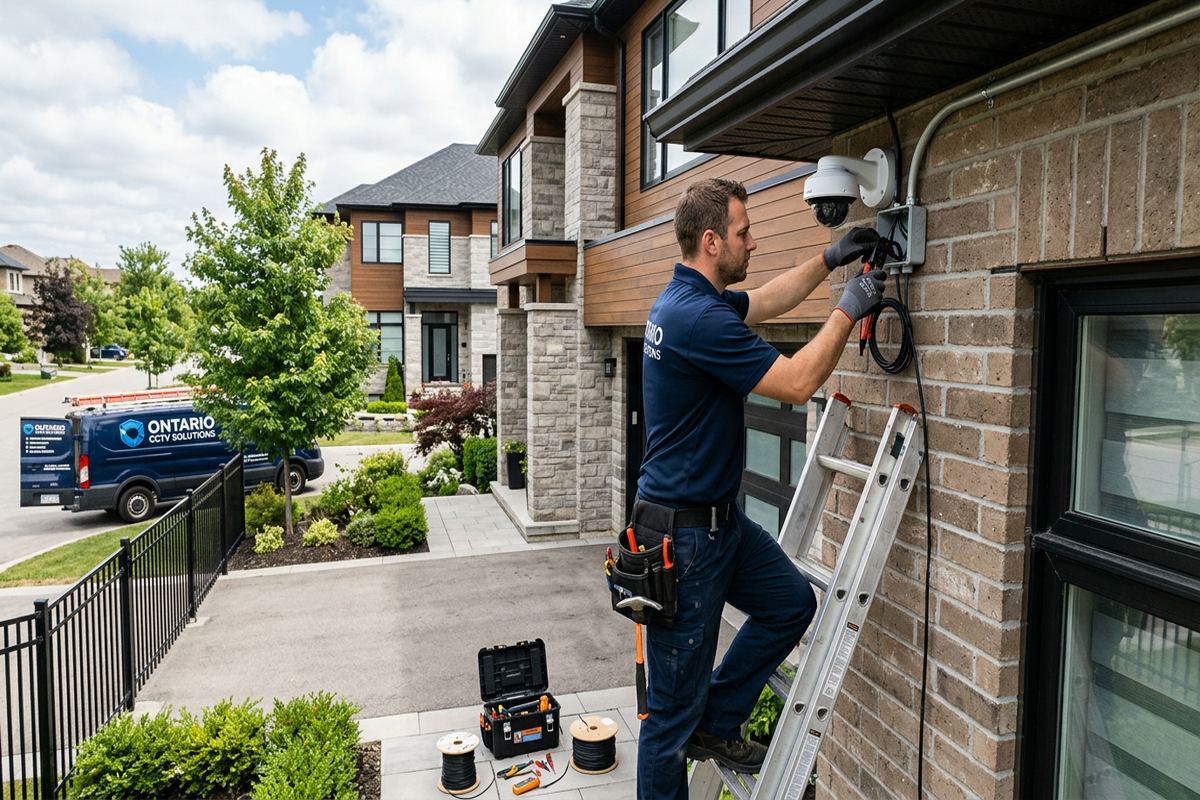
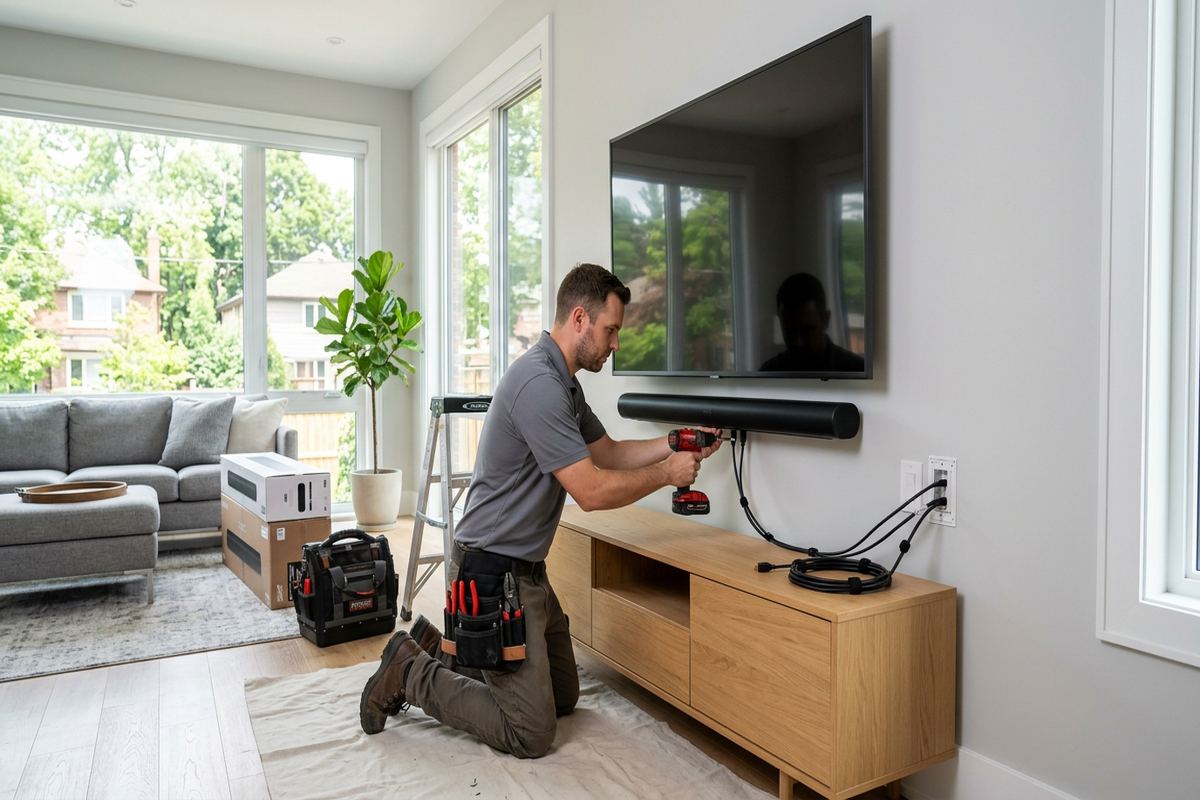
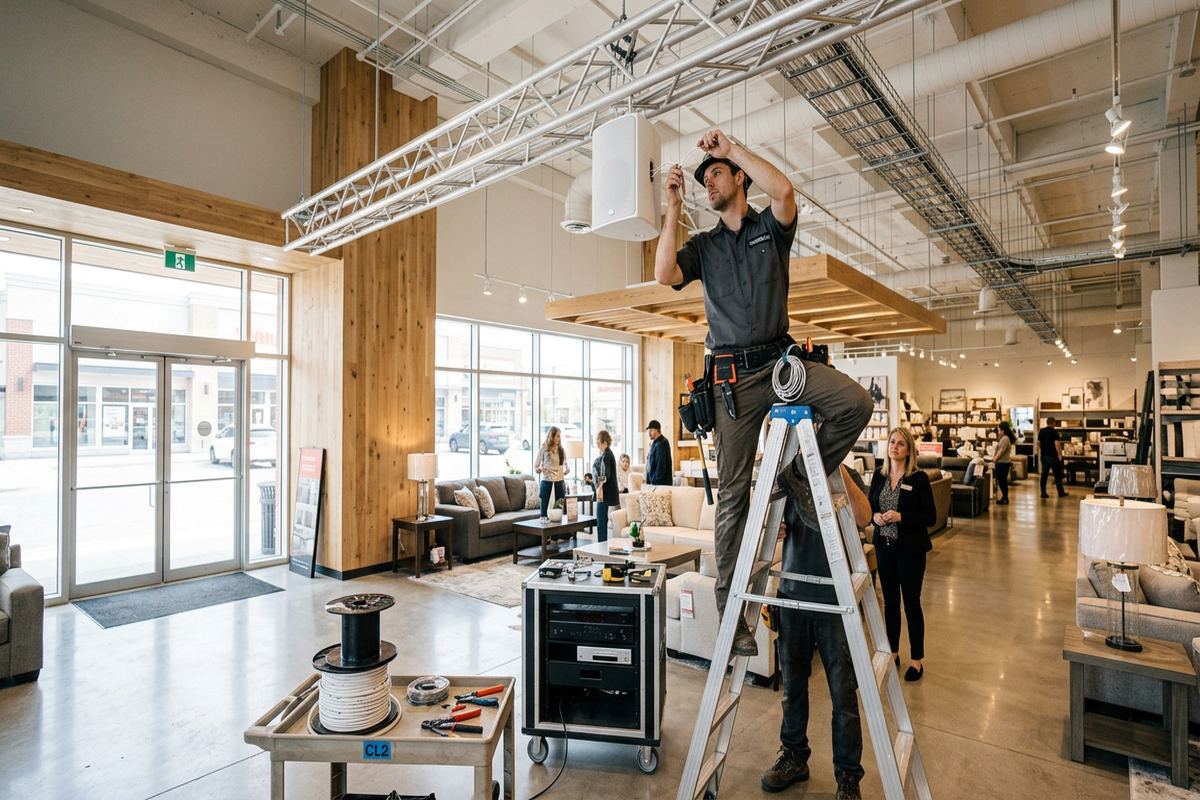
UnifiedLink installs in-ceiling speaker systems for homes, chalets, short-term rentals, resort properties and commercial spaces in Collingwood. We assess room use, ceiling construction, Wi-Fi coverage, cable routes and control requirements before pricing. The result is a documented audio system with appropriate speaker placement, labelled wiring, on-site configuration and straightforward control through the customer’s own accounts.
In-Ceiling Speaker Planning for Collingwood Properties
Good in-ceiling audio begins with the room rather than a speaker catalogue. During a site assessment, UnifiedLink reviews ceiling height, seating positions, reflective surfaces, insulation, framing, available cavities and likely listening levels. A living room used for television needs different coverage from an open kitchen, rental games room or quiet office. We also identify where amplifiers, network equipment and source devices can be housed with suitable ventilation and service access. This planning reduces uneven volume, excessive bass, blocked speaker locations and visible changes made after installation has started.
Collingwood properties include newer frame construction, renovated older buildings, chalets, condominiums and resort units with very different access conditions. A clear attic above a ceiling may permit straightforward routing, while finished floors, masonry walls or layered renovations can require more careful investigation. We do not assume that every proposed location is open or suitable. Where access is limited, the written scope identifies practical routes, expected openings, exclusions and any patching or finishing responsibility before work proceeds, helping owners understand what the installation involves.
Speaker quantity and position are selected to produce useful coverage without making every room unnecessarily loud. Closely spaced speakers operating at moderate levels often provide more consistent background audio than a small number of speakers driven hard. Placement also considers ceiling lights, sprinklers, smoke alarms, joists, ducts and fans. In multi-use spaces, zones can separate dining, kitchen, lounge and outdoor areas. The design is documented with equipment, device placement, cable routes, equipment ownership and warranty information so the final installation can be checked against an agreed scope.
- Room-by-room listening and control requirements
- Ceiling cavity and framing review
- Proposed speaker and equipment locations
- Written scope before installation
Choosing Speakers, Amplification and Audio Zones
An in-ceiling speaker is only one part of the system. Amplifier capacity, speaker impedance, wiring method, source equipment and control platform must work together. We assess whether the project needs simple stereo playback, television audio, several independent music zones or paging and background music for a business. Speaker size and type are matched to the intended use rather than chosen only by appearance. Where moisture or temperature changes are relevant, equipment must be selected for that environment instead of using ordinary indoor speakers in unsuitable locations.
For a chalet or short-term rental, controls should be understandable without exposing the owner’s administrative account. Guests may need straightforward access to approved sources, while owners or managers need reliable remote access for support and resets. These functions depend on stable networking as well as audio hardware. In the Blue Mountain area and other resort properties, we assess Wi-Fi coverage around amplifiers, streaming devices and control points. Wired network connections are preferred where practical because they reduce dependence on congested or weak wireless links for fixed equipment.
Zoning allows different parts of a property to operate independently. A Collingwood home might combine a kitchen and dining zone, a separate television room, bedrooms and a deck, while a commercial space may divide customer, staff and meeting areas. We establish whether each zone needs separate volume, source selection or scheduling. The written design also states where amplifiers and network components will be installed, how heat will be managed and who owns the associated accounts. This avoids control conflicts and makes future service or expansion easier to plan.
- Stereo, television and multi-zone options
- Amplification matched to speaker load
- Independent source and volume control
- Wired networking for fixed audio equipment
Cable Routes and Ceiling Access in Collingwood
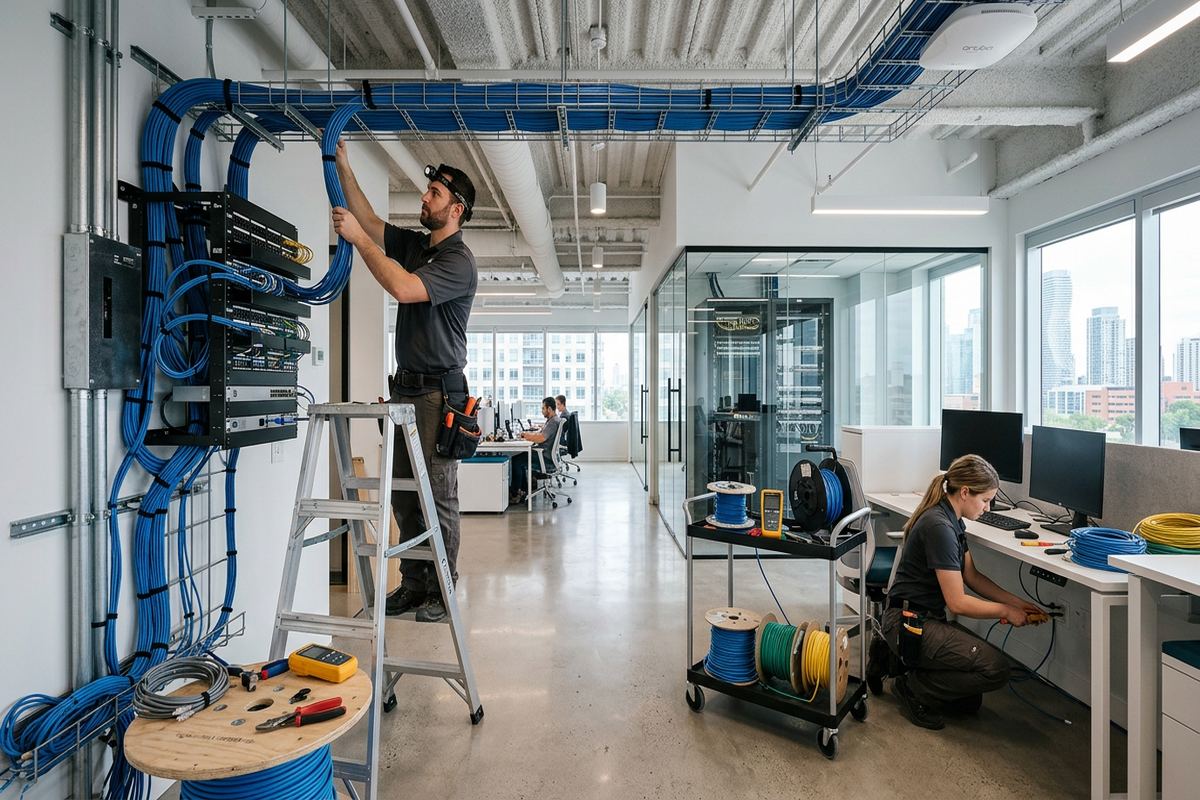
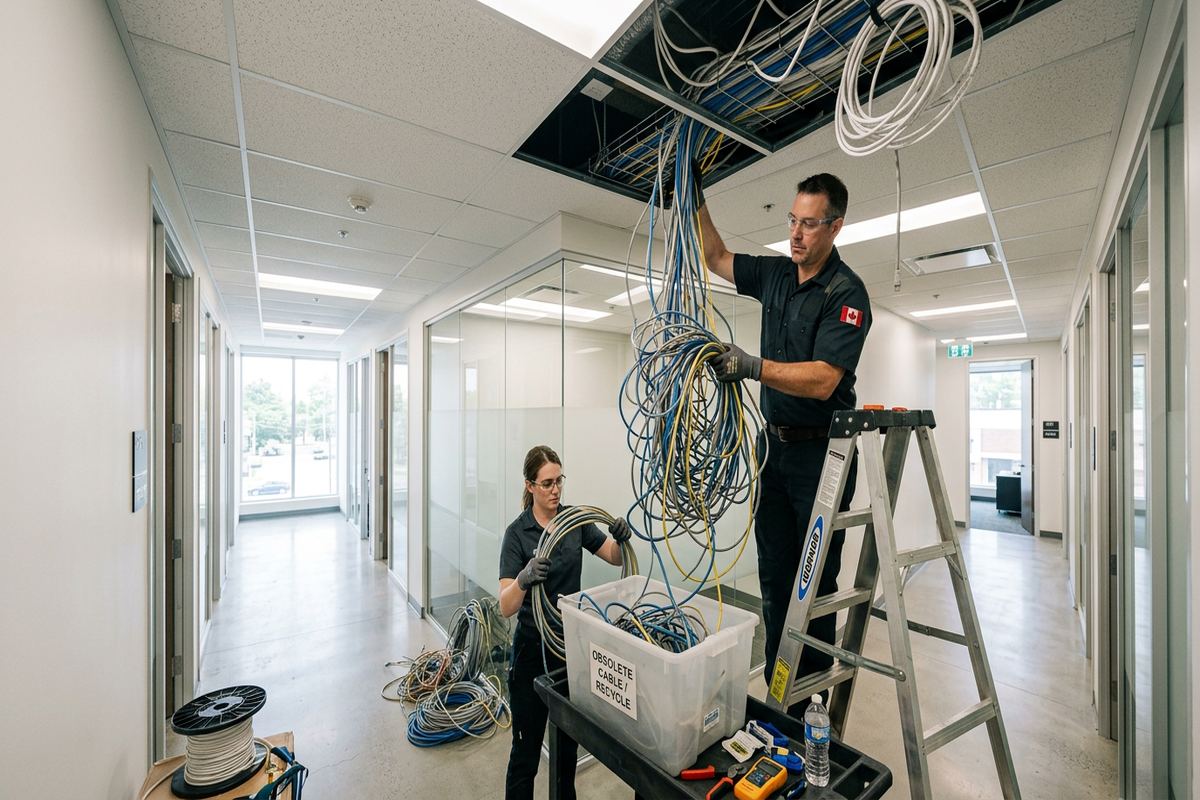
Cable routing is planned before speaker openings are cut. UnifiedLink uses continuous labelled runs between the equipment location and each speaker or defined connection point, avoiding hidden joins that complicate troubleshooting. Routes must account for joists, engineered framing, insulation, plumbing, electrical wiring and heating equipment. Where ceilings are finished on both sides, access may require carefully placed openings or an alternate route through a basement, attic, closet or service space. The site assessment establishes what can be verified and which concealed conditions may only become visible during the work.
Older buildings around Downtown Collingwood may contain additions, changed ceiling levels, masonry sections or renovations completed in several stages. A route that appears direct on a floor plan can be blocked by solid headers, strapping or inaccessible cavities. Masonry construction usually calls for different drilling and fastening methods than wood-frame construction, and cable paths should not compromise fire separations or structural components. We identify practical pathways and explain visible raceway or limited access options when concealed routing is not reasonable. Any required restoration remains clearly assigned in the written scope.
Newer homes in Georgian Meadows or Creekside can still present routing constraints, particularly where ceilings contain dense mechanical services or insulation. Vapour barriers and air seals must be treated carefully because unnecessary penetrations can contribute to drafts or condensation. Collingwood winters and repeated freeze-thaw conditions make proper sealing especially important near exterior walls, roof spaces and transitions to outdoor audio areas. If cable passes through an exterior envelope, the route, fitting and sealant must suit the surface and exposure rather than relying on an unprotected hole or interior-only material.
- Continuous cable without concealed splices
- Labels at speakers and equipment points
- Routes coordinated with building services
- Exterior penetrations sealed for exposure
Collingwood, Ontario
In-ceiling speaker installation in Collingwood, scoped in writing first
Book a site assessment and get equipment, routes, exclusions, and warranty on paper before anything is installed.
Installation, Cutting and Physical Protection
Once the route and placement are confirmed, ceiling openings are measured against the actual speaker template. A check is made for framing, pipes, ducts and wiring before cutting, but concealed construction always requires controlled work and appropriate caution. Speakers are fitted securely without overtightening clamps or damaging fragile ceiling material. Where required, protective enclosures, support hardware or acoustic treatment can be included in the scope. The objective is a clean, serviceable fit with grilles aligned consistently and wiring left with enough managed slack for future inspection or replacement.
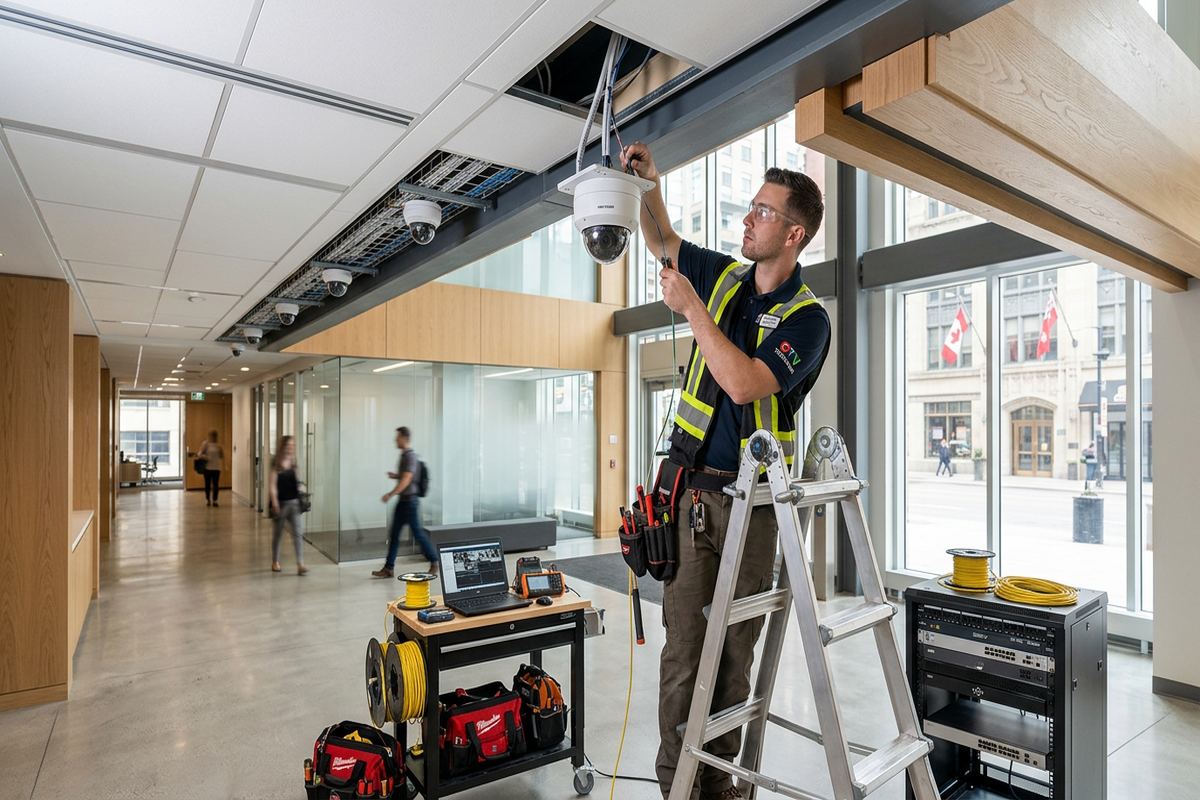
Ceiling material affects the installation method. Standard drywall, plaster, suspended tiles, wood finishes and acoustic panels do not accept the same cutting or support approach. Older plaster can crack beyond an opening if handled like modern drywall, while a suspended ceiling may need independent support rather than placing weight on a tile. In commercial strips or industrial units, open ceilings and steel structure can change both mounting and cable protection requirements. We confirm how the device will be supported and whether additional coordination with other trades is necessary.
Outdoor and semi-exposed audio requires particular care in Simcoe County. A covered porch may still experience wind-driven moisture, cold temperatures and seasonal condensation, while exterior wall penetrations face freeze-thaw movement. In-ceiling products are used only where their environmental rating and mounting arrangement are appropriate. Cable entries are positioned to limit water travel and are sealed with materials suited to the surrounding cladding or masonry. Equipment that should remain indoors, such as many amplifiers and streaming devices, is placed in a dry, ventilated location with practical access for service.
- Template-based cutting and alignment
- Mounting suited to ceiling material
- Managed cable slack for servicing
- Weather-aware treatment of exposed areas
Reliable Control and Wi-Fi for Collingwood Audio
Modern distributed audio often relies on an app, local network and internet services for source selection and control. Poor Wi-Fi can make a correctly wired speaker system appear unreliable, so network conditions are reviewed as part of planning. We check where users will operate the system, where streaming components will sit and whether existing access points provide suitable coverage. Fixed devices can use wired Ethernet where the equipment supports it. This separates core audio functions from avoidable wireless problems and provides a more dependable foundation for everyday use.
Chalets, short-term rentals and resort properties in Collingwood commonly need remote access, but remote access should not mean shared owner passwords. We configure supported platforms using the customer’s own credentials and discuss practical guest operation, manager access and device naming. A clearly labelled zone such as “Main Floor” is easier to support than an automatically generated device name. Where equipment permits, administrative control can remain with the owner while normal playback remains simple for occupants. The handover records the intended arrangement without retaining control of the customer’s account.
Lighthouse Point condominiums and other managed properties may have shared wireless conditions, construction rules or restrictions on network equipment. Concrete, masonry, metal framing and neighbouring networks can reduce coverage or interfere with assumptions made in a detached frame house. We distinguish between an audio fault and a network limitation before recommending changes. If Wi-Fi improvements are needed, access-point placement and cabling can be incorporated into the written scope. The system is then configured and tested on site using the final network arrangement, not a temporary installer account.
- Wi-Fi coverage reviewed before configuration
- Ethernet used where practical
- Owner-controlled accounts and credentials
- Clear names for rooms and zones
Condominiums, Rentals and Commercial Spaces
Approval requirements should be settled before drilling begins. Condominium corporations may regulate work hours, ceiling penetrations, common elements, fire separations and contractor access. Landlords may also require written permission for permanent speakers, cabling or equipment locations. UnifiedLink can provide a defined installation scope for the customer to submit, but the owner or tenant remains responsible for obtaining required approvals unless the scope states otherwise. This is particularly important where ceiling cavities contain shared building systems or where an opening could affect an assembly outside the individual unit.
Short-term rental systems should be durable, understandable and limited to controls guests actually need. Complicated combinations of remotes, personal accounts and loosely named zones create avoidable support calls. For Collingwood resort properties, we plan accessible playback while keeping network and administrative equipment in an appropriate location. Volume management, television integration and reset procedures can be considered during design. The final handover gives the owner or property manager the account arrangement, zone names and as-built record needed to manage the system without depending on undocumented installer credentials.
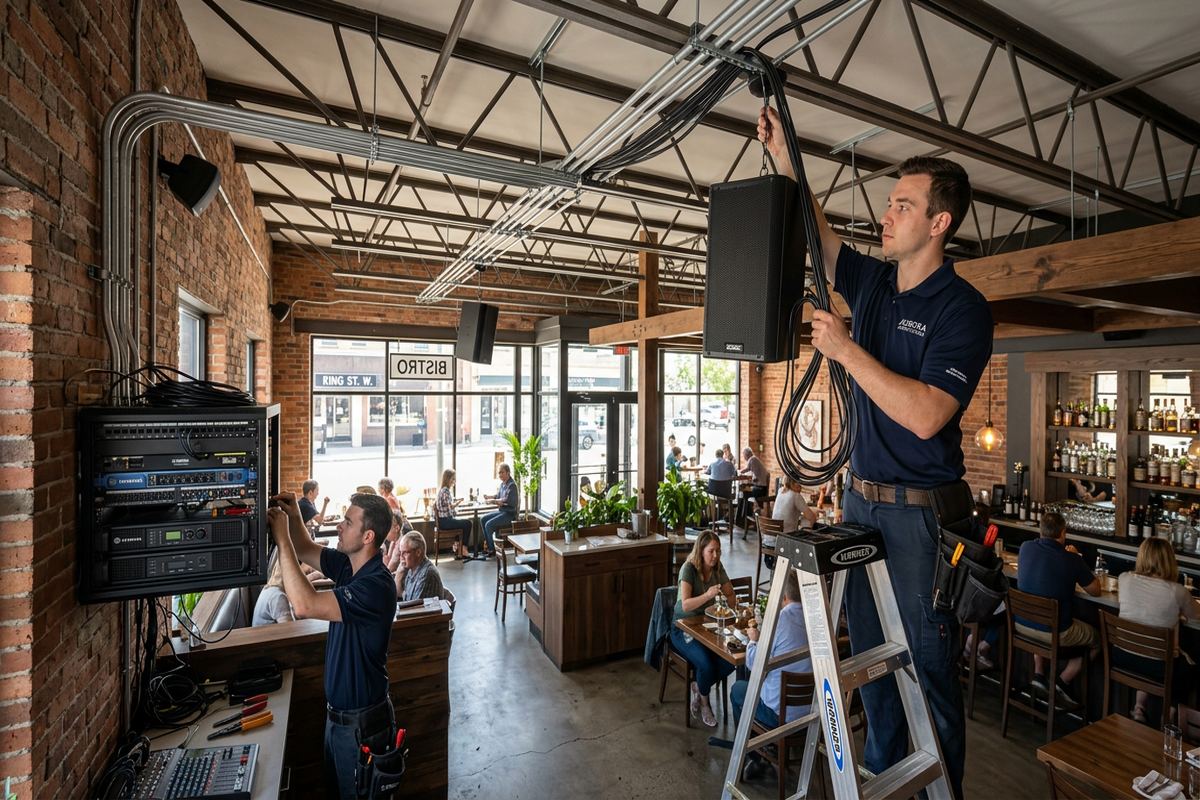
Commercial installations have different operating priorities from residential listening rooms. A shop, restaurant, office or industrial unit may need even background coverage, separate staff areas, scheduled operation or straightforward source control. Speaker placement must account for shelving, machinery noise, customer circulation and changing layouts. In Downtown Collingwood commercial spaces, older construction and neighbouring occupancies can also affect cable routes and acceptable sound levels. We document zones, equipment access and control responsibilities so staff can use the system consistently and future contractors can understand how it was installed.
- Scope suitable for approval review
- Practical guest and staff controls
- Documented administrative account ownership
- Coverage planned around operational noise
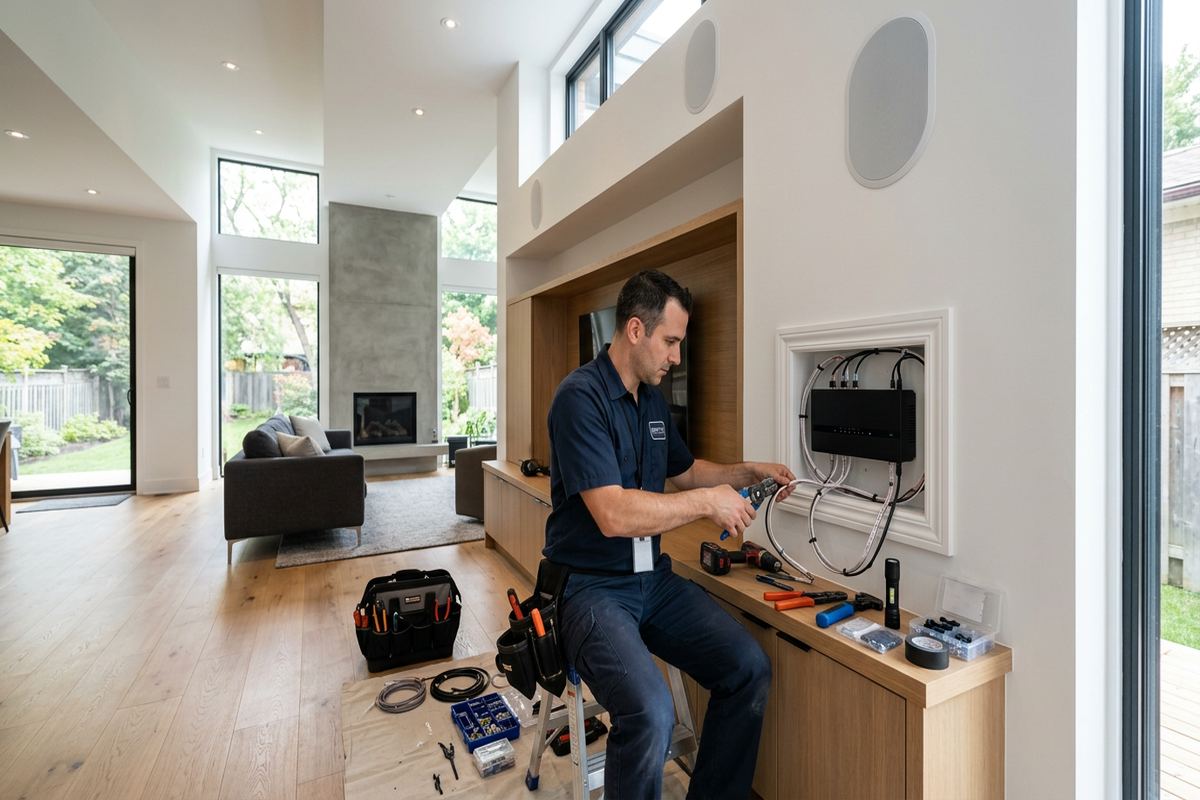
Testing, Configuration and Collingwood Handover
Installation is followed by on-site configuration and functional testing. Each speaker is checked for correct zone assignment, channel orientation, secure termination and audible operation. Volume is compared across the intended listening area, and control devices are tested from the places where customers will normally use them. Where television audio is included, source switching and everyday operation are reviewed. Testing cannot change the acoustic character of a room, but it can identify incorrect wiring, unsuitable settings or coverage differences that should be addressed before handover.
System settings are adjusted to support the agreed use rather than to create an exaggerated demonstration. Equalization, balance, volume limits and source behaviour are configured where the selected equipment provides those functions. Rooms with hard floors, glass and high ceilings may require different treatment from furnished bedrooms or offices. In open-plan Collingwood properties, sound can travel between zones even when controls are separate, so practical levels are discussed. Any limitations caused by room shape, existing equipment or network performance are recorded instead of being hidden behind temporary settings.
At completion, the customer receives control through their own credentials and an as-built record showing the installed arrangement. Labels correspond with speaker runs, zones and equipment connections, making later service less dependent on guesswork. The handover also covers normal startup, source selection, volume control and basic reset procedures. UnifiedLink remains one accountable contractor for the defined audio, cabling and configuration scope. Equipment ownership, warranty information, exclusions and responsibilities are documented so a Collingwood homeowner, property manager or business operator knows what was supplied and how the finished system is organized.
- Every speaker and zone function tested
- Settings adjusted for normal room use
- As-built record supplied at handover
- Customer retains account control
Getting an In-Ceiling Speaker Quote in Collingwood
Pricing follows a site assessment because ceiling access, cable distance, construction and control requirements can materially change the work. The assessment reviews rooms, proposed speaker positions, equipment locations, network conditions and routes through finished or unfinished areas. Photos and plans are useful for initial discussion, but they may not reveal framing, insulation, masonry or shared building systems. Site assessment timing depends on the service and travel distance. Requests sent during business hours are answered the same day, while after-hours requests are answered the next business day.
After the assessment, UnifiedLink prepares a written scope covering equipment, cable routes, device placement, exclusions, equipment ownership and warranty. The scope can also identify customer-supplied equipment, approval requirements, expected access openings and responsibility for patching or painting. This allows options to be compared on the same basis instead of relying on a speaker count alone. For phased projects, backbone cabling and equipment capacity can be planned with later zones in mind, provided those future requirements are identified before routes are closed or finishes are completed.
Before arranging work in Collingwood, gather any available floor plans, renovation details, condominium rules, landlord conditions and information about existing audio or network equipment. Consider which rooms should play together, who needs control and whether the property is occupied by family, guests, tenants or staff. These details shape both the technical design and the handover. A site assessment can then focus on actual constraints and confirm whether proposed locations suit the building. The resulting scope provides a practical basis for installation without assumptions about concealed construction.
- Site assessment completed before pricing
- Written equipment and routing scope
- Approvals and finishing responsibilities identified
- Future zones considered during planning
Collingwood neighbourhoods we cover
- Downtown Collingwood
- Blue Mountain area
- Georgian Meadows
- Creekside
- Lighthouse Point
In-ceiling speaker installation in Collingwood — common questions
Can you install speakers in a finished Collingwood ceiling?
Often, but feasibility depends on framing, insulation, mechanical services and access from above or below. A finished ceiling may require limited access openings, an alternate cable route or visible raceway where concealed routing is impractical. UnifiedLink assesses the site before pricing and documents expected routes, exclusions and responsibility for patching or painting in the written scope.
How many in-ceiling speakers does my room need?
The quantity depends on room dimensions, ceiling height, seating, expected volume and whether the system is for background music, television or focused listening. Open-plan Collingwood homes may need several moderate-level speakers for even coverage rather than fewer loud units. Placement must also avoid lights, ducts, joists, alarms and other ceiling equipment.
Will the audio system work in a short-term rental?
Yes, provided controls and accounts are planned for rental use. Collingwood chalets and resort properties often benefit from clear zone names, simple guest playback and owner-controlled administrative credentials. Reliable Wi-Fi or wired networking is also important for streaming. The handover can document normal operation and reset steps for the owner or property manager.
Do I need condominium or landlord approval?
Possibly. Condominiums may restrict ceiling penetrations, work hours, common-element access and changes involving fire separations. Tenants should obtain written landlord permission for permanent speakers and cabling. In Collingwood managed properties, UnifiedLink can provide a defined scope for approval review, while the customer remains responsible for securing permission unless the scope assigns that task differently.
Can in-ceiling speakers be installed on a covered porch?
Only when the speaker, wiring and mounting arrangement are suitable for the exposure. Covered areas can still experience moisture, cold, condensation and Collingwood freeze-thaw cycles. Exterior penetrations require appropriate routing and sealing for the cladding or masonry. Amplifiers and streaming components generally need a dry, ventilated indoor location unless specifically rated otherwise.
What do I receive when installation is complete?
UnifiedLink provides on-site configuration, testing and a handover using the customer’s own credentials. The as-built record identifies the installed arrangement, and cable labels correspond with speakers, zones and equipment connections. The written scope also covers equipment ownership, exclusions and warranty information, giving Collingwood owners and operators a clear reference for normal use and future service.
Coverage in Collingwood is confirmed against the address before we quote. See everything we install in Collingwood or the province-wide in-ceiling speaker installation page.