UnifiedLink installs home security camera systems across Collingwood and nearby Simcoe County communities. We plan camera positions, cable routes, recording, remote access and network requirements around the property. Each project begins with a site assessment, followed by a written scope that identifies the proposed equipment, installation details, exclusions, ownership and warranty.
Home Security Camera Planning in Collingwood
A useful camera system starts with a review of what needs to be seen, not with a device count. During a Collingwood site assessment, we examine entrances, driveways, walkways, attached garages, detached buildings and less visible sides of the home. Camera height, lens angle and available light affect whether recorded video shows a recognizable person or only general movement. We also identify privacy concerns, likely blind spots and surfaces that can accept secure mounting without damaging cladding, masonry or trim.
Collingwood homes vary from older buildings near Downtown Collingwood to newer frame construction in Georgian Meadows and Creekside. Those differences affect how cable can move from the recording location to exterior walls, soffits and entrance areas. Finished basements, vaulted ceilings, additions and inaccessible roof spaces can restrict routes. We look for practical pathways that protect the cable and preserve interior finishes rather than assuming every camera can be reached through an attic or unfinished utility area.
After the assessment, UnifiedLink provides a written scope before pricing. It covers proposed cameras, recording equipment, cable routes, device placement, exclusions, equipment ownership and warranty. This document helps distinguish included installation work from possible electrical, carpentry, restoration or network changes. It also gives the homeowner an opportunity to review camera views and recording expectations before holes are drilled. For managed properties or rentals, the scope can support approval discussions with owners, landlords, condominium boards or property managers.
- Entrance, driveway and perimeter sightline review
- Proposed camera and recorder locations
- Cable-route and mounting-surface assessment
- Written scope before pricing
- Privacy and neighbouring-property considerations
Camera Coverage for Collingwood Homes and Chalets
Chalets, short-term rentals and resort properties often require different coverage from a continuously occupied family home. Owners may need to confirm arrivals, monitor exterior access points or review activity while away, but cameras should not intrude on private interior spaces. In the Blue Mountain area, we can plan exterior views around parking areas, doors, equipment storage and detached structures. The design should also account for snowbanks, seasonal furniture and landscaping that may block a view at different times of year.
For an occupied Collingwood home, practical coverage commonly begins at the primary entrance and expands according to the site. A doorbell camera may show a visitor at close range, while a separate fixed camera provides a wider view of the approach. Driveway cameras need enough detail at useful distances without being overwhelmed by vehicle headlights. Side passages and rear doors may require narrower angles. Placing every device high under the eaves can reduce tampering, but excessive height often makes faces less identifiable.
Properties in Lighthouse Point or other condominium settings can involve common elements, shared corridors and restrictions on exterior alterations. A homeowner should obtain required condominium approval before mounting equipment or routing cable through common property. Tenants and short-term-rental operators may also need written landlord or owner permission. UnifiedLink can document proposed locations and routes for review, but the customer remains responsible for securing approvals. Where permanent exterior work is not permitted, we can discuss technically reasonable alternatives during the assessment.
- Driveway and parking-area coverage
- Separate overview and identification views
- Rental-appropriate exterior monitoring
- Condo and landlord approval planning
- Seasonal obstruction review
Exterior Mounting for Collingwood Weather
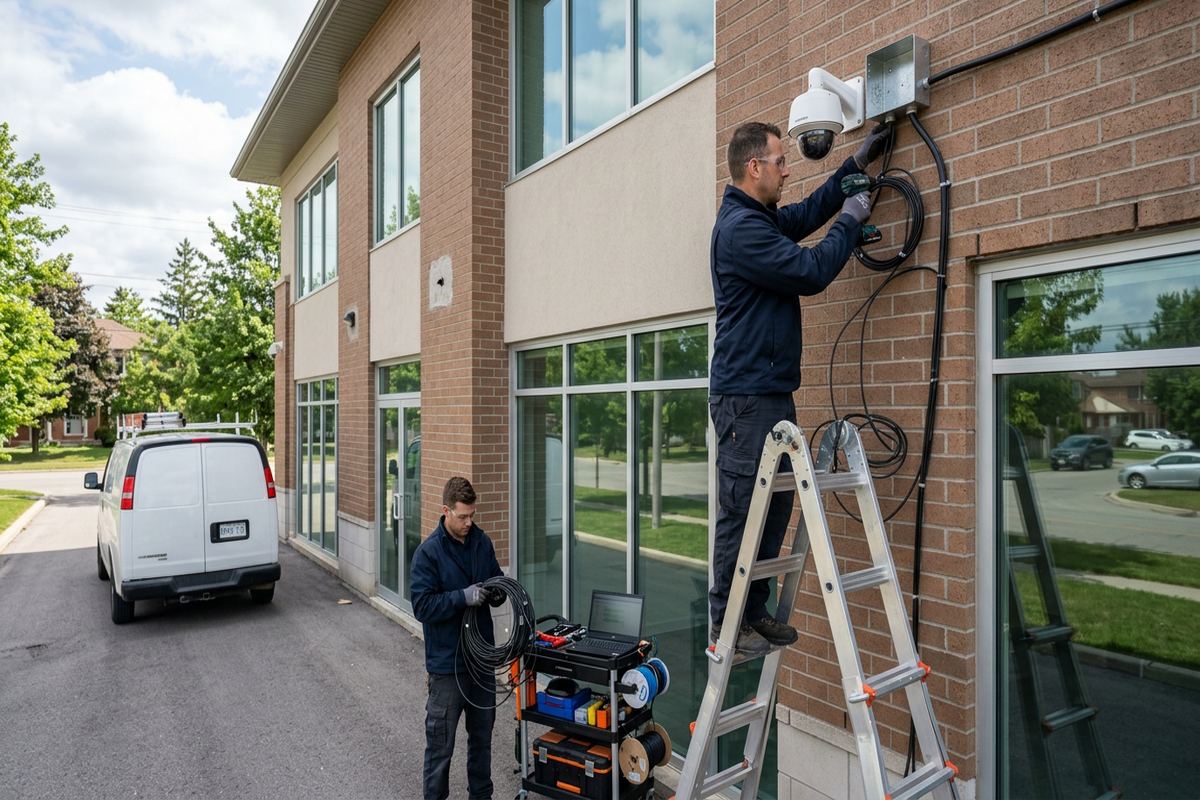
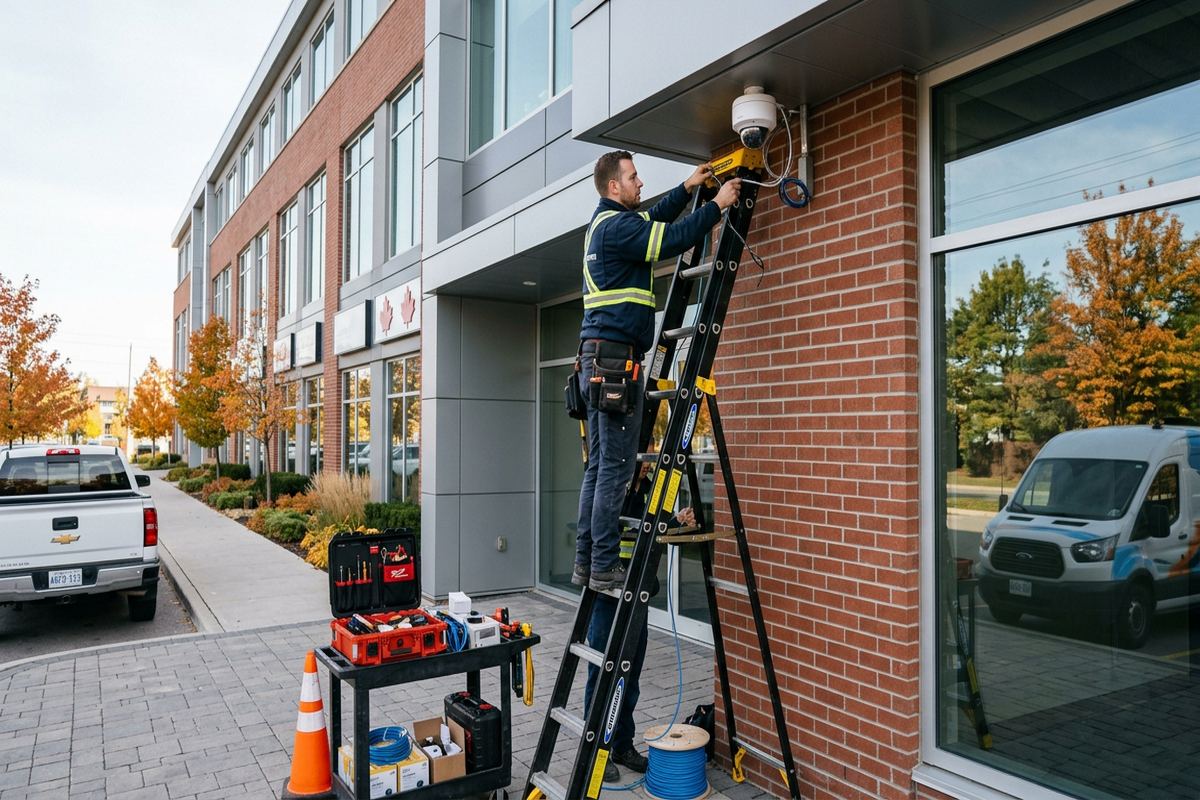
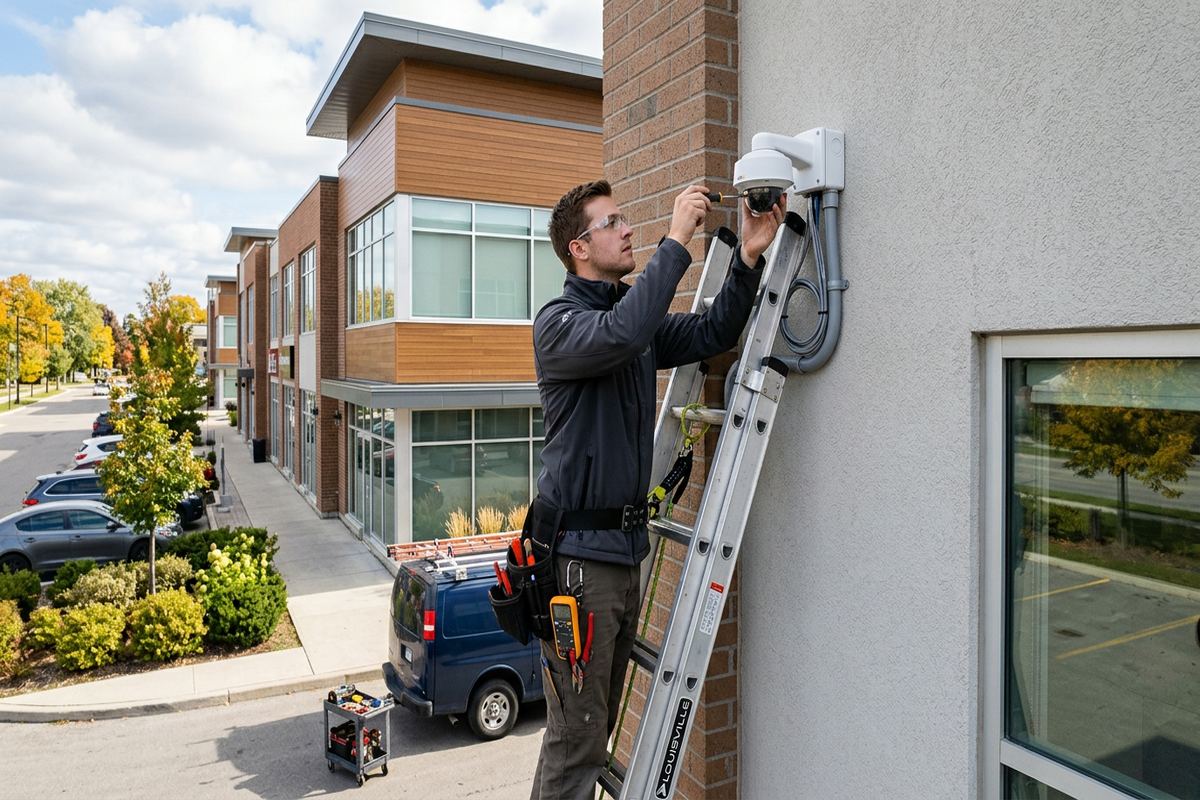
Exterior cameras in Collingwood must tolerate winter exposure, wind-driven precipitation and repeated freeze-thaw cycles. Installation details matter as much as the camera’s environmental rating. Mounting holes, wall penetrations and junction points need suitable sealing so water cannot follow a cable into the wall. Cable entries should be positioned and formed to shed water, with connectors protected inside an appropriate enclosure whenever possible. We also consider snow accumulation, roof runoff and icicles before selecting locations under soffits, on walls or near detached structures.
Mounting methods change with the building surface. Frame construction may provide wood backing behind siding or soffit material, but the visible finish alone may not securely hold a camera. Brick, concrete and other masonry require appropriate drilling, anchors and penetration sealing. Older Downtown Collingwood properties can include layered renovations, brittle finishes or uncertain cavities, so exploratory work may be needed before confirming a route. The goal is a stable mount without crushing siding, opening unnecessary holes or leaving exposed connections vulnerable to moisture.
Cold weather can reveal weaknesses in power, cabling and network links that appeared acceptable during milder conditions. Exterior-rated cable and compatible components should be used where runs are exposed or pass between buildings. Sharp bends, unsupported loops and unprotected low-level cable can lead to physical damage. For detached garages or outbuildings, we assess whether copper cabling, fibre or a wireless bridge is appropriate rather than extending a connection without considering distance, grounding, surge exposure and the construction between locations.
- Sealed exterior cable penetrations
- Mounting suited to masonry or framing
- Protected connectors and junction points
- Snow, runoff and icicle clearance
- Outbuilding connection assessment
Collingwood, Ontario
Home security camera installation in Collingwood, scoped in writing first
Book a site assessment and get equipment, routes, exclusions, and warranty on paper before anything is installed.
Wired and Wireless Cameras in Collingwood
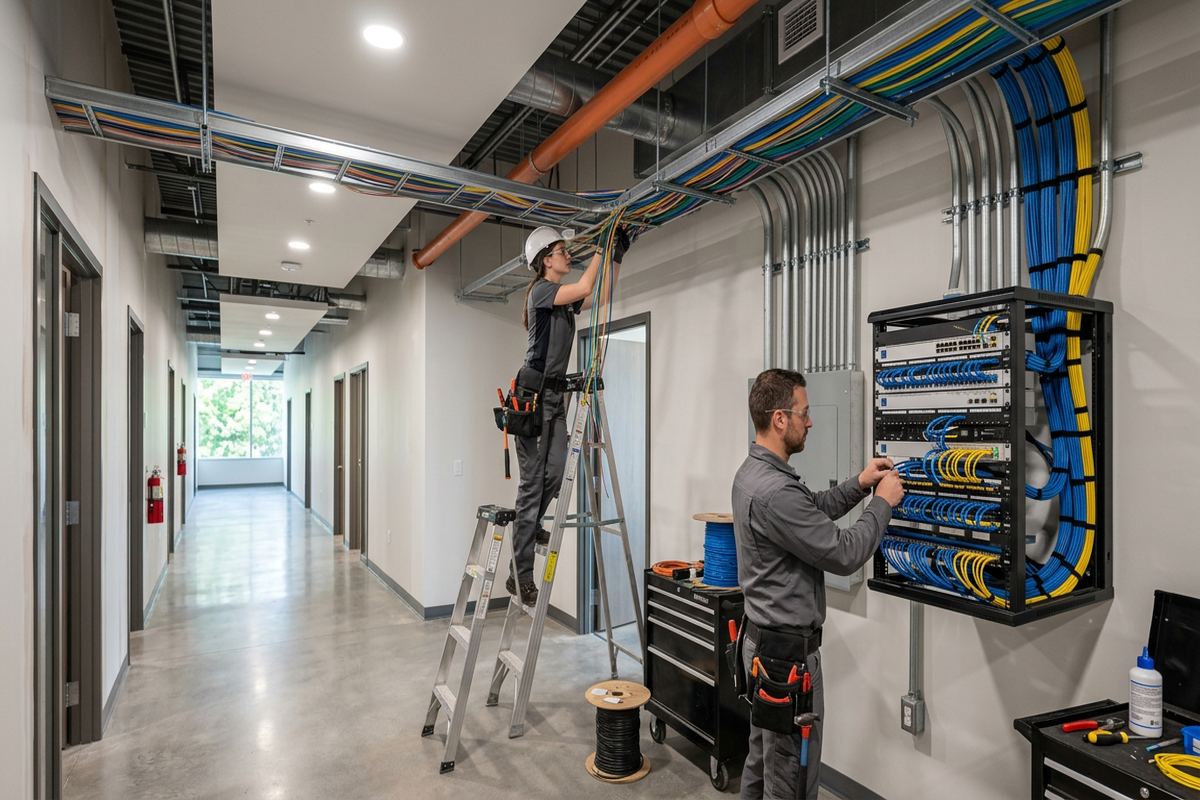
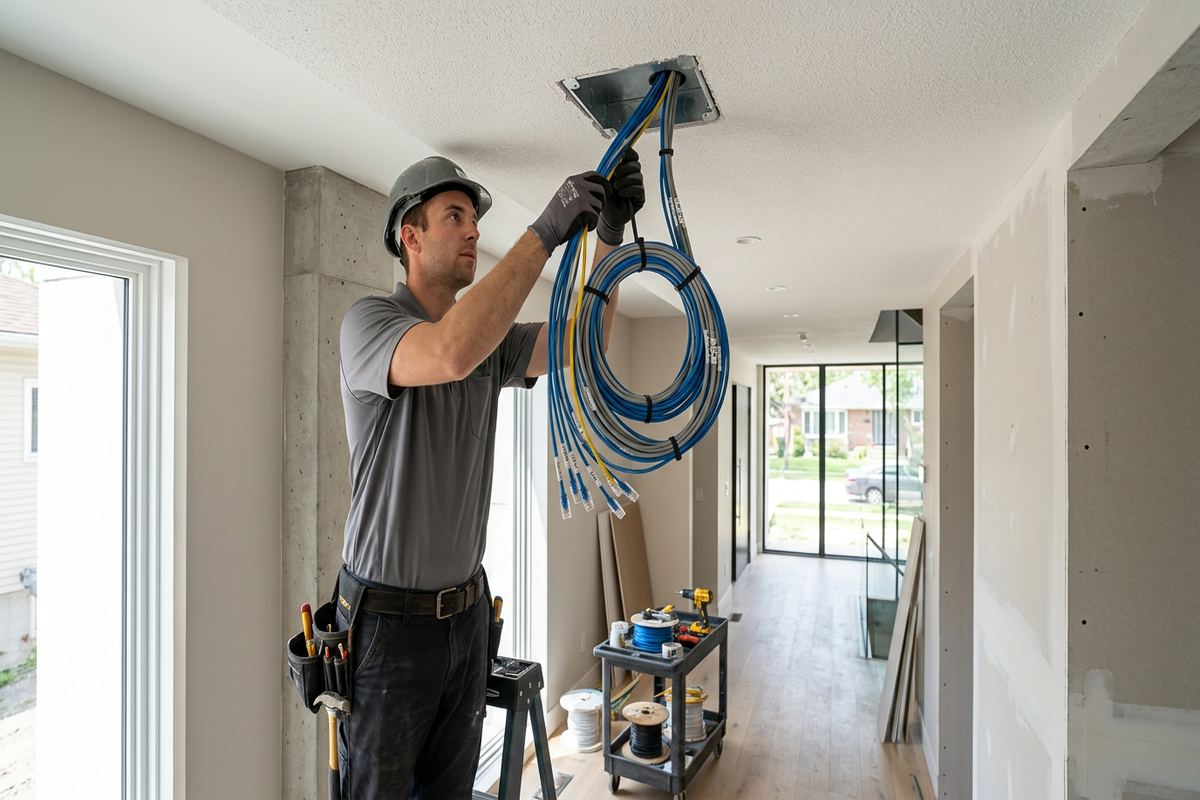
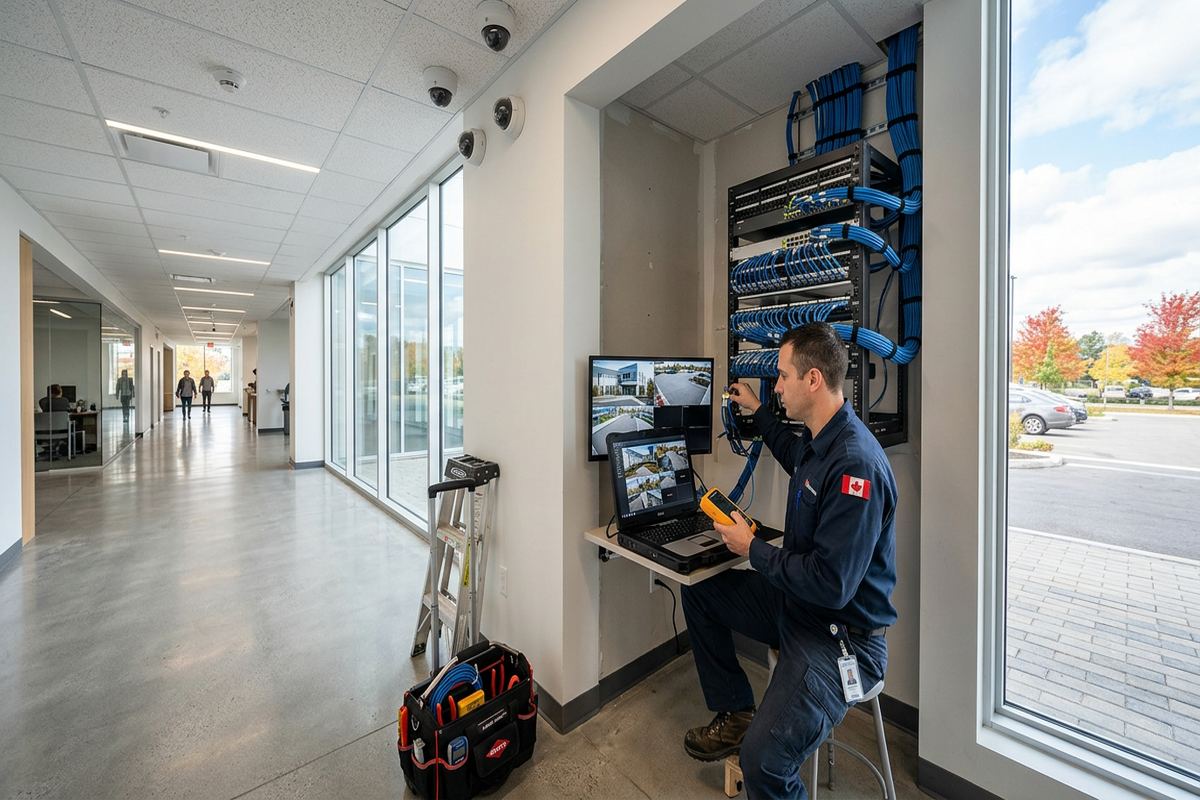
Wired cameras are generally suited to permanent installations where consistent recording and centralized power are priorities. A network cable can carry data and power from a recorder or network switch, reducing dependence on a nearby receptacle and local Wi-Fi signal. UnifiedLink installs continuous labelled cable runs rather than joining short sections inside concealed spaces. Routes are planned through accessible cavities, utility rooms, unfinished areas or exterior pathways, with termination and testing completed before cameras are commissioned. The available structure still determines what can be installed cleanly.
Wireless cameras can be useful where new cabling is restricted, but wireless does not necessarily mean infrastructure-free. Devices still require power, adequate signal strength and sufficient network capacity. Battery-operated cameras introduce charging schedules and may record differently from continuously powered systems. In a chalet or resort property, a camera that works near the router may become unreliable at an exterior corner, detached garage or lower-level entrance. We assess expected placement and Wi-Fi conditions before recommending reliance on wireless connectivity for important views.
A mixed system can solve specific construction constraints, provided the limitations are clear. For example, wired cameras may cover primary entrances while a carefully tested wireless link reaches a location that cannot accept new cable. Decisions should consider recording continuity, maintenance access and how the system behaves during an internet interruption. Local recording can continue without remote access on many configurations, while cloud-dependent features may not. The written scope identifies the proposed connection method so the customer understands which cameras depend on cabling, Wi-Fi or internet services.
- Continuous labelled network cabling
- Power-over-Ethernet camera options
- Wi-Fi signal assessment at device locations
- Wireless limitations explained before installation
- Mixed wired and wireless designs
Remote Viewing and Reliable Wi-Fi
Remote access is particularly important for Collingwood chalets, short-term rentals and resort properties that may sit unoccupied between visits. Viewing performance depends on more than the camera model. The recorder, router, internet connection, mobile application and account settings must work together. UnifiedLink configures supported remote viewing on site and verifies access using the customer’s devices where practical. The customer receives the system under their own credentials, rather than depending on an installer-owned account that could complicate later administration or password recovery.
Reliable Wi-Fi coverage may also support doorbells, intercom features and wireless cameras, but the signal should be measured where devices will operate. Wall construction, masonry, metal cladding, mechanical equipment and distance can weaken coverage. Large chalets and multi-level homes may need additional access points or better placement rather than a consumer extender added without planning. If network changes are required, they can be included in the scope or identified as separate work. Camera installation does not correct an undersized internet service or unstable third-party router automatically.
Remote access should be configured with reasonable account security. Unique passwords, customer-controlled email addresses and available multi-factor authentication help reduce avoidable exposure. Shared rental access also needs planning: permanent administrator credentials should not be circulated to guests or temporary staff. Where supported, separate users can receive limited permissions appropriate to their role. We explain the installed access method during handover, but ongoing management of users, subscriptions, internet service and mobile-device compatibility remains an operational responsibility for the owner or designated property manager.
- Customer-owned administrator credentials
- On-site mobile viewing configuration
- Wi-Fi coverage checked near cameras
- User permissions for managed properties
- Internet dependency clearly identified
Recording, Storage and Useful Video
Recording capacity depends on camera resolution, frame rate, compression, motion levels, camera count and installed storage. A busy sidewalk near Downtown Collingwood can generate more activity than a quiet rear entrance, while blowing snow or moving trees may trigger unnecessary motion events. Instead of promising a fixed retention period without evidence, we review the intended use and configure the available settings. The written scope identifies the recorder and storage arrangement, allowing the customer to understand whether video is stored locally, in the cloud or through a combination.
Image quality should be evaluated under the conditions that matter. Daytime colour video may look clear while nighttime footage is affected by glare, reflections, insects, precipitation or infrared light bouncing from a nearby wall. A camera aimed through glass can be especially problematic after dark. During commissioning, we check fields of view and adjust supported image settings on site. Exterior lighting can help, but a bright fixture inside the frame may cause other areas to appear darker, so camera and lighting positions should be considered together.
Motion notifications require balance. Broad detection zones can produce repeated alerts from roads, neighbouring walkways, shadows and weather; zones that are too narrow may miss an approach. Supported systems can be configured with detection areas and event settings based on the selected equipment, though no analytic feature should be treated as infallible. Customers should periodically confirm recording and notifications, particularly after landscaping changes, router replacement or application updates. A camera is useful only when its view, time settings, storage and access remain operational.
- Local, cloud or combined recording options
- Storage planned around actual activity
- Night-view and glare adjustments
- Practical motion-detection zones
- Recorder time and event verification
Installation and Handover in Collingwood
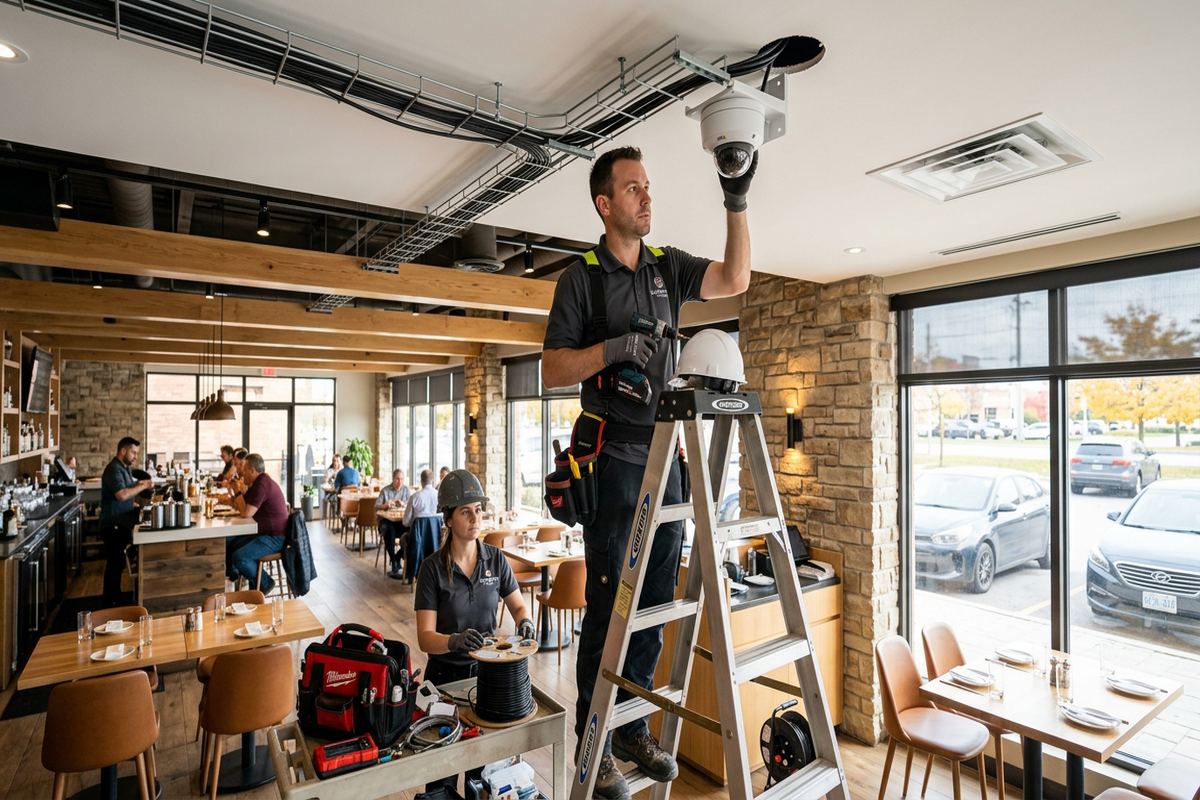
Once the scope is accepted and required approvals are in place, installation follows the agreed routes and device positions. Technicians protect work areas, install mounting hardware, pull continuous labelled cable runs and terminate connections at the selected recorder or network location. Any necessary change caused by a concealed obstruction or unsuitable mounting surface is discussed rather than improvised without notice. Collingwood projects involving occupied rentals or seasonal properties also need coordinated access to locked rooms, utility spaces and network equipment so installation and testing can be completed properly.
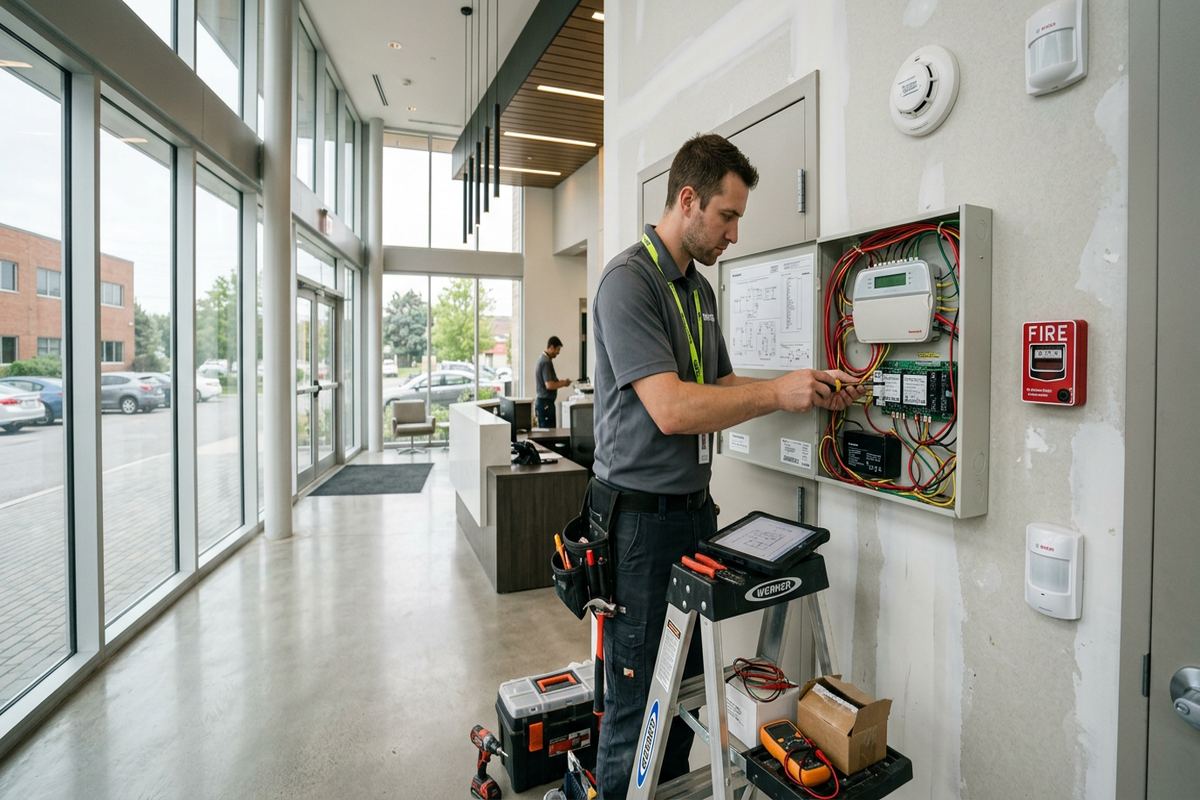
Configuration takes place on site after the physical work is complete. Cameras are named by location, views are adjusted and supported recording or motion settings are applied. Remote access is tested where internet service and customer devices are available. We also check that the recorder, network switch and related equipment have suitable power and ventilation. If an existing network prevents reliable commissioning, the issue is documented along with the next step. Third-party passwords, unavailable account recovery or inactive internet service can otherwise delay completion.
Handover includes the customer’s own credentials and an as-built record of the installed system. The record identifies camera locations and relevant cabling or equipment details, helping future troubleshooting and changes. We review basic live viewing, playback and account access with the customer or designated representative. Equipment ownership and warranty terms follow the written scope. Using one accountable contractor for camera cabling, mounting, network coordination and configuration also reduces uncertainty about which party is responsible for each installed connection and documented system setting.
- Labelled end-to-end cable runs
- Camera naming and view adjustment
- On-site recorder and application setup
- Customer-controlled system credentials
- As-built installation record
Assessments Across Collingwood and Simcoe County
UnifiedLink handles home security camera projects in Collingwood and surrounding parts of Simcoe County, including properties near Downtown Collingwood, Georgian Meadows, Creekside, Lighthouse Point and the Blue Mountain area. Each community contains different combinations of detached homes, townhouses, condominiums, chalets and resort accommodations. A repeatable installation standard is useful, but the same camera layout cannot simply be copied between properties. Access, structure, sightlines, Wi-Fi coverage, exterior exposure and ownership rules all affect the final scope.
Some properties combine residential use with nearby commercial strips, workshops or industrial units. These sites may have shared driveways, loading activity, public-facing entrances or detached storage that changes the coverage objective. A home system should not be extended casually into a business area without considering recording responsibilities, user permissions and network separation. Where a property includes multiple uses, we identify the boundaries during assessment and clarify whether the requested work remains residential or requires a broader security camera and network design.
Requests sent during business hours are answered the same day, while after-hours requests are answered the next business day. Site assessment timing depends on the requested service and travel distance. Before the visit, customers can gather building plans, condominium rules, landlord approvals, existing equipment details and account information where available. A walkthrough then establishes the intended views, cable routes, recording needs and network conditions. Pricing follows the assessment and written scope rather than assumptions based only on property size or an unverified camera count.
- Coverage across Collingwood communities
- Simcoe County project assessment
- Residential and mixed-use site review
- One accountable installation contractor
- Scope based on an on-site walkthrough
Collingwood neighbourhoods we cover
- Downtown Collingwood
- Blue Mountain area
- Georgian Meadows
- Creekside
- Lighthouse Point
Home security camera installation in Collingwood — common questions
How many cameras does my Collingwood home need?
The required number depends on entrances, sightlines, property layout and the detail expected from each view. A small home may have simple coverage needs, while a Collingwood chalet with several doors, parking areas and detached storage may require more planning. We assess the site before pricing and document proposed camera locations, cable routes and exclusions in the written scope.
Can I view my cameras when I am away?
Yes, supported systems can be configured for remote viewing through a mobile application or web interface. This is useful for Collingwood chalets, rentals and resort properties. Reliable access depends on the recorder, internet connection, router, account settings and device compatibility. We configure access on site where practical and hand over the system using credentials controlled by the customer.
Will exterior cameras work through a Collingwood winter?
Equipment selection and installation details must suit exterior conditions. We consider low temperatures, precipitation, snow accumulation, roof runoff and freeze-thaw exposure when choosing locations. Penetrations are sealed, connectors are protected and mounts are suited to the surface. No location eliminates all maintenance, so owners should keep views clear of accumulated snow, ice, vegetation and debris.
Do wired cameras require walls to be opened?
Not always. Cable may run through attics, unfinished basements, utility areas, accessible cavities, conduit or carefully planned exterior routes. Older Collingwood homes, finished ceilings and additions can restrict access, while newer frame construction may provide clearer pathways. The site assessment identifies practical routes. Any expected restoration, excluded work or uncertainty is noted in the written scope before installation begins.
Do I need approval for condo or rental cameras?
Possibly. Lighthouse Point and other condominium properties may restrict mounting on common elements, exterior walls or shared corridors. Tenants and rental operators may require permission from the landlord or property owner. UnifiedLink can provide proposed device locations and cable routes for review, but the customer is responsible for obtaining required approvals before work proceeds. Cameras must also respect private areas and neighbouring properties.
Can you use my existing cameras or cabling?
Existing equipment can be considered, but compatibility and condition must be assessed. Camera protocol, recorder support, cable type, connector quality, account ownership and access credentials all matter. We may test reusable cabling or identify limitations in the scope. Existing components are not assumed to be suitable merely because they power on, especially when their history, weather sealing or original installation method is unknown.
Coverage in Collingwood is confirmed against the address before we quote. See everything we install in Collingwood or the province-wide home security camera installation page.