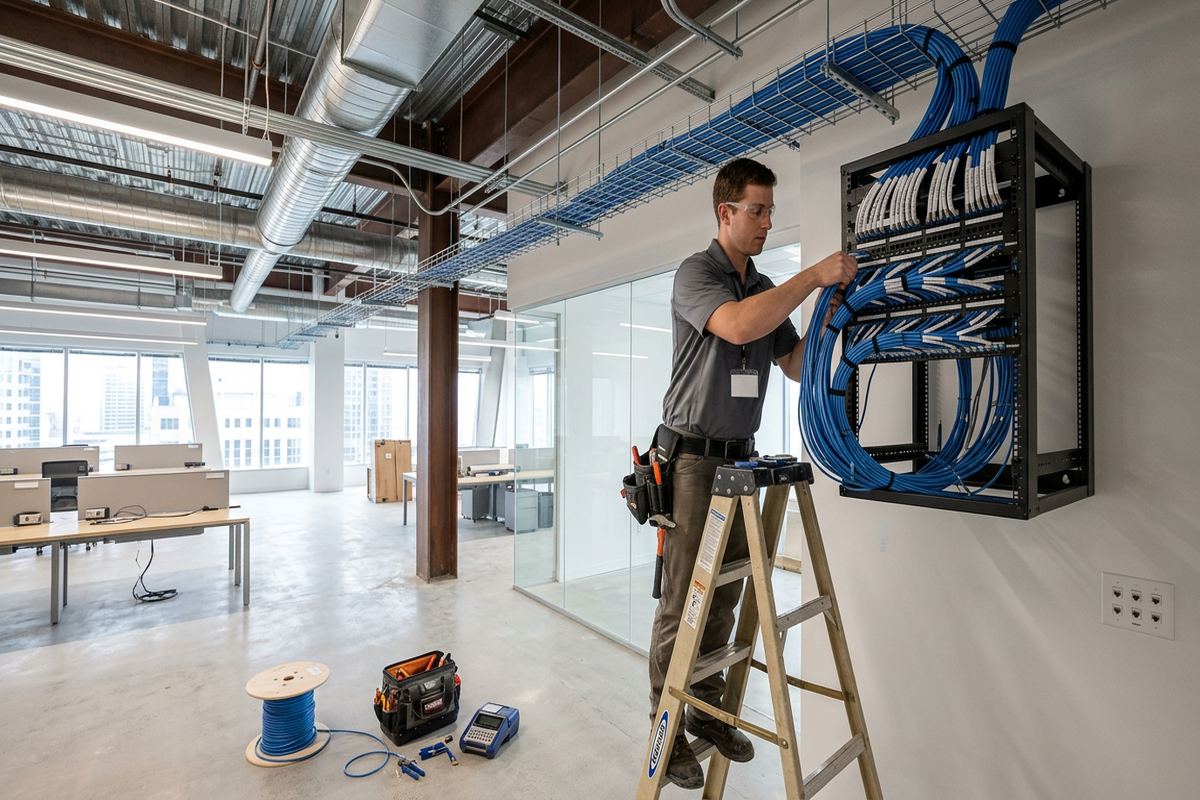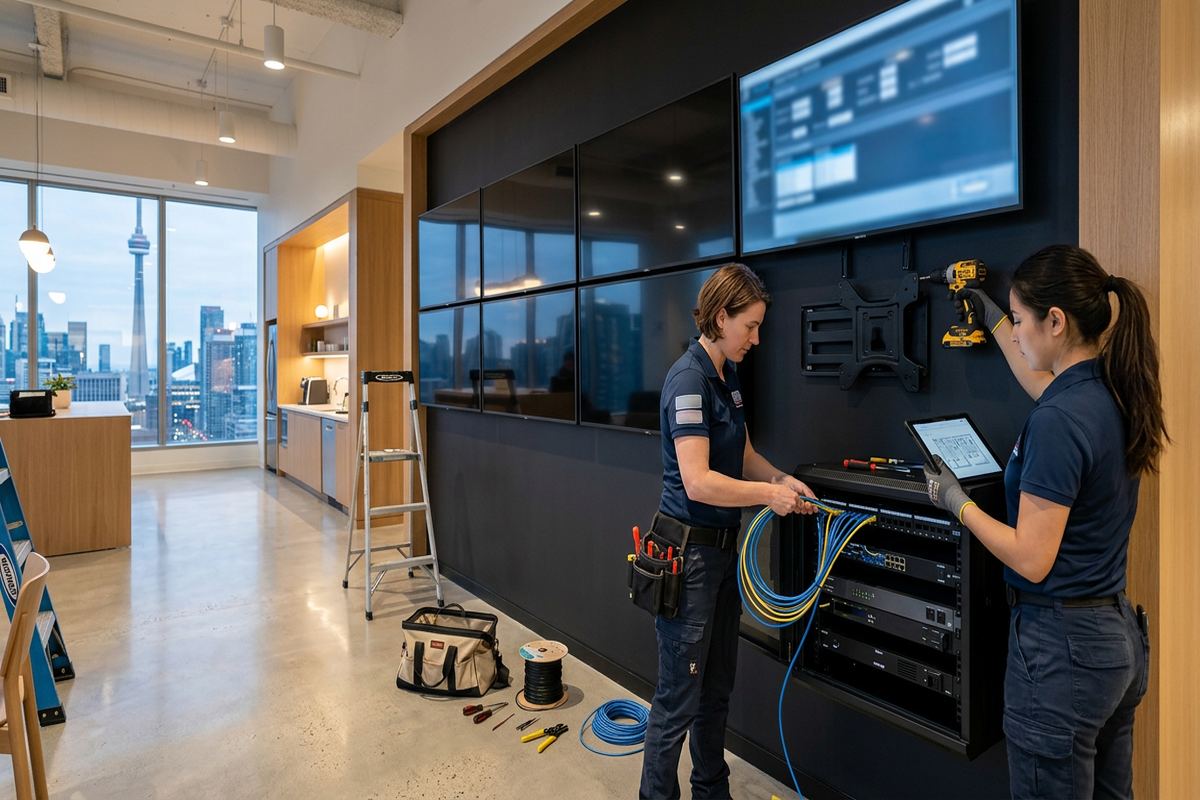
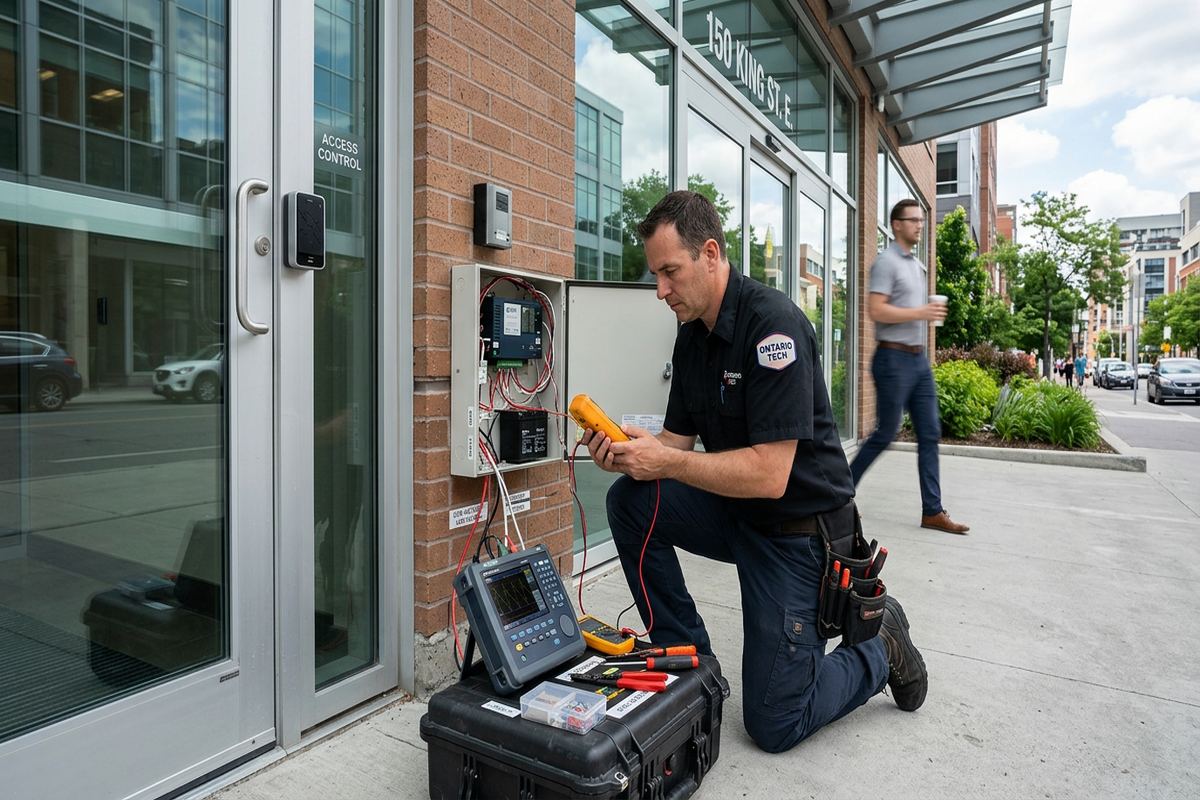
UnifiedLink plans and installs condo access control systems in Collingwood for shared entrances, amenity rooms, garages, elevators and staff areas. Each project starts with a site assessment and a written scope. We account for resident access, visitor entry, remote administration, existing doors, network coverage and the approval requirements of condo boards, landlords and property managers.
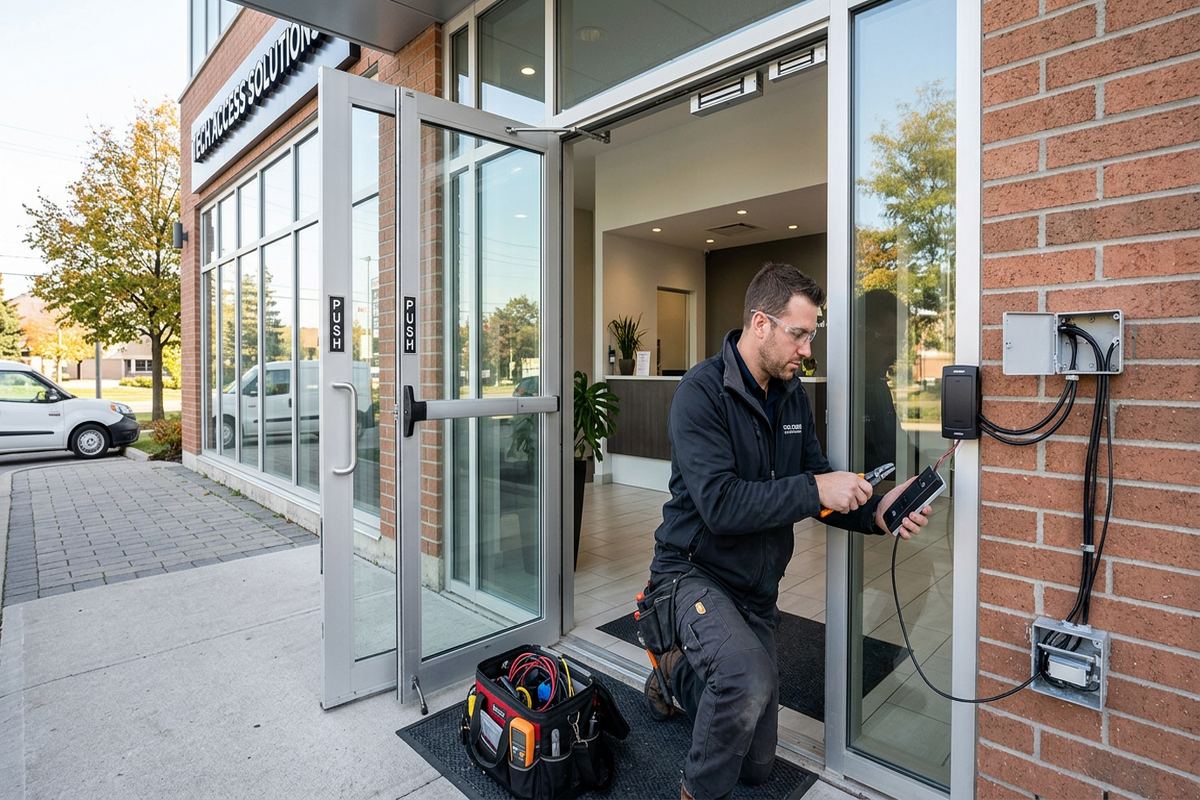
Condo Access Control Planning in Collingwood
A condo access control project begins with the doors, users and operating rules rather than a particular reader or software package. During a Collingwood site assessment, we review public entrances, resident-only areas, service doors, parking access, amenity spaces and management needs. We also identify how residents, contractors, cleaners and short-term guests should enter. That information supports a written scope covering equipment, cable routes, device placement, exclusions, equipment ownership and warranty. Planning these details early helps the condo board or owner evaluate the work without relying on assumptions about existing locks, networks or electrical pathways.
Different properties require different levels of control. A small converted building near Downtown Collingwood may need only a few managed doors, while a resort property near the Blue Mountain area may require remote credential changes, scheduled access and separate permissions for amenities. Larger developments can have parking gates, elevators, vestibules and multiple residential buildings. We map each opening and decide whether it should be monitored, controlled or left mechanical. The resulting door schedule identifies readers, locking hardware, request-to-exit devices, door contacts, power requirements and controller locations before installation begins.
Approvals are an important part of condo work because doors and common elements are rarely controlled by one resident. The board, property manager, landlord or building owner may need to approve hardware, cable routes, wall penetrations and service interruptions. Fire and life-safety interfaces must also be considered where applicable. UnifiedLink provides a defined scope that can support this review, but approval remains with the responsible parties. Once requirements are settled, one accountable contractor coordinates the low-voltage cabling, device installation, network connection, configuration, testing and handover included in the agreed project.
- Door and user requirement review
- Written equipment and installation scope
- Condo board and landlord coordination
- Defined ownership and warranty terms
- Planned service interruptions
Doors, Readers and Locking Hardware for Collingwood Condos
Every controlled opening has to function as a complete assembly. The reader may be visible, but reliable operation depends on the lock, door closer, latch alignment, hinges, power supply, controller and exit hardware working together. Collingwood winters can expose marginal door conditions when seals stiffen, frames shift or ice prevents complete closure. We inspect existing openings and document conditions that could affect access control. Where locksmith, door, electrical or fire-alarm work falls outside the low-voltage scope, it is identified as an exclusion or coordinated requirement rather than hidden within an equipment list.
Credential selection should reflect how the property is actually managed. Cards and fobs remain practical for many condominium residents, while mobile credentials or temporary codes may help properties with short-term rentals and changing guests. A management team may also need separate permissions for cleaners, maintenance staff and vendors. We configure user groups, schedules and door permissions on site, then test representative credentials at each opening. The customer receives administrative access using its own credentials, avoiding a handover that leaves essential system control tied to an installer’s personal account or undocumented password.
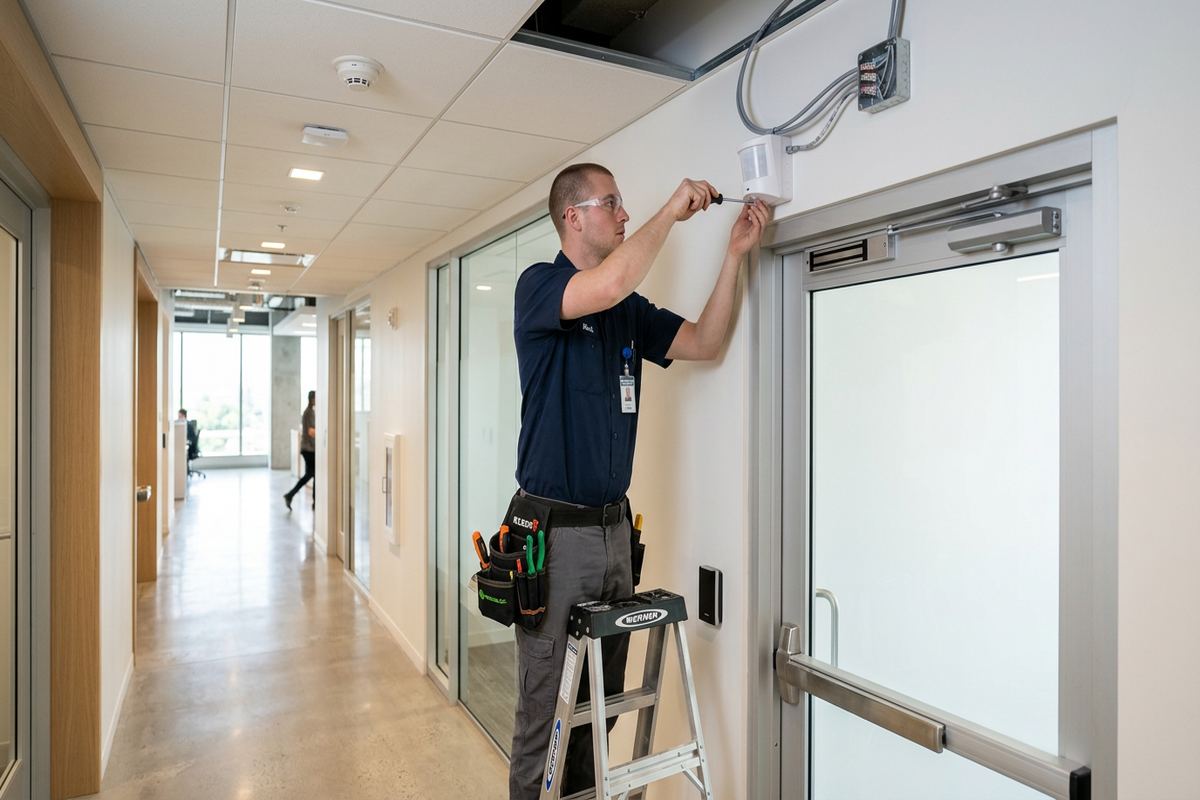
Entry hardware must also support safe egress and the building’s operating requirements. Depending on the opening, the design may use an electric strike, electrified lock, magnetic lock or another compatible device. Request-to-exit sensors, push buttons and door contacts provide distinct functions and should not be treated as interchangeable. We check how the door unlocks during normal use, scheduled periods and relevant emergency conditions. Final hardware selection depends on the assessed door, applicable requirements and approved scope, not solely on appearance or whether an existing component can physically fit the frame.
- Fob, card and mobile credential options
- Door position monitoring
- Scheduled unlocking and permission groups
- Compatible exit and locking devices
- On-site credential testing
Remote Access for Resort and Rental Properties
Chalets, short-term rentals and resort properties around Collingwood often need access to change without an in-person key exchange. Managed credentials can be issued for a defined period, cancelled after departure and limited to selected doors. This approach is useful for guest entrances, ski storage, pools, fitness rooms and maintenance areas, provided the operating process is clearly assigned. We help owners and managers define who creates credentials, how identity is verified, when access expires and what happens when connectivity is unavailable. Technology supports those rules, but it does not replace a documented management process.
Remote administration depends on reliable network coverage between controllers, management devices and any hosted service included in the design. Properties near the Blue Mountain area or Lighthouse Point may have detached facilities, concrete parking levels or long corridors that weaken wireless signals. A strong signal in the office does not confirm reliable coverage at an exterior gate or remote amenity room. We assess connection options and recommend wired links where practical. When Wi-Fi is necessary, access point placement, building materials, interference and backhaul capacity must be considered as part of the access system’s operating environment.
Guest convenience must be balanced with control over common areas. A temporary credential should open only the doors required for the booked unit and approved amenities, during the permitted period. Staff credentials may need wider access but should still be assigned individually where the platform allows. Audit events can help managers investigate reported entry issues, although records depend on system configuration, connectivity and retention settings. We explain these limits during handover so the owner understands what information is available. Privacy policies, resident notices and authorization for data use remain the property’s responsibility.
- Time-limited guest credentials
- Remote cancellation of lost access
- Separate guest and staff permissions
- Connectivity review for remote buildings
- Documented administrator responsibilities
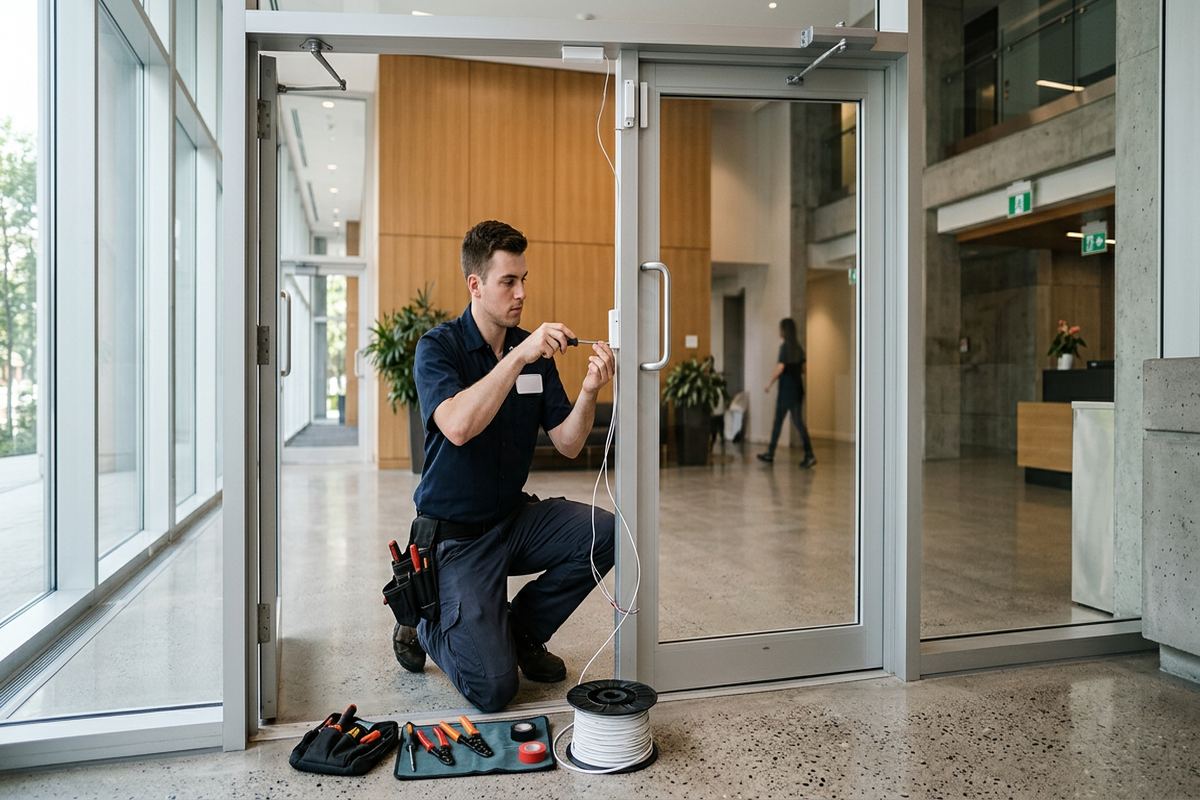
Collingwood, Ontario
Condo access control systems in Collingwood, scoped in writing first
Book a site assessment and get equipment, routes, exclusions, and warranty on paper before anything is installed.
Cabling and Networks in Collingwood Buildings
Access control cabling has to suit the building rather than follow one standard route everywhere. Older masonry properties near Downtown Collingwood may have limited pathways, finished plaster, solid walls and previous renovations that are difficult to trace. Newer frame construction in Georgian Meadows or Creekside may provide accessible ceiling spaces but still require careful routing around fire separations and finished common areas. During assessment, we identify feasible controller locations and cable paths. The written scope records visible surface routes, proposed penetrations and areas where exploratory access or approval may be required before work proceeds.
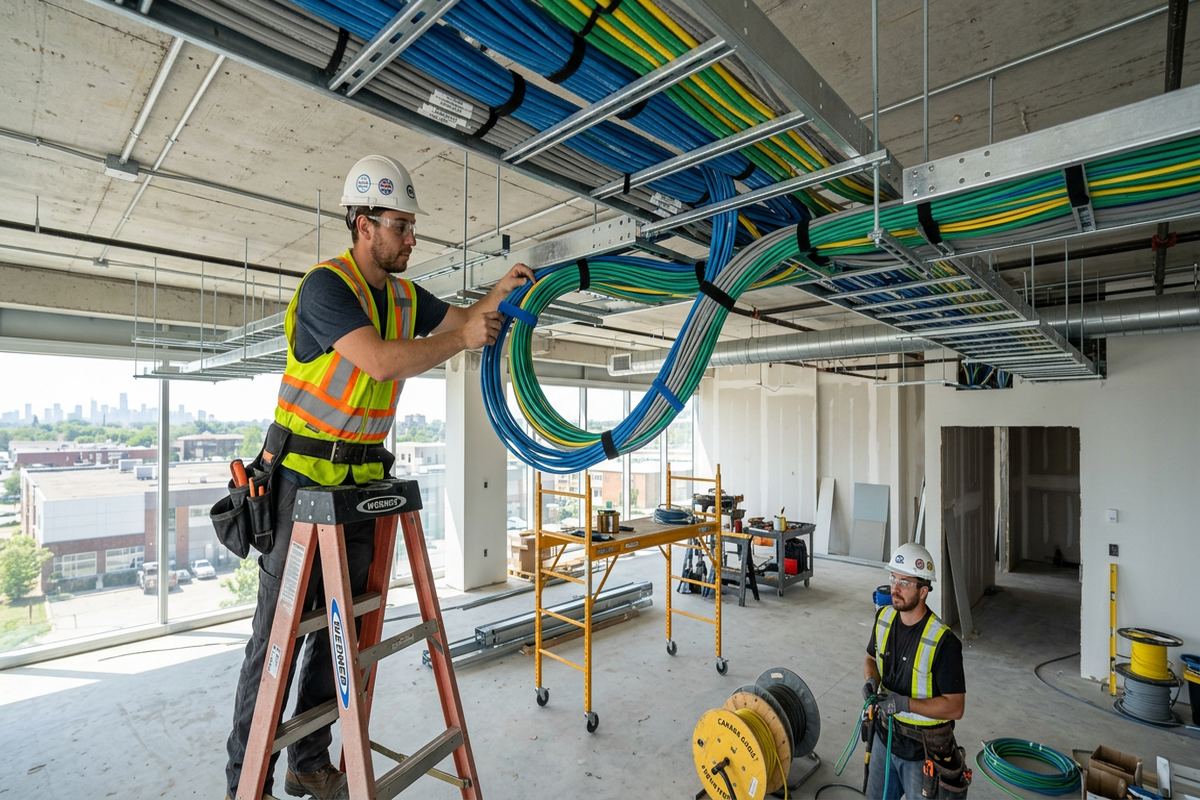
UnifiedLink installs continuous labelled cable runs within the approved scope. Labelling at both ends makes readers, locks, contacts and network links easier to identify during testing and later service. Cable type is selected for the device, distance, pathway and environment, including suitable ratings where required. We avoid undocumented splices and do not assume abandoned cable is usable merely because it reaches the correct area. Existing wiring can be tested and incorporated when its condition, type and route support the design; otherwise, replacement or a revised pathway is documented before installation continues.
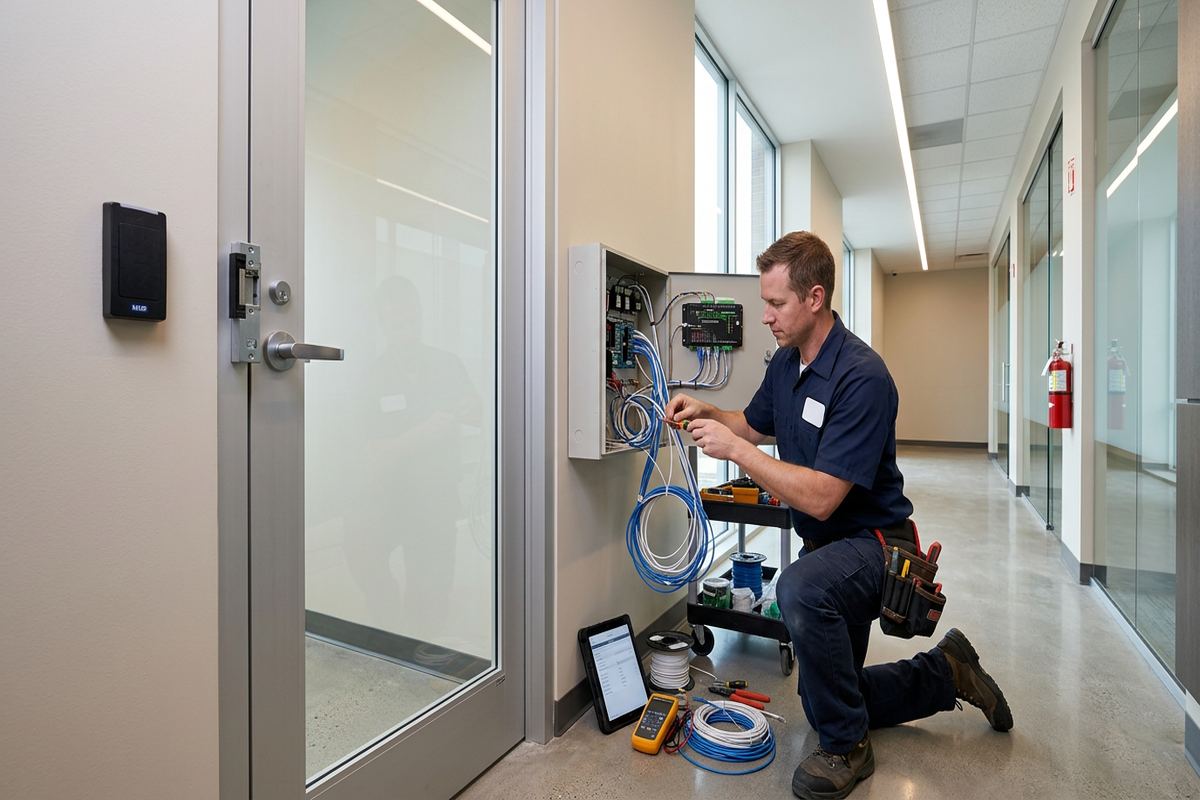
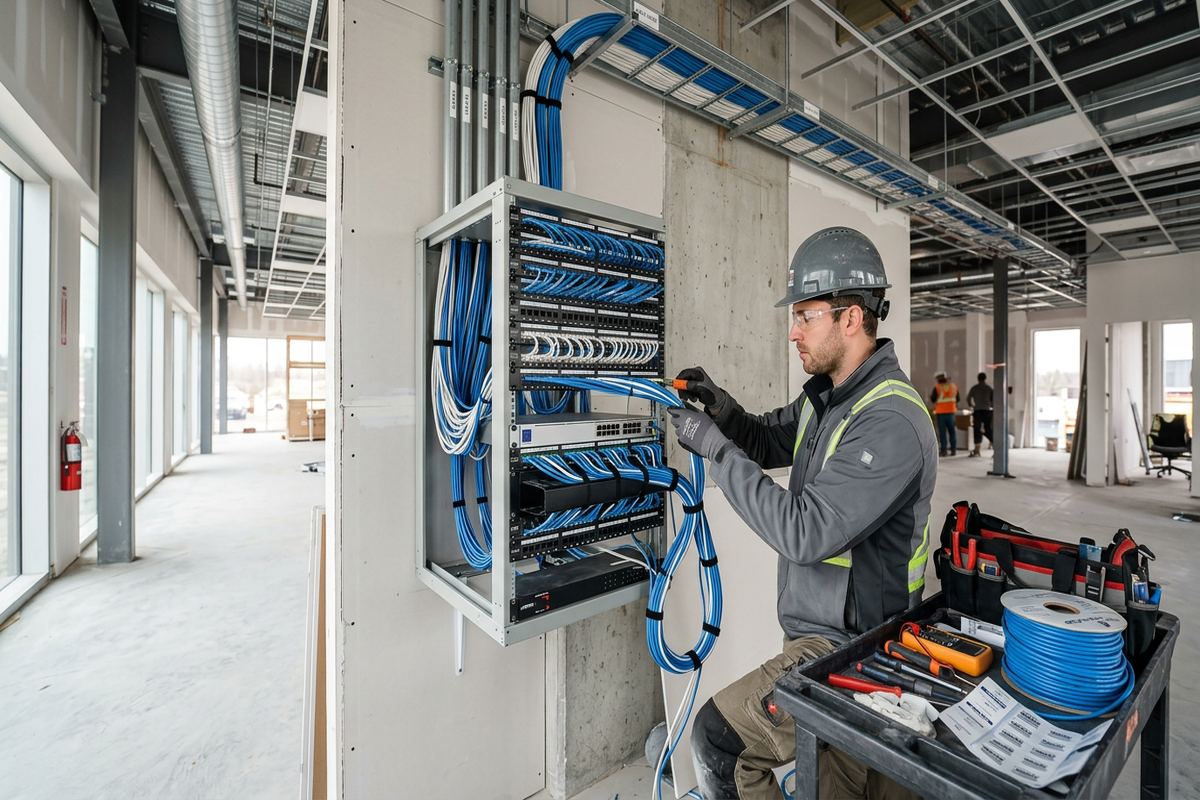
Controllers and network equipment need appropriate locations with power, physical protection and reasonable service access. A convenient closet is not automatically suitable if it is damp, unsecured, overcrowded or exposed to large temperature changes. We review available electrical service and identify work requiring a licensed electrical contractor where applicable. Network settings are coordinated with the customer or its IT provider, including addressing, firewall requirements and remote-service dependencies. Access control traffic should not be connected casually to an unknown resident network, especially where property operations, guest Wi-Fi and building systems share infrastructure.
- Continuous labelled cable runs
- Routes suited to masonry or frame construction
- Existing cable testing where appropriate
- Coordinated network and power requirements
- Serviceable controller locations
Exterior Readers and Collingwood Winter Conditions
Exterior access devices in Collingwood face snow, wind-driven moisture, road salt and repeated freeze-thaw cycles. Reader ratings matter, but mounting and cable entry details are equally important. Water can travel behind a device or along a poorly sealed cable even when the reader enclosure is intended for outdoor use. We assess exposure, wall construction, drainage and mounting height before selecting a location. Penetrations are sealed using methods suited to the substrate and approved scope, with attention to masonry joints, cladding systems and the need to avoid trapping moisture behind the mounting surface.
Cold weather can reveal mechanical problems that appear unrelated to electronics. A reader may accept a credential correctly while the door fails to release because the latch is loaded, the closer is poorly adjusted or ice has formed at the threshold. Exterior gates and vestibule doors can also move as materials contract or the ground shifts through freeze-thaw conditions. Testing therefore includes the full opening, not only a confirmation beep at the reader. Existing door deficiencies are recorded, and any corrective work outside our scope is identified for the property manager or appropriate trade.
Outdoor pathways require careful treatment in resort and waterfront-style developments such as Lighthouse Point. Detached amenities, parking entrances and service gates may be far from a secure controller location, making voltage drop, surge exposure and communications distance important design factors. Wireless links may be useful in selected situations, but they still require reliable power and a stable connection through winter conditions. We compare practical routes and dependencies during the assessment. The chosen approach is documented so the owner understands where underground, building-to-building, network or third-party work is required.
- Weather-suitable reader selection
- Sealed exterior cable penetrations
- Freeze-thaw door operation review
- Documented gate and outbuilding links
- Full opening tests in operating conditions
Resident, Staff and Visitor Access Management
A well-planned system gives each user only the access needed for an appropriate period. Residents may require continuous entry to their building and parking area, while staff access can follow working schedules. Contractors may need temporary entry to mechanical or service rooms without access to residential floors. We configure roles and schedules based on instructions from the authorized customer representative. Before handover, sample users are tested against the approved door matrix. The property remains responsible for confirming resident identities, approving permissions and keeping its credential records current after occupancy changes.
Visitor entry is often separate from resident credential access. A condominium may use an intercom, concierge process, directory or temporary credential system, depending on its layout and management model. We review how a visitor reaches the correct entrance, contacts a resident and proceeds through any second controlled door or elevator. In Collingwood resort properties, the process may also need to work when management staff are off site. Clear operating steps reduce confusion, particularly where short-term guests use unfamiliar vestibules, parking areas or amenity buildings during evenings and winter weather.
Lost fobs and staff departures require a repeatable response. Rather than renaming or sharing one generic credential, individual assignment helps an authorized administrator disable the affected record without disrupting everyone else. The exact event history and remote options depend on the selected platform and its connection status. During handover, we show the customer how to add, suspend and remove users, review relevant door events and update schedules. Administrative roles should be limited, protected with appropriate account security and reviewed whenever property management, board membership or staffing responsibilities change.
- Resident and staff permission groups
- Temporary contractor access
- Visitor entry process review
- Lost credential cancellation
- Customer administrator training
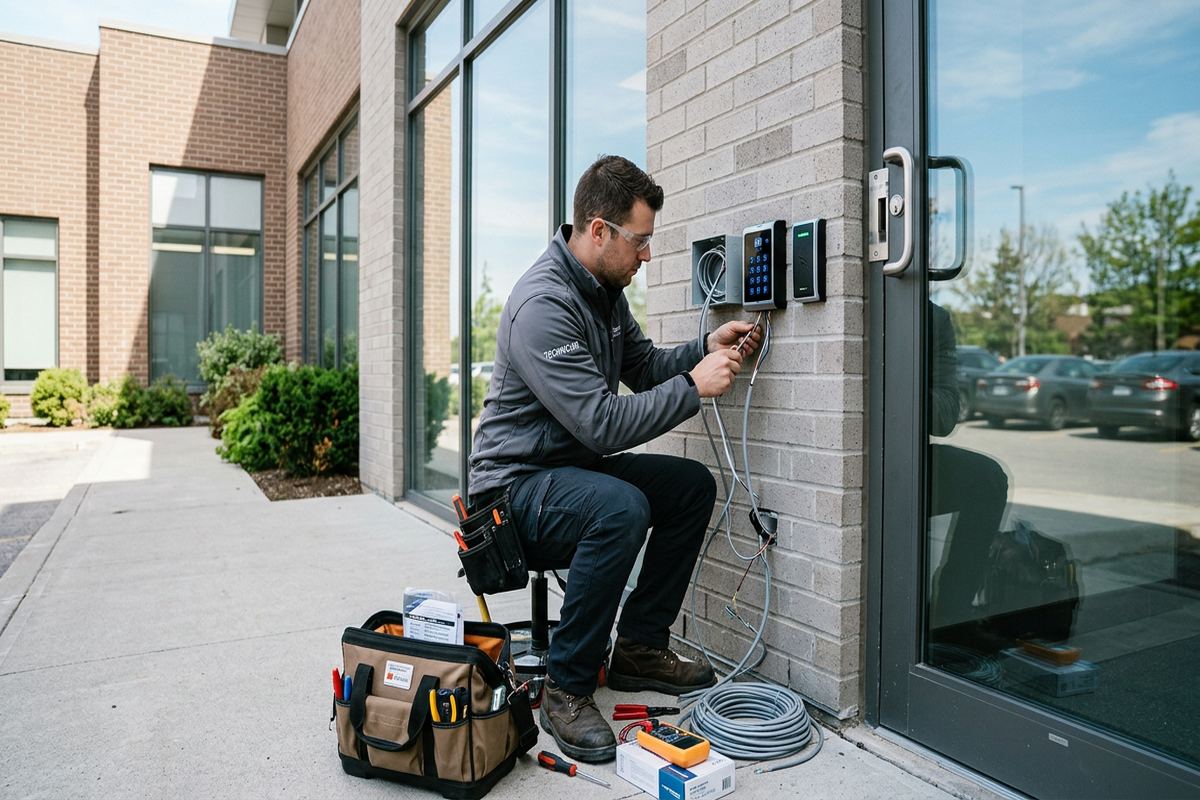
Installation, Testing and Handover
Installation is scheduled after the site assessment, written scope and required approvals are complete. Work areas, access times and planned interruptions are coordinated with the authorized property contact. Each included cable is routed and labelled, devices are mounted in the approved positions, and controllers are installed where they can be serviced. If concealed conditions differ materially from what could be assessed, we document the issue before changing the route or equipment. This keeps the installation aligned with the approved scope and gives the condo corporation or owner a clear basis for decisions.
On-site configuration connects the physical doors to the approved operating rules. We assign inputs and outputs, set door timing, configure schedules and establish credential groups supported by the chosen platform. Testing covers valid access, denied access, door status, exit operation and expected behaviour after a power or network interruption where the design permits. Relevant remote functions are also checked through the customer’s intended connection. Issues caused by door alignment, third-party networks or excluded equipment are documented rather than represented as completed access control work.
Handover gives the customer practical control of the installed system. UnifiedLink provides access using the customer’s own administrative credentials and supplies an as-built record showing the installed arrangement within the project scope. The review covers routine user changes, basic event checks, schedules and known dependencies. Equipment ownership and warranty terms follow the written scope. Customers should store credentials securely and identify more than one authorized administrator where their internal policy permits. Future changes can then be discussed against documented door names, cable labels, controller locations and configuration details instead of reconstructing the original installation.
- Coordinated installation schedule
- On-site controller configuration
- Door-by-door functional testing
- Customer-owned administrative credentials
- As-built system record
Choosing a Collingwood Access Control Scope
The right scope depends on the number of openings, building construction, existing hardware, user turnover and management expectations. A small Creekside condominium may prioritize one resident entrance and a shared garage, while a Downtown Collingwood mixed-use property may need separate permissions for apartments, storefront staff and service areas. Commercial strips and industrial units can introduce delivery doors, after-hours employees or shared yards alongside residential requirements. We separate these use cases in the door schedule so equipment and permissions are based on actual operations rather than one broad access category.
Integration requests should be defined before products are selected. Access control may need to work beside video surveillance, intercoms, elevator controls, alarms, parking equipment or property-management platforms. Compatibility cannot be assumed from a product name or network connection alone. We identify the intended outcome, available interface and responsible contractor for each connection. Some integrations require third-party programming, licences, relays or approvals that are outside the access control installation. Those dependencies and exclusions belong in the written scope so the property can evaluate the complete operational requirement before proceeding.
Collingwood property owners, condo boards and managers can contact UnifiedLink to arrange an initial discussion and site assessment. Requests sent during business hours are answered the same day, while after-hours requests are answered the next business day. Site assessment timing depends on the service and travel distance. After reviewing doors, pathways, network conditions and management needs, we prepare a written scope rather than pricing from an incomplete device count. The objective is a defined installation with one accountable contractor, documented responsibilities and a handover that leaves the customer able to operate its system.
- Door-by-door scope development
- Mixed-use permission planning
- Integration dependency review
- Site assessment before pricing
- One accountable low-voltage contractor
Collingwood neighbourhoods we cover
- Downtown Collingwood
- Blue Mountain area
- Georgian Meadows
- Creekside
- Lighthouse Point
Condo access control systems in Collingwood — common questions
Can condo residents use phones instead of fobs?
Mobile credentials may be suitable if the selected platform, resident devices and building connectivity support them. Many Collingwood condos still use fobs or cards because they are simple to issue and do not depend on a resident’s phone battery. A system can sometimes support more than one credential type. We review user needs, remote-management expectations and network dependencies before recommending an approach.
Can access be managed remotely for short-term rentals?
Yes, a suitable system can allow an authorized manager to issue, schedule and cancel guest credentials remotely. This is useful for Collingwood chalets, short-term rentals and resort properties where key exchanges are inconvenient. Remote operation depends on reliable internet or network connectivity, correct administrative setup and a documented guest process. Temporary access should be limited to the required doors and booking period.
Will exterior readers work through Collingwood winters?
Exterior readers can be selected and installed for local conditions, but the complete opening must also work properly. Collingwood freeze-thaw cycles, moisture, snow and salt can affect frames, thresholds, latches and gates. We assess exposure, use suitable mounting and sealing methods, and test reader and lock operation together. Existing alignment or drainage problems may require corrective work by another appropriate trade.
Do we need condo board or landlord approval?
Approval is commonly required when work affects common elements, shared doors, exterior walls, electrical rooms or communication spaces. A landlord may also need to approve work in a rental property. UnifiedLink provides a written scope identifying equipment, device locations, cable routes and exclusions to support review. The condo corporation, owner or manager remains responsible for obtaining its required internal and third-party approvals.
Can you reuse our existing access control wiring?
Existing wiring may be reused when its cable type, condition, route and test results suit the proposed equipment. In older Downtown Collingwood buildings, previous renovations can leave unlabelled or spliced cable that is difficult to verify. We do not assume a cable is serviceable because it reaches the door. Any approved new runs are continuous and labelled, and replacement requirements are documented in the scope.
What do we receive when installation is complete?
Handover includes on-site review, customer-owned administrative credentials and an as-built record for the installed scope. We explain routine credential changes, schedules, relevant event checks and known network or third-party dependencies. Equipment ownership and warranty details are defined in the written scope. This gives the Collingwood property’s authorized administrators practical control without relying on an installer’s personal login or undocumented door names.
Coverage in Collingwood is confirmed against the address before we quote. See everything we install in Collingwood or the province-wide condo access control systems page.