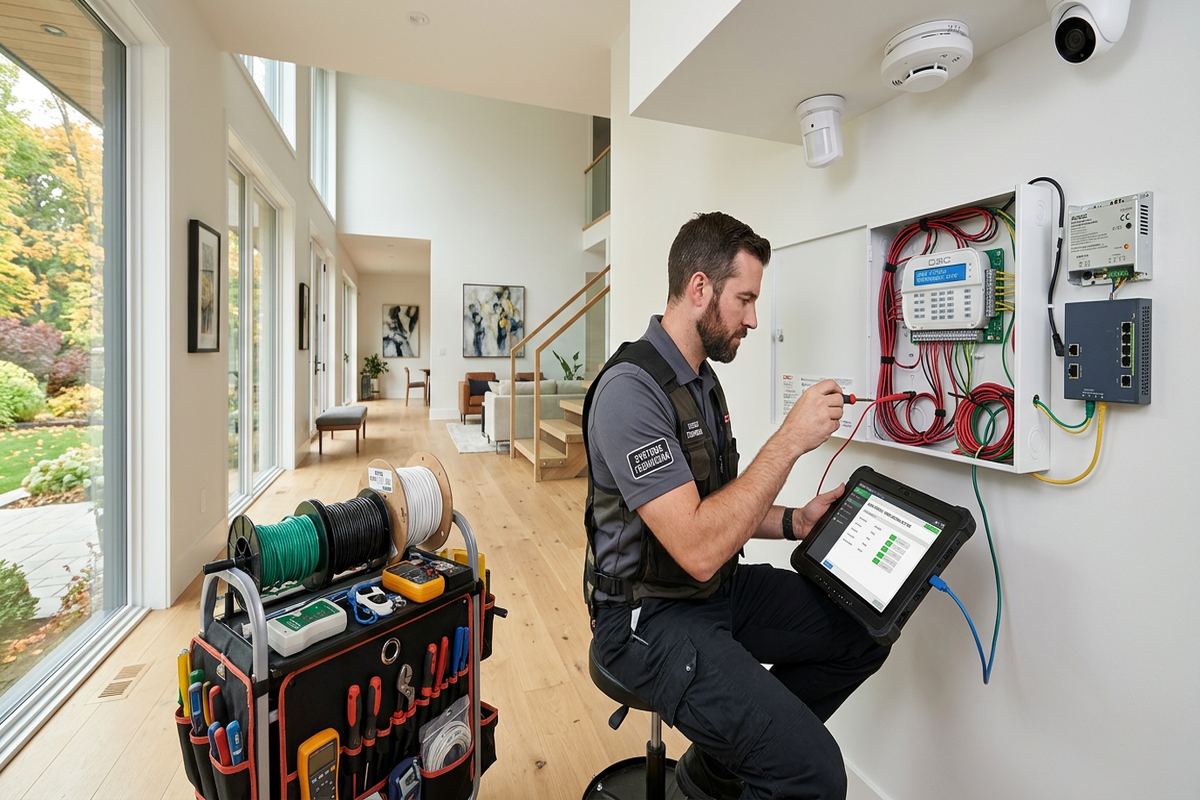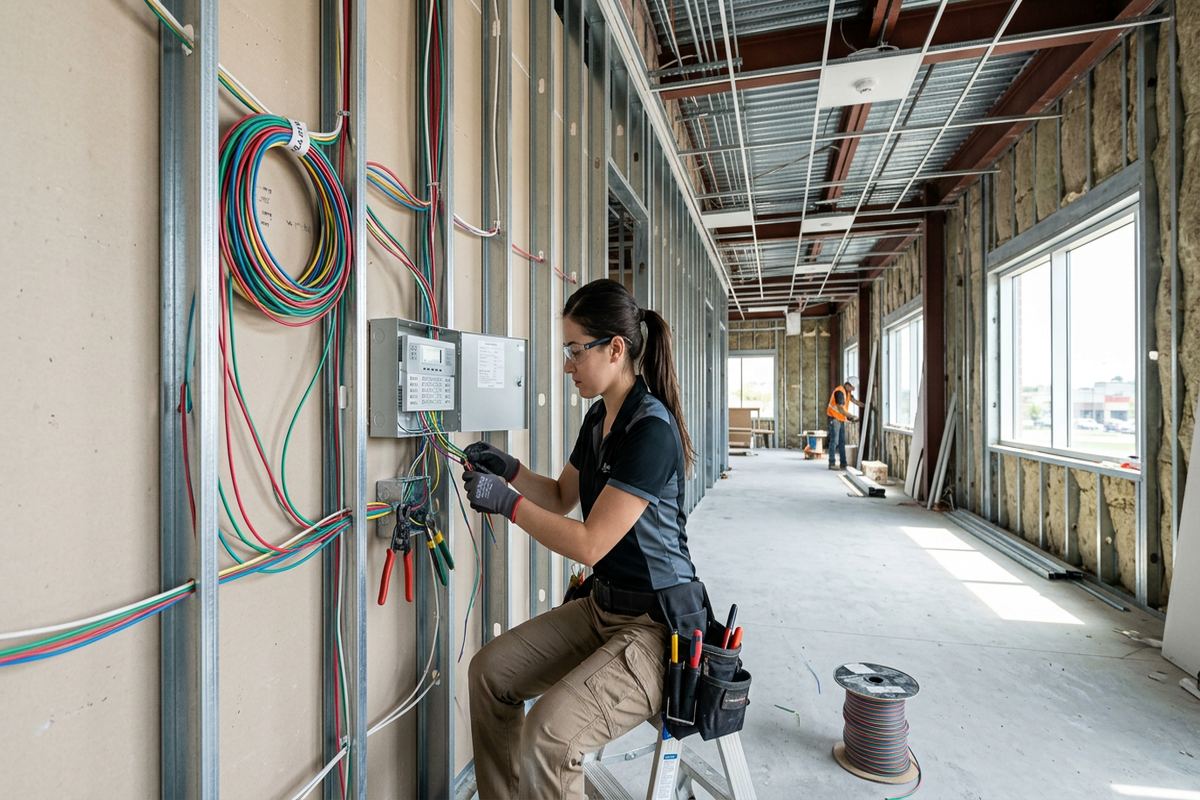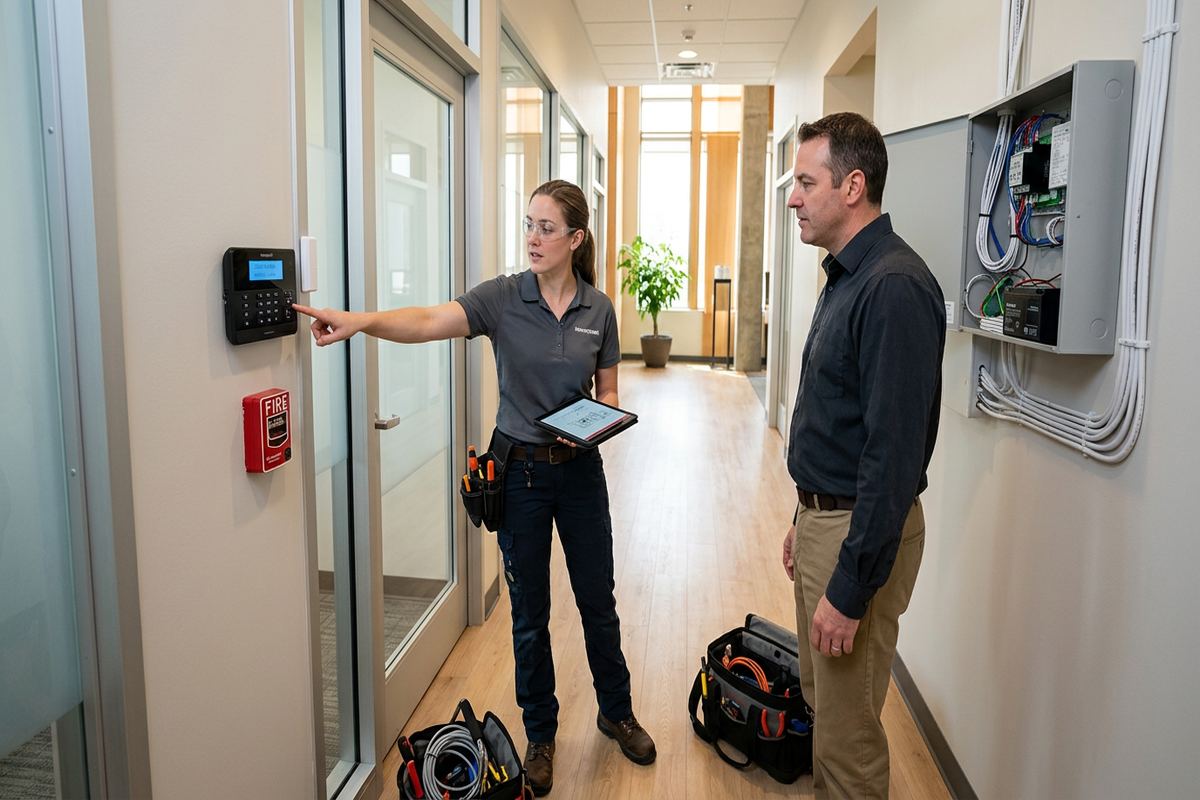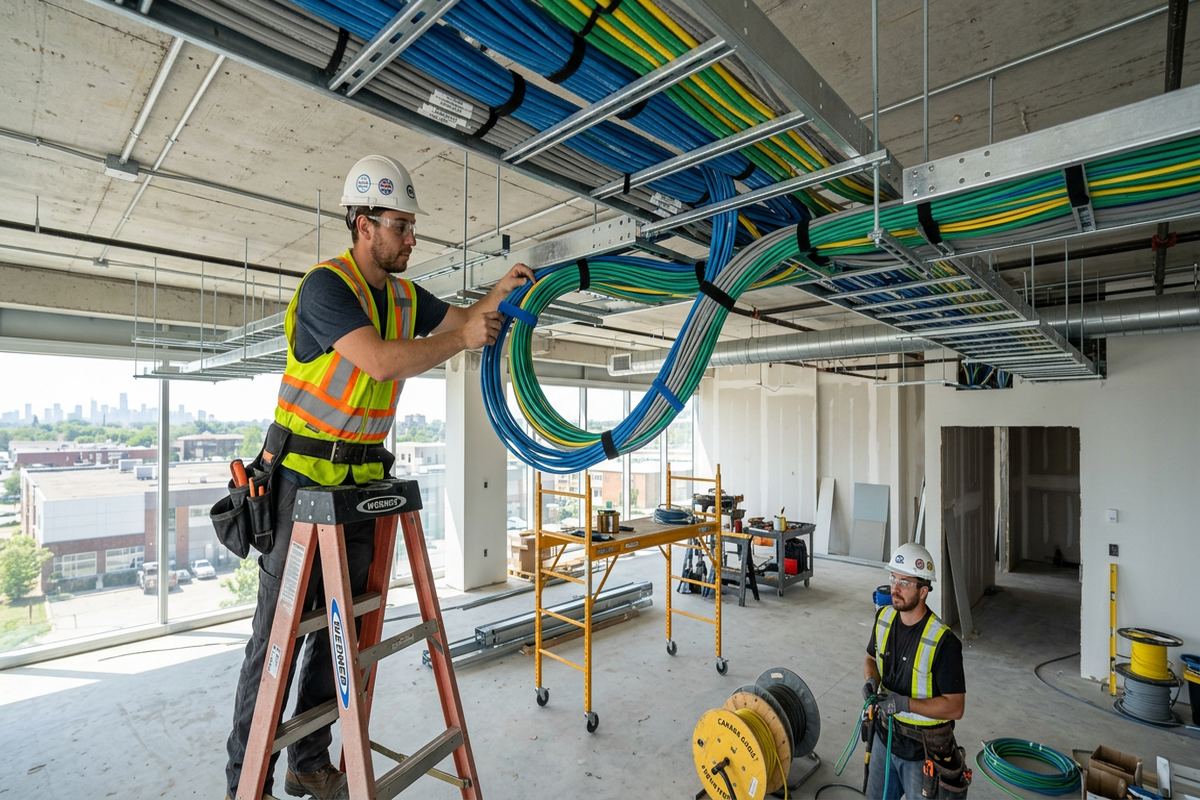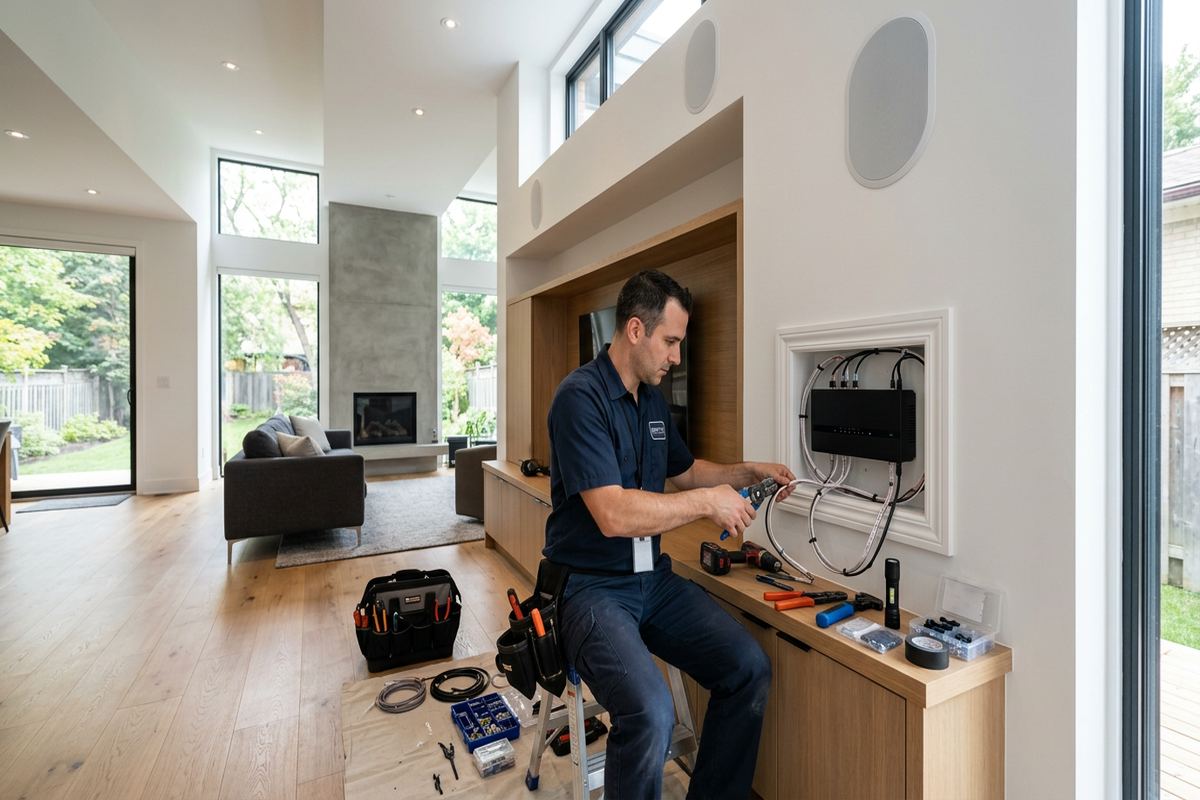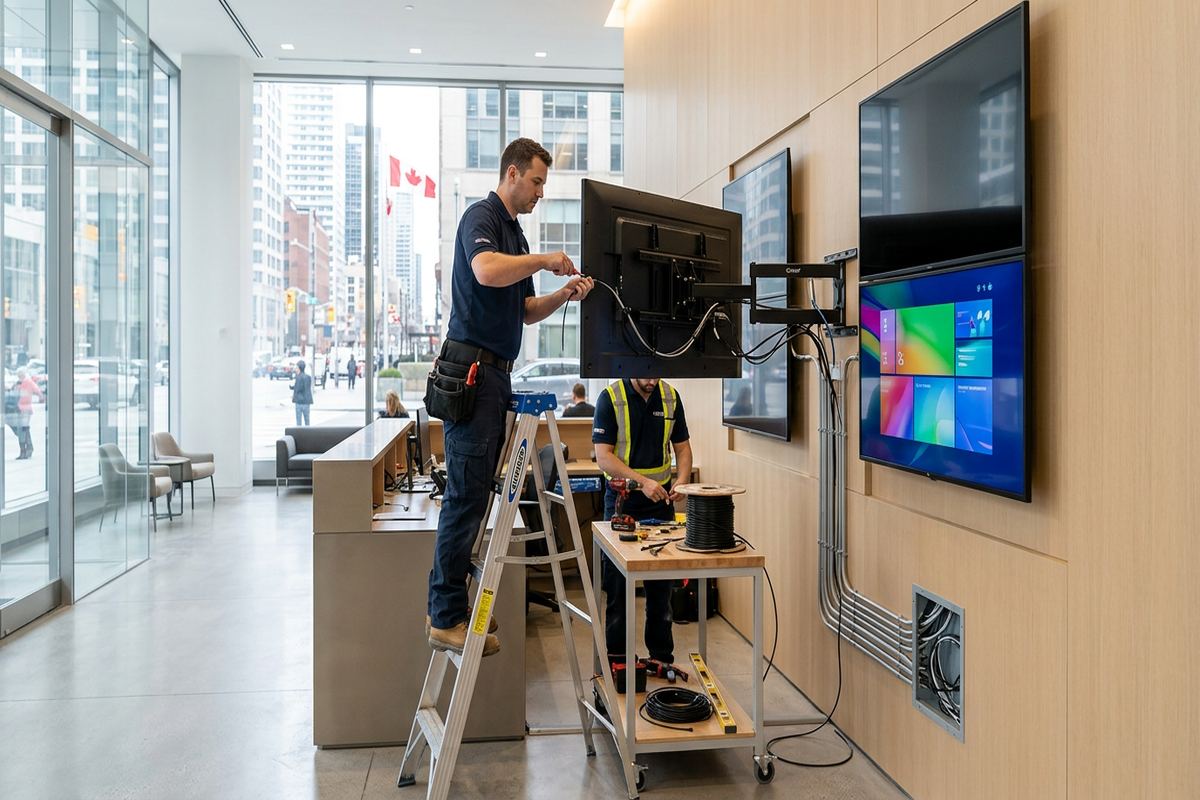
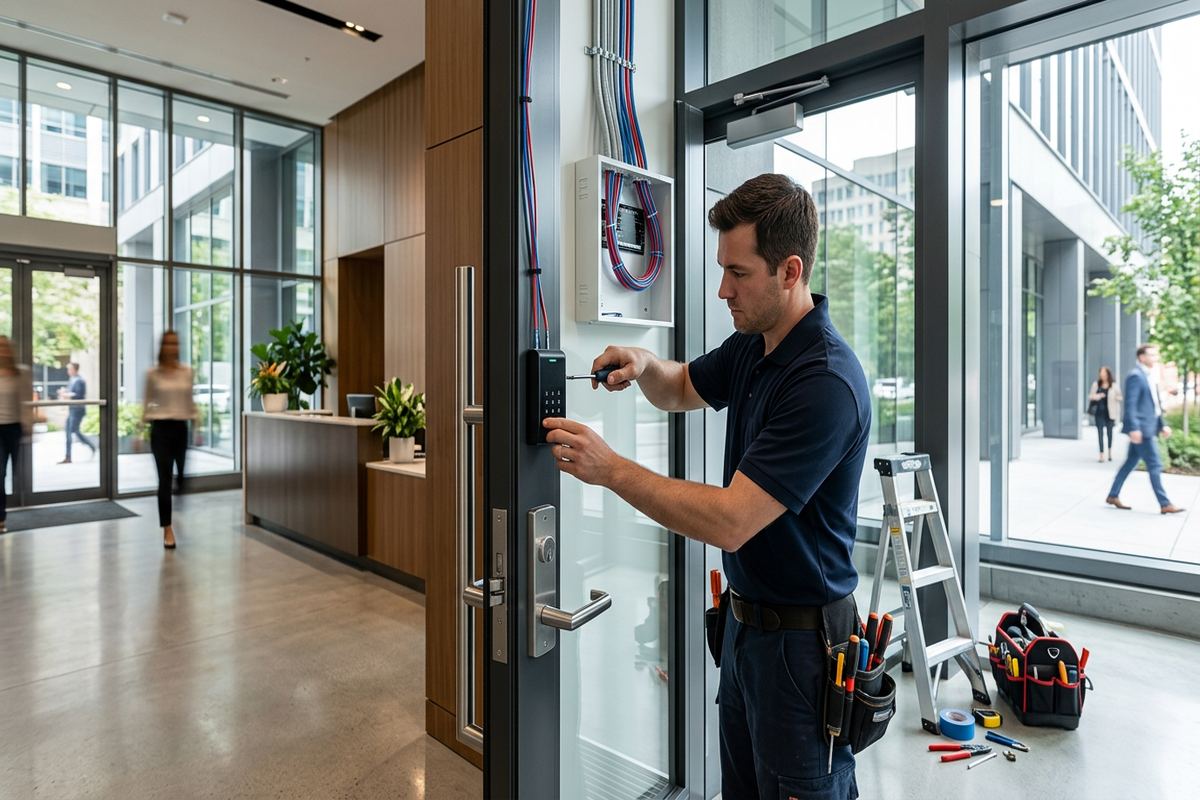
UnifiedLink installs commercial access control systems for Collingwood offices, shops, industrial units, short-term rentals, chalets and resort properties. We assess doors, cabling routes, network coverage and management needs before pricing. Each installation includes a written scope, on-site configuration, customer-controlled credentials, labelled cable runs and practical handover documentation.
Commercial Access Control Planning in Collingwood
A commercial access control project starts with the doors, users and operating rules rather than a product catalogue. During a Collingwood site assessment, we review public entrances, staff doors, service areas, shared corridors and sensitive rooms. We identify who needs access, when permissions should apply and how administrators will add or remove credentials. The assessment also considers emergency egress, mechanical key override requirements and the existing condition of each opening. This produces a practical design based on daily operations instead of adding electronic locks without understanding how the property functions.
Building construction has a direct effect on installation methods and cable routes. Older commercial spaces around Downtown Collingwood may contain finished masonry, renovated framing, concealed additions or limited pathways above ceilings. Newer offices and industrial units may offer clearer routes but still require coordination around fire separations, insulated walls and occupied work areas. We inspect accessible conditions before defining the scope. Where surfaces cannot be opened or concealed cable is impractical, we discuss protected surface pathways, suitable finishes and exclusions rather than assuming every cable can follow an invisible route.
The written scope identifies proposed equipment, controlled openings, reader and controller locations, cable routes, device placement and known exclusions. It also states equipment ownership and warranty information so responsibilities are clear. Access control may involve electric strikes, magnetic locks, request-to-exit devices, door contacts, power supplies, network connections and management software. Not every door needs every component. We specify what is appropriate for the opening, its use and the surrounding construction, while keeping future maintenance and credential administration understandable for the customer.
- Door, frame and hardware condition review
- Credential groups and schedules defined before installation
- Proposed cable routes documented in writing
- Equipment ownership and warranty terms identified
- Network and power requirements confirmed
Access Control Systems for Collingwood Properties
Different Collingwood properties require different access models. A retail shop may need a controlled staff entrance and stockroom, while an office may separate public, employee and management areas. Resort properties, chalets and short-term rentals often need credentials that can be issued remotely and set to expire without collecting a physical key. Multi-tenant buildings may require separate administrators or carefully divided permission groups. We translate these requirements into door schedules, access levels and management procedures that staff can use without creating unnecessary complexity.
Remote management depends on more than the lock or reader at the door. The controller, internet connection, local network and wireless coverage must support the selected system. This is especially relevant in the Blue Mountain area and at larger resort properties, where detached structures, utility spaces or distant entrances may sit beyond reliable Wi-Fi coverage. We test or review connectivity where the system requires it and identify whether wired networking, additional cabling or improved wireless coverage belongs in the project scope. A cloud-managed product cannot compensate for an unstable local connection.
Credential choices can include cards, fobs, mobile credentials, keypads or combinations of these methods. The right option depends on user turnover, door location, administrative capacity and the consequences of shared codes. Short-term accommodations usually benefit from time-limited permissions and an audit trail, while workplaces may prefer assigned credentials linked to individual employees. We explain how credentials are enrolled, suspended and removed, including what happens during an internet outage. Final administrative access is provided through the customer’s own credentials rather than an installer-controlled account.
- Cards, fobs, mobile credentials and keypads
- Time-limited access for guests or contractors
- Separate access groups for staff and tenants
- Remote management where connectivity supports it
- Customer-controlled administrator accounts
Door Hardware and Safe Egress
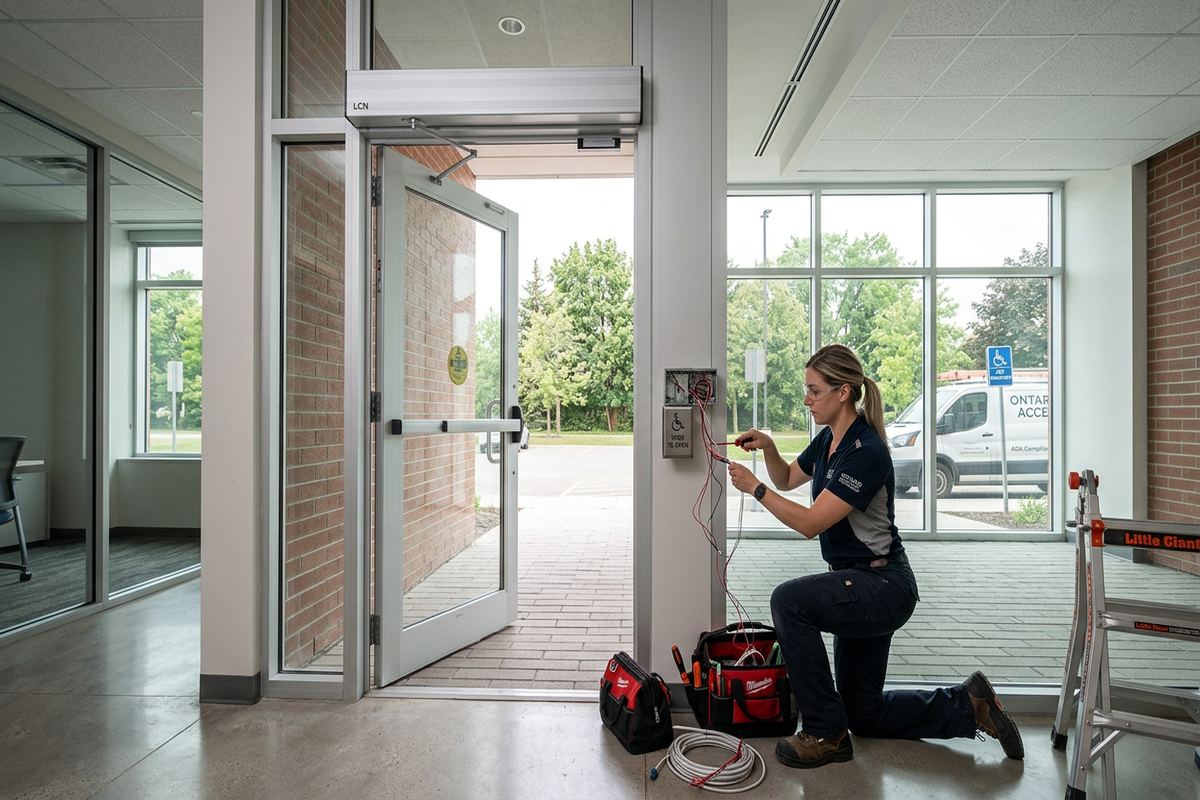
Electronic access control must work with the physical door, frame, latch and exit hardware. A reader can report a valid credential while a misaligned door still fails to unlock or relock reliably. We examine closing action, frame condition, latch engagement, hinges and available mounting space before selecting locking hardware. Existing panic hardware, storefront doors, fire-rated assemblies and accessibility operators can affect the design. Where work outside our scope is needed from a locksmith, door contractor or electrician, that dependency is identified rather than hidden inside an equipment proposal.
Safe exit operation remains essential after access control is added. Occupants must not be trapped by a failed controller, network interruption or credential problem. Depending on the opening, the design may use mechanical free egress, request-to-exit detection, emergency release interfaces or other suitable arrangements. We document the intended operating sequence and test door behaviour during commissioning. Final acceptance may also require coordination with the property owner, authority having jurisdiction or other project professionals. Access restrictions on entry do not remove obligations related to egress, fire protection and accessible use.
Condo, landlord and property-management approvals should be addressed before drilling, wiring or replacing shared door hardware. At Lighthouse Point, Georgian Meadows or other managed properties, exterior appearance, common elements and network access may be governed by building rules. Commercial tenants may also need written permission before modifying a storefront frame or electrical room. We can provide device locations and proposed pathways for review, but the customer remains responsible for obtaining required approvals unless the written scope assigns that task differently. Early confirmation helps prevent redesign after equipment has been ordered.
- Existing door alignment and latching inspected
- Exit operation included in commissioning tests
- Lock hardware matched to each opening
- Shared-property approvals identified before work
- Trade dependencies stated in the scope
Collingwood, Ontario
Commercial access control installation in Collingwood, scoped in writing first
Book a site assessment and get equipment, routes, exclusions, and warranty on paper before anything is installed.
Collingwood Exterior Doors and Winter Conditions
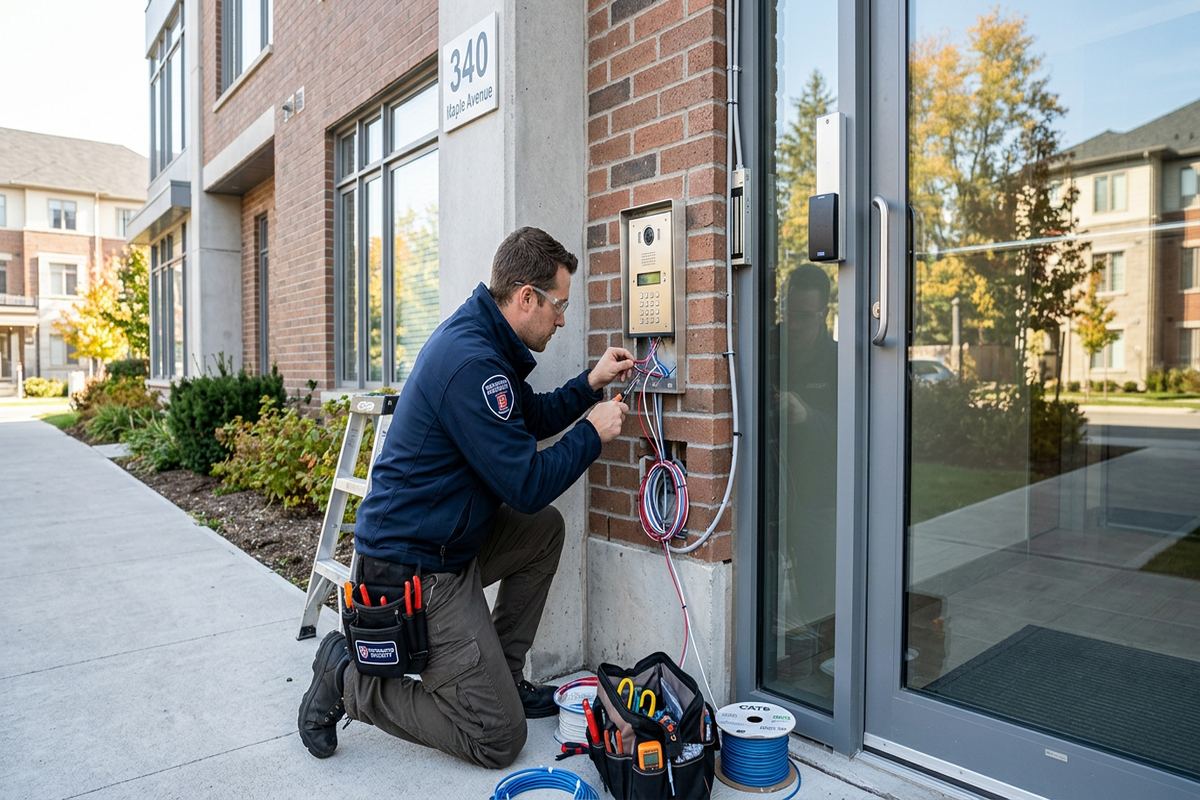
Exterior access devices in Collingwood must tolerate snow, moisture, temperature swings and repeated freeze-thaw conditions. Reader placement should limit direct exposure where practical, while still remaining visible and convenient for users wearing gloves or carrying equipment. Cable entries require suitable sealing so water does not follow the cable into a wall, frame or enclosure. We also consider snow clearing, roof runoff and areas where ice can collect. A weather-rated reader alone does not correct poor placement, an unsealed penetration or a door that regularly freezes against its threshold.
Masonry and frame construction require different attachment and sealing methods. Brick or block walls may need carefully positioned anchors and protected penetrations that avoid unnecessary damage to the face or mortar system. Wood- or steel-framed walls may contain insulation, vapour-control layers and concealed services that affect drilling. Resort and chalet properties can combine stone veneer, timber details and later additions within one entrance. The assessment records accessible construction information, but concealed conditions may remain exclusions until a pathway is opened. This keeps installation decisions tied to the actual wall rather than assumptions.
Cold weather can expose existing mechanical problems that are not caused by the access control system. Door closers may react differently, weather stripping can stiffen, frames can shift and latches can stop aligning consistently. Before commissioning an exterior controlled door, we test repeated opening, closing, release and secure operation. If adjustment or repair by a door specialist is required, it is documented. Reliable access depends on the entire opening returning to a secure position, not merely on the controller sending the correct command to the locking device.
- Weather-conscious reader and enclosure placement
- Exterior penetrations sealed against moisture entry
- Mounting selected for masonry or framed walls
- Freeze-thaw effects considered at each opening
- Repeated secure-close testing during commissioning
Cabling, Power and Network Integration
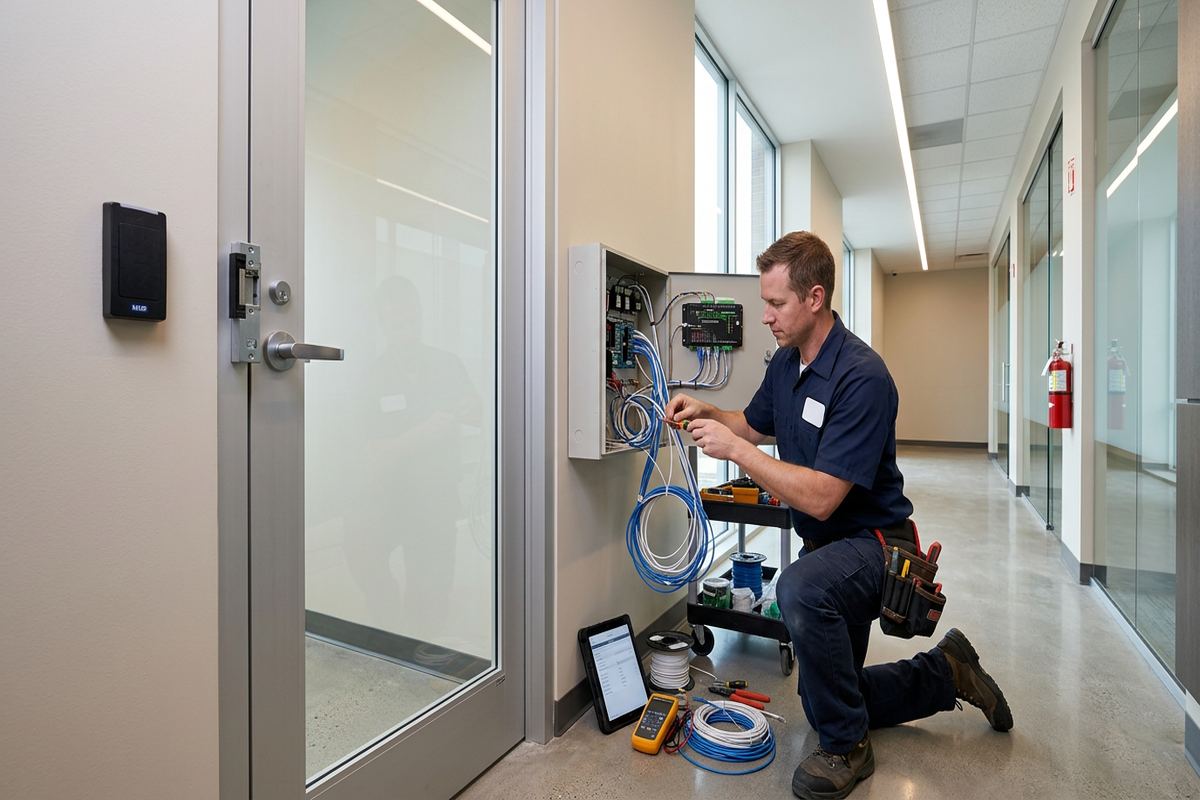
Access control cabling connects readers, locks, contacts, exit devices and controllers, so workmanship affects both reliability and troubleshooting. UnifiedLink installs continuous labelled cable runs within the agreed route, avoiding undocumented splices that complicate future service. Each endpoint and corresponding panel connection is identified consistently. Cable selection and pathway planning consider device power, signal requirements, environmental exposure and separation from other building services. In occupied Collingwood businesses, installation sequencing also accounts for public areas, stock movement and working hours where these constraints are discussed during assessment.
Controller and power-supply placement affects security, serviceability and cable distance. Equipment should not be left exposed beside the door it controls or placed where general occupants can easily disconnect it. Suitable utility rooms, communications spaces or secured closets are reviewed during planning. Industrial units may have open ceilings and straightforward pathways, while commercial strips can involve shared service rooms or landlord-controlled risers. We confirm accessible power and network connections and identify any electrical work that requires another trade. Backup-power expectations are also discussed as part of the operating requirements.
Networked systems need a clear ownership and security model. We determine whether the access platform uses a local controller, hosted service, mobile application or browser interface, then confirm who will administer it after handover. Network settings are configured on site within the agreed scope, using information authorized by the customer. Where remote access relies on Wi-Fi, coverage is assessed at relevant equipment locations rather than assumed from a nearby office. For chalets and resort buildings around Collingwood, wired connections may provide a more stable foundation where structures and distance weaken wireless signals.
- Continuous labelled cable runs
- Secured controller and power-supply locations
- Documented network and connectivity requirements
- Coordination with electricians where required
- Wi-Fi coverage reviewed for remote functions
Installation and Commissioning in Collingwood
Once the scope is approved, installation follows the documented device positions and cable routes. We protect work areas, coordinate door downtime and keep existing access arrangements in mind. Readers, locking hardware interfaces, contacts and control equipment are installed before system programming begins. Changes caused by concealed construction, unavailable pathways or unexpected door conditions are discussed rather than made without explanation. This approach is useful in active Downtown Collingwood shops, offices and hospitality properties where entrances cannot simply remain unavailable while an unplanned solution is developed.
Commissioning verifies each part of the controlled opening as a complete sequence. We test valid and invalid credentials, scheduled permissions, door release, relocking, door-position reporting and request-to-exit behaviour where fitted. Network recovery and relevant offline operation are reviewed according to the selected platform. Named doors, users and access groups are configured on site so the interface reflects the property rather than generic factory labels. Any limitations, outstanding third-party work or operational exceptions are recorded for the customer before the system is placed into regular use.
Handover gives the customer practical control of the installation. Administrator access is established with the customer’s own credentials, and staff are shown how to add users, remove lost credentials, change schedules and review common events. We provide an as-built record showing the installed arrangement and labelled cable destinations within the project scope. The customer also receives relevant ownership and warranty information. With one accountable contractor for the low-voltage portion, questions about cabling, device configuration and documented system operation do not need to be divided among unrelated installers.
- Installation follows the agreed written scope
- Every controlled opening function-tested
- System labels reflect actual door names
- Customer credentials used for administration
- As-built record supplied at handover
Managing Staff, Guests and Contractors
Day-to-day administration determines whether access control remains useful after installation. Collingwood employers may need separate access groups for opening staff, managers, cleaners, delivery personnel and seasonal workers. Permissions should follow job needs rather than giving every credential access to every opening. Scheduled access can limit entry outside normal duties, while prompt credential removal reduces reliance on returned keys. We help structure initial groups and naming conventions during configuration, but the customer retains authority over who receives access and how internal approval is handled.
Short-term rentals, chalets and resort properties have higher credential turnover than a conventional office. Time-limited codes or assigned mobile credentials can reduce key exchanges, but the workflow must still account for cleaners, maintenance contractors, property managers and emergency access. Shared permanent codes are difficult to control once distributed. A planned process should specify who creates guest access, when it expires and how unusual entry events are reviewed. Reliable internet and Wi-Fi coverage are also important when permissions are issued remotely or locks depend on connected management features.
Audit information can help an authorized administrator understand when an assigned credential was presented, denied or accepted, subject to the features and configuration of the selected system. It should not be treated as proof of a person’s actions without context, since credentials can be shared or used by someone else. Businesses should also establish appropriate privacy, retention and employee policies. We configure available event functions within scope and explain their operation, while decisions about legal compliance, monitoring policy and record retention remain with the property operator and its advisers.
- Role-based staff access groups
- Expiring permissions for temporary users
- Separate credentials for cleaners and contractors
- Clear administrator naming conventions
- Event review features explained at handover
Scalable Access Control for Collingwood Sites
A system should fit current needs while leaving a sensible path for additional doors. Expansion planning considers controller capacity, available power, cable pathways, software limits and the way future buildings will connect. Creekside offices, Lighthouse Point facilities and larger Blue Mountain area properties may start with one main entrance before adding storage, staff or amenity doors. We document installed capacity and known constraints so later decisions are based on the as-built system. Buying unused hardware everywhere is not automatically better than planning the infrastructure carefully.
Integration with alarms, video surveillance, intercoms or automated doors may be useful, but compatibility must be confirmed rather than assumed. A door event can sometimes be linked with relevant video or an intercom call, depending on the products and permissions involved. We define which platform initiates each action, what happens during a network outage and who supports each component. Where integration is included, it is stated in the written scope and tested on site. Separate systems may remain preferable when a combined platform would create unnecessary licensing, administration or operational dependencies.
Commercial access control installation in Collingwood begins with a site assessment before pricing. Assessment timing depends on the service requirements and travel distance. Requests sent during business hours are answered the same day, while after-hours requests are answered the next business day. Following review, the written scope covers equipment, cable routes, device placement, exclusions, equipment ownership and warranty. This gives owners, landlords and managers a defined basis for approval, installation and handover without relying on vague allowances or undocumented assumptions about doors, construction and network conditions.
- Expansion capacity and limitations documented
- Optional alarm, video or intercom integration
- One accountable low-voltage contractor
- Site assessment completed before pricing
- Written scope provided for approval
Collingwood neighbourhoods we cover
- Downtown Collingwood
- Blue Mountain area
- Georgian Meadows
- Creekside
- Lighthouse Point
Commercial access control installation in Collingwood — common questions
Can you add access control to an existing Collingwood storefront?
Yes, provided the door, frame and available pathways are suitable. Older Downtown Collingwood storefronts may have narrow aluminum frames, masonry surrounds, shared service spaces or existing hardware that affects the design. We assess the opening before pricing and identify whether a locksmith, electrician, landlord approval or door repair is required. Proposed equipment, routes and exclusions are then included in the written scope.
Will remote access work at a chalet or resort property?
Remote administration can work well for Collingwood chalets, short-term rentals and resort properties, but it depends on the selected platform and reliable connectivity. We review the controller location, internet service and Wi-Fi coverage at relevant doors. If coverage is weak, wired networking or wireless improvements may be recommended. We also configure customer-owned administrative credentials and explain how the system behaves if internet service is unavailable.
Do I need landlord or condo approval?
Approval may be required when work affects a leased unit, common element, exterior appearance, shared doorway or building network. This is relevant at managed Collingwood properties, including condo and resort communities. We can document proposed reader positions, hardware and cable routes for review. Unless the written scope says otherwise, the customer is responsible for obtaining landlord, condominium or property-management approval before installation begins.
What happens to access control during a power outage?
Operation during an outage depends on the lock type, controller, power supply, backup arrangement and required egress behaviour. Some functions may continue temporarily with suitable backup power, while remote administration may depend on network equipment that also needs power. During the Collingwood assessment, we discuss outage expectations and document the proposed arrangement. Exit operation and the selected lock’s secure or released state are included in commissioning checks.
Can you reuse our existing cards or door hardware?
Sometimes, but compatibility and condition must be verified. Existing credentials may use a format unsupported by the proposed reader, and current door hardware may be worn, misaligned or unsuitable for electronic control. We inspect accessible components and identify what can reasonably remain. Reuse is only included when it is stated in the Collingwood project scope; unknown compatibility or concealed conditions are documented as exclusions.
What do we receive after installation?
After commissioning, you receive administrative access using your organization’s own credentials, guidance on managing users and an as-built record of the installed arrangement. Labelled cable destinations, relevant equipment ownership details and warranty information are included within the agreed scope. We also record known limitations or outstanding third-party work. This gives the Collingwood property operator a practical reference for daily administration, maintenance and future expansion.
Coverage in Collingwood is confirmed against the address before we quote. See everything we install in Collingwood or the province-wide commercial access control installation page.