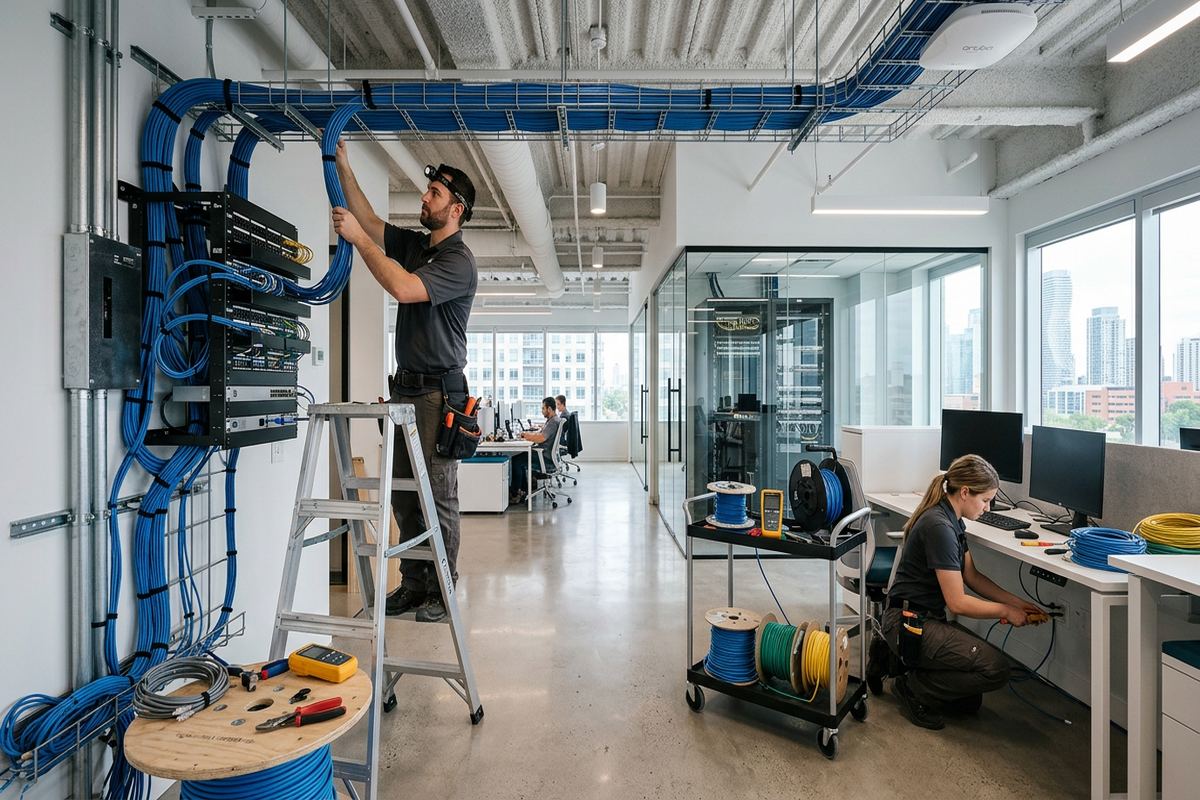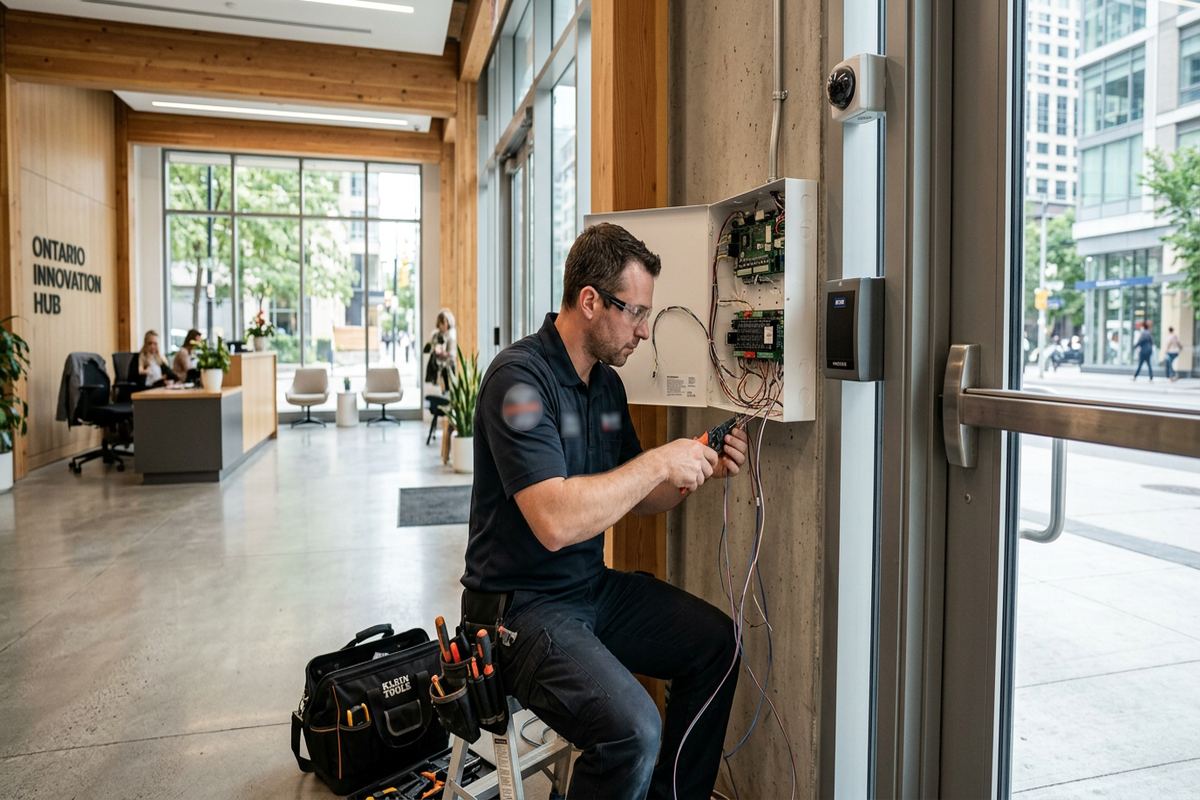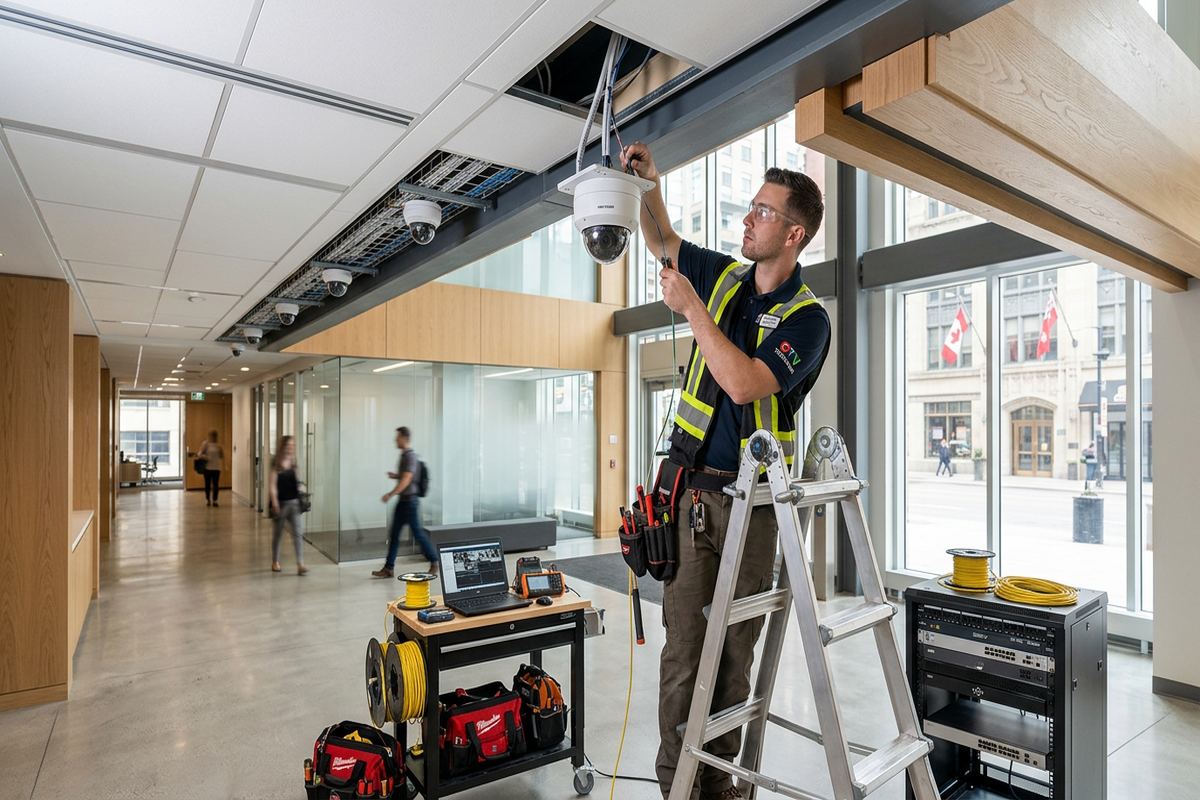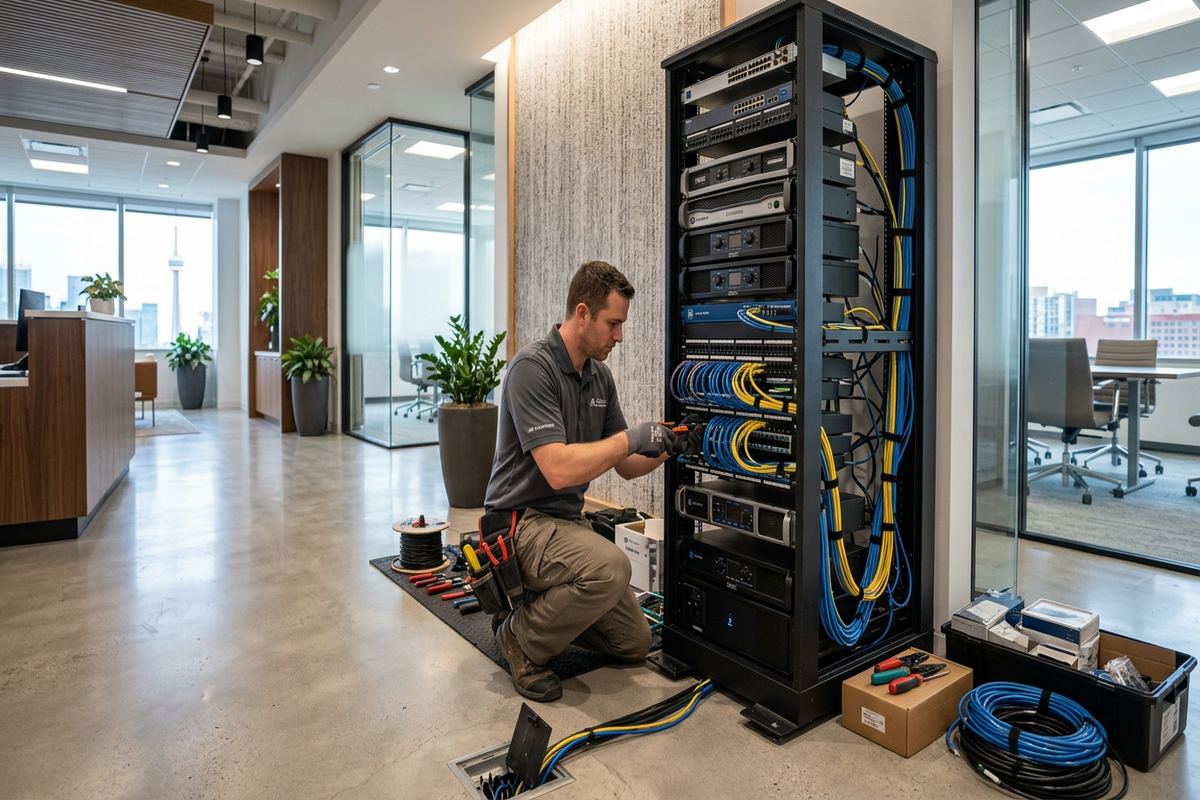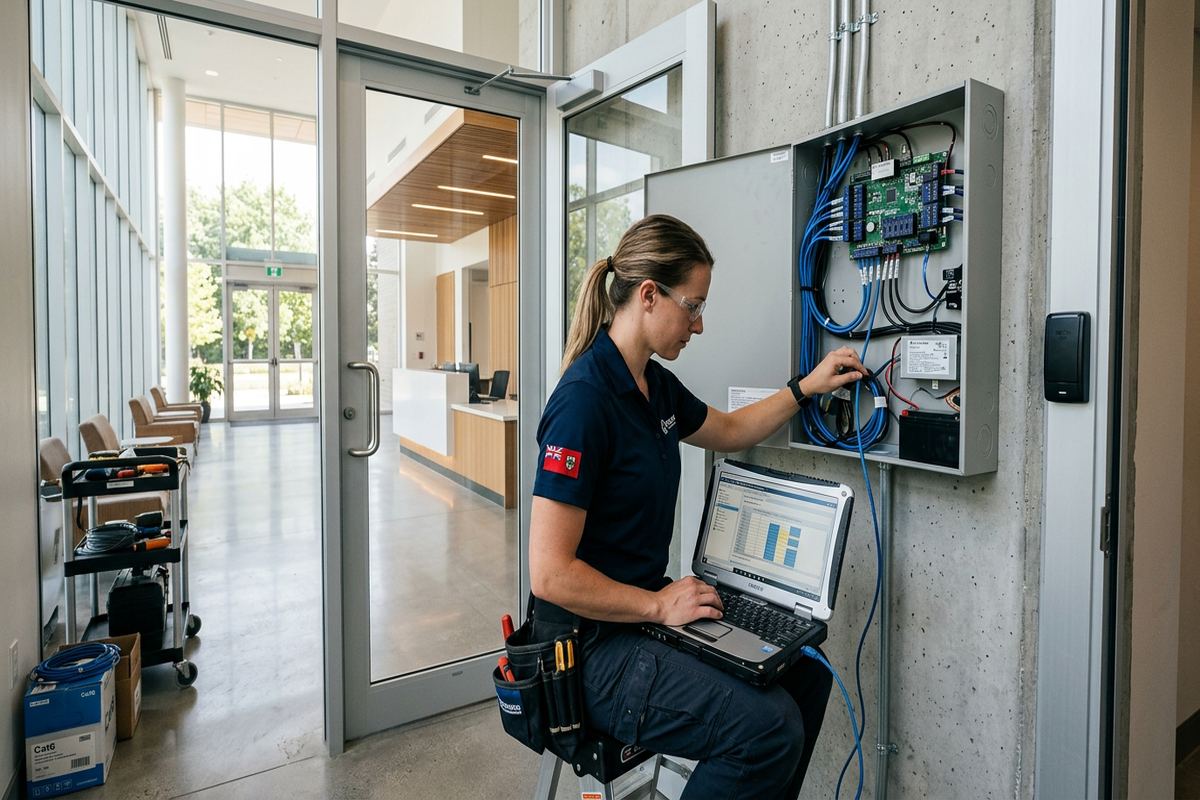
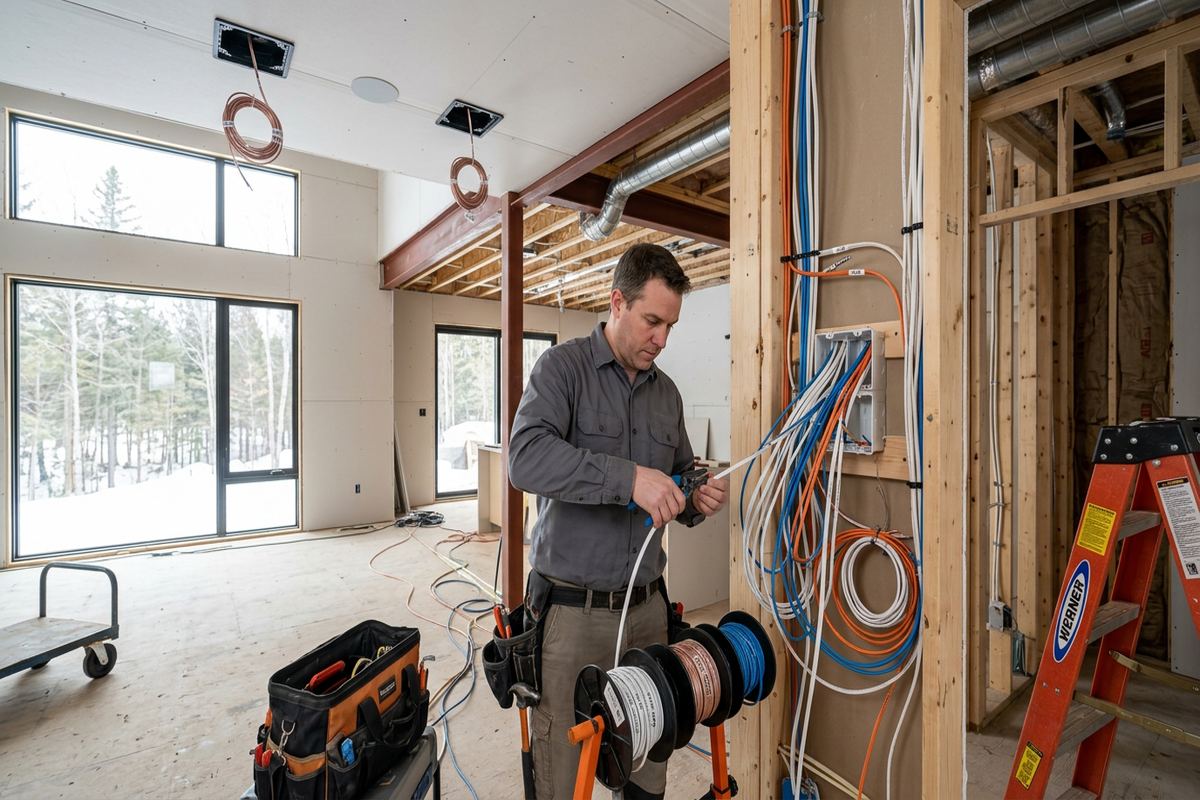
UnifiedLink installs whole-home audio systems for houses, condominiums and small businesses in Cobourg. We plan speaker locations, amplifiers, controls and cable routes around the property’s construction and intended use. Each project begins with a site assessment and finishes with on-site configuration, customer-owned credentials, labelled cabling and an as-built record.
Whole-Home Audio Planning in Cobourg
A useful whole-home audio system starts with decisions about where sound is needed and how each space will be used. During a Cobourg site assessment, we review room dimensions, ceiling construction, furniture locations, listening positions and likely volume levels. We also establish whether rooms should play independently, operate in groups or follow a shared source. This planning helps determine speaker type, amplifier capacity, control locations and network requirements before openings are made or cable is pulled. The result is a practical design based on the building rather than a generic speaker package.
Cobourg properties vary from newer frame-built houses in New Amherst to older buildings near Downtown Cobourg and the beach. Wall depth, plaster condition, masonry, insulation and previous renovations all affect cable access and speaker placement. An attic route that appears straightforward may be blocked by additions, fire stops or inaccessible roof sections. Basements can also have finished ceilings or stone and masonry walls. We inspect these conditions before preparing the written scope so that proposed routes are realistic, disruption is understood and appropriate speaker backboxes, brackets or surface pathways can be selected.
The written scope identifies equipment, cable routes, device placement, exclusions, equipment ownership and warranty details. It also defines which existing televisions, streaming devices, networks or audio sources will be incorporated. This is important because whole-home audio combines several systems: speakers, amplification, control applications, wired networking and sometimes Wi-Fi. Clear boundaries reduce uncertainty about drywall repair, electrical work, cabinetry modifications and third-party subscriptions. Where construction or renovation is underway, we can coordinate rough-in requirements with the owner or other trades while remaining one accountable contractor for the low-voltage installation.
- Room dimensions and listening areas reviewed
- Audio zones defined before equipment selection
- Cable routes assessed before pricing
- Written scope identifies inclusions and exclusions
- Existing sources and networks evaluated
Choosing Speakers for Each Room
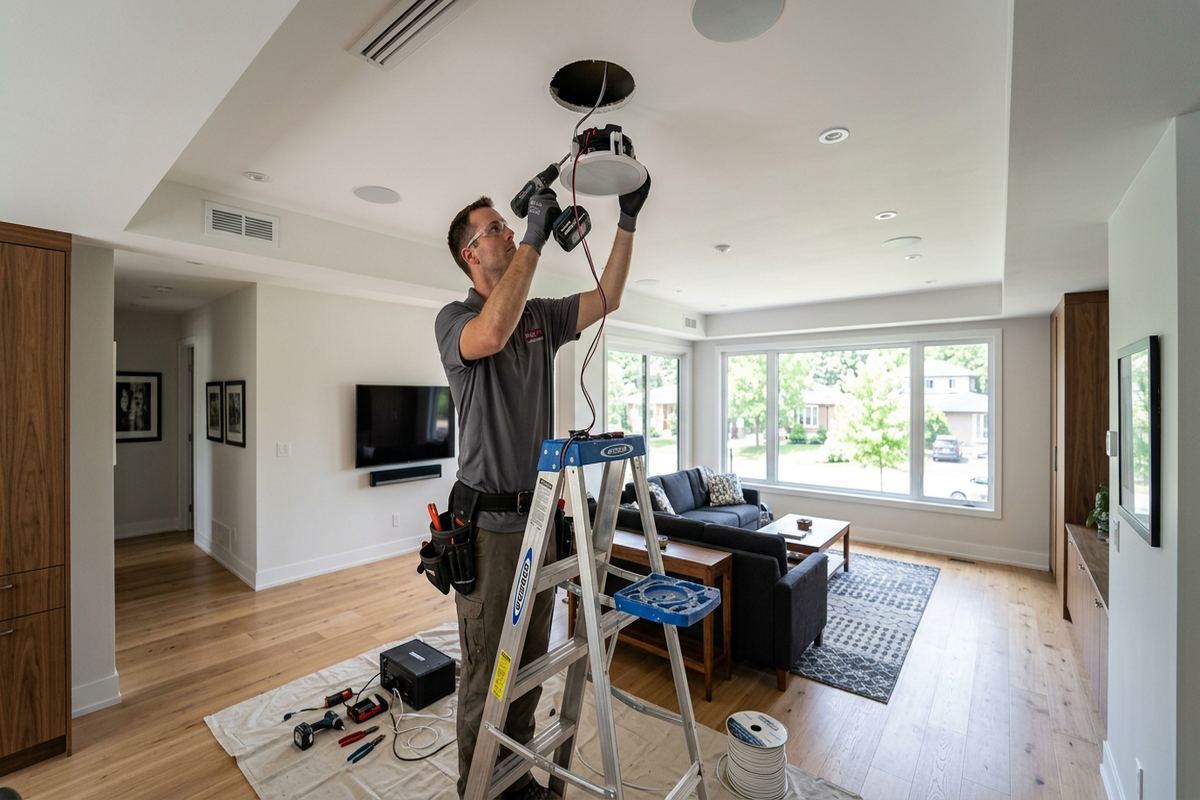
Speaker selection should follow the room, not simply match throughout the house. In-ceiling speakers can provide even background coverage in kitchens, hallways and open living areas without occupying floor space. In-wall models may offer more focused listening where the wall construction permits correct placement. Bookshelf, pendant or surface-mounted speakers suit rooms where cutting finished surfaces is undesirable. We consider sound coverage, available mounting depth, insulation, vapour barriers and access for future service. Bathrooms, covered patios and humid spaces also require equipment suited to the conditions rather than standard indoor speakers.
Open-concept rooms often need different treatment from bedrooms or offices. A kitchen and family room may operate as one zone, but speaker locations still need to account for hard counters, large windows, vaulted ceilings and changing listening positions. Bedrooms generally benefit from independent volume control, while a home office may need clear sound at modest levels without disturbing adjacent rooms. We plan these relationships before selecting amplifier channels. Correct zoning makes daily operation simpler and avoids forcing unrelated rooms to play together whenever someone wants music in only one part of the home.
For heritage homes around Cobourg Beach and Downtown Cobourg, visible impact can be as important as acoustic performance. Decorative plaster, original trim, narrow wall cavities and masonry sections may make conventional recessed speakers unsuitable. Reversible options can include carefully placed surface speakers, discreet cable raceway or routes through later additions rather than original finishes. We discuss which surfaces may be altered and which must remain untouched. The objective is not to hide every component at any cost, but to create a neat system that respects the property and can still be inspected, maintained or removed.
- In-ceiling, in-wall and surface options
- Independent bedroom and office zones
- Moisture-appropriate speakers for humid spaces
- Reversible approaches for heritage finishes
- Coverage planned around room geometry
Audio Sources, Amplifiers and Controls
The central equipment determines how many rooms can play, which sources are available and whether users can control zones independently. We size amplification around speaker quantity, impedance, expected listening levels and future expansion identified during planning. Equipment may be located in a utility room, structured wiring cabinet or ventilated media area with suitable access. Amplifiers should not be crowded into sealed cabinetry where heat can accumulate. We also allow space for network hardware, source devices and service loops, keeping power and low-voltage connections organized so troubleshooting does not require dismantling an entertainment unit.
Control options may include wall keypads, mobile applications, voice platforms or television interfaces, depending on the selected equipment. A simple system can be more dependable than one built around unnecessary integrations. We confirm who needs access, how shared zones should behave and whether guests or tenants require limited control. During handover, the system is configured with the customer’s own credentials rather than an installer-controlled account. This preserves ownership and makes future account recovery, subscription changes or device replacement easier. We also explain routine controls without assuming every user wants the same application or automation method.
Streaming performance depends on the network as much as the audio components. In Cobourg homes with thick masonry, additions or detached spaces, one wireless access point may not provide stable coverage to every controller or streaming amplifier. We assess available Ethernet routes and Wi-Fi conditions where audio devices will operate. Fixed equipment is wired where practical, reducing dependence on variable wireless signals. If network improvements are needed, they are identified separately in the scope. This prevents speaker installation from masking an underlying connectivity problem and provides a clearer path for reliable control across all planned audio zones.
- Amplification matched to speaker load
- Ventilated and serviceable equipment locations
- Customer-owned application credentials
- Wired connections used where practical
- Controls configured for intended users
Cobourg, Ontario
Whole-home audio installation in Cobourg, scoped in writing first
Book a site assessment and get equipment, routes, exclusions, and warranty on paper before anything is installed.
Concealed Audio Cabling Across Cobourg Homes
Cable installation affects reliability, appearance and future service. UnifiedLink installs continuous labelled runs between speakers, control points and the designated equipment location, avoiding concealed splices that are difficult to locate later. Routes are selected around framing, plumbing, electrical wiring, heating ducts and finished surfaces. Where open walls are available during renovation, rough-in can include properly positioned cable and service length for final equipment. In finished Cobourg houses, we use accessible attic, basement, closet or utility pathways where practical and discuss any necessary openings before work begins. Labels correspond with the final as-built record.
Frame construction commonly allows cable to pass through stud and joist spaces, although insulation, blocking and renovations can limit access. Masonry walls require a different approach because channels cannot be assumed and drilling may affect brick, stone or interior finishes. Surface raceway, cabinetry routes or adjacent frame partitions may provide a less disruptive solution. In older Downtown Cobourg properties, construction can change between original sections and later additions. We verify each route instead of treating the entire building alike. This reduces avoidable damage and helps ensure cable remains protected from sharp edges, moisture and inappropriate contact with electrical conductors.
Renovation timing can make a significant difference. Before drywall, speaker wire, network cable and control wiring can be installed with fewer finished-surface openings, but locations must still be coordinated with lighting, HVAC grilles, ceiling details and cabinetry. After finishes are complete, routes require more careful access planning and may involve small, agreed openings. The scope states whether patching, painting or specialty finish repair is included or excluded. For heritage plaster or detailed trim, owners may choose their own restoration contractor after the low-voltage work. That division of responsibility is documented before installation rather than decided afterward.
- Continuous cable runs without hidden splices
- Labels matched to each audio zone
- Routes separated appropriately from electrical wiring
- Openings discussed before installation
- As-built cable record provided
Outdoor Audio for Cobourg Conditions
Outdoor audio needs equipment and mounting methods suited to changing temperatures, wind-driven rain and seasonal moisture. Around Cobourg, winter cold and repeated freeze-thaw cycles can stress brackets, penetrations and exposed cable if they are installed casually. We select appropriate exterior-rated speakers, corrosion-resistant hardware and protected cable pathways. Mounting points are assessed for structural support rather than attached only to siding or trim. Exterior penetrations are kept limited, positioned to shed water and sealed using methods compatible with the surrounding material. Speaker direction is also planned to keep sound focused within the intended property area.
Brick, stone, siding and wood each require different fastening and sealing details. Masonry mounting may involve anchors positioned to avoid damaged joints or unstable surfaces, while frame walls require confirmation of suitable backing. Vinyl or other cladding should not be compressed or relied on as structural support. Cable entry points need drip management and a durable seal, especially where snow or roof runoff may collect. At homes near Cobourg Beach, exposed locations may experience stronger weather than sheltered yards. Equipment placement therefore considers both listening coverage and long-term exposure, not simply the shortest route from indoors.
Patios, decks, gardens and detached garages can operate as separate zones or join nearby indoor rooms. We consider neighbour proximity, property orientation and speaker dispersion so useful coverage does not depend on excessive volume. Detached structures may require underground conduit, an approved building pathway or a network link, depending on the design. Existing conduit must be inspected before use rather than assumed clear or dry. Seasonal controls can also be simplified by naming zones clearly and setting sensible startup levels. Outdoor equipment is demonstrated during handover, including shutdown, grouping and basic checks after winter.
- Exterior-rated speakers and protected cable
- Fasteners matched to mounting material
- Penetrations positioned and sealed carefully
- Sound directed toward intended areas
- Outdoor zones labelled for simple control
Audio Installation for Cobourg Businesses
Small businesses in Downtown Cobourg, East Village and other commercial areas may use distributed audio for background music, waiting areas, meeting rooms or customer displays. Commercial planning differs from residential listening because coverage, operating hours, staff access and consistent volume can matter more than high output in one position. We review ceiling type, public areas, back rooms and equipment security before recommending speaker locations. The scope can separate customer-facing zones from offices or staff spaces. Where a landlord controls the building, cable routes and penetrations are planned only after the required property approvals are understood.
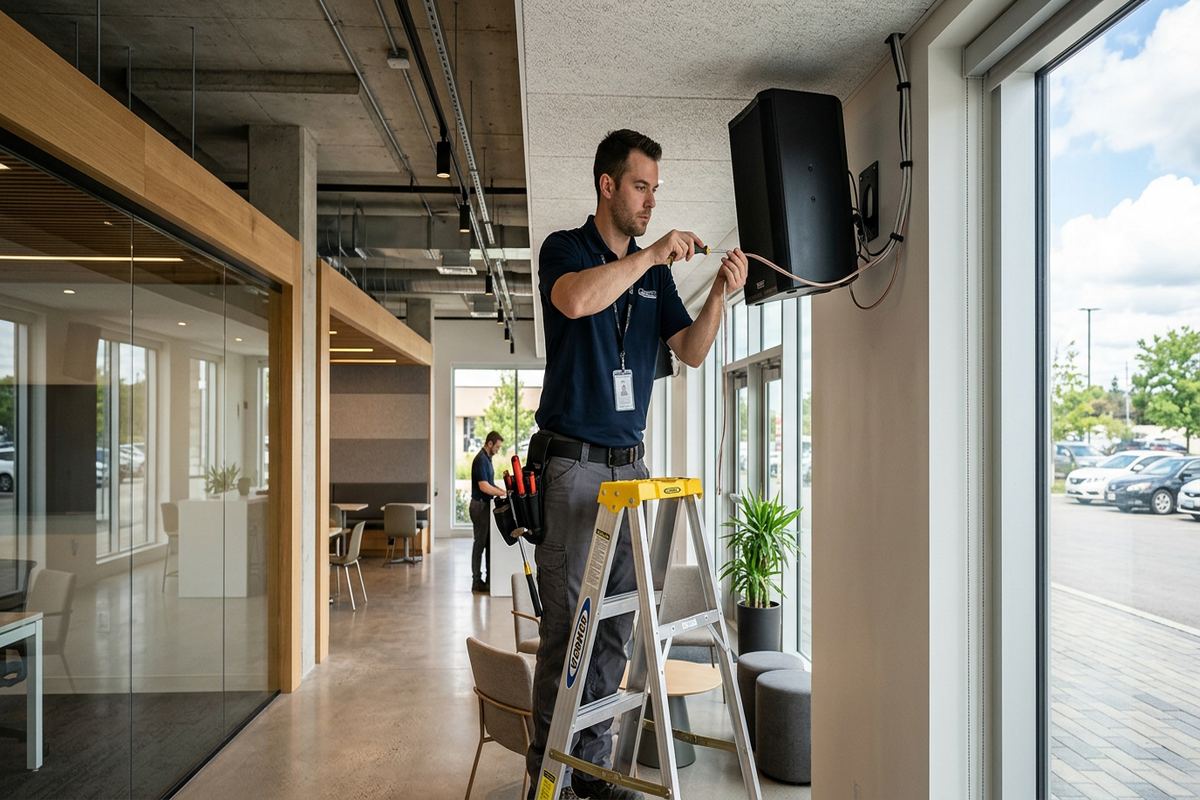
Commercial strips and industrial units often combine open ceilings, concrete block, steel framing and finished offices. These conditions may support straightforward cable trays in one area but require surface pathways or ceiling access in another. Speakers and cabling must also avoid interfering with lighting, sprinklers, mechanical systems and other building services. We identify accessible equipment locations that staff can reach without leaving amplifiers exposed to customers or warehouse activity. If the tenant may relocate, reversible mounting and documented routes can reduce unnecessary alterations while making ownership and removal responsibilities clear within the written project scope.
Business audio sources may involve streaming accounts, local media players, televisions or paging-related equipment. Music licensing and content permissions remain the business owner’s responsibility; the installation scope addresses the physical and network system. Staff controls can be limited to practical functions such as source, zone and volume, reducing accidental changes to configuration. For mixed-use properties, we also consider whether sound could transfer to offices, residences or neighbouring tenants. Final testing checks normal operating levels in occupied areas, and handover records identify equipment, zone names, cable destinations and the credentials controlled by the customer.
- Separate public and staff audio zones
- Landlord approvals addressed before alterations
- Equipment protected from public access
- Controls simplified for daily staff use
- Commercial cable routes documented
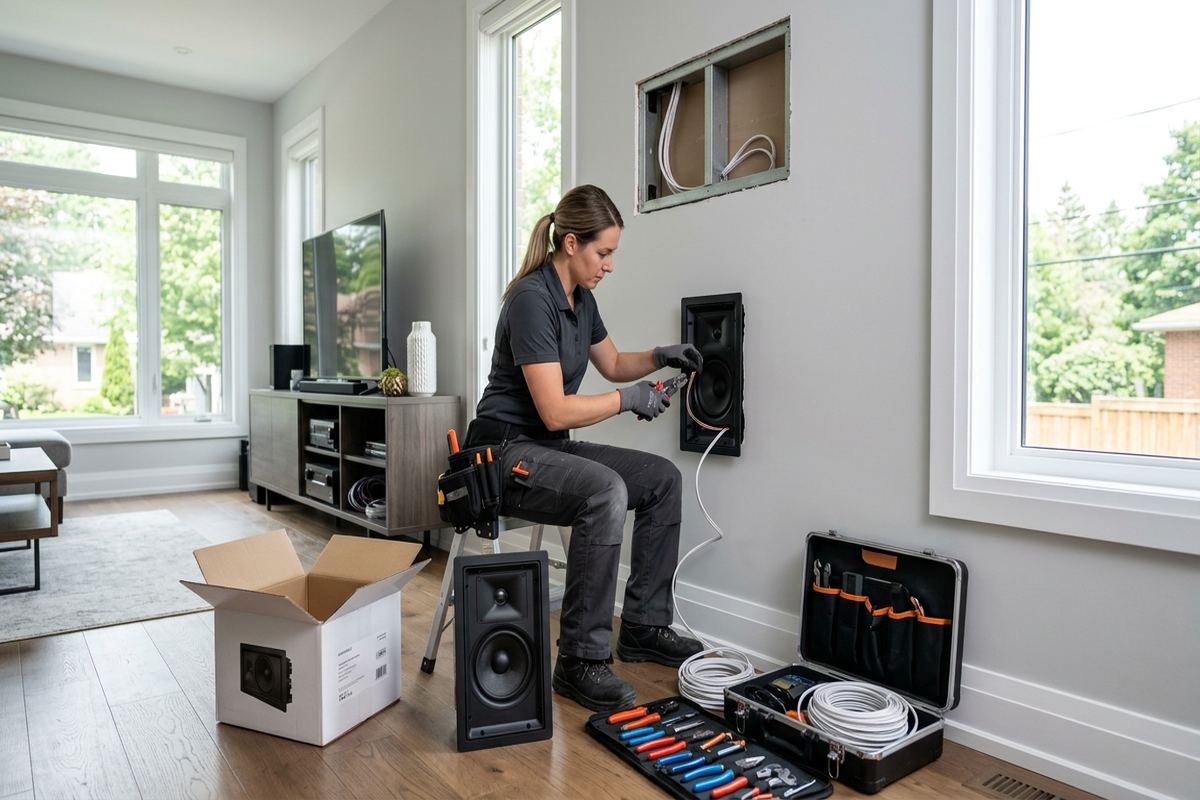
Condominiums, Rentals and Shared Buildings
Condominium audio projects require confirmation of what belongs to the unit owner and what forms part of the common property. Ceilings, exterior walls, structural concrete and shared service spaces may be subject to corporation rules even when they are inside or beside a unit. Before proposing recessed speakers or new cable routes, Cobourg owners should review alteration requirements and obtain any necessary written approval. We can provide equipment locations and installation details for that process, but approval remains with the owner. A surface-mounted or furniture-based system may be preferable when concealed access is restricted.
Rental properties introduce similar limits because the tenant may not have authority to cut walls, drill masonry or install permanent cabling. Landlord approval should identify acceptable mounting points, restoration expectations and ownership of installed equipment. In some cases, reversible speakers and discreet surface pathways offer useful room coverage without extensive alteration. The scope records whether components remain with the building or belong to the customer. This matters for amplifiers, controls and network devices as well as speakers. Clear documentation makes future removal or turnover less disruptive and prevents assumptions about credentials, subscriptions or equipment responsibility.
Shared buildings can also create acoustic concerns. Speakers mounted directly against demising walls or concrete structures may transmit vibration beyond the intended room, even when the local volume seems moderate. We consider mounting isolation, speaker location and practical volume levels where neighbouring units are close. Wireless systems do not remove every issue, because they still require power, network coverage and secure account control. A planned wired or hybrid approach may provide cleaner management. At handover, residents receive zone names, operating instructions and an as-built record showing installed device and cable locations within their unit.
- Condominium alteration requirements reviewed
- Landlord permission obtained before drilling
- Reversible equipment options considered
- Equipment ownership recorded clearly
- Shared-wall sound transfer considered
Installation, Testing and Handover in Cobourg
Once the scope is accepted and site conditions are confirmed, installation proceeds according to the agreed device positions and cable routes. Speakers are mounted squarely, grilles and finishes are handled carefully, and central equipment is arranged for ventilation and service access. Every cable run is labelled at its destination. Where unexpected blocking, hidden utilities or unsuitable surfaces are discovered, work affecting the design is discussed before an alternate route is used. This keeps the completed Cobourg installation aligned with the documented plan and avoids unapproved shortcuts that could complicate repairs, renovations or equipment replacement later.
Configuration is completed on site using the customer’s own accounts and credentials. Each zone is named clearly, assigned to the appropriate controls and tested with its intended sources. We check speaker operation, left and right assignment where applicable, grouping, volume response and network connectivity. Outdoor and remote areas are tested from normal control locations rather than only beside the equipment rack. If televisions or other customer-supplied sources are included, their agreed functions are verified as part of the scope. Testing also confirms that staff or household members can reach the controls they need.
Handover includes practical operating guidance and an as-built record showing installed equipment, cable destinations and relevant device locations. We explain how to select sources, group rooms, adjust volume and identify basic network or account issues. Equipment ownership and applicable warranty information follow the written scope. UnifiedLink remains one accountable contractor for the low-voltage work rather than dividing responsibility among separate cable and configuration providers. Requests sent during business hours are answered the same day, while after-hours requests are answered the next business day. Site assessment timing depends on the service and travel distance.
- On-site configuration and zone testing
- Customer controls demonstrated before completion
- As-built equipment and cable record
- Warranty details included in written scope
- One accountable low-voltage contractor
Cobourg neighbourhoods we cover
- Downtown Cobourg
- Cobourg Beach
- New Amherst
- West Park
- East Village
Whole-home audio installation in Cobourg — common questions
Can you install audio without damaging an older Cobourg home?
We first assess plaster, trim, masonry, framing and available attic or basement routes. In heritage homes near Downtown Cobourg or the beach, recessed speakers may not be the least disruptive option. Surface-mounted speakers, discreet raceway or routes through later additions can provide a more reversible installation. Any required openings and finish-repair responsibilities are identified in the written scope before installation begins.
Can each room play different music?
Yes, when the system is designed with separate zones and suitable amplifier channels or networked audio devices. A Cobourg homeowner could group the kitchen and family room while keeping bedrooms, an office and the patio independent. Available sources and simultaneous playback depend on the selected equipment and streaming services. We confirm the desired room combinations during the site assessment and configure clear zone names during handover.
Do outdoor speakers work through Cobourg winters?
Outdoor systems can remain installed year-round when the speakers, cable, brackets and connections are rated and positioned for exterior conditions. Cobourg’s cold weather and freeze-thaw cycles make fastening, drainage and sealing important. We assess the mounting material, use protected cable routes and limit penetrations. Placement also avoids obvious roof runoff or snow collection areas where practical. Specific maintenance and seasonal checks depend on the equipment selected.
Do I need condominium or landlord approval?
Often, yes. Condominium rules may restrict alterations to ceilings, structural concrete, exterior walls or common property. Tenants generally need landlord permission before drilling, cutting finishes or installing permanent cable. Cobourg customers should obtain the necessary written approval before work starts. We can document proposed speaker positions, cable routes and mounting methods to support the request, while the owner or tenant remains responsible for securing authorization.
Can you use my existing speakers or amplifier?
Existing equipment can be considered during the Cobourg site assessment. We check model information, condition, channel capacity, impedance, connection types and compatibility with the proposed controls and sources. Reuse is included only where the equipment can support the agreed design. The written scope identifies customer-supplied components, testing limits and ownership so there is no confusion about what is new, what remains existing and what warranty applies.
What happens before you provide pricing?
UnifiedLink completes a site assessment before pricing. We review rooms, construction, cable access, equipment locations, network conditions and the required audio zones. Assessment timing in Cobourg depends on the service and travel distance. You then receive a written scope covering equipment, cable routes, device placement, exclusions, equipment ownership and warranty. Requests sent during business hours are answered the same day; after-hours requests are answered the next business day.
Coverage in Cobourg is confirmed against the address before we quote. See everything we install in Cobourg or the province-wide whole-home audio installation page.