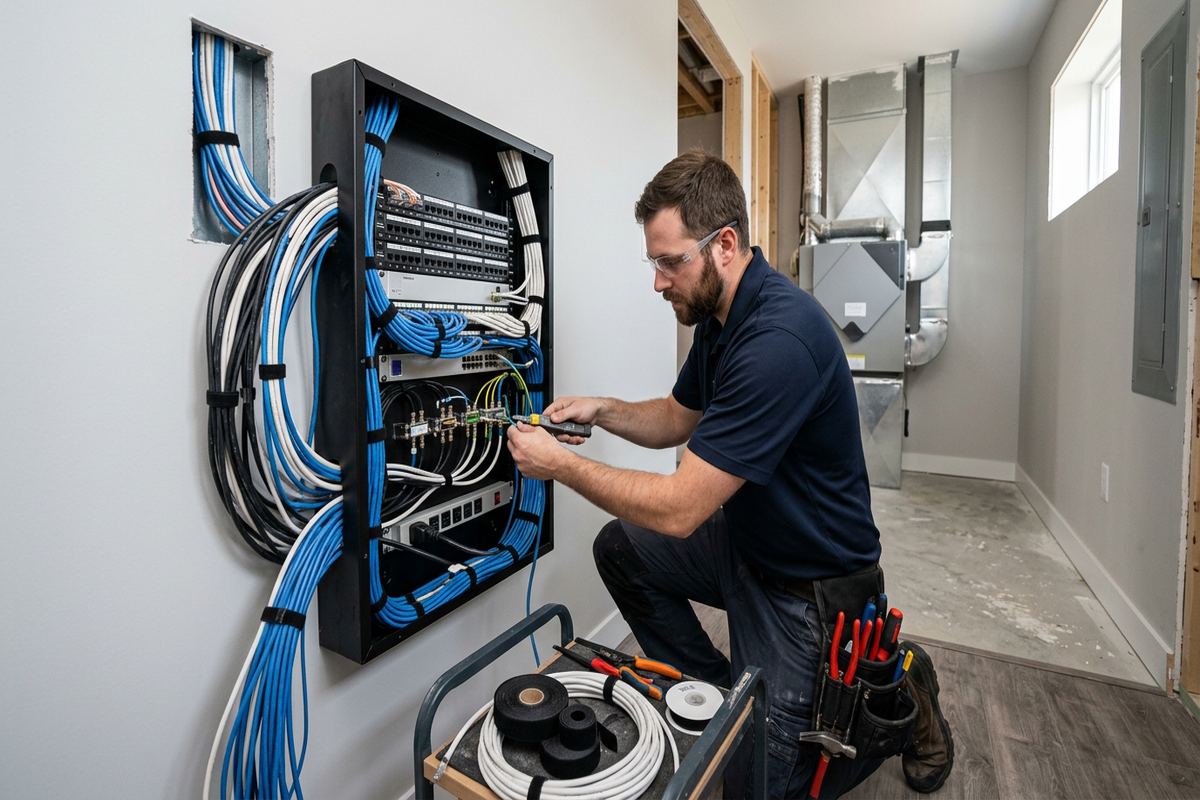
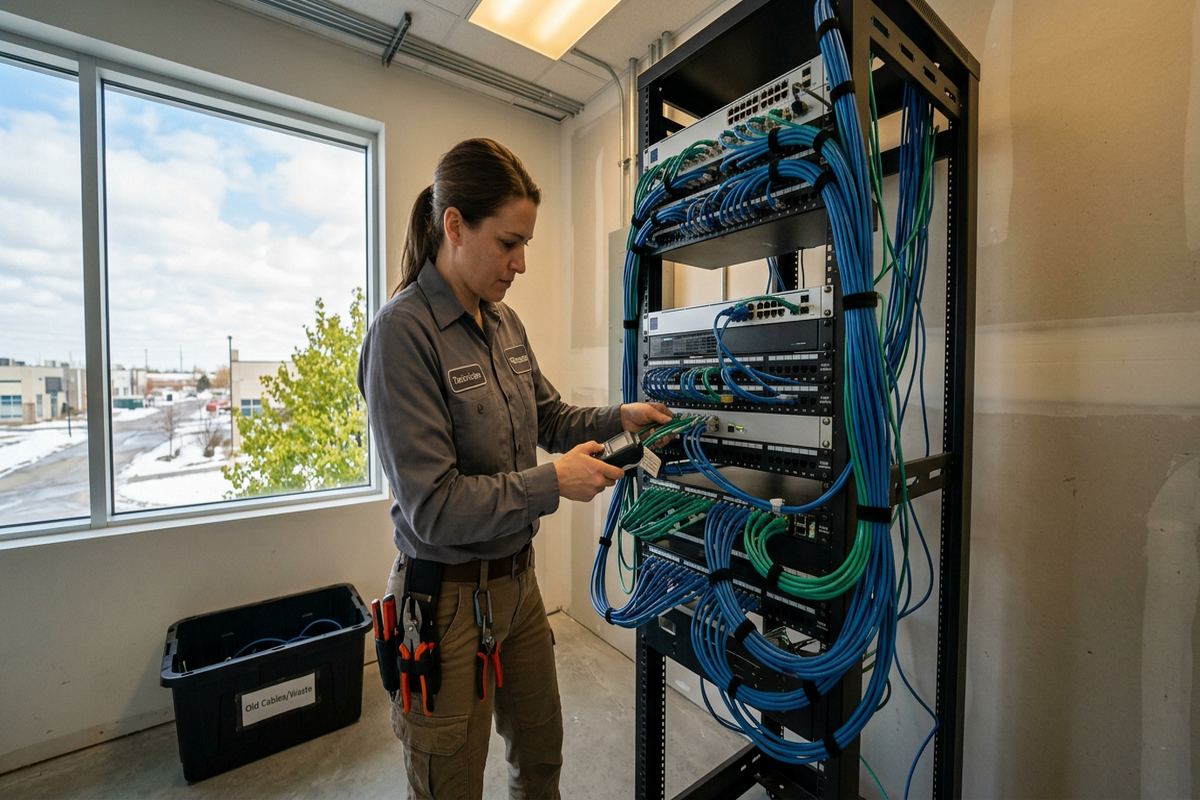
UnifiedLink installs low-voltage cabling for homes, businesses and managed properties across Cobourg and Northumberland County. We plan routes, install continuous labelled runs, terminate and test connections, configure attached equipment where included, and provide clear handover records. Each project begins with a site assessment so the written scope reflects the building, intended systems and access requirements.
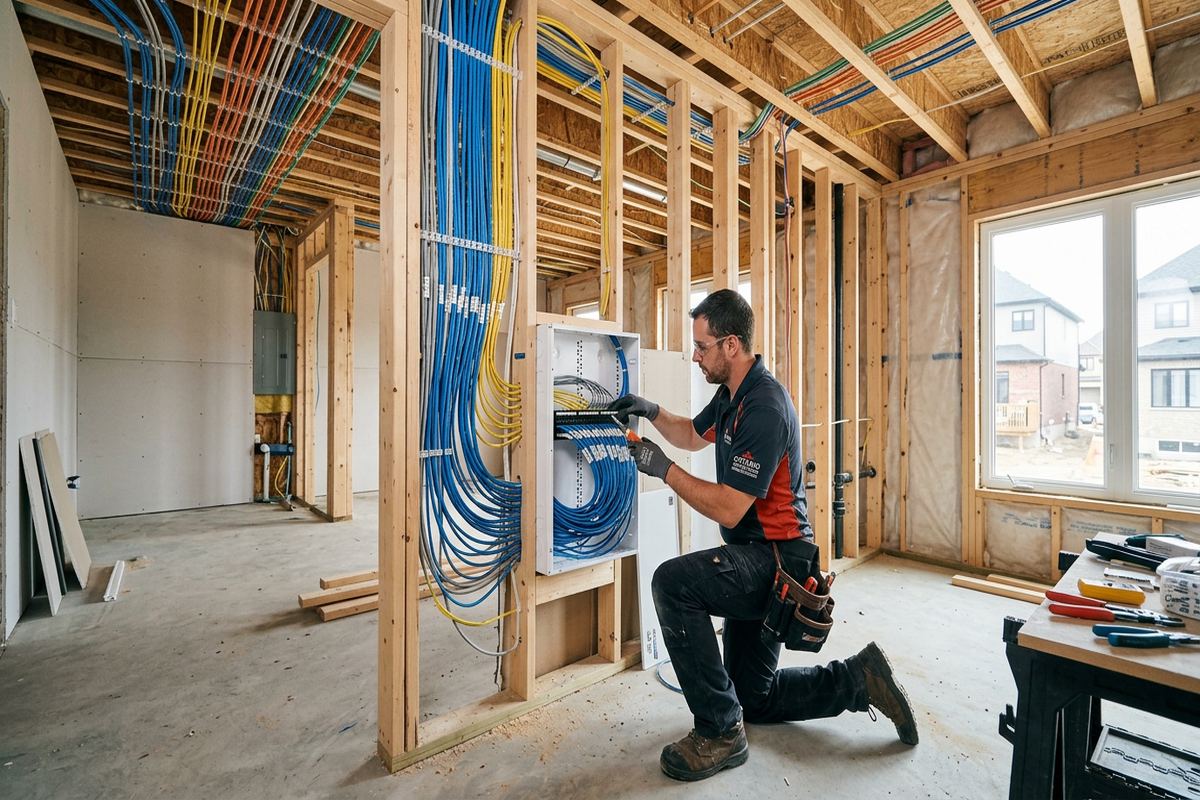
Low-Voltage Cabling Planned for Cobourg Properties
Low-voltage cabling supports security cameras, alarms, access control, data networks, Wi-Fi, audio systems and commercial displays. A reliable installation starts by understanding what each cable must carry, how far it must run and where equipment will eventually sit. In Cobourg, the route may cross finished living areas, older basements, commercial ceilings or renovated additions. We assess those conditions before pricing, then prepare a written scope identifying equipment, cable routes, device placement, exclusions, equipment ownership and warranty. This avoids treating cabling as an isolated task without considering the complete operating system.
Building character varies considerably between Downtown Cobourg, New Amherst and properties near Cobourg Beach. Heritage homes can have plaster walls, decorative woodwork, compact cavities and additions built during different periods. Newer frame construction may offer accessible stud spaces but still require careful coordination around insulation, plumbing and electrical wiring. Small downtown businesses often need work completed without unnecessary disruption to customer areas. Route planning therefore balances cable performance, serviceability and visual impact. Where existing finishes matter, we discuss reversible approaches and visible pathway options before drilling or opening any surface.
Every installed run should have a defined origin, destination and purpose. UnifiedLink uses continuous labelled cable runs rather than unnecessary joins concealed behind walls or ceilings. Cables are supported appropriately, separated from electrical conductors where required and protected at exposed transitions. Terminations are completed for the intended hardware, followed by relevant connection testing and on-site configuration when included in the scope. At handover, the customer receives access using their own credentials and an as-built record showing installed routes and endpoints. One accountable contractor manages the cabling work from assessment through completion.
- Site assessment before project pricing
- Written scope identifies routes and exclusions
- Continuous runs without concealed intermediate joins
- Labels applied at cable endpoints
- As-built record supplied at handover
Cabling Routes in Older Cobourg Buildings
Older Cobourg buildings require investigation before choosing a route. Wall construction may include plaster over lath, masonry, strapped exterior walls or later drywall renovations that conceal earlier materials. Drilling without checking these layers can damage finishes or create an unusable opening. During the site assessment, we review accessible basements, attics, service spaces, closets and existing pathways. A route through an unfinished area may be preferable to disturbing original trim or decorative plaster. If some cable must remain visible, a properly selected surface raceway can provide a neat, accessible and comparatively reversible solution.
Masonry and frame buildings need different fastening and penetration methods. Masonry routes require suitable drilling locations, anchors and protection against sharp edges, while frame walls demand attention to studs, vapour barriers and hidden services. Near the beach and in exposed parts of Cobourg, exterior connections also face wind-driven moisture, temperature changes and seasonal freeze-thaw cycles. Penetrations must slope, seal and drain appropriately rather than trapping water against the building. Exterior cable should be rated for its environment, mechanically protected where vulnerable and routed to reduce avoidable exposure to snow, ice and direct runoff.
Careful installation does not mean every cable can be hidden without impact. Some heritage interiors have no practical concealed path between floors, particularly when walls contain blocking, masonry or inaccessible additions. We explain those limitations before work begins and identify alternatives such as closets, utility chases, baseboard-level raceway or a discreet exterior transition. Any required opening is discussed in the scope, including who is responsible for final decorative repair when that work is excluded. This approach gives Cobourg owners a realistic choice between visibility, reversibility, labour, future access and preservation of existing finishes.
- Plaster, lath and masonry assessed first
- Reversible surface pathways considered
- Original trim avoided where practical
- Exterior holes sealed against moisture
- Repair responsibilities stated in writing
Home Cabling Across Cobourg Neighbourhoods
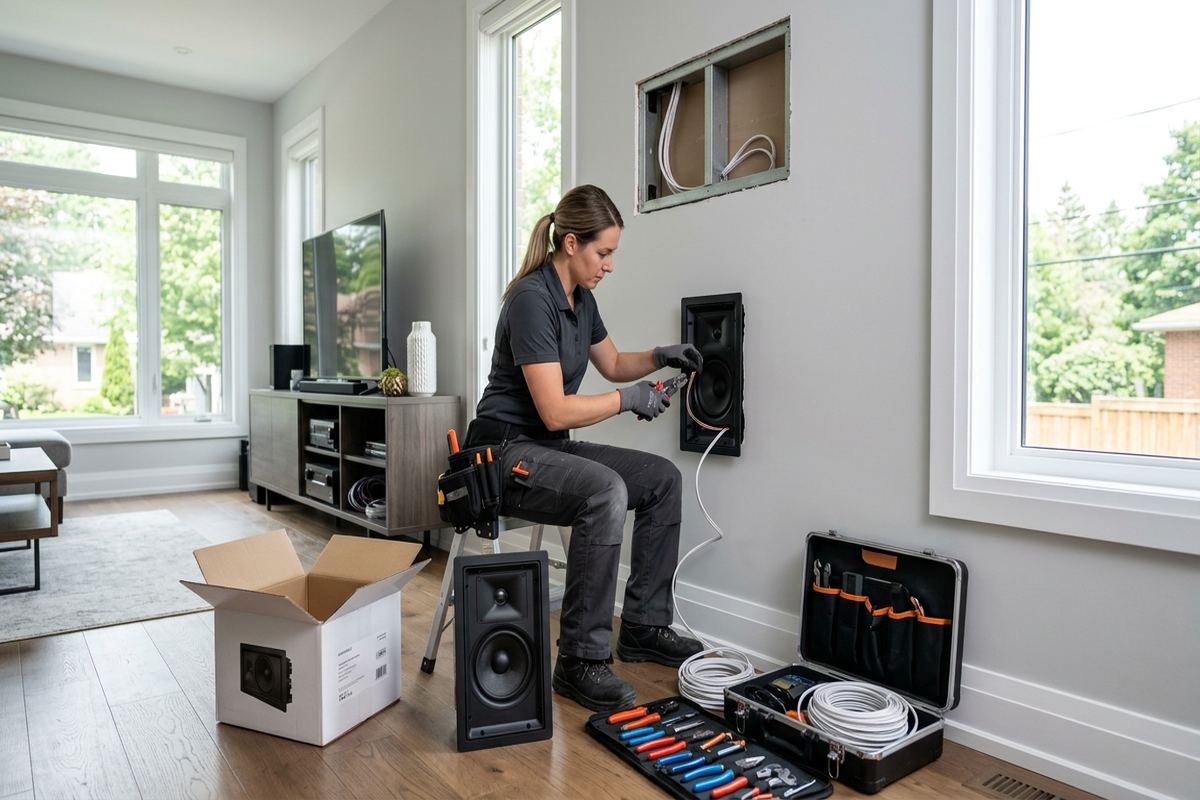
Residential cabling often begins with one immediate requirement but should account for related systems. A homeowner may request camera wiring today while also needing future Wi-Fi access points, a video doorbell, alarm contacts or a network connection to an office. Planning shared pathways can reduce repeated work without installing equipment that is not yet required. In New Amherst and West Park, accessible basements or utility rooms may provide useful central routes, although finished ceilings can limit access. We identify a practical equipment location with power, ventilation, internet connectivity and enough space for organized terminations.
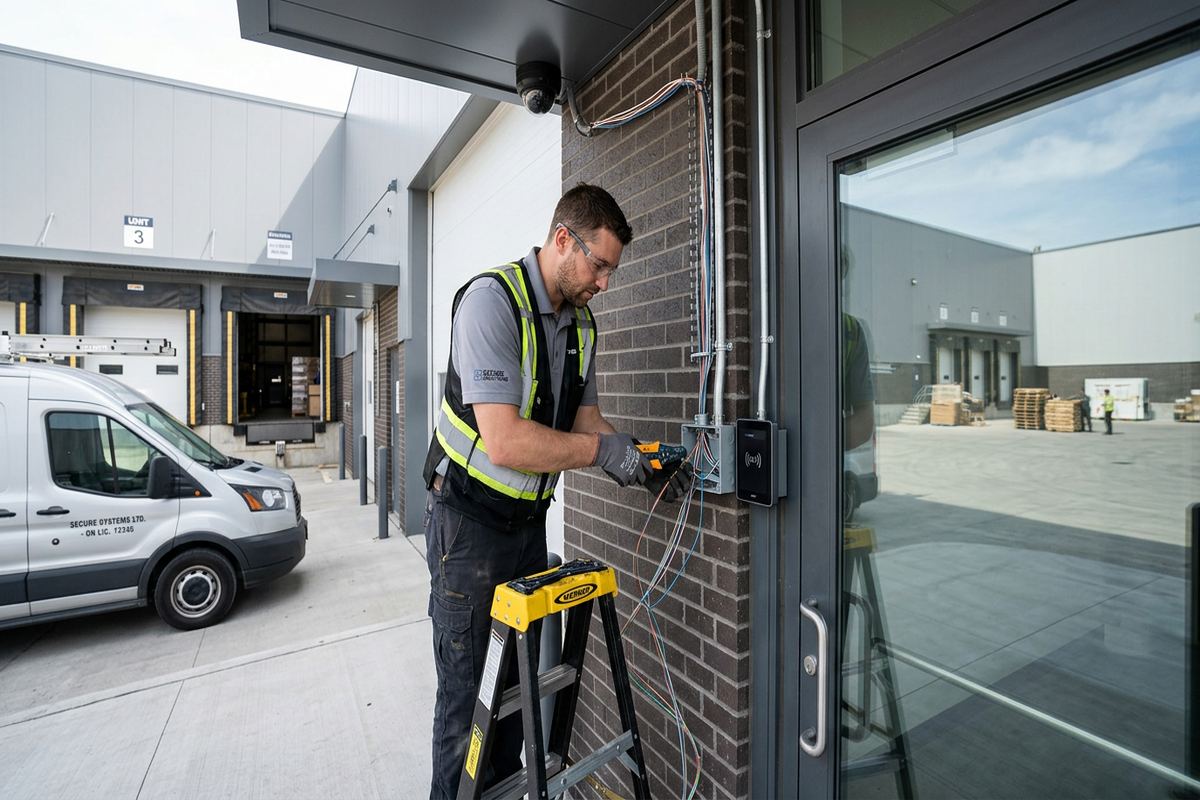
Homes near Cobourg Beach can present exterior mounting challenges that are less significant indoors. Camera, wireless access point and entry device cables may pass through siding, masonry, soffits or trim exposed to moisture and winter conditions. The mounting surface must support the device, and the cable entry should be protected from runoff and freeze-thaw movement. We avoid relying on sealant alone when a fitting, junction box or properly designed mounting detail is needed. Drip loops, weather-rated components and sensible cable orientation help reduce water migration while keeping connections available for later inspection, service or replacement.
Apartments, condominiums and rental homes can require authorization before routes or devices are installed. Condo corporations may regulate penetrations through exterior walls, common areas, balconies and shared service spaces. Landlords may also restrict drilling, visible raceway or changes to doors and frames. Cobourg customers should obtain written approval where needed before installation is scheduled. We can provide route and device information for that discussion, but property approval remains separate from technical feasibility. Once permissions are clear, the written scope can reflect approved locations, access arrangements, restoration expectations and any limitations imposed by building management.
- Camera and network routes coordinated
- Central termination areas organized
- Weather-rated exterior materials selected
- Condo restrictions reviewed before work
- Future cable needs considered during planning
Cobourg, Ontario
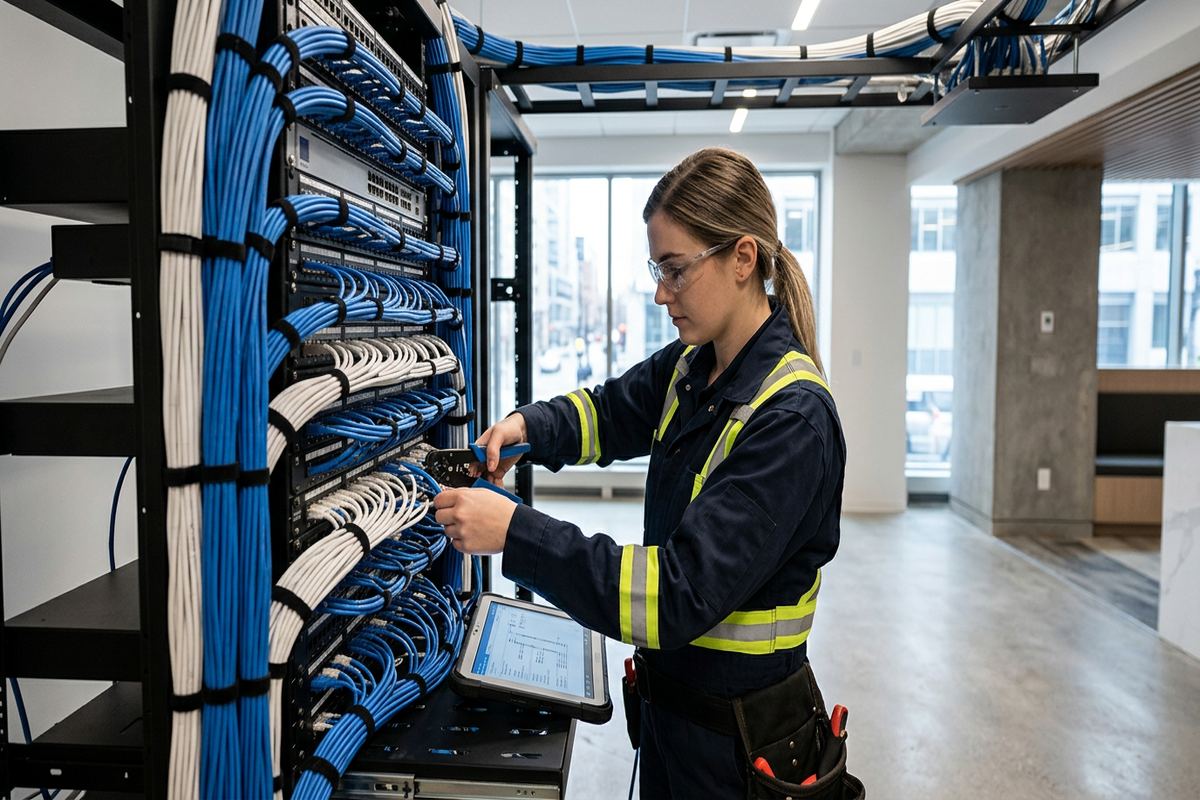
Low-voltage cabling installation in Cobourg, scoped in writing first
Book a site assessment and get equipment, routes, exclusions, and warranty on paper before anything is installed.
Structured Cabling for Cobourg Businesses
Small businesses in Downtown Cobourg often operate from narrow storefronts, mixed-use buildings or adapted older spaces. Cabling may need to connect a front counter, office, wireless access points, cameras, displays and back-room equipment without crossing public walkways. Ceiling access can be limited by finished surfaces, neighbouring occupancies or earlier renovations. We map each endpoint and choose pathways that remain orderly and serviceable. Where work occurs near merchandise, desks or customer areas, staging and access are discussed beforehand. The scope also identifies any furniture movement, ceiling tile access or landlord coordination expected from the customer.
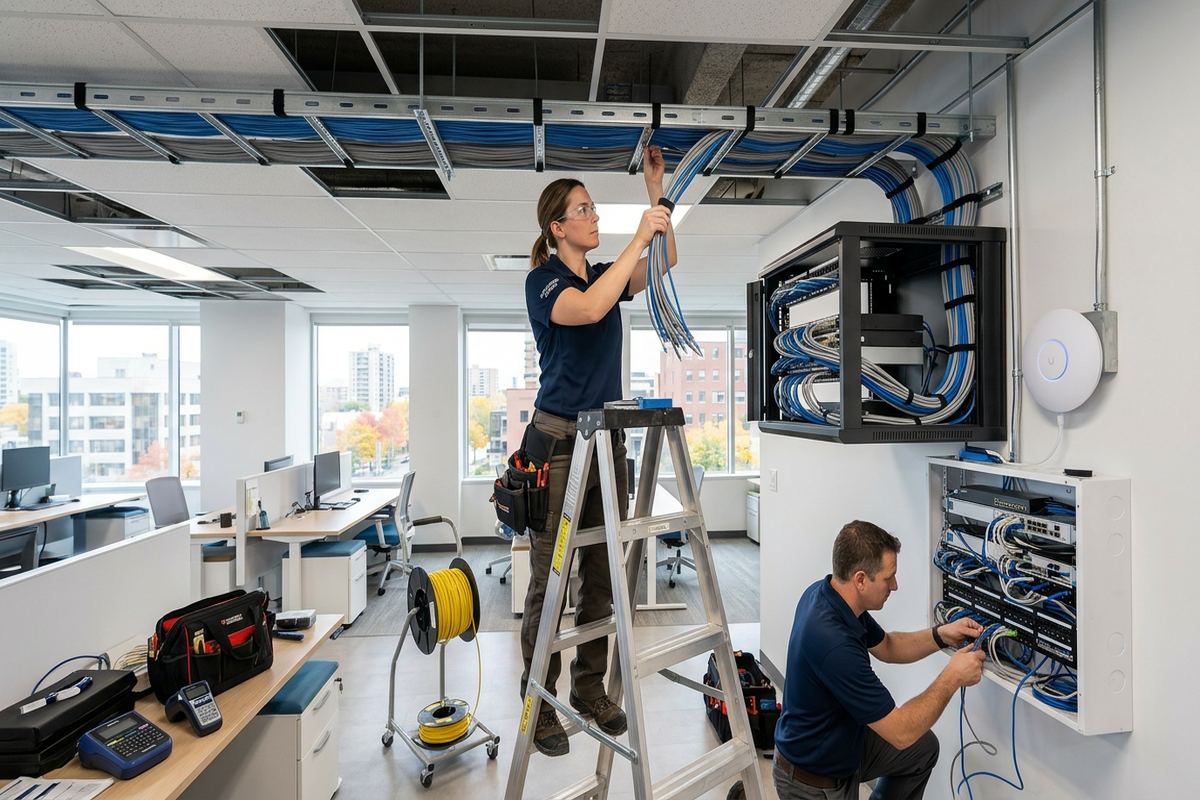
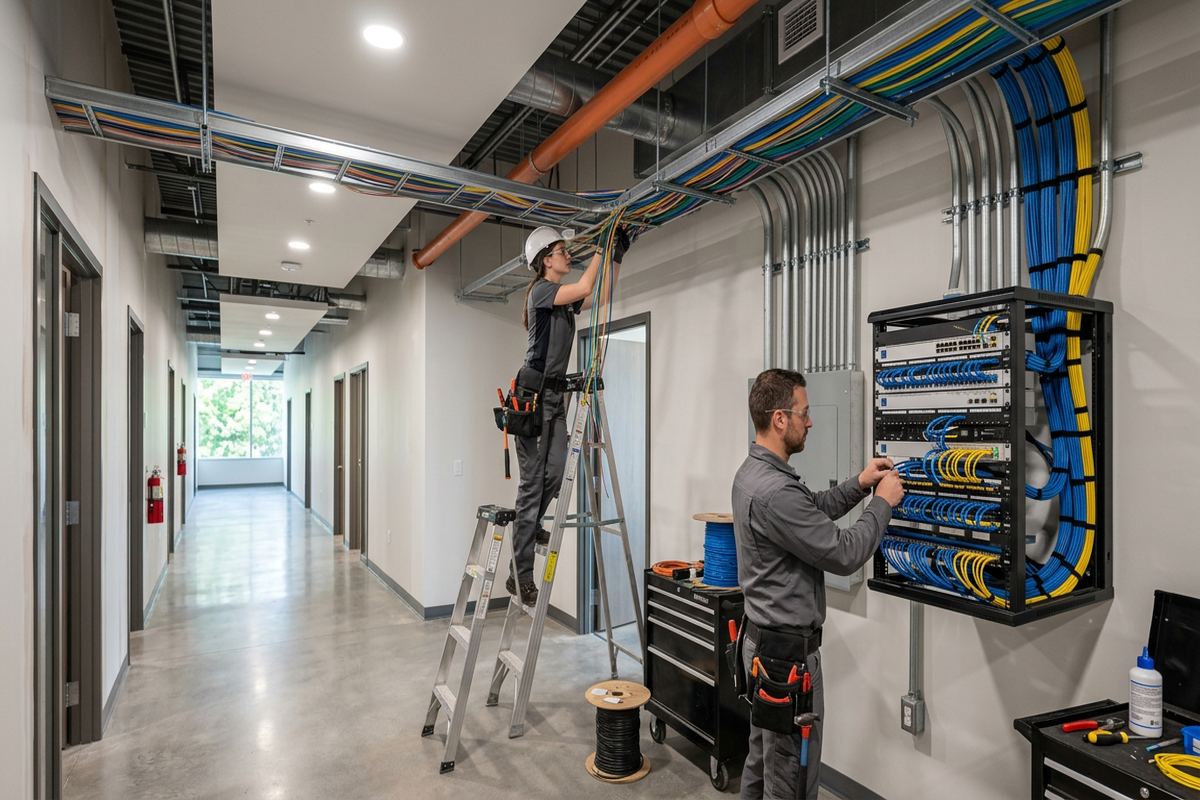
Commercial network cabling should match the intended application rather than rely on an unspecified cable type. We confirm endpoint use, expected network equipment, environmental exposure and pathway length before selecting materials. Runs are kept organized at the rack, cabinet or wall-mounted termination point, with labels that correspond to room or device locations. Testing verifies the installed connection according to the agreed scope. For offices and retail units, this documentation simplifies equipment changes and troubleshooting because staff or future technicians can identify the correct cable without tracing an unmarked bundle through ceilings, stockrooms or shared service areas.
Industrial units and commercial strips can introduce longer pathways, high ceilings, open structure and areas with greater risk of physical damage. Cable supports, pathway selection and equipment mounting must reflect those conditions. Low-voltage cable should not be draped over ceiling systems, laid across sharp building components or placed where doors, stored materials or routine maintenance can damage it. In Cobourg units with multiple tenants, routes may pass near demising walls or shared electrical rooms that require permission. We clarify access, lift requirements, operating constraints and responsibility for shared-space approvals before the installation date.
- Storefront routes planned around public areas
- Endpoints labelled to match records
- Rack and cabinet terminations organized
- Open-ceiling cable properly supported
- Shared-space access confirmed in advance
Outdoor Cabling Through Cobourg Winters
Outdoor cable routes must be designed for more than the conditions visible on installation day. Cobourg winters bring freezing temperatures, snow accumulation and repeated freeze-thaw cycles that can expose weak seals or poorly supported cable. Water entering a wall opening may travel along the cable and appear indoors away from the original penetration. We select exterior-rated materials where exposure requires them and position entries to shed water. Penetrations are sealed around the pathway, while connections are housed or oriented to limit direct moisture. Existing deteriorated siding, mortar or trim may require repair by an appropriate trade first.
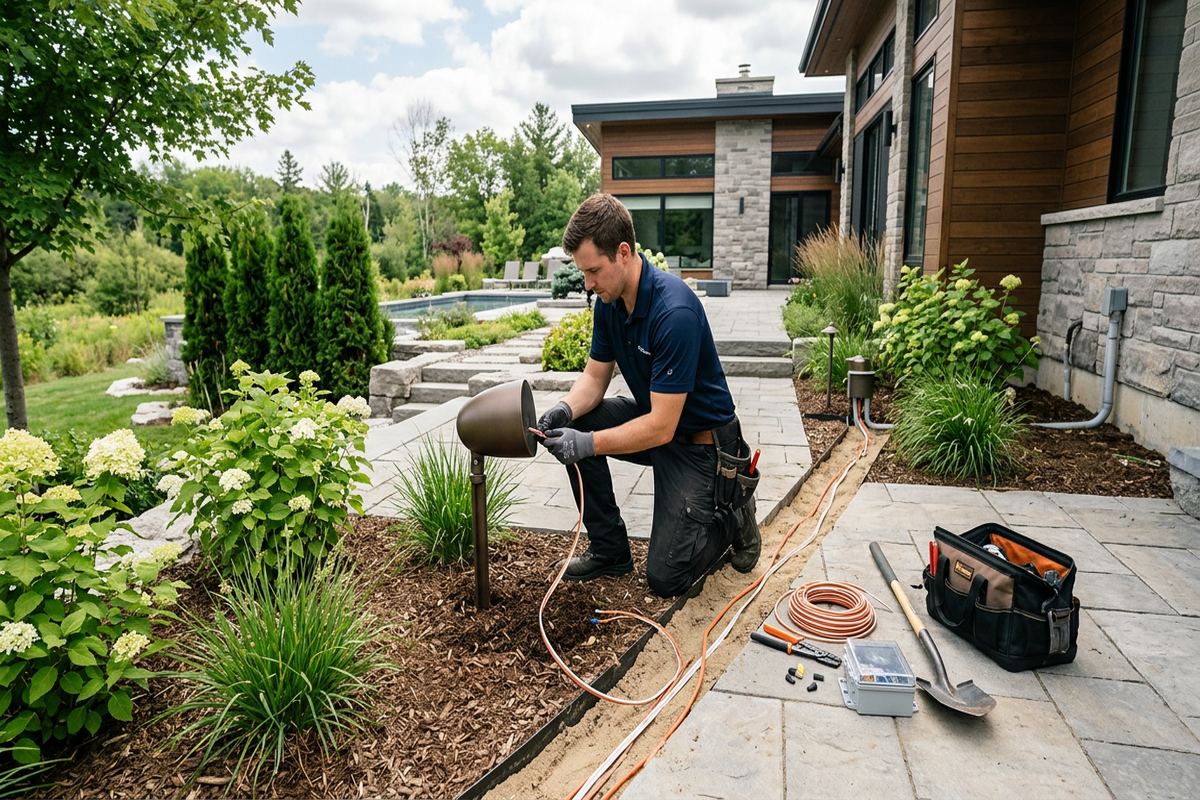
Underground or low-level outdoor runs need separate planning because ordinary indoor cable is not suitable for direct exposure to soil and moisture. The proposed route must consider drainage, frost movement, landscaping, walkways and areas where future digging is likely. Depending on the project, conduit or another protected pathway may be appropriate, with bends and pull access planned for installation and replacement. The customer is responsible for identifying private services that may not appear through public utility locating processes. The written scope states the intended pathway, excavation responsibilities and any surface restoration that is included or excluded.
Exterior mounting also depends on the base material. Brick, concrete, siding and wood trim each require suitable anchors and spacing, and not every façade location provides adequate support. On masonry, joints and brick faces can behave differently during drilling. On siding, a device may need a mounting block rather than compression against an uneven profile. We assess the surface and route before committing to placement. For heritage properties near Downtown Cobourg or the beach, a less prominent position may reduce visual impact, but it must still provide the required camera view, wireless coverage or access-control operation.
- Exterior-rated cable used where required
- Wall entries arranged to shed water
- Freeze-thaw exposure considered
- Outdoor connections remain serviceable
- Mounting hardware matched to surfaces
Installation, Termination and Testing
Installation begins after the scope, access and device locations are confirmed. Work areas are reviewed with the customer, and cable routes are marked or discussed before irreversible drilling takes place. Cable is pulled with attention to bend limits, tension, support spacing and separation from sources of interference. At penetrations, bushings, conduit or other protection may be used according to the construction and exposure. Each run is labelled at both ends using a consistent identifier. If site conditions reveal a blocked cavity or hidden obstacle, we stop and review an alternative rather than making an unapproved route change.
Termination methods depend on the system and cable selected. Data cabling may end at jacks, patch panels or equipment plugs, while camera, alarm, audio and access-control wiring uses connections appropriate to those devices. Good termination includes strain relief, orderly conductor preparation and enough accessible cable for service without leaving uncontrolled coils. Connections should not be concealed where future inspection is impossible. We test the completed work using methods suited to the agreed application and document endpoints in the as-built record. Any limitation that prevents a planned test is explained during handover rather than omitted without notice.
On-site configuration connects the physical installation to its intended operation when configuration is included. This may involve assigning network settings, confirming camera views, connecting access points, checking display signals or verifying communication between control equipment and field devices. Customer accounts are created or transferred using the customer’s own credentials, not credentials retained as a substitute for ownership. We review basic operation and identify components that remain under third-party administration, such as an internet provider, monitoring company or managed software platform. Cobourg customers receive a system they can access, along with records that support later maintenance.
- Routes confirmed before irreversible drilling
- Cable labelled at both endpoints
- Terminations remain accessible for service
- Connections tested to agreed scope
- Customer credentials used at handover
Upgrades and Cable Replacement in Cobourg
Existing low-voltage wiring is not automatically suitable for a new device. Unlabelled cables may have hidden splices, damaged jackets, unsupported sections or unknown routes. Older wiring may also lack the conductor count, category or environmental rating required by current equipment. Before reusing a run, we inspect accessible portions and test what can reasonably be verified. If its condition or destination remains uncertain, replacement is often more dependable than building a new system around an undocumented cable. The assessment separates reusable pathways from wiring that should be removed, abandoned in place or clearly marked as inactive.
Renovations provide a useful opportunity to install cabling before walls and ceilings close. Coordination matters because low-voltage routes can conflict with plumbing, ductwork, insulation, cabinetry and electrical installations. We need confirmed device locations and a practical termination area early enough to place cable without obstructing other trades. In Cobourg additions or converted commercial spaces, construction may connect new frame walls to older masonry sections, requiring different pathway methods within one project. Photographs and route notes taken before closing surfaces improve the as-built record and make later mounting or troubleshooting more predictable.
System expansion should preserve clear organization rather than layering new cables over an existing tangle. We review rack capacity, patching, power availability and network ports alongside the physical pathway. Adding cameras or wireless access points may require additional switching capacity or power delivery that is separate from cable installation. Those dependencies are identified in the scope so ownership remains clear. If third-party equipment will be retained, model information and access credentials should be available for compatibility review. One accountable contractor can coordinate the included cabling, device mounting and configuration while documenting exclusions that require another provider.
- Existing cables inspected before reuse
- Unknown or damaged runs identified
- Renovation routes coordinated with trades
- New and inactive cables clearly labelled
- Equipment dependencies documented in scope
Arranging a Cobourg Site Assessment
A useful site assessment starts with the intended result rather than a rough cable count. We ask which rooms, doors, exterior areas, workstations or devices need connections and where internet, electrical and control equipment currently reside. The building is then reviewed for accessible routes, construction type, environmental exposure and restrictions. For a Cobourg home, this may include attic or basement access; for a downtown shop, it may include ceiling pathways and landlord-controlled areas. Site assessment timing depends on the service and travel distance, and required approvals should be identified before the visit.
Following the assessment, UnifiedLink provides a written scope covering equipment, cable routes, device placement, exclusions, equipment ownership and warranty. The document should also clarify whether patching, painting, excavation, lifts, permits, network changes or third-party services are included. This lets the customer compare the proposed work with the actual building conditions rather than relying on an unexplained allowance. If optional routes are practical, they can be described separately. Changes requested after approval are reviewed for their effect on materials, access, testing and schedule before they are incorporated into the installation.
To request an assessment, provide the Cobourg property address, building type, preferred device locations and any available floor plans or photographs. Mention heritage features, finished ceilings, masonry walls, exterior routes, tenancy rules or operating hours that may affect access. Requests sent during business hours are answered the same day; after-hours requests are answered the next business day. During handover, we review the completed work, provide customer-controlled credentials where applicable and deliver an as-built record. This closes the project with defined ownership, documented routes and one accountable contractor for the included work.
- Assessment based on actual site conditions
- Approvals identified before scheduling
- Scope details ownership and warranty
- Business-hour requests answered same day
- As-built documentation closes the project
Cobourg neighbourhoods we cover
- Downtown Cobourg
- Cobourg Beach
- New Amherst
- West Park
- East Village
Low-voltage cabling installation in Cobourg — common questions
Can you hide cables in an older Cobourg home?
Often, but the available route depends on wall construction, access and the condition of existing finishes. Plaster, lath, masonry and later additions can prevent a fully concealed path. We assess basements, attics, closets and service spaces first. Where concealment would cause unnecessary damage, we can discuss discreet surface raceway or another reversible route before work begins.
What cable type will my project need?
Cable selection depends on the application, distance, connected equipment, pathway and environmental exposure. Network, camera, alarm, access-control and audio systems do not always use the same cable. Cobourg exterior runs may also require materials rated for moisture, sunlight or temperature conditions. The selected cable and intended use are documented in the written project scope.
Do exterior cable holes need special sealing?
Yes. Cobourg’s winters and freeze-thaw cycles can expose weak penetrations, particularly where runoff or wind-driven moisture reaches the wall. The entry should be positioned to shed water and sealed using a method suited to masonry, siding, wood or another surface. Exterior connections may also need a weather-rated box, fitting or mounting block rather than sealant alone.
Do I need condo or landlord approval?
Approval may be required when cabling affects exterior walls, common areas, shared service spaces, balconies, doors or visible finishes. Cobourg condo owners and tenants should confirm the applicable rules in writing before scheduling installation. UnifiedLink can provide proposed route and device information, but the owner, condo corporation or landlord determines whether the work is permitted.
Can you reuse existing low-voltage wiring?
Existing wiring can sometimes be reused after its route, condition and suitability are checked. A cable with unknown splices, damage, inadequate conductors or the wrong environmental rating may not support the new system reliably. We inspect accessible portions and perform relevant tests. If important details remain uncertain, the written scope can recommend a new labelled run instead.
What do I receive after installation?
Handover includes review of the installed work, the customer’s own credentials for configured systems and an as-built record identifying cable routes and endpoints. The written scope also establishes equipment ownership, exclusions and warranty. This documentation helps Cobourg homeowners, business operators and future technicians understand what was installed, where cables terminate and which third-party services remain separate.
Coverage in Cobourg is confirmed against the address before we quote. See everything we install in Cobourg or the province-wide low-voltage cabling installation page.