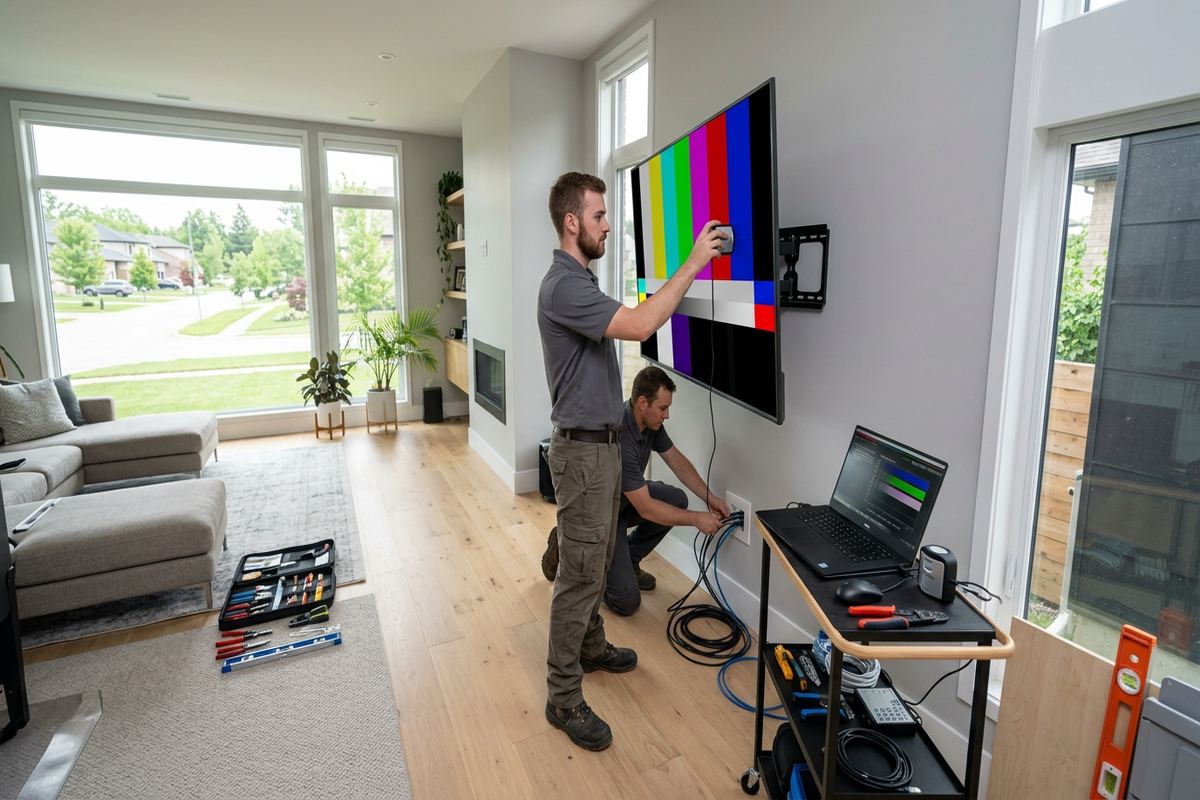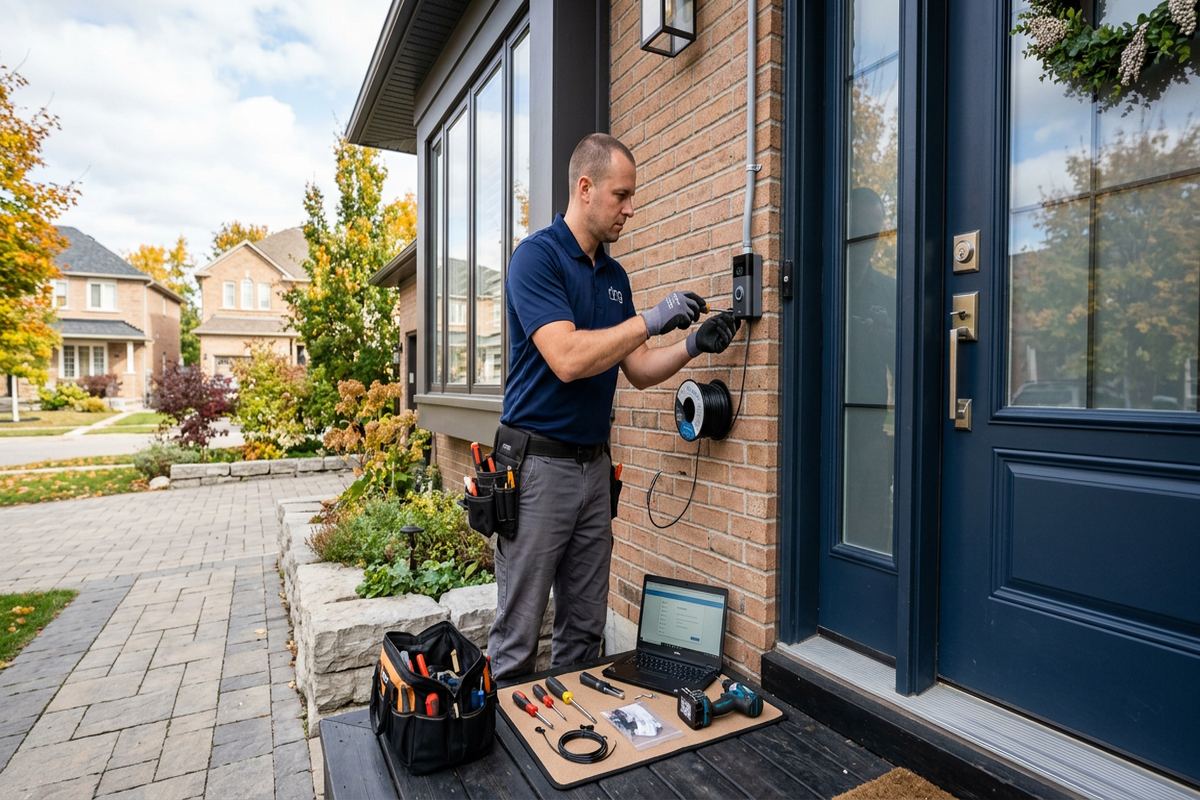
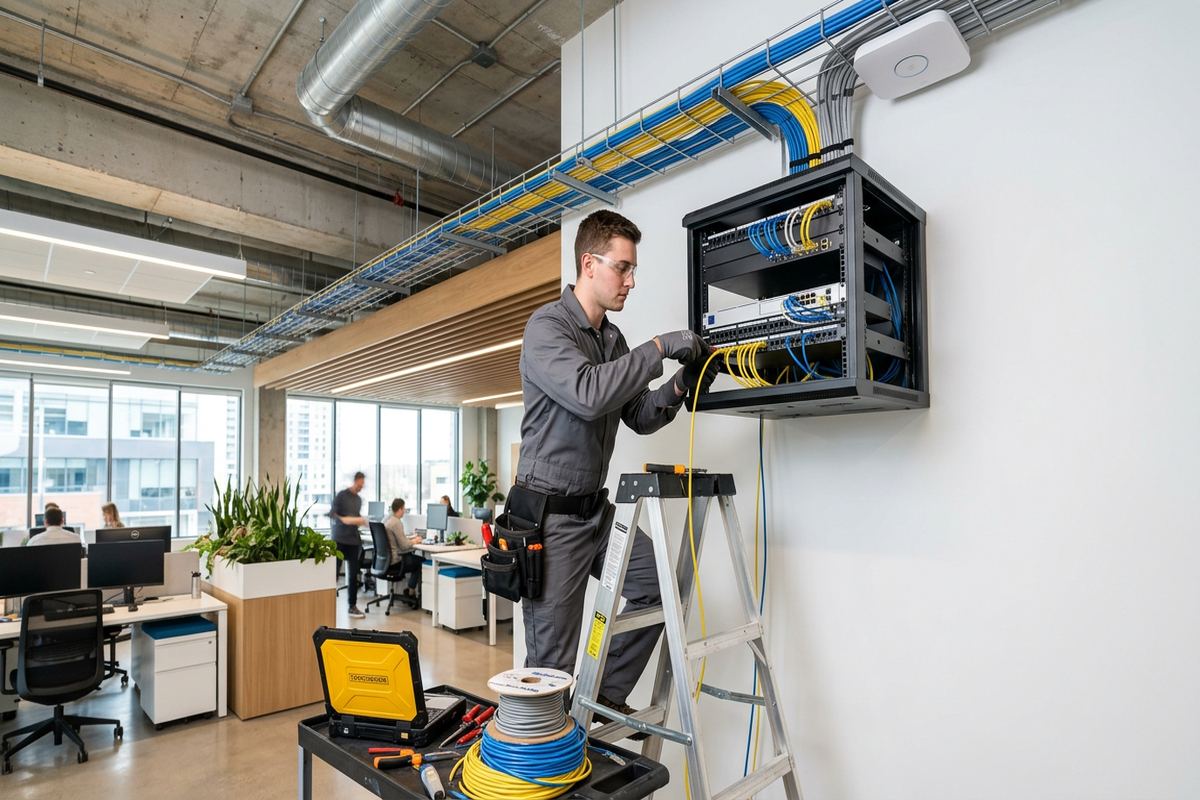
UnifiedLink installs wired and wireless home networks across Cobourg and Northumberland County. We assess the property, plan practical cable routes, configure equipment on site and document the finished system. The goal is dependable coverage and capacity for everyday internet use, remote work, streaming, security devices and other connected equipment, without unnecessary changes to the building.
Home Network Planning for Cobourg Properties
Reliable networking begins with understanding the property rather than selecting equipment from a product list. During a site assessment, UnifiedLink reviews internet entry points, construction materials, floor layouts, utility spaces and the devices that need service. A small frame house may need a different approach from a larger masonry home or a mixed residential and work space. We also discuss current concerns, expected changes and practical installation limits. This information supports a written scope covering equipment, cable routes, device placement, exclusions, equipment ownership and warranty before pricing is prepared.
Cobourg includes properties with very different wiring conditions, from heritage homes near Cobourg Beach and Downtown Cobourg to newer construction in New Amherst. Older plaster, masonry, finished basements and narrow wall cavities can limit conventional cable routes. Newer homes may already contain communications wiring, but its type, condition and termination still need verification. The network plan accounts for these differences instead of assuming every room can be reached the same way. Where concealed access is limited, we explain surface pathways, existing chases or other careful and reversible options before work begins.
A home network should reflect how the connection is actually used throughout the day. Remote workstations, televisions, gaming systems, cameras, smart-home hubs and network storage have different bandwidth and stability requirements. UnifiedLink identifies equipment that benefits from a wired connection and areas where managed Wi-Fi coverage is more practical. The design also considers future access points, outdoor devices and spare data locations where appropriate. This avoids treating stronger wireless equipment as the answer to every issue, especially when interference, poor placement, masonry or an overloaded router is the underlying cause.
- Internet entry point and equipment review
- Floor-plan and construction assessment
- Wired and wireless device planning
- Written scope before pricing
- Future connection requirements considered
Wired Ethernet Installation in Cobourg
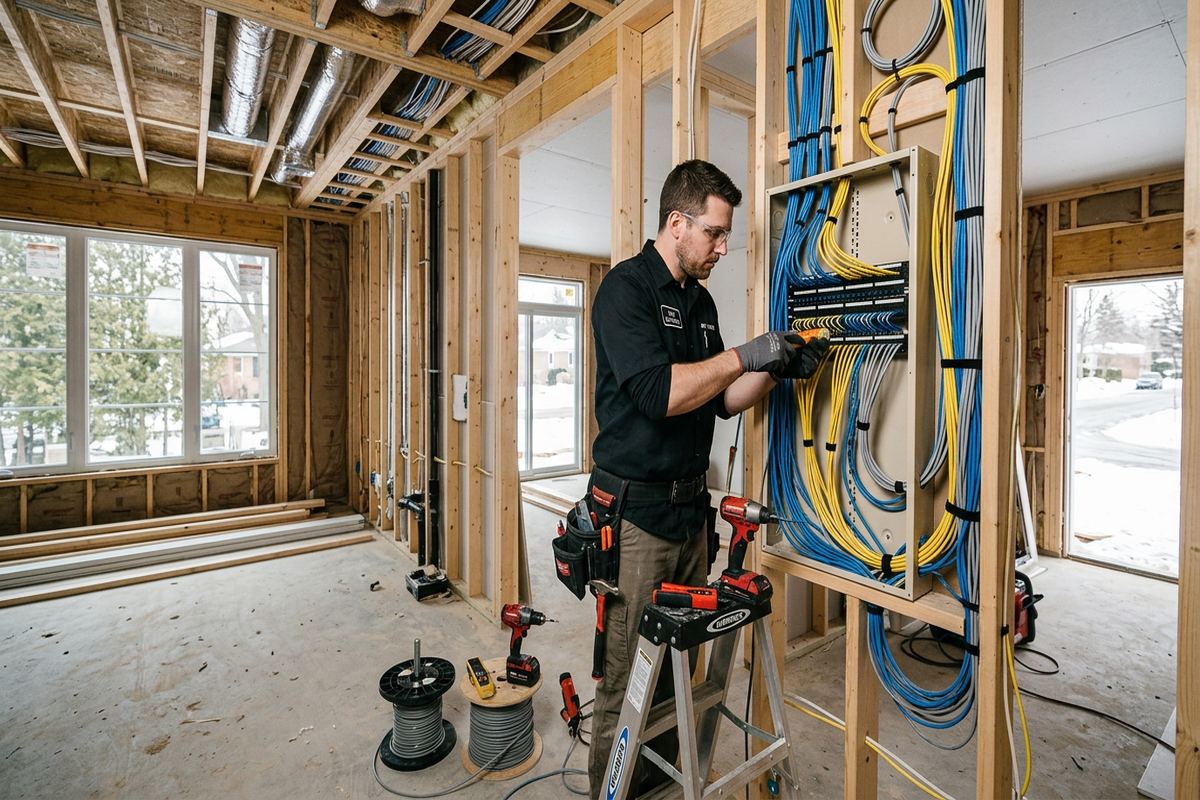
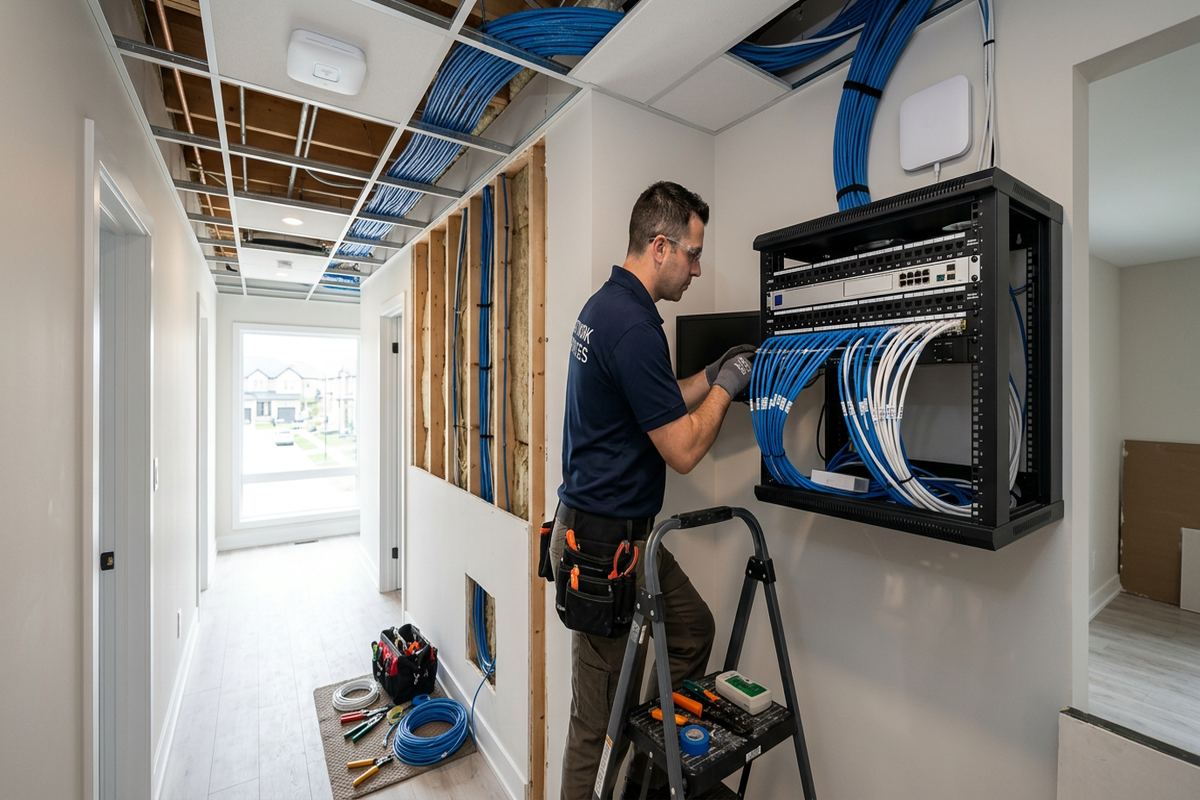
Ethernet provides a stable connection for devices that remain in one location or carry substantial traffic. We can install continuous labelled cable runs for offices, televisions, access points, cameras, network storage and other compatible equipment. Each route is planned around the home’s framing, insulation, electrical wiring, plumbing and finished surfaces. Cable is supported and protected rather than left loose across ceilings or utility areas. At the central location, runs are organized for practical maintenance and clearly identified, allowing a homeowner or future technician to understand which outlet connects to each patch-panel or network position.
Route selection matters particularly in older Cobourg homes where original trim, plaster walls or masonry details should not be disturbed unnecessarily. Accessible basements, attics, closets and existing penetrations may offer workable paths, but each option must be checked on site. When concealed installation would require unreasonable damage, a neat surface-mounted raceway can provide a more reversible alternative. Exterior routing is considered only where suitable, using cable and hardware intended for the environment. Penetrations are positioned carefully, sealed against moisture and arranged to reduce exposure to snow, ice and repeated freeze-thaw movement.
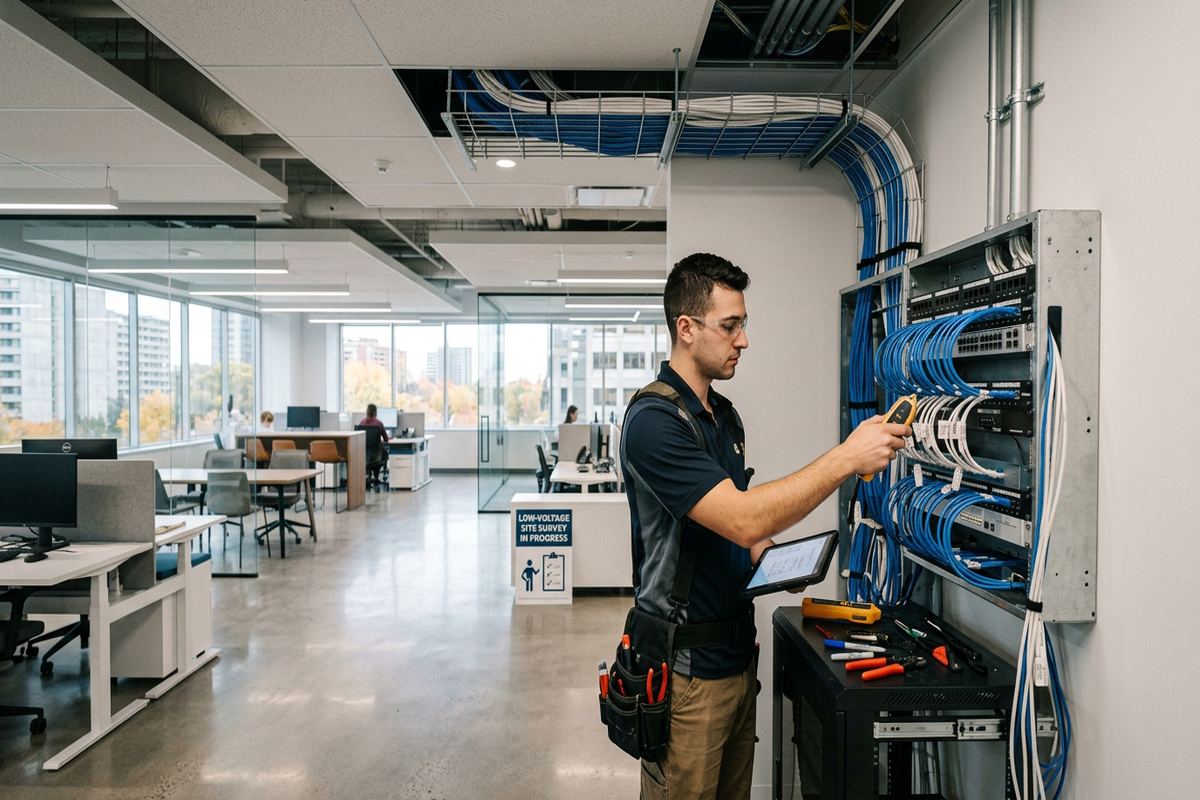
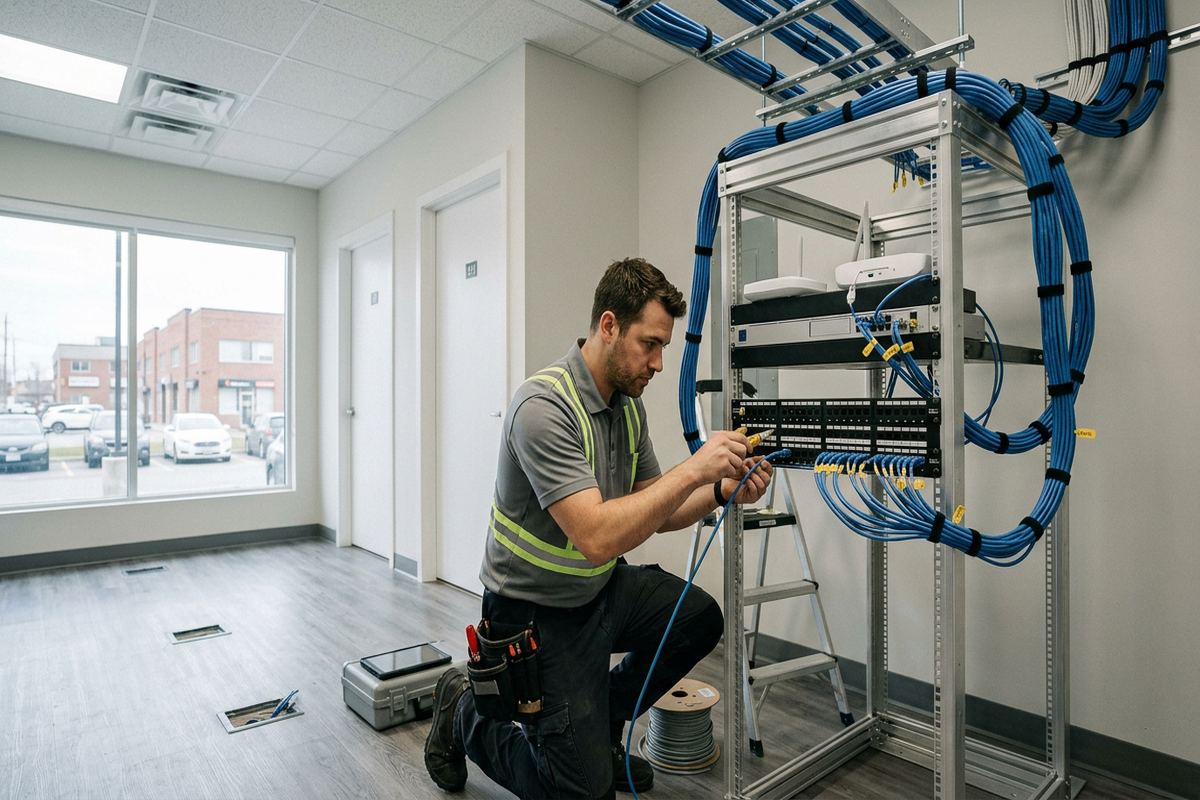
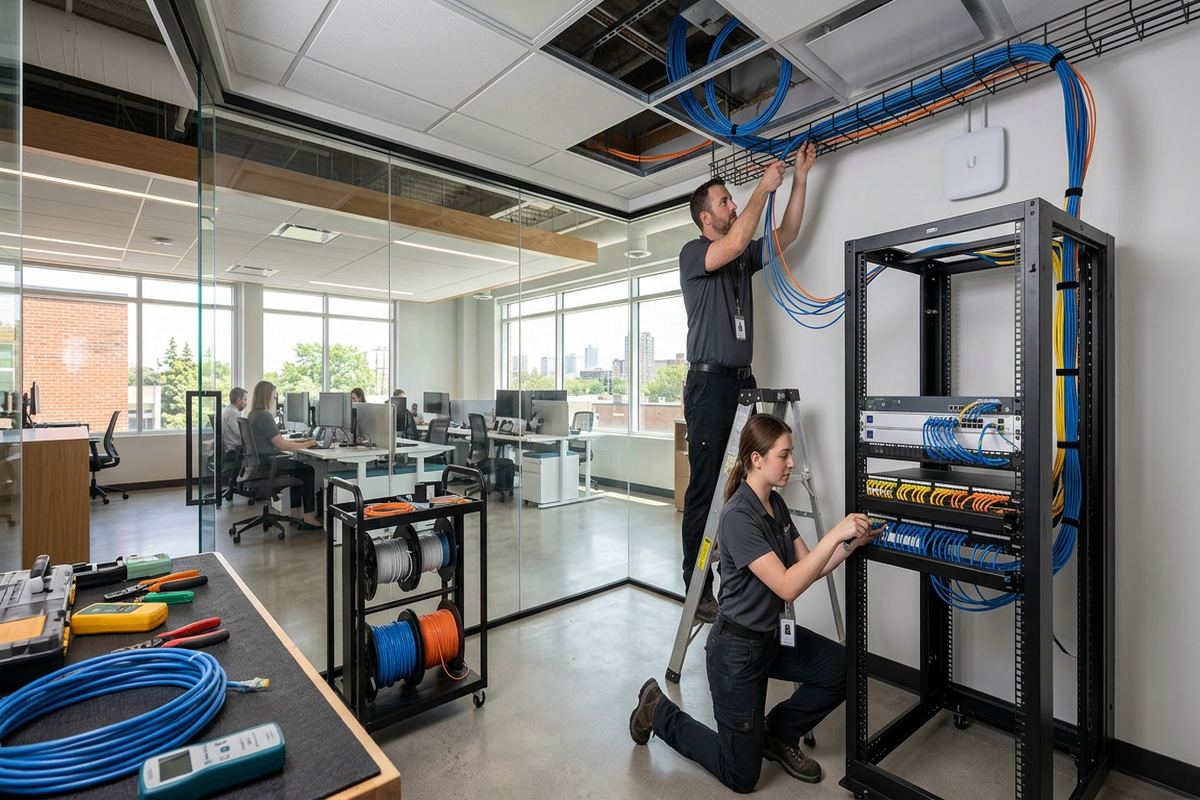
A central network area should be accessible, ventilated and suitable for the equipment being installed. Depending on the scope, it may contain the internet provider’s device, router, Ethernet switch, patch panel and power protection selected by the customer. We avoid placing active hardware where heat, moisture, dust or restricted access could create unnecessary problems. Cable lengths, bend limits and separation from electrical sources are considered during installation. After termination, individual runs are checked, labelled at both ends and recorded so later additions or troubleshooting do not depend on guessing behind walls or moving unrelated equipment.
- Continuous point-to-point cable runs
- Labelled outlets and central terminations
- Careful routes through finished areas
- Appropriate support and bend control
- Recorded cable destinations
Wi-Fi Coverage Across Cobourg Homes
Strong Wi-Fi depends on access-point location, building materials, radio conditions and the capacity required in each area. A router placed near the incoming service may not cover upper floors, additions, garages or outdoor living spaces effectively. UnifiedLink assesses where wireless service is needed and determines whether one well-positioned unit or multiple wired access points are appropriate. The objective is consistent usable coverage, not simply a strong signal beside the router. Wired backhaul is preferred where practical because it avoids consuming wireless capacity to relay traffic between network devices across the property.
Masonry walls, metal ductwork, foil-backed insulation and dense plaster can weaken wireless signals significantly. These conditions are common enough in Cobourg’s varied building stock that access points should not be located solely for visual convenience. Heritage homes near the beach may also require device placement that avoids altering original features. In frame construction, signals may travel more freely, although floor assemblies and mechanical systems still create dead zones. We balance coverage with discreet installation, service access and cable feasibility, then confirm configuration on site rather than relying only on a diagram or equipment estimate.
Wireless configuration includes more than assigning a network name and password. Access points need coordinated settings, secure administration, suitable channel use and software updates available at installation. Guest access, smart devices and work equipment may also benefit from separation where supported by the selected hardware and project scope. UnifiedLink configures the system using the customer’s own credentials and explains how to access essential controls. The final setup avoids undocumented installer accounts, while an as-built record identifies installed devices, locations, cable connections and relevant settings without exposing passwords in an insecure document.
- Access points placed for usable coverage
- Wired backhaul where practical
- Coordinated wireless settings
- Guest network options when supported
- Customer-controlled administrator credentials
Cobourg, Ontario
Home network installation in Cobourg, scoped in writing first
Book a site assessment and get equipment, routes, exclusions, and warranty on paper before anything is installed.
Careful Installation in Heritage and Finished Homes
Preserving finishes can be as important as adding connectivity, particularly around Downtown Cobourg and Cobourg Beach. Before drilling, we review possible cable paths and visible device locations with the customer. Heritage trim, brickwork, plaster and decorative ceilings may make a standard route unsuitable. The preferred approach uses accessible cavities, utility routes or discreet raceway where these methods meet the project requirements. Reversible installation choices are explained when concealment would demand extensive cutting. The written scope identifies agreed routes and exclusions so expectations are clear before equipment is mounted or openings are made.
Exterior network devices and cable routes require additional attention in Northumberland County’s seasonal conditions. Hardware must be suitable for its mounting location, while entry points need proper positioning and sealing. Water should be directed away from penetrations, and exposed cable should be secured to reduce movement. Winter snow, ice and freeze-thaw cycles can stress loose fittings or poorly sealed holes over time. Masonry and frame walls also require different anchors and drilling methods. We assess the substrate first rather than using one fastening approach for every exterior wall, soffit, garage or detached structure.
Finished condominiums, rental homes and properties with shared elements may require permission before pathways or devices are installed. Owners should confirm condominium rules, landlord approval and any restrictions on exterior walls, common spaces or utility rooms. UnifiedLink can document proposed routes and equipment locations in the written scope, helping the customer present a clear plan to the relevant decision-maker. Work proceeds within the approved boundaries, and alternatives can be discussed where access is limited. This protects the installation from depending on an unapproved penetration, inaccessible riser or shared pathway that cannot legally be altered.
- Reversible routes where practical
- Plaster and masonry considered
- Exterior penetrations carefully sealed
- Approved pathways documented
- Condo and landlord restrictions respected
Network Equipment and On-Site Configuration
Network hardware should match the service connection, property layout and expected number of devices. A faster internet plan does not automatically resolve weak coverage, limited router capacity or a slow connection between rooms. UnifiedLink reviews the roles of the modem or optical terminal, router, switch and access points before recommending a layout. Equipment ownership is stated in the written scope, including whether hardware is supplied by the customer, the internet provider or UnifiedLink. This distinction matters for warranty, replacement and future support, especially when a provider controls part of the connection but not the internal network.
Configuration is completed on site so wired ports, wireless access points and connected equipment can be checked in their installed positions. We set up supported network names, security options, administrative access and device relationships according to the scope. Provider-managed equipment may impose limitations that must be identified during assessment or installation. Where bridge, passthrough or access-point modes are needed, their availability depends on the specific hardware and provider service. We do not promise internet performance beyond the provider connection, but we can isolate internal design issues that interfere with practical use inside the property.
At handover, the customer receives control of the system through their own credentials rather than an installer-owned account. We review normal equipment locations, basic restart procedures and the distinction between provider issues and internal network concerns. The as-built record documents installed devices, outlet labels, central connections and agreed cable routes. It can support future troubleshooting, renovations or additions without reopening finished areas simply to identify existing work. If mobile applications or cloud portals are part of the selected equipment, account ownership and recovery details remain with the customer, subject to the manufacturer’s platform and policies.
- Hardware roles clearly defined
- Equipment ownership documented
- Configuration performed on site
- Provider limitations identified
- Customer credentials used at handover
Networks for Home Offices and Small Businesses
Home offices need more than general household coverage when video calls, cloud applications and large file transfers are routine. A wired connection to the primary workstation can reduce dependence on changing wireless conditions, while a properly located access point serves mobile devices nearby. We also consider printers, voice equipment, storage and secure remote-access hardware included in the scope. In West Park, East Village or other residential areas, the installation can support work needs without turning living spaces into visible equipment rooms. Cable routes and central hardware remain organized, accessible and appropriate for the property.
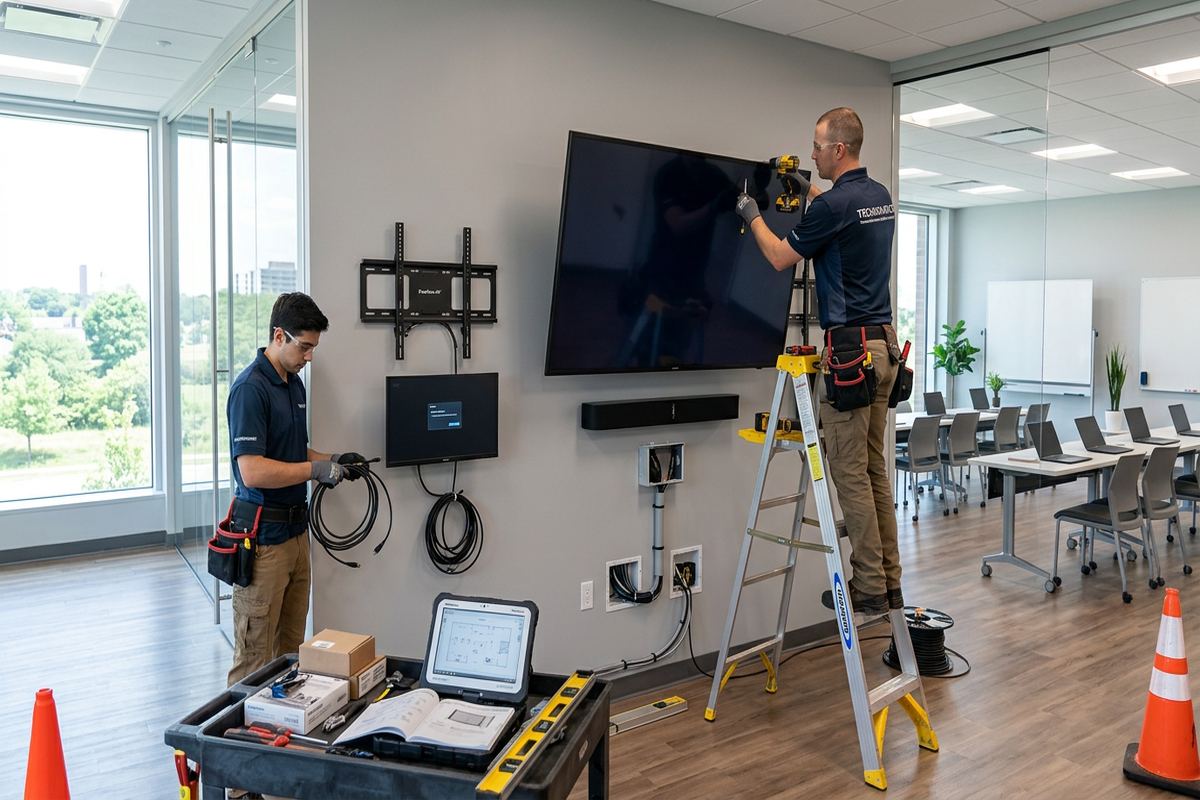
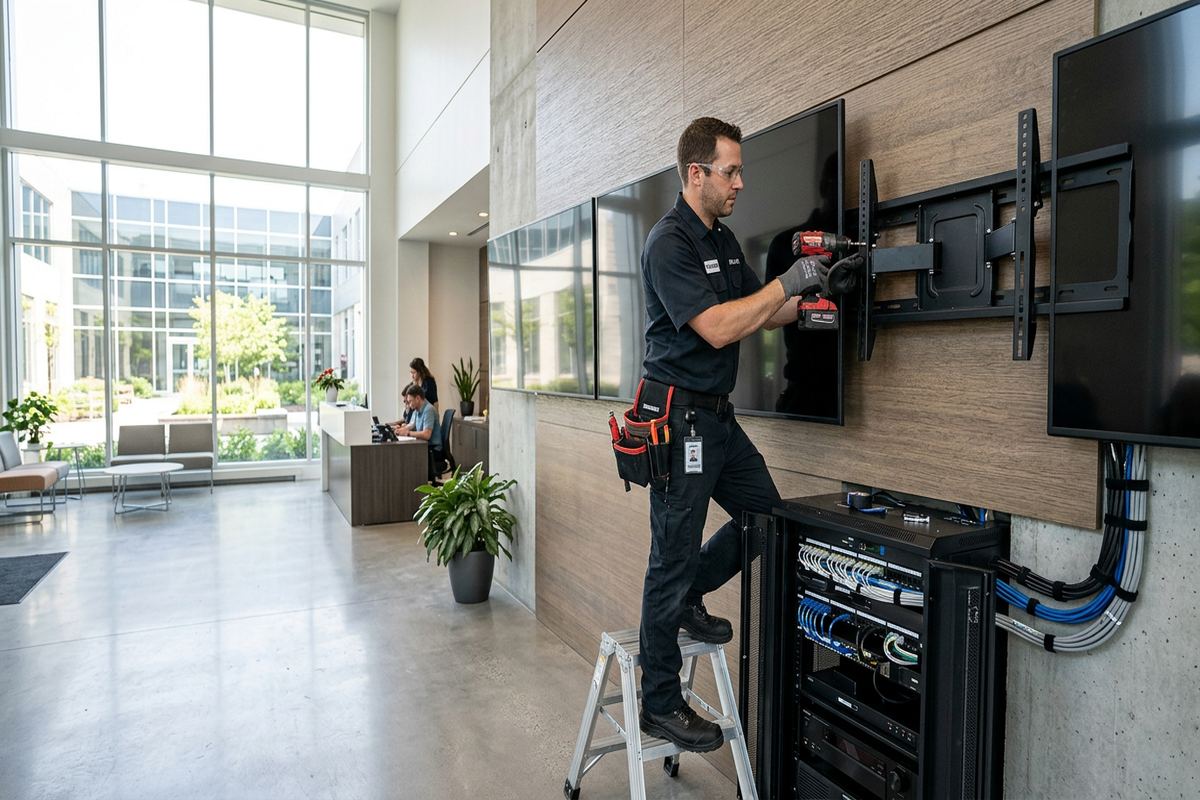
Small downtown businesses often operate in older mixed-use buildings with limited pathways, shared service areas and sensitive finishes. The network may support payment terminals, staff devices, displays, cameras and guest Wi-Fi, each with different access requirements. UnifiedLink plans these connections as one coordinated system, while identifying where separate services or vendor-controlled equipment are involved. Work near public areas is arranged around the agreed scope and site access. Careful, reversible installation is especially useful where tenants cannot modify original masonry, exterior walls or common spaces without the property owner’s written approval.
Commercial strips and light industrial units around Cobourg present another set of conditions, including open ceilings, longer routes, metal construction and equipment spread across offices, stock areas or work bays. Cable support, pathway protection and access-point placement must reflect those spaces rather than copying a residential layout. Dust, temperature variation and physical exposure may affect device selection and mounting locations. A site assessment establishes whether standard indoor equipment is suitable and where protected enclosures or alternate positions should be considered. One accountable contractor can coordinate the cabling, network equipment, configuration and documented handover.
- Wired home-office connections
- Staff and guest network planning
- Connections for payment and display systems
- Routes suited to commercial spaces
- One contractor for installation and setup
Diagnosing Common Cobourg Network Problems
Intermittent internet problems can originate from the provider service, the router, wireless interference, damaged cabling or a single connected device. Effective troubleshooting separates these possibilities instead of replacing hardware at random. UnifiedLink reviews the network layout, physical connections, equipment status and where the problem occurs. A failure affecting every device differs from poor service in one upstairs room, and both differ from a slow workstation connected through an old cable. Observations made on site help define whether the practical remedy involves configuration, relocation, a new wired run or escalation to the internet provider.
Dead zones are often caused by construction and placement rather than insufficient internet speed. In a Cobourg masonry home, one thick wall can create a sharp drop between adjacent rooms. In a newer New Amherst property, a router inside a basement utility area may struggle to serve upper-floor bedrooms despite open frame construction elsewhere. Extenders can sometimes add coverage, but poorly positioned wireless repeaters may also reduce usable capacity. A planned access point with wired backhaul usually provides a clearer network design where cable access is feasible, with device placement based on the rooms that actually need service.
Existing data wiring may be reusable, but its type and condition must be confirmed before it becomes part of a new network. Unlabelled cables may lead to disconnected outlets, telephone blocks or concealed splices. Terminations can also be damaged, mixed between standards or located in an unsuitable enclosure. We trace practical routes, inspect accessible cable and test intended connections within the scope. Reusing sound infrastructure can limit unnecessary work, while replacing defective sections avoids building a new system around unknown faults. Final labels and records make the completed layout easier to operate and maintain.
- Provider and internal faults separated
- Dead-zone causes investigated
- Existing cabling inspected
- Access-point locations reassessed
- Defective terminations identified
The Cobourg Installation and Handover Process
Every project starts with a request describing the property, service concerns and desired connections. Requests sent during business hours are answered the same day, while after-hours requests are answered the next business day. Site assessment timing depends on the service and travel distance. During the visit, we inspect accessible areas, discuss equipment locations and identify approvals or provider limitations that could affect the work. This is also the point to review renovations, finished surfaces, detached buildings or future rooms, allowing the network plan to account for known changes before cable routes are finalized.
Following assessment, UnifiedLink prepares pricing from a written scope rather than from assumptions about the building. The scope covers equipment, cable routes, device placement, exclusions, equipment ownership and warranty. Customers can review visible locations, proposed pathways and responsibilities before accepting the work. If a Cobourg heritage property, condominium or rental requires approval, the scope can help describe the intended installation. Changes discovered after access begins are discussed before proceeding when they affect the agreed work. This process keeps installation decisions tied to documented requirements instead of informal conversations or unexplained substitutions.
Installation includes the agreed cabling, mounting, termination and on-site configuration. Continuous labelled runs are used for new permanent cable routes, and connections are organized at the central network location. Once the system is operating, we confirm key wired links and wireless functions included in the scope. Handover provides the customer with their own credentials and an as-built record showing installed devices, labels and cable destinations. The completed documentation gives the household or business a practical reference for provider calls, equipment replacement, renovations and later expansion across the Cobourg property.
- Site assessment before pricing
- Written and reviewable project scope
- Agreed routes and placements followed
- On-site setup and connection checks
- As-built record supplied at handover
Cobourg neighbourhoods we cover
- Downtown Cobourg
- Cobourg Beach
- New Amherst
- West Park
- East Village
Home network installation in Cobourg — common questions
Can you improve Wi-Fi in an older Cobourg home?
Yes. We assess how plaster, masonry, floor assemblies and additions affect coverage before recommending equipment. In many older Cobourg homes, changing access-point placement or adding a wired access point is more effective than relying on a wireless extender. Cable routes are planned carefully, with reversible or surface-mounted options discussed where concealed work would unnecessarily disturb heritage finishes.
Do you install Ethernet without opening every wall?
Often, but the available route depends on the property. Cobourg homes may provide access through basements, attics, closets, utility spaces or existing chases. Where concealed pathways are unavailable, discreet raceway may be a practical reversible option. We assess routes before pricing and document agreed pathways in the written scope. No specific concealed route can be confirmed until the building conditions are reviewed.
Can you use my existing router and cabling?
Existing equipment and cabling can be reused when it supports the required layout and is in suitable condition. UnifiedLink reviews accessible cable, terminations, router functions and provider restrictions during the assessment. Unlabelled or telephone-configured wiring may require tracing or retermination. The written scope identifies what will remain, what needs replacement and who owns each piece of equipment.
Do I need approval for condo or rental work?
Possibly. Cobourg condominium corporations and landlords may restrict drilling, exterior mounting, common-area access or changes to shared utility spaces. The owner or tenant is responsible for obtaining required permission. UnifiedLink can provide proposed cable routes and device locations in the written scope so the request is clear. Installation proceeds only within the access and modification boundaries that have been approved.
Can you connect a detached garage or outdoor access point?
Yes, where a suitable route and equipment approach can be established. The assessment considers distance, available pathways, power, property conditions and whether wired or wireless connectivity is appropriate. For Cobourg exteriors, mounting and penetrations must account for moisture, snow, ice and freeze-thaw cycles. Outdoor-rated materials and careful sealing are used where exterior work is included in the scope.
What do I receive when installation is complete?
Handover includes on-site configuration for the agreed equipment, customer-controlled credentials and an as-built record. The record identifies installed devices, labelled cable runs, outlet destinations and central connections. We also review basic equipment locations and operating information. Provider-controlled settings and manufacturer cloud services remain subject to their respective platforms, accounts and policies.
Coverage in Cobourg is confirmed against the address before we quote. See everything we install in Cobourg or the province-wide home network installation page.