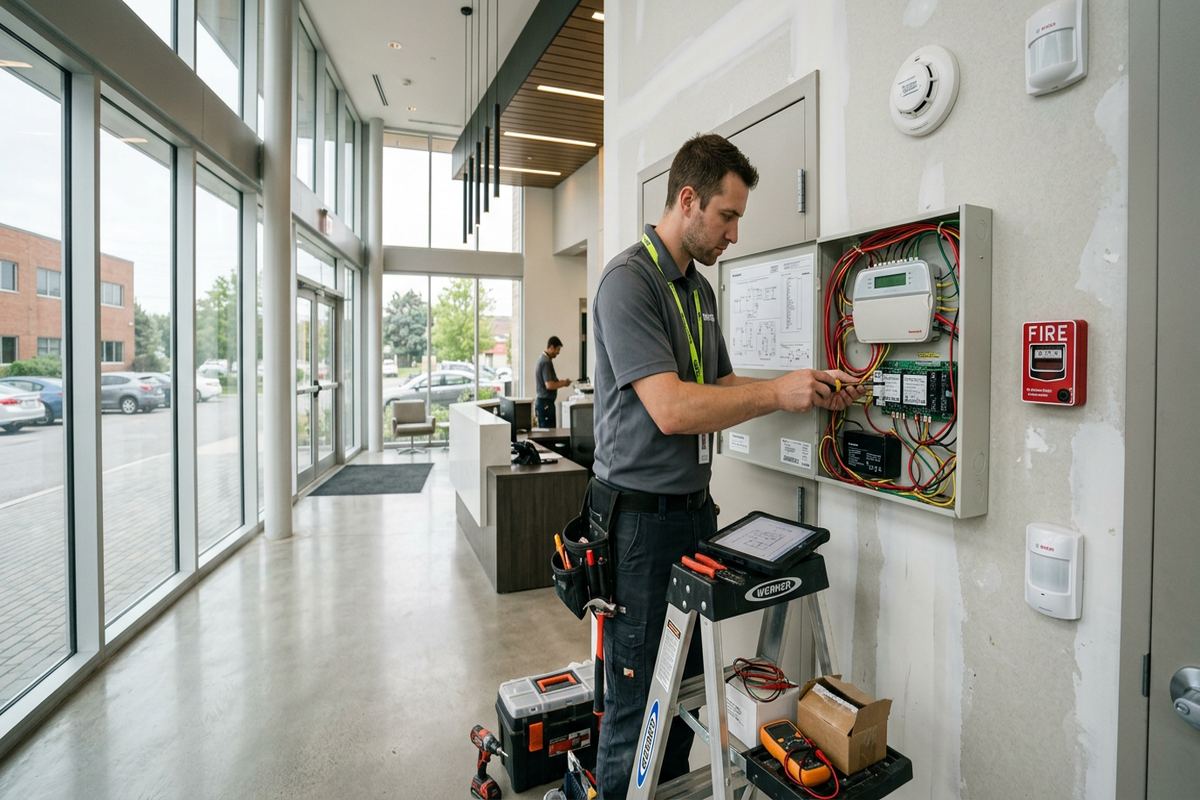

UnifiedLink installs commercial intrusion alarm systems for shops, offices, mixed-use properties and industrial units in Cobourg. Each project starts with a site assessment and a written scope. We plan sensors, keypads, communications and cable routes around the building, then configure the system on site and provide a documented handover using the customer’s own credentials.
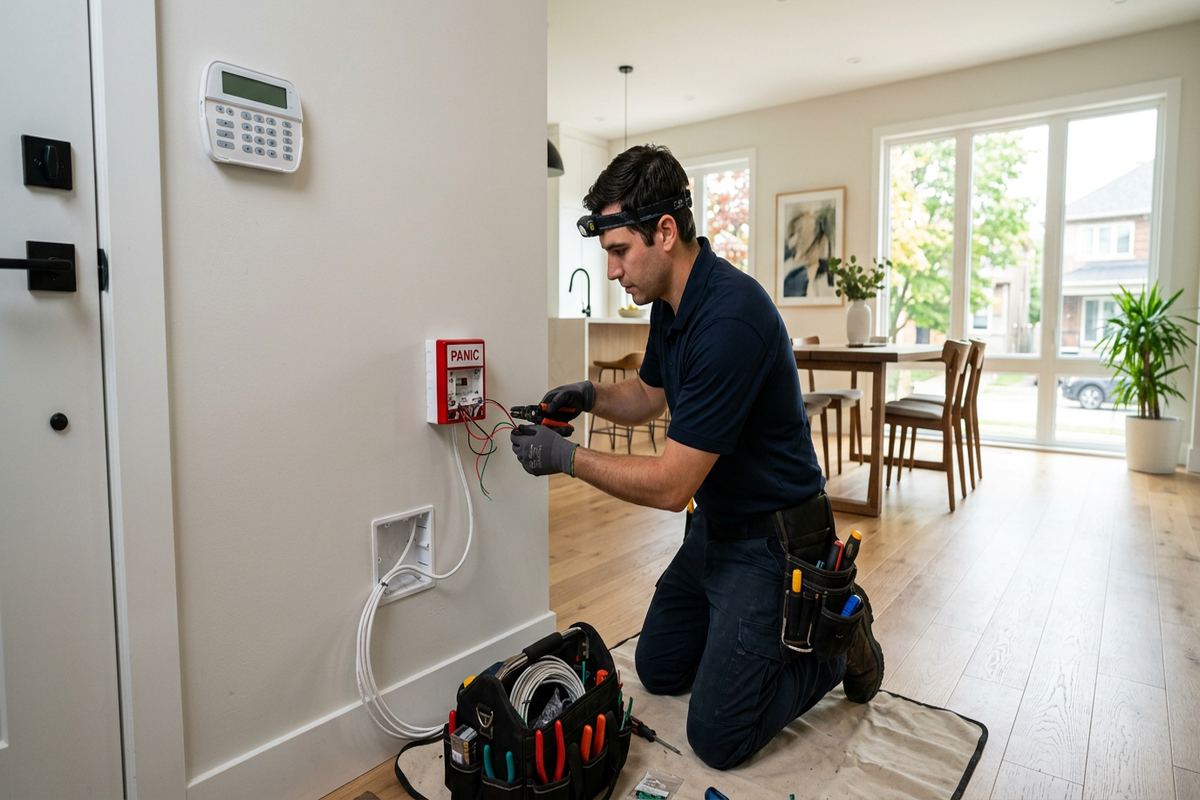
Commercial Alarm Planning for Cobourg Properties
A commercial alarm should be planned around how the property is actually used, not assembled from a generic device list. During a Cobourg site assessment, we review public entrances, staff doors, loading areas, windows, interior circulation and rooms containing important equipment or stock. We also discuss opening procedures, cleaning schedules, deliveries and authorized after-hours access. These details help determine where door contacts, motion detectors, glass-break sensors, keypads and audible devices belong. Pricing follows the assessment so that the proposed system reflects observed conditions, practical cable routes and the operating needs of the business.
Building construction has a direct effect on alarm design. Downtown Cobourg includes older storefronts, mixed-use buildings and properties where masonry, finished ceilings or previous renovations can restrict access for new wiring. Newer commercial spaces and frame construction may offer easier pathways, but fire separations, shared walls and concealed services still require care. We identify suitable routes before installation and avoid unnecessary disturbance to visible finishes. Where heritage character matters, particularly near the beach and downtown, the objective is a careful, reversible installation that does not rely on avoidable cutting or permanently altering architectural details.
The written scope records what will be installed and what is not included. It covers equipment, proposed cable routes, device placement, exclusions, equipment ownership and applicable warranty information. This is particularly useful when a Cobourg project involves a tenant, landlord, condominium corporation or property manager because each party can review responsibilities before work begins. The scope can also identify areas requiring access outside business hours, existing devices that will remain, and any third-party monitoring or communications arrangements. Keeping these decisions in writing reduces uncertainty during installation and gives the customer a practical reference after handover.
- Entry, window and interior risk review
- Device placement based on daily operations
- Cable routes assessed before pricing
- Written equipment and ownership details
- Landlord or condominium requirements documented
Alarm Devices and Detection Options in Cobourg
Door and window contacts provide direct detection at common entry points, while motion detectors cover selected interior areas after the premises are closed. The correct combination depends on the layout, the expected movement inside the building and the value of separating perimeter protection from interior detection. A small Downtown Cobourg shop may need controlled coverage around its storefront, rear delivery door and stock area. An office may require separate zones for reception, private rooms and shared corridors. We select positions that support dependable operation while reducing exposure to normal movement, heating sources, reflective surfaces and other avoidable causes of false alarms.
Glass-break detection can be considered for accessible glazed areas where perimeter contacts alone do not address the risk. Placement depends on the detector’s intended coverage, room acoustics, partitions, window treatments and the type of glass present. Panic or hold-up devices may also be appropriate for selected counters, reception areas or staff locations, but they require a clear response procedure and deliberate positioning. We discuss these devices with the customer rather than assuming they are needed. Every alarm point receives a useful zone description so users and service personnel can identify the affected door, room or area without guessing.
Keypads, sirens and communications equipment need accessible but protected locations. A keypad should support normal entry and closing routines without being visible or reachable from an unsecured area. Internal audible devices must be positioned to provide useful notification without creating unnecessary exposure to tampering. External devices, where included and permitted, require appropriate mounting and weather sealing. Cobourg winters, wind-driven moisture and repeated freeze-thaw cycles can affect exterior penetrations and enclosures. We use suitable mounting methods, seal penetrations carefully and route conductors to limit water entry rather than relying on exposed or loosely supported cable.
- Door and window contacts
- Interior motion detection
- Glass-break detector assessment
- Panic device planning where appropriate
- Keypads, sirens and zone descriptions
Wired and Wireless Alarm Design
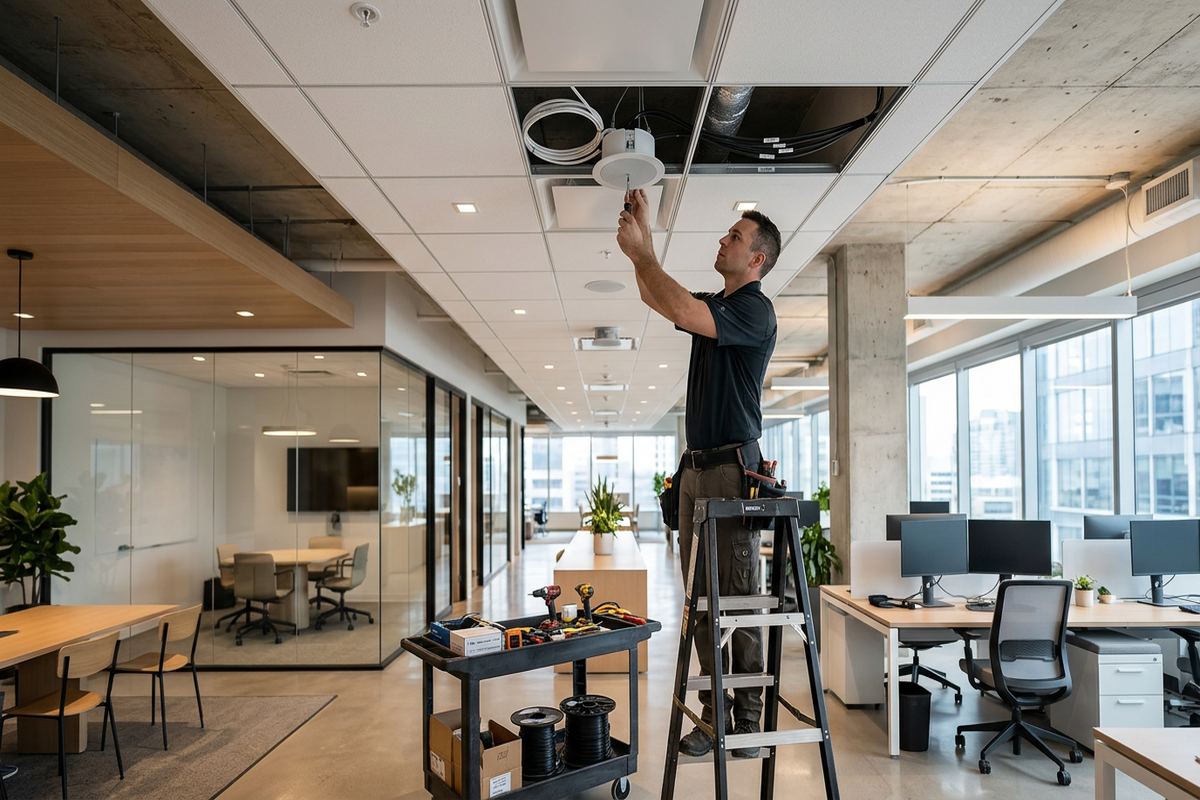
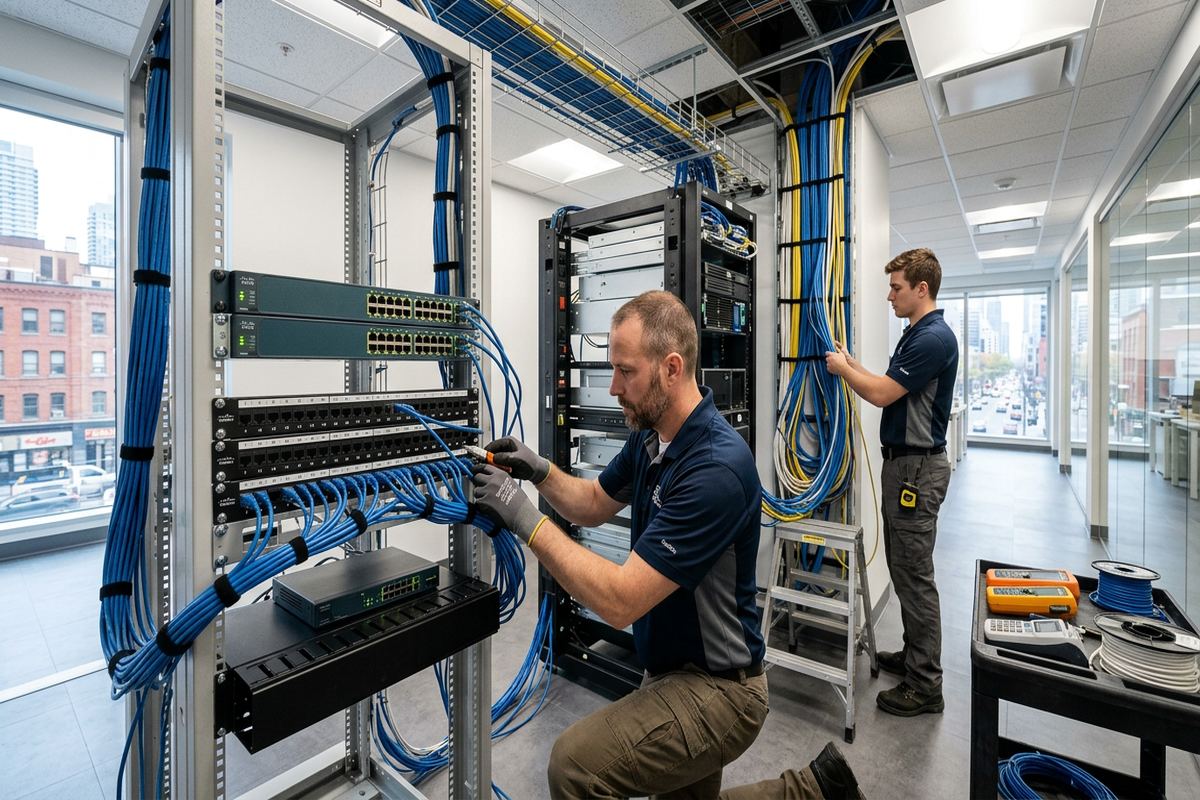
Wired alarm devices are often suitable for commercial spaces where accessible ceilings, utility rooms or existing pathways allow continuous cable runs. They avoid routine battery replacement at each field device and provide predictable physical connections back to the control equipment. UnifiedLink installs continuous labelled cable runs rather than joining short sections without a documented reason. Cable selection, support and separation are planned for the environment and route. In Cobourg industrial units or commercial strips, pathways may pass through open ceilings, service corridors or warehouse areas, requiring mechanical protection and orderly support to keep alarm wiring identifiable and clear of everyday operations.
Wireless devices can solve practical installation constraints, especially where finished surfaces, masonry walls or heritage details make new cabling disruptive. They still require careful radio planning, battery maintenance and confirmation that the chosen location communicates reliably with the control equipment. Dense construction, metal shelving, equipment and changes to the tenant layout can affect performance. Near Cobourg Beach or in an older downtown property, wireless equipment may help preserve visible finishes, but it is not automatically the better option. We compare wired, wireless and hybrid designs based on access, maintainability, coverage, construction and the customer’s plans for the space.
A hybrid system can retain usable wired zones while adding wireless devices in locations that are difficult to reach. Before relying on existing cabling, we inspect accessible terminations, identify conductors and test whether the infrastructure is suitable for the proposed equipment. Unknown or damaged wiring is not treated as dependable simply because it is already present. The written scope states which existing components will be reused and which will be replaced. This approach is useful for renovations, tenant changes and phased upgrades because it distinguishes verified infrastructure from abandoned cable, unsupported devices or equipment whose ownership and service status are unclear.
- Wired, wireless and hybrid configurations
- Continuous labelled cable runs
- Existing cable inspected before reuse
- Wireless coverage checked on site
- Battery maintenance requirements explained
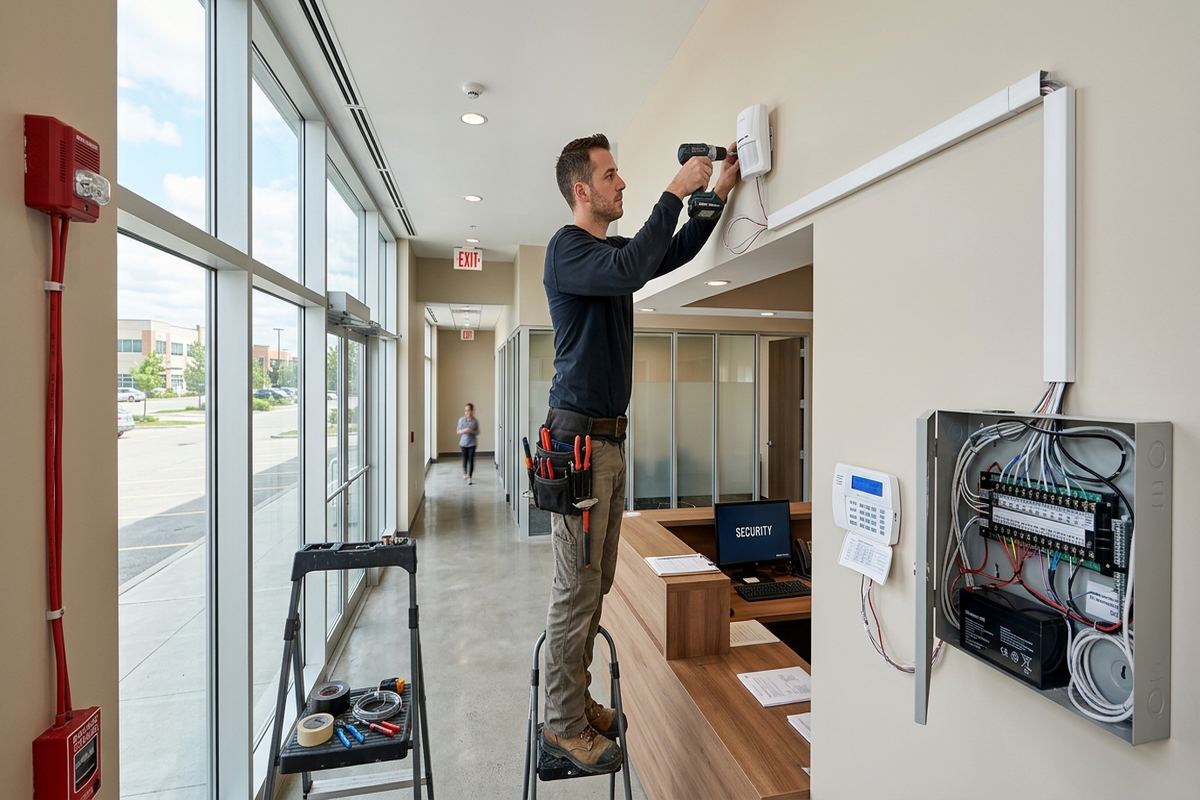
Cobourg, Ontario
Commercial alarm system installation in Cobourg, scoped in writing first
Book a site assessment and get equipment, routes, exclusions, and warranty on paper before anything is installed.
Careful Installation in Older Cobourg Buildings
Older Cobourg properties can contain plaster finishes, solid masonry, narrow cavities and renovation layers that are not apparent from the occupied rooms. Drilling or routing cable without examining both sides of a surface can damage finishes or encounter concealed services. We assess accessible basements, ceiling spaces, utility areas and existing pathways before proposing routes. Where a visible run is unavoidable, the scope can describe surface raceway, device positioning and finish considerations. The aim is to keep the work serviceable and restrained, particularly in heritage homes used commercially, small downtown businesses and mixed-use buildings where alterations should remain careful and reversible.
Masonry and frame buildings need different fastening and penetration methods. Brick, block and concrete require suitable anchors, controlled drilling and attention to joints, cavities and possible moisture paths. Frame walls may offer concealed routes, although insulation, fire blocking and previous alterations can limit access. Exterior alarm devices or contacts also need stable mounting surfaces and sealed entries. Because freeze-thaw conditions can widen poorly protected openings, penetrations should not be left dependent on a casual bead of sealant. We plan drip paths, enclosure orientation, cable entry and mechanical support together, then document locations that future service work may need to find.
Approvals must be settled before mounting devices or opening finished surfaces. A commercial tenant may need written landlord permission, while a condominium unit or shared commercial property may be subject to corporation rules and designated pathways. Exterior work can also affect common elements, façades or areas controlled by another party. UnifiedLink identifies these dependencies during scoping, but the property owner or authorized customer remains responsible for securing required permissions unless the written scope assigns a different task. Confirming authority early helps avoid relocating equipment after installation and keeps decisions about visible surfaces with the appropriate property representative.
- Reversible routes where practical
- Masonry-appropriate anchors and drilling
- Exterior penetrations sealed against moisture
- Visible raceway discussed before installation
- Approval responsibilities identified in writing
Alarm Installation for Cobourg Business Types
Retail spaces need alarm coverage that reflects public access during the day and controlled access after closing. Storefront glazing, rear doors, stockrooms, cash-handling positions and shared service corridors can each require different detection. In Downtown Cobourg, compact floor plans and adjoining tenants may also influence motion detector placement and audible device locations. We review who opens and closes, whether cleaners or delivery staff need separate access, and which areas should remain armed when another area is occupied. The resulting zones should describe recognizable locations so an alarm event can be interpreted without searching through generic device numbers.
Offices, clinics and professional premises often have multiple users, private rooms and schedules that change throughout the week. An alarm design can divide the property into logical areas, allowing authorized users to operate only the sections relevant to them when the selected equipment supports partitioning. New Amherst, West Park and East Village properties may include converted, mixed-use or newer spaces with different cabling opportunities and approval requirements. We consider reception areas, secondary exits, records rooms, communications cabinets and staff-only entrances while avoiding sensor locations affected by routine heating, moving signs, pets or equipment left operating after hours.
Industrial units and commercial strips present a different set of installation conditions. High ceilings, overhead doors, metal construction, loading activity and long distances between entry points can affect detector choice, cable support and communications planning. A unit may also share exterior walls, service areas or telecommunications rooms with neighbouring occupants. We confirm the boundaries of the customer’s premises and avoid treating shared areas as though one tenant controls them. Where forklifts, stored materials or changing shelving could obstruct detection, device positions are selected with future operations in mind, and any limitations are recorded in the scope or as-built documentation.
- Retail storefront and stockroom coverage
- Office partitions and user access planning
- Loading and overhead door assessment
- Shared-area boundaries confirmed
- High-ceiling device placement reviewed
Configuration, Users and Alarm Communications
Physical installation is followed by on-site configuration using the approved zone plan. Each detector is assigned a clear description, and entry or exit behaviour is set to match normal business procedures where supported by the system. We create the administrative setup with the customer’s own credentials rather than retaining control through installer-owned account details. Authorized users can then be added according to the customer’s policy. For a Cobourg business with managers, cleaners and occasional contractors, distinct user credentials can improve accountability and make it easier to remove access without changing the credentials used by everyone else.
Alarm communications may use internet, cellular or another supported connection, depending on the selected equipment and the services available at the property. An intrusion alarm does not automatically include professional monitoring, police dispatch or a communications subscription. Those items must be explicitly identified in the written scope or arranged separately with the appropriate provider. We confirm the intended reporting path and test configured notifications that fall within our scope. Customers should also maintain current contact lists and understand how internet outages, cellular conditions, account status or changes to network equipment may affect remote communication from the alarm panel.
User training covers everyday arming, disarming, bypassing permitted zones, recognizing trouble indicators and responding to common notifications. We also explain which steps should be reserved for an administrator and how to report a persistent fault without repeatedly clearing it. Opening and closing procedures should be written around the business rather than left as informal knowledge held by one employee. During handover, the customer receives system information and an as-built record showing installed device locations and relevant cable or equipment details. This documentation supports staff changes, future renovations and service decisions without making the customer dependent on undocumented installer knowledge.
- On-site zone and keypad configuration
- Individual user credentials where supported
- Customer-controlled administrative account
- Communication path tested within scope
- Operating guidance provided at handover
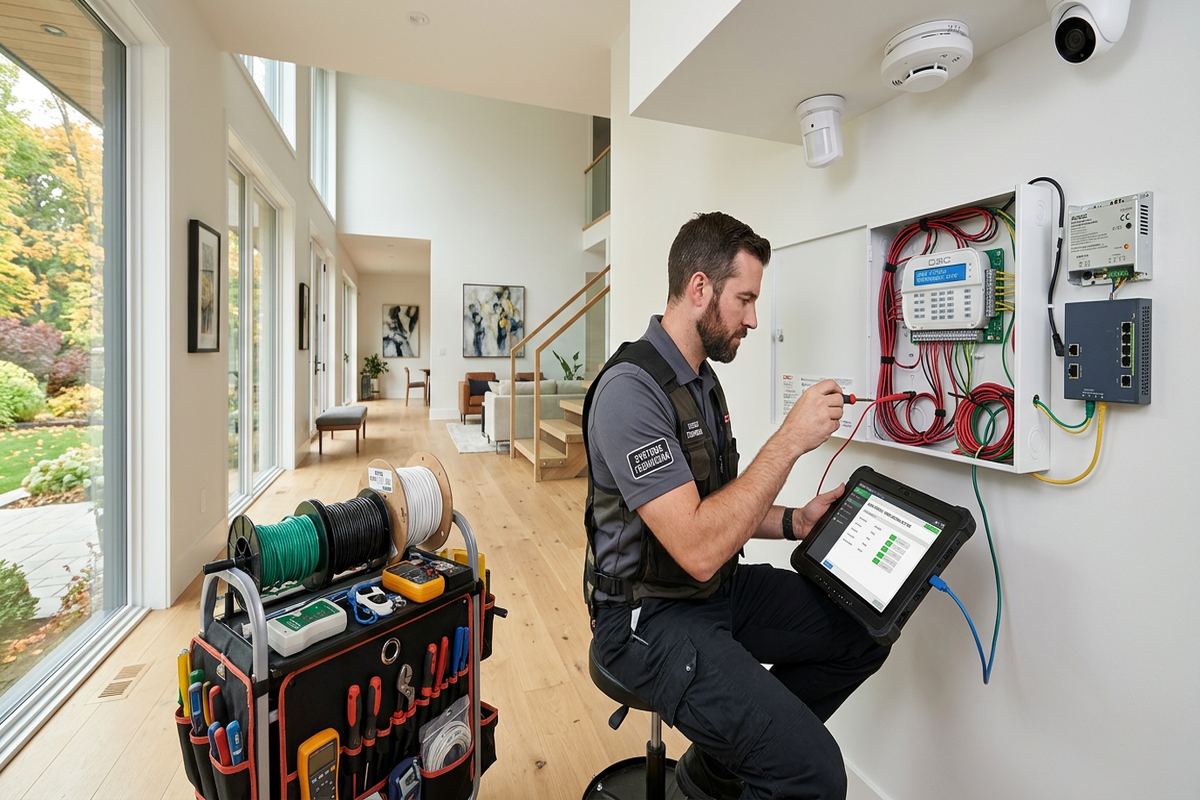
Testing and Handover for Cobourg Alarm Systems
Testing confirms that installed devices report to the correct zones and respond under expected conditions. Door contacts are checked through normal opening and closing, motion detectors are walk-tested, and audible or notification functions are exercised as applicable to the agreed scope. We also inspect accessible cable terminations, device fastening and enclosure closure before completion. Testing does not replace the need for ongoing maintenance, especially where batteries, exterior hardware or communications services are involved. In Cobourg, seasonal temperature changes can expose weak exterior seals or mounting problems, so weather-exposed components deserve periodic visual checks after winter and severe weather.
Handover is completed with the customer or an authorized representative who can review the final configuration. We provide the customer’s own credentials, explain normal operation and identify any exclusions, deferred work or third-party services. The as-built record captures installed device locations and relevant system details so future users do not have to reconstruct the installation from memory. Equipment ownership and warranty information follow the written scope. If the installation differs from an originally proposed route because a concealed obstruction was discovered, that change should be reflected in the final documentation rather than left as an undocumented field decision.
A responsible alarm programme continues after the installers leave. The business should keep its user list current, remove credentials for departed staff, inspect accessible devices and arrange replacement of batteries or failed components when indicated. Renovations, new shelving, changed partitions and network replacements can all affect alarm performance. Cobourg owners and managers should review the system whenever the use of a room, entry point or tenancy changes. UnifiedLink can assess additions or alterations, but new work is scoped before pricing. This keeps modifications documented and prevents incremental changes from obscuring zone descriptions, cable ownership or system limitations.
- Every installed zone function-tested
- Accessible terminations inspected
- As-built device record supplied
- Credentials transferred to the customer
- Exclusions and deferred work documented
Requesting a Cobourg Commercial Alarm Assessment
The first step is to describe the Cobourg property, its current use and the concern prompting the project. Useful details include the number of entrances, approximate layout, occupancy schedule, construction type, existing alarm equipment and whether the premises are owned, leased or governed by a condominium corporation. Photographs and plans can support early discussion, but they do not replace a site assessment where physical conditions determine device placement or cable routes. Requests sent during business hours are answered the same day; after-hours requests are answered the next business day. Assessment timing depends on the service and travel distance.
During the assessment, access is needed to relevant entrances, rooms, utility spaces and any existing alarm panel or communications equipment. A building representative should be available to explain operating routines and identify surfaces or areas that cannot be altered. For leased premises, it helps to have landlord requirements before routes are finalized. Around Cobourg Beach and older downtown buildings, information about previous water entry, exterior repairs or protected finishes can influence mounting decisions. In industrial units, access above ceilings or around loading areas may require coordination with operations so conditions can be examined safely and without disrupting normal work.
After the visit, UnifiedLink prepares a written scope covering equipment, cable routes, device placement, exclusions, ownership and warranty. Questions or requested changes can be resolved before installation is scheduled. One accountable contractor coordinates the specified low-voltage alarm work, configuration and handover, reducing gaps between cabling and system setup. The final design remains tied to the observed property rather than a remote estimate. Whether the site is in West Park, East Village, New Amherst or central Cobourg, the objective is a maintainable alarm installation with understandable zones, controlled credentials and records that remain useful after staff or tenants change.
- Property assessment before pricing
- Existing equipment and routes reviewed
- Written scope provided for approval
- Scheduling reflects service and travel distance
- One contractor for cabling through handover
Cobourg neighbourhoods we cover
- Downtown Cobourg
- Cobourg Beach
- New Amherst
- West Park
- East Village
Commercial alarm system installation in Cobourg — common questions
Can you install an alarm in an older Downtown Cobourg building?
Yes, subject to a site assessment and any required property approvals. Older Cobourg buildings may have masonry walls, plaster finishes, limited ceiling access or protected architectural details. We examine practical cable routes and may consider wired, wireless or hybrid equipment. The written scope identifies visible raceway, proposed penetrations and exclusions so the installation can remain careful, serviceable and reversible where practical.
Do I need landlord or condominium approval?
Approval may be required when work affects leased premises, common elements, exterior walls, shared pathways or finished surfaces controlled by another party. Cobourg tenants and condominium owners should confirm the applicable rules before installation. UnifiedLink can identify proposed routes and device locations in the written scope, giving the landlord, property manager or condominium corporation clear information to review before work begins.
Is monitoring included with the alarm installation?
Not automatically. Professional monitoring, dispatch arrangements, cellular service and other subscriptions must be specifically included in the written scope or arranged with a separate provider. For a Cobourg commercial alarm, we confirm the intended communications method and configure or test functions within our scope. The customer should understand provider terms, contact-list responsibilities and what occurs during internet, cellular or power interruptions.
Can you reuse my existing commercial alarm wiring?
Existing wiring may be reused when accessible inspection, identification and testing show that it is suitable for the proposed equipment. We do not assume an unknown cable is dependable simply because it reaches the right area. At a Cobourg site assessment, we review available terminations and pathways. The written scope states which cabling or devices will remain, what will be replaced and any limitations affecting reuse.
How do Cobourg winters affect exterior alarm equipment?
Freeze-thaw cycles, moisture, snow and wind exposure can affect exterior enclosures, fasteners and cable penetrations. Exterior components require suitable mounting, supported cable entries and careful sealing. Device locations should also avoid avoidable drainage or snow-clearing hazards. Periodic visual checks are sensible after winter or severe weather, particularly if a seal, enclosure or mounting surface shows movement, cracking, corrosion or signs of water entry.
What will we receive when installation is complete?
At handover, UnifiedLink provides the customer’s own credentials, operating guidance and an as-built record showing installed device locations and relevant system details. We also identify exclusions, deferred items, equipment ownership and applicable warranty information according to the written scope. Cobourg business owners should keep these records with current user and contact procedures so future staff, renovations or service work can be managed without guesswork.
Coverage in Cobourg is confirmed against the address before we quote. See everything we install in Cobourg or the province-wide commercial alarm system installation page.