UnifiedLink installs wireless alarm systems for homes, farms, commercial spaces and industrial units across Chatham and Chatham-Kent. Each project starts with a site assessment to check coverage, entry points, building materials and operating needs. We then provide a written scope, configure the system on site and hand it over using credentials controlled by the customer.
Wireless Alarm Planning for Chatham Properties
A wireless alarm is only effective when its sensors, control equipment and communications path suit the property. In Chatham, that can mean planning for an older frame house, a masonry commercial unit, a farm residence with detached buildings or a food facility with controlled work areas. UnifiedLink begins with a site assessment rather than selecting equipment from a generic package. We review doors, windows, interior movement routes, likely points of entry, wireless signal conditions and the people who need to operate the system. This establishes a practical basis for device selection and placement.
Wireless does not mean that every component can be placed without regard for construction. Brick walls, metal cladding, foil-backed insulation, concrete floors, machinery and stored materials can reduce radio performance. Older town housing may also include additions built with different materials from the original structure. During assessment, we identify these obstacles and determine whether sensors can communicate reliably with the main panel. Where repeaters, alternative device positions or limited cabling are appropriate, those requirements are included in the scope instead of being discovered after equipment has already been mounted.
The written scope identifies equipment, proposed device locations, cable routes where any wiring is required, exclusions, equipment ownership and warranty details. It also sets out how users, notifications and monitored functions are expected to work. This is particularly useful for Chatham-Kent properties with multiple buildings or mixed residential and business use, where assumptions can create gaps. Pricing follows the assessment because the number of sensors alone does not define the job. Building layout, communication methods, access conditions and the required alarm response workflow all affect the installation plan.
- Site assessment before pricing
- Review of doors, windows and movement routes
- Wireless signal and construction-material checks
- Written equipment and placement scope
- Ownership and warranty details documented
Alarm Devices Selected for the Space
Device selection starts with the event that needs to be detected, not with a preference for adding more equipment. Door and window contacts identify openings, while motion sensors protect interior routes when the space is unoccupied. Glass-break detection may support exposed glazed areas, and environmental devices can address conditions such as low temperature or water presence when compatible with the chosen platform. For Chatham homes and businesses, we consider normal movement, pets, loading activity, staff schedules and seasonal use. The objective is useful detection without creating avoidable alarms during ordinary operation.
Farm properties often require a clear distinction between the residence, workshop, storage buildings and working areas. Radio distance between structures, metal siding and the availability of power can limit where wireless devices will perform consistently. Grain and food facilities may introduce dust, washdown practices, temperature changes or operating equipment that affect device suitability and mounting. An alarm assessment does not replace fire-code, hazardous-location or process-safety engineering. Where a location has specialized requirements, the scope identifies the limitation and keeps the intrusion alarm work within an appropriate, clearly defined role.
User controls also need to match daily routines. A household may want simple perimeter arming at night, while a commercial strip unit may need separate access for opening staff, managers and cleaners. A farm operator may need notifications that distinguish the house from another protected area. We configure available partitions, user permissions, entry delays and notification rules around those needs. The final arrangement depends on the selected equipment and service. Users should not have to share one code or rely on the installer’s account to make ordinary changes after handover.
- Door and window contacts
- Interior motion detection
- Compatible glass-break sensors
- Environmental detection where suitable
- User permissions and partition planning
Chatham Installation and Sensor Placement
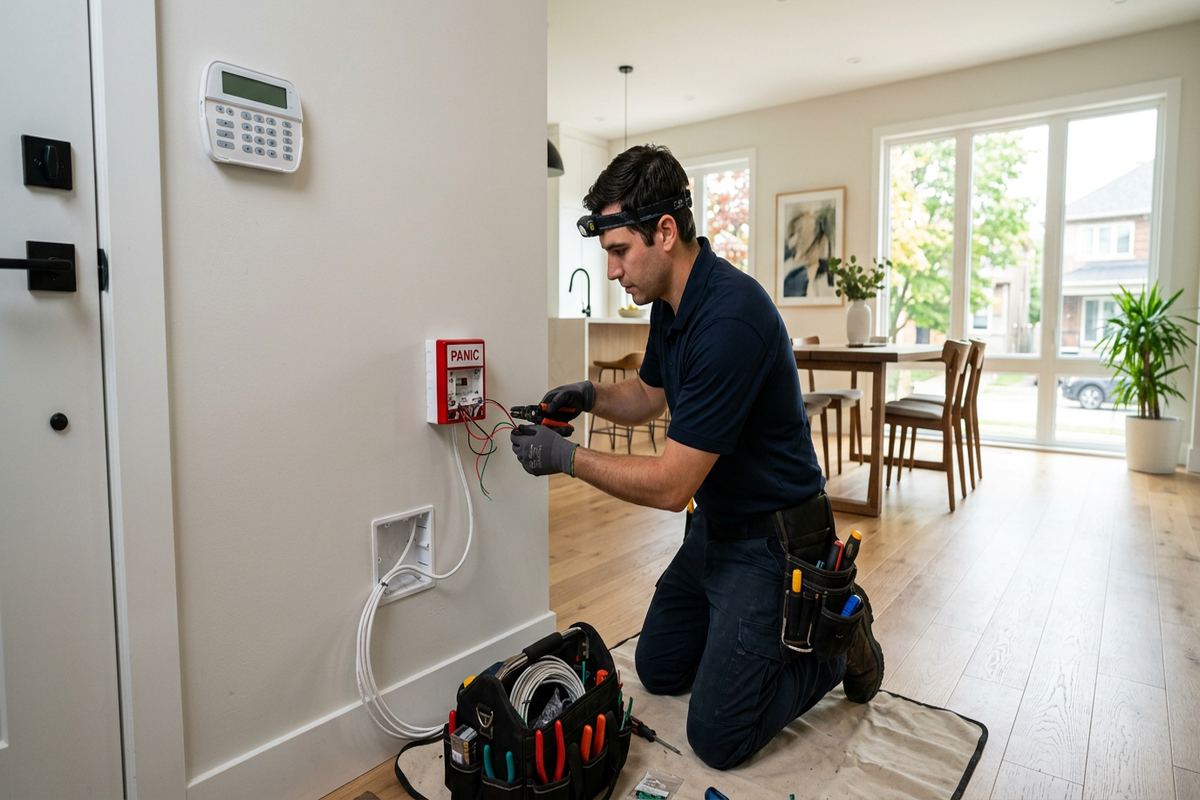
Correct mounting affects both detection and long-term reliability. Contacts must align when a door or window closes, motion sensors need an unobstructed field of view, and keypads should be accessible without exposing unnecessary entry delay. In older Chatham housing, trim profiles, settled frames and previous renovations can complicate otherwise simple mounting. We check how each opening moves before fixing a sensor in place. Adhesive mounting is not treated as universally suitable; surface condition, temperature exposure, device design and future service access all influence whether mechanical fastening or another approved method is more appropriate.
Exterior devices require particular care through Chatham-Kent winters. Freeze-thaw cycles, wind-driven moisture, direct sun and temperature swings can affect enclosures, fasteners and penetrations. Equipment must be rated for its location, and mounting points should avoid directing water toward the building. Where a cable or fastener penetrates an exterior surface, the opening is sealed using a method compatible with the wall material. Brick masonry, mortar joints, siding and wood framing require different drilling and fastening decisions. Indoor equipment is not moved outdoors simply because it can communicate wirelessly.
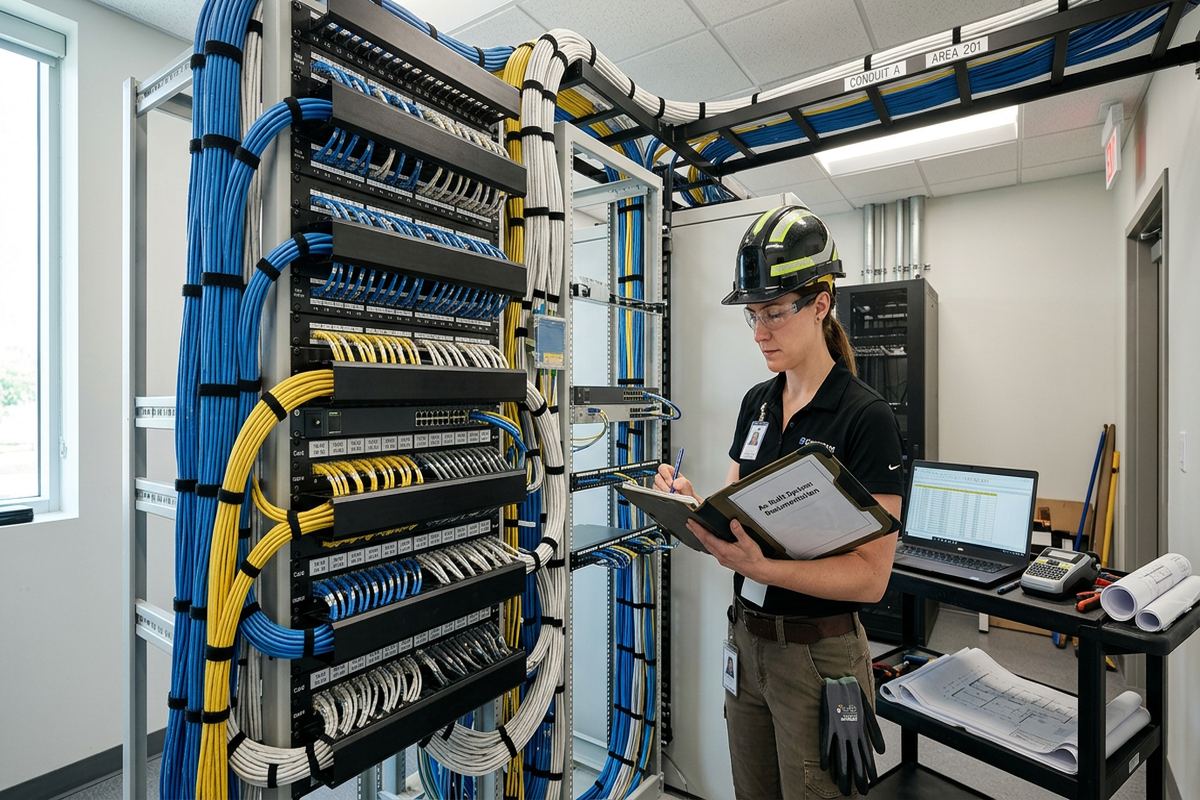
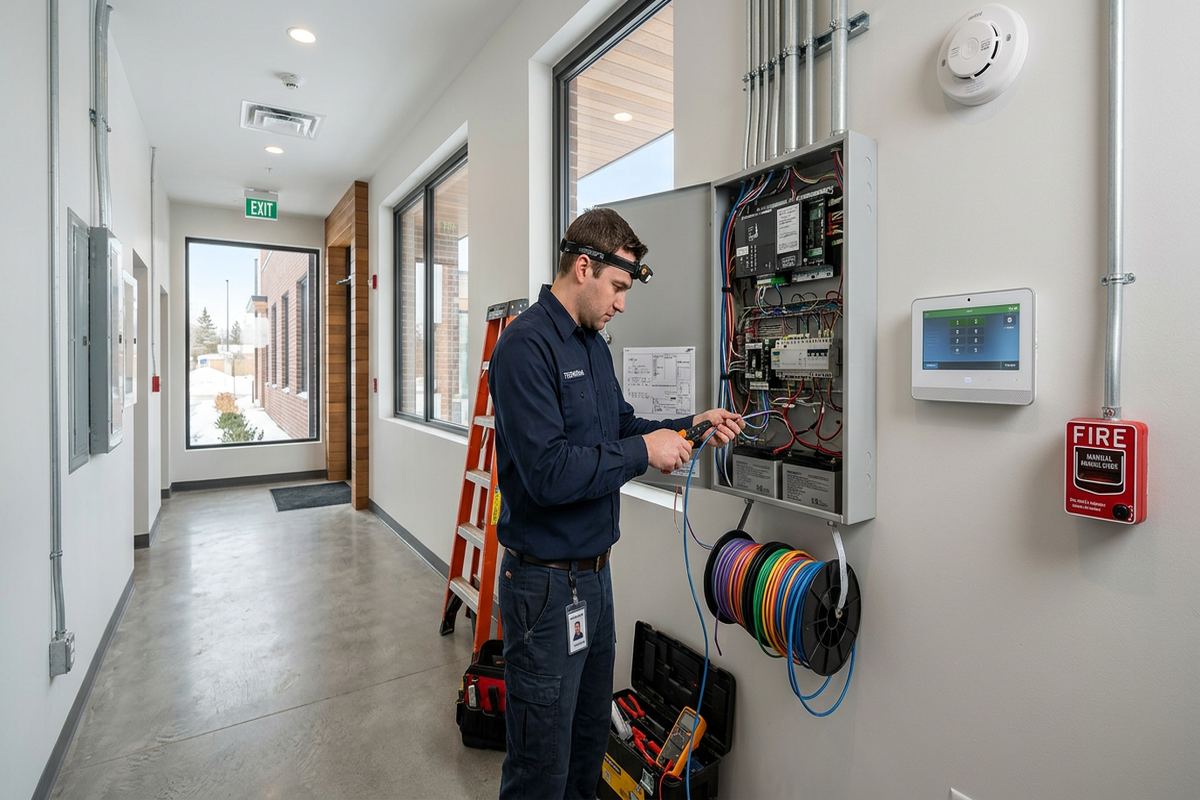
On masonry commercial units, mounting is planned to avoid unnecessary damage and preserve serviceability. Frame construction may offer easier fastening, but concealed utilities and finished surfaces still need attention. We use continuous labelled cable runs when power, communications or a wired device is part of the design. Wireless equipment is enrolled, named by location and tested from the installed position rather than only beside the panel. This helps confirm that the final layout works with actual walls, shelving and fixtures in place. Device names also make alerts and later troubleshooting easier to understand.
- Opening alignment checked before mounting
- Exterior penetrations properly sealed
- Fasteners selected for wall construction
- Continuous labelled runs where cabling applies
- Installed-position signal testing
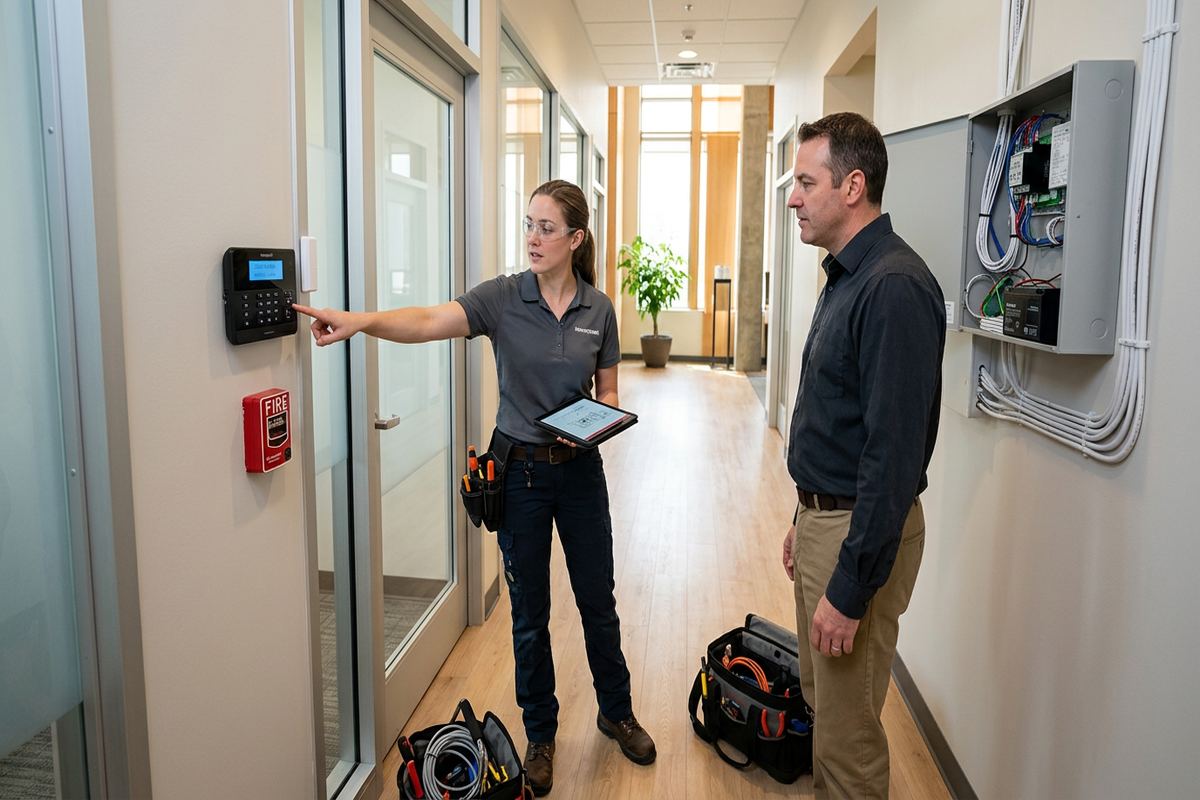
Chatham, Ontario
Wireless alarm installation in Chatham, scoped in writing first
Book a site assessment and get equipment, routes, exclusions, and warranty on paper before anything is installed.
Coverage in Downtown Chatham and Nearby Areas
Downtown Chatham properties can combine street-level business space, upper residential areas, rear entrances and shared building elements. Alarm planning should separate the customer’s premises from common routes and account for delivery doors or infrequently used exits. Thick masonry walls and long, narrow floor plans may restrict communication between sensors and a centrally located panel. A site visit allows us to test practical panel locations and identify any landlord restrictions. For leased premises, approval should be obtained before drilling, altering doors or placing equipment on shared or exterior surfaces.
Around the Thames Campus area and Maple City, detached homes, rentals and mixed-age renovations create different installation constraints. A newer addition may have modern insulation and finishes, while the original part of a house may contain dense plaster, masonry or irregular framing. Sensor positions are selected for the actual layout rather than the apparent age of the property. Tenants should have written landlord approval for permanent mounting or penetrations. Where a property is a condominium, the owner may also need authorization for work affecting common elements, exterior doors, windows or shared communications spaces.
Prestancia homes may call for discreet placement that does not interfere with finished trim, glazing or normal family use. Wallaceburg projects, while outside Chatham proper, can involve similar residential, commercial and outbuilding considerations within Chatham-Kent. Travel distance and service type affect when a site assessment can be scheduled. Requests sent during business hours are answered the same day, while after-hours requests are answered the next business day. That response wording concerns the request itself; it is not a promise that assessment, installation or emergency attendance will occur within a fixed period.
- Downtown mixed-use layout planning
- Thames Campus area property assessments
- Maple City residential installations
- Prestancia finished-surface considerations
- Wallaceburg service within Chatham-Kent
Wireless Alarm Communications and Power
Every alarm needs a dependable way to report events. Depending on the selected system and service arrangement, communication may use internet, cellular service or a supported combination. Wi-Fi alone should not be assumed to provide the same resilience as a purpose-designed alarm communication path. During the Chatham assessment, we review available network equipment, cellular conditions, panel location and what happens during an internet or power interruption. Monitoring and notification options are explained as part of the scope, including any service that must be obtained separately from the physical installation.
Battery-powered sensors reduce the need for cable at each opening, but they still require maintenance. Battery life varies with the device, traffic, signal conditions, temperature and reporting frequency, so a universal replacement interval should not be promised. Users need to recognize low-battery messages and know which device generated them. The main control equipment may also use backup power, subject to its design and condition. In seasonal or lightly occupied Chatham-Kent properties, notification settings should be reviewed so maintenance warnings reach someone who can inspect the site rather than remaining unnoticed.
Network changes are a common source of avoidable communication problems. Replacing a router, changing the wireless network name, updating a password or moving internet equipment can disconnect alarm components that depend on that network. We document relevant configuration at handover without retaining control of the customer’s credentials. If remote applications are included, they are set up under accounts owned by the customer. Commercial clients should decide who can administer users when staff change. Credential ownership, multi-factor authentication where supported and prompt removal of former users are part of responsible alarm operation.
- Internet and cellular options reviewed
- Power-interruption behaviour explained
- Low-battery alerts tested
- Customer-owned application accounts
- User access managed by role
Alarm Setup for Chatham Businesses and Farms
Commercial alarm design should follow how the premises opens, closes and receives visitors. A retail or service unit in Chatham may have a public entrance, staff door, stock area and rear delivery access, each with different risks and timing. Industrial units can include high ceilings, metal partitions and equipment that influence wireless coverage or motion detection. We meet with the person responsible for operations to define arming areas, authorized users and notification order. This reduces reliance on shared codes and helps avoid a design that conflicts with normal deliveries, cleaning or shift changes.
Grain and food facilities need careful boundaries around the alarm scope. Dust, sanitation procedures, cold rooms, metal structures and production movement may make standard sensors unsuitable in certain locations. Equipment ratings and manufacturer instructions must be respected, and devices cannot be represented as suitable for hazardous or regulated areas without the required basis. We identify where the wireless alarm can reasonably protect offices, entrances, storage or defined support areas. Specialized life-safety, process-control and hazardous-location systems remain separate unless explicitly assessed and included by qualified parties in a written scope.
Detached farm buildings present both coverage and response questions. Before proposing a sensor in a barn, shop or storage building, we examine distance, construction, power, environmental exposure and the practical value of the resulting alert. A notification is only useful when the owner knows which area triggered it and what action to take. Separate partitions or clearly named devices can help. In some cases, an independent communication method or a different system arrangement may be more appropriate than stretching one wireless panel beyond dependable limits. Those decisions are made during the assessment.
- Opening and closing workflows reviewed
- Separate staff permissions configured
- Farm outbuilding coverage assessed
- Industrial radio obstacles considered
- Specialized environments clearly excluded
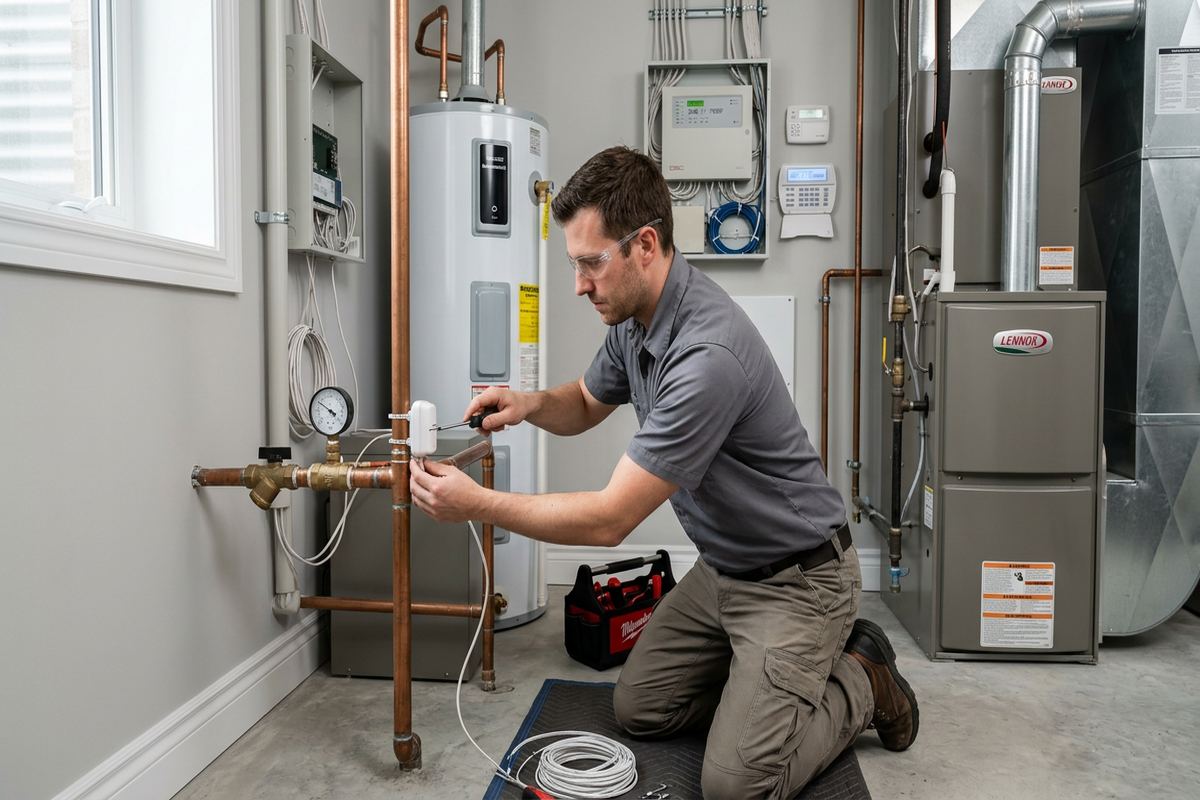
Testing, Handover and Chatham Alarm Records
Installation is followed by functional testing of every included device. Door and window contacts are operated from their normal positions, motion sensors are checked through expected travel paths, and tamper or supervision functions are confirmed where supported. We also verify device names, partitions, entry delays and notification behaviour against the written scope. For a Chatham business, testing should include the people responsible for opening and closing whenever practical. For a household, each regular user should understand how to arm, disarm and identify the source of an alert before the installer leaves.
Handover uses credentials controlled by the customer. UnifiedLink does not make continued installer ownership of the primary account a condition of using the alarm. The customer receives an as-built record describing installed equipment and device locations, along with relevant operating information and documented exclusions. Where cable was installed, routes and labels are recorded to the practical extent available. The handover also identifies equipment ownership and warranty terms stated in the scope. These records are useful when a sensor needs service, the property is renovated or responsibility moves to a new manager.
Training covers routine operation rather than only demonstrating that the alarm sounds. Users learn arming modes, entry and exit behaviour, bypass functions where enabled, low-battery notices and the process for adding or removing authorized users. Notification and monitoring procedures are reviewed according to the selected service. False-alarm prevention is discussed, including keeping motion-sensor views clear and ensuring doors close fully. The owner remains responsible for applicable permits, call-list accuracy and operating policies unless the written scope assigns a specific task to UnifiedLink. Requirements should be confirmed for the property and service arrangement.
- Every included sensor function-tested
- Device names verified
- Customer credentials used at handover
- As-built record supplied
- Routine user training provided
One Contractor for Chatham Low-Voltage Work
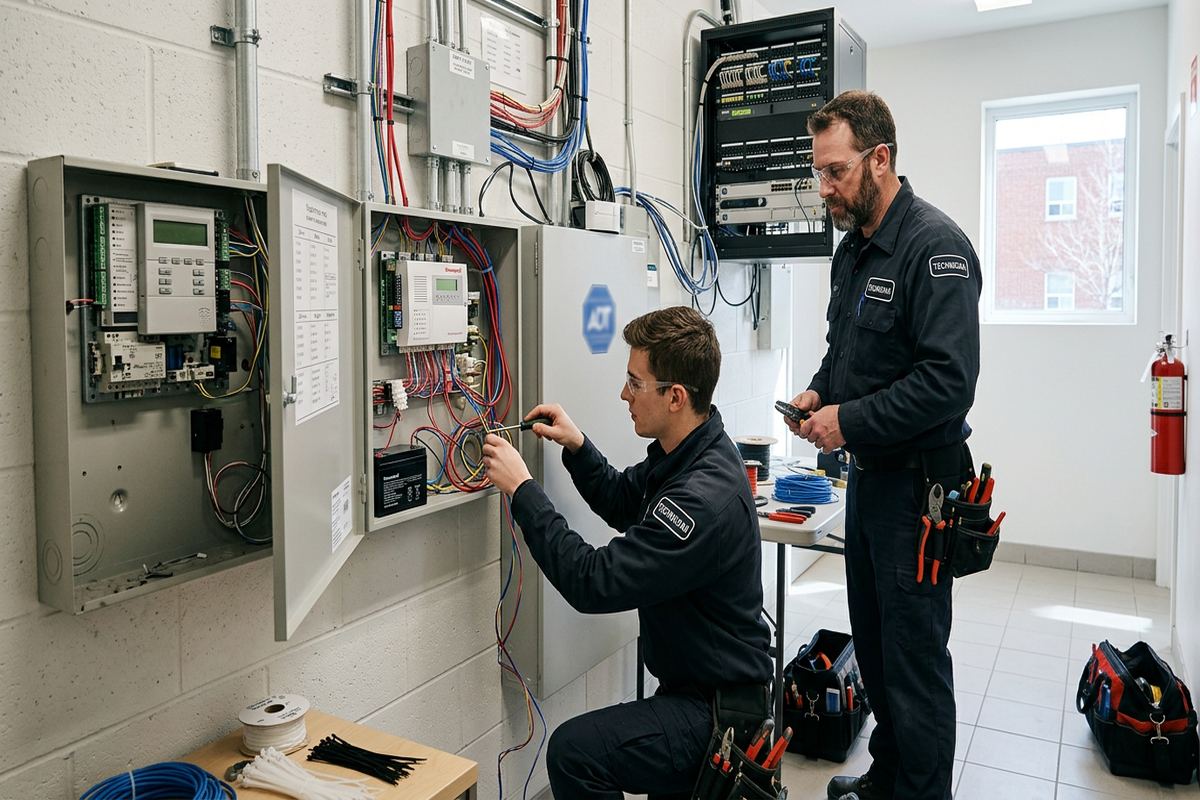
Some wireless alarm projects intersect with other low-voltage systems. A panel may require a suitable network connection, an entrance may also need video coverage, or a commercial client may be planning access control. Using one accountable contractor can simplify cable routes, equipment locations and handover records without forcing unrelated systems into one platform. UnifiedLink can assess alarm systems alongside security cameras, structured cabling, Wi-Fi and other supported work. Each service remains defined in the written scope, with clear exclusions and ownership rather than an assumption that every device automatically integrates.
Coordination matters during renovations and tenant improvements. If walls are open, limited wiring may provide a more reliable option for selected alarm devices, power or communications even when the overall system is wireless. If finishes are complete, routes should avoid unnecessary surface damage and respect landlord or condominium approvals. Chatham properties with older construction may also reveal obsolete wiring that should not be reused without inspection. We identify what can remain, what needs replacement and what belongs to another trade. Any cable installed by UnifiedLink is run continuously and labelled for future identification.
The next step is a site assessment based on the property, service and travel distance. Before pricing, we confirm the areas to protect, building construction, communications, user requirements and installation access. The resulting written scope covers equipment, cable routes, device placement, exclusions, equipment ownership and warranty. Installation includes on-site configuration, testing and handover with the customer’s own credentials and an as-built record. Chatham customers can send a request with the property type, approximate location and main concerns. Business-hours requests receive a same-day response; after-hours requests receive a response the next business day.
- One accountable low-voltage contractor
- Alarm and network needs coordinated
- Renovation-stage wiring options reviewed
- Scope and exclusions documented
- Assessment timing based on service and travel
Chatham neighbourhoods we cover
- Downtown Chatham
- Thames Campus area
- Maple City
- Prestancia
- Wallaceburg
Wireless alarm installation in Chatham — common questions
Will a wireless alarm work in an older Chatham house?
It often can, but the layout and construction need to be checked. Plaster, masonry, additions, metal ductwork and foil-backed insulation may affect radio communication. We assess the property, test practical device locations and specify repeaters or alternative positions if needed. Door and window condition also matters because settled frames can prevent contacts from aligning correctly.
Can you protect detached farm buildings?
Potentially, depending on distance, construction, power and environmental conditions. Metal-clad buildings around Chatham-Kent can significantly reduce wireless range. We assess each structure rather than assuming the house panel will reach it. Where one system cannot provide dependable communication, the scope may recommend a different arrangement, an independent communication path or exclusion of that building.
Do I need landlord or condo approval?
Approval may be required if installation involves drilling, permanent mounting, exterior surfaces, shared doors, windows or condominium common elements. Chatham tenants should obtain written landlord permission before work begins. Condominium owners should check their corporation’s rules. We can document proposed device locations and penetrations so the owner, landlord or property manager has clear information for the approval process.
What happens if my internet goes down?
That depends on the alarm equipment and communication method selected. Some Chatham systems can use cellular communication or a supported combination of internet and cellular service. During assessment, we explain how alarms, application access and notifications behave during an outage. Backup power and communication services have defined limitations, which are included in the scope rather than treated as unlimited.
Can staff have separate alarm codes?
Yes, where supported by the selected system. Separate users are preferable to a shared code because permissions can be changed when staff roles change. For Chatham businesses, we can configure available user levels, partitions and opening or closing access around the operating plan. The customer receives administrative control and should promptly remove credentials belonging to former staff or contractors.
How quickly can you assess my Chatham property?
Requests sent during business hours are answered the same day, and after-hours requests are answered the next business day. Site assessment timing depends on the service and travel distance. When requesting an assessment, provide the Chatham or Chatham-Kent location, property type, number of buildings and main areas of concern so the visit can be planned appropriately.
Coverage in Chatham is confirmed against the address before we quote. See everything we install in Chatham or the province-wide wireless alarm installation page.