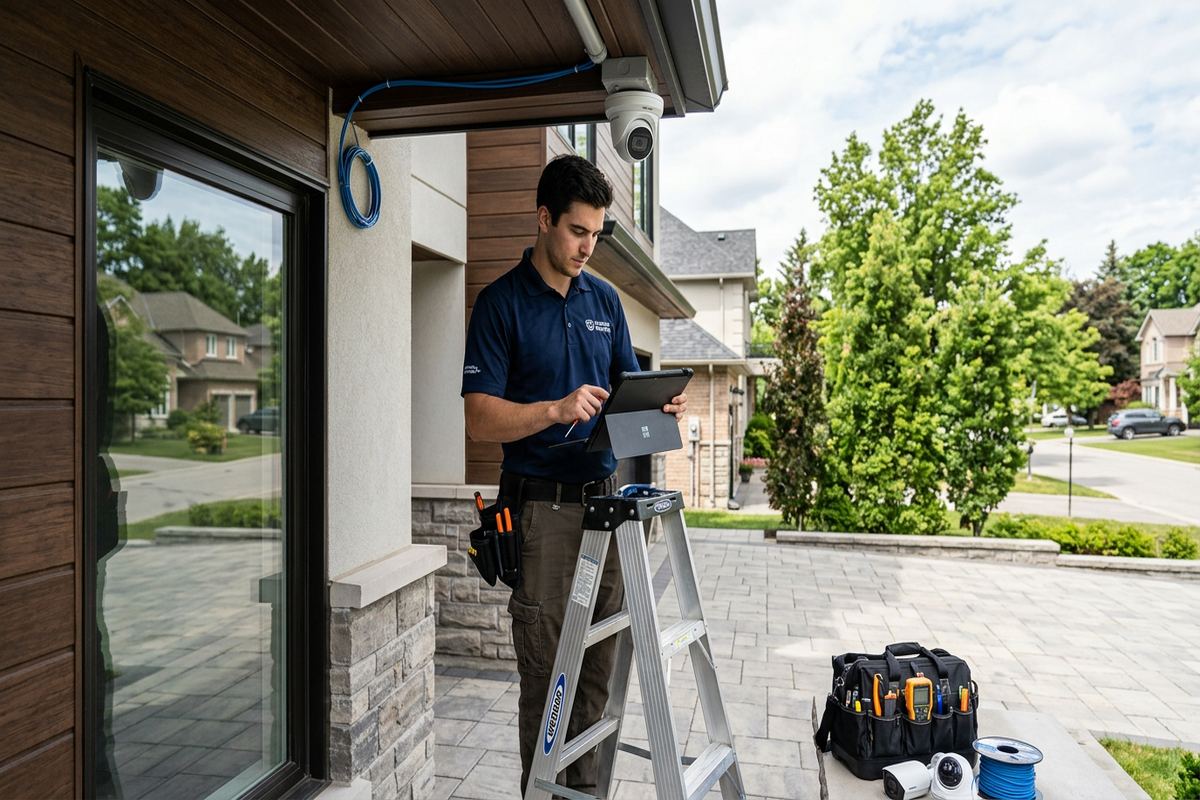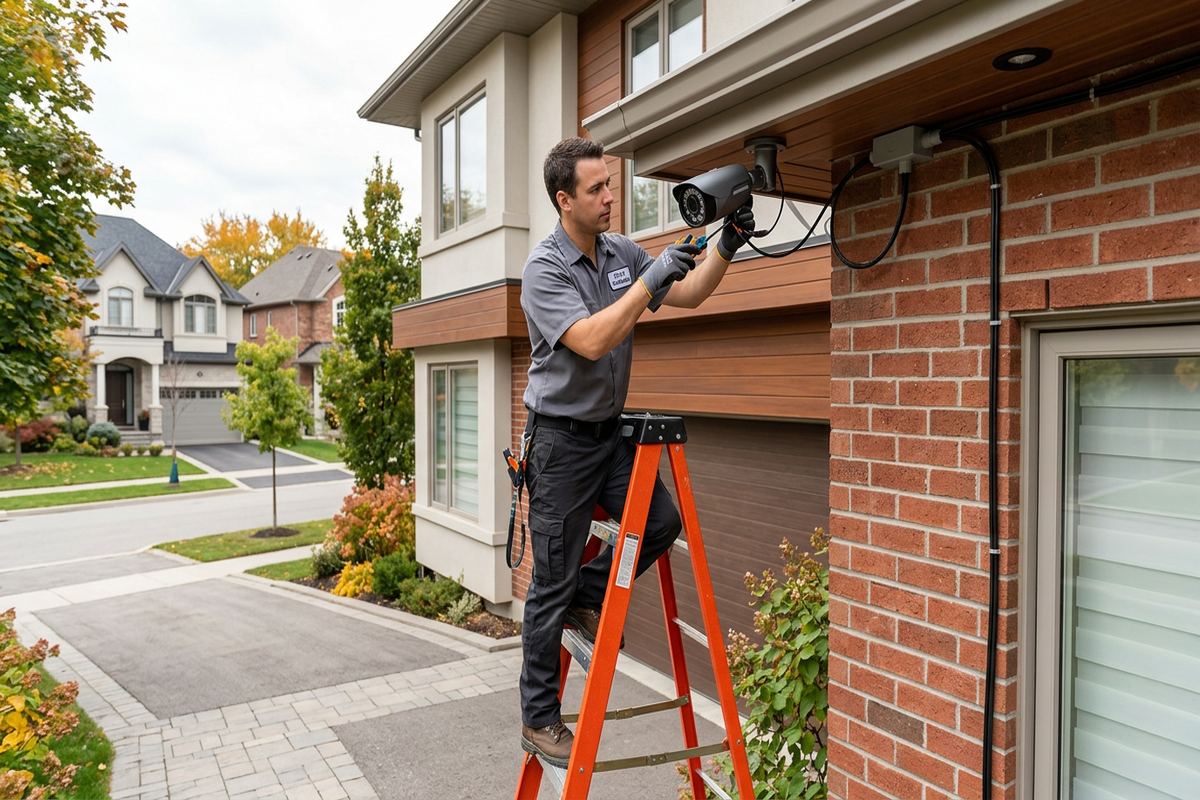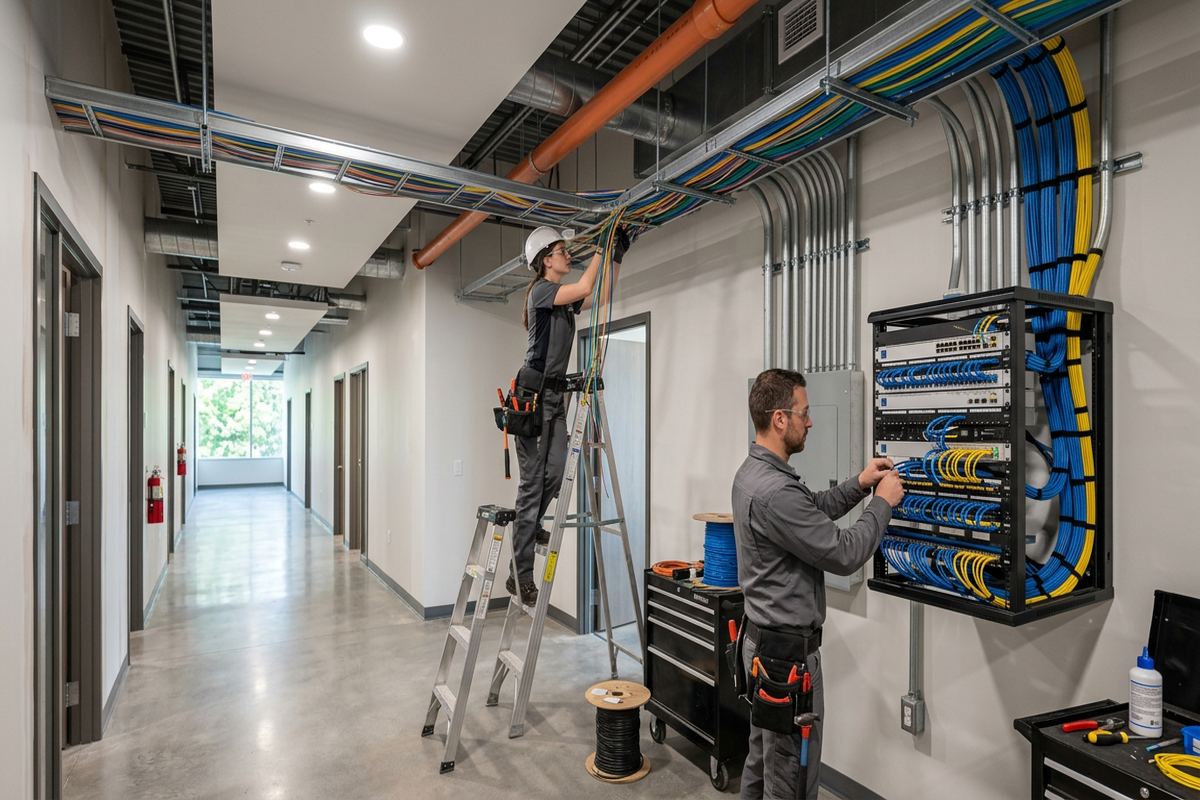
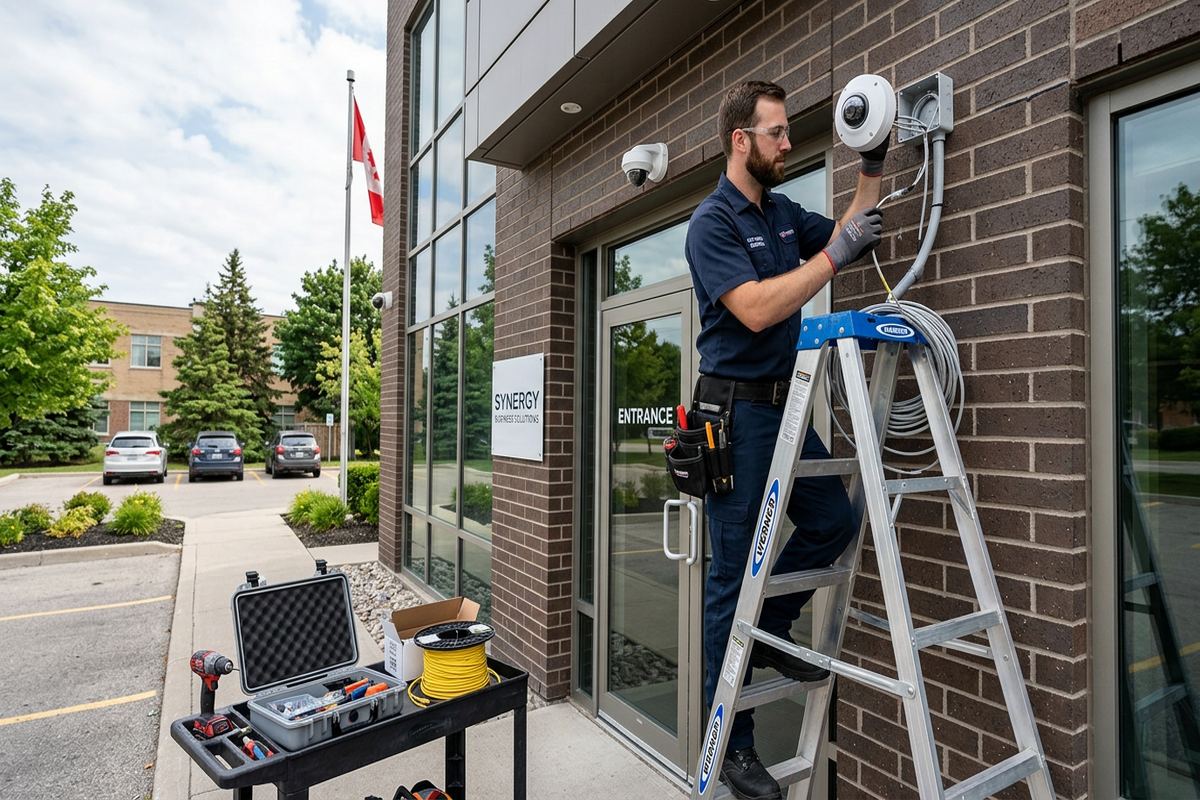
UnifiedLink installs outdoor security cameras for homes, farms, commercial properties and industrial sites across Chatham and surrounding Chatham-Kent communities. Each project begins with a site assessment covering sightlines, lighting, cable routes, mounting surfaces and recording needs. The result is a documented system designed around the property rather than a collection of cameras placed without a coverage plan.
Outdoor Camera Installation for Chatham Properties
Outdoor camera work starts with deciding what must be identified, observed or recorded. A camera overlooking a driveway needs a different lens and angle from one covering a loading area, detached garage or distant farm entrance. In Chatham, the mix of older town housing, farm properties, grain and food facilities creates very different distances, lighting conditions and mounting options. UnifiedLink assesses these conditions before recommending equipment, helping prevent blind spots, excessive backlighting and images that look wide on a screen but provide too little useful detail when an incident is reviewed.
A practical design separates general awareness from identification. Wide views can show movement across a yard or parking area, while narrower views are better suited to faces, vehicles, gates or points where people must pass. Camera height also matters: placing a unit too high may protect it from interference but leave only the tops of heads visible. During the Chatham site assessment, sightlines are checked from realistic approach paths. Trees, parked vehicles, seasonal foliage, trailers, snowbanks and opening doors are considered before device positions and cable routes are written into the project scope.
The installation method must match the building rather than forcing every property into one standard layout. Older frame houses around Downtown Chatham may have finished basements, additions and limited wall cavities. Commercial strips can involve suspended ceilings, shared exterior walls or landlord-controlled areas. Farm and industrial buildings may require long cable routes, protected drops and careful separation from electrical equipment. The written scope identifies equipment, device placement, intended cable routes, exclusions, equipment ownership and warranty details, allowing the property owner to review how the system will be installed before work proceeds.
- Driveways, doors and gates assessed separately
- Camera angles checked from likely approach paths
- Lighting and night-image limitations documented
- Mounting surfaces reviewed before equipment selection
- Written scope supplied before installation
Planning Camera Coverage in Chatham
Useful outdoor coverage depends on the reason for recording. Homeowners may want clear views of a front walk, side passage, driveway and backyard access point. Businesses often need entrances, delivery doors, waste areas and vehicle approaches covered without recording unnecessary neighbouring space. At farm properties, a single wide camera rarely provides enough detail across long lanes, yards and outbuildings. The Chatham assessment establishes priorities and identifies where overview cameras, focused identification views or additional lighting may be appropriate. This keeps the design tied to operational needs instead of simply maximizing the number of devices.
Night performance is evaluated at the actual mounting location because manufacturer specifications do not describe every property condition. Infrared light can reflect from soffits, walls, downspouts, insects or nearby branches, washing out part of the image. Headlights can overwhelm a camera aimed directly along a driveway, while strong exterior fixtures can leave adjacent areas dark. Around grain and food facilities, airborne dust, work lighting and vehicle movement can further affect recordings. Camera orientation, lens choice and available ambient light are therefore considered together, with expected limitations explained before the final placement plan is accepted.
Privacy and viewing boundaries are included in the design discussion. Cameras should concentrate on the customer’s entrances, buildings, yards and work areas rather than windows or private spaces on neighbouring properties. In denser parts of Maple City or older Downtown Chatham streets, narrow lots can make careful framing particularly important. Multi-unit properties may also involve shared corridors, parking areas or entrances governed by a condo corporation, landlord or property manager. UnifiedLink can document proposed locations for approval, but the customer remains responsible for obtaining required permissions and determining appropriate recording, retention and access policies.
- Priority views defined before camera quantities
- Day and night sightlines considered
- Infrared reflection risks checked
- Neighbouring property exposure minimized
- Approval requirements identified in the scope
Exterior Mounting for Chatham Weather
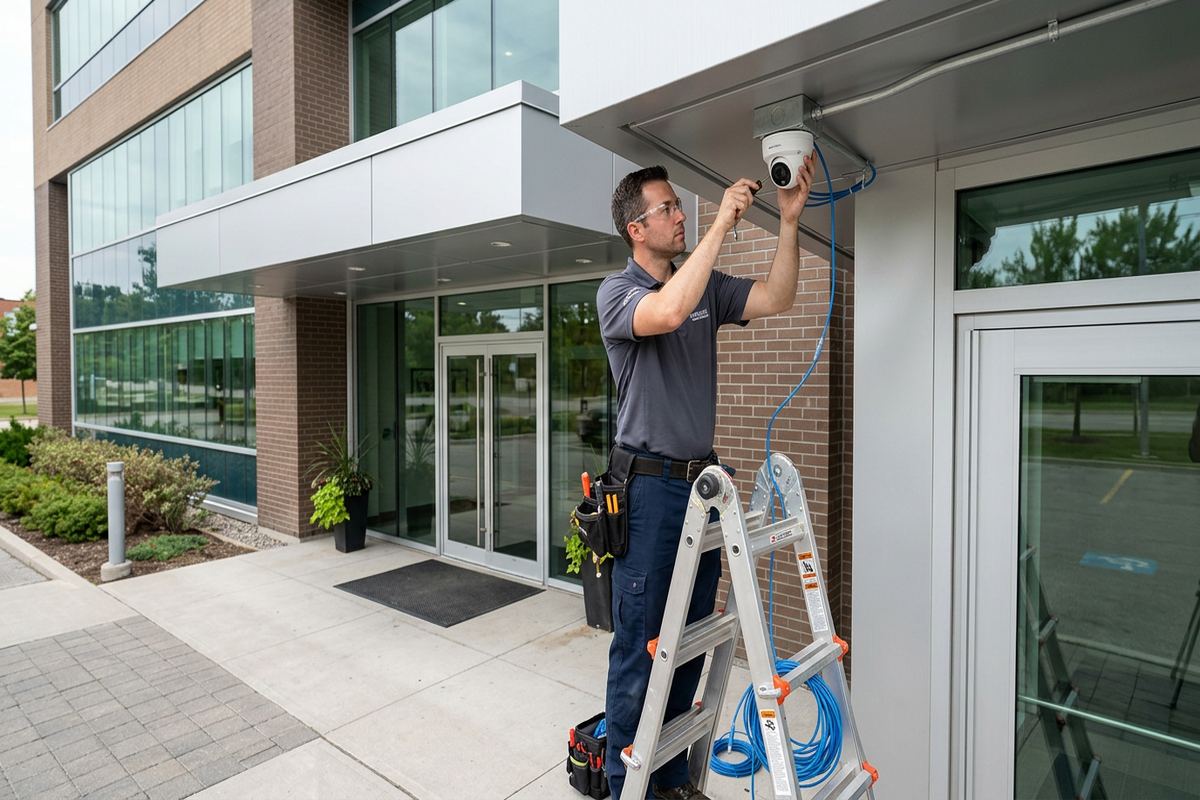
Exterior equipment in Chatham must handle winter cold, summer heat, driven rain and repeated freeze-thaw cycles. Weather resistance depends on more than the camera enclosure rating. The junction, cable entry, fasteners and mounting surface all affect whether moisture can reach a connection or work behind a bracket. UnifiedLink selects mounting methods based on the location and seals exterior penetrations using materials appropriate to the surface. Drip paths and cable entry direction are planned so water is not directed toward the device, while connections are housed rather than left exposed beside the camera.
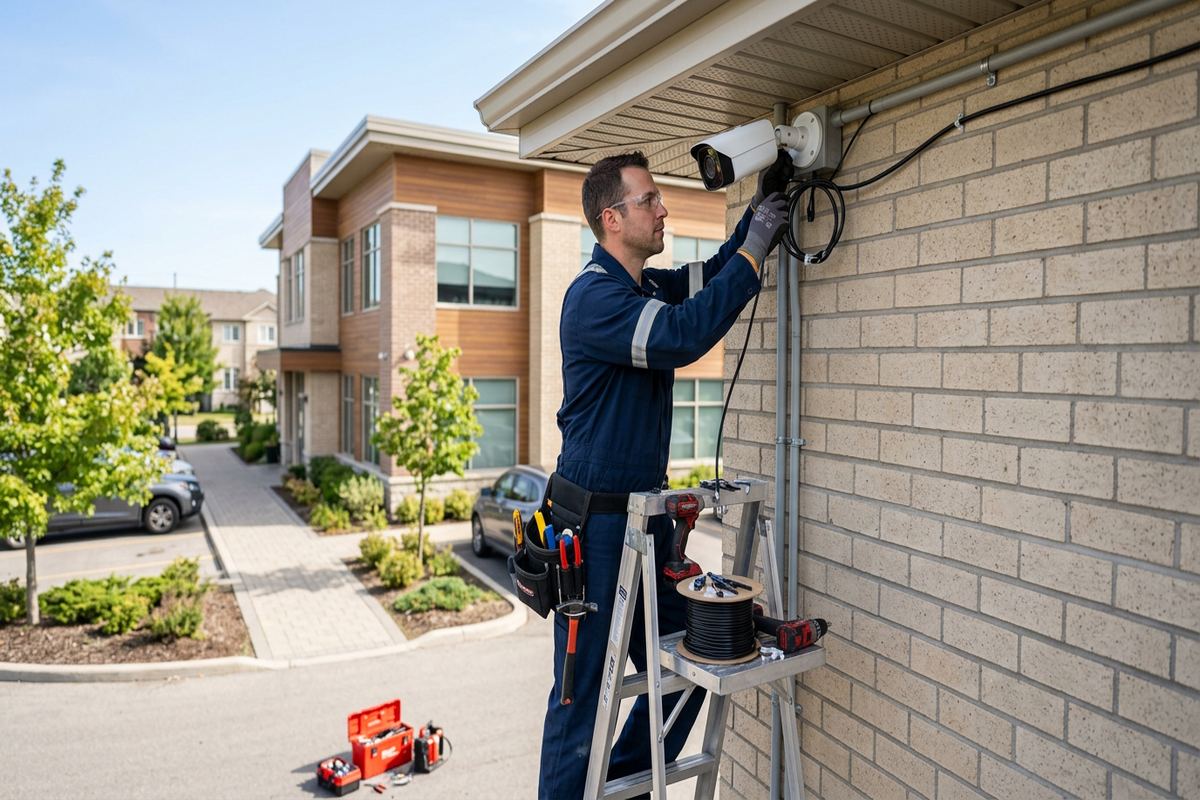
Masonry and frame construction require different fastening and cable-routing decisions. Brick should not be treated like siding, and a hollow soffit cannot provide the same support as structural wood or properly assessed masonry. Older Chatham houses may combine original brick, later additions, aluminum or vinyl siding and enclosed porches, sometimes within one proposed camera route. Installers examine the substrate before drilling, choose suitable anchors or backing, and avoid unnecessary penetrations. Where a mount must bridge uneven siding or stand clear of trim, the support and sealing details are addressed as part of the installation rather than improvised afterward.
Wind exposure and seasonal maintenance also influence placement. A camera on an open farm building, pole or detached structure can experience more movement and precipitation than one sheltered below a residential soffit. Locations near roof runoff, icicle formation or snow accumulation are avoided where practical. Cameras should remain reachable for safe lens cleaning without being easy to tamper with from ground level. At handover, the owner is shown the device locations and basic exterior checks to perform, including watching for shifted branches, debris, spider webs or damaged sealant that could affect image quality.
- Penetrations sealed for exterior exposure
- Fasteners matched to mounting material
- Connections protected inside suitable housings
- Roof runoff and ice zones avoided
- Maintenance access considered during placement
Chatham, Ontario
Outdoor camera installation in Chatham, scoped in writing first
Book a site assessment and get equipment, routes, exclusions, and warranty on paper before anything is installed.
Cabling and Network Design
A stable outdoor camera system depends on the pathway between each device and its recording or network equipment. UnifiedLink installs continuous labelled cable runs rather than creating avoidable hidden joints. Routes are planned through accessible basements, ceiling spaces, utility areas, attics or protected exterior pathways, depending on the property. Cable type and support are selected for the environment, and outdoor exposure is addressed where a route cannot remain inside. At Chatham properties with finished interiors or multiple additions, the assessment helps identify practical routes before wall penetrations or equipment locations are committed.
Power over Ethernet cameras can carry data and power on one cable, but the network still requires appropriate capacity, switching and backup planning. Camera traffic should not be added to an existing network without checking available ports, power budgets and equipment location. Recording hardware needs ventilation, physical protection and access for maintenance. For remote buildings or long farm-property distances, standard copper cable limits may require an alternative pathway, local equipment or fibre. Those decisions are made from measured routes and site conditions, not from assumptions based on a drawing or an aerial image.
Remote viewing is configured on site using the customer’s own credentials. This avoids leaving the system dependent on an installer-controlled email address or shared password that the owner cannot manage later. Where supported by the selected equipment, users can be established according to their roles so that viewing and administrative access are not unnecessarily shared. Internet upload capacity, mobile coverage and third-party app operation can affect remote performance, so these dependencies are explained. Local recording can continue independently of remote access when the selected system and network design support that arrangement.
- Continuous camera-to-equipment cable runs
- Labels applied at both cable ends
- Network and power capacity reviewed
- Long-distance routes assessed separately
- Customer credentials used during configuration
Outdoor Cameras for Farms and Facilities
Farm properties around Chatham-Kent often involve distances and operating patterns unlike residential installations. The farmhouse, lane, shop, equipment yard, fuel area and outbuildings may each need different coverage, while trees, metal structures and moving machinery can restrict routes or wireless signals. A site walk establishes which locations need identification and which only require an overview. It also determines where power, network equipment and secure recording hardware can be placed. Cameras are positioned to support normal work without creating avoidable conflicts with high vehicles, doors, augers or frequently altered storage areas.
Grain and food facilities add environmental and operational considerations. Dust, washdown practices, temperature changes, loading activity and bright task lighting can affect enclosure selection and image quality. Cable pathways may need to remain clear of production equipment, electrical systems and areas controlled by facility procedures. UnifiedLink documents exclusions and coordinates proposed routes with the customer’s designated contact. Outdoor camera installation does not replace the facility’s safety, hygiene or hazardous-location review, and equipment is not represented as suitable for a specialized area unless that suitability is specifically established in the written scope.
Industrial units and commercial yards often need coverage that supports incident review without interfering with tenants, deliveries or daily operations. Vehicle gates may benefit from a focused view in addition to a broad yard image, particularly when headlights or trailers regularly block the scene. Shared walls, leased units and common parking areas can require written landlord or property-manager approval before drilling or running cable. In Wallaceburg and Chatham commercial settings, the assessment records these constraints early so that the final proposal does not rely on inaccessible ceilings, unapproved exterior surfaces or pathways controlled by another occupant.
- Long lanes and outbuildings assessed individually
- Machinery movement considered in camera placement
- Dust and washdown exposure reviewed
- Facility restrictions documented before work
- Shared commercial areas require owner approval
Residential Camera Installation in Chatham
Residential systems work best when they cover the routes people actually use. Front doors, side gates, driveways, attached garages and rear access points are usually more valuable than broad views of unused lawn. In Prestancia, newer construction may offer accessible soffits and planned utility spaces, although the exact structure still needs inspection. Around Downtown Chatham and the Thames Campus area, older homes, conversions and additions may limit hidden pathways. The camera plan balances useful angles with a neat installation, identifying any visible conduit or surface cabling before the homeowner approves the scope.
Doorbell cameras and fixed outdoor cameras can serve different purposes. A doorbell unit provides interaction at the entrance, but its position may not capture a full driveway or side approach. A separate fixed camera can provide a more consistent overview and may connect directly to local recording equipment. Existing consumer devices can sometimes remain in use, although compatibility, account ownership and network dependence must be reviewed. UnifiedLink does not assume that every camera belongs in one application; the assessment determines whether integration is practical or whether separate systems should be clearly documented for the owner.
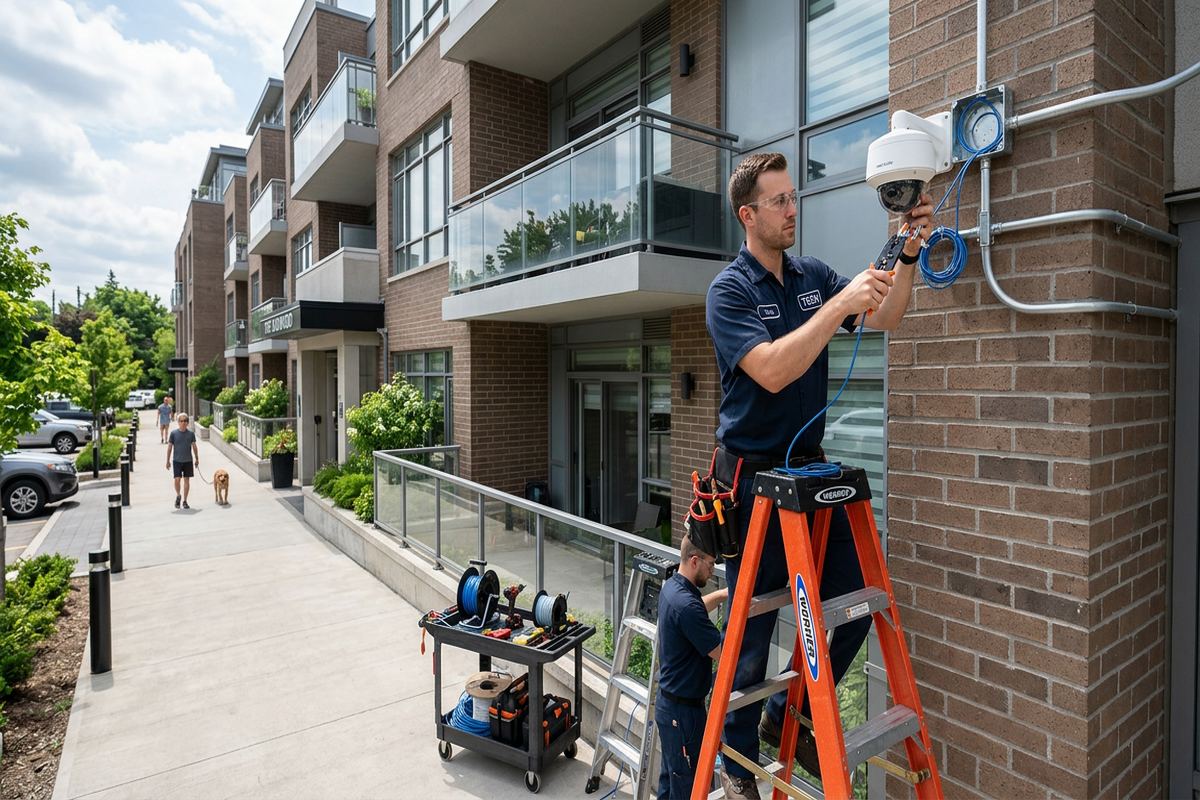
Rental and condominium properties require authority to install, especially where cables, masonry, exterior cladding or common elements will be altered. A tenant’s permission to occupy a unit is not necessarily permission to drill through an outside wall. Condo boards may also regulate camera fields of view, visible conduit and device appearance. Chatham customers should obtain written approval before scheduling work that affects controlled surfaces. Proposed positions and pathways can be documented to support that process. Any approval conditions should be provided before installation so they can be reflected in equipment placement and the final written scope.
- Entrances and approach routes prioritized
- Visible pathways disclosed before installation
- Doorbell and fixed-camera roles compared
- Existing devices reviewed for compatibility
- Condo or landlord permission confirmed
Recording, Alerts and On-Site Setup
Recording design begins with the number of cameras, image settings, desired retention and activity at the property. Storage estimates are affected by resolution, frame rate, compression, motion and how often a scene changes. A quiet side entrance and a busy commercial lot will not consume storage in the same way. Rather than promising a fixed number of days without context, UnifiedLink configures the selected recorder and explains the factors that can shorten or extend retention. Chatham owners can then make informed choices about image quality, storage allocation and any scheduled or motion-based recording options.
Motion alerts require adjustment after cameras are mounted and viewing real scenes. Trees, flags, snow, insects, headlights and changing shadows can generate unnecessary notifications if every part of the image is treated equally. Where the platform supports it, detection areas and schedules can be configured around doors, lanes or defined yard sections. Classification features may help reduce unwanted events, but they are not infallible and should not be treated as a guaranteed detection method. The customer is shown how to review events, adjust notifications and distinguish alert settings from the underlying continuous or scheduled recording configuration.
On-site setup includes checking live views, recorded playback, time settings and remote access on the customer’s supported device. Camera names are made descriptive so users can quickly identify locations such as the front drive, loading door or west yard. Administrative access is handed over using credentials owned by the customer, and installer access is not retained unless separately authorized for a defined support purpose. The as-built record identifies device locations and cable destinations, giving the Chatham property owner a practical reference for future maintenance, network changes or building work that may affect the system.
- Storage settings matched to site activity
- Detection zones adjusted on location
- Playback and timestamps checked
- Camera names reflect actual locations
- Owner-controlled credentials provided
Chatham Site Assessment and Project Handover
Before pricing, UnifiedLink completes a site assessment appropriate to the service and property. The visit or review covers intended coverage, mounting materials, cable distances, equipment location, network availability and access restrictions. For a Chatham house, that may mean tracing routes through a basement and soffit. For a farm, industrial unit or food facility, it may require reviewing several buildings and operational areas. Site assessment timing depends on the service and travel distance. Requests sent during business hours are answered the same day; after-hours requests are answered the next business day.
Following the assessment, the customer receives a written scope covering equipment, cable routes, device placement, exclusions, equipment ownership and warranty. This is the point to resolve questions about visible conduit, customer-supplied network equipment, lift access, third-party permissions or work outside the camera installation. Changes should be documented rather than left to assumptions on installation day. Having one accountable contractor for cameras, related low-voltage cabling and on-site configuration reduces gaps between trades, while the written scope makes clear which building, internet, electrical or approval responsibilities remain with the property owner.
Handover is treated as part of the installation, not an optional demonstration. The completed system is reviewed with the customer using live and recorded images from the installed Chatham property. Users are shown how to sign in, find events, export available footage and manage routine notifications within the selected platform. Cable labels and the as-built record identify where runs begin and end, and equipment ownership is confirmed. Outdoor cameras still require periodic cleaning and visual inspection, but documented placement, owner-held credentials and known cable routes make future service or expansion more straightforward.
- Assessment completed before pricing
- Scope records routes, placement and exclusions
- Installation configured and tested on site
- As-built camera and cable record supplied
- System handed over with owner credentials
Chatham neighbourhoods we cover
- Downtown Chatham
- Thames Campus area
- Maple City
- Prestancia
- Wallaceburg
Outdoor camera installation in Chatham — common questions
How many outdoor cameras does my Chatham property need?
The number depends on the entrances, approach routes and level of detail required, not simply the property size. A Chatham home may need separate views for the front entrance, driveway and side access, while a farm or commercial yard may require focused cameras at gates and loading points. A site assessment identifies blind spots and determines where one camera can serve multiple objectives without sacrificing useful detail.
Can cameras be installed on older brick homes?
Yes, but older Chatham masonry should be assessed before drilling. Brick, mortar condition, wall construction, additions and interior access all affect the fastening and cable route. Mounts require suitable anchors, protected connections and properly sealed penetrations. In some cases, a soffit, wood component or surface pathway may provide a more appropriate route. Proposed mounting surfaces and any visible cabling are identified in the written scope.
Will outdoor cameras work through a Chatham winter?
Equipment and installation details must be selected for exterior conditions, including cold, moisture and freeze-thaw cycles. Suitable cameras still depend on secure mounts, protected cable connections and sealed penetrations. Placement should avoid roof runoff, heavy ice formation and locations likely to be buried or blocked by snow. Periodic lens cleaning and exterior inspection remain necessary, particularly after storms or significant seasonal changes.
Do I need landlord or condo approval?
Approval may be required if installation affects exterior walls, masonry, cladding, common elements, shared parking or building-managed network spaces. Chatham tenants and condo owners should confirm authority before drilling or routing cable. UnifiedLink can document proposed camera locations and pathways for review, but the customer is responsible for securing permission and meeting any rules concerning appearance, privacy, recording areas or visible conduit.
Can I view my Chatham cameras remotely?
Remote viewing can be configured when the selected equipment, internet service and network support it. Setup is completed on site using credentials owned by the customer. Internet upload capacity, application availability and mobile connectivity can affect performance outside the property. Local recording may continue during an internet outage if the system is designed for local storage, although remote viewing and notifications will generally be unavailable until connectivity returns.
What do I receive after installation?
At handover, the Chatham customer receives on-site configuration, owner-controlled credentials and an as-built record showing camera locations and cable destinations. The system is reviewed using live view and recorded playback, and users are shown the available event search, export and notification functions. The written scope also records equipment ownership, exclusions and warranty details, providing a clear reference for maintenance, network changes or later expansion.
Coverage in Chatham is confirmed against the address before we quote. See everything we install in Chatham or the province-wide outdoor camera installation page.