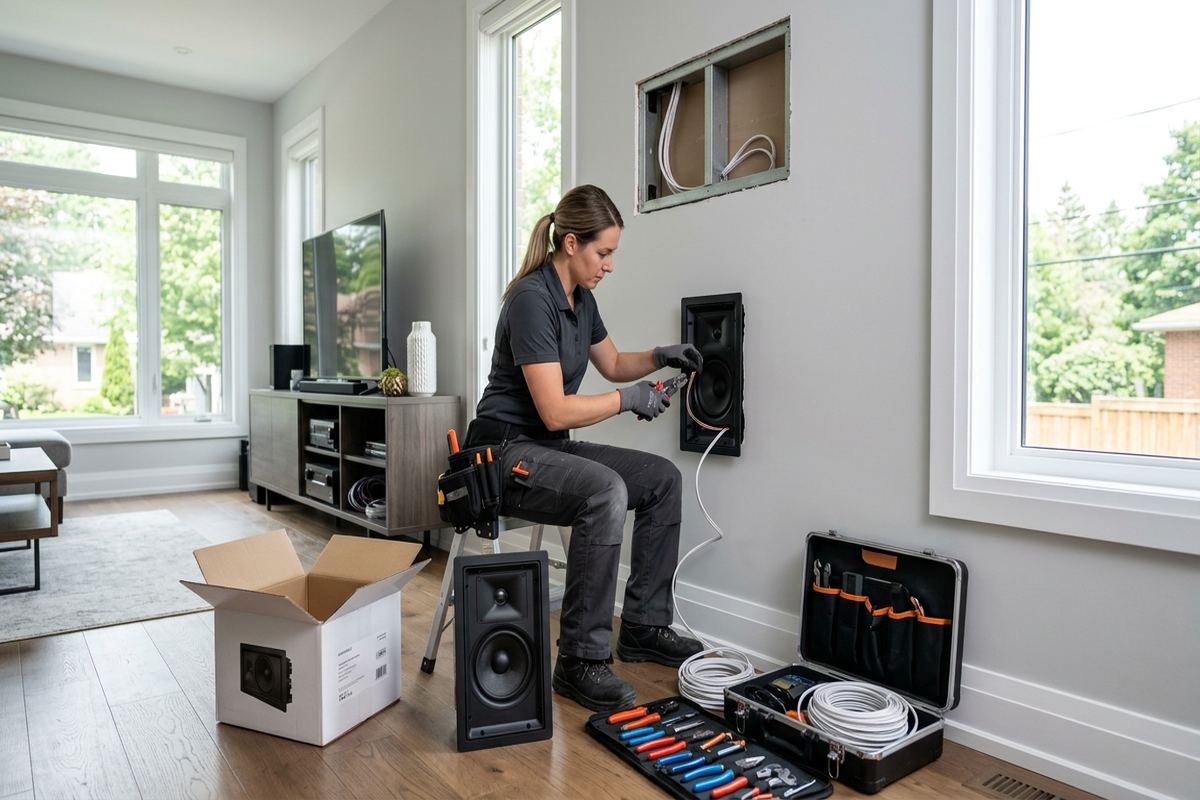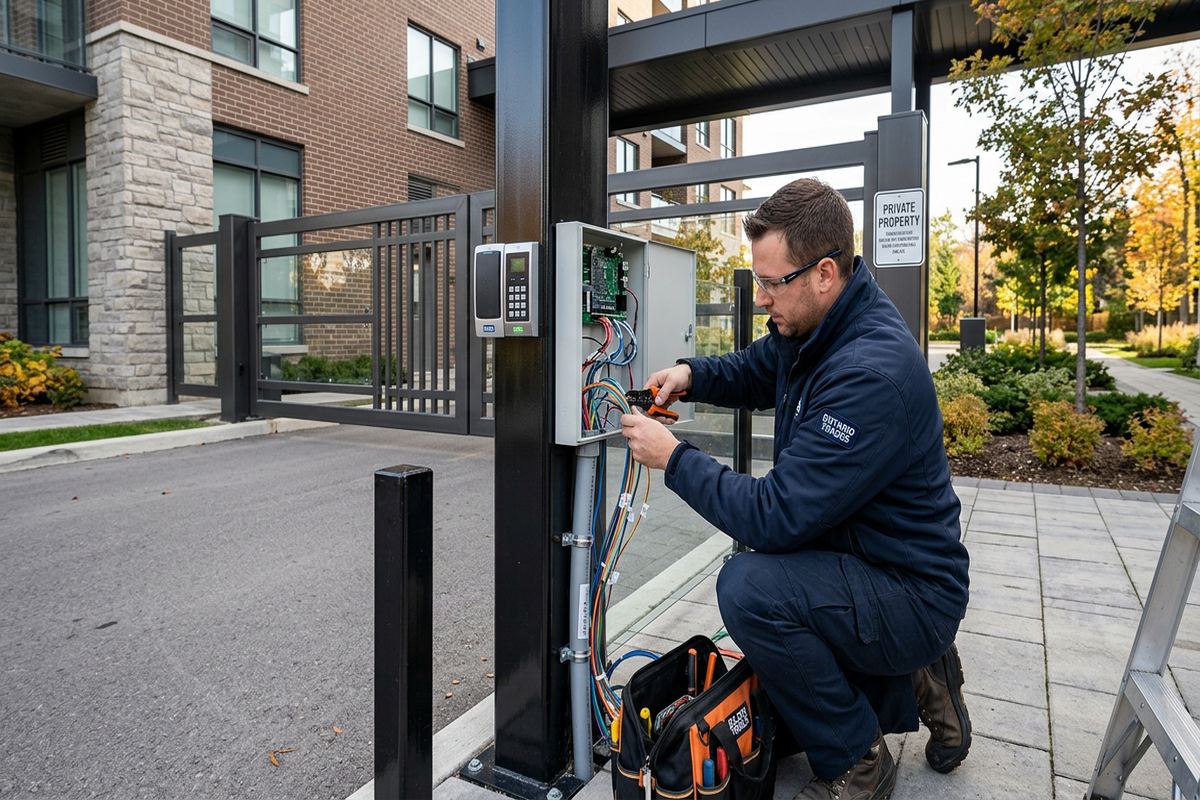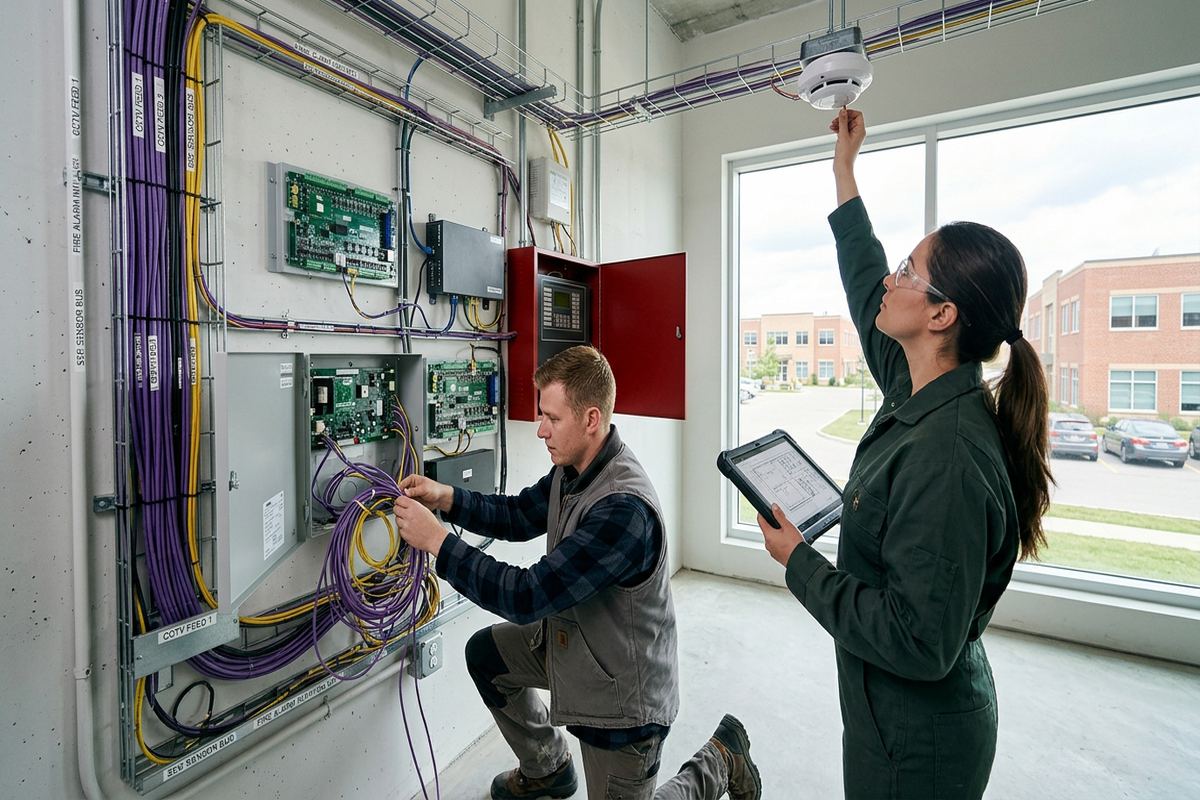
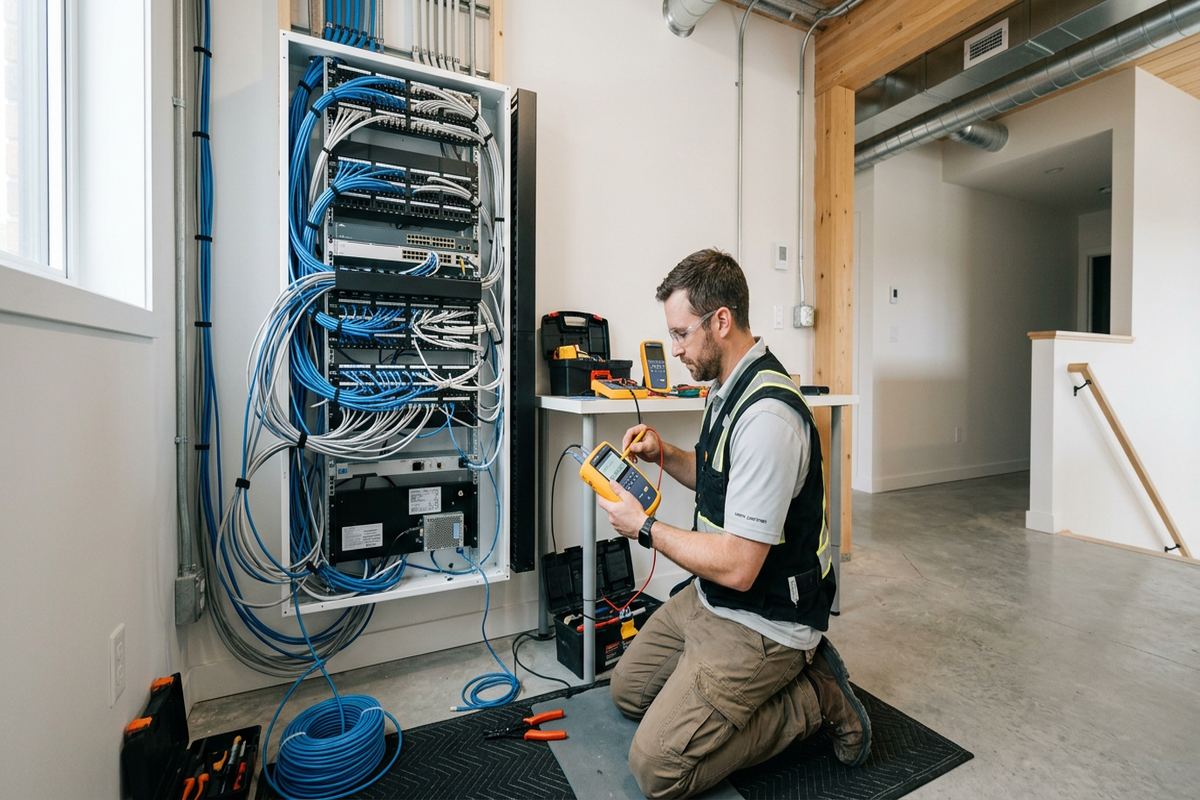
UnifiedLink installs low-voltage cabling for homes, farms, grain and food facilities, offices, shops and industrial units across Chatham-Kent. Each project starts with a site assessment to confirm cable routes, device locations, construction conditions and system requirements. Installation includes continuous labelled runs, on-site configuration where required, testing and a documented handover using the customer’s own credentials.
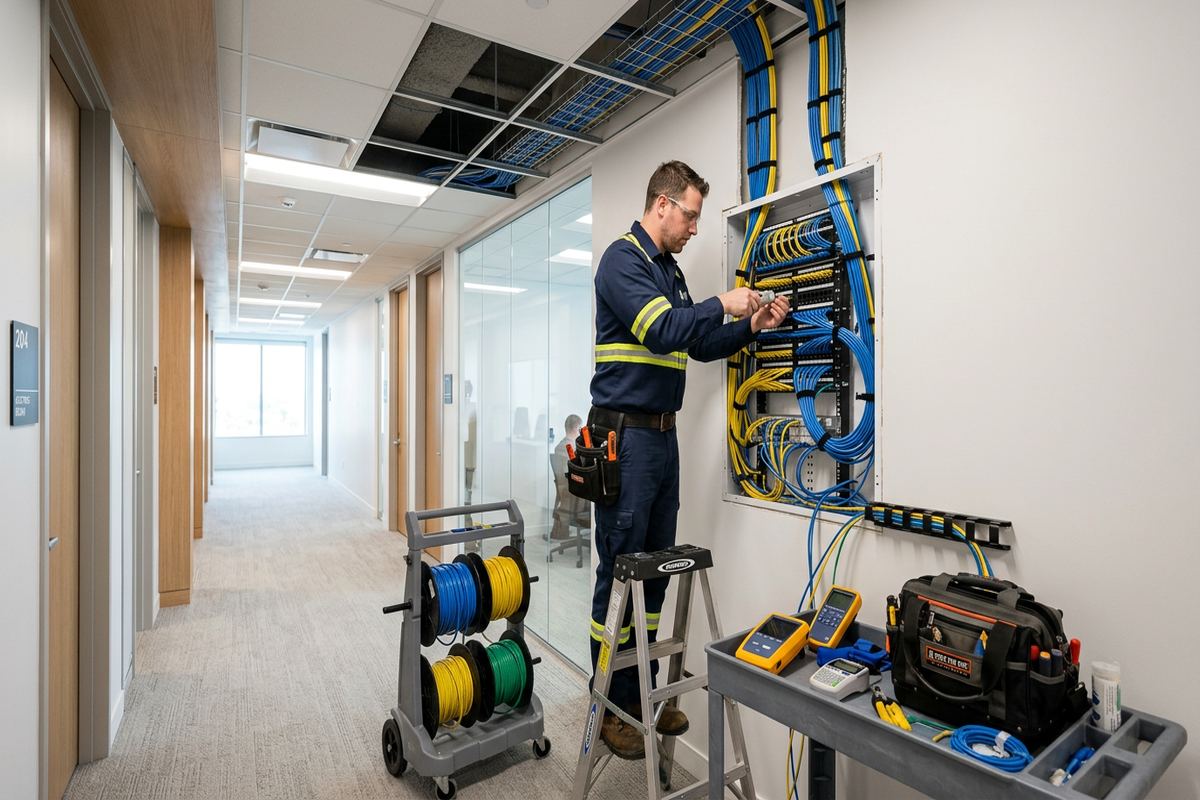
Low-Voltage Cabling Planned for Chatham Properties
Low-voltage installation begins with understanding what the cable must support, where equipment will sit and how the property is constructed. In Chatham, that may mean working through an older frame house, routing between units in a commercial strip or connecting separate buildings on a farm property. UnifiedLink assesses accessible pathways, cable lengths, termination points, power locations and environmental exposure before proposing a route. The plan accounts for finished spaces, future maintenance and practical separation from electrical wiring, motors or other interference sources that could affect system performance.
Farm properties, grain and food facilities, and older town housing create different installation constraints. Agricultural buildings may require long pathways, protected exterior transitions and careful placement around machinery or wash-down areas. Older Chatham houses can contain plaster, masonry, additions and concealed renovations that make direct routes difficult. Commercial and industrial units may offer open ceilings or cable tray, but operations, fire separations and tenant boundaries still affect the work. A site assessment identifies these conditions before pricing rather than relying on assumptions about access or construction.
The written scope records the selected equipment, proposed cable routes, device placement and known exclusions. It also states who owns the installed equipment and explains the applicable warranty. This gives a Chatham property owner a practical reference before installation starts and helps prevent uncertainty about wall openings, exposed conduit or work outside the agreed area. Where a preferred route cannot be confirmed until a ceiling or service space is accessed, that limitation is documented. Changes can then be reviewed against the scope instead of being made informally during the job.
- Site assessment completed before pricing
- Routes matched to building construction
- Device and termination locations documented
- Equipment ownership and warranty stated
- Known exclusions identified in writing
Choosing Cable and Pathways in Chatham
Cable type is selected for the connected system, required bandwidth, distance, environment and installation method. Category cable may serve data, Wi-Fi access points, cameras, phones or control devices, while alarm, speaker and access-control systems can require different conductor sizes and ratings. Outdoor, underground, plenum and riser spaces each call for suitable materials. UnifiedLink does not treat all low-voltage wire as interchangeable. Matching the cable and pathway to the application supports reliable operation and avoids installing a product that is unsuitable for moisture, sunlight, temperature changes or the building space.
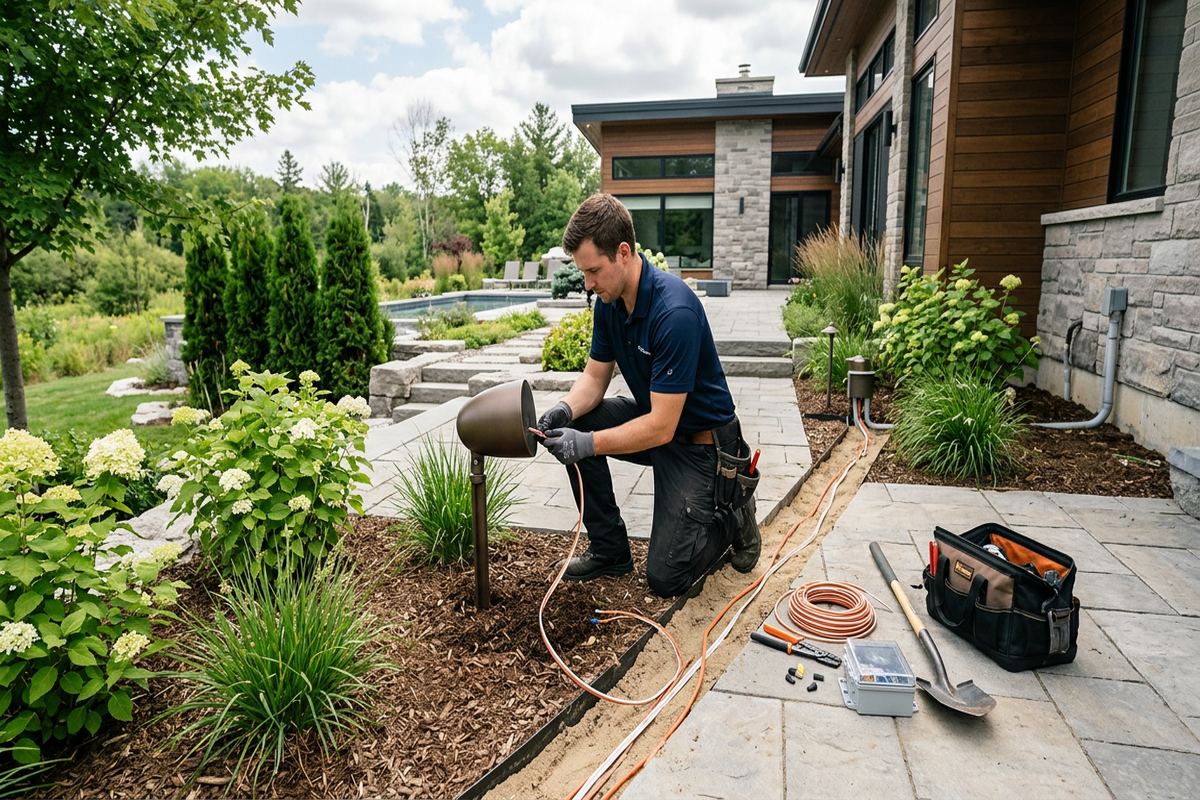
Chatham-Kent winters introduce repeated cold, moisture and freeze-thaw conditions at exterior transitions. Outdoor cable routes need suitable jackets, supported runs and entry points that shed water rather than directing it into a wall. Penetrations are drilled and sealed for the actual surface, whether the building is frame construction, brick veneer or solid masonry. Drip loops, weather-resistant fittings and protected junction locations may be used where appropriate. These details matter on detached garages, farm outbuildings and exterior camera routes, where an unsealed opening can damage both the cable and the surrounding building material.
Pathways also need to remain serviceable. Concealing every section may appear tidy, but inaccessible splices or tightly bent cable can complicate repairs and reduce performance. Continuous labelled cable runs are preferred between defined termination points, with protection added where a run could be struck, crushed or exposed to animals. Conduit, raceway, trays or structural cavities may be used depending on the site. In finished Chatham homes, route planning balances appearance with reasonable access, while commercial installations often prioritize organized pathways that another technician can identify and maintain later.
- Application-specific cable selection
- Exterior-rated materials where required
- Sealed and weather-managed penetrations
- Protected pathways through exposed areas
- No concealed intermediate splices
Cabling for Older Chatham Homes
Older housing in Downtown Chatham and established areas around Maple City can contain construction from several renovation periods. Wall cavities may be interrupted by blocking, plaster and lath, masonry chimneys, narrow joist spaces or additions built on different foundations. Before drilling, likely pathways are reviewed from basements, attics, utility spaces and existing openings. The aim is to limit unnecessary disturbance while still creating a supportable route. If access would require significant cutting or work by another trade, that condition is explained and included as an exclusion or coordination item in the written scope.
Home cabling commonly supports wireless access points, security cameras, alarm devices, televisions, work areas and network equipment. Locating all home-run cables in a suitable central area makes testing, labelling and future changes more manageable. That location should provide ventilation, power, physical access and enough room for terminations without placing equipment beside water lines or other obvious hazards. In a finished basement, closet or utility room, the pathway must also account for doors, shelving and everyday use. Planning these details avoids a cabinet or cable bundle becoming an obstacle after handover.
Rental homes, condominiums and multi-unit properties can require approval before cable routes or exterior devices are installed. A tenant’s permission does not necessarily authorize drilling through common walls, brickwork, roofs or shared corridors. Chatham landlords and condominium owners should confirm responsibilities for common elements and restoration before work is scheduled. UnifiedLink can document proposed locations and routes so the customer has useful information for an approval request. Work proceeds within the approved scope, with attention to neighbouring units, shared fire separations and areas where access belongs to the property manager rather than the occupant.
- Attic and basement pathways assessed
- Openings limited where practical
- Central termination area planned
- Landlord or condo approval confirmed
- Shared building areas respected
Chatham, Ontario
Low-voltage cabling installation in Chatham, scoped in writing first
Book a site assessment and get equipment, routes, exclusions, and warranty on paper before anything is installed.
Farm, Grain and Food Facility Cabling
Agricultural and processing sites around Chatham-Kent often extend beyond one building and include equipment that produces dust, vibration, electrical noise or regular temperature changes. A cable route suitable for an office may not be appropriate beside conveyors, motors, grain handling equipment or wash-down areas. The assessment considers physical protection, separation, mounting surfaces and the operating environment. Where a pathway crosses an active work zone, routing and scheduling must reduce interference with normal operations. Any requirements belonging to facility management, electrical contractors or other trades are identified before the low-voltage installation begins.
Connections between farm buildings require particular care. Copper data cable has distance and electrical-environment limits, and separate structures can have different grounding conditions. Depending on the application and route, fibre or a wireless bridge may be more appropriate than extending copper between buildings. Underground pathways must be confirmed before pulling cable, and outdoor transitions need protection from water, sunlight, impact and freeze-thaw movement. UnifiedLink reviews the intended devices and distances rather than assuming one medium will work everywhere. The selected approach is recorded so the owner understands both the installed link and its boundaries.
Food and grain facilities may have site rules for hygiene, dust management, access, shutdowns and work near production equipment. Cable supports, enclosures and device locations should suit the area instead of obstructing cleaning or creating avoidable collection points. Installation timing may also depend on operating schedules and access to controlled spaces. The written scope can distinguish UnifiedLink’s work from electrical supply, structural modifications, lift access or specialized sealing performed by others. This coordination provides one defined low-voltage responsibility while recognizing that an operating Chatham-Kent facility can involve several authorized trades and internal contacts.
- Routes separated from machinery where practical
- Building-to-building media evaluated
- Outdoor transitions protected and sealed
- Facility access rules incorporated
- Trade responsibilities defined before work
Commercial Cabling Across Chatham
Shops, offices and service businesses in Downtown Chatham or near the Thames Campus area often need cabling added without disrupting customers, staff or neighbouring tenants. Existing ceilings, utility rooms and shared risers are inspected before routes are confirmed. A commercial strip may also involve landlord rules for roof spaces, exterior walls, signage zones and common electrical rooms. UnifiedLink documents the proposed pathway and identifies where customer or property-management approval is needed. Installation sequencing can then follow permitted access periods and avoid leaving open ceilings, unsecured equipment or unfinished terminations in occupied areas.
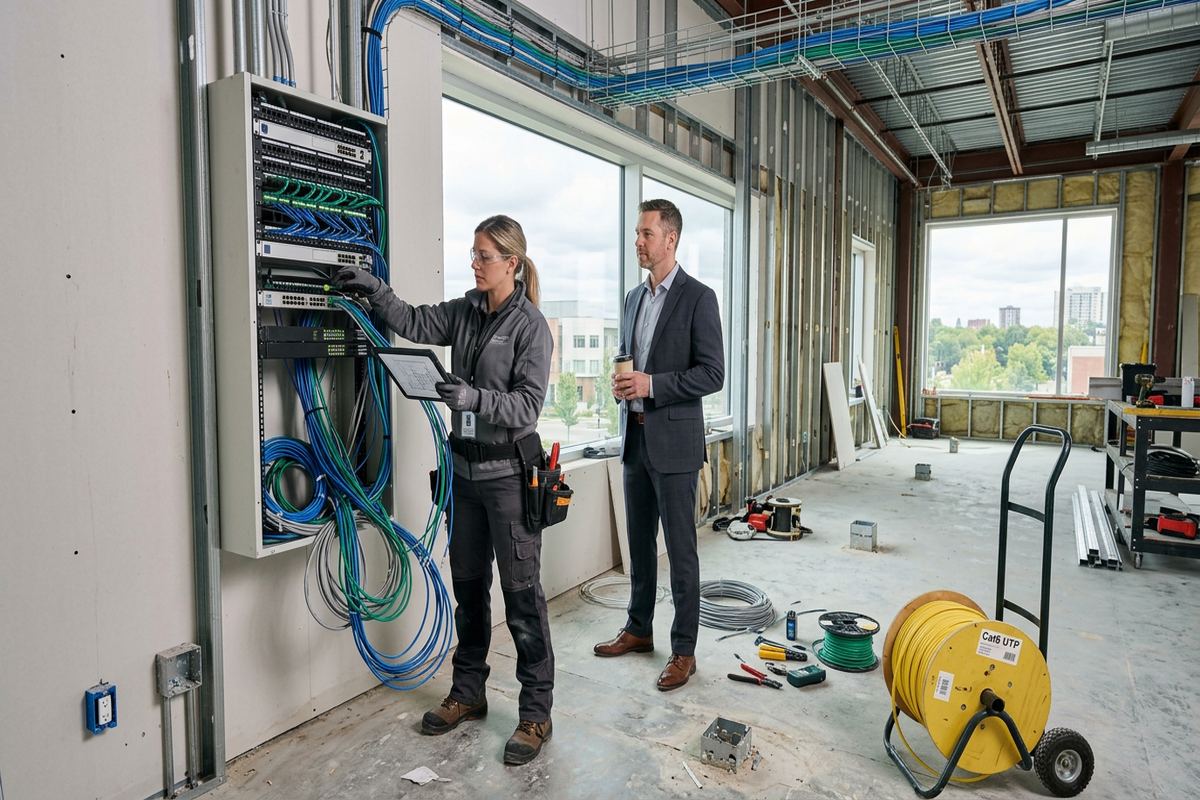
Industrial units generally offer different opportunities and risks. High ceilings and exposed structure can simplify routing, yet cable still needs proper support, separation and protection from forklifts, stored material, doors and production equipment. Device drops should not hang loosely or rely on ceiling grid for support. Where conduit, trays or lifts are required, those details are addressed during assessment. The route must also allow practical termination at racks, cabinets, cameras, access-control panels or wireless access points. Labels at both ends help maintenance staff identify each run without tracing an unmarked bundle through the facility.
A relocation or tenant improvement is a useful time to organize existing cabling. Abandoned, damaged or unidentified wire can crowd pathways and make troubleshooting difficult, but removal should be confirmed with the owner because some cable may serve another tenant or building system. New runs are labelled consistently and terminated at agreed locations. If active equipment is being moved, configuration and outage requirements are discussed in advance. Chatham business owners receive an as-built record at handover, providing a practical reference for ports, device locations and routes that were visible or confirmed during the completed work.
- Tenant and landlord requirements reviewed
- Work planned around occupied areas
- Cable supported independently
- Both ends labelled consistently
- As-built information supplied at handover
Installation, Termination and Testing
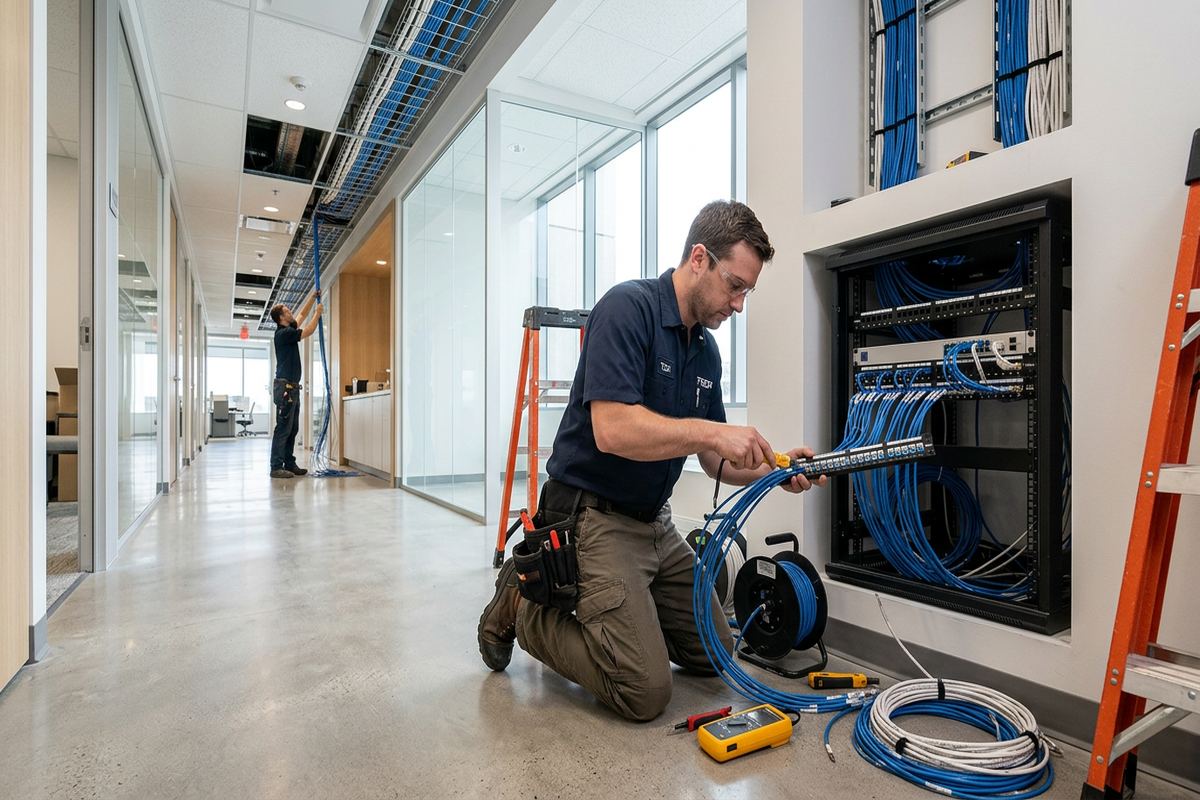
Once the route is approved, cable is installed as a continuous run between the defined endpoints. Supports are selected for the structure and spacing, with bend radius and pulling tension kept within the cable’s requirements. Low-voltage cable is not draped over ceiling tiles, attached casually to unrelated services or left vulnerable at wall transitions. Penetrations are managed according to the surface and location. Where fire-rated assemblies are involved, the scope must identify the required treatment and whether another qualified trade or building representative needs to approve the selected method before the pathway is closed.
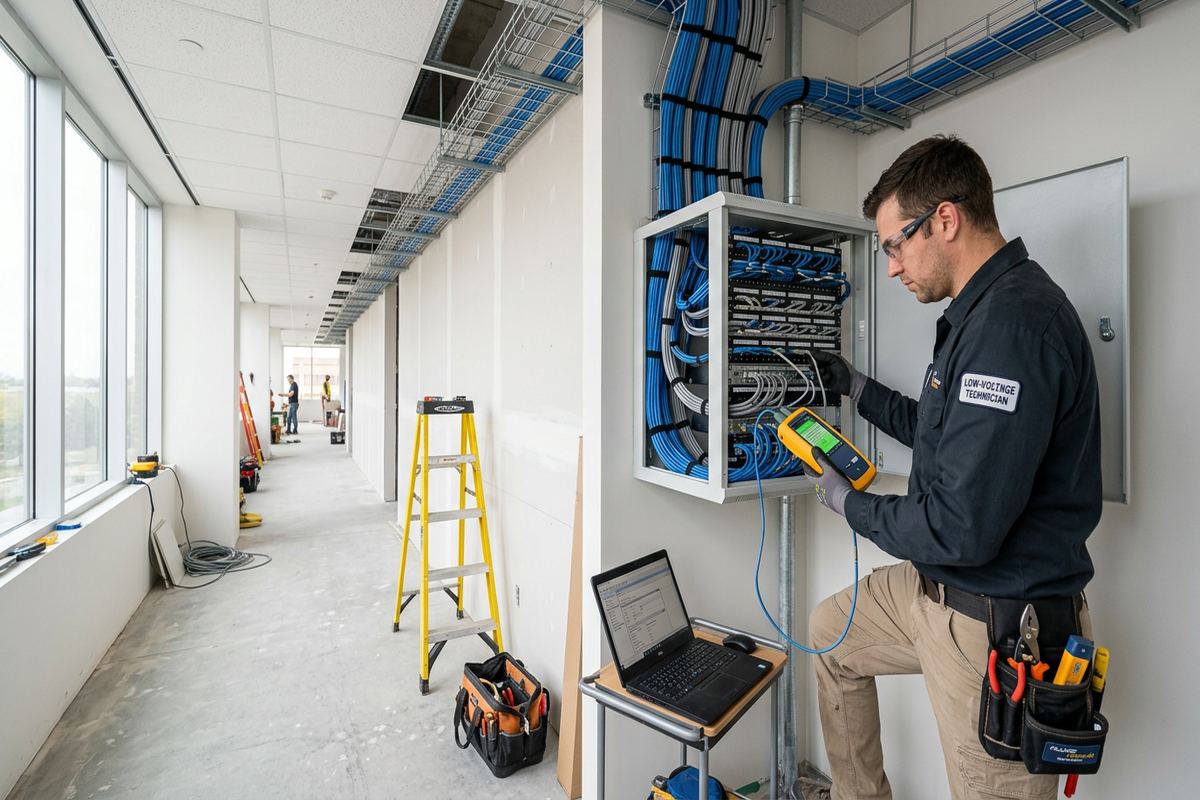
Termination quality affects the entire connection. Data jacks, patch panels, plugs, control panels and field devices are completed to the relevant wiring pattern and manufacturer requirements. Labels correspond at both ends and follow a format that makes sense for the property, such as room, device or rack position. Cable management leaves reasonable service space without oversized coils hidden above ceilings. In Chatham homes and businesses, this organized approach is particularly useful when several systems share a central cabinet. It allows later changes without guessing which cable serves a camera, access point or workstation.
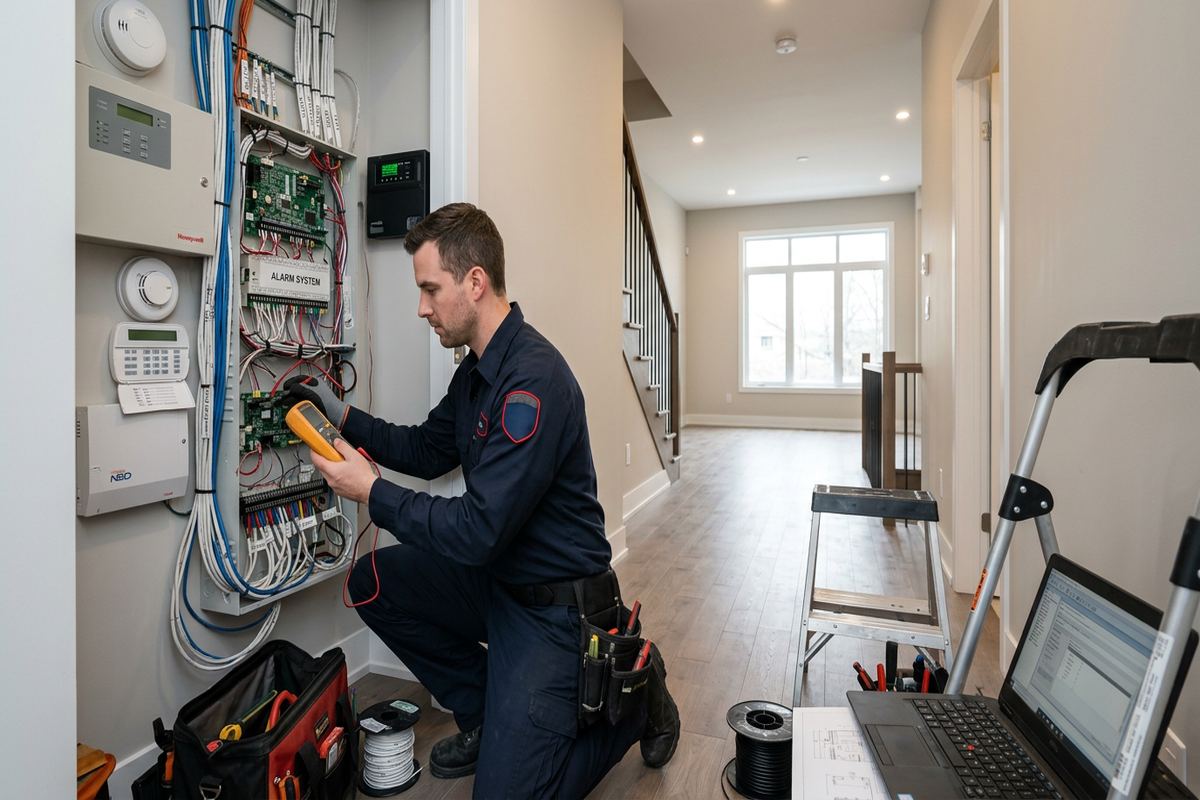
Testing is matched to the type of cabling and connected system. Each completed run is checked for continuity, termination faults and functional operation as applicable. Network links may require cable verification and device connectivity checks, while alarm, access-control, audio or camera wiring has system-specific checks. Results that indicate a fault lead to correction before handover rather than an unmarked exception. Testing cannot guarantee the future performance of customer-supplied devices, internet service or equipment outside the scope, so those dependencies are identified. The final record reflects installed endpoints and known equipment connections.
- Continuous runs between planned endpoints
- Terminations completed to system requirements
- Labels matched at both ends
- Cable-specific checks performed
- Faults corrected before handover
Configuration and Handover in Chatham
Cabling often forms part of a working system rather than ending at an empty jack. Where configuration is included, UnifiedLink connects and sets up the agreed cameras, access points, network devices, alarm components, displays or audio equipment on site. The customer supplies or creates their own administrative credentials, so control does not depend on an installer-owned account. Network details, application access and remote features are addressed only where included in the scope. Services controlled by internet providers, software vendors or monitored alarm companies remain subject to those providers’ requirements and availability.
Handover gives the Chatham customer a usable record rather than a collection of unidentified wires. The as-built information notes installed cable endpoints, labels and device locations, along with relevant route information that could be confirmed during the work. The customer also receives their own credentials for configured systems and an explanation of normal operation. Equipment ownership and warranty terms follow the written scope. If a device, subscription or service belongs to another provider, that distinction is stated so future support requests can be directed to the correct party without unnecessary investigation.
One accountable contractor can manage the agreed low-voltage scope across cabling, device mounting and on-site configuration. This reduces gaps between a cable installer and a separate system provider, while still respecting work that must be completed by electricians, internet carriers, property managers or specialized trades. Questions identified at handover are compared with the approved scope and tested installation. If the owner later expands the property, the labels and as-built record provide a starting point for planning new runs, relocating equipment or extending coverage without treating the existing system as undocumented.
- On-site configuration when included
- Customer-controlled administrative credentials
- As-built cable and device record
- Ownership and warranty terms confirmed
- Single contact for agreed low-voltage work
Arranging a Chatham Cabling Assessment
A useful assessment starts with the intended outcome. Property owners should identify the devices to be connected, preferred locations, current problems and any future additions already being considered. Floor plans, renovation drawings and photographs can help, but they do not replace checking actual access and construction. For a Chatham house, the review may focus on attic, basement and exterior routes. At a farm or commercial site, it may include separate buildings, ceiling heights, operating areas and network rooms. Site assessment timing depends on the service required and travel distance.
Before the visit, the customer should confirm who can authorize drilling, equipment placement and access to shared spaces. Landlord or condominium approval may be necessary, particularly for exterior mounting or common areas. Commercial customers may need to arrange escorts, keys, lift access or shutdown windows. At grain and food facilities, relevant safety and hygiene requirements should be shared in advance. Existing passwords are not needed simply to inspect cable pathways, although configuration requirements should be discussed. Clear access to panels, cabinets and proposed endpoints helps the assessment reflect real conditions rather than incomplete assumptions.
After the assessment, UnifiedLink prepares pricing based on a written scope covering equipment, cable routes, device placement, exclusions, equipment ownership and warranty. Requests sent during business hours are answered the same day; after-hours requests are answered the next business day. This response wording applies to the initial request, not a guaranteed visit or completion time. Assessment timing and installation scheduling depend on the service and travel distance. Chatham customers can review the scope, ask about route choices and confirm approvals before authorizing work, giving both parties a defined basis for installation and handover.
- Intended devices and locations reviewed
- Access and approval needs confirmed
- Operating constraints discussed in advance
- Written scope supplied before installation
- Scheduling depends on service and distance
Chatham neighbourhoods we cover
- Downtown Chatham
- Thames Campus area
- Maple City
- Prestancia
- Wallaceburg
Low-voltage cabling installation in Chatham — common questions
What types of low-voltage cable do you install in Chatham?
UnifiedLink installs cabling for data networks, Wi-Fi access points, security cameras, alarms, access control, audio, displays and related low-voltage systems. The cable is selected for the device, distance, pathway and environment. Chatham projects may require indoor, outdoor, riser, plenum or protected cable routes. A site assessment confirms the appropriate material and termination method before pricing.
Can you run cable through an older Chatham house?
Yes, where suitable pathways can be identified. Older Chatham homes may contain plaster and lath, masonry, blocking, additions or finished spaces that restrict access. Attics, basements, closets and existing service openings are assessed before a route is proposed. If substantial cutting, restoration or work by another trade would be required, it is discussed and recorded in the written scope.
How do you protect exterior cable from Chatham winters?
Exterior routes are planned for moisture, cold, sunlight and freeze-thaw movement. Depending on the location, work may include outdoor-rated cable, conduit, supported runs, drip loops, weather-resistant fittings and sealed wall penetrations. The mounting method is matched to frame, brick or masonry construction. No exterior installation is treated as permanently maintenance-free, so accessible routing and periodic visual checks remain useful.
Do I need landlord or condo approval?
Approval is often required when work affects exterior walls, common areas, shared ceilings, fire separations or building-owned pathways. Chatham tenants and condominium owners should confirm authorization before installation. UnifiedLink can document proposed cable and device locations for the approval process, but the property owner, landlord or condominium corporation determines what is permitted. Required approvals should be in place before drilling or mounting begins.
Can you connect a farmhouse to an outbuilding?
A connection may use fibre, suitable copper cabling or a wireless bridge, depending on distance, pathway, electrical conditions and the required service. Separate Chatham-Kent farm buildings should not automatically be connected with ordinary indoor copper cable. The assessment reviews underground pathways, exterior exposure, device requirements and building separation before recommending an approach. Electrical supply or trenching by others is identified where applicable.
What do I receive when installation is finished?
The handover includes labelled cable endpoints, functional checks appropriate to the installed system and an as-built record of confirmed routes and device locations. Where configuration is included, the system is handed over using the customer’s own credentials. Chatham customers also receive the ownership and warranty information stated in the written scope. Third-party subscriptions, internet service and provider-owned equipment remain subject to their separate terms.
Coverage in Chatham is confirmed against the address before we quote. See everything we install in Chatham or the province-wide low-voltage cabling installation page.