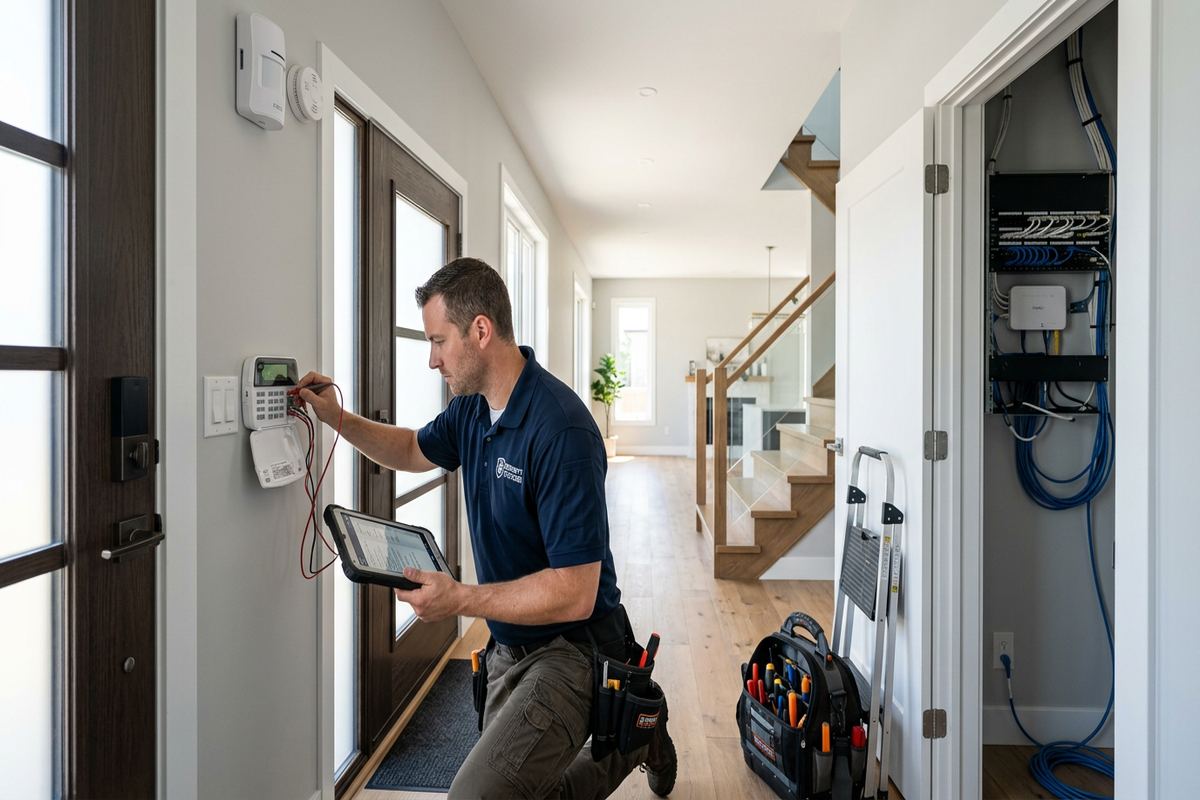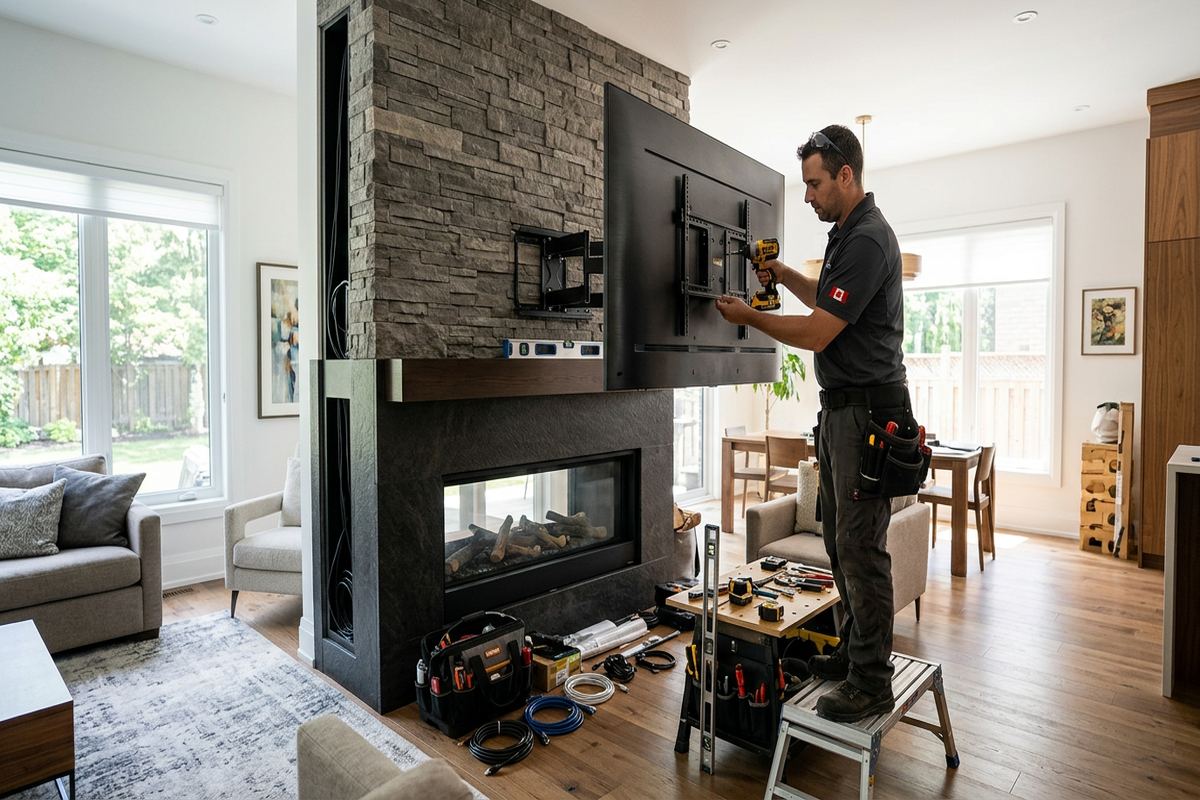
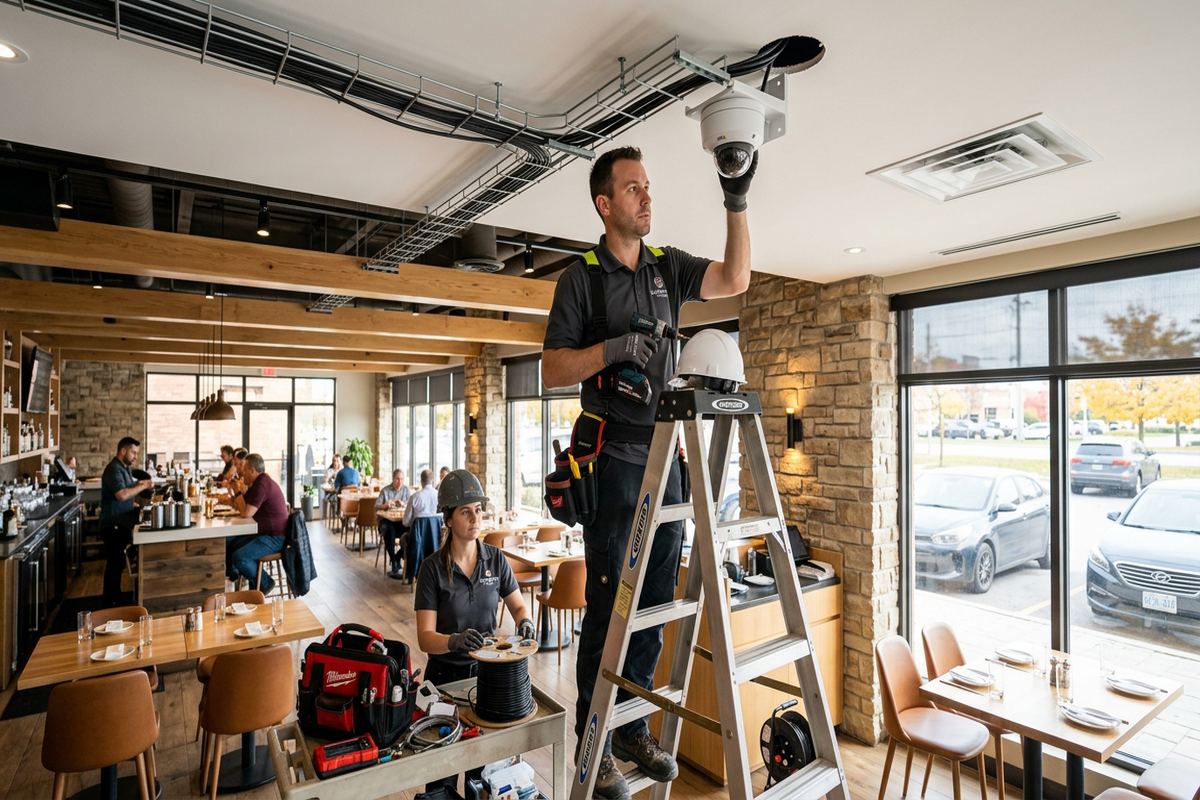
UnifiedLink installs home security camera systems in Chatham and surrounding Chatham-Kent communities. Each project starts with a site assessment to identify useful views, practical cable routes, recording needs and network requirements. The result is a clearly scoped system designed around the property, whether it is an older town home, a newer subdivision house or a rural farm residence.
Planning Home Security Cameras in Chatham
Effective camera coverage begins with the activity you need to see, not with a predetermined camera count. During a Chatham site assessment, we review doors, driveways, detached buildings, side passages and other likely approaches. We consider whether each view should identify a person, show general movement or capture a vehicle entering the property. Camera height, lens selection and lighting all affect that result. This process reduces blind spots while avoiding overlapping views that add equipment without providing useful detail. Assessment findings are used to prepare the written project scope before pricing.
Chatham properties vary enough that the same layout cannot be applied everywhere. Older town housing may have narrow side yards, finished basements and limited pathways for new cable. Newer homes in Prestancia or Maple City may provide accessible utility spaces but still require careful routing around insulation, vapour barriers and completed ceilings. Rural homes can involve long driveways, outbuildings and greater distances between the recorder and camera locations. We check construction, access and network conditions before proposing equipment, routes or mounting methods, keeping the design grounded in the actual property.
The written scope records the equipment, cable routes, device placement and known exclusions for the installation. It also identifies equipment ownership and applicable warranty details so responsibilities remain clear. If landscaping, inaccessible cavities, rented equipment or unfinished electrical work limits a proposed route, that limitation is documented instead of being discovered during installation. Homeowners can review the plan and request changes before work begins. This is particularly useful for phased projects, renovations or properties with detached structures, where future cameras and spare pathways may need consideration even when they are not included initially.
- Door, driveway and side-yard coverage review
- Lens and mounting-height planning
- Network and recording requirement assessment
- Written scope before pricing
- Documented exclusions and warranty terms
Camera Placement for Chatham Properties
Placement decisions should reflect what a homeowner expects to verify later. A wide driveway image may confirm that a vehicle arrived, while a tighter view near a door can provide more identifying detail. We plan those functions separately when necessary rather than asking one camera to cover too much. In Downtown Chatham, close neighbouring buildings, sidewalks and shorter setbacks can constrain angles. Cameras are aimed to prioritize the customer’s property and relevant access points. Where practical, positioning also limits unnecessary views into neighbouring windows, yards or other areas unrelated to the security purpose.
Farm properties around Chatham-Kent often need a different coverage strategy from town homes. A residence, workshop, machinery area and long lane may not be served reliably by cameras attached only to the house. Cable distance, available power, network links, lighting and physical mounting points must be reviewed together. Grain and food facilities nearby also illustrate why dust, vehicle movement and broad yards can complicate image quality, although a residential system has different operational requirements. We identify where fixed views are useful and where a dedicated link or additional network equipment may be required.
Night performance depends on more than a camera’s published low-light features. Porch fixtures, streetlights, reflective siding, soffits and nearby walls can create glare or uneven illumination. Infrared light may reflect from eaves, downspouts or dirty covers, reducing useful detail. During planning, we look at the expected nighttime scene and choose positions that reduce these conflicts. A camera should not be mounted merely because the location is easy to reach. When existing lighting is unsuitable, the scope can identify lighting changes or alternative positions without assuming that software enhancement will recover detail that was never captured.
- Separate overview and identification views
- Reduced glare from walls and soffits
- Coverage for lanes and detached buildings
- Consideration of neighbouring privacy
- Night-view and lighting assessment
Exterior Camera Mounting in Chatham Weather
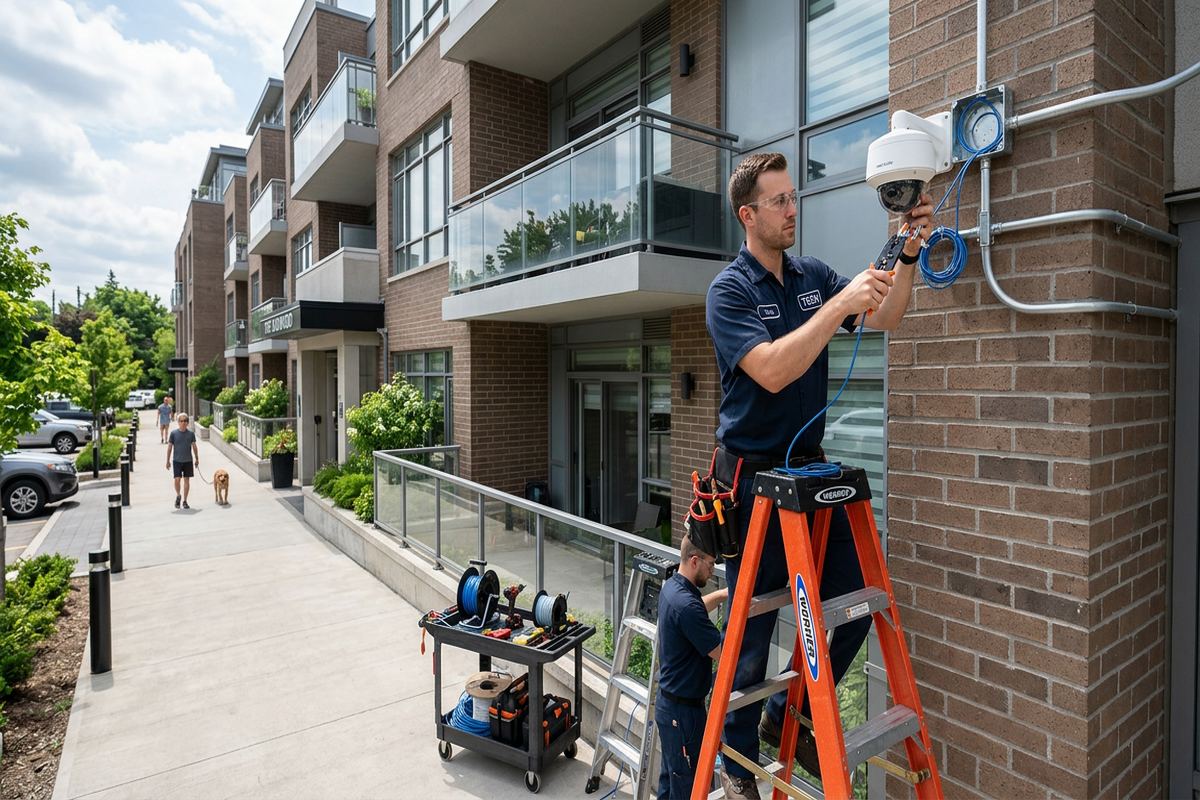
Exterior installations in Chatham must account for winter moisture, wind and repeated freeze-thaw conditions. Water that enters around a fastener or cable opening can expand, damage finishes and reach the connection behind a camera. We select mounting locations and sealing methods according to the surface rather than relying on a bead of sealant as the only protection. Cable entries are positioned and finished to shed water, while exposed connections are placed in suitable enclosures. Drip paths, downward-facing openings and mechanically secure mounts help the installation remain serviceable through seasonal temperature changes.
Masonry and frame construction require different fastening and routing decisions. Brick should be assessed for sound mounting areas, appropriate anchors and cable-entry locations that limit unnecessary damage. Frame walls may allow concealed routes, but siding, sheathing, insulation and interior finishes still affect access. Older Chatham housing can include additions built with different materials from the original structure, so assumptions based on one wall may not apply elsewhere. We inspect each intended position before drilling. Where a safe concealed route is not practical, a protected surface route can be documented and agreed upon in advance.
Soffit mounting can provide a clean appearance, but the soffit material alone may not support a camera securely. The mount needs suitable backing, and the chosen angle must keep the roofline from dominating the image or reflecting infrared light. On exposed walls, cameras must also remain reachable for cleaning and future service without being easy to tamper with. We balance those needs against ladders, snow accumulation and landscaping. The completed work includes sealed penetrations and orderly cable treatment, with exterior details checked before the system is placed into regular use.
- Sealed exterior cable penetrations
- Fasteners selected for the mounting surface
- Weather-protected cable connections
- Mounting planned for future service
- Freeze-thaw exposure considered
Chatham, Ontario
Home security camera installation in Chatham, scoped in writing first
Book a site assessment and get equipment, routes, exclusions, and warranty on paper before anything is installed.
Cabling and Network Design for Chatham Homes
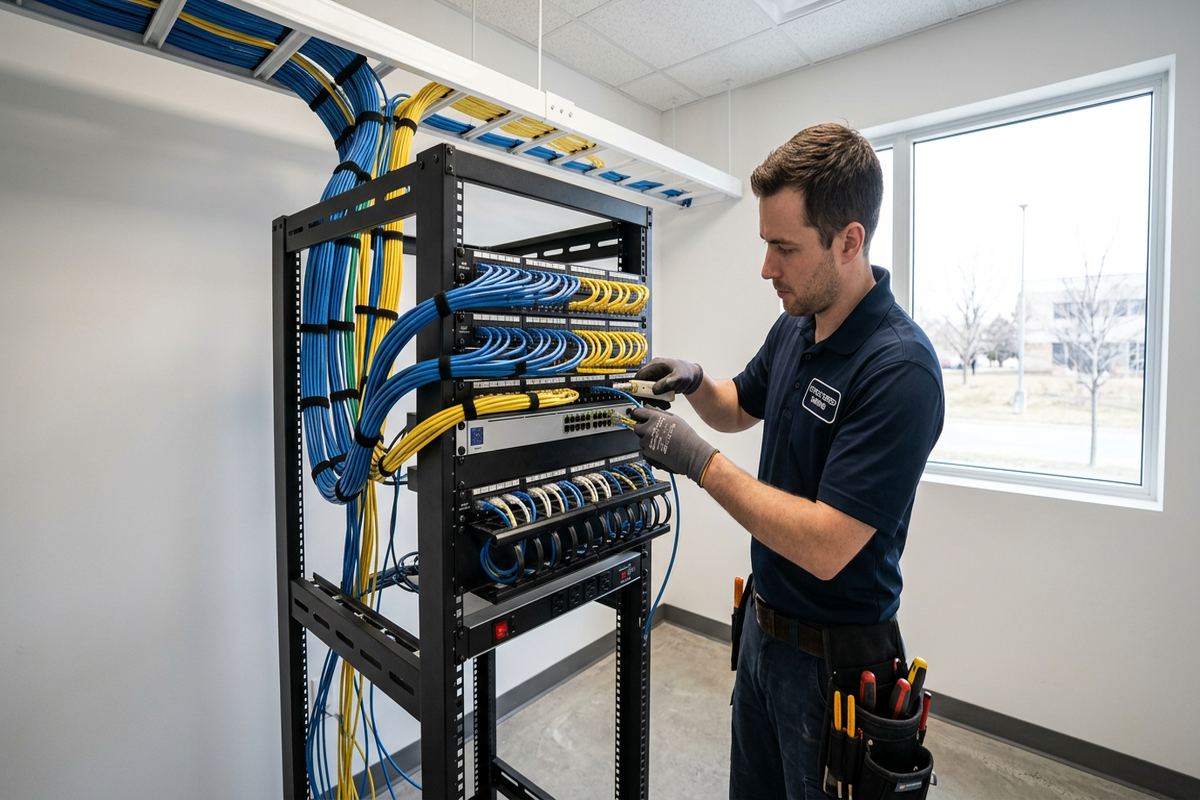
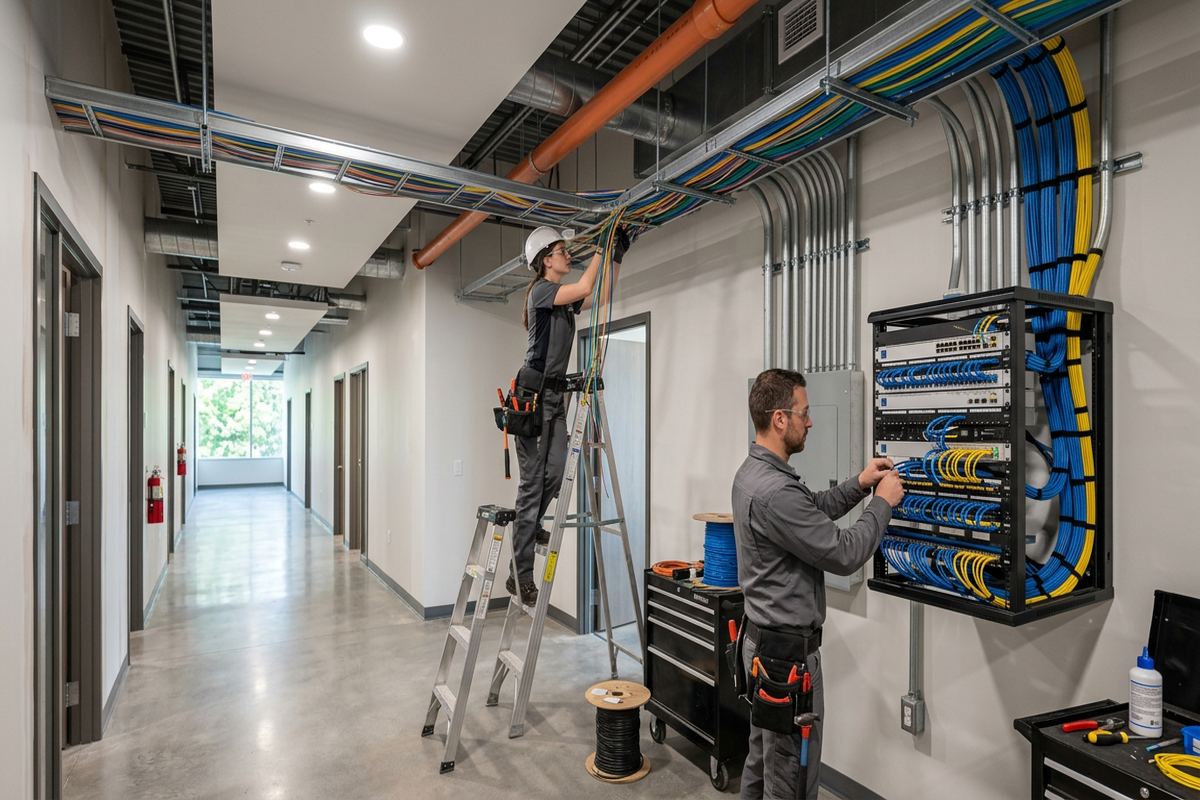
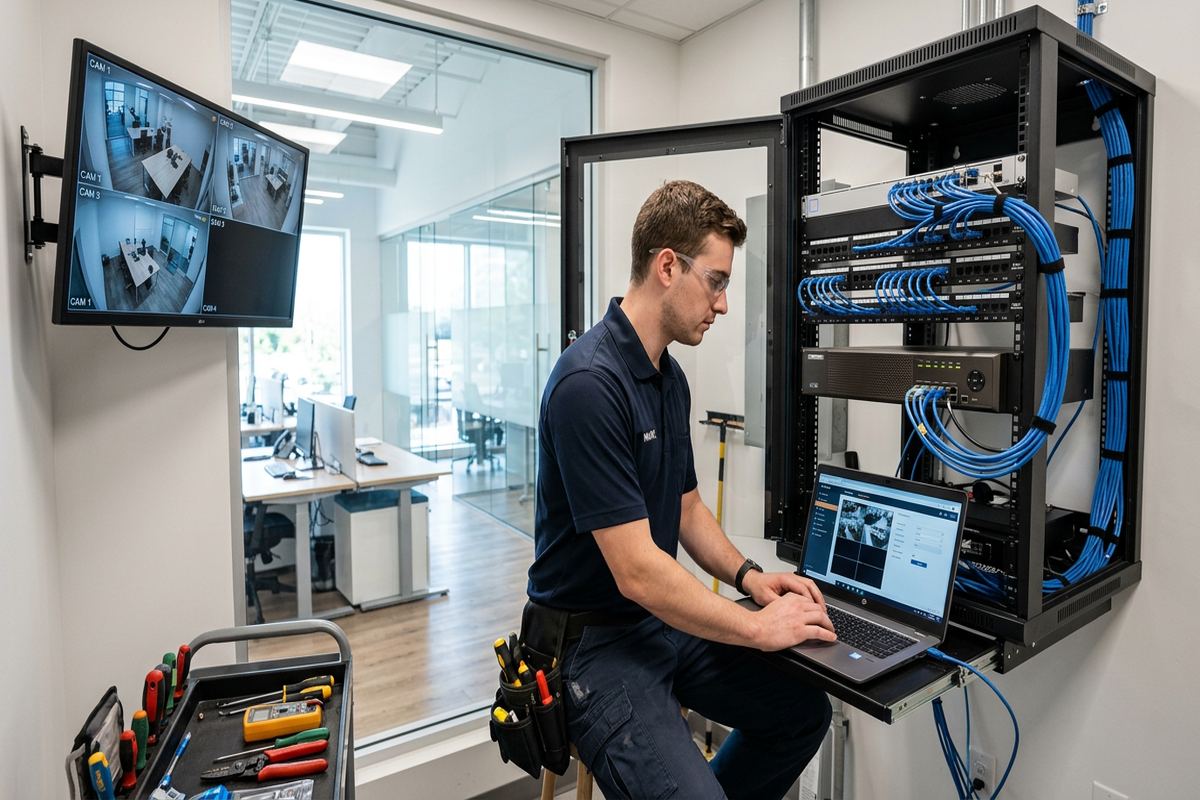
Wired cameras generally provide a stable path for video and power when the cable system is planned correctly. UnifiedLink installs continuous labelled cable runs between designated endpoints, avoiding hidden couplers that complicate troubleshooting. Routes may pass through basements, utility rooms, attics or approved exterior pathways depending on the building. In an older Chatham home, finished plaster, blocked wall cavities and previous renovations can limit concealed access. The assessment identifies these conditions so the proposed route is realistic. Cable type, pathway and termination locations are included in the written scope rather than decided informally during the work.
A camera system also depends on the home network, particularly when remote viewing, notifications or network video recording are required. We review available switch capacity, recorder placement, internet equipment and practical separation from guest or general household devices. Remote access does not mean every camera must rely on Wi-Fi. Where wireless links are appropriate, signal strength and interference still need evaluation, especially across garages, metal-clad buildings or larger rural lots. Network changes included in the project are configured on site, and credentials are established under the customer’s control rather than retained as installer-only access.
Recorder location affects security, cooling, noise, cable length and maintenance. An open shelf beside the internet modem may be convenient but could leave recorded evidence easy to remove. A sealed cabinet without ventilation can shorten equipment life. We discuss accessible, protected locations with appropriate power and network connectivity. For homes near the Thames Campus area or commercial strips, shared utility rooms and mixed-use layouts may introduce additional approval or access considerations. The chosen arrangement is documented, and each camera cable is labelled so future testing does not depend on guessing which run serves which location.
- Continuous cable runs without hidden couplers
- Labels at cable endpoints
- Recorder location and ventilation review
- Switch capacity and network planning
- Customer-controlled remote access
Recording, Alerts and On-Site Configuration
Recording settings should match the purpose of the system and the available storage, not simply use every maximum setting. Resolution, frame rate, image quality and recording mode all influence retention and playback performance. We configure the installed equipment on site and verify that each channel records correctly. Motion-based recording can extend useful storage, but poor motion zones may capture trees, traffic or changing shadows throughout the day. Continuous recording may be preferred for selected views when supported by the design. The final settings are explained so the customer understands what is being recorded and under which conditions.
Notifications require similar care. An alert for every passing vehicle, moving branch or pedestrian beyond the property line quickly becomes unhelpful. Where supported by the selected system, we configure detection areas, schedules and event types around the intended use. A Downtown Chatham doorway may need a tighter detection zone than a rural driveway, while a backyard camera may follow a different schedule from the front entrance. No analytic feature is treated as infallible. Lighting, weather, camera angle and distance can affect classification, so important events should remain supported by appropriate recording coverage.
Remote viewing is set up using the customer’s own credentials. The customer controls the account, password recovery information and authorized users rather than depending on a shared installer login. We test local and permitted remote access during handover, subject to the network and service capabilities included in the scope. Customers are shown how to review events, export footage and check basic camera status. If a platform requires cloud services, subscriptions or third-party terms, those dependencies are identified before acceptance. This keeps ownership and ongoing access clear after UnifiedLink’s configuration work is complete.
- Recording modes configured on site
- Motion zones adjusted for useful events
- Customer-owned accounts and credentials
- Playback and export functions demonstrated
- Third-party service dependencies documented
Approvals, Privacy and Shared Chatham Properties
A homeowner should confirm that cameras are used for a clear security purpose and positioned with reasonable attention to privacy. UnifiedLink can plan views that focus on entrances, yards, parking areas and other relevant parts of the property, but the property owner remains responsible for how the system is operated and how footage is handled. Audio recording can create separate privacy concerns and should not be enabled casually. For Chatham homes with close setbacks, careful lens selection and masking features may help limit unrelated views. Operational policies may also be appropriate when household staff, tenants or visitors are regularly present.
Condo corporations, landlords and property managers may control exterior walls, common areas, soffits or shared cable pathways. Written approval should be obtained before drilling, attaching equipment or routing cable through those spaces. This applies to rented housing and some multi-unit properties in Chatham, even where the customer controls the interior unit. We can document proposed device locations and pathways to support an approval request, but we do not assume authorization on the customer’s behalf. If approval changes the permitted route or mounting surface, the scope can be revised before installation rather than creating an avoidable dispute.
Mixed-use buildings, commercial strips and industrial units can require coordination beyond a typical detached home. A business owner living above a storefront may share entrances, network rooms or exterior façades with another occupant. Facilities associated with grain or food operations can also have hygiene, dust-control, traffic and access requirements that influence installation work. Although this page addresses home security cameras, Chatham properties sometimes combine residential and business functions. During assessment, we identify affected stakeholders, restricted areas and practical work windows. Required permissions and site-specific rules are then recorded as conditions of the proposed work.
- Views focused on relevant property areas
- Audio features discussed separately
- Condo and landlord approvals identified
- Shared pathways documented before work
- Mixed-use access requirements reviewed
Installation and Handover in Chatham
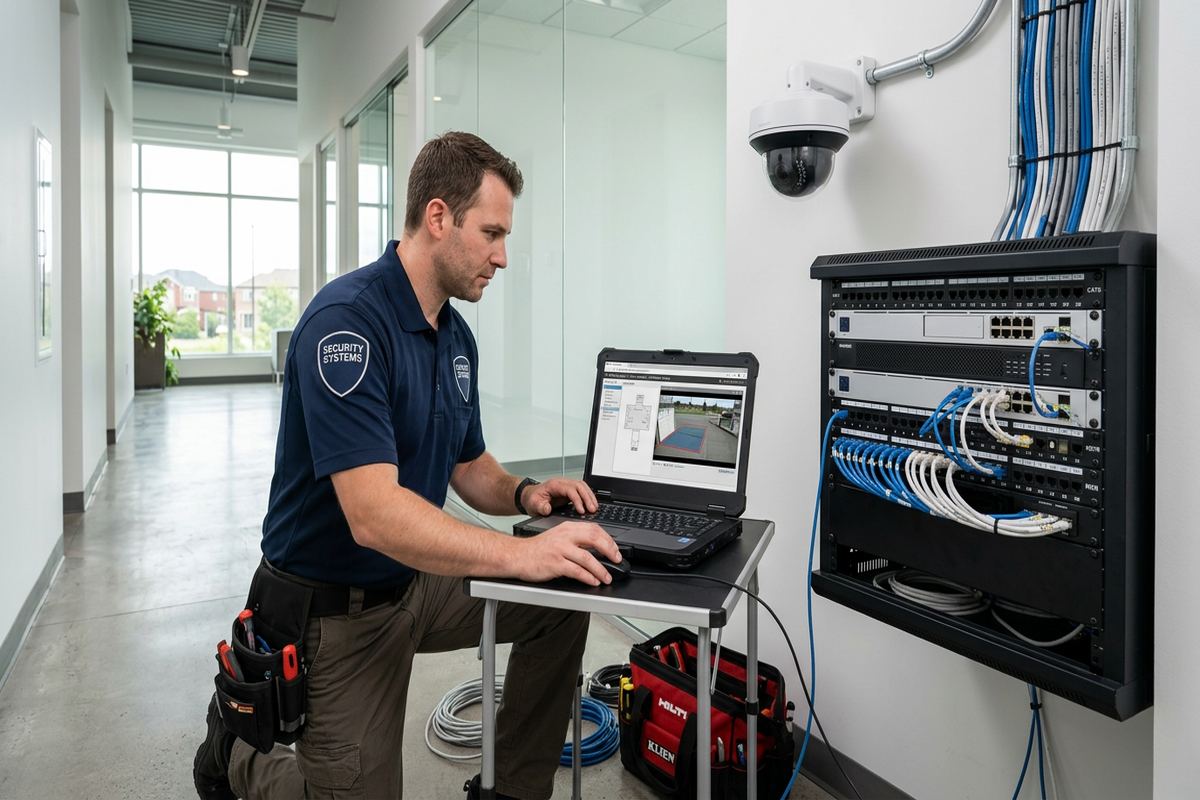
Once the scope is accepted and required approvals are in place, installation follows the documented camera positions and cable routes. Changes caused by concealed conditions are discussed before proceeding where they affect appearance, equipment or scope. Cables are installed as continuous labelled runs, terminations are completed, and cameras are aligned using live images rather than approximate visual aiming. Exterior entries and mounts are checked for secure fastening and sealing. Inside the Chatham property, work areas are kept organized, and recorder, switch or network components are positioned according to the agreed plan instead of being left as loose, unidentified equipment.
Commissioning confirms that the installed components work together. We verify camera images in relevant lighting, test recording and playback, check time settings, and confirm permitted local or remote access. Detection zones and notification rules included in the scope are reviewed using actual scenes where practical. A daytime image alone is not treated as proof that every condition will be identical at night, so customers receive guidance on checking seasonal changes, new lighting or growing vegetation. If an issue is visible during commissioning, adjustment is completed or clearly documented rather than hidden behind a general statement that the system is online.
Handover includes the customer’s own credentials and an as-built record showing the installed arrangement. The record identifies camera locations, cable endpoints and relevant equipment so later maintenance or expansion has a reliable starting point. We also review routine tasks such as cleaning camera covers, checking playback and protecting account access. Equipment ownership and warranty information follow the written scope. UnifiedLink remains one accountable contractor for the included cabling, mounting and configuration, avoiding divided responsibility between unrelated installers. Requests during business hours receive a same-day response; after-hours requests are answered the next business day.
- Installation follows the approved scope
- Live camera alignment and image checks
- Recording and playback tested
- Customer credentials provided at handover
- As-built installation record supplied
Maintaining and Expanding Chatham Camera Systems
Camera systems benefit from periodic checks because the property changes around them. Trees grow, shrubs block lower views, exterior lighting is replaced and parked vehicles alter important sightlines. In Chatham winters, snow and ice can obscure a camera or increase reflections from the ground. Spring freeze-thaw cycles may also reveal failed sealing or movement around an exterior mount. Homeowners should review representative daytime and nighttime footage, confirm the recorder is retaining events and clean covers using methods suitable for the equipment. A live image alone does not confirm that playback, alerts and exports are functioning correctly.
Expansion is easier when the original installation has labelled cabling and an accurate as-built record. A future garage camera, door station or lane view may require switch capacity, recorder channels, storage and an appropriate pathway, not merely another camera. Rural Chatham-Kent properties may also need a network extension between buildings before video equipment can be added reliably. We assess the existing system and distinguish reusable infrastructure from components that cannot support the planned change. This prevents an expansion from being based on assumptions about cable condition, available bandwidth or compatibility with equipment already installed at the property.
Service requests are handled with the same need for clear information. Useful details include the affected camera, the time an issue occurred, whether live viewing still works and any recent network or power changes. Labels and records help isolate the problem without disturbing unrelated devices. Requests sent during business hours are answered the same day, while after-hours requests are answered the next business day. Site assessment timing depends on the required service and travel distance, including travel from Chatham to communities such as Wallaceburg. No attendance time is assumed until the location and work are reviewed.
- Seasonal image and sealing checks
- Camera-cover cleaning guidance
- Recorder playback verification
- Expansion capacity assessed before changes
- Service supported by labels and records
Chatham neighbourhoods we cover
- Downtown Chatham
- Thames Campus area
- Maple City
- Prestancia
- Wallaceburg
Home security camera installation in Chatham — common questions
How many cameras does my Chatham home need?
The number depends on the views you need rather than the size of the house alone. A site assessment considers entrances, driveway activity, side access, backyard areas and detached buildings. Some Chatham properties need separate overview and identification views because one wide camera cannot provide both. We recommend locations and equipment only after reviewing sightlines, lighting, cable routes and recording requirements.
Can you install cameras on an older brick house?
Yes, subject to an assessment of the masonry, interior access and practical cable routes. Older Chatham housing may combine original brick with frame additions, finished plaster or blocked cavities. We select fasteners and sealing methods for each mounting surface. If concealed cabling would cause unnecessary damage, a protected surface route can be proposed and documented before installation.
Will outdoor cameras handle Chatham winters?
Equipment selection and installation must account for cold, moisture, snow and repeated freeze-thaw conditions. We use secure mounting methods, protect connections and seal cable penetrations according to the surface. Camera position also matters because snow, roof runoff and infrared reflection can affect images. Homeowners should periodically inspect views and keep camera covers clear as conditions change through a Chatham winter.
Can cameras cover a barn or detached garage?
They can, but the route between buildings must be assessed first. On Chatham-Kent farm properties, distance, available power, network connectivity, metal cladding and lightning exposure can influence the design. A detached structure may need buried or aerial infrastructure, a dedicated network link or local equipment. Those requirements are identified in the written scope rather than assuming a normal house cable can simply be extended.
Do I need landlord or condo approval?
Approval may be required when cameras attach to exterior walls, soffits or other areas controlled by a landlord or condo corporation. Shared halls, parking areas and cable pathways can also be subject to property rules. Chatham tenants and condo owners should obtain written permission before work starts. UnifiedLink can document proposed locations and routes, but authorization remains the customer’s responsibility.
What do I receive when installation is complete?
Handover includes on-site configuration, customer-controlled credentials and an as-built record of the installed camera locations, equipment and labelled cable endpoints. We test recording, playback and included access functions, then explain routine operation and footage export. The written scope also identifies equipment ownership and warranty details. This gives the Chatham property owner a clear record for maintenance or later expansion.
Coverage in Chatham is confirmed against the address before we quote. See everything we install in Chatham or the province-wide home security camera installation page.