UnifiedLink installs wired and wireless home networks across Chatham and nearby Chatham-Kent communities. We assess the property, plan cable routes and equipment locations, install continuous labelled runs, configure the network on site, and provide an as-built record. The result is practical coverage for everyday internet use, remote work, entertainment, cameras, smart devices and outbuildings.
Home Network Planning for Chatham Properties
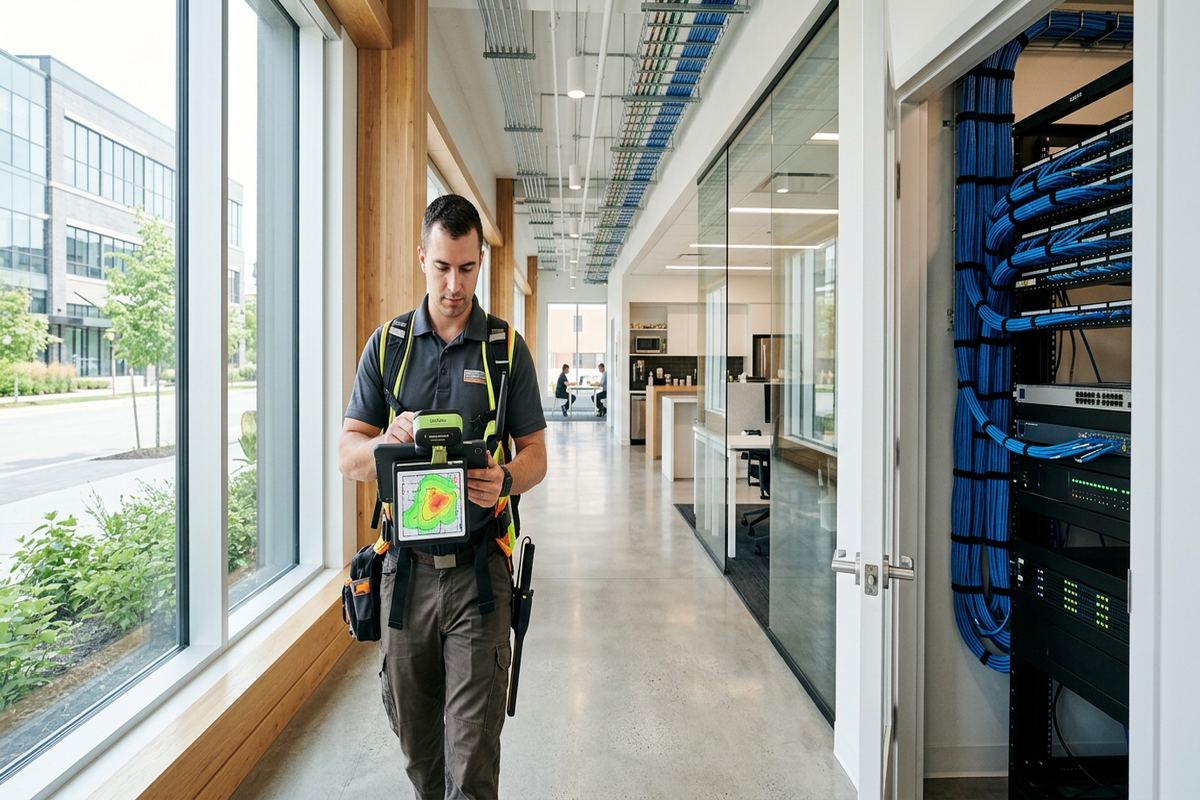
A reliable network starts with the building rather than a box of equipment. During a Chatham site assessment, we review the internet entry point, construction type, available pathways, electrical locations and the rooms or buildings that need service. We also discuss how the connection is used, including remote work, streaming, gaming, cameras, voice services and smart-home devices. This establishes whether the property needs straightforward Ethernet cabling, several wireless access points, an outbuilding link, or a combination. Assessment timing depends on the requested service and travel distance within Chatham-Kent.
Older town housing, newer subdivisions and rural properties require different network designs. Walls in older Downtown Chatham homes may include plaster, masonry, additions and concealed obstructions that reduce Wi-Fi strength or complicate cable routes. Frame construction can offer accessible wall cavities, but insulation, finished basements and previous renovations still affect installation. Farm properties may need coverage between a house, shop, barn or office, where distance and exposure rule out ordinary indoor wiring. We identify these constraints before selecting equipment or stating what the installation will include.
The written scope follows the assessment and records the equipment, cable routes, device placement and known exclusions. It also identifies who owns supplied equipment and what warranty applies, avoiding uncertainty around internet-provider hardware, customer-supplied devices and installed components. For renovations or unfinished spaces, the scope can separate work that should occur before drywall from final termination and configuration. One accountable contractor handles the agreed network work, which is particularly useful when cabling, wireless access points, cameras and other low-voltage systems share pathways or equipment locations.
- Review internet entry point and existing router
- Map rooms, floors and detached buildings requiring service
- Check wall construction and usable cable pathways
- Document equipment ownership, exclusions and warranty
- Coordinate network cabling with other low-voltage systems
Wired Home Network Installation in Chatham
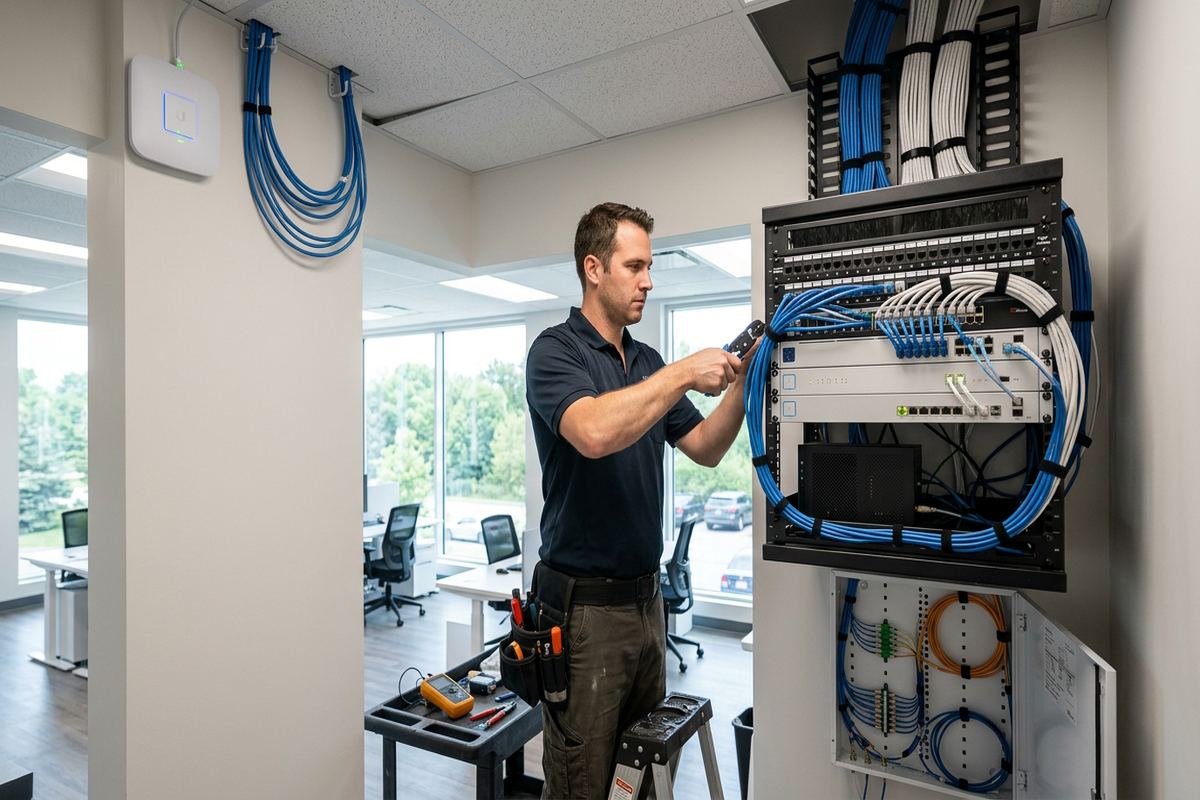
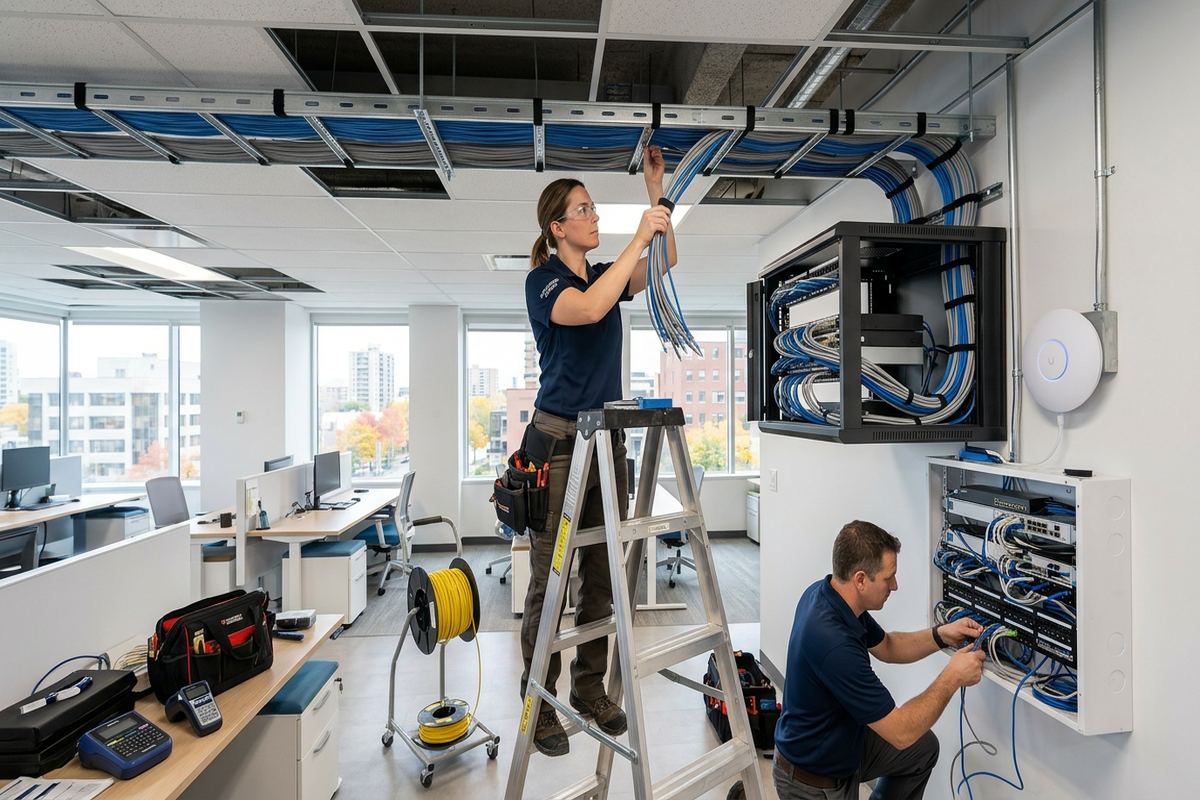
Ethernet provides a stable connection for devices that remain in one place. In Chatham homes, useful wired locations often include offices, televisions, gaming systems, wireless access points, camera recorders and utility areas containing smart-home controls. We install continuous labelled cable runs between the network location and each outlet, avoiding hidden couplers or undocumented branches. Cable category and termination hardware are selected for the agreed application and route. Each run is kept separate from electrical wiring where required, supported appropriately, terminated cleanly and identified so future troubleshooting does not depend on guesswork.
Cable routing is adapted to the structure instead of forcing the same method into every property. An unfinished basement may support direct routes to main-floor walls, while a finished older house can require attic access, closets, service spaces or carefully selected surface pathways. Masonry walls around Downtown Chatham or converted commercial-style buildings need different drilling and fastening methods than frame walls in Maple City or Prestancia. We discuss visible sections, access openings and restoration exclusions before work begins, allowing the homeowner or property manager to approve a practical route with a predictable finished appearance.
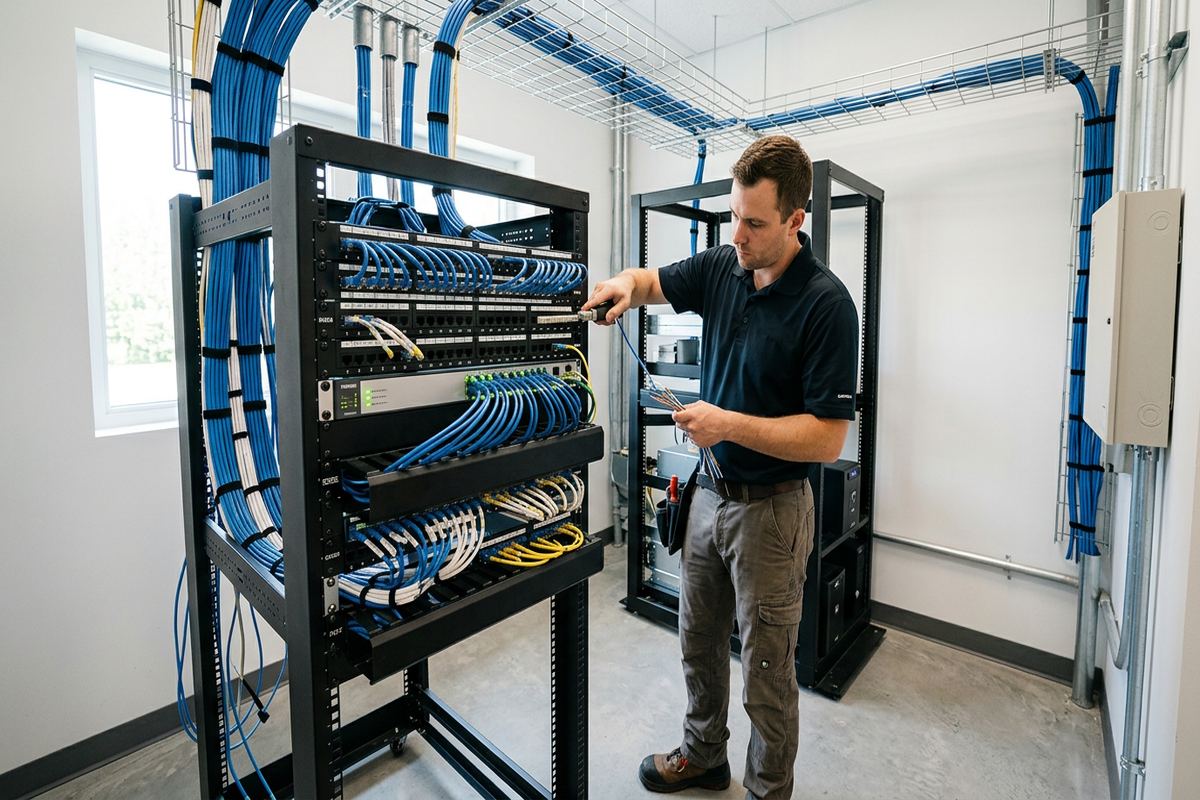
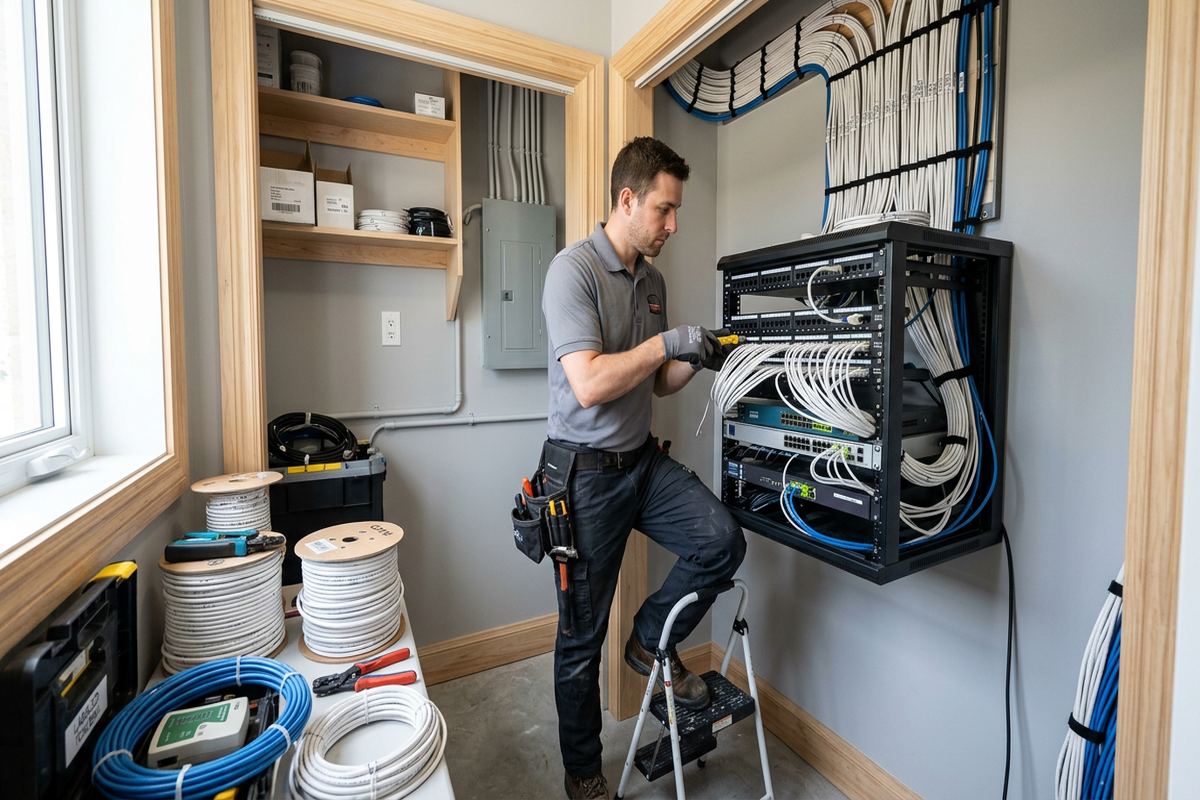
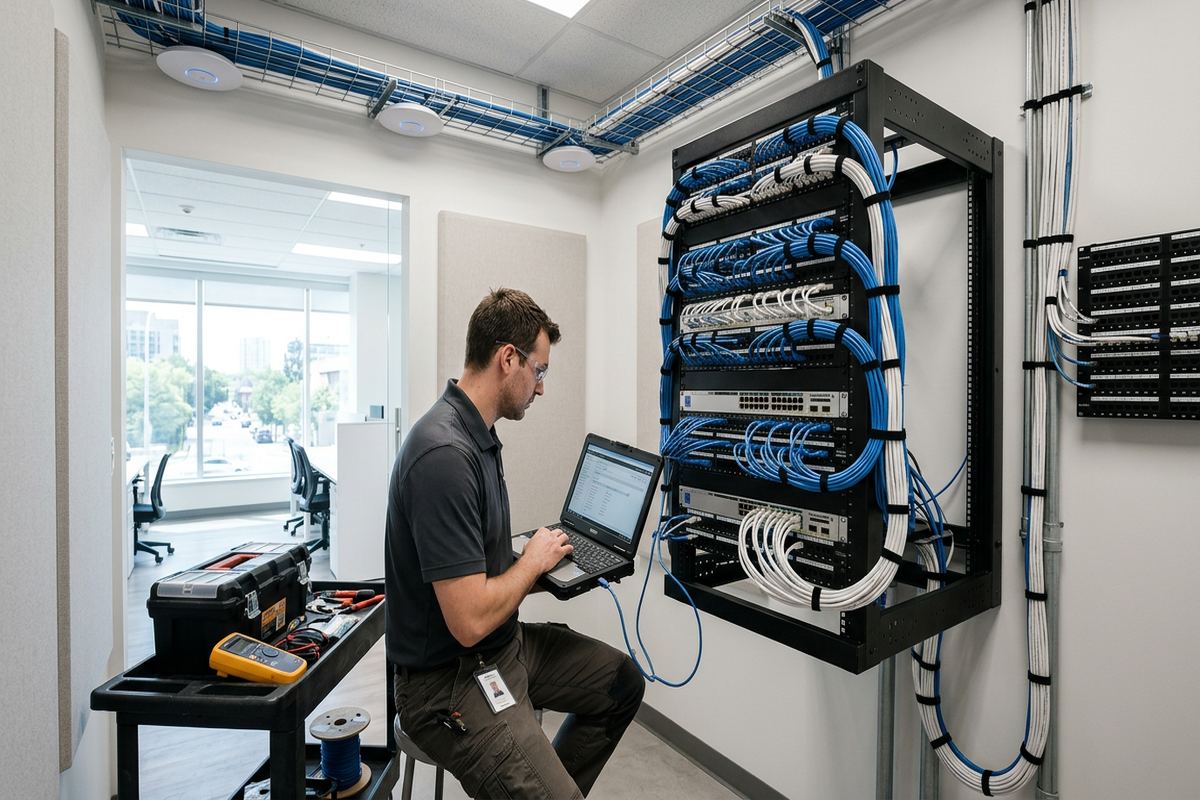
A central network location keeps the modem, router, switch, patching and connected systems organized. It should provide ventilation, accessible power and enough physical space for current equipment without placing devices in a sealed cabinet or damp corner. We terminate and label the agreed runs, connect active equipment, and configure the installed system on site. The final handover uses the customer’s own administrative credentials and includes an as-built record showing installed outlet labels and relevant equipment locations. This documentation helps when changing internet providers, adding devices or arranging later service.
- Continuous cable from network point to outlet
- Labelled outlets and corresponding central terminations
- Routes planned around electrical and structural constraints
- Clean termination for fixed network devices
- As-built record supplied at handover
Wi-Fi Coverage Across Chatham Homes
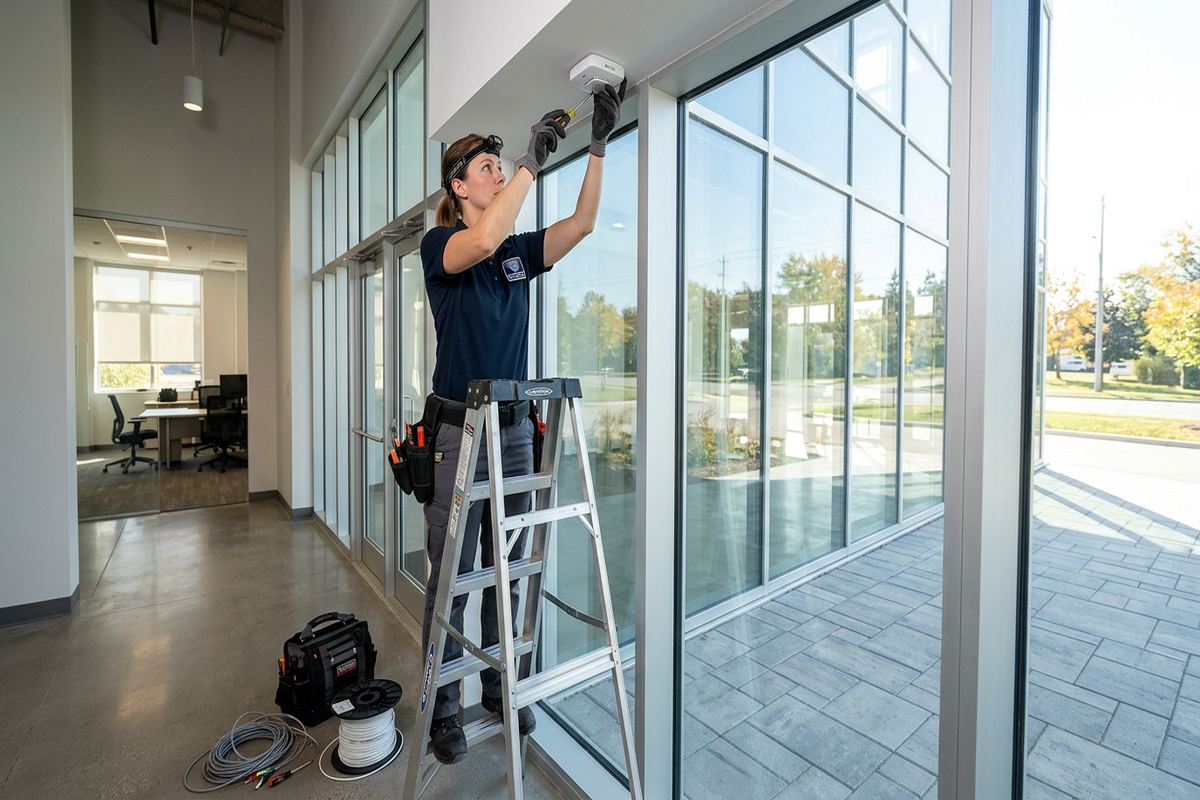
Wi-Fi performance depends on access-point placement, building materials and interference, not only the speed purchased from an internet provider. A router placed at one end of a Chatham house may struggle to serve an upper floor, rear addition, basement or outdoor sitting area. Masonry, plaster, metal ductwork, appliances and foil-backed insulation can weaken or redirect radio signals. We plan access points around the occupied spaces and connect them by cable where feasible. Wired backhaul leaves wireless capacity available for client devices and generally provides more consistent operation than repeating every connection wirelessly.
The number of access points is based on the property rather than a preset package. A compact frame house may need only a well-positioned router or access point, while a larger Prestancia property, older Thames Campus area home or house with several additions may need multiple units. Placement considers ceiling access, visible hardware, expected device density and the location of demanding uses such as video calls or streaming. We avoid treating maximum signal bars as the only goal; roaming behaviour, channel use and a stable wired path back to the network are equally important.
On-site configuration includes the agreed wireless network names, security settings, administrator access and connection of installed access points. Guest or device-specific networks can be created where the selected equipment supports them and the scope calls for separation. This can keep visitors, smart devices or work equipment apart from primary household devices without creating an unmanageable arrangement. During handover, the customer receives control through their own credentials rather than an installer-owned account. We also record essential configuration details without placing private passwords in labels or exposed documentation.
- Access points placed for usable room coverage
- Wired backhaul where routes are practical
- Guest and smart-device separation when supported
- Customer-controlled administrator credentials
- Configuration completed and checked on site
Chatham, Ontario
Home network installation in Chatham, scoped in writing first
Book a site assessment and get equipment, routes, exclusions, and warranty on paper before anything is installed.
Farm and Outbuilding Networks in Chatham-Kent
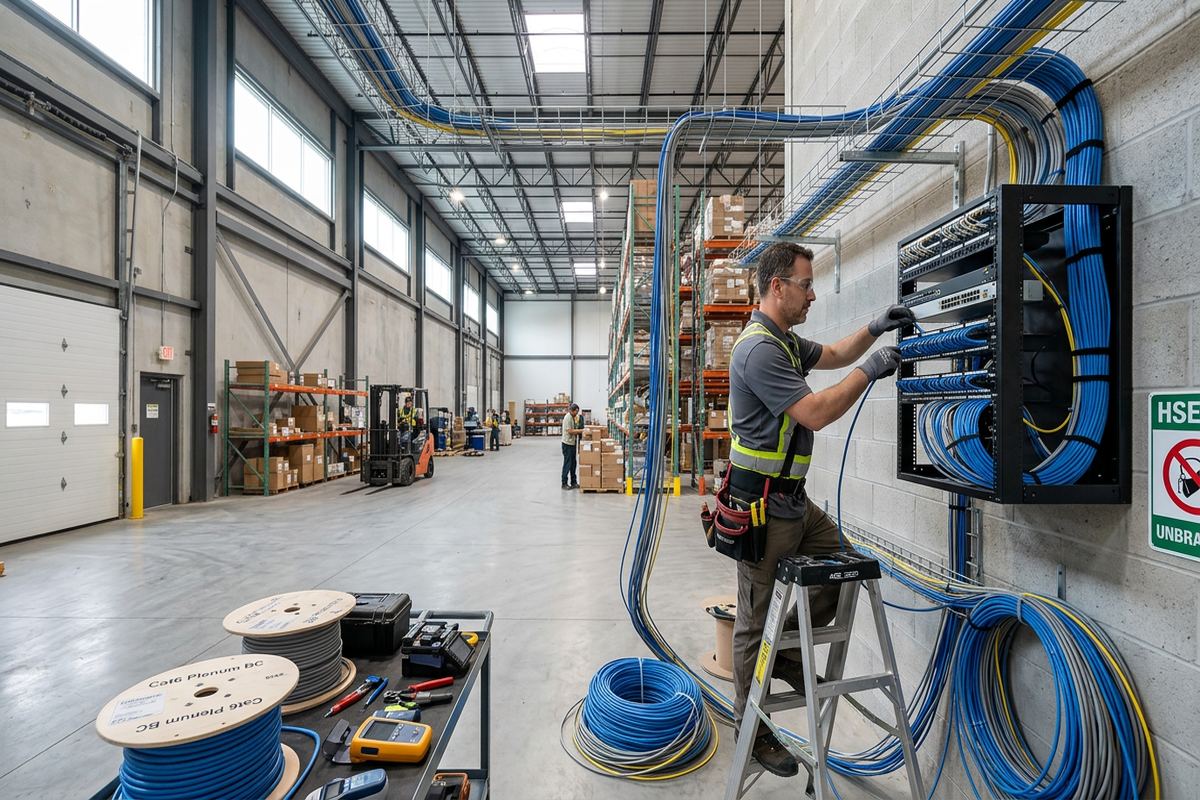
Farm properties around Chatham may need internet access beyond the house, including a workshop, equipment building, office or another occupied structure. These links require more planning than extending indoor Wi-Fi toward a window. Distance, trees, metal cladding, elevation, power availability and a clear path between buildings all affect the design. We assess whether a buried pathway, fibre connection or purpose-built wireless bridge is appropriate for the agreed use. The network can then support ordinary internet access, connected equipment or security devices without relying on consumer extenders placed at the edge of coverage.
Copper data cable should not be used casually between separate buildings because electrical potential differences and lightning exposure can damage connected equipment. Where a physical interbuilding route is suitable, fibre can provide data connectivity without creating a conductive link. Existing conduit must be checked for route, condition, capacity and access before it is included in the scope. If trenching or new conduit is needed, responsibilities and exclusions are documented. At each building, equipment still requires suitable power, environmental protection and a defined indoor termination point that remains accessible for maintenance.
A wireless bridge can be practical where trenching is disruptive and a clear line of sight is available. Outdoor radios need rigid mounting, correct alignment and cable pathways that do not allow water into the structure. Chatham-Kent winters, wind and freeze-thaw cycles make exterior fastening and sealing important parts of the work. Penetrations are positioned and sealed for exposure, while exterior-rated components are used where specified. Grain and food facilities may also impose access, dust, hygiene or operating restrictions, so site requirements must be reviewed before routes and installation timing are confirmed.
- Assess fibre, conduit or wireless bridge options
- Avoid casual copper links between separate buildings
- Plan around metal siding and line-of-sight limits
- Use suitable exterior mounting and sealed penetrations
- Document trenching and conduit responsibilities
Renovations, Rentals and Condos in Chatham
Network installation during renovation is usually less intrusive because framing and service spaces are accessible. In Chatham’s older town housing, that opportunity can simplify routes around plaster, masonry, blocked cavities and previous additions. We can install and label cabling before insulation or drywall, then return for termination and configuration when finishes are complete if that sequence is included in the scope. Device positions should be confirmed against cabinetry, television layouts and furniture plans early. Moving an outlet after finishes are installed can require a different route or additional repair by the appropriate trade.
Rental properties require clear authority before drilling, mounting equipment or changing shared building areas. A Chatham tenant should obtain landlord approval for permanent cabling, wall penetrations and exterior devices before the assessment progresses to an installation scope. Landlords may also want equipment ownership, access and removal responsibilities recorded for a future tenancy change. We can design around approved pathways and identify customer-owned versus property-owned components. Internet-provider equipment remains subject to the provider’s terms, so it should not be treated automatically as part of the building’s permanent network infrastructure.
Condo work can involve unit boundaries, common walls, shared ceiling spaces and building rules. Written approval may be required before accessing common areas, drilling concrete, mounting equipment outside the unit or using an existing telecommunications room. Work hours, elevator booking and contractor access may also be controlled by property management. We ask the customer to confirm these requirements and provide applicable documents before installation. Within the unit, the same planning principles apply: identify fixed devices, assess available outlets and pathways, and place wireless equipment where furniture or utility cabinets will not obstruct it.
- Plan cabling before insulation and drywall
- Confirm landlord approval for permanent alterations
- Check condo rules and common-area restrictions
- Record ownership of installed network components
- Coordinate outlets with cabinets and room layouts
Network Security and Configuration in Chatham
A home network should be understandable and controlled by its owner. We configure installed equipment using customer-owned credentials, update relevant settings where supported, and avoid leaving generic administrative access in place. Wireless security is selected according to device compatibility and the capabilities of the agreed hardware. Where practical, primary devices, guests and less-trusted smart devices can use separate networks. Segmentation options vary by router, access point and switch, so they are confirmed during design rather than promised for equipment that cannot support the required arrangement.
Remote work and home businesses in Chatham may place different demands on a network than entertainment use. A wired office connection can reduce dependence on local wireless conditions, while a separate guest network can limit access from visitors or customer devices. If business systems have specific firewall, virtual private network or compliance requirements, those needs must be identified during the assessment. Home network installation does not replace managed information-technology support or an employer’s security policy. The written scope distinguishes the physical network and agreed configuration from software, account administration and third-party service responsibilities.
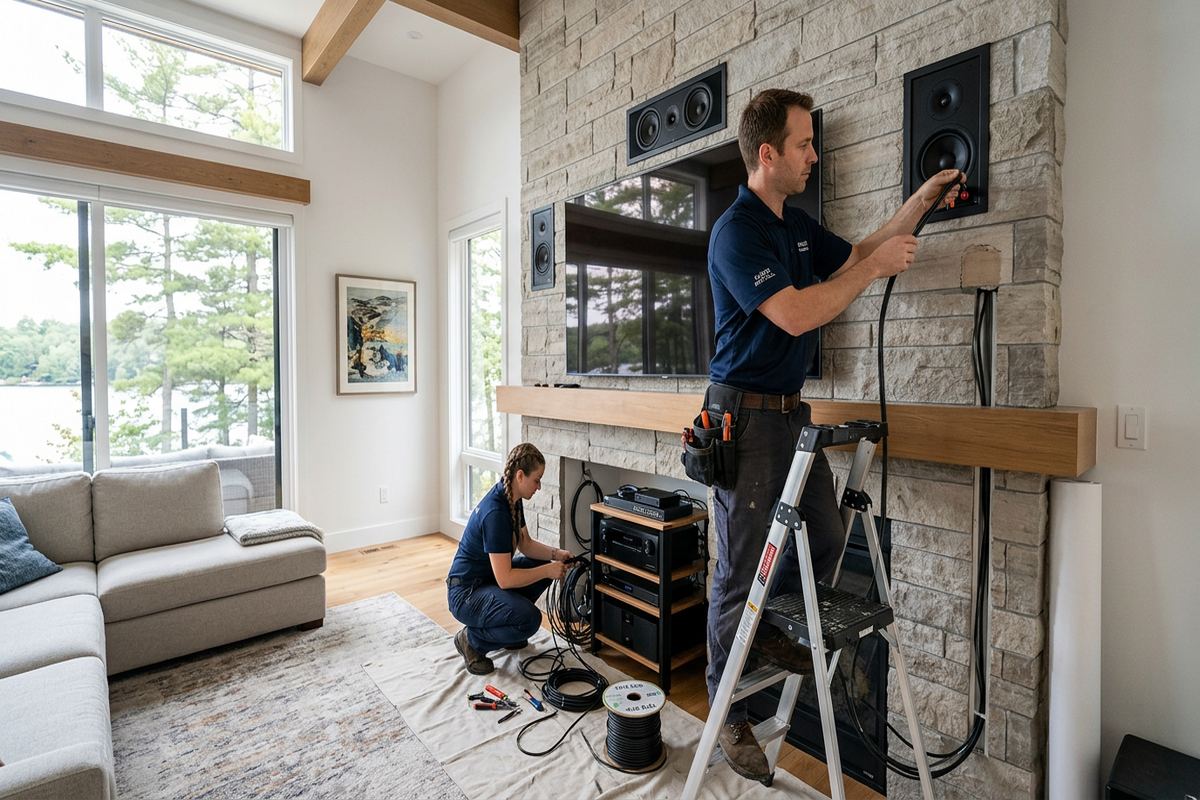
Internet-connected cameras, displays, audio systems and smart controls all depend on the underlying network, but they should not be added without considering capacity and administration. We account for planned low-voltage systems when selecting switch ports, outlet locations and equipment space. Power over Ethernet may simplify supported access points, cameras or other devices by carrying power and data over a planned cable run. Available power budgets and device standards must still match. One coordinated design reduces duplicated cabling and ensures that installed systems return to a documented, accessible network location.
- Administrative access assigned to the customer
- Wireless security configured for supported devices
- Guest or device networks created when specified
- Wired office connections planned for stable use
- Switch capacity considered for future connected systems
Exterior Cabling and Seasonal Conditions
Exterior network work in Chatham must account for moisture, ultraviolet exposure, temperature changes and physical movement. Indoor cable is not suitable simply because it fits through an outside route. We specify components according to the agreed environment and protect transitions into the building. Penetrations are drilled with regard to cladding, masonry, drainage planes and interior obstructions, then sealed to reduce water entry. A sealant bead alone cannot correct a poorly positioned route, so mounting location and cable approach are considered before drilling begins.
Freeze-thaw cycles can loosen unsuitable fasteners, stress exposed cable and open gaps around penetrations. Masonry needs compatible anchors and careful placement to avoid damaged joints or cracked material, while frame walls require attention to siding, sheathing and concealed services. Cable is supported without sharp bends, unprotected low loops or routes that collect water at an entry. Where an outdoor access point or wireless bridge is included, its mount must remain rigid enough to preserve orientation through wind and seasonal conditions common across Chatham-Kent.
Buried routes require a defined pathway rather than direct assumptions about the yard. Existing conduit may be useful, but it should have accessible ends and enough capacity for the intended cable. New trenching can involve utility locates, depth requirements, surface restoration and coordination with other contractors; these responsibilities are set out in the scope. Farm lanes, landscaped properties and paved areas each change what is practical. We do not treat outdoor coverage as an afterthought because correcting a failed route after surfaces are restored is more disruptive than planning it properly.
- Use components suited to the installed environment
- Seal exterior entries against water exposure
- Select anchors for masonry or frame construction
- Check existing conduit before relying on it
- Define trenching and restoration responsibilities in writing
Chatham Network Assessment, Installation and Handover
The process begins with a request describing the Chatham property, current internet service and areas needing connectivity. Requests sent during business hours are answered the same day, while after-hours requests are answered the next business day. Site assessment timing depends on the service and travel distance. Photos, floor plans and a list of devices can provide useful context, but they do not always reveal wall construction, blocked pathways or exterior conditions. An on-site review is used where those details affect the design, installation method or equipment selection.
After assessment, the written scope sets out equipment, cable routes, device placement, exclusions, equipment ownership and warranty. This is the point to resolve visible pathway preferences, access requirements, landlord or condo approvals, and coordination with renovation work. Installation then follows the agreed route, with continuous labelled cable runs and appropriate termination. Equipment included in the scope is mounted and configured on site. If concealed conditions differ from what could reasonably be observed, the route or scope is discussed before proceeding with work that changes the agreed result.
Handover is intended to leave the network usable without making the customer dependent on installer-held accounts. Administrative access is established with the customer’s own credentials, and an as-built record identifies installed runs, outlets and equipment locations. We review the practical arrangement, including where the internet service enters, how access points connect and which components require power. For properties in Wallaceburg, central Chatham or elsewhere in Chatham-Kent, the same documentation supports later provider changes, additions and troubleshooting by showing what was installed and where it leads.
- Same-day reply during business hours
- Assessment timing based on service and travel
- Detailed written scope before installation
- On-site mounting, termination and configuration
- Customer credentials and as-built record at handover
Chatham neighbourhoods we cover
- Downtown Chatham
- Thames Campus area
- Maple City
- Prestancia
- Wallaceburg
Home network installation in Chatham — common questions
Can you improve Wi-Fi in an older Chatham house?
Yes. Older Chatham housing may contain plaster, masonry, additions, metal ductwork or blocked wall cavities that affect both signal and cable routing. We assess the rooms needing service and identify practical access-point and Ethernet locations. The proposed scope explains routes, visible sections and exclusions before installation, rather than assuming that a stronger router alone will solve every coverage problem.
Can the network reach a barn or workshop?
It can, subject to an assessment of distance, line of sight, available pathways, power and building conditions. For Chatham-Kent farm properties, options may include fibre in suitable conduit or a purpose-built wireless bridge. We avoid casually running conductive copper data cable between separate buildings. Exterior mounts, penetrations and equipment are planned for wind, moisture and freeze-thaw exposure.
Do I need landlord or condo approval?
Usually, approval should be confirmed before permanent cabling, drilling, exterior mounting or work in common areas. Chatham landlords and condo corporations may control alterations, contractor access, work hours and shared telecommunications spaces. The property owner or resident is responsible for securing required permission. We can provide a written scope describing proposed routes and equipment locations for review before installation is scheduled.
Will you use my existing router?
Possibly. We assess whether the existing router supports the required coverage, security, access points and wired connections. Internet-provider equipment may have configuration or ownership limits, while older hardware may not support the planned network arrangement. The written Chatham scope identifies customer-supplied, provider-supplied and newly supplied equipment, including ownership, known exclusions and the warranty applying to installed components.
What documentation will I receive?
At handover, you receive an as-built record identifying installed cable runs, labels, outlets and relevant equipment locations. The network is configured using your own administrative credentials rather than an installer-owned account. For a Chatham home, rental or farm property, this record makes later troubleshooting, internet-provider changes and additions easier because the physical network does not have to be rediscovered.
How quickly will you respond to my request?
Requests sent during business hours are answered the same day. After-hours requests are answered the next business day. The timing of a Chatham site assessment depends on the requested service and travel distance. Once the property has been assessed, we prepare a written scope covering equipment, routes, placement, exclusions, ownership and warranty before installation arrangements are confirmed.
Coverage in Chatham is confirmed against the address before we quote. See everything we install in Chatham or the province-wide home network installation page.