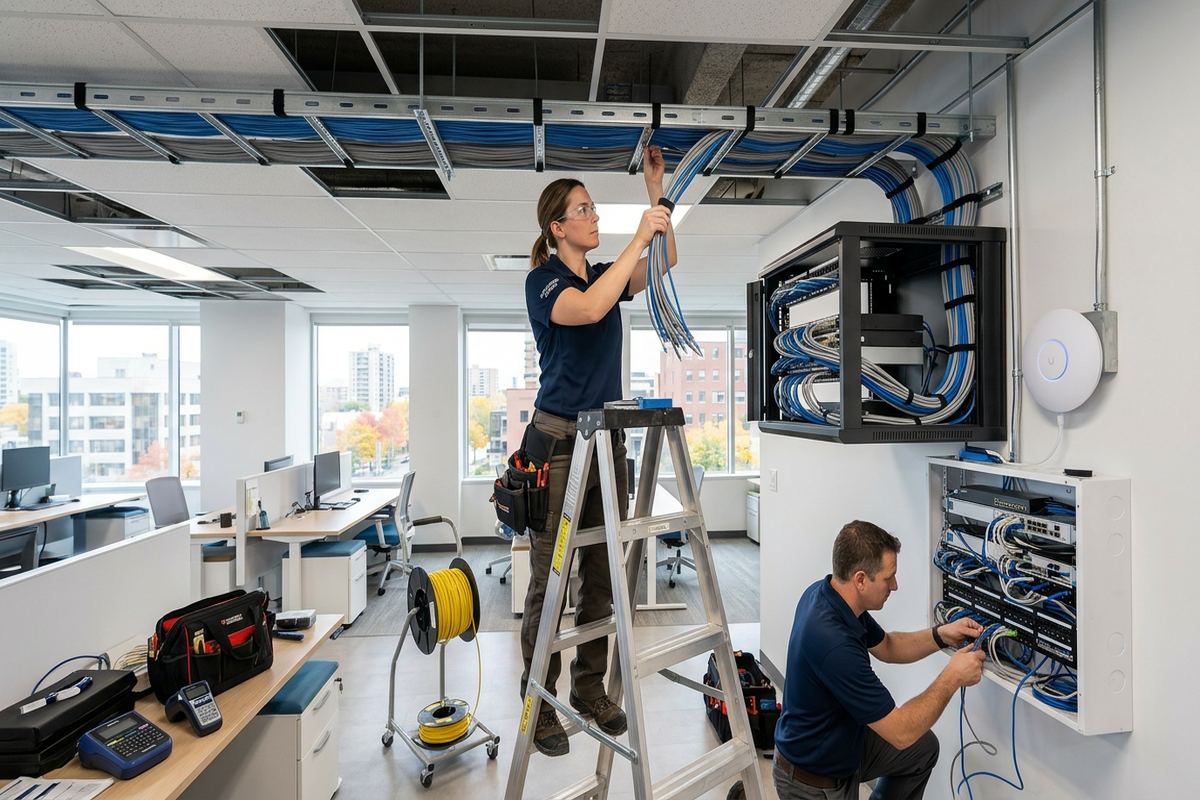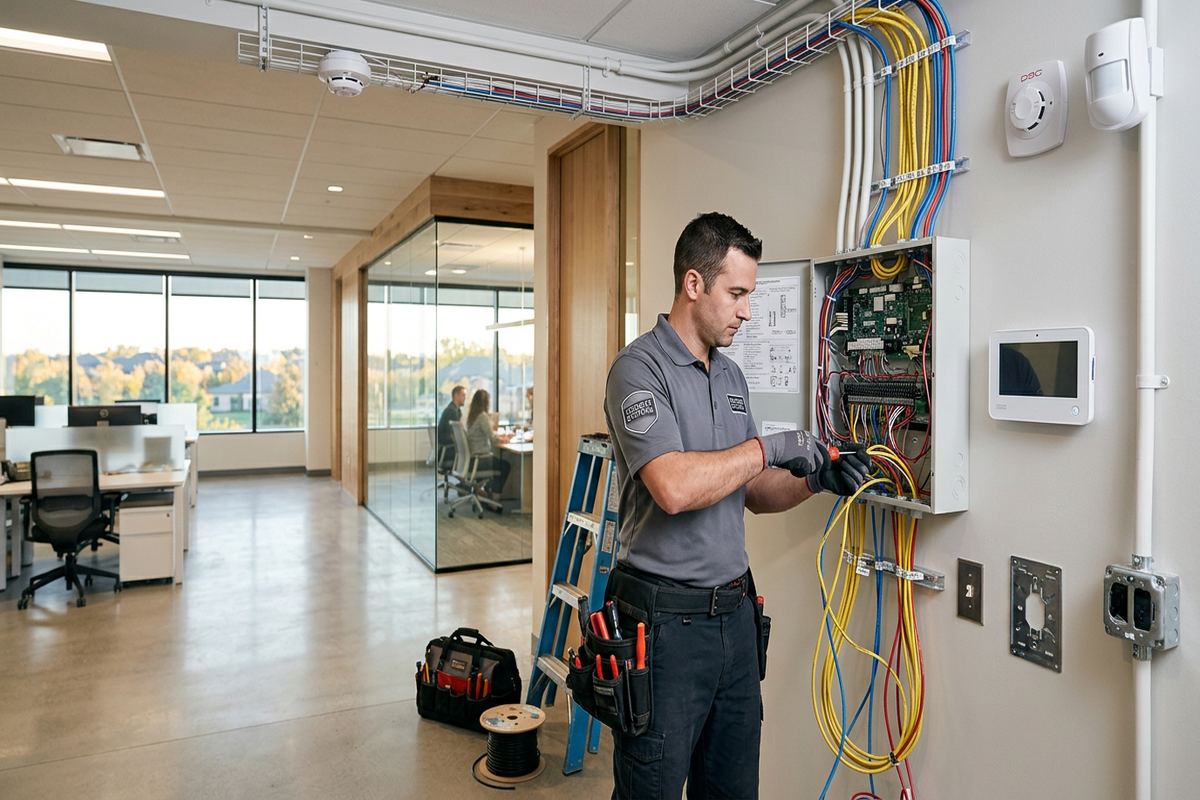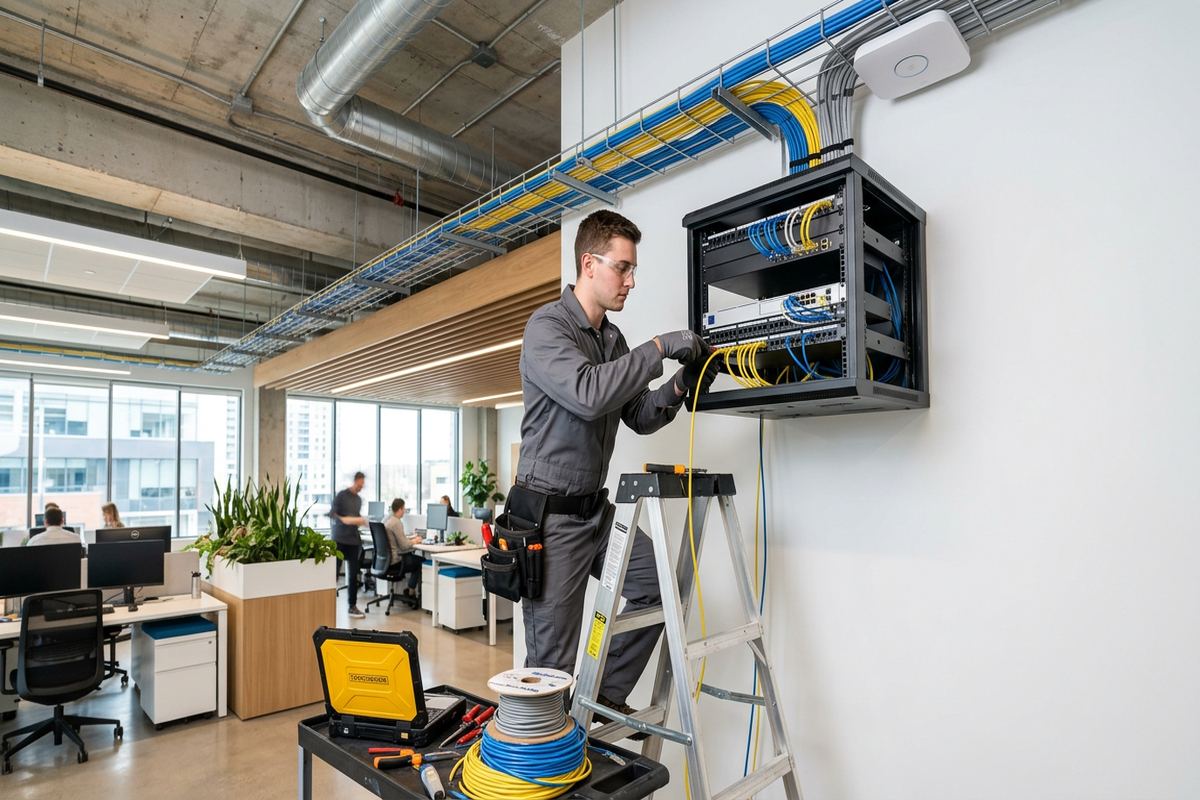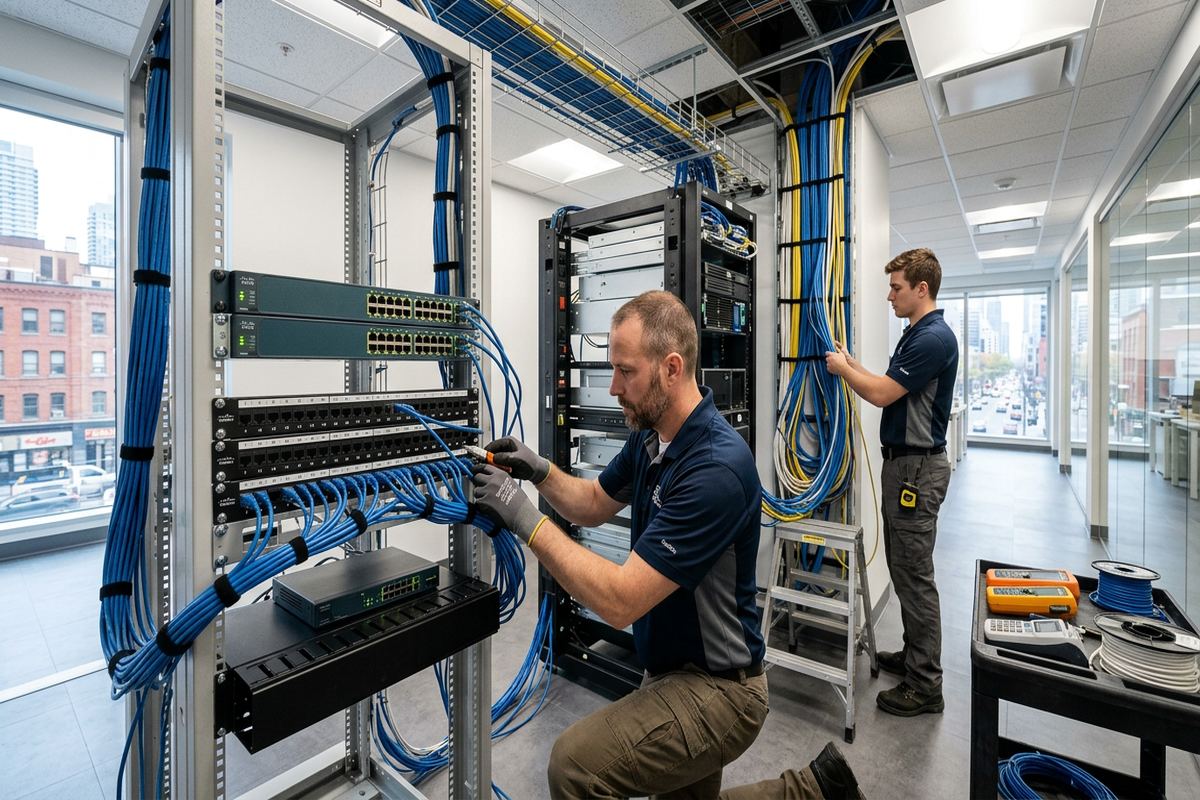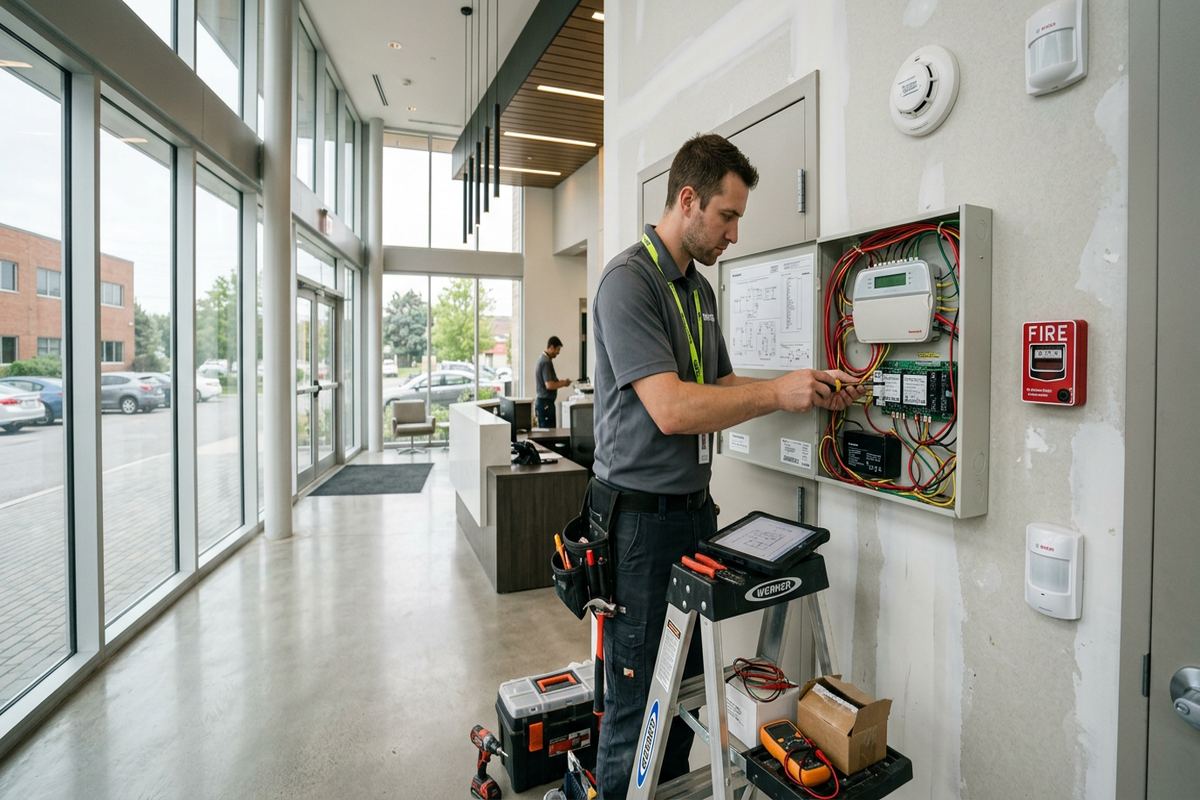
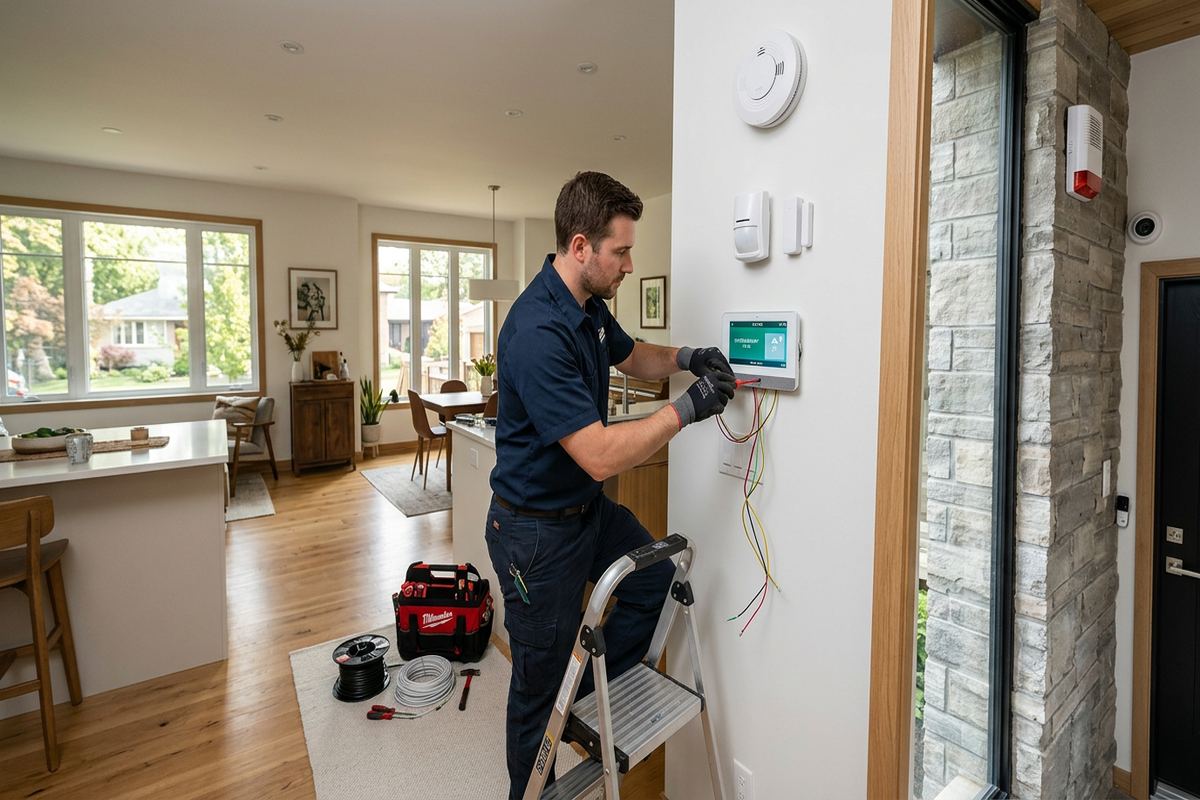
UnifiedLink installs home alarm systems across Chatham and nearby Chatham-Kent communities. Each project begins with a site assessment covering entry points, building construction, communication options and practical device locations. We provide a written scope, install and configure the system on site, then hand it over using the customer’s own credentials and an as-built record.
Alarm Planning for Chatham Properties
A useful alarm system starts with the property rather than a standard equipment package. In Chatham, older town housing, newer subdivisions, farm properties, and buildings with additions can have very different entry points and interior layouts. We assess exterior doors, accessible windows, attached garages, basements, upper-floor access, and routes between occupied and less visible areas. The assessment also considers pets, regular household routines, detached structures, and how occupants normally enter. These details determine where contacts, motion detectors, keypads, sirens, and other devices can provide practical coverage without making the system difficult to use.
Building materials affect installation methods and wireless performance. Older homes near Downtown Chatham may combine masonry, plaster, timber framing, finished basements, and later renovations. Frame construction generally offers different cable and radio paths than brick, block, or reinforced areas. We check likely routes before proposing wired, wireless, or hybrid equipment. Where concealed cabling is practical, continuous labelled runs reduce unnecessary connection points. Where finished surfaces or difficult construction limit access, wireless devices may avoid disruptive work while still requiring careful testing, mounting, and battery planning.
The written scope records what will be installed and where. It covers equipment, cable routes, device placement, exclusions, equipment ownership, and warranty information, so assumptions are addressed before work begins. Scope details can include doors or windows left outside the project, customer-provided internet or cellular services, and areas requiring later access. Pricing follows the site assessment because property size alone does not reveal construction barriers or operating requirements. This process gives Chatham owners a defined system plan and a clear basis for approving changes if site conditions differ during installation.
- Entry-point and interior risk review
- Wired, wireless, or hybrid system planning
- Documented device and keypad locations
- Defined exclusions and equipment ownership
Choosing Alarm Devices in Chatham
Door and window contacts provide direct information about protected openings, while motion detectors cover movement through selected rooms or routes. Neither device type should be applied without considering how the property is used. A door that remains open for deliveries needs different planning from a seldom-used basement entrance. Large pets, ceiling fans, heating sources, direct sunlight, and moving curtains can affect motion detector placement. In Chatham homes, we often combine perimeter contacts with selected interior detection so occupants can arm exterior openings while remaining inside, then use broader coverage when the property is vacant.
Keypads and control points belong where users can operate them without crossing a protected area unnecessarily. Common locations include the main family entrance, an attached garage connection, or a route used after parking. Additional controls may suit a separate living area or frequently used secondary entrance. Siren placement must support clear notification while limiting easy access to the device. For older town houses or multi-level homes, sound movement between floors also matters. We review user needs before locating controls, including temporary codes, arming modes, and access for family members, cleaners, contractors, or property managers.
Alarm communication can depend on internet, cellular service, or a combination supported by the selected equipment and service arrangement. The available path should be reviewed rather than assumed, especially on rural Chatham-Kent properties where house, shop, barn, and outbuilding locations may be widely separated. Internet equipment, power availability, radio range, and the position of the alarm panel all influence reliability. If remote app functions are included, we configure them on site using the customer’s own credentials. Monitoring services, subscriptions, and communication dependencies are identified in the written scope instead of being treated as hidden assumptions.
- Door and window contacts
- Pet-aware motion detector placement
- Practical keypad and siren locations
- Internet and cellular path review
Older Chatham Homes and Renovated Spaces
Older housing in Downtown Chatham and established areas around Maple City can include several generations of construction in one property. Original masonry walls may meet frame additions, enclosed porches, replacement windows, and finished basement rooms. These transitions can make apparently simple device locations difficult to cable or mount securely. During the assessment, we look for accessible joist spaces, unfinished utility areas, existing penetrations, and practical vertical routes. The goal is to avoid unnecessary surface damage while selecting positions that allow detectors and contacts to work correctly. Decorative trim and brittle finishes also require suitable drilling and fastening methods.
Renovations can conceal earlier wiring that is undocumented, abandoned, or unsuitable for new alarm equipment. Existing conductors may sometimes be reusable, but only after their routes, condition, and electrical characteristics are checked. We do not assume that an old keypad or contact proves the associated cable is intact. Where new cabling is required, UnifiedLink installs continuous labelled runs and records their destinations. Surface raceway may be a practical option in utility spaces or finished areas where opening walls would create disproportionate repairs. Any visible pathway is discussed before it becomes part of the scope.
Rental properties and condominium units add an approval layer to technical planning. A Chatham landlord may need to authorize drilling, cable routes, panel placement, or changes to common entrances. Condominium rules can restrict work on exterior doors, shared walls, corridors, or building systems, even when the alarm equipment serves one unit. Owners and tenants should confirm permissions before installation. We can document proposed locations and mounting needs for that review, but building or landlord approval remains the customer’s responsibility. Wireless options can reduce alteration, although they do not eliminate rules concerning common property, exterior components, or network use.
- Masonry and frame mounting methods
- Existing alarm cable assessment
- Low-impact routes for finished spaces
- Condo and landlord approval planning
Chatham, Ontario
Home alarm system installation in Chatham, scoped in writing first
Book a site assessment and get equipment, routes, exclusions, and warranty on paper before anything is installed.
Farm and Rural Alarm Installation Near Chatham
Farm properties around Chatham-Kent often require the residence to be considered alongside shops, garages, equipment storage, and other outbuildings. Distance changes what is technically practical. A detector that communicates reliably across a typical house may not reach a detached building through metal siding, masonry, machinery, or seasonal vegetation. Trenched cable, point-to-point links, separate alarm zones, or an independent system may be more appropriate, depending on the layout. We assess actual pathways, power, environmental exposure, and how each structure is used before including it in the alarm design. Agricultural buildings are never treated as ordinary interior rooms.
Grain and food facilities near residential or farm operations introduce dust, temperature variation, washdown areas, pests, and operational movement that can affect device selection. Although a homeowner may want one interface for several buildings, the environment may call for equipment suited to each space. Doors used by machinery or frequent deliveries also need different arming logic from household entrances. We identify these conditions during the site visit and separate alarm detection from process controls or life-safety systems. The resulting scope states which buildings and openings are included, where communication links are required, and what site infrastructure must remain available.
Rural users also benefit from clear zones and practical notifications. A named zone such as “north shop overhead door” is more useful than a generic sensor number when responding to an alert. Device labels, panel programming, and the as-built record should use terms understood by the people operating the property. Where family members, employees, or contractors require access, individual credentials can improve accountability and simplify later changes. We configure approved user functions on site and demonstrate normal arming, disarming, bypass, and alert review. Credentials are handed over to the customer rather than retained as installer-owned access.
- Detached building communication assessment
- Environmental review for agricultural spaces
- Clearly named doors, zones and buildings
- Customer-controlled user credentials
Exterior Protection Through Chatham Winters
Exterior alarm devices face moisture, wind, temperature swings, and repeated freeze-thaw cycles. In Chatham, mounting a device outdoors requires more than attaching it to the nearest trim board. We check whether the location sheds water, whether snow or ice can obstruct the device, and whether direct sun will affect performance. Fasteners and mounting surfaces must suit brick, siding, wood, or block. Cable entries are positioned and sealed to reduce water paths into the wall. Drip loops, appropriate fittings, and protected transitions are used where exposed wiring cannot be avoided.
Brick veneer and solid masonry require different fastening and penetration decisions from frame walls. A poorly chosen hole can damage the surface, enter an unintended cavity, or create a path for moisture. With siding, attachments must avoid crushing or distorting the material while remaining stable during temperature changes. We identify the wall assembly as far as access allows, choose suitable anchors, and seal penetrations around exterior cable routes. If the desired device location presents drainage or access problems, we discuss an alternative before drilling. Exterior placement must support both detection performance and long-term service access.
Detached garages, porch doors, gates, and low windows can extend the protected perimeter, but every exterior location has operational limits. Gates may move with frost, wooden doors can swell seasonally, and overhead doors have hardware that shifts during normal use. Contacts need enough tolerance for expected movement without allowing a genuine opening to go unreported. Outdoor motion detection also requires a controlled field of view because animals, branches, headlights, and blowing material can cause unwanted activity. We explain these trade-offs and select locations based on the site rather than promising that every exterior condition can be ignored.
- Freeze-thaw-aware mounting locations
- Sealed exterior cable penetrations
- Fasteners matched to wall construction
- Seasonal movement considered for contacts
Installation and Configuration in Chatham
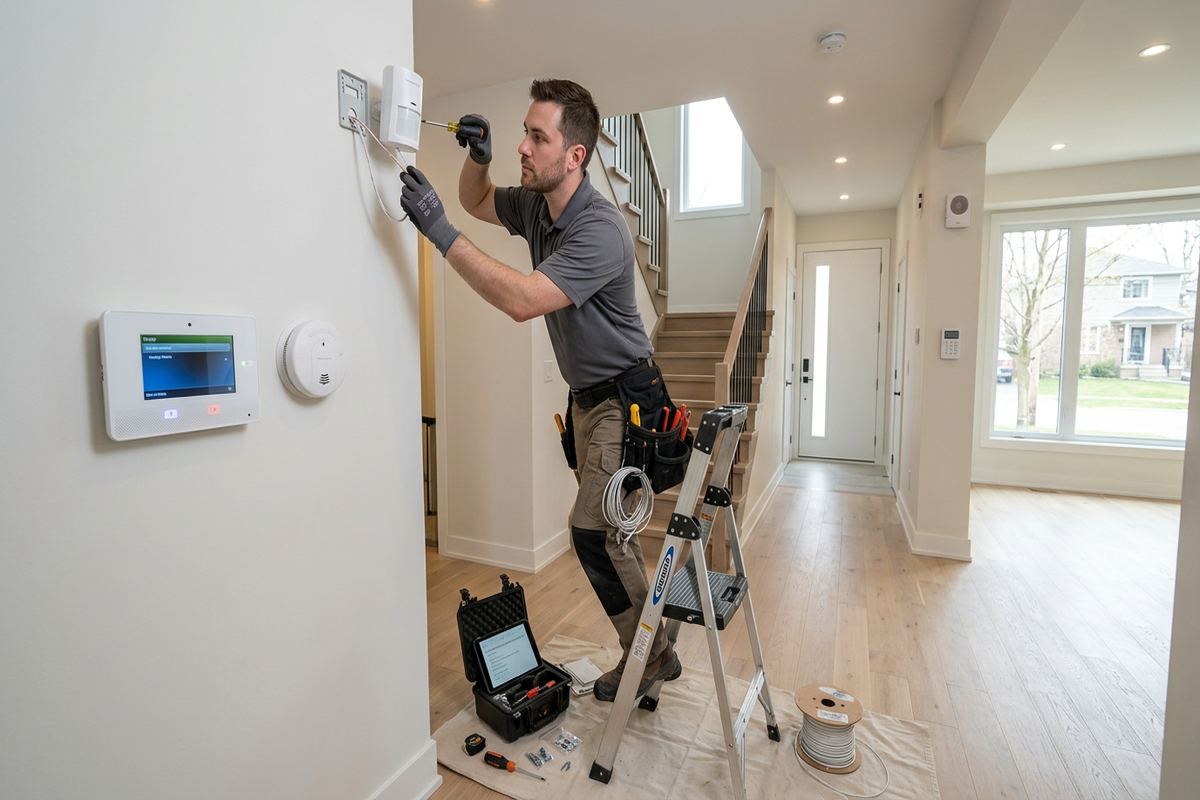
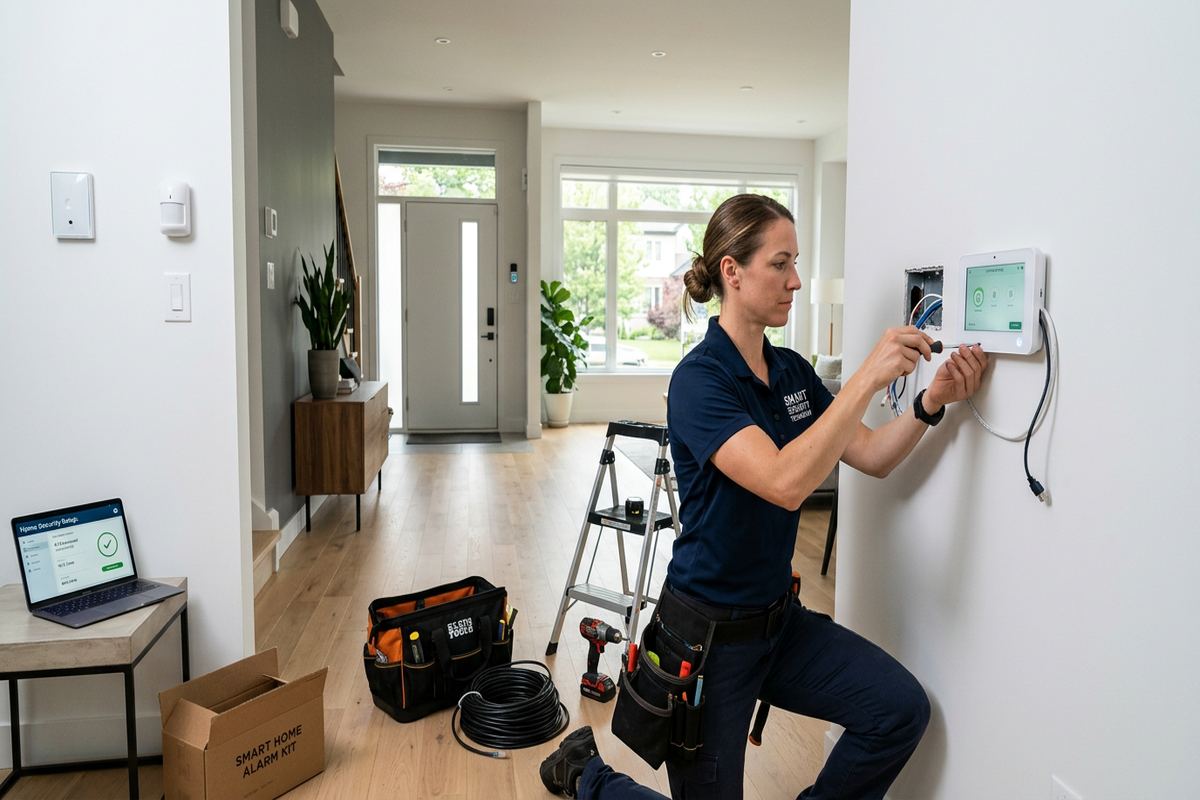
Installation follows the approved scope, beginning with confirmation of device positions and access requirements. Furniture, stored items, or completed finishes can sometimes change the route that appeared practical during assessment, so material differences are discussed before work continues. Wired installations use continuous labelled cable runs between planned endpoints wherever new cable is included. Devices are mounted to stable surfaces using methods appropriate to the construction. We keep alarm cabling organized at the panel and identify zones consistently, making future testing and service easier. Work areas are left orderly once drilling, fastening, termination, and device fitting are complete.
Configuration is completed on site because correct operation depends on the installed environment. We enrol devices, assign zone names, set appropriate entry and exit delays, establish arming modes, and test communication functions included in the project. Door contacts are checked in open and closed positions, while motion detectors are walk-tested through their intended coverage. We also verify keypad, siren, battery, and user notification functions that form part of the system. If network access or a mobile application is required, the customer provides or creates the credentials, preserving their control of the account after handover.
A completed system should be understandable to the people using it. At handover, we review routine arming and disarming, alerts, trouble indications, user management, and any bypass functions included with the selected platform. The customer receives their own credentials and an as-built record identifying installed devices and relevant routes. We also note exclusions or unresolved dependencies, such as customer network work or a future monitored-service activation. UnifiedLink remains one accountable contractor for the assessed alarm installation, cabling, configuration, and handover rather than splitting responsibility among separate installers without a documented boundary.
- Continuous labelled cable runs
- On-site zone and delay configuration
- Functional testing of installed devices
- As-built record at handover
Alarm Upgrades for Chatham Properties
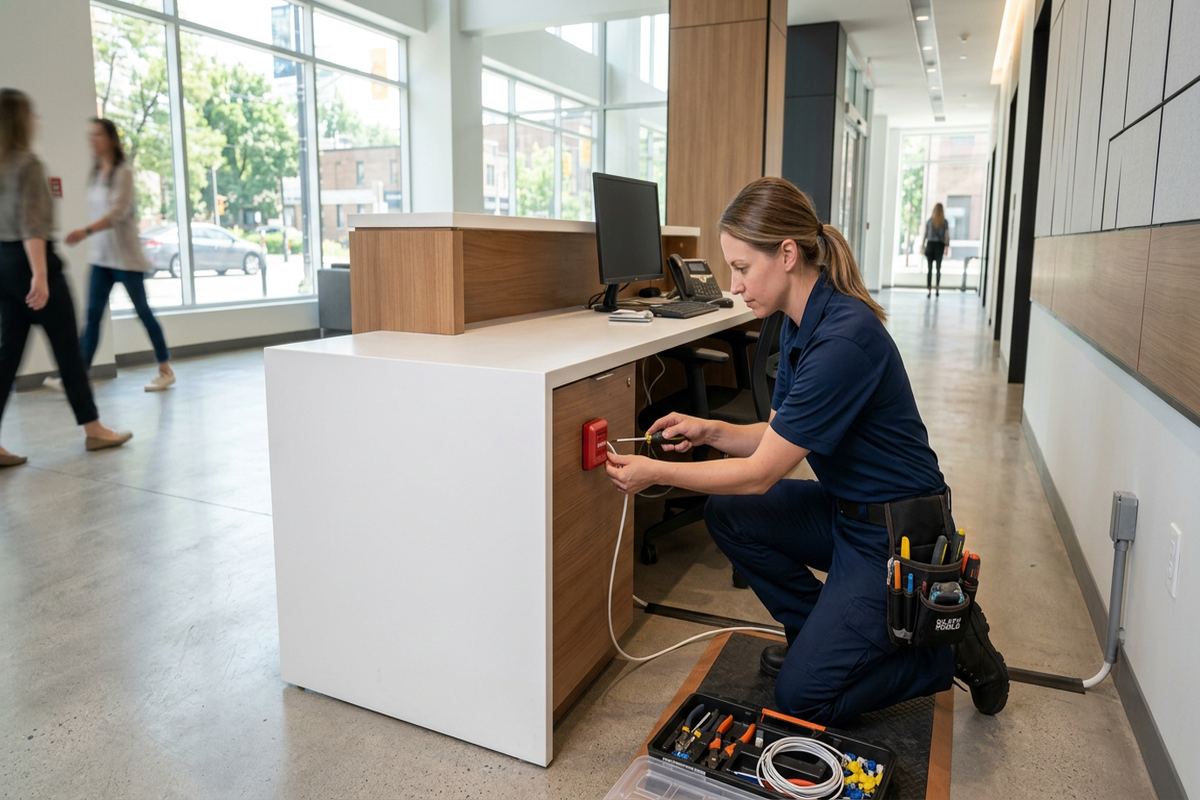
An existing alarm panel may be outdated, partly functional, or disconnected after a change in ownership. Upgrading does not automatically mean replacing every installed component, but compatibility must be established. We inspect accessible wiring, contacts, detectors, keypads, power supplies, and communication equipment before recommending reuse. Older Chatham properties may have extensions or renovations that left zones incorrectly labelled or devices covering spaces differently from the original plan. Testing each available circuit helps distinguish usable infrastructure from unknown or damaged wiring. The written scope then identifies reused equipment, new equipment, exclusions, ownership, and warranty treatment.
False alarms and recurring trouble conditions usually need diagnosis rather than random component replacement. Loose door alignment, weak batteries, damaged cabling, unsuitable motion placement, communication interruptions, and poorly defined user procedures can all produce similar complaints. Seasonal movement is especially relevant where exterior doors or detached structures shift during Chatham-Kent temperature changes. We review event information where available, test affected devices, and check physical conditions around them. Corrections may involve adjustment, relocation, cable repair, programming changes, or replacement. No single remedy is assumed before the cause can be reasonably isolated.
Homeowners sometimes want alarm upgrades alongside cameras, access control, Wi-Fi improvements, or structured cabling. These systems may share network infrastructure or equipment locations, but their functions should remain clearly defined. A camera does not replace a door contact, and an alarm detector does not provide recorded visual verification unless the selected systems explicitly support that workflow. Coordinating cable routes can reduce duplicated pathways during renovation, particularly in basements, utility rooms, and attached garages. UnifiedLink can provide one documented scope across included low-voltage work while recording ownership, credentials, connections, and exclusions for each system.
- Assessment of reusable alarm wiring
- Diagnosis of recurring trouble conditions
- Updated zone names and documentation
- Coordination with other low-voltage systems
Service Across Chatham and Nearby Communities
Alarm projects vary across Downtown Chatham, the Thames Campus area, Maple City, Prestancia, and nearby Wallaceburg. Dense older streets may present limited exterior access and layered renovations, while newer homes may offer more predictable frame construction but extensive finished interiors. Mixed-use locations near commercial strips can combine residential entrances, rear service doors, and shared access arrangements. Industrial units may have high bays, overhead doors, metal construction, and changing tenant layouts. We adapt the assessment to the actual building rather than applying a residential template to every address in Chatham-Kent.
Commercial or mixed-use alarm work requires clear operating roles. Owners, tenants, managers, cleaners, and delivery staff may need different access times or user credentials. Shared walls and entrances can also require landlord approval before cables or devices are installed. We identify who controls the premises, who can approve physical changes, and which areas belong within the alarm scope. For industrial units or commercial strips, overhead doors, stock rooms, rear exits, offices, and public entrances are reviewed separately. This keeps detection zones meaningful and avoids placing every user under one shared code without a practical reason.
To request service, provide the Chatham or Chatham-Kent location, property type, known concerns, and whether an existing alarm is present. Requests sent during business hours are answered the same day; after-hours requests are answered the next business day. Site assessment timing depends on the service and travel distance. After assessment, UnifiedLink prepares a written scope covering equipment, cable routes, device placement, exclusions, equipment ownership, and warranty. Installation proceeds against that agreed document, followed by on-site configuration, testing, customer-controlled credential handover, and an as-built record of the completed alarm work.
- Homes, farms and mixed-use properties
- Coverage in Chatham and Wallaceburg
- Written scope before installation
- One accountable low-voltage contractor
Chatham neighbourhoods we cover
- Downtown Chatham
- Thames Campus area
- Maple City
- Prestancia
- Wallaceburg
Home alarm system installation in Chatham — common questions
Can you use the alarm wiring already in my Chatham home?
Possibly, but the wiring must be inspected and tested before reuse. Older Chatham homes can contain abandoned circuits, undocumented splices, damaged contacts, or cables that no longer reach the expected location after renovations. The site assessment identifies accessible wiring and compatible equipment. Any reused components, exclusions, ownership details, and warranty treatment are listed in the written scope.
Should I choose a wired or wireless alarm system?
The right approach depends on construction, access, layout, and future maintenance. Wired devices can suit open basements, renovation work, and stable cable routes. Wireless equipment may reduce disruption in finished or masonry-heavy Chatham properties. Hybrid systems can combine both. We assess radio paths, wall materials, power, device locations, and existing wiring before recommending an arrangement.
Can an alarm cover my detached garage or farm outbuilding?
Yes, when distance, construction, power, and communication conditions support a workable design. Metal siding, masonry, machinery, and the separation between buildings can reduce wireless range on Chatham-Kent properties. Options may include suitable cabling, communication links, or a separate system. The assessment determines practical routes and identifies any infrastructure or environmental limits in the scope.
Do I need permission in a condo or rental property?
Usually, approval should be confirmed before work affects walls, exterior doors, common areas, shared systems, or landlord-owned finishes. Chatham condominium rules and rental agreements vary. We can document proposed device positions, cable routes, and mounting needs, but the customer is responsible for obtaining required permission. Wireless equipment may reduce alteration but does not override building or landlord requirements.
How do you protect exterior alarm wiring from Chatham weather?
Exterior work is planned around the mounting surface, drainage, sun exposure, snow, and Chatham freeze-thaw conditions. We use suitable fasteners, protected transitions, and sealed cable penetrations. Device positions are selected to reduce direct water paths and allow future access. Outdoor contacts and detectors are also checked for seasonal movement, obstruction, and environmental activity that could affect operation.
What do I receive when the installation is complete?
After installation, UnifiedLink configures and tests the included alarm functions on site. We review normal use, user management, alerts, and relevant trouble indications. The system is handed over with the customer’s own credentials and an as-built record identifying installed devices and relevant routes. Any exclusions, customer dependencies, or separate monitoring arrangements remain documented in the scope.
Coverage in Chatham is confirmed against the address before we quote. See everything we install in Chatham or the province-wide home alarm system installation page.