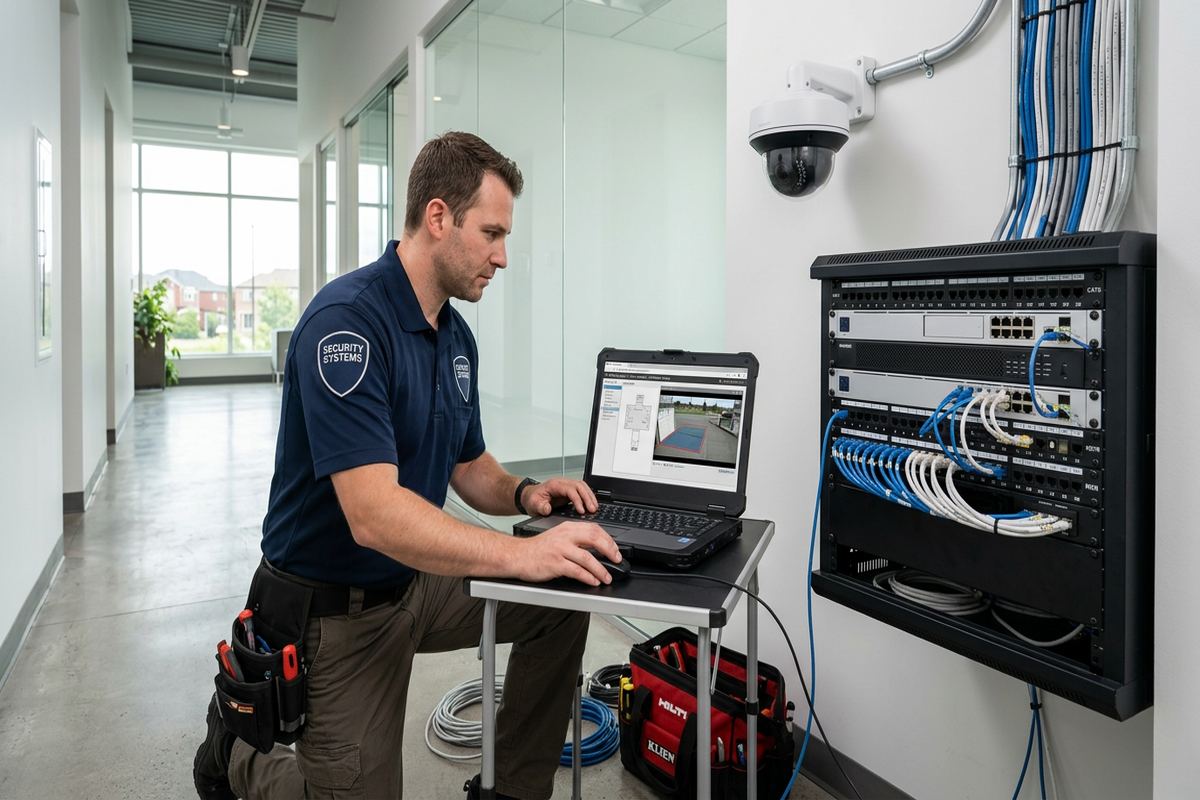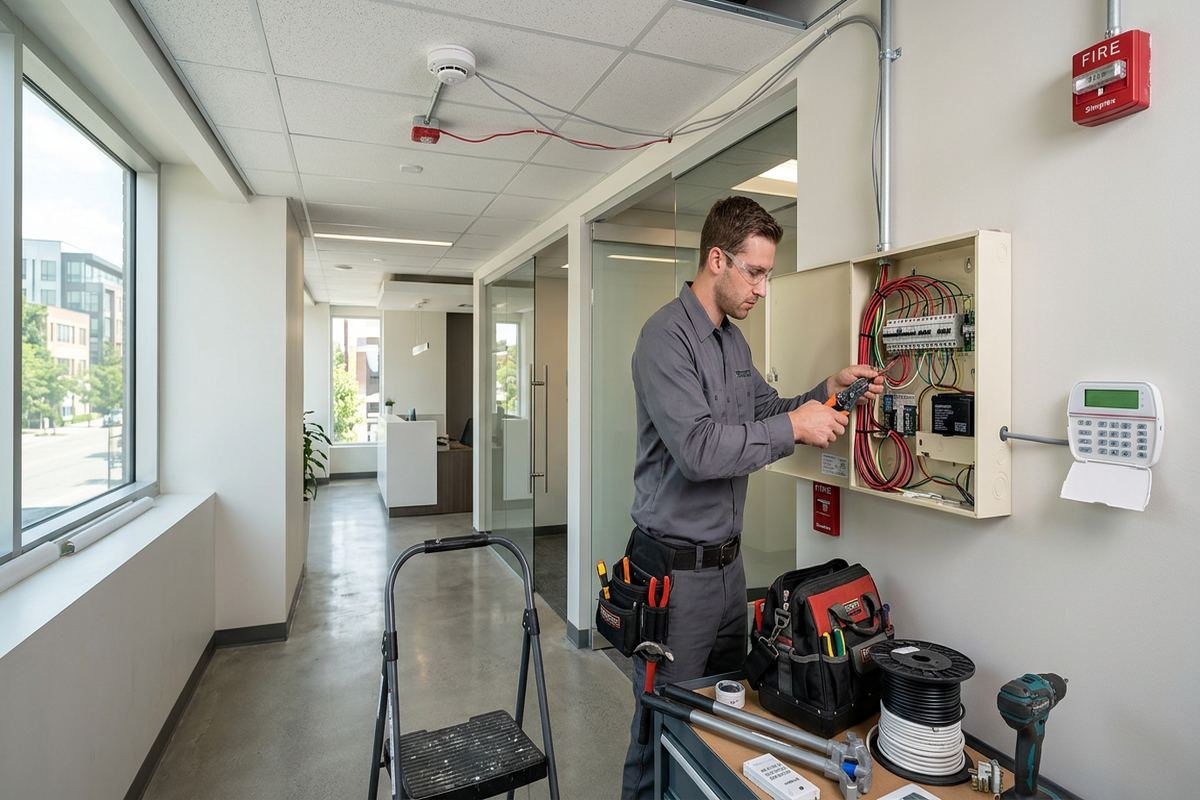
UnifiedLink installs commercial networks for offices, shops, farms, grain and food facilities, industrial units and multi-building properties in Chatham. Work begins with a site assessment, followed by a written scope covering cabling, network equipment, Wi-Fi placement and installation details. Each system is configured on site and handed over using the customer’s own credentials.
Commercial Network Installation for Chatham Properties
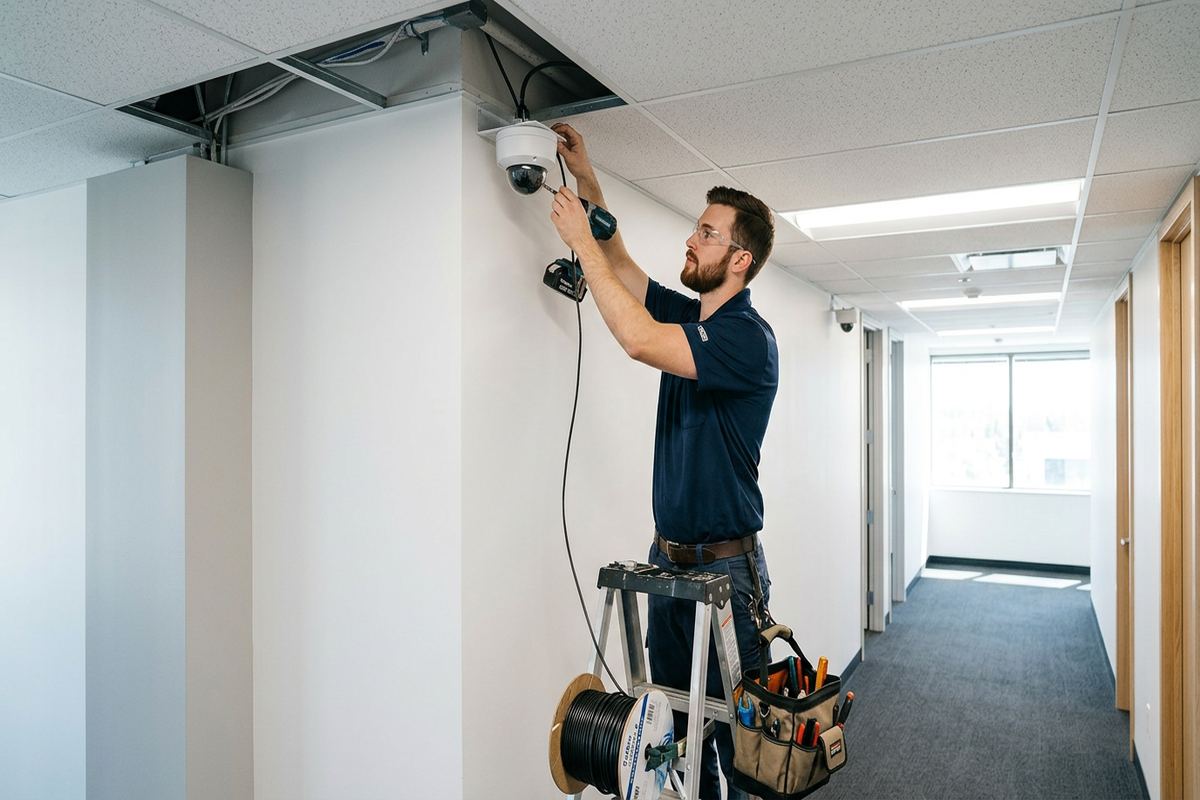
Commercial networks need to match the building, daily workload and equipment they support. In Chatham, that may mean connecting office computers and phones, covering a warehouse with Wi-Fi, linking farm buildings or providing reliable connections for grain and food facility systems. We assess where people and devices operate, how traffic moves through the property and which services must remain stable. The resulting design can include structured cabling, switches, wireless access points, racks, patch panels and connections for cameras, access control, displays or other low-voltage systems.
Older town buildings, commercial strips and industrial units rarely offer identical installation conditions. Frame construction may allow concealed cable paths, while brick, block or poured concrete can require surface raceway, carefully selected penetrations or alternate access point locations. Downtown Chatham properties may also have renovations from different periods, leaving undocumented cables and crowded utility spaces. Rather than extending an unknown installation without checking it, we trace relevant connections, review available pathways and identify components that can remain. The written scope then separates retained infrastructure from new work and lists exclusions clearly.
One contractor can coordinate the physical cabling, rack work, network hardware and wireless configuration instead of dividing responsibility among unrelated trades. Continuous labelled cable runs are installed between their intended endpoints, with patching and device locations organized for future service. Where the project connects internet equipment supplied by a carrier, responsibilities at the demarcation point are documented. Handover includes the customer’s own administrative credentials and an as-built record identifying installed outlets, cable labels, equipment locations and important configuration details. Equipment ownership and applicable warranty terms are also recorded in writing.
- Structured copper and fibre cabling
- Network racks and patch panels
- Managed switches and router integration
- Indoor and outdoor Wi-Fi access points
- Connections for low-voltage building systems
Planning a Chatham Business Network
A useful network plan starts with business operations rather than a generic equipment list. During the site assessment, we review staff locations, shared devices, point-of-sale stations, phones, printers, production equipment and areas where mobile devices require wireless access. We also note internet service entry points, electrical availability and secure locations for network hardware. Capacity is considered for current devices and reasonable changes already known to the customer. Pricing follows the assessment because cable access, building materials, ceiling conditions, lift requirements and travel between structures can materially change the work involved.
Device placement affects both performance and maintainability. A rack hidden in an inaccessible corner may be difficult to service, while a switch installed in a dusty, damp or hot space may operate outside suitable conditions. Chatham-Kent farm properties, grain operations and food facilities can present longer distances, separate outbuildings and environments requiring protected pathways or suitable enclosures. We identify these conditions before selecting routes and hardware. Where a cable distance or electrical exposure makes ordinary copper unsuitable, fibre or a different building-to-building connection may be considered in the written design.
The scope describes equipment, cable routes, device placement, exclusions, equipment ownership and warranty before installation proceeds. It also identifies work expected from others, such as electrical receptacles, internet provider changes, landlord consent or access to restricted rooms. For leased units along commercial corridors, cable routes may cross shared spaces or attach to surfaces controlled by the property owner. Confirming approvals early prevents a technically sound plan from being delayed later. If the customer has internal information technology support, we can define which party supplies addressing, firewall policies, cloud accounts and final application testing.
- Operational and device requirements review
- Cable-path and construction assessment
- Rack, power and ventilation review
- Written responsibilities and exclusions
- Allowance for known expansion plans
Structured Cabling in Older Chatham Buildings
Older housing converted to commercial use is common enough in Chatham to require careful investigation. These properties may combine original plaster, later drywall, frame additions and masonry foundations, each of which changes how cable can be routed. Existing telephone or coaxial cable does not automatically provide a suitable pathway or network connection. We inspect accessible basements, ceiling spaces, service rooms and wall cavities before proposing concealed runs. Where concealment would cause unnecessary damage or uncertainty, neat surface raceway can provide a serviceable alternative with predictable access for future additions.
Masonry and frame construction require different fastening and penetration methods. Brick should not be treated like wood siding, and hollow block may need anchors chosen for the load and mounting location. Exterior penetrations require attention to slope, sealing and drip management so water is not directed into the building. Chatham winters and repeated freeze-thaw cycles can open poorly finished penetrations or stress exposed cable. Outdoor-rated cable, suitable conduit and weather-resistant fittings are used where the route leaves conditioned space, while indoor cable remains protected from conditions it was not designed to withstand.
Existing cabling is assessed by condition, type, route and termination rather than appearance alone. Unlabelled cables may lead to abandoned outlets, hidden intermediate joins or equipment that no longer exists. Testing can determine whether a candidate run is useful, but inaccessible routing may still limit confidence in long-term serviceability. New continuous labelled cable runs provide a known path from patch panel to outlet or device. In Downtown Chatham and the Thames Campus area, this method can simplify phased renovations because each active endpoint is identifiable without repeatedly opening finished walls or tracing unrelated legacy wiring.
- Plaster, drywall and masonry route planning
- Neat raceway where concealment is impractical
- Appropriate anchors and penetration methods
- Continuous runs without hidden joins
- Testing and labelling of retained cables
Chatham, Ontario
Commercial network installation in Chatham, scoped in writing first
Book a site assessment and get equipment, routes, exclusions, and warranty on paper before anything is installed.
Wi-Fi Design for Chatham Workplaces
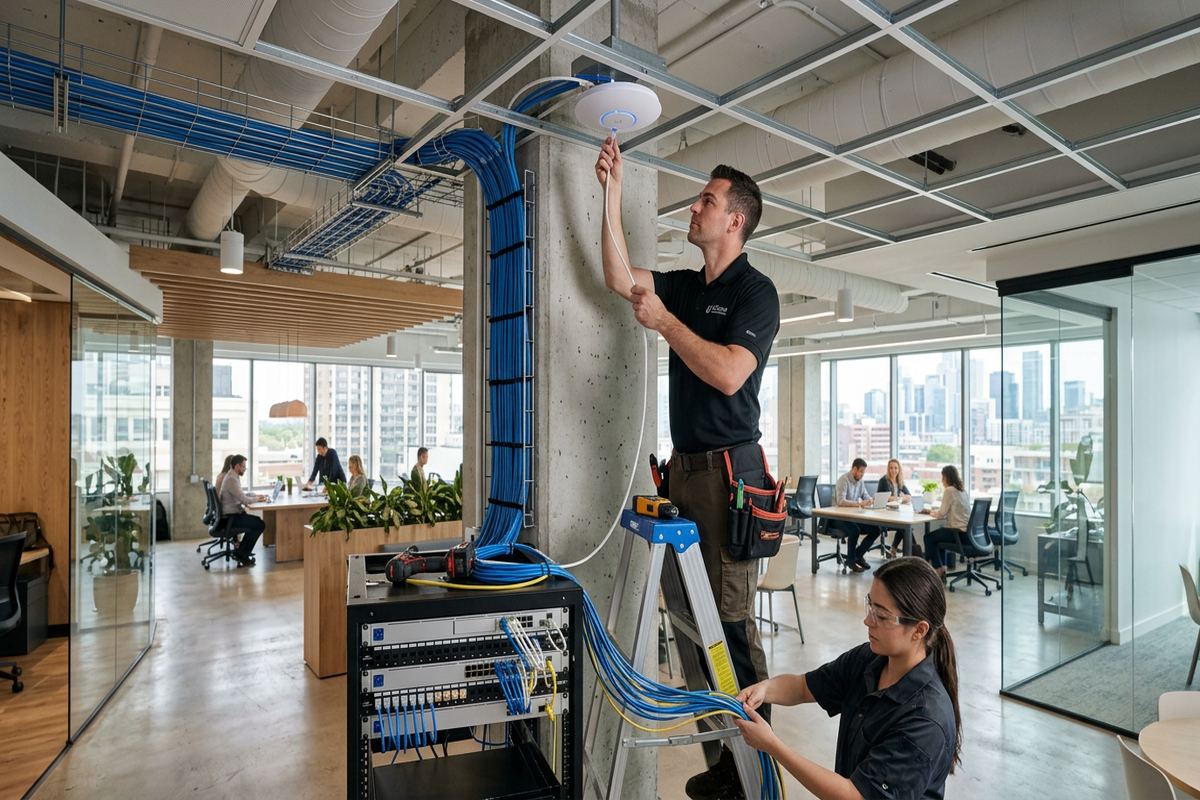
Reliable commercial Wi-Fi depends on access point placement, channel planning and wired connections back to the network. A single powerful device is not a substitute for properly distributed coverage, particularly across divided offices, block walls, metal shelving or production areas. We map intended use areas and consider the number and type of connected devices before selecting locations. Ceiling height, construction materials and mounting access all affect the plan. Access points are configured on site so wireless names, security settings, management access and network segmentation align with the approved scope.
Different Chatham properties create different radio-frequency obstacles. A Maple City office may need coverage across conventional rooms and meeting spaces, while an industrial unit can include high shelving, overhead doors, machinery and changing stock levels. Grain and food facilities may have metal cladding, process areas or washdown restrictions that rule out otherwise convenient mounting points. Outdoor yards introduce weather, distance and line-of-sight issues. The assessment distinguishes spaces needing normal staff access from operational zones, public areas and locations where coverage is unnecessary or would create avoidable exposure.
Guest, staff and operational traffic can be separated where the selected network equipment supports it. This helps prevent visitors from reaching internal devices and allows business systems to follow different access rules. Segmentation does not replace endpoint security, updates or sound account management, but it provides a clearer network structure. We document wireless names, installed access point locations and administrative ownership during handover. Passwords and cloud-management accounts are established with the customer’s own credentials rather than retained under an installer-controlled identity, allowing the owner or designated technology provider to manage the system later.
- Access points connected by structured cabling
- Coverage planned around walls and shelving
- Separate staff and guest networks
- Indoor and outdoor mounting options
- Customer-controlled management credentials
Farm and Multi-Building Network Links
Farm properties around Chatham-Kent often need network service beyond the main office or residence. Shops, barns, storage buildings, scales and yard areas may be separated by distances that make an ordinary interior cable inappropriate. Before proposing a link, we review building locations, existing underground pathways, elevation, power availability and the devices required at the far end. Options may include fibre in a suitable pathway or a point-to-point wireless bridge where a stable line of sight can be maintained. The choice depends on site conditions rather than convenience alone.
Copper connections between separate buildings can be exposed to electrical potential differences and surge events, particularly where structures have independent electrical services. Fibre provides electrical isolation and can support longer routes, but it still requires a suitable pathway, termination hardware and protected equipment at both ends. Wireless bridges avoid trenching but depend on mounting stability, clear paths and environmental conditions. Trees, moving equipment or future construction can obstruct a link that initially appears open. These trade-offs are described in the scope so the property owner understands the proposed route and its operational limitations.
Exterior equipment must be mounted and sealed for southwestern Ontario conditions. Wind, rain, snow, summer heat and winter freeze-thaw affect brackets, cable entries, conduit and enclosures. We avoid treating exterior-rated equipment as permission to ignore installation details. Drip loops, compatible glands, protected transitions and correctly finished penetrations help keep moisture away from cable pathways and building interiors. For food or grain operations, placement also needs to account for dust, cleaning practices, vehicle movement and restricted production zones. Final locations are coordinated with the people responsible for property operations and safety procedures.
- Fibre links between separate buildings
- Point-to-point wireless bridge planning
- Protected exterior cable transitions
- Weather-aware mounting and sealing
- Connections for shops, barns and yards
Network Racks, Switching and Documentation in Chatham
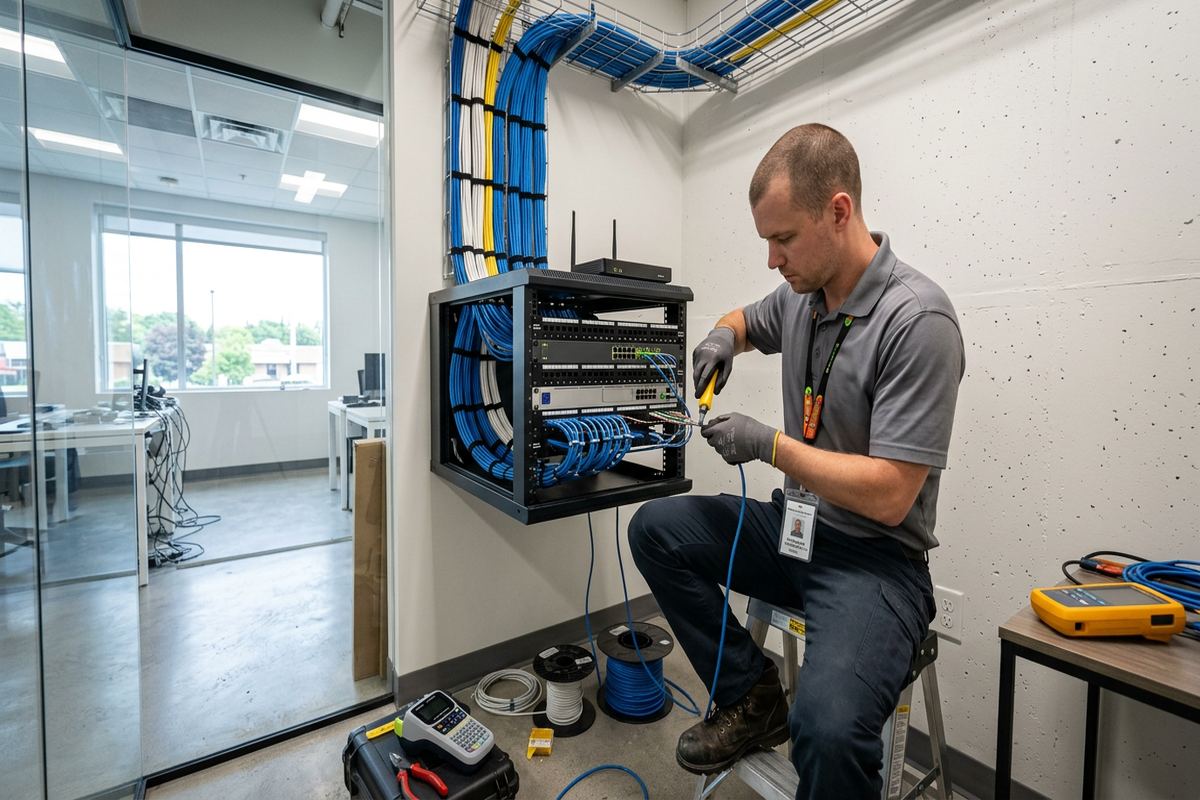
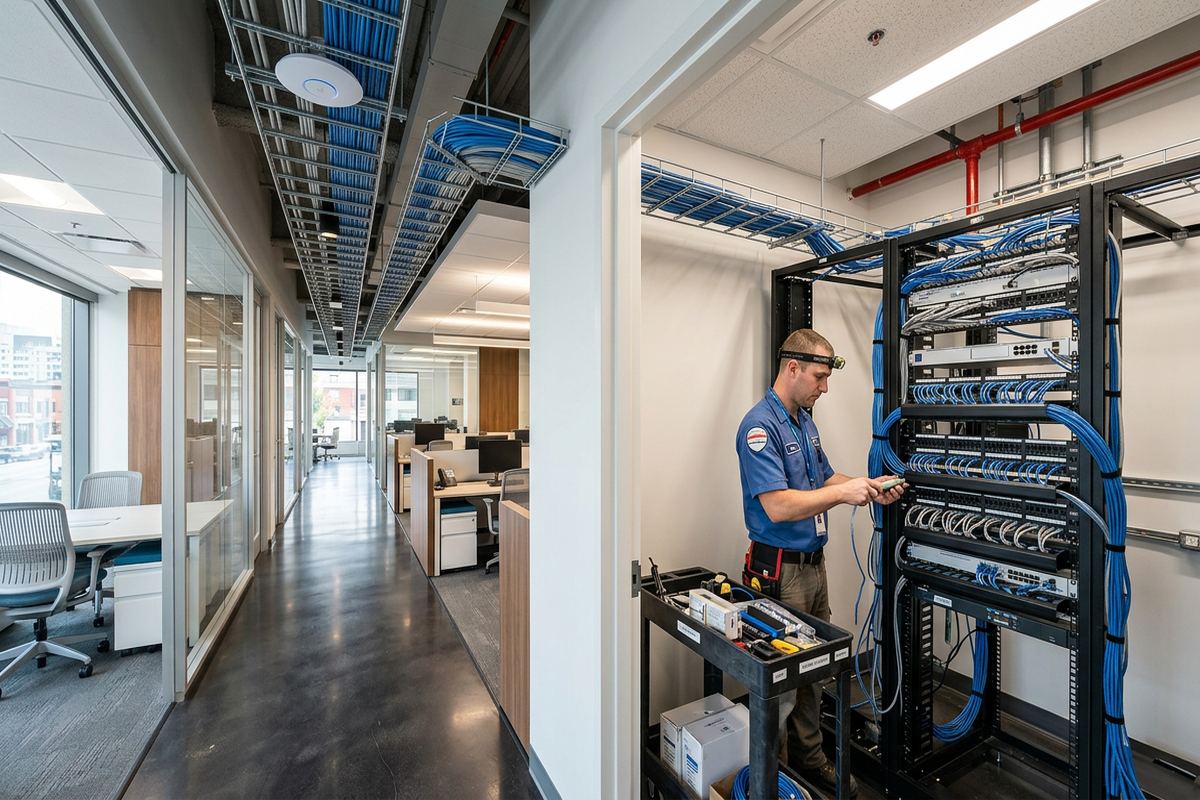
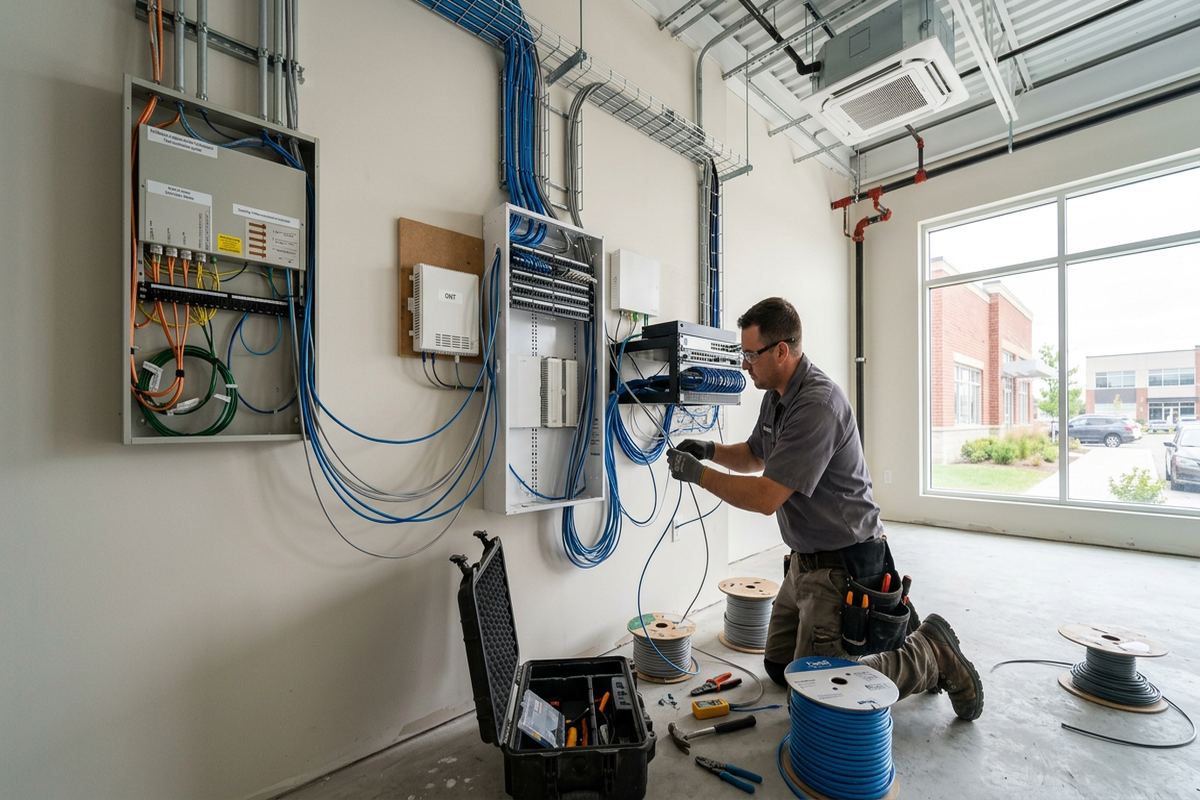
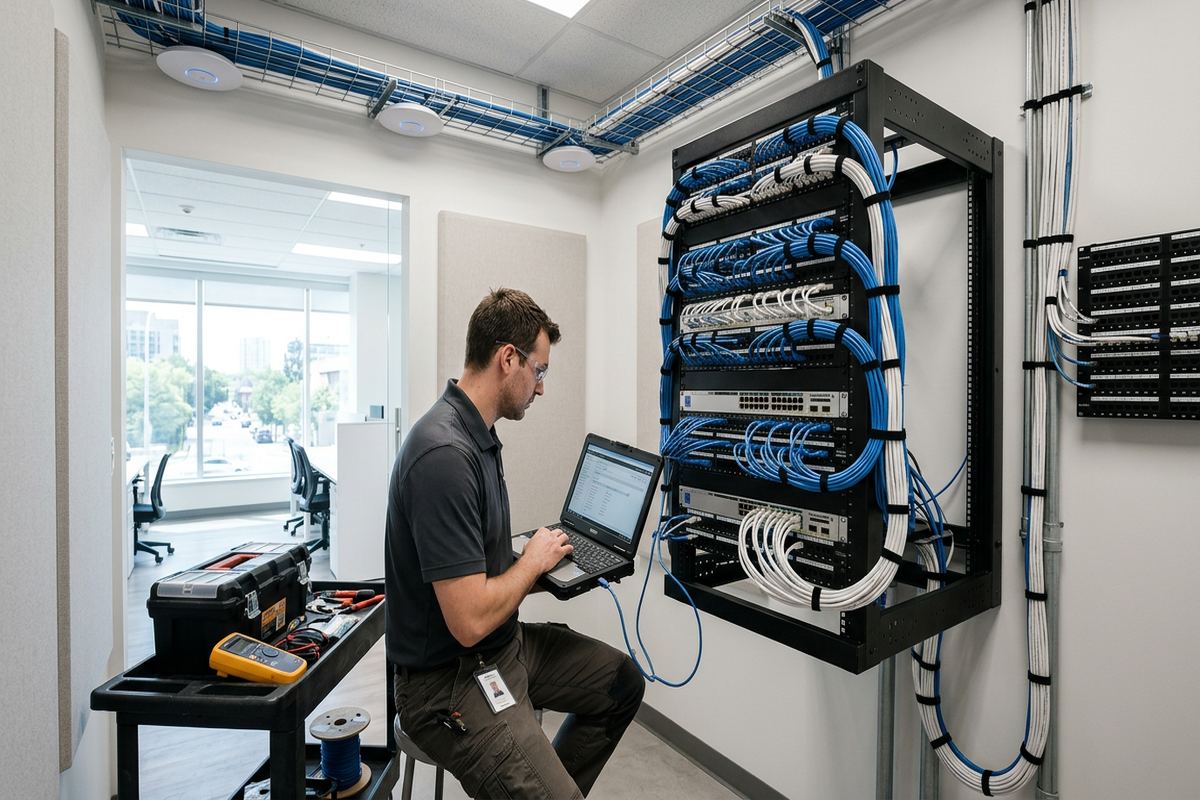
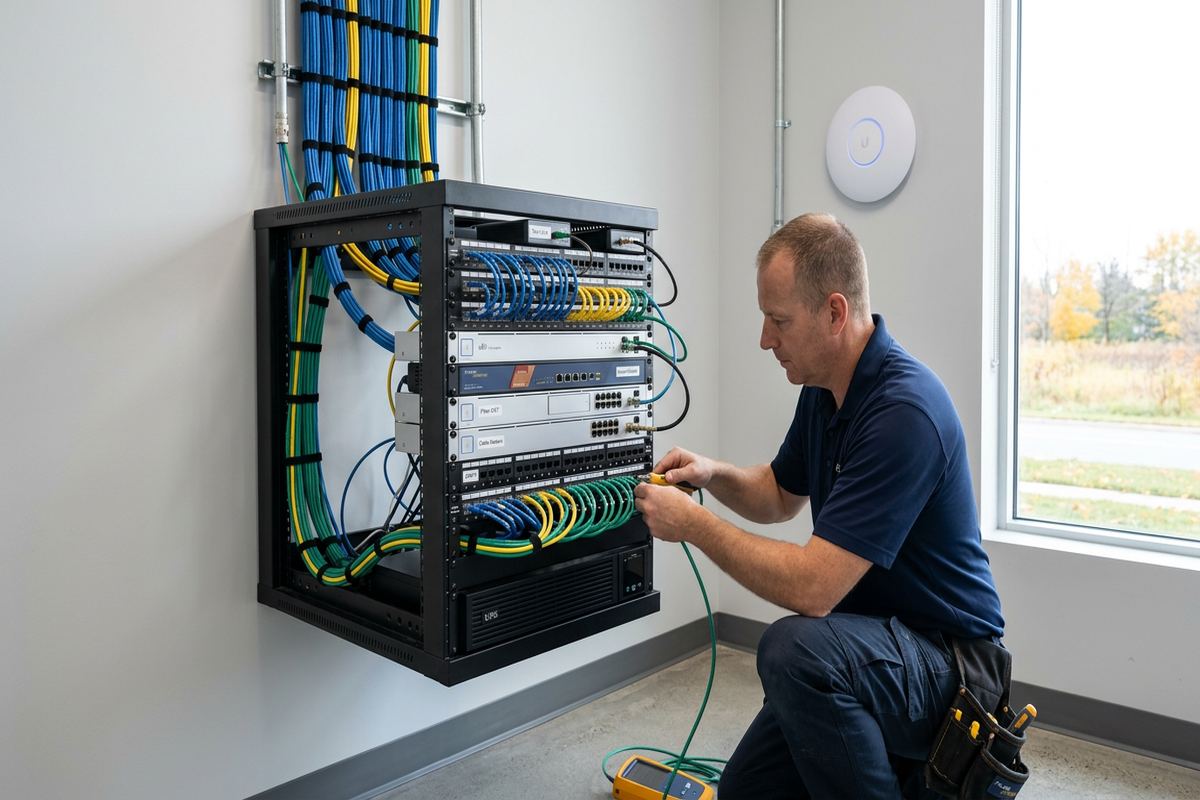
A commercial network is easier to maintain when its central equipment is organized and accessible. We can install or arrange patch panels, switches, cable management and rack-mounted components in an appropriate location. The rack layout keeps permanent building cabling separate from replaceable patch cords and identifies each connection consistently. Available power, ventilation, security and working clearance are reviewed before installation. If an existing cabinet is undersized, damaged or crowded with unrelated equipment, the scope identifies whether it will be reorganized, replaced or left unchanged rather than assuming every existing component can be reused.
Switch selection depends on port count, device power needs, management requirements and expected network traffic. Cameras, phones, wireless access points and access control components may use Power over Ethernet, but their combined load must remain within the switch’s supported power budget. Uplink capacity also matters when many devices share a connection between switches. We calculate requirements from the equipment included in the project and document customer-supplied devices that may alter them. In Chatham industrial units, remote cabinets can reduce long horizontal runs, provided each cabinet has a suitable environment, secure mounting and a properly designed uplink.
Labelling and records reduce guesswork after construction is finished. Cable identifiers are applied at relevant endpoints and matched to patch-panel positions or other termination points. The as-built record summarizes outlet and device locations, rack components and significant departures from the original plan. Configuration details appropriate for handover are provided without publishing sensitive passwords in exposed documents. Customer credentials are used for administrative accounts, and ownership of licensed or cloud-managed equipment is identified. These steps make later troubleshooting, provider changes and expansions more practical, whether support is handled by UnifiedLink or another authorized contractor.
- Organized racks and patch panels
- Power over Ethernet budget review
- Consistent endpoint and port labels
- On-site switch configuration
- As-built network installation record
Installation in Leased and Shared Properties
Tenants should confirm authority before cables, antennas, cabinets or access points are attached to a leased property. Landlord approval may cover penetration locations, visible raceway, roof or exterior mounting, use of common telecommunications rooms and restoration obligations. In a Chatham commercial strip, the internet service entry may be in another unit or shared utility area, requiring coordinated access. We can document the proposed routes and equipment locations for review, but the tenant or owner remains responsible for obtaining permissions unless the written scope assigns a specific coordination task.
Condominium and shared-building projects may involve additional rules from a condominium corporation or property manager. Common walls, corridors, exterior surfaces and risers are not automatically available for private network work. Fire separations must remain intact, and penetrations may require suitable firestopping by the responsible trade. We identify visible and accessible conditions during assessment, then note approvals or specialist work that falls outside our scope. Early review is particularly useful when a business in Prestancia or another mixed property needs network equipment to serve both private rooms and a shared or exterior area.
Scheduling also needs to account for occupied workplaces, neighbours and restricted production periods. Some cable work can be completed with limited interruption, while rack changes or switch replacements may temporarily affect connected devices. We outline expected dependencies and coordinate practical work stages with the designated contact. In food and grain facilities, installation may need to avoid sanitation cycles, loading periods or controlled spaces. For offices, noisy drilling and ceiling access can be planned around staff use. Any shutdown requirements identified during planning are documented rather than left for the installation day.
- Landlord and property-manager route review
- Common-area access requirements
- Exterior mounting approval details
- Planned service interruption windows
- Documented out-of-scope restoration work
Completing a Commercial Network Project in Chatham
Installation follows the approved scope, beginning with agreed pathways and equipment locations. Cables are pulled as continuous labelled runs, supported appropriately and kept separate from hazards or electrical sources according to the planned route. Outlets, patch panels and device ends are terminated before relevant links are tested. Network equipment is then mounted and configured on site. Where active business systems are being migrated, work can be staged so that known dependencies are handled in order. Unexpected concealed conditions are raised with the customer before they change the agreed work.
Testing confirms the installed links and allows configuration issues to be separated from physical cabling faults. The exact checks depend on cable type, equipment and project scope, but results are reviewed before handover. Wireless access points are verified in intended work areas, recognizing that real coverage can change as furniture, stock or machinery moves. For a Wallaceburg facility or another location requiring travel from Chatham, assessment and installation scheduling will depend on service needs, site access and travel distance. These factors are confirmed directly rather than represented as a fixed arrival promise.
At handover, the customer receives control of the installed system through their own credentials, along with the as-built record and the written information applicable to equipment ownership and warranty. We review relevant rack locations, labels, wireless networks and management access with the designated contact. Requests sent during business hours are answered the same day, while after-hours requests are answered the next business day. Site assessment timing depends on the service and travel distance. With one accountable contractor, questions about cabling, device placement and configuration have a defined point of contact.
- Installation against an approved written scope
- Relevant cable and connection testing
- On-site network equipment configuration
- Credential transfer to the customer
- Documented labels, locations and ownership
Chatham neighbourhoods we cover
- Downtown Chatham
- Thames Campus area
- Maple City
- Prestancia
- Wallaceburg
Commercial network installation in Chatham — common questions
Do you assess my Chatham property before pricing?
Yes. Commercial network pricing follows a site assessment because cable routes, ceiling access, masonry, equipment locations and building-to-building distances affect the scope. In Chatham, older town buildings, farm properties and industrial units can require very different installation methods. Assessment timing depends on the requested service, property access and travel distance. You then receive a written scope before work proceeds.
Can you reuse our existing network cabling?
Existing cabling can be considered if its type, condition, terminations and route are suitable for the intended service. Chatham properties with multiple renovations often contain abandoned or unlabelled runs, so visual appearance alone is not enough. We inspect and test relevant cables where practical, then identify what can remain. New work uses continuous labelled runs without hidden intermediate joins.
Can you connect separate farm buildings?
Yes, subject to a site assessment. Chatham-Kent farms may use fibre in a suitable underground pathway or a point-to-point wireless bridge with stable line of sight. Distances, electrical services, trees, moving equipment, mounting locations and available power all influence the design. We document the selected connection method, equipment locations and any trenching, electrical or pathway work assigned to others.
Will commercial Wi-Fi cover our warehouse?
Coverage depends on the warehouse layout, wall materials, ceiling height, shelving, stock and machinery. A Chatham industrial unit may need several wired access points rather than one centrally located device. We plan placement around the actual work areas and configure equipment on site. Wireless performance can change when shelving or inventory moves, so known operational changes should be discussed during assessment.
Do I need landlord or condo approval?
Approval may be required when network work affects common rooms, exterior walls, roofs, risers or other parts of a leased or condominium property. This is relevant for Chatham commercial strips and shared buildings where cable routes extend beyond the tenant’s unit. We can describe proposed pathways and mounting locations in the scope, while responsibility for obtaining approval is documented before installation.
What do I receive when installation is complete?
Handover includes the customer’s own administrative credentials and an as-built record showing relevant cable labels, outlets, device locations and installed network equipment. The written documentation also addresses equipment ownership and applicable warranty terms. We review the system with the designated Chatham contact so the business or its technology provider can manage the network without relying on installer-owned accounts.
Coverage in Chatham is confirmed against the address before we quote. See everything we install in Chatham or the province-wide commercial network installation page.