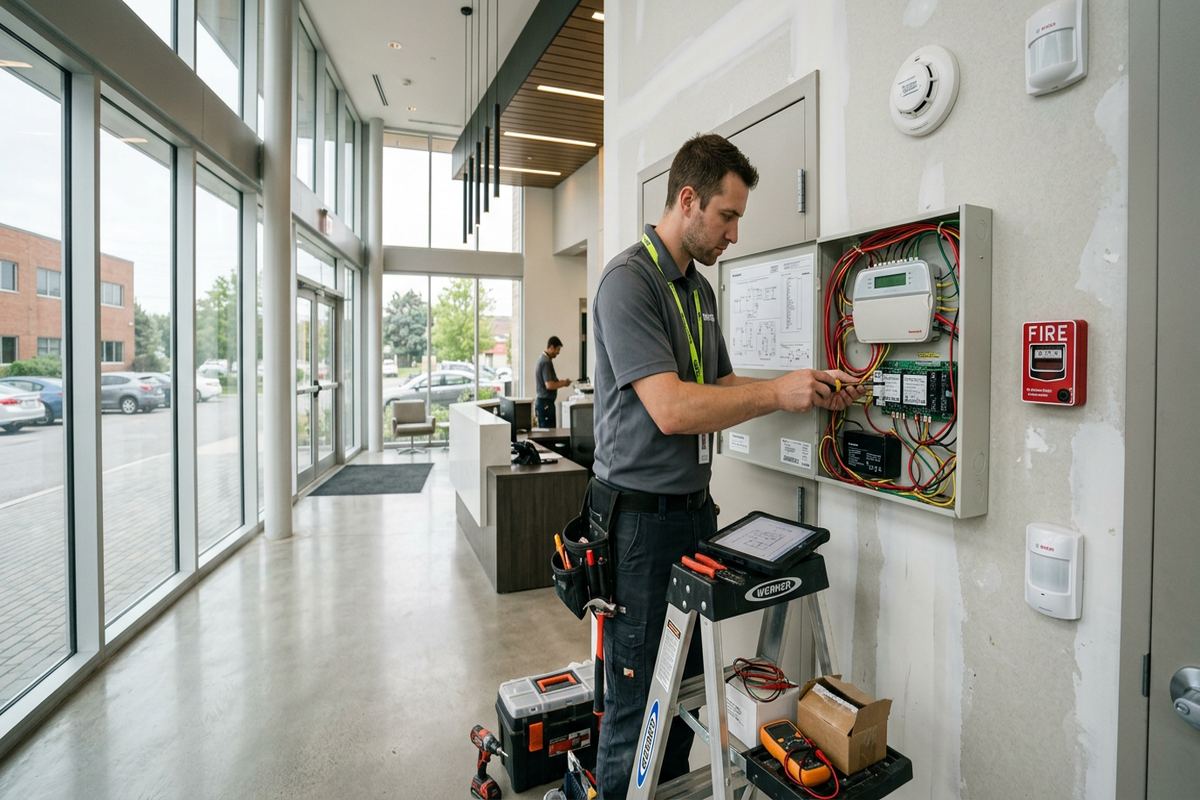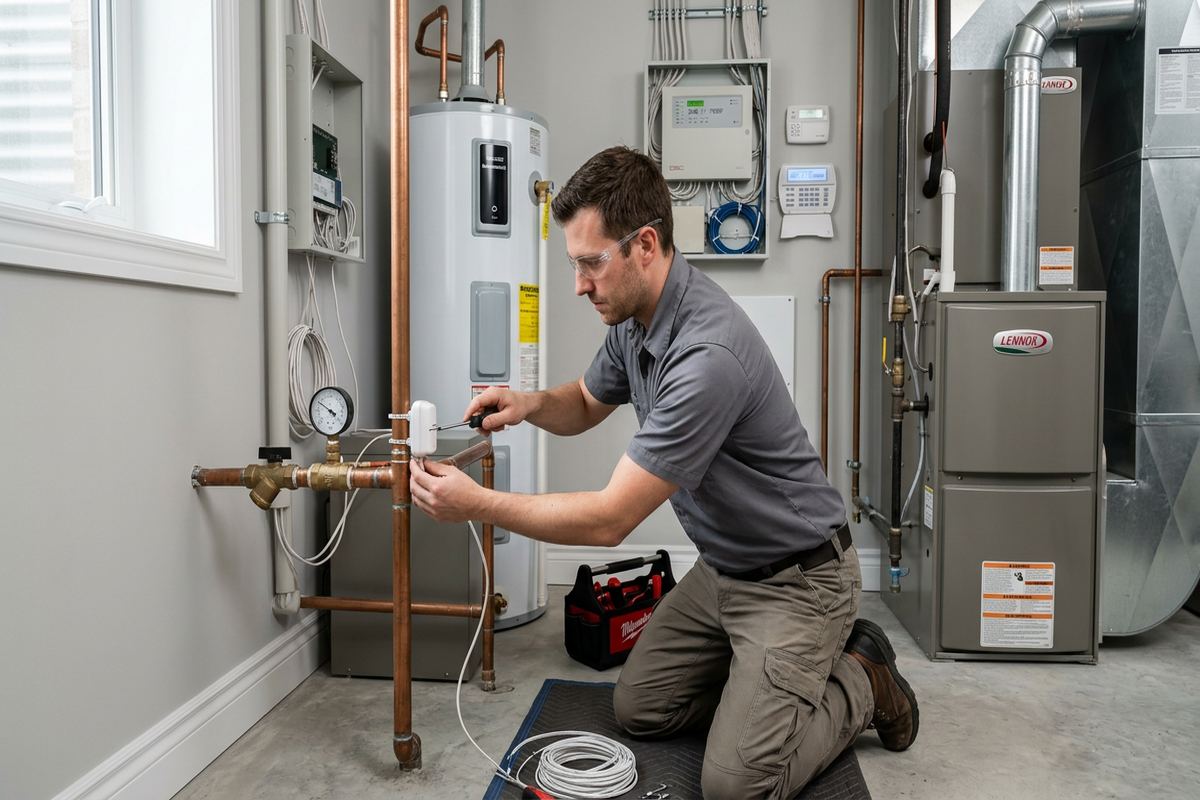
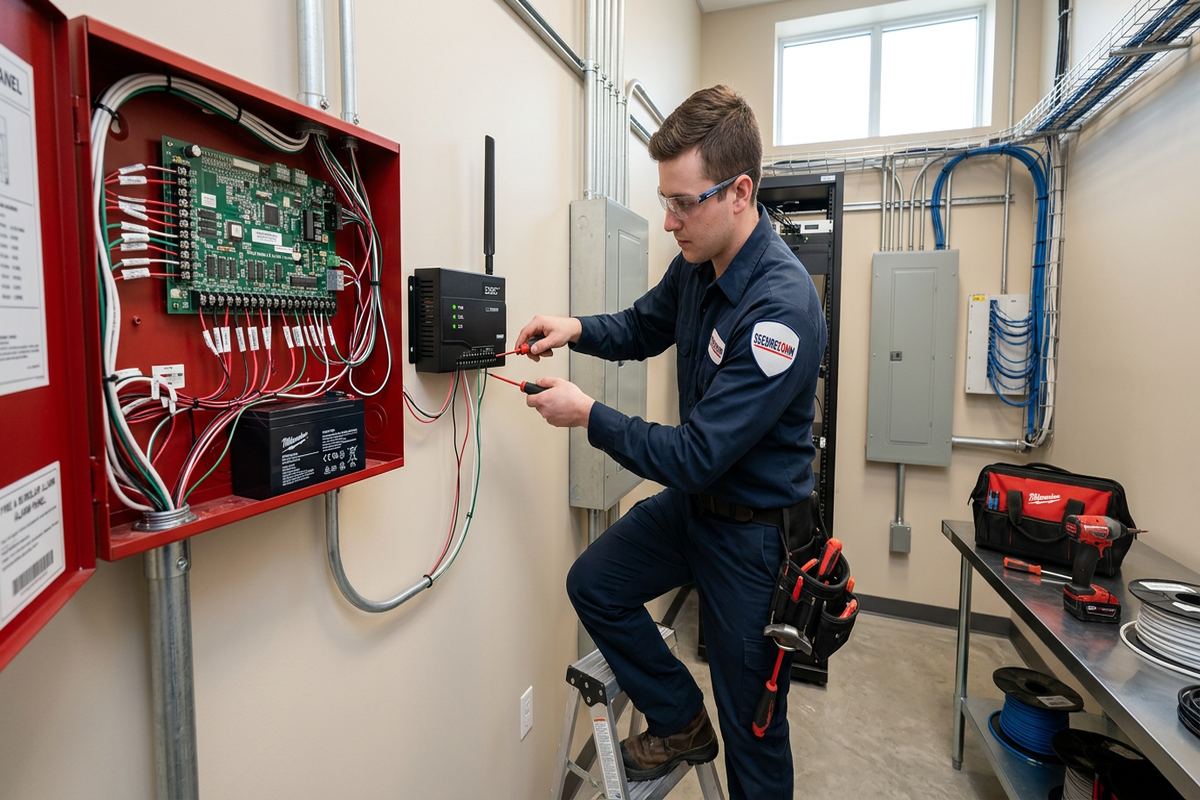
UnifiedLink installs commercial alarm systems for businesses, institutions and managed properties in Chatham and across Chatham-Kent. Each project starts with a site assessment covering access points, operating routines, building construction and communication options. The resulting written scope defines equipment, cable routes, device placement, exclusions, ownership and warranty before installation begins.
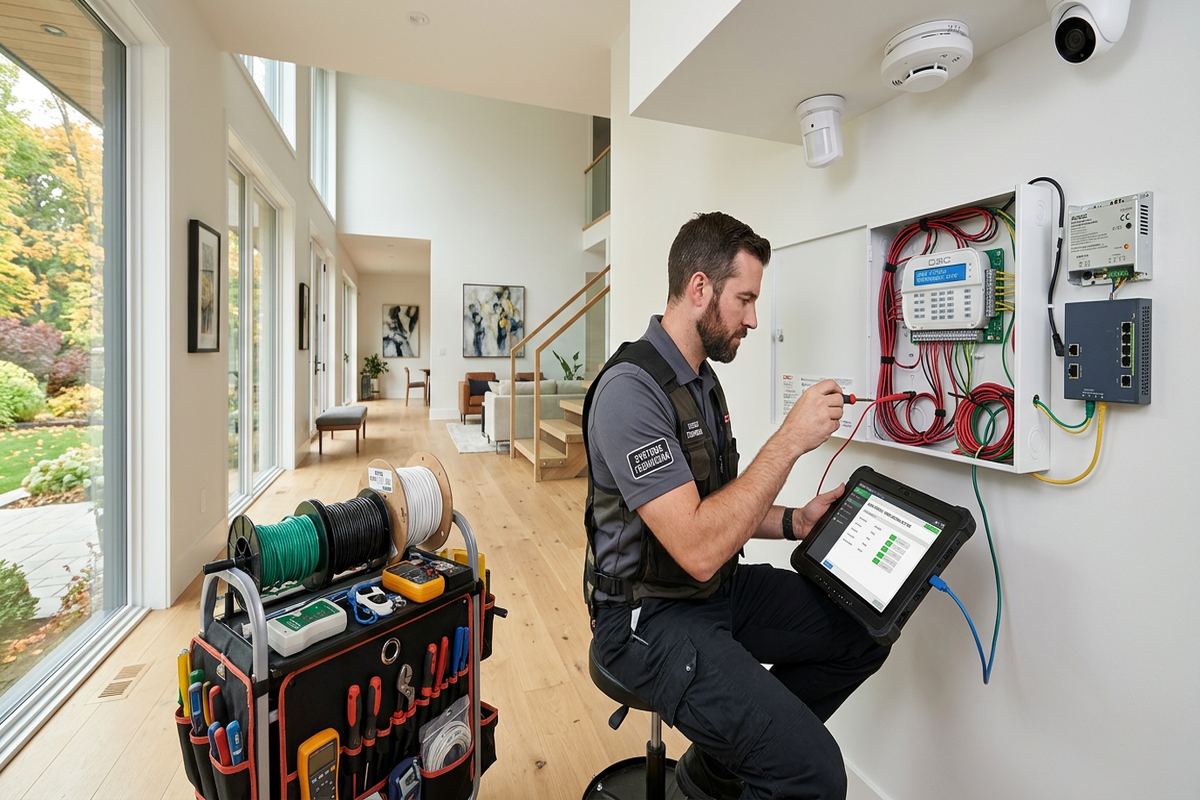
Commercial Alarm Planning for Chatham Properties
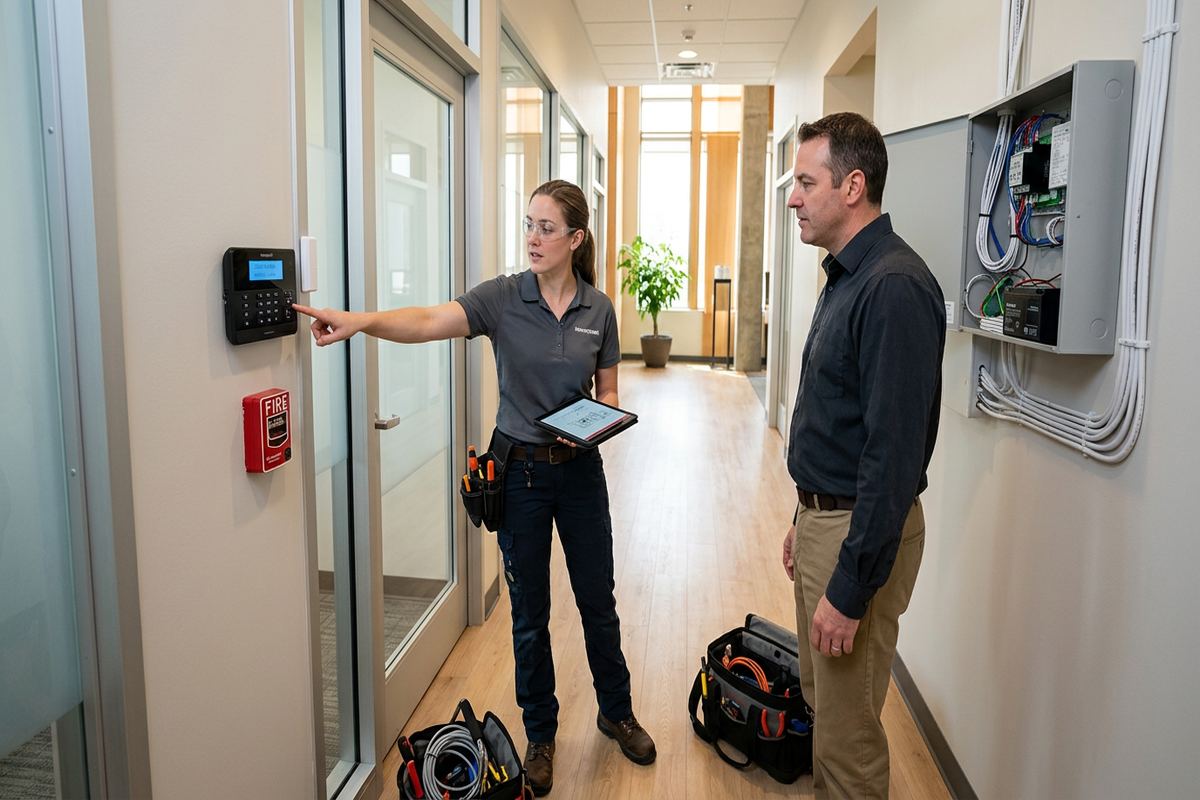
A commercial alarm system should reflect how the property is actually used, not simply how many doors or rooms appear on a plan. During a Chatham site assessment, we review public entrances, staff doors, loading areas, offices, restricted rooms and detached structures. We also discuss opening procedures, closing responsibilities, delivery schedules and after-hours access. These details determine suitable sensor locations, keypad positions, partitions and notification paths. Before pricing, UnifiedLink prepares a written scope identifying proposed equipment, cable routes, device placement, exclusions, equipment ownership and applicable warranty terms for the customer’s review.
Chatham properties vary considerably, so installation methods need to suit the structure. Older town buildings may combine masonry exterior walls, renovated frame partitions, suspended ceilings and additions completed at different times. Commercial strips can have shared walls, limited ceiling access and landlord rules affecting drilling or exterior devices. Industrial units often require longer cable routes, higher mounting points and coordination around active work areas. Farm properties may include a residence, shop, office and outbuildings spread across one site. Each condition affects detection choices, communication planning, cable protection and the practical location of control equipment.
Risk assessment also considers what happens around the building rather than focusing only on interior doors. Delivery lanes, exterior storage, rooftop access, low windows and concealed side entrances can influence the design. In Downtown Chatham, public sidewalks and neighbouring units may restrict exterior device placement. Sites near the Thames Campus area may have changing occupancy patterns or multiple authorized users. We separate confirmed site conditions from assumptions and note unresolved items in the scope. This approach helps owners compare the proposed alarm design with their operating requirements before equipment is ordered or cable installation starts.
- Review entrances, windows, loading areas and restricted rooms
- Identify staff, delivery and after-hours operating patterns
- Assess masonry, frame walls and accessible ceiling spaces
- Document exclusions, ownership and warranty in writing
- Confirm landlord or property-management approval requirements
Alarm Devices Selected for the Site
Device selection begins with the type of event that needs to be detected. Door contacts can supervise regular entry points, while motion detectors may cover interior routes after a business closes. Glass-break detection can be considered for exposed glazing, and hold-up devices may suit specific counters or controlled work areas following an operational review. Warehouses, food facilities and dusty utility spaces require particular attention because temperature changes, airborne material, vibration or moving equipment can affect device performance. We match the proposed technology to the environment and document where detection coverage has practical limitations.
Control panels and keypads must be accessible to authorized users without being obvious or easy to reach from an unsecured entrance. For Chatham businesses with separate office, warehouse and service areas, partitioning can allow parts of the property to remain occupied while other sections are armed. User permissions can also be organized around job responsibilities rather than sharing one code across the workforce. The written scope records planned partitions, keypad locations and major programming assumptions. Final user names, schedules and permissions are confirmed during configuration, using information supplied by the customer and credentials controlled by the customer.
Alarm communication needs a deliberate plan because the panel must transmit events beyond the protected property when remote notification or monitoring is included. Available internet service, cellular signal conditions, equipment location and customer-selected monitoring arrangements can all affect that plan. A farm shop outside central Chatham may have different connectivity constraints than a storefront in Maple City or an industrial unit near a developed commercial corridor. We identify required communication hardware and dependencies before installation. Monitoring agreements, permit obligations or third-party fees are treated separately and are not assumed unless they appear clearly in the approved scope.
- Door, motion and glass-break detection where appropriate
- Partitions for offices, warehouses or separate tenant areas
- Role-based user codes instead of shared credentials
- Communication planning for internet or cellular paths
- Clear identification of monitoring dependencies
Wiring and Installation in Chatham Buildings
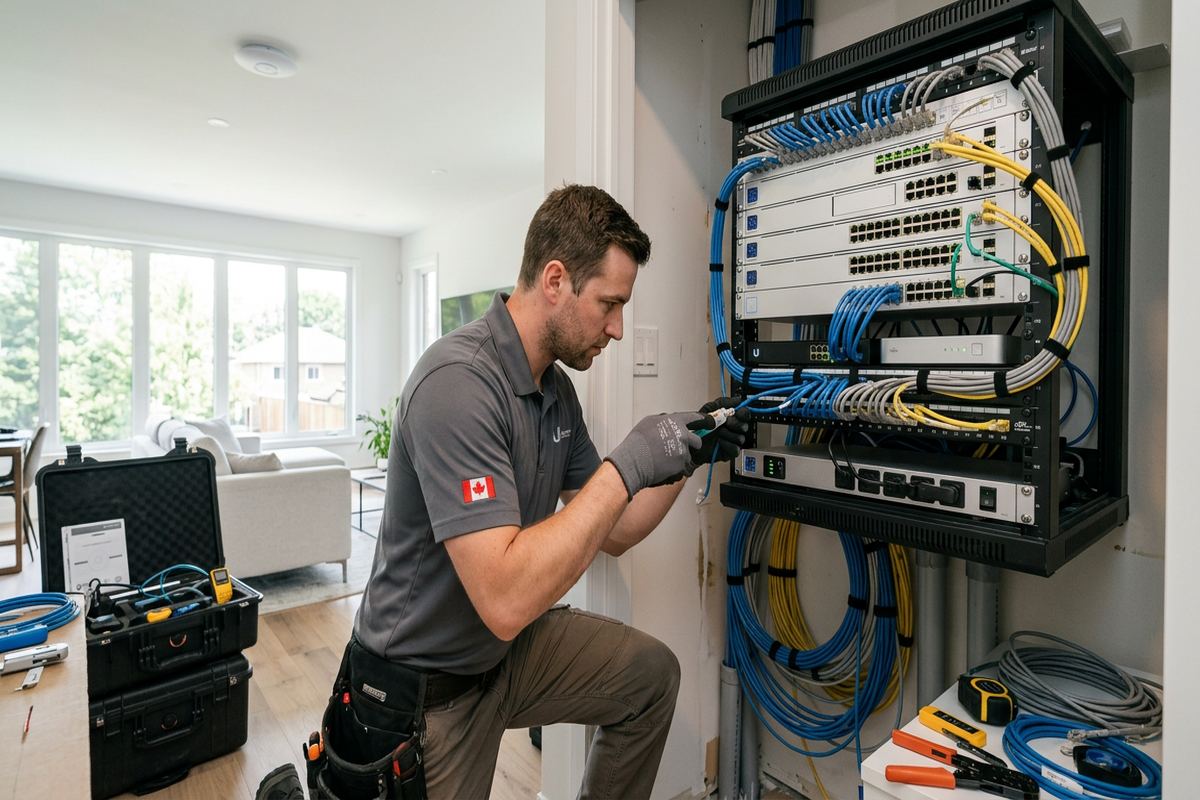
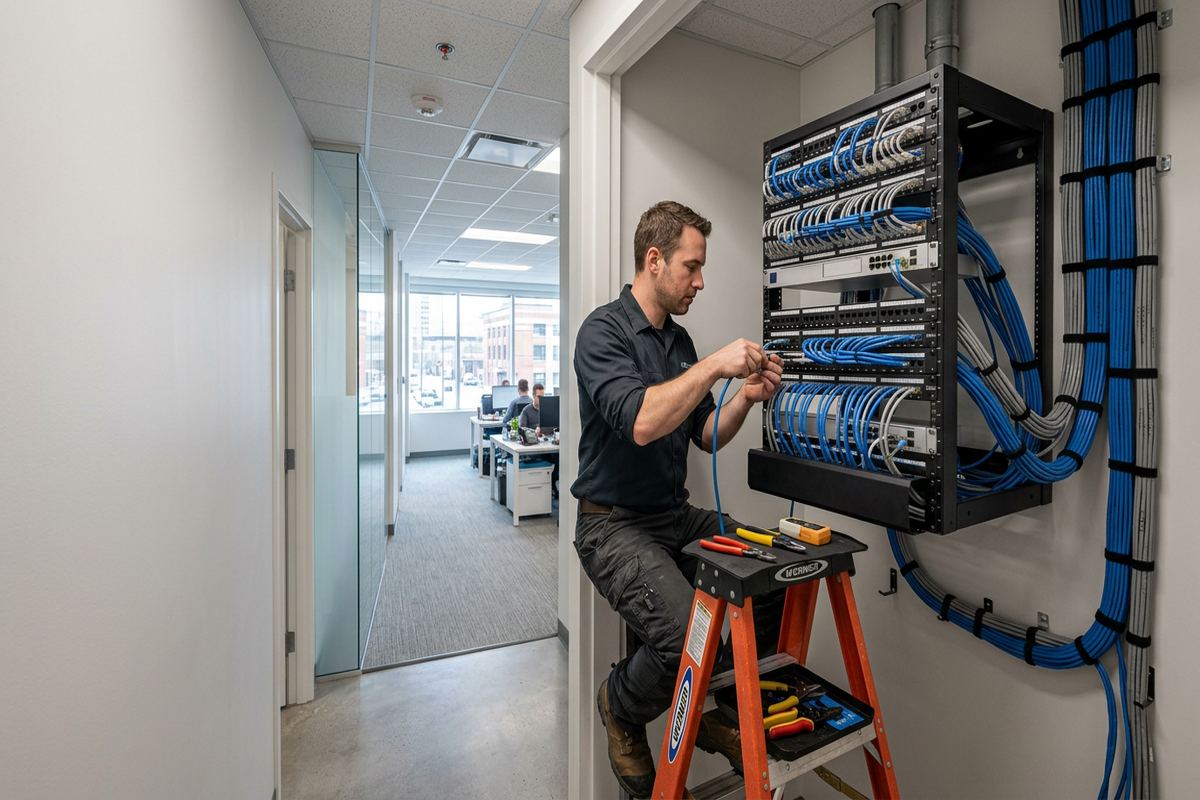
New alarm wiring is installed as continuous labelled cable runs between approved termination points wherever the building and scope permit. Labels help identify circuits at the panel and field end, reducing uncertainty during testing, alterations or later service. Cable routes are planned around electrical equipment, heat sources, sharp edges and areas where stock or machinery could cause damage. In finished Chatham offices, routes may use accessible ceiling spaces or agreed surface pathways. In open industrial units, suitable support and physical protection matter. Any concealed obstruction discovered after work begins is discussed before the route or finish is changed.
Masonry and frame construction call for different fastening and cable-entry methods. Older Downtown Chatham properties may have solid brick, block walls, plaster finishes or narrow cavities that prevent a straightforward concealed route. Frame partitions are often easier to access, although insulation, fire stops and previous renovations can still limit pathways. Surface raceway may provide a more controlled result where wall opening is not approved. Penetrations are kept purposeful and coordinated with the customer. Fire-rated assemblies, shared tenant separations and regulated building systems are not altered casually; any required specialist work or approval is identified before proceeding.
Installation must also fit around ongoing operations. Grain and food facilities may have sanitation procedures, restricted production zones or shutdown windows that influence when cable can be pulled and devices mounted. Shops and commercial strips may need customer areas kept clear during business hours. In occupied offices, work is sequenced to limit interference with staff and network equipment. UnifiedLink records agreed access arrangements and coordinates device testing with a site contact. If the actual construction differs from visible conditions during assessment, we explain the impact and revise the proposed route or scope instead of making an undocumented substitution.
- Continuous labelled cable runs between termination points
- Routes separated from hazards and likely physical damage
- Suitable methods for masonry and frame construction
- Surface pathways where concealed access is impractical
- Work sequencing coordinated with site operations
Chatham, Ontario
Commercial alarm system installation in Chatham, scoped in writing first
Book a site assessment and get equipment, routes, exclusions, and warranty on paper before anything is installed.
Exterior Protection for Chatham Weather
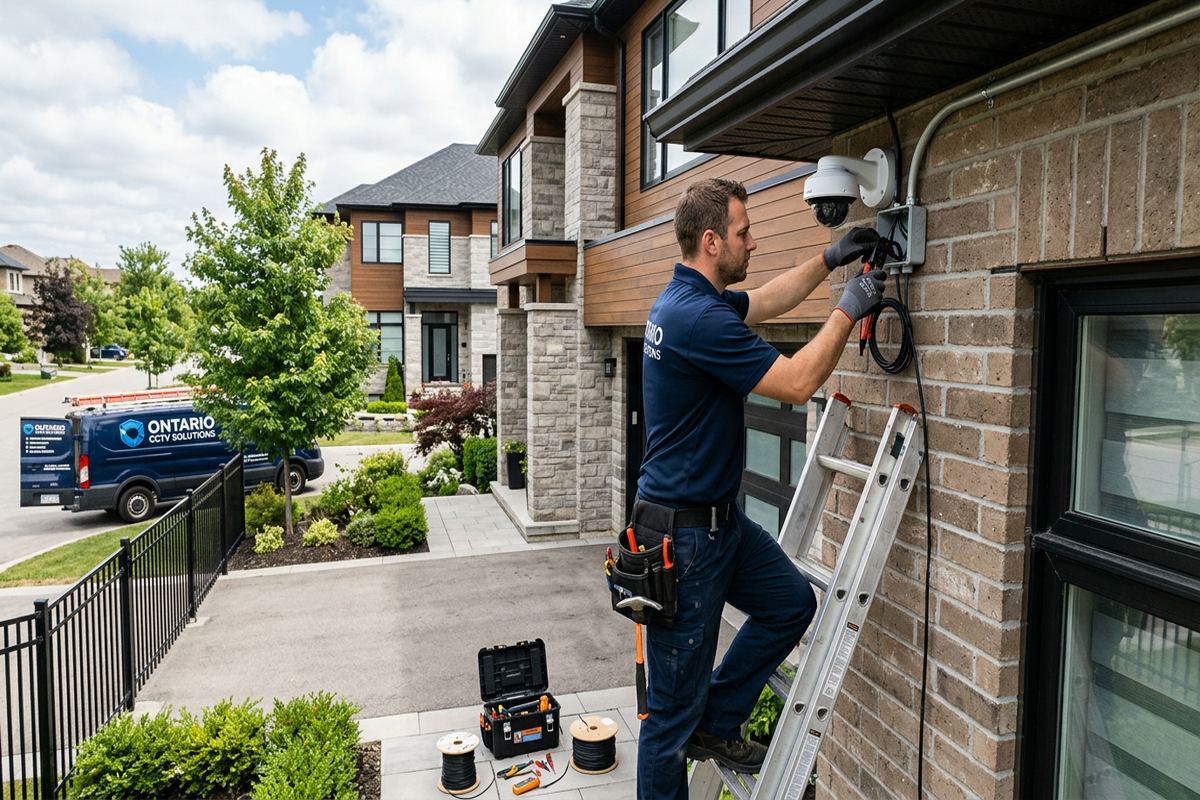
Exterior alarm components in Chatham face winter cold, moisture and repeated freeze-thaw cycles. Device ratings alone do not correct a poor mounting surface or an unsealed cable entry. We assess exposure to rain, drifting snow, direct sun, roof runoff and impact before choosing a location. Cable penetrations are arranged to reduce water travel, and exterior entries are sealed using methods suitable for the surface. Mounting to brick, block, siding or metal cladding requires appropriate anchors and attention to drainage. Sheltered placement is preferred where it supports the required detection function without creating avoidable blind areas.
Detached buildings and large yards create additional design questions. A farm property may need protection for a shop, equipment building or office that is separated from the main panel by distance, pavement or open ground. Wireless communication can be useful in some conditions, but wall materials, metal siding, machinery and distance may reduce reliability. A wired route may require protected conduit or other work outside the low-voltage scope. We test practical communication conditions where relevant and state dependencies clearly. The system design should not assume that a device will communicate reliably through every wall or across every outbuilding.
Outdoor detectors require careful placement because normal site activity can resemble an intrusion event. Moving vegetation, animals, headlights, loading operations and rapid temperature changes may affect detection. Rather than treating exterior coverage as a substitute for good perimeter security, we define its intended role and expected limits. At Chatham commercial and industrial sites, exterior detection may support a layered design that also supervises doors and interior travel routes. Final sensitivity and schedules are configured on site, then tested with the customer’s representative. Seasonal changes may still require operational review or adjustment after occupancy patterns change.
- Weather-conscious mounting and cable-entry placement
- Sealing suited to brick, siding, block or metal
- Assessment of snow, runoff and direct exposure
- Communication checks for detached structures
- Layered protection for doors, interiors and exterior areas
Alarm Integration and On-Site Configuration
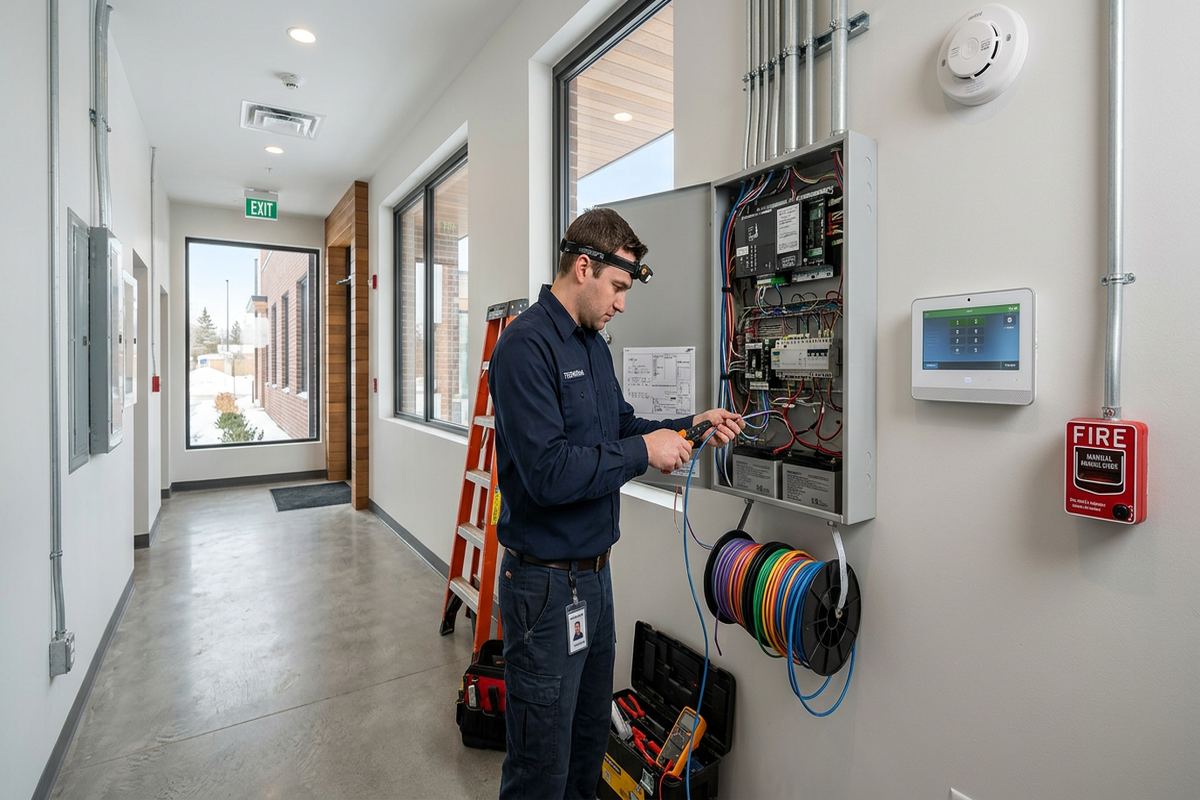
Commercial alarm installation includes more than attaching sensors and applying power. The panel must be programmed around the approved zones, partitions, entry delays, user permissions and notification paths. UnifiedLink completes configuration on site so actual device operation can be checked against the property layout. Each supervised opening and detection zone is activated individually during testing. Keypads are reviewed for clear naming, and user functions are demonstrated with the customer’s representative. Configuration records remain tied to the installed scope, reducing reliance on generic zone labels that provide little information during an alarm or future service visit.
Some Chatham properties need coordination between intrusion alarms and other low-voltage systems. An access-controlled staff door, for example, may require operating procedures that prevent authorized entry from causing an alarm. Cameras can provide useful visual context, but they do not replace alarm detection or monitoring. Interconnections must be specifically designed rather than assumed, especially when separate vendors, proprietary equipment or third-party platforms are involved. We identify required interfaces, responsibilities and exclusions in writing. Life-safety, elevator, sprinkler and building-control functions are distinct systems and are not represented as included unless qualified work and responsibilities are expressly defined.
User setup should follow the organization’s actual authority structure. Owners or designated administrators receive control through their own credentials rather than depending on an installer’s personal account. Individual codes can be assigned where the selected platform supports them, helping the administrator change access when staffing changes. Shared master codes are discouraged because they make accountability and revocation harder. During handover, we review arming, disarming, bypass procedures, common trouble indications and the process for managing users. Remote applications, if included, are configured on supported customer devices using accounts that belong to the customer, subject to platform requirements.
- Zone and partition programming completed on site
- Individual user permissions where supported
- Coordination with access control and camera systems
- Customer-owned administrator accounts and credentials
- Functional testing of every installed alarm device
Chatham Commercial Alarm Upgrades
An existing alarm system may still contain useful wiring or devices, but compatibility cannot be assumed from appearance. During an upgrade assessment, we identify accessible panel components, cable labels, device types, communication hardware and visible signs of damage or modification. Older systems in Chatham buildings may have undocumented zones, abandoned contacts or wiring concealed by later renovations. Testing helps determine what can reasonably remain and what should be replaced. The written scope distinguishes reused equipment from new equipment and records related limitations. Equipment ownership is also confirmed, since some panels or communicators may be tied to previous service arrangements.
A takeover often involves more than replacing the control panel. End-of-line supervision, detector power, keypad wiring and resistance values may differ between product families. Existing cable can also pass through inaccessible areas, preventing complete visual inspection. We test circuits included for reuse and explain that hidden cable conditions may only become apparent during installation or operation. Where a circuit is unreliable, a new continuous labelled run may be recommended if access allows. This avoids presenting an old, unverified pathway as equivalent to new wiring. Removed or abandoned components are handled according to the approved scope and site requirements.
Renovations are a practical time to reconsider alarm coverage. New offices, subdivided units, relocated counters or enclosed loading areas can leave previous devices serving the wrong spaces. In Prestancia and other developing parts of Chatham, tenant improvements may also require coordination with landlords, condominium corporations or property managers before drilling, cabling or exterior mounting. Older town housing used for professional or mixed commercial purposes can raise similar approval questions. We ask the customer to confirm authority for the work and identify finish restrictions. The alarm design is then adjusted to the approved construction plans and intended occupancy.
- Assessment of reusable panels, wiring and detectors
- Circuit testing before retained wiring is accepted
- Clear separation of reused and new equipment
- Coverage revisions for renovations or tenant changes
- Approval checks for leased or condominium properties
Installation Process Across Chatham-Kent
The process starts with a request describing the property, intended use and main security concerns. Requests sent during business hours are answered the same day, while after-hours requests are answered the next business day. Site assessment timing depends on the service and travel distance, including work in Chatham, Wallaceburg and other Chatham-Kent communities. At the assessment, we review construction, access, cable pathways, connectivity and operating procedures. Photographs or drawings may be used to document relevant conditions with permission. Pricing follows the assessment rather than relying on an unsupported equipment count supplied without site context.
After the assessment, the customer receives a written scope covering equipment, cable routes, device placement, exclusions, equipment ownership and warranty. The document also identifies known customer responsibilities, such as providing access, obtaining landlord approval, arranging monitoring or confirming network availability. Questions and requested changes are resolved before installation scheduling. This stage is particularly important for active commercial sites where ceiling access, production interruptions or exterior lift access may affect the work. A clear scope establishes what will be installed and prevents assumptions about optional integrations, repairs to existing systems or work by other trades.
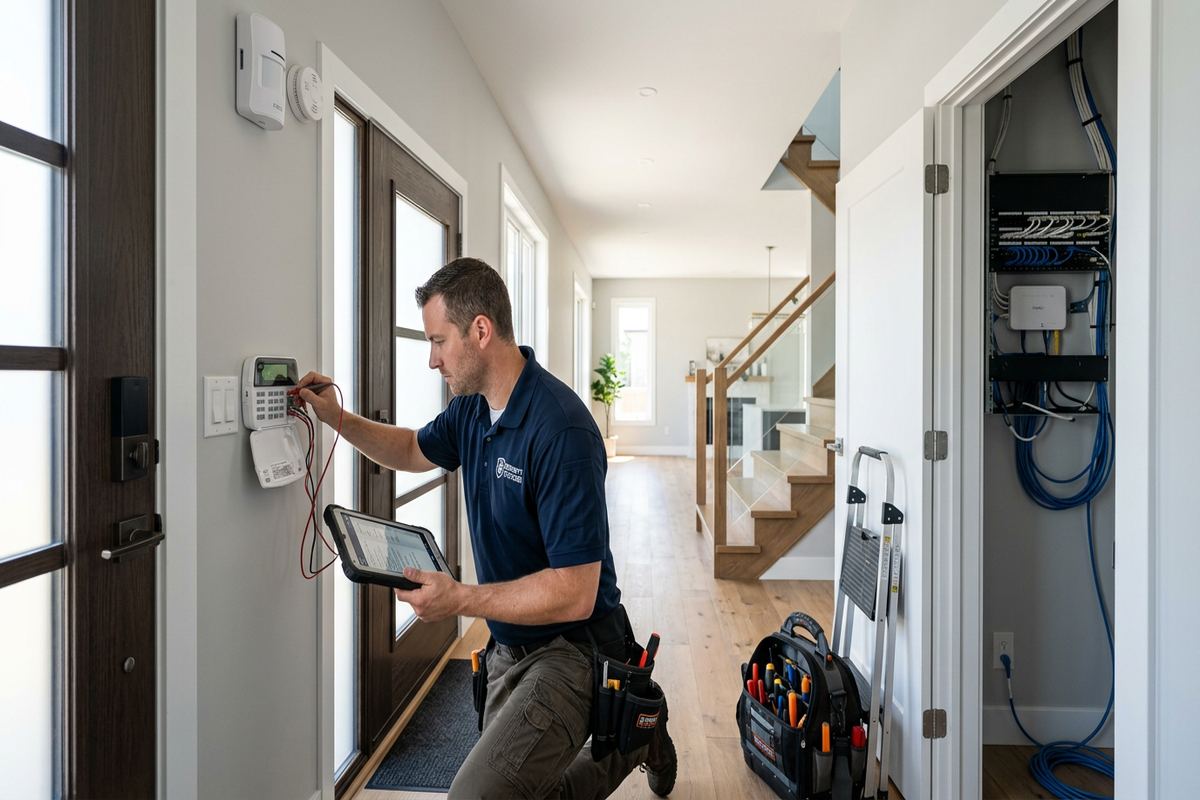
On installation day, UnifiedLink works from the approved scope and coordinates access with the named site contact. Cables are run, labelled and terminated before devices are configured and tested. Any material site difference, such as blocked pathways or concealed construction, is raised for review. Handover includes the customer’s own credentials, basic operating instruction and an as-built record showing installed device information and relevant cable or zone identification. One accountable contractor manages the defined low-voltage alarm work, while third-party monitoring, electrical work, construction repair or specialized access equipment remains governed by the stated scope and exclusions.
- Same-day reply to business-hours requests
- Assessment timing based on service and travel distance
- Written scope reviewed before scheduling
- Changes documented when site conditions differ
- As-built record supplied during handover
Operating and Maintaining a Chatham Alarm System
A commercial alarm remains useful only when staff understand normal operation and changes are managed deliberately. New employees should receive role-appropriate instruction, while departed users should have credentials removed promptly by the administrator. Opening and closing procedures need to account for delivery staff, cleaners and contractors who may enter outside regular hours. Chatham businesses with seasonal staffing or changing shifts should review permissions when schedules change. The system log can help investigate recurring user errors or unexpected events, although available detail depends on the selected equipment and service. Administrative access should remain with authorized customer representatives.
Routine checks can identify physical changes that undermine earlier device placement. Shelving may block motion coverage, renovations can remove contacts, and new machinery can alter environmental conditions. Exterior devices should be observed after severe weather for damaged mounts, failed seals or shifted alignment, particularly after Chatham freeze-thaw periods. Doors that sag or no longer latch consistently can also affect contact spacing. Customers should report repeated troubles rather than continually bypassing a zone. Any maintenance visit should distinguish between an alarm equipment fault, a building condition, a communication issue and an operational practice that needs correction.
Documentation supports future decisions when a property changes hands, expands or requires service. The as-built record provides a starting point for identifying installed devices, zone names and relevant cable information, but customers should also retain the approved scope, warranty details and account ownership records. If a business adds space, moves a wall or changes an exterior entrance, the alarm design should be reviewed before construction closes access to cable routes. From Downtown Chatham to Wallaceburg, this disciplined approach helps preserve understandable system operation without assuming that the original layout will remain appropriate indefinitely.
- Review user access after staffing changes
- Check devices after renovations or shelving changes
- Inspect exterior mounts after severe seasonal weather
- Investigate recurring troubles instead of bypassing zones
- Retain scope, warranty and as-built documentation
Chatham neighbourhoods we cover
- Downtown Chatham
- Thames Campus area
- Maple City
- Prestancia
- Wallaceburg
Commercial alarm system installation in Chatham — common questions
What happens during a Chatham alarm site assessment?
We review entrances, windows, public and staff areas, loading points, restricted rooms, available cable pathways and communication options. Building construction, exterior exposure and daily operating routines are also considered. After the Chatham assessment, UnifiedLink prepares a written scope covering equipment, routes, placement, exclusions, ownership and warranty before providing project pricing.
Can you upgrade an older commercial alarm system?
Yes, subject to an assessment of the existing panel, devices, wiring and ownership arrangements. Older Chatham properties often contain undocumented circuits or equipment left from previous occupants. We test items proposed for reuse and identify limitations in writing. Components are not represented as compatible or reliable until their condition and relationship to the proposed system have been reviewed.
Do exterior alarm devices work through Chatham winters?
Exterior-rated equipment can be used when the device, mounting location and installation method suit the exposure. Chatham winters bring moisture and freeze-thaw conditions, so we consider runoff, snow, direct weather, cable entries and the mounting surface. Exterior penetrations are sealed appropriately, but routine inspection remains important because building movement, impact or severe weather can affect alignment and seals.
Can an alarm be installed in a leased or condominium unit?
Usually, but the tenant or owner must confirm authority to approve the work. Chatham landlords, condominium corporations and property managers may restrict drilling, shared-wall penetrations, exterior devices or visible raceway. We document known restrictions and can adapt routes or device locations where practical. Required approvals should be obtained before installation scheduling, particularly when common elements or building exteriors are involved.
Can my warehouse and office be armed separately?
Often, provided the selected system and site layout support partitions. A Chatham business may keep an office occupied while arming a warehouse, loading area or other defined section. We review movement between areas, shared doors, keypad locations and authorized users before programming. Partition behaviour, delays and user permissions are then configured and tested on site with the customer’s representative.
What do I receive when installation is finished?
Handover includes functional testing, operating guidance, customer-controlled credentials and an as-built record for the installed alarm work. We review arming, disarming, user management, bypassing and common trouble indications. The final documentation reflects the approved Chatham project scope and relevant device or zone information. Third-party monitoring details are included only when they form part of the expressly defined work.
Coverage in Chatham is confirmed against the address before we quote. See everything we install in Chatham or the province-wide commercial alarm system installation page.