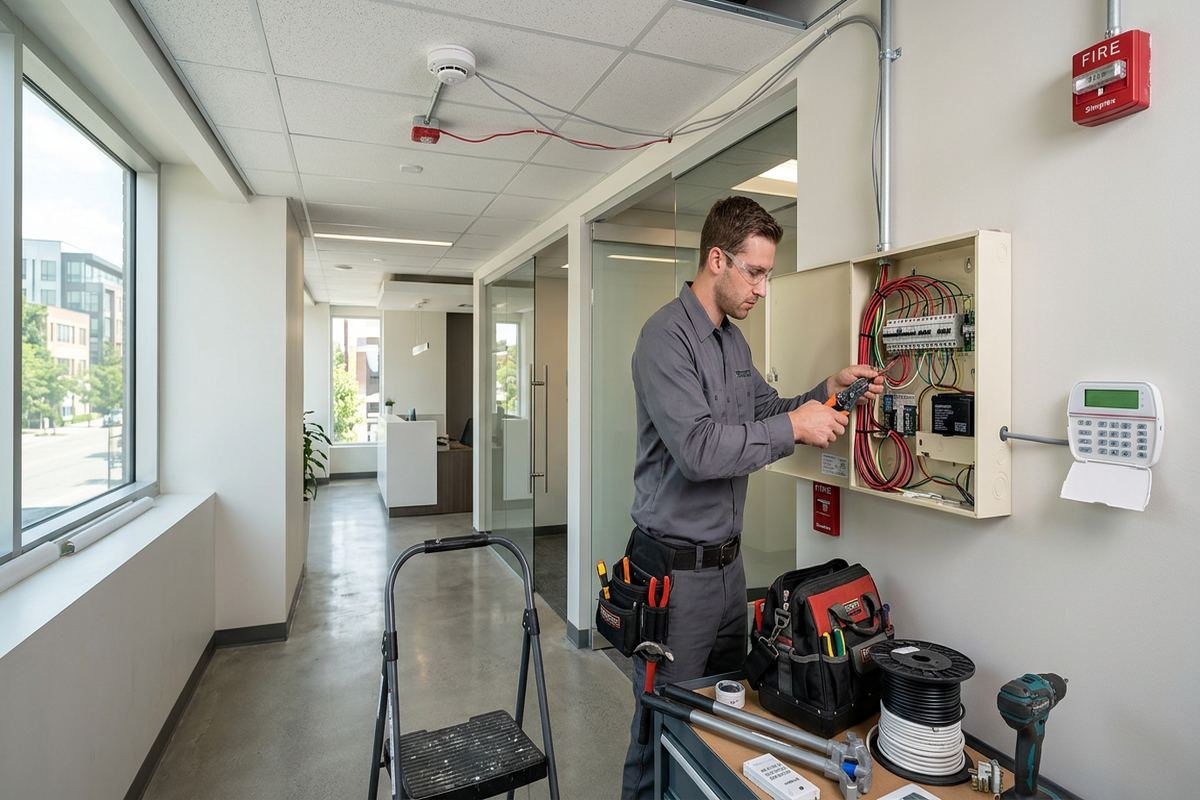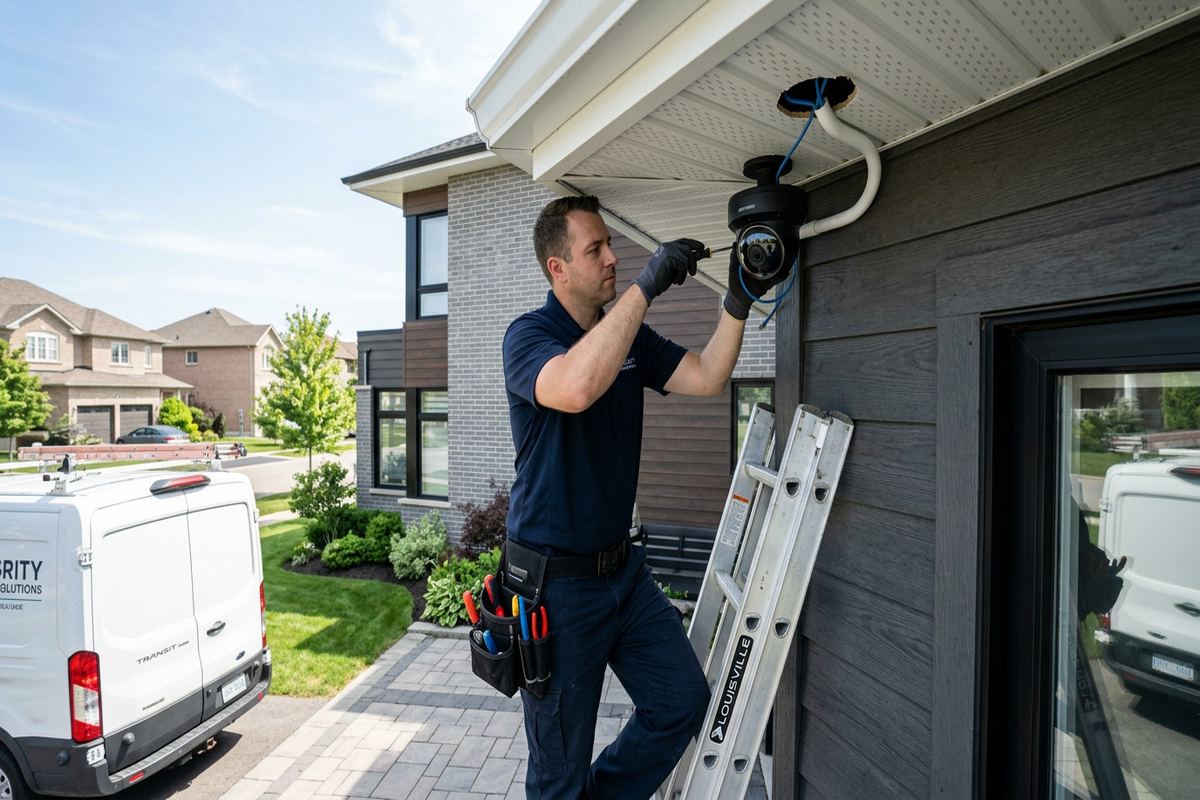
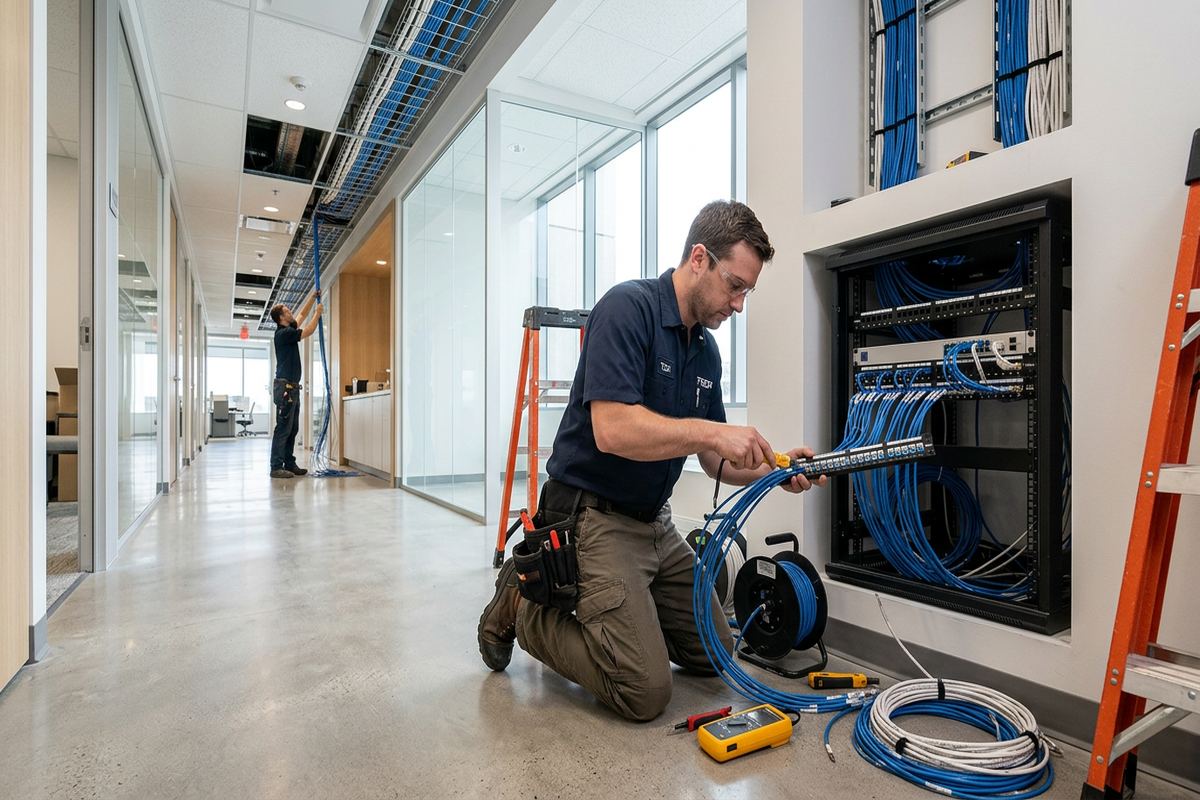
UnifiedLink installs low-voltage cabling for homes, commercial properties and industrial units across Cambridge and Waterloo Region. We plan routes, install continuous labelled runs, terminate and test connections, configure connected equipment on site, and provide an as-built record. Each project starts with a site assessment so the written scope reflects the building, intended systems and installation constraints.
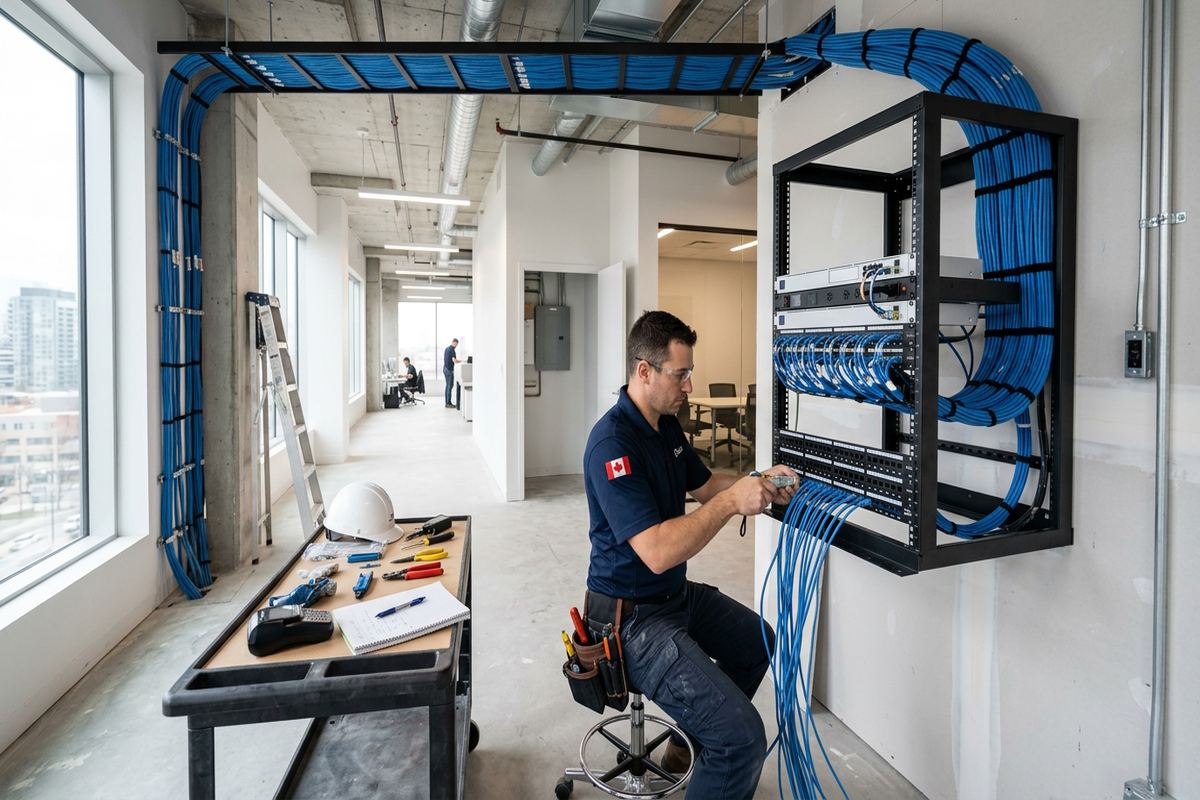
Low-Voltage Cabling for Cambridge Properties
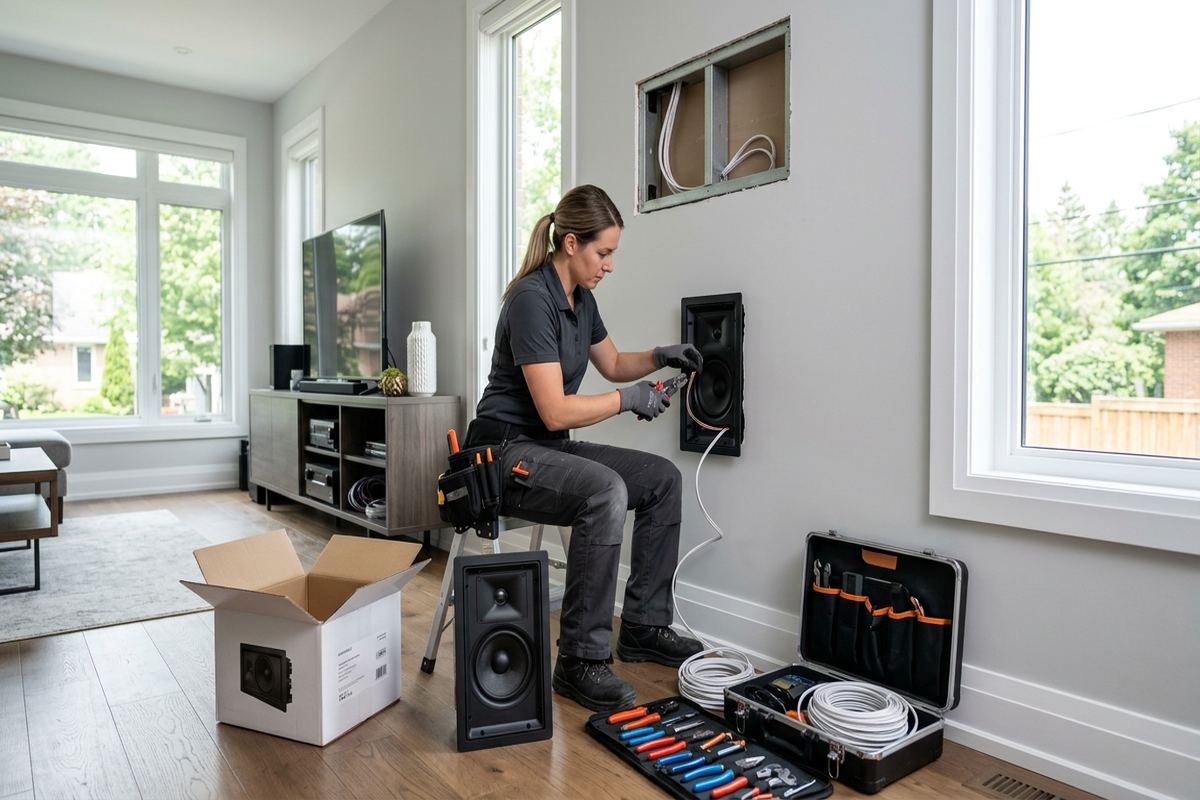
Low-voltage cabling provides the physical connection between network equipment, security cameras, access control devices, alarm components, wireless access points, speakers and displays. A proper installation starts by identifying what each cable must support, where equipment will be located and how the system may change later. UnifiedLink handles these elements under one scope rather than treating every wire as an isolated task. For Cambridge property owners, this approach is useful when several systems share pathways, telecommunications rooms, ceiling spaces or exterior entry points and must remain organized, serviceable and clearly documented.
Every Cambridge building presents a different routing problem. Stone heritage buildings may have thick masonry, limited concealed pathways and finishes that should not be disturbed unnecessarily. Riverside neighbourhoods can expose exterior components to moisture and seasonal temperature changes, while industrial parks may require longer runs around production areas, loading zones or high ceilings. We assess accessible spaces, construction type, equipment locations and practical service access before proposing routes. The resulting plan considers cable performance, physical protection, visual impact and the ability to trace or replace individual connections without dismantling unrelated parts of the property.
Our work covers new installations, additions to existing cabling and replacement of runs that are damaged, unidentified or unsuitable for their intended application. Continuous labelled cables reduce hidden failure points and make future troubleshooting more direct. Terminations are completed for the selected equipment and tested before handover. Where the project includes active devices, configuration is performed on site using the customer’s own credentials. The completed installation includes an as-built record showing relevant routes and device locations, giving the owner or facility contact a practical reference for maintenance, renovation planning and later system expansion.
- Data and network cabling
- Security and alarm wiring
- Access control cable routes
- Wi-Fi access point cabling
- Audio and display connections
Planning Cable Routes in Cambridge Buildings
Route planning should happen before holes are drilled or cable is ordered. During a site assessment, we review the intended devices, available ceiling or wall spaces, telecommunications locations, electrical separation and areas where cabling could be exposed to impact. We also discuss whether the customer expects future cameras, workstations, doors, speakers or wireless access points. In Cambridge, older properties in Galt and Blair often require different methods from newer frame construction. A written scope then records proposed equipment, routes, device placement, exclusions, equipment ownership and warranty terms before installation pricing is finalized.
Masonry and frame buildings call for different fastening, drilling and concealment methods. Stone, brick and concrete can limit route options and require careful placement of penetrations, while wood or light-gauge framing may offer accessible cavities but still contain insulation, fire stops or existing services. Surface raceway can be appropriate where concealed access is limited, provided its path and appearance are agreed upon. In occupied Cambridge homes and workplaces, we also consider furniture, business operations and finished areas. The objective is a route that protects the cable, supports reliable performance and remains accessible enough for future service.
Approvals can affect both the schedule and the permitted installation method. Condo owners may need written authorization for work involving common walls, exterior surfaces, corridors or shared telecommunications spaces. Tenants should confirm landlord permission before cabling is attached to the building or passed through structural elements. Commercial units may also have property-management rules covering contractor access, ceiling work and work outside normal operating periods. UnifiedLink identifies these dependencies during planning, but the property owner or tenant remains responsible for obtaining required approvals. Confirming them early prevents an otherwise workable Cambridge cable plan from being delayed or changed after materials arrive.
- Site assessment before pricing
- Routes matched to construction type
- Device locations confirmed in advance
- Approvals identified before installation
- Expansion needs considered during planning
Cabling for Networks, Wi-Fi and Connected Devices
Network cabling supports more than desktop computers. It may connect wireless access points, cameras, controllers, intercoms, displays, printers, building systems and other devices that depend on stable wired communication. We determine the connection type, cable category, distance and power requirements for each planned endpoint before installation. Runs are kept continuous between defined termination points and labelled at both ends. In Cambridge homes and businesses, this creates an understandable foundation for current equipment while avoiding an assortment of undocumented extensions, loose patch cables and concealed joins that complicate fault finding or reduce performance later.
Wireless coverage also depends on the wired infrastructure behind it. Access points need suitable locations, dependable data connections and, where applicable, compatible power delivery from network equipment. Placing every unit beside an available outlet or at one end of a building can leave difficult coverage areas, especially through masonry walls or across multiple floors. We review the building layout and intended use before establishing cable locations. In a stone property, additional access-point locations may be more practical than expecting one radio signal to pass through several dense walls. Final wireless performance also depends on equipment selection, configuration and local interference.
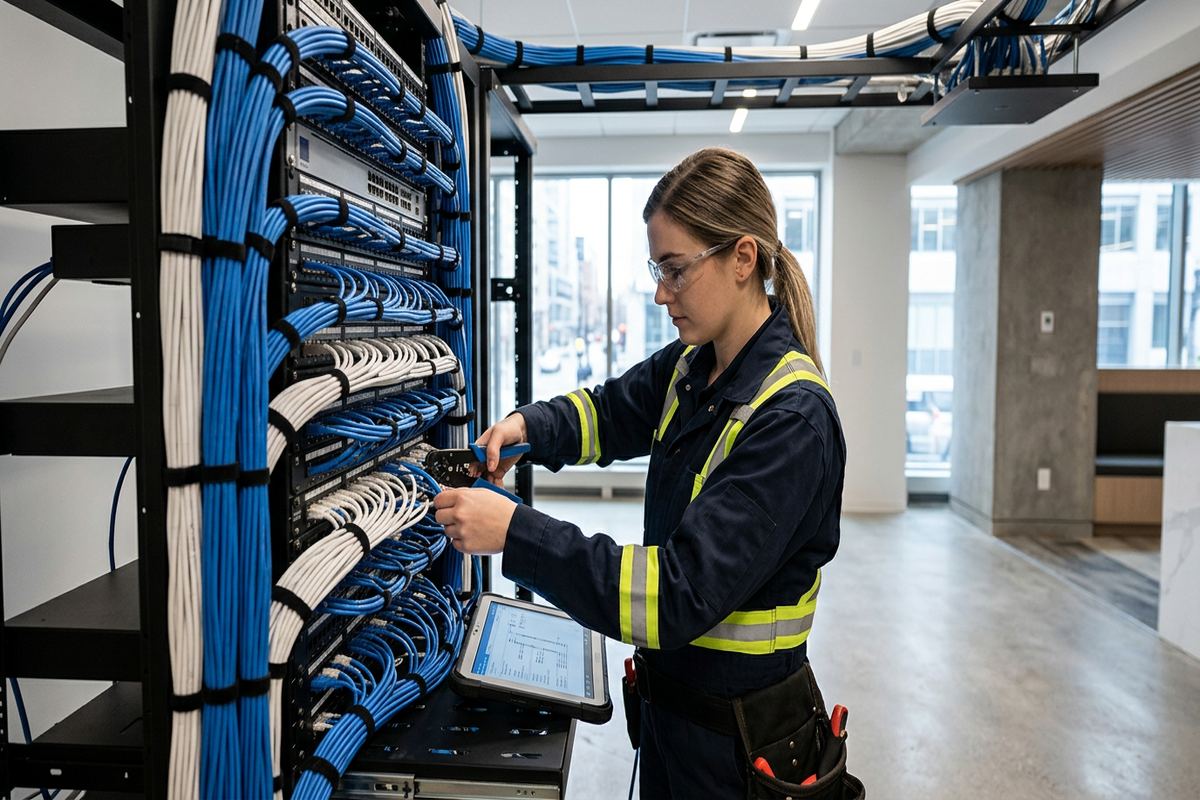
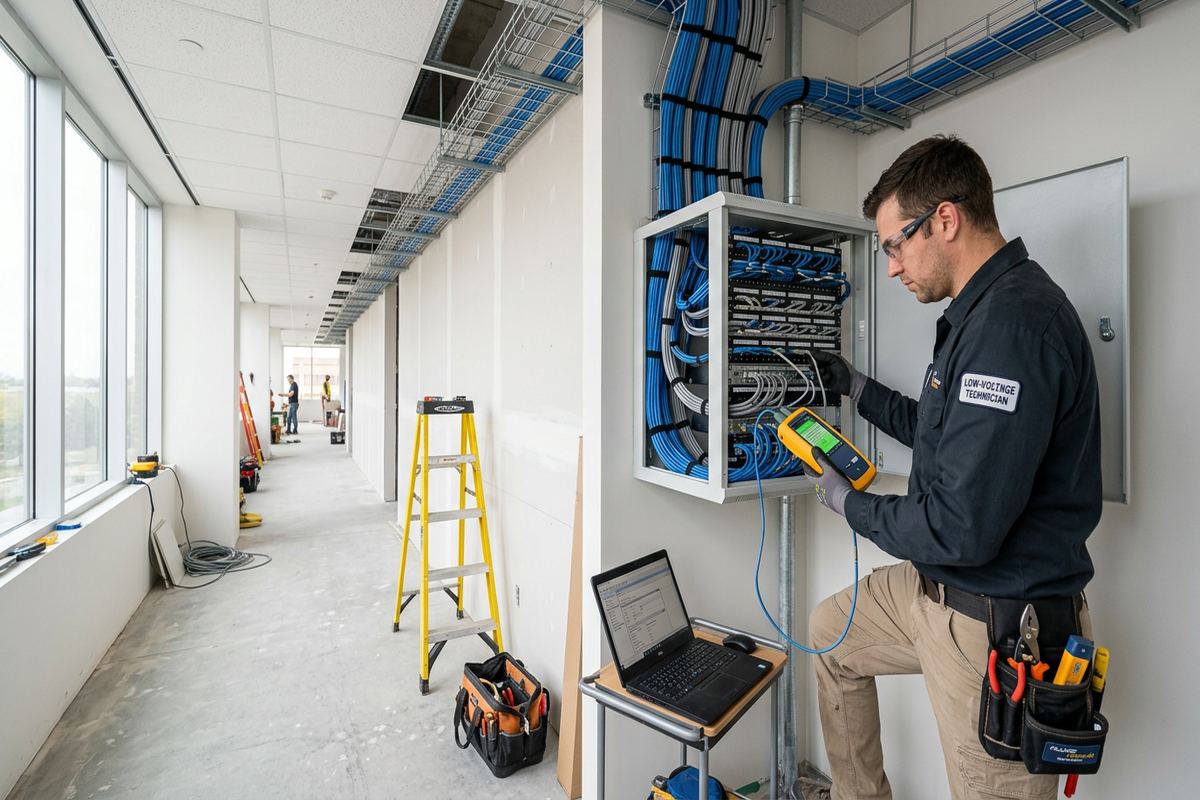
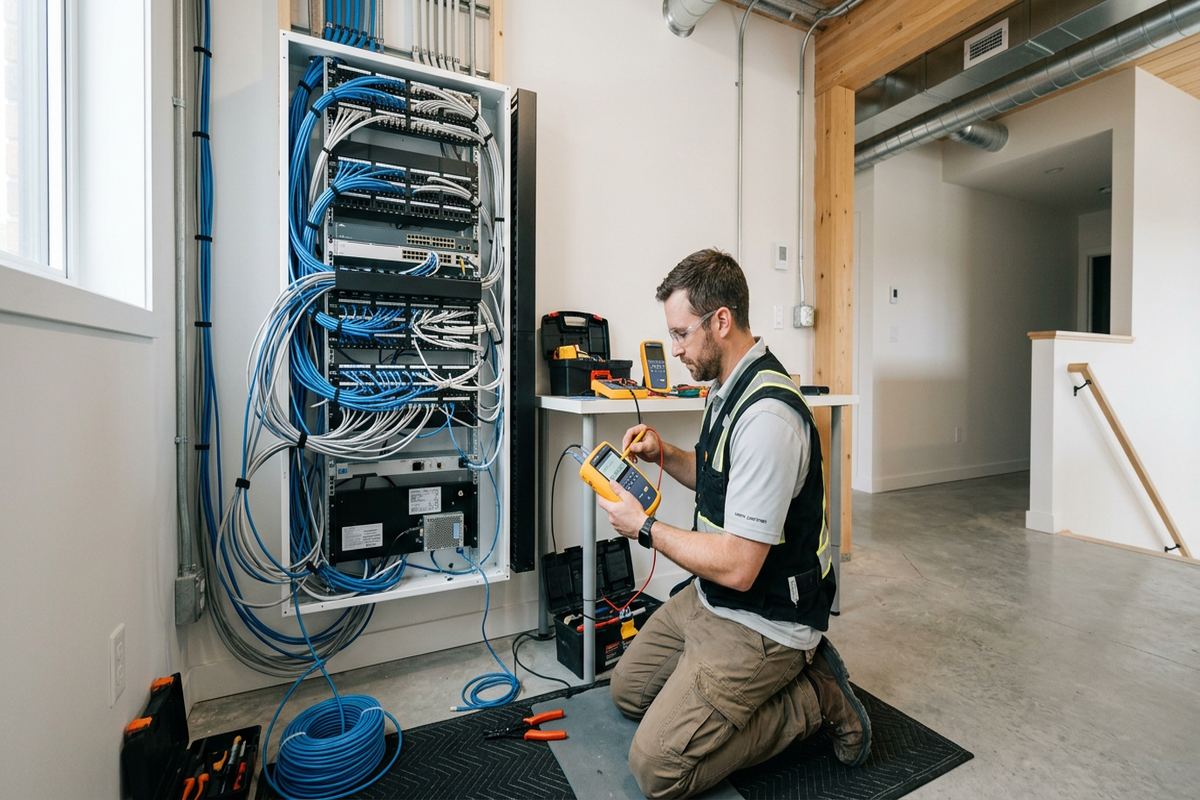
For offices, retail spaces and industrial units, orderly terminations make moves and changes easier to manage. Cabling can be brought back to an agreed rack, cabinet or termination area, with endpoint labels corresponding to the handover record. Patch connections are arranged so staff or service providers can identify what feeds a workstation, access point, display or other device. In industrial parks around Cambridge, cable pathways may need added physical protection or separation from equipment and electrical sources. These conditions are documented during assessment rather than addressed through improvised routing once installation has already started.
- Labelled endpoint-to-endpoint runs
- Access point location planning
- Rack and cabinet terminations
- Power-over-Ethernet pathway planning
- Testing before system handover
Cambridge, Ontario
Low-voltage cabling installation in Cambridge, scoped in writing first
Book a site assessment and get equipment, routes, exclusions, and warranty on paper before anything is installed.
Security and Access Cabling in Cambridge
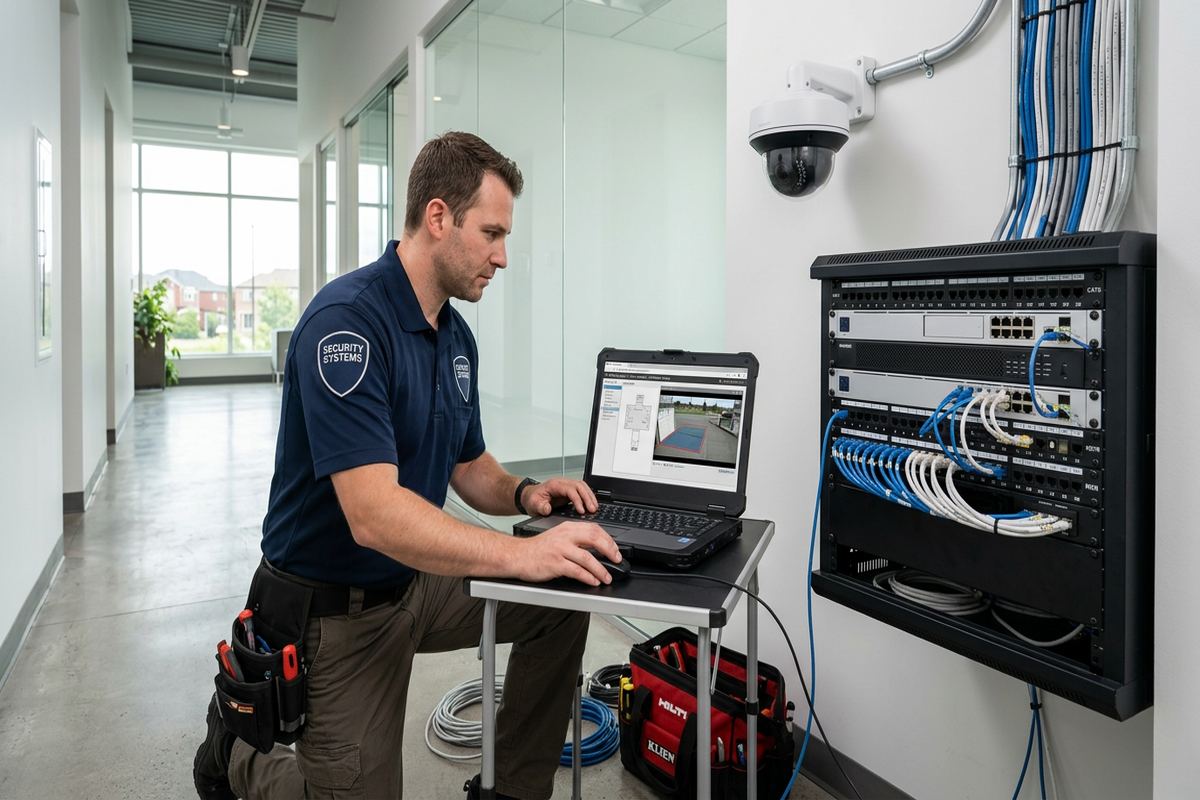
Security systems depend on cabling that suits each device and its installation environment. Cameras, alarm contacts, keypads, readers, request-to-exit devices, intercom stations and door hardware can require different conductor counts, connection methods and power arrangements. We coordinate these requirements before pulling cable so pathways do not have to be reopened later. Device placement is reviewed for coverage, use and service access, not simply for the shortest route. Cambridge projects can combine indoor, exterior and outbuilding connections, making it important to define transitions, penetrations and equipment locations clearly in the written scope.
Access control cabling requires particular attention around doors. Reader, lock, door-contact and exit-device wiring must reach the correct side of the opening without interfering with hinges, closers, fire-rated assemblies or normal operation. Existing commercial doors may have limited pathways, while storefront frames and older masonry openings can restrict concealed routing. We assess the opening and coordinate the low-voltage portion with any locksmith, door or electrical work identified in the scope. Where multiple entrances are involved, consistent labelling and central termination help the property manager understand which cable serves each Cambridge door and associated device.
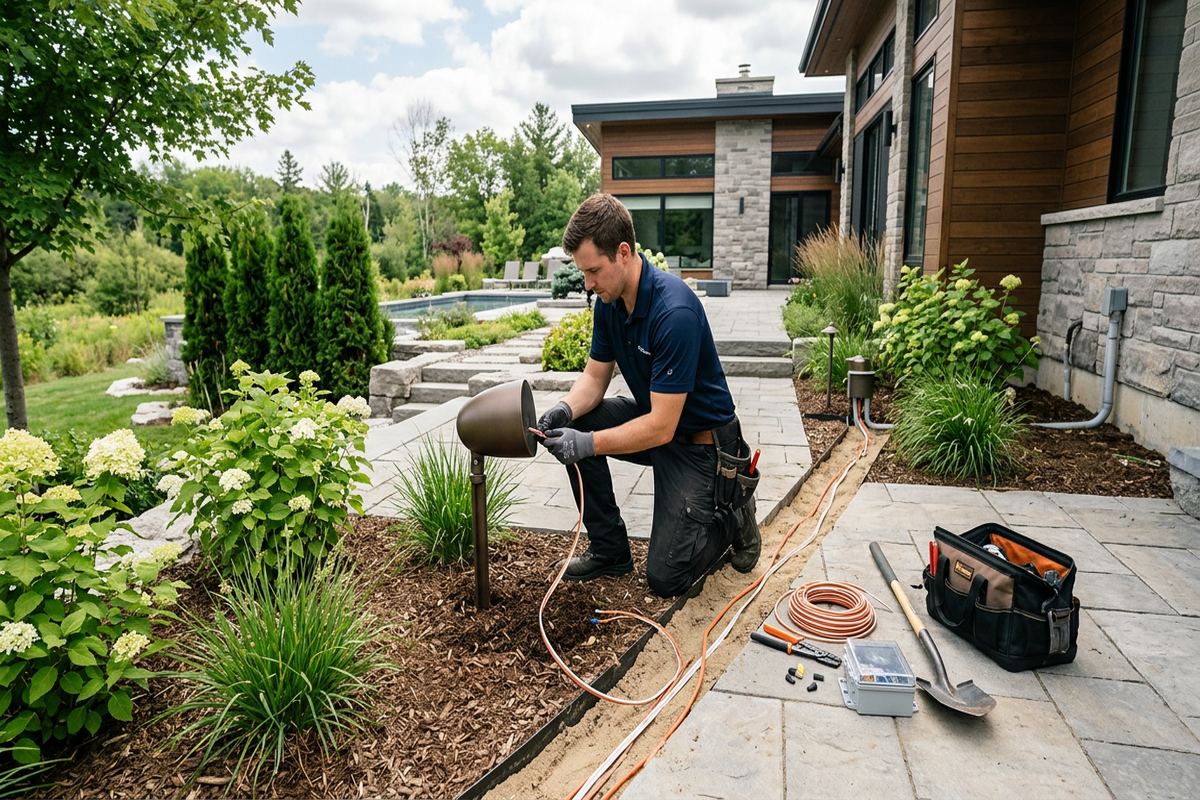
Exterior security cabling must be protected where it leaves conditioned space. Cable type, conduit or other protection, drip paths and penetration sealing are selected for the route and exposure. Cambridge winters bring freezing conditions and repeated freeze-thaw cycles, which can stress poorly sealed holes, loose fittings and exposed cable. Mounting into brick or stone also needs suitable anchors and careful placement to reduce damage to the surface. We avoid treating exterior work as an indoor installation with added caulking; the complete route, enclosure entries, fasteners and service access must suit outdoor conditions.
- Camera and alarm cable routes
- Reader and lock wiring
- Door contact connections
- Exterior-rated pathway planning
- Sealed building penetrations
Cambridge Installation Methods and Workmanship
A serviceable installation is orderly from the cable source to the endpoint. Runs are supported using appropriate pathways or fasteners, kept away from avoidable damage and separated from electrical wiring where required. Excess cable is managed without tight bends, crushing or unsupported bundles. Labels follow a consistent naming method so a technician can trace connections without guessing. When existing cabling remains in service, we distinguish it from new work and record known limitations. These practices matter in finished Cambridge homes, open commercial ceilings and busy utility areas because each environment presents different risks to cable condition and future access.
Penetrations are planned with the surrounding assembly in mind. Interior walls may contain insulation, plumbing, electrical services or fire-stopping, while exterior walls can include several layers between the finished room and brick, stone or siding. We choose locations only after reviewing accessible conditions and the intended cable path. Openings are kept appropriate to the work and sealed using materials suited to the location. Where a route passes through a fire-rated assembly or another specialized building element, the required treatment must be identified. Unknown concealed conditions are discussed if they prevent the scoped method from proceeding safely.
Testing is completed after cables are installed and terminated, using methods appropriate to the connection and project scope. A visual check alone cannot identify every incorrect termination, damaged conductor or labelling error. Results are used to correct installation issues before equipment is handed over. When active systems form part of the project, we also confirm device connections and perform the agreed on-site configuration. The customer receives control through their own credentials rather than depending on an installer-owned account. This keeps access, administration and future service decisions with the Cambridge property owner or designated organization.
- Continuous cable runs
- Consistent labels at both ends
- Supported and protected pathways
- Appropriate termination and testing
- Customer-owned administrative credentials
Older Homes, Renovations and Finished Spaces
Retrofitting low-voltage cable into an occupied property requires different planning from pre-wiring open construction. Finished walls, plaster, stone, cabinetry and completed flooring can limit access or make a fully concealed route impractical. In established areas such as West Galt, Blair and parts of Galt, building changes over time may also leave blocked cavities or undocumented wiring. We inspect accessible areas and explain where surface raceway, basement routing, attic access or another method may be needed. The written scope identifies assumptions and exclusions so the owner understands which finishes are affected before installation begins.
Renovation work is an opportunity to install pathways before walls and ceilings close. Cable locations should be coordinated with framing, insulation, millwork, electrical rough-in and planned equipment, while enough accessible cable is left for proper termination. Device positions can then account for furniture, televisions, desks, cameras or wireless coverage instead of being chosen after finishes are complete. If other trades change the layout, the cabling plan should be reviewed before work continues. UnifiedLink remains accountable for its defined scope, but clear coordination with the owner, renovator and other contractors helps prevent cables from being covered, cut or moved without documentation.
In newer frame-built homes around Hespeler, Preston or Clemens Mill, available cavities may simplify some routes, but construction details still matter. Engineered floors, insulated exterior walls, finished basements and tightly planned mechanical spaces can restrict drilling or access. Exterior devices also need thoughtful positioning so fasteners and penetrations suit the wall assembly. For condos, routes may be confined to the unit and subject to corporation rules for common elements. A site assessment establishes what can be accessed, what permission is needed and whether the requested endpoint can be reached without unnecessary disruption to completed surfaces.
- Retrofit route assessment
- Pre-wire coordination during renovations
- Surface raceway where appropriate
- Finished-area protection planning
- Condo and landlord approval checks
Commercial and Industrial Cabling in Cambridge
Commercial cabling must account for how a property operates during and after installation. Retail and office locations may require work around customers, staff, furniture and shared ceiling spaces. Device positions should support counters, work areas, meeting rooms, Wi-Fi coverage and security needs without leaving vulnerable cables across accessible surfaces. On Cambridge commercial strips, landlord requirements and neighbouring units can affect pathway access or equipment placement. We establish the agreed work areas, termination location and access limitations in advance, then organize the installation so each run can be identified and serviced without disrupting unrelated connections.
Industrial units add concerns such as long distances, high ceilings, loading activity, machinery and exposed service areas. Cable routes may need conduit, tray or other physical protection depending on the environment and the project scope. Pathways should avoid heat sources, moving equipment and locations where stored materials could strike or cover cabling. Electrical interference and separation also need consideration when routes cross production or utility spaces. In Cambridge industrial parks, a careful walk-through with the facility contact helps identify restricted zones, shutdown considerations, lift access needs and future equipment locations before installation methods and pricing are documented.
Multi-tenant and managed buildings require clear boundaries of responsibility. A business may control the wiring within its unit but need approval to enter a common telecommunications room, cross a corridor or mount equipment outside. Building management may specify access procedures, approved pathways or documentation requirements. We can reflect known conditions in the scope and coordinate our portion of the installation, while the customer obtains permissions from the landlord or manager. At handover, labels and as-built information give the tenant and property contact a common reference, reducing confusion about which Cambridge unit, room or device a particular cable serves.
- Office and retail cabling
- Industrial pathway assessment
- Managed-building coordination
- Shared telecommunications room planning
- Clear tenant and device labels
From Cambridge Site Assessment to Handover
Every project begins with a discussion of the systems, endpoints, property type and desired outcome. A site assessment follows before pricing because route length, access, construction and exterior conditions cannot be established reliably from a device count alone. Assessment timing depends on the service and travel distance. Requests sent during business hours are answered the same day, while after-hours requests are answered the next business day. For Cambridge work, photographs and existing drawings can help prepare the visit, but they do not replace checking the actual pathways, mounting surfaces and termination areas where the installation will occur.
After assessment, the written scope sets out the proposed equipment, cable routes, device placement, exclusions, equipment ownership and warranty. This document provides a basis for pricing and gives both parties a practical reference if site conditions or requirements change. Work is scheduled after the scope is accepted and any necessary owner, landlord or condo approvals are in place. During installation, unforeseen concealed conditions are raised rather than bypassed with an undocumented route. One accountable contractor manages the defined low-voltage work, including cabling, terminations and agreed device configuration, which helps keep responsibilities clear through the project.
Handover confirms that the installed connections correspond with the agreed endpoint labels and device locations. Where active equipment is included, configuration is completed on site using credentials controlled by the customer. We provide an as-built record reflecting the completed installation, including relevant cable and device information. The owner should retain this record with network, security or building documents so it is available for future troubleshooting and renovations. If Cambridge property needs change later, the record provides a starting point for assessing additions without relying on memory, unlabelled ceiling bundles or assumptions about concealed cable routes.
- Same-day reply during business hours
- Assessment before project pricing
- Detailed written installation scope
- On-site configuration and testing
- As-built documentation at handover
Cambridge neighbourhoods we cover
- Galt
- Preston
- Hespeler
- Blair
- West Galt
- Clemens Mill
Low-voltage cabling installation in Cambridge — common questions
What types of low-voltage cable can you install in Cambridge?
We install cabling for data networks, Wi-Fi access points, security cameras, alarms, access control, intercoms, audio systems and displays. The appropriate cable and pathway depend on the equipment, distance, power requirements and building conditions. A Cambridge site assessment is completed before pricing so the written scope can identify the proposed equipment, routes, terminations, exclusions and device locations.
Can cabling be installed in an older stone or brick building?
Yes, but the route may differ from one used in frame construction. Cambridge stone and brick properties can have thick walls, limited cavities and finishes that should not be disturbed unnecessarily. We assess basement, attic, utility and surface-routing options, then document the proposed drilling, fastening and sealing approach. Concealment depends on actual access and cannot be assumed before the building is inspected.
Do I need condo board or landlord approval?
Possibly. Approval is commonly needed when work affects common walls, corridors, shared telecommunications rooms, exterior surfaces or other areas outside the owner’s unit or tenant’s leased space. Cambridge condo owners and commercial tenants should confirm requirements before installation. We can identify likely approval points and provide the planned scope, but the customer is responsible for obtaining authorization from the corporation, landlord or property manager.
How do you protect exterior cable from Cambridge winters?
Exterior routes are planned for moisture, freezing conditions, freeze-thaw movement and physical exposure. Depending on the installation, this may involve exterior-suitable cable, protected pathways, appropriate enclosures, compatible fasteners and sealed penetrations. Brick, stone, siding and other wall assemblies require different mounting methods. We assess the surface and entry point before specifying the route rather than relying on a general exterior detail for every Cambridge property.
Will the new cables be labelled and tested?
Yes. New runs are installed continuously between defined termination points and labelled consistently at both ends. Terminations are tested using methods appropriate to the connection and agreed scope. At handover, the labels are reflected in an as-built record showing relevant cable and device information. This gives Cambridge owners, facility staff and future service providers a usable reference instead of requiring them to trace unidentified cables.
How quickly can I arrange a Cambridge site assessment?
Requests sent during business hours are answered the same day, and after-hours requests are answered the next business day. The timing of a Cambridge site assessment depends on the type of service and travel distance. Before visiting, we may ask about the property, intended devices, construction, access restrictions and available drawings so the assessment can focus on practical routes and installation constraints.
Coverage in Cambridge is confirmed against the address before we quote. See everything we install in Cambridge or the province-wide low-voltage cabling installation page.