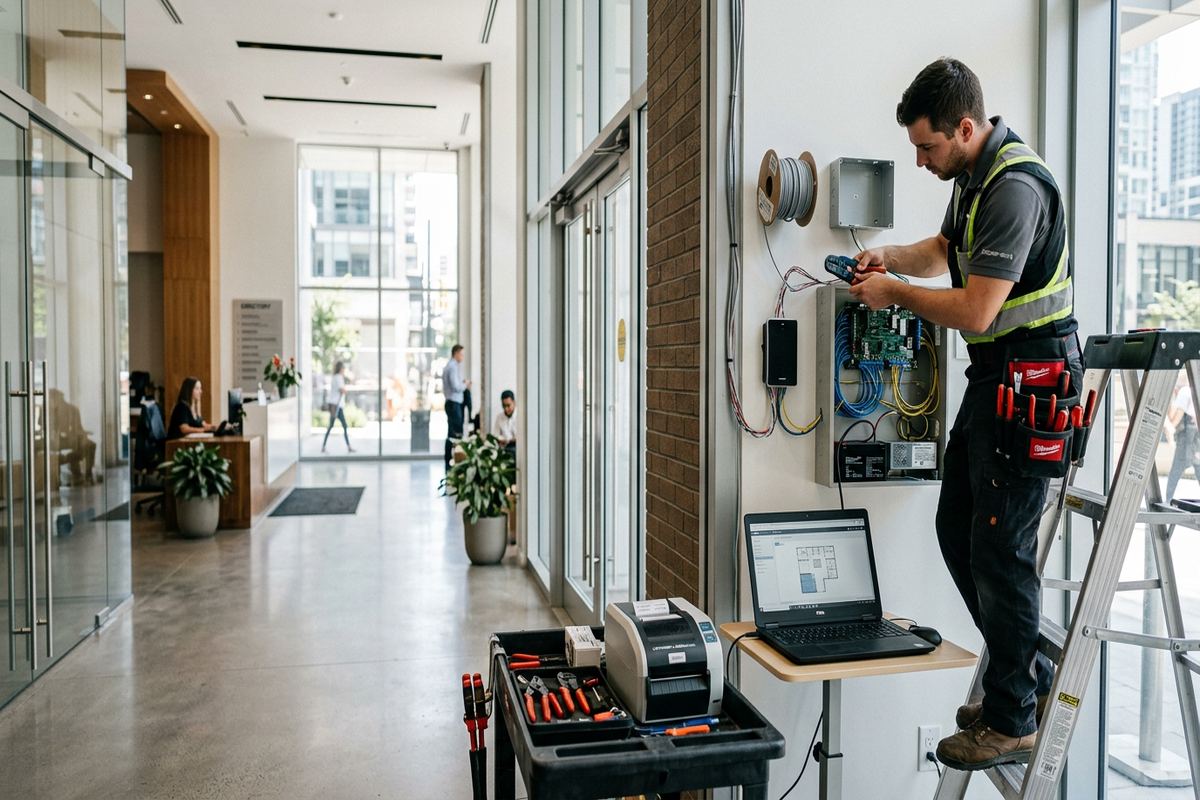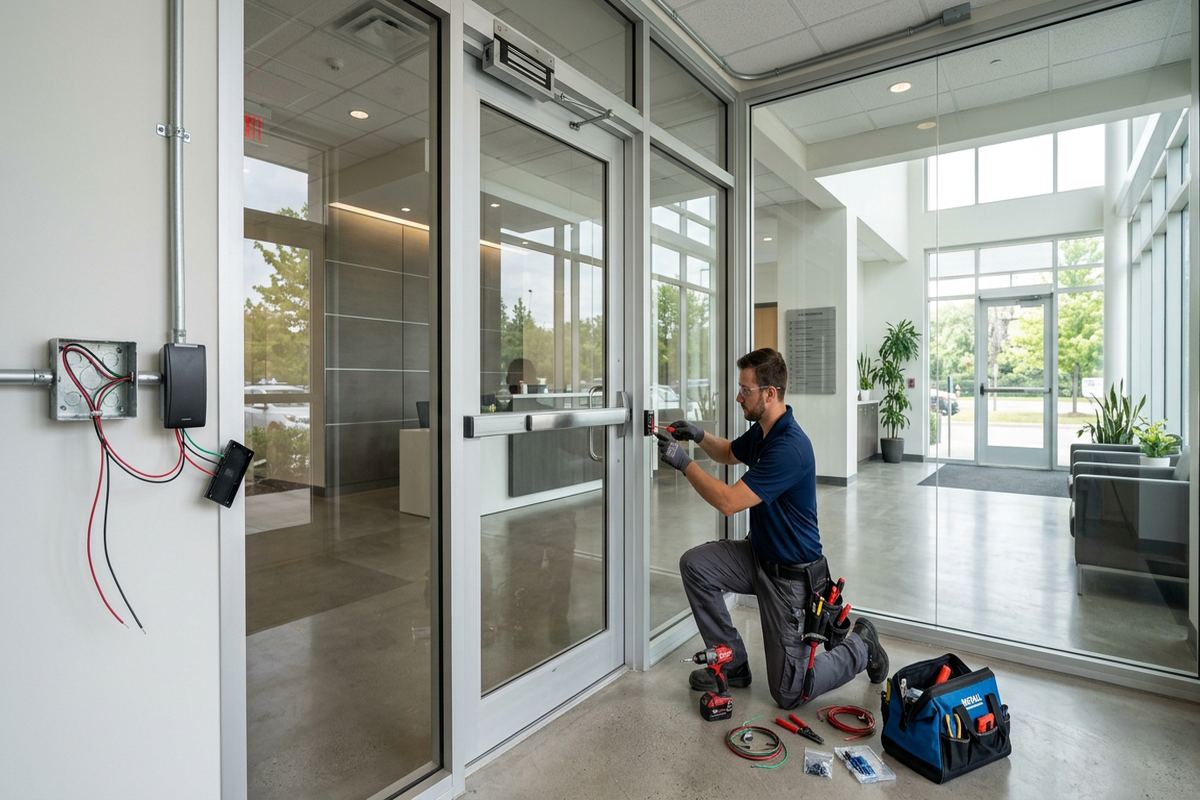
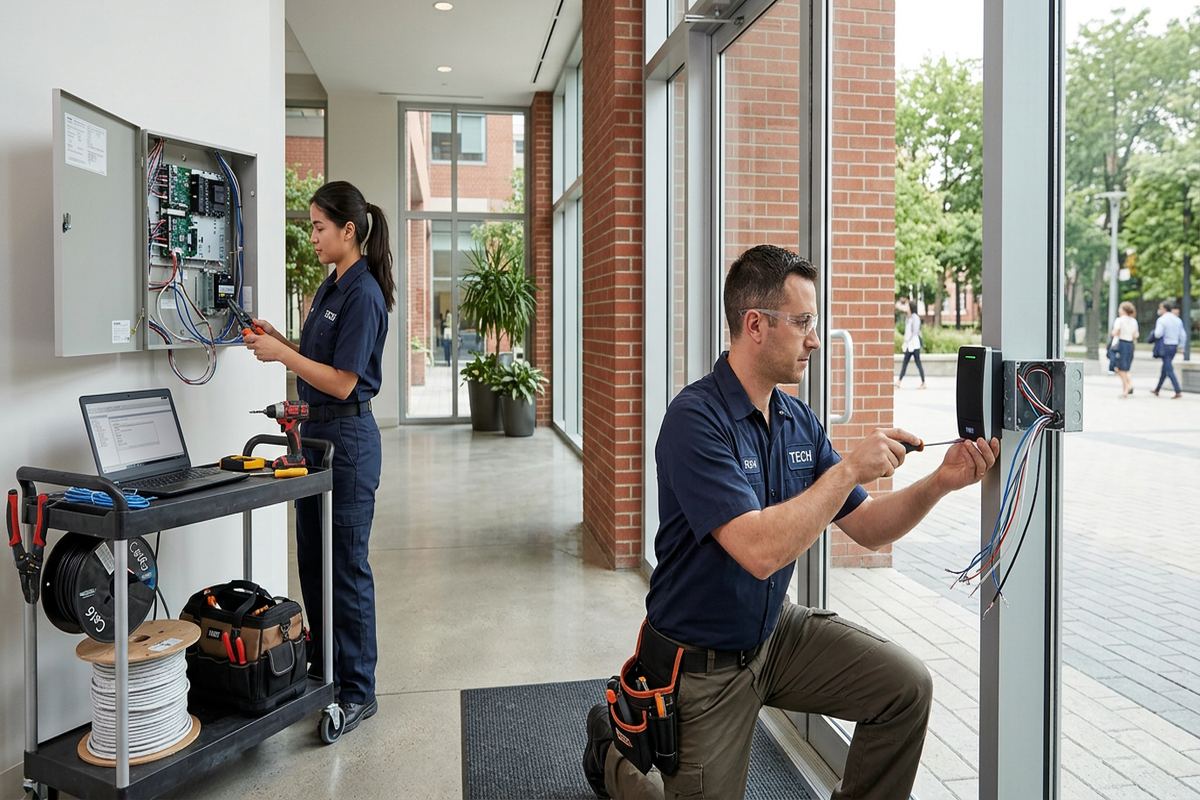
UnifiedLink plans and installs condo access control systems in Cambridge, Ontario. We work with condominium boards, property managers, landlords and developers to control entrances, garages and shared spaces. Each project begins with a site assessment and proceeds from a written scope covering equipment, cable routes, device locations, exclusions, ownership and warranty.
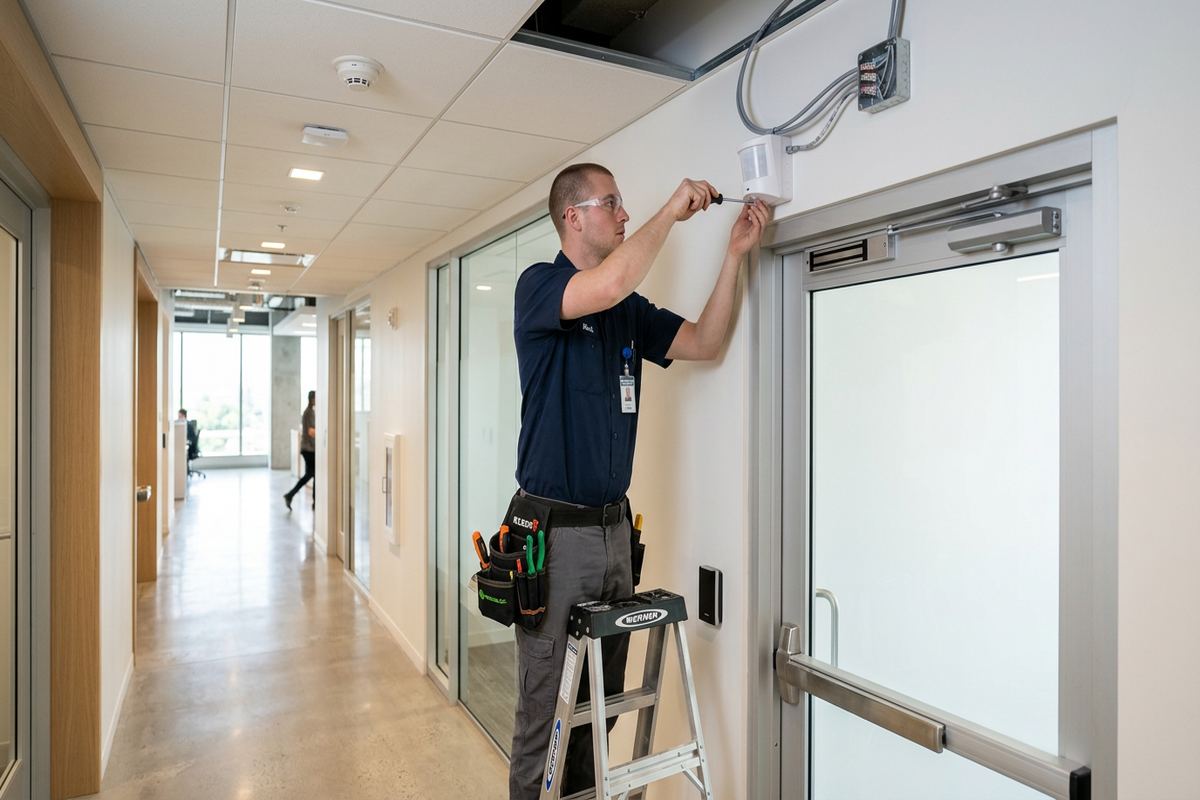
Condo Access Control Planning in Cambridge
Every condominium has a different mix of residents, visitors, contractors and delivery personnel. Before selecting hardware, UnifiedLink assesses how people currently enter the property, which doors require control and who will administer credentials. A Cambridge site may include a main vestibule, underground or surface parking, amenity rooms, waste areas and secondary entrances. The assessment also considers emergency egress, accessibility, existing locks, available pathways and electrical locations. These findings support a practical written scope rather than a generic package that leaves important door conditions unresolved.
Condominium approvals shape the work as much as the technology. Boards and property managers may need drawings, proposed device locations, finish details, shutdown plans and confirmation of responsibility for equipment. Landlord approval can also apply where a building contains rental units or commercially leased areas. We document cable routes, door hardware interfaces, exclusions, equipment ownership and warranty before work begins. This gives decision-makers a clear basis for review and helps residents understand which entrances, credentials and operating procedures will change during the Cambridge installation.
The property’s construction affects every route and mounting choice. Stone heritage buildings around Galt can require restrained device placement and careful treatment of masonry, while newer frame construction may provide concealed pathways through walls and ceilings. Riverside neighbourhoods can bring exposed approaches and moisture considerations. Industrial-style condominium units may have longer cable distances, overhead structures or shared loading areas. Site assessment timing depends on the service and travel distance, and the resulting plan accounts for access, finishes, drilling limits and safe installation around occupied common areas.
- Entrance, garage and amenity-door assessment
- Board or landlord approval requirements documented
- Existing locks and pathways reviewed
- Written scope supplied before installation
Cambridge Condo Entrances and Door Hardware
Reliable access control begins with the physical door. A reader and controller cannot correct a dragging door, weak closer, damaged frame or latch that does not engage consistently. During assessment, we examine the opening, lock type, door swing, frame material and expected traffic. Electrified strikes, magnetic locks and other locking methods each have different installation and egress requirements. The selected approach must allow authorized entry while preserving safe exit. Where another trade is needed for door repair or specialized hardware, that dependency is identified in the scope rather than hidden.
Vestibules often need coordinated control across two doors. The system may release the outer entrance for visitors while keeping the interior door credential-controlled, or it may connect with an intercom used by residents. Garage pedestrian doors, bicycle rooms and parcel areas can need different schedules and permissions. In Cambridge winters, tracked snow, grit and moisture can affect thresholds, closers and lower door components. Device selection and placement should keep routine maintenance practical while reducing exposure to impacts, tampering and water at heavily used condominium entrances.
Older masonry openings in Galt and Blair may not offer cavities for easy cable concealment. Surface raceway, existing chases or carefully planned penetrations may therefore be appropriate, subject to condominium and heritage-related approvals. Frame buildings elsewhere can permit concealed runs, but wall construction still needs confirmation before cutting. UnifiedLink uses continuous labelled cable runs and seals exterior penetrations to suit the mounting surface. Cable transitions are supported and protected so movement, vibration and seasonal freeze-thaw cycles do not gradually compromise the reader connection or building envelope.
- Door condition checked before hardware selection
- Locking method matched to each opening
- Vestibule and intercom operation coordinated
- Exterior penetrations sealed for local conditions
Credentials, Permissions and Resident Changes
Cards, fobs and mobile credentials should reflect how the condominium is managed. Residents may need access to their own building, parking area and selected amenities, while cleaners or maintenance contractors may receive narrower permissions. A lost credential can then be removed without changing mechanical keys throughout the property. UnifiedLink configures credential groups, schedules and door permissions on site. The administrator receives the system using the condominium’s own credentials, avoiding an arrangement where routine changes depend on an installer-controlled account that the property cannot properly access.
Turnover procedures deserve attention before the system goes live. The board or manager should decide who can issue a credential, what information is recorded, how replacements are handled and when former residents or contractors are removed. In a mixed-use Cambridge property, residential doors can remain separate from commercial entrances or industrial units. Permissions may also distinguish residents, staff and service vendors without granting unnecessary building-wide access. A documented credential structure reduces improvisation and helps future administrators understand why groups and schedules were created.
Audit events can help authorized managers investigate reported access, but records must be used with appropriate privacy and governance practices. The system should retain useful operational information without encouraging unrestricted access to resident activity. We discuss administrator roles, available event data, retention settings and the process for exporting relevant records. Responsibility for reviewing logs remains with the condominium or property operator. During handover, designated users are shown how to add and remove credentials, change permissions, check door status and recognize common events without altering essential controller settings.
- Resident, staff and contractor permission groups
- Lost credentials removed without rekeying
- Customer-controlled administrator accounts
- Operational training for designated managers
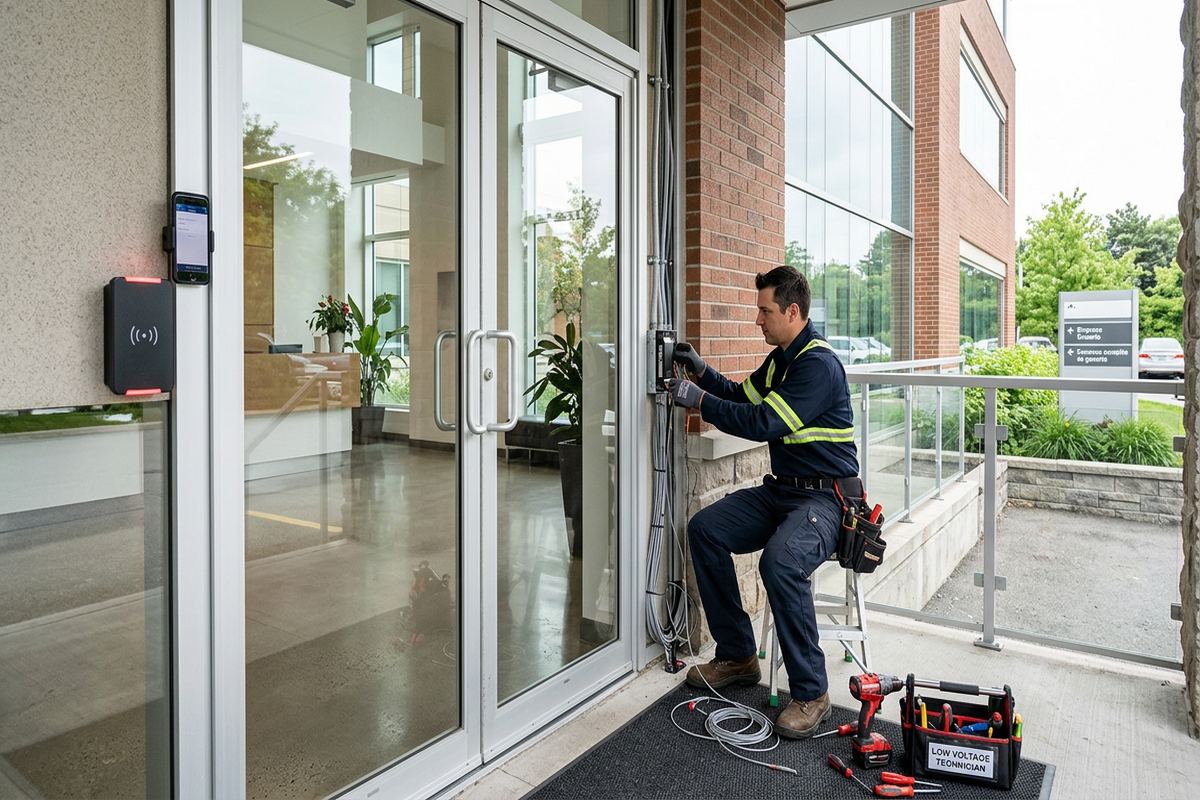
Cambridge, Ontario
Condo access control systems in Cambridge, scoped in writing first
Book a site assessment and get equipment, routes, exclusions, and warranty on paper before anything is installed.
Exterior Readers for Cambridge Weather
Outdoor devices in Cambridge face rain, wind-driven moisture, snow, road salt and repeated freeze-thaw conditions. A reader mounted beside an exposed entrance requires appropriate environmental suitability, a stable mounting surface and a sealed cable entry. The installation also needs to avoid creating ledges or gaps that collect water behind the device. We inspect overhangs, drainage paths, wall condition and likely snow accumulation before choosing placement. Protection must not make the reader difficult to reach or interfere with accessible approach routes and door operation.
Masonry and cladding require different fastening and sealing methods. Brick, block and stone can crack or shed if drilled without regard to joints, edges and substrate condition. Siding or panel systems may need backing so the reader does not flex when used. Exterior penetrations are placed and sealed to limit water entry while allowing the assembly to be serviced later. In stone heritage buildings, device position and raceway colour may also require additional approval. The written scope identifies visible work so the condominium can review appearance before installation.
Parking and perimeter entrances introduce further exposure. Vehicle readers, gate interfaces and detached pedestrian doors can involve longer pathways, underground conduits or outdoor enclosures. Salt spray and plowed snow should be considered when locating low-mounted equipment near drive aisles. Riverside areas may also have damp approaches where drainage and enclosure condition deserve closer inspection. UnifiedLink tests reader response, door release, request-to-exit operation and status monitoring on site. Seasonal building movement cannot be eliminated, so maintainable mounting and periodic door adjustment remain important.
- Weather-suitable readers and enclosures
- Sealed entries on masonry or cladding
- Mounting clear of snow accumulation
- Outdoor door and gate operation tested
Parking, Amenities and Shared Areas
Condo access control often extends beyond the lobby. Parking gates, storage rooms, fitness areas, lounges, pools, bicycle rooms and waste enclosures can each require different permissions. The purpose is not to place identical controls everywhere, but to identify where managed access improves daily operation. A garage entrance may use a vehicle credential, while an interior amenity door uses a resident fob and schedule. We map these relationships during assessment so users receive consistent access without being granted entry to service or mechanical spaces.
Parking systems require coordination between the access controller and the gate or overhead door equipment. The interface should provide an authorized opening command without bypassing the equipment’s own safety devices. Existing vehicle loops, photo eyes, remotes and operator controls remain separate considerations and may involve another qualified trade. In Cambridge properties with surface parking, exterior conduit and pedestal condition also matter. Underground garages bring concrete routing, dust, vehicle impact and limited ceiling-clearance concerns. Dependencies and excluded work are identified before installation begins.
Shared spaces frequently have booking rules or restricted operating hours. Access schedules can support those policies, but the technology should match actual management practices. If a fitness room closes overnight, permissions can reflect that period while designated staff retain broader access. Storage and bicycle areas may instead require continuous resident entry. Doors serving commercial strips or industrial condominium units can remain administratively separate from residential areas. On-site configuration confirms schedules, holidays and permission groups, followed by testing with representative credentials at every controlled opening.
- Parking operator interfaces planned
- Amenity schedules configured on site
- Service areas assigned limited permissions
- Every controlled opening function-tested
Cabling and Network Integration in Cambridge
Access control depends on cabling that remains understandable and serviceable after ceilings close and contractors leave. UnifiedLink installs continuous labelled cable runs between controllers, readers, door hardware interfaces and related equipment. Routes are planned around fire separations, occupied suites, concrete structure and existing building services. Where pathways are shared or congested, the assessment identifies practical alternatives. Labels correspond with the as-built record, allowing a future technician or property representative to identify the cable serving a particular Cambridge entrance without tracing an undocumented bundle through several rooms.
Controllers need suitable locations with controlled access, adequate space and appropriate power arrangements. Communications may use the property network, a dedicated network segment or another supported connection, depending on the selected platform. We coordinate required network information with the condominium’s administrator or IT provider rather than making assumptions about addressing and remote access. Network-connected equipment is configured using customer-approved settings. Accounts and passwords are transferred through the condominium’s own credentials, and unnecessary installer access is not treated as a substitute for proper property ownership.
Retrofits can involve abandoned cables, unclear panels and devices from several generations of work. Existing infrastructure is tested before being included in the design because appearance alone does not confirm conductor condition, routing or suitability. Hespeler and Preston properties may include additions built with different materials, creating transitions between masonry, frame walls and renovated common areas. Those transitions affect drilling, cable support and concealment. The scope states what will be reused, what will be replaced and which concealed conditions could require a reviewed change after access becomes available.
- Continuous labelled access-control cabling
- Controller locations selected for serviceability
- Customer-approved network configuration
- As-built cable and device records
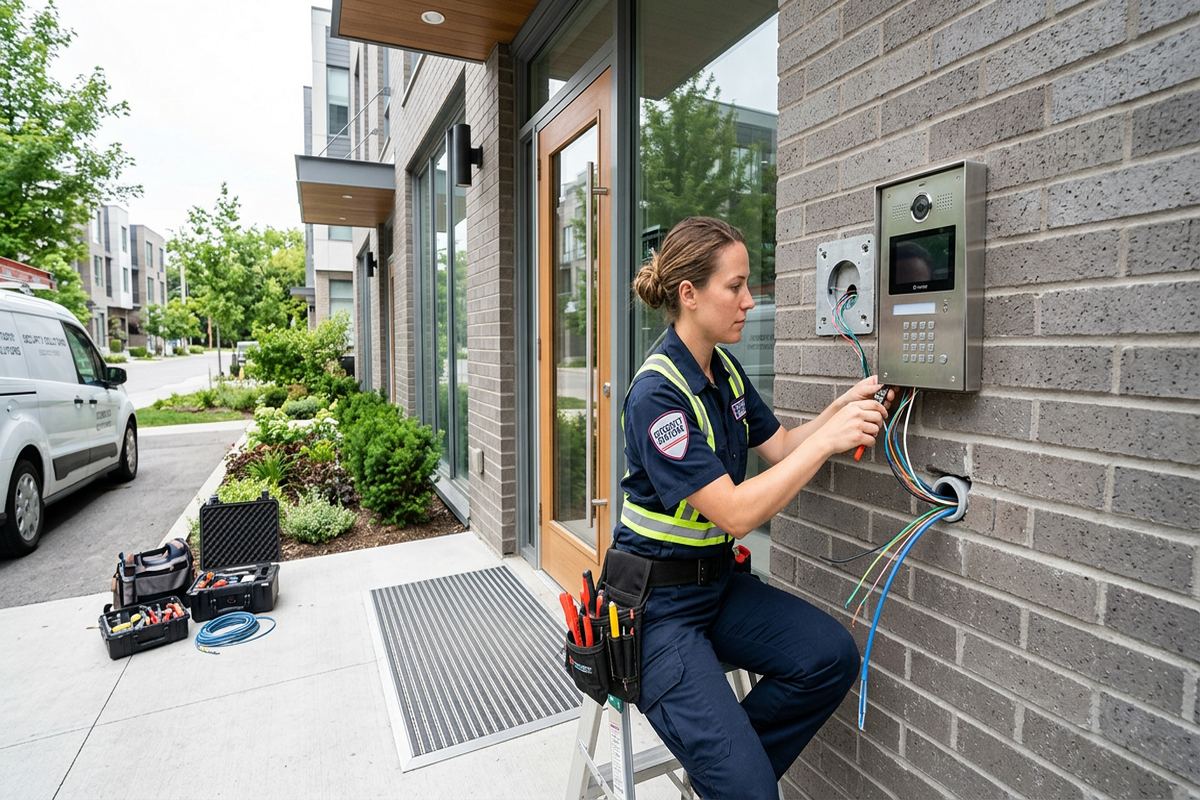
Installation in Occupied Cambridge Condominiums
Installation must account for residents who still need to enter, leave and receive visitors. Work is sequenced by door so access is not disrupted without notice or an agreed alternative. Property management can communicate schedules, temporary entry procedures and areas where technicians will be present. Noise-producing drilling is planned around approved hours, especially in occupied masonry buildings where sound travels through structure. Common corridors and vestibules are kept orderly, and tools or open equipment are not left where residents could interfere with them or encounter an avoidable hazard.
Some openings need short periods when existing locks, intercom functions or automatic door operators are unavailable. These dependencies are reviewed before work starts, with the condominium deciding how staff or residents will be supported during the interruption. UnifiedLink coordinates its access-control work with authorized door, electrical, fire-alarm or elevator contractors where their systems are involved. One accountable contractor manages the defined low-voltage scope, while responsibilities outside that scope remain clearly identified. This approach is particularly important where board approvals limit changes to common elements.
Commissioning covers more than presenting a credential to a reader. Each Cambridge door is checked for authorized entry, denied access, scheduled operation, request-to-exit response and available door-status reporting. Intercom release and connected gate commands are tested where included. Representative administrator functions are then reviewed with the designated property users. Any outstanding condition, such as a door requiring mechanical adjustment by another trade, is recorded rather than masked through software settings. The final configuration is aligned with the approved door list, permission groups and operating schedule.
- Work sequenced around occupied entrances
- Temporary access procedures agreed beforehand
- Connected systems tested at each door
- Outstanding third-party work documented
Handover and Ongoing Condo Administration
A completed system should be manageable by the property, not dependent on undocumented knowledge. UnifiedLink hands over administrator access using the customer’s own credentials and provides an as-built record of controlled doors, controllers and cable identification. The condominium also receives the agreed equipment information, operating notes and warranty details included in the scope. Training focuses on routine tasks: issuing or removing credentials, assigning permissions, reviewing door events and checking common status messages. Sensitive settings can remain limited to designated administrators while front-line staff handle approved daily changes.
Good administration continues after installation. Boards and managers should periodically review active credentials, contractor access, administrator accounts and schedules. Resident move-outs, staff changes and lost fobs need prompt updates so old permissions do not remain active. Exterior readers and door hardware should also be inspected after severe winter conditions, especially where ice, salt or freeze-thaw movement affects alignment. In West Galt, Clemens Mill or other Cambridge communities, the maintenance plan should reflect the specific entrances and exposure at that property rather than follow a generic checklist.
When a problem is reported, accurate records make diagnosis more direct. The manager can identify the affected door, note the credential and time, and confirm whether the issue involves every user or only one permission group. That information helps separate credential configuration from reader, lock, door or network conditions. Requests sent during business hours are answered the same day; after-hours requests are answered the next business day. Site assessment timing depends on the service and travel distance. No response wording replaces emergency procedures established by the condominium.
- Customer-owned credentials and accounts
- As-built door and cable documentation
- Administrator training for routine changes
- Maintenance guidance for local winter exposure
Cambridge neighbourhoods we cover
- Galt
- Preston
- Hespeler
- Blair
- West Galt
- Clemens Mill
Condo access control systems in Cambridge — common questions
Do we need condo board approval before installation?
Usually, yes. Entrances, corridors, garages and exterior walls are commonly condominium-controlled areas. The board or property manager may need to approve hardware, visible raceway, cable routes and planned interruptions. For a Cambridge project, UnifiedLink provides a written scope covering device placement, routes, exclusions, equipment ownership and warranty so decision-makers can review the proposed work.
Can access control work with our existing intercom?
It may be possible, depending on the intercom model, available interfaces and current condition. We inspect how visitor release operates and whether the controlled door can accept the required connection safely. The Cambridge site assessment identifies what can be integrated, what must remain separate and whether another intercom, door or electrical contractor needs to participate.
Will exterior readers withstand Cambridge winters?
Exterior readers must be suitable for their environment and installed with proper fastening, cable protection and sealing. Cambridge freeze-thaw cycles, snow, moisture and road salt influence mounting location and enclosure choices. We assess wall material, drainage, overhangs and likely snow accumulation, then test operation after installation. Door hardware may still require periodic adjustment as seasonal conditions affect alignment.
Can residents use fobs and mobile credentials?
The available credential types depend on the selected platform and the condominium’s operating preferences. Fobs or cards provide straightforward administration, while supported mobile credentials can reduce the need to distribute physical devices. Cambridge property managers should also consider resident support, phone compatibility, privacy and procedures for move-ins, move-outs and lost credentials before selecting a method.
Can you reuse our existing access-control cabling?
Existing cabling can only be reused after its type, condition, routing and performance are checked. Older Cambridge condominiums may contain unidentified or spliced conductors that are unsuitable for new readers or controllers. The written scope states which infrastructure will remain and which runs need replacement. New cabling is installed as continuous labelled runs and recorded in the as-built documentation.
What do we receive when the system is complete?
UnifiedLink completes on-site configuration and functional testing, then hands over the system through the condominium’s own administrator credentials. The property receives an as-built record, cable and device identification, agreed equipment information and warranty details. Designated users are shown how to manage credentials, permissions, schedules and common events without relying on an installer-controlled account.
Coverage in Cambridge is confirmed against the address before we quote. See everything we install in Cambridge or the province-wide condo access control systems page.