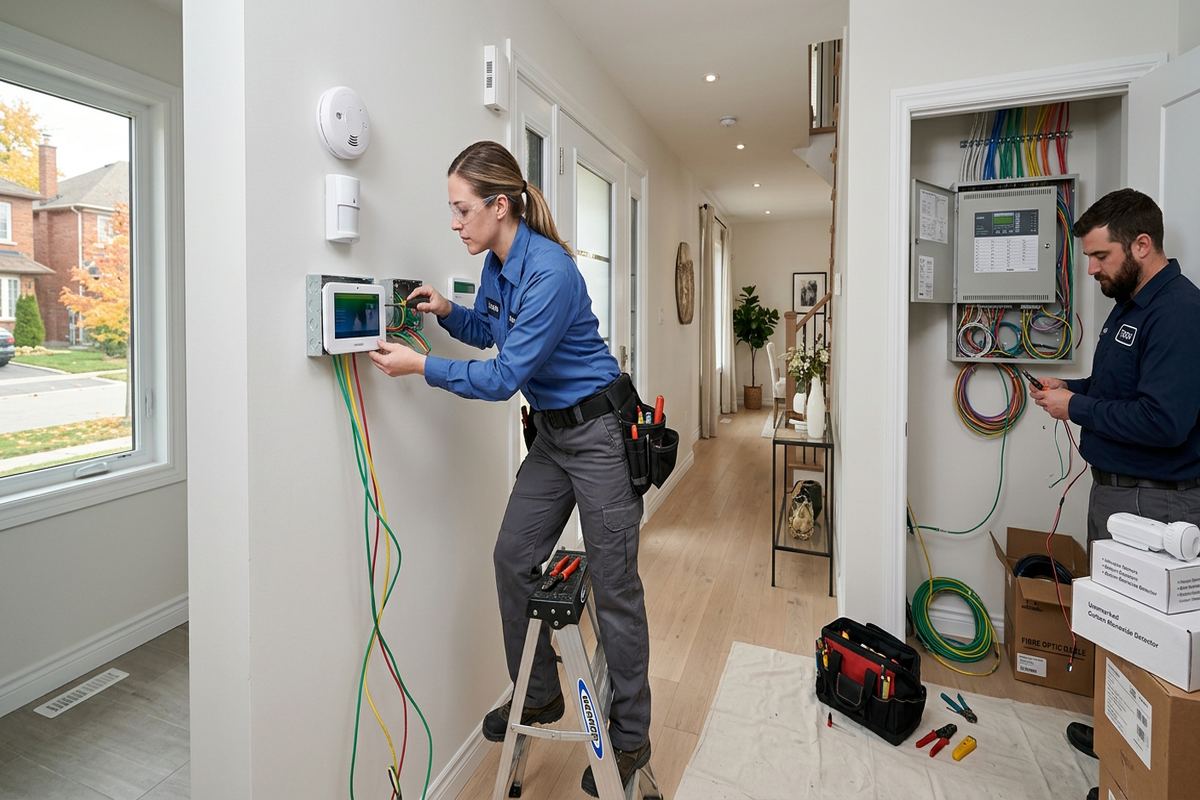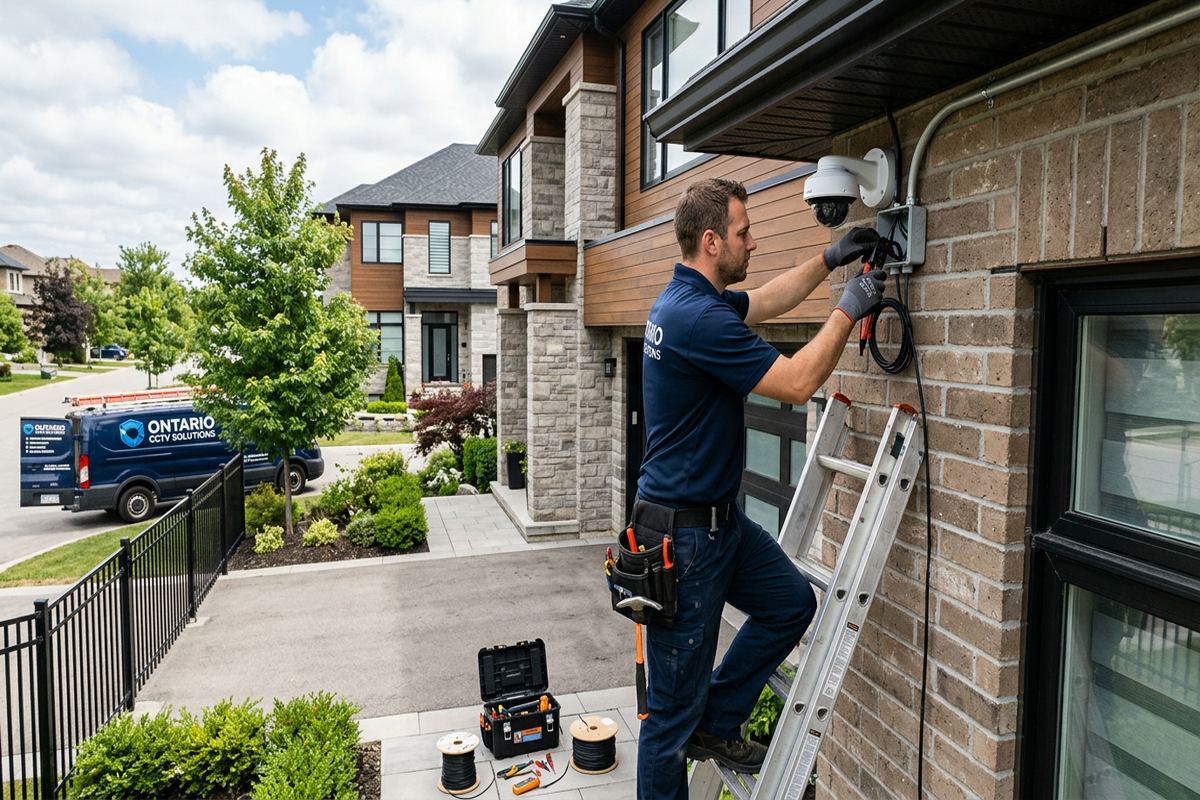
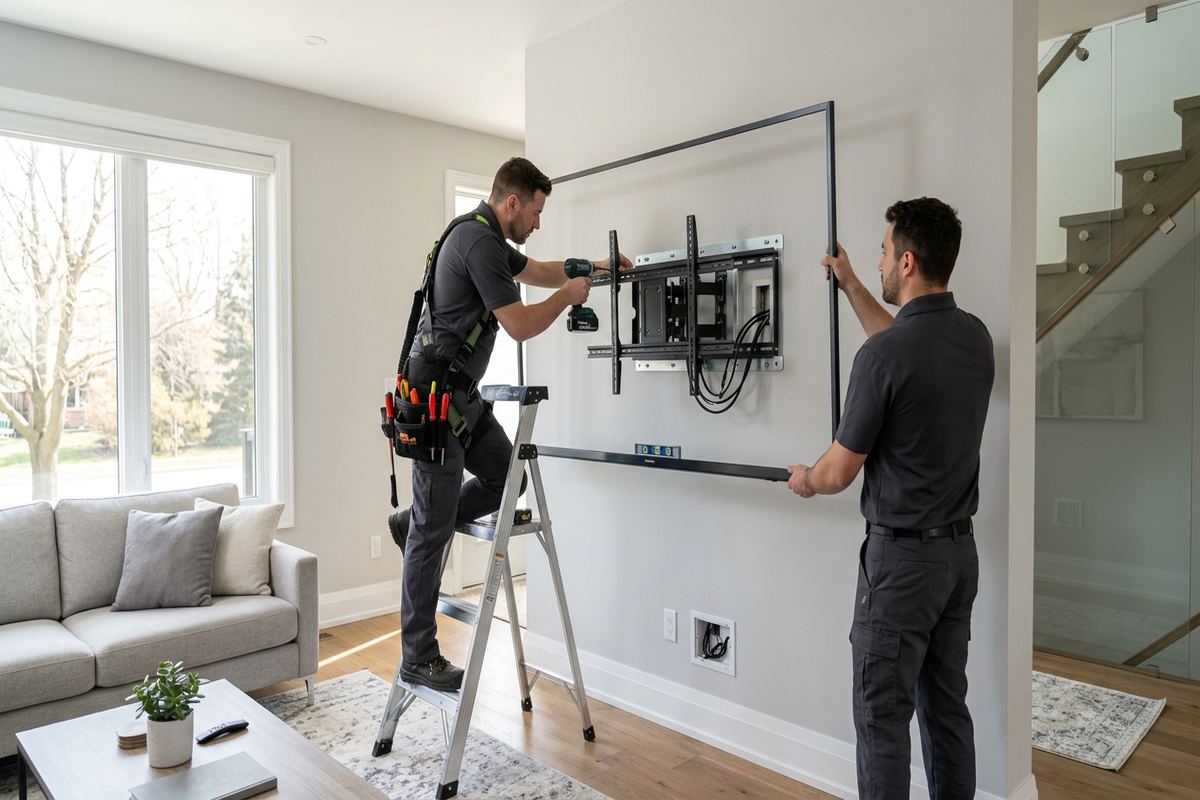
UnifiedLink provides TV wall mounting for homes, offices and commercial spaces across Caledon. We assess the wall, viewing position, bracket, power and cable route before installation. Each system is securely mounted, connected and configured on site, with practical planning for masonry, framed walls, fireplaces, exterior walls and outbuildings.
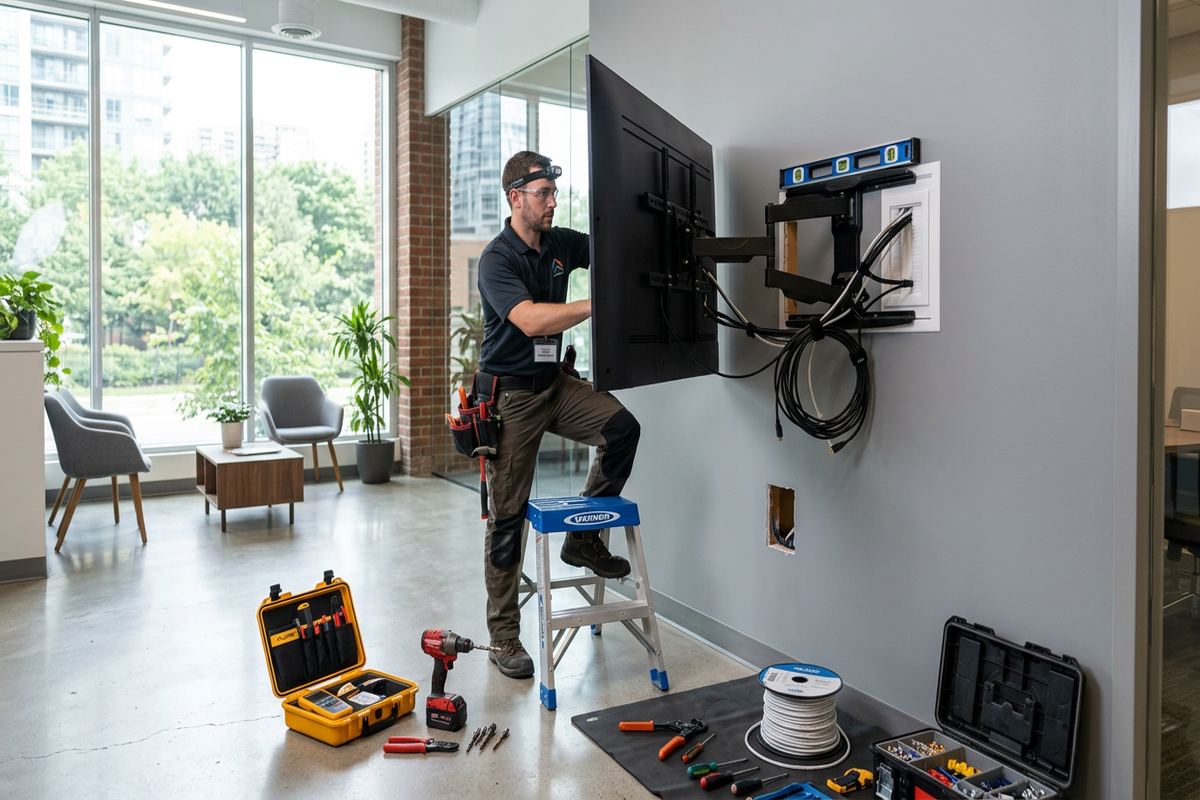
TV Wall Mounting for Caledon Properties
TV wall mounting begins with the structure behind the finished surface, not with the bracket. Caledon properties include newer framed houses, older homes with altered interiors, rural acreages, commercial units and outbuildings. Drywall alone is not a reliable attachment point for most screens, so we identify studs, blocking, masonry or another suitable structural base. The assessment also considers screen weight, bracket movement, viewing height and nearby services. This avoids weak fasteners, damaged finishes and mounting positions that make the television uncomfortable to watch or difficult to connect.
Room layout determines whether a fixed, tilting or full-motion bracket makes sense. A fixed bracket keeps the television close to the wall, while a tilting model can improve viewing from a lower seating position or reduce reflections. Full-motion brackets provide more flexibility but place greater leverage on the wall and need dependable structural attachment. We review seating, windows, lighting and circulation before confirming placement. In open rooms, the chosen position should also avoid projecting into walkways or interfering with doors, cabinets, shelves and other furnishings when the screen is extended.
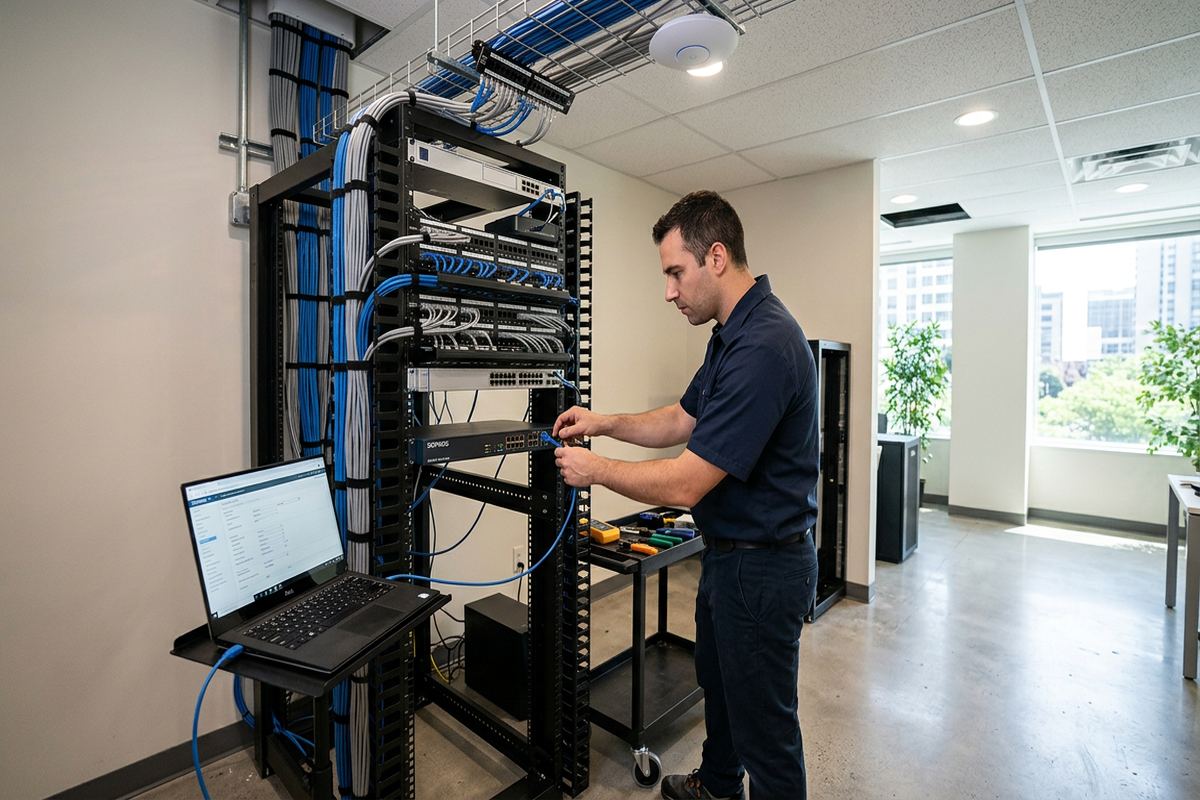
Every installation requires a clear plan for power, signal cables and connected equipment. We check whether an existing receptacle is suitably located and identify safe routes for HDMI, network, coaxial or audio cabling. Flexible power cords are not routed inside walls as a substitute for permanent electrical wiring. Where electrical work is needed, it must be handled appropriately and coordinated with the mounting work. Before pricing, UnifiedLink completes a site assessment and provides a written scope covering equipment, cable routes, device placement, exclusions, equipment ownership and warranty.
- Fixed, tilting and full-motion bracket assessment
- Stud, blocking and masonry attachment planning
- Viewing-height and glare review
- Power and signal route assessment
- Written installation scope before work
Planning a Caledon TV Installation
A useful mounting height depends on how the television will be viewed rather than a standard measurement applied to every room. In a living room, the centre of the screen is normally planned around seated sightlines, while a boardroom, gym, reception area or workshop may require a higher position. Screen size, furniture depth and viewing distance all affect the result. We mark the proposed outline before drilling so the customer can review the location. This simple step is particularly important for large displays, where a small height error becomes noticeable after installation.
Fireplace installations need additional investigation because heat, wall cavities and construction methods vary. A mantel does not automatically protect a television from elevated temperatures, and a high mounting position may create an uncomfortable viewing angle. We examine the fireplace type, wall surface, available structural support and feasible cable route. Brick, stone veneer and full masonry require different drilling and anchoring methods. If conditions cannot support a safe or practical installation, we explain the limitation and discuss another wall, a different bracket or a revised room arrangement instead of forcing the original plan.
Connected devices also influence placement. Streaming boxes, receivers, game consoles, soundbars and network equipment need ventilation, accessible controls and cables long enough for bracket movement. Equipment may sit in nearby furniture, on a shelf or in a structured enclosure where appropriate. Infrared control, Bluetooth operation and Wi-Fi performance should be considered before devices are hidden. For full-motion mounts, every cable needs enough managed slack to move without pulling on a port. Continuous labelled cable runs simplify future troubleshooting and make it clear which connection serves each source or room.
- Proposed screen outline marked before drilling
- Seated and standing sightlines considered
- Fireplace heat and wall construction reviewed
- Connected equipment locations planned
- Cable slack allowed for bracket movement
Wall Construction and Secure Fastening
Caledon’s mix of building types means the visible wall finish rarely tells the whole story. Conventional wood framing is common, but stud spacing, renovations and added layers can complicate detection. Steel studs may be present in commercial interiors and some residential partitions, while concrete block appears in industrial units, garages and utility spaces. Older walls may include plaster, lath or uneven masonry beneath finished surfaces. We use the wall type, display weight and bracket geometry to select an attachment approach rather than relying on general-purpose anchors intended for lightweight fixtures.
Masonry installations require controlled drilling and attention to the material itself. Solid concrete, concrete block, brick and stone veneer do not accept the same anchors, and mortar joints may not provide the required holding conditions. The bracket must sit flat without crushing an irregular finish or placing stress on decorative stone. Before drilling, we consider cavity depth, edge distances and possible concealed services. Dust is managed during the work, and the display is levelled after fastening. Where a decorative surface prevents dependable attachment, additional preparation or a different mounting position may be necessary.
Full-motion brackets create changing loads as the television moves away from the wall. This makes solid fastening and bracket selection especially important for larger screens. The bracket must match the display’s weight, VESA mounting pattern and intended range of movement. We also confirm that the screen can rotate or tilt without striking an adjacent wall, cabinet or soundbar. Fasteners supplied with a bracket are reviewed against actual site conditions rather than used automatically. Final checks include fastener security, bracket movement, screen level and cable behaviour through the complete operating range.
- Wood and steel framing assessed
- Concrete, block and brick identified
- Bracket matched to VESA pattern
- Fasteners selected for actual substrate
- Movement and clearances tested
Caledon, Ontario
TV wall mounting in Caledon, scoped in writing first
Book a site assessment and get equipment, routes, exclusions, and warranty on paper before anything is installed.
Concealed Cabling in Caledon Homes
A clean wall-mounted television depends on a cable route that remains serviceable. In framed interior walls, low-voltage cables may be routed through a suitable cavity between the screen and equipment location. Fire blocking, insulation, plumbing, ductwork and horizontal framing can interrupt that path, so concealed routing is confirmed on site rather than assumed from photographs. Exterior walls are often more difficult because insulation and air-sealing layers should not be unnecessarily disturbed. In Caledon winters, preserving the wall assembly is important for comfort, condensation control and long-term building performance.
When in-wall routing is impractical, surface raceway can provide a neat, accessible alternative. Raceway is useful on masonry, concrete block, insulated exterior walls and finished spaces where opening the wall would cause disproportionate damage. Its route can often follow corners, trim or furniture lines to reduce visual impact. We discuss colour, entry points and bends before installation. The written scope identifies whether cables will be concealed, placed in raceway or left accessible. It also states patching, painting and electrical work exclusions so the finished result and responsibilities are understood in advance.
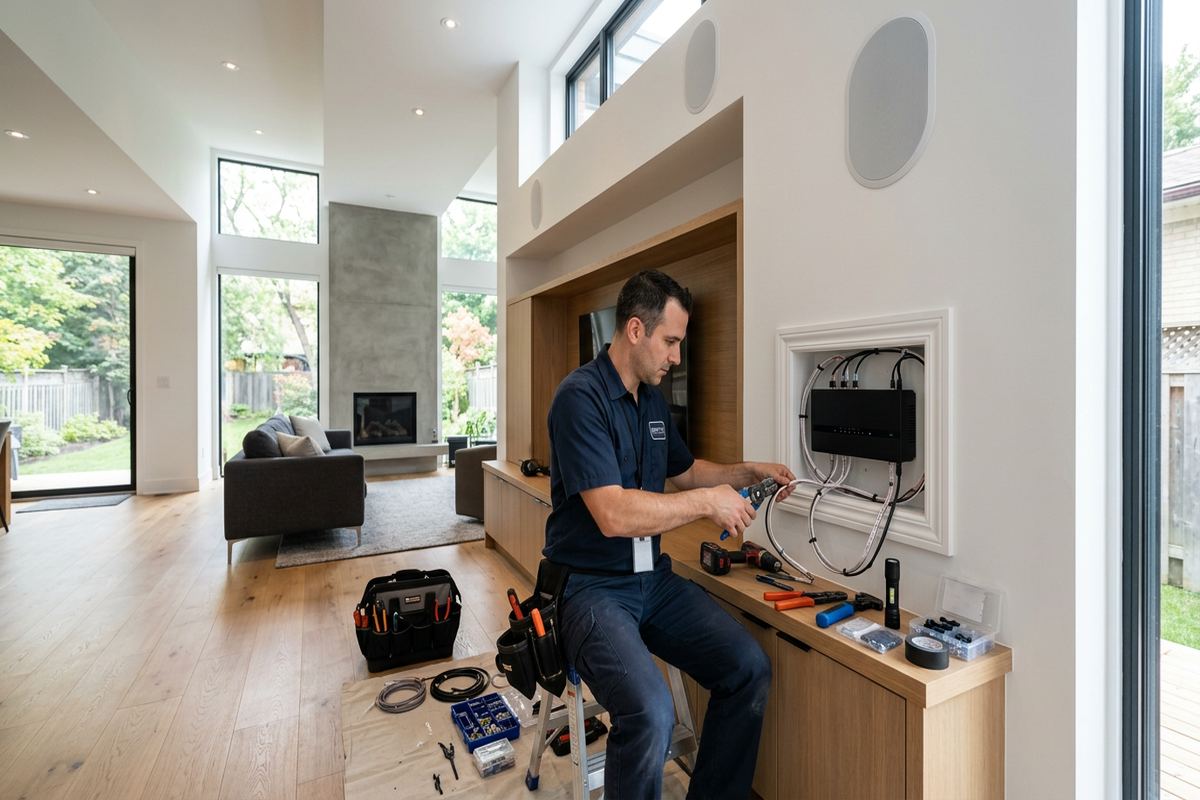
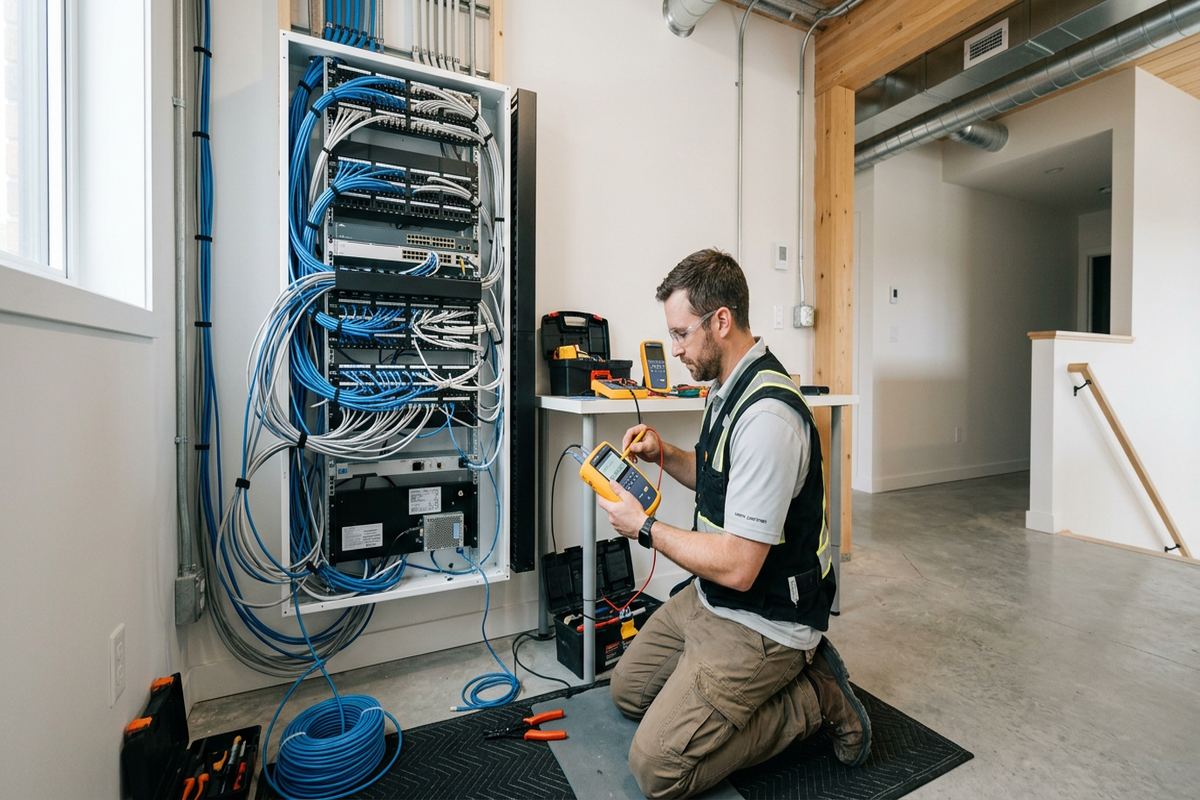
Signal reliability matters as much as appearance. HDMI cables must support the required distance and equipment capabilities, while network cabling should use appropriate terminations and avoid damaging bends or tension. Long runs may need a different transmission method instead of an unusually long passive cable. We install continuous labelled cable runs where new cabling is included, reducing hidden couplers and ambiguous connections. At handover, sources are tested at the display, inputs are identified and the customer receives an as-built record showing the relevant cable route, endpoints and installed equipment.
- In-wall routes checked for obstructions
- Exterior wall insulation kept in mind
- Surface raceway available where appropriate
- Continuous low-voltage runs labelled
- Connections documented at handover
Mounting Displays in Businesses
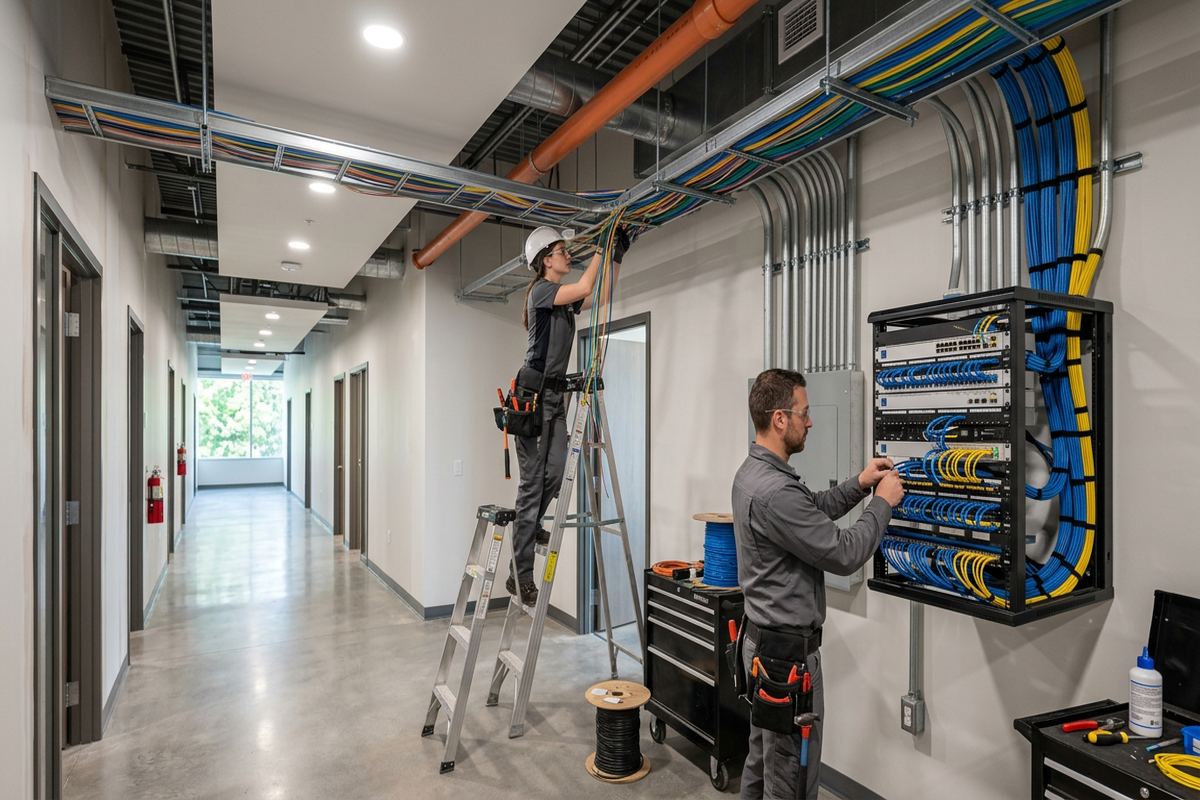
Commercial display mounting serves different operating needs from a typical living-room installation. Offices may need meeting-room screens positioned for seated participants and camera sightlines, while retail or reception displays require visibility without obstructing customer movement. Commercial strips in Bolton and Mayfield West can include demising walls, masonry exterior walls and ceilings crowded with mechanical services. Industrial units may use concrete block, steel framing or high wall positions. A site assessment establishes the substrate, access requirements, cable pathway and shutdown constraints before equipment or labour is confirmed.
For meeting rooms, we consider the complete system rather than treating the television as an isolated device. Table connections, wireless presentation equipment, videoconferencing cameras, speakers and network access influence screen height and cable routing. A camera mounted too high can create an unnatural angle, while a display placed without reference to the table may be blocked by seated participants. We can coordinate display mounting with structured cabling, Wi-Fi or audio work under one written scope. This gives the customer one accountable contractor for the included low-voltage installation and its documented handover.
Public-facing screens need secure positioning and practical maintenance access. A bracket should not expose sharp projections in a circulation route, and controls or cables may need protection from casual interference. Equipment still requires ventilation and a way to be serviced without dismantling unrelated finishes. In leased premises, the tenant should obtain landlord approval for drilling, cabling and permanent alterations before work begins. Condominium businesses may also need property-management approval, proof of the proposed route or scheduling around building rules. Those approvals remain separate from the technical assessment of the installation.
- Meeting-room sightlines reviewed
- Retail circulation clearances maintained
- Concrete block and steel framing assessed
- Landlord approvals identified before drilling
- Low-voltage systems coordinated under one scope
Rural and Outbuilding Installations in Caledon
Rural acreages around Palgrave, Inglewood and Alton often involve longer travel within the property, separate buildings and construction that differs from the main house. A television in a workshop, detached garage, barn office or recreational outbuilding may be exposed to wider temperature swings, dust and humidity than a normal interior room. We review whether the display and bracket are suitable for that environment, along with the available wall structure and power. Consumer equipment intended for conditioned indoor space should not be assumed suitable for every outbuilding simply because the area is enclosed.
Exterior and semi-exposed mounting needs careful water management. Freeze-thaw cycles can enlarge small defects in masonry, while poorly sealed penetrations may admit water behind cladding or into a wall assembly. Any exterior route must account for cable rating, drip loops, entry direction and compatible sealing materials. A standard indoor television is not an outdoor display, and a covered location does not remove condensation, temperature or wind-driven moisture concerns. We identify these limitations in the scope and avoid representing indoor equipment as suitable for conditions outside its stated operating environment.
Long driveways and gated properties also affect scheduling and site access. Customers should provide gate instructions, parking guidance and notice of animals or restricted areas before the visit. If the mounting project is being coordinated with gate access, outdoor cameras, Wi-Fi or cabling to an outbuilding, we assess those systems as separate but connected requirements. Cable distance, pathways and building-to-building links can influence where media equipment is placed. Site assessment timing depends on the service and travel distance, particularly where several structures must be inspected before a complete scope can be prepared.
- Outbuilding temperature and moisture reviewed
- Exterior penetrations planned and sealed
- Freeze-thaw exposure considered
- Gate and property access confirmed
- Multi-building cabling assessed separately
Installation, Configuration and Handover
On installation day, the work area is reviewed before drilling begins. The proposed screen position, bracket orientation and cable entry points are confirmed against the written scope. Wall scanning and measured reference points help locate structural support and reduce the chance of contacting concealed services, although no detection method can reveal every hidden condition. If the opened route differs materially from what could be assessed beforehand, work pauses while options are discussed. Changes to placement, equipment or finish expectations are documented rather than made informally during the installation.
After the bracket is secured, the television is attached using compatible hardware and checked for level. Full-motion and tilting mechanisms are operated through their intended range, with cables arranged to avoid pinching, excessive tension and contact with sharp edges. Sources such as streaming devices, receivers or computers are connected where included. On-site configuration can cover input selection, network connection and basic display settings without taking ownership of the customer’s accounts. Firmware updates, subscriptions and third-party service availability remain subject to the equipment manufacturer or service provider.
Handover is completed using the customer’s own credentials. UnifiedLink does not need to retain passwords for streaming, network or device accounts after the system is configured. We identify inputs, demonstrate bracket movement and explain any access points required for future servicing. The customer receives an as-built record for installed cable routes and endpoints, along with the applicable equipment and warranty information defined in the scope. This documentation is useful when a television is replaced, a source is upgraded or another contractor later needs to understand what is concealed behind the finished wall.
- Placement reconfirmed before drilling
- Bracket and screen level checked
- Inputs and connected devices tested
- Customer credentials used for setup
- As-built record provided at handover
Arranging TV Wall Mounting in Caledon
Requests for TV wall mounting in Caledon can begin with the screen model, approximate size, preferred room and property address. Photos of the entire wall, nearby receptacles, equipment location and opposite side of the wall can help with initial review, but they do not replace a site assessment where construction or routing remains uncertain. Customers should also mention fireplaces, masonry, exterior walls, unusually high positions and full-motion requirements. For commercial premises, access hours, ceiling height, wall type and landlord conditions should be provided early so the assessment can be planned appropriately.
The site assessment occurs before pricing. During that visit, we review the display, bracket, wall structure, mounting height, connected equipment and cable path. The resulting written scope covers equipment, cable routes, device placement, exclusions, equipment ownership and warranty. This process gives both parties a shared description of the work and avoids assumptions about patching, painting, electrical changes or customer-supplied hardware. If the existing bracket or cables are to be reused, their condition and compatibility are assessed before they are accepted as part of the proposed installation.
UnifiedLink serves Caledon communities including Bolton, Caledon East, Inglewood, Alton, Mayfield West and Palgrave. Requests sent during business hours are answered the same day, while after-hours requests are answered the next business day. Site assessment timing depends on the service and travel distance. Before the appointment, customers should ensure that the television, bracket and connected equipment are available if they are customer supplied, and that an adult with authority to approve placement is present. Condo, landlord or property-management permissions should also be obtained before drilling or permanent cabling begins.
- Initial photos accepted for project review
- Site assessment completed before pricing
- Written scope defines inclusions and exclusions
- Customer-supplied hardware checked for compatibility
- Business-hour requests answered the same day
Caledon neighbourhoods we cover
- Bolton
- Caledon East
- Inglewood
- Alton
- Mayfield West
- Palgrave
TV wall mounting in Caledon — common questions
Can you mount a TV above my fireplace?
Possibly, but the fireplace, wall construction, heat exposure, mantel and viewing angle must be assessed first. In Caledon homes, the surface may be brick, stone veneer, framed construction or a combination. We confirm whether secure fastening and a practical cable route are available. If heat or mounting height makes the location unsuitable, we recommend another position rather than proceeding with a poor installation.
Can cables be hidden inside the wall?
Cables can often be concealed in a suitable framed interior wall. Fire blocking, insulation, plumbing, ducts and masonry may prevent a direct route. Exterior walls in Caledon require particular care because insulation and air-sealing layers affect moisture and winter performance. Where in-wall routing is not practical, surface raceway may provide a tidy alternative. Permanent electrical work is treated separately from low-voltage cable installation.
Do I need to supply the bracket?
You may supply a bracket, or bracket selection can be included in the scope. Any customer-supplied model must match the television’s VESA pattern, weight and intended movement. We also assess whether its fastening arrangement suits the Caledon property’s wall construction. A full-motion bracket that is technically compatible with the screen may still be unsuitable if the wall cannot support its extended leverage.
Can you mount a TV in an outbuilding?
Yes, subject to the building conditions and equipment suitability. Caledon garages, workshops and other outbuildings may experience dust, humidity and temperature changes that exceed conditions inside the main house. We review the wall, power location, cable path and display specifications. Indoor televisions should not be treated as outdoor-rated equipment, even when mounted in a covered or partly enclosed area.
Do I need landlord or condo approval?
Tenants and condominium occupants should confirm the applicable rules before permanent drilling or concealed cabling. A landlord, condominium corporation or property manager may regulate alterations, working hours, elevator use or penetrations through shared assemblies. UnifiedLink can describe the proposed mounting and cable route in the written scope, but the customer is responsible for obtaining required approval before work starts at the Caledon property.
How do I arrange an assessment?
Send the Caledon property address, television model or size, preferred wall, bracket type and photos if available. Mention masonry, fireplaces, high ceilings, exterior walls, outbuildings or commercial access restrictions. Requests sent during business hours are answered the same day, and after-hours requests the next business day. Site assessment timing depends on the service and travel distance. Pricing follows the assessment and written scope.
Coverage in Caledon is confirmed against the address before we quote. See everything we install in Caledon or the province-wide tv wall mounting page.