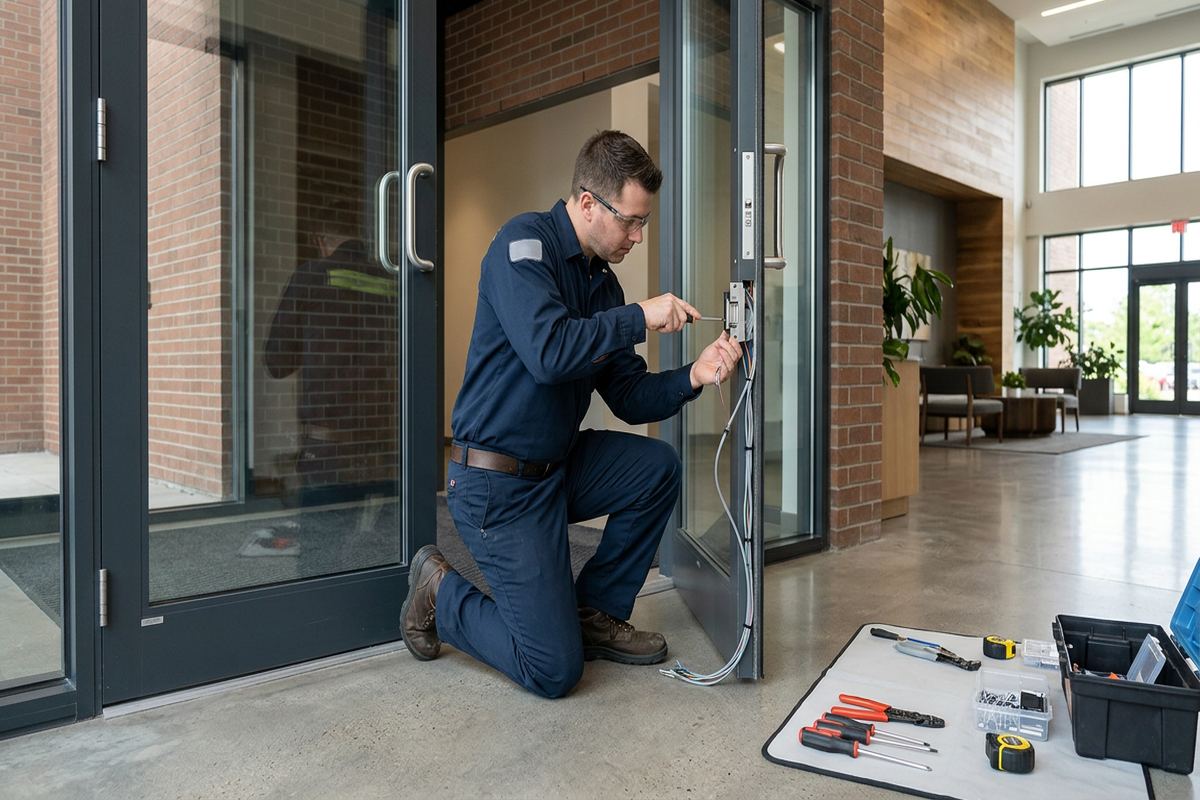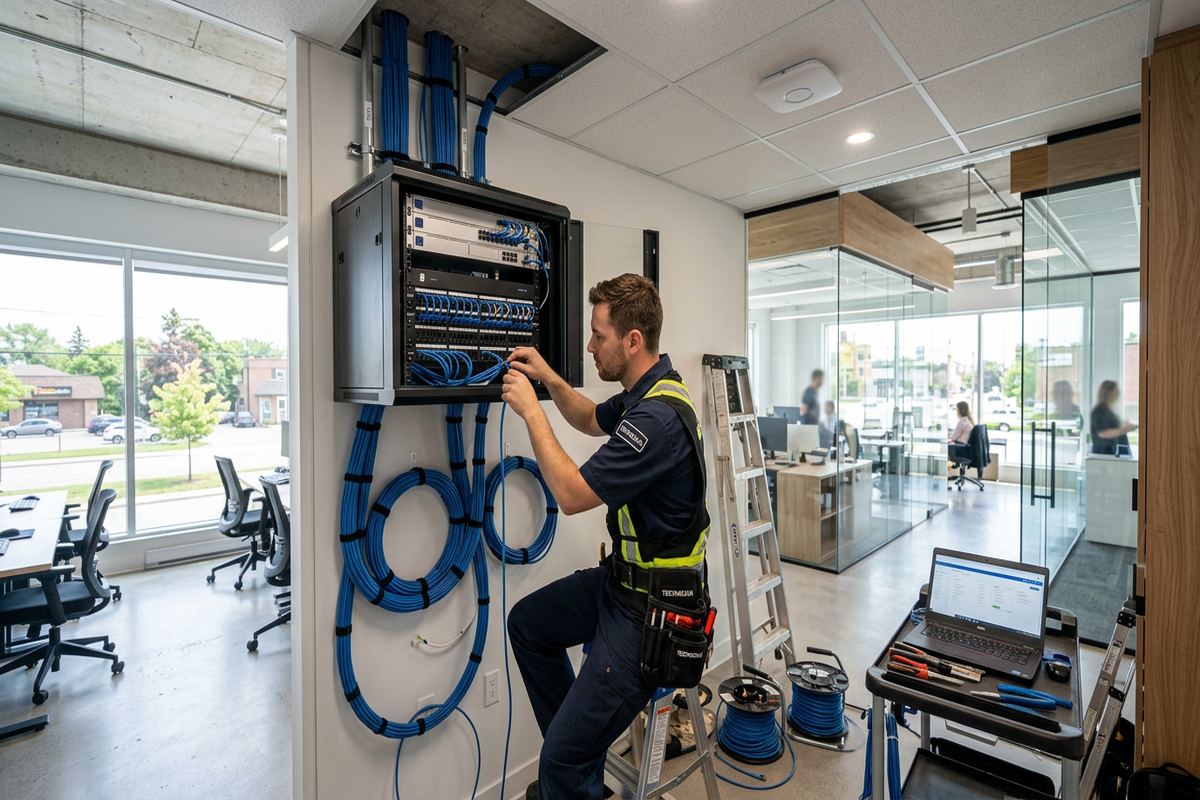
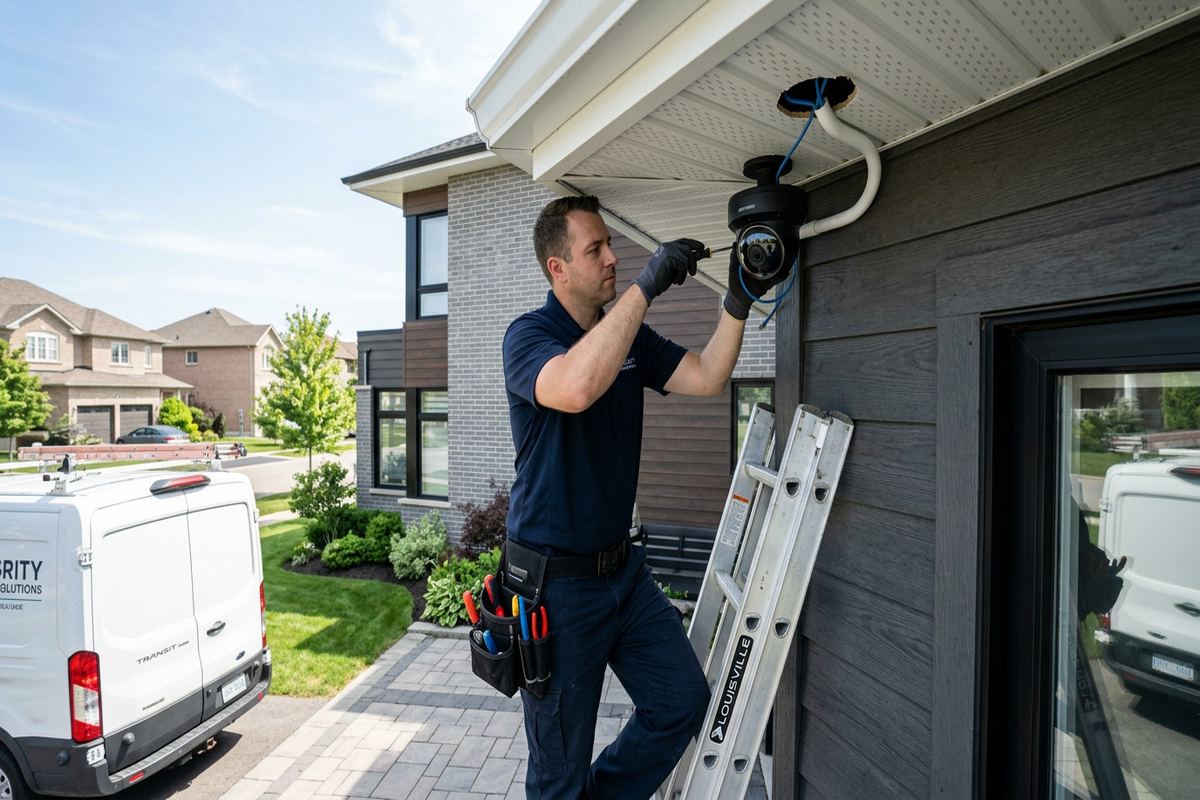
UnifiedLink installs outdoor camera systems for homes, rural properties and businesses across Caledon. Each project starts with a site assessment to establish useful views, cable routes, recording needs and exterior mounting details. We account for long driveways, gates, outbuildings, winter exposure and the differences between masonry, frame and mixed-construction properties.
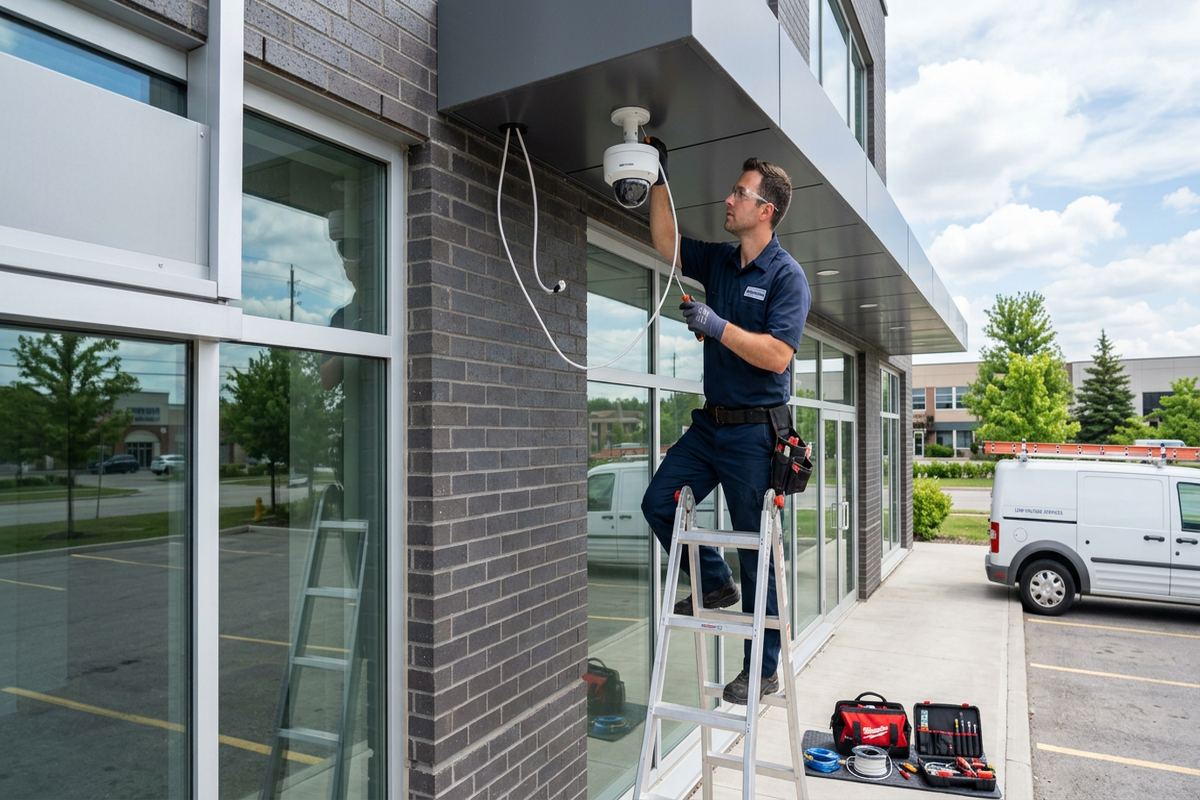
Outdoor Camera Planning for Caledon Properties
Outdoor camera work begins with deciding what the system must identify, not simply where a camera can be attached. On a Caledon acreage, a wide view of a long driveway may show activity without providing enough detail at the gate. A separate camera positioned for faces or licence plates can address that gap. During the assessment, we review entrances, parking areas, paths, service doors and likely approaches. Sun direction, nighttime lighting, vegetation and seasonal changes are considered before device locations or lens types are selected.
Property layout often determines the network design. A detached garage, barn, workshop or gate may sit beyond a practical copper Ethernet distance or across ground that should not be disturbed. Depending on the site, the appropriate route may involve conduit, fibre, a point-to-point wireless link or local equipment in an outbuilding. Power availability and surge exposure also matter. We document the proposed connection method, required pathway work and any dependencies so the owner can evaluate coverage and infrastructure together rather than discovering limitations after cameras have been mounted.
The written scope identifies camera locations, intended views, recording equipment, cable routes and exclusions. It also states who owns the equipment, how warranty matters are handled and whether trenching, electrical work, lifts or permit-related items fall outside our work. This detail is particularly useful on larger Caledon properties, where distances and building access can change installation requirements. Pricing follows the site assessment, allowing the proposal to reflect actual construction, mounting surfaces and network conditions rather than assumptions based only on a property description.
- Entrance, perimeter and approach views reviewed
- Day and night conditions considered
- Remote-building connections planned before installation
- Written scope provided before work begins
Exterior Mounting and Weather Protection in Caledon
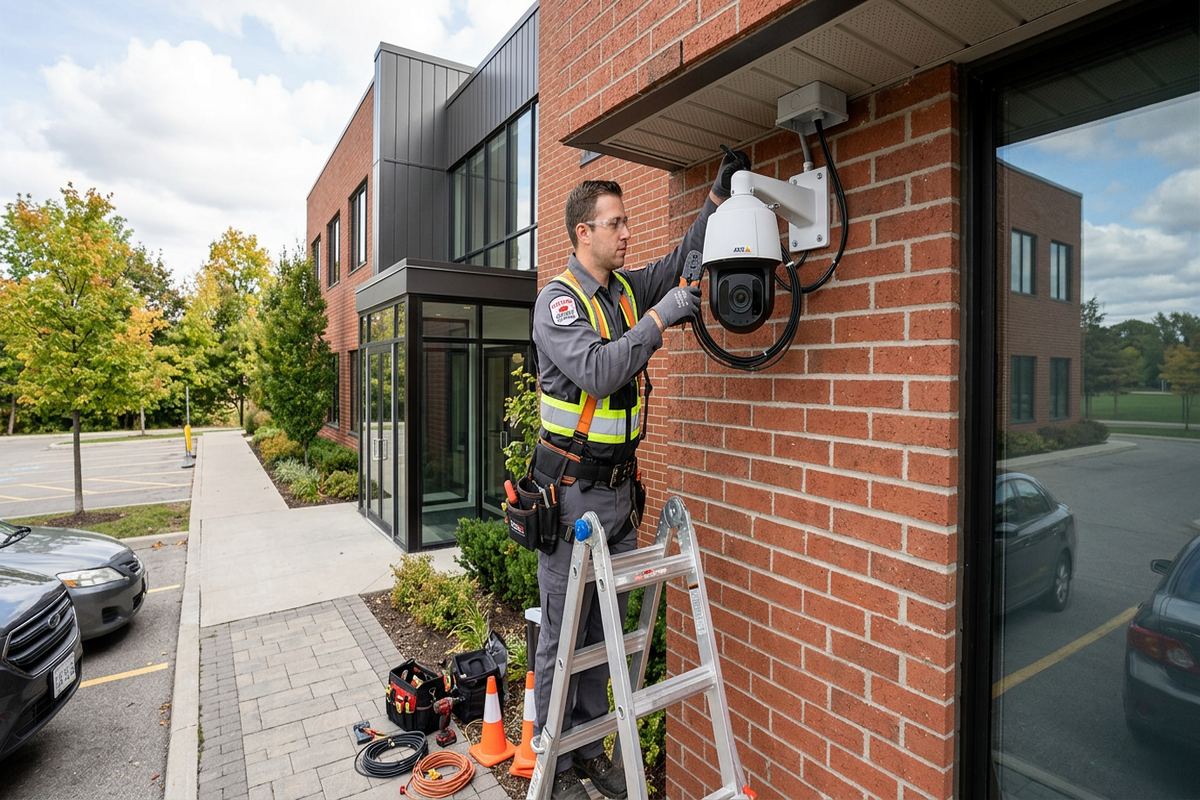
Caledon winters place different demands on an outdoor installation than an indoor camera project. Freeze-thaw cycles can open poorly sealed penetrations, while wind-driven rain and snow can reach junctions beneath eaves or on exposed walls. We select exterior-rated mounting methods, protect terminations and seal cable entries using materials suited to the surface. Drip loops and suitable junction boxes help keep water away from connections. Camera placement also accounts for snow accumulation, icicles and roof runoff that could obstruct a view or create repeated maintenance problems.
Mounting details vary between brick, concrete block, stone veneer, siding and wood-frame construction. Masonry requires appropriate anchors and carefully located penetrations that avoid unnecessary damage. Frame buildings need fastening into suitable structure rather than relying on thin cladding. Older rural buildings may have uneven surfaces, additions or concealed construction that changes the planned route. Newer homes around Mayfield West may present finished façades and tightly managed soffit spaces. The assessment is used to choose a secure mounting point while keeping cable entries neat, sealed and serviceable.
Outdoor-rated equipment does not remove the need for thoughtful placement. A camera under partial shelter may stay cleaner and experience less direct weather, but the eave must not block infrared illumination or force an excessively steep viewing angle. Exposed poles and gate structures may require additional pathway, grounding or surge considerations. We also check whether nearby lights will cause glare, insects or overexposed faces at night. Final aiming is completed on site using live images, allowing the installer and customer to confirm the useful scene rather than relying on a drawing alone.
- Weather-resistant boxes protect cable terminations
- Penetrations sealed for the mounting surface
- Views checked for snow and roof runoff
- Live aiming completed during configuration
Driveways, Gates and Outbuildings
Long driveways create a common coverage challenge in Caledon. A camera mounted on the house may record a vehicle entering the property but still be too distant for useful identification. Gate posts, entrance pillars or a nearby structure can provide a better image when power and communications are available. We assess the viewing angle, expected vehicle path, headlight direction and available lighting. Where a gate operator already exists, its enclosure or conduit cannot automatically be assumed suitable; pathways and electrical separation must be checked before adding communications equipment.
Outbuildings often need coverage of doors, equipment areas and the route between structures. The installation method depends on distance, available power, building use and whether a reliable network connection already reaches the building. Buried fibre can provide electrical isolation between buildings, while a properly designed wireless bridge may avoid trenching where there is a clear path. Copper links have distance and surge limitations that must be respected. Each approach has maintenance and access implications, so the proposed design explains how cameras connect to recording and remote viewing systems.
A gate camera should be designed around a defined purpose. General awareness, visitor communication and licence-plate capture require different positions and image settings. Fast-moving vehicles, reflective plates and headlights can defeat a standard overview camera, especially after dark. For deliveries or visitors, an intercom or access-control device may be more suitable than expecting a surveillance camera to manage entry. UnifiedLink can coordinate camera coverage with gate access requirements while keeping the functions distinct, providing one accountable contractor for the low-voltage scope identified in the proposal.
- Gate views designed for a stated purpose
- Fibre and wireless links assessed for outbuildings
- Vehicle speed and headlights considered
- Camera and gate-access functions kept distinct
Caledon, Ontario
Outdoor camera installation in Caledon, scoped in writing first
Book a site assessment and get equipment, routes, exclusions, and warranty on paper before anything is installed.
Camera Cabling Across Caledon Sites
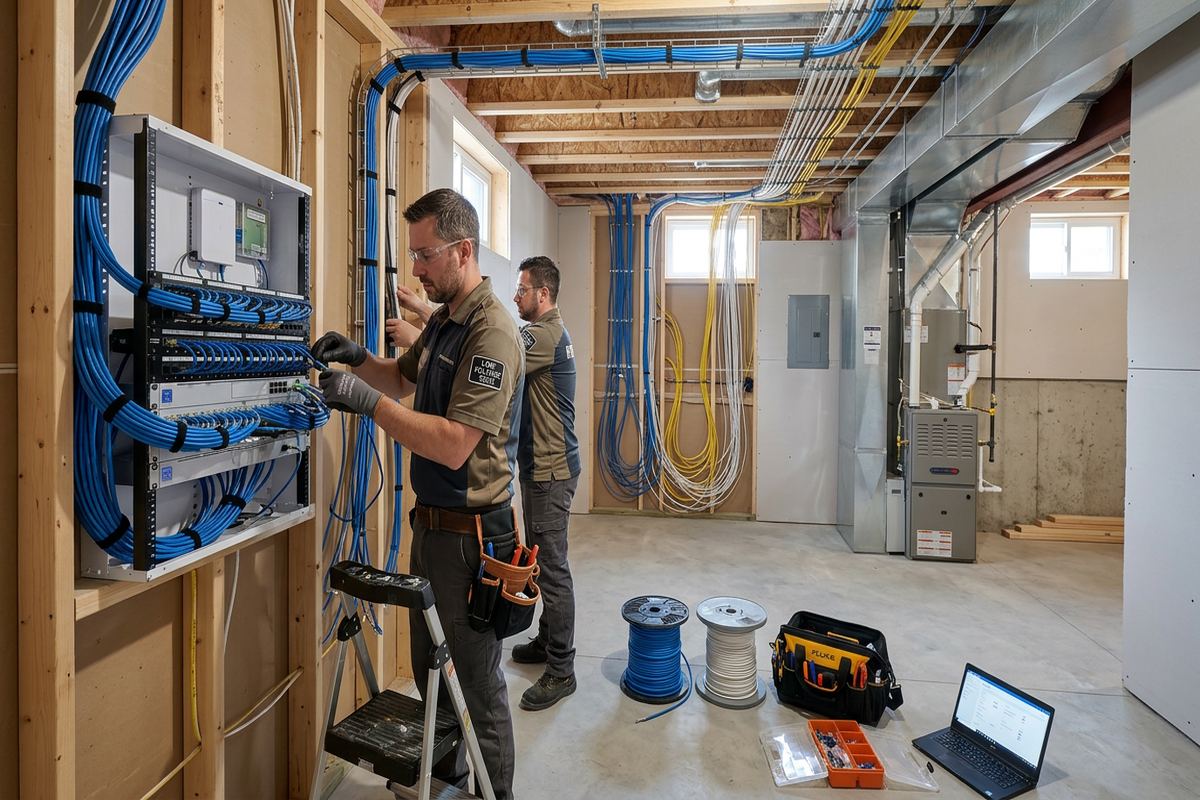
Reliable outdoor video depends on the pathway behind each camera. We install continuous labelled cable runs between approved termination points, avoiding hidden couplers that can complicate troubleshooting. Cable type is selected for the environment, including outdoor exposure, conduit, unconditioned spaces and transitions between buildings. Routes are planned to reduce visible wiring while preserving access for service. On a finished home in Bolton or Caledon East, that may mean using attic, basement and soffit spaces; a workshop or industrial unit may use accessible ceiling pathways and surface-mounted conduit.
Existing cabling is not assumed to support modern network cameras. Its category, conductor material, termination quality, length and route need to be checked. An older analogue camera cable may sometimes support a replacement approach, but conversion options involve trade-offs and must be evaluated individually. Damaged outdoor cable, indoor-rated cable exposed to moisture or unidentified splices can cause intermittent failures that resemble camera problems. Where reuse is proposed, the scope records what will remain, what will be tested and any limitations attached to the existing infrastructure.
Network and power capacity are reviewed alongside the physical runs. Power-over-Ethernet switches must have adequate port and power budgets, while recording traffic should not overwhelm an unsuitable network segment. Remote buildings may require cabinets, environmental protection or local power arrangements. We label field cables and relevant equipment so individual devices can be identified without trial and error. The as-built record provided at handover notes installed camera locations and cable information, giving the owner a practical reference for maintenance, additions or future changes to the property.
- Continuous cable runs without hidden couplers
- Outdoor and unconditioned pathways specified correctly
- PoE capacity checked for connected cameras
- Labels and as-built information supplied
Useful Coverage by Day and Night
Image quality is shaped by the scene as much as by camera resolution. Bright skies behind a shaded doorway, headlights facing a driveway camera or security lights aimed toward the lens can conceal important detail. We review these conditions during planning and adjust location, lens selection and image settings accordingly. Wide dynamic range, supplemental lighting and infrared illumination may help, but each has limits. Reflective soffits, walls, spider webs and nearby branches can send infrared light back into the lens, producing a washed-out nighttime image despite acceptable daytime coverage.
Seasonal conditions can change a Caledon camera view substantially. Leaves may block a clear summer sightline, while bare branches can cast moving shadows under infrared light. Snow increases reflected light and may cover low-mounted equipment or landscape reference points. Rural darkness can also leave a subject beyond the practical illumination distance of a camera. Instead of treating a wide specification as guaranteed coverage, we define the important area and position equipment for it. Existing yard, building or gate lighting is considered as part of the nighttime design.
Final configuration includes naming cameras, setting the correct time, establishing recording behaviour and checking motion-related features against the intended use. Detection zones can reduce alerts from roads, trees or neighbouring areas, although no analytics setting removes every false event. Retention depends on camera count, recording settings, activity and storage capacity, so these factors are discussed rather than promising a fixed duration without a design. The customer reviews live and recorded images during handover and receives access using credentials that belong to the customer.
- Glare and backlighting reviewed on site
- Night views matched to available illumination
- Detection zones configured for relevant areas
- Recording settings explained during handover
Commercial Outdoor Cameras in Caledon
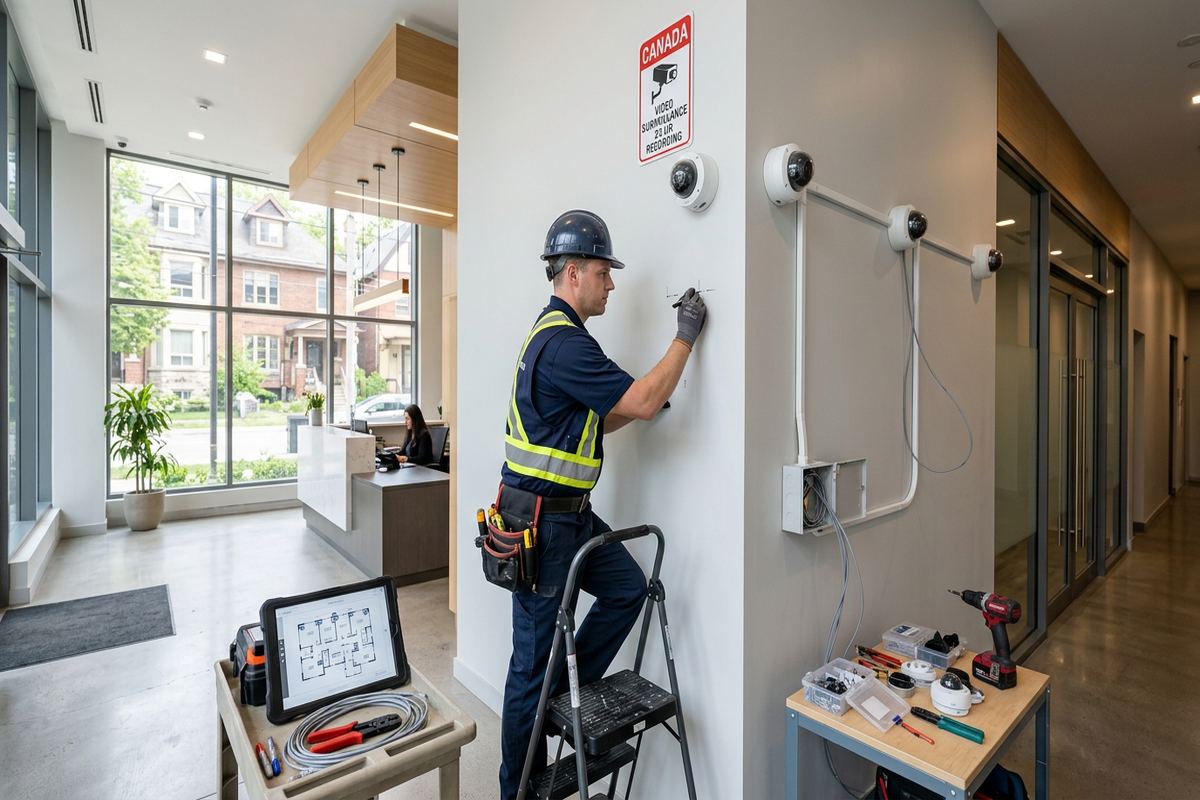
Commercial strips, service businesses and industrial units require coverage that reflects daily operations. Typical areas include customer entrances, loading doors, yards, waste enclosures and staff parking approaches. Cameras should support a defined operational or security purpose without creating unnecessary views into adjacent premises. In Bolton and other commercial areas, shared driveways, neighbouring units and public sidewalks can affect positioning. We work with the business representative to identify priority scenes, authorized equipment locations and the people who will manage recordings after the installation is complete.
Leased premises may require landlord approval before drilling masonry, using roof or ceiling pathways, attaching conduit or placing equipment on an exterior wall. Condominium properties can also have rules covering common elements, façade changes and camera views. The customer is responsible for securing required approvals unless the written scope assigns a specific coordination task to UnifiedLink. Early confirmation avoids designing around a surface or pathway that cannot be used. We can provide proposed device locations and routing information to support the customer’s discussion with a landlord, condominium corporation or property manager.
Business systems also need clear responsibility for network access and user administration. We confirm where recording equipment will be located, who can reach it and whether the customer’s IT provider must approve switching, addressing or remote-access changes. Cameras are configured on site and handed over with customer-owned credentials rather than installer-controlled accounts. If multiple contractors are involved, scope boundaries are documented. Where UnifiedLink supplies the complete low-voltage camera scope, the customer has one accountable contractor for cabling, mounting, configuration, testing and system records.
- Entrances, yards and loading areas assessed
- Landlord and condominium approvals identified early
- IT coordination requirements documented
- Customer controls system credentials
Privacy, Recording and System Ownership
Outdoor cameras should be aimed at the property and activity that the owner has a legitimate reason to monitor. A broad view may unintentionally include neighbouring yards, residential windows or areas beyond the intended boundary. During aiming, we can narrow the scene, adjust position or apply supported privacy masking where appropriate. The property owner remains responsible for determining legal obligations, signage, workplace policies and permitted use of recordings. Technical placement supports privacy-conscious operation, but it is not a substitute for legal advice or organizational policies.
Recording can be local, network-based or connected to a supported cloud service, depending on the selected equipment and customer requirements. The design should address storage location, internet dependence, ongoing service terms and what happens if connectivity fails. Equipment ownership is stated in the written scope so the customer knows which devices, licences or subscriptions are included and which remain third-party services. We do not base a proposal on an unspecified promise of unlimited retention. Storage expectations are translated into camera, recording and capacity choices that can be explained and reviewed.
At handover, authorized users receive their own credentials and guidance on viewing live video, finding recorded events and exporting footage where supported. Default passwords are changed, and remote access is configured using the selected platform rather than leaving undocumented access methods. The as-built record identifies installed devices and relevant cable routes without publishing sensitive credentials. Customers should keep account recovery information current and remove access for former staff, tenants or service providers. These administrative steps are important for both Caledon homes and businesses because system security continues after installation day.
- Views aimed toward relevant property areas
- Ownership and subscriptions stated in writing
- Default passwords changed during setup
- Authorized users shown basic recording retrieval
Caledon Assessment, Installation and Handover
A request begins with a discussion of the property, priority areas and any existing camera or network equipment. Requests received during business hours are answered the same day; after-hours requests are answered the next business day. Site assessment timing depends on the service and travel distance. For properties in Palgrave, Inglewood, Alton and elsewhere across Caledon, useful preparation includes identifying locked gates, pets, tenant access, equipment rooms and outbuildings that need inspection. Photos and plans can help, but pricing follows an assessment of actual site conditions.
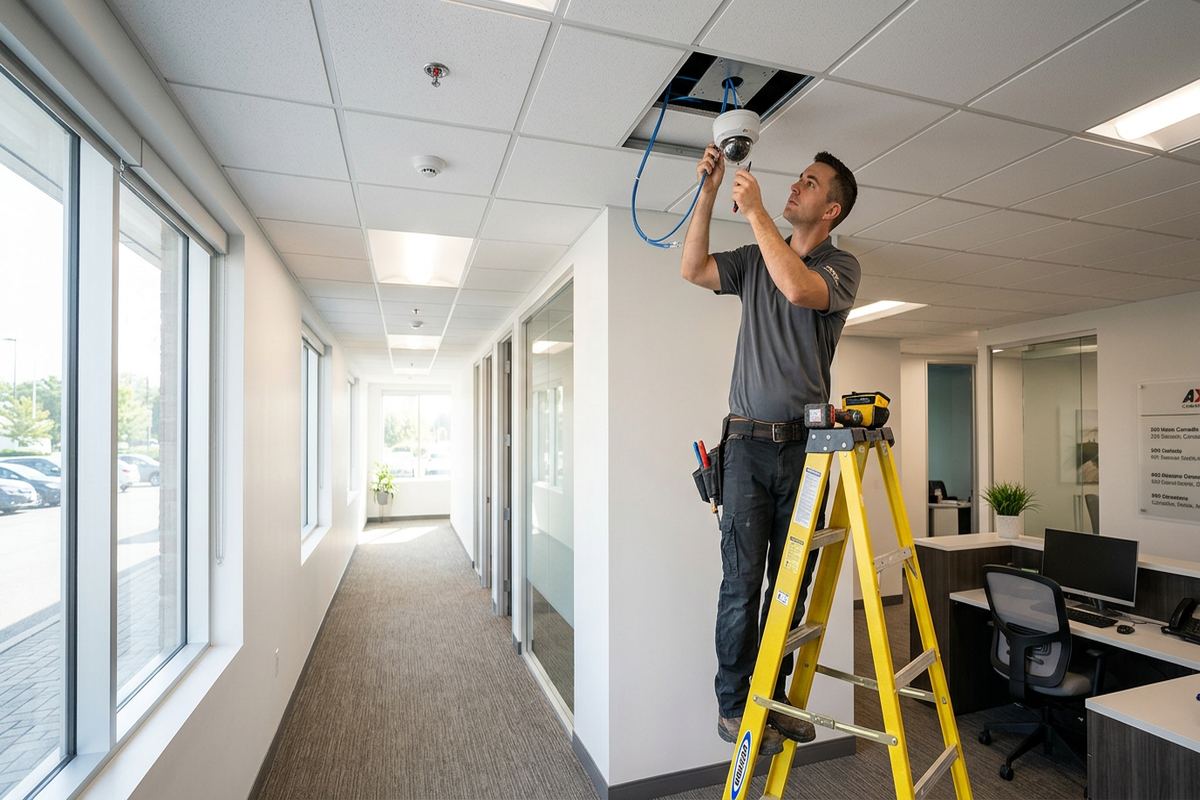
Once the design is accepted, installation follows the written scope. Cable routes and device locations are confirmed before drilling, particularly where finishes, concealed utilities or access constraints are involved. Cameras are mounted, exterior penetrations are sealed, cables are labelled and equipment is connected to the approved network and recording platform. On-site configuration then establishes device names, time settings, recording rules and authorized access. Any material condition that prevents the planned route or placement is discussed rather than concealed through an undocumented change. Approved changes can then be recorded clearly.
Handover is a working review, not only a notification that the cameras are online. We verify each intended view, demonstrate live and recorded video, and provide the customer’s credentials through an appropriate method. The as-built record summarizes camera locations and installed cabling, while the scope provides the reference for equipment ownership, exclusions and warranty. Customers can raise questions about routine use, event retrieval and basic maintenance. This process leaves a Caledon property owner with a documented system and a clear understanding of what was installed.
- Assessment completed before pricing
- Installation follows an agreed written scope
- Views and recordings tested on site
- Credentials and as-built record handed over
Caledon neighbourhoods we cover
- Bolton
- Caledon East
- Inglewood
- Alton
- Mayfield West
- Palgrave
Outdoor camera installation in Caledon — common questions
How many outdoor cameras does my Caledon property need?
The number depends on the views that matter, not simply the building size. A Caledon acreage may need separate cameras for a gate, long driveway, house entrances and outbuildings, while a smaller property may need only defined approach views. A site assessment identifies priorities, obstructions, lighting and identification distances before equipment quantities and placement are proposed.
Can you connect cameras at a detached barn or gate?
Yes, provided a suitable pathway, communication method and power arrangement can be established. On Caledon properties, long distances may make fibre or a point-to-point wireless link more appropriate than copper Ethernet. We assess distance, line of sight, conduit, surge exposure and building conditions, then document the proposed connection and any electrical or trenching dependencies.
Will outdoor cameras work through a Caledon winter?
Equipment and installation methods must suit outdoor exposure, but placement remains important. We use exterior-rated components where required, protect terminations and seal penetrations for the mounting surface. The design also considers freeze-thaw cycles, snow, roof runoff and infrared reflection. No outdoor device is maintenance-free, so occasional lens cleaning and checks after severe weather may still be required.
Can you reuse my existing camera wiring?
Existing wiring can be considered after its type, condition, route, length and terminations are checked. Some cable may be reusable, while exposed indoor-rated cable, damaged runs or unidentified splices can create reliability problems. The written scope will state what is being retained, what testing applies and whether any limitations remain. Reuse is not assumed before the Caledon site assessment.
Do I need landlord or condo approval?
Approval may be required if cameras, conduit or cable penetrations affect an exterior wall, common element or shared pathway. Caledon tenants and condominium owners should confirm applicable lease or corporation rules before installation. UnifiedLink can provide proposed locations and routing details for review, but the customer remains responsible for approvals unless a specific coordination responsibility is included in the written scope.
Who controls the camera accounts after installation?
The customer receives the system using credentials owned by the customer. During on-site handover, authorized users are shown how to access live video and recordings using the selected platform. Default passwords are changed, and the as-built record identifies installed devices without listing sensitive passwords. Equipment ownership, subscriptions, warranty and exclusions are also set out in the written scope.
Coverage in Caledon is confirmed against the address before we quote. See everything we install in Caledon or the province-wide outdoor camera installation page.