UnifiedLink installs commercial security camera systems across Caledon and Peel Region. We plan camera positions, cable routes, recording, remote access and outdoor protection around each property. From Bolton commercial units to rural acreages with long driveways and outbuildings, every project begins with a site assessment and a written scope before equipment is installed.
Commercial Camera Planning for Caledon Properties
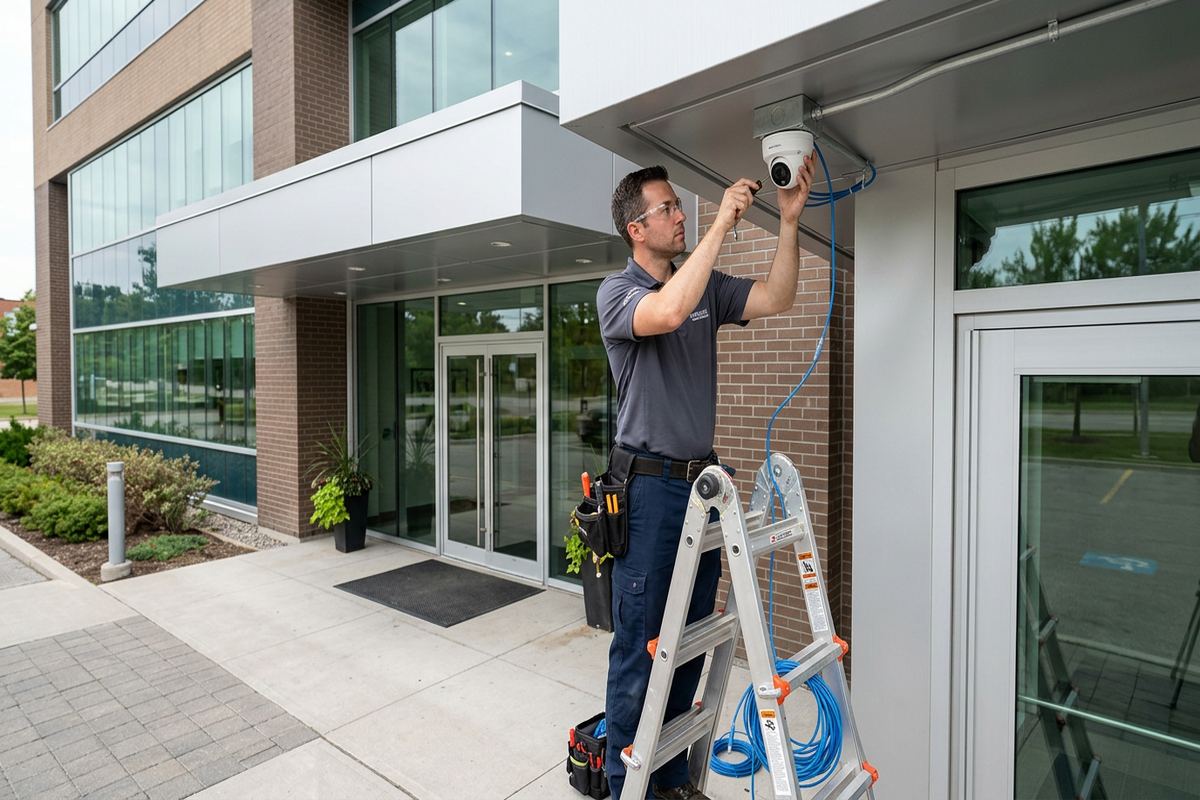
A useful commercial camera system begins with the activity that needs to be recorded, not with a camera count. During a Caledon site assessment, we review entrances, reception points, loading areas, parking, cash-handling locations, equipment yards and restricted rooms. We also identify likely approach paths and places where walls, shelving, vehicles or landscaping could block views. The resulting design separates general overview coverage from identification views, helping each camera serve a defined purpose. This planning reduces blind spots and avoids installing devices that produce attractive images without capturing usable detail when an incident occurs.
Property layouts across Caledon vary considerably, so the same design does not suit every address. A Bolton commercial strip may need coverage of storefront approaches, rear delivery doors and shared parking, while a rural acreage may require cameras at a gate, long driveway, detached shop and fuel storage area. In Caledon East or Palgrave, the distance between buildings can affect cabling, network links, power and surge protection. We measure those conditions before selecting equipment, ensuring recording quality, communications and mounting methods are based on the actual site rather than assumptions or generic packages.
Before pricing, UnifiedLink completes a site assessment suited to the service and travel distance. The written scope identifies equipment, cable routes, camera placement, recording requirements, exclusions, equipment ownership and warranty terms. It also notes access requirements, available network connections and any work expected from other trades. This gives property managers and business owners a practical basis for reviewing the project. If priorities change, such as adding a gate camera or removing coverage from a sensitive workspace, those decisions can be addressed before installation rather than improvised after cables and mounts are already in place.
- Entrances, exits and approach routes reviewed
- Identification and overview views planned separately
- Lighting and obstructions checked on site
- Recording objectives documented before installation
- Gate and outbuilding distances measured
Camera Coverage for Caledon Gates and Outbuildings
Long driveways create a different camera problem from a doorway or interior corridor. Capturing a vehicle near the road may require a focused view, controlled lighting and careful positioning rather than a wide-angle camera mounted on the main building. In rural parts of Caledon, we consider gate movement, roadside headlights, snowbanks, vegetation growth and the direction vehicles approach. We also determine whether trenching, existing conduit, fibre, point-to-point wireless or local recording is appropriate. The objective is stable coverage without relying on a weak connection stretched beyond the practical limits of standard network cabling.
Detached barns, workshops, storage buildings and garages often need both exterior and interior coverage. Their construction, available power, temperature range and network connection can differ from the main premises. We inspect whether a frame wall, concrete block surface, metal cladding or masonry substrate can support the proposed mount and protect the cable entry. Where buildings are widely separated, electrical grounding and surge exposure also require attention. Caledon’s open properties can leave equipment more exposed to wind-driven precipitation and lightning-related events, so outdoor links and pathways must be selected as parts of one system.
Gate cameras need to show the activity that matters to the operator. One view may establish that a vehicle entered, while another may be positioned for a clearer image of the driver area or vehicle details under expected conditions. Intercoms, access control and automatic gate operators may also influence mounting and conduit routes, even when they are outside the camera scope. We document those interfaces so responsibilities remain clear. For properties near Inglewood, Alton or Palgrave, this coordinated approach is especially useful where the gate is distant from occupied buildings and service access may be limited.
- Driveway approach angles checked
- Gate power and communications assessed
- Outbuilding links selected by distance
- Vegetation and snowbank obstructions considered
- Interfaces with gate equipment documented
Outdoor Camera Installation for Caledon Winters
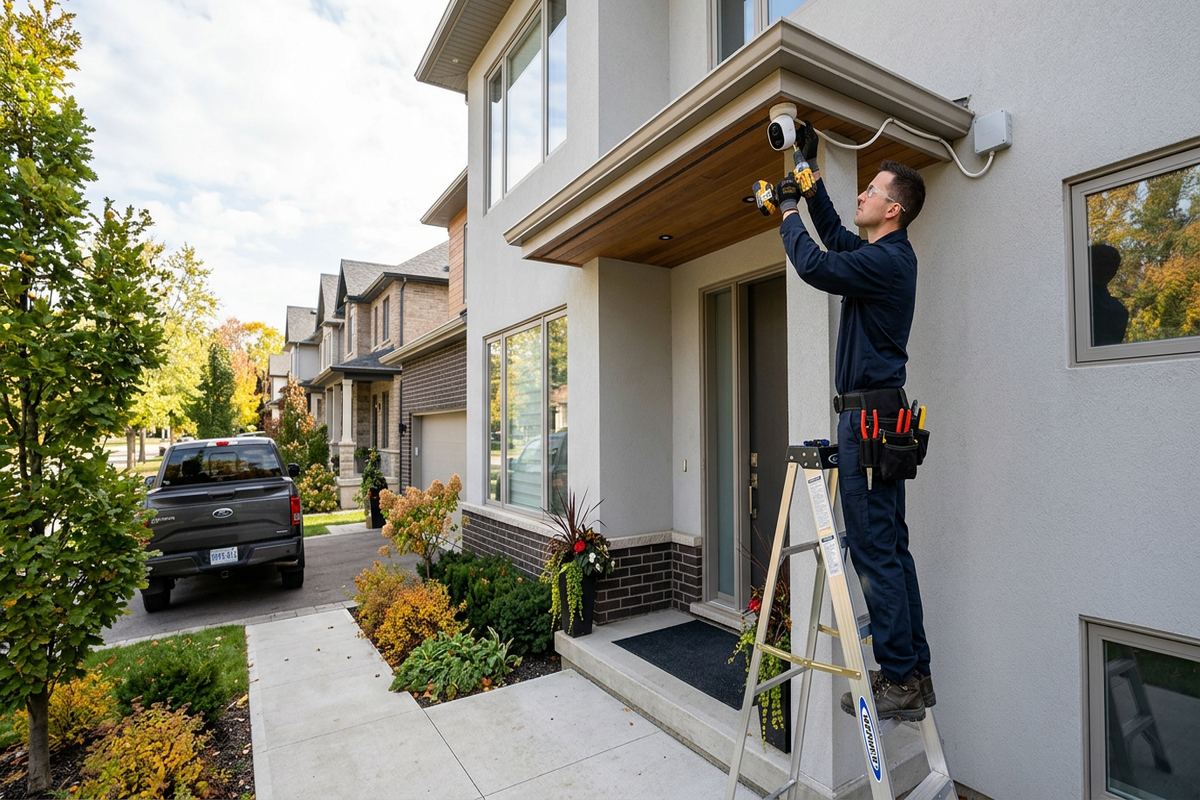
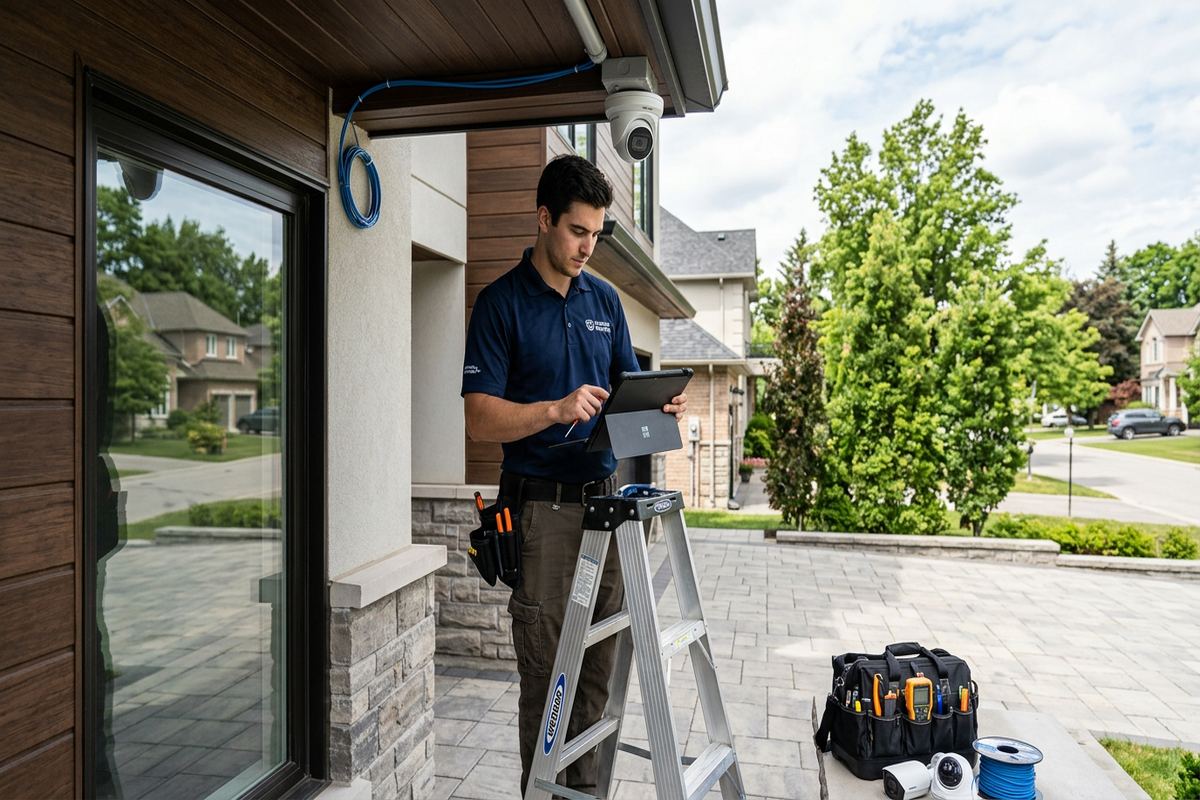
Outdoor equipment in Caledon must tolerate winter temperatures, blowing snow, rain and repeated freeze-thaw cycles. Equipment ratings are only one part of that requirement. Mounting orientation, junction boxes, drip loops, cable glands and the location of every penetration affect whether moisture can reach a connector or wall cavity. We avoid exposed indoor connectors and use exterior installation methods appropriate to the surface. Camera positions are also checked for icicles, roof runoff and snow accumulation. A protected installation helps preserve image stability and makes future inspection or replacement more practical for the property operator.
Freeze-thaw movement can expose weak seals around fasteners and cable entries, particularly where dissimilar materials meet. Brick veneer, poured concrete, concrete block, siding and metal panels each require suitable anchors and penetration details. On masonry, routing may follow mortar joints or enter through a properly sealed sleeve, depending on structure and access. Frame construction can provide concealed pathways, but insulation, vapour barriers and finished interiors must be considered. Our scope records visible surface routes where concealment is not practical, preventing disagreements about appearance after work begins on an occupied Caledon commercial property.
Lighting changes throughout the year can alter camera performance. Low winter sun may produce glare at entrances, while summer foliage can create moving shadows or conceal a driveway view. At night, reflective siding, soffits, signs and nearby walls can bounce infrared illumination back into the lens. We assess those conditions and may adjust mounting height, viewing angle, focal length or supplemental lighting. The goal is not simply a bright picture; it is balanced detail in the area being monitored. Final configuration includes day and night checks appropriate to site access and the operating schedule.
- Weather-rated exterior equipment specified
- Penetrations sealed for the substrate
- Drip loops and protected connections used
- Glare and infrared reflection reviewed
- Mounts positioned away from runoff
Caledon, Ontario
Commercial security camera installation in Caledon, scoped in writing first
Book a site assessment and get equipment, routes, exclusions, and warranty on paper before anything is installed.
Cabling and Network Design in Caledon
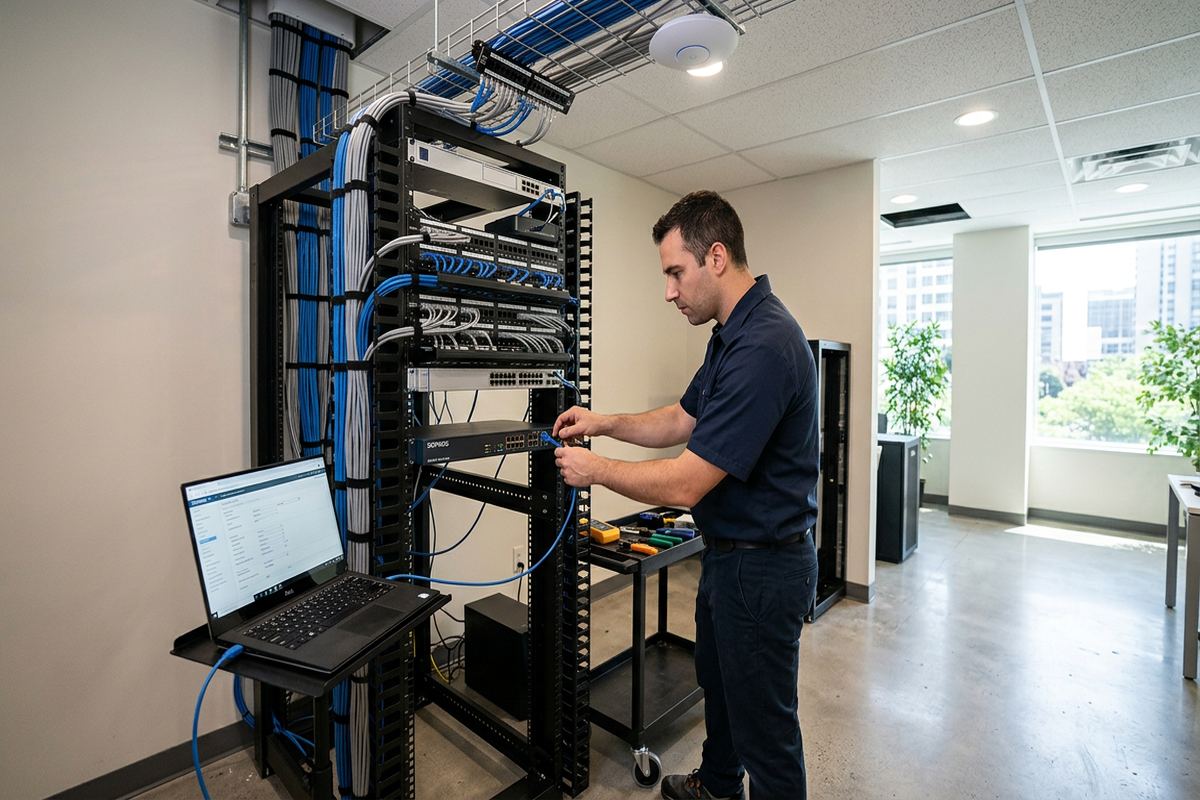
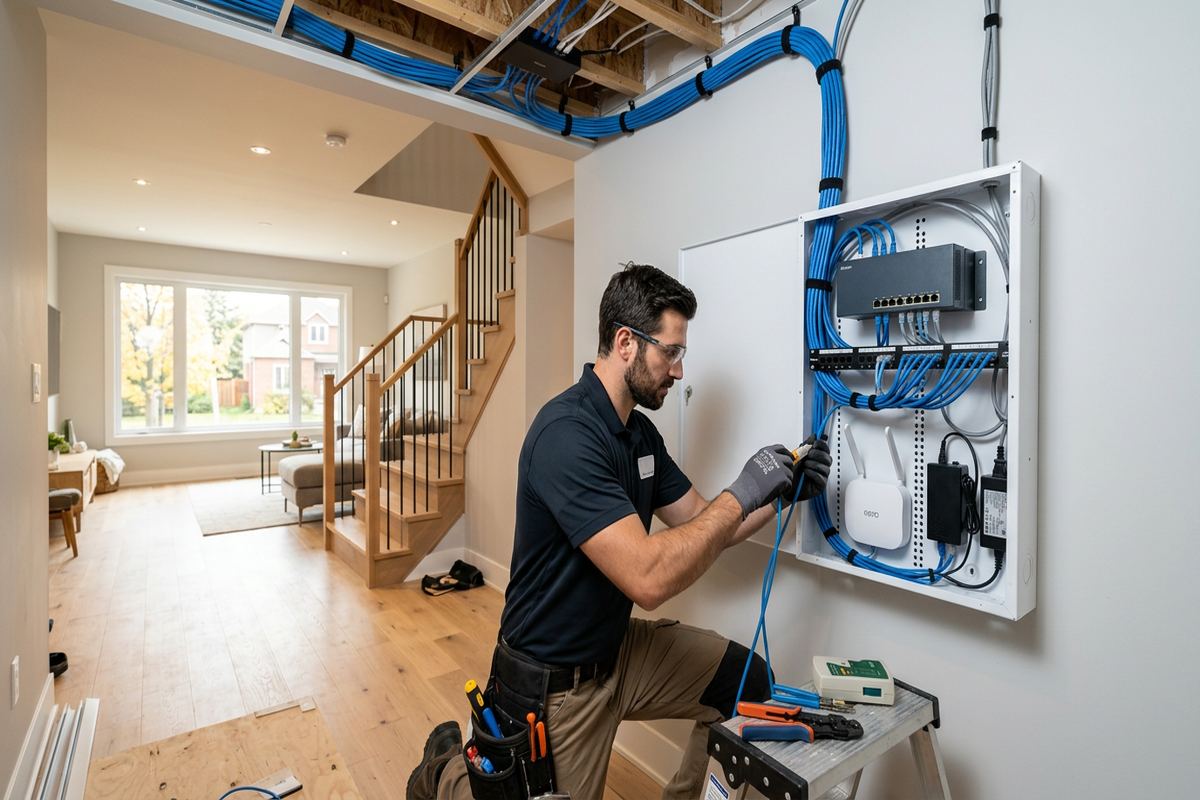
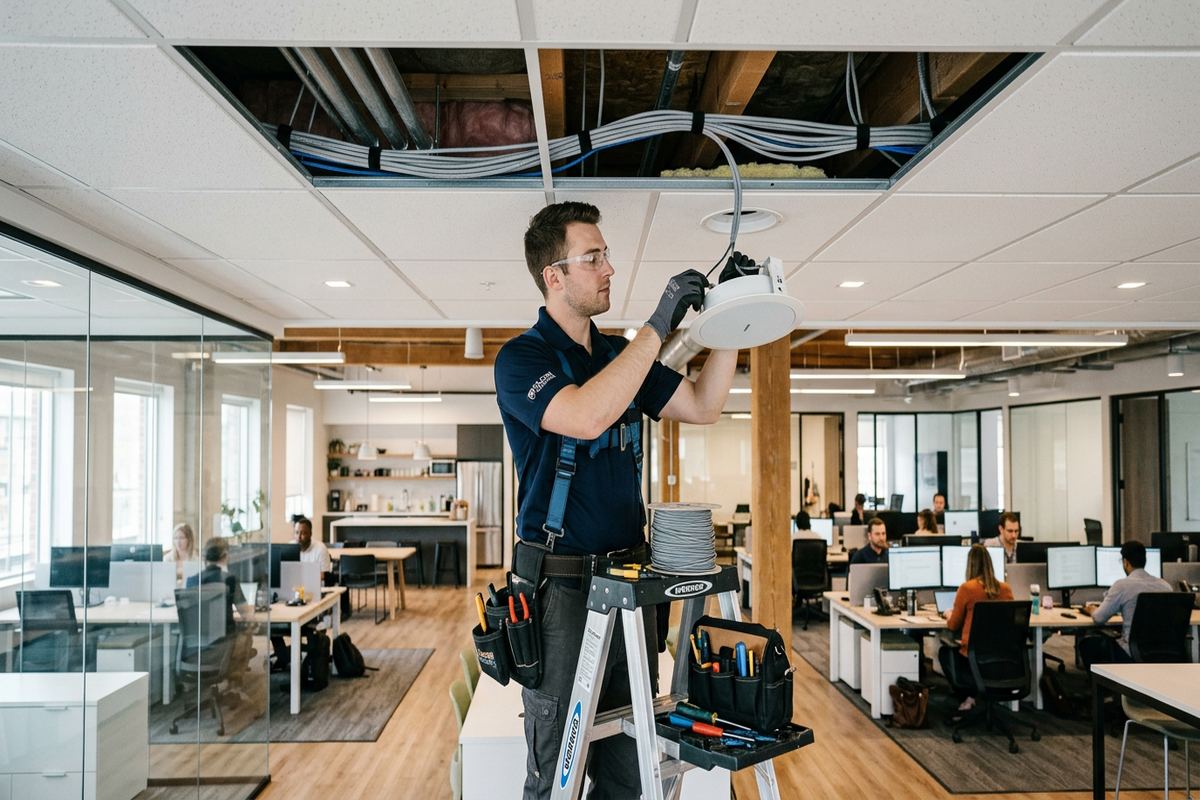
Reliable recording depends on the pathway between each camera and the network or recorder. UnifiedLink installs continuous labelled cable runs rather than hiding unnecessary couplers above ceilings or inside inaccessible spaces. Routes are planned around electrical interference, fire separations, structural constraints and future service access. In older Caledon buildings, available pathways may be limited by finished ceilings, additions or undocumented renovations. Newer industrial units may provide cable tray or open structure but still require coordination with sprinklers, lighting and mechanical systems. Every route is reviewed before installation and identified in the completed project record.
Standard network cabling has practical distance limits, which become important on acreages and multi-building sites. A gate or outbuilding may require fibre, an intermediate network location or a properly designed wireless bridge. We do not assume that an existing Wi-Fi signal provides dependable camera transport. The assessment considers line of sight, building materials, bandwidth, power availability and environmental exposure. Where customer-managed network equipment is involved, we identify required ports, addressing or virtual network arrangements. This keeps security traffic understandable and reduces the risk that an unrelated network change will unexpectedly interrupt recording.
Power over Ethernet can simplify camera installation by carrying data and power on one cable, but the switches and power budget must support the full design. Recording duration, image resolution, frame rate, compression, motion settings and scene activity all affect storage requirements. We configure these elements on site rather than leaving factory defaults unchanged. For Caledon businesses with several buildings or operational areas, user permissions can separate live viewing from administrative control. Network access, recorder placement and backup-power expectations are documented so the customer understands which components support continued operation and which conditions may cause interruption.
- Continuous labelled cable runs
- Fibre considered for longer distances
- Power budgets checked before deployment
- Storage settings matched to requirements
- Network responsibilities clearly documented
Camera Placement for Shops and Industrial Units
Commercial strips in Bolton and Mayfield West commonly combine public entrances, rear service doors, shared parking and neighbouring tenants. Camera placement must respect those boundaries while still covering activity related to the customer’s premises. We look for backlighting through glass, signs blocking exterior views and door swings that momentarily hide a person’s face. Inside, cameras may cover transaction points, stock areas or corridors without being placed in private spaces. The written scope identifies intended views and exclusions, giving landlords, tenants and managers a common reference before holes are drilled or cables cross shared building areas.
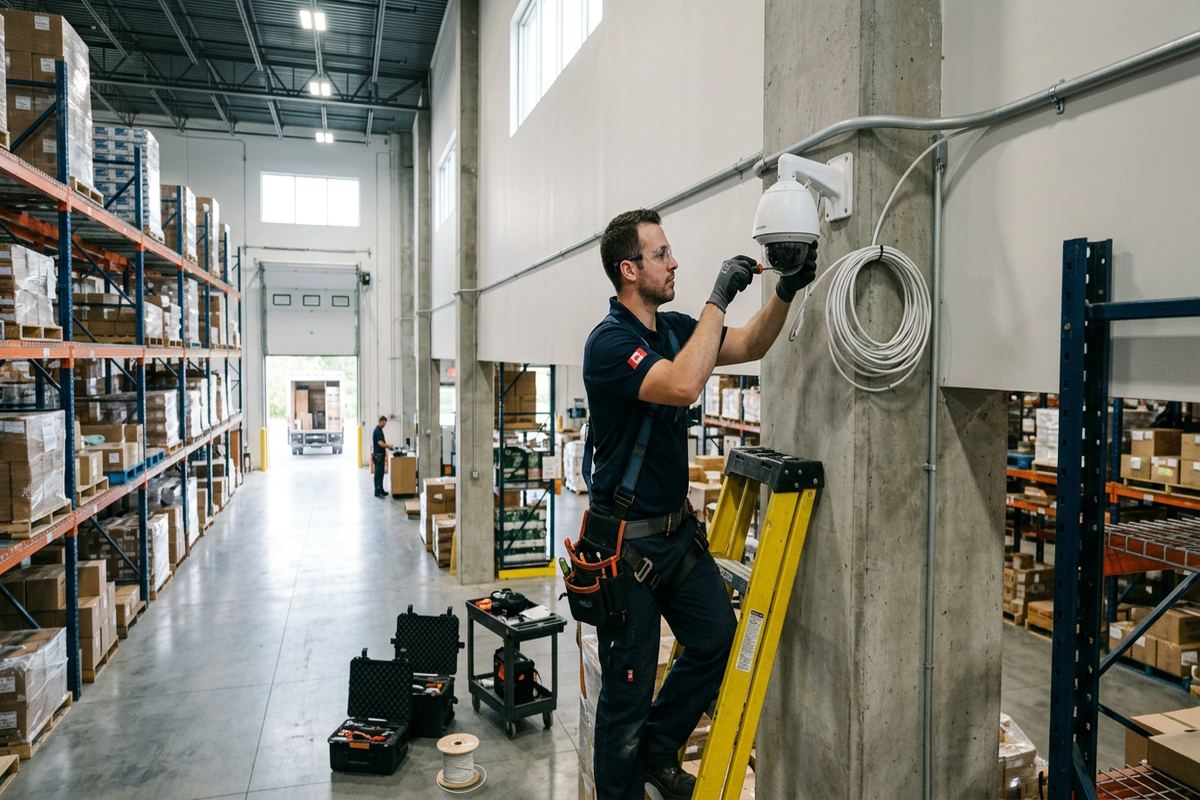
Industrial units introduce high ceilings, racking, loading doors, moving equipment and changing floor layouts. A camera mounted too high may provide broad context but limited identifying detail, while a low device can be struck or obstructed. We balance field of view, service access and physical protection for each location. Loading areas may need separate views for vehicles, dock activity and door status. Dust, vibration, washdown practices or temperature variation can also influence hardware selection. Planning around operations reduces disruption and helps ensure lifts, escorts or shutdowns are arranged before the scheduled installation work begins.
Older mixed-use properties can contain several generations of construction, including original masonry walls, frame additions and renovated tenant spaces. Pathways that appear open on drawings may be blocked by beams, fire stopping or previous mechanical work. We verify accessible conditions and discuss alternatives when concealed routing is not feasible. In leased premises, written landlord approval may be required for exterior cameras, penetrations, rooftop routes or work in common areas. Condominium commercial units can also require board or property-management approval. UnifiedLink defines these dependencies without representing that customer approvals have already been obtained.
- Storefront and rear-door views coordinated
- Loading and yard activity separated
- Mounting heights balanced for useful detail
- Shared property boundaries considered
- Landlord or condominium approvals identified
Recording, Remote Viewing and User Control
A recorder should be configured around operational needs rather than maximum settings that consume storage without a defined benefit. During planning, we discuss which scenes need continuous recording, where event-based recording may be suitable and how long footage is expected to remain available. Actual retention depends on storage capacity, camera settings and scene activity, so it should be calculated and then verified during commissioning. Search functions, timestamps and camera names are configured for practical use. Clear labels such as “North Loading Door” are more useful during an incident than generic names assigned by factory defaults.
Remote viewing can help an owner check a Caledon gate, storefront or outbuilding without travelling between locations, but access must be set up carefully. We use the customer’s own credentials at handover and avoid making shared installer accounts the basis of ongoing access. Where supported, individual users can receive permissions suited to their roles. We explain the dependence on internet service, local power, recorder status and mobile or desktop applications. Remote access does not replace local recording, and a temporary internet outage should be understood separately from whether cameras continue recording on the premises.
Cybersecurity responsibilities extend beyond choosing a password. Current firmware, supported applications, controlled administrator access and an appropriately managed business network all contribute to a maintainable system. We change applicable default credentials, configure time settings and document the equipment delivered. If the customer or an information technology provider manages switching, firewalls or remote-access policies, required coordination is included in the scope. At handover, designated users receive an explanation of live view, playback, export and account administration. Ownership details remain clear, helping the business manage future staff changes without depending on undocumented installer credentials.
- Recording modes configured by scene
- Camera names matched to locations
- Customer-controlled user accounts
- Remote-access dependencies explained
- Playback and export demonstrated
Installation and Handover Across Caledon
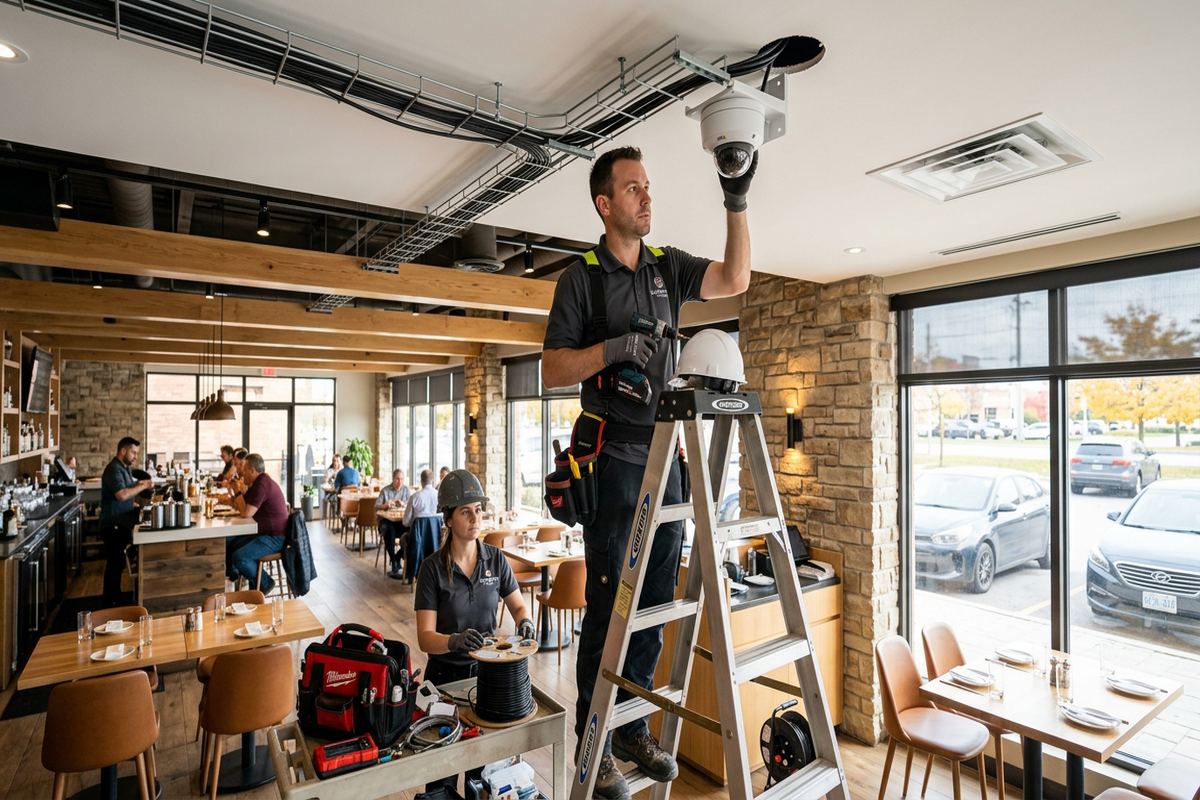
Installation is scheduled after the scope, site access and required approvals are confirmed. Our technicians protect work areas, follow the agreed cable routes and label runs at useful service points. Cameras are mounted to the identified substrate using appropriate hardware, while exterior entries receive sealing suited to the construction. In occupied Caledon workplaces, we coordinate noisy work, ladder access and temporary restrictions with the site contact. Any concealed condition that materially changes the route or placement is raised before proceeding. This keeps field decisions visible and prevents an undocumented change from becoming a maintenance problem later.
On-site configuration includes image orientation, focus where applicable, exposure, recording parameters, time settings, camera naming and user access. Views are checked against the purpose established during assessment, not merely confirmed as online. For example, a gate camera is reviewed for the expected vehicle path, and a loading camera is checked around door movement and parked trailers. Night conditions can require adjustment when infrared reflection or existing lighting affects detail. If final night testing cannot occur during the main visit, the scope should state how after-dark review or customer feedback will be handled.
Handover gives the customer control of the installed system. UnifiedLink provides access using the customer’s own credentials, explains routine viewing and footage export, and supplies an as-built record showing installed devices and relevant cable information. Equipment ownership and warranty terms follow the written scope. We also identify components belonging to the customer, landlord, internet provider or another contractor. With one accountable contractor for the camera installation, questions about device placement, cabling and configuration have a clear point of contact. This documentation is particularly valuable on large Caledon sites where equipment is distributed among several buildings.
- Work follows the agreed scope
- Cables labelled at service points
- Views checked against documented purposes
- Customer credentials used at handover
- As-built record supplied
Assessing a Caledon Camera Upgrade
Existing camera systems do not always require complete replacement, but compatibility must be verified before parts are retained. We inspect camera condition, recorder support, cabling, connectors, power supplies, network switches and available storage. Older analogue cabling may sometimes support an updated design, while other sites benefit from new network cabling or fibre between buildings. Reusing equipment without checking resolution, protocol and software support can create unreliable results. The assessment separates components suitable for continued use from those that limit the required coverage, recording or secure remote-access functions for the Caledon property.
Poor image quality can come from several causes besides an old camera. Dirty covers, condensation, damaged connectors, voltage issues, excessive compression, incorrect focus, weak lighting or an obstructed view can all reduce usable detail. Network congestion and failing storage may produce gaps even when the live picture appears normal. We test the system methodically and relate findings to the customer’s objectives. A repair may restore a defined function, while a redesigned position may solve a coverage problem that replacement in the same location would preserve. Findings and exclusions are recorded before upgrade work proceeds.
Businesses change, and the camera plan should be reviewed when walls move, racking expands, landscaping matures or a new gate changes traffic flow. In Caledon, seasonal conditions can also reveal problems that were not obvious during warmer months, including snow-covered reference points, low sun and frozen movement around exterior mounts. Requests sent during business hours are answered the same day; after-hours requests are answered the next business day. Site assessment timing depends on the service and travel distance. The next step is a practical review of the property, existing equipment and required outcomes.
- Existing components tested for compatibility
- Image and recording faults isolated
- Reuse decisions documented clearly
- New coverage compared with current views
- Seasonal obstructions considered
Caledon neighbourhoods we cover
- Bolton
- Caledon East
- Inglewood
- Alton
- Mayfield West
- Palgrave
Commercial security camera installation in Caledon — common questions
How many cameras does my Caledon business need?
The number depends on the views and detail required, not only the building size. A site assessment reviews entrances, transaction areas, parking, loading points, gates and outbuildings. Some locations need separate overview and identification views. UnifiedLink documents proposed camera positions, cable routes, exclusions, recording requirements and equipment before pricing, allowing you to review the design rather than relying on a generic camera package.
Can you install cameras at a long driveway gate?
Yes. Long driveways are common on Caledon properties, but the correct connection depends on distance, power, line of sight and available pathways. Fibre, conduit, a designed wireless bridge or local equipment may be considered. We also review headlights, snowbanks, vegetation and vehicle approach angles. Gate operators, intercoms and access control are documented where they affect the camera route or mounting position.
Will outdoor cameras handle Caledon winters?
We select outdoor equipment and installation methods for the expected location, including temperature, precipitation and exposure. Caledon’s freeze-thaw cycles make mounting, sealed penetrations, protected connectors and drip loops important. We also consider roof runoff, ice, snow accumulation and infrared reflection. No outdoor installation is maintenance-free, so accessible mounting and periodic inspection remain important parts of keeping exterior views clear and connections protected.
Can cameras be installed in a leased or condominium unit?
They can, subject to the permissions applying to the property. A Caledon tenant may need written landlord approval for exterior devices, wall penetrations, common-area cabling or roof access. Commercial condominium properties may require board or property-management approval. We identify likely approval points and provide the proposed scope, routes and locations, but the customer remains responsible for obtaining authorization unless another arrangement is expressly documented.
Can you reuse our existing cameras or cabling?
Possibly. We first inspect camera compatibility, recorder support, cable condition, connectors, network equipment, power and storage. Existing components are retained only where they support the required design and remain practical to maintain. On Caledon sites with detached buildings, older links may be the main limitation. The written scope identifies what will be reused, what will be replaced and any performance exclusions associated with retained equipment.
Who controls the system after installation?
The customer does. During handover, UnifiedLink configures access with the customer’s own credentials and explains live viewing, playback, export and user administration. We provide an as-built record and clarify equipment ownership and warranty terms from the written scope. If an information technology provider manages the Caledon business network, required settings and responsibilities are documented so the camera system does not depend on an undocumented installer account.
Coverage in Caledon is confirmed against the address before we quote. See everything we install in Caledon or the province-wide commercial security camera installation page.