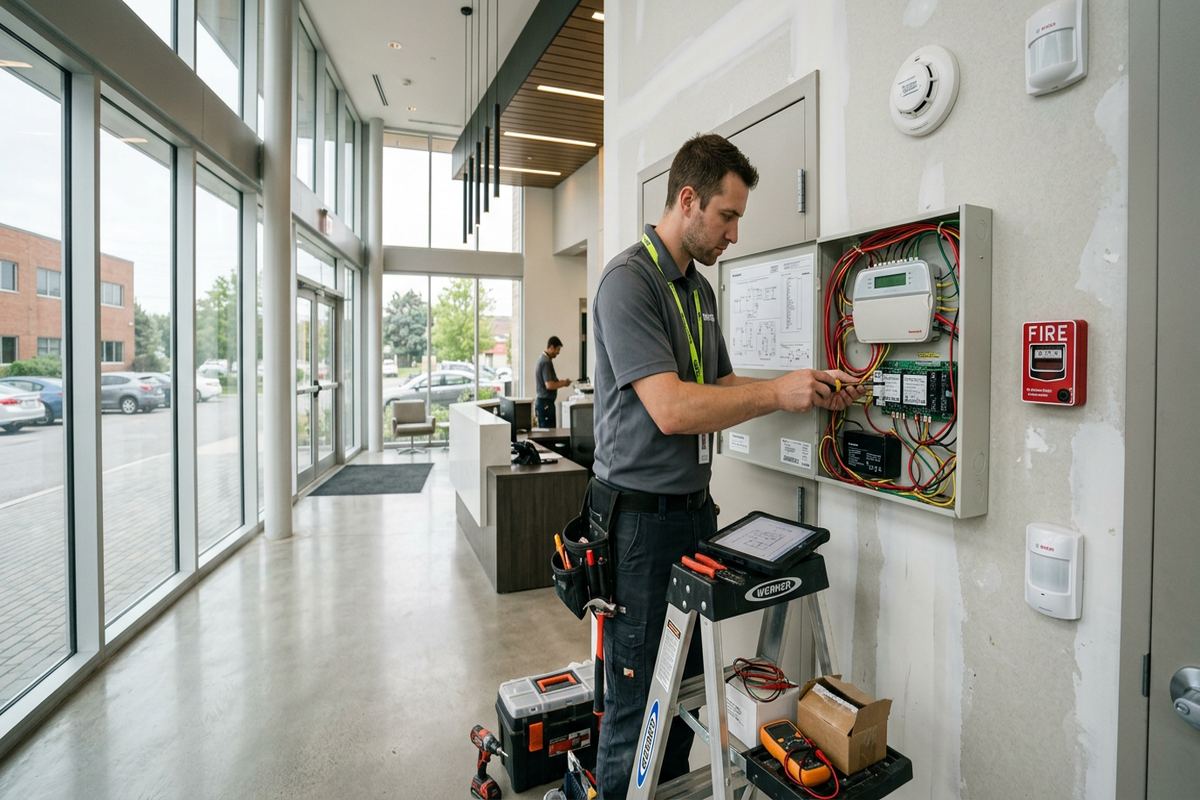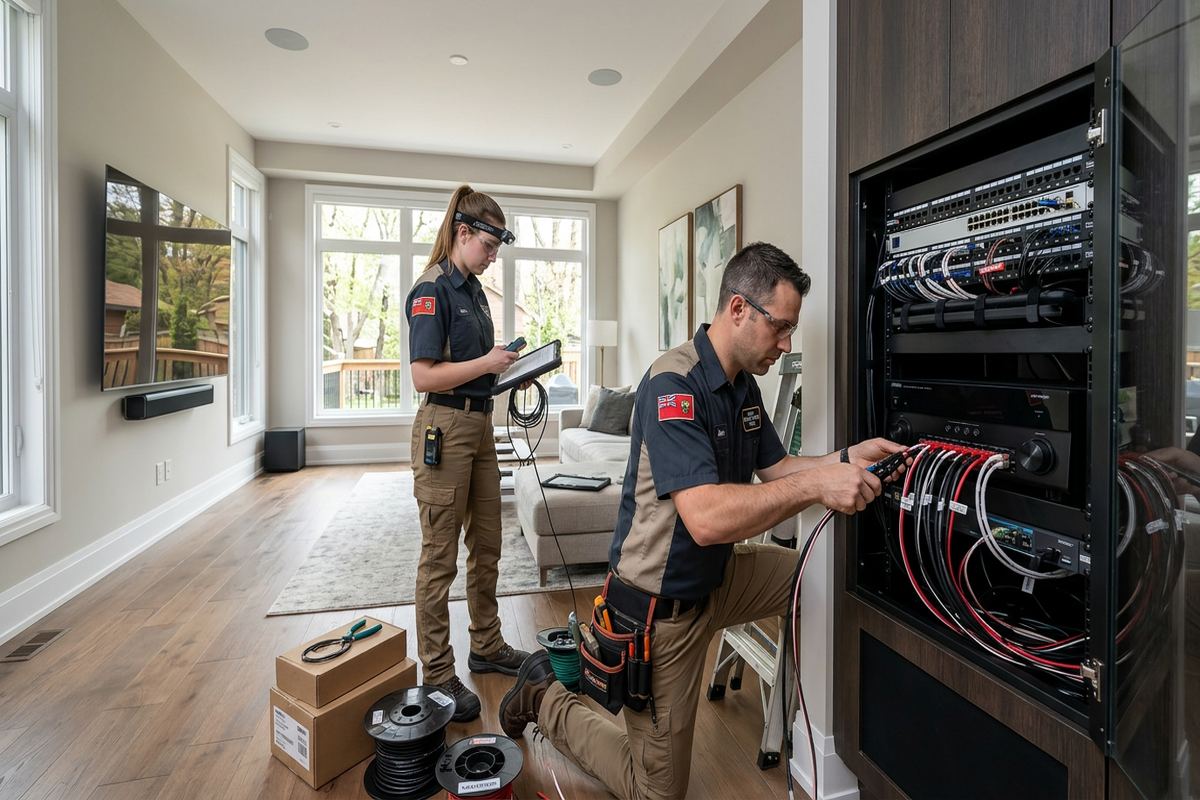
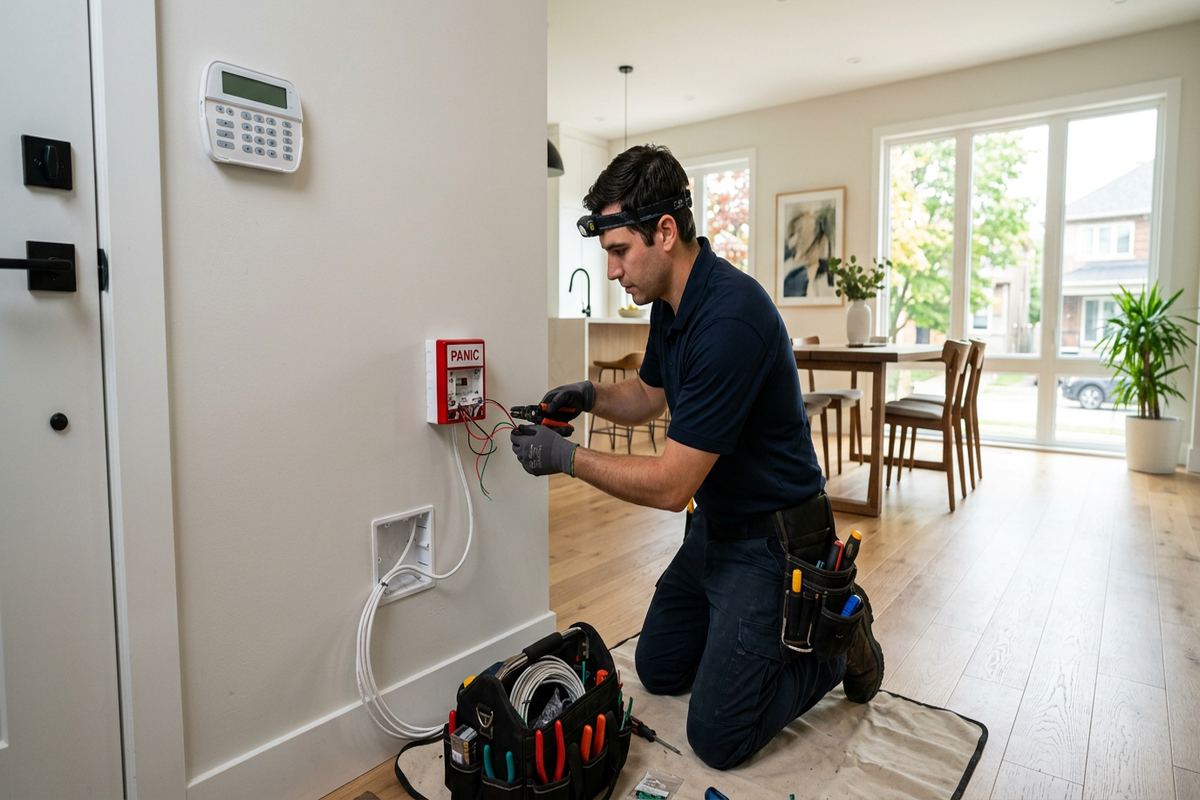
UnifiedLink installs wireless alarm systems for Burlington homes, offices, shops and small commercial properties. We assess the building, identify likely entry points and plan sensors around the way the property is used. Installation includes on-site configuration, functional testing and handover using the customer’s own credentials, supported by a written scope and as-built record.
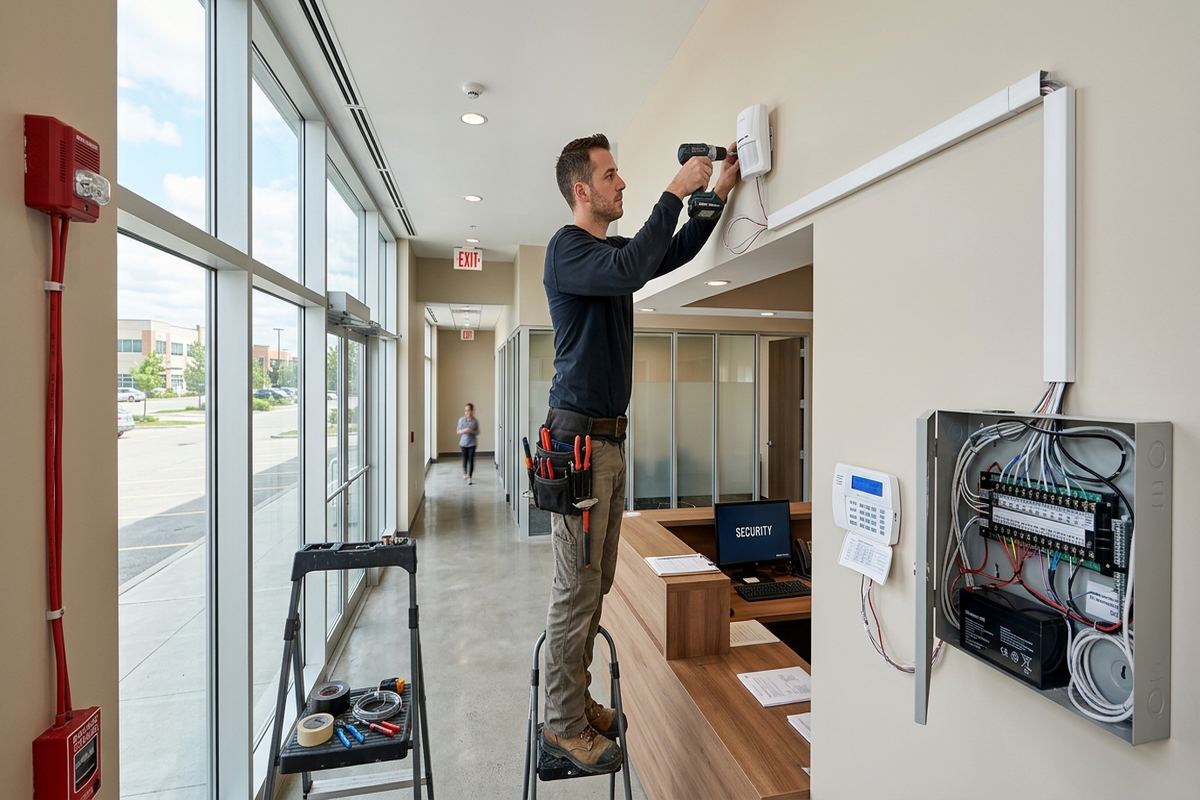
Wireless Alarm Installation for Burlington Properties
A wireless alarm can protect doors, windows and interior areas without requiring a cable run to every device. That makes the format practical for many finished Burlington properties where opening walls would create unnecessary disruption. Lakefront homes, mid-century bungalows and units in small commercial plazas all present different layouts, materials and entry risks. We begin with a site assessment rather than selecting equipment from a floor plan alone. The assessment considers access points, room use, wireless coverage, pets, detached structures and the location of the main alarm equipment.
Wireless does not mean that every component is free from wiring or maintenance. The control panel, communicator, keypads and supporting network equipment may require power, data or another fixed connection depending on the selected system. Door contacts, motion detectors, glass-break detectors and other field devices can often communicate by radio. We explain which components are wireless, how batteries are accessed and what happens if a device loses communication. This creates a clear distinction between convenient sensor placement and the infrastructure needed to keep the alarm operating as designed.
Burlington projects also require attention to how occupants enter, leave and manage the property. A family home in Roseland may need separate routines for a garage, side door and patio entrance. A plaza unit may require different permissions for an owner, manager, cleaner and opening staff. During planning, we define alarm areas, arming methods, user roles and notification options supported by the chosen equipment. The goal is a system that matches daily routines, because poorly planned controls are more likely to be bypassed, ignored or used inconsistently.
- Door, window and overhead-door contacts
- Interior motion and glass-break detection
- Keypads, fobs and supported mobile controls
- Separate areas for different occupancy patterns
- Audible warning device placement
Planning Sensor Coverage in Burlington Homes
Older and renovated homes need more than a standard sensor list. Many mid-century bungalows in Burlington have replacement windows, finished basements, additions or converted garages that changed the original paths through the building. Lakefront properties may include broad glazed openings, walkouts and detached accessory spaces. We review accessible doors and windows first, then consider interior detection that provides another layer if an opening is missed. Sensor selection depends on frame depth, hardware, room shape, heating sources, pets and the surfaces available for secure mounting.
Device location affects both detection and day-to-day reliability. A motion detector aimed toward a sunny window, forced-air register or frequently moving curtain may not be appropriate. Contacts mounted on loose trim can shift as doors swell or settle, while deep mouldings may need a different contact arrangement. In Aldershot and Tyandaga homes with masonry sections or later additions, radio paths can also differ sharply between rooms. We test intended locations and avoid assuming that a signal passing through frame construction will behave the same way through brick, concrete or foil-backed materials.
The site assessment provides the basis for a written scope before pricing. It covers proposed equipment, device placement, required cable routes, exclusions, equipment ownership and warranty terms. If part of the alarm requires hardwired power, data or a connection between buildings, we identify that work rather than presenting the project as entirely cable-free. Any installed cable is run continuously and labelled. This planning lets the customer review what will be protected, which spaces remain outside the scope and how future battery replacement or service access will be handled.
- Perimeter review before device selection
- Pet-aware motion detector planning
- Coverage for basements and attached garages
- Radio checks through finished construction
- Accessible locations for battery service
Wireless Alarm Design for Burlington Businesses
Small commercial plazas and mixed-use buildings call for alarm controls that reflect staffing and tenancy. A storefront in Downtown Burlington may have a public entrance, rear service door, stock area and shared corridor, each with a different operating pattern. We map those areas before deciding whether the premises needs one alarm partition or several. The design can account for regular employees, managers, contractors and occasional users without requiring everyone to share the same credential. Available permissions depend on the selected alarm platform and the customer’s management requirements.
Commercial units may appear simple but often contain radio obstacles above ceilings or behind finished walls. Masonry demising walls, metal shelving, coolers, utility rooms and neighbouring wireless equipment can affect communication. Industrial-style units can add steel cladding, overhead doors and longer distances between the front office and rear entrance. We assess these conditions on site and locate the main equipment accordingly. Where a wireless device cannot communicate reliably from the required position, the scope can identify a compatible repeater, alternate location or a wired connection instead of concealing the limitation.
Alarm installation should also support routine opening, closing and incident review. We configure agreed user permissions, entry and exit delays, zones and supported notifications on site. Each named zone should make sense to the person receiving an alert; labels such as “rear stock door” are more useful than a generic device number. Before handover, we test devices and demonstrate normal operation with the customer. The customer receives access using their own credentials, along with an as-built record showing installed device locations and relevant system details.
- Named zones for useful alarm messages
- Permissions for staff and managers
- Rear-door and stock-area detection
- Coverage planning around metal obstructions
- Handover under customer-owned credentials
Burlington, Ontario
Wireless alarm installation in Burlington, scoped in writing first
Book a site assessment and get equipment, routes, exclusions, and warranty on paper before anything is installed.
Burlington Winters and Exterior Alarm Devices
Burlington’s winters, moisture and repeated freeze-thaw cycles matter when equipment is placed near exterior openings or in unconditioned spaces. A sensor intended for a heated room may not be suitable for a detached garage, loading area or exposed vestibule. Temperature range, humidity exposure and enclosure rating must match the mounting location. We also consider whether a door surface becomes wet, icy or unusually cold. Using an indoor device outdoors can shorten service life or lead to unstable operation, even when the wireless signal itself appears strong.
Exterior penetrations and mounting points require careful sealing. Fasteners through brick, siding, trim or a door frame can create paths for water if they are poorly located or left unsealed. Masonry mounting may require appropriate anchors and a different approach from frame construction. On lakefront homes, exposed elevations can experience more wind-driven precipitation than sheltered walls. We select mounting locations that protect the device where practical, preserve access for service and avoid interfering with drainage paths, weather stripping, door movement or the operation of locks and closers.
Unheated garages are common transition points between the exterior and living space, but they should not be treated like conditioned rooms. Wireless range can change when an overhead door opens, vehicles are parked inside or stored materials block the path. Cold temperatures can also affect battery performance. We test devices in their actual positions and document any environmental limitations. Where the chosen platform supports supervision, communication or low-battery conditions can be reported by the system, but the owner still needs a practical inspection and battery-maintenance routine.
- Temperature-appropriate device selection
- Sealed exterior mounting points
- Anchors matched to masonry or framing
- Testing with garage doors and vehicles
- Service access for battery replacement
Installation With Limited Interior Disruption
Wireless equipment is often selected to preserve finished walls, millwork and recently renovated spaces. It can reduce cable routing to individual sensors, but a clean result still depends on measured placement and sound fastening. We align contacts carefully, keep detectors away from obvious impact points and avoid casual adhesive-only mounting where the surface or device requires a mechanical fastener. Before drilling, we consider concealed services and the construction around the opening. The installation method is adapted to painted wood, vinyl, metal, masonry and other common finishes.
Condominiums, rentals and managed commercial units may require approval before devices are attached to common elements, exterior doors or shared walls. A Burlington condo owner should confirm the corporation’s requirements, particularly when the project involves an entry door, balcony opening, corridor-facing equipment or a communications connection. Tenants should obtain landlord approval for permanent mounting and any cable penetration. We can provide a defined scope to support that discussion, but property authorization remains the customer’s responsibility. Work proceeds only within the areas and methods approved for the premises.
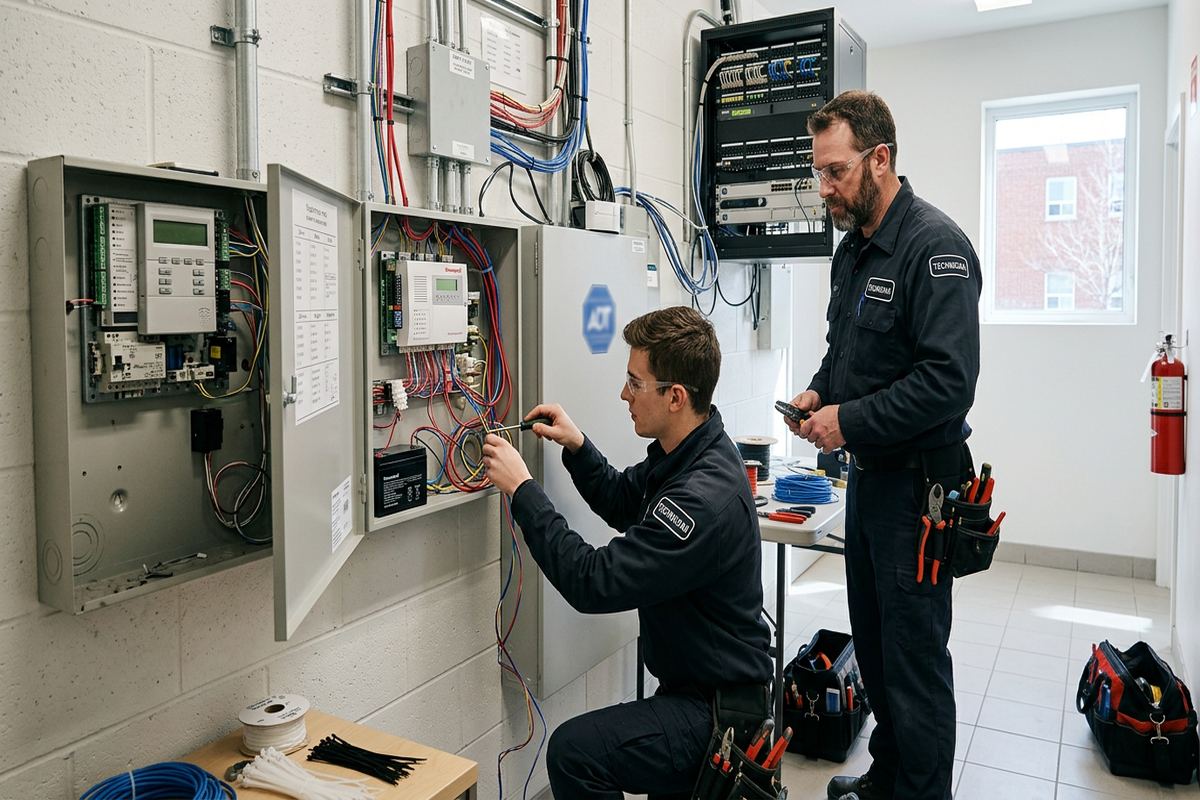
When fixed connections are necessary, they are planned rather than improvised during installation. A control panel may need a suitable outlet, network connection or cable route to supporting equipment. We identify accessible paths and note exclusions where concealed routing is not practical. Installed low-voltage cables are continuous and labelled, helping distinguish alarm wiring from network, telephone or legacy security cables. One accountable contractor manages the assessed alarm scope, device mounting, configuration and handover, reducing uncertainty about who is responsible for each part of the completed system.
- Measured mounting on finished surfaces
- Minimal drilling where practical
- Approval planning for condos and rentals
- Continuous labelled low-voltage cable runs
- Documented exclusions before work begins
Configuration, Testing and Burlington Handover
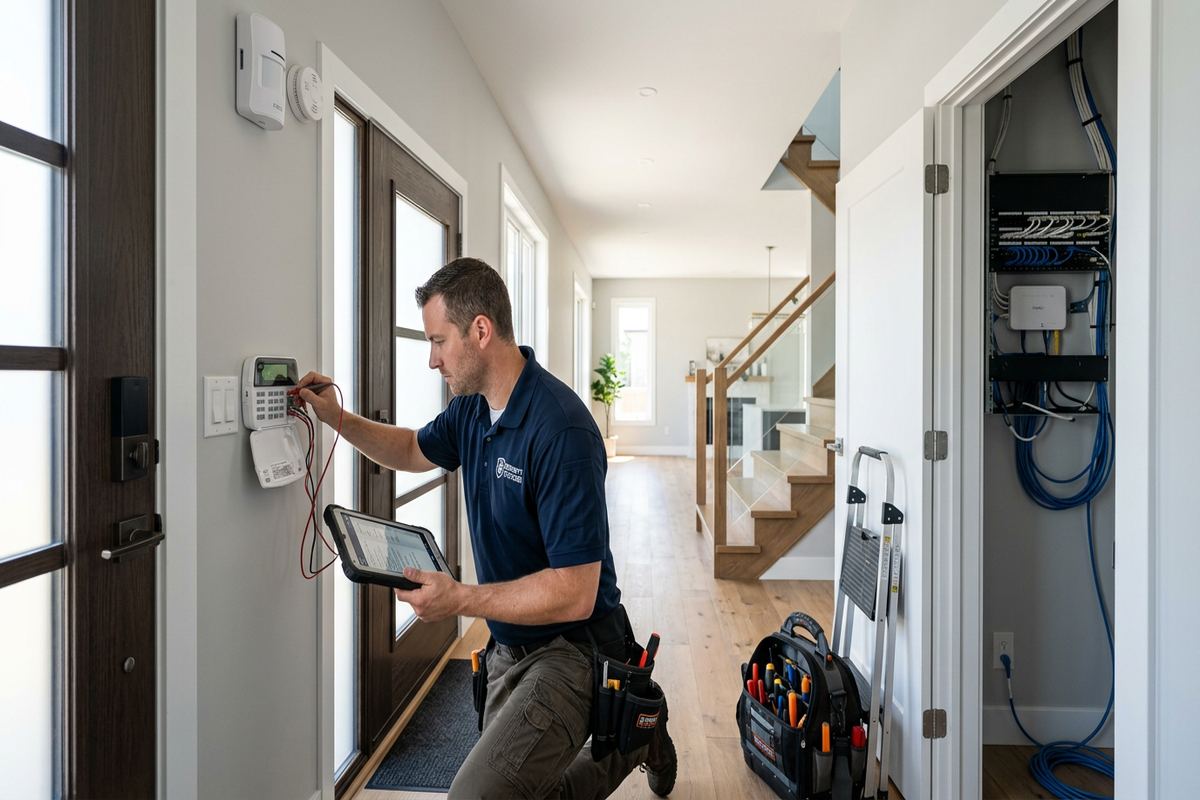
Physical installation is only one part of commissioning a wireless alarm. Every detector needs a clear name, correct response type and suitable delay or instant-alarm behaviour. We configure the agreed zones on site and check that door contacts change state, motion detectors cover the intended area and audible devices operate as expected. Wireless supervision and supported fault indications are reviewed using the selected platform. Testing is performed around the actual layout rather than assuming that a device is ready simply because it appears in the control panel.
User setup should keep control of the system with the property owner or authorized business representative. During handover, the customer uses their own credentials rather than depending on an installer-owned account. We demonstrate arming, disarming, bypassing a zone, reviewing common trouble conditions and managing ordinary users where the platform permits it. For a Burlington business, this can include discussing how credentials should be removed when staffing changes. For a home, it can include practical routines for family members, visitors or service providers without sharing the primary account.
The as-built record identifies installed equipment and device locations, making future troubleshooting or renovation planning more straightforward. It accompanies the written scope that addresses equipment ownership, warranty terms and exclusions. If third-party monitoring, internet service, cellular communication or a separate application is involved, its responsibility should be distinguished from the physical installation. We do not treat a successful mobile notification as the only test. Local device activation, zone labels, control functions, communication status and the customer’s ability to operate the alarm are each checked as applicable.
- On-site zone and user configuration
- Functional test of each installed detector
- Customer-controlled system credentials
- Operating demonstration at handover
- As-built equipment and location record
Upgrading Existing Burlington Alarm Equipment
An existing alarm does not automatically need complete replacement. Some Burlington properties contain older wired contacts in good physical condition, while the control panel or communicator no longer fits the owner’s needs. Others have abandoned sensors, undocumented wiring or wireless devices from a platform that cannot be reused. We inspect accessible equipment, identify model compatibility where possible and test components before including them in a new design. Reuse decisions are documented so the customer knows which parts remain, which are removed and which cannot be verified.
Hybrid designs can combine existing wired zones with new wireless sensors when compatible equipment and site conditions allow. This can be useful in a bungalow where concealed door contacts already run back to a central location but a renovated addition lacks cabling. It may also suit a commercial unit with wired perimeter contacts and a need for additional interior detection. Any reused cable should be checked, labelled and connected through suitable hardware. Compatibility, condition and access determine whether retention is practical; age alone does not prove that a component is serviceable.
Renovations can also change the protection plan even when the alarm panel still works. New windows, relocated doors, basement bedrooms or an altered commercial floor plan may leave old zones incorrectly named or positioned. In Millcroft and Orchard, finished lower levels and open-plan renovations can create new movement paths that deserve review. We compare the current layout with existing alarm records, if available, then update the scope around the building as it now stands. Obsolete devices and visible abandoned materials can be identified for removal where access permits.
- Assessment of reusable alarm components
- Hybrid wired and wireless options
- Testing before existing devices are retained
- Updated labels after renovations
- Removal scope for accessible obsolete equipment
Arranging a Burlington Site Assessment
A useful quotation starts with enough information about the property and the intended result. When requesting a Burlington assessment, describe the building type, approximate layout, known entry points, existing alarm equipment and any detached garage or accessory structure. Businesses should mention operating hours, staff access needs and whether the unit has rear service access or shared areas. Photos and plans can help with initial discussion, but they do not replace checking construction, wireless paths, device surfaces and power or communication requirements at the property.
During the visit, we review likely entry routes, interior detection options, control locations and practical installation access. Questions about pets, household routines, staff turnover, landlord restrictions and planned renovations help prevent unsuitable device choices. A Roseland house with broad rear glazing will not necessarily use the same design as an Alton Village townhouse or a Downtown Burlington retail unit. Site assessment timing depends on the service and travel distance. Requests sent during business hours are answered the same day, while after-hours requests are answered the next business day.
Following assessment, the written scope sets out equipment, cable routes, device placement, exclusions, equipment ownership and warranty. This gives the customer a defined basis for reviewing the proposed alarm rather than an unexplained list of parts. Any assumptions involving internet service, third-party monitoring, electrical work, approvals or existing equipment are stated. Once the scope is accepted and installation is arranged, UnifiedLink handles the agreed work as one accountable contractor through mounting, configuration, testing and documented handover for the Burlington property.
- Assessment before project pricing
- Review of construction and radio paths
- Written equipment and placement scope
- Clear ownership, warranty and exclusions
- One contractor through documented handover
Burlington neighbourhoods we cover
- Downtown Burlington
- Aldershot
- Alton Village
- Millcroft
- Roseland
- Tyandaga
- Orchard
Wireless alarm installation in Burlington — common questions
Will a wireless alarm work in an older Burlington home?
Often, but construction must be checked. Mid-century bungalows may include masonry, foil-backed insulation, additions or finished basements that weaken radio paths. We assess intended sensor locations and the control-panel position before specifying equipment. If a location cannot communicate reliably, the design may use another position, compatible repeater or a wired connection rather than relying on an unstable signal.
Do wireless alarm sensors need internet access?
The sensors generally communicate with the alarm control equipment through their supported wireless protocol, not directly through the property’s Wi-Fi. Internet or cellular service may be required for remote applications, notifications or third-party communication, depending on the selected system. For Burlington installations, the written scope distinguishes local alarm functions from services that depend on external networks or subscriptions.
Can you install sensors in an unheated garage?
Yes, when the selected devices are suitable for the garage’s temperature and moisture conditions. Burlington winters and freeze-thaw cycles can affect batteries, enclosures and mounting surfaces. We also test radio performance with vehicles and the overhead door in typical positions. A conditioned-space sensor should not be placed in an unheated garage unless its documented operating range supports that environment.
Do I need condo or landlord approval?
Possibly. Burlington condo corporations may control exterior doors, windows, common walls and corridor-facing surfaces. Landlords may also restrict drilling, permanent fasteners or cable penetrations. The owner or tenant should obtain the required authorization before installation. We can provide a written scope showing planned device placement and cable routes, but approval for alterations remains the customer’s responsibility.
Can my existing wired alarm devices be reused?
Some existing contacts, cables or detectors may be reusable after inspection and testing. Compatibility with the proposed panel, physical condition, labelling and access all matter. We do not assume that an undocumented device works because it remains mounted. For Burlington renovations, a hybrid system may retain suitable wired zones while adding wireless coverage where new doors, windows or finished areas lack cabling.
What happens during system handover?
We test installed devices, confirm zone names and demonstrate ordinary alarm operation. The Burlington homeowner or authorized business representative receives access using their own credentials, not an installer-controlled account. Handover also includes an as-built record of relevant equipment and device locations. Supported user management, bypass functions, trouble indications and notification settings are reviewed according to the selected platform and agreed scope.
Coverage in Burlington is confirmed against the address before we quote. See everything we install in Burlington or the province-wide wireless alarm installation page.