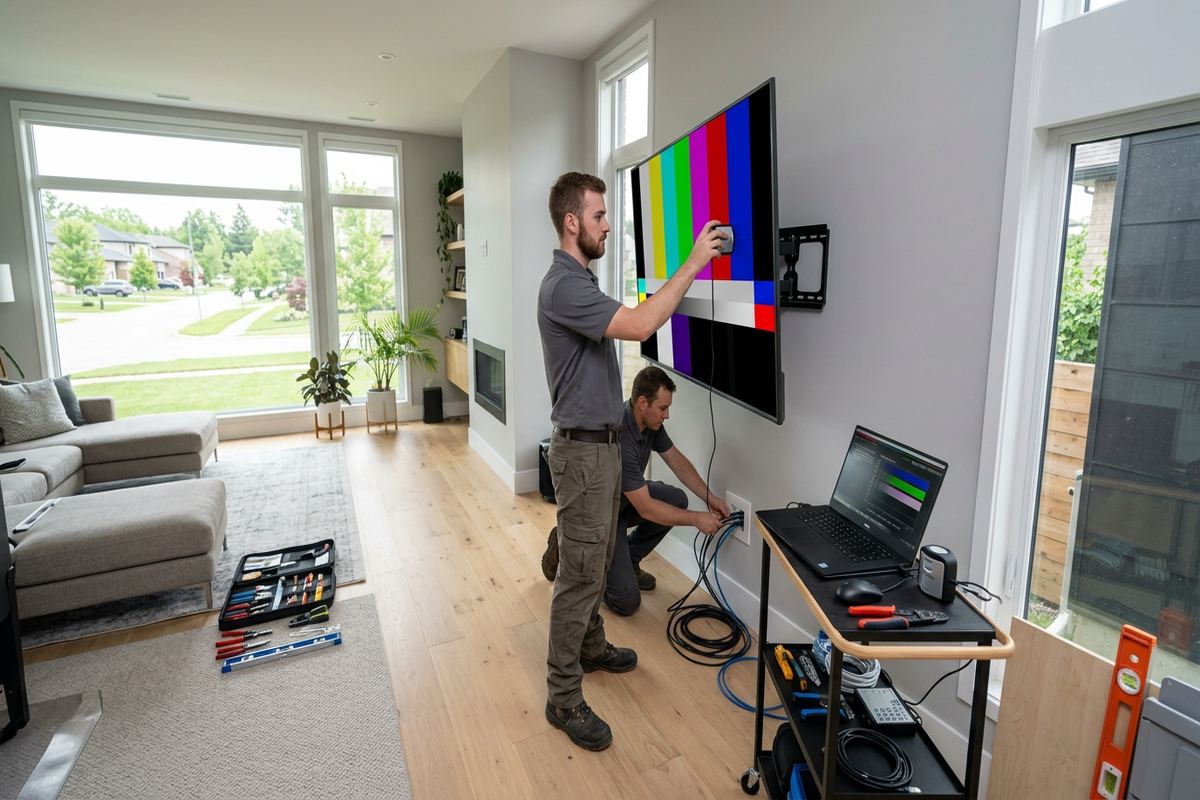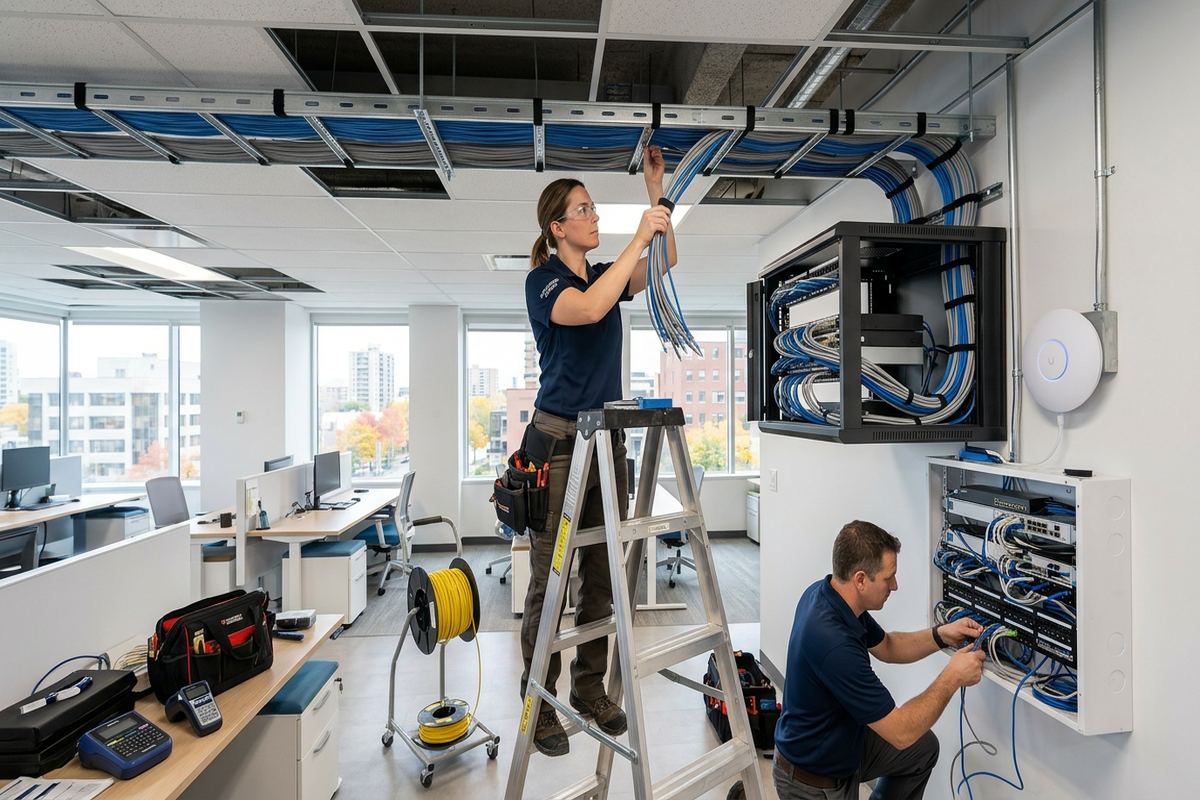
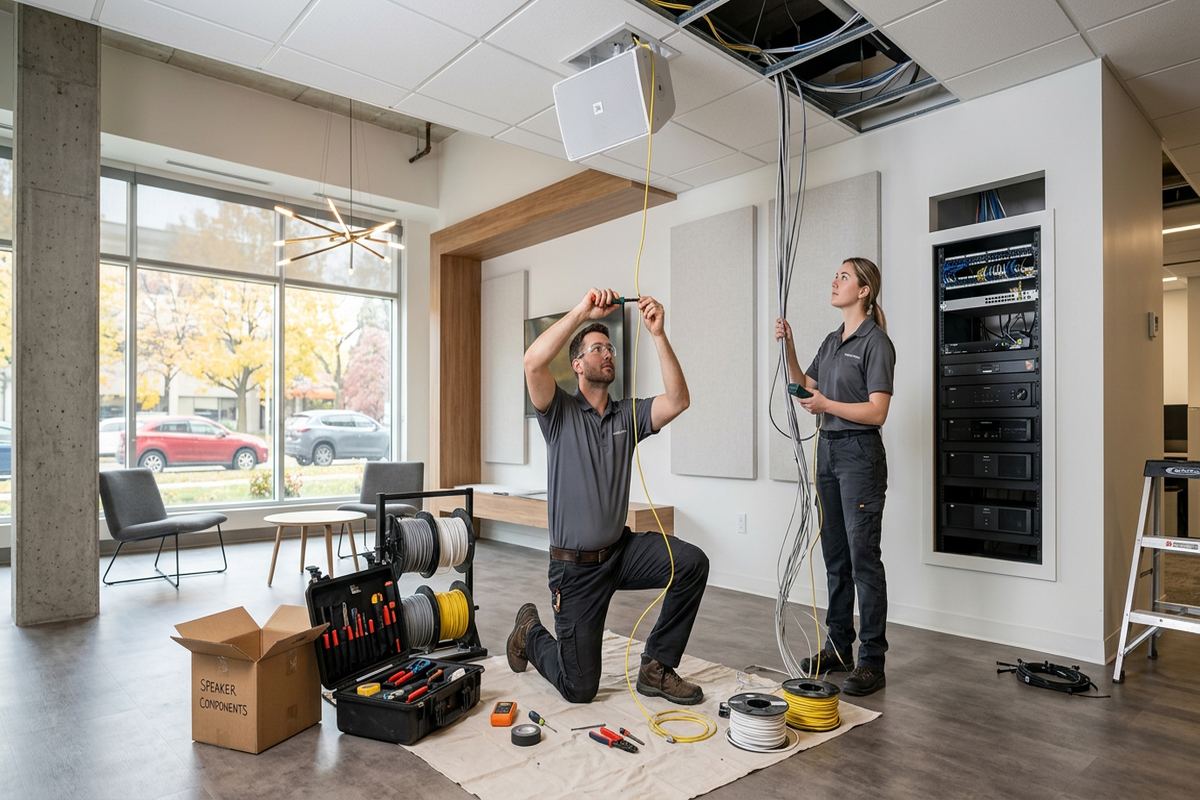
UnifiedLink installs whole-home audio systems for houses, condos and small commercial properties in Burlington. We plan speaker locations, cable routes, equipment storage and zone controls around the way each space is used. Every project starts with a site assessment, followed by a written scope that clearly defines the installation and handover.
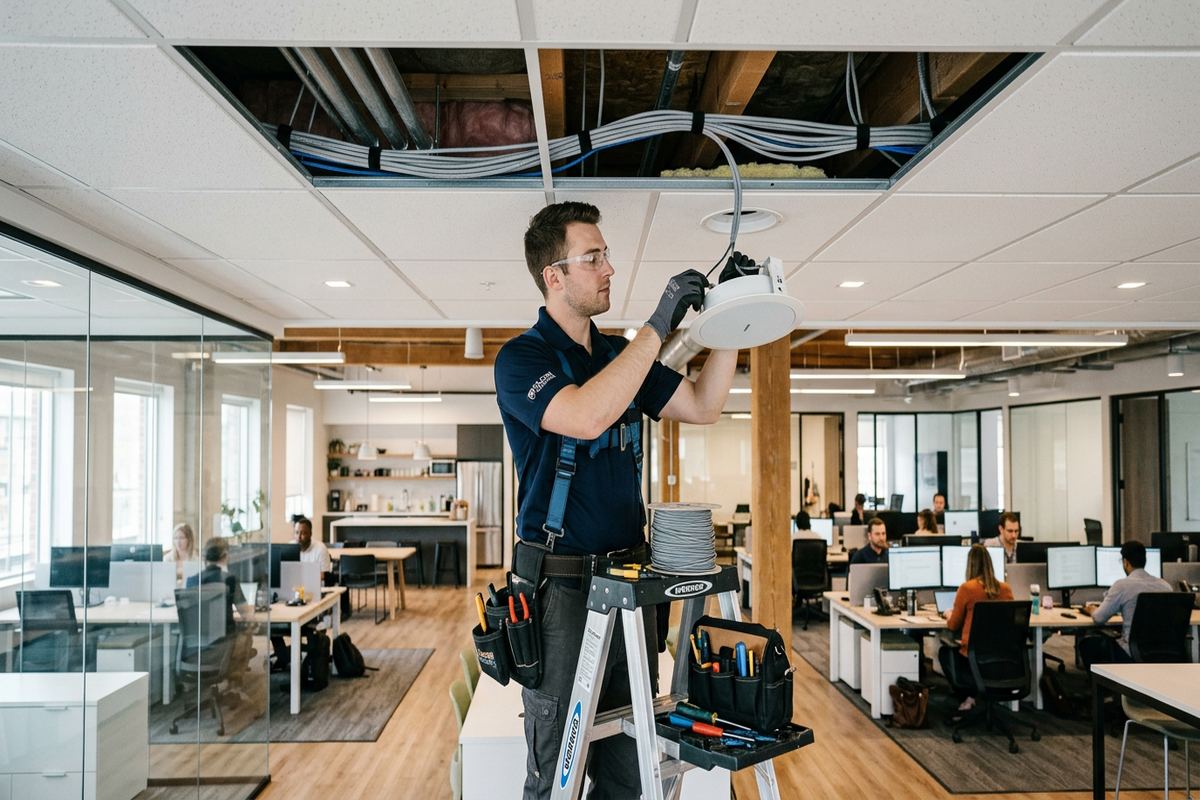
Planning Whole-Home Audio in Burlington
A useful whole-home audio system begins with decisions about where sound is needed, how rooms connect and who will control each zone. During a Burlington site assessment, UnifiedLink reviews listening areas, likely equipment locations, ceiling and wall construction, network coverage and accessible cable paths. We also discuss whether each space needs background music, television audio or more focused listening. These details determine speaker type, amplifier capacity and control options. Planning first reduces visible wiring, avoids unnecessary ceiling openings and keeps the completed system straightforward for household members, tenants or staff to operate.
Burlington properties do not all support the same installation method. Lakefront homes may have renovated interiors, large glazed rooms and outdoor areas exposed to wind and moisture. Mid-century bungalows often provide shorter cable routes but can include finished basements, limited wall cavities or older insulation. Small commercial plazas introduce suspended ceilings, shared service spaces and landlord requirements. We inspect those conditions instead of assuming a standard layout. The written scope records proposed equipment, cable routes, device placement, exclusions, equipment ownership and warranty information before installation pricing is finalized.
Zone planning should reflect daily routines rather than simply placing a speaker in every available ceiling bay. A kitchen and family room may work as one zone, while bedrooms, a patio and a home office usually benefit from separate control. In a business, reception, treatment rooms and staff areas may need different volume limits or sources. We account for room size, reflective surfaces, expected listening positions and sound transfer between floors. The objective is consistent, appropriate coverage without making one room excessively loud to compensate for weak sound elsewhere in the Burlington property.
- Room-by-room listening and control review
- Speaker, amplifier and source compatibility planning
- Proposed cable routes and equipment locations
- Written exclusions, ownership and warranty details
- Site assessment completed before pricing
Speaker Placement for Burlington Homes
Speaker position has a greater effect on everyday sound quality than adding unnecessary equipment. Ceiling speakers should be spaced around normal listening areas, kept clear of lighting, joists, ductwork and access panels, and aligned neatly with the room. Wall-mounted speakers require suitable backing and an angle that covers the intended area without directing excessive sound into neighbouring rooms. In Downtown Burlington condos, ceiling cavities and shared walls may restrict placement. We review available drawings where possible and confirm building rules before cutting, drilling or routing cable through any controlled building component.
Open-concept rooms require careful coverage because kitchens, dining spaces and living areas often share one amplifier zone while having different ceiling heights and surface finishes. Hard flooring, stone counters and large windows can increase reflections, particularly in renovated lakefront homes. Rather than relying on one high-volume pair, several correctly positioned speakers can provide more even sound at lower levels. In Millcroft and Roseland houses, room additions or altered floor plans may also conceal structural transitions. A physical inspection helps identify those constraints and establish practical speaker locations before openings are made.
Bedrooms, offices and smaller rooms need a different approach from large entertainment areas. Speaker size, bass response and maximum output should suit the room and its expected use. A child’s room may only require simple app control, while an office might need clear low-level audio throughout the workday. Bathrooms need equipment suitable for humid conditions and placement away from inappropriate wet locations. We also consider sound transfer through lightweight frame construction, floor assemblies and shared walls. Thoughtful placement allows each Burlington zone to work comfortably without disturbing occupants in adjacent areas or neighbouring units.
- Ceiling and wall cavity inspection
- Even coverage at practical listening levels
- Alignment with lights and architectural features
- Placement suited to humid or reflective rooms
- Attention to shared walls and sound transfer
Wiring and Equipment Locations
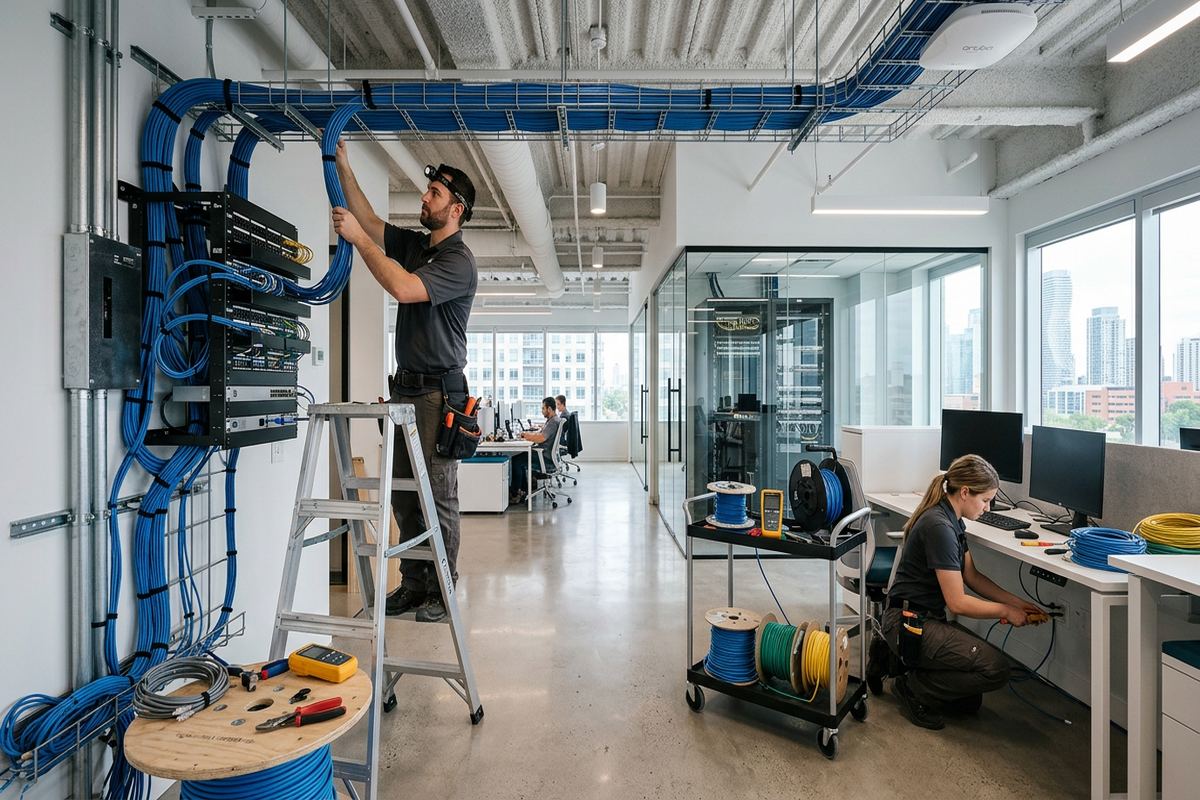
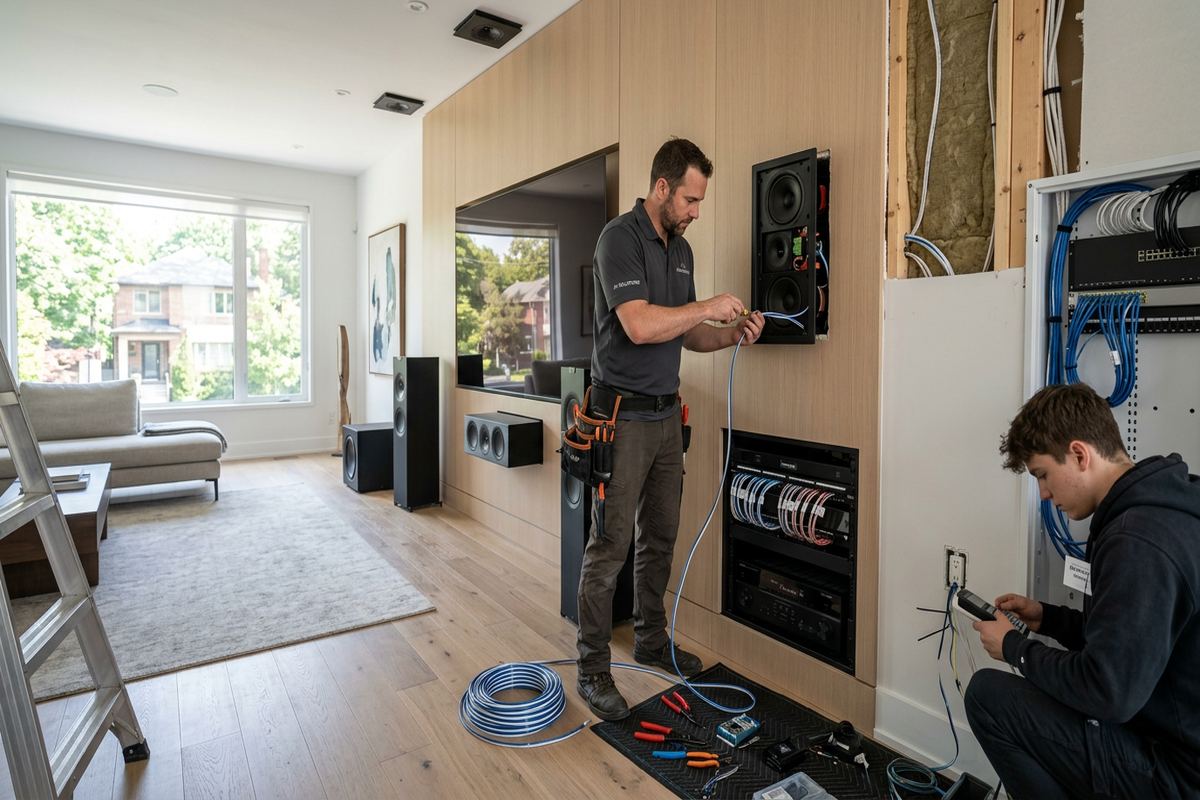
Permanent audio wiring should be planned as infrastructure, not treated as an improvised extension cord. UnifiedLink installs continuous labelled cable runs from each speaker or local connection point back to the agreed equipment location. Cable selection depends on run length, speaker load, pathway conditions and whether the route passes through a return-air space or another regulated area. Runs are kept separate from electrical conductors where required and protected at framing penetrations. Clear labels at both ends simplify amplifier connection, testing and future changes, especially when many Burlington rooms terminate at one central rack or cabinet.
The equipment location needs ventilation, electrical power, network access and enough working space for service. A closed cabinet may look tidy but can trap heat around amplifiers, streaming devices and network hardware. Basements and utility rooms are often practical in bungalows, provided moisture, access and cable distances are considered. In larger Aldershot or Tyandaga homes, one central location may not be efficient for every wing or detached area. We assess whether distributed equipment is appropriate while avoiding a design that becomes difficult to control, troubleshoot or document after the installation is complete.
Finished properties require cable routes that balance concealment with reasonable disruption. Accessible basements, attics, bulkheads and closets can provide pathways, but insulation, fire blocking, masonry and previous renovations may limit movement between floors. Frame construction often allows fishing within selected cavities, while solid masonry needs different anchors, drilling methods and surface repair expectations. We identify likely access openings in the written scope rather than promising invisible work under unknown conditions. Where concealed routing is impractical, a neat surface pathway may be preferable to extensive damage. The chosen approach is reviewed with the Burlington property owner beforehand.
- Continuous labelled speaker cable runs
- Central or distributed equipment planning
- Ventilation and service-access review
- Routes separated from electrical interference
- Concealed or neat surface pathway options
Burlington, Ontario
Whole-home audio installation in Burlington, scoped in writing first
Book a site assessment and get equipment, routes, exclusions, and warranty on paper before anything is installed.
Audio Zones, Sources and Controls in Burlington
A whole-home system can provide independent zones without forcing every room to use a separate application or unfamiliar control method. We establish which rooms should play together, which require independent volume and whether users need different sources at the same time. The amplifier and control platform must support those requirements from the start. A simple household may prefer phone-based control with a few grouped areas. A larger Burlington residence could require wall controls in frequently used rooms, restricted access for children or guests, and presets that start several zones at comfortable levels.
Source planning includes streaming services, television sound, local media players and, where compatible, existing equipment. Not every source can be distributed in the same way, and television audio may introduce delay or connection limitations if it is not designed into the system. We verify inputs, outputs, control methods and network dependencies before specifying the equipment. Customers retain their own service accounts and credentials. During configuration, those credentials are entered on site rather than recorded as contractor-owned accounts, helping ensure the Burlington owner remains in control of subscriptions, permissions and future changes.
Reliable control depends on the local network as much as the audio hardware. Streaming amplifiers, wireless speakers and mobile applications need stable Wi-Fi or wired connectivity in the rooms where they operate. Alton Village and Orchard homes may have modern wiring yet still experience weak coverage caused by equipment placement, building materials or poorly positioned access points. We test relevant connections and identify network limitations that could affect audio operation. Audio installation can be coordinated with structured cabling or Wi-Fi improvements, but any additional network work is defined separately so the scope and responsibility remain clear.
- Independent or grouped room controls
- Streaming and television source integration
- Customer-owned accounts and credentials
- Wall control options where appropriate
- Network requirements checked before setup
Outdoor Audio for Burlington Conditions
Outdoor audio equipment must be selected and mounted for Burlington’s seasonal conditions, not simply placed outside because it is labelled weather resistant. Freeze-thaw cycles, snow, wind-driven rain and summer humidity can affect enclosures, brackets, connections and cable entry points. We use suitable exterior-rated components where specified and position speakers to reduce direct exposure while maintaining useful coverage. Mounting surfaces are checked before drilling, particularly on brick veneer, stone, siding and finished soffits. Penetrations are sealed using methods compatible with the surrounding material to help prevent water entry and premature deterioration.
Patios, pools and lakefront yards benefit from distributed sound at moderate levels rather than a small number of speakers operated loudly from the house. Coverage should remain within the intended area as much as practical, with speaker direction and zone control chosen to reduce spill toward neighbouring properties. Landscaping, fences, grade changes and seating locations all influence the design. Outdoor subwoofers or landscape speakers may suit some projects, while protected wall-mounted models are more practical for others. The site assessment establishes cable paths, seasonal access and equipment placement before work begins at the Burlington home.
Exterior cabling needs protection from physical damage, moisture and movement. Routes through walls require proper sleeves or sealing details, and exposed sections need cable and containment suited to the location. Existing conduits are inspected before reuse because they may be blocked, undersized or shared with unsuitable services. Where cable crosses landscaped areas, the route must account for irrigation, future planting and maintenance. We document relevant pathways and termination points in the as-built record. Outdoor zones are then tested from the normal seating areas so volume range, source selection and coverage can be adjusted on site.
- Exterior-rated speakers and connection methods
- Sealed penetrations through exterior finishes
- Coverage planned around patios and seating
- Cable protection for exposed or buried routes
- On-site testing under normal outdoor use
Retrofits, Renovations and New Construction
The right installation sequence depends on whether a Burlington property is occupied, under renovation or at the framing stage. New construction provides the clearest access for cable placement, backing and speaker rough-ins, but routes still need coordination with electrical, plumbing, HVAC and insulation work. We mark locations, install labelled runs and protect terminations until finishing is complete. Before drywall, the rough-in can be photographed and recorded to preserve pathway information. Final speaker installation and configuration occur after dusty work, painting and permanent network services are ready, reducing the risk of damage or unnecessary repeat visits.
Retrofit work requires more investigation because framing direction and hidden services may not match visible room layouts. Mid-century bungalows can offer basement access beneath the main floor, although finished ceilings or later additions may interrupt otherwise direct routes. Renovated homes may contain layered walls, spray foam, steel beams or abandoned wiring. We use available access points and targeted openings, then explain where patching or finishing by another trade is excluded. The written scope distinguishes confirmed routes from assumptions so the Burlington owner can make an informed decision about appearance, disruption and project sequencing.
Renovations are also an opportunity to preserve flexibility. Installing appropriate spare cable or conduit in selected areas can support later speaker additions, equipment relocation or network changes without reopening completed finishes. That does not mean filling every wall with unused wire; pathways should relate to realistic future plans. We coordinate speaker locations with cabinetry, lighting layouts, ceiling details and television mounting before surfaces are closed. One accountable contractor manages the low-voltage audio work and records installed routes. This gives the homeowner, builder or designer a clear reference when the Burlington project moves from rough-in to final setup.
- Pre-wire before insulation and drywall
- Retrofit routes assessed before openings
- Coordination with lighting, HVAC and cabinetry
- Optional pathways for realistic future expansion
- Rough-in records retained for final installation
Commercial Audio in Burlington Plazas
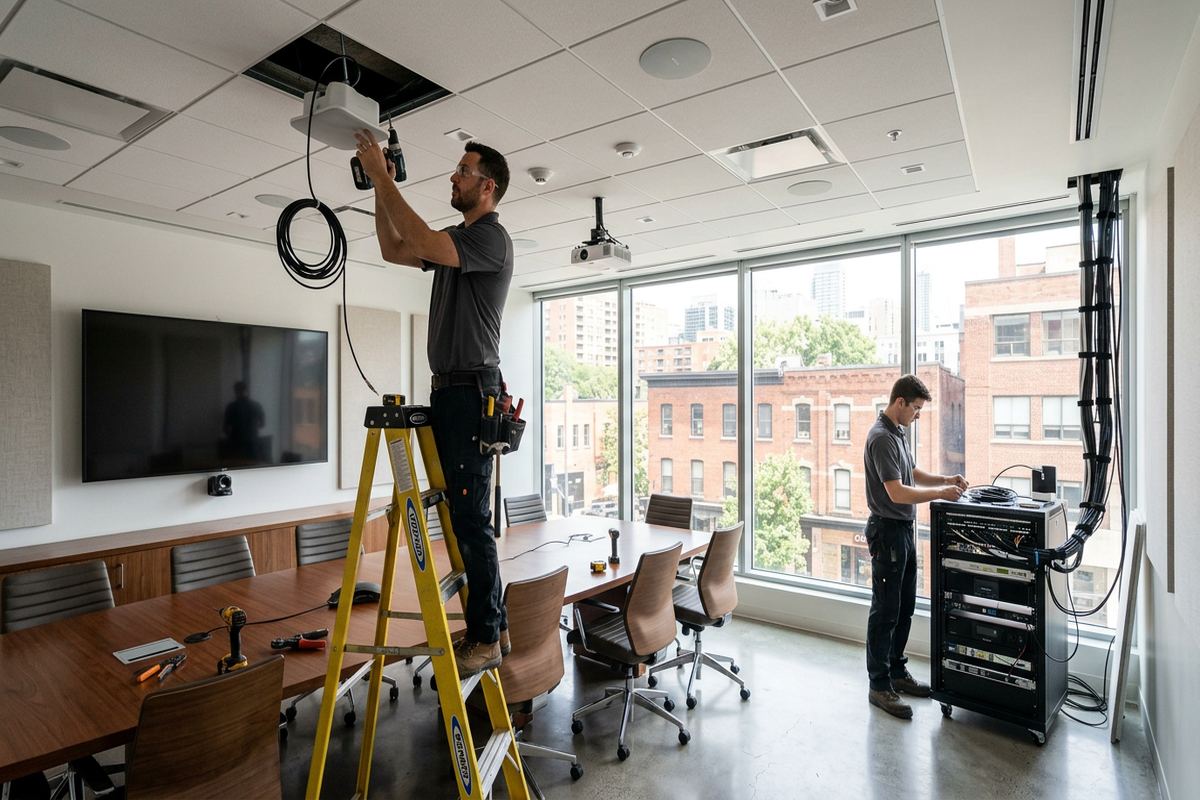
Small commercial plazas make up a significant part of Burlington’s local building stock, and their audio requirements differ from residential listening. Retail units, clinics, studios, offices and hospitality spaces often need consistent background sound, simple staff controls and defined operating limits. Speaker spacing must account for ceiling height, shelving, partitions and changing customer areas. We identify whether music, paging or television audio is required because each function affects equipment selection and zoning. The system should be understandable for daily staff while keeping amplifiers and source devices in a secure, serviceable location.
Commercial leaseholds may require approval from the landlord or property manager before cables, speakers or exterior devices are installed. Suspended ceilings can simplify horizontal routing, but demising walls, fire-rated assemblies and shared service areas still impose restrictions. We confirm available pathways and avoid treating neighbouring units or common spaces as unrestricted access. In industrial units, high ceilings, open structures and equipment noise may require different speaker types and mounting methods. Any work dependent on lift access, base-building systems or another trade is identified in the written scope before the Burlington installation proceeds.
Business audio control should prevent routine errors without making normal adjustments difficult. Staff may need access to volume and source selection in customer areas, while equipment settings remain protected from unintended changes. Multiple zones can separate reception, treatment rooms, offices or staff spaces. If the business uses licensed music or other protected content, the owner remains responsible for obtaining appropriate permissions and subscriptions. UnifiedLink configures the specified hardware, tests each zone and hands over controls using the customer’s credentials. The as-built record identifies device locations, cable destinations and the installed zone arrangement.
- Background music and paging requirements reviewed
- Controls arranged for routine staff use
- Landlord and property approvals confirmed
- Speaker layouts suited to commercial ceilings
- As-built zone and cable documentation
Installation, Testing and Handover in Burlington
Installation begins after the scope, access arrangements and equipment choices are agreed. UnifiedLink routes and labels cables, prepares mounting locations, installs speakers and connects amplification and source equipment. Work is checked as each stage progresses rather than waiting until every ceiling opening is closed. Where other trades are involved, responsibilities and sequencing are kept clear. The objective is a complete audio pathway from source to speaker, with tidy terminations and serviceable equipment. Any condition that materially changes the planned Burlington route or device placement is discussed before proceeding with work outside the written scope.
Commissioning covers more than confirming that each speaker produces sound. We verify zone assignments, left and right channels where relevant, control access, source switching, volume range and network communication. Speaker levels are adjusted to suit room coverage and normal use, while recognising that furnishings may change the final acoustics. Outdoor and commercial areas are tested from expected occupied positions. We also check that labels match the controls and documentation. On-site configuration allows practical issues to be corrected before handover instead of leaving the customer to discover mismatched rooms or inaccessible settings later.
At handover, the Burlington customer receives control using their own credentials along with an as-built record of the completed installation. We explain normal operation, grouping, source selection and any maintenance considerations relevant to the installed equipment. The record identifies cable destinations, device placement and important changes from the original plan. Equipment ownership and warranty details follow the written scope, reducing uncertainty about future service. Requests sent during business hours are answered the same day, while after-hours requests are answered the next business day. Site assessment timing depends on the requested service and travel distance.
- Cables and zones tested before handover
- On-site source and control configuration
- Customer retains account ownership
- As-built record of installed system
- One accountable low-voltage contractor
Burlington neighbourhoods we cover
- Downtown Burlington
- Aldershot
- Alton Village
- Millcroft
- Roseland
- Tyandaga
- Orchard
Whole-home audio installation in Burlington — common questions
Can you install audio in a finished Burlington home?
Yes. Finished homes can often be retrofitted using accessible basements, attics, closets, bulkheads or selected wall cavities. The practical route depends on framing, insulation, masonry and previous renovations. UnifiedLink completes a site assessment before pricing and identifies expected openings or visible pathways in the written scope. Patching or finishing by another trade is also noted where applicable.
Do I need separate controls for every room?
Not necessarily. Rooms that are commonly used together can share a Burlington audio zone, while bedrooms, offices, patios or commercial areas may need independent control. We review how occupants use each space, whether simultaneous sources are required and who needs access. The resulting design can use mobile applications, compatible wall controls or a combination without adding unnecessary complexity.
Can outdoor speakers remain installed through winter?
Equipment specified for permanent outdoor use can generally remain installed, but product suitability, mounting and connection protection all matter. Burlington winters bring snow, moisture and freeze-thaw cycles that can stress brackets, seals and cable entries. We select suitable components, limit direct exposure where practical and seal exterior penetrations using methods compatible with the mounting surface.
Can you use my existing speakers or amplifier?
Existing equipment may be reusable if its impedance, power requirements, connections, condition and control method are compatible with the proposed system. During the Burlington assessment, we identify available model information and test what can reasonably be verified. Reuse is documented in the written scope, including ownership and any limitations. Compatibility should be confirmed before new cabling or controls are designed around older hardware.
Do condos or leased units need approval?
Often, yes. Burlington condo corporations, landlords and commercial property managers may regulate ceiling openings, shared walls, cable routes, work hours and access to common spaces. The owner or tenant should obtain required written approvals before installation. UnifiedLink can provide the proposed device locations and pathway information needed for review, but approval requirements and permissions remain the customer’s responsibility.
What do I receive when installation is complete?
After testing and on-site configuration, you receive control of the system through your own credentials and an explanation of normal operation. UnifiedLink also provides an as-built record showing installed devices, cable destinations and zone arrangements. The written scope addresses equipment ownership, warranty information and exclusions. This documentation supports future changes or service without relying on memory or contractor-owned accounts.
Coverage in Burlington is confirmed against the address before we quote. See everything we install in Burlington or the province-wide whole-home audio installation page.