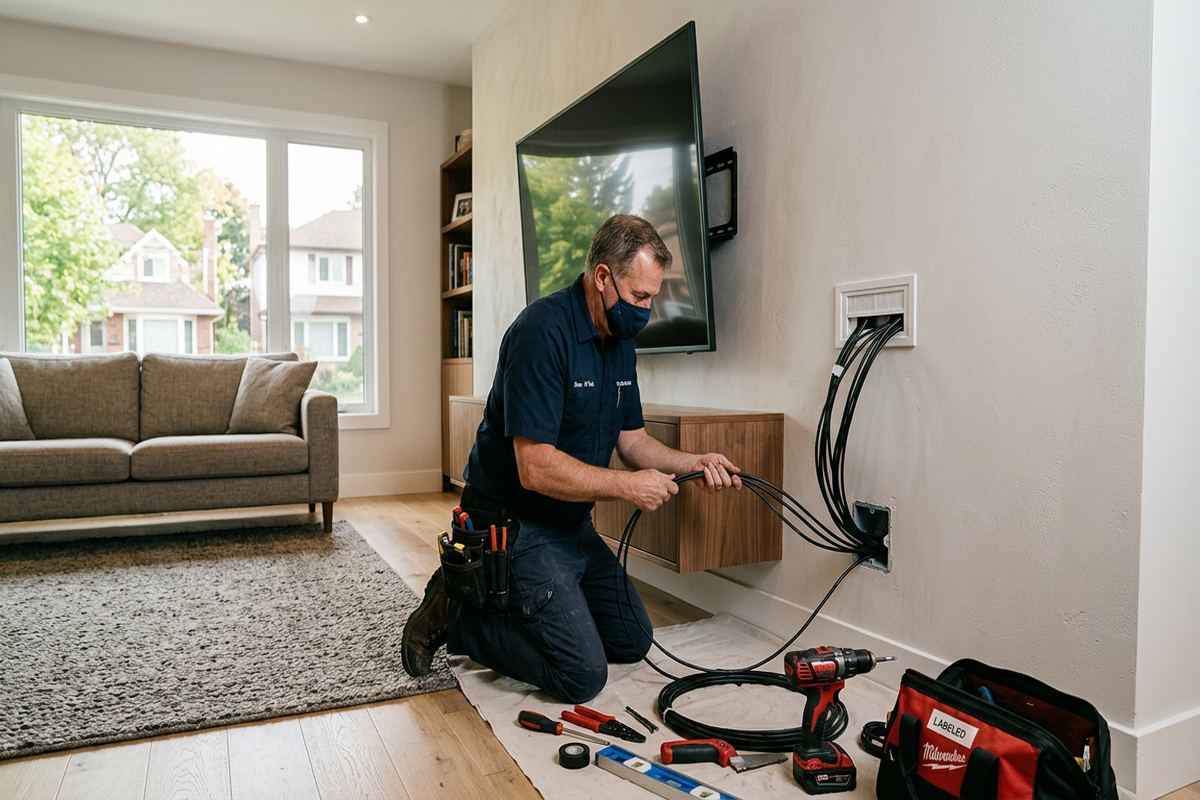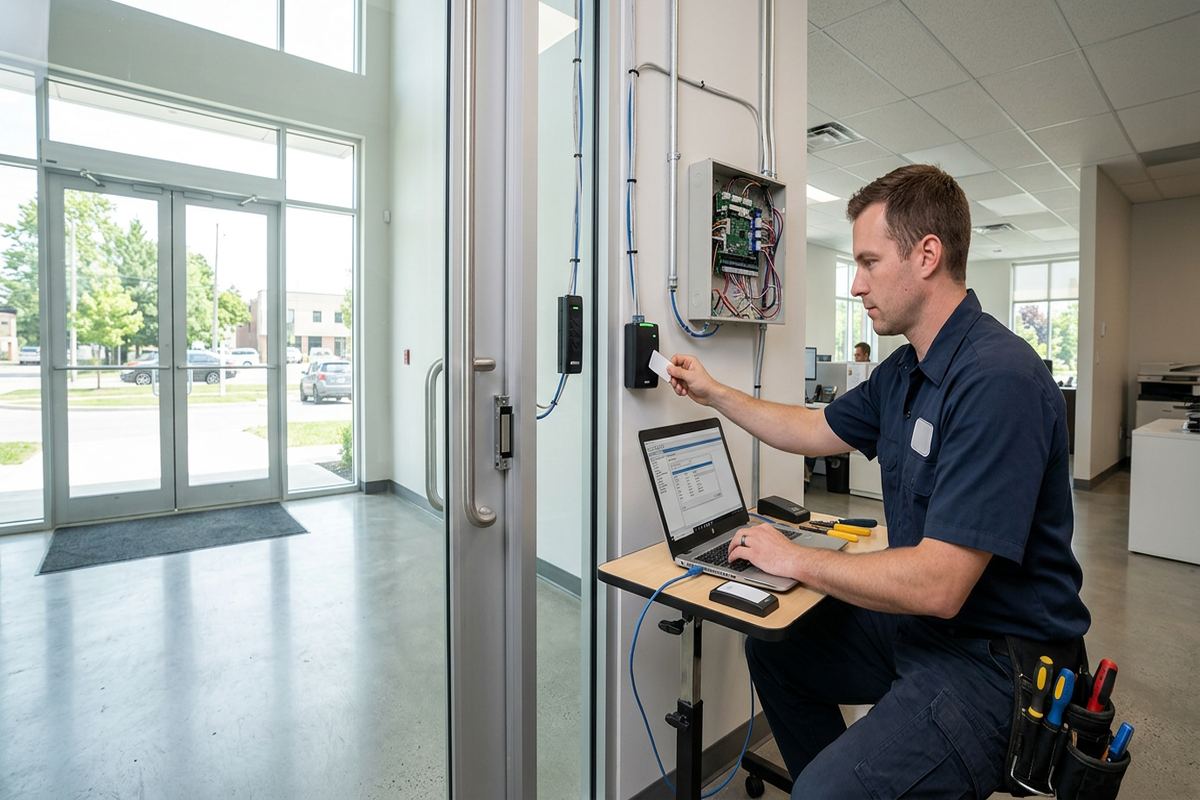
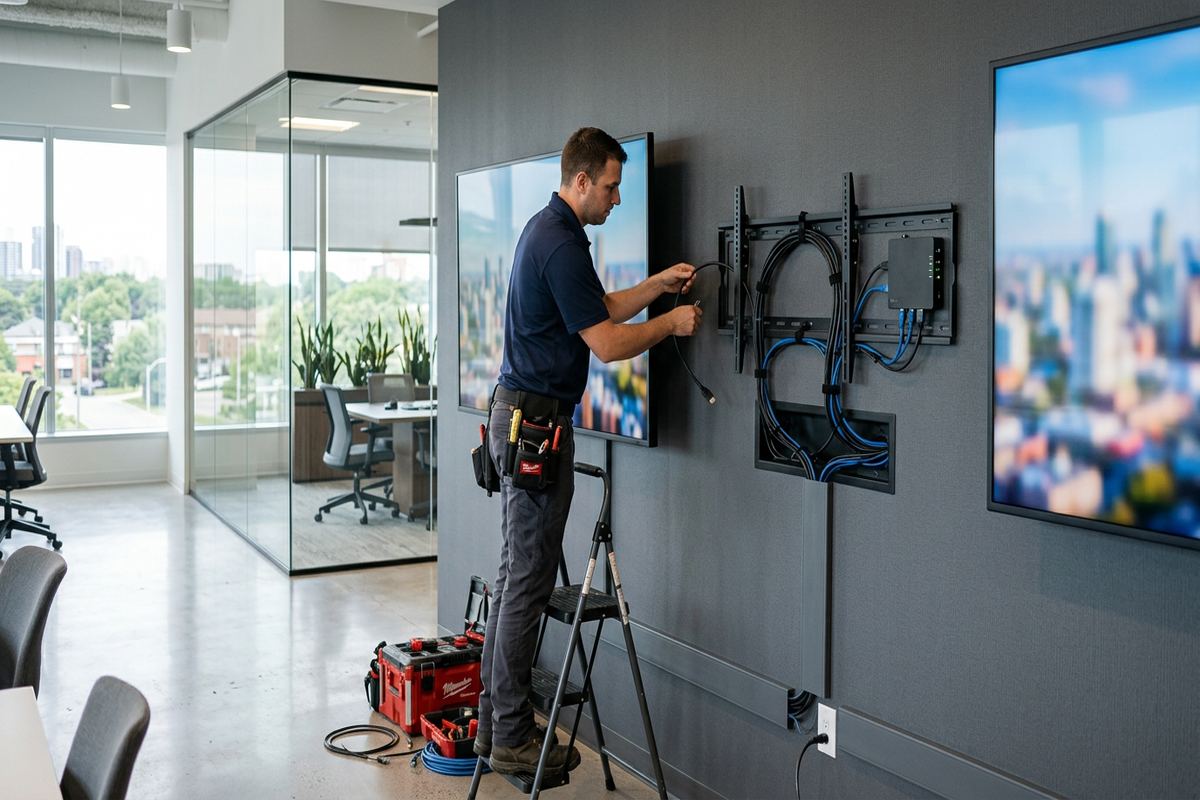
UnifiedLink provides TV wall mounting for Burlington homes, offices, shops and shared spaces. We assess the wall structure, viewing position, power and cable routes before defining the work. Installation can include fixed, tilting or full-motion mounts, concealed low-voltage cabling, display setup and a documented handover using your own device credentials.
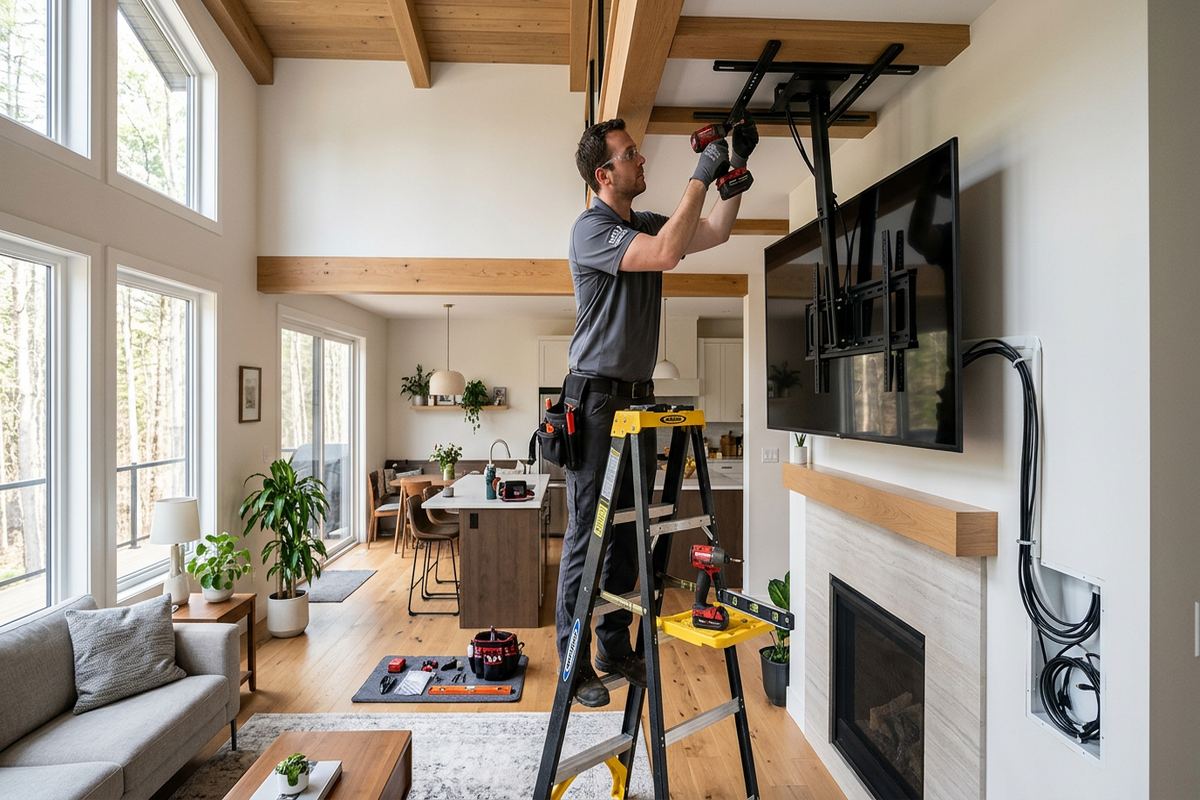
TV Wall Mounting for Burlington Properties
A secure installation starts with the wall, not the television. Burlington projects commonly involve lakefront homes, mid-century bungalows and units within small commercial plazas, each presenting different fastening and cable-routing conditions. We assess stud position, masonry type, wall finish, display size, mount movement and the intended viewing height before pricing. That process helps determine whether a fixed, tilting or full-motion bracket is suitable. It also identifies practical issues such as nearby electrical outlets, low-voltage pathways, furniture clearance, glare, ventilation and access for future equipment changes.
In Downtown Burlington and Aldershot, renovations may leave several wall layers, old framing layouts or masonry concealed behind finished surfaces. Mid-century bungalows in Roseland and Tyandaga can also have framing or wall finishes that differ from current construction. A stud finder alone does not confirm whether a proposed location can support the selected mount. We consider available framing, fastener type, bracket hole pattern and expected leverage, particularly when an articulating arm will extend the television away from the wall. Where reinforcement or another trade is required, that requirement is identified in the written scope.
Placement decisions should account for how the room is actually used. A display mounted too high can be uncomfortable, while a full-motion arm may strike cabinetry, windows or nearby doors. We review seating positions, screen dimensions, sightlines and likely reflections before setting the final height. For bedrooms, kitchens and multi-purpose rooms, the preferred position may differ from a conventional living-room layout. Commercial projects also require attention to customer circulation, counter visibility and equipment access. The agreed device placement and relevant exclusions are documented before installation begins.
- Fixed, tilting and full-motion mount assessment
- Stud, masonry and wall-finish review
- Viewing-height and sightline planning
- Clearance checks for doors and cabinetry
- Written placement and installation scope
Mount Selection and Structural Assessment in Burlington
The mounting bracket must match both the display and the wall assembly. We verify the television’s mounting pattern, weight information, connection locations and required clearances, then compare those details with the bracket specifications. Mount type affects the load placed on the wall: a fixed bracket keeps the screen close, while an extended articulating arm creates greater leverage. The assessment also considers whether ports remain reachable and whether cables can bend without being crushed. Equipment ownership is stated in the written scope so it is clear which items are supplied by UnifiedLink and which are provided by the customer.
Frame construction generally allows attachment to suitable studs or installed reinforcement, but stud spacing and location can limit where a bracket sits. Masonry requires a different approach because concrete, solid brick, concrete block and masonry veneer do not accept the same anchors. A finished wall may also conceal furring strips, insulation, plumbing or electrical wiring. We do not treat every hard surface as structural masonry. Before drilling, the proposed fastener locations and cable path are reviewed together, reducing the chance that a structurally convenient position creates an impractical connection or an exposed run across the wall.
Some Burlington installations need preparatory work before the display can be mounted as planned. Examples include adding backing during a renovation, relocating an electrical receptacle through an appropriate electrical contractor, repairing a weak finish, or obtaining documentation for a condo board or landlord. Those dependencies are not hidden inside a general installation description. The written scope records equipment, cable routes, device placement, exclusions, equipment ownership and warranty information. If site conditions change after a wall is opened or a concealed obstruction is found, the effect on the agreed method is reviewed before work proceeds.
- Display weight and mounting-pattern verification
- Fasteners matched to the wall assembly
- Articulating-arm leverage considered
- Port and ventilation clearances maintained
- Dependencies recorded before work begins
Concealed Cabling and Power Planning
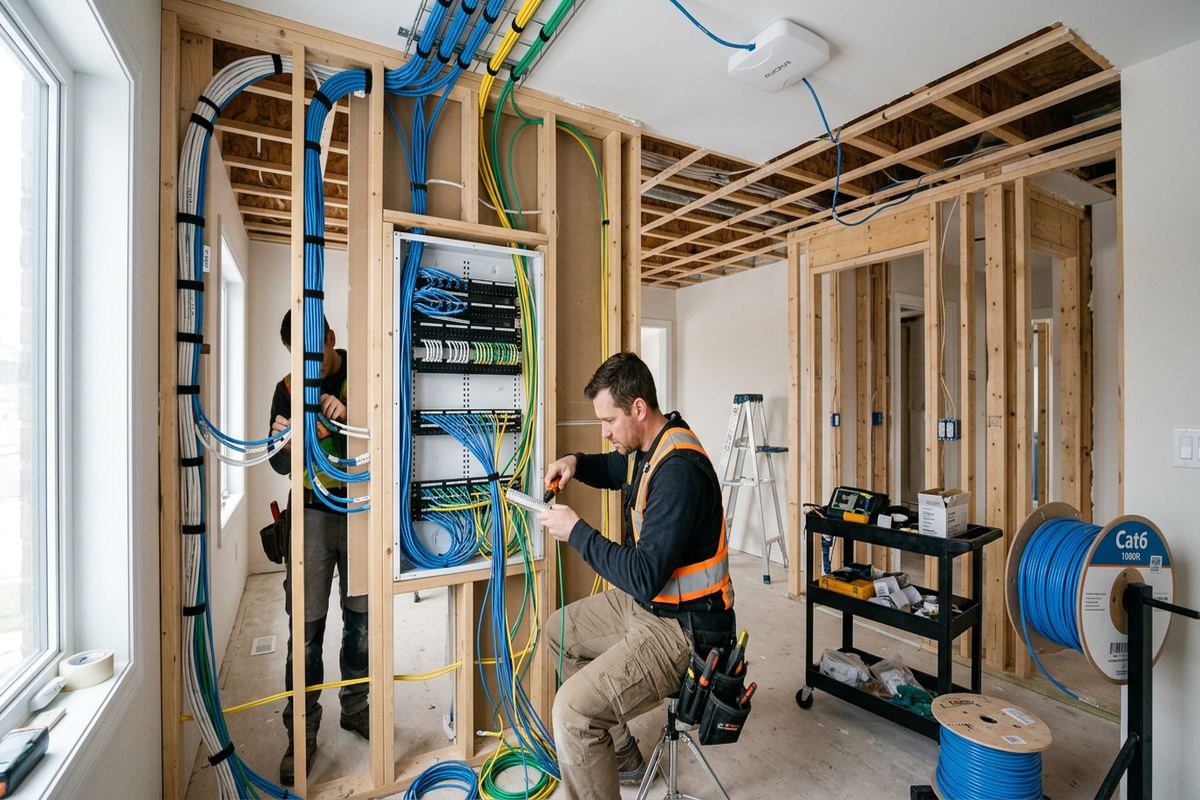
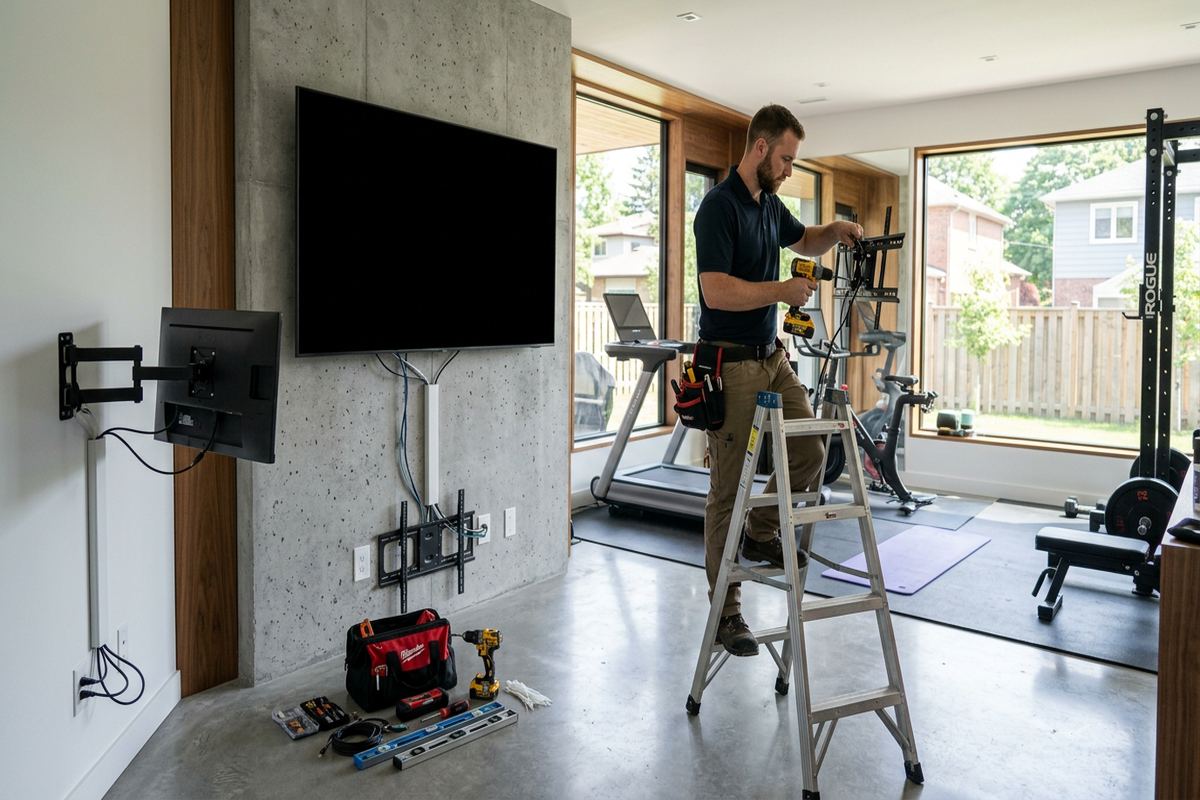
A clean-looking television installation depends on planning every connection, not simply hiding one visible lead. We identify the sources that will connect to the screen, such as a receiver, streaming device, game console, computer, soundbar or network connection. From there, we plan low-voltage cable routes and consider connector size, service access and future replacement. Continuous labelled cable runs are used where cabling forms part of the scope. Labels at accessible ends make later troubleshooting easier and reduce uncertainty when equipment is moved, upgraded or handed over to another person responsible for the property.
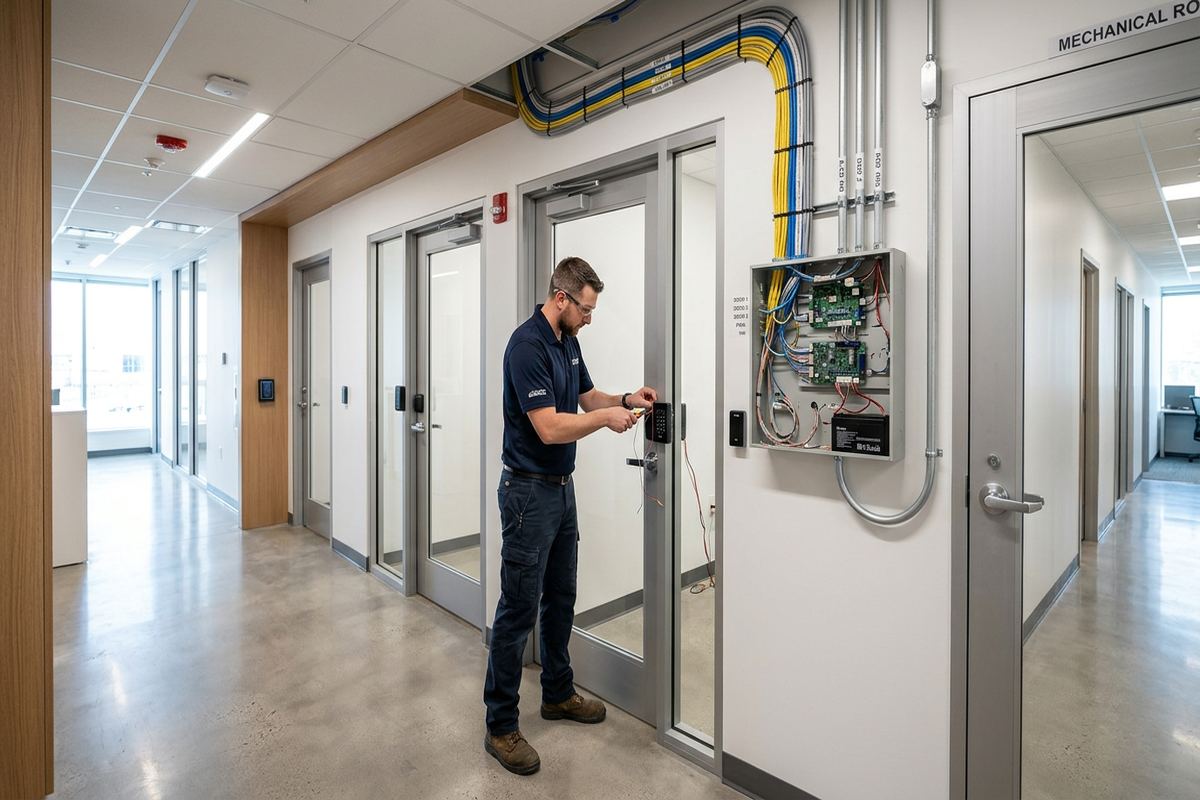
Power and low-voltage cabling require separate consideration. Extension cords and flexible power leads are not routed inside walls as substitutes for permanent electrical wiring. If the desired position lacks suitable power, the scope can identify work that must be completed by an appropriate electrical contractor. Low-voltage pathways may run within an accessible frame wall, through conduit, behind surface raceway or by another agreed route. Fire blocking, insulation, horizontal framing and masonry can prevent a direct drop. We explain the practical route rather than promising invisible cabling before the wall conditions have been assessed.
For a wall-mounted media area, device location affects reliability and everyday use. Equipment hidden in a cabinet still needs airflow, power, cable bend clearance and a workable method for remote control or network access. Devices placed behind the television must not interfere with the bracket or prevent the screen from sitting correctly. In commercial spaces, source equipment may be secured in a cabinet or communications area instead. The as-built record identifies completed cable routes and connection points, giving Burlington property owners a useful reference when displays, sources or room layouts change later.
- Continuous labelled low-voltage cable runs
- In-wall, conduit or raceway route options
- Power requirements identified separately
- Connection points recorded after installation
- Service access preserved for source devices
Burlington, Ontario
TV wall mounting in Burlington, scoped in writing first
Book a site assessment and get equipment, routes, exclusions, and warranty on paper before anything is installed.
Burlington Home and Condo Installations
Homes in Alton Village, Millcroft and Orchard often have modern open layouts where the preferred screen wall includes a fireplace, built-in cabinetry or several adjacent windows. These features affect heat exposure, glare, viewing angle and cable access. A fireplace installation is assessed for wall construction, mantle clearance, operating heat and the route available to source equipment; the presence of a fireplace does not automatically make the location suitable. Where a different wall or a lower position offers a more practical result, the options are explained before the mounting location is finalized.
Condominiums introduce rules beyond the physical wall. Burlington condo owners may need approval for drilling, work-hour restrictions, elevator bookings, contractor access or changes affecting common elements. Some walls border shared corridors or neighbouring units, and concrete construction can influence noise, anchor choice and cable concealment. Tenants should obtain landlord approval before permanent mounting or wall penetrations. UnifiedLink can define the proposed device location, cable route and fastening approach for review, but the owner, tenant, landlord or condominium corporation remains responsible for granting the permissions that apply to the property.
Lakefront homes can contain additions, renovated wall assemblies and large glazed areas that complicate an apparently simple placement. Strong daylight may produce reflections, while exterior-facing walls can include insulation, vapour-control layers or limited cavities for cabling. We avoid unnecessary penetrations and assess the intended route before cutting. If a room is being renovated, coordinating backing, conduit and outlet locations before drywall closes usually provides more mounting flexibility. The final scope distinguishes work included in the display installation from patching, painting, electrical changes or other work assigned to separate trades.
- Fireplace and heat considerations reviewed
- Condo and landlord approvals identified
- Glare and window placement assessed
- Renovation backing and conduit coordination
- Excluded finishing work clearly documented
Exterior TV Mounting in Burlington Conditions
An exterior television installation has different requirements from an indoor living-room mount. Burlington winters, precipitation and repeated freeze-thaw cycles affect fasteners, wall penetrations, cable jackets and exposed connections. The display, bracket and accessories must be suitable for the planned environment, including the degree of shelter available. An indoor television placed outside is not made weather-resistant by adding a cover. We assess exposure to wind-driven rain, direct sunlight, temperature changes and viewing glare, then document any limitations associated with the equipment or the proposed location before work is accepted.
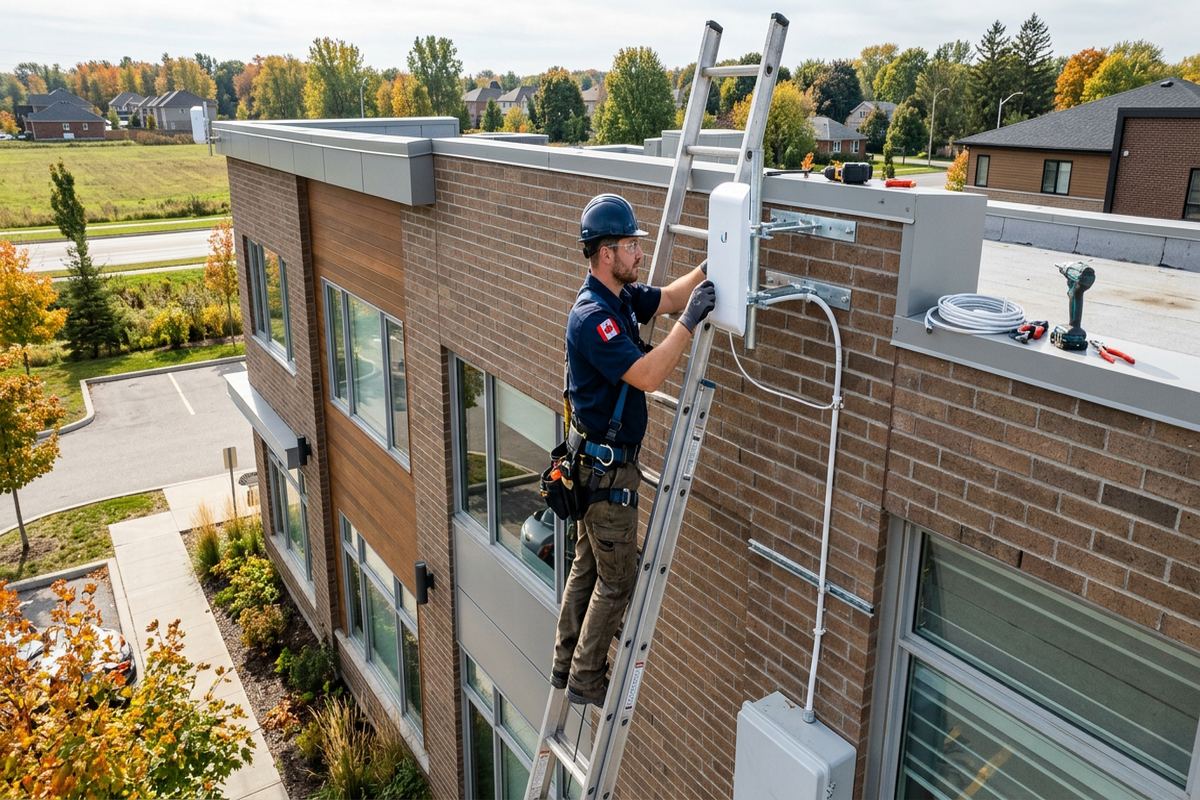
Exterior walls may be brick veneer, solid masonry, concrete, siding over frame construction or a layered assembly with insulation and drainage space. The visible finish does not necessarily provide the structural support required for a television bracket. Attachment points must reach an appropriate supporting material without compromising the wall’s water-management function. Penetrations are minimized and sealed using a method compatible with the relevant materials. Cable entries are planned to shed water and avoid creating an inward path, while drip loops or protected connection locations may be used where the agreed design calls for them.
Covered patios and commercial façades still require careful equipment placement. A roof can reduce direct precipitation without preventing moisture, condensation, cold, summer heat or low-angle sunlight from reaching the display. Cables exposed outdoors need an appropriate rating and must be protected from physical damage. Power provisions require separate review by an appropriate electrical contractor when changes are needed. Seasonal removal may be preferable for some customer-owned equipment, but bracket openings and cable entries still need suitable protection. The handover records relevant connection points, operating limitations and customer responsibilities for the exterior installation.
- Freeze-thaw exposure considered
- Exterior-rated equipment requirements reviewed
- Compatible penetration sealing methods
- Outdoor cable routes protected
- Environmental limitations documented
Commercial TV Wall Mounting in Burlington
Small commercial plazas make up a significant part of Burlington’s local building stock. Shops, clinics, restaurants and offices may use wall-mounted displays for menus, presentations, information, waiting-room content or internal dashboards. These projects require more than an appropriate viewing height. We consider customer traffic, accessibility, tampering risk, cleaning access, screen visibility and the location of source equipment. Work may also need to fit property-management rules or avoid disruption to occupied areas. The written scope defines which displays, brackets, cables and configuration tasks are included, along with access requirements and exclusions.
Commercial-strip and industrial-unit walls may combine concrete block, steel studs, demising walls and finished service areas within the same premises. Each assembly affects fastening and concealed cabling differently. A display attached to light-gauge framing may require suitable backing or an alternate location, especially when a full-motion mount is requested. In industrial units, dust, vibration, vehicle movement or high mounting positions can also affect equipment choice and service access. We review the installation area on site rather than applying a residential mounting method to every business environment.
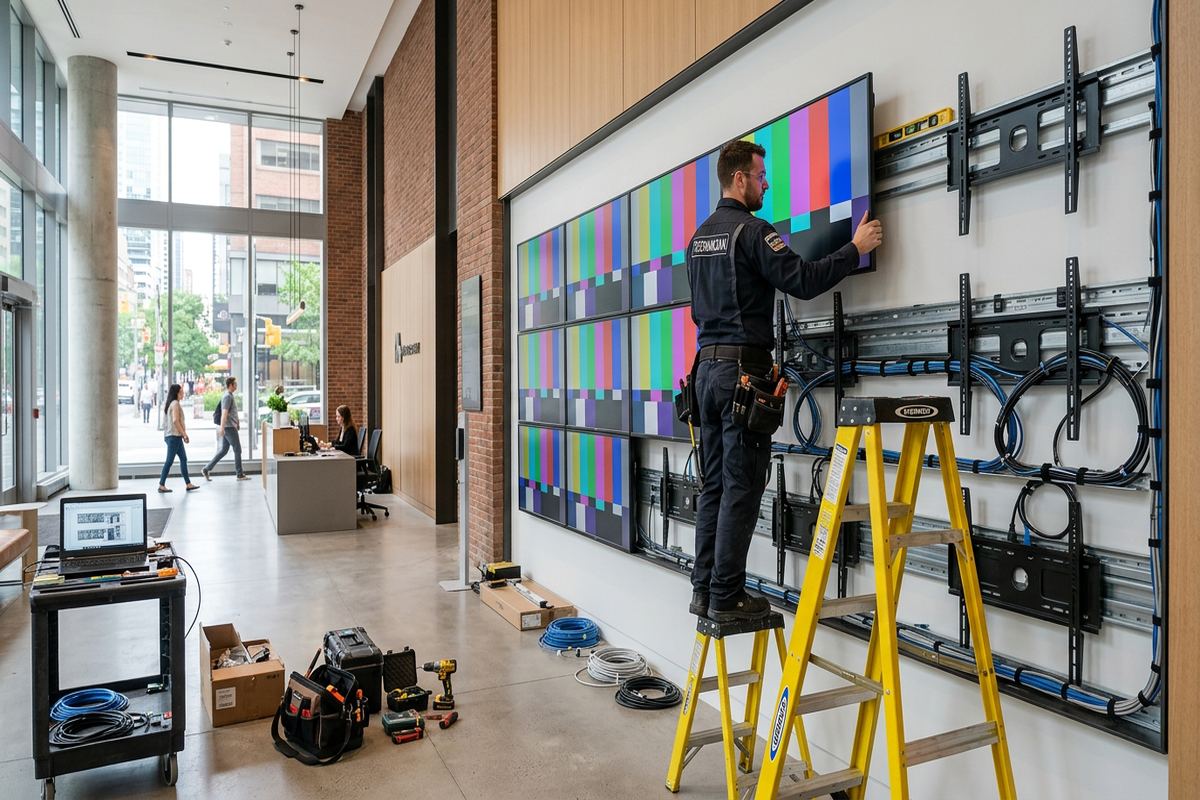
Multi-display projects benefit from consistent measurements, labelling and configuration. Screens intended to show coordinated content need agreed orientation, spacing, source connections and control methods. If network access is required, available wired or Wi-Fi connectivity is reviewed as part of the broader system rather than assumed. On-site configuration can include display inputs, basic picture settings, source selection and connection testing within the written scope. Handover uses the customer’s own credentials, avoiding an installer-controlled account. An as-built record notes device locations, cable destinations and relevant settings for the person who will support the Burlington premises.
- Retail, office and waiting-area displays
- Commercial wall assemblies assessed
- Traffic and tampering risks considered
- Multi-screen alignment and labelling
- Customer-controlled account handover
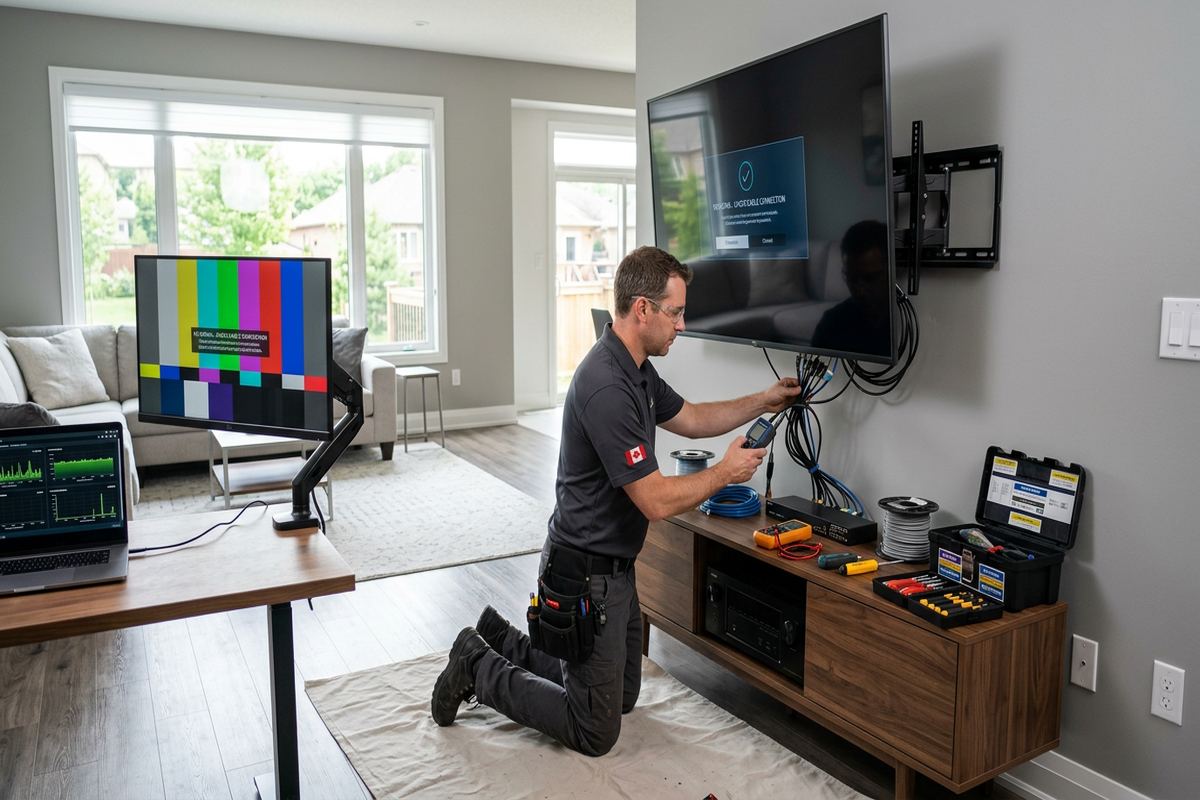
Display Setup, Soundbars and Connected Sources
Mounting is only one part of a usable display system. After the television is secured, the connected sources must reach the correct inputs and operate without putting strain on ports or cables. On-site configuration can cover input naming, source selection, network connection and basic display settings specified in the scope. We do not retain ownership of customer accounts. Streaming services, manufacturer applications and other account-based features are handed over using credentials controlled by the customer. This approach keeps future password changes, subscriptions and device administration under the property owner’s authority.
A soundbar may attach to the wall, to a compatible television bracket or sit on furniture, depending on its design and the room layout. The selected position must avoid blocking the screen, remote receiver or bracket movement. Audio connections can involve HDMI ARC or eARC, optical cabling, analogue connections or a separate receiver, and compatibility should be confirmed before cables are concealed. Where speakers, receivers or control devices are included, their ventilation and service access are also considered. The scope states which equipment will be mounted, connected and tested rather than treating every accessory as implied.
Testing follows the actual signal path from each agreed source to the display and, where included, the audio device. This can reveal a damaged customer cable, unsupported format, incorrect input setting or control limitation that would not appear during bracket installation alone. Results and unresolved customer-equipment issues are explained during handover. The as-built record documents installed routes and connection points, while labels identify continuous cable runs. Burlington homeowners and business operators receive the system using their own remotes, applications and credentials, making routine operation and later support more straightforward.
- Input and source configuration
- Soundbar mounting options assessed
- HDMI and audio compatibility review
- Customer credentials used at handover
- Installed routes captured as built
Planning Your Burlington TV Mounting Project
Every project begins with enough information to understand the display, wall and desired result. Helpful details include the television model, bracket model if already purchased, photographs of the wall, nearby outlets, source equipment and whether cables should be concealed. A site assessment is completed before pricing because photographs cannot always reveal framing, masonry layers, hidden obstructions or building restrictions. Assessment timing depends on the service and travel distance. Requests sent during business hours are answered the same day; after-hours requests are answered the next business day.
Following the assessment, the written scope covers equipment, cable routes, device placement, exclusions, equipment ownership and warranty. It can also identify approvals, electrical work, reinforcement, finishing or access arrangements that must be completed by the customer or another trade. This gives both parties a common reference before drilling, cutting or equipment installation begins. UnifiedLink remains one accountable contractor for the low-voltage and display work in the agreed scope, including coordination of mounting, continuous labelled cable runs, on-site configuration, testing and documented handover.
On installation day, the work area and planned position are confirmed before mounting starts. The display is attached using the agreed method, cables are routed and labelled where included, and specified sources are connected and tested. Handover covers normal operation, bracket movement where applicable, connection points and any recorded limitations. The customer receives control through their own credentials, together with an as-built record of completed work. For Burlington properties with condo, landlord or commercial-management requirements, access and written permissions should be in place before the scheduled visit.
- Site assessment before pricing
- Detailed written scope
- One accountable low-voltage contractor
- On-site connection testing
- Credential-controlled documented handover
Burlington neighbourhoods we cover
- Downtown Burlington
- Aldershot
- Alton Village
- Millcroft
- Roseland
- Tyandaga
- Orchard
TV wall mounting in Burlington — common questions
Can you mount a TV on brick in Burlington?
Yes, when the brick or masonry assembly provides an appropriate supporting structure and suitable fastening method. Burlington properties may have solid masonry, concrete block or brick veneer, which are not interchangeable. We assess the wall before pricing, confirm the proposed anchor locations and plan cable routes carefully. Brick veneer alone may not provide the support needed, particularly for a full-motion bracket.
Can cables be hidden inside the wall?
Often, but the available route depends on framing, insulation, fire blocking, masonry and nearby services. Burlington bungalows, renovated homes and concrete condos can each require a different approach. Where an in-wall route is practical, low-voltage cables are installed as continuous labelled runs. Power wiring is handled separately, and an appropriate electrical contractor may be required if a suitable receptacle is not available.
Do I need condo or landlord approval?
Possibly. Burlington condominium corporations may regulate drilling, work hours, elevator access and alterations affecting common elements. Tenants should obtain landlord approval before permanent mounting, cable penetrations or other wall changes. UnifiedLink can provide a written scope describing the proposed equipment, location and cable route, but the customer is responsible for securing all permissions required by the owner, landlord or condominium corporation.
Can you mount a TV above a fireplace?
A fireplace location must be assessed rather than assumed suitable. We consider operating heat, mantle clearance, viewing height, wall structure, cable access and the television manufacturer’s requirements. In Burlington homes with renovated fireplaces or built-in cabinetry, concealed construction can also limit fastening and cable routes. If the proposed position creates excessive heat exposure or an uncomfortable viewing angle, we will explain practical alternatives.
Do you install televisions on covered patios?
Exterior mounting is available where the structure, equipment and location are suitable. Burlington’s winter temperatures, moisture and freeze-thaw conditions require exterior-rated equipment, compatible fasteners, protected cabling and properly sealed penetrations. A covered patio does not make an indoor television weather-rated. The site assessment reviews exposure, wall construction, power requirements, glare and the customer’s responsibilities for seasonal operation or equipment care.
What happens during installation and handover?
We confirm the agreed position, install the mount and display, complete included cable routes, connect specified sources and test operation. On-site configuration uses the customer’s own credentials rather than an installer-controlled account. Burlington customers receive an as-built record showing completed cable routes and connection points, along with an explanation of bracket movement, normal operation, equipment limitations and any unresolved issues involving customer-supplied devices.
Coverage in Burlington is confirmed against the address before we quote. See everything we install in Burlington or the province-wide tv wall mounting page.