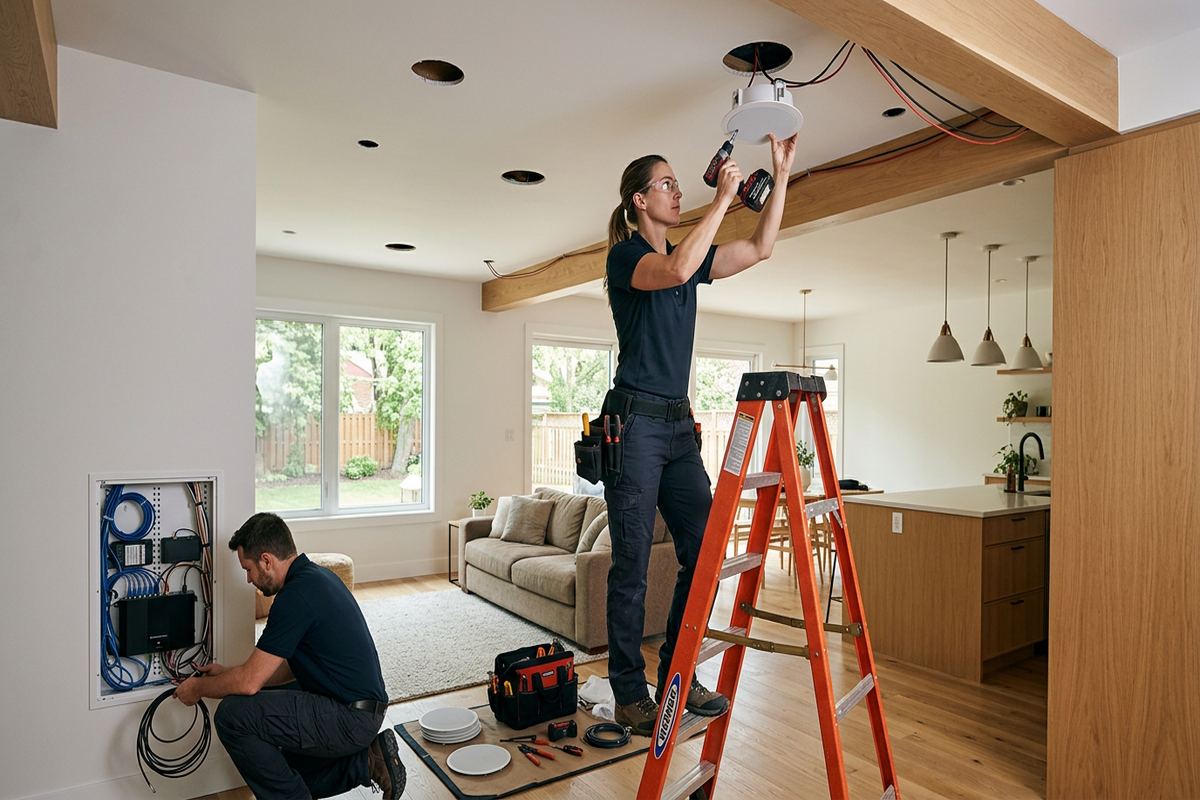
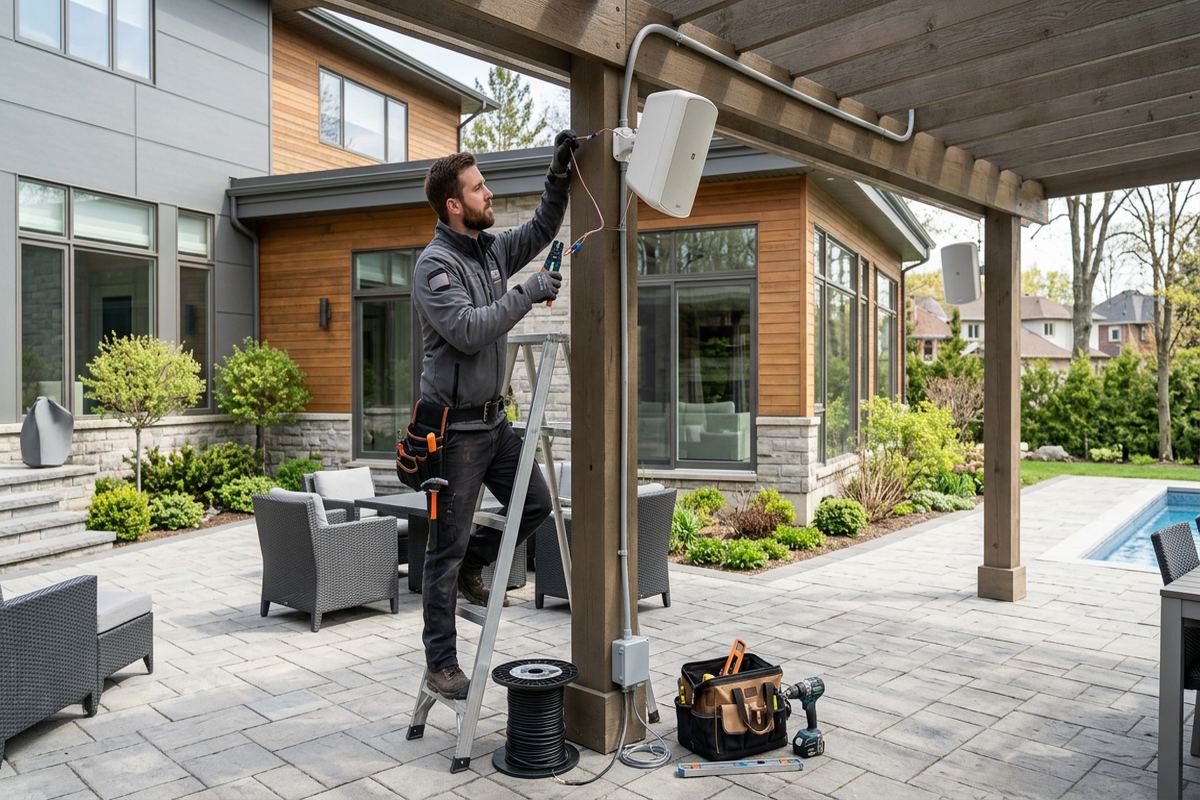
UnifiedLink installs outdoor speaker systems for Burlington homes and businesses. We plan speaker placement, cable routes, amplification and controls around the property, intended listening areas and surrounding neighbours. Each installation includes weather-conscious mounting, labelled cabling, on-site configuration and a practical handover using the customer’s own system credentials.
Outdoor Speaker Installation for Burlington Properties
Outdoor audio works properly when speaker coverage, mounting height and volume are planned together. In Burlington, lakefront homes, mid-century bungalows and small commercial plazas account for much of this work, yet each requires a different approach. A lakefront yard may need focused coverage that competes with wind without projecting sound toward neighbours. A bungalow often benefits from compact speakers mounted below the soffit. Commercial patios and storefront areas may require several lower-volume speakers rather than a small number of loud units. We assess these conditions before recommending equipment or preparing pricing.
A site assessment identifies where people will listen, where speakers can be securely attached and how cable can reach each location. We review exterior walls, soffits, decks, fences, landscaping, electrical service locations and existing audio equipment. The plan also considers nearby bedrooms, property lines and areas where sound should remain limited. For Burlington properties near Lake Ontario, exposed elevations may face additional wind, moisture and seasonal temperature changes. Speaker direction and mounting hardware are selected around those conditions rather than simply using the most convenient wall position.
The finished scope is provided in writing and covers equipment, cable routes, device placement, exclusions, equipment ownership and warranty. This avoids uncertainty about whether amplifiers, streaming devices, brackets or network components are included. It also establishes how controls will work and which areas can operate independently. UnifiedLink remains the accountable contractor for the low-voltage audio work, including mounting, cable installation, termination, configuration and handover. If another trade must provide power, repair finishes or modify a structure, that dependency is identified before installation begins.
- Patios, decks, pools and landscaped listening zones
- Weather-resistant speakers and compatible mounting hardware
- Separate audio zones where the system supports them
- Written equipment, placement and cable-route scope
- Residential and small commercial installations
Planning Speaker Coverage Across Burlington Yards
Good outdoor coverage comes from distributing sound near the listening area instead of turning up one speaker from a distant wall. On a Roseland patio, that might mean a pair of directional speakers under the eaves. A larger Aldershot property may use several landscape speakers aimed inward from planting beds. Smaller Alton Village yards can require tighter placement because neighbouring homes are close. We plan the number, direction and height of speakers so conversation and music remain clear at practical levels without sending unnecessary sound across fences or toward adjacent windows.
Listening zones should reflect how the property is actually used. A dining area, pool deck, covered porch and rear lawn do not necessarily need identical volume or simultaneous operation. Depending on the amplifier and controls, zones can be grouped or adjusted separately. We also consider whether the homeowner wants television audio outdoors, music streaming, a simple wall control or app-based operation. Those choices affect wiring, equipment location and network requirements. They should be decided before cable is installed, particularly where finished basements, paved patios or completed landscaping restrict later access.
Speaker specifications alone do not predict results. Wall reflections, open yards, dense landscaping, traffic noise and overhead structures change how outdoor audio is heard. During planning, we look for mounting positions that produce even coverage while keeping equipment serviceable. Speakers should not be hidden where foliage will block them or placed directly beside seating where one channel becomes dominant. Burlington installations also need sensible seasonal access, since brackets and connections may need inspection after winter. The objective is consistent, controlled sound rather than maximum output from every device.
- Coverage planned around occupied areas
- Speaker direction kept inside property boundaries
- Independent zones considered before cabling
- Controls matched to everyday use
- Serviceable placement for seasonal inspection
Weather-Ready Mounting in Burlington
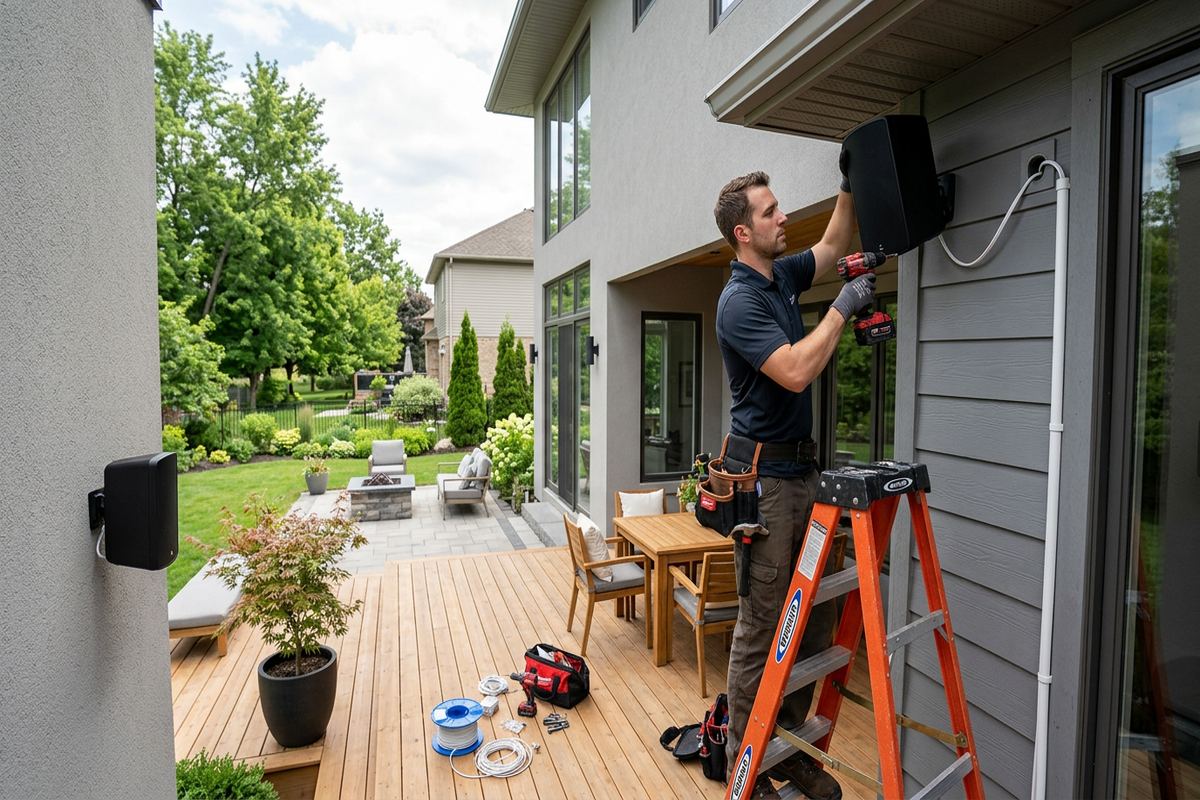
Burlington winters expose outdoor equipment to snow, ice, wind-driven moisture and repeated freeze-thaw cycles. A speaker labelled for outdoor use still depends on correct orientation, suitable hardware and a sealed cable entry. We avoid mounting methods that create open penetrations or allow water to follow cable into a wall. Drip loops, exterior-rated fasteners and appropriate sealants are used where conditions require them. Connections are positioned to reduce direct exposure, and brackets are tightened without preventing intended adjustment. The mounting surface must also support the speaker through seasonal movement and wind loading.
Masonry and frame construction require different attachment methods. Brick veneer should not be treated like solid concrete, and anchors must suit the substrate rather than the visible finish alone. On frame homes, the preferred position may align with structural backing behind siding or soffit material. Mid-century bungalows can have renovated exteriors, enclosed soffits or additions that complicate cable access. Before drilling, we consider the wall assembly, likely cavities and interior finishes. Any uncertain structural condition is discussed, and work outside the low-voltage scope is identified rather than concealed behind a bracket.
Lakefront exposure can accelerate deterioration when hardware and connections remain wet or receive direct spray. Properties elsewhere in Burlington may have sheltered yards, but snow accumulation and spring runoff still matter. Landscape speakers should sit above locations where water pools, irrigation strikes directly or snow clearing may damage them. Surface-mounted cable must be rated and protected for its location; indoor wire is not substituted outdoors. Where practical, cable transitions are kept inside weather-protected spaces. Careful sealing protects both the audio system and the building envelope around every exterior penetration.
- Exterior-rated speakers, cable and fasteners
- Sealed penetrations with managed drip loops
- Anchors selected for masonry or frame walls
- Mounting kept clear of drainage paths
- Connections sheltered from direct moisture
Burlington, Ontario
Outdoor speaker installation in Burlington, scoped in writing first
Book a site assessment and get equipment, routes, exclusions, and warranty on paper before anything is installed.
Cabling and Equipment Locations
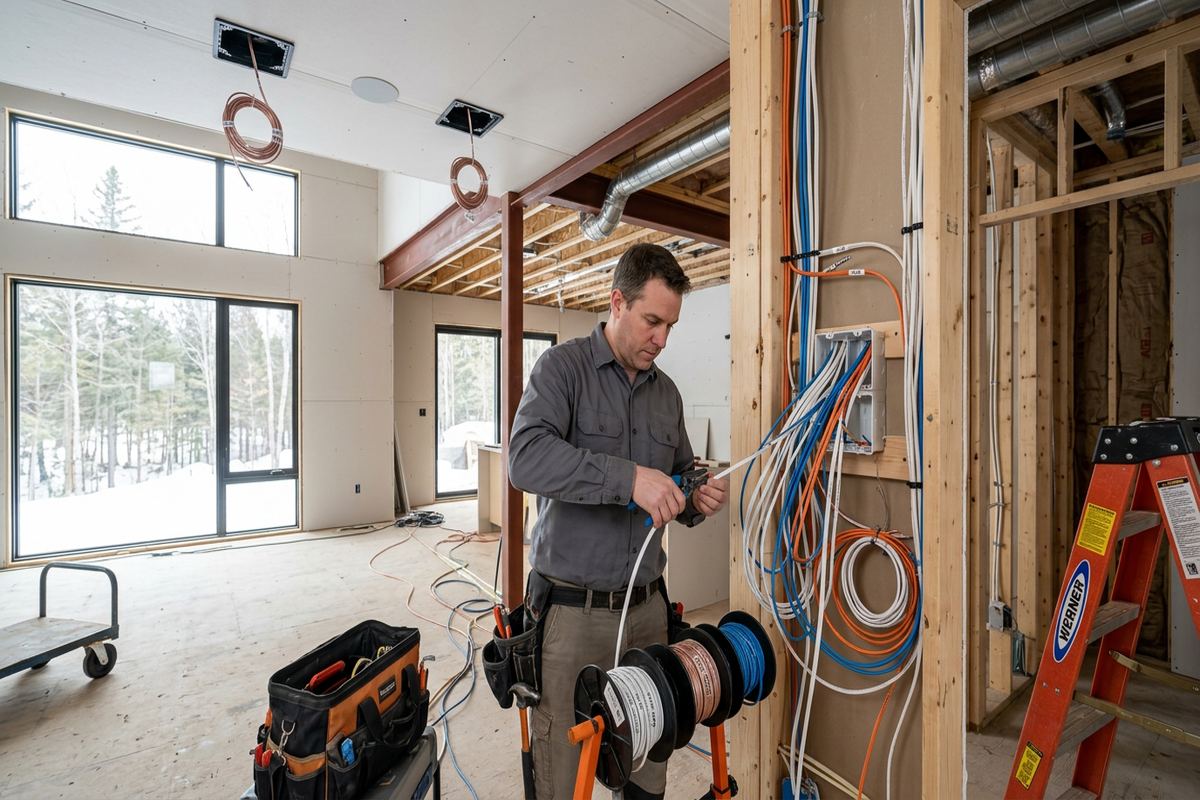
Cable routing often determines whether an outdoor speaker project remains tidy and serviceable. We look for paths through unfinished basements, utility rooms, garages, accessible ceilings and existing low-voltage routes before proposing visible exterior runs. Continuous labelled cable runs are installed between the equipment and speaker locations, reducing unnecessary joints that can corrode or complicate troubleshooting. Where cable must appear outside, its path is planned along suitable architectural lines and protected as required. The written scope records intended routes, while acknowledging concealed obstructions that cannot be confirmed before access begins.
Amplifiers and source equipment need ventilation, power, network access and enough room for future service. A closed cabinet beside a furnace or an unconditioned, damp corner is rarely suitable without further review. In Millcroft and Orchard homes, existing media cabinets may be reusable if they have adequate space and airflow. Older Burlington bungalows may have audio equipment spread across additions or finished recreation rooms, requiring a more deliberate central location. We confirm who will provide any necessary electrical receptacle and whether existing network coverage can reliably support the selected streaming or control platform.
Speaker impedance, amplifier capacity and cable distance must be considered as one system. A basic two-speaker patio differs from a multi-zone installation covering a yard, pool and covered seating area. Commercial distributed-audio designs may use different wiring methods from residential stereo systems. Equipment is selected and configured for the planned speaker load rather than expanded informally during installation. Labels at terminations identify destinations, and accessible connections are dressed for inspection. At handover, the customer receives an as-built record showing installed devices, cable destinations and relevant equipment locations for later maintenance.
- Continuous cable runs without hidden splices
- Labels at amplifier and speaker destinations
- Routes through accessible interior spaces where practical
- Ventilated, serviceable amplifier locations
- As-built record supplied at handover
Outdoor Audio Controls and Configuration in Burlington
Control choices range from a straightforward volume control to multi-zone streaming managed through an app. The right option depends on who uses the space, whether different sources are needed and how much reliance on phones or cloud services is acceptable. We explain which functions come from the amplifier, streaming service, network or third-party automation platform. This distinction matters when accounts change or a service is updated. Burlington homeowners and businesses receive configuration on site, with the system connected using their own credentials rather than an installer-controlled account that creates future access problems.
Network performance can affect an outdoor system even when the speakers themselves are wired. Streaming amplifiers, wireless controllers and mobile apps need dependable Wi-Fi or Ethernet near the equipment and in the control area. We test practical operation from the patio or commercial seating area rather than assuming indoor coverage extends outdoors. If coverage is weak, the scope can address a suitable access point or wired connection through UnifiedLink’s related low-voltage services. Audio installation and network work remain clearly separated in the scope so the customer understands what is required for reliable control.
On-site configuration includes confirming zones, channel assignments, source selection and safe operating behaviour supported by the chosen equipment. We listen from key seating positions and adjust available level, balance or equalization controls without promising acoustic perfection in an open environment. The handover demonstrates normal startup, source changes, volume adjustment and shutdown. Owners are shown which settings should remain unchanged and how to reconnect after replacing a phone or router. Documentation records the installed arrangement, while account passwords stay with the customer and are not included in the as-built record.
- Customer-owned app and streaming credentials
- Zone names configured for clear operation
- Wi-Fi checked from outdoor control areas
- Basic listening adjustments completed on site
- Operating steps reviewed during handover
Burlington Homes, Condos and Rental Properties
Ownership and approval requirements should be resolved before exterior work starts. A detached homeowner can usually authorize work on the building, subject to any applicable restrictions, but condominiums may classify balconies, exterior walls and soffits as common elements. Tenants generally need written landlord approval before cables or brackets are installed. In Downtown Burlington condo properties, even a compact balcony speaker proposal may require property-management review. UnifiedLink can describe the proposed device locations and cable approach, but the customer remains responsible for obtaining building, condominium or landlord permission before the scheduled installation.
Noise considerations are part of placement, especially in compact yards, townhome developments and shared commercial settings. Outdoor speakers do not eliminate the owner’s responsibility to use reasonable levels or follow applicable property rules and municipal requirements. We can aim speakers toward the intended listening area and specify more distributed coverage, but no installation can prevent all sound from travelling outdoors. In Tyandaga or Alton Village, differences in grade, fencing and nearby upper-storey windows can affect spill. These conditions are reviewed during assessment so placement supports controlled everyday use.
Renovations create useful opportunities to install cable before walls and ceilings close. If a Burlington bungalow is receiving new soffits, a basement ceiling or a rear addition, coordinating the low-voltage route early can reduce visible cable and avoid reopening finishes. Conversely, occupied finished homes may require surface routes, selective access or an alternate equipment location. We do not assume concealed spaces are clear simply because drawings suggest a path. The scope states expected access and exclusions, including patching or painting when those tasks are not part of the audio installation.
- Condo approval confirmed before exterior drilling
- Landlord authorization required for rental properties
- Neighbouring windows considered during placement
- Pre-wire coordination during renovations
- Finish repairs identified as inclusions or exclusions
Commercial Outdoor Speakers in Burlington
Small commercial plazas, street-facing businesses and light industrial units need audio planned around operating areas rather than residential assumptions. A Burlington café patio may need several evenly spaced speakers at restrained levels, while a service counter near an open bay could need focused speech or background music. Equipment location, staff controls and shutdown procedures should be simple enough for daily use. We also review whether the system is intended only for music or must interface with another system, since life-safety paging and fire-alarm functions require separate design considerations and cannot be casually combined.
Commercial cable routes may cross suspended ceilings, back rooms, masonry demising walls or exterior canopies. Access rules, landlord requirements and working-hour restrictions should be known before the scope is finalized. In a plaza, exterior finishes and shared structural elements may require landlord approval even when the tenant owns the audio equipment. Industrial units can offer accessible roof structure but may also contain noisy machinery, tall storage or vehicle traffic. Speaker mounting must avoid vulnerable positions and remain reachable for maintenance without interfering with normal operations.
Music licensing, content rights and acceptable operating levels are the business owner’s responsibility. UnifiedLink’s role is to install and configure the specified low-voltage audio system, not to authorize public playback or determine regulatory compliance for a particular program. The written scope clarifies equipment ownership, especially when a landlord, tenant or franchise supplies part of the system. At handover, designated staff receive operating instructions and customer-controlled credentials. An as-built record helps future managers or contractors identify zones, cable destinations and equipment without tracing the entire installation again.
- Patio and storefront coverage planning
- Staff-friendly source and volume controls
- Routes coordinated with plaza access requirements
- Equipment ownership documented in writing
- Industrial mounting kept clear of operations
Assessment, Installation and Handover in Burlington
Every project begins with enough information to understand the property, intended coverage and existing equipment. Photos and preliminary details can help, but pricing follows a site assessment because mounting surfaces, cable access and listening conditions affect the scope. Assessment timing depends on the service and travel distance. Requests sent during business hours are answered the same day, while after-hours requests are answered the next business day. For Burlington sites, we also ask about renovation schedules, approvals, landscaping plans and any supplied equipment that must be tested for compatibility before installation.
Once the scope is accepted and scheduling is arranged, installation follows the documented device locations and cable routes. Changes caused by concealed obstructions, unsuitable supplied equipment or revised customer requirements are discussed before the affected work proceeds. Speakers are mounted, cables terminated and labelled, and equipment configured on site. We check that each planned channel or zone operates and that controls respond as intended. Work areas are left orderly, and any outstanding dependency involving electrical, carpentry, network service or another trade is recorded for the owner or site contact.
Handover closes the gap between a working installation and a system the customer can operate. We review controls, normal volume management, source selection and basic restart steps. The customer keeps ownership of personal accounts and credentials, and the written record documents installed equipment and cable destinations without exposing passwords. Warranty information and exclusions are supplied according to the agreed scope. With one accountable contractor for the low-voltage portion, Burlington property owners have a clear contact for questions about the installed speakers, cabling, amplifier configuration and documented system layout.
- Site assessment completed before pricing
- Written scope issued before installation
- Changes discussed before affected work proceeds
- Customer credentials used during setup
- Warranty details and as-built record provided
Burlington neighbourhoods we cover
- Downtown Burlington
- Aldershot
- Alton Village
- Millcroft
- Roseland
- Tyandaga
- Orchard
Outdoor speaker installation in Burlington — common questions
Can outdoor speakers stay installed through a Burlington winter?
Yes, when the speakers are rated for exterior use and installed with suitable brackets, fasteners, cable and sealed penetrations. Burlington’s freeze-thaw cycles, snow and moisture still make placement important. Connections should be sheltered where practical, and speakers should not sit in drainage or snow-clearing paths. Seasonal visual inspection is sensible, particularly after severe weather or exterior building work.
Will the sound bother my neighbours?
Outdoor sound will travel, but careful placement can reduce unnecessary spill. For Burlington yards with close property lines, we often use more speakers at lower levels and aim them toward patios or seating areas. Fences, grade changes and nearby upper windows also affect results. The property owner remains responsible for reasonable operation and compliance with applicable municipal, condominium, landlord or property rules.
Can you connect outdoor speakers to my existing receiver?
Possibly. We need to confirm the receiver’s supported speaker load, available zones, power, condition and control features. Cable distance and the number of proposed speakers also matter. During the Burlington site assessment, we review the existing equipment and identify compatible options. Supplied or existing components are documented in the scope, along with any limitations, exclusions or replacement requirements discovered before installation.
Do I need condo or landlord approval?
Usually, approval should be confirmed whenever speakers, brackets or cables will attach to an exterior wall, balcony, soffit or other area you do not exclusively own. Burlington condominium corporations may classify these surfaces as common elements, and tenants generally need written landlord permission. UnifiedLink can describe the proposed placement and cable route, but the customer must obtain the necessary authorization before installation is scheduled.
Can the patio and pool have separate volume controls?
Yes, if the amplifier, wiring and control platform are designed for separate zones. We determine this before installing cable because each zone may require dedicated amplifier channels or a particular distributed-audio arrangement. For larger Burlington yards, separate control can keep sound focused where people are gathered. The written scope identifies zone names, equipment and expected control methods before the work proceeds.
How is pricing prepared for a Burlington installation?
Pricing is prepared after a site assessment. Outdoor speaker work depends on mounting surfaces, cable access, speaker quantity, amplifier requirements, network conditions and the intended listening zones. The written scope covers equipment, cable routes, device placement, exclusions, equipment ownership and warranty. Assessment timing depends on the service and travel distance; requests received during business hours are answered the same day, and after-hours requests the next business day.
Coverage in Burlington is confirmed against the address before we quote. See everything we install in Burlington or the province-wide outdoor speaker installation page.