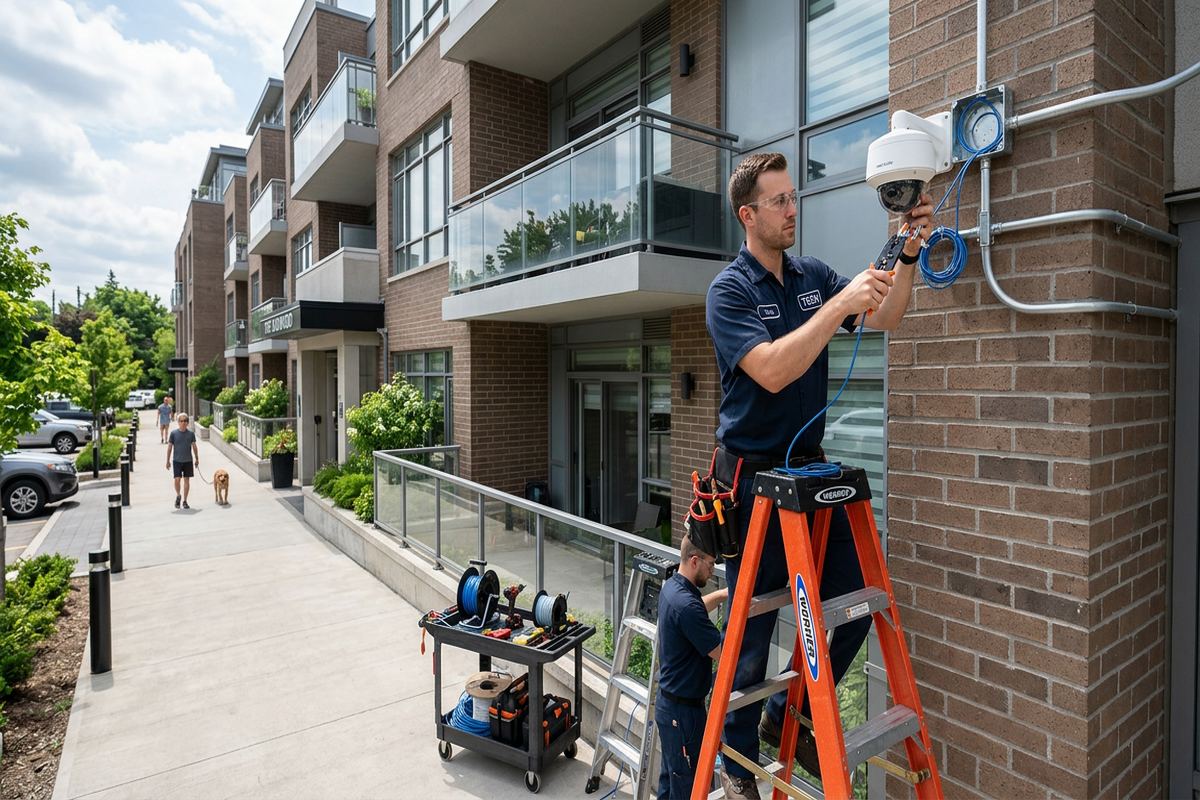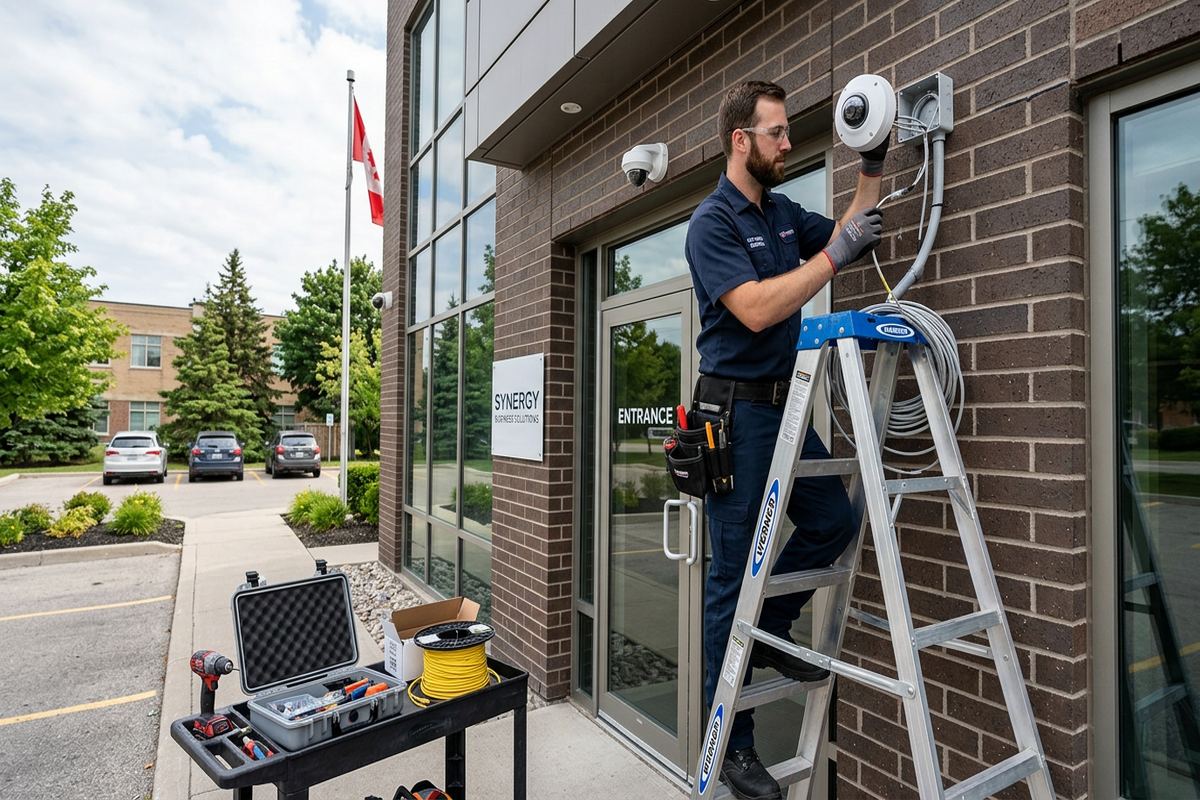
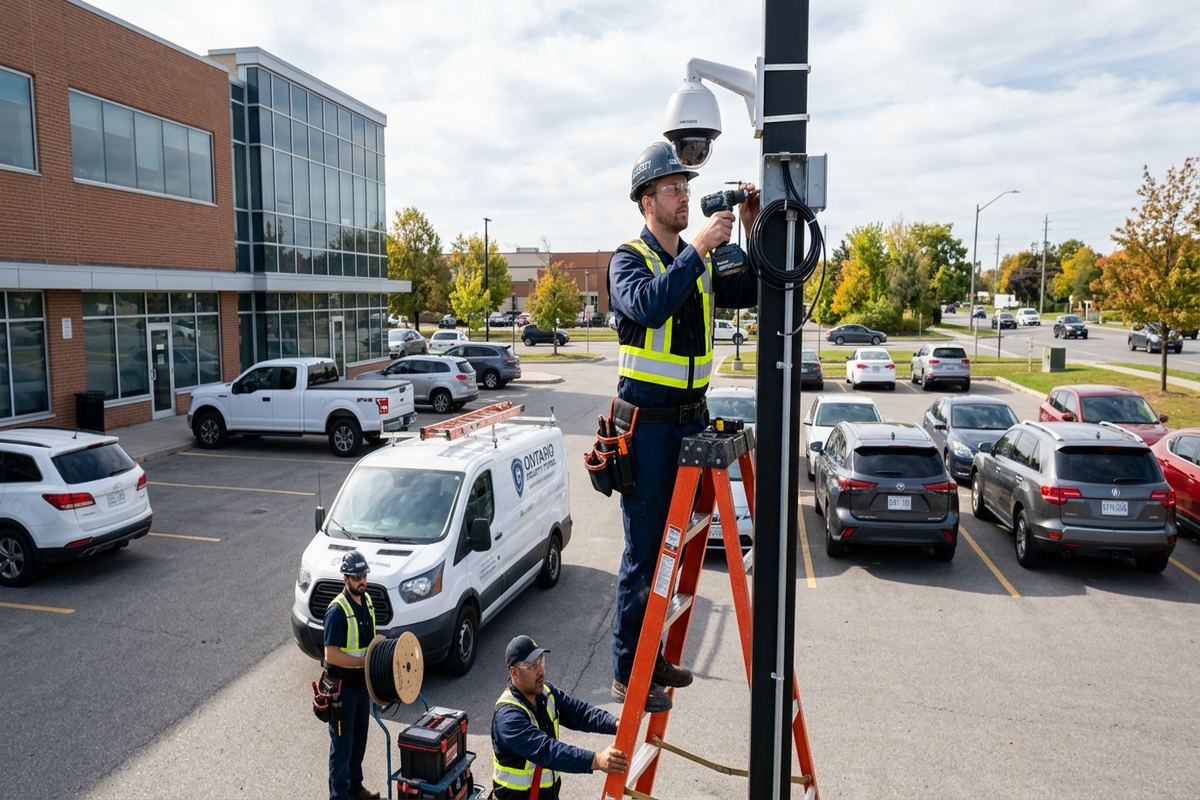
UnifiedLink installs outdoor security cameras for Burlington homes, commercial plazas and industrial units. Each project starts with a site assessment to plan useful views, cable routes, mounting points and recording needs. We install continuous labelled cable runs, configure the system on site and provide a clear handover using credentials owned by the customer.
Outdoor Camera Planning for Burlington Properties
Useful outdoor video starts with a site assessment rather than a camera count. In Burlington, lakefront homes, mid-century bungalows and small commercial plazas present different sightlines, construction methods and exposure conditions. We review entrances, driveways, side passages, yards, loading areas and parking spaces to identify where recorded detail is actually needed. The assessment also considers mounting height, available light, vegetation, neighbouring properties and likely cable routes. This produces a practical design based on the property instead of placing cameras wherever installation happens to be easiest.
Camera selection follows the viewing objective for each location. A wide overview may help show activity across a yard or parking area, while a narrower view can provide more useful detail at a gate, doorway or vehicle entrance. We account for backlighting, reflected infrared light, soffits, rooflines and seasonal obstructions before confirming placement. In Downtown Burlington or Roseland, nearby homes and public sidewalks may require particularly careful framing. The goal is consistent coverage of relevant areas without relying on extreme digital zoom or unnecessarily recording adjacent private spaces.
Before pricing, UnifiedLink provides a written scope that identifies equipment, proposed device positions, cable routes, exclusions, equipment ownership and warranty terms. This lets Burlington property owners review what will be installed and raise concerns before exterior drilling begins. The scope can also distinguish immediate requirements from optional future coverage. Where another trade, landlord, condominium corporation or property manager must approve part of the work, those dependencies are identified. Clear documentation reduces uncertainty about recording equipment, network connections, power requirements and who remains responsible for each part of the completed system.
- Entrance, driveway and perimeter coverage review
- Camera views matched to identification needs
- Lighting and seasonal obstruction assessment
- Written scope before installation begins
Mounting Cameras on Burlington Building Types
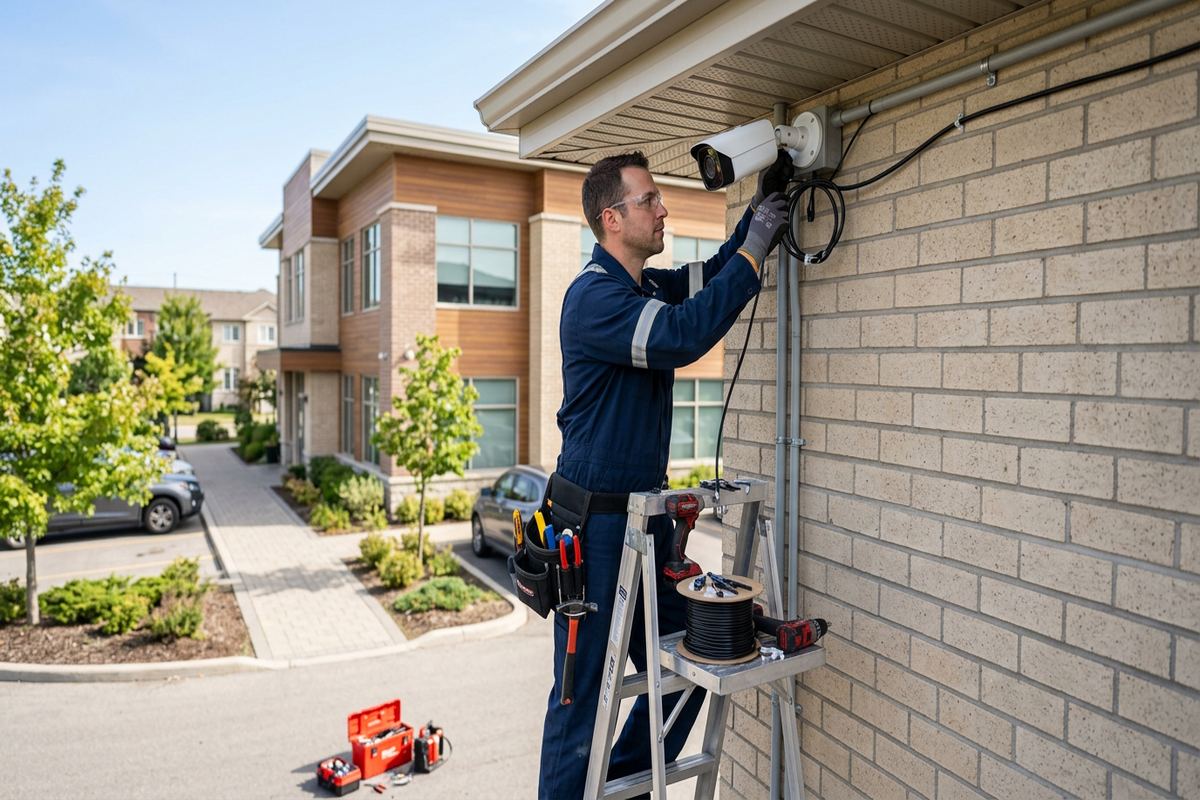
Exterior mounting methods should suit both the surface and the structure behind it. Burlington’s mid-century bungalows often combine brick walls, wood framing, accessible basements and later additions, each of which changes the cable path. Lakefront homes may have finished interiors, complex rooflines or limited access above soffits. We inspect proposed mounting points before choosing anchors, junction boxes or penetrations. A secure installation avoids fastening only to thin cladding, unsupported soffit material or deteriorated mortar, and it keeps connectors protected rather than leaving cable joints exposed to weather.
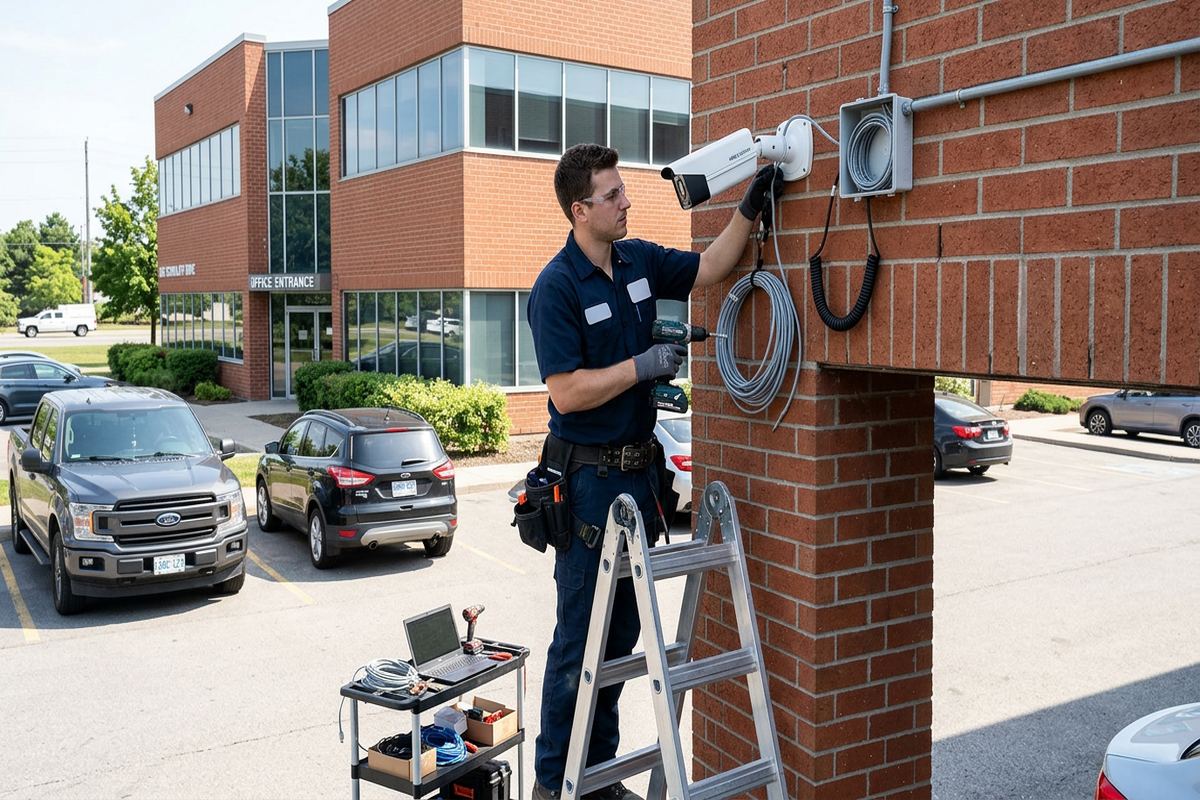
Masonry and frame construction require different drilling and sealing decisions. On brick, the mounting location must allow stable anchoring while avoiding unnecessary damage to the face, mortar and concealed services. On siding or other framed walls, the camera and box need suitable backing, with the penetration positioned so water cannot track behind the exterior finish. We route cable with controlled bends and mechanical protection where exposure is unavoidable. Visible exterior cable is minimized when practical, but the proposed route remains part of the written scope so appearance and access can be reviewed in advance.
Commercial plazas and mixed-use properties add coordination issues beyond the camera itself. A Burlington storefront may have masonry walls, steel deck, suspended ceilings, shared utility spaces or a landlord-controlled roof. Installation may require approval for penetrations, lift access, work near customer areas or cable routes through common space. We confirm those conditions during planning rather than assuming access will be available. For tenant projects, the scope can clearly state which equipment belongs to the tenant, which infrastructure remains with the premises and what restoration or approval obligations apply when the lease ends.
- Anchoring selected for masonry or framing
- Protected exterior junction points
- Cable routes reviewed for appearance
- Landlord and property approvals identified
Weatherproof Exterior Mounting and Sealing
Burlington winters expose camera mounts and cable entries to snow, wind, moisture and repeated freeze-thaw cycles. Weather resistance depends on the entire installation, not only the rating printed on a camera. Water can enter around fasteners, poorly placed wall penetrations or open cable glands, then expand during freezing and loosen materials over time. We position entries to reduce direct exposure, seal penetrations with compatible materials and use exterior-rated boxes or fittings where required. Drip paths and connector orientation are considered so runoff is directed away from vulnerable connection points.
Lakefront exposure can make wind-driven precipitation and changing light more significant for some Burlington properties. A camera under a shallow eave may still receive rain or blowing snow, while one facing the lake or an open yard may experience glare and rapid scene changes. We evaluate shelter, orientation and mounting rigidity before installation. The selected position must provide the intended view without placing the device where routine icicle formation, roof drainage or snow accumulation creates avoidable problems. Where practical, connectors remain inside the building or within an appropriate protected enclosure.
Sealing must also respect the existing exterior assembly. Applying a generic sealant around every edge can trap moisture or interfere with drainage behind siding and masonry systems. We assess the wall finish, penetration direction and mounting hardware, then use a method suited to that location. Cable loops are controlled so they do not collect water, pull on connectors or move excessively in wind. After mounting, views and connections are checked on site. The customer also receives an as-built record showing device locations and relevant cable information for future maintenance or exterior renovations.
- Freeze-thaw exposure considered at penetrations
- Exterior-rated boxes and fittings where required
- Connectors sheltered from direct weather
- As-built record for future work
Burlington, Ontario
Outdoor camera installation in Burlington, scoped in writing first
Book a site assessment and get equipment, routes, exclusions, and warranty on paper before anything is installed.
Outdoor Camera Coverage Across Burlington
Property layout influences coverage more than neighbourhood name, but Burlington’s communities contain recurring patterns. Aldershot and Roseland include homes with mature landscaping, varied setbacks and side approaches that can interrupt a single wide view. Alton Village and Orchard often present attached garages, close side yards and prominent front elevations where discreet placement matters. During the assessment, we walk the likely approach routes and inspect the image from proposed heights. This helps identify blind spots caused by columns, fences, parked vehicles, shrubs or seasonal foliage before final mounting positions are approved.
At Millcroft or Tyandaga properties, larger corner lots and curved driveways may need several purposeful views rather than one camera aimed across the entire frontage. A broad image can show movement yet provide limited detail where people or vehicles are far from the lens. We separate overview requirements from closer identification points and consider how nighttime lighting changes the scene. Cameras are aimed to limit glare from wall fixtures, vehicle headlights and reflective surfaces. The design also leaves practical access for future cleaning or adjustment without making devices easy to reach from ground level.
Downtown Burlington projects can involve tighter lots, rear lanes, shared access and greater pedestrian activity. Camera framing should focus on the customer’s entrances and property while avoiding unnecessary views into neighbouring windows, balconies or private yards. For commercial locations, coverage may include storefront approaches, service doors and customer parking without treating public-space recording as a substitute for property-focused design. We demonstrate the final views during handover and adjust privacy masking or motion areas where supported by the selected system. Customers remain responsible for using recordings in accordance with applicable obligations.
- Views checked from likely approach routes
- Blind spots reviewed before mounting
- Night lighting and headlight glare considered
- Privacy-focused framing and supported masking
Cabling, Power and Network Design
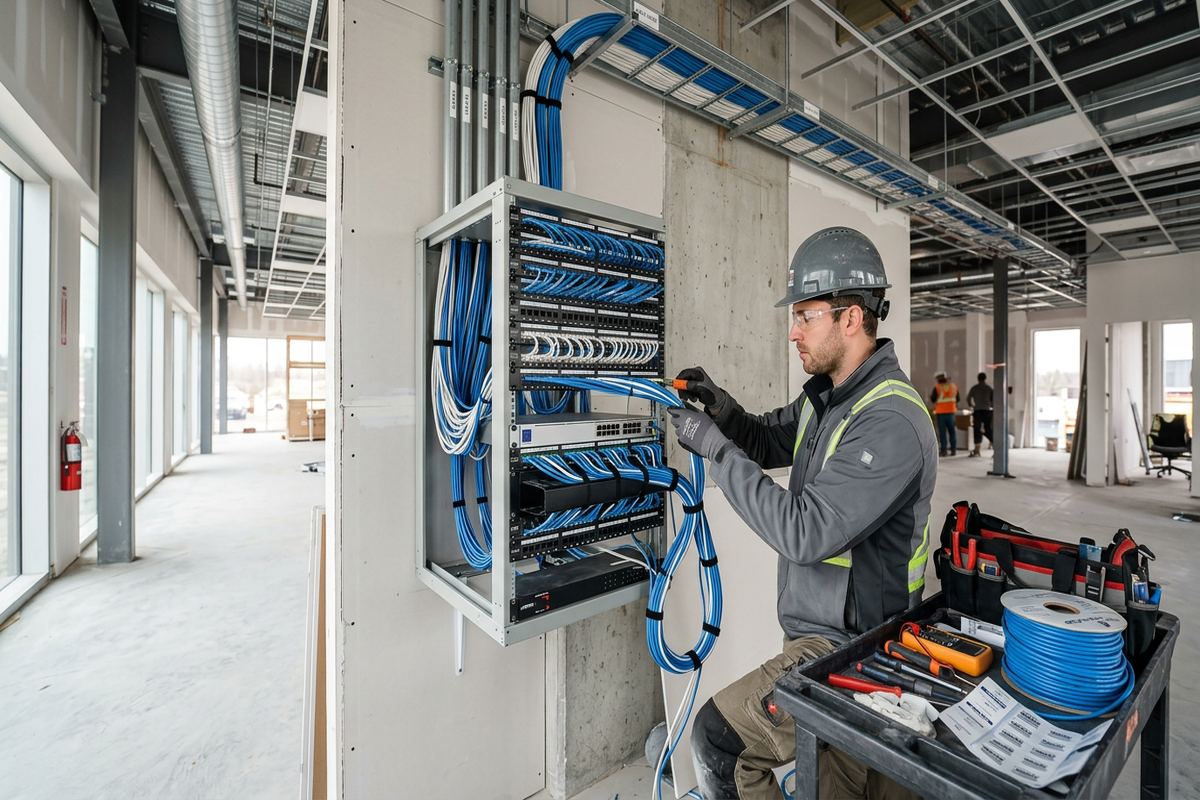
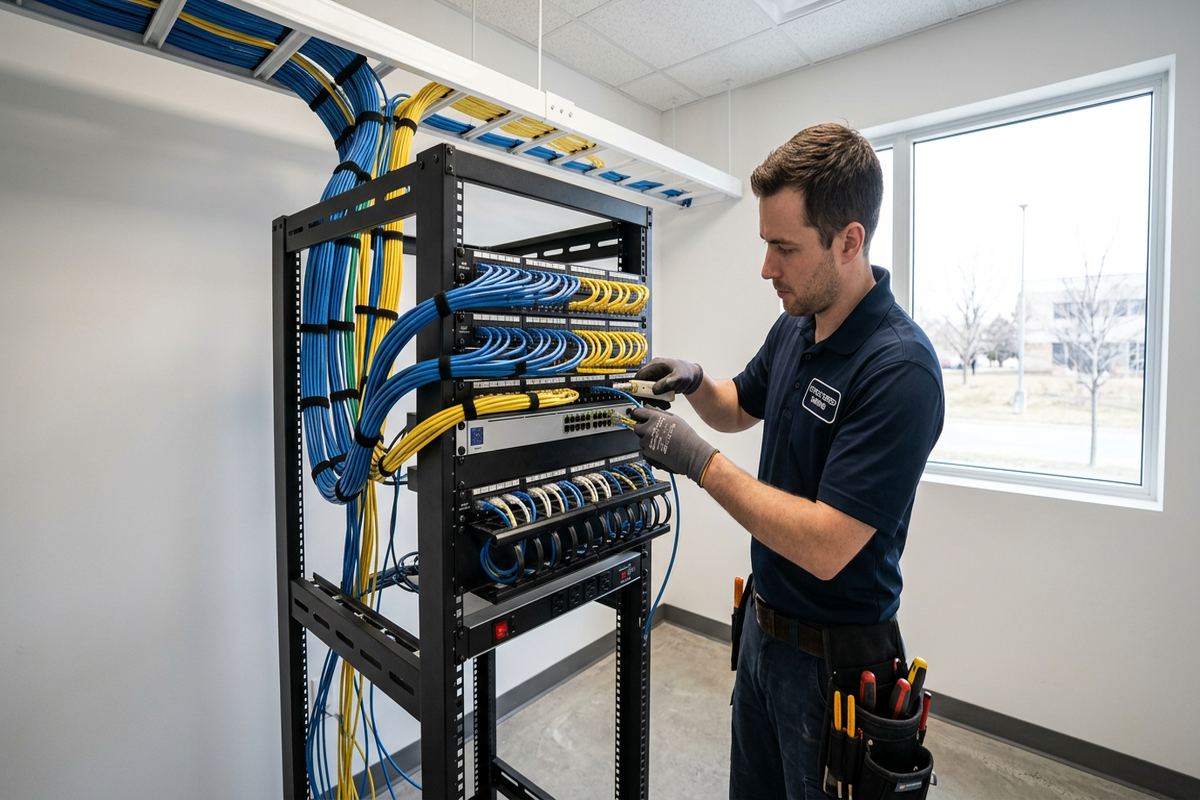
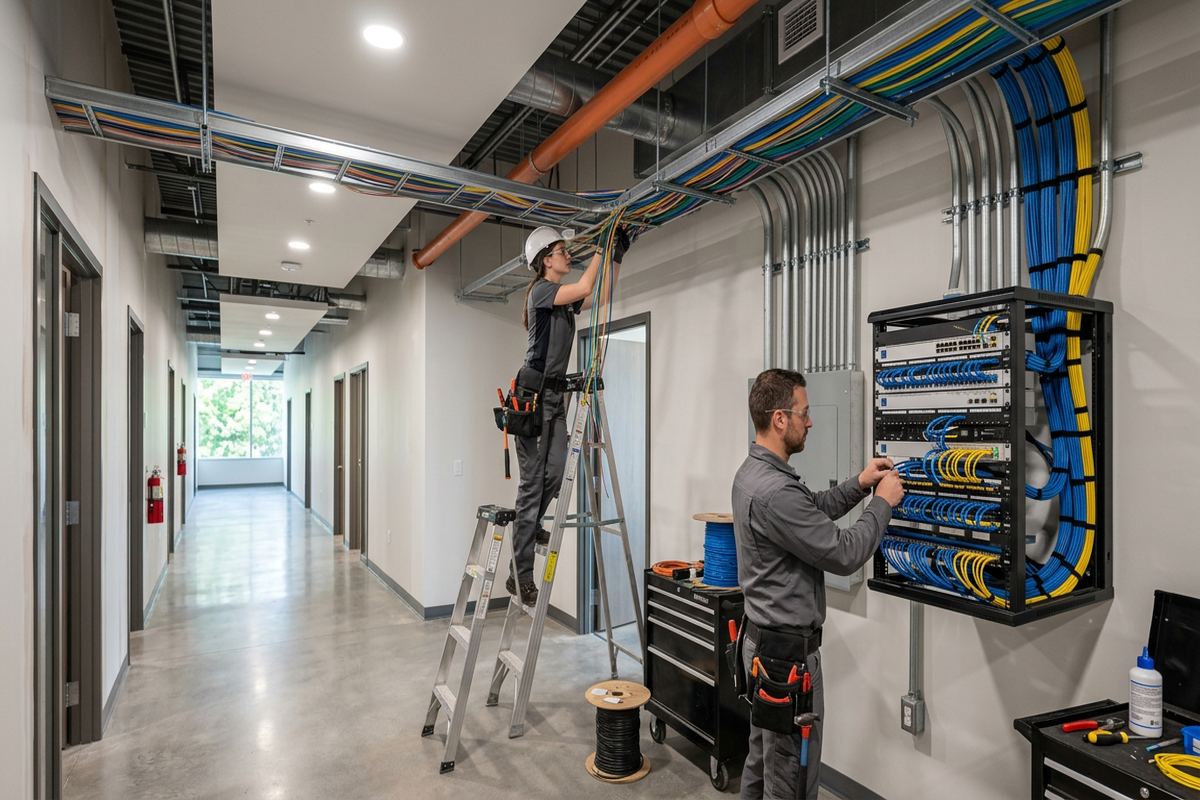
A stable camera system depends on its cabling and power path. We install continuous labelled cable runs rather than joining short sections in concealed spaces. For network cameras, each route is planned from the device to the appropriate switch, recorder or communications area, with attention to distance, pathway capacity and separation from electrical hazards. Exterior segments use suitable protection, and penetrations are sealed as part of the installation. Labels at endpoints make future testing and changes easier, particularly in Burlington homes where older wiring, renovations and multiple utility spaces can complicate cable identification.
Existing networks are reviewed before cameras are added. Recorder location, switch capacity, available ports, power delivery, internet access and remote-viewing requirements all affect the design. Cameras can generate continuous local traffic even when a customer is not watching remotely, so they should not simply be attached to whichever network device is closest. Where practical, we organize connections to support troubleshooting and controlled access. Any required network changes are included in the scope, rather than treated as an unmentioned assumption. The system is then configured on site using settings appropriate to the selected equipment.
Some properties cannot accept the most direct cable route because interiors are finished or access spaces are blocked. In those cases, we review alternatives such as an exterior pathway, a different recorder location or a route completed alongside planned renovation work. Wireless connectivity may be considered for suitable equipment, but it does not remove power, signal and reliability requirements. Burlington homeowners and businesses receive an explanation of the proposed route before work begins. If concealed conditions require a material change, the route and effect on the scope should be discussed rather than improvised without approval.
- Continuous labelled cable runs
- Network and power capacity reviewed
- Recorder location planned for service access
- Route changes discussed before proceeding
Recording, Alerts and Remote Viewing in Burlington
Recording settings should reflect what the customer needs to review and how the scene behaves. Continuous recording, event-based recording and schedules place different demands on storage and make footage retrieval feel different in practice. We configure supported options on site and explain how image quality, frame rate, camera count and retention settings interact. Because exact retention varies with activity and configuration, it should be estimated from the selected system rather than promised as a fixed duration. Burlington customers can then choose settings that balance useful evidence, available storage and the effort required to review events.
Motion alerts can be useful around a side door, driveway or closed business, but poorly defined detection areas may produce frequent notifications from trees, shadows, traffic or precipitation. We configure supported motion zones, schedules and sensitivity controls after cameras are aimed. The purpose is not to claim that every unwanted alert can be eliminated; outdoor scenes naturally change. Instead, settings are adjusted to focus on relevant movement and operating hours. Customers are shown where to modify those settings as landscaping, parking patterns or business schedules change through the year.
Remote viewing is set up with credentials belonging to the customer, not permanent installer-owned accounts. During handover, we help connect supported mobile or desktop applications, confirm live and recorded viewing, and explain basic export procedures. Account recovery information and multi-factor authentication should remain under the customer’s control when the platform supports them. If remote access depends on a manufacturer service or internet connection, that dependency is identified. Local recording and off-site viewing are also explained separately so a Burlington owner understands what happens if the property temporarily loses internet service.
- Recording modes configured on site
- Motion zones focused on relevant areas
- Customer-owned application credentials
- Live view and playback demonstrated
Camera Installation for Plazas and Industrial Units
Small commercial plazas make up a significant part of Burlington’s local property mix. These sites often need coordinated views of storefronts, rear service corridors, delivery areas and shared parking, but camera placement must account for signs, lighting, awnings and neighbouring tenants. We identify who controls each mounting surface and cable pathway before installation. A tenant’s interior communications room may not provide lawful or practical access to a shared exterior wall. Property-management approval, access arrangements and any restrictions are therefore treated as project conditions, not left until technicians arrive with equipment.
Industrial units introduce longer cable routes, high ceilings, overhead doors and active work areas. Camera positions may need to cover shipping activity or exterior yards while avoiding interference from door travel, stored material and moving equipment. We consider mounting access for installation and later service, including whether specialized access equipment must be arranged. Bright exterior openings can also affect indoor-facing cameras near loading doors, so exposure and field of view are checked at the intended position. Work sequencing is planned around operations where those requirements are known during the assessment.
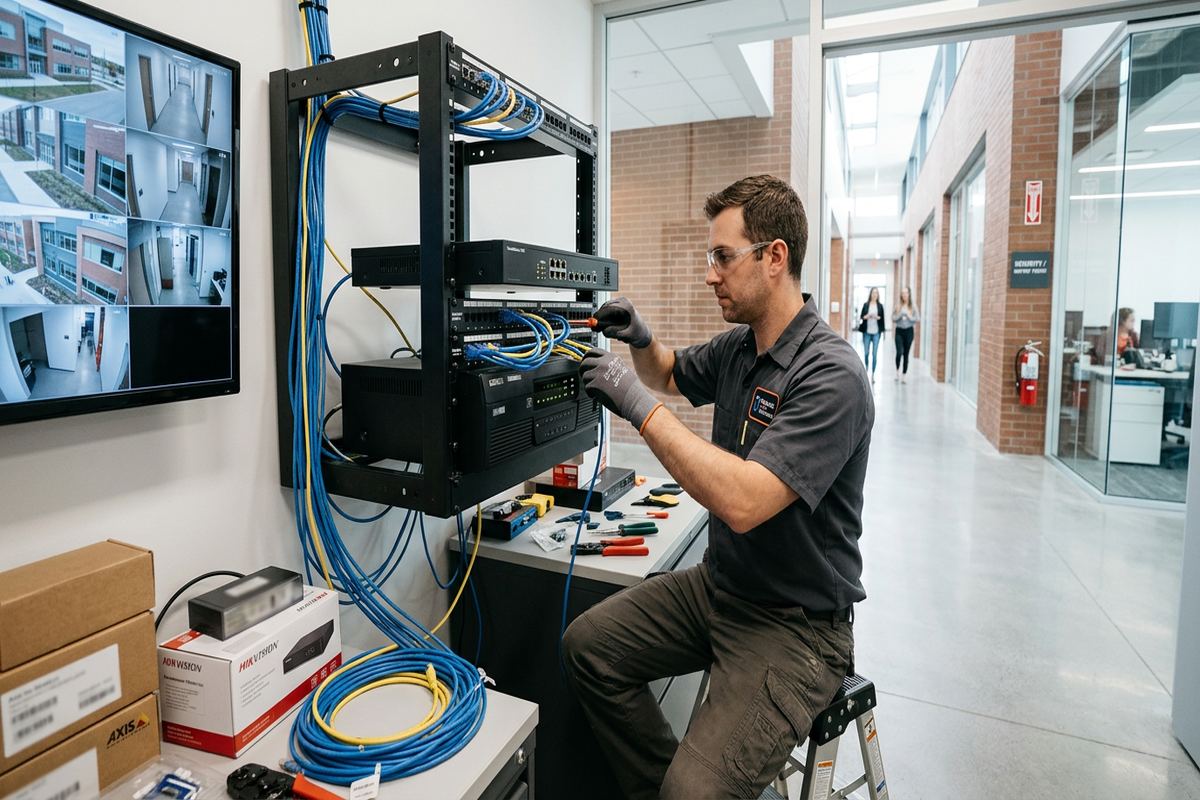
For multi-camera business systems, naming and documentation are essential. Devices are labelled according to meaningful locations, and recorder channels are organized so staff can locate footage without guessing which camera number covers a door or parking area. The written scope identifies included configuration, cable routes, equipment ownership and exclusions. At handover, authorized customer representatives receive their own credentials and an as-built record. UnifiedLink remains one accountable contractor for the installation scope, reducing the need to coordinate separate companies for camera mounting, low-voltage cabling and initial system configuration.
- Storefront and service-area views planned
- Shared pathways confirmed before cabling
- Operational access requirements identified
- Clear camera names and channel organization
Completing an Outdoor Camera Project in Burlington
Work begins after the assessment and written scope are accepted. Before drilling, we confirm the intended device positions and review any site changes that could affect access or coverage. Cameras are mounted, continuous cables are installed and labelled, and connections are terminated in the agreed equipment location. The system is then powered, tested and configured on site. For occupied Burlington homes or active businesses, work areas and access needs should be discussed in advance so residents, employees and customers understand where technicians will be working and which spaces must remain available.
Testing covers more than whether a camera displays an image. We verify each device name, live view, recording function and supported event settings, then inspect the scene from the customer’s viewing application. Daytime setup cannot perfectly predict every nighttime condition, so relevant infrared reflections, nearby lights and obvious glare sources are considered during placement and configuration. Recorder access and playback are demonstrated, and customer-owned credentials are confirmed. Where the selected system supports exporting, privacy zones or user permissions, the included setup is completed according to the agreed scope and explained during handover.
The completed handover includes an as-built record showing installed device locations and relevant cabling information. Customers also receive the information needed to manage their own accounts rather than depending on installer-controlled credentials. Requests sent during business hours are answered the same day, while after-hours requests are answered the next business day. Site assessment timing depends on the service and travel distance. For Burlington projects, the next step is a property review that defines the required views, mounting conditions, cable routes, approvals and recording expectations before pricing is prepared.
- Device positions reconfirmed before drilling
- Every camera tested and named
- Customer credentials confirmed at handover
- Installed locations documented as built
Burlington neighbourhoods we cover
- Downtown Burlington
- Aldershot
- Alton Village
- Millcroft
- Roseland
- Tyandaga
- Orchard
Outdoor camera installation in Burlington — common questions
Where should outdoor cameras be placed on my Burlington home?
Placement depends on the views you need, the property layout and available cable routes. Common locations include front entrances, driveways, side passages, rear doors and detached structures. On Burlington bungalows and lakefront homes, rooflines, masonry, mature landscaping and neighbouring properties can affect the best position. A site assessment confirms useful viewing angles before mounting or exterior drilling begins.
Can cameras be installed on brick or siding?
Yes, provided the mounting method suits the wall assembly and there is a stable fastening point. Brick, mortar, siding and framed walls require different anchors, boxes and sealing methods. Burlington’s freeze-thaw conditions also make penetration placement and moisture control important. We inspect the proposed surface, plan the cable entry and avoid relying on thin cladding or unsupported soffit material.
Do I need condo, landlord or property-manager approval?
Approval may be required if you rent, live in a condominium or occupy a commercial unit with shared exterior walls and pathways. Burlington landlords and property managers may control façade penetrations, roof access, common ceilings and parking-area coverage. Customers should obtain the necessary written permission before installation. We can document proposed mounting points and cable routes to support that approval process.
Will my outdoor cameras work during a Burlington winter?
Outdoor-rated equipment can operate in winter when it is selected and installed for the location, but the complete mounting method matters. Connections, cable entries, boxes and fasteners need protection from moisture, snow and freeze-thaw cycles. We assess direct exposure, roof runoff, wind-driven precipitation and possible ice accumulation. Equipment operating limits and any environmental dependencies are identified in the proposed scope.
How much recorded footage will the system keep?
Retention depends on camera count, resolution, frame rate, recording mode, activity levels and installed storage. It cannot be stated accurately without choosing equipment and settings. During planning, we discuss how Burlington homeowners or businesses expect to use footage, then size and configure the recorder accordingly. The handover explains how changing quality, schedules or motion recording may affect the amount of footage available.
Can I view the cameras from my phone?
Remote viewing is available when supported by the selected system and when the property has a suitable internet connection. We configure the application on site, test live and recorded access, and hand over the system using credentials owned by the Burlington customer. Any reliance on manufacturer cloud services is identified. We also explain how local recording may behave during a temporary internet outage.
Coverage in Burlington is confirmed against the address before we quote. See everything we install in Burlington or the province-wide outdoor camera installation page.