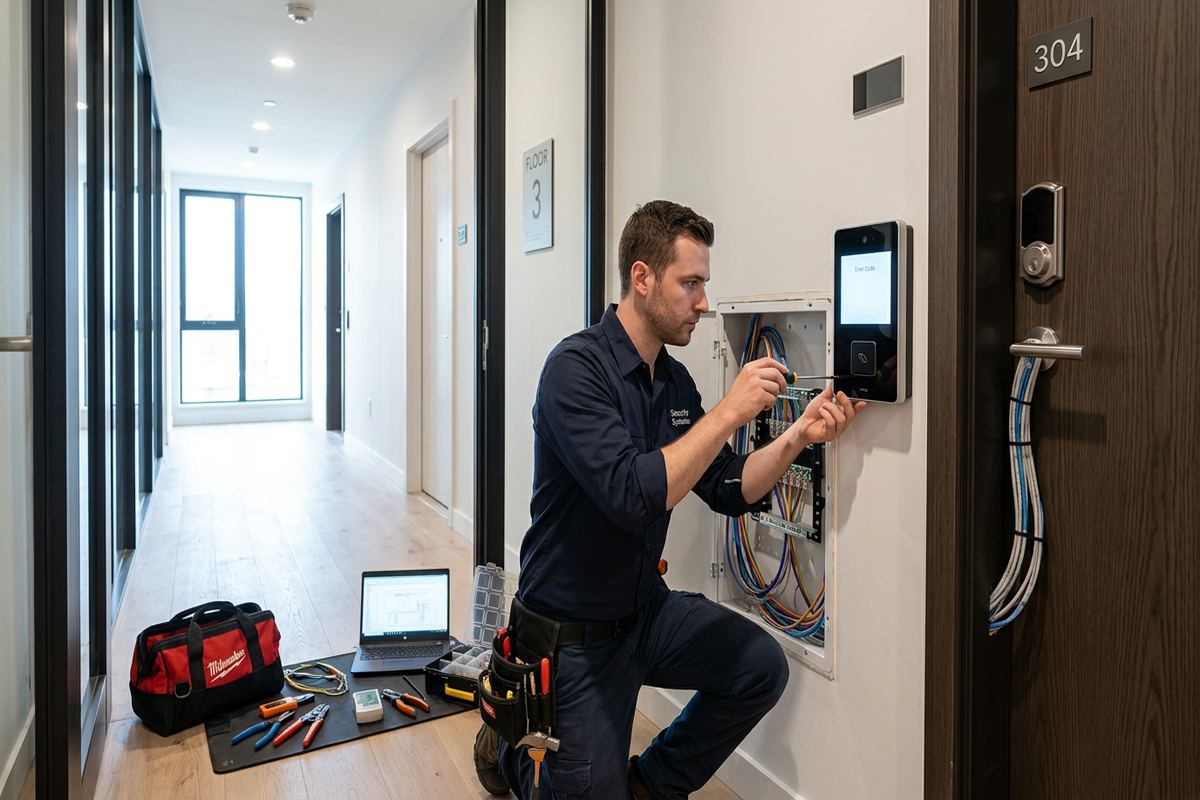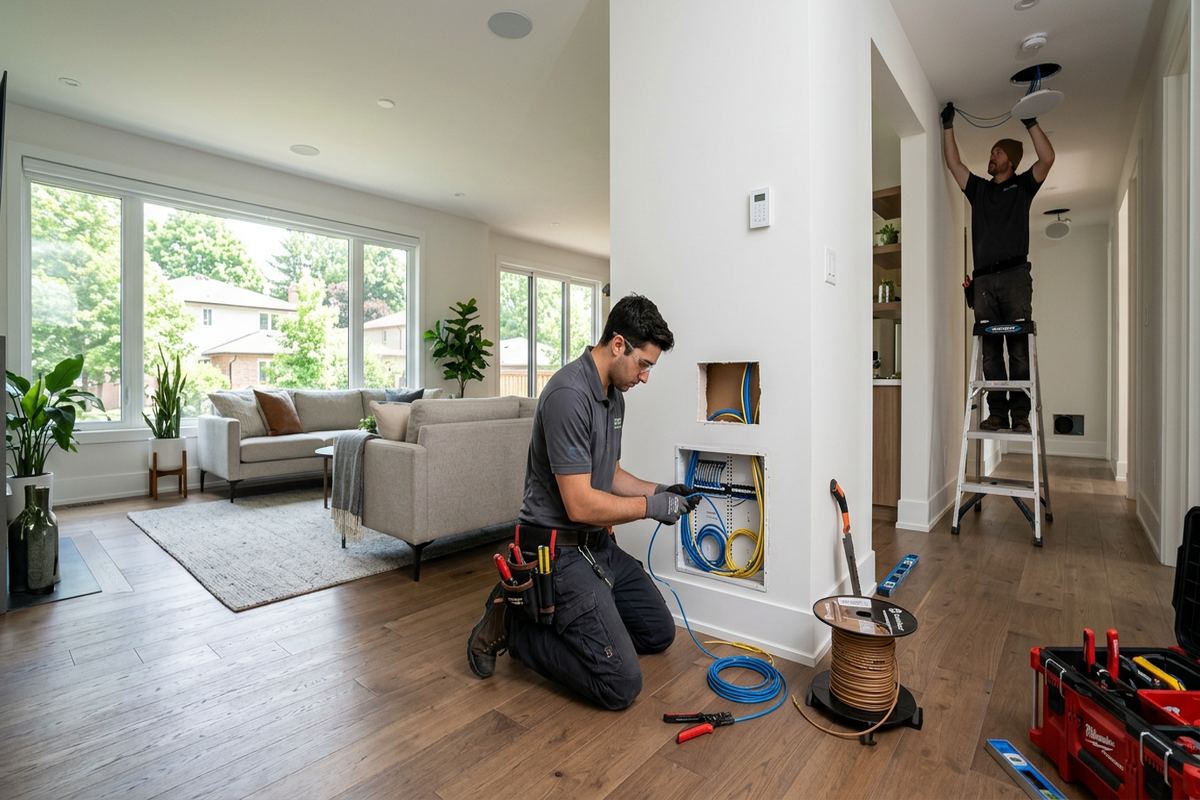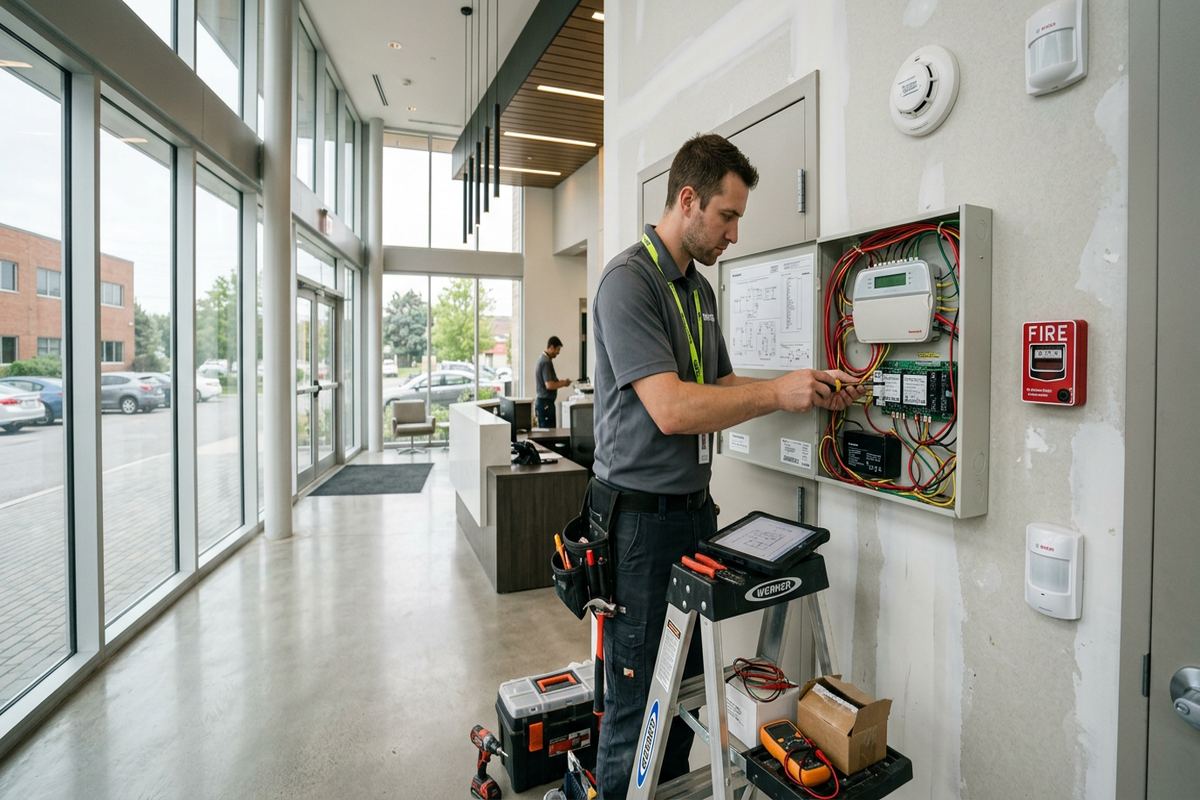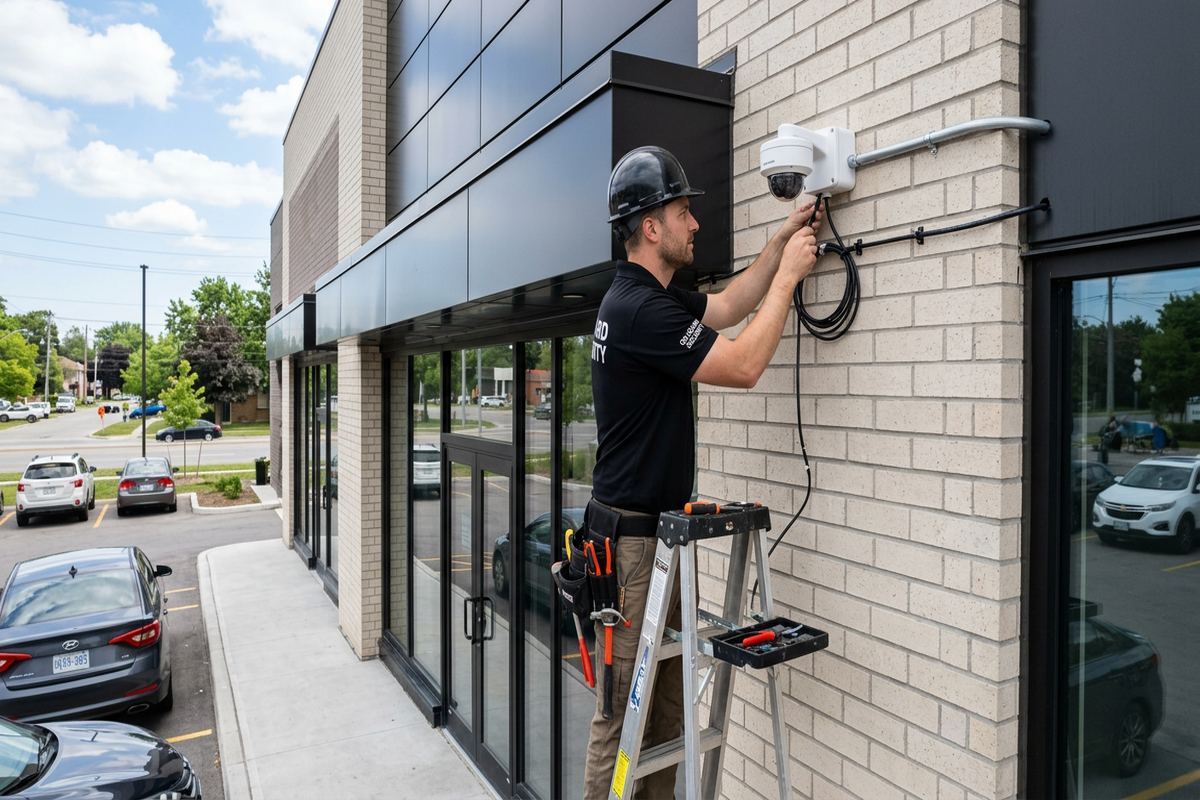
UnifiedLink installs office access control systems in Burlington, including card and mobile credentials, managed doors, electric locking hardware, request-to-exit devices and administrator software. We assess the site before pricing, document cable routes and device locations, configure the system on site, and provide a practical handover using credentials owned and controlled by your organization.
Office Access Control Planning in Burlington
Every access control project begins with how the Burlington office actually operates. We review employee entrances, public reception areas, internal restricted rooms, delivery doors and any shared building access. The assessment also considers opening hours, visitor procedures, staff turnover and who will administer credentials. Rather than selecting hardware first, we identify which doors need control and what should happen during normal entry, denied entry, emergencies and power loss. This produces a system design based on operational requirements instead of adding readers to doors without considering the complete opening.
Burlington workplaces range from units in small commercial plazas to converted properties and multi-tenant offices. Downtown Burlington locations may have landlord-controlled entrances or limited pathways above finished ceilings, while offices in Aldershot can combine older construction with renovated interiors. Alton Village and Orchard properties often have newer building systems, but door hardware, fire requirements and base-building restrictions still need verification. We inspect the physical conditions before determining reader positions, controller locations, locking methods and cable routes. Building age alone does not establish whether an opening can support a particular lock.
Following the assessment, UnifiedLink prepares a written scope covering equipment, cable routes, device placement, exclusions, equipment ownership and warranty. The scope identifies each controlled opening and describes the expected function of readers, locks, door contacts, request-to-exit devices and management software. Where another trade, landlord or property manager must approve work, that dependency is documented instead of assumed. Site assessment timing depends on the service and travel distance. Requests sent during business hours are answered the same day, while after-hours requests are answered the next business day.
- Door-by-door operational review
- Credential and administrator requirements
- Landlord and base-building dependencies
- Written equipment and installation scope
- Defined ownership and warranty terms
Selecting Door Hardware for Burlington Offices
The correct locking method depends on the door, frame, life-safety requirements and desired behaviour during a power interruption. An electric strike may suit one opening, while a magnetic lock, electrified lever or other listed assembly may be appropriate elsewhere. Existing panic hardware, closers, latch alignment and frame condition must all be checked before installation. We do not treat the reader and lock as separate parts: the complete opening must latch reliably, permit required egress and report useful door status. Hardware selection is documented for each opening rather than applied uniformly across the office.
Older offices and renovated units can present concealed conditions that affect installation. Mid-century bungalow stock used as professional space may have frame construction and finished walls that require careful routing, while commercial plazas often use masonry, steel framing or block demising walls. Masonry drilling requires different anchors, pathways and dust control than work in wood or light-gauge framing. In Millcroft or Roseland, a home-based office may also need separation between business access and private living areas. We plan around the actual substrate, door assembly and permitted work area.
Exterior openings require particular attention in Halton Region. Burlington winters, moisture and repeated freeze-thaw cycles can affect exposed readers, junction points, door alignment and improperly sealed penetrations. Exterior devices need suitable environmental ratings, stable mounting surfaces and cable entries that shed water rather than trap it. Penetrations are sealed using methods appropriate to masonry, metal or framed walls, without relying on a surface bead as the only protection. We also assess whether seasonal movement could prevent the latch from engaging, since software cannot compensate for a door that does not close mechanically.
- Electric strike and lock assessment
- Existing panic hardware review
- Masonry-appropriate anchors and pathways
- Weather-suitable exterior reader placement
- Door contact and latch verification
Credentials, Permissions and Office Workflows
Access permissions should reflect job functions instead of giving every user the same rights. We can organize credentials by department, work schedule, location or door group, with separate treatment for employees, cleaners, contractors and temporary visitors. The administrator can revoke a lost credential without changing a physical key system across the office. Before configuration, we confirm who may create users, review events and change schedules. This avoids handing broad administrator privileges to people who only need basic operational access and creates a clearer process when responsibilities change.
A useful Burlington office system also accounts for daily exceptions. Staff may arrive before reception opens, deliveries may use a designated entrance, and a meeting room or records area may require narrower permissions than the main employee door. We configure schedules, holidays and unlock periods on site, then test permitted and denied access at each controlled opening. If the organization uses mobile credentials, cards, fobs or PINs, the selected method is documented. Credential technology is chosen for compatibility, administration and security requirements, not simply because one format is currently familiar.
Visitor management can remain simple or become part of a broader reception process. For smaller offices, reception may release a controlled door after confirming the visitor through an intercom or camera. Multi-tenant properties may require coordination between the tenant system and a landlord-managed common entrance. We identify where responsibility changes between those systems and avoid promising integration until interfaces and permissions are verified. Event records can help review access activity, but they do not replace workplace procedures. Staff still need clear instructions for tailgating, propped doors, lost credentials and after-hours guests.
- Role-based door permissions
- Scheduled employee and cleaner access
- Temporary visitor credential options
- Lost credential revocation
- Administrator privilege controls
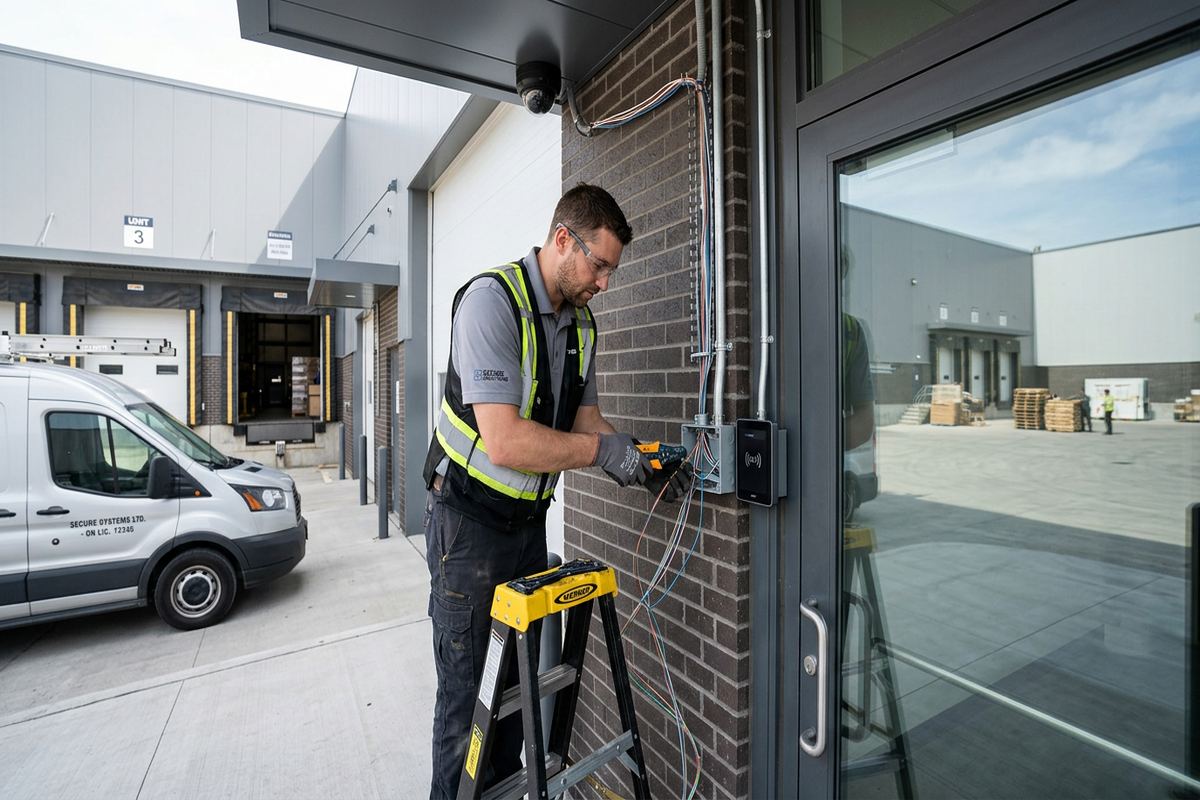
Burlington, Ontario
Office access control installation in Burlington, scoped in writing first
Book a site assessment and get equipment, routes, exclusions, and warranty on paper before anything is installed.
Structured Cabling for Burlington Access Control
Reliable access control depends on cabling that supports power, data and device supervision over appropriate distances. UnifiedLink installs continuous labelled cable runs from the controller or power equipment to readers, locks, contacts and request-to-exit devices where the design requires them. Routes are planned to avoid unnecessary joints, unsupported cable and conflict with lighting, mechanical equipment or other building services. We select pathways according to the building and permitted work, whether that involves accessible ceiling space, conduit, surface raceway or carefully planned concealed routes through finished office areas.
Commercial strips in Burlington frequently contain a mixture of original construction and later tenant improvements. A ceiling that appears open on a drawing may include fire separations, inaccessible bulkheads or wiring left by earlier occupants. Industrial units can add high roof decks, warehouse-to-office transitions and long runs between controlled doors and the communications area. These conditions are reviewed during assessment so the written scope can identify expected routes and exclusions. Where access requires special coordination, shutdowns or another trade, the responsibility is established before installation rather than discovered after devices have been mounted.
Cable identification matters during service, expansion and turnover. Each run is labelled consistently at relevant endpoints, and controller connections are organized so a technician can trace the door without guessing. Power supplies, network connections and enclosures need accessible locations that are protected from casual interference but remain practical to maintain. We also consider available electrical service and backup requirements as part of the system design. At completion, the customer receives an as-built record describing installed device locations and cable relationships, subject to the final conditions found during the work.
- Continuous labelled cable runs
- Planned conduit and raceway routes
- Accessible controller and power locations
- Coordination with existing building services
- As-built cabling record
System Integration and On-Site Configuration
Access control may operate independently or exchange information with other office systems, but compatibility must be confirmed before an integration is included. Potential connections can involve video surveillance, intercoms, intrusion alarms, elevators, directory services or building management interfaces. Product names alone do not establish that two platforms can share events or commands in the required way. We review supported interfaces, licensing dependencies, network requirements and ownership boundaries. The written scope states what will be connected, what will remain separate and which party must provide information, access or configuration on an existing system.
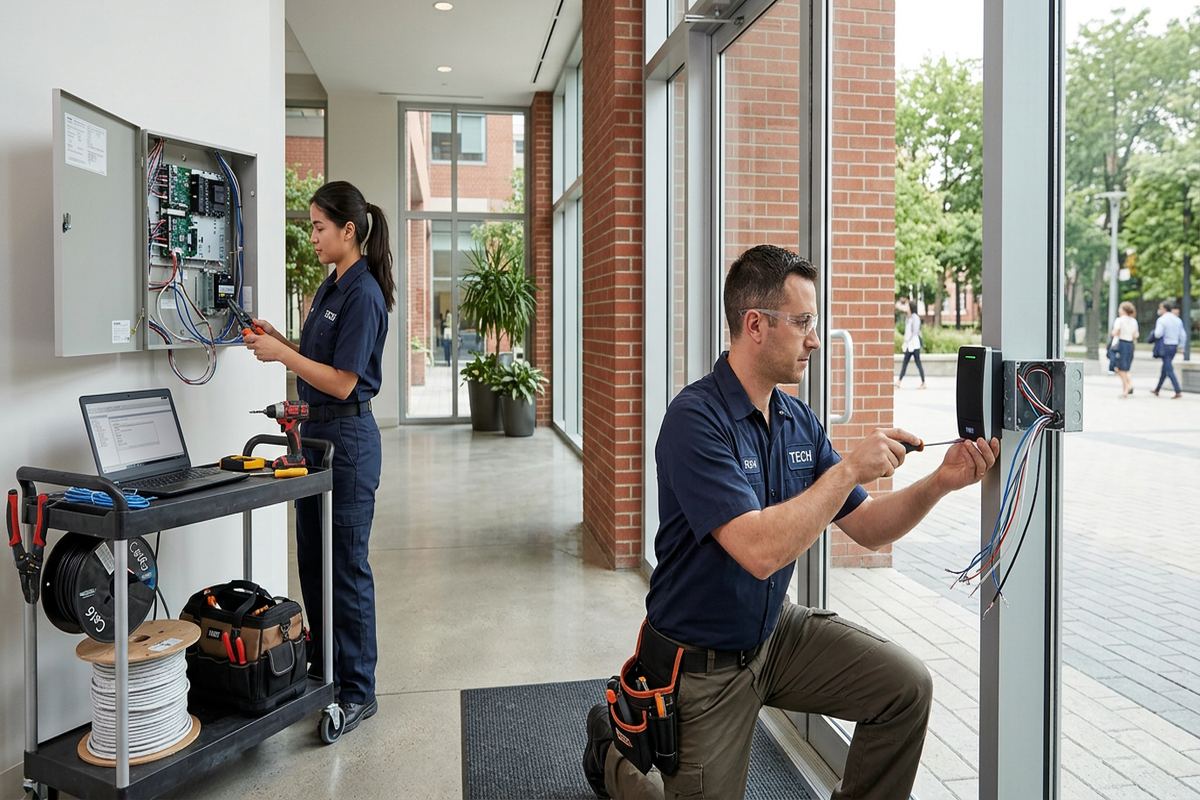
Configuration takes place on site using the approved door list and operating rules. Each reader is associated with the correct opening, schedules are applied, door-held and door-forced conditions are checked, and lock release timing is adjusted to practical use. We test request-to-exit operation and verify that door contacts report meaningful status. Burlington offices with several entrances may need different settings for a public front door, staff entrance and loading door. Testing each condition at the actual opening catches mechanical or workflow issues that cannot be identified from a controller screen alone.
Network-connected systems require decisions about addressing, remote administration, software updates and account control. UnifiedLink coordinates the access control requirements with the customer’s IT contact without taking ownership of unrelated network policy. The customer receives the system using its own credentials rather than an installer-controlled account that becomes difficult to transfer. Administrator access, available backups and relevant configuration details are reviewed during handover. If remote access is requested, it is implemented only through supported methods and the organization’s approved security approach, with any customer or third-party responsibilities recorded in the scope.
- Verified third-party compatibility
- On-site door and schedule configuration
- Door-held and forced-open testing
- Customer-owned administrator credentials
- Documented network responsibilities
Approvals and Occupied-Site Work in Burlington
Tenants should confirm permission before altering doors, frames, common-area walls or base-building systems. In Downtown Burlington offices and commercial plazas, the landlord may own the exterior door, fire alarm interface, common entrance or existing access platform even when the tenant occupies the full suite. Condominium properties can also require approval from the corporation or property manager. We identify likely approval points during assessment and provide scope information that can support the customer’s request. Approval remains necessary before work proceeds on property or systems controlled by another party.
Access control work must preserve required egress and account for the complete door assembly. Fire-rated openings, exit hardware and maglock applications may involve specific code, permit, inspection or trade requirements depending on the design and site. We do not conceal these dependencies inside a general installation description. Instead, the proposed function and required coordination are stated clearly, including any work excluded from our scope. Where existing hardware is damaged, poorly aligned or unsuitable, corrective work must be addressed before electronic control can operate consistently. Security should never depend on defeating safe exit behaviour.
Most office installations take place around employees, customers and normal business activity. Work areas need controlled access, dust and debris must be managed, and temporary door conditions must not create an unsecured entrance. We sequence mounting, cabling and cutover to reduce disruption while keeping the customer informed about doors that will be unavailable. Noise-sensitive drilling in masonry or metal can be planned around site restrictions. If after-hours access is necessary, building rules, keys, alarm procedures and authorized contacts are confirmed in advance rather than left to the technician’s arrival.
- Landlord approval dependencies
- Condo corporation coordination
- Egress and fire-door review
- Occupied-site work sequencing
- Documented exclusions and trade responsibilities
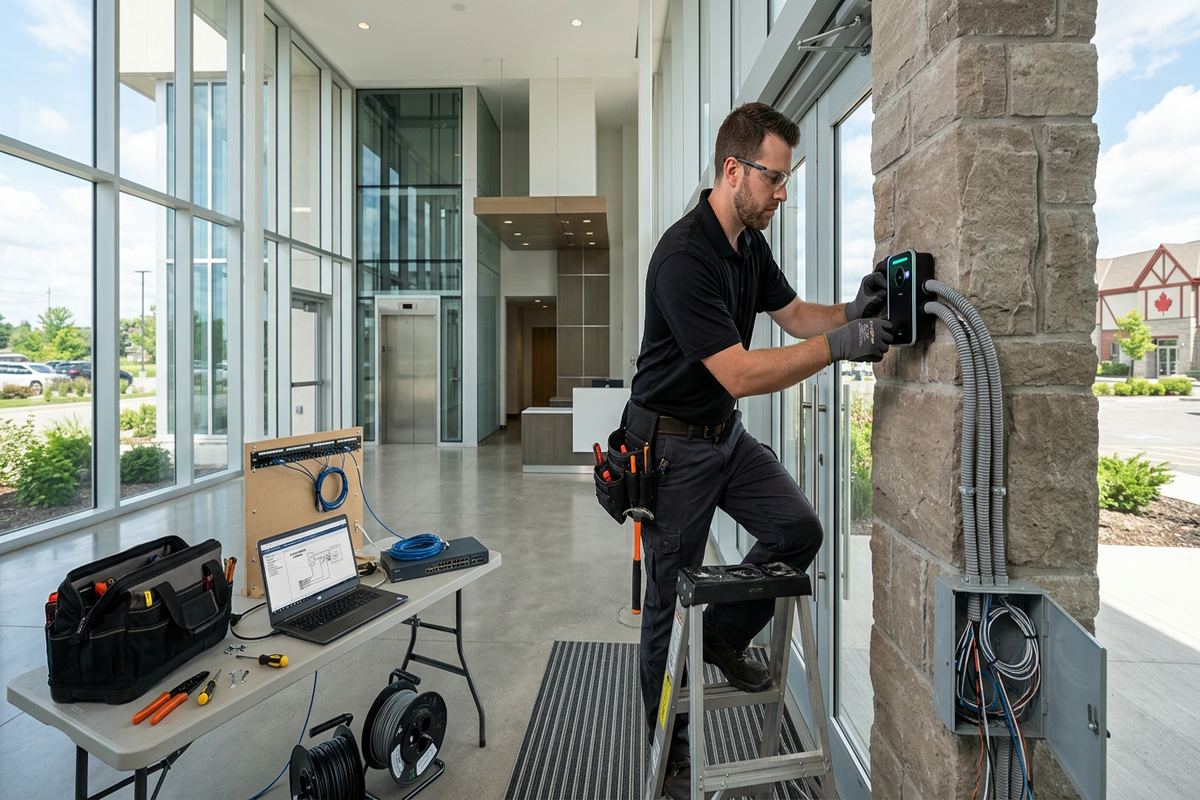
Testing and Handover for Burlington Offices
Completion involves more than showing that a card unlocks a door once. We test valid and invalid credentials, scheduled access, lock timing, door contact status and request-to-exit operation at each applicable opening. Mechanical closing and latching are checked because a controlled door that remains ajar is not secure. Exterior Burlington doors are observed for alignment and weather exposure, although seasonal conditions may still require building maintenance over time. Identified deficiencies are separated into access control adjustments, existing door problems and work assigned to another responsible party.
Handover is completed with the customer’s own administrator credentials. The designated administrator is shown how to add and remove users, assign permissions, apply schedules and review relevant events within the installed platform. We also explain routine actions for lost credentials, staff departures and temporary access. Training is matched to the agreed system rather than expanded into unsupported IT or human-resources policy. The goal is for authorized staff to operate normal access functions without depending on an installer-held account, while understanding when a hardware, network or door condition requires technical attention.
The final records provide a practical reference for future changes. UnifiedLink supplies an as-built record showing controlled openings, installed device locations and relevant cable or controller relationships based on final site conditions. Equipment ownership and warranty information follow the written scope, so the organization knows which components it owns and where third-party or landlord equipment remains involved. Labels and records also make later additions easier to assess. If another Burlington location or office area is added, the existing system can be reviewed against capacity, compatibility and current operational requirements before expansion is proposed.
- Credential and schedule testing
- Mechanical latch verification
- Administrator workflow training
- Customer-owned system access
- As-built device and cable record
Maintaining and Expanding Access Control
An access control system should be reviewed when staffing, tenancy or office use changes. Departed users need prompt removal, shared credentials should be avoided, and schedules should reflect current operating hours. Administrators should also examine doors that are frequently forced or held open, since repeated events may point to workflow, closer or latch problems rather than attempted entry. In Burlington properties with exterior openings, seasonal inspection can identify seal deterioration, corrosion, movement or alignment issues caused by moisture and freeze-thaw conditions before they become persistent access failures.
Expansion starts with checking the installed controller, power, licensing, network and cabling capacity. Adding a reader is not always limited to mounting another device; the new opening may require locking hardware, egress components, door monitoring and a suitable cable route. Offices moving into an adjacent plaza unit may also cross a fire separation or landlord boundary. We assess those conditions before pricing and update the written scope for the added work. Existing labels and as-built information are used where available, but field verification remains necessary because tenant improvements can alter pathways and door functions.
Using one accountable contractor for assessment, cabling, device installation, configuration and handover reduces gaps between trades. UnifiedLink documents what is included and coordinates defined dependencies without claiming control over landlord approvals, existing door repairs or third-party platforms. This approach is useful for Burlington organizations operating one office or several controlled areas within a mixed commercial or industrial property. When service is requested, the reported symptom, affected door and recent changes should be recorded. Clear information helps distinguish credential configuration, network communication, power, locking hardware and mechanical door issues during the next site review.
- User and schedule reviews
- Seasonal exterior opening checks
- Expansion capacity assessment
- Updated written scope for additions
- One accountable installation contractor
Burlington neighbourhoods we cover
- Downtown Burlington
- Aldershot
- Alton Village
- Millcroft
- Roseland
- Tyandaga
- Orchard
Office access control installation in Burlington — common questions
What type of access control is suitable for a Burlington office?
The suitable system depends on the number and type of doors, staff workflows, credential preferences, network requirements and building ownership. A small Burlington office may need only a few managed openings, while a multi-tenant or industrial unit can require schedules, visitor entry and multiple permission groups. UnifiedLink assesses the site before pricing and documents the proposed equipment and door functions.
Do I need landlord or condo approval?
Approval may be required if the installation changes an exterior door, common entrance, fire-rated opening, frame, wall or base-building system. This is common in Burlington commercial plazas, leased offices and condominium properties. UnifiedLink can identify likely dependencies and provide a written scope, but the tenant or owner must obtain the necessary permission from the landlord, corporation or property manager.
Can you add access control to an older door?
Often, but the door, frame, closer, latch, exit hardware and surrounding construction must be assessed first. Older Burlington properties may combine wood framing, masonry, steel frames and later renovations. A suitable electronic lock cannot correct a door that fails to close or latch. The assessment determines the required hardware, cable route and whether door repair or another trade is needed.
Will the system work during a power outage?
Outage behaviour depends on the locking hardware, power supply, backup design and life-safety requirements. Some locks release without power, while others remain secure, but required egress must always be maintained. For a Burlington office, UnifiedLink documents the intended behaviour of each opening and any backup components included in the scope. Actual backup duration depends on system load, battery condition and configuration.
Can access control connect with cameras or an intercom?
It may be possible to connect access control with video surveillance, an intercom, intrusion detection or another supported platform. Compatibility, licensing, network access and system ownership must be verified before the integration is promised. UnifiedLink reviews these factors during planning and states the integration boundaries in writing. Existing landlord-controlled systems in Burlington may require separate permission or assistance from the platform administrator.
What do we receive after installation?
UnifiedLink configures the system on site and hands it over using your organization’s own credentials. The designated administrator receives guidance on user management, permissions, schedules and routine event review. We also provide an as-built record reflecting installed device locations and cable relationships. The written scope identifies equipment ownership, warranty information, exclusions and any Burlington landlord or third-party systems that remain outside your control.
Coverage in Burlington is confirmed against the address before we quote. See everything we install in Burlington or the province-wide office access control installation page.