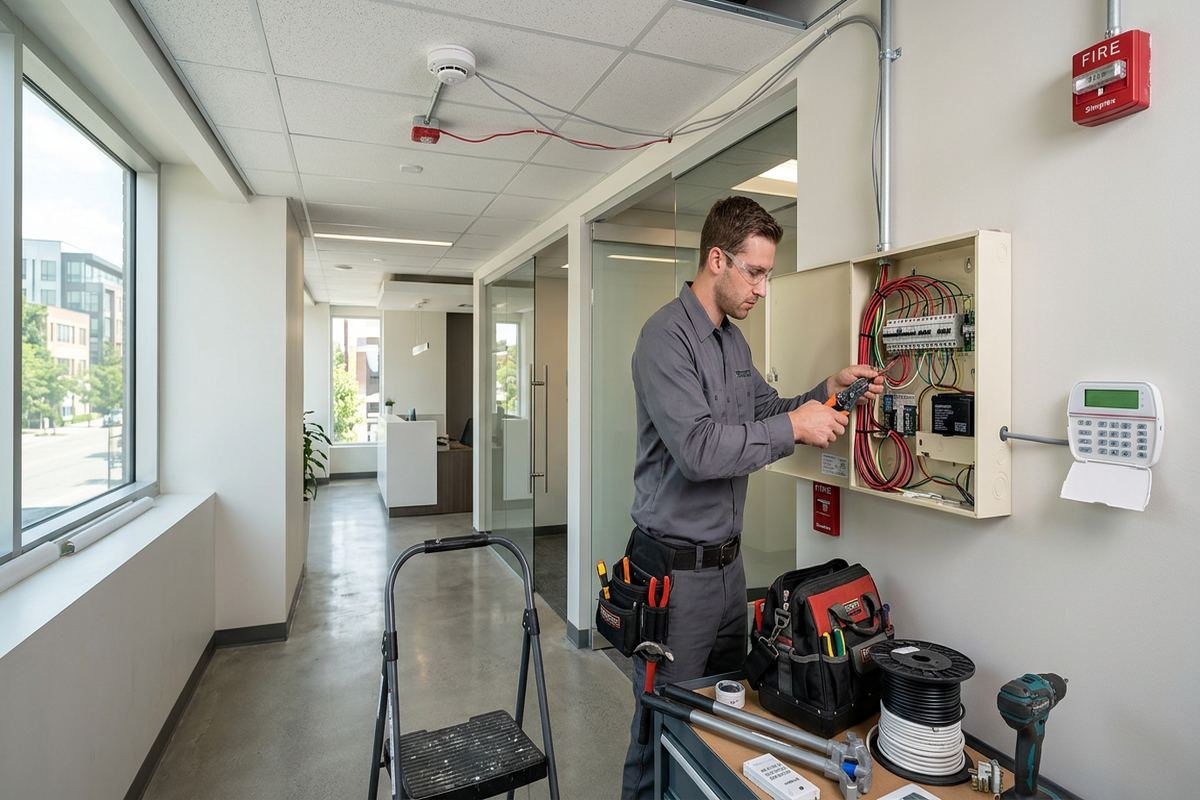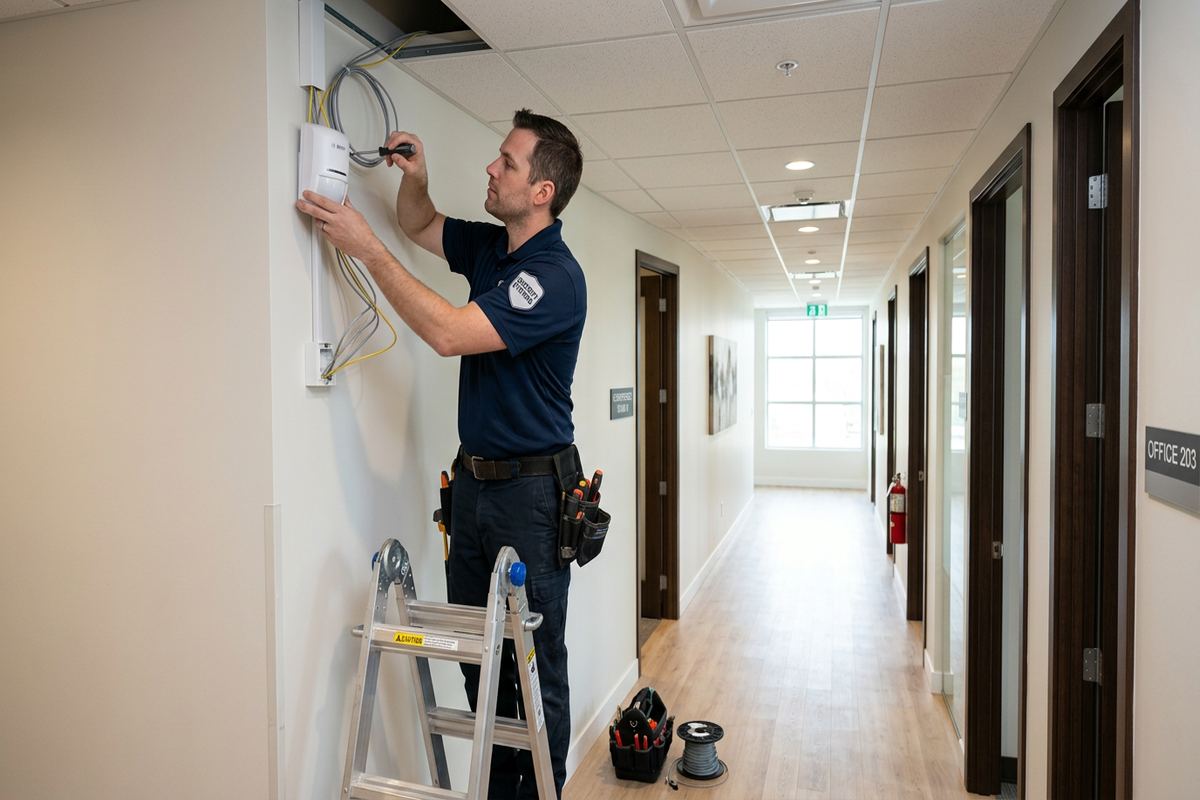
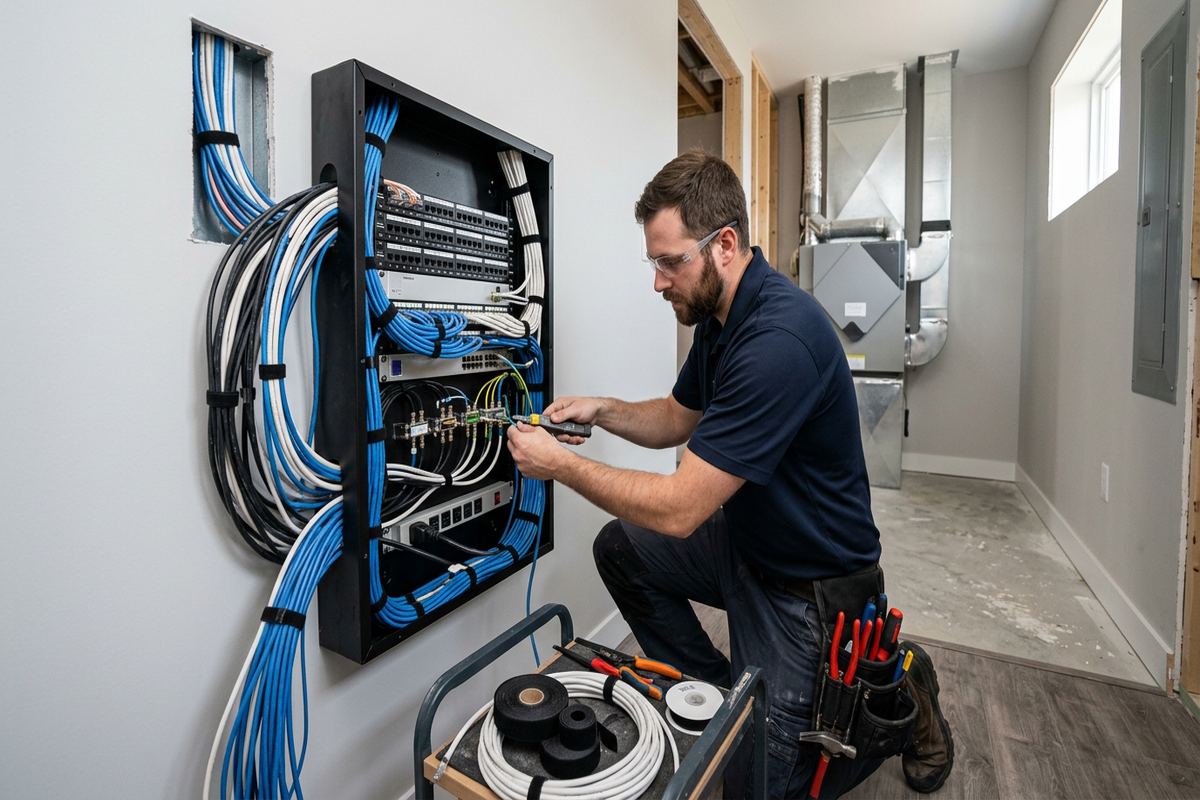
UnifiedLink installs low-voltage cabling for Burlington homes, commercial spaces and industrial units. We plan and install wiring for data networks, Wi-Fi, cameras, alarms, access control, audio and displays. Every project begins with a site assessment, followed by a written scope that defines routes, device locations, equipment, exclusions, ownership and warranty.
Low-Voltage Cabling for Burlington Properties
Low-voltage cabling provides the physical connections behind networks, wireless access points, surveillance cameras, alarm devices, door controls, speakers and commercial displays. In Burlington, the route often matters as much as the cable specification. Lakefront homes, mid-century bungalows and small commercial plazas have different wall assemblies, ceiling access and expansion limits. UnifiedLink assesses these conditions before recommending a pathway. The aim is a serviceable installation with continuous labelled runs, protected penetrations and device locations selected for practical coverage rather than convenience during installation.
Existing construction can conceal obstacles that are not visible from a floor plan. Finished basements, insulated exterior walls, masonry fireplaces, flat-roof additions and previous renovations may interrupt an expected route. A site assessment helps identify accessible joist spaces, utility rooms, attic paths, risers and suitable equipment locations. It also allows discussion of visible conduit where concealed wiring is impractical. Pricing follows the assessment so that the written scope can reflect actual cable routes, access requirements, exclusions and restoration responsibilities rather than relying on assumptions about the building.
Projects may involve one new connection or a coordinated system of cables serving several technologies. Keeping those runs organized reduces confusion during configuration, troubleshooting and later changes. UnifiedLink acts as one accountable contractor for the agreed low-voltage scope, including pathway planning, cable installation, termination, labelling and on-site configuration where specified. At handover, the customer receives access using their own credentials and an as-built record showing the installed system. Equipment ownership and warranty terms are also documented in the written scope before work begins.
- Data and network cabling
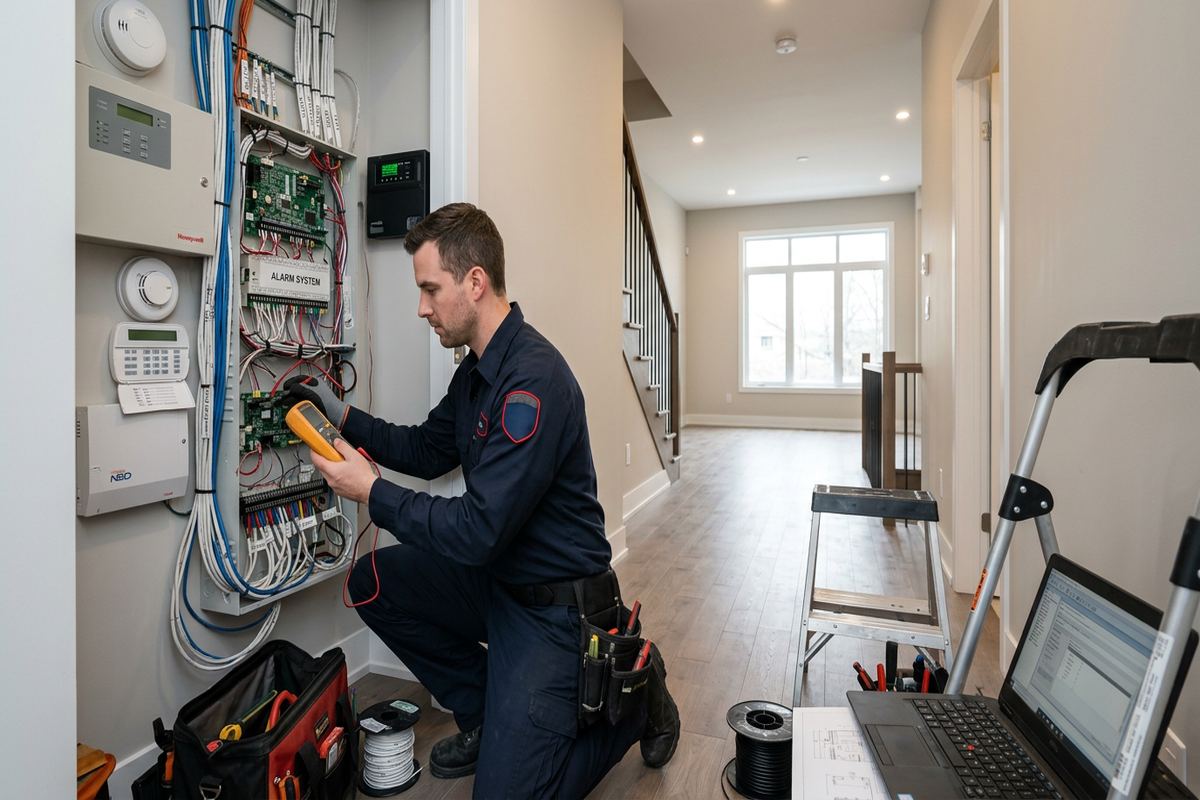
- Camera and alarm wiring
- Access control connections
- Wi-Fi access point cabling
- Audio and display wiring
Planning Cable Routes in Burlington Buildings
Route planning starts with the building structure and the services the cable must support. Burlington’s mid-century bungalows often provide usable basement or attic access, but additions and renovated rooms can create blocked cavities or changes in framing direction. Newer homes in Alton Village or Orchard may have finished lower levels and tightly sealed exterior assemblies. Rather than forcing a direct route, the installer may use a utility area, closet, garage or discreet conduit to preserve cable performance while limiting unnecessary openings in finished walls and ceilings.
Masonry and frame construction require different fastening, drilling and sealing methods. Brick veneer should not be treated as though it were structural concrete, and exterior penetrations must avoid directing water into the wall assembly. Indoors, cables need separation from electrical conductors and protection from sharp edges, heat sources and likely physical damage. Bend radius and pulling tension also matter, particularly for fibre and category cable. The proposed route is reviewed during the assessment, including any visible sections, access panels, core drilling or surface raceway needed to complete the installation.
Shared buildings introduce another layer of planning. Condo corporations, commercial landlords and property managers may require drawings, insurance documents, approved work hours or written permission before cables enter common ceilings, telecom rooms or exterior areas. Tenants should confirm who controls the pathway and whether base-building contractors must perform part of the work. UnifiedLink can define the intended route and installation requirements in the scope, but property approval remains necessary. Resolving these conditions before scheduling helps prevent incomplete runs, unapproved penetrations or conflicts with other building systems.
- Concealed and surface routes reviewed
- Wall and ceiling access assessed
- Electrical separation maintained
- Penetration requirements documented
- Approval dependencies identified
Cabling for Burlington Homes
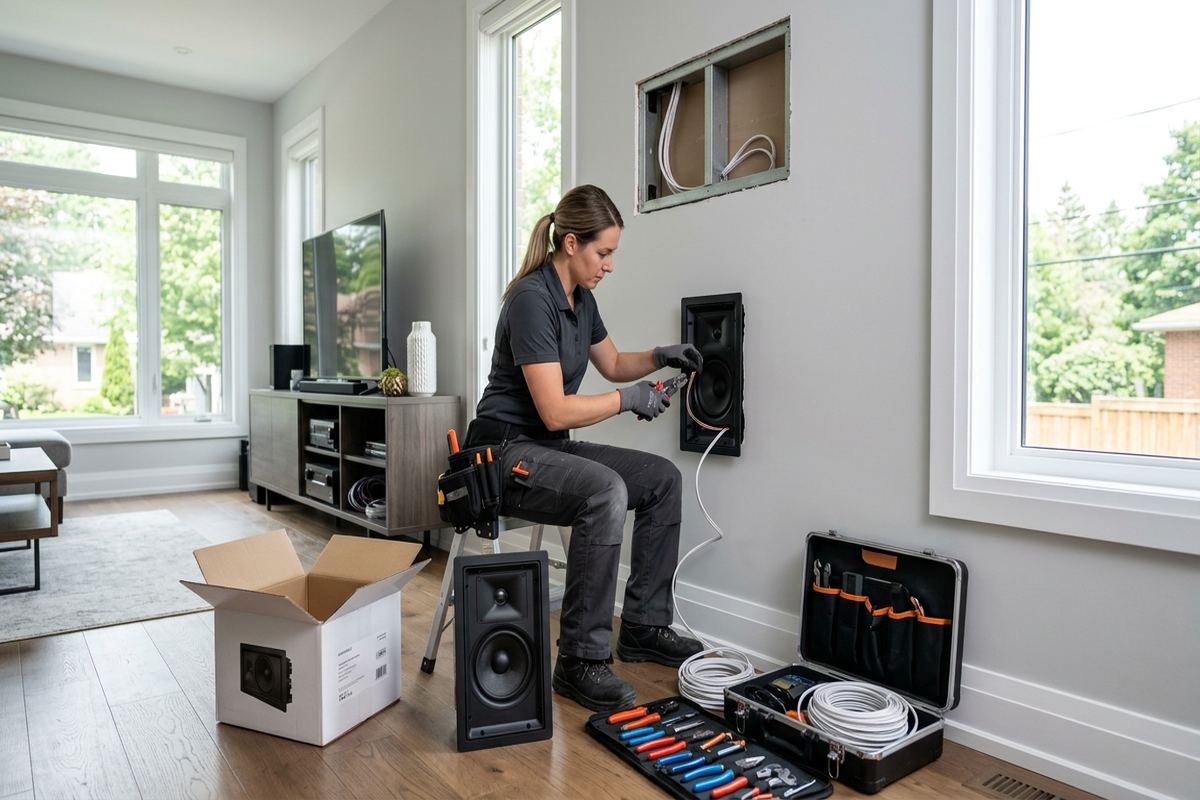
Residential cabling should support how the home is used now while leaving sensible options for later equipment changes. In Roseland and Aldershot, a project may combine network outlets, ceiling-mounted Wi-Fi access points, exterior cameras and wiring for a television or audio zone. Centralizing terminations in a dry, accessible location makes equipment easier to identify and maintain. The chosen space needs suitable power, ventilation and clearance, but it should not be placed where household storage will crush patch leads or obstruct access to network and security equipment.
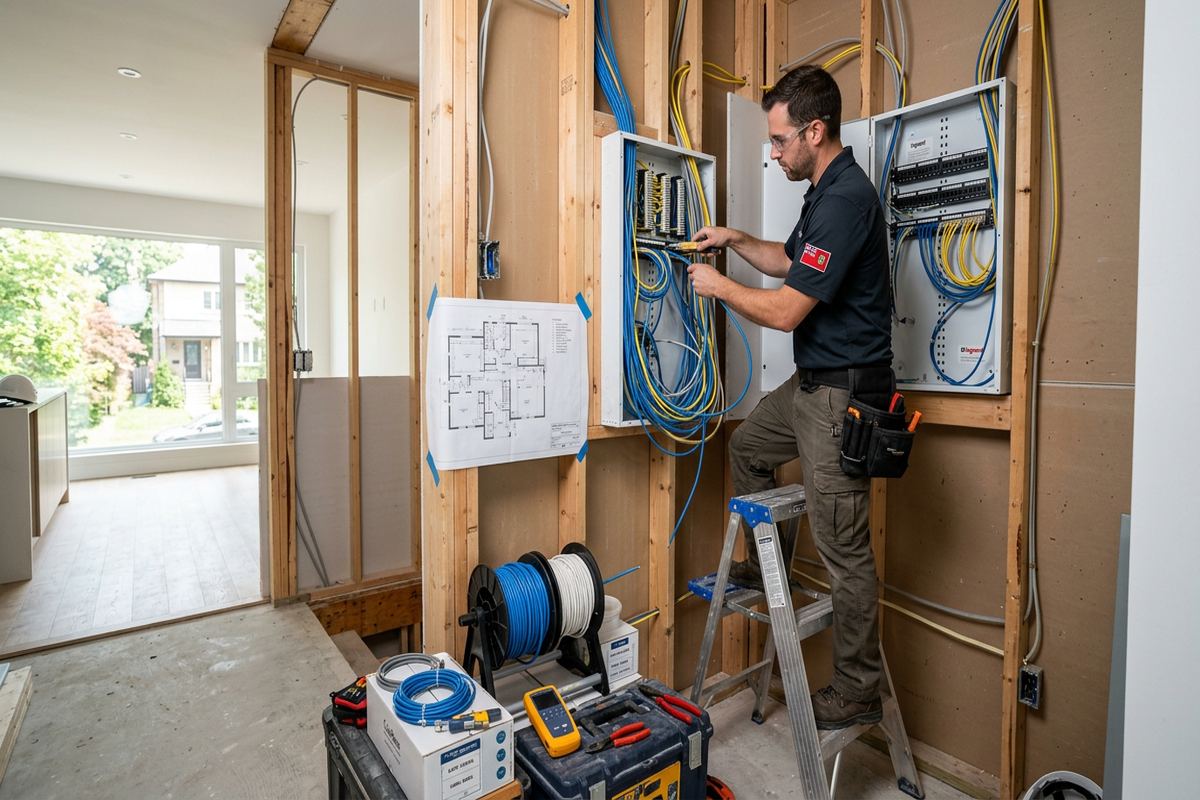
Renovations provide opportunities to install cable before drywall closes, although coordination is essential. Low-voltage runs should be separated from electrical wiring, supported independently and brought to confirmed outlet or device positions. Photographs and route notes taken before insulation and boarding become useful parts of the as-built record. For occupied homes, smaller access openings or surface pathways may be more appropriate than extensive wall removal. The written scope identifies anticipated openings and clarifies whether patching, painting, cabinetry changes or other finishing work is included or excluded.
Homeowners should also consider control and ownership at handover. Network, camera, alarm and access applications should be registered with the customer’s own email address and credentials rather than remaining tied to an installer account. UnifiedLink completes on-site configuration for the equipment included in the scope and provides the relevant as-built information. That approach allows the owner to manage users, change passwords and arrange future service without uncertainty. It is also useful when a Burlington property is sold, rented or transferred to another family member.
- Home network outlets
- Ceiling Wi-Fi locations
- Exterior camera connections
- Alarm device wiring
- Television and audio cabling
Burlington, Ontario
Low-voltage cabling installation in Burlington, scoped in writing first
Book a site assessment and get equipment, routes, exclusions, and warranty on paper before anything is installed.
Exterior Cabling and Burlington Weather
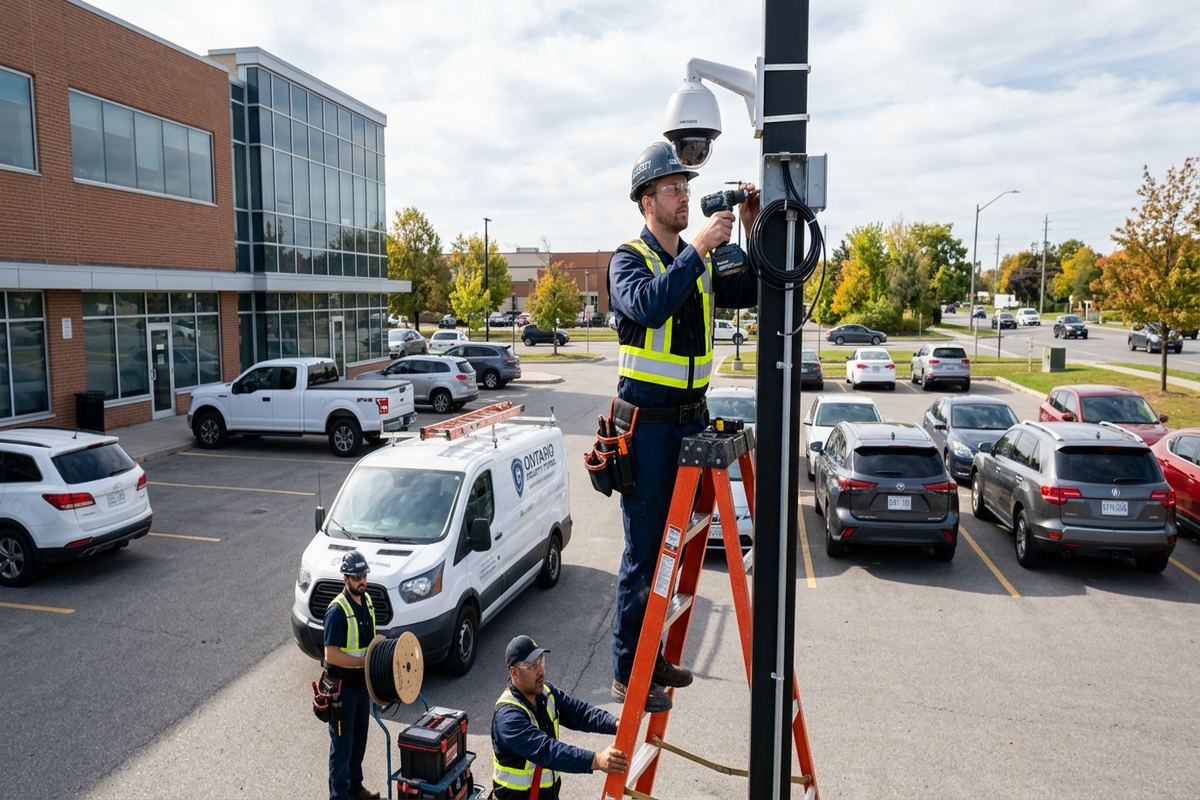
Outdoor cable work in Burlington must account for rain, snow, ice, summer heat and repeated freeze-thaw cycles. Exterior-rated cable and fittings are selected where a run leaves conditioned space, even when part of the route is protected by an overhang. Indoor cable should not be exposed outdoors simply because the visible section is short. Device position also affects durability: cameras, wireless links and entry equipment need stable mounting surfaces, manageable service access and a route that does not create a channel for moisture into the building.
Penetrations are planned to shed water rather than trap it. A cable entering through brick, siding or another exterior finish needs an appropriate sleeve, bushing or fitting, along with compatible sealing for the wall assembly. Drip loops may be used where exposed cable approaches equipment from outside. On lakefront homes, wind-driven precipitation can reach locations that appear sheltered during calm weather. Fasteners and enclosures must suit the mounting material, and cable should be secured without being compressed, sharply bent or left loose against an abrasive edge.
Buried or detached-building routes require separate evaluation. A backyard office, gate, garage or remote camera may need conduit, outdoor-rated cable, surge protection considerations or fibre to reduce electrical risks between structures. Existing conduit is inspected for space, condition and usable pull paths before it is included in the plan. Winter can restrict excavation and some exterior sealing work, so site assessment timing depends on the service and travel distance. The scope records the planned pathway and any civil, electrical or restoration work that others must provide.
- Exterior-rated cable and fittings
- Weather-conscious device placement
- Sealed wall penetrations
- Protected detached-building routes
- Mountings selected for each surface
Commercial Cabling in Burlington
Small commercial plazas make up a substantial part of Burlington’s local building stock, and their cabling needs often cross leased suites, common ceiling areas and shared telecom spaces. Retailers, clinics, offices and food-service tenants may require data drops, wireless coverage, cameras, alarm wiring, displays or controlled doors. Before installation, the route is checked against lease boundaries and landlord requirements. Ceiling type, fire separations, available pathways and equipment-room access all influence the scope, especially when a cable must pass through another unit or a base-building corridor.
Commercial strips and industrial units also change over time. Workstations move, warehouse racking is added and front counters are rebuilt, so outlet placement should follow the operating layout rather than an empty floor plan. Cable supports, conduit and protective drops may be needed in open ceilings or areas exposed to carts, stock and equipment. In Tyandaga and other mixed commercial areas, a site may combine office finishes with storage or light-industrial space. Each area requires a route and termination method appropriate to its access, environment and likelihood of physical impact.
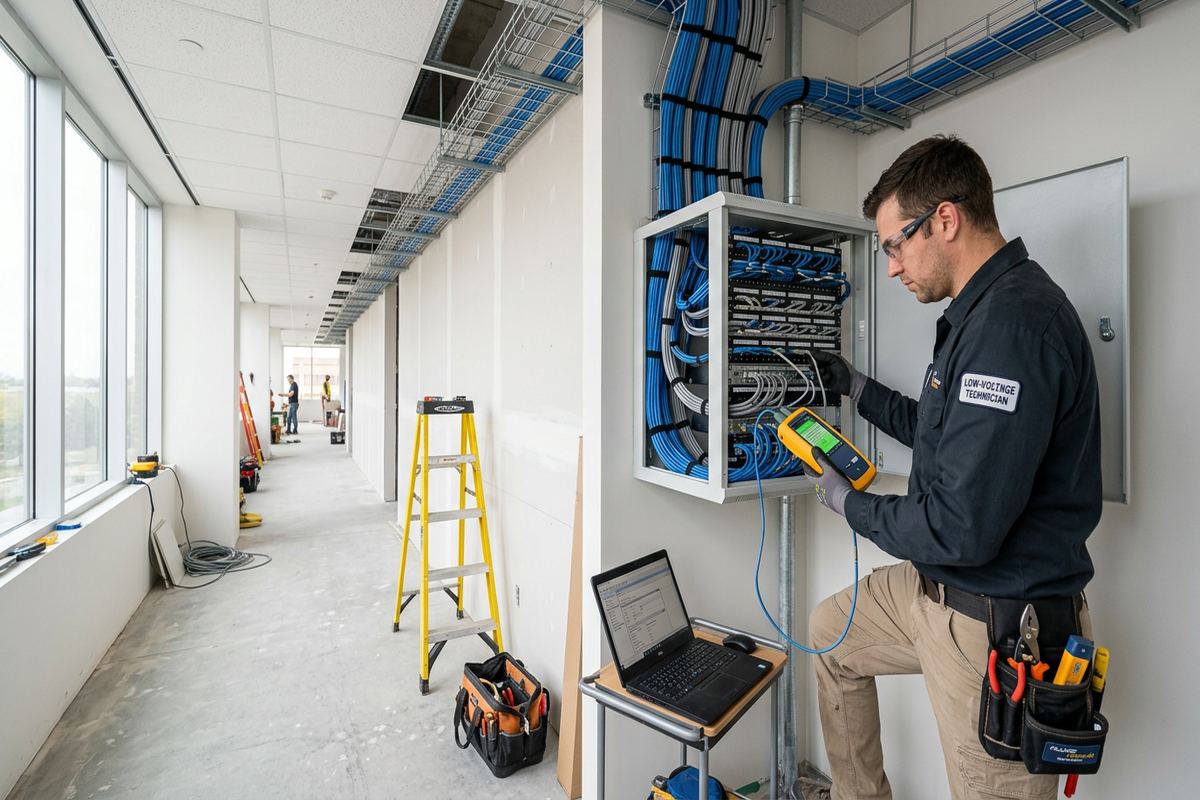
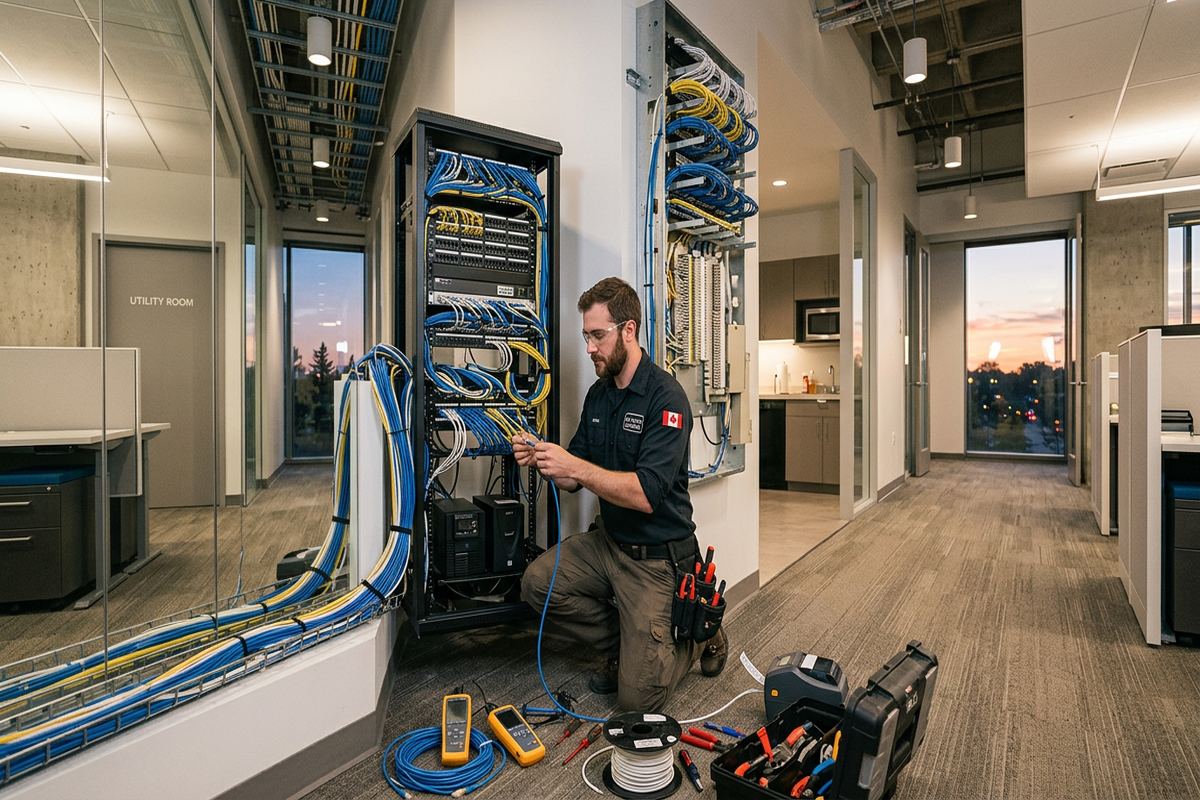
A documented installation helps owners and tenants manage later service. Labels should identify both ends of every run and correspond with patch-panel, rack or enclosure records. Testing verifies the installed connection before devices are placed into regular operation. Where configuration is included, UnifiedLink completes it on site and hands over administrative access using the customer’s credentials. The as-built record summarizes routes and device locations covered by the project. This avoids relying on ceiling tiles, informal notes or an installer’s memory when the business expands or equipment is replaced.
- Office and retail data drops
- Warehouse and industrial pathways
- Rack and patch-panel organization
- Camera and access control cabling
- Tenant improvement coordination
Cable Selection, Termination and Testing
Cable type is chosen for the application, distance, environment and equipment requirements. Category cable may support data, wireless access points, cameras and other powered network devices, while fibre is useful for longer links, higher-capacity backbones or electrical isolation between locations. Alarm, access control, speaker and control systems can require different conductor counts, shielding or fire ratings. Substituting whatever cable is available can create performance or compliance problems. The written scope therefore identifies the agreed cable and major equipment rather than using a vague allowance for generic low-voltage wiring.
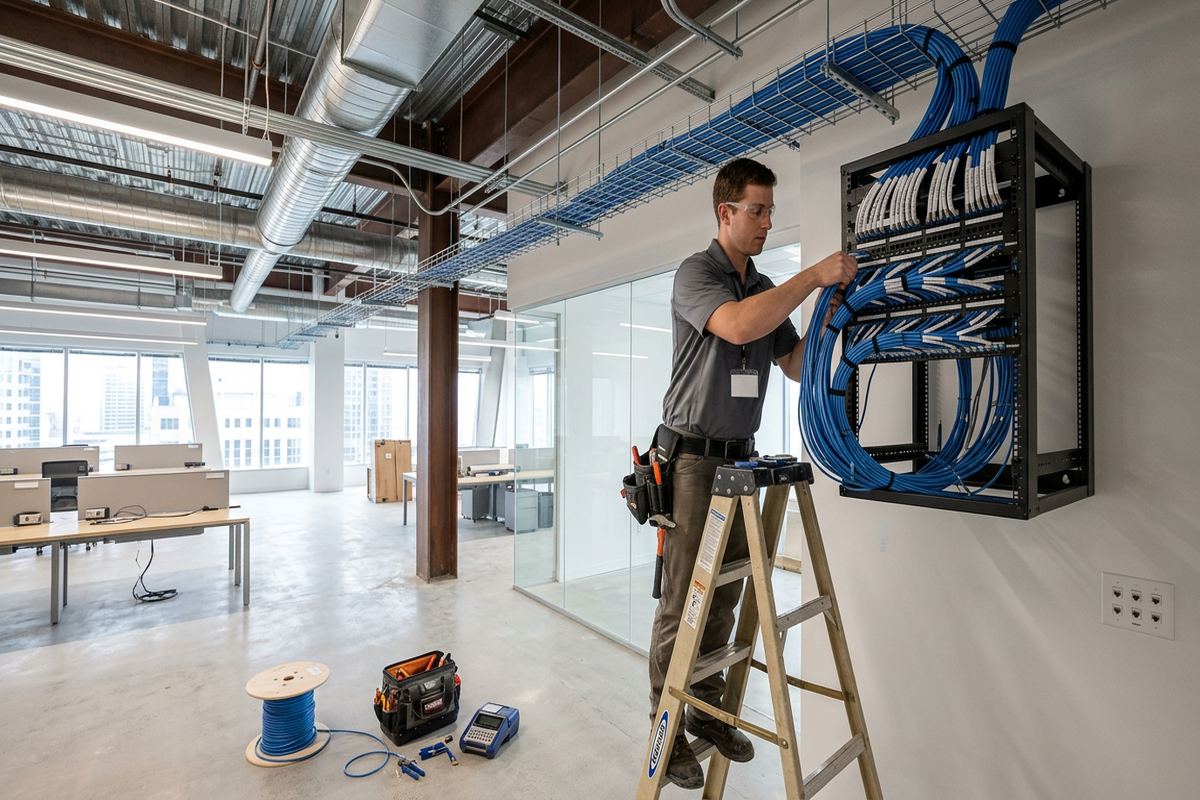
Good termination depends on consistency as well as compatible components. Category jacks, patch panels, connectors and patch leads need to match the selected cabling system. Excessive untwisting, crushed jackets, tight staples and sharp bends can degrade a connection even if it appears functional during initial use. Cables are supported along the route and dressed so technicians can reach individual terminations without disturbing unrelated services. Labels are applied at both ends using a clear naming scheme, with ports and device locations recorded for practical identification after ceilings, furniture and equipment are in place.
Testing is matched to the agreed service and documented scope. At minimum, each run should be checked for correct termination and continuity before it is connected to equipment. Network links may require additional verification based on their intended use, while fibre needs suitable cleaning, inspection and test methods. Functional testing then confirms that installed devices can communicate or operate as planned. Testing does not correct limitations in an internet service, customer-owned switch or unsupported legacy device, so those boundaries are identified during assessment and listed as assumptions or exclusions where relevant.
- Application-specific cable selection
- Compatible jacks and panels
- Labels at both cable ends
- Continuity and functional testing
- Fibre options where appropriate
Upgrading Existing Burlington Cabling
Older wiring is not automatically unusable, but it should be identified and checked before new equipment depends on it. Burlington bungalows and renovated lakefront homes may contain telephone cable repurposed for data, unlabelled coaxial lines, abandoned alarm conductors or category cable joined behind a wall. Commercial suites can accumulate several generations of wiring above ceilings. An assessment separates reusable pathways from cables that are damaged, unsupported, incorrectly terminated or unsuitable for the intended service. Existing labels are verified rather than accepted without tracing because renovations often change their original meaning.
An upgrade plan can be staged when the building remains occupied. Priority may go to failed links, network backbones, camera locations or work areas affected by an upcoming renovation. New runs should not be spliced into unknown cable merely to avoid completing a proper route. Continuous labelled cable from the termination point to the outlet or device provides clearer performance and serviceability. If abandoned wiring is to be removed, the scope should define which areas are accessible and whether cables passing through shared or concealed spaces can be safely extracted without damaging active systems.
Wi-Fi problems are sometimes blamed on cabling when access point placement, building materials or equipment configuration is the actual cause. Masonry walls, metal ductwork, mirrors and dense finishes can weaken coverage, while a single access point at one end of a long Burlington home may not serve every floor. Cabling allows access points to be placed where coverage is needed and connected reliably to the network. The site assessment considers likely mounting positions and available routes; coverage expectations, customer-owned equipment and any need for additional hardware are then recorded in the scope.
- Legacy cable identification
- Unknown runs traced
- Reusable pathways assessed
- Abandoned wiring scope defined
- Wi-Fi cabling routes planned
Burlington Site Assessment and Handover
Every project begins with a site assessment before pricing. The visit confirms the services required, construction type, proposed device positions, equipment location and likely cable routes. Access above ceilings, through attics, into basements or across commercial common areas is reviewed where safely available. Customers should identify planned renovations, landlord conditions, condominium rules and areas that cannot be opened. For Burlington properties with exterior work, mounting surfaces and weather exposure are also considered. Site assessment timing depends on the service and travel distance, particularly when specialized access or coordination is required.
After assessment, UnifiedLink provides a written scope covering equipment, cable routes, device placement, exclusions, equipment ownership and warranty. The document can also identify customer responsibilities, third-party approvals and work that must be completed by an electrician, landlord, general contractor or finishing trade. Reviewing these details before installation reduces disputes about visible conduit, wall openings, network capacity or restoration. Changes discovered after work begins are discussed rather than assumed. This process is especially important in occupied businesses and finished homes where access decisions can affect operations, furnishings and completed surfaces.
Installation concludes with labelling, applicable testing, on-site configuration and a practical handover. Customer accounts are set up with the customer’s own credentials, and the as-built record reflects the completed routes and device locations within the project scope. Questions submitted during business hours are answered the same day; after-hours requests are answered the next business day. For work in Downtown Burlington, Millcroft, Aldershot, Orchard or elsewhere in Halton Region, the objective remains the same: an installation that can be understood, maintained and expanded without depending on undocumented cabling.
- Assessment completed before pricing
- Written scope supplied
- Customer credentials used
- As-built record provided
- One accountable contractor
Burlington neighbourhoods we cover
- Downtown Burlington
- Aldershot
- Alton Village
- Millcroft
- Roseland
- Tyandaga
- Orchard
Low-voltage cabling installation in Burlington — common questions
Do you assess the property before quoting?
Yes. UnifiedLink completes a site assessment before pricing low-voltage cabling work in Burlington. The assessment reviews construction, access, cable routes, device positions, equipment locations and any exterior or shared-building conditions. Timing depends on the service and travel distance. A written scope then records the proposed equipment, routes, placement, exclusions, ownership and warranty.
Can you run cables in a finished Burlington home?
Usually, but the practical route depends on framing, renovations and access through attics, basements, closets or utility spaces. Burlington bungalows may offer useful horizontal access, while finished additions can block expected pathways. Where concealed installation would require excessive openings, surface raceway or discreet conduit may be proposed. Anticipated openings and finishing exclusions are documented before work.
What cable can support cameras and Wi-Fi?
Many network cameras and wireless access points use category cabling that carries data and, with compatible equipment, power. The correct category, jacket rating and pathway depend on distance, environment and device requirements. For Burlington exterior locations or detached buildings, outdoor-rated cable, conduit, surge considerations or fibre may be appropriate. Selection is confirmed during the site assessment.
Do I need condo or landlord approval?
Approval may be required when cabling crosses common ceilings, enters a shared telecom room, penetrates an exterior wall or affects base-building systems. Burlington condo corporations and commercial landlords can also set work-hour, documentation and contractor requirements. Owners and tenants should obtain written permission before installation. UnifiedLink can document the proposed route and dependencies for review by the responsible party.
How do you protect exterior cable?
Exterior work uses cable, fittings and enclosures suited to outdoor exposure. Routes are secured, penetrations are sealed for the wall assembly, and device positions are selected with rain, snow and Burlington freeze-thaw conditions in mind. Brick, siding, concrete and frame construction require different fastening methods. The assessment also considers service access, drip paths and potential physical damage.
What do I receive after installation?
At handover, installed runs are labelled and tested as defined in the scope. Included equipment is configured on site using the customer’s own credentials, not an installer-controlled account. UnifiedLink also supplies an as-built record for the completed Burlington project. The written scope identifies equipment ownership, warranty terms, exclusions and any customer-owned or third-party components outside the installation.
Coverage in Burlington is confirmed against the address before we quote. See everything we install in Burlington or the province-wide low-voltage cabling installation page.