UnifiedLink installs commercial security camera systems for offices, shops, plazas, warehouses and mixed-use properties in Burlington. Each project begins with a site assessment covering risks, sightlines, lighting, cable routes and recording requirements. We provide a written scope, complete the installation and configuration on site, then hand over the system using credentials controlled by the customer.
Commercial Security Camera Planning in Burlington
A useful commercial camera system starts with site conditions rather than a standard equipment list. During a Burlington site assessment, we review entrances, loading areas, service corridors, parking spaces, cash points and other locations where recorded detail may be needed. Camera height, viewing angle, lighting and obstructions are considered together because a wide image is not always an identifiable image. The assessment also identifies suitable recording locations, available network capacity, electrical requirements and practical cable routes. These findings form the basis of a written scope before pricing is provided.
Burlington properties vary enough that camera placement must account for the building rather than only the floor plan. Small commercial plazas may need coordinated views across shared parking and rear service lanes, while converted mid-century bungalows used as offices can have low eaves, finished ceilings and limited pathways between additions. Lakefront properties may also expose exterior devices to wind, moisture and reflected light. We document these constraints early, including areas where landscaping, signs, seasonal storage or parked vehicles could interfere with the expected field of view during normal operations.
The written scope defines camera types, intended coverage, recording equipment, cable routes and device locations, along with stated exclusions. It also addresses equipment ownership, warranty terms and the responsibilities of other parties, such as an internet provider, electrician, landlord or property manager. This detail helps avoid assumptions about whether the system includes remote access, audio, monitoring, network changes or repairs to concealed finishes. UnifiedLink remains one accountable contractor for the low-voltage installation, configuration and handover, while clearly identifying any work that requires separate authorization or another licensed trade.
- Site assessment before equipment selection or pricing
- Coverage plan for entrances, interiors and exterior areas
- Written equipment, routing and placement scope
- Clear exclusions, ownership and warranty information
- Coordination requirements identified before installation
Camera Coverage for Burlington Commercial Properties
Coverage design balances context with useful detail. A general overview camera can show how an event developed, but a separate, narrower view may be required to identify a person, vehicle or transaction. For Burlington businesses, we commonly separate coverage into approach, identification and activity views rather than expecting one device to cover an entire lot or shop. Entrances require attention to backlighting and door movement, while loading doors require views that remain useful when vehicles are present. Interior cameras are positioned to reduce shelving, displays, partitions and changing stock from blocking important activity.
Commercial strips in Downtown Burlington and Aldershot often combine street-facing doors, rear deliveries, shared lanes and public pedestrian traffic. Camera angles should stay focused on the property’s operational needs without collecting unnecessary views into neighbouring premises or private windows. Bright storefront glass can create reflections after dark, and exterior signs can change the available light near an entrance. We test likely day and night conditions, select appropriate lens coverage and position devices where maintenance remains practical. The result is a deliberate set of views rather than overlapping footage that adds storage use without adding evidence.
Industrial units and service businesses present different priorities. Long aisles, tall doors, racking and fenced yards can create hidden zones or dramatic changes in lighting. Cameras may be assigned to shipping activity, staff entrances, vehicle gates, tools or customer counters, with recording settings adjusted for the movement expected in each area. Where licence plates matter, the viewing distance, angle, vehicle speed and available light must be evaluated specifically. A general parking camera should not automatically be treated as a plate-capture solution. The written design records each camera’s intended purpose for later verification.
- Separate overview and identification views
- Entrance coverage planned for difficult backlighting
- Loading and service areas assessed with vehicles present
- Privacy-conscious angles around neighbouring properties
- Purpose documented for every proposed camera
Exterior Cameras for Burlington Weather
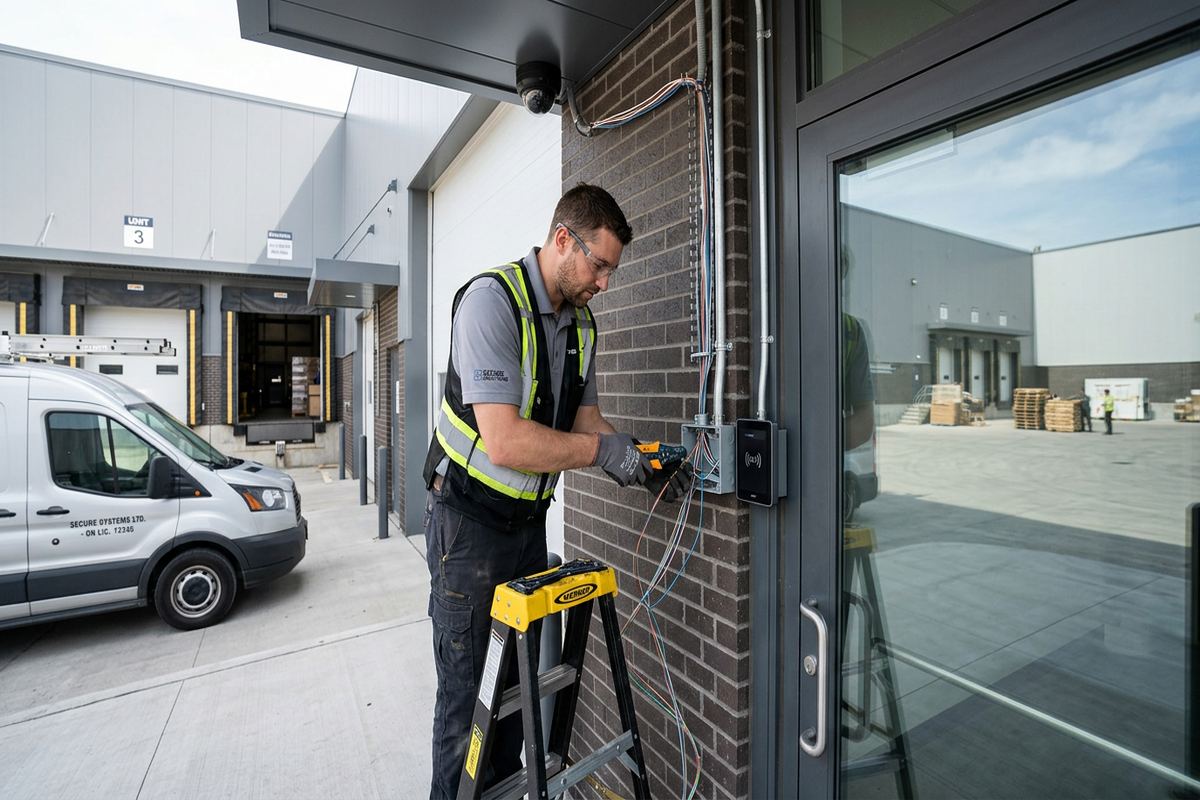
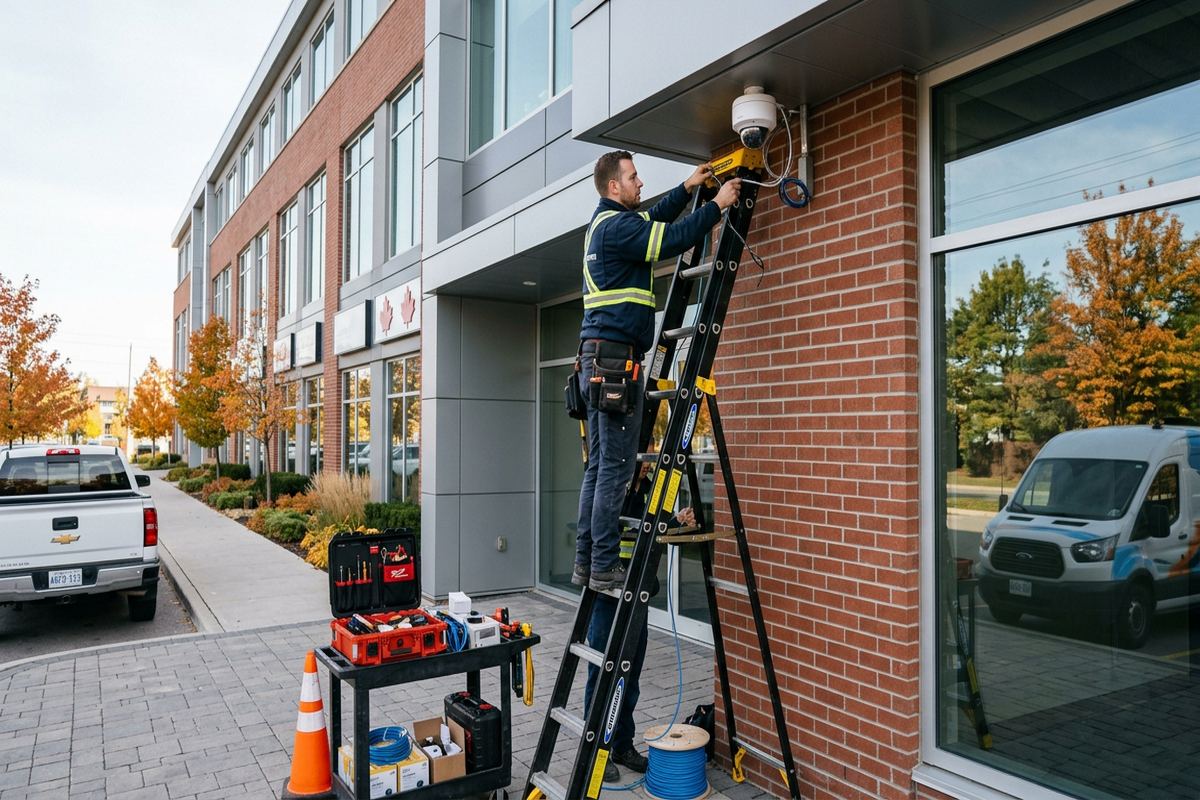
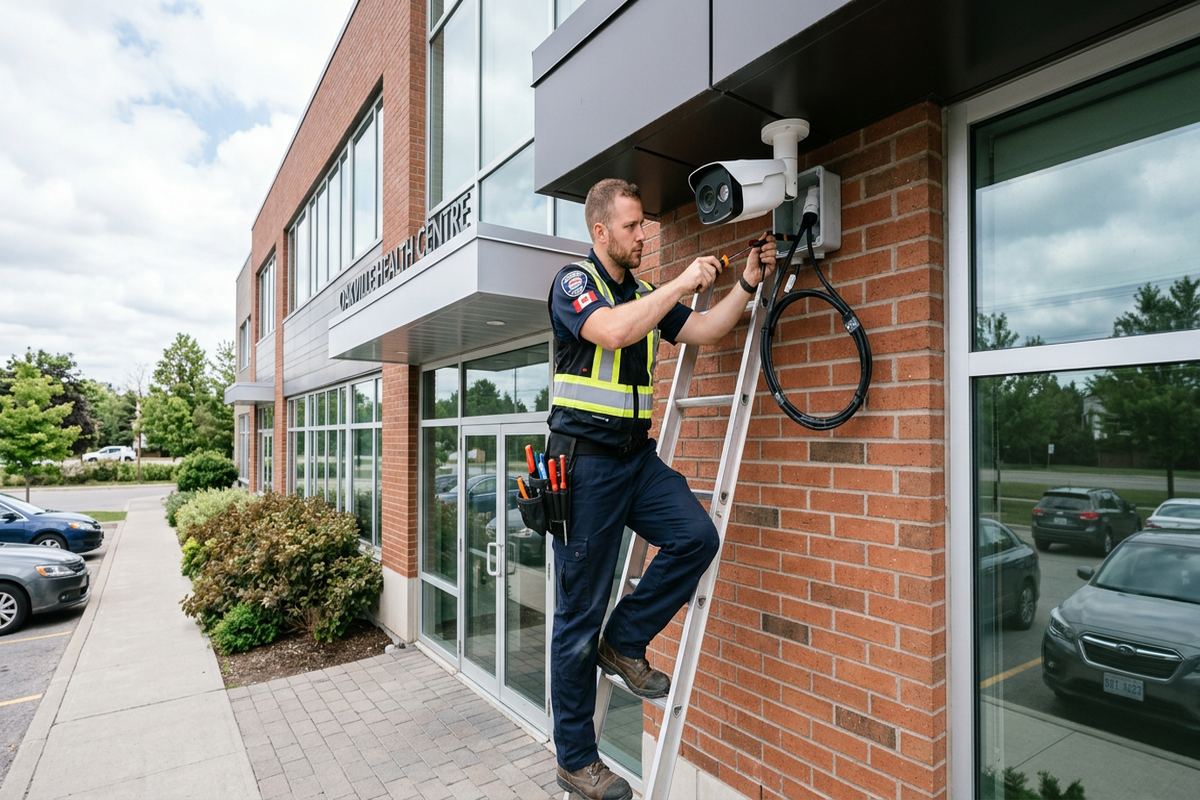
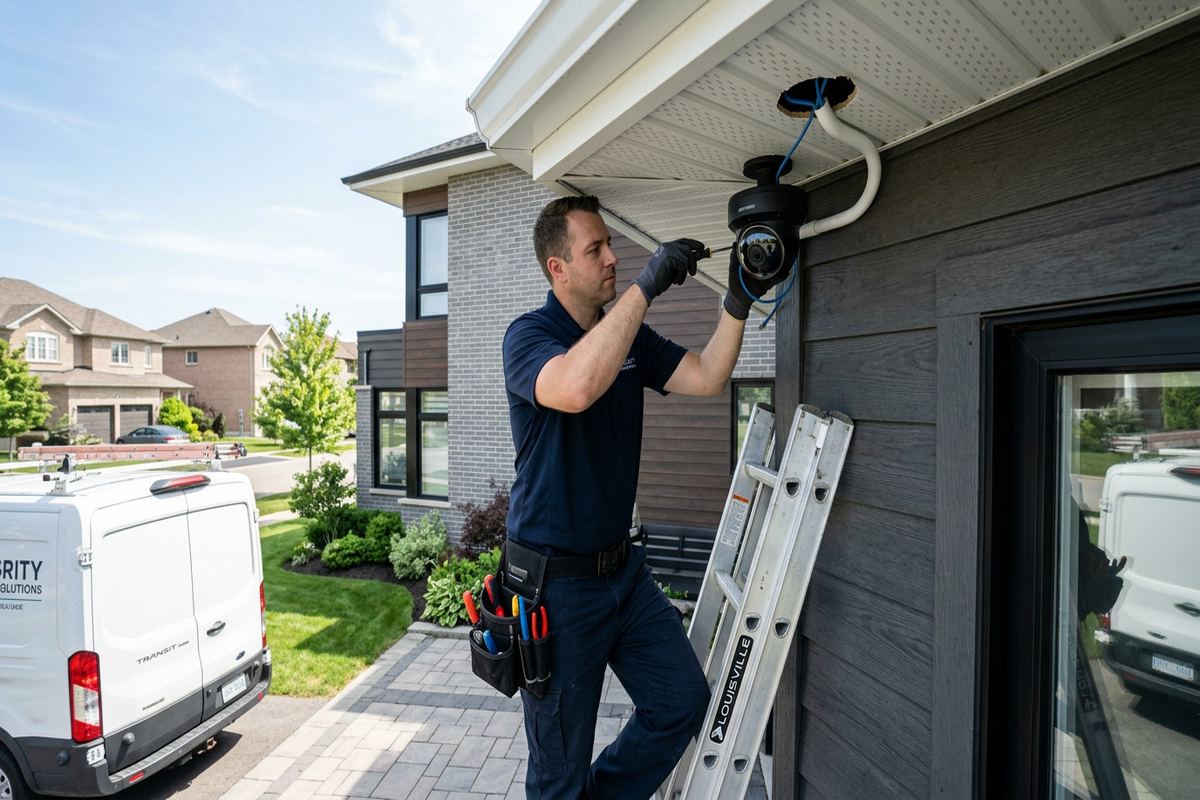
Exterior installation in Burlington must account for winter moisture, repeated freeze-thaw cycles and wind-driven precipitation. A weather-rated camera still depends on a properly prepared mounting surface, protected cable entry and suitable junction method. We avoid leaving exposed connectors behind loosely fitted bases or relying on surface sealant as the only barrier. Penetrations are positioned to limit water tracking, and exterior cable is supported and protected where it could be struck or pulled. Device orientation also considers snow accumulation, roof runoff, icicles and seasonal changes that can obscure a lens or stress a mounting point.
Masonry and frame construction require different attachment and routing methods. On brick or concrete, the installer must choose appropriate anchors, avoid damaged joints and plan penetrations without unnecessary disturbance to the wall assembly. Frame walls and clad façades require secure backing or a suitable mounting location, with careful sealing around the cable path. Older commercial units may contain several renovated layers, making drawings unreliable. Where a route cannot be confirmed visually, the scope can identify exploratory work or an alternate surface pathway rather than promising a concealed route that the building cannot reasonably support.
Lakefront exposure and open parking areas can produce glare, blowing snow and rapid lighting changes. Cameras facing low winter sun may need a revised angle or a more controlled field of view, while infrared light can reflect from soffits, walls, signs or nearby glass. Exterior lighting and camera night modes should be assessed together instead of independently. We check the live image after mounting and refine focus, exposure zones and motion settings on site. Final placement also keeps routine lens cleaning and adjustment possible without compromising the intended coverage or creating an unsafe maintenance location.
- Sealed and protected exterior cable entries
- Mounting methods suited to masonry or framing
- Placement clear of runoff and snow buildup
- Night image checked for glare and reflection
- Accessible locations for future maintenance
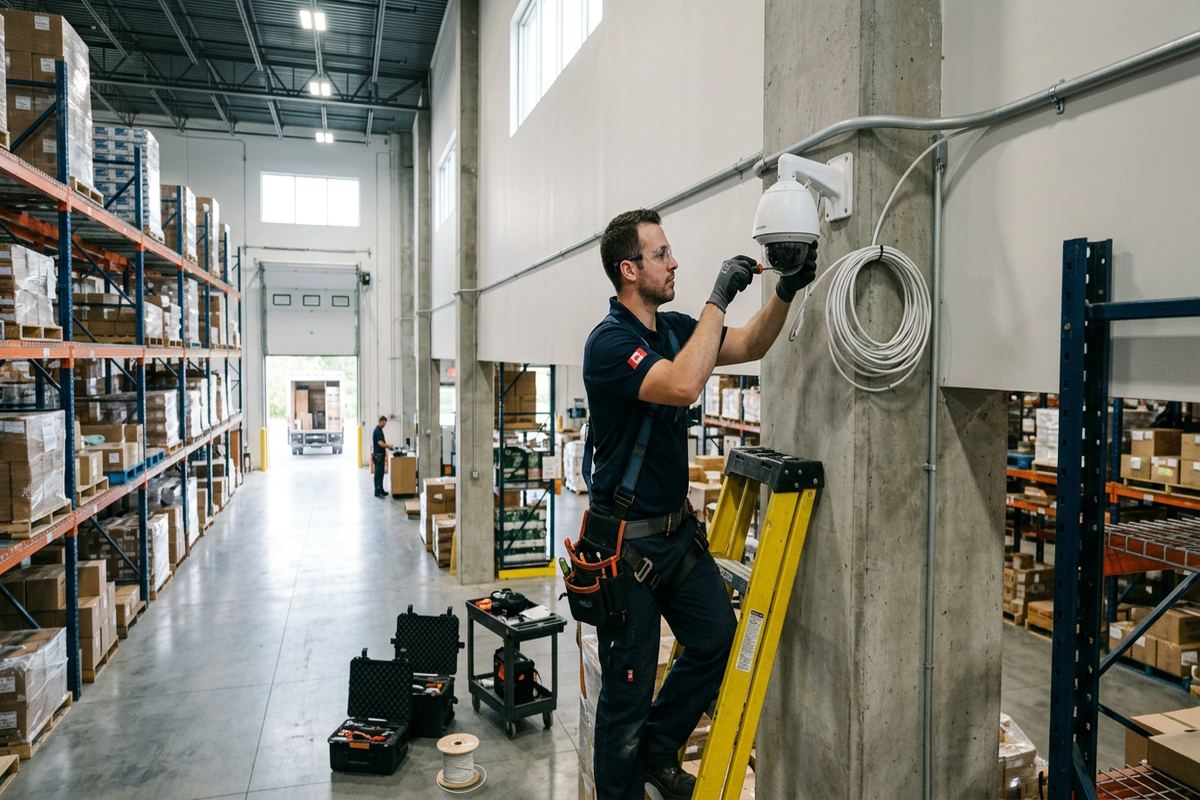
Burlington, Ontario
Commercial security camera installation in Burlington, scoped in writing first
Book a site assessment and get equipment, routes, exclusions, and warranty on paper before anything is installed.
Cabling and Network Design in Burlington Buildings
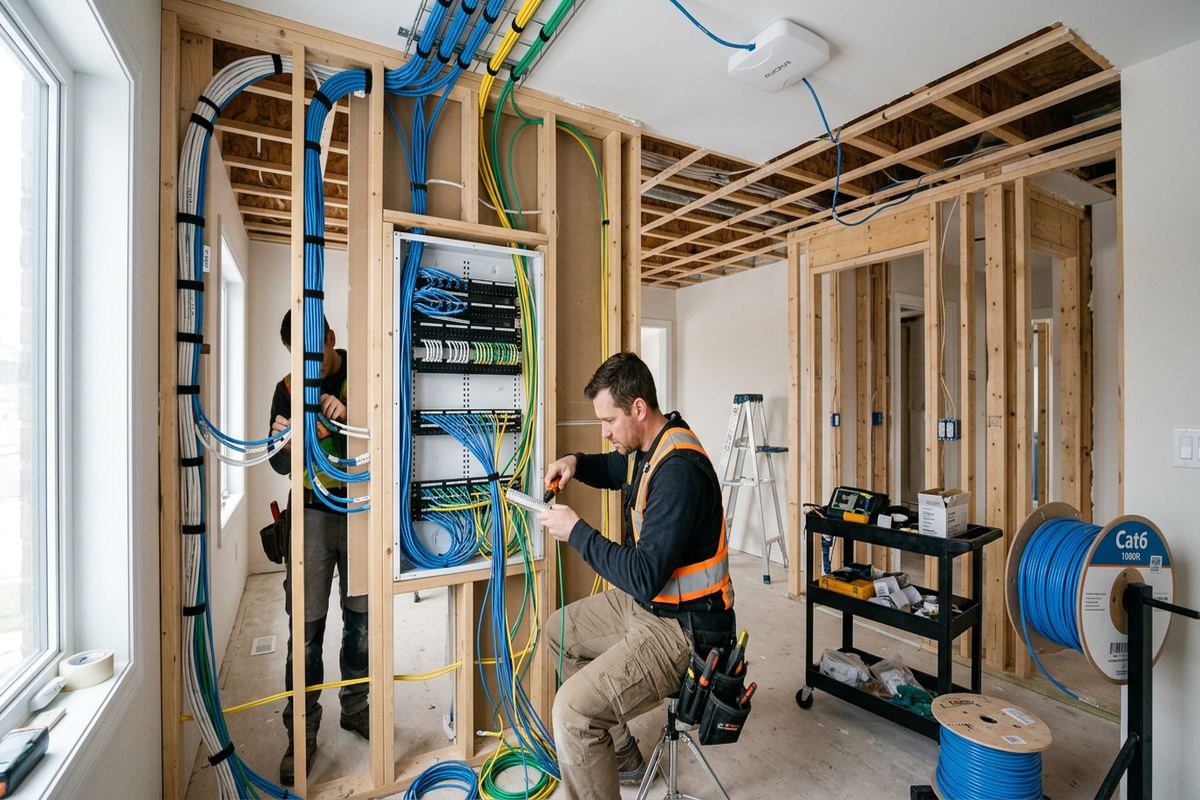
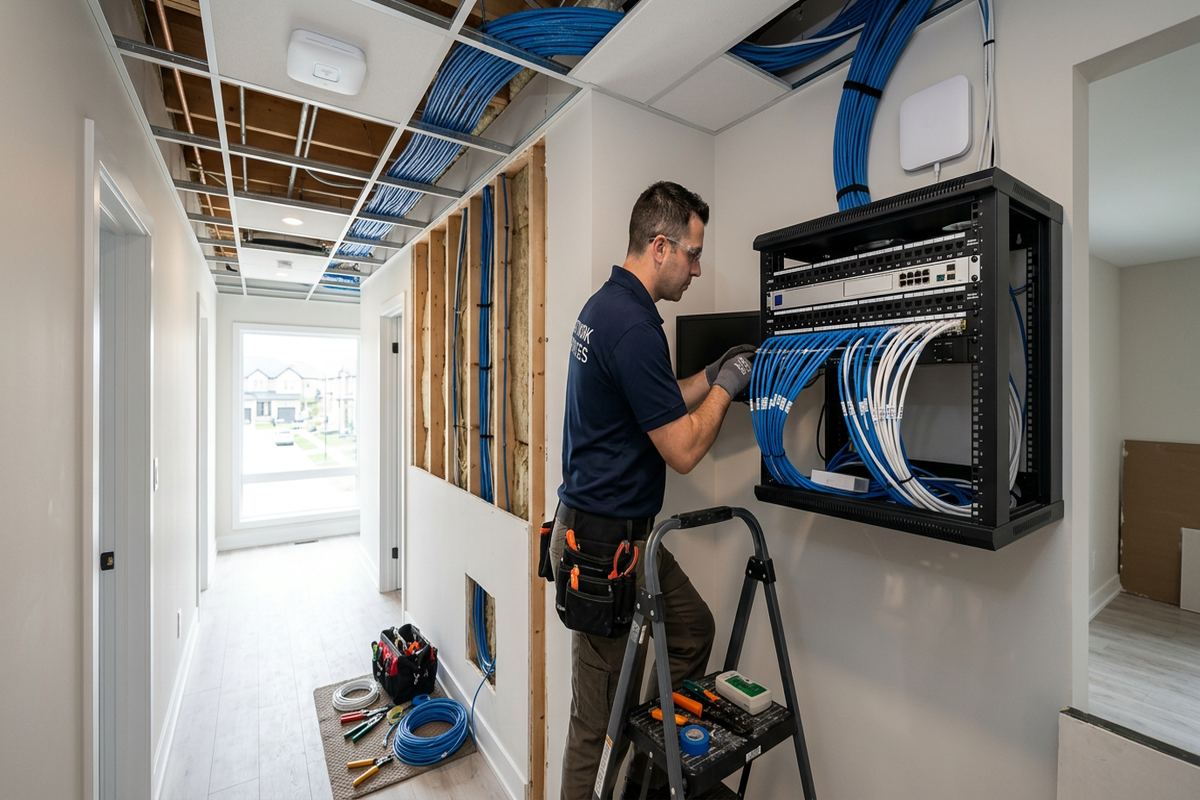
Reliable video depends on the pathway between each camera and the recording or network equipment. UnifiedLink installs continuous labelled cable runs rather than joining short sections in concealed spaces. Routes are planned around ceiling construction, fire separations, electrical interference, mechanical systems and areas that require physical protection. In finished Burlington offices, this may mean using accessible ceiling spaces and coordinated surface raceway where concealment is not practical. In warehouses or industrial units, pathways may follow approved structural routes while remaining clear of doors, storage operations and equipment that could crush, heat or contaminate the cable.
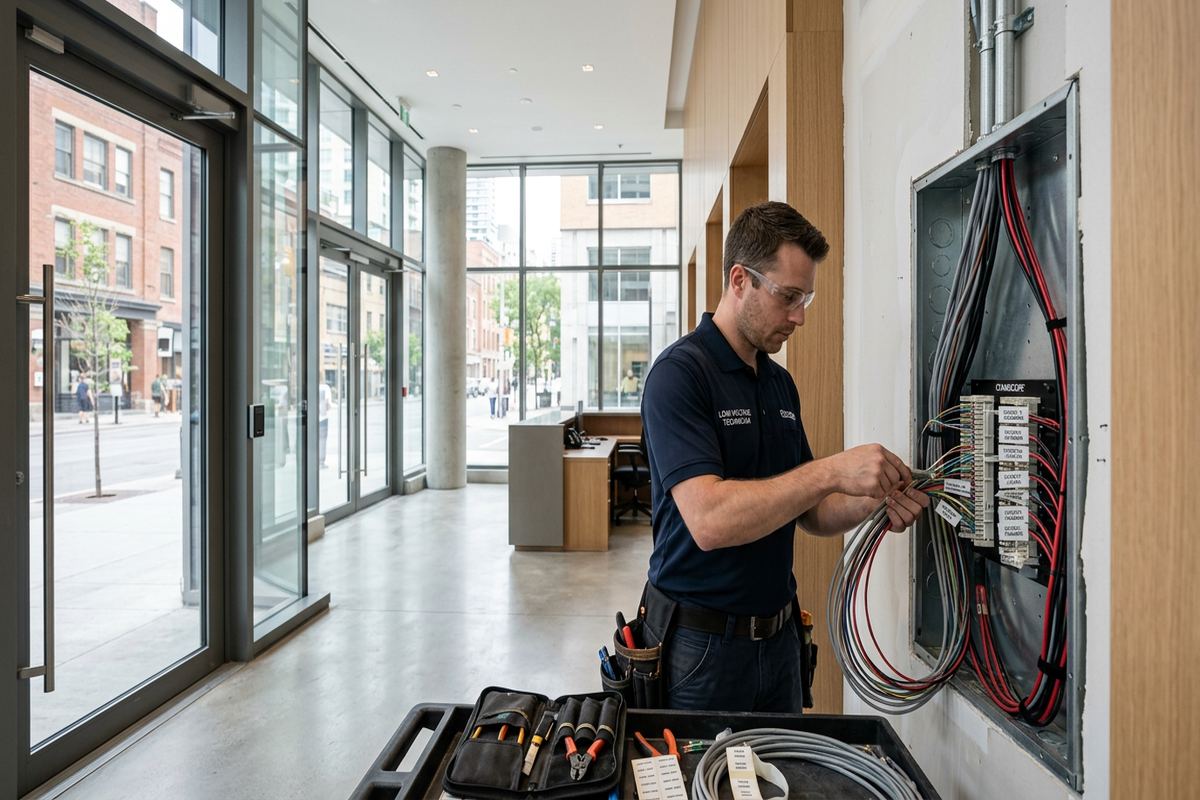
Existing cabling is not assumed to be usable merely because it has compatible connectors. We inspect accessible terminations, labelling, pathway condition and network location before including existing runs in a camera design. Unverified cable can cause intermittent power, reduced link performance or difficult troubleshooting after installation. Where reuse is reasonable, it is identified in the scope along with any limitations. New runs are labelled at both ends and associated with the relevant camera. This provides a clear foundation for commissioning, future service and changes made by the customer’s IT provider or facilities staff.
Networked cameras create ongoing traffic and power requirements that should be considered before devices are connected. We review available switch capacity, Power over Ethernet needs, recorder interfaces, internet dependence and separation from other business systems. Remote viewing can require firewall, application or account configuration, but routine recording should not be designed around an unstable wireless connection when a practical wired route exists. For Burlington tenants, network changes may also require landlord or corporate IT approval. Those dependencies are documented so that access, passwords and authorization are ready when installation and configuration take place.
- Continuous runs without concealed cable joins
- Labels at both ends of every new run
- Power and network capacity reviewed
- Existing cable assessed before proposed reuse
- Routes coordinated with building operations
Recording, Retention and Secure Access
Recording requirements are established by purpose, not by selecting the largest available storage figure. The number of cameras, image resolution, frame rate, scene activity and recording schedule all affect retention. A busy Burlington storefront can generate different storage demand from a quiet interior corridor, even when both use similar cameras. We discuss how far back footage may need to be reviewed and whether continuous, scheduled or motion-based recording is appropriate. The proposed configuration is then documented as an operating design, while recognizing that actual retention can vary as scenes and activity levels change.
Remote access should support business operations without leaving ownership unclear. UnifiedLink configures the system on site and hands it over using credentials controlled by the customer. Shared installer passwords and undocumented personal accounts are avoided. Authorized users can be assigned access appropriate to their roles, such as live viewing, playback or administrative control. If the system uses a manufacturer portal or mobile application, account ownership and recovery information should remain with the business. Multifactor authentication is enabled where supported and practical, and default credentials are changed before the completed system is placed into regular service.
Exporting useful footage requires more than finding the correct time. Staff may need to select a camera, define an interval, preserve the original recording and create a playable export for an insurer, property manager or investigating authority. During handover, we explain the installed playback and export process and identify any required software. System time, time zone and daylight-saving behaviour are checked because inaccurate timestamps can weaken otherwise clear video. Recording health, storage warnings and camera connection status are also reviewed, giving the customer a practical method for confirming that the system continues to operate.
- Retention planned around actual scene activity
- Customer-controlled administrator credentials
- Role-based access where the platform supports it
- Time and daylight-saving settings verified
- Playback and footage export explained
Installation in Active Burlington Workplaces
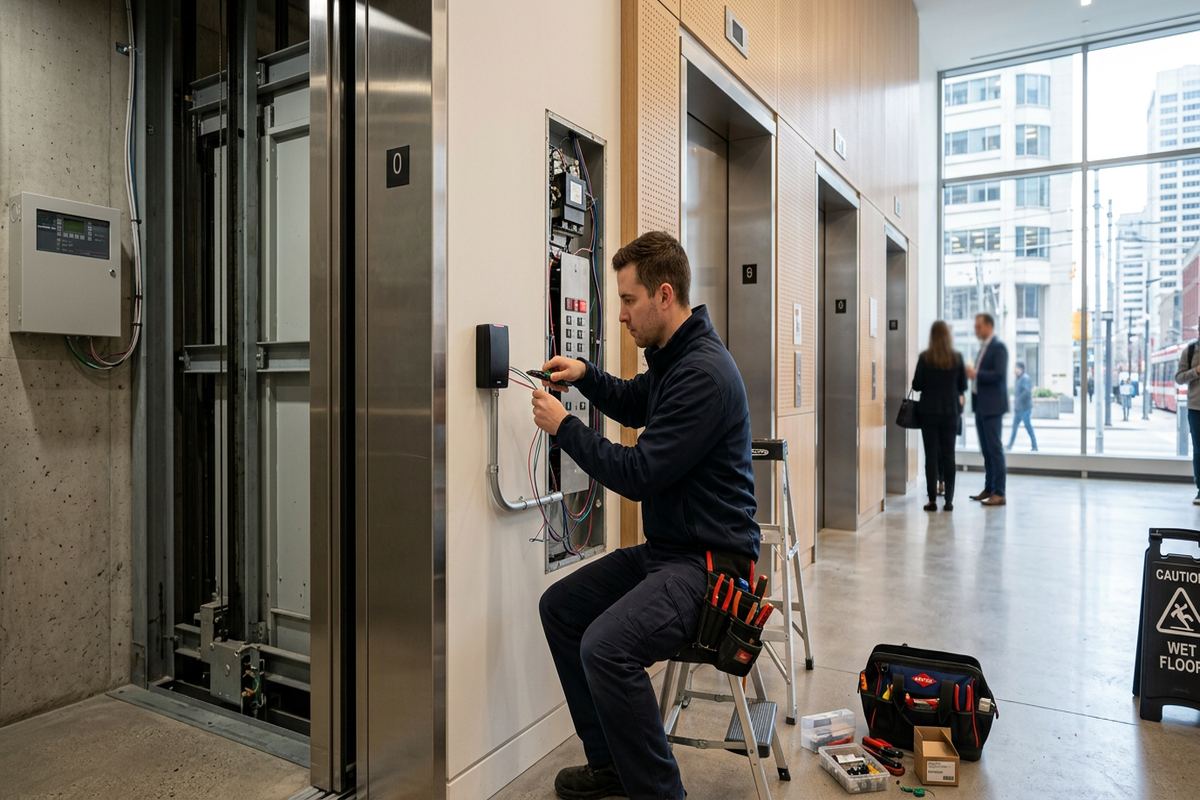
Commercial camera work often takes place while employees, customers or tenants continue using the property. Before installation, we confirm access times, work zones, ceiling restrictions, alarm procedures and any areas containing sensitive operations. Cable pulls and ladder work can then be sequenced to limit disruption and keep pathways controlled. In small Burlington plazas, coordination may include shared rear corridors, neighbouring units or parking spaces used for deliveries. The project scope identifies assumptions about access and working conditions so that unexpected closures, locked rooms or unavailable lifts do not quietly change the installation method.
Tenanted and multi-unit buildings may require approval before any exterior device, penetration, pathway or equipment cabinet is installed. A business owner’s authorization does not always replace consent from the landlord, condominium corporation or property manager. This is particularly relevant for shared façades, underground garages, common corridors and telecommunications rooms. We can provide the proposed locations and routing information needed for review, but the customer remains responsible for securing required property approvals unless the written scope states otherwise. Work begins only when the relevant access and installation permissions are in place.
Different areas of Burlington present different coordination issues. Downtown Burlington businesses may have constrained loading and public sidewalks, while units in Alton Village or Orchard may form part of newer mixed-use developments with controlled service spaces. Millcroft, Roseland and Tyandaga properties can include professional offices adapted from residential forms or commercial sites beside established neighbourhoods. Camera placement in these settings should account for property boundaries, nearby homes and shared access. The objective is to cover defined business risks without treating every visible public or neighbouring area as a surveillance target.
- Work zones planned around staff and customers
- Access and shutdown requirements confirmed beforehand
- Landlord or condominium approvals identified
- Shared spaces coordinated with property management
- Camera views limited to defined business needs
Commissioning and Handover in Burlington
Commissioning confirms whether the installed system performs the job described in the scope. Each camera is checked for connection, naming, orientation, focus and expected field of view. Recording and playback are tested, along with motion rules, schedules and user permissions where included. Exterior images are reviewed for obstructions and likely night-time reflection, although some seasonal conditions may require later observation by the customer. In Burlington locations with changing storefront displays or loading activity, the final check is completed under realistic site conditions whenever possible rather than relying only on an empty-room image.
The handover gives the customer control of the completed installation. Administrator credentials are created for the customer, device names are made understandable and authorized viewing accounts are confirmed. We provide an as-built record showing installed device locations and cable identification, together with relevant equipment information. The written record notes material departures from the original plan when site conditions required an approved change. Equipment ownership and warranty details remain aligned with the accepted scope, reducing uncertainty about who controls the system, which components were installed and what information is needed for future support.
A short operational review is included so responsible staff can use the functions relevant to their roles. This can cover live view, playback, exports, user management and basic status checks, depending on the installed platform. We also explain practical maintenance such as keeping exterior lenses clear, checking recorder warnings and reviewing views after shelving, signs or landscaping change. The handover is not a substitute for the customer’s privacy, employment or evidence-handling policies. It provides the technical information needed to operate the Burlington camera system consistently and recognize when further service may be required.
- Every camera checked against its intended view
- Recording, playback and permissions tested
- Customer credentials established during handover
- As-built device and cable record provided
- Basic operation and status checks reviewed
Upgrades and Service for Burlington Camera Systems
An existing camera system may be improved without replacing every component, but compatibility must be verified first. We assess camera condition, recorder capacity, cable type, power method, network requirements and the customer’s current access to administrative accounts. Older analogue, hybrid and network systems can each present different constraints. In mid-century bungalows converted for commercial use, previous renovations may have left inaccessible cabling or equipment in unsuitable residential spaces. Small Burlington plazas may also contain undocumented shared pathways. The assessment separates reusable infrastructure from components that cannot reliably support the required coverage or recording functions.
Common upgrade requests include adding cameras, improving a weak entrance view, replacing failed equipment, extending retention or moving from local-only viewing to controlled remote access. Each change can affect storage, bandwidth, power and licensing, so an apparently simple addition should be checked against the whole system. We do not assume that a new camera will work correctly with an older recorder or proprietary platform. The written proposal identifies planned reuse, new equipment, configuration work and exclusions. This gives the customer a practical basis for comparing a targeted repair with a broader system replacement.
Service requests received during business hours are answered the same day, while after-hours requests are answered the next business day. The timing of a Burlington site assessment depends on the service required and travel distance. Before a visit, useful details include the property address, system make, number of affected cameras, visible error messages and whether administrator access is available. For intermittent issues, saved examples and approximate event times can help distinguish camera, cabling, network, power and recorder problems. Any recommended corrective work is documented before equipment is changed or new cable is installed.
- Existing equipment assessed before reuse
- Compatibility checked across cameras and recorders
- Upgrade effects on storage and power reviewed
- Fault details documented before corrective work
- One contractor accountable for scoped changes
Burlington neighbourhoods we cover
- Downtown Burlington
- Aldershot
- Alton Village
- Millcroft
- Roseland
- Tyandaga
- Orchard
Commercial security camera installation in Burlington — common questions
How many cameras does my Burlington business need?
The number depends on the views required, not only the building’s size. A Burlington shop may need separate cameras for the entrance, transaction area, rear door and parking approach, while an industrial unit may prioritize loading and inventory zones. A site assessment identifies each camera’s purpose, likely obstructions, lighting and recording detail before equipment quantities and pricing are set.
Can you install cameras in a leased commercial unit?
Yes, provided the required permissions are in place. Burlington tenants may need written landlord or property-management approval for exterior mounting, wall penetrations, common-area cabling or access to telecommunications rooms. We can document proposed device locations and cable routes for review. The written scope also identifies which approvals and site access arrangements must be completed before installation begins.
Will exterior cameras handle Burlington winters?
Exterior cameras are selected and installed for their operating environment, but weather resistance depends on more than the device rating. In Burlington, mounting and sealing must address moisture, freeze-thaw cycles, snow, runoff and wind-driven precipitation. We protect cable entries, use suitable mounting methods and check for infrared reflection. Placement also considers whether the lens can be reached safely for seasonal cleaning.
Can you reuse our existing camera cabling?
Existing cable can sometimes be reused after its type, condition, termination and route are assessed. We do not assume a cable is suitable because it has a familiar connector. In older Burlington properties and renovated plazas, undocumented joins or damaged pathways may affect reliability. The written scope identifies any planned reuse, limitations and replacement runs. All new camera cabling is installed as continuous labelled runs.
Who controls the camera system accounts?
The customer controls the completed system accounts. UnifiedLink performs on-site configuration, changes default credentials and creates administrator access using the customer’s own information. Where supported, separate user roles and multifactor authentication can be configured. At handover, the Burlington customer receives account details, equipment information and an as-built record rather than depending on an installer’s personal account for routine system access.
How soon will you assess my Burlington property?
Requests sent during business hours are answered the same day, and after-hours requests are answered the next business day. Site assessment timing depends on the service and travel distance. When contacting us, include the Burlington property type, approximate camera count, priority areas, tenancy or approval constraints and any existing equipment. These details help determine what access and technical information will be needed during the assessment.
Coverage in Burlington is confirmed against the address before we quote. See everything we install in Burlington or the province-wide commercial security camera installation page.