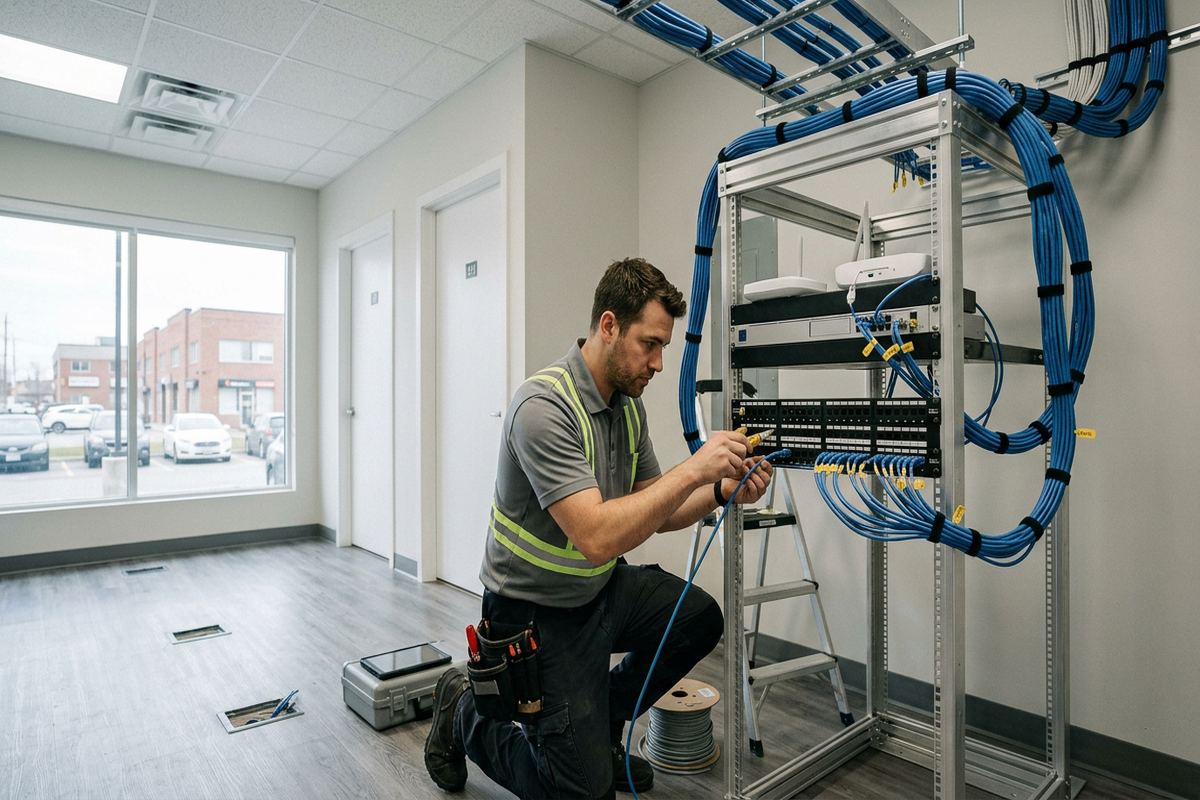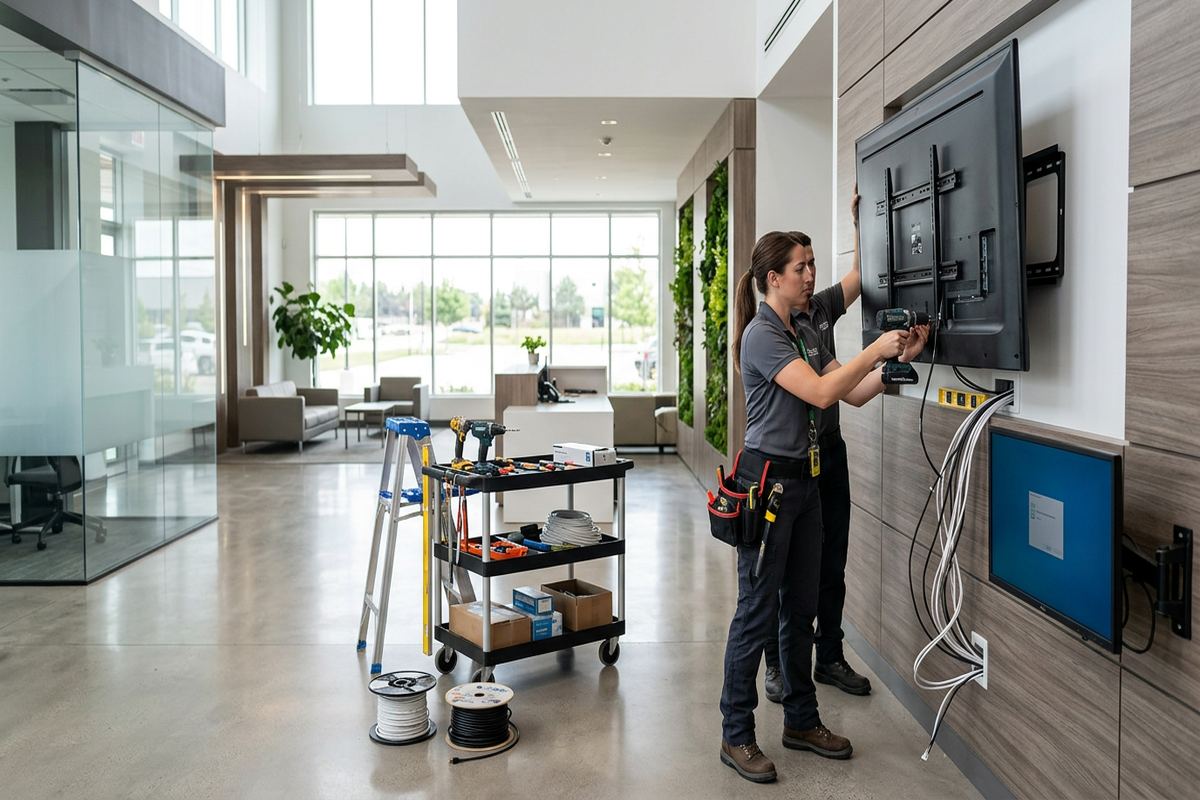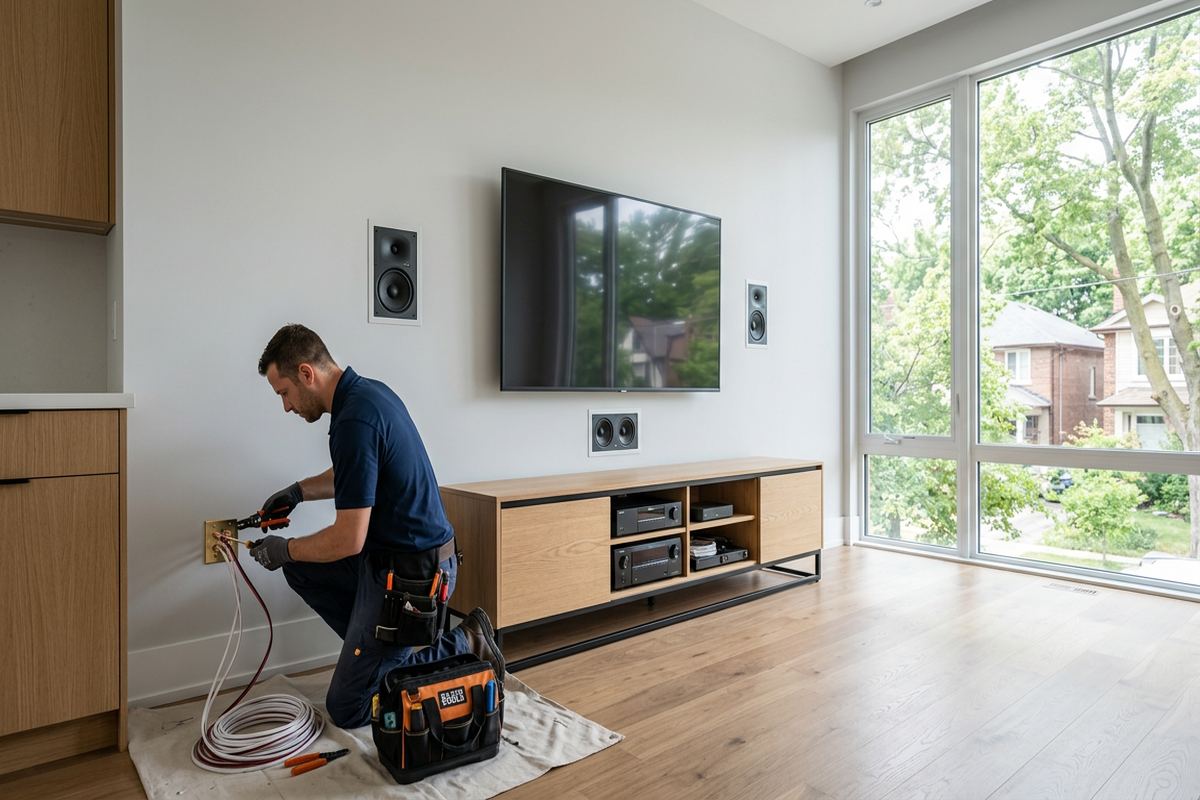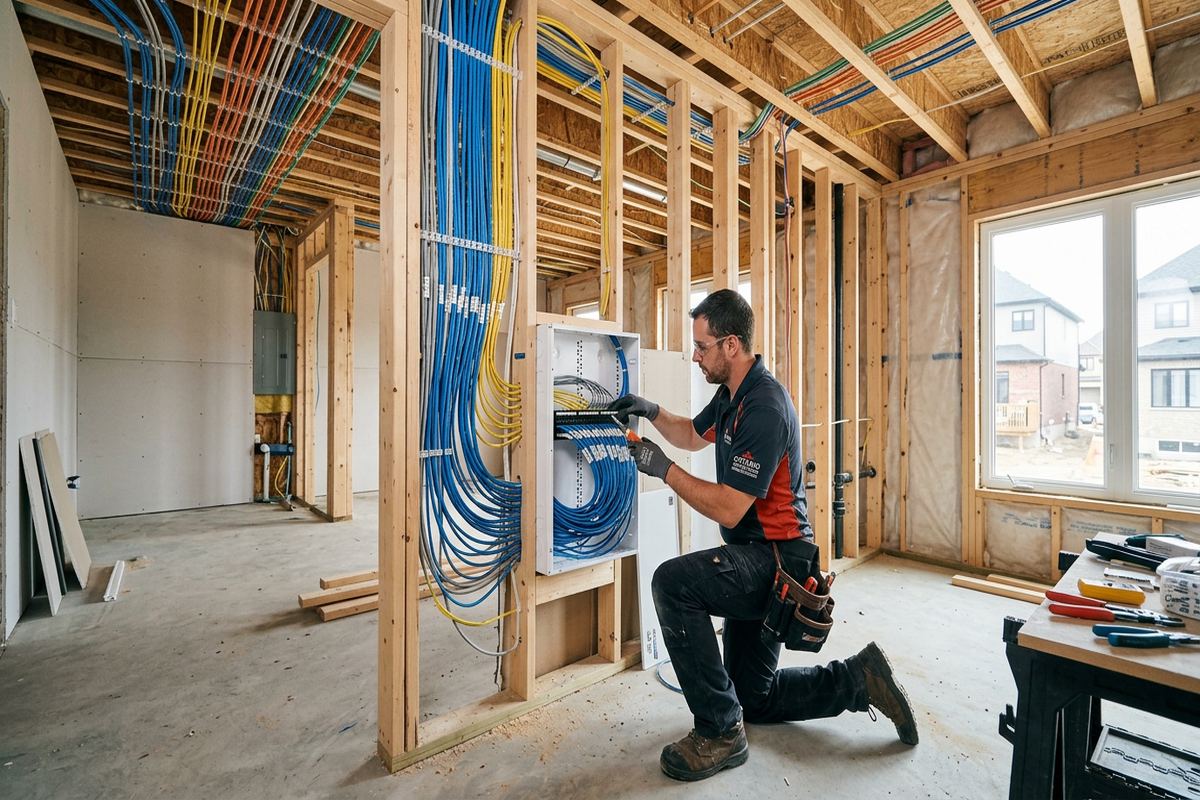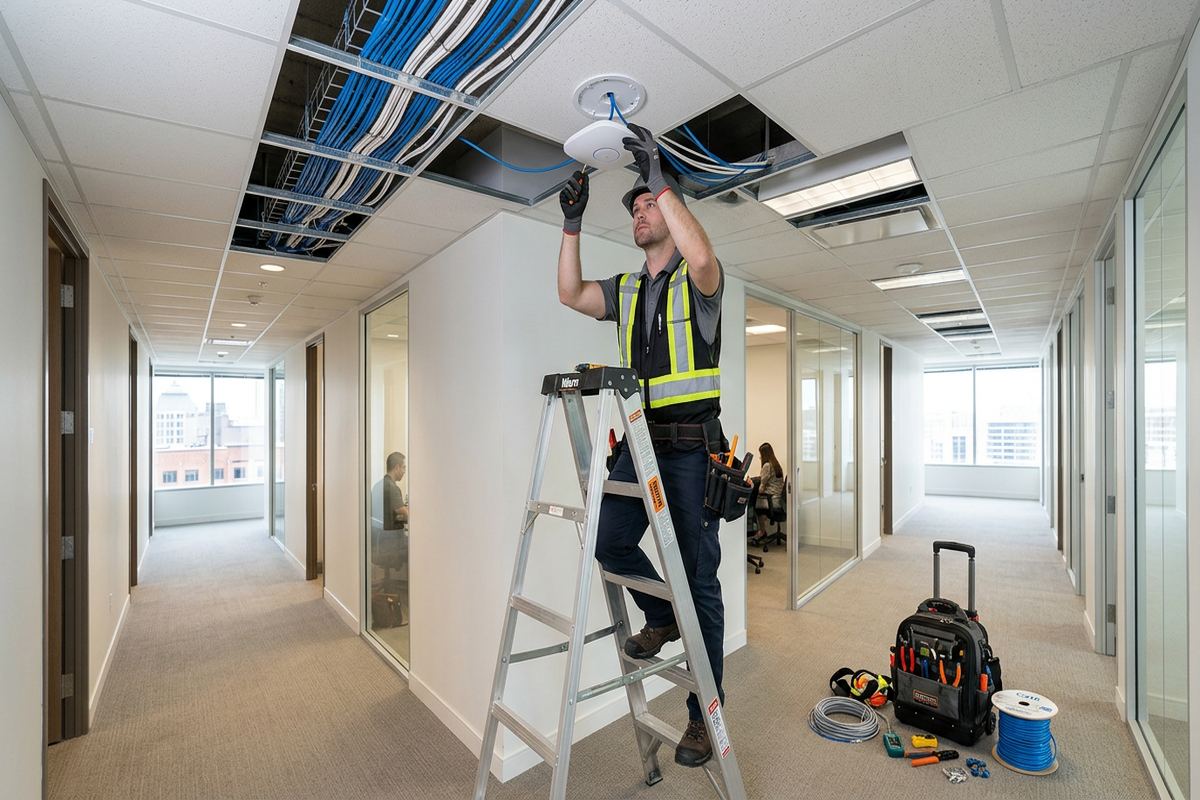
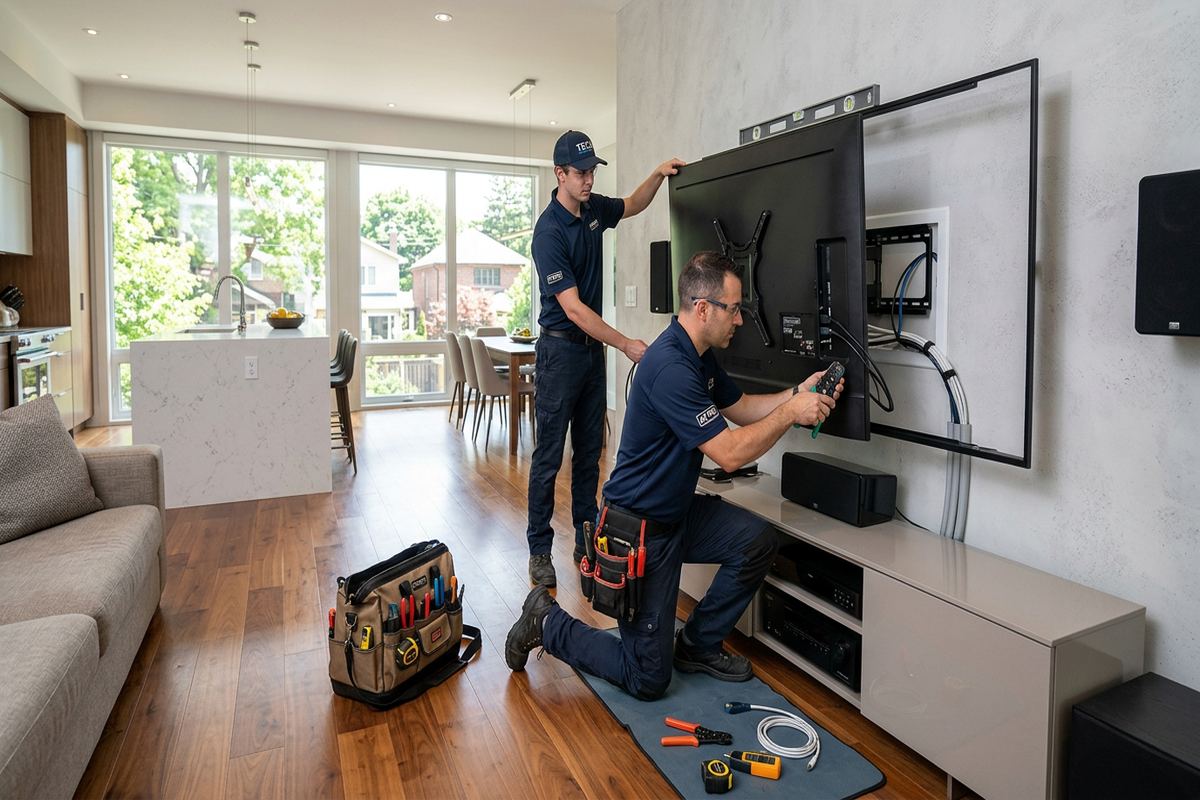
UnifiedLink installs outdoor televisions for homes, condos and commercial properties in Brockville and surrounding Eastern Ontario communities. Each project starts with an assessment of the wall, viewing area, power, network connection and weather exposure. We plan secure mounting, discreet cable routes, equipment protection and practical access for future service.
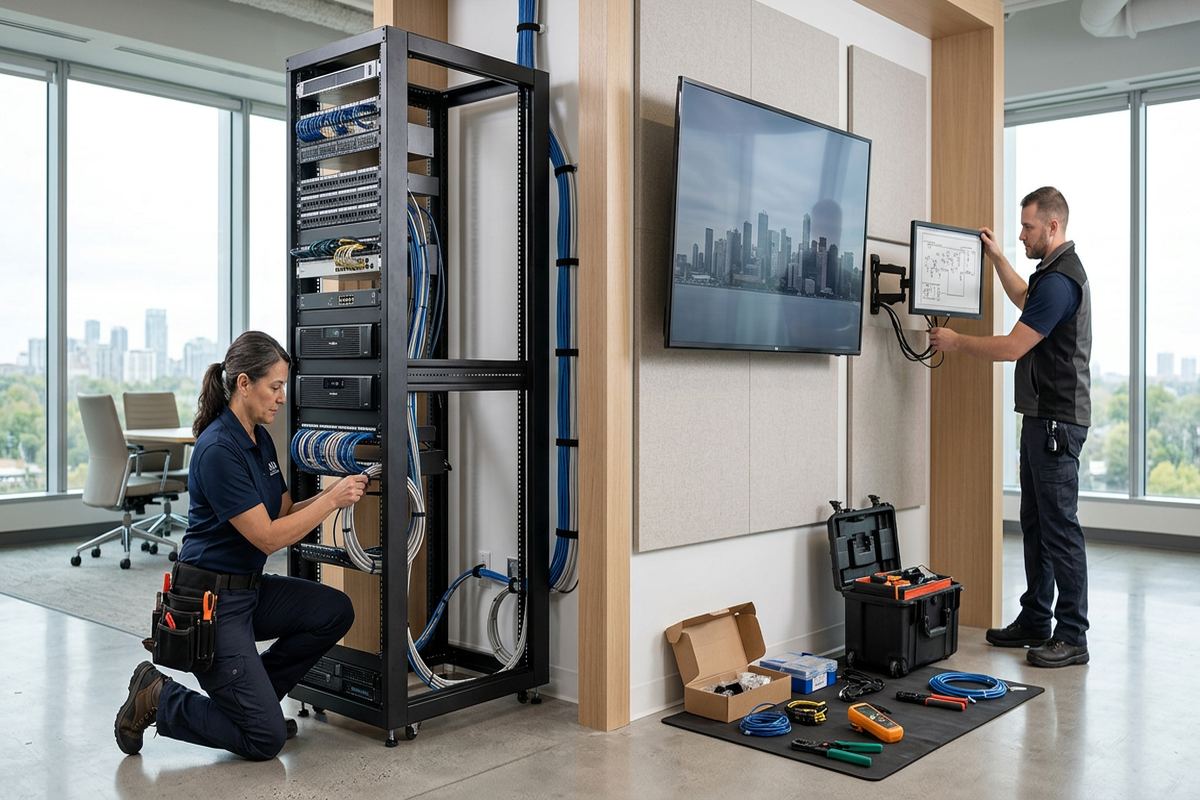
Outdoor TV Installation Planning in Brockville
A reliable outdoor television installation begins with the location rather than the screen. During a Brockville site assessment, UnifiedLink reviews the viewing distance, seating layout, glare, prevailing weather exposure and available wall structure. We also identify where power, network cabling, source equipment and audio connections can be placed without creating exposed cords or awkward service points. The assessment helps determine whether the proposed area suits a fixed, tilting or articulating mount. It also identifies drainage, ventilation and access concerns before holes are drilled or equipment is ordered for the project.
Outdoor screens face conditions that an indoor television never encounters. Brockville winters bring cold temperatures, snow, ice and repeated freeze-thaw cycles that can affect mounting points, seals and exposed connections. Summer glare and heat can also make an otherwise convenient wall difficult to use. We consider whether the display is under a covered patio, mounted on an open wall or installed in a partially enclosed structure. The written scope records the intended equipment, cable routes, device placement, exclusions, equipment ownership and warranty so the installation plan is clear before work begins.
Viewing comfort matters as much as structural attachment. A screen mounted too high may look tidy when the patio is empty but become uncomfortable during a full game or long presentation. We use the expected seating position and normal sightline to establish a practical height, then confirm that doors, windows, lights and furniture will not interfere. Articulating mounts require additional clearance and create greater leverage on the wall, so the substrate must support that movement. For busy outdoor areas, we also consider accidental contact, circulation routes and safe access to controls.
- Viewing distance and screen-height review
- Sun, rain and wind exposure assessment
- Mount type matched to wall structure
- Planned access for maintenance and replacement
- Written scope before installation
Mounting on Brockville Masonry and Frame Walls
Stone heritage homes in Downtown Brockville require a different mounting approach from newer frame construction in North Brockville or Centennial. Natural stone, brick, mortar joints, siding and structural framing each behave differently under load. The visible exterior finish does not always reveal where a dependable attachment can be made, particularly after renovations or additions. UnifiedLink checks the proposed surface and selects mounting locations that limit unnecessary disturbance. On heritage masonry, discreet, low-impact placement is especially important because careless drilling can damage stone faces, weak mortar or finishes that are difficult to match.
Frame walls require confirmation that the television mount can connect to suitable framing or properly designed backing. Fastening only through siding, cladding or exterior sheathing does not provide the same support as attachment to structural material. Where the wall contains thick insulation, furring or uneven finishes, the mounting assembly may need spacers or other planned components that maintain a stable, weather-resistant connection. Cable penetrations must also avoid wall cavities where water could travel unnoticed. The goal is a firm installation without compressing cladding, creating movement or leaving openings vulnerable to moisture entry.
Masonry presents its own variables, including material condition, joint depth and hidden voids. Older Brockville buildings may contain multiple wall layers, repairs from different periods or interior finishes that restrict cable access. Before proceeding, we consider whether brick, stone, concrete or a mortar joint offers the appropriate attachment point for the selected load. Drilling locations are kept deliberate and limited. If the proposed wall is unsuitable, the scope may recommend another position, a purpose-built support or preparatory work rather than forcing an installation that could damage the building or perform poorly.
- Attachment matched to the actual substrate
- Low-impact planning for heritage stone
- Structural framing located where accessible
- Cladding compression and movement considered
- Deliberate, limited wall penetrations
Weatherproof Connections and Exterior Sealing
Exterior sealing is not simply a bead of caulking around a cable. Every penetration needs a route and termination method that discourages water from following the cable into the building. We plan drip loops where appropriate, use exterior-rated materials for exposed runs and position connection points away from direct runoff whenever practical. Penetrations are sealed to suit the surrounding surface, whether the wall is masonry, siding or another exterior finish. Brockville freeze-thaw cycles make this detail important because trapped moisture can expand, loosen materials and gradually enlarge an otherwise small opening.
Connections behind an outdoor television should remain protected while still being accessible for service. Oversized plugs, power adapters, streaming devices and baluns can make a shallow installation difficult, particularly when a low-profile mount is requested. UnifiedLink reviews connection depth before final mounting and avoids crushing cables between the screen and wall. Where equipment needs a separate enclosure or an indoor location, that arrangement is documented in the scope. Cable entries are oriented and secured so movement from wind, temperature changes or routine screen adjustment does not pull directly on connectors or compromise seals.
Not every product described as weather resistant is suitable for every exposed location. A covered porch in Butler's Creek may receive wind-driven rain, while a riverfront property can have open exposure and stronger wind across the viewing area. Product placement must follow the equipment manufacturer’s environmental, ventilation and mounting requirements. We identify sheltered options where possible and discuss seasonal removal when equipment is not intended for year-round use. Covers can reduce dirt and incidental exposure when correctly fitted, but they do not convert an indoor television into equipment designed for unrestricted exterior conditions.
- Exterior-rated cable for exposed sections
- Sealed wall and cable penetrations
- Serviceable, protected connection points
- Drip loops used where appropriate
- Manufacturer environment requirements reviewed
Brockville, Ontario
Outdoor TV installation in Brockville, scoped in writing first
Book a site assessment and get equipment, routes, exclusions, and warranty on paper before anything is installed.
Power, Cabling and Wi-Fi for Brockville Patios
An outdoor television needs more than a nearby receptacle. Power must be appropriately located for the mounting position, protected from weather and arranged without extension cords crossing walking areas. UnifiedLink assesses the display and low-voltage requirements, but electrical receptacle installation or modification must be completed by the appropriate electrical contractor when needed. We coordinate the television location with that work so power and signal connections do not conflict with the mount. The written scope identifies electrical exclusions and dependencies, helping the property owner understand what must be ready before the display installation proceeds.
Hard-wired network cabling is often the most stable connection for streaming, control systems and commercial content, particularly where exterior walls reduce indoor Wi-Fi coverage. UnifiedLink installs continuous labelled cable runs where the route permits, avoiding hidden joins that complicate troubleshooting. Cable selection depends on whether the run is indoors, outdoors, underground or exposed to sunlight and moisture. At the television, connections are arranged to preserve bend radius and mounting clearance. At the network end, labels and the as-built record make it easier to identify the outdoor display connection during future changes or service.
Wi-Fi can be practical when running a network cable is disruptive, but signal strength measured indoors does not guarantee reliable performance on a Brockville patio. Stone walls, foil-backed insulation, masonry and distance from the access point can weaken service. We test or assess coverage at the intended screen location and consider the expected streaming demand. If coverage is insufficient, the scope can include an appropriately positioned access point or a wired connection. The aim is to address the underlying link rather than rely on repeated buffering, temporary extenders or source devices placed where weather can damage them.
- Power location coordinated with the mount
- Continuous labelled network cable runs
- Outdoor-rated cable selected where needed
- Wi-Fi coverage checked at viewing area
- Electrical work clearly identified as an exclusion
Outdoor Audio and Source Equipment Integration
Television speakers may be difficult to hear outdoors because sound disperses and competes with traffic, wind and nearby activity. Raising the volume is rarely the most controlled solution, especially in closely spaced residential areas. UnifiedLink can plan outdoor-rated speakers, a soundbar or integration with an existing audio system according to the seating area and available equipment. Speaker position is selected to direct sound toward listeners rather than neighbouring properties. Cable routes, amplification and control methods are included in the scope so audio is coordinated with the screen instead of added as an exposed afterthought.
Source devices need protected placement and dependable control. Streaming players, receivers, cable boxes and video distribution equipment may not be designed for outdoor temperature swings or moisture. Depending on the system, equipment can be housed indoors and connected to the display through suitable cabling. Control may use the local network, infrared extension, radio-frequency communication or the television’s own applications. We confirm the intended sources during assessment because they affect cable quantity, connection depth and network requirements. On-site configuration includes input selection, picture checks, network connection and basic operation using the customer’s own accounts and credentials.
Commercial patios and shared amenity spaces often need clearer operating rules than a private backyard. Staff may need a straightforward way to select approved content, adjust volume and turn equipment off without accessing network administration or personal accounts. Displays used for menus, information or events can also require scheduled operation or integration with an existing source system. UnifiedLink documents the agreed control arrangement and equipment ownership. One accountable contractor coordinates the low-voltage display, network and audio portions, reducing gaps between separately installed components while keeping electrical or building work clearly assigned.
- Outdoor audio positioned toward listeners
- Indoor placement for sensitive source equipment
- Streaming and input configuration on site
- Control method planned before cabling
- Customer-owned accounts used at handover
Riverfront and Heritage Installation Details
Riverfront properties around Brockville call for careful consideration of wind exposure, reflected glare and corrosion risk. A location that appears sheltered from above may still receive wind-driven rain from the side, and an articulating screen can present a larger surface to gusts when extended. We review whether the mount should remain fixed, tilt within a limited range or move fully. Hardware and equipment must suit the specified environment, while cable entries need protection from runoff. The installation plan also keeps the screen reachable enough for inspection without placing it where casual contact is likely.
Heritage character can be preserved by choosing routes that follow existing architectural lines and by limiting visible surface cable. On stone homes, the shortest route is not always the least disruptive if it crosses prominent masonry or requires several difficult penetrations. We may instead evaluate an interior path, a less visible elevation or an existing service route. Any proposal remains subject to the building’s condition and applicable owner approvals. UnifiedLink records cable paths and device positions before work, then provides an as-built record so later owners or contractors can understand where the installation runs.
Sunlight reflected from the St. Lawrence River or light-coloured neighbouring surfaces can affect picture visibility at certain times of day. Screen brightness alone may not solve direct reflection, and operating a display at maximum output can increase heat. During assessment, we compare likely viewing angles, nearby shade and the position of the sun during expected use. A modest relocation or tilting mount can sometimes provide better results than selecting a larger screen. For open riverfront areas, we also consider whether seasonal furniture changes will alter sightlines or expose the equipment to impact.
- Wind exposure considered before mount selection
- Glare reviewed from normal seating positions
- Discreet routes for stone heritage walls
- Prominent masonry penetrations minimized
- As-built cable route record supplied
Brockville Condos, Rentals and Commercial Sites
Condo owners and tenants should obtain written approval before exterior mounting or drilling. Balconies, exterior walls and shared amenity areas may be common elements even when they are used exclusively by one unit. Rules can restrict screen placement, visible cabling, sound levels, working hours and attachment to railings or cladding. Landlords may impose similar conditions for rental properties. UnifiedLink can provide a defined proposed scope for review, but the customer remains responsible for securing permissions. Work proceeds only after required approvals and site access arrangements are confirmed for the Brockville property.
Businesses along commercial strips or in industrial units may need an outdoor display for a staff area, customer patio, loading zone or covered entrance. These locations require attention to public access, impact risk, operating hours and cable protection. A residential-style route may not be suitable where carts, deliveries or maintenance equipment pass close to the wall. We assess the mounting height and equipment access without creating unsafe servicing conditions. Where a lift, special access or coordination with site management is required, those needs are identified during assessment and included in the written scope.
Shared spaces require a clear handover because several people may operate the television. We configure the agreed network, inputs and connected devices on site, then show the designated customer representative how to use the system. Credentials belong to the customer and are not retained as installer-owned accounts. The handover includes an as-built record showing relevant cable routes, termination points and installed devices. Equipment ownership and warranty responsibilities are stated in the scope, which is particularly useful for landlords, condo boards and businesses where the person approving the work may not be the daily operator.
- Condo and landlord approval requirements identified
- Public access and impact risks reviewed
- Commercial operating needs documented
- Customer credentials used for configuration
- As-built record provided at handover
Assessment, Installation and Handover in Brockville
Every Brockville outdoor TV project starts with enough information to prepare an accurate scope. Initial details can include photographs, the screen model, wall construction, preferred location and available services, but an on-site assessment is completed before pricing. We confirm dimensions, mounting conditions, cable routes, access and any work expected from other trades. Site assessment timing depends on the service and travel distance. Requests sent during business hours are answered the same day, while after-hours requests are answered the next business day. This response wording refers to the enquiry, not a guaranteed installation or assessment appointment.
Before installation, the written scope sets out equipment, cable routes, device placement, exclusions, ownership and warranty. That document helps prevent assumptions about who supplies the television, mount, streaming hardware, network equipment or electrical work. On installation day, surfaces and access conditions are checked again before drilling begins. Continuous labelled cable runs are installed where included, and exterior penetrations are finished using methods appropriate to the surface and exposure. If hidden conditions differ materially from what could be assessed, the issue is discussed before work continues or the agreed route is changed.
Handover is completed with the system operating on the customer’s own credentials. UnifiedLink checks the screen position, connections, selected inputs, network access and any included audio or control functions. The customer receives basic operating guidance and an as-built record of relevant installed routes and devices. We also identify practical maintenance points, such as inspecting covers, seals and exposed cables after severe weather or building work. One accountable contractor remains responsible for the agreed low-voltage scope, making it clear whom the customer should contact about the installation rather than dividing responsibility among unrelated installers.
- On-site assessment before pricing
- Detailed written scope before work
- Labelled cabling and documented routes
- Configuration with customer-owned credentials
- Operating guidance and as-built handover
Brockville neighbourhoods we cover
- Downtown Brockville
- North Brockville
- Rivers Edge
- Butler's Creek
- Centennial
Outdoor TV installation in Brockville — common questions
Can you mount an outdoor TV on a Brockville stone home?
Yes, when the masonry condition and proposed attachment point are suitable. Brockville stone heritage homes need careful assessment because stone faces, mortar joints and hidden wall construction vary. We look for a secure location that limits avoidable drilling and visible cabling. If the preferred wall is unsuitable, we will recommend another position or required preparatory work rather than force an attachment.
Can I use a regular indoor television outside?
That depends on the television manufacturer’s requirements and the amount of exposure. A covered Brockville patio can still receive moisture, cold, heat and wind-driven rain. A cover does not make indoor equipment weather-rated. We review the intended seasonal use and shelter, but the selected display must remain within its specified environmental conditions. Seasonal removal may be appropriate for equipment not intended for winter exposure.
Will my Wi-Fi reach the outdoor TV?
It may, but indoor coverage does not confirm reliable service outside. Brockville stone walls, masonry, insulated exterior assemblies and distance from the router can weaken the signal. We assess coverage at the actual mounting location and consider the streaming demand. When Wi-Fi is inadequate, a continuous labelled network cable or a properly positioned access point can provide a more dependable connection.
Do I need condo or landlord approval?
Usually, approval should be confirmed before any exterior drilling or mounting. Brockville condo walls, balconies, railings and cladding may be common elements subject to specific rules. Tenants also need the property owner’s permission. UnifiedLink can document the proposed equipment position and cable route for review, but the customer is responsible for obtaining all required condo, landlord or property-management approvals before work begins.
How do you protect exterior cable openings?
We plan cable routes to reduce direct exposure, use exterior-rated materials where required and seal penetrations for the surrounding wall finish. Drip loops may be used to keep water from following a cable toward an opening. Brockville freeze-thaw conditions make correct sealing important. Connections are protected while remaining accessible for service, and cables are secured so movement does not pull against connectors or seals.
What happens during the installation handover?
We check the display position, inputs, network connection and any included audio or control equipment. Configuration uses the customer’s own accounts and credentials. The designated Brockville homeowner, tenant representative or business contact receives operating guidance and an as-built record showing relevant routes and devices. The written scope also identifies equipment ownership, exclusions and warranty responsibilities, providing a clear reference for later service or property changes.
Coverage in Brockville is confirmed against the address before we quote. See everything we install in Brockville or the province-wide outdoor tv installation page.