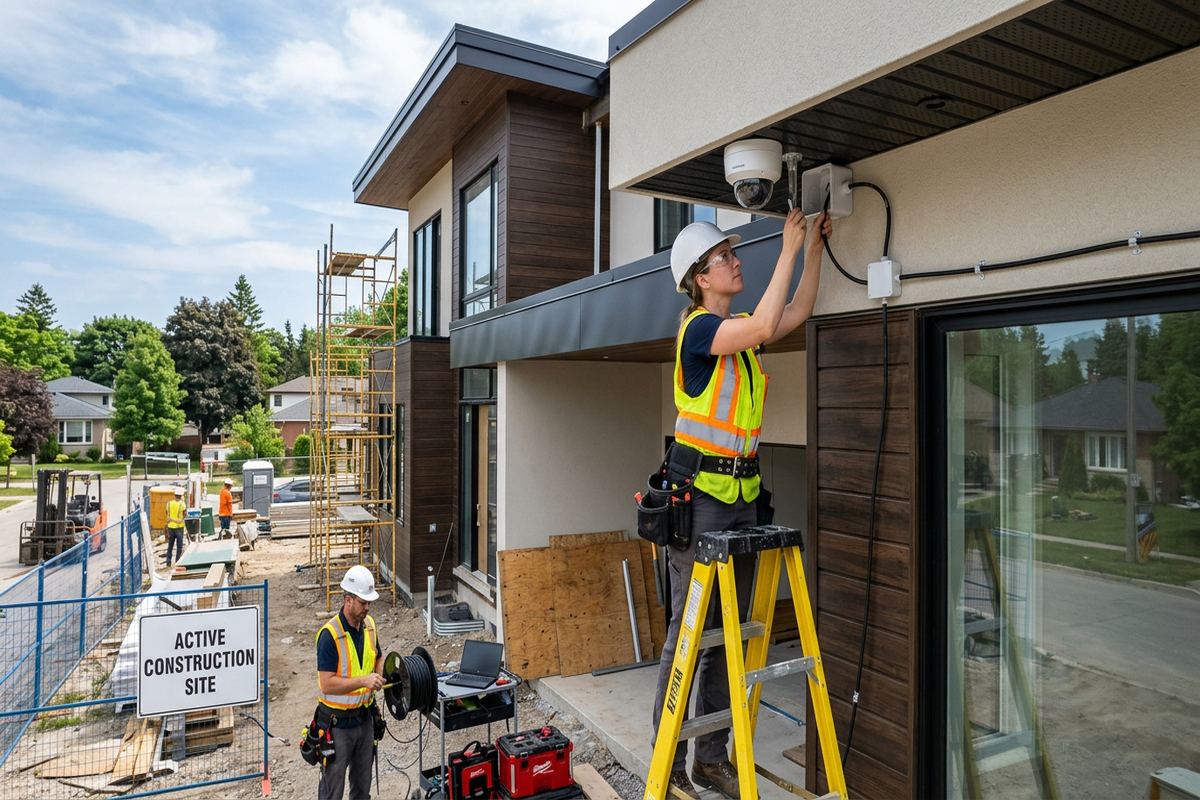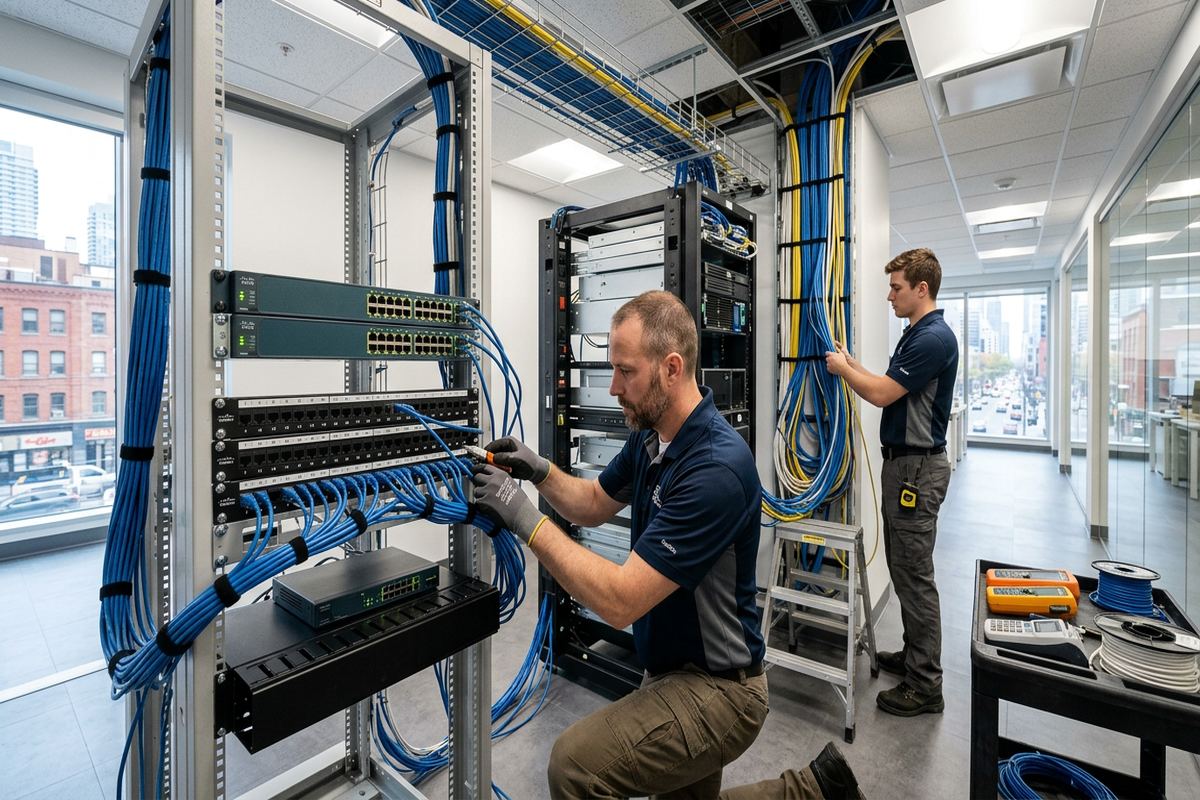
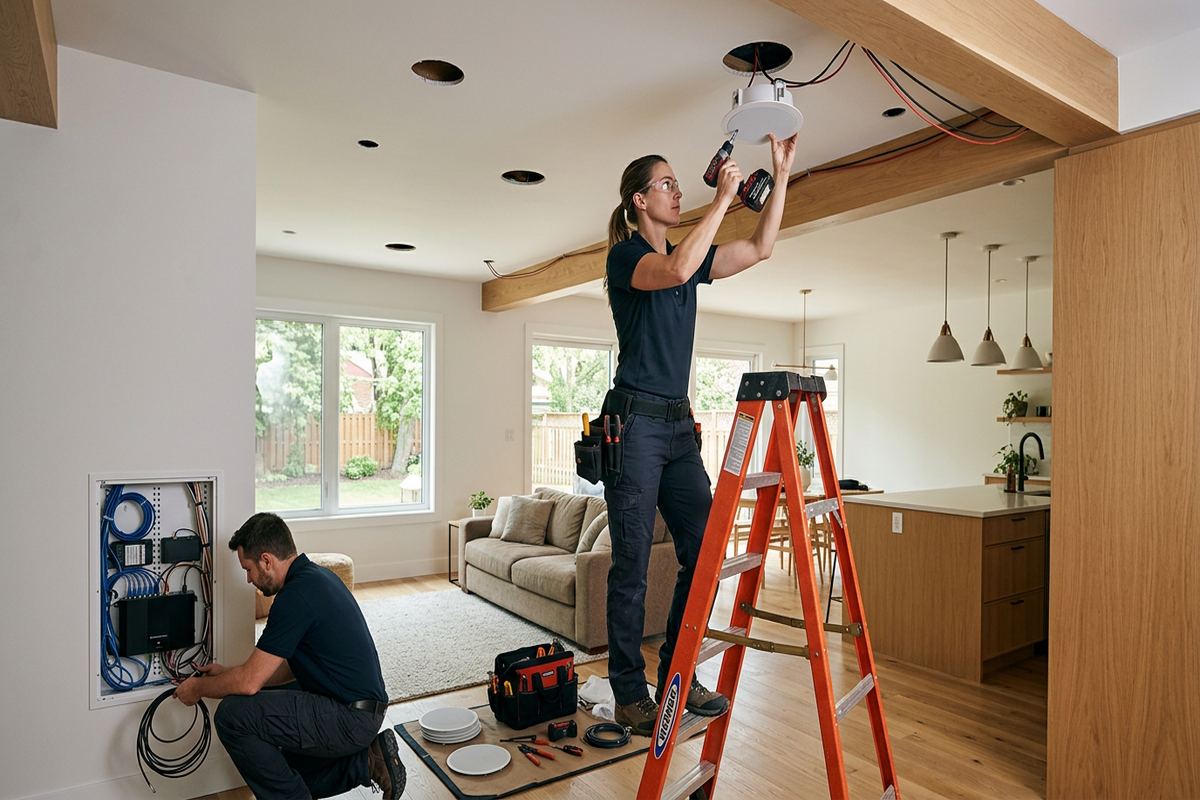
UnifiedLink installs in-ceiling speakers for homes and businesses across Brockville. We plan speaker locations, cable routes, amplification and controls around the room, ceiling construction and intended listening use. Each project starts with a site assessment and finishes with on-site configuration, labelled cabling, customer-owned credentials and an as-built record.
In-Ceiling Speaker Planning for Brockville Properties
Good in-ceiling audio starts with the room rather than a speaker catalogue. During a Brockville site assessment, UnifiedLink reviews ceiling height, joist direction, seating, reflective surfaces, room use and practical access above the ceiling. Those details determine speaker quantity, spacing, orientation and cable routing. A kitchen used for background music needs a different layout from a media room, boardroom or open retail floor. We also identify likely conflicts with lighting, plumbing, ductwork, insulation and other services before openings are cut, reducing avoidable changes during installation and protecting finished surfaces.
Brockville contains a varied mix of stone heritage homes, later frame houses, condominiums, commercial spaces and riverfront properties. Ceiling cavities can therefore range from open framing to plaster, strapping, concrete or previously renovated assemblies with uncertain routes. We use accessible inspection points and suitable detection methods to understand those conditions. Where access is limited, the proposed scope explains what can be confirmed before work begins, what assumptions remain, and whether small exploratory openings may be necessary. This is particularly important when discreet, low-impact mounting is expected around original finishes or detailed trim.
The written scope sets out the proposed speakers, amplification, controls, cable type, cable routes and device placement. It also identifies exclusions, equipment ownership and applicable warranty information so responsibilities are clear before installation. If existing receivers, streaming devices or control systems will remain, compatibility is checked rather than assumed. UnifiedLink acts as one accountable contractor for the low-voltage portion, coordinating the speaker wiring, network requirements and configuration. Electrical work, structural changes, hazardous-material work or finish repairs outside the agreed scope are identified separately rather than being quietly added during the project.
- Room use and listening-area review
- Ceiling cavity and joist assessment
- Speaker spacing and orientation plan
- Amplifier and source compatibility check
- Written scope before installation
Speaker Layouts for Brockville Homes
A residential layout should provide useful coverage without filling the ceiling with unnecessary hardware. In Downtown Brockville, older room proportions, plaster finishes and solid masonry walls often make cable access more important than raw speaker output. North Brockville and Centennial homes may offer more conventional frame construction, but additions and finished basements can still interrupt expected joist paths. We position speakers around actual furniture and activity zones, keeping them clear of pendant lights, ceiling fans and tall cabinetry. The aim is even, intelligible sound at normal listening levels, not simply maximum volume from the fewest devices.
Open-concept kitchens and living areas often benefit from separate audio zones, even when they share one large ceiling. Independent control lets occupants lower kitchen volume while maintaining comfortable sound near a dining or seating area. Bedrooms, bathrooms and offices may need smaller zones with simpler controls. Where stereo spacing is impractical, a suitable single-stereo speaker can sometimes serve a compact room, subject to the required coverage and equipment design. We explain the control options clearly, including wall keypads, mobile applications, receiver controls and streaming interfaces, without forcing every room into the same operating method.
Riverfront properties around Brockville call for particular attention to moisture, seasonal use and discreet placement. Interior speakers near glazed walls or patio doors may need positioning that limits harsh reflections while preserving views and architectural lines. If an indoor system will connect with outdoor audio, we plan those zones as related but distinct environments. Cable routes near exterior walls are selected carefully because winter temperatures and freeze-thaw cycles can expose weak penetrations or unsuitable sealants. Any exterior transition included in the scope is fitted and sealed for the location, with serviceability considered before surfaces are closed.
- Kitchen and living-area zoning
- Bedroom and home-office audio
- Discreet heritage-home placement
- Controls matched to each room
- Coordination with outdoor audio zones
Working Around Heritage Ceilings and Masonry
Stone heritage homes require a cautious approach because the shortest cable route is not always the least disruptive one. Original plaster, lath, decorative cornices and masonry partitions can make conventional fishing methods risky or impractical. We look for routes through closets, service chases, basements, attics or later additions before proposing visible surface pathways. Speaker positions are kept away from fragile details and areas where repairs would be difficult to blend. When concealed access cannot be achieved predictably, the written scope presents an alternative instead of relying on uncontrolled cutting through historic fabric during the installation.
Masonry and frame construction behave differently when speakers and cables are installed. Frame ceilings may permit routing between joists, although blocking, insulation and mechanical services still create obstacles. Solid masonry walls do not provide the same cavities and may require a carefully selected surface raceway or another approved route to reach the ceiling. Plaster condition must also be considered before a speaker opening is made. UnifiedLink uses templates and controlled cutting methods appropriate to the known material, but concealed conditions remain possible. Any required patching or specialist restoration is identified as included or excluded before work starts.
Low-impact mounting also means choosing equipment that physically suits the available depth and ceiling assembly. A shallow cavity, resilient channel, double-layer drywall or nearby duct may rule out a standard back can or deep speaker. We confirm available space at representative locations and adjust the design where practical. Paintable grilles can help speakers blend with a ceiling, provided painting follows the manufacturer’s instructions and does not block perforations. In Brockville heritage interiors, alignment with architectural features matters, but acoustic placement and structural clearance still govern whether a visually attractive position is technically workable.
- Plaster and lath reviewed before cutting
- Routes avoid decorative architectural details
- Masonry-appropriate cable pathways
- Speaker depth checked at planned locations
- Finish repairs defined in the scope
Brockville, Ontario
In-ceiling speaker installation in Brockville, scoped in writing first
Book a site assessment and get equipment, routes, exclusions, and warranty on paper before anything is installed.
Brockville Commercial In-Ceiling Audio
Commercial speaker systems must match how the space operates throughout the day. Brockville offices, clinics, restaurants and shops may need background music, speech reinforcement or paging, each with different coverage and control requirements. We assess ambient noise, ceiling height, occupancy patterns and staff access to controls before specifying a layout. A quiet reception area does not require the same loudspeaker density as a busy dining room or open commercial floor. Where paging or emergency communication is involved, the system boundaries and any specialist or code-related requirements are clarified before installation rather than treated as ordinary music distribution.
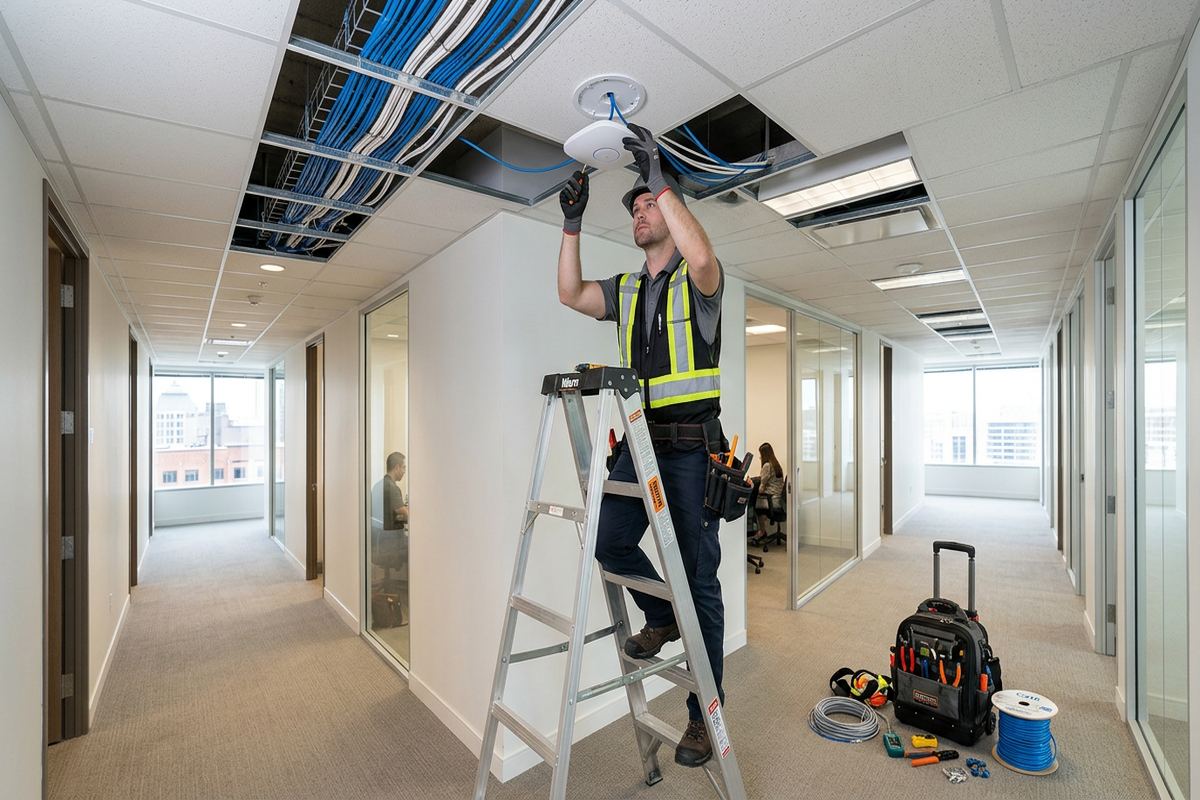
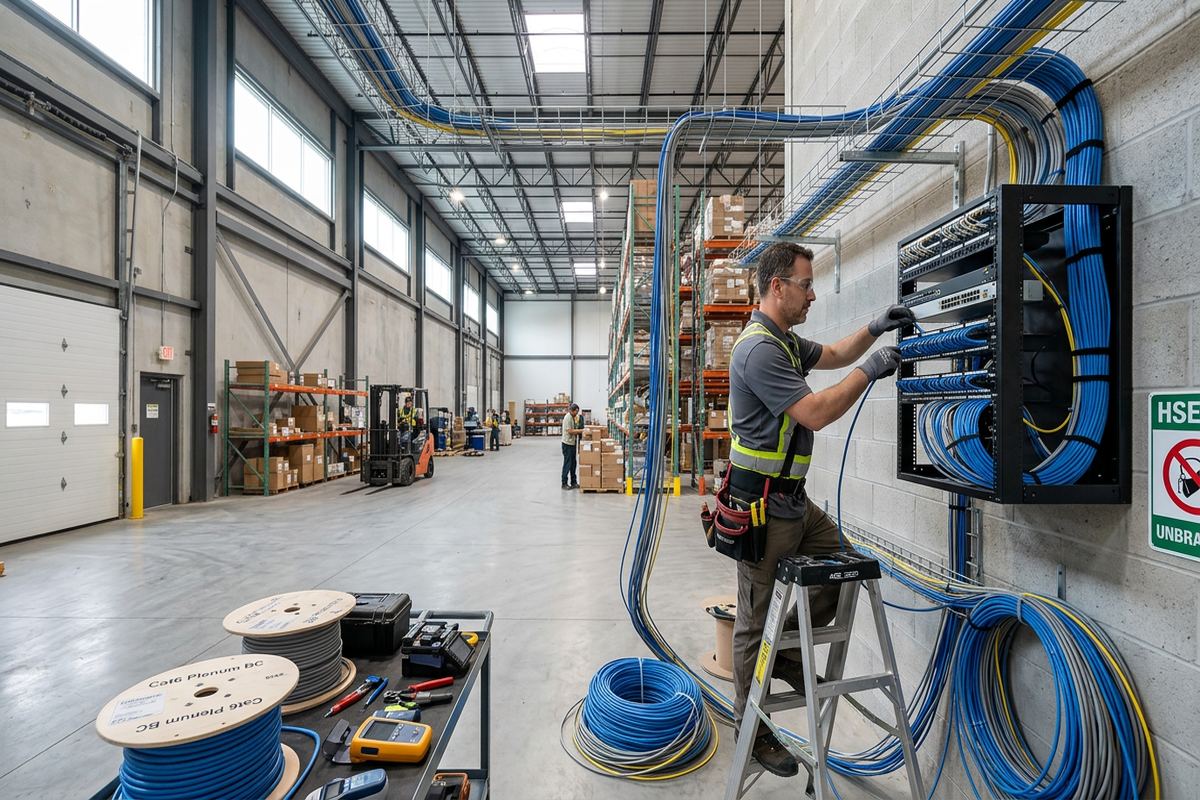
Commercial strips and industrial units often combine suspended ceilings, open structure, drywall offices and concrete or masonry demising walls. Each area needs an appropriate mounting and cable-support method. Cabling above a suspended ceiling is supported independently and routed with separation from electrical services as required; it is not left resting loose on ceiling tiles. In open industrial spaces, speaker height, coverage pattern and background machinery noise become central design considerations. We also coordinate pathways around existing data, security and mechanical systems, helping avoid inaccessible routes or interference with equipment that other contractors must maintain.
Business owners may want straightforward daily controls while retaining protected access to system settings. We can configure defined zones, source selection and reasonable operating limits on compatible equipment, then demonstrate the system to designated staff. Network-connected streaming or control components are placed on an agreed network and handed over using the customer’s own credentials. The as-built record identifies speaker zones, amplifier locations and relevant cable destinations. For tenanted Brockville premises, landlord approval, ceiling rules, working-hour restrictions and restoration obligations should be confirmed before the project date, especially where common areas or base-building pathways are involved.
- Background music and paging layouts
- Office, retail and hospitality zoning
- Supported cabling above suspended ceilings
- Controls configured for designated staff
- Landlord requirements documented before work
Cabling, Amplification and Audio Sources
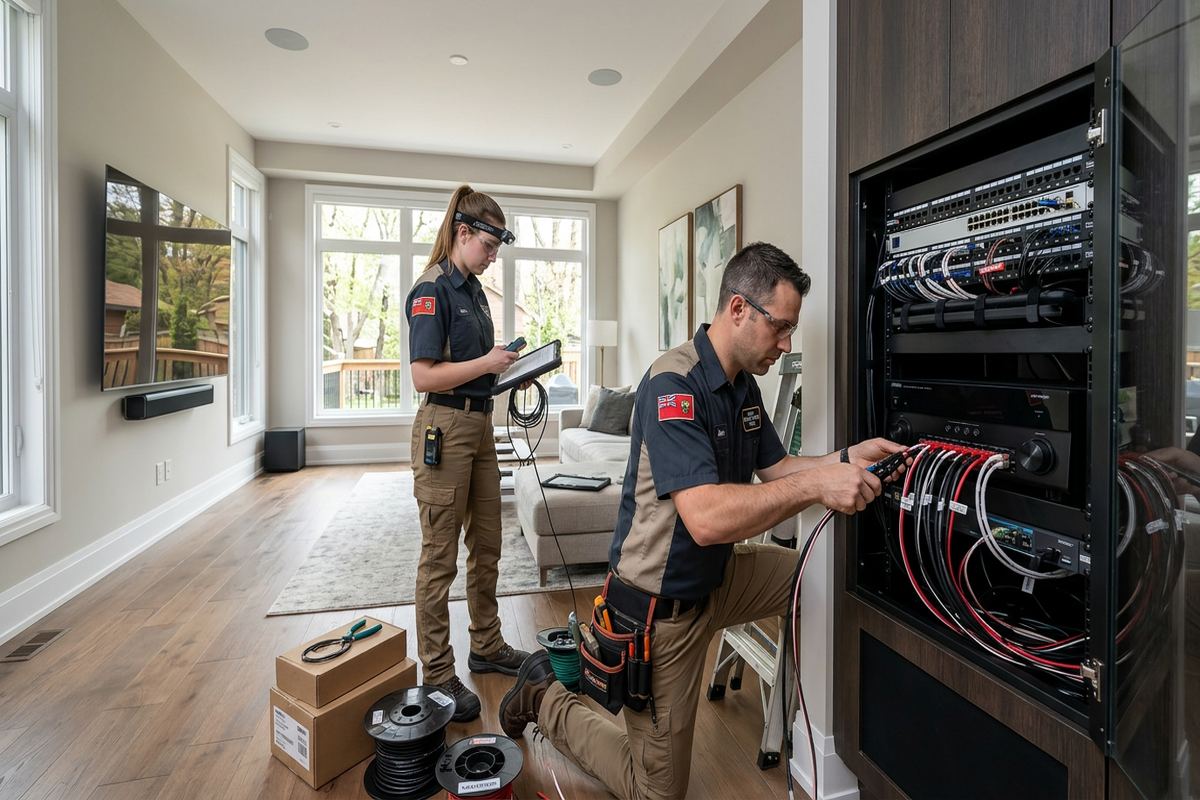
Speaker performance depends on the complete signal path, not only the visible ceiling devices. Cable gauge and amplifier capacity are selected for the speaker type, run length, load and distribution method. A small residential system may use conventional low-impedance wiring, while a larger commercial layout may call for a distributed audio design. These approaches are not interchangeable, so existing equipment is reviewed before reuse. Continuous labelled cable runs reduce hidden connection points and make future service easier. Where a termination is necessary at approved equipment, it is accessible, mechanically secure and recorded rather than buried behind an inaccessible finish.
Amplification must support the number of zones, expected listening level and control arrangement without being operated beyond its intended load. We review receiver or amplifier ventilation, shelf depth, electrical access and network connectivity as part of placement planning. Equipment is not enclosed in a tight cabinet without considering heat and service access. If a customer supplies speakers or electronics, model information is requested early enough to check mounting dimensions and compatibility. Reuse may be practical, but age, proprietary connections, missing accessories or unsupported applications can affect the final scope and the level of configuration that can reasonably be completed.
Audio sources can include televisions, network streamers, commercial music services, local media players and compatible mobile devices. The design explains how each source reaches each zone and whether control depends on a local network or third-party account. UnifiedLink configures included equipment on site and tests normal operating functions, but subscription terms and content licensing remain the customer’s responsibility. For Brockville businesses, consumer streaming accounts may not provide the rights required for public playback. We flag that distinction without selecting legal or licensing arrangements on the customer’s behalf, allowing the business to obtain an appropriate service.
- Cable sized for load and distance
- Continuous runs with clear labels
- Amplifier ventilation and access review
- Customer-supplied equipment compatibility check
- Source and zone operation documented
Installation and Testing in Brockville
Before cutting begins, planned speaker centres are marked and checked against room features. Accessible ceiling areas are inspected for joists, pipes, ducts, wiring and insulation, but no detection method can guarantee that every concealed item will be found. Openings are made only after the route and mounting approach are reasonably established. Speakers are secured with their intended mounting hardware and grilles are seated evenly. Cable is protected from sharp edges and excessive tension. In Brockville renovations, where several generations of work may share one cavity, unexpected obstructions are discussed before the layout or scope is changed.
Once equipment is connected, every speaker and zone is tested for correct channel assignment, polarity, clean output and expected control behaviour. Listening checks are performed from representative positions, not only directly below each grille. Compatible systems may also receive basic level balancing, crossover settings or room-related adjustments within the agreed scope. The purpose is consistent everyday operation rather than exaggerated demonstration volume. If a room produces strong reflections or uneven bass because of its shape and finishes, we explain the practical limits of ceiling placement and identify available configuration or layout adjustments.
Handover takes place with the customer’s own credentials rather than an installer-controlled account. We show the customer how to select sources, adjust zones, use the normal controls and restart relevant equipment. The as-built record identifies installed devices, amplifier location, cable destinations and material changes from the approved plan. Equipment ownership and warranty details follow the written scope. Labels remain useful if a room is renovated or electronics are replaced later. This documentation is especially valuable in multi-zone Brockville properties, where several similar speaker pairs may otherwise be difficult to trace after ceilings and equipment cabinets are finished.
- Pre-cut location and obstruction checks
- Secure, level speaker mounting
- Channel, polarity and zone testing
- Customer-owned account configuration
- As-built record at handover
Condos, Rentals and Renovation Coordination
Condominium ceilings may contain common elements, concrete structure, fire-rated assemblies or services that cannot be altered without approval. A desired speaker position is therefore subject to the building’s rules and the actual ceiling construction. Brockville condo owners should obtain written approval where required and provide available drawings or renovation procedures before scheduling work. If only a shallow dropped ceiling is available, compact speakers or another audio format may be more appropriate. We do not assume that a decorative bulkhead provides unrestricted access, and we will not penetrate a rated or structural assembly outside an approved method.
Landlords and tenants should agree on cable routes, speaker ownership and restoration responsibilities before installation. This applies to residential rentals as well as shops, offices and other leased units in Downtown Brockville or commercial strips. The written scope can distinguish customer-owned electronics from items intended to remain with the property. It can also record visible raceway, access-panel or ceiling-tile requirements. Where landlord or property-manager approval is pending, installation should wait until the affected work is authorized. Clear approval avoids disputes over ceiling openings, equipment removal and the condition expected when a lease ends.
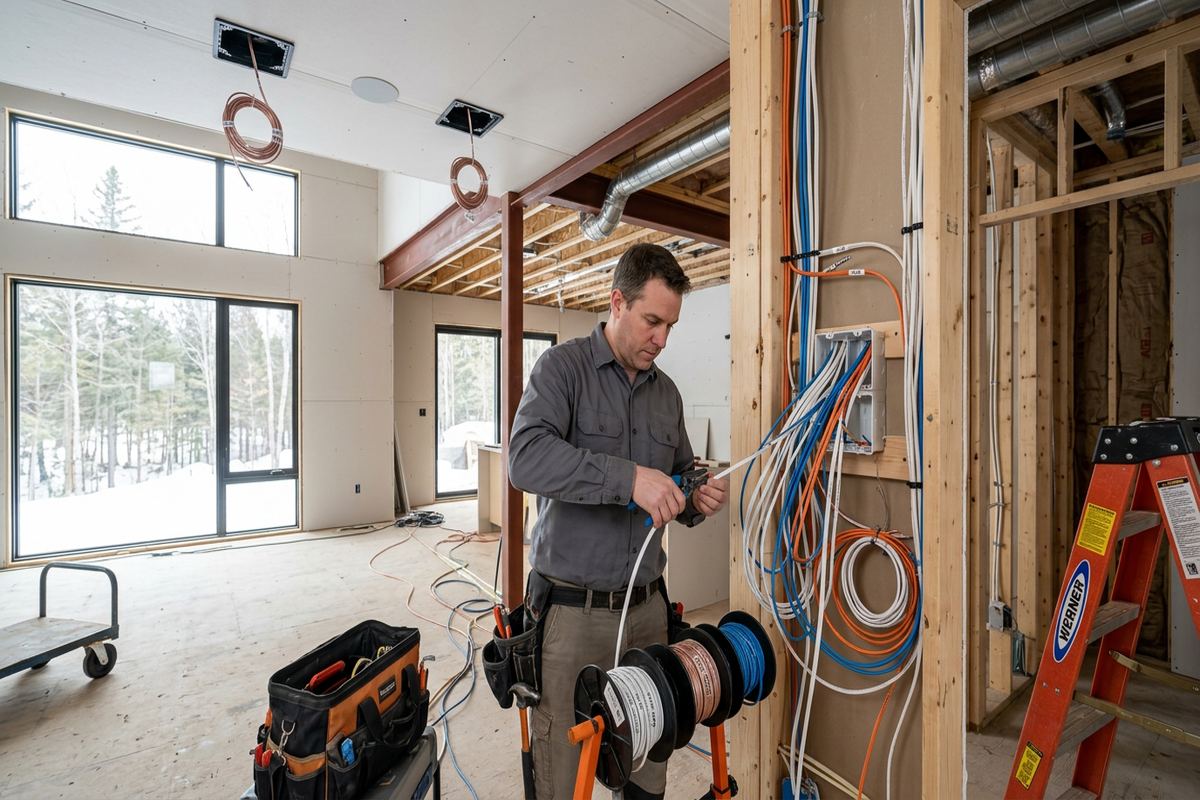
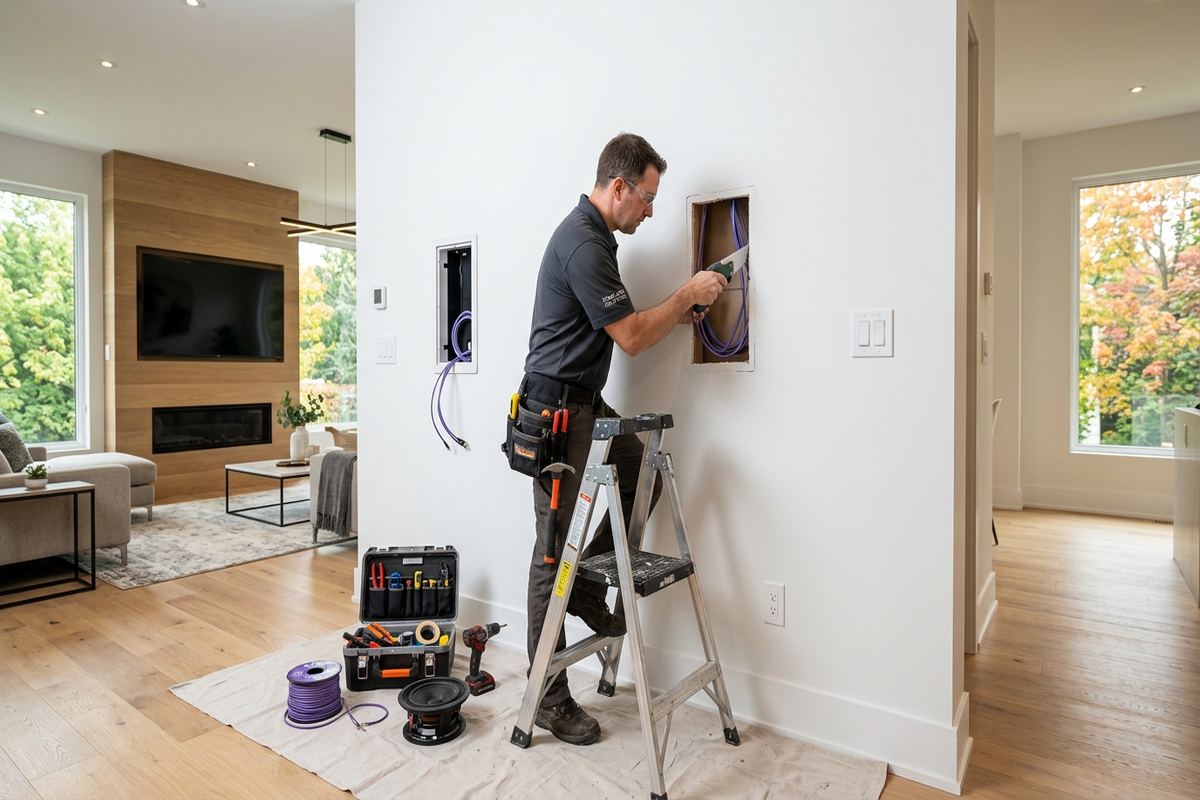
Renovations provide the easiest opportunity to route cable cleanly, but sequencing matters. Speaker wiring should be planned after the room layout and mechanical design are known, then installed before insulation and drywall close the cavities. Cable ends are protected, labelled and positioned so they are not lost behind finishes. Final speaker cutting can occur after dusty work and painting are complete. We coordinate the low-voltage scope with the customer’s general contractor, electrician or cabinet installer while remaining accountable for our own work. Changes to lighting, bulkheads or millwork should be communicated because they can alter speaker coverage and access.
- Condo rules reviewed before scheduling
- Rated assemblies left unaltered unless approved
- Landlord and tenant responsibilities recorded
- Pre-wire coordinated before drywall
- Final installation after dusty work
Service, Changes and Future Expansion in Brockville
A well-documented installation is easier to maintain when rooms or equipment change. If a Brockville homeowner later replaces a receiver, the cable labels and as-built record help identify each speaker pair without repeated trial and error. Businesses can use the same information when rearranging zones or adding a source. We plan practical spare capacity only where it serves an identified future need; unnecessary cable and oversized electronics are not automatically added. If future expansion is likely, the initial scope can include agreed pathways, pull strings, accessible junction locations or amplifier space without committing the customer to devices that are not yet required.
Service needs can arise from source settings, network changes, damaged speakers, amplifier faults or wiring problems. Diagnosis begins by separating the affected zone from the rest of the system and checking the signal path in order. Customer-provided information about recent renovations, account changes or equipment replacement can shorten that process. For riverfront and seasonally occupied properties, equipment should remain in a suitable indoor environment and be restarted according to manufacturer guidance after extended shutdowns. Exterior-connected zones should also be inspected if freeze-thaw movement, water entry or physical damage is suspected around a penetration.
Requests sent during business hours are answered the same day, while after-hours requests are answered the next business day. Site assessment timing depends on the service and travel distance. Before pricing an in-ceiling speaker project in Brockville, UnifiedLink completes a site assessment to confirm conditions that affect labour, materials and access. The resulting written scope covers equipment, routes, placement, exclusions, equipment ownership and warranty. This process gives both parties a defined basis for the work and makes alternatives easier to compare when ceiling construction, approvals or existing audio equipment limit the original idea.
- Labels support later equipment replacement
- Future pathways planned where useful
- Systematic source-to-speaker diagnosis
- Seasonal properties considered during planning
- Site assessment completed before pricing
Brockville neighbourhoods we cover
- Downtown Brockville
- North Brockville
- Rivers Edge
- Butler's Creek
- Centennial
In-ceiling speaker installation in Brockville — common questions
Can speakers be installed in an older Brockville home?
Often, but the route and ceiling condition must be assessed first. Stone walls, plaster and lath, decorative details and later renovations can restrict access. In Brockville heritage homes, we look for lower-impact routes through attics, basements, closets or existing service paths. The scope will explain proposed openings, visible pathways and any finish repair that is included or excluded.
How many in-ceiling speakers does my room need?
The number depends on room dimensions, ceiling height, listening positions, surface finishes and the intended volume. A compact bedroom differs from an open kitchen, restaurant or office. During the Brockville site assessment, we plan coverage around actual use and furniture rather than applying a fixed speaker count. Separate zones may provide better control than treating a large connected area as one room.
Can you connect new speakers to my existing receiver?
Existing equipment can be reused when its outputs, load capacity, controls and condition suit the proposed speakers. We request model information and inspect accessible connections before confirming compatibility. Some receivers cannot safely support several rooms without additional distribution equipment. The written scope identifies reused and new equipment, ownership, configuration limits and any components that the customer must supply.
Do I need condo or landlord approval?
Approval may be required when ceiling openings, common elements, concrete, fire-rated assemblies or base-building pathways are involved. Brockville condo owners and commercial tenants should check their building or lease requirements before installation. Landlords may also specify working hours, cable methods and restoration standards. UnifiedLink can document the proposed low-voltage work, but the owner or tenant remains responsible for obtaining required permission.
Will exterior walls affect my speaker installation?
They can. Brockville’s winters and freeze-thaw conditions make penetrations near exterior assemblies more sensitive to air and water sealing. Stone and masonry walls also provide fewer concealed routes than frame construction. We avoid unnecessary exterior penetrations, use location-appropriate sealing where a transition is included, and plan routes that remain serviceable. Riverfront properties may require added attention to moisture exposure and seasonal operation.
What do I receive when installation is complete?
UnifiedLink tests speaker channels, polarity, zones, source operation and agreed controls on site. Handover uses your own credentials for compatible networked equipment and includes an operating walkthrough. You also receive an as-built record identifying installed devices, amplifier locations and cable destinations. The written scope records equipment ownership, exclusions and warranty information, providing a clear reference for later service or expansion in Brockville.
Coverage in Brockville is confirmed against the address before we quote. See everything we install in Brockville or the province-wide in-ceiling speaker installation page.