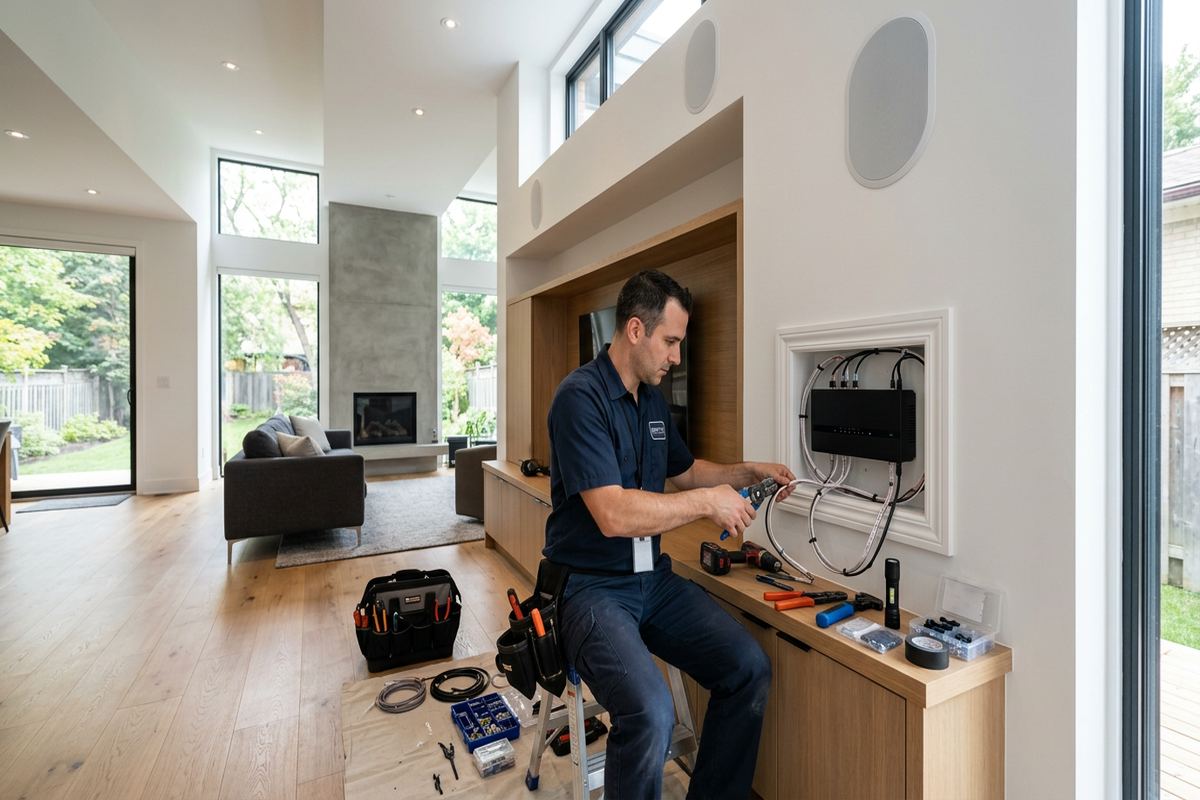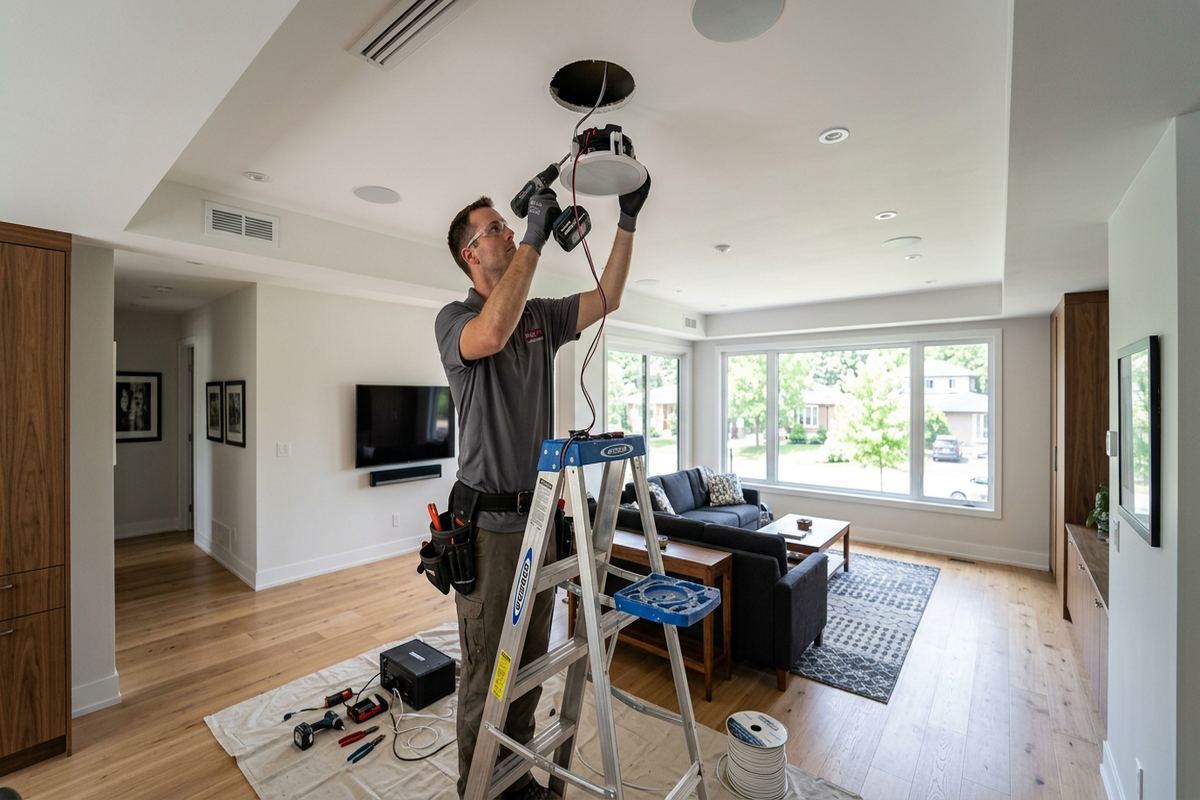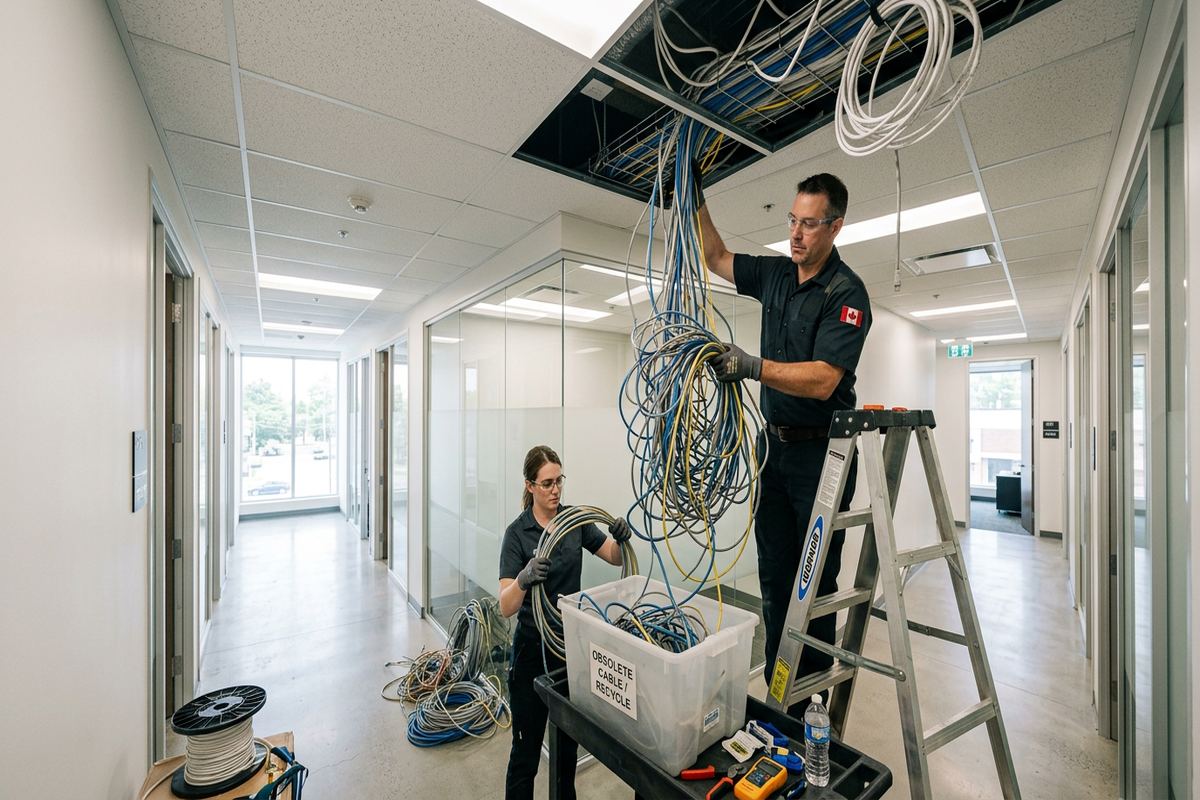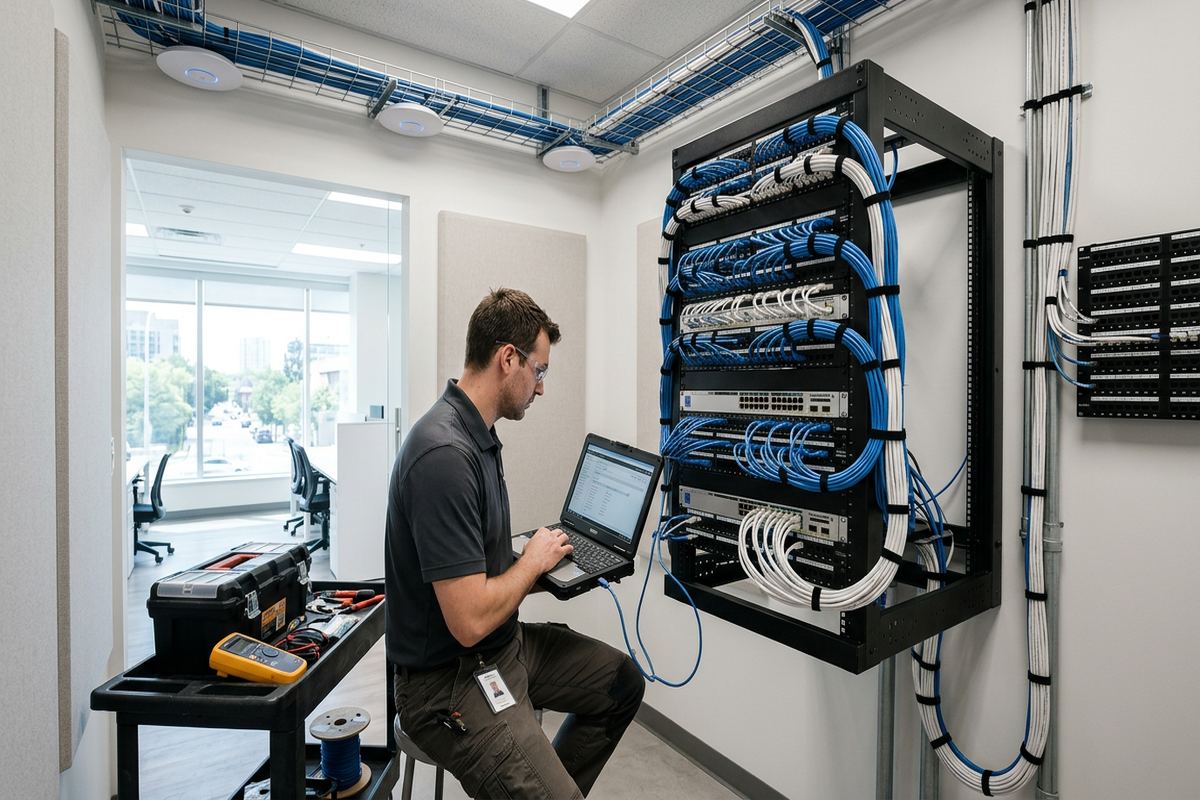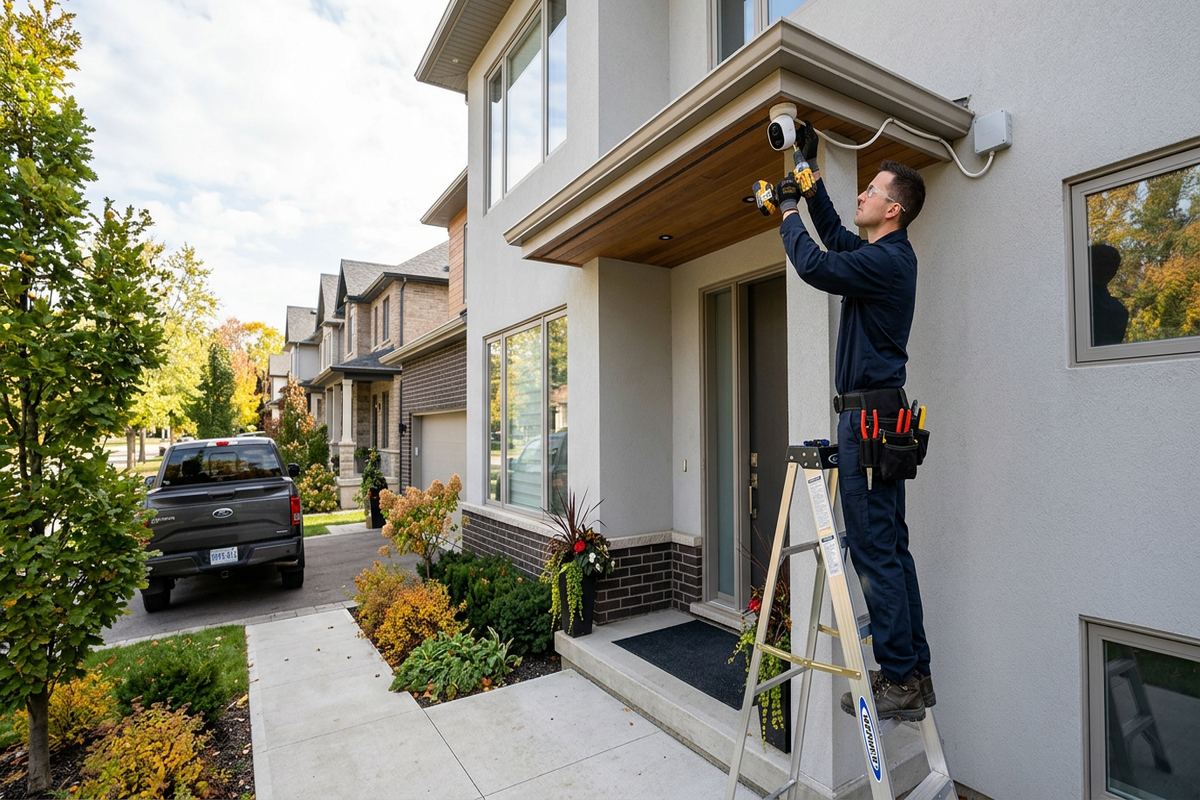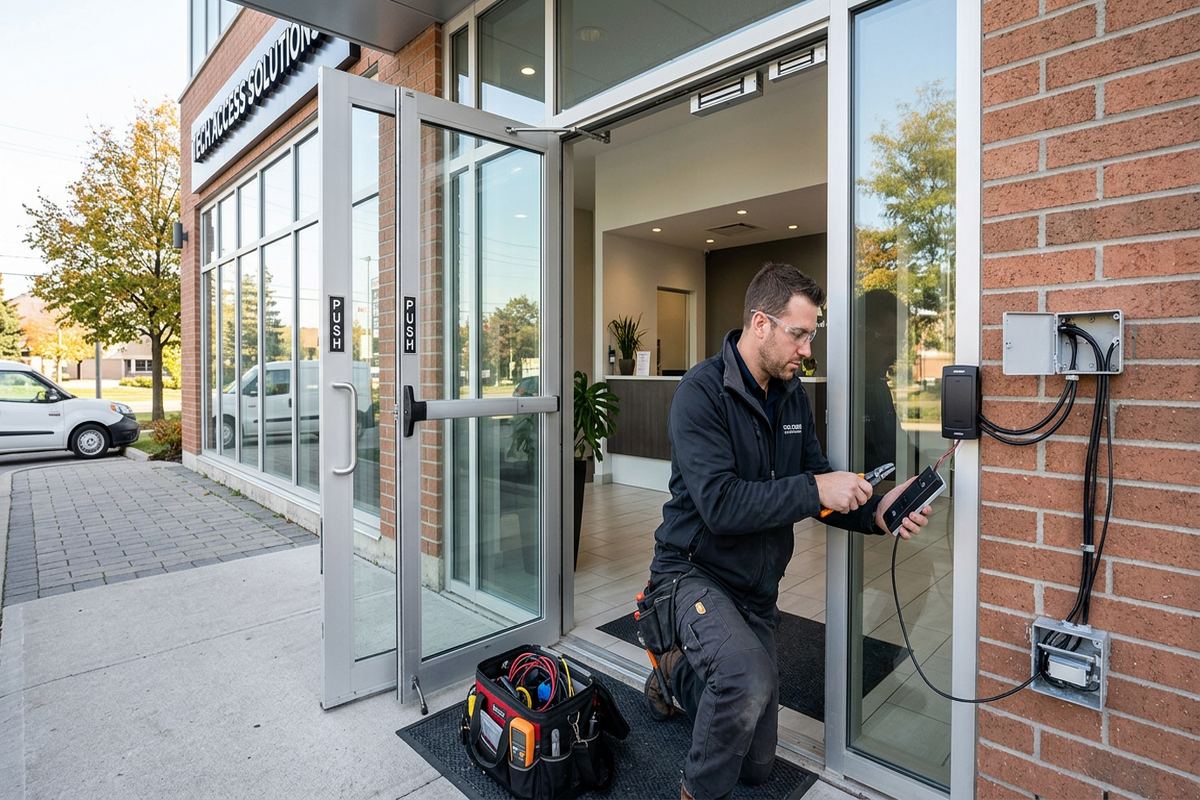
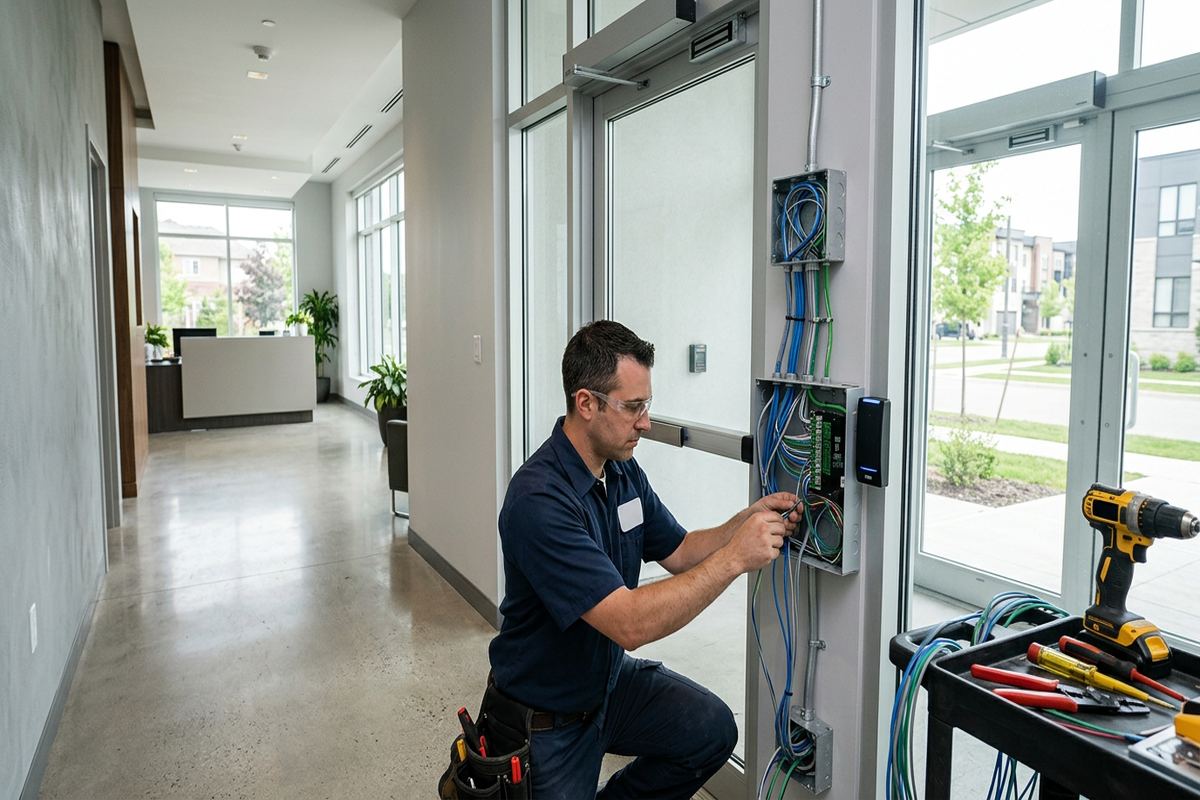
UnifiedLink installs commercial access control systems for offices, retail units, industrial properties, multi-tenant buildings and other facilities in Brockville. We assess each site before pricing, plan door hardware and cable routes, configure permissions on site, and provide a written scope. Installations account for local masonry, winter exposure, property approvals and day-to-day management needs.
Commercial Access Control Planning in Brockville
A commercial access control project starts with understanding how people, deliveries and contractors move through the building. In Brockville, that may mean separating public storefront access from staff areas, controlling a shared office entrance, or managing vehicle and pedestrian doors at an industrial unit. We review each opening, its current lock, door condition, frame material, power availability and required security level. The assessment also considers emergency egress, accessibility, operating hours and who will administer credentials. These details determine whether a simple single-door arrangement or a centrally managed multi-door system is appropriate.
Existing buildings often require more investigation than new construction because door hardware, walls and previous wiring may have changed over time. Downtown Brockville properties can include thick masonry, finished interiors and architectural details that make direct cable routes impractical. Newer commercial spaces in North Brockville may use frame construction, suspended ceilings or shared utility areas, creating different routing and approval requirements. We identify practical pathways before finalizing the work. The goal is to avoid exposed cable, unnecessary surface raceway and equipment placement that interferes with signage, trim, tenant finishes or normal building operation.
Following the assessment, UnifiedLink prepares a written scope describing equipment, device placement, proposed cable routes, exclusions, equipment ownership and warranty. The scope distinguishes access control components from door repairs, locksmith work, fire alarm interfaces, network changes or electrical work that others may need to complete. This helps owners, property managers and tenants understand responsibilities before installation begins. Where landlord or condominium approval applies, the proposed locations can be reviewed before drilling or cabling. Site assessment timing depends on the requested service, property conditions and travel distance within Eastern Ontario.
- Opening, frame and existing lock review
- Credential and user-group planning
- Proposed controller and reader locations
- Cable route and power assessment
- Written scope before installation
Selecting Readers, Credentials and Door Hardware
Reader selection should reflect the users, environment and management requirements of each entrance. Card and fob systems provide straightforward credential control, while mobile credentials may suit organizations that already manage staff through supported devices. Keypads can support selected workflows, although shared codes provide less individual accountability than assigned credentials. We discuss how credentials will be issued, replaced and revoked, and whether different groups need separate permissions. A system should remain manageable after installation, without forcing staff to use unnecessary features or maintain complicated access rules that do not match daily operations.
Electronic access control must work with the physical door rather than compensate for a damaged or poorly aligned opening. We inspect the lock type, latch engagement, closer operation, frame, hinges and available mounting space before specifying electrified hardware. Depending on the opening, the design may involve an electric strike, electrified lock, magnetic lock or another compatible release method. Hardware choice also affects request-to-exit detection, emergency release arrangements and door status monitoring. Any required locksmith, door contractor, electrical or fire alarm work is identified in the scope instead of being treated as an unplanned installation detail.
Exterior openings in Brockville need particular attention because winter temperatures and freeze-thaw cycles affect doors, seals, fasteners and exposed equipment. A reader installed outdoors should have a suitable location, protected cable entry and properly sealed penetrations. Hardware must also tolerate normal door movement caused by seasonal changes, while the latch and closer should remain correctly adjusted. Riverfront properties can present additional exposure to wind and moisture, making low-impact mounting and careful sealing important. We avoid relying on sealant alone where a sound mechanical fastening and weather-resistant cable entry method are required.
- Card, fob, keypad or mobile options
- Electric lock and strike compatibility
- Door position and exit monitoring
- Outdoor-rated reader placement
- Credential replacement and revocation planning
Cabling Brockville Masonry and Frame Buildings
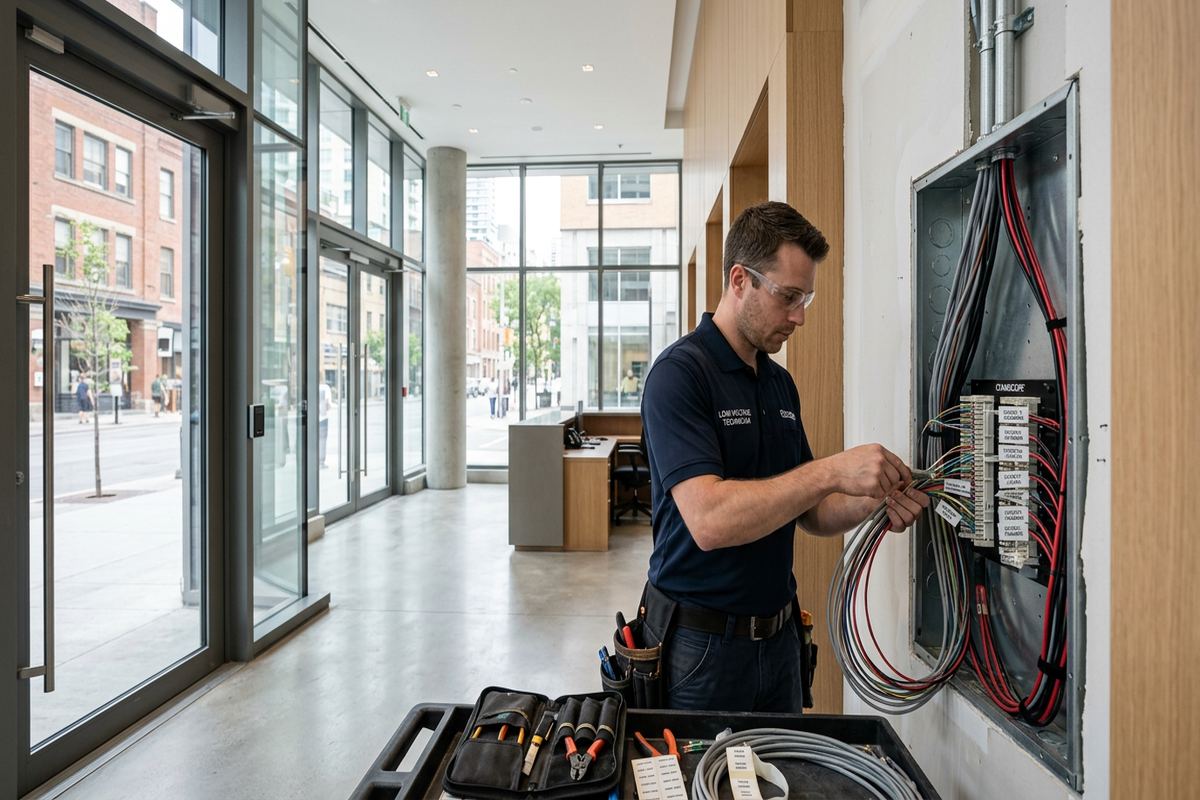
Cable routing affects reliability, appearance and future serviceability as much as the visible access control devices. UnifiedLink installs continuous labelled cable runs between specified equipment points, avoiding hidden splices that complicate testing and troubleshooting. Routes are planned around wall construction, ceiling access, fire separations, electrical interference and occupied work areas. In masonry buildings, penetrations must be positioned carefully to prevent damage to brick, stone, trim or finished surfaces. Frame buildings may offer easier pathways, but insulation, vapour barriers, blocking and shared tenant spaces can still limit where cable can be installed cleanly.
Stone heritage homes adapted for professional or commercial use, along with older Downtown Brockville buildings, call for discreet and low-impact mounting. Thick stone walls are not approached like modern drywall partitions, and drilling locations must be selected with the surrounding material in mind. Where concealed routing is not feasible, a carefully placed raceway may provide a more maintainable result than extensive disturbance to original finishes. Reader height, backbox location and cable entry are coordinated so equipment does not cover decorative details. Any restrictions from the owner, landlord or applicable property approval process should be confirmed before work starts.
Commercial strips and industrial units present a different set of routing questions. Long distances between doors and controller locations can affect cable selection, power planning and the arrangement of control panels. Open ceilings may simplify access, while warehouse walls, loading areas and demising partitions can require protected pathways or coordination with other trades. We also consider whether future tenant changes could restrict access to panels or cable routes. Placing core equipment in a secure, serviceable area helps prevent accidental disconnection and allows authorized staff to reach the system without entering another tenant’s controlled premises.
- Continuous labelled cable runs
- Masonry-appropriate drilling locations
- Low-impact surface raceway where needed
- Protected routes in industrial areas
- Serviceable controller placement
Brockville, Ontario
Commercial access control installation in Brockville, scoped in writing first
Book a site assessment and get equipment, routes, exclusions, and warranty on paper before anything is installed.
Installation and Configuration Across Brockville
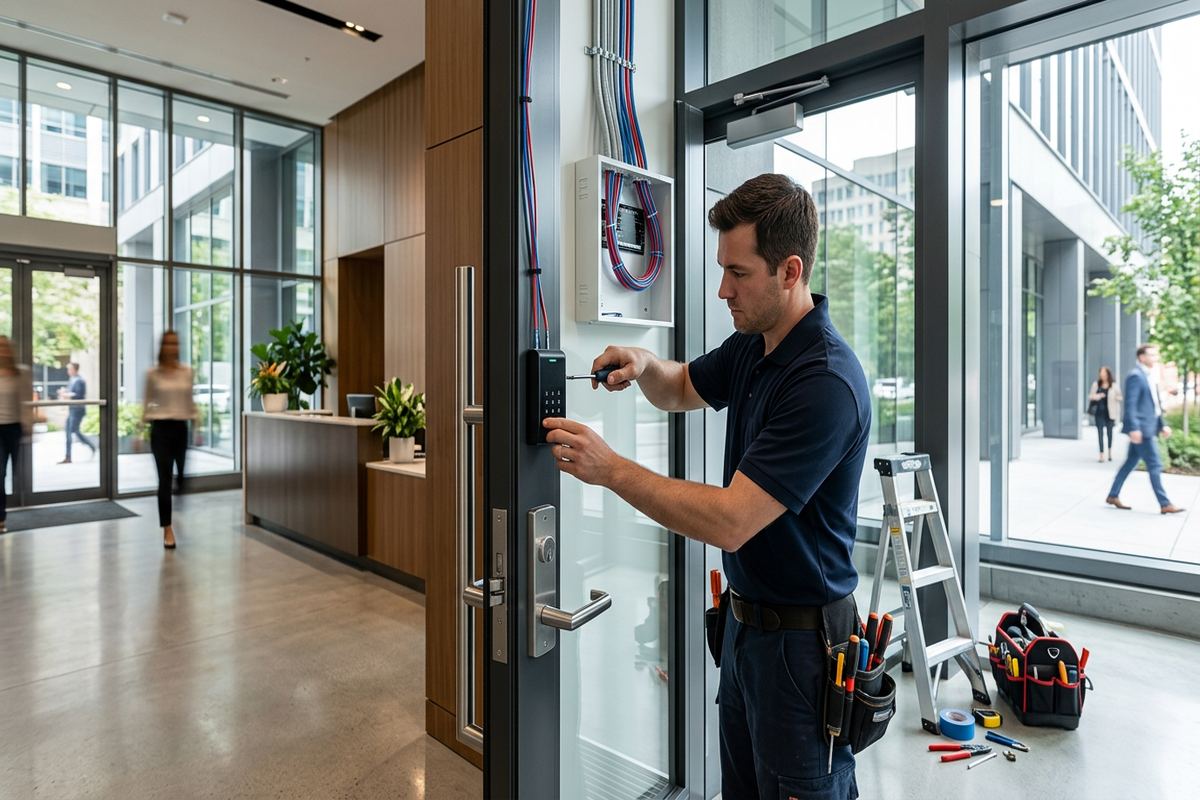
Installation is coordinated to reduce disruption at active entrances and work areas. Before devices are mounted, cable routes and equipment positions are checked against the approved scope and current site conditions. Readers, controllers, power supplies, interface modules and door monitoring devices are installed in their planned locations, then connected and labelled. Door work is sequenced so an opening is not left unsecured unnecessarily. If hidden conditions change the planned method, we explain the issue and document the required adjustment rather than proceeding with an unsuitable route or an unapproved change to the installation.
Once physical installation is complete, configuration is performed on site using the agreed operating requirements. This includes adding doors, establishing user groups, applying schedules and defining how monitored events should appear to administrators. Staff entrances may follow business-hour schedules, while storage, network or management areas can use narrower permissions. Facilities in Centennial, Butler’s Creek or Rivers Edge may have different occupancy and management patterns, but the same principle applies: each permission should support an identifiable need. Broad access is avoided when a smaller, clearly managed permission group will meet the operational requirement.
Testing covers more than presenting a credential and hearing the lock release. Each controlled opening is checked for reliable credential reads, correct lock timing, door status reporting and request-to-exit operation where included. We verify that valid and invalid credentials produce the intended result and that scheduled permissions operate as configured. Exterior doors are observed for alignment or closing issues that could prevent secure latching. Where another contractor’s work affects final operation, the outstanding item is recorded clearly. Testing results then support handover, staff orientation and the as-built record supplied with the completed system.
- Coordinated work at active entrances
- Reader and controller installation
- User groups and access schedules
- Door-by-door functional testing
- Recorded outstanding dependencies
Multi-Tenant and Managed Property Access
Multi-tenant properties require clear decisions about system ownership, administration and the boundary between common and private areas. A landlord may control the exterior entrance while each tenant manages an internal suite, or one administrator may handle every controlled opening. Before equipment is selected, we identify who can add users, review events, change schedules and request service. The written scope records equipment ownership and exclusions so future tenant turnover does not create confusion. Controller placement and network access should also remain available to the responsible party without requiring entry into space controlled by an unrelated tenant.
Condominium or landlord approval may be necessary when an installation affects common doors, exterior finishes, shared risers or building networks. Owners and tenants should confirm these permissions before mounting readers or routing cables through common areas. In Brockville properties with stone façades or prominent street-facing entrances, approval may also influence device colour, mounting position and the acceptability of surface raceway. UnifiedLink can document proposed placements and routes for review, but the property’s authorized decision-makers remain responsible for granting access and approval. Confirming these matters early reduces redesign and avoids drilling before all parties agree.
Credential administration should follow a repeatable process for employees, contractors, cleaners and temporary occupants. Each credential needs an identifiable holder, an appropriate permission group and a method for prompt revocation when access is no longer required. Shared credentials can make event records difficult to interpret, so they should be limited to situations where individual assignment is genuinely impractical. Property managers may also need separate schedules for common entrances, service areas and tenant-only doors. We configure the agreed structure and show designated administrators how to perform routine tasks without exposing installer accounts or unrelated system settings.
- Common and tenant door separation
- Documented system ownership
- Landlord and condominium approval planning
- Individual credential assignment
- Administrator role definition
Networked Access Control and System Integration
Modern access control often communicates over a customer’s network, but network connectivity should be planned rather than assumed. We identify controller connections, addressing requirements, remote administration expectations and any customer-managed firewall or virtual network dependencies. The customer’s information technology provider may need to approve switch ports, network segments or remote access methods. Access control devices are not placed on an available network without confirming responsibility for that environment. Where cloud-managed equipment is proposed, account ownership, subscription responsibilities and supported connectivity requirements are included in the written scope so ongoing administration remains clear.
Access control can also exchange information with intercoms, intrusion alarms, video systems, elevators or automatic door operators when compatible interfaces and an approved design are available. Integration is not simply a matter of connecting wires; the required behaviour must be defined for normal use, emergencies and system faults. For example, a camera view linked to a door event may help an administrator review activity, while an intercom can support visitor entry decisions. We identify interface points, dependencies and the responsibilities of other contractors before work proceeds. Unsupported assumptions can create unreliable operation or unclear accountability.
Power planning includes normal operating demand, lock behaviour and any required backup arrangement. Electrified hardware can be fail-safe or fail-secure depending on the opening, applicable requirements and approved design, and those terms must not be treated as interchangeable. Emergency egress and fire alarm release requirements may require input from the authority having jurisdiction or other qualified trades. UnifiedLink documents the intended interfaces and coordinates our access control scope with available site information. We do not bypass required life-safety functions, and final operation must preserve free egress and the approved behaviour of each controlled door.
- Planned network connections and ownership
- Customer IT coordination where required
- Defined alarm, video or intercom interfaces
- Power supply and backup planning
- Documented life-safety dependencies
Brockville Handover, Records and Administration
A completed access control system should be handed over in a form the customer can operate and support. UnifiedLink provides access using the customer’s own credentials rather than retaining control through an installer-owned account. Designated administrators are shown how to add and disable users, assign permission groups, adjust approved schedules and review relevant events. The exact functions depend on the selected platform and licensed features. Handover also identifies routine tasks that belong to the customer, such as maintaining current user records, protecting administrator access and reporting changes to doors, networks or building use.
The as-built record reflects the installed arrangement rather than relying only on the original proposal. It identifies controlled openings, principal equipment locations and cable information appropriate to the completed scope. Device and cable labels correspond with the installation so future troubleshooting does not begin with tracing unidentified conductors. Any approved route changes, outstanding third-party dependencies or excluded repairs are recorded. For Brockville owners managing more than one unit or entrance, this documentation provides a practical reference when staff change, tenants move, renovations occur or another contractor needs to understand the access control layout.
One accountable contractor manages UnifiedLink’s defined access control work from assessment through configuration and handover. That does not remove the need for locksmiths, electricians, door technicians, fire alarm providers or network administrators when their specialized scope is required. Instead, responsibilities are identified so the owner knows which party must address each dependency. Requests sent during business hours are answered the same day, while after-hours requests are answered the next business day. This availability wording covers the response to the request; site assessment timing still depends on the service required and travel distance.
- Customer-owned administrator credentials
- Practical administrator orientation
- As-built door and equipment record
- Matching device and cable labels
- Clearly recorded third-party responsibilities
Maintaining Access Control in Brockville Conditions
Access control maintenance should include both electronic components and the physical condition of each opening. A correctly configured reader cannot secure a door that fails to close, drags on the threshold or no longer aligns with its strike. Seasonal movement can reveal marginal alignment, especially after repeated Brockville freeze-thaw cycles. Owners should watch for slow closing, intermittent latching, loose reader mounts, damaged seals and recurring forced-door events. Early inspection can distinguish a configuration issue from a door, closer or hardware problem and direct the work to the appropriate access control, locksmith or door service provider.
Exterior equipment should be checked after severe weather, building repairs or changes to surrounding finishes. Sealant can separate, cable entries can be disturbed, and snow or ice management work may affect low-mounted devices or nearby conduit. Riverfront properties may experience wind-driven moisture, while older masonry can require particular care if a penetration shows movement or deterioration. Maintenance should not involve filling every gap without identifying the water path and fastening condition. A durable repair addresses mounting, cable protection and sealing together, using methods compatible with the surrounding masonry, frame or exterior finish.
Operational reviews are also useful when staffing, tenancy or business hours change. Administrators should remove inactive credentials, confirm current permission groups and check that schedules still match actual occupancy. Renovations may relocate reception areas, convert entrances or place controlled equipment inside a newly leased space, requiring the access plan and as-built information to be updated. Across Downtown Brockville, North Brockville and other local commercial areas, building use can evolve without the access system changing automatically. Periodic review keeps permissions understandable and helps prevent old credentials, obsolete schedules or undocumented modifications from becoming normal practice.
- Seasonal door alignment checks
- Exterior mount and seal inspection
- Inactive credential removal
- Schedule and permission review
- As-built updates after renovations
Brockville neighbourhoods we cover
- Downtown Brockville
- North Brockville
- Rivers Edge
- Butler's Creek
- Centennial
Commercial access control installation in Brockville — common questions
Can access control be installed on an older Brockville building?
Yes, but the installation method depends on the doors, walls, finishes and available cable routes. Older Brockville properties may have thick masonry, limited ceiling access or architectural details that should not be disturbed. We assess the site before pricing and propose discreet reader locations and low-impact routing. Where concealed cabling is impractical, the written scope can identify carefully positioned surface raceway or work required from another trade.
Will the system work during a power outage?
That depends on the selected controller, power supply, lock hardware and backup design. During the Brockville site assessment, we review the intended behaviour of each opening and any required battery backup. Fail-safe and fail-secure hardware behave differently when power is removed, so emergency egress and applicable release requirements must be considered. The written scope identifies included power components and any electrical or life-safety dependencies.
Do I need landlord or condo approval?
Approval is commonly required when access control work affects a shared entrance, common hallway, exterior finish, riser, network or building-owned door. Brockville tenants and condominium owners should confirm permission before equipment is mounted or cable is installed. We can document proposed device locations and routes for review. The landlord, condominium corporation or authorized property manager remains responsible for approving changes and providing access to shared building areas.
Can I manage employee cards and fobs myself?
Yes, provided the selected platform supports customer administration and your organization assigns an appropriate administrator. At handover, UnifiedLink configures access using the customer’s own credentials and shows designated staff how to add, disable and assign credentials within the agreed system. Brockville businesses should maintain an internal process for departing staff, temporary workers and lost credentials so access is revoked promptly and event records remain useful.
Can access control connect with cameras or an intercom?
It can when the products provide compatible interfaces and the required behaviour is defined in advance. A Brockville business might link door events with video, use an intercom to support visitor entry, or coordinate selected alarm functions. Compatibility, network requirements, licensing and responsibility for each system must be reviewed first. The written scope identifies included integration work, exclusions and any tasks assigned to the customer’s IT provider or another contractor.
How soon can you assess my Brockville property?
Site assessment timing depends on the access control service required, the property and travel distance. Requests sent during business hours are answered the same day, and after-hours requests are answered the next business day. That response is used to gather initial details such as the Brockville location, number of doors, building type and current hardware. Assessment scheduling is then discussed based on the project’s requirements and site access.
Coverage in Brockville is confirmed against the address before we quote. See everything we install in Brockville or the province-wide commercial access control installation page.