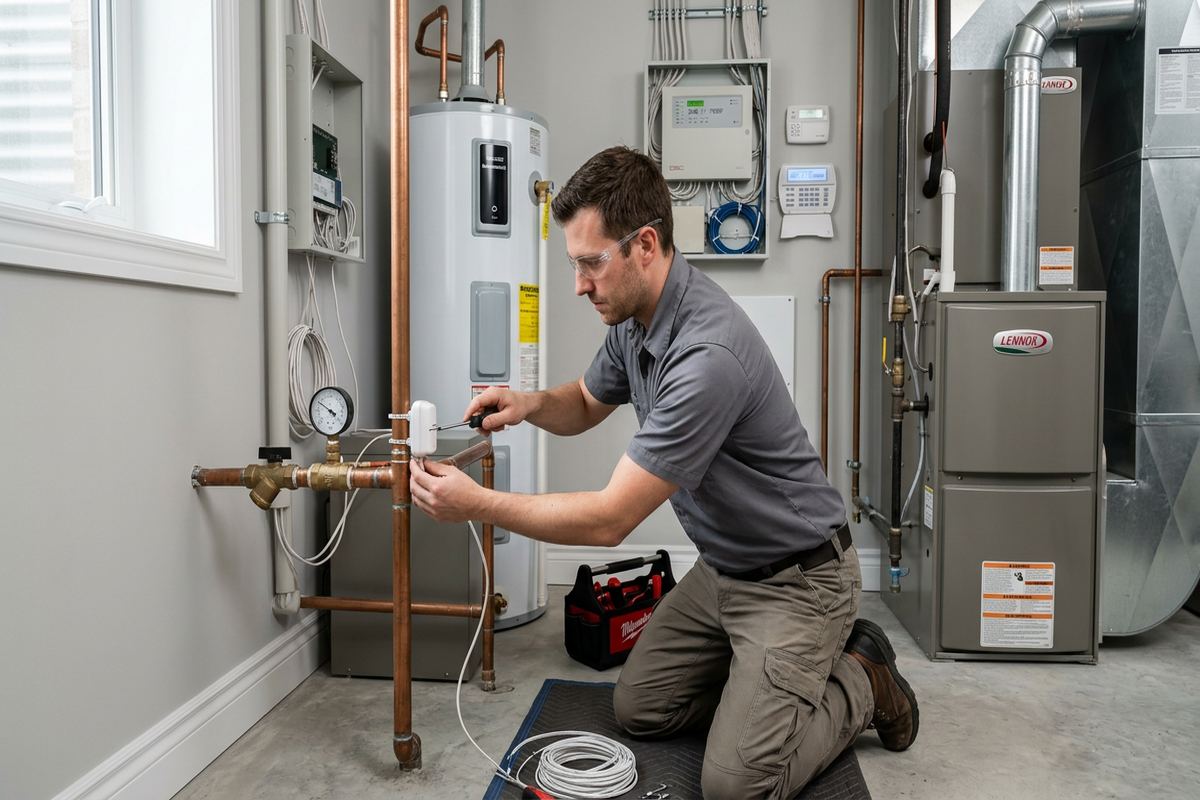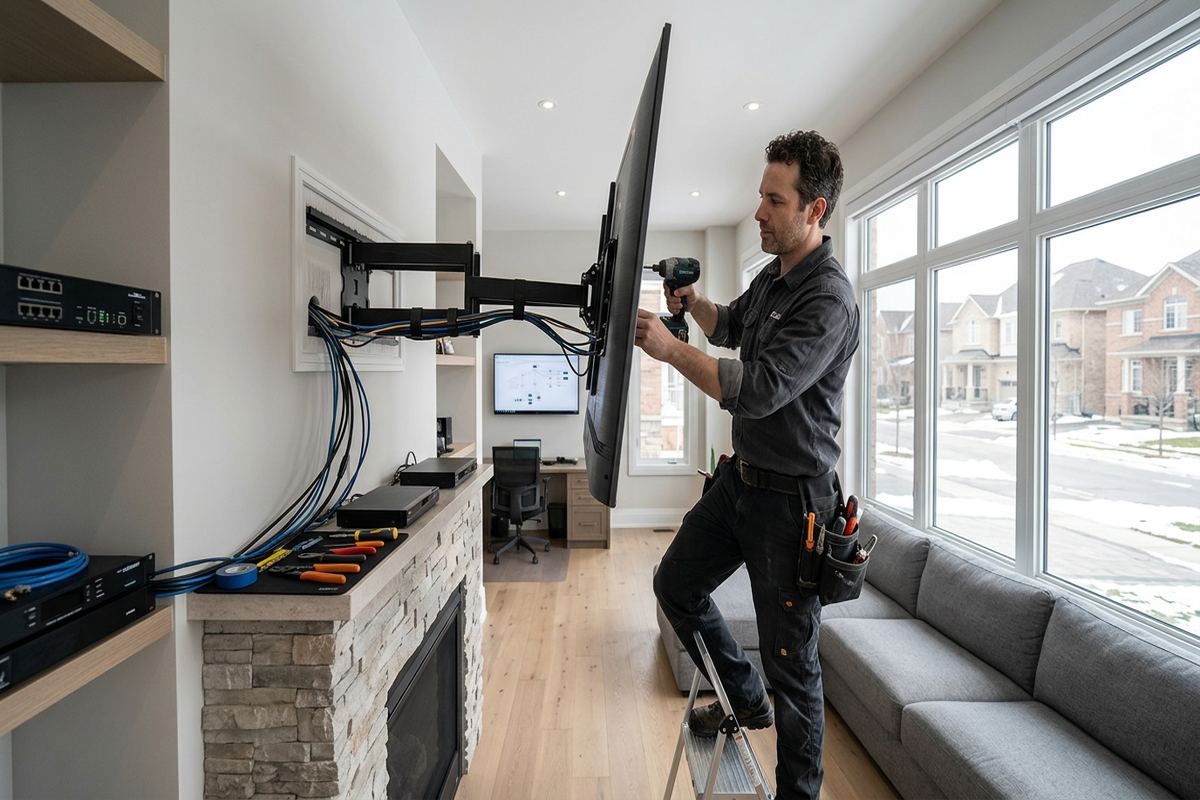
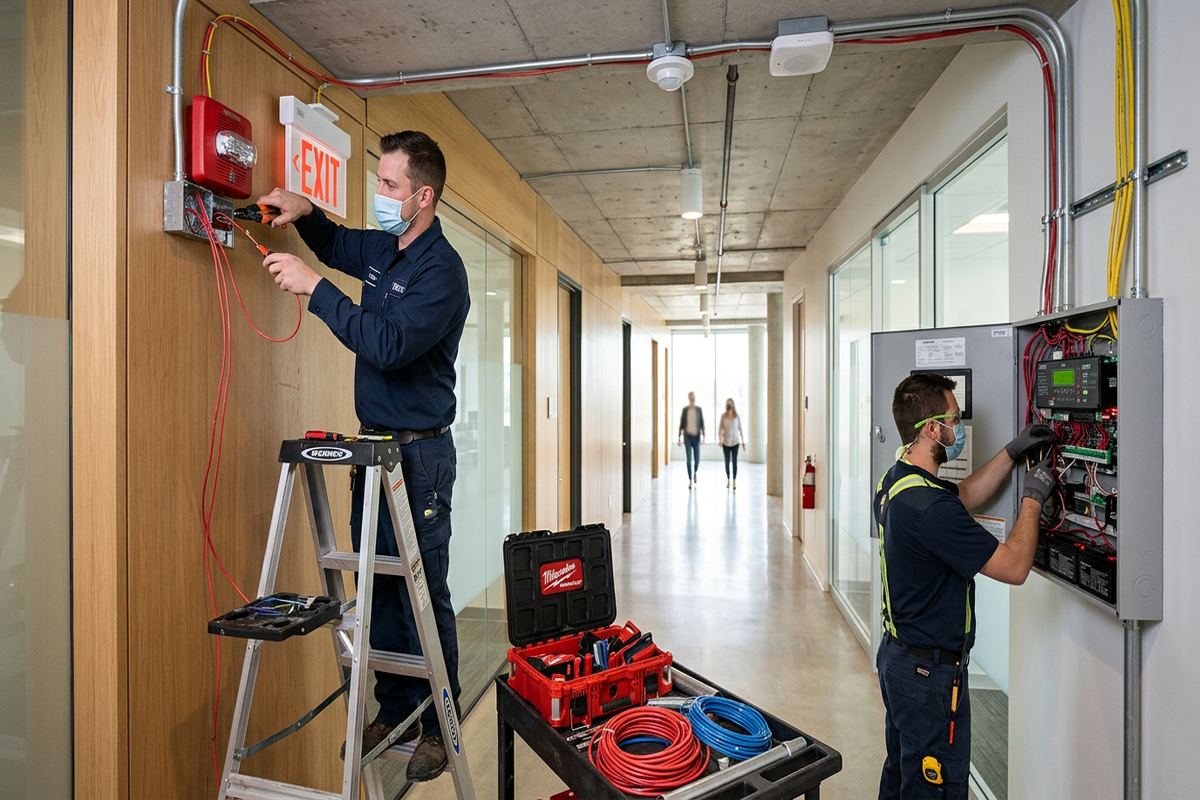
UnifiedLink installs wireless alarm systems for homes, commercial spaces and industrial units across Brantford and Brant County. Each project starts with a site assessment to review entry points, construction, wireless coverage and operating needs. We then provide a written scope, install and configure the equipment on site, test each device and complete a documented handover.
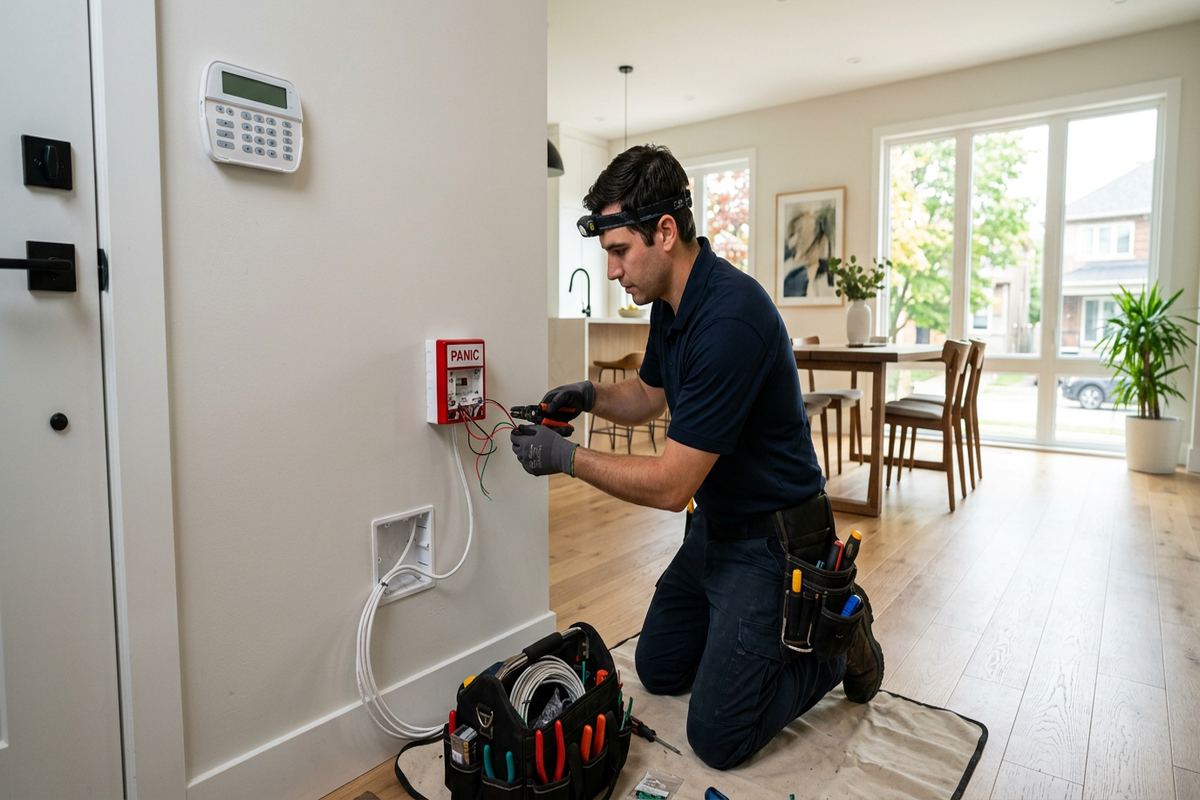
Wireless Alarm Planning for Brantford Properties
A wireless alarm should be designed around the property rather than assembled from a standard device list. During a Brantford site assessment, we review doors, accessible windows, attached garages, lower levels, loading entrances and normal movement through the building. We also identify where the control equipment, siren, keypads and wireless repeaters could be located. This process helps establish practical coverage, reduce nuisance alarms and confirm whether wireless communication is dependable across the full property before equipment quantities and installation details are finalized.
Building construction strongly affects wireless alarm planning. Older brick homes may have masonry partitions, additions with mixed framing, finished basements and detached structures that interrupt signals. Converted industrial buildings can include concrete floors, steel framing, high ceilings and long distances between devices. Newer west-end subdivisions often use frame construction but may still have attached garages, mechanical rooms or insulated exterior walls that require careful testing. UnifiedLink measures conditions on site and selects device positions based on the actual layout instead of relying solely on floor plans or assumed wireless ranges.
Following the assessment, the customer receives a written scope covering the proposed equipment, device placement, any cable routes, exclusions, equipment ownership and warranty. It also identifies which doors, windows and interior areas will be protected, along with any dependencies such as internet, cellular service, electrical work or building approval. This provides a clear basis for pricing and avoids uncertainty about what the completed Brantford alarm system will include. Site assessment timing depends on the requested service and the travel distance involved.
- Entry, window and interior protection review
- Wireless signal testing across the property
- Control panel and keypad location planning
- Written equipment and placement scope
- Clear exclusions, ownership and warranty details
Alarm Devices Selected for Brantford Homes
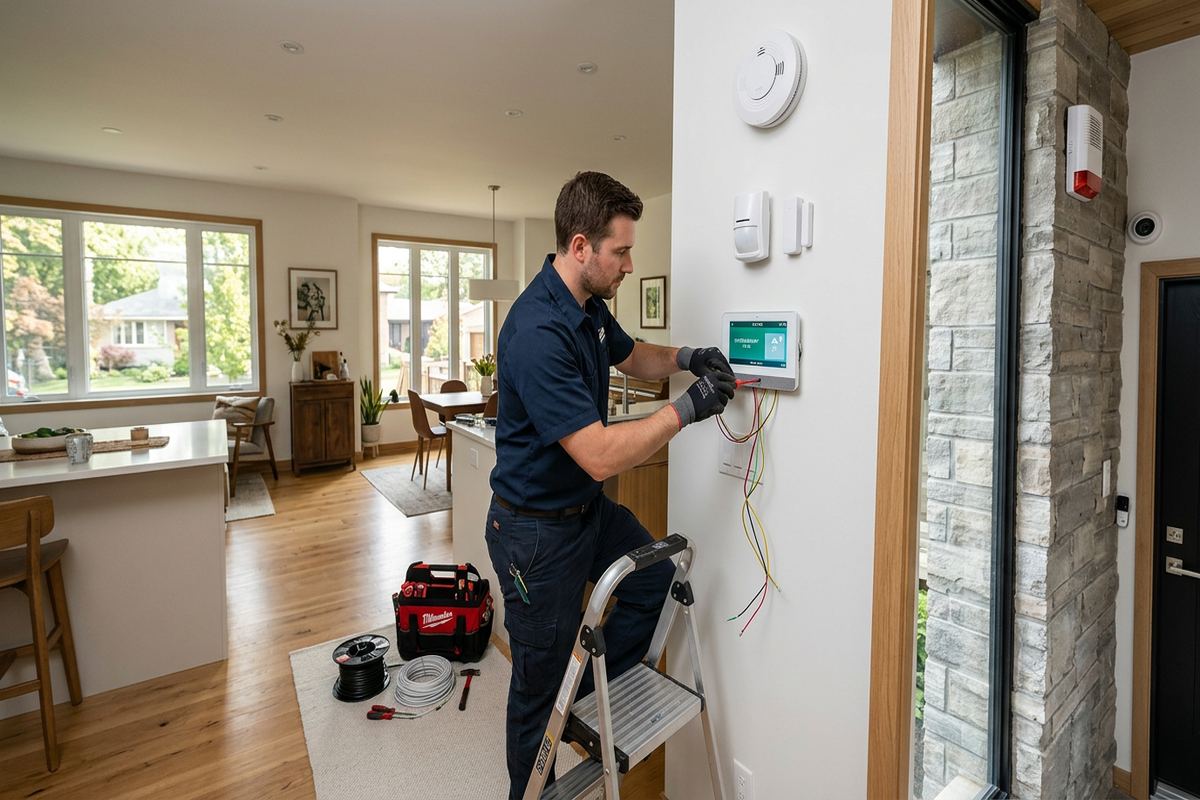
Home alarm design begins with how residents use the property each day. A front door may need delayed entry while a patio door, basement window or side entrance requires immediate protection. Motion detectors must account for stairs, hallways, pets, heating vents and direct sunlight. In Brantford homes, we can combine door and window contacts, motion sensors, glass-break detection, keypads, sirens and compatible environmental devices where appropriate. Final selection depends on the risks identified during assessment and on the capabilities of the chosen alarm platform.
Older properties in Terrace Hill, Henderson Survey and Downtown Brantford can present installation details that are easy to miss during a remote quotation. Original trim may be uneven, window assemblies may have been replaced in stages, and additions may combine masonry and frame construction. Surface-mounted contacts can sometimes avoid unnecessary alteration to heritage materials, while recessed devices may suit newer openings where access is practical. We discuss visible placement, drilling and fastening before work begins so the customer understands how each component will look and how the opening will operate afterward.
Newer homes in West Brant and Lynden Hills often have open plans, attached garages and multiple exterior doors. Wireless equipment can limit finished-wall disruption, but it still requires deliberate positioning and reliable communication with the main panel. Large mechanical equipment, appliances, mirrors and foil-backed materials can influence device performance. We test proposed locations rather than assuming a short distance guarantees a stable connection. The system is then programmed around household routines, including entry delays, stay modes, user codes and clearly defined areas that can be armed independently when supported.
- Door and window contacts
- Pet-aware motion options where suitable
- Keypads, sirens and control equipment
- Glass-break detection for selected rooms
- Stay, away and partition programming
Wireless Coverage in Masonry and Mixed Construction
Wireless does not mean that every device will communicate reliably from any location. Brick, concrete, metal cladding, mechanical systems and reinforced floors can weaken or redirect radio signals. Brantford’s mix of older brick houses and converted industrial properties makes field testing particularly important. A sensor mounted on a detached garage door or behind a masonry wall may behave differently from one installed in a nearby frame partition. We check communication at the intended mounting point and consider panel relocation or a compatible repeater when direct coverage is not dependable.
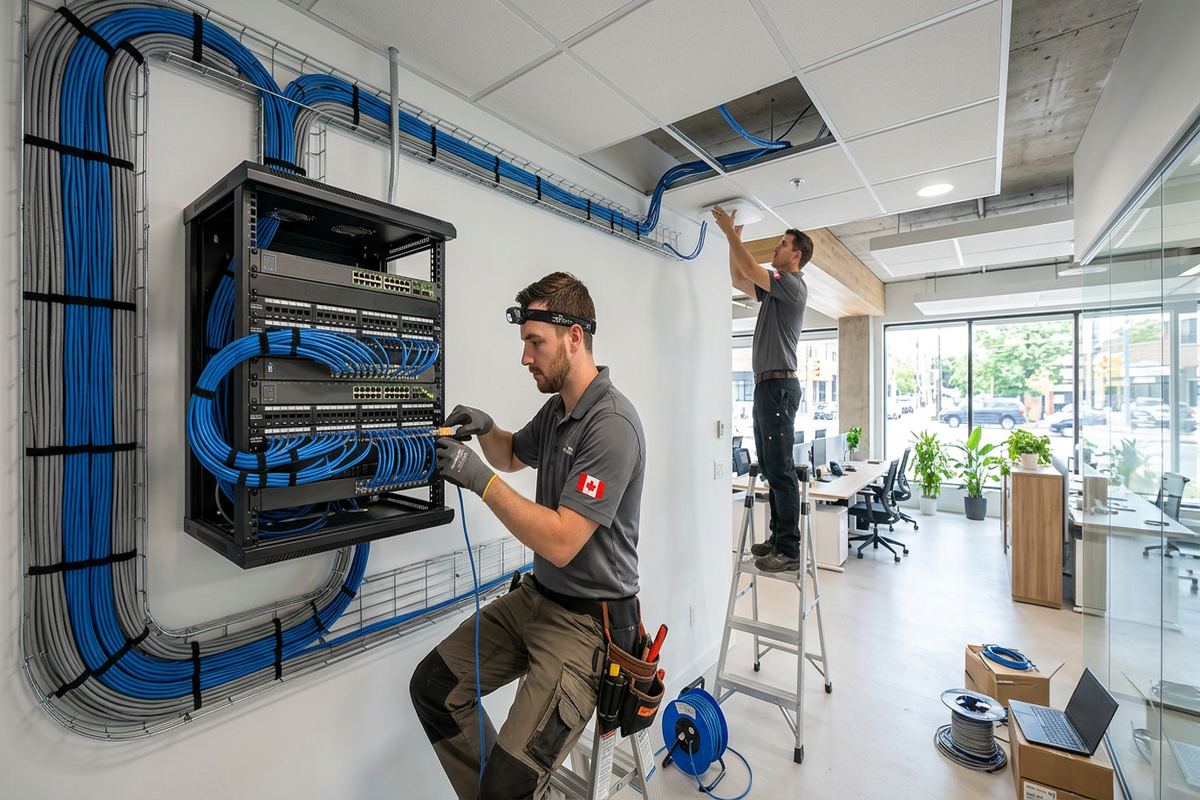
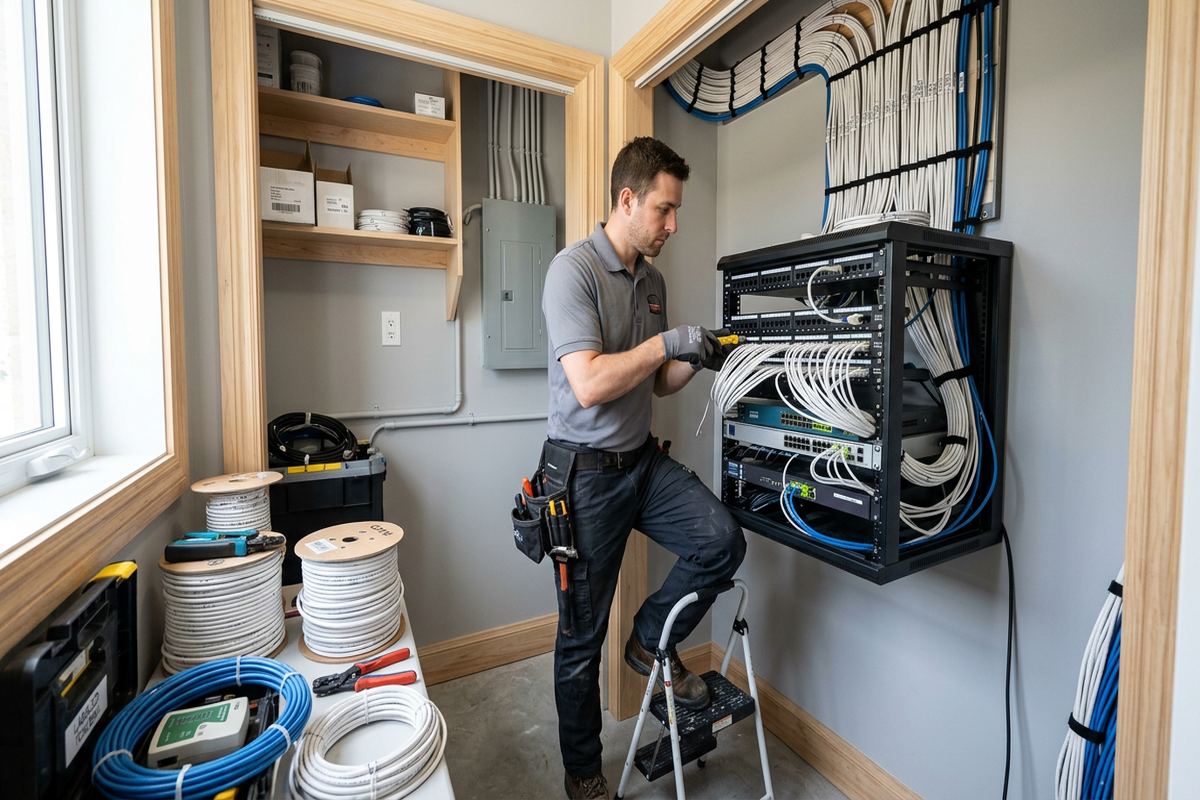
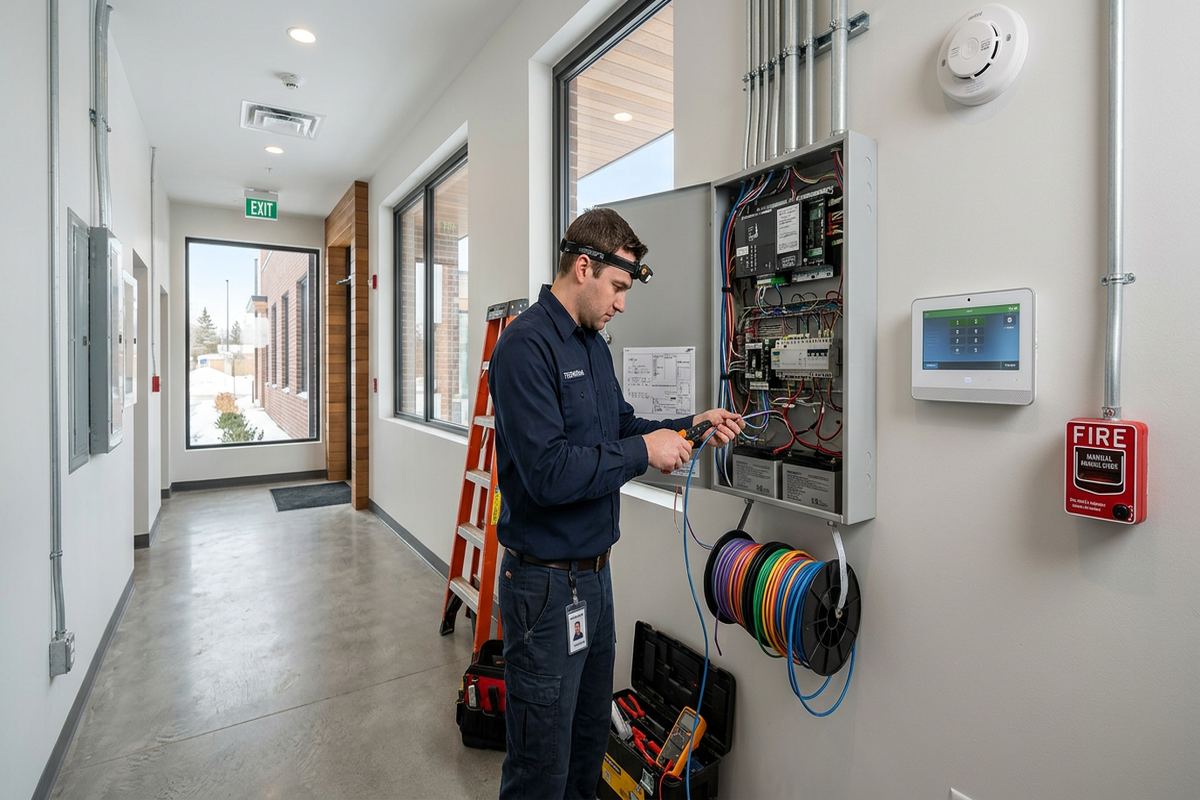
Some alarm components still require power or a wired connection even when the field sensors are wireless. The main control unit may need a suitable receptacle, communications path or connection to a siren and keypad. Where cabling is part of the design, UnifiedLink installs continuous labelled cable runs using agreed pathways. We avoid unexplained joins and document termination points for future service. Cable routing can involve unfinished basements, ceiling spaces, surface raceway or existing pathways, depending on access and the construction of the Brantford property.
Signal conditions can change after occupancy or renovation. Metal shelving, stored inventory, new machinery or relocated equipment may affect communication inside a commercial or industrial unit. For homes, a finished basement, addition or detached building can create similar concerns. The initial design should therefore leave practical access to the control equipment and account for likely changes where these are known. During commissioning, each device is activated and checked from its installed position. Device status, tamper operation and alarm reporting are reviewed before the system is handed over.
- Installed-position wireless testing
- Repeater assessment where signal paths are weak
- Continuous labelled cable runs when required
- Accessible control equipment placement
- Device, tamper and reporting checks
Brantford, Ontario
Wireless alarm installation in Brantford, scoped in writing first
Book a site assessment and get equipment, routes, exclusions, and warranty on paper before anything is installed.
Brantford Business and Industrial Alarm Installation
Commercial alarm requirements differ from residential routines. A Brantford shop, office or service business may need separate user codes, scheduled opening procedures, rear-door protection and clear responsibility for arming at closing. Commercial strips can also have shared walls, public-facing glass and deliveries through secondary entrances. We review staff movement, customer areas, stockrooms, offices and restricted spaces before assigning alarm zones. The objective is to make the system understandable for regular users while preserving useful information about which device or area produced an event.
Converted industrial buildings and working industrial units need particular attention to structure and operations. High ceilings can make motion placement difficult, while steel, concrete, racking and machinery can interfere with wireless paths. Overhead doors, personnel doors and loading areas may require different contact arrangements because of vibration, temperature changes and daily wear. We also consider whether a device can be safely reached for future battery replacement. Installation planning is coordinated with the customer so that alarm work does not create avoidable conflicts with equipment, storage or active work areas.
Tenants should confirm what they are allowed to attach, drill or alter before installation. This applies to businesses in leased units as well as residential tenants. Condominium owners may also require board or property-management approval for devices affecting common elements, exterior doors or shared communications spaces. UnifiedLink can provide a defined scope showing proposed mounting and pathways, but the customer remains responsible for obtaining required permissions unless another arrangement is documented. Approval should be settled before equipment is mounted, particularly where masonry, exterior finishes or common property could be affected.
- Separate codes for authorized users
- Rear entrance and loading-door protection
- Zone planning around business operations
- Tenant and property approval coordination
- Accessible placement for future maintenance
Exterior Devices and Brantford Winter Conditions
Exterior alarm components must be selected and mounted for their environment. Brantford winters bring cold conditions, moisture and repeated freeze-thaw cycles that can stress housings, fasteners and seals. A device intended only for indoor use should not be placed outside or in an unconditioned area without confirming its operating limits. Even enclosed porches, detached garages and loading areas can experience substantial temperature changes. We review device ratings, mounting surfaces and exposure before deciding whether exterior placement is appropriate or whether protection should be achieved another way.
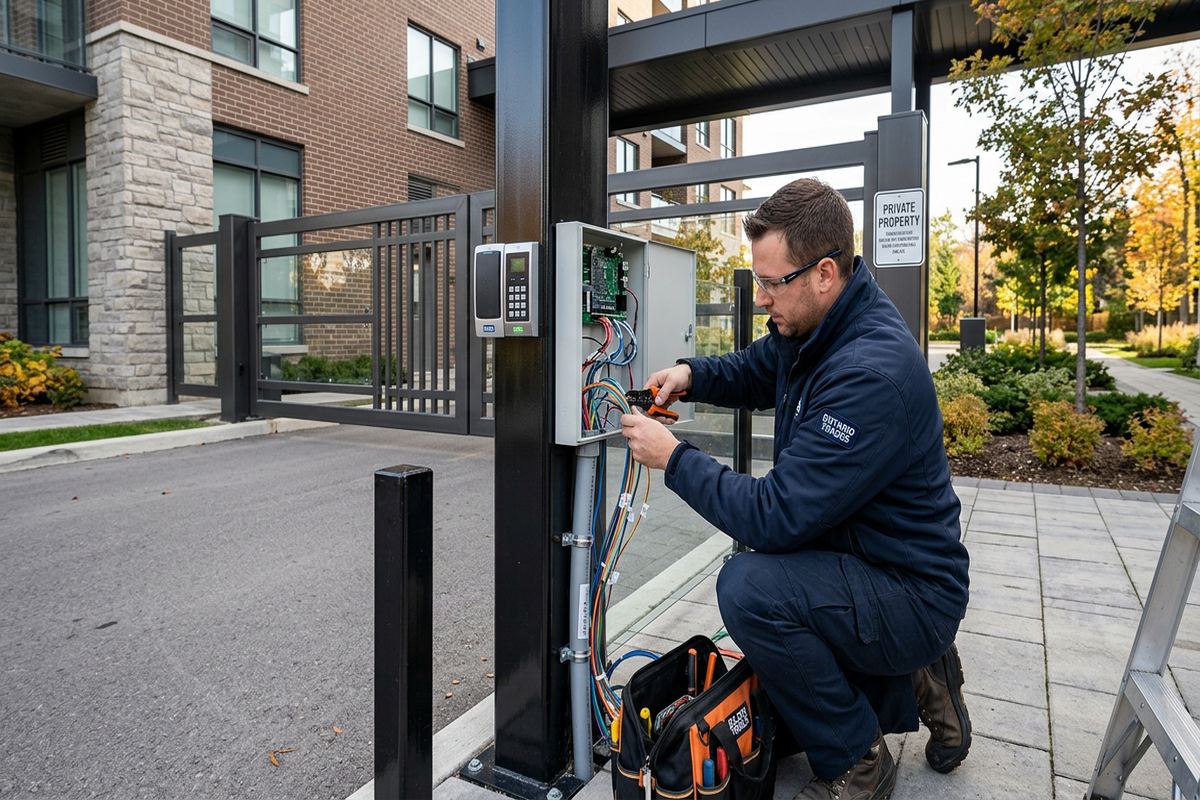
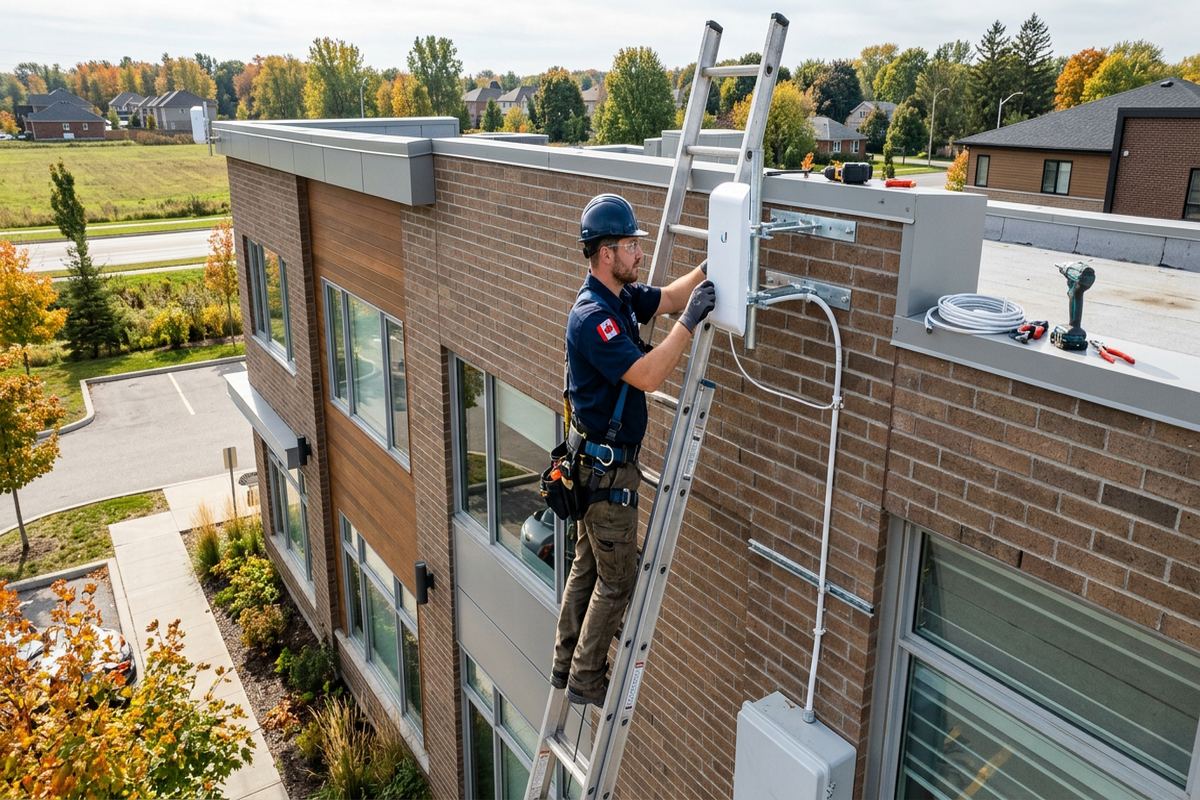
Mounting into brick requires different methods from fastening to wood framing, vinyl components or metal cladding. Mortar joints, masonry condition, drainage paths and hidden services all influence the installation approach. Exterior penetrations should be kept controlled and sealed with materials suited to the surface and exposure. Cables must enter with a suitable drip arrangement where applicable, and device housings should not trap water. These details help reduce the risk of loose equipment, moisture entry and damage to the building envelope during Brantford’s seasonal temperature changes.
Wireless door contacts on overhead doors, sheds or detached structures need more than a simple distance check. Metal doors can affect radio performance, and movement or vibration may require a purpose-suited contact and secure bracket. Battery performance can also change in low temperatures, so maintenance expectations must be explained during handover. When an exterior or unheated location is unsuitable for a standard sensor, we discuss alternatives rather than forcing the installation. The final scope records important environmental limitations and identifies customer maintenance tasks associated with exposed or battery-powered devices.
- Environmentally suitable device selection
- Masonry-specific fastening methods
- Controlled exterior penetrations and sealing
- Cold-weather battery considerations
- Secure mounting for moving doors
Configuration, Notifications and User Access
Installation includes on-site configuration of the alarm equipment within the agreed scope. Devices are named by their actual locations so an event can be understood without decoding generic zone numbers. We set entry and exit delays, user permissions, arming modes and notification features supported by the selected platform. For a Brantford business, this may include different codes for managers and staff. For a household, it may involve stay mode for overnight use and separate access for family members, contractors or other approved users.
Internet and cellular features vary between alarm platforms, service plans and site conditions. A wireless sensor network inside the property is separate from the system’s method of sending remote notifications. If an app, internet connection or cellular communicator is required, the written scope identifies the dependency and who supplies any related service. We do not assume that existing Wi-Fi reaches the alarm panel or that a mobile signal is adequate inside masonry or industrial construction. Connectivity is checked where it forms part of the commissioned alarm function.
The customer receives the system using their own credentials rather than an installer-controlled account. During handover, we demonstrate normal arming and disarming, device status, alarm cancellation procedures, code management and available notification settings. We also explain battery indications, tamper messages and other routine alerts supported by the equipment. An as-built record identifies installed devices and relevant cable or equipment locations. This information gives the Brantford property owner a practical reference for operation, troubleshooting, future renovations and discussions with any monitoring or communications provider.
- Plain-language device and zone names
- User-specific codes and permissions
- App and communications dependency review
- Customer-controlled account credentials
- As-built system record
Replacing or Expanding a Brantford Alarm System
An existing alarm does not always need complete removal, but compatibility must be verified before components are reused. Older wired contacts, sirens or cable routes may have value if they are accessible, correctly installed and supported by the proposed equipment. Proprietary wireless sensors may not communicate with a new control platform. During a Brantford assessment, we identify visible equipment, review available documentation and test reusable items where practical. The resulting scope distinguishes retained components from new equipment and states any limitations created by the existing installation.
Expansion planning is useful when a basement will be finished, an addition is expected or a business may occupy more of its unit. A wireless system can make later additions less disruptive, although panel capacity, repeater coverage and platform compatibility still matter. We discuss known future needs before selecting the initial equipment. In Echo Place, West Brant or other developing and established areas, the same principle applies: design for the current property without preventing reasonable changes that the customer has already identified and intends to complete.
Renovation can alter alarm performance even when no alarm device is intentionally moved. New walls, steel beams, cabinetry, doors or insulated finishes may block a wireless path or change motion coverage. Contractors can also damage concealed wiring or remove contacts while replacing windows and doors. Before renovation starts, the alarm equipment should be identified and included in the project plan. UnifiedLink can assess required changes, document device relocations and recommission affected areas so the finished Brantford system reflects the updated layout rather than the former room arrangement.
- Existing equipment and cable review
- Compatibility checks before component reuse
- Capacity planning for future devices
- Alarm coordination during renovations
- Recommissioning after layout changes
The Brantford Wireless Alarm Installation Process
The process begins with a discussion about the property, the areas requiring protection and the people who will use the system. We then arrange a site assessment, with timing based on the service and travel distance. At the property, we inspect likely device locations, construction materials, power and communications access, and any existing alarm equipment. Requests sent during business hours are answered the same day; after-hours requests are answered the next business day. This response wording concerns the request itself and does not guarantee an installation or emergency attendance time.
After the assessment, UnifiedLink prepares a written scope covering equipment, device placement, cable routes, exclusions, equipment ownership and warranty. Pricing follows the assessment rather than being based on an incomplete device count. Once the scope is accepted and access arrangements are confirmed, installation can be coordinated around occupants or business operations. One accountable contractor manages the agreed low-voltage alarm work, including mounting, any included cabling, programming and testing. Work outside the scope is discussed before changes are made, particularly where hidden conditions affect the planned pathway.
Commissioning is completed on site with the devices in their final positions. We activate contacts and detectors, verify zone descriptions, check audible functions and review supported communications or notifications. The customer then receives operating guidance, their own credentials and an as-built record. For Brantford homes and businesses, this final step is important because a system is only useful when authorized users understand normal operation and alerts. Questions identified during handover are addressed before completion, and any customer responsibilities for batteries, connectivity, permissions or third-party services are clearly stated.
- Site assessment before pricing
- Written scope before installation
- Coordinated mounting, cabling and setup
- Installed-device testing and commissioning
- Credentials, training and as-built handover
Brantford neighbourhoods we cover
- Downtown Brantford
- West Brant
- Echo Place
- Henderson Survey
- Terrace Hill
- Lynden Hills
Wireless alarm installation in Brantford — common questions
Will wireless sensors work in my older Brantford brick home?
They often can, but masonry, additions, metal ductwork and finished basements may reduce signal strength. UnifiedLink tests communication at proposed device locations during the assessment and commissioning stages. If a path is unreliable, options may include moving the control equipment, changing sensor placement or using a compatible repeater. Equipment is selected only after the property’s actual construction and layout have been reviewed.
Can you install an alarm in a rented unit or condominium?
Yes, provided the required approvals are in place. Brantford tenants should obtain landlord permission for drilling, fastening and any changes to doors or finishes. Condominium owners may need approval for common elements, exterior openings or shared spaces. We can provide a written scope showing proposed equipment, mounting and pathways, but the customer is responsible for securing permission unless the project documents state otherwise.
Does a wireless alarm still need internet or cables?
Wireless sensors communicate with the alarm control equipment without individual signal cables, but the main panel usually still needs power. Some keypads, sirens or communications devices may also require wiring. Internet or cellular service may be needed for remote notifications, depending on the selected platform. During the Brantford assessment, we identify these dependencies and include any agreed cable routes or connectivity requirements in the written scope.
Can my detached garage be included in the alarm?
Possibly, after signal and environmental conditions are checked. Distance, brick walls, metal doors, neighbouring interference and winter temperatures can affect wireless operation. A detached Brantford garage may require a compatible repeater or a different detection method. We also confirm that each proposed device is rated for the temperature and moisture conditions where it will operate, rather than treating an unheated garage like an indoor room.
Can you reuse parts of my existing Brantford alarm?
Reusable components are assessed individually. Existing wired contacts, sirens or cable runs may be retained when their condition, installation and compatibility are acceptable. Older proprietary wireless sensors often cannot connect to a different platform. The written scope identifies what will remain, what will be replaced and any limitations. Testing is completed where practical before retained equipment is relied upon as part of the new system.
What do I receive when installation is complete?
UnifiedLink configures and tests the system on site, demonstrates normal operation and provides access using your own credentials. The handover covers arming modes, user codes, alerts, battery indications and supported notification functions. You also receive an as-built record identifying installed devices and relevant equipment or cable locations. Any ongoing responsibilities involving connectivity, batteries, approvals or third-party services are explained before the Brantford project is closed.
Coverage in Brantford is confirmed against the address before we quote. See everything we install in Brantford or the province-wide wireless alarm installation page.