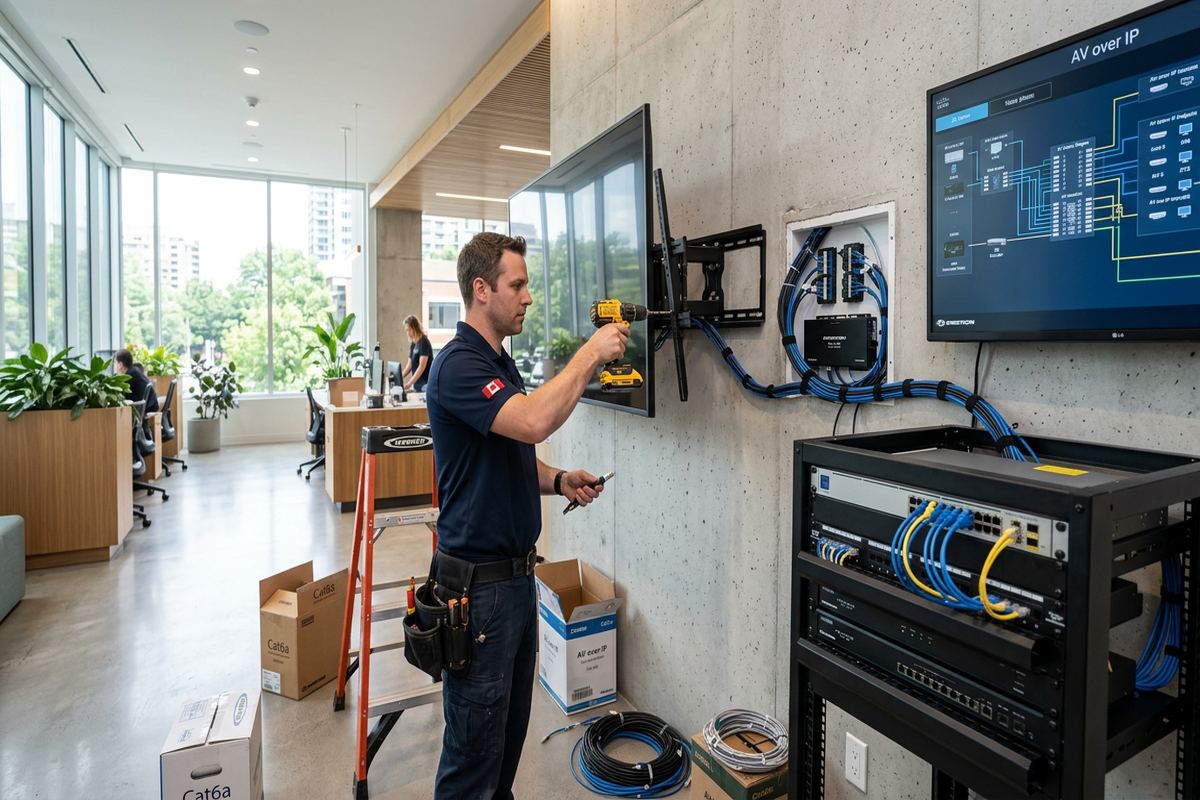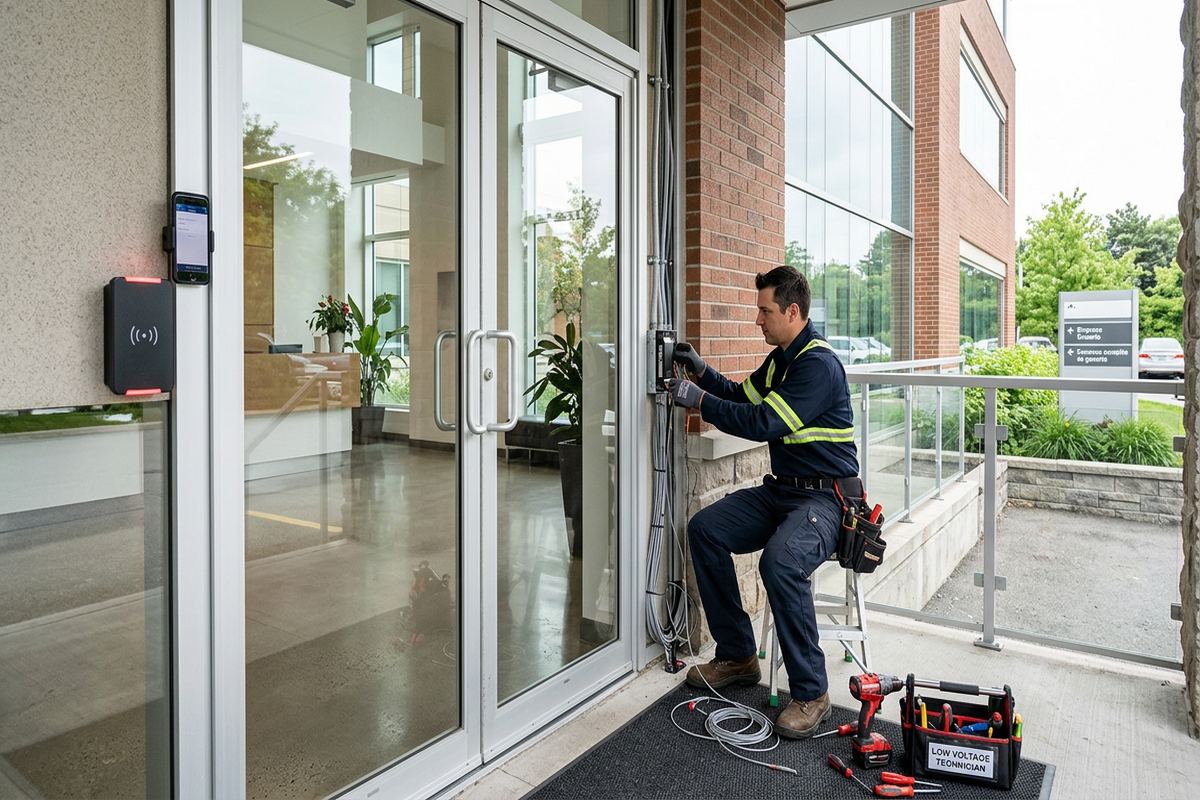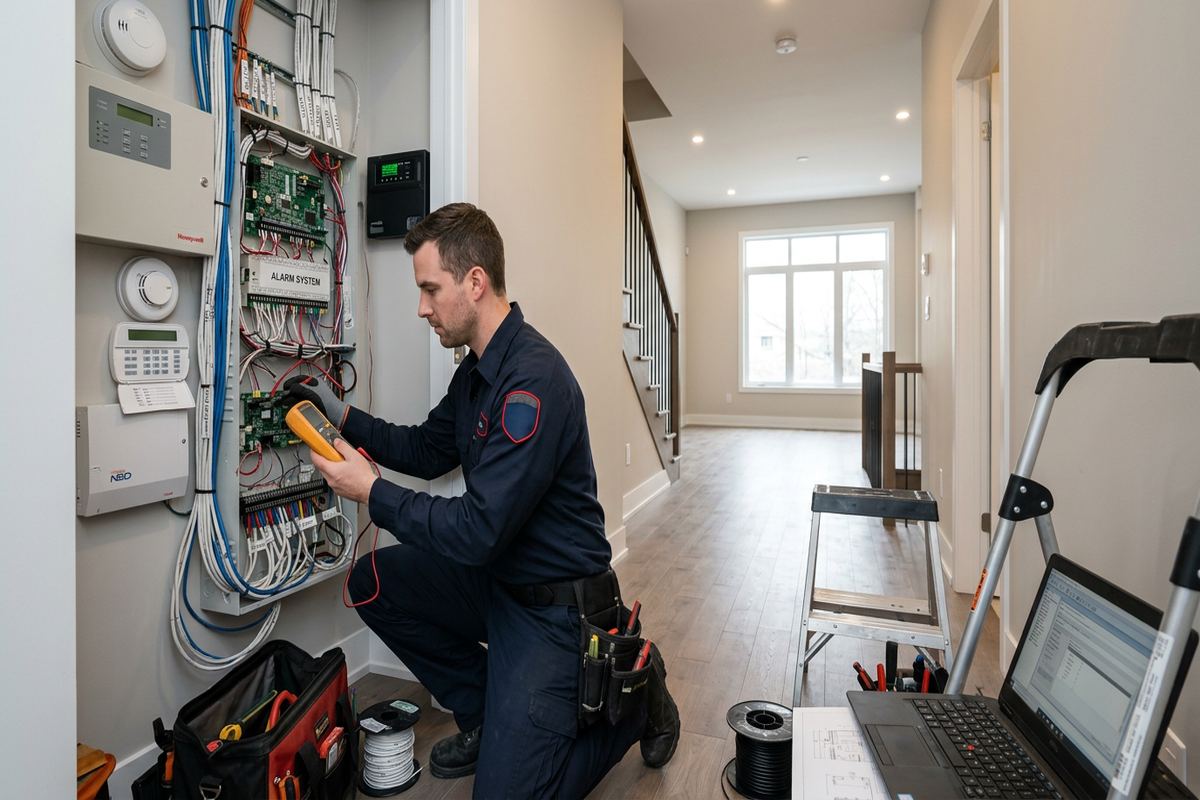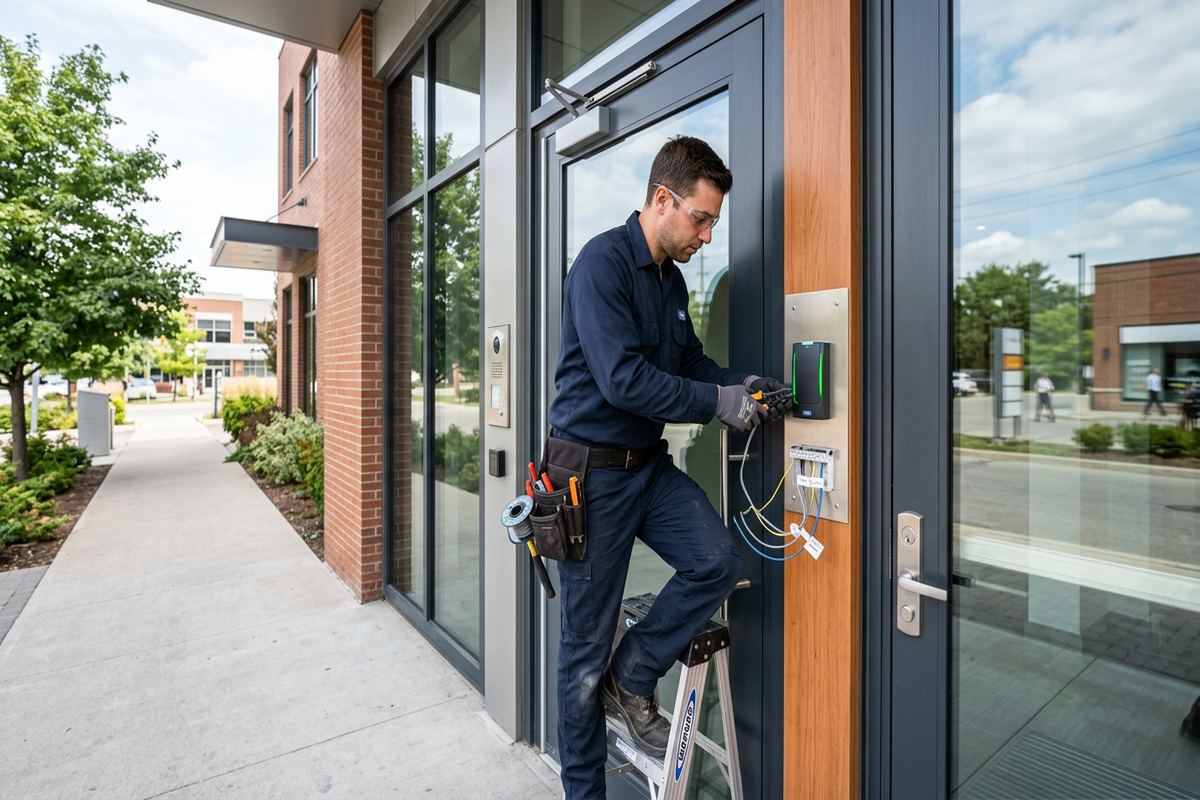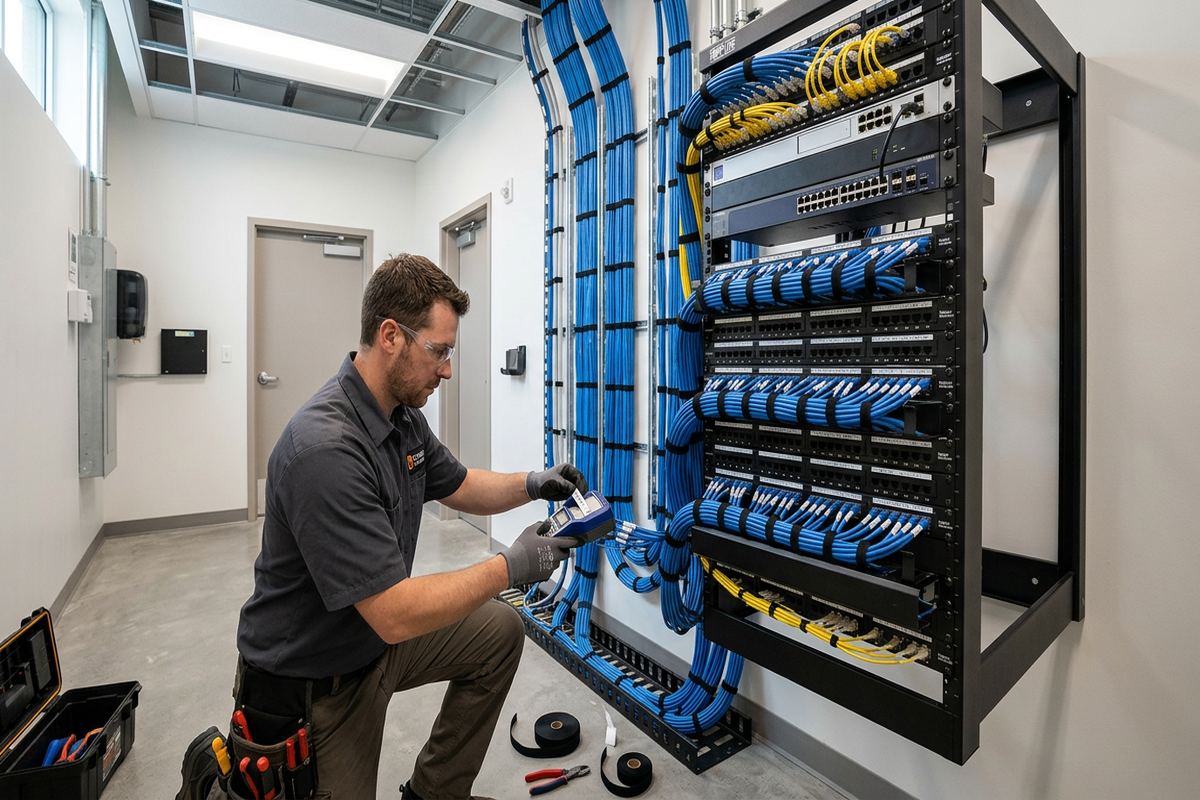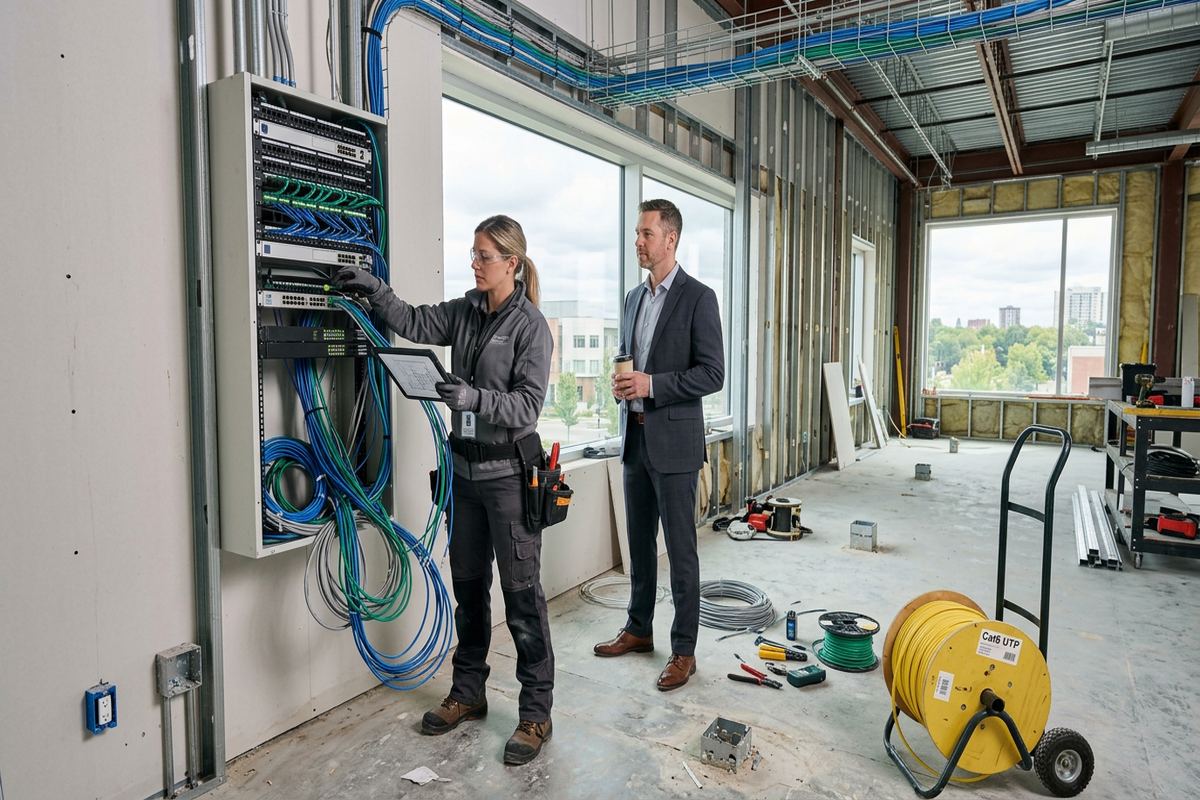
UnifiedLink installs low-voltage cabling for Brantford homes, commercial spaces and industrial units. We plan practical routes for data, cameras, access control, alarms, Wi-Fi, audio and displays. Every project begins with a site assessment before pricing, followed by a written scope that defines equipment, pathways, device locations, exclusions, ownership and warranty.
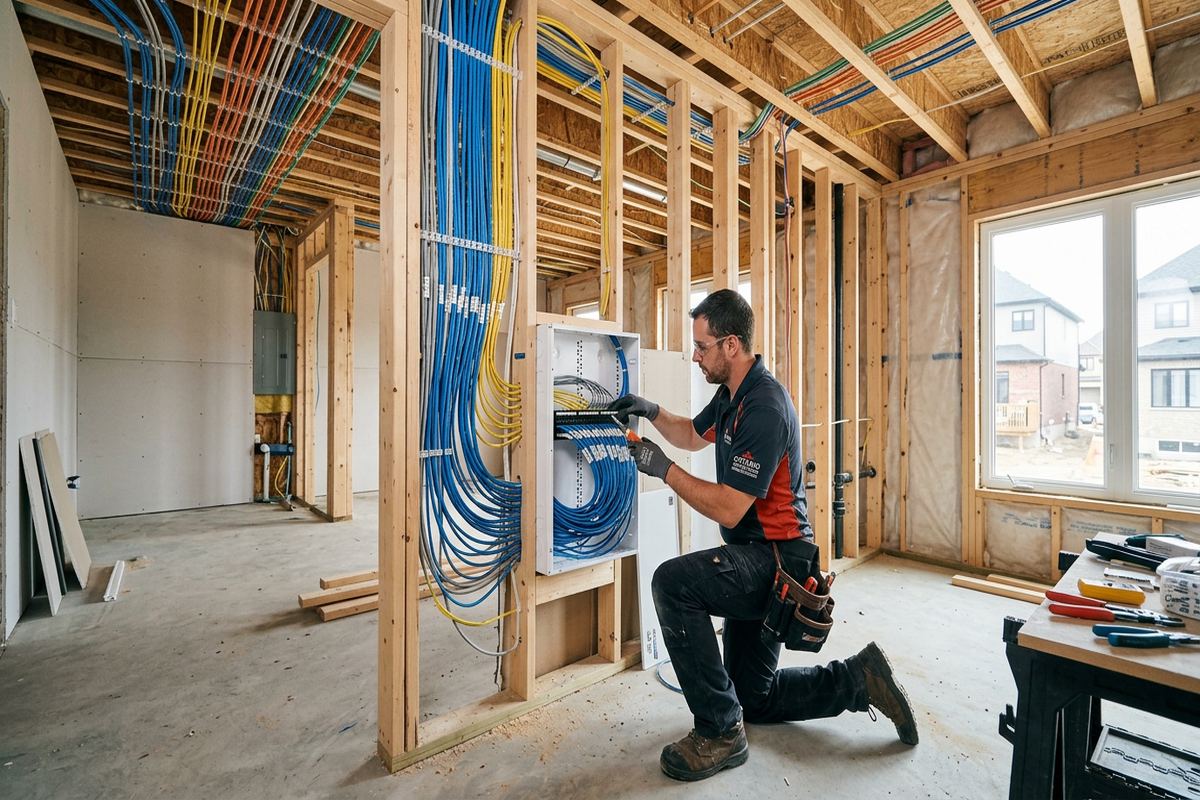
Low-Voltage Cabling for Brantford Properties
Low-voltage cabling provides the physical connection between network equipment, cameras, access devices, alarm components, wireless access points, speakers and displays. A reliable installation depends on more than pulling cable between two locations. Routes must avoid electrical interference, protect the cable from physical damage and leave enough organization for testing, service and future changes. In Brantford, the available route may pass through a basement, attic, ceiling space, warehouse structure or finished wall. We assess those conditions before recommending cable types, pathway methods, termination points or supporting hardware.
Brantford’s varied building stock requires different installation methods. Older brick homes may have plaster walls, limited cavities and masonry foundations that make concealed pathways difficult. Converted industrial buildings can include thick brick, exposed structure, high ceilings and previous wiring from several renovations. Newer west-end subdivisions generally offer frame construction and more predictable wall cavities, although finished basements and insulated exterior walls still limit access. The objective is not to force one standard route into every property. It is to choose a pathway that protects the building, supports the connected system and remains practical to maintain.
A site assessment comes before pricing because drawings and photographs rarely show every obstacle. We review the proposed equipment locations, accessible ceiling or floor spaces, electrical service areas, exterior transitions and the intended location of the central rack, cabinet or termination panel. The written scope then identifies equipment, cable routes, device placement, exclusions, equipment ownership and warranty. This gives a Brantford property owner a defined installation plan rather than an open-ended cable pull. Where access depends on another trade, landlord permission or destructive work, that condition is identified before installation begins.
- Data and network cable runs
- Camera and alarm cabling
- Access control device pathways
- Wi-Fi access point cabling
- Audio and display connections
Planning Cable Routes in Brantford Buildings
Route planning starts with the building rather than the device list. In a Downtown Brantford storefront, cable may need to cross a finished retail area before reaching offices, cameras or wireless access points. In an industrial unit, open structure can simplify access but requires suitable support and protection around loading, storage and production areas. Residential work may involve fishing finished walls without opening unnecessary surfaces. We compare concealed, surface-mounted and open-ceiling pathways, then document the selected approach so the owner understands where cable will travel and which areas must remain accessible during the work.
Masonry and frame construction behave differently when cable is installed. Brick, block and concrete may require surface raceway, carefully placed penetrations or routes through existing service openings. Frame walls can offer concealed pathways, but insulation, blocking, plumbing and previous renovations may interrupt the cavity. Older homes in Terrace Hill or Henderson Survey can combine masonry foundations with framed upper floors and plaster finishes. Before drilling, we consider the likely wall assembly and inspect accessible areas. Penetrations are placed deliberately, and exterior openings are sealed to reduce water entry and movement caused by seasonal temperature changes.
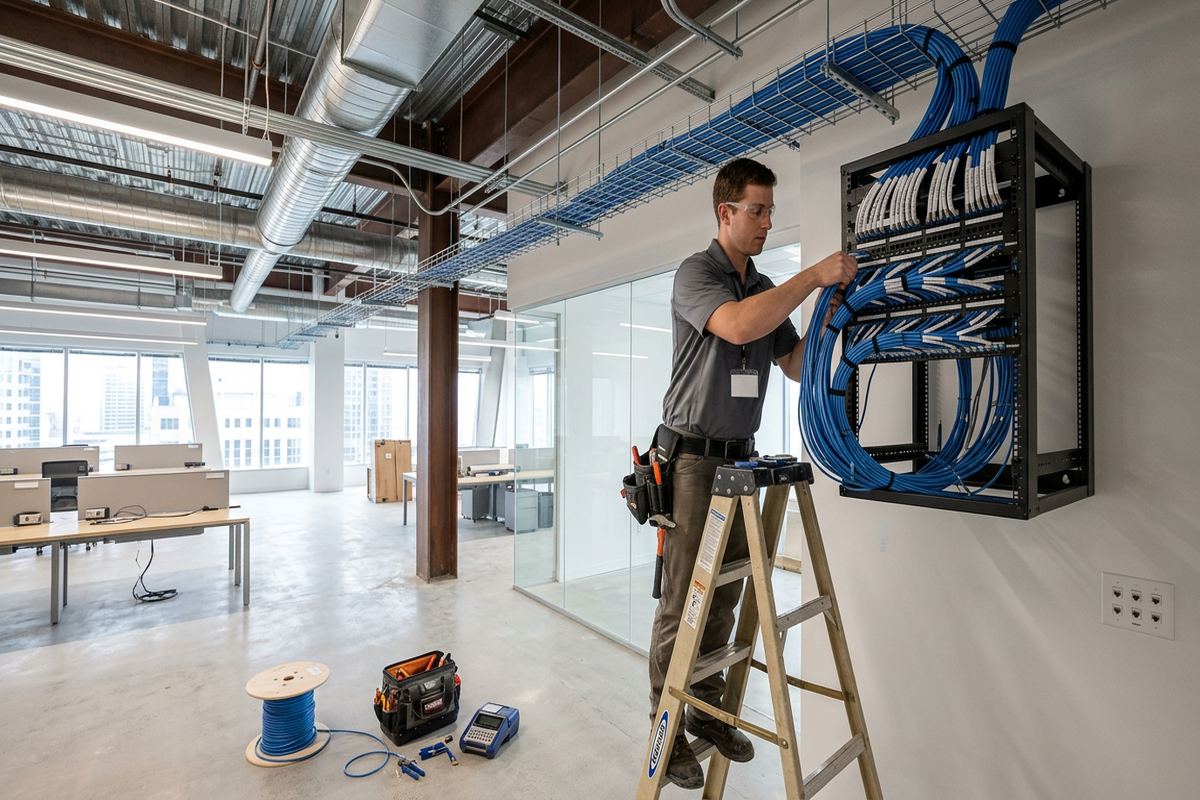
Cable routes also need separation from line-voltage wiring and equipment that can introduce interference or create unsafe working conditions. We identify shared spaces, electrical rooms and crowded ceiling areas before deciding how cables will be supported. Continuous labelled runs reduce hidden connection points and make later troubleshooting more direct. At the termination location, cables are organized so individual links can be identified without tracing an unmarked bundle through the building. This planning is especially useful in converted Brantford buildings, where abandoned wiring and undocumented renovations can otherwise make even a small addition difficult to understand.
- Concealed routes where access permits
- Surface raceway for finished masonry
- Supported pathways above ceilings
- Separation from electrical cabling
- Documented penetration locations
Cable Types and Termination Choices
The correct cable depends on the signal, distance, equipment and installation environment. Category cable commonly supports data, cameras, wireless access points and some access control devices, while other systems may require fibre, coaxial, speaker cable or dedicated control wiring. Cable jacket selection matters when a run enters an air-handling space, exposed structure, damp location or exterior pathway. We match the proposed cable to its intended use rather than treating every low-voltage connection as interchangeable. The written scope identifies the planned media and endpoints, allowing the owner to review what is included before materials are ordered or installed.
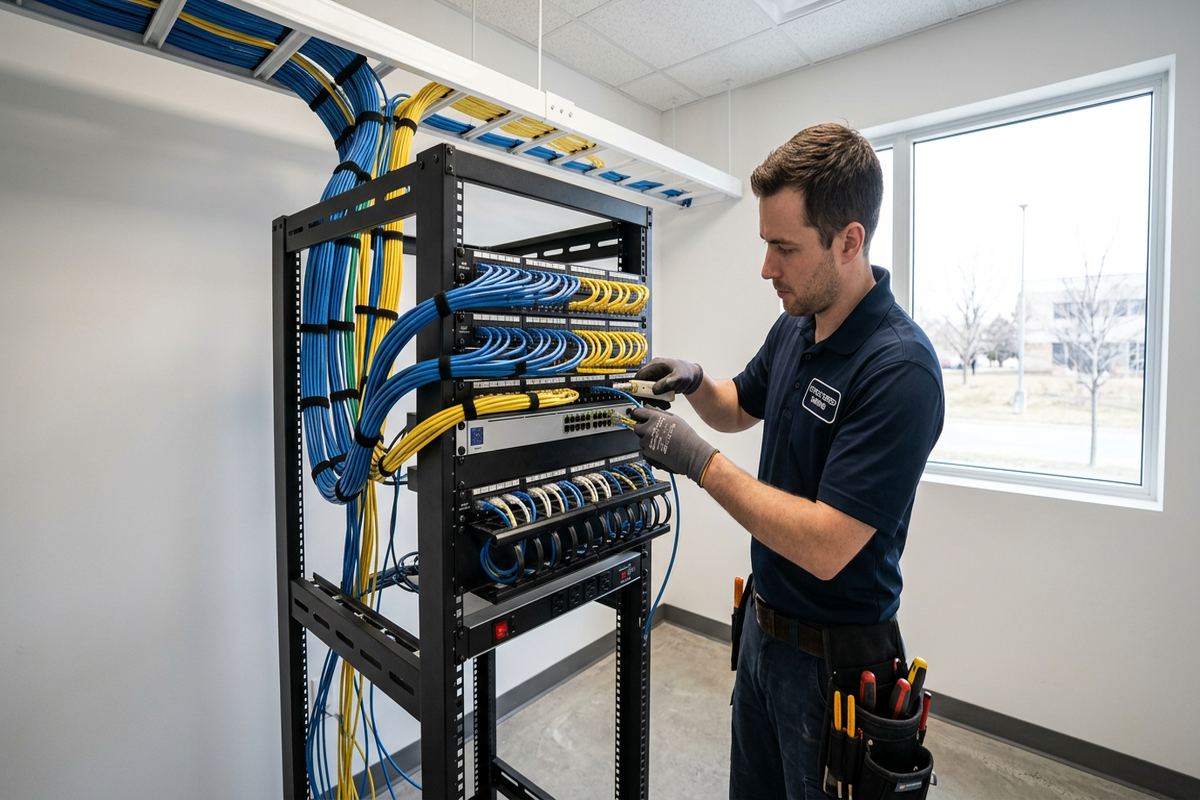
Termination quality affects the complete link, not just the connector. Excessive untwisting, tight bends, crushed jackets and poorly supported service loops can reduce performance or make later repairs difficult. We install continuous labelled runs and terminate them at defined outlets, patch panels, enclosures or device locations. Labels correspond to the as-built record provided at handover, so a port in a Brantford office or home can be matched to its destination. Where equipment connects directly, cable slack and placement are planned to support installation without leaving exposed coils that are vulnerable to damage.
Not every existing cable should be reused. An older run may be unlabelled, damaged, spliced inside a wall or unsuitable for the intended equipment. Visual inspection can identify some concerns, but accessible endpoints and route history also matter. During the assessment, we discuss whether existing pathways, conduits or cables appear practical to retain. Reuse is included only when the scope clearly defines it and access allows appropriate verification. If an unknown cable disappears into a finished section of the property, replacement with a documented continuous run can provide a more maintainable result than relying on uncertain infrastructure.
- Category copper cabling
- Fibre pathways where appropriate
- Coaxial and speaker cable
- Patch panels and data outlets
- Clear endpoint identification
Brantford, Ontario
Low-voltage cabling installation in Brantford, scoped in writing first
Book a site assessment and get equipment, routes, exclusions, and warranty on paper before anything is installed.
Brantford Residential Cabling Installation
Residential cabling often begins with a specific need, such as a wired home office, camera location, stronger Wi-Fi coverage or a television connection. The installation should also consider where internet service enters the home and where network equipment can be powered, ventilated and accessed. In West Brant and Lynden Hills, frame construction may permit attic or basement routes, but finished levels can still require selective surface pathways. We review how rooms are used, where furniture or cabinetry will sit and whether future access is likely before setting outlet, camera or wireless access point locations.
Older brick homes require particular care because interior finishes may conceal lath, irregular framing or renovations completed at different times. A route that appears direct on one floor may be blocked by masonry, framing or mechanical services. Rather than promising fully concealed wiring before inspection, we identify feasible options and explain visible sections where they may be necessary. In areas such as Terrace Hill, basement joist spaces can provide useful distribution routes, while upper-floor access may depend on closets, chases or attic conditions. Any drilling plan must account for the actual structure observed on site.
Owners of condominiums, rental homes and multi-unit properties should confirm approval requirements before work starts. A condo corporation may control common walls, exterior surfaces, risers or shared communication rooms. A landlord may need to authorize drilling, raceway placement and equipment mounting. UnifiedLink can define the proposed route and device positions in the written scope, giving the customer useful information for an approval request. Work proceeds based on permitted access and the approved plan. This avoids placing cable through shared areas or mounting exterior devices where the customer does not have authority to approve alterations.
- Home office network outlets
- Wired Wi-Fi access points
- Camera and doorbell pathways
- Television and audio cabling
- Central cabinet organization
Commercial and Industrial Cabling in Brantford
Commercial cabling must fit daily operations as well as the building. Offices need organized workstation, phone, printer and wireless connections, while retail spaces may require links for cameras, displays, payment areas and back-office equipment. Brantford commercial strips often combine public sales areas with stockrooms and service spaces, creating different mounting and protection requirements within one unit. We review working hours, furniture layouts, ceiling access and the location of network equipment. The scope can divide work by area or stage when access must be coordinated around staff, customers or other contractors.
Converted industrial buildings and active industrial units present another set of route decisions. High ceilings, open steel or timber structure, masonry walls and long distances can make pathways visible and exposed to physical hazards. Cable supports should follow the selected route without relying on unrelated pipes, conduits or ceiling components. Where forklifts, stored goods or moving equipment create risk, the route may need greater height, raceway or another protective method. We also consider equipment locations that could produce electrical noise, heat, dust or vibration before finalizing the pathway and termination point.
A commercial handover should leave the owner able to identify and manage installed connections. Cables are labelled, on-site configuration is completed for included equipment, and the customer receives access using their own credentials. The as-built record documents installed runs and endpoints based on the completed scope. This is particularly valuable when a Brantford tenant moves into a unit containing old wiring from previous occupants. New work can be separated and identified clearly instead of becoming another unmarked layer. One accountable contractor coordinates the low-voltage portion, reducing uncertainty about who installed each included connection.
- Office and workstation cabling
- Retail camera and display links
- Warehouse access point runs
- Industrial pathway planning
- Rack and cabinet organization
- Tenant improvement coordination
Exterior Cabling for Brantford Weather
Exterior cable work must account for moisture, sunlight and movement across the seasons. Brantford winters create repeated freezing and thawing that can stress poorly sealed penetrations and allow water to follow a cable indoors. Exterior cable should suit the environment, remain supported and enter the building through a deliberately placed opening. We avoid creating downward paths that direct water toward an interior space. Mounting details vary between brick, siding, concrete and other finishes, so the assessment includes the wall material, proposed device height and accessible route back to the interior termination point.
Brick requires different fastening and sealing decisions than vinyl siding or framed cladding. Mortar joints, masonry condition and the load of the mounted device all influence placement. On sided buildings, fastening only to a thin finish may not provide suitable support, and penetrations must not interfere with drainage behind the cladding. Exterior camera, access or wireless locations are reviewed for both coverage and service access. A very high or exposed position may appear useful but can complicate maintenance, increase weather exposure or produce an unsuitable viewing angle. Practical mounting balances function, structure and future access.
Underground or detached-building links require separate planning. A garage, gate, outbuilding or remote camera may need an existing conduit, a new pathway by another trade or a different connection method. Ordinary indoor cable is not selected simply because it fits inside a conduit; moisture exposure and the full environment still matter. We document where UnifiedLink’s low-voltage work begins and ends, including exclusions for trenching, electrical power or structural work when applicable. For Brantford properties, this clarity is important before winter conditions, landscaping, paved areas or property boundaries restrict access to the proposed route.
- Weather-appropriate cable selection
- Sealed exterior penetrations
- Supported outdoor cable routes
- Masonry and siding assessment
- Detached-building pathway planning
Installation, Configuration and Handover
Once the scope is approved and access is confirmed, installation follows the documented device locations and cable routes. Conditions uncovered during work are reviewed before changing the agreed approach. This matters when a wall contains unexpected blocking, an occupied ceiling space cannot be accessed, or an existing conduit is unusable. A route change can affect visibility, materials or connected equipment, so it should not be improvised without the owner’s knowledge. Continuous labelled cable runs are installed between the defined endpoints, with termination and organization suited to the included system and the available cabinet, rack, enclosure or outlet locations.
On-site configuration applies to equipment included in the project scope. Depending on the system, that may involve connecting network devices, cameras, access components, wireless access points, audio equipment or displays and confirming that the intended links are operating. Configuration does not replace decisions that belong to the customer’s internet provider, software vendor, landlord or internal technology staff. Those boundaries are recorded where relevant. For a Brantford business with managed network services, we can coordinate connection details supplied by its provider while keeping responsibility for credentials, subscriptions and third-party settings clear.
Handover is intended to prevent the customer from being locked out of installed equipment or left with unidentified cabling. The customer receives access using their own credentials, along with an as-built record showing the completed runs and endpoints. Equipment ownership and warranty terms are stated in the written scope, including any customer-supplied items. We review relevant connection points and note exclusions or unfinished work that depends on others. If the property later changes tenants, furniture or system providers, accurate labels and records give the next person a practical starting point instead of requiring the installation to be rediscovered.
- Installation to the written scope
- Continuous labelled cable runs
- On-site equipment configuration
- Customer-owned login credentials
- As-built endpoint record
- Defined ownership and warranty
Arranging a Brantford Site Assessment
A useful request includes the Brantford property address, building type, number of proposed devices or outlets and a short description of the system being connected. Photographs of electrical rooms, network cabinets, unfinished ceilings and exterior mounting areas can help establish the likely assessment needs, but they do not replace an on-site review. For occupied businesses, note access restrictions, operating hours and any areas requiring an escort. Homeowners should identify finished spaces, attic or basement access and known renovation history. These details help focus the visit on practical routes and required approvals.
During the assessment, we trace likely pathways, review endpoint positions and identify surfaces that may require drilling, raceway or another installation method. We also confirm where equipment will be located, whether suitable power is available nearby and who controls any shared or restricted area. In Downtown Brantford, that may include landlord-controlled basements or upper-floor service spaces. In Echo Place or a newer west-end home, the main issue may be reaching finished rooms from an existing utility area. Site assessment timing depends on the requested service and travel distance.
After the assessment, the written scope covers equipment, cable routes, device placement, exclusions, equipment ownership and warranty. This is the basis for pricing and installation, allowing questions to be resolved before work begins. Requests sent during business hours are answered the same day, while after-hours requests are answered the next business day. That response refers to the initial request, not a guaranteed assessment or installation time. Brantford projects vary in access, approvals and pathway complexity, so scheduling is confirmed after the service requirements and property conditions are understood.
- Provide the property address
- List proposed connection points
- Share accessible-area photographs
- Identify landlord or condo rules
- Note operating and access restrictions
Brantford neighbourhoods we cover
- Downtown Brantford
- West Brant
- Echo Place
- Henderson Survey
- Terrace Hill
- Lynden Hills
Low-voltage cabling installation in Brantford — common questions
Can you conceal cabling in an older Brantford home?
Concealed routes may be possible, but older brick homes can contain plaster, lath, masonry, blocking and previous renovations that interrupt wall cavities. We inspect accessible basements, attics, closets and service spaces before proposing a route. If complete concealment is not practical, the written scope can identify limited surface raceway or another visible pathway so you know the expected finish before installation.
What low-voltage systems can share the cabling project?
A Brantford project can include planned runs for data, cameras, alarms, access control, Wi-Fi access points, audio and displays. Each connection is assessed according to its signal, distance, device and environment; the same cable is not automatically suitable for every system. Combining planned work can help establish an organized central location, consistent labels and a single as-built record for the included runs.
Do I need condo or landlord approval?
Approval may be required when cabling crosses common areas, penetrates exterior walls, uses shared risers or involves surfaces controlled by a condo corporation or landlord. Brantford tenants and condo owners should confirm those rules before installation. UnifiedLink can provide the proposed routes and device locations in the written scope, but the customer remains responsible for obtaining permission from the party that controls the property.
How do you handle outdoor cable in Brantford winters?
Outdoor work is planned for moisture, sunlight and freeze-thaw movement. We assess the wall finish, mounting location, cable environment and transition into the building. Exterior penetrations are deliberately placed and sealed, with cable supported along the route. Detached structures or underground sections may require suitable conduit or work by another trade, which is identified as an inclusion or exclusion in the written scope.
Can you reuse cabling already in my building?
Existing cable may be reusable if its type, condition, endpoints and pathway can be reasonably verified for the intended system. Many Brantford commercial and converted industrial spaces contain abandoned or unlabelled wiring from previous occupants. We assess accessible sections and document any planned reuse. Where a cable is damaged, spliced, unsuitable or impossible to identify, a new continuous labelled run may be the more maintainable option.
What will I receive when installation is complete?
At handover, included equipment is configured on site and access is provided using your own credentials. You also receive an as-built record identifying completed cable runs and endpoints. The written scope states equipment ownership, warranty and exclusions. Labels at outlets, panels or device locations correspond with the records, giving a Brantford homeowner, business owner or future service provider a clear reference for the installed system.
Coverage in Brantford is confirmed against the address before we quote. See everything we install in Brantford or the province-wide low-voltage cabling installation page.