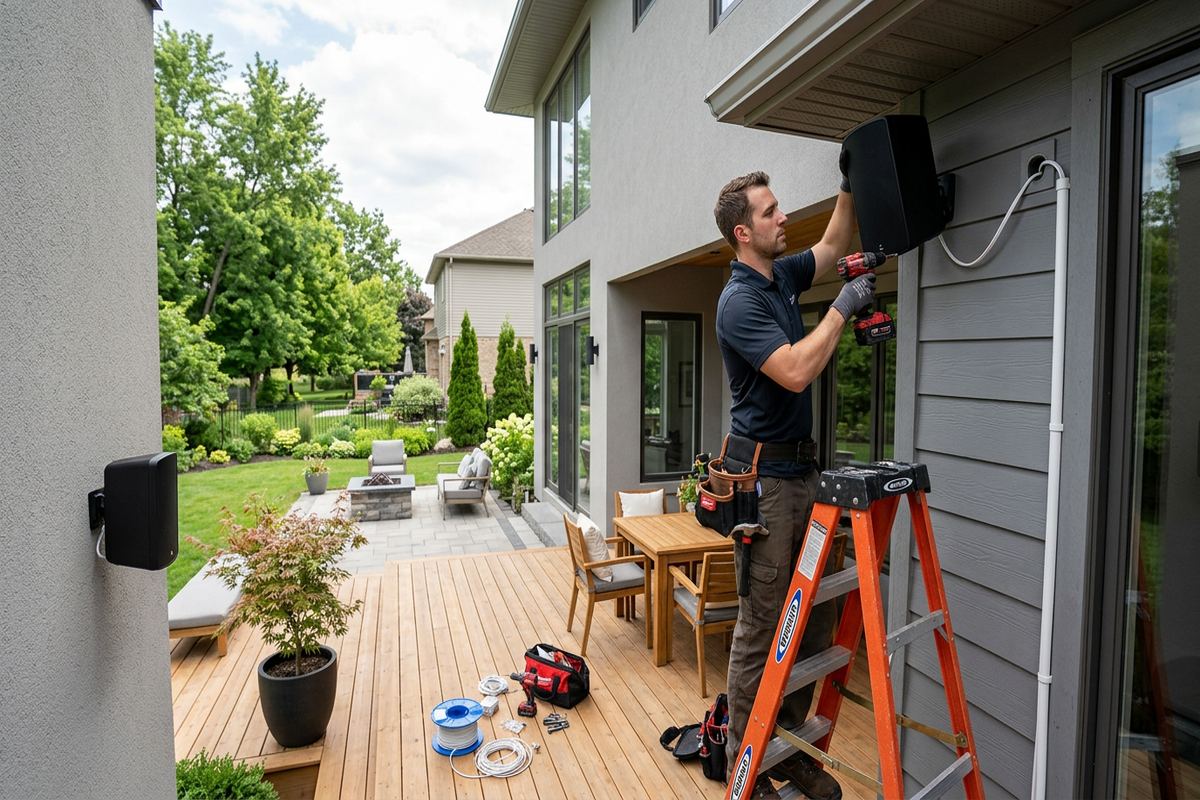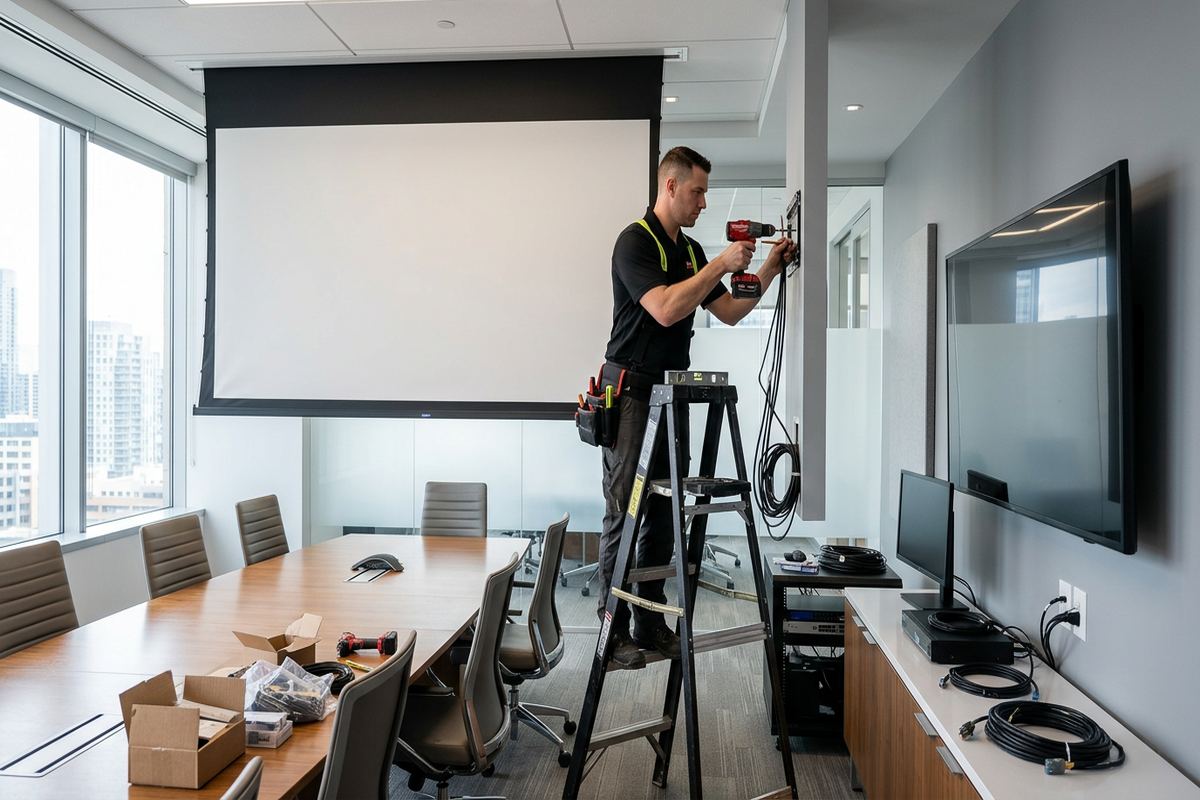
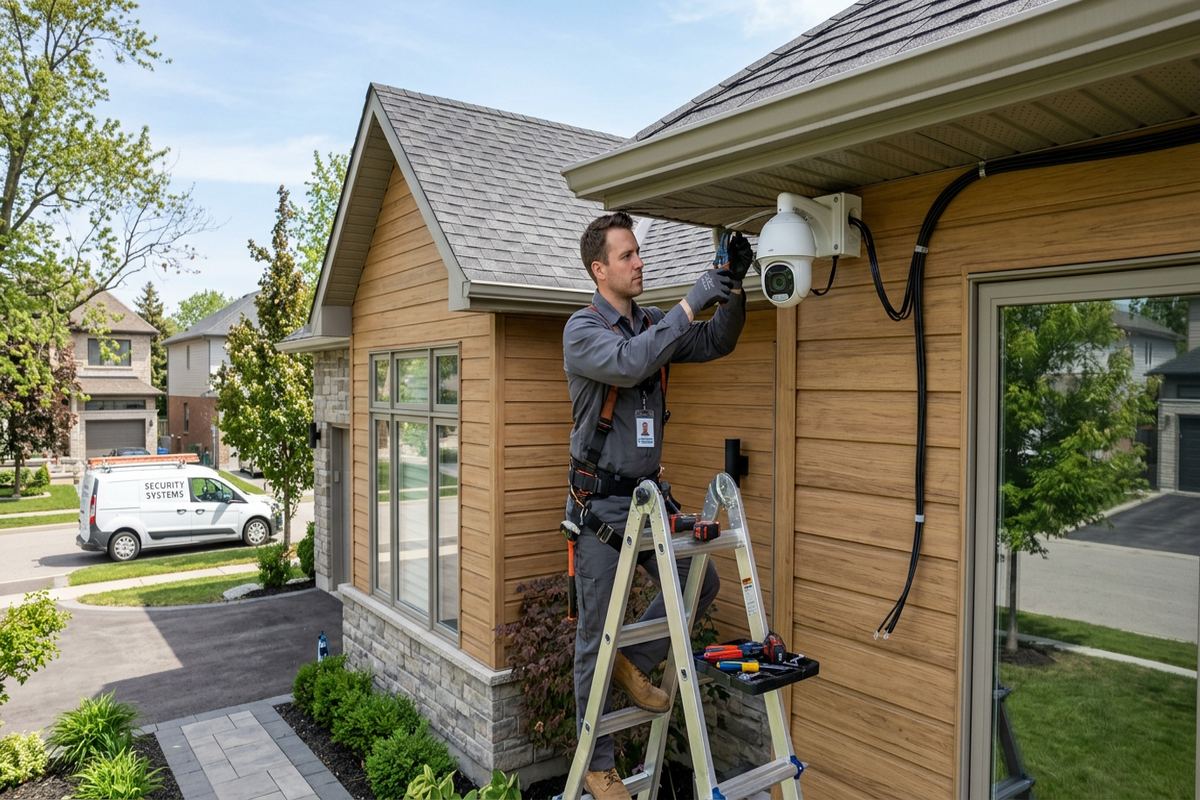
UnifiedLink installs wired and wireless security camera systems for homes, rental properties and small businesses across Brantford. Each project starts with a site assessment covering useful views, lighting, cable routes, network capacity and exterior conditions. The result is a documented system configured on site and handed over using credentials controlled by the customer.
Planning Home Security Cameras in Brantford
A useful camera system begins with the areas that need evidence, not with a predetermined camera count. During a Brantford site assessment, we review entrances, driveways, side passages, garages, yards and interior transition points. We consider where a person will move, how close they may be, and whether the selected position can capture identifying detail. This process separates general observation views from locations where facial or vehicle detail matters, helping avoid cameras that show plenty of property but provide little usable information after an incident.
Brantford properties vary enough that the same layout cannot be applied everywhere. Older brick homes may need careful masonry routes and discreet transitions into basements or attics. Converted industrial buildings can have thick walls, exposed structure and long cable distances. Newer West Brant subdivisions often provide accessible frame construction, but finished basements and attached garages may limit concealed pathways. The assessment identifies those conditions before equipment is selected, allowing camera type, mounting hardware, cable route and recording location to be considered as one connected design.
The written scope records the agreed equipment, viewing areas, device placement and proposed cable routes. It also identifies exclusions, equipment ownership and applicable warranty information, so responsibilities are clear before installation begins. If landscaping, neighbouring properties, public sidewalks or shared access areas affect a view, those limits are discussed as part of positioning. A defined scope is especially important when several household members, a landlord or a condominium board must approve the work. Pricing follows the assessment rather than being based on assumptions about the building.
- Entrance, driveway and yard coverage planning
- Day and night image considerations
- Proposed cable routes documented in writing
- Recording and remote-access requirements reviewed
- Property boundaries considered during positioning
Camera Placement for Brantford Homes
Placement determines whether recorded video answers a useful question. A camera mounted too high may show the top of a person’s head, while a wide view can sacrifice the detail needed near a doorway. We plan overview and identification views according to the site rather than forcing one camera to perform both tasks. In Downtown Brantford, narrow lots and close sidewalks can create steep viewing angles. In Henderson Survey or Terrace Hill, mature trees, deep setbacks and detached garages may require different lenses or additional network pathways.
Lighting changes throughout the day and across the seasons. Strong backlighting at an entrance, reflections from snow, porch fixtures and vehicle headlights can all affect image quality. We review expected conditions and choose positions that reduce glare or direct exposure to bright sources. Infrared illumination also needs clear space; nearby soffits, downspouts, brick returns and spider webs can reflect light into the lens. Where practical, nighttime testing is considered during configuration so exposure, supplemental lighting and motion settings can be adjusted for the actual scene rather than a showroom image.
Privacy is addressed before final mounting. Cameras should concentrate on the homeowner’s entrances, vehicles and private outdoor areas without unnecessarily recording neighbouring windows or yards. Doorbell cameras need particular attention on compact streets, shared porches and common corridors. Privacy masking may help block portions of a scene, but physical placement remains the stronger first step. Audio recording is discussed separately because legal and practical considerations differ from video. UnifiedLink provides technical placement guidance, while property owners remain responsible for how their system is used and for obtaining any required approvals.
- Useful facial and vehicle viewing angles
- Reduced glare and infrared reflection
- Privacy-conscious field-of-view planning
- Separate overview and identification views
- Doorbell camera placement assessment
Exterior Mounting for Brantford Weather
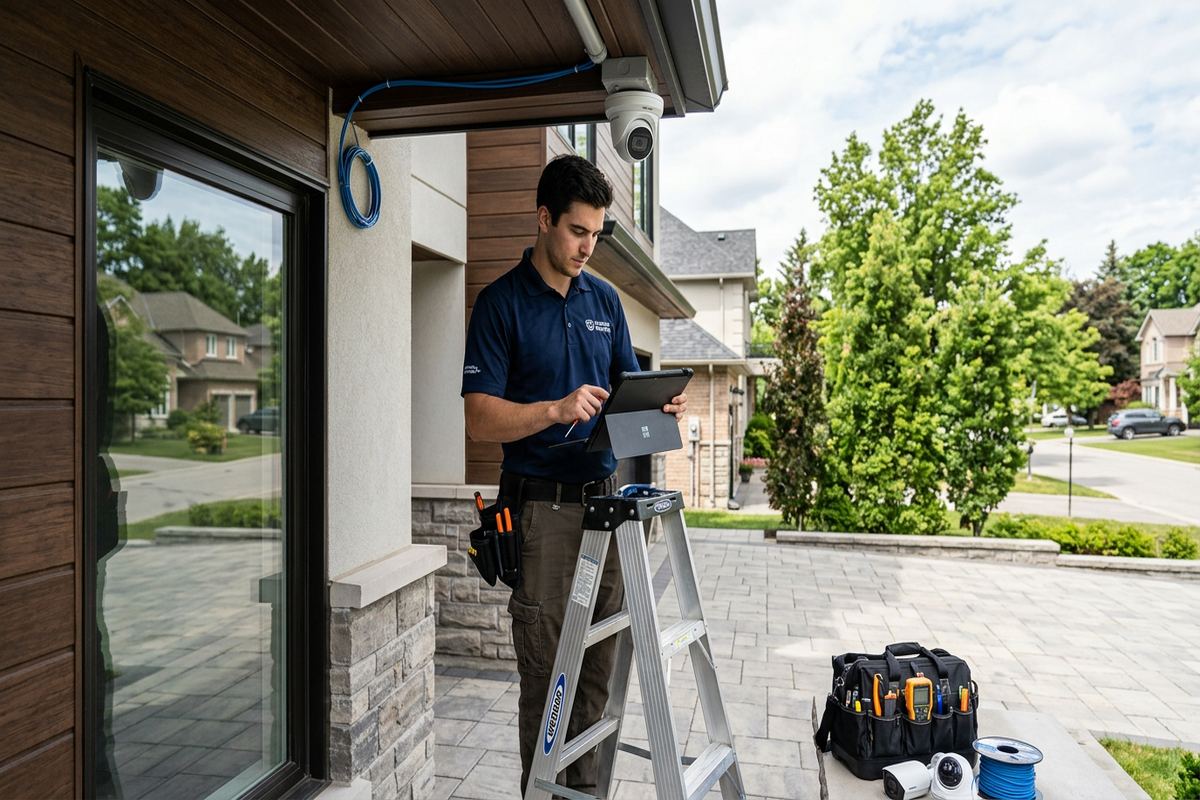
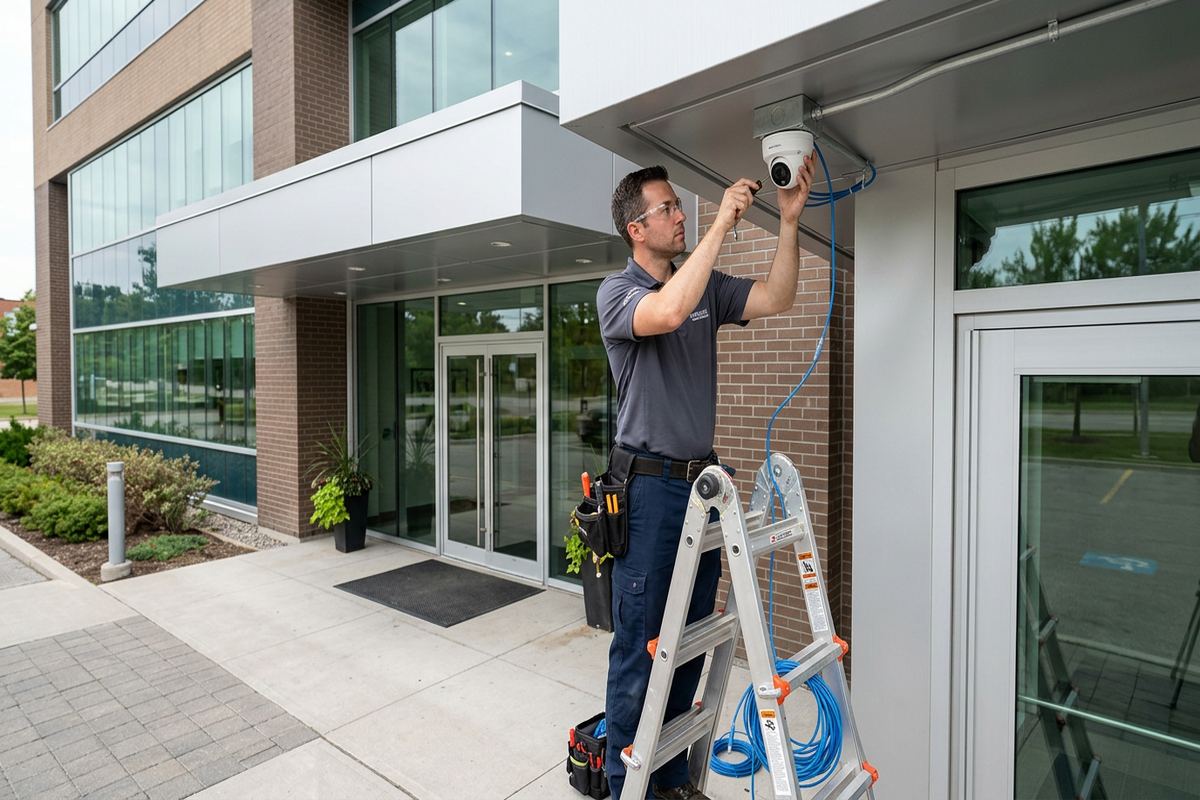
Outdoor equipment in Brantford must handle winter temperature changes, wind-driven precipitation and repeated freeze-thaw cycles. Mounting is planned so water does not follow a cable into the wall or collect behind a device. Exterior penetrations are kept controlled, fitted with suitable hardware and sealed for the surrounding material. Cable entries generally include a drip path where needed, while connectors remain protected from direct exposure. A weather-rated camera alone does not correct poor mounting, an open penetration or an unprotected connection, so the complete assembly receives attention.
Brick and frame construction require different methods. On an older brick home, the mounting location must account for masonry condition, mortar joints, wall cavities and the route into the building. Fasteners and penetrations are selected for the actual surface rather than treated like wood framing. Newer frame homes may offer soffit access, although vinyl, aluminum and thin soffit panels should not be assumed to provide structural support. We look for a stable backing point and avoid placing unnecessary strain on finishes that can move, crack or distort as temperatures change.
Converted industrial buildings present another set of exterior challenges. Solid masonry, concrete, steel structure or tall loading areas can affect access, attachment and cable protection. Surface-mounted conduit may be more practical than attempting concealed routes through thick walls, particularly when the route can be organized along existing building lines. Commercial strips and mixed residential-work units may also have signs, awnings, exterior lighting or delivery traffic obstructing views. These conditions are recorded during assessment so mounting access and any work outside the agreed low-voltage scope can be identified.
- Controlled and sealed exterior penetrations
- Stable mounting on masonry or framing
- Protected outdoor connectors and cable entries
- Freeze-thaw exposure considered
- Conduit options for exposed routes
Brantford, Ontario
Home security camera installation in Brantford, scoped in writing first
Book a site assessment and get equipment, routes, exclusions, and warranty on paper before anything is installed.
Wired Camera Cabling and Network Design
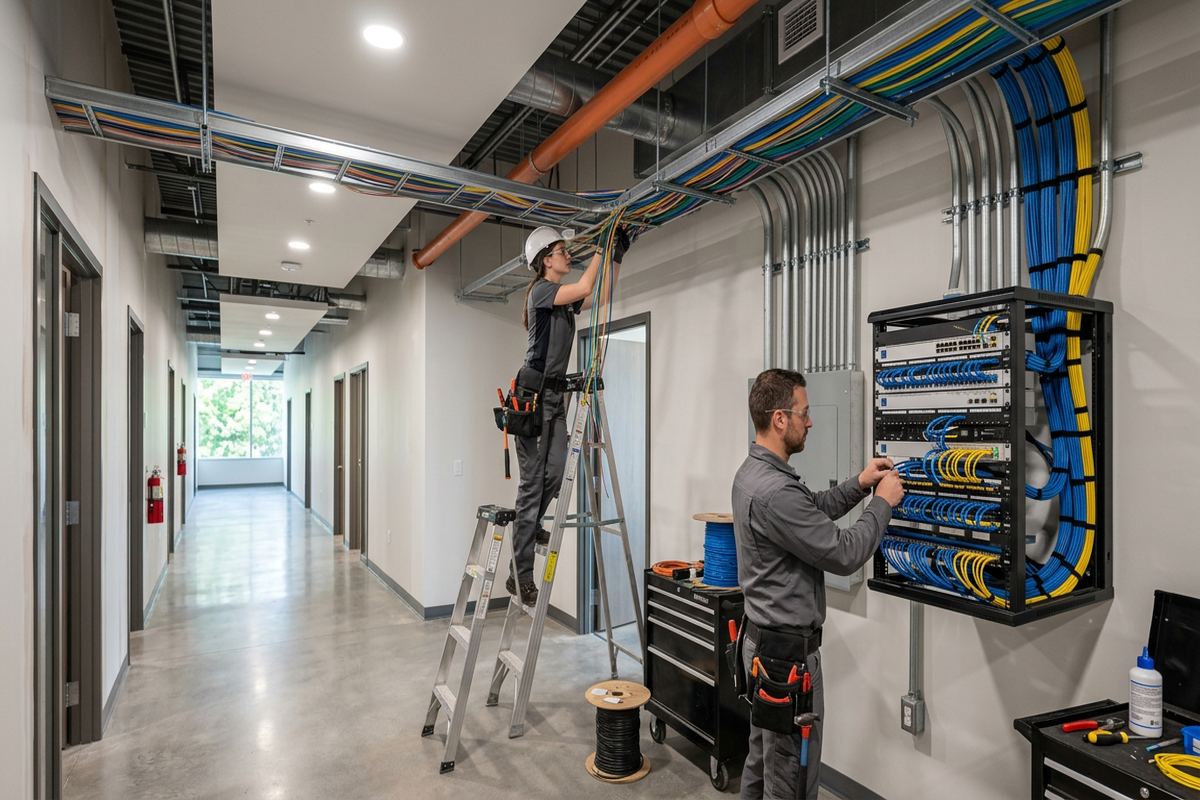
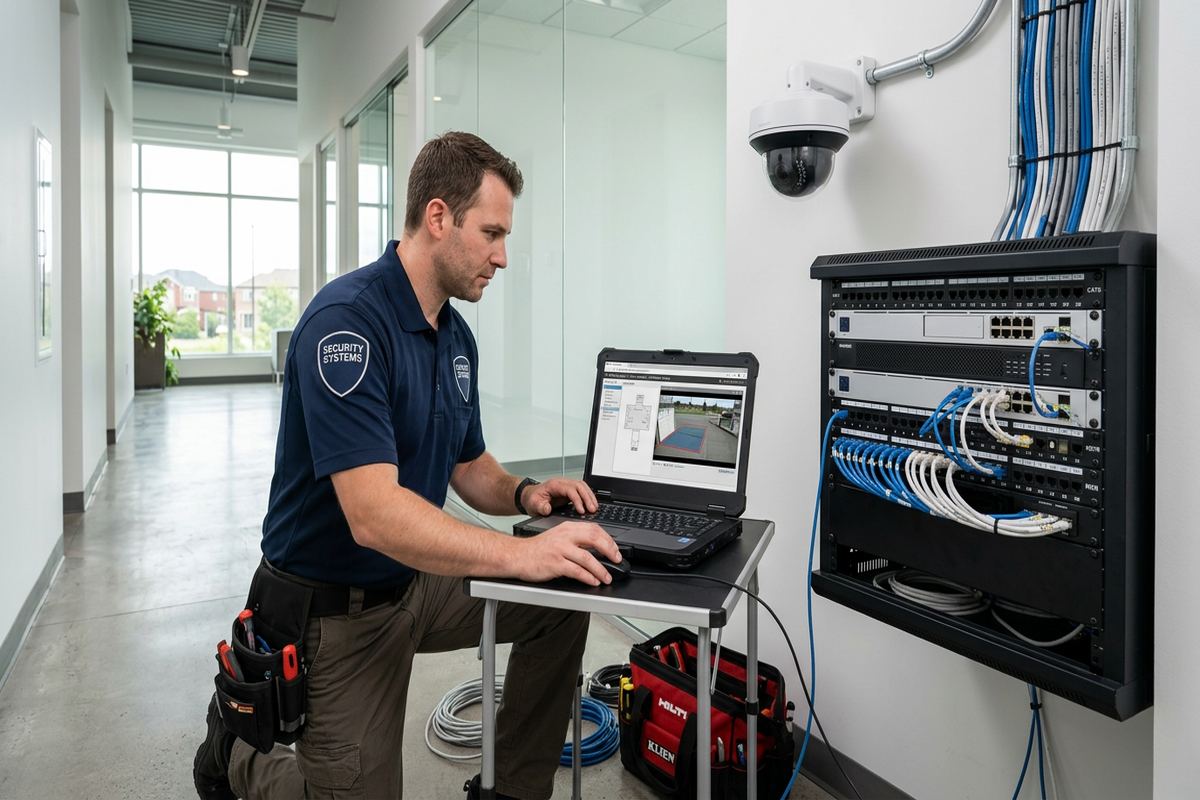
A wired Power over Ethernet system carries data and power over structured cable, reducing the need for a receptacle at every camera. UnifiedLink installs continuous labelled cable runs from each planned device to the agreed network or recording location. Cable routes are selected to avoid unnecessary splices, sharp bends, heat sources and exposure to physical damage. Where concealment is practical, routes may use accessible basements, attics, utility spaces or framing cavities. Where it is not, neat surface pathways or conduit can provide a serviceable alternative without pretending every building can support invisible wiring.
The recording location needs power, ventilation, network access and enough physical security for the equipment. Placing a recorder beside an exposed monitor or in an easily reached entrance area can undermine the value of stored video. We discuss suitable utility, office or secured storage locations and the route all camera cables will follow. Equipment should remain accessible for legitimate service without being in an area prone to moisture, excessive dust or accidental disconnection. Any required rack, enclosure, backup power connection or network changes are identified in the written scope.
Network capacity matters because cameras generate continuous or event-based traffic inside the property and may also provide remote viewing. The assessment reviews available switch ports, Power over Ethernet requirements, router placement and how the camera network will connect. In larger Lynden Hills homes, detached structures or converted buildings, cable distances and links between areas need specific attention. Wi-Fi signal strength is not treated as proof that a wireless camera will be reliable outdoors. Where wireless equipment is appropriate, power availability, interference, signal path and recording behaviour during an internet interruption are reviewed.
- Continuous labelled data cable runs
- Power over Ethernet requirements checked
- Secure recorder location planning
- Network ports and capacity reviewed
- Concealed or protected surface pathways
Recording and Remote Viewing in Brantford
Recording choices should match how the property owner expects to retrieve evidence. A local recorder can retain video on site, while some camera platforms use cloud services or combine local and remote storage. We explain the selected system’s recording method, event search, playback process and dependency on subscriptions or internet access. Storage duration depends on resolution, frame rate, camera activity, compression, drive capacity and recording mode, so it cannot be responsibly promised from camera count alone. Those variables are established during design and confirmed through the proposed equipment.
Remote access is configured on site using accounts controlled by the customer. The homeowner or authorized business contact receives their own credentials rather than relying on an installer-owned login. Mobile applications, notifications and user permissions are set up according to the agreed scope, and additional users can be separated where the platform supports it. For a rental or multi-user property in Brantford, this helps distinguish owner, manager and occupant access. Secure passwords and supported account protection features are encouraged, especially for users who can export footage or change recording settings.
Motion alerts require calibration because every moving object is not a security event. Headlights, snow, rain, insects, branches and street traffic can produce unwanted notifications when zones or sensitivity are poorly configured. We define relevant areas, exclusion zones and available person or vehicle detection features based on what the chosen cameras support. Echo Place homes near active roads may need tighter zones than a recessed property in West Brant. Configuration improves usefulness, but analytics should be treated as an aid rather than a guarantee that every event will be detected or classified correctly.
- Local, cloud or hybrid recording review
- Customer-controlled mobile access
- Event zones and alert configuration
- Playback and export demonstrated
- Storage variables explained before selection
Approvals for Condos and Rental Properties
Permission should be confirmed before drilling into property that the customer does not solely control. Condominium declarations, rules or board requirements may restrict cameras on exterior walls, balconies, common corridors or shared entrances. Even when a resident owns the camera, the mounting surface or view may involve common elements. UnifiedLink can document proposed device locations and pathways for an approval request, but authorization remains the customer’s responsibility. Work is scheduled around the approved design so a rejected exterior position does not create avoidable changes after equipment has been ordered or installation has started.
Landlords and tenants should also establish who approves the work, owns the equipment and controls recorded footage. A tenant may have authority to use indoor equipment but not to penetrate brick, route cable through common areas or attach devices to an exterior elevation. In converted Downtown Brantford buildings, separate units may share entrances, utility spaces or network infrastructure, making written permission particularly important. The project scope records the customer’s stated authority and equipment ownership, while any lease interpretation or surveillance policy questions should be resolved by the appropriate property representative or legal adviser.
Commercial strips and industrial units sometimes combine private areas with shared parking, loading routes and public-facing walkways. Camera views must be designed around the space the occupant is entitled to monitor and the surfaces they are permitted to alter. A property manager may specify conduit type, penetration method, working hours or restoration requirements. Those conditions can affect routing and equipment placement even when the technical objective is straightforward. Early coordination lets the installation reflect building rules without shifting responsibility for approvals to the installer or making assumptions about access to neighbouring units.
- Proposed locations documented for approval
- Common-element restrictions considered
- Landlord authorization confirmed by customer
- Equipment ownership stated in scope
- Shared entrances and parking reviewed
Brantford Installation and On-Site Configuration
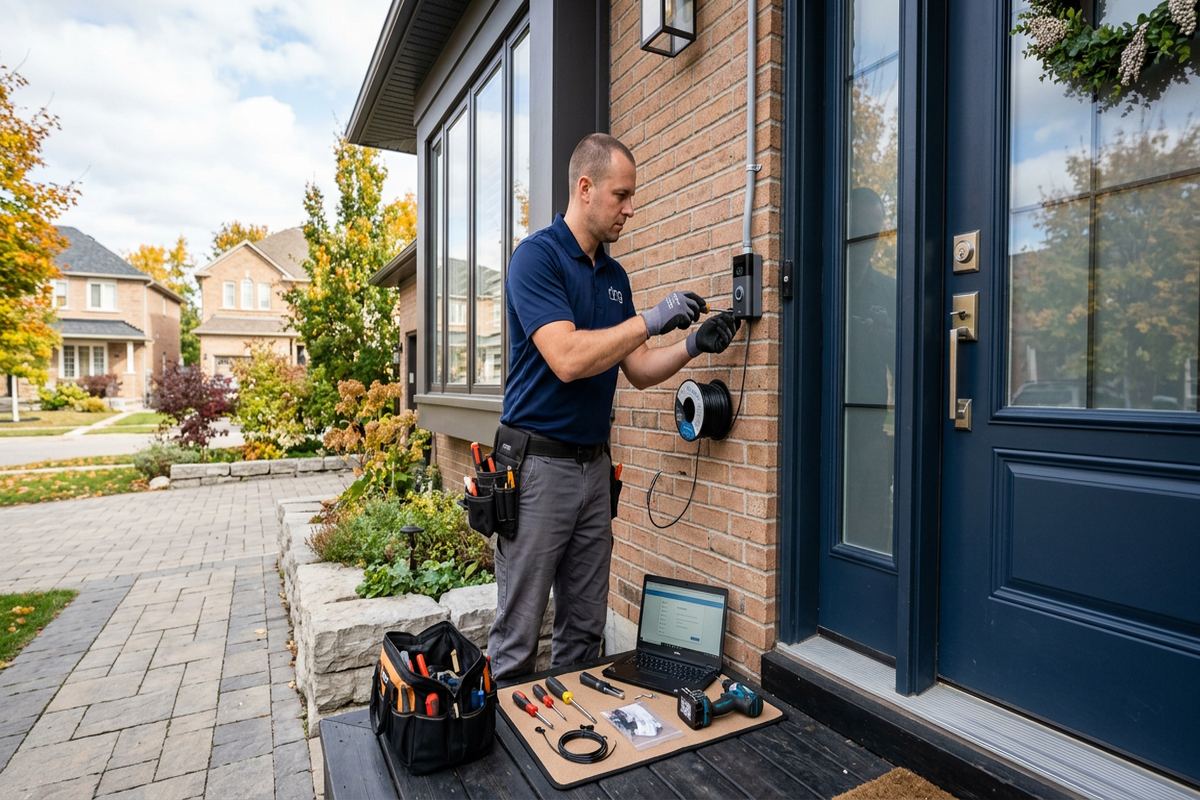
Installation follows the accepted scope, beginning with confirmation of device positions and accessible routes. Cable is installed in continuous labelled runs, terminated at the relevant camera and network points, and organized at the recording location. Exterior devices are attached to stable surfaces, with penetrations and entries finished for the surrounding construction. Before leaving each area, views are checked against the intended purpose rather than merely confirming that a picture appears. Any site condition that prevents the planned route or position is discussed with the customer before a material change is made.
Configuration connects the physical installation to the way the owner will use it. Cameras are named by location, time settings are checked, recording schedules are applied and available image controls are adjusted for the scene. Remote access, user permissions and notifications are configured where included. In a Brantford home with several entrances or a detached garage, consistent names make live viewing and exported files easier to understand. Firmware and platform settings are handled according to supported equipment, while unsupported integrations or customer-supplied devices are addressed only when included in the written scope.
Testing covers live video, recorded playback, event capture and network communication. Night conditions, changing weather and future landscaping can still affect a view after installation, so the handover explains what the system can and cannot confirm immediately. For monitored doors or vehicle areas, sample movement helps verify framing and alert zones. If existing network equipment, internet service or customer-supplied hardware creates a limitation, that limitation is documented rather than hidden. The goal is a working, understandable system with settings tied to the agreed purpose of each camera.
- Device positions confirmed before mounting
- Cables labelled at termination points
- Camera names and time settings configured
- Recording and remote access tested
- Site limitations documented
Handover and Service for Brantford Camera Systems
At handover, the customer receives access through credentials they control, along with an as-built record of the completed installation. The record identifies installed device locations and relevant cable or equipment information, reflecting approved changes made during the work. We demonstrate live view, playback, event search and footage export using the selected platform. The customer is also shown how to manage users and basic notifications where those functions are supported. This process reduces dependence on memory and gives an owner or property manager practical information for later network, renovation or service decisions.
Ongoing performance also depends on routine property care. Lenses may need cleaning, vegetation can grow into a field of view, and seasonal decorations can block infrared light. Snow accumulation or a shifted exterior fixture may change the scene without creating an equipment fault. Homeowners should periodically confirm that recordings are available, timestamps are correct and important views remain unobstructed. After network changes, replacing a router or changing account security settings can affect remote access. The as-built information provides a useful starting point when diagnosing those changes or planning additional cameras.
Brantford service requests sent during business hours are answered the same day, while after-hours requests are answered the next business day. The timing of a site assessment depends on the requested service and travel distance. UnifiedLink remains one accountable contractor for the scoped camera installation, including planned cabling, device mounting, on-site configuration and handover. That does not replace an internet provider, electrician, property manager or equipment manufacturer where their work is required, but it gives the customer one point of responsibility for the low-voltage work described in the accepted scope.
- Customer-controlled account handover
- As-built installation record provided
- Playback and export process demonstrated
- Maintenance considerations explained
- One contractor accountable for scoped work
Brantford neighbourhoods we cover
- Downtown Brantford
- West Brant
- Echo Place
- Henderson Survey
- Terrace Hill
- Lynden Hills
Home security camera installation in Brantford — common questions
Can cameras be installed on an older brick Brantford home?
Yes, subject to a site assessment. Older brick homes may require masonry-specific fasteners, controlled penetrations and a route through a basement, attic or surface pathway. Mortar condition, wall thickness and interior finishes affect the approach. UnifiedLink documents the proposed camera positions, cable routes and sealing method before pricing, rather than assuming brick construction can be treated like a newer frame wall.
Will winter weather damage exterior cameras?
Exterior equipment must be selected and installed for outdoor exposure, but the complete mounting method matters. Brantford freeze-thaw cycles can affect open penetrations, unstable surfaces and poorly protected connectors. We plan stable mounting points, controlled cable entries and sealing suited to the surrounding material. Homeowners should also keep lenses and views clear of snow, ice, vegetation and seasonal obstructions.
Do I need wired or wireless cameras?
The answer depends on available pathways, power, network coverage and recording expectations. Wired Power over Ethernet cameras usually provide a direct data and power connection through one labelled cable. Wireless models still require reliable power and signal. During a Brantford assessment, UnifiedLink reviews construction, cable access, detached buildings, interference and internet dependency before recommending an approach.
Can you install cameras at a condo or rental?
Yes, when the customer has the required permission. A condo board, landlord or property manager may control exterior walls, common corridors, shared entrances and cable pathways. We can provide documented proposed locations and routes, but the customer must secure approval. The written scope also identifies equipment ownership, exclusions and the approved installation boundaries before work proceeds.
How much video will the system store?
Retention cannot be determined from camera count alone. It depends on resolution, frame rate, compression, recording schedule, motion activity and available storage. Cloud platforms may also apply service-specific limits or subscriptions. For a Brantford installation, these variables are reviewed during system design so the proposed recording method reflects the owner’s playback and evidence needs.
Who controls the camera account after installation?
The customer does. UnifiedLink configures supported remote access on site and hands over the system using the customer’s own credentials. The handover includes an as-built record and a demonstration of live view, playback, event search and export. Where the platform permits, separate permissions can be created for household members, tenants, managers or other authorized Brantford property users.
Coverage in Brantford is confirmed against the address before we quote. See everything we install in Brantford or the province-wide home security camera installation page.