UnifiedLink installs outdoor speaker systems for Brampton homes, patios, commercial properties and industrial sites. We plan coverage, select suitable mounting locations, run labelled cabling and configure the audio source on site. Each project begins with an assessment of the space, construction, exposure, listening areas and available equipment before we provide a written scope and pricing.
Outdoor Speaker Installation for Brampton Properties
Outdoor audio works properly when speaker placement, coverage and sound level are planned together. In Brampton, that may mean covering a subdivision backyard without directing unnecessary sound toward adjoining homes, or providing consistent audio across a commercial patio. We assess the listening area, likely seating positions, nearby property lines, mounting surfaces and available power. The design also considers whether the system is intended for background music, television sound, announcements or louder event use. These details determine the appropriate speaker type, quantity, aiming and connection method before holes are drilled or cables are installed.
Brampton’s fast-growing subdivisions include frame-built homes with brick veneer, finished basements and landscaped yards added at different stages. A speaker route that appears simple outside may be blocked by basement ceilings, insulation, finished walls or structural members. We trace practical cable paths through utility spaces, garages, soffits or accessible ceiling areas while limiting unnecessary openings. In established areas such as Bramalea and Heart Lake, exterior materials and previous renovations can create different constraints. The assessment identifies those conditions so the written scope can clearly describe routes, access requirements, patching exclusions and proposed device locations.
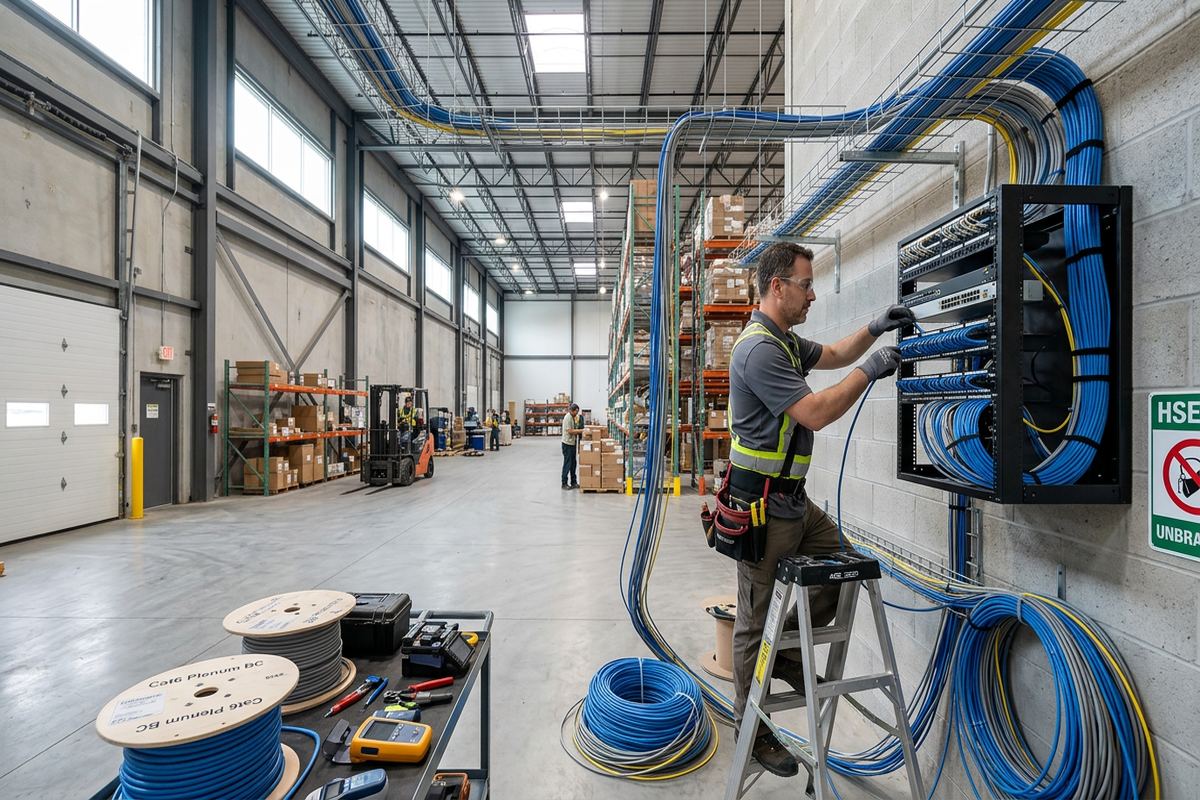
Commercial and industrial properties require a different approach from residential patios. Brampton’s warehouse and logistics base includes large exterior walls, loading areas, employee spaces and entrances where sound must remain intelligible across wider distances. We review operational noise, vehicle movement, mounting height, equipment protection and the need for separate audio zones. Commercial strips may also involve shared walls, landlord rules and customer-facing areas with distinct volume requirements. The resulting system should provide useful coverage without placing equipment where loading activity, service vehicles, doors or routine building maintenance can easily damage it.
- Patio and deck speaker systems
- Garden and pool-area audio planning
- Commercial patio and entrance coverage
- Warehouse exterior and staff-area audio
- New systems and practical upgrades
Planning Speaker Coverage in Brampton
Good outdoor coverage usually comes from several correctly placed speakers operating at moderate levels rather than one speaker playing too loudly. We map where people will listen, where sound can travel and which surfaces may reflect it. Long, narrow yards often need a different layout from corner lots, covered decks or open commercial seating areas. Speaker orientation matters near neighbouring windows and property lines, particularly in closely spaced Brampton subdivisions. The plan aims for even, understandable audio in the intended area while reducing obvious hot spots, weak zones and the temptation to increase the entire system’s volume.
Mount Pleasant and Fletcher’s Meadow contain many homes where the backyard arrangement has changed after construction. Decks, pergolas, sheds, pools and finished basements can affect both speaker placement and cable access. We determine whether wall-mounted, soffit-mounted, surface, landscape or directional speakers suit the site. Existing receivers or amplifiers are checked for compatible loads, available channels and suitable control options. If new equipment is required, the written scope identifies what is supplied, what remains customer-owned and how each outdoor zone will connect to indoor sources, networks or control devices.
Speaker locations are also selected with maintenance in mind. A unit mounted above a roof edge or behind a permanent structure may be difficult to inspect, clean or replace. We favour accessible positions that still protect equipment and produce suitable coverage. Cable terminations, junction points and controls should not be hidden where water collects or landscaping tools can strike them. Before installation, we explain visible cable sections, proposed penetrations and any compromises created by the building. This allows the owner to approve a practical design rather than discovering installation limitations after the work has started.
- Coverage based on occupied areas
- Aiming that considers nearby properties
- Compatible amplifier and receiver loading
- Separate zones where useful
- Accessible mounting and service locations
Weather-Resistant Mounting and Sealing
Brampton winters expose exterior equipment to snow, ice, moisture and repeated freeze-thaw cycles. Outdoor-rated equipment is only one part of a durable installation; mounting hardware, cable jackets, connectors and penetrations must also suit the location. We position speakers to limit direct water exposure where practical and avoid creating paths that guide runoff toward the building. Exterior cable entries are formed and sealed appropriately, with drip management where needed. The installation method depends on whether the surface is brick, concrete, siding, wood, metal cladding or another finished material.
Brick veneer and structural masonry must be treated differently. On many Brampton houses, the exterior brick is a cladding system rather than a suitable structural support for every load or bracket arrangement. Fastener selection, embedment and placement require attention to the speaker weight and wall assembly. Frame construction may provide better support at studs or blocking, but those points are not always aligned with ideal coverage. Industrial units may use concrete panels or metal cladding with concealed insulation. We assess the substrate before choosing anchors, standoffs and cable entry details rather than relying on one standard method.
Moisture protection also extends to the wire path and terminations. We use continuous labelled cable runs where feasible, reducing concealed joints that can corrode or become difficult to diagnose. Connections are located in protected, serviceable positions and completed using components appropriate for the environment. Exposed cable is supported so it does not sag, rub against sharp edges or rest in standing water. At handover, the as-built record documents routes and device locations. This information is useful when exterior finishes, landscaping or interior rooms are renovated later.
- Outdoor-rated speakers and cabling
- Mounting suited to the actual substrate
- Sealed and managed exterior penetrations
- Protected, serviceable terminations
- Freeze-thaw conditions considered
Brampton, Ontario
Outdoor speaker installation in Brampton, scoped in writing first
Book a site assessment and get equipment, routes, exclusions, and warranty on paper before anything is installed.
Residential Outdoor Audio in Brampton
A residential system may serve a small deck, a covered porch, a pool area or several parts of the yard. We discuss how the household intends to use each space and whether zones need independent source and volume control. Downtown Brampton properties can have tighter lots and older construction, while Springdale and Castlemore homes may offer larger façades or more extensive landscaped areas. Those differences affect sound travel and cable routing. The goal is not maximum output; it is controlled coverage that remains clear where people sit, cook, swim or move through the property.
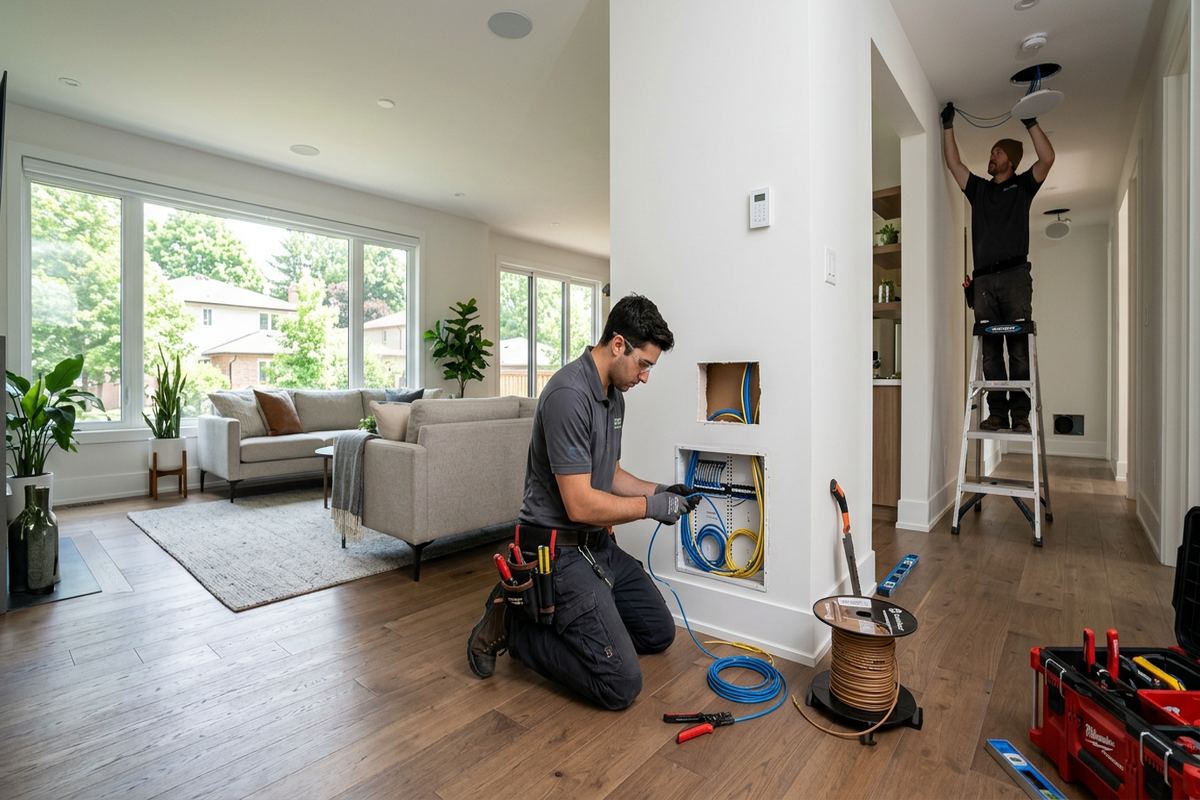
Finished basements shape many Brampton installations because the desired amplifier location is often below the main floor. Existing ceilings can prevent a direct route to an exterior wall, particularly where mechanical ducts, bulkheads and insulation occupy the same area. We investigate accessible utility rooms, unfinished storage sections, garages and existing pathways before proposing openings. If limited access requires visible conduit or surface cable, that detail is included in the scope. We also identify where patching, painting, millwork removal or landscape restoration would fall outside the low-voltage installation unless specifically included.
Outdoor speakers can often integrate with an existing receiver, multi-room audio platform, television system or streaming device, but compatibility must be confirmed. We review impedance, channel availability, output type, control method and network dependence. Wireless control does not eliminate the need for dependable speaker wiring or power at active devices. During handover, we configure the agreed functions on site and place accounts under the customer’s own credentials. The owner receives an explanation of zones, source selection, volume limits and normal operation, along with the equipment and route information recorded for the project.
- Deck, porch and backyard systems
- Pool and landscape speaker layouts
- Independent source and volume zones
- Existing audio system integration
- Clear owner controls at handover
Commercial Outdoor Speakers in Brampton
Restaurants, offices, retail units and service businesses use outdoor audio for background music, entrances, patios and staff areas. Each application requires attention to operating hours, adjacent occupancies and how the system will be controlled. In Brampton commercial strips, leases may restrict façade penetrations, exterior devices or visible cable. We ask the owner or tenant to confirm required permissions before work proceeds. Where a property manager has standards for mounting, conduit, equipment colour or work scheduling, those requirements should be provided during planning and reflected in the written scope.
Warehouse and logistics facilities present larger distances and higher ambient noise than most residential sites. Loading doors, idling equipment, rooftop systems and vehicle activity can reduce clarity, but simply increasing volume may spread sound beyond the intended area. We divide coverage into practical zones and select mounting positions that avoid door travel, racking activity, forklift routes and vulnerable corners. Where speakers support general announcements, the source equipment and operational expectations require careful review. Life-safety paging and emergency communication have separate design and regulatory requirements and should not be represented as ordinary background-audio work.
Commercial controls should be straightforward enough for authorized staff to operate without changing protected settings. Depending on the system, that can include defined zones, source selection, level limits and scheduled operation through compatible equipment. Network-connected devices must use customer-controlled accounts and approved network access. We configure the agreed system on site, label relevant cabling and identify equipment ownership at handover. When other contractors provide electrical power, networking, millwork or building access, responsibilities and sequencing are documented so gaps are visible before installation rather than being resolved informally during site work.
- Restaurant and commercial patio audio
- Retail entrance and exterior coverage
- Warehouse staff and loading-area zones
- Simple controls for authorized staff
- Coordination with landlords and trades
Cabling and Audio Equipment Choices
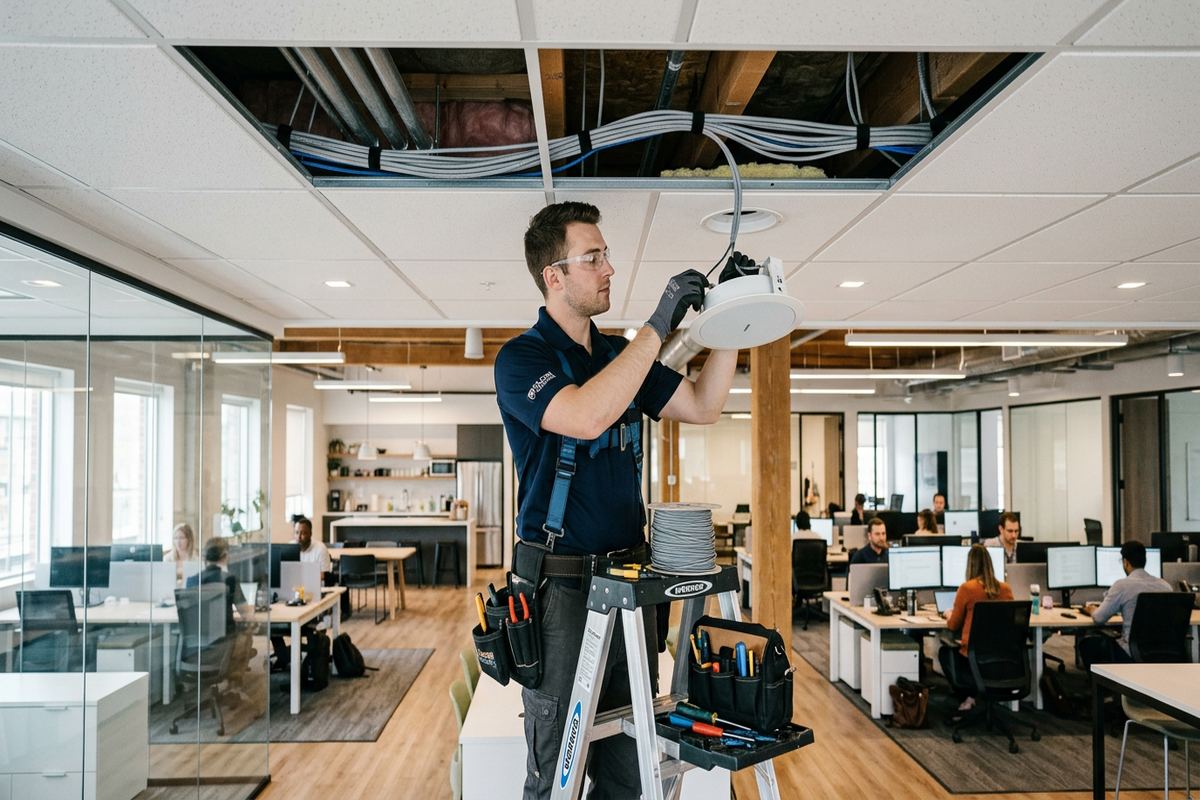
An outdoor speaker system is only as dependable as its complete signal path. Cable type and conductor size are selected according to the equipment, run length, installation environment and expected load. Interior cable does not automatically suit exposed, wet or underground locations. Routes through walls, soffits, conduit and landscape areas each have different protection requirements. We avoid unnecessary splices and provide continuous labelled runs where feasible. At the equipment end, labels identify zones and speaker destinations, making future testing or upgrades more efficient for the owner or another qualified technician.
Passive speakers connect to a suitable amplifier, while active or networked products may require local power, data connectivity or both. Neither format is automatically preferable for every Brampton property. Passive designs can centralize electronics indoors, but longer cable runs and amplifier loading must be considered. Active devices may simplify some signal arrangements while adding exterior power and network dependencies. We compare these factors against the building, control expectations and available infrastructure. The proposal identifies included equipment, customer-supplied items and assumptions, preventing uncertainty about adapters, subscriptions, mounting accessories or source devices.
Audio sources can include streaming services, televisions, media players, microphones or an existing commercial system. Their output connections and control behaviour should be verified before installation. Consumer products may change operation after software updates or depend on third-party services outside the installer’s control. We configure supported features using the customer’s own credentials and explain these dependencies at handover. If Wi-Fi is required outdoors, we assess whether the existing network reaches device locations reliably; speaker placement should not be finalized on the assumption that indoor wireless coverage will remain adequate through masonry or metal-clad walls.
- Cable selected for route and exposure
- Continuous runs with clear labels
- Passive and active system options
- Amplifier load and channel review
- Source and network compatibility checks
Approvals, Scope and Site Preparation
Condo corporations, landlords and property managers may require written approval before exterior speakers, conduit or wall penetrations are installed. This applies to residential units as well as leased commercial and industrial spaces. Owners should provide applicable rules, drawings and approved work periods during the assessment. We can describe proposed locations and routes for review, but the property owner or tenant remains responsible for obtaining authorization unless the written scope states otherwise. Work is not positioned as a way to bypass building requirements, shared-property restrictions or reasonable noise obligations affecting neighbouring occupants.
Before pricing, UnifiedLink completes a site assessment appropriate to the service and travel distance. We review surfaces, access, routes, equipment locations, listening areas and known constraints. The resulting written scope covers equipment, cable routes, device placement, exclusions, equipment ownership and warranty. It also records assumptions such as clear access, available power or customer-provided network service. This process is especially useful in finished Brampton homes and occupied businesses, where concealed conditions cannot always be confirmed without opening construction. Any material change should be documented rather than handled through unclear verbal instructions.
Site preparation may include moving furniture, clearing stored goods, trimming access near a wall or coordinating safe access to controlled areas. At warehouses, the owner may need to manage vehicle lanes, loading schedules or elevated-work restrictions. Residential clients should identify irrigation, buried utilities and planned landscaping where cable may approach ground level. Pets and occupants should remain away from active work areas. If another trade must provide power, repair finishes or alter a structure, that dependency is identified before work. Clear preparation helps protect the property and keeps responsibility with one accountable contractor for the agreed low-voltage scope.
- Site assessment before pricing
- Written routes, locations and exclusions
- Ownership and warranty documented
- Condo or landlord approval planning
- Trade and access responsibilities identified
Installation and Handover in Brampton
Installation begins by confirming the approved locations and checking that site conditions match the scope. Cable is routed, supported and labelled before speakers are mounted and aimed. Exterior penetrations are managed according to the surface and exposure, and accessible terminations are completed in protected locations. We then connect the amplifier, source and controls included in the project. On occupied Brampton properties, work areas are organized to reduce interference with household or business activity, but access needs and temporary service interruptions are discussed in advance rather than assumed during the visit.
Testing includes confirming each speaker, zone, source and control function included in the scope. We listen from the intended areas and adjust aiming or permitted level settings to improve consistency. Outdoor acoustics vary with open space, hard walls, fences and seasonal foliage, so testing focuses on practical use rather than a single measurement point. For commercial sites, an authorized representative should be available to confirm operating zones and staff controls. Any network or streaming feature is tested using the customer’s service, account access and available connectivity at the time of commissioning.
At handover, customers receive operation guidance, their own system credentials and an as-built record showing installed device locations and cable information. Equipment ownership and warranty terms follow the written scope. We explain normal controls, shutdown procedures and basic checks for a silent zone or unavailable source. Requests sent during business hours are answered the same day, while after-hours requests are answered the next business day. Site assessment timing depends on the service and travel distance. UnifiedLink remains one accountable contractor for the outdoor speaker work described in the agreed project scope.
- Locations reconfirmed before drilling
- On-site connection and configuration
- Speaker zones tested from listening areas
- Customer-owned credentials at handover
- As-built cable and device record
Brampton neighbourhoods we cover
- Downtown Brampton
- Bramalea
- Springdale
- Heart Lake
- Mount Pleasant
- Castlemore
- Fletcher's Meadow
Outdoor speaker installation in Brampton — common questions
Can outdoor speakers stay installed through a Brampton winter?
Yes, when the speakers, brackets, cable and connections are selected and installed for exterior exposure. Brampton’s snow, moisture and freeze-thaw cycles make mounting and sealing important. We position equipment to limit direct exposure where practical, use suitable exterior materials and protect terminations. Outdoor-rated equipment still requires periodic inspection for physical damage, loose hardware or failed seals.
How many speakers does my backyard need?
The number depends on the yard’s shape, occupied areas, nearby properties and desired listening level. Many Brampton yards benefit from several speakers aimed toward seating areas rather than one unit operating loudly from the house. A site assessment considers decks, pools, fences, landscaping and property lines before speaker quantity and placement are included in the written scope.
Can you install speakers without opening my finished basement?
Sometimes, but it depends on the available route. Finished basements are common in Brampton subdivisions, and ducts, insulation and closed ceilings can block direct access. We first investigate utility rooms, garages, storage areas, soffits and existing pathways. If openings, visible conduit or surface cable are required, those conditions and any patching exclusions are documented before installation.
Do I need condo, landlord or property manager approval?
Approval may be required whenever exterior walls, common elements or leased premises are affected. Brampton condo owners and commercial tenants should confirm rules for speakers, cable, conduit, penetrations and work scheduling. UnifiedLink can document proposed device locations and routes for review, but the owner or tenant is responsible for securing authorization unless the written scope specifically assigns that task.
Can outdoor speakers connect to my existing receiver?
Possibly. We check the receiver’s available channels, supported speaker load, zone controls and source connections. The cable distance and number of speakers also affect compatibility. During a Brampton site assessment, we identify customer-owned equipment and any limitations. The written scope then states whether the existing receiver can remain or whether additional amplification, switching or control equipment is required.
Can you install outdoor audio at a Brampton warehouse?
Yes. Warehouse and logistics sites may need audio at employee areas, entrances, loading areas or other defined exterior zones. We assess ambient noise, mounting height, vehicle movement, cable protection and control requirements. Ordinary audio or paging must not be confused with regulated life-safety communication. Landlord approval, access equipment and coordination with site operations are addressed in the scope.
Coverage in Brampton is confirmed against the address before we quote. See everything we install in Brampton or the province-wide outdoor speaker installation page.