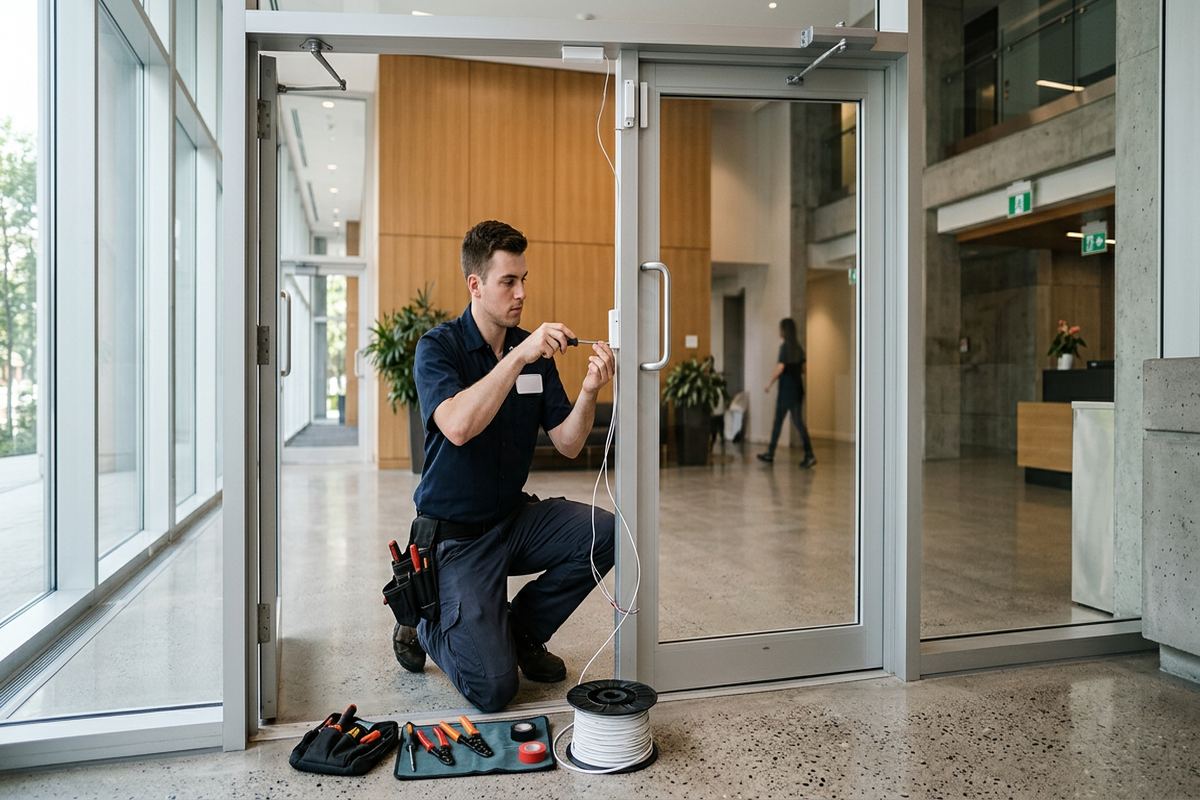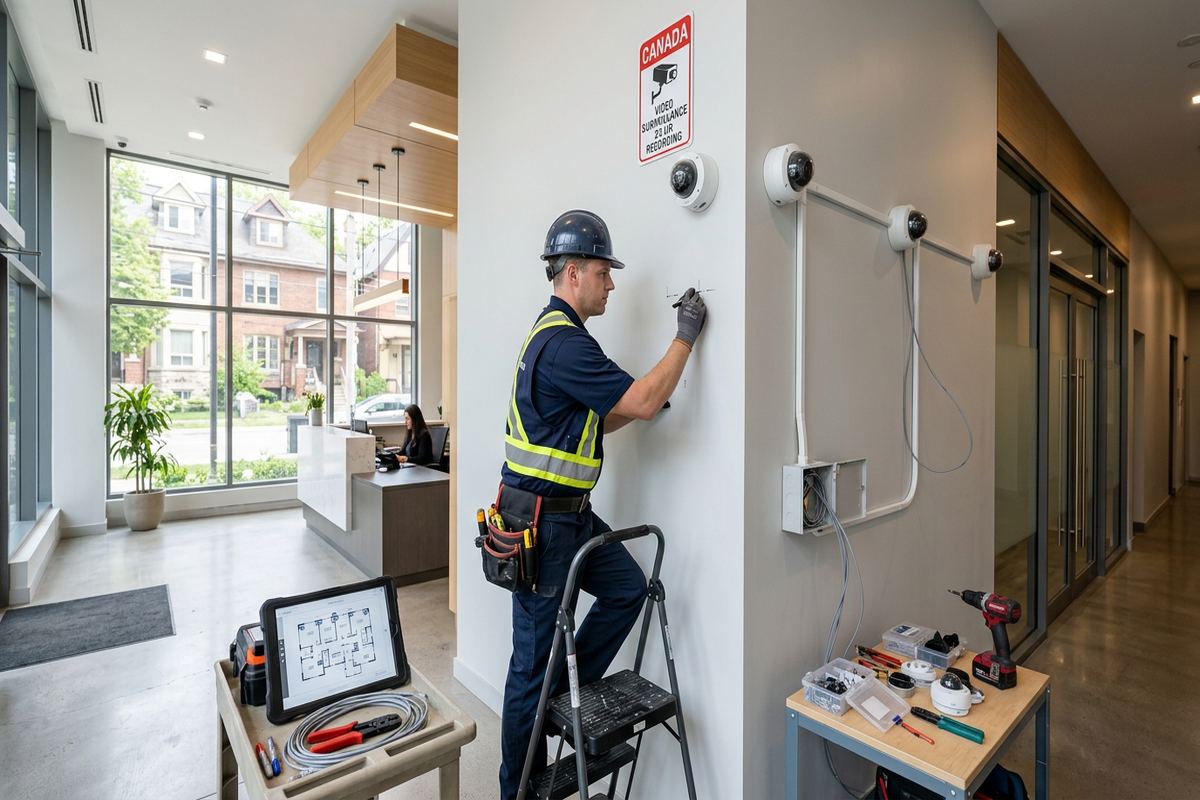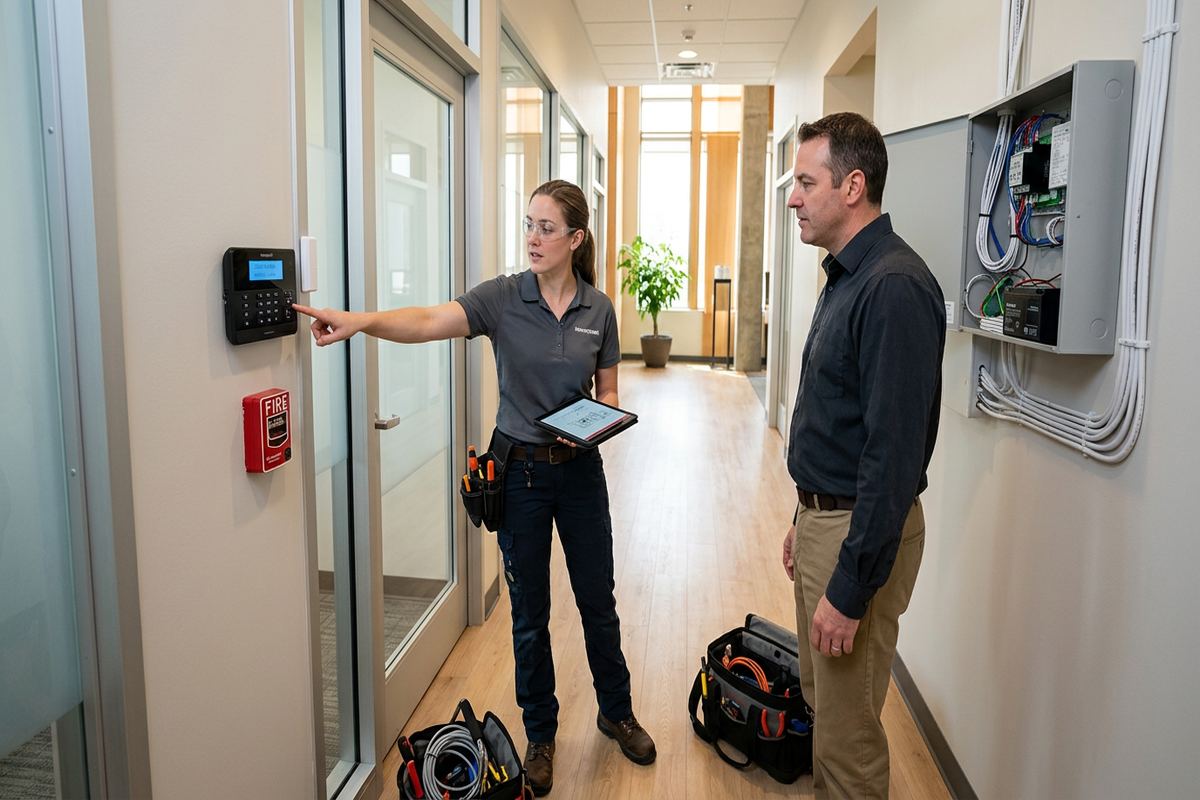
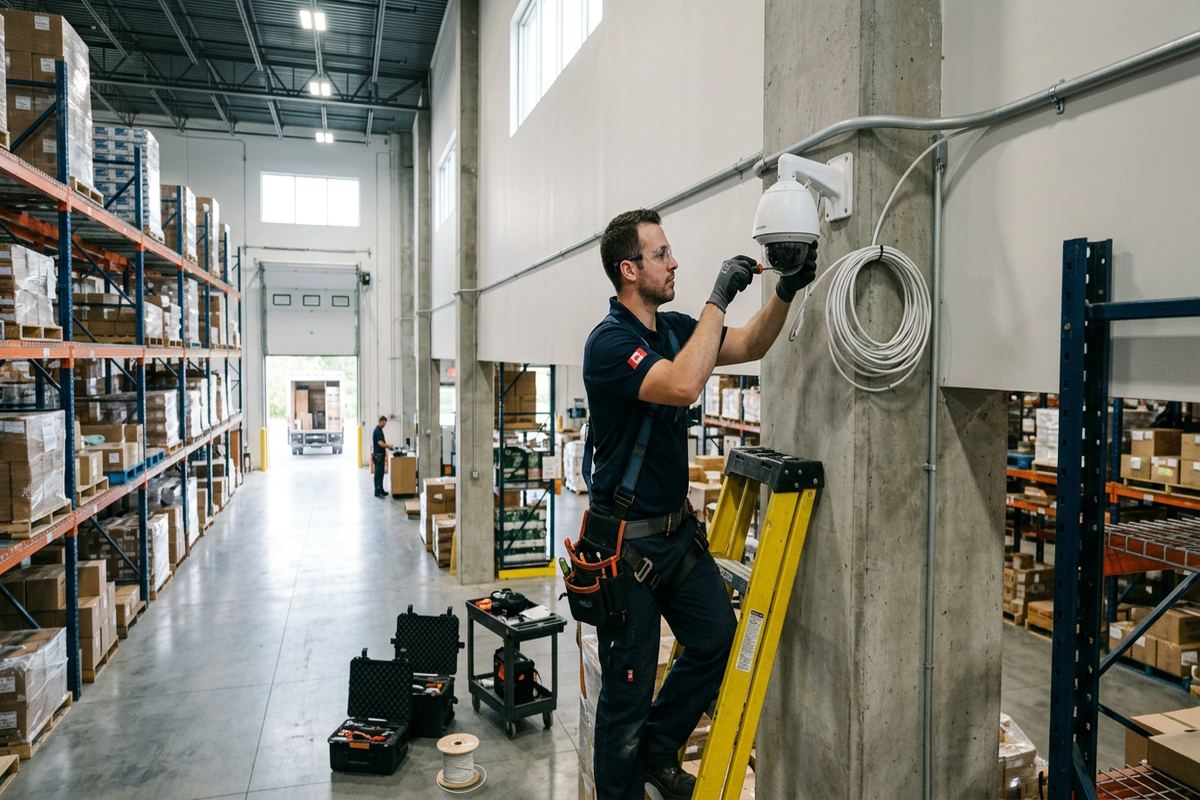
UnifiedLink installs outdoor security cameras for Brampton homes, warehouses, logistics facilities and commercial properties. Each project starts with a site assessment to review coverage, lighting, cable routes, mounting surfaces and recording needs. We provide a written scope, install continuous labelled cable runs, configure the system on site and hand it over using credentials controlled by the customer.
Outdoor Camera Planning for Brampton Properties
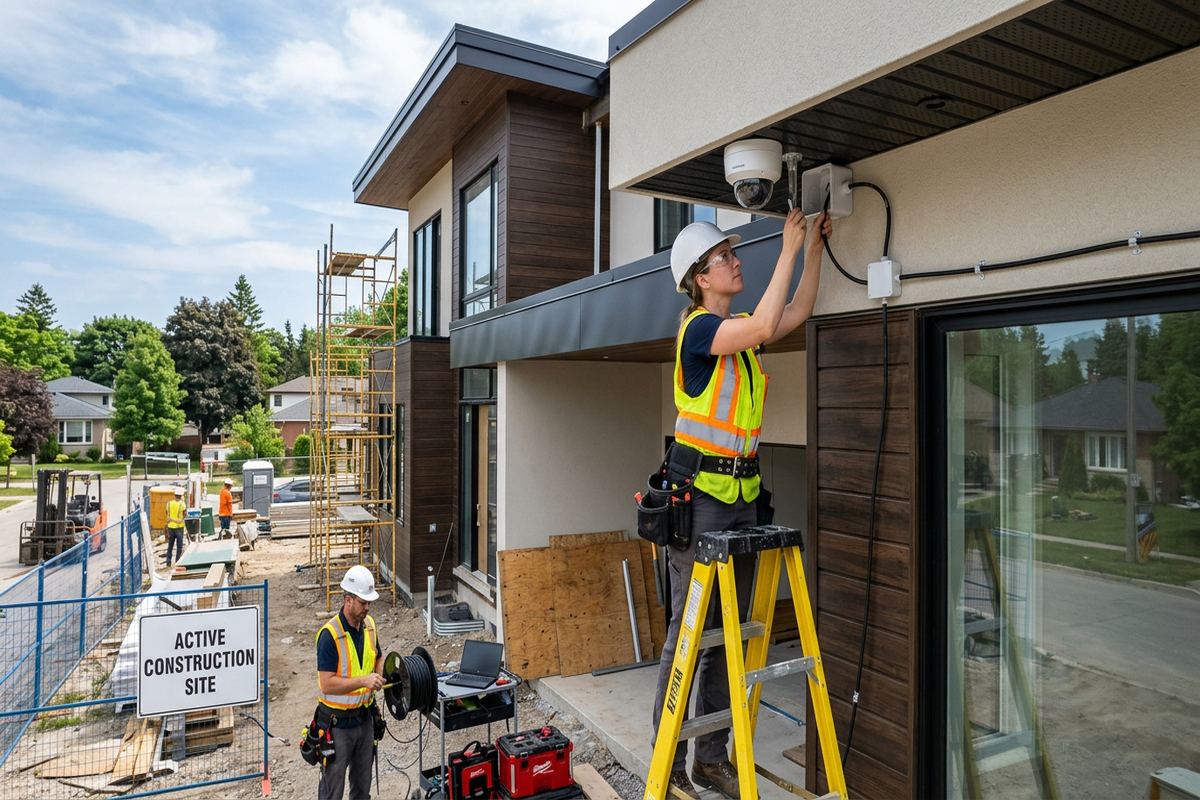
A useful outdoor camera system starts with coverage planning rather than a device count. During a Brampton site assessment, we examine doors, driveways, walkways, side passages, parking areas, loading doors and other practical points of concern. The review considers the direction people and vehicles travel, likely identification distances, existing lighting and objects that could block the image. Camera positions are then selected to provide usable views without relying on excessive digital zoom. This process also helps determine whether fixed-lens, varifocal, turret, dome or bullet cameras suit each location.
Brampton’s property mix changes the way systems are designed. Fast-growing subdivisions often have attached garages, narrow side yards and finished basements that restrict access for new cabling. Warehouse and logistics sites need wider perimeter views, focused coverage at loading bays and clear images at vehicle entrances. Commercial strips may combine public sidewalks, rear service lanes and shared parking. Instead of applying one layout everywhere, we match mounting height, field of view, image detail and recording settings to how each property is built and used.
Before pricing, UnifiedLink completes a site assessment appropriate to the service and travel distance. The resulting written scope covers proposed equipment, cable routes, device placement, exclusions, equipment ownership and warranty. It identifies assumptions such as available network capacity, suitable mounting surfaces, lift access or required electrical work. This gives a Brampton homeowner, property manager or business operator a defined installation plan before work begins. If priorities or site conditions change, the scope can be revised rather than leaving decisions unresolved until cameras are being mounted.
- Entrance, driveway and perimeter coverage review
- Camera type selected for each viewing task
- Lighting and identification distances considered
- Written scope provided before installation
Camera Placement Around Brampton Homes
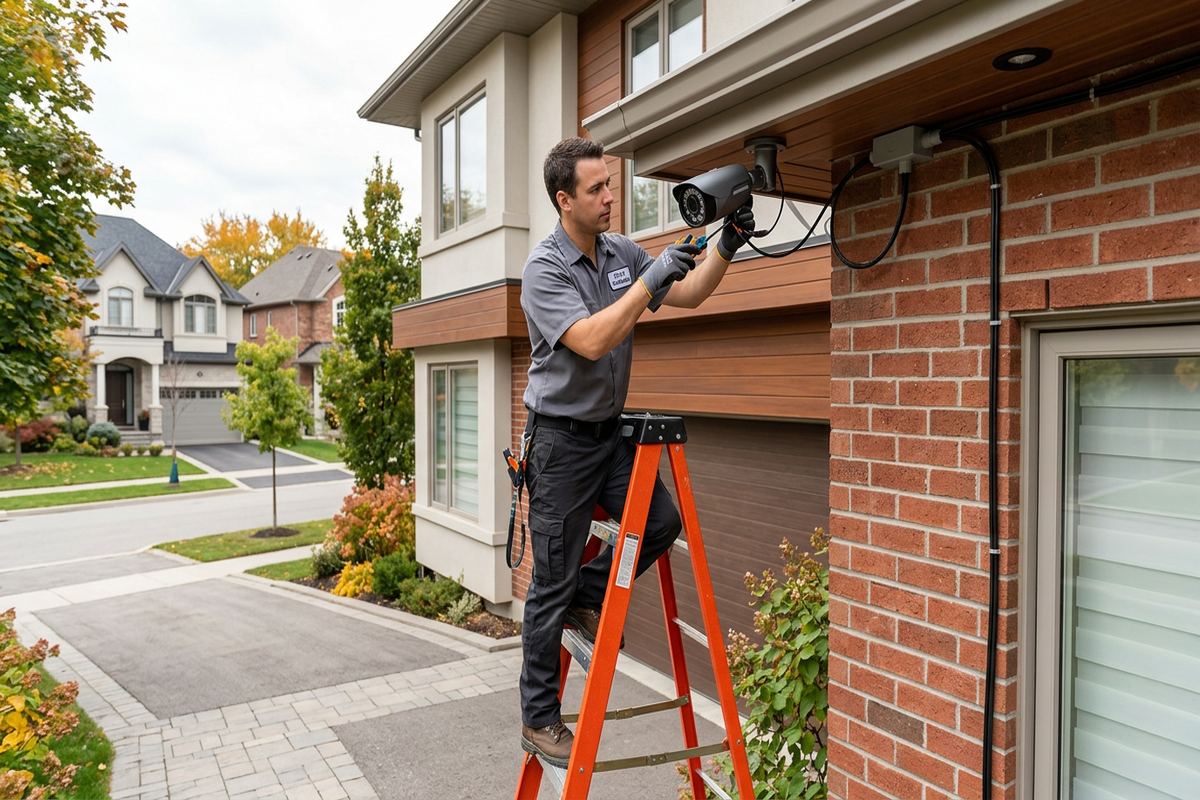
Residential camera placement should capture useful faces and activity while respecting neighbouring properties. At detached and semi-detached Brampton homes, common locations include the front entrance, driveway, garage approach, side gate and rear yard access. Mounting every camera at the roofline can create steep viewing angles that show the tops of heads instead of identifiable faces. We balance reach, tamper resistance and image angle, then adjust privacy masking where the equipment supports it. Doorbell cameras can complement the system, but they do not always replace a dedicated driveway or side-yard view.
Finished basements are common in newer Brampton subdivisions and can make cable routing less direct. A route that appears simple from outside may encounter finished ceilings, insulated rim joists, bulkheads or concealed utilities. Homes in Springdale, Mount Pleasant and Fletcher’s Meadow may also have tightly finished garages and limited unfinished pathways between exterior walls and the network location. We inspect these conditions before confirming routes. Where concealed access is limited, options may include garage runs, attic pathways or carefully placed exterior-rated conduit, subject to the agreed scope and construction conditions.
Older homes and mixed building stock around Downtown Brampton or Bramalea can present different challenges. Masonry walls may require suitable anchors and controlled penetrations, while frame construction requires fastening into stable backing rather than siding alone. Existing renovations can conceal unexpected framing, wiring or plumbing. Camera views also need seasonal consideration because trees, porch decorations, parked vehicles and snowbanks can change what is visible. Placement is reviewed from the recorder or application after mounting, allowing aim, focus and image settings to be refined before the system is handed over.
- Front doors and approaches viewed at useful angles
- Side passages covered without avoidable blind spots
- Routes adapted around finished basement ceilings
- Privacy masking configured where supported
Exterior Mounting for Brampton Weather
Outdoor equipment in Brampton must tolerate winter cold, summer heat, precipitation and repeated freeze-thaw cycles. Weather resistance depends on more than the rating printed on a camera. The mounting surface, cable entry, junction box, connector position and drip path all affect long-term exposure. We use exterior-suitable mounting methods and seal penetrations for the surface involved. Connections are kept protected rather than left behind a loose camera base. Cable entries are arranged to reduce water tracking, and exposed routes are supported so movement, ice and wind do not strain terminations.
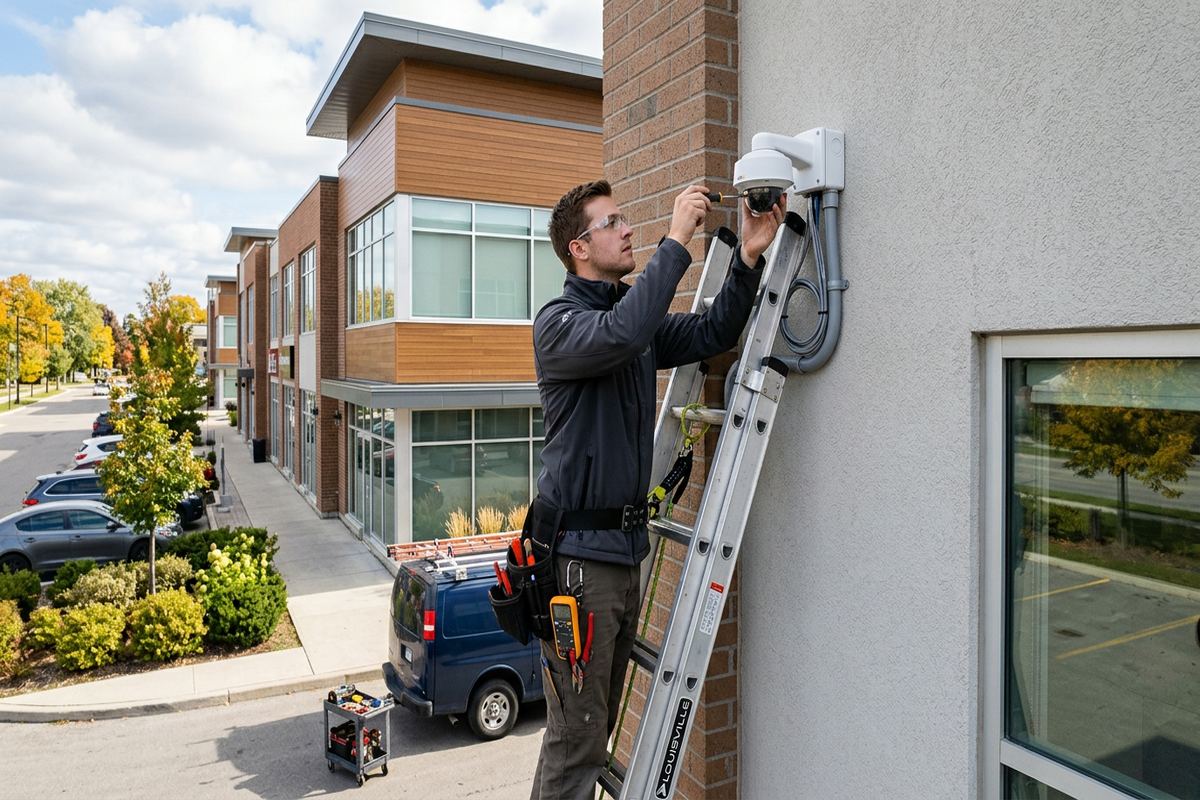
Brick, concrete block, precast panels, siding and soffits each require a different mounting approach. Masonry needs appropriate drilling, anchors and sealing, with attention to mortar joints and the risk of surface damage. Cameras on frame construction should attach to solid backing or a suitable mounting block, not depend on thin cladding. Soffit mounting can work when the assembly provides secure support and a useful angle, but deep overhangs may cause infrared reflection. During the assessment, we identify the surface and select hardware that matches the installation rather than treating every exterior wall alike.
Night images often expose placement problems that are not obvious during daylight. Infrared light can reflect from white soffits, nearby brick, downspouts, cobwebs or dirty domes, producing a washed-out picture. Vehicle headlights and bright wall fixtures can also cause subjects to appear dark. We test the view, adjust exposure and infrared behaviour where supported, and consider available lighting when aiming each camera. In Brampton yards and commercial lots, seasonal darkness makes this step important. A camera should provide a practical night view, not merely switch into monochrome mode after sunset.
- Penetrations sealed for exterior exposure
- Mounting hardware matched to the surface
- Connections protected inside suitable enclosures
- Night views checked for glare and reflection
Brampton, Ontario
Outdoor camera installation in Brampton, scoped in writing first
Book a site assessment and get equipment, routes, exclusions, and warranty on paper before anything is installed.
Cabling and Network Design in Brampton
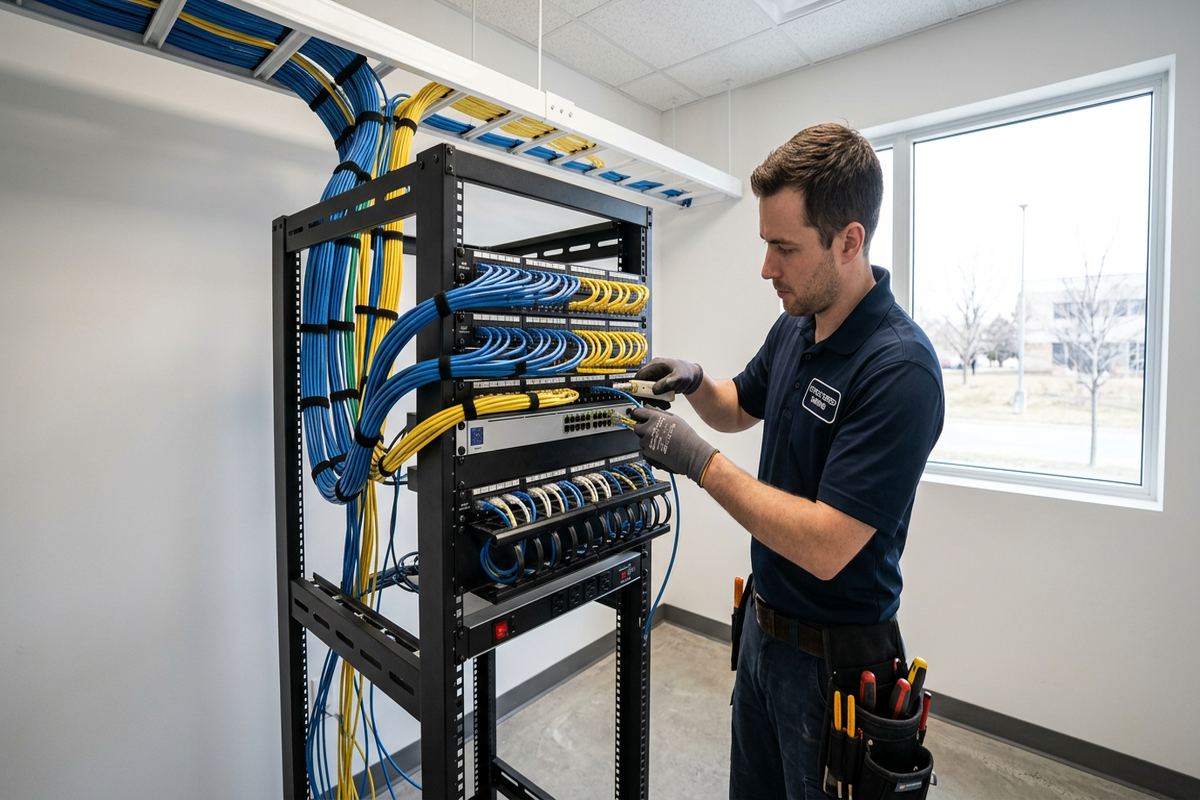
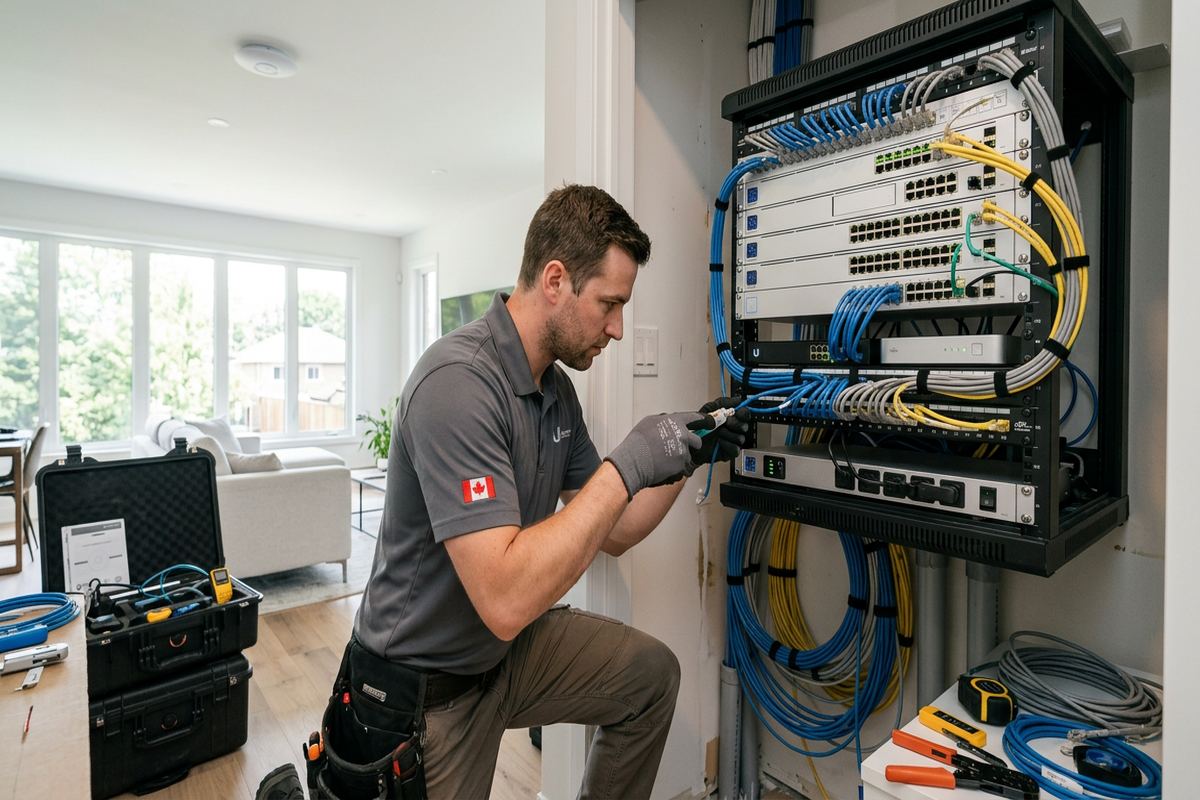
A wired Power over Ethernet system is often suitable for permanent outdoor coverage because one cable can carry network data and power to each camera. UnifiedLink installs continuous labelled cable runs between cameras and their designated termination points, avoiding hidden couplers in walls or ceilings. Cable type and pathway are selected for the environment, including exterior exposure, conduit, warehouse structure or indoor return routes. Labels correspond with camera names and recorder ports, which simplifies testing and future service. Any proposed use of existing cabling is checked before it becomes part of the installation plan.
Network capacity matters when several cameras record continuously or send high-resolution streams. We review the proposed recorder, PoE switching, available ports, cable distances and the separation between the camera network and ordinary user devices. For Brampton warehouses, this may involve an equipment room, intermediate cabinet or fibre link between building areas, depending on distance and structure. Home systems may use a local recorder connected near the router without placing every camera directly on the household Wi-Fi. The design is documented so ownership and support responsibilities remain clear after handover.
Wireless cameras can be appropriate in limited situations, but an outdoor power source and stable signal are still required. Brick walls, foil-backed insulation, metal siding, warehouse racking and distance can weaken radio performance. Busy wireless environments may also affect consistency. We assess these constraints instead of presenting Wi-Fi as a substitute for cable in every location. Where wireless equipment is selected, signal conditions and power arrangements are included in the scope. For permanent primary coverage, a planned wired route generally provides a clearer maintenance path and avoids dependence on replaceable batteries.
- Continuous cable from device to termination
- Both ends labelled for future identification
- PoE capacity and cable distance reviewed
- Existing cabling tested before approved use
Warehouse and Commercial Cameras in Brampton
Brampton’s large base of warehouse and logistics sites creates camera requirements that differ from residential work. Loading bays, trailer yards, pedestrian doors, dock approaches and vehicle gates each need a defined view. A single wide camera may show general movement without providing enough detail at the point where identification matters. We divide the site into overview and detail tasks, then account for trailer positions, stacked materials and moving equipment. Camera placement is coordinated with building height and service access so the finished system remains practical to maintain.
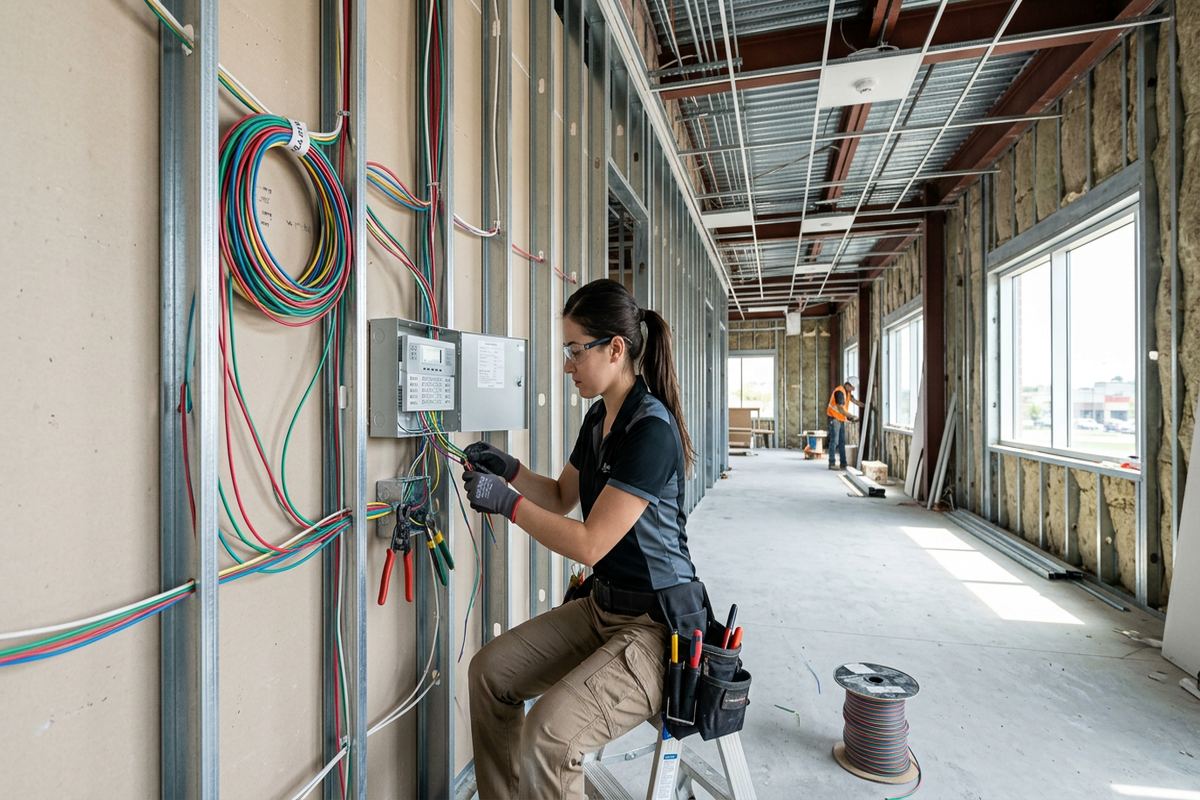
Industrial units often have long cable distances, high ceilings, open steel structure and exterior precast or block walls. Routes may need to follow existing trays or conduit while staying separated from electrical hazards and operational equipment. Lift access, working hours and restrictions around active loading areas are identified before installation. In Castlemore-area commercial properties, Bramalea employment areas and other Brampton business locations, shared yards or multi-tenant layouts may also affect permissions. The written scope distinguishes the customer’s space, shared areas and any work dependent on landlord or property-management approval.
Commercial camera design should support a defined operating process. Staff need to know which view covers each entrance, how footage is located and who controls user access. Recording retention depends on resolution, frame rate, motion settings, camera count and installed storage, so it is calculated from the selected configuration rather than promised in general terms. Remote viewing is configured only through supported methods, using credentials assigned to the customer. We can also separate administrative access from ordinary viewing accounts where the platform allows, reducing unnecessary control over system settings.
- Loading bays assigned dedicated views
- Overview and identification tasks separated
- High-level routes planned around operations
- User permissions configured by role where supported
Recording, Remote Viewing and Handover
Camera hardware is only one part of the system. The recorder, storage, network connection and application settings determine how footage is captured and retrieved. During configuration, we name cameras by useful locations, set recording schedules, confirm date and time, and adjust image or motion options supported by the equipment. Notifications are tuned with the customer because overly broad alerts can become distracting. Smart detection features may help filter activity, but their performance depends on camera angle, lighting, scene movement and the capabilities of the selected platform; they are not treated as infallible.
Remote access should remain under the customer’s control. At handover, the Brampton customer receives the system using their own credentials rather than an installer-owned account. We confirm live viewing and playback on agreed devices, review user permissions and explain how passwords or authorized users can be managed. Where a manufacturer’s cloud or relay service is involved, the applicable account and service dependencies are identified. Equipment ownership is also stated in the written scope, avoiding uncertainty about who controls the recorder, cameras, licences or application account after the installation is complete.
An as-built record is provided at handover to document the installed result. It identifies camera locations, labels and other relevant system details, reflecting approved changes made during installation. We demonstrate basic operation, including selecting a camera, reviewing recorded footage and exporting video where the platform supports it. The customer can then verify that views correspond with the agreed scope. This closeout process is useful for homes, commercial strips and Brampton industrial units because future staff, service providers or property managers are not left to reconstruct the installation from unlabelled cables and unnamed channels.
- Cameras named by actual location
- Recording and motion settings configured on site
- Customer credentials used for final handover
- As-built system record supplied
Approvals, Privacy and Project Coordination
Outdoor cameras need to be aimed with reasonable regard for privacy and property boundaries. Coverage should focus on the customer’s entrances, approaches and controlled areas rather than intentionally monitoring neighbouring private spaces. We discuss field of view and use privacy masking when the chosen equipment supports it, but the property owner remains responsible for how the system is operated and for obtaining appropriate advice about legal obligations. Audio recording requires particular care because consent and privacy considerations can differ from video. It is not enabled casually as a standard feature.
Condo corporations, landlords and commercial property managers may require approval before exterior equipment, drilling, conduit or common-area coverage is added. This is relevant to Brampton townhomes, leased storefronts, multi-unit industrial buildings and properties with shared parking or service lanes. Customers should confirm permissions before work is scheduled. We can provide proposed device locations and cable-route information for the approval process, but we do not represent the landlord or condominium corporation. Any conditions they impose must be incorporated into the scope before installation proceeds.
One accountable contractor coordinates the assessed camera work, cabling, device mounting, configuration and handover described in the scope. This reduces gaps between separate installers who might otherwise assign responsibility for cabling, networking or camera settings to one another. If related work falls outside the scope, such as new electrical circuits, structural repair or restoration beyond agreed sealing, the exclusion is documented. Requests sent during business hours are answered the same day; after-hours requests are answered the next business day. Site assessment timing depends on the service and travel distance.
- Views focused on the customer’s property
- Privacy masking used where equipment permits
- Landlord or condo approval confirmed by customer
- Exclusions documented before installation
Maintaining Outdoor Cameras in Brampton
Exterior cameras need periodic inspection because weather and site activity can change their performance. Lenses or domes collect dust, salt film, pollen and cobwebs, while branches or new signs may obstruct a previously clear view. Freeze-thaw movement can affect exposed supports or sealing, and snow can cover low devices or change infrared reflection. Brampton property owners should review live and recorded images through different seasons rather than assuming a working status light means the image remains useful. Cleaning must follow equipment guidance to avoid scratching optical surfaces or disturbing seals.
Operational checks should include playback, not just live viewing. A live image does not confirm that the recorder is storing footage with the intended date, time and duration. Users should periodically select several cameras, locate a known event and verify export procedures. Storage health, network status and application access should also be reviewed after router changes, password updates or equipment replacement. At warehouses and logistics sites, changes to racking, fencing, yard flow or loading practices can create new blind spots. Camera aim and coverage should be reconsidered whenever the property’s use changes.
When a Brampton system develops a problem, labels and as-built information make diagnosis more direct. A failed view can be traced to the camera, cable, PoE port, recorder channel or network path without guessing which unmarked line serves the device. Service begins by defining the symptom and reviewing the installed arrangement. Equipment compatibility, account ownership and access permissions are checked before changes are made. If expansion is requested, the existing recorder capacity, PoE budget, storage and cable routes are assessed so added cameras do not compromise the established system.
- Seasonal image and seal checks recommended
- Recorded playback verified periodically
- Views reviewed after property layout changes
- Labels support structured fault tracing
Brampton neighbourhoods we cover
- Downtown Brampton
- Bramalea
- Springdale
- Heart Lake
- Mount Pleasant
- Castlemore
- Fletcher's Meadow
Outdoor camera installation in Brampton — common questions
How do you decide where outdoor cameras should go?
We assess entrances, driveways, side passages, yards, parking areas or loading zones, then define what each camera must show. Brampton homes and industrial properties have different identification distances and obstructions. Mounting height, lighting, privacy, cable routes and night reflection are considered before positions are included in the written scope.
Can you run camera cables in a finished Brampton home?
Often, but the available route depends on framing, finished basement ceilings, garage construction, attic access and concealed utilities. We inspect the property before confirming a pathway. Options can include concealed indoor routes or carefully planned exterior conduit. The written scope identifies the proposed route, visible sections and any exclusions before installation starts.
Will outdoor cameras work through a Brampton winter?
Equipment selected for exterior use is installed with suitable mounting, protected connections and sealed penetrations. Brampton freeze-thaw cycles, snow, ice and temperature changes still make periodic inspection important. We also consider cable exposure, water paths and infrared reflection from soffits or snow. No outdoor installation should rely only on the camera’s weather rating.
Do I need condo or landlord approval?
Approval may be required if the installation affects an exterior wall, common element, shared parking area or leased premises. This frequently applies to Brampton townhomes, condos, storefronts and multi-tenant industrial units. The customer is responsible for securing permission, while UnifiedLink can provide proposed camera locations and cable-route details for review.
Can I view my Brampton cameras remotely?
Remote viewing can be configured when the selected recorder or camera platform supports it and the site has suitable internet access. The system is handed over using the customer’s own credentials. We test agreed devices, explain user permissions and identify any manufacturer cloud dependencies. Remote access does not replace local recording or proper account security.
How soon will UnifiedLink respond to my request?
Requests sent during business hours are answered the same day. Requests sent after hours are answered the next business day. Site assessment timing in Brampton depends on the requested service and travel distance. After assessment, the written scope identifies equipment, cable routes, camera placement, exclusions, ownership and warranty before pricing is finalized.
Coverage in Brampton is confirmed against the address before we quote. See everything we install in Brampton or the province-wide outdoor camera installation page.